
Adaptive Multi-Paddock Grazing
Adaptive Multi-Paddock (AMP) grazing is an ecological management methodology where livestock are strategically moved between numerous, smaller paddocks. This approach prioritizes observing and responding to real-time ecological indicators—forage condition, soil health, and animal well-being—to guide grazing decisions, aiming to build soil health and ecosystem function. AMP can employ high-density grazing for short durations but is defined by its adaptive decision-making loop, not the stocking density alone.
Read More: Complete Description
Adaptive Multi-Paddock (AMP) grazing is an ecological management approach that moves livestock strategically between numerous, smaller paddocks, guided by continuous observation of land health. This isn't merely a rotational system; its defining characteristic is the adaptive decision-making loop. Farmers and ranchers using AMP don't just follow a rigid rotation schedule. Instead, they observe forage growth rates, plant species composition, soil moisture, animal condition, and manure distribution, using these indicators to decide when and where to move the animals next. This responsiveness allows the system to dynamically adjust to varying weather conditions, pasture growth, and soil moisture levels, ensuring the grazing impact is beneficial rather than detrimental.
At its core, AMP grazing seeks to mimic the behavior of large herds of wild herbivores that would have naturally grazed areas of dense grassland for short periods before moving on, allowing extended recovery. This intensive grazing followed by prolonged rest is managed through a system of dividing larger pastures into many smaller paddocks, often using temporary electric fencing. Stocking density within these paddocks is typically high for a short duration, creating intense but brief grazing pressure. This encourages uniform grazing, hoof action that incorporates organic matter into the soil, and stimulates plant tillering and root growth. Crucially, the animals are then moved to a new paddock, allowing the grazed area to recover and regrow for an extended period, often 30 to 120 days or more, depending on environmental conditions.
Adaptive Multi-Paddock grazing directly supports several key regenerative agriculture principles:
- Principle 1: Minimize Soil Disturbance — The concentrated impact of high-density grazing, followed by long rest periods, reduces intense, repeated physical pressure on any single area and promotes biological soil building over mechanical disturbance.
- Principle 2: Maximize Crop Diversity — The diverse plant community within well-managed pastures often expands as grazing pressure favors desirable perennial species and reduces dominance of less desirable ones.
- Principle 3: Keep Soil Covered — The extended rest periods between grazing events ensure pastures are covered with living vegetation or mulch, protecting soil from erosion and maintaining biological activity.
- Principle 4: Maintain Living Roots — By promoting healthy perennial forages and supporting their growth, AMP keeps living roots in the soil for as long as possible throughout the year, fueling soil biology.
- Principle 5: Integrate Livestock — AMP intrinsically supports this principle by using animals as a primary tool for ecosystem management.
It is crucial to distinguish AMP from other grazing methodologies to understand its unique regenerative contribution. Unlike mob grazing (which often focuses on the livestock density and duration as the primary mechanism), AMP places adaptive decision-making about when to move based on ecological cues at the forefront. While AMP may utilize mob-style density, it is not solely defined by it. Furthermore, AMP is distinct from Holistic Management, which is a comprehensive planning framework encompassing social, economic, and ecological goals, often incorporating a specific decision-making process. AMP, on the other hand, is primarily an ecological management methodology for grazing, focusing on the land-animal interface. It also differs from Management-Intensive Rotational Grazing (MIG), which typically prioritizes maximizing forage utilization and animal production efficiency through precise predetermined rotation schedules. AMP's defining characteristic is flexibility – it's about making management decisions based on what the land is actually showing you, not just following a calendar. The adaptive approach ensures that systems are resilient and continuously improving in response to dynamic environmental conditions.
Foundational regenerative practices are those that are core to building healthy soil and thriving ecosystems. AMP grazing fits this definition well. While it may not inherently involve planting trees or cover crops directly, its effective implementation relies on and significantly enhances the conditions necessary for those practices to succeed. For example, improved soil structure and water infiltration resulting from AMP make it easier to establish diverse cover crops or plant trees for silvopasture systems. Conversely, practices like cover cropping can be used to prepare paddocks for grazing or to provide additional forage during rest periods, demonstrating a synergistic relationship.
The transition to AMP grazing can be achieved progressively, acknowledging that many farms and ranches operate within existing infrastructure and economic realities. A common pathway involves gradually increasing paddock numbers by using more temporary electric fencing while maintaining a rotational schedule based on anticipated growth. As experience and understanding of ecological indicators grow, the rotation becomes more adaptive. This approach avoids a "cold turkey" adoption that might overwhelm management capacity or financial resources. For farms currently using synthetic fertilizers or pesticides, AMP grazing naturally reduces the need for these inputs as soil health improves. The focus shifts from supplying nutrients synthetically to fostering biological nutrient cycling via livestock manure and diverse plant communities with their nitrogen-fixing capabilities. The timeline for phasing out non-regenerative inputs is typically tied to visible improvements in soil organic matter, water infiltration, and forage quality, usually observed over 3-5 years.
AMP grazing is a practice that empowers land managers to actively engineer ecosystem improvement. It is not a passive waiting game for nature to heal degraded land; rather, it is an active, informed intervention that accelerates biological processes. Degraded land can be transformed into highly productive, resilient ecosystems within years to a decade, rather than centuries, when managed with adaptive grazing strategies. The farmer becomes a skilled observer and responsive manager, working with ecological principles to build soil carbon, improve water cycles, and enhance biodiversity.
Sources behind this view
Sources behind this view
 Videos & Podcasts
-
Adaptive Multi-Paddock (AMP) grazing, or holistic planned grazing, shows significant soil carbon gains, improved ecosystem functions, and enhanced profitability compared to continuous grazing. Key pra
-
A study on the Canadian Prairies showed that 15 years of adaptive multi-paddock grazing on grey wooded soil increased soil organic carbon from 5.2% to 11% and built 11 inches of topsoil, significantly
-
Global research (Canada, US, Argentina, Namibia) confirms adaptive multi-paddock (AMP) grazing significantly increases soil carbon, infiltration, root depth (especially native grasses), and microbiolo

-
Adaptive Multi-Paddock Grazing (AMPG) involves flexible, short-duration grazing and long rest periods, replacing conventional inputs with animal manure. Research metrics include soil health, water inf

 Community
-
Adopts a holistic grazing management approach emphasizing diverse perennial pastures, higher residuals (4"), and longer rest periods (avg. 45 days) to build soil health, increase organic matter (3.4%
Read more (opens in new window) smallfarms.cornell.edu -
Manage rotational grazing by setting recovery (15-40+ days, adapting to region/season) and grazing periods (2-3 days). Aim to 'take half, leave half' for livestock and soil microbes. High stocking den
Read more (opens in new window) smallfarms.cornell.edu -
Advocates for Soil Foodweb principles and Holistic Management, emphasizing land leasing and custom grazing/growing over labor-intensive methods. Focuses on soil restructuring for water availability an
Read more (opens in new window) permies.com -
Allan Savory explains holistic management prevents desertification by using livestock to mimic nature, replacing prescriptive grazing systems. Holistic Planned Grazing, with decisions guided by a holi
Read more (opens in new window) permies.com
 Research
-
Adaptive multi-paddock grazing management’s influence on soil food web community structure for: increasing pasture forage production, soil organic carbon, and reducing soil respiration rates in southeastern USA ranches (opens in new window)
This study found: Adaptive multi-paddock grazing in the southeastern US increased pasture growth by 46%, improved soil food webs, reduced soil respiration by 19.5%, and boosted soil organic carbon by 20.6% compared to
-
Vegetation, Water Infiltration, and Soil Carbon Responses to Adaptive Multi‐Paddock and Conventional Grazing in Northern Great Plains, USA, Ranches (opens in new window)
This study found: Adaptive Multi-Paddock grazing in the Northern Great Plains improved plant cover and soil carbon compared to continuous grazing, showing significant ecological benefits and increased productivity.
-
Impacts of holistic planned grazing with bison compared to continuous grazing with cattle in South Dakota shortgrass prairie (opens in new window)
This study found: Managed grazing with bison in South Dakota's shortgrass prairie significantly improved soil health, water infiltration, forage, and plant composition compared to continuous cattle grazing over a decad
-
Managing Grazing to Restore Soil Health, Ecosystem Function, and Ecosystem Services (opens in new window)
This study found: Properly managed grazing animals can reverse environmental damage. Regenerative practices, like Adaptive Multi-Paddock (AMP) grazing, boost soil health, increase soil carbon, reduce erosion, and enhan
 From the Web
-
Adaptive Multi-Paddock (AMP) grazing, or regenerative grazing, rapidly improves soil health and sequesters carbon. With adequate recovery and no synthetic inputs, significant soil carbon increases can
-
Adaptive grazing (AMP, ASG, RG) with high stock densities and flexible management improves vegetation, soil health, soil carbon, and animal production over continuous grazing. Research shows short gra
-
Adaptive multi-paddock and holistic planned grazing significantly enhance soil carbon and nitrogen stocks, improve grassland resilience, and can make farms net carbon sinks. Studies show these methods
-
Noble Research Institute, led by Joe Pokay, implements regenerative ranching and AMP grazing across 13,500 acres, emphasizing soil health, plant diversity, and cost reduction through a flexible, minds
Key Points
What It Is
- Animals moved between many small paddocks
- Decision-making based on real-time land cues
- Mimics natural grazing behaviour
- Ecological management methodology
How This Differs
- Adaptation to real-time forage, soil, and animal conditions
- No predetermined densities or fixed rotation schedules
- Ecological grazing methodology, not a decision framework
- Driven by observation, not by prescriptive protocols
Why Do It
- Builds soil organic matter and structure
- Improves water infiltration and retention
- Enhances pasture diversity and productivity
- Supports animal health and resilience
Know the Debate
- Soil benefits time frame varies: 1-3 years visible, 5-10+ for full organic matter.
- Primary soil building: root exudates vs. hoof action/litter incorporation.
- Best on degraded soils; results vary by soil type and climate.
- Improves pasture diversity and productivity, supports other regen practices.
Benefits - Financial
- Net profit increases by 40-60% within a 3-5 year period
- Supplemental feed costs reduced by 30-50% through improved forage management
- Regenerative market premiums generate 5-10% additional gross revenue annually
- Carrying capacity increases by 15-30% on well-managed soils
Benefits - System
- Soil organic matter increase: 0.5-1.5% per year
- Water infiltration: +50-80% within 3-5 years
- Erosion reduction: 60-85% decrease
- Supports 4/5 regenerative principles
Risks - Financial
- Initial infrastructure costs range from $1,083-7,585 per acre ($2,676–$18,743 per hectare) depending on scale
- Potential 10-15% yield dip during initial 18-month ecosystem transition
- Management error increases annual maintenance costs by 20-30% via system failure
Risks - System
- Overgrazing if not managed adaptively
- Recompaction if rest periods are insufficient
- Requires significant labor/observation time
- Inconsistent results with poor planning
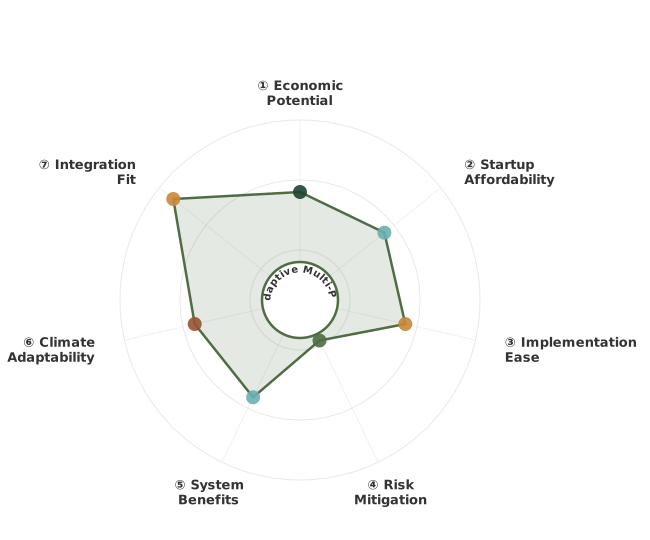
How These Traits Are Calculated
Trait dimensions are ordered clockwise starting from the top of the chart (12 o'clock position):
1. Economic Potential
Financial returns, annual value, and break-even timeline
WHAT: Evaluates financial viability by combining net annual value ($/ha from savings, income, and amortized harvests) with break-even timeline showing when practices pay for themselves.
WHY: Farmers need clear ROI understanding before committing resources. Fast payback (≤3 years) with strong returns (≥$300/ha) enables confident adoption, while long timelines (>10 years) restrict adoption to well-funded operations willing to wait for returns.
HOW: Calculated from net annual value in $/ha and break-even years. Exceptional (≥2.6): fast ROI ≤3 years + high value ≥$300/ha. Typical (1.8-2.5): moderate returns or longer timelines. Limited (<1.8): marginal economics or very long payback >10 years.
2. Startup Affordability
Initial investment costs and financial barrier to entry
WHAT: Measures financial barrier to entry through startup costs for equipment, infrastructure, consulting, and materials. Inverted scoring: lower costs = higher scores = more accessible adoption.
WHY: Affordability determines who can adopt. Low-cost practices (<$250/ha) enable widespread adoption across diverse scales, while high costs (>$2,500/ha) limit adoption to well-capitalized operations, creating barriers that slow regenerative transition.
HOW: Calculated from initial investment parsed from practice content. Inverted scoring: Exceptional (≥2.6): minimal investment <$250/ha. Typical (1.8-2.5): moderate costs $250-2,500/ha. Limited (<1.8): high barrier >$2,500/ha.
3. Implementation Ease
Learning curve and specialized knowledge required
WHAT: Measures how much learning, planning, and specialized knowledge a practice requires. Simpler practices with fewer steps score higher, while complex practices requiring extensive training or specialized resources score lower.
WHY: Complex practices create adoption barriers even when economically viable. Straightforward practices enable faster adoption and broader participation, while those requiring extensive training, timing precision, or specialized equipment limit who can succeed.
HOW: Evaluated by measuring documentation length and identifying complexity markers like location-specific requirements, seasonal timing windows, specialized skills, and dedicated equipment needs. Exceptional (≥2.6): straightforward practices with minimal prerequisites. Typical (1.8-2.5): moderate learning curve with some specialized needs. Limited (<1.8): steep learning curve requiring significant training or resources.
4. Risk Mitigation
Identified financial and ecological risk assessment
WHAT: Evaluates documented risks across financial (investment loss, market volatility) and ecological (crop failure, pest outbreaks) domains. Inverted scoring: fewer risks = higher scores.
WHY: Understanding risk exposure helps farmers make informed decisions. Low-risk practices allow confident implementation, while high-risk practices require careful planning and contingency resources. Risk transparency prevents costly failures.
HOW: Calculated from identified risks in practice content. Inverted scoring: Exceptional (≥2.6): ≤2 risks with manageable severity. Typical (1.8-2.5): 3-5 moderate risks. Limited (<1.8): 6+ risks or severe exposure.
5. System Benefits
How many ways the practice improves your land simultaneously
WHAT: Measures how many aspects of land health improve at once—carbon storage, soil quality, erosion control, water absorption, and biodiversity. Practices that improve multiple areas simultaneously create compounding benefits where each improvement reinforces the others.
WHY: The best practices solve multiple problems at once. For example, addressing erosion simultaneously builds carbon and improves water infiltration, creating a resilient system with positive feedback loops. Single-benefit approaches miss these compound transformation opportunities.
HOW: Evaluated across five key outcomes: carbon sequestration, soil organic matter increase, erosion reduction, water infiltration improvement, and biodiversity enhancement. Exceptional (≥2.6): high carbon storage (>8 t/ha/yr), improvements across 4-5 areas, transformative outcomes. Typical (1.8-2.5): moderate carbon (3-8 t/ha/yr), improvements across 2-3 areas. Limited (<1.8): modest impact (<3 t/ha/yr), single-area focus only.
6. Climate Adaptability
Geographic applicability across Köppen climate zones
WHAT: Evaluates geographic applicability by assessing how many Köppen climate zones successfully support a practice and what adaptation requirements are needed. Measures breadth of climates where farmers can implement with minimal to moderate modifications.
WHY: Universal practices working across diverse climates enable more farmers to adopt regenerative approaches. Practices limited to single climate types (only Mediterranean, only tropical) restrict adoption and slow global transition. Adaptability determines whether a practice serves niche regions or offers broad transformation.
HOW: LLM evaluation of regional success stories, Köppen zone coverage, and adaptation needs. Exceptional (≥2.6): 5+ zones or 4+ climate types, 3+ continents, minimal adaptation. Typical (1.8-2.5): 3-4 zones or 2-3 types, 2 continents, moderate adaptation. Limited (<1.8): 1-2 zones, single region, significant adaptation or highly specialized.
7. Integration Fit
How well this practice combines with others you're doing
WHAT: Measures how well a practice combines with other regenerative practices you might be doing. Some practices work as building blocks that make many other practices easier or more effective, while others work best on their own.
WHY: Practices that combine well with many others create more value on your farm. For example, cover cropping enables no-till, improves grazing, supports crop diversity, and helps water management—making all of them work better together. This helps you build a coherent system rather than juggling disconnected practices.
HOW: Evaluated by identifying which practices combine well and how strong those combinations are. 'Ideally Suited' means strong combinations where practices reinforce each other (practice A makes B easier, while B makes A more effective). 'Adequate' means complementary benefits that work well together. Exceptional (≥2.6): combines well with 6+ practices, serves as a building block. Typical (1.8-2.5): combines with 3-5 practices. Limited (<1.8): 1-2 practices or works best alone.
Going Deeper
1
WHY - The Benefits
Adaptive Multi-Paddock (AMP) grazing is a cornerstone regenerative practice recognized for its profound ability to convert degraded landscapes into biologically functional and economically resilient systems. It leverages the inherent power of expertly managed livestock...
Adaptive Multi-Paddock (AMP) grazing is a cornerstone regenerative practice recognized for its profound ability to convert degraded landscapes into biologically functional and economically resilient systems. It leverages the inherent power of expertly managed livestock to stimulate plant growth, cycle nutrients, improve soil structure, and enhance ecosystem services such as water infiltration and carbon sequestration.
WHY - The Benefits
Adaptive Multi-Paddock (AMP) grazing is a cornerstone regenerative practice recognized for its profound ability to convert degraded landscapes into biologically functional and economically resilient systems. It leverages the inherent power of expertly managed livestock...
Adaptive Multi-Paddock (AMP) grazing is a cornerstone regenerative practice recognized for its profound ability to convert degraded landscapes into biologically functional and economically resilient systems. It leverages the inherent power of expertly managed livestock to stimulate plant growth, cycle nutrients, improve soil structure, and enhance ecosystem services such as water infiltration and carbon sequestration.
Soil Health Benefits
AMP grazing has a proven track record of significantly improving soil health. The concentrated, short-duration grazing followed by extended rest periods stimulates perennial grass root growth. As animals graze and trample, they press plant residues into the soil surface, which feeds soil microorganisms and enhances decomposition. This process also stimulates tillering in grasses, leading to denser swards and increased above-ground biomass that protects the soil.
Over time, this management practice leads to substantial increases in soil organic matter (SOM). Studies and farmer-reported data consistently show increases of 0.5-1.5% SOM per year in newly managed AMP systems on degraded soils. This increase in SOM improves soil structure, water-holding capacity, and nutrient availability. Improved soil aggregation makes it more resistant to erosion, and the increased pore space facilitates better water infiltration and aeration, reducing runoff and drought stress. Soil compaction, a major issue in continuous or poorly managed grazing, is reversed, allowing roots to penetrate deeper and improving overall soil ecosystem function.
Within 3-5 years of implementing AMP grazing, farmers and researchers often observe dramatic improvements in water infiltration rates, sometimes increasing by 50-80% compared to conventional grazing or depleted pastures. This enhanced infiltration means more rainfall enters the soil profile, recharging groundwater and reducing surface runoff, which in turn minimizes soil erosion. The living roots of healthy perennial forages continuously explore the soil, feeding microbes with carbon exudates, fostering a robust soil food web, and maintaining soil structure year-round, thus keeping soil covered and alive.
Economic Benefits
AMP grazing offers compelling economic advantages for farmers and ranchers seeking to improve profitability and diversify income streams. By enhancing pasture productivity and health, AMP grazing can increase the land's carrying capacity, often by 15-30% or more, meaning more livestock can be supported on the same acreage. This leads to greater overall livestock production and revenue.
Furthermore, the improved quality and nutrient density of forage grown under AMP management can lead to better animal performance. This includes improved weight gains, better reproductive rates, and enhanced animal health, potentially reducing veterinary costs. In hot climates, the shade provided by trees in silvopasture systems (a common synergy with AMP) or even topographical features can significantly reduce heat stress on livestock, leading to improved feed conversion efficiency and greater daily weight gain, particularly during summer months.
Beyond direct livestock production, AMP grazing supports a transition towards premium markets for regeneratively produced goods. Consumers are increasingly willing to pay a premium for products raised using ecological methods that benefit the environment. By adopting AMP, producers can differentiate their products, access niche markets, and potentially secure better prices. The long-term approach also builds resilience against climate variability, reducing reliance on costly external inputs like supplemental feed, which is crucial in an era of unpredictable weather patterns.
Regenerative Systems Fit
Adaptive Multi-Paddock grazing is a foundational regenerative practice that directly addresses and enhances four of the five core regenerative agriculture principles. When implemented effectively, it sets the stage for the successful integration of other regenerative practices.
Principle 1: Minimize Soil Disturbance AMP grazing achieves this by avoiding mechanical tillage and relying on biological processes. The intensive grazing impact momentarily "tramples" organic matter into the soil surface, which the soil food web decomposes. Extended rest periods allow soil biology to rebuild structure, creating pore spaces for air and water without artificial disruption. The pressure from grazing is managed to be beneficial, not destructive.
Principle 2: Maximize Crop Diversity By managing grazing pressure, AMP encourages a diverse mix of perennial grasses, legumes, and forbs. Over time, the system favors more resilient and diverse plant communities over monocultures or single-species pastures. This botanical diversity supports a corresponding diversity in soil microbial communities and provides a wider range of nutrients and seasonal forage for livestock.
Principle 3: Keep Soil Covered The extended rest periods crucial to AMP grazing ensure that pastures are not overgrazed. This allows for continuous canopy cover of living vegetation, or substantial mulch layers of dead organic matter, protecting the soil from erosion, maintaining soil moisture, and providing habitat for soil organisms. Bare soil is minimized, promoting year-round soil biological activity.
Principle 4: Maintain Living Roots Healthy perennial forages established and maintained through AMP grazing keep living roots in the soil for as long as possible, ideally year-round. These roots are the primary source of carbon for soil microbes, fueling the entire soil food web, constantly building soil organic matter, and creating stable soil aggregates through root exudates and fungal networks.
Integration with other Regenerative Practices: AMP grazing creates an ideal environment for the implementation and success of other regenerative practices. Improved soil structure and water infiltration make it easier to establish diverse cover crops. The increased fertility and reduced need for synthetic inputs in AMP systems reduce weed pressure, making organic weed control more effective. Furthermore, the financial resilience and improved land productivity fostered by AMP can provide the capital and confidence needed to invest in practices like silvopasture or no-till cropping. For farms transitioning from conventional inputs, AMP grazing acts as a stepping stone, gradually rebuilding soil health and reducing reliance on synthetic fertilizers and pesticides as biological nutrient cycling takes over. The economic stability it provides can support a gradual phase-out of non-regenerative inputs over a 3-5 year period, with full transition achieved as soil biology supports the desired level of productivity.
Sources behind this view
Videos & Podcasts
-
Global research (Canada, US, Argentina, Namibia) confirms adaptive multi-paddock (AMP) grazing significantly increases soil carbon, infiltration, root depth (especially native grasses), and microbiolo
-
Adaptive Multi-Paddock (AMP) grazing, or holistic planned grazing, shows significant soil carbon gains, improved ecosystem functions, and enhanced profitability compared to continuous grazing. Key pra
-
A study on the Canadian Prairies showed that 15 years of adaptive multi-paddock grazing on grey wooded soil increased soil organic carbon from 5.2% to 11% and built 11 inches of topsoil, significantly
-
Adaptive Multi-Paddock (AMP) grazing research shows increased carrying capacity (2.16x), biomass (46%), and soil organic carbon (20.6%), while reducing soil respiration (19.52%). It promotes fungal do

Community
-
Adopts a holistic grazing management approach emphasizing diverse perennial pastures, higher residuals (4"), and longer rest periods (avg. 45 days) to build soil health, increase organic matter (3.4%
Read more (opens in new window) smallfarms.cornell.edu -
Advocates for Soil Foodweb principles and Holistic Management, emphasizing land leasing and custom grazing/growing over labor-intensive methods. Focuses on soil restructuring for water availability an
Read more (opens in new window) permies.com -
Manage rotational grazing by setting recovery (15-40+ days, adapting to region/season) and grazing periods (2-3 days). Aim to 'take half, leave half' for livestock and soil microbes. High stocking den
Read more (opens in new window) smallfarms.cornell.edu -
Advocates for simpler regenerative methods based on Soil Foodweb and Holistic Management, emphasizing soil restructuring for water retention and reducing reliance on inputs like biochar. Promotes holi
Read more (opens in new window) permies.com
Research
-
Adaptive multi-paddock grazing management’s influence on soil food web community structure for: increasing pasture forage production, soil organic carbon, and reducing soil respiration rates in southeastern USA ranches (opens in new window)
This study found: Adaptive multi-paddock grazing in the southeastern US increased pasture growth by 46%, improved soil food webs, reduced soil respiration by 19.5%, and boosted soil organic carbon by 20.6% compared to
-
Managing Grazing to Restore Soil Health, Ecosystem Function, and Ecosystem Services (opens in new window)
This study found: Properly managed grazing animals can reverse environmental damage. Regenerative practices, like Adaptive Multi-Paddock (AMP) grazing, boost soil health, increase soil carbon, reduce erosion, and enhan
-
Vegetation, Water Infiltration, and Soil Carbon Responses to Adaptive Multi‐Paddock and Conventional Grazing in Northern Great Plains, USA, Ranches (opens in new window)
This study found: Adaptive Multi-Paddock grazing in the Northern Great Plains improved plant cover and soil carbon compared to continuous grazing, showing significant ecological benefits and increased productivity.
-
Improvements in soil properties under adaptive multipaddock grazing relative to conventional grazing (opens in new window)
This study found: Regenerative AMP grazing in the SE U.S. improved soil carbon, nitrogen, and nutrient holding capacity compared to conventional grazing, suggesting it can regenerate grassland soils.
From the Web
-
Adaptive Multi-Paddock (AMP) grazing, or regenerative grazing, rapidly improves soil health and sequesters carbon. With adequate recovery and no synthetic inputs, significant soil carbon increases can
-
Adaptive grazing (AMP, ASG, RG) with high stock densities and flexible management improves vegetation, soil health, soil carbon, and animal production over continuous grazing. Research shows short gra
-
Adaptive multi-paddock and holistic planned grazing significantly enhance soil carbon and nitrogen stocks, improve grassland resilience, and can make farms net carbon sinks. Studies show these methods
-
Regenerative grazing, especially adaptive multi-paddock (AMP) grazing, enhances farm profitability, ecosystem health, and food system resiliency. Studies show AMP grazing increases soil carbon by 13%
2
WHERE - Regional Considerations
Adaptive Multi-Paddock grazing is highly adaptable and can be implemented successfully across a wide range of climates and geographical regions by adjusting management practices to local environmental conditions. The core principles remain the same, but species...
Adaptive Multi-Paddock grazing is highly adaptable and can be implemented successfully across a wide range of climates and geographical regions by adjusting management practices to local environmental conditions. The core principles remain the same, but species selection, paddock size, resting periods, and water management strategies must be tailored to regional rainfall patterns, temperature extremes, and growing season lengths.
WHERE - Regional Considerations
Adaptive Multi-Paddock grazing is highly adaptable and can be implemented successfully across a wide range of climates and geographical regions by adjusting management practices to local environmental conditions. The core principles remain the same, but species...
Adaptive Multi-Paddock grazing is highly adaptable and can be implemented successfully across a wide range of climates and geographical regions by adjusting management practices to local environmental conditions. The core principles remain the same, but species selection, paddock size, resting periods, and water management strategies must be tailored to regional rainfall patterns, temperature extremes, and growing season lengths.
Click Here to Look up your Region if you don't already know it
Humid Temperate Regions
Representative Locations: Southeastern United States, northern Europe (UK, Germany, Poland), eastern China, Japan, New Zealand
Climate Context: Warm to hot summers and cool to cold winters with moderate to high annual precipitation (75-150 cm or 30-60 inches) distributed relatively evenly. USDA Zones 6-8, Köppen Cfb/Cfa.
Management Adaptations: These regions typically experience long growing seasons with ample moisture, supporting robust perennial pasture growth. AMP grazing can be highly productive here. Emphasis should be placed on managing forbes and legumes within the pasture mix to maximize nutrient cycling and provide diverse forage. Extended rest periods are crucial during peak growth in spring and early summer to prevent overgrazing and encourage root development. In autumn, managing grazing to leave adequate residual leaf litter can provide protection against winter frost damage and soil erosion. Paddock sizes can often be smaller due to rapid regrowth, allowing for shorter grazing cycles and more frequent moves.
Mediterranean Regions
Representative Locations: California, Mediterranean basin (Spain, Italy, Greece), central Chile, southwestern Australia, Western Cape South Africa
Climate Context: Hot, dry summers and mild, wet winters. Annual precipitation 40-90 cm (15-35 inches), highly seasonal. USDA Zones 8-10, Köppen Csa/Csb.
Management Adaptations: The primary challenge in Mediterranean climates is the summer dry season. AMP grazing must adapt to drought conditions by extending rest periods significantly during summer, potentially reducing stocking rates or moving animals to areas with more resilient forage. Focus should be on drought-tolerant perennial grasses and legumes. Managed grazing can help conserve soil moisture by leaving adequate residual stubble to shade the soil surface and reduce evaporation. Managed grazing in the wetter winter and spring months is critical to build soil health and prepare for the dry spell. Water infrastructure is paramount, with strategic placement of tanks and troughs to ensure animals have access to water without over-grazing near water sources during dry periods.
Arid/Semi-Arid Regions
Representative Locations: Western USA, North Africa, Central Asia, Interior Australia
Climate Context: Low annual precipitation (<40 cm or 15 inches), high temperatures, short and often unpredictable growing season. USDA Zones 7-9, Köppen BSh/BSk.
Management Adaptations: In arid and semi-arid regions, AMP grazing requires significantly longer rest periods, often 120-365 days, to allow slow-growing perennial grasses and shrubs to recover and set seed. Stocking rates must be carefully matched to carrying capacity, which can fluctuate dramatically with rainfall. Water availability is a critical limiting factor, necessitating extensive water infrastructure (wells, pipelines, storage tanks) and careful grazing planning to manage animal movement between water sources. The goal is to graze resilient, deep-rooted native grasses and drought-tolerant shrubs, promoting their dominance over ephemeral annuals. Ranchers often integrate AMP with other land management techniques such as keyline plowing or contour ripping to capture and retain scarce rainfall.
Cold Continental Regions
Representative Locations: Northern USA and Canada, Northern Europe, Northern Asia
Climate Context: Very short growing seasons, extreme summer heat, severe winter cold. USDA Zones 3-5, Köppen Dfa/Dfb.
Management Adaptations: In these regions, the short growing season dictates intensive AMP grazing during the warmer months. Maximizing pasture utilization during this period is key. Animals may be moved daily or every few days to capitalize on rapid plant growth. Extended rest periods are managed during winter, often requiring dry lot feeding or winter grazing management strategies (e.g., grazing standing hay or stockpiled pasture). The use of annual forages and cover crops becomes more important to extend the grazing season into shoulder periods (early spring, late fall). Species selection must balance rapid growth with winter hardiness.
Subtropical Regions
Representative Locations: Southeastern USA, Southern China, Southern Brazil, Eastern Australia
Climate Context: Hot, humid summers and mild winters with generally ample rainfall. USDA Zones 9-11, Köppen Cfa/Cwa.
Management Adaptations: Similar to humid temperate regions, these areas offer long growing seasons but with higher temperatures and humidity. AMP grazing can maximize forage production, but managing for heat stress on both livestock and forages is vital. Extended rest periods are needed during the hottest, most humid months to allow pasture to recover and prevent damage. Encouraging the inclusion of deep-rooted, heat-tolerant perennial grasses and legumes is important. Shade is a significant benefit, making silvopasture highly compatible and beneficial in these regions. Proper pasture composition management can help prevent the dominance of less desirable, heat-tolerant weeds.
Tropical Regions
Representative Locations: Central America, Southeast Asia, East Africa, Northern Australia, Northern South America
Climate Context: High temperatures year-round, with distinct wet and dry seasons or consistent high rainfall. Köppen Af/Am/Aw.
Management Adaptations: Tropical AMP grazing is often characterized by very fast regrowth during the wet season, requiring frequent animal moves and potentially shorter rest periods to manage rapid growth and prevent over-mature, less digestible forage. During the dry season, extended rest periods and careful management of forage residuals are critical to ensure plant survival and recovery. Species selection must focus on heat-tolerant and disease-resistant tropical forages. Managing for pasture quality, as tropical grasses can become fibrous and less nutritious rapidly, is crucial for animal performance. Integration with trees (silvopasture) is highly beneficial for shade, improved forage quality, and biodiversity. Water management during the dry season is paramount.
3
HOW - Implementation Process
Implementing Adaptive Multi-Paddock (AMP) grazing is a journey of learning and adaptation. It's a shift from rigid schedules to responsive management, building skills in observing ecological signals and adjusting your grazing plan accordingly.
Implementing Adaptive Multi-Paddock (AMP) grazing is a journey of learning and adaptation. It's a shift from rigid schedules to responsive management, building skills in observing ecological signals and adjusting your grazing plan accordingly.
HOW - Implementation Process
Implementing Adaptive Multi-Paddock (AMP) grazing is a journey of learning and adaptation. It's a shift from rigid schedules to responsive management, building skills in observing ecological signals and adjusting your grazing plan accordingly.
Implementing Adaptive Multi-Paddock (AMP) grazing is a journey of learning and adaptation. It's a shift from rigid schedules to responsive management, building skills in observing ecological signals and adjusting your grazing plan accordingly.
Prerequisites
Before embarking on AMP grazing, consider these foundational elements:
- Understanding of Basic Grazing Principles: Familiarity with concepts like forage recovery, rest periods, and livestock behavior.
- Commitment to Observation: Willingness to regularly spend time in pastures observing plant growth, soil condition, and animal behavior.
- Access to Livestock: The practice is designed for grazing animals (cattle, sheep, goats, horses, etc.).
- Basic Understanding of Pasture Species: Knowledge of your dominant forage species and their growth patterns.
- Water Availability: Reliable water sources are critical. You'll need to ensure adequate water points or a plan to move water.
Phase 1: Planning and Infrastructure Setup
1. Assess Your Land:
- Map Your Farm/Ranch: Identify existing paddocks, fence lines, water sources, topography, soil types, and areas of particular concern (e.g., erosion-prone gullies, wet spots).
- Understand Your Forage: Identify your dominant pasture species. Are they annuals or perennials? Cool-season or warm-season? Drought-tolerant? Legumes present? This knowledge influences rest period needs and paddock composition.
- Determine Carrying Capacity: Estimate your land's current ability to support livestock without degradation. This will be your baseline for improvement.
2. Fencing Strategy:
- Perimeter Fence: Ensure existing perimeter fences are sound.
-
Internal Fencing: This is where AMP differs. You'll need to divide larger pastures into many smaller paddocks.
- Initial Step: Start by creating 10-20 paddocks from a few large fields using temporary electric fencing (polywire, fiberglass posts, step-in posts). This allows you to experiment affordably.
- Scaling Up: As you gain experience, invest in more durable internal permanent or semi-permanent fencing systems (e.g., high-tensile wire, electric netting) for higher paddock numbers.
-
Paddock Size: Paddock size will vary based on land size, livestock numbers, and desired grazing duration. A common starting point is to calculate how much land your herd can graze uniformly in 1-3 days.
3. Water Infrastructure:
- Strategic Water Points: Ensure water is accessible to all planned paddocks. This may involve extending existing water lines, installing portable troughs, or developing new water sources.
- Water Accessibility: Water points should be placed to encourage uniform grazing across paddocks, not concentrate animals in one area. Consider placing water at the far end of a paddock to draw animals through it.
4. Livestock Numbers:
- Start Conservatively: Begin with your current livestock numbers or slightly fewer when transitioning. Avoid overstocking, as this can lead to overgrazing and defeat the purpose of AMP.
- Monitor Condition: Your livestock are key indicators. If they are losing condition, it might be a sign of insufficient forage or too-short rest periods.
Phase 2: Implementation and Adaptive Grazing
1. paddock Layout and Grazing Plan:
- Develop a Draft Plan: Based on your map, decide where to locate temporary fences and water. Aim for paddocks that allow for 1-3 days of grazing for your current herd.
- Estimate Rest Periods: Based on forage type and climate, estimate how long paddocks will need to rest after grazing. This is the most critical variable to adapt. In humid regions during peak growth, rest might be 30-45 days. In drier regions or during drought, rests can be 120-365+ days.
2. Grazing and Moving:
- Uniform Grazing: Move animals into a new paddock with high density for a short period (1-3 days). The goal is to have them graze and trample uniformly across the entire paddock.
- Observe, Decide, Move: This is the core of AMP.
- Observe: Before moving, assess: How much forage is left? Is plant diversity improving? How are the animals doing? Is the soil surface being hoof-punched or compacted? Are roots being exposed?
- Decide: Based on observations and your understanding of forage recovery needs, decide: Is it time to move? Do we need to shorten or lengthen the rest period for this paddock? Do we need to adjust paddock size for the next rotation?
- Move: Relocate the herd to the next paddock.
3. Paddock Management During Rest:
- Allow Full Recovery: The paddock just grazed should not be grazed again until the plants have fully recovered and regrown. This means observing new leaf growth and root development.
- Monitor for Over-/Under-grazing: If a paddock is consistently being overgrazed, its size may need to be reduced, or stocking density reduced. If plants are becoming too mature and unpalatable, graze duration may need to be shorter, or rest periods adjusted.
- Watch Forage Composition: Notice which plant species are thriving and which are declining. This indicates how your management is affecting the plant community.
Phase 3: Refinement and Long-Term Strategy
1. Continuous Learning and Adaptation:
- Record Keeping: Keep detailed notes on grazing dates, paddock numbers, move decisions, weather patterns, animal performance, and forage observations. This data is invaluable for refining your plan.
- Experimentation: Don't be afraid to experiment with different paddock sizes, rest periods, or grazing durations in different areas of your farm.
- Adapt to Seasons: Your plan will change seasonally. You’ll graze more intensively during peak growth and manage for resilience during dry or cold periods.
2. Integration with Other Practices:
- Cover Cropping: Use cover crops to maintain soil cover when pastures are dormant or to provide supplemental forage during extended rest periods.
- Silvopasture: Incorporate trees into AMP grazing systems to provide shade, improve forage quality, and diversify income.
- No-Till: AMP grazing naturally supports no-till systems by improving soil structure and reducing the need for mechanical manipulation.
3. Progress and Monitoring:
- Regular Soil Testing: Track changes in soil organic matter, nutrient levels, and pH over time.
- Water Infiltration Tests: Monitor improvements in how quickly water enters your soil.
- Visual Assessments: Regularly assess pasture health, plant diversity, and erosion control effectiveness.
Transition Timeline & Phase-Out Strategy
AMP grazing is a regenerative practice, so there are no non-regenerative inputs to phase out, only an ongoing process of improving ecological function. However, if transitioning from conventional (e.g., continuous grazing, high synthetic input) systems:
- Years 1-2: Focus on establishing infrastructure (fencing, water) and learning adaptive observation skills. You might still use some synthetic fertilizers if soil health is extremely poor, but begin reducing rates by 20-30% as you see signs of biological recovery. Gradually increase paddock numbers and move towards adaptive decision-making.
- Years 3-5: As soil health improves and carrying capacity increases, eliminate synthetic fertilizers entirely. Reliance on pesticides and herbicides should also diminish significantly as a robust, diverse pasture system crowds out weeds and resists pests. Animal health should improve, reducing need for conventional medicines.
- Year 5+: Fully integrated AMP grazing—management is adaptive, soil is healthy and resilient, livestock performance is improved, and reliance on external inputs is negligible. The focus is on continuous refinement and optimization.
Sources behind this view
Videos & Podcasts
-
Adaptive Multi-Paddock (AMP) grazing, or holistic planned grazing, shows significant soil carbon gains, improved ecosystem functions, and enhanced profitability compared to continuous grazing. Key pra
-
Global research (Canada, US, Argentina, Namibia) confirms adaptive multi-paddock (AMP) grazing significantly increases soil carbon, infiltration, root depth (especially native grasses), and microbiolo
-
A study on the Canadian Prairies showed that 15 years of adaptive multi-paddock grazing on grey wooded soil increased soil organic carbon from 5.2% to 11% and built 11 inches of topsoil, significantly
-
Adaptive Multi-Paddock (AMP) grazing research shows increased carrying capacity (2.16x), biomass (46%), and soil organic carbon (20.6%), while reducing soil respiration (19.52%). It promotes fungal do
Community
-
Adopts a holistic grazing management approach emphasizing diverse perennial pastures, higher residuals (4"), and longer rest periods (avg. 45 days) to build soil health, increase organic matter (3.4%
Read more (opens in new window) smallfarms.cornell.edu -
Manage rotational grazing by setting recovery (15-40+ days, adapting to region/season) and grazing periods (2-3 days). Aim to 'take half, leave half' for livestock and soil microbes. High stocking den
Read more (opens in new window) smallfarms.cornell.edu -
Planned Holistic Grazing by Allan Savory is recommended for large, dry farms to regenerate land and improve stocking rates. Key practices include using swales and ditches for water infiltration, adapt
Read more (opens in new window) permies.com -
Recommends mob grazing and holistic management for pasture health, using electric fences to manage livestock movement, distribute manure, and encourage native grasses. Provides links to expert videos
Read more (opens in new window) permies.com
Research
-
Adaptive multi-paddock grazing management’s influence on soil food web community structure for: increasing pasture forage production, soil organic carbon, and reducing soil respiration rates in southeastern USA ranches (opens in new window)
This study found: Adaptive multi-paddock grazing in the southeastern US increased pasture growth by 46%, improved soil food webs, reduced soil respiration by 19.5%, and boosted soil organic carbon by 20.6% compared to
-
Vegetation, Water Infiltration, and Soil Carbon Responses to Adaptive Multi‐Paddock and Conventional Grazing in Northern Great Plains, USA, Ranches (opens in new window)
This study found: Adaptive Multi-Paddock grazing in the Northern Great Plains improved plant cover and soil carbon compared to continuous grazing, showing significant ecological benefits and increased productivity.
-
Impacts of holistic planned grazing with bison compared to continuous grazing with cattle in South Dakota shortgrass prairie (opens in new window)
This study found: Managed grazing with bison in South Dakota's shortgrass prairie significantly improved soil health, water infiltration, forage, and plant composition compared to continuous cattle grazing over a decad
-
Improvements in soil properties under adaptive multipaddock grazing relative to conventional grazing (opens in new window)
This study found: Regenerative AMP grazing in the SE U.S. improved soil carbon, nitrogen, and nutrient holding capacity compared to conventional grazing, suggesting it can regenerate grassland soils.
From the Web
-
Adaptive grazing (AMP, ASG, RG) with high stock densities and flexible management improves vegetation, soil health, soil carbon, and animal production over continuous grazing. Research shows short gra
-
Adaptive Multi-Paddock (AMP) grazing, or regenerative grazing, rapidly improves soil health and sequesters carbon. With adequate recovery and no synthetic inputs, significant soil carbon increases can
-
Noble Research Institute, led by Joe Pokay, implements adaptive multi-paddock (AMP) grazing for regenerative ranching, improving soil health, plant diversity, and water absorption while reducing costs
-
Noble Research Institute, led by Joe Pokay, implements regenerative ranching and AMP grazing across 13,500 acres, emphasizing soil health, plant diversity, and cost reduction through a flexible, minds
4
Know the Debate
Adaptive Multi-Paddock grazing is a flexible system that can be implemented across diverse landscapes, yet its outcomes are shaped by local conditi...
Know the Debate
Adaptive Multi-Paddock grazing is a flexible system that can be implemented across diverse landscapes, yet its outcomes are shaped by local conditi...
Adaptive Multi-Paddock grazing is a flexible system that can be implemented across diverse landscapes, yet its outcomes are shaped by local conditions. In humid temperate regions, pastures respond rapidly, showing benefits within 1-3 years. Semi-arid and arid zones require much longer rest periods (over 120 days) and focus on drought-tolerant species, meaning significant soil health improvements may take 5-10 years. Infrastructure costs vary widely from temporary setups ($100-500/ha) to extensive permanent fencing and water systems ($700-4,000+/ha), impacting initial investment. Ongoing labor, while adaptive, requires daily attention and consistent observation to achieve optimal results.
When do AMP grazing soil health benefits appear?
Benefits visible in 1-3 yrs, full gains 5-10+ yrs
Academic and institute sources often report significant soil health improvements within 3-5 years, highlighting increases in soil organic matter and water infiltration. However, many field practitioners emphasize that while pasture regeneration is visible earlier, substantial gains in soil organic matter and deeper ecosystem function may require 5-10 years of consistent, adaptive management.
Sources behind this view
Sources behind this view
Videos & Podcasts
-
Adaptive Multi-Paddock (AMP) grazing research shows increased carrying capacity (2.16x), biomass (46%), and soil organic carbon (20.6%), while reducing soil respiration (19.52%). It promotes fungal dominance in soil, aiding forage production and carbon sequestration.
-
Adaptive multi-paddock grazing, with high density and long recovery, significantly increases soil organic carbon sequestration (1.5-2.5 tons/ha/yr) and revitalizes water cycles, outperforming continuous grazing. Native warm-season grasses are key for deep carbon storage.
Research
-
Adaptive multi-paddock grazing management’s influence on soil food web community structure for: increasing pasture forage production, soil organic carbon, and reducing soil respiration rates in southeastern USA ranches (opens in new window)
This study found: A study comparing two grazing methods on ranches in the southeastern US found that adaptive multi-paddock (AMP) grazing significantly outperformed conventional grazing. AMP systems resulted in 46% more pasture growth, a healthier soil food web with increased beneficial fungi and protozoa, and reduced soil respiration (CO2 release) by nearly 20%. Crucially, AMP grazing also led to a 20.6% increase in soil organic carbon in the top 10 cm of soil. This suggests AMP grazing can improve soil health, increase carbon capture, and enhance climate resilience.
From the Web
-
Adaptive Multi-Paddock (AMP) grazing, or regenerative grazing, rapidly improves soil health and sequesters carbon. With adequate recovery and no synthetic inputs, significant soil carbon increases can be seen in 3-4 years, with ongoing benefits for 15+ years. Key mechanisms include enhanced microbial activity and improved plant diversity.
Results vary by climate, faster in humid, slower in arid
Field evidence suggests AMP grazing benefits are highly context-dependent; gains appear faster in humid regions with reliable rainfall (1-3 years visible) compared to arid rangelands where slow recovery necessitates 5-10 years for measurable soil organic matter increases.
Sources behind this view
Sources behind this view
Videos & Podcasts
-
Global research (Canada, US, Argentina, Namibia) confirms adaptive multi-paddock (AMP) grazing significantly increases soil carbon, infiltration, root depth (especially native grasses), and microbiological activity compared to continuous grazing, with results varying by climate and soil type.
-
Transitioning to adaptive multi-paddock grazing is driven by curiosity, data (cost savings, bird return, water infiltration), and respectful communication, with success observed across diverse ecosystems.
Research
-
Vegetation, Water Infiltration, and Soil Carbon Responses to Adaptive Multi‐Paddock and Conventional Grazing in Northern Great Plains, USA, Ranches (opens in new window)
This study found: A study comparing two grazing methods on ranches in North and South Dakota found that Adaptive Multi-Paddock (AMP) grazing, which involves short, intense grazing followed by long rest periods, significantly improved rangeland health compared to traditional continuous grazing. Ranches using AMP grazing had much more plant cover, taller plants, and greater amounts of grass to eat. While soil nitrogen levels were lower with AMP grazing, the total amount of carbon in the soil actually increased, even though the organic carbon component decreased slightly. This suggests AMP grazing is effectively changing the soil's carbon makeup. The study showed clear differences in vegetation and soil between the two grazing methods, demonstrating that AMP grazing can boost ecological functions and ranch productivity, though restoring native plants fully will take more time.
From the Web
-
Adaptive Multi-Paddock grazing in California rangelands increased soil carbon by 13-29% compared to conventional grazing, demonstrating significant long-term carbon storage potential.
Making Sense of the Differences
The timeline for observing AMP grazing's benefits varies significantly due to factors like starting soil health, climate, and management consistency. Humid regions with adequate rainfall often see visible pasture improvements within 1-3 years. However, substantial soil organic matter gains, which depend on slower biological processes and decomposition, typically require 5-10 years or more, especially in drier climates or on degraded soils. Patience and adaptive management are key to realizing the full, long-term benefits of AMP grazing.
How does AMP grazing primarily build soil organic matter?
Stimulated root activity and exudates
Academic research suggests AMP grazing significantly boosts soil organic matter by stimulating root growth and exudates through carefully managed grazing stress. This process enhances microbial activity, which in turn aids in carbon sequestration.
Sources behind this view
Sources behind this view
Research
-
Improvements in soil properties under adaptive multipaddock grazing relative to conventional grazing (opens in new window)
This study found: A study comparing two grazing methods in the southeastern U.S. found that a regenerative approach called adaptive multipaddock (AMP) grazing significantly improved soil health compared to conventional grazing. AMP grazing involves moving dense cattle herds quickly across pastures and allowing them long rest periods. Soils managed with AMP grazing showed better nutrient holding capacity, higher overall soil carbon and nitrogen levels, and improved indicators of soil fertility. While one measure of how quickly nitrogen becomes available was lower under AMP, the overall results suggest AMP grazing can regenerate grassland soils.
-
Soil microorganisms respond distinctively to adaptive multi‐paddock and conventional grazing in the southeastern United States (opens in new window)
This study found: Research conducted at five farms in the southeastern U.S. found that adaptive multi-paddock (AMP) grazing, a form of intensive rotational grazing, significantly boosted soil microbial life compared to conventional grazing. Fields managed with AMP had more fungi and bacteria, and showed higher activity in key nutrient cycles like nitrogen conversion and phosphorus release. Soil respiration, a measure of microbial activity, was also higher under AMP, suggesting better processing of organic matter. This indicates that AMP grazing management distinctly influences soil microbes in a way that supports the retention of soil organic matter and nitrogen, leading to healthier soils.
-
Managing Grazing to Restore Soil Health, Ecosystem Function, and Ecosystem Services (opens in new window)
This study found: This article argues that grazing animals like cattle, when managed properly using regenerative farming methods, can actually help fix environmental problems caused by past mismanagement. Instead of harmful industrial farming, the focus should be on practices that boost nature's functions. Regenerative approaches, especially a method called Adaptive Multi-Paddock (AMP) grazing, are shown to be effective and cost-efficient for restoring healthy ecosystems. AMP grazing involves moving animals frequently to new pastures, allowing the plants ample time to recover. This management style leads to better ground cover, less soil erosion, and more carbon stored in the soil. Bringing livestock and forages into crop systems can also increase soil carbon, improve soil life, and cut down on the need for plowing, synthetic fertilizers, and pesticides. Ultimately, these practices enhance vital natural benefits like stable soil, better water absorption, carbon capture, nutrient cycling, and biodiversity, leading to more resilient farms and economies.
Hoof action, litter incorporation, and manure
Field practitioners emphasize that hoof action breaks down plant residue, incorporates organic matter into the soil, and concentrates manure and urine. This physical impact, combined with decomposition, is seen as the primary driver for building soil organic matter.
Sources behind this view
Sources behind this view
Videos & Podcasts
-
Advocates for Adaptive Multi-Paddock (AMP) grazing, where cattle intensely graze small areas and then rest them for extended periods, mimicking buffalo. This method improves soil health, water infiltration, and reduces fertilizer needs.
-
Adaptive multi-paddock grazing builds soil health and fertility by stewarding ecosystem processes (energy, water, mineral cycles, diversity), making nutrients plant-available and reducing input reliance, unlike conventional grazing methods.
-
Adaptive multi-paddock grazing, with high density and long recovery, significantly increases soil organic carbon sequestration (1.5-2.5 tons/ha/yr) and revitalizes water cycles, outperforming continuous grazing. Native warm-season grasses are key for deep carbon storage.
-
Introduces adaptive multi-paddock grazing, based on bison's co-evolution with grasslands, which involves grazing in tight packs, consuming half the forage, and stimulating plant growth for carbon sequestration.

Synergistic effect of multiple processes
Some research and institute descriptions suggest a synergistic effect where both root activity and physical incorporation work together to build soil organic matter, with the overall aim of cycling more carbon through the soil food web.
Sources behind this view
Sources behind this view
Research
-
Adaptive multi-paddock grazing management’s influence on soil food web community structure for: increasing pasture forage production, soil organic carbon, and reducing soil respiration rates in southeastern USA ranches (opens in new window)
This study found: A study comparing two grazing methods on ranches in the southeastern US found that adaptive multi-paddock (AMP) grazing significantly outperformed conventional grazing. AMP systems resulted in 46% more pasture growth, a healthier soil food web with increased beneficial fungi and protozoa, and reduced soil respiration (CO2 release) by nearly 20%. Crucially, AMP grazing also led to a 20.6% increase in soil organic carbon in the top 10 cm of soil. This suggests AMP grazing can improve soil health, increase carbon capture, and enhance climate resilience.
From the Web
-
Adaptive Multi-paddock (AMP) grazing uses short, intense rotations of high-density livestock across small paddocks to improve pasture utilization, soil health, and fertility, while ensuring less than 50% of forage is consumed per grazing period.
-
Holistic Planned Grazing (HPG) and Adaptive Multi-Paddock (AMP) grazing consistently outperform continuous grazing in shortgrass and tallgrass prairies, improving soil organic matter, water infiltration, vegetation cover, and other key ecosystem functions.
Making Sense of the Differences
The way AMP grazing builds soil organic matter is likely a combination of stimulated root growth and exudates, along with the physical incorporation of plant litter and manure by hoof action. Root exudates feed soil microbes, enhancing biological activity, while hoof action directly adds organic material to the soil surface. The relative contribution of each mechanism may vary based on grazing intensity, plant species, and soil type. Ultimately, both processes contribute to increased soil carbon sequestration and improved soil health.
What soil conditions are best for AMP grazing?
Works widely, most effective on degraded soils
Academic sources indicate AMP grazing is applicable across various soil types and climates, showing benefits in regions like the SE US, Canadian prairies, and Northern Great Plains. Field practitioners note it is particularly effective on degraded soils where biological recovery potential is high.
Sources behind this view
Sources behind this view
Videos & Podcasts
-
Adaptive multi-paddock grazing, with high density and long recovery, significantly increases soil organic carbon sequestration (1.5-2.5 tons/ha/yr) and revitalizes water cycles, outperforming continuous grazing. Native warm-season grasses are key for deep carbon storage.
Research
-
Improvements in soil properties under adaptive multipaddock grazing relative to conventional grazing (opens in new window)
This study found: A study comparing two grazing methods in the southeastern U.S. found that a regenerative approach called adaptive multipaddock (AMP) grazing significantly improved soil health compared to conventional grazing. AMP grazing involves moving dense cattle herds quickly across pastures and allowing them long rest periods. Soils managed with AMP grazing showed better nutrient holding capacity, higher overall soil carbon and nitrogen levels, and improved indicators of soil fertility. While one measure of how quickly nitrogen becomes available was lower under AMP, the overall results suggest AMP grazing can regenerate grassland soils.
-
Cattle grazing management affects soil microbial diversity and community network complexity in the Northern Great Plains. (opens in new window)
This study found: Research in the Canadian prairies compared two cattle grazing methods: intensive adaptive multi-paddock (AMP) grazing and conventional grazing. The study found that AMP grazing significantly improved soil health by increasing the variety of fungi in the soil and creating more complex connections between soil microbes. Certain types of bacteria and fungi were identified as 'keystone taxa' – meaning they are particularly important for soil health under each grazing system. The study also showed that higher stocking rates and longer rest periods between grazing improved soil microbe richness and diversity. This suggests that AMP grazing practices can lead to healthier grasslands and better ecosystem functioning.
From the Web
-
Adaptive multi-paddock grazing is presented as a key method for regenerating degraded land, with a rancher's belief in its efficacy being a driving factor.
Success varies significantly with soil type and existing pasture
Field practitioners caution that dramatic results in AMP grazing are most likely on soils with existing perennial grasses or in contexts naturally suited to grazing. They express concerns about suitability on heavy clay or very sandy soils without significant complementary practices.
Sources behind this view
Sources behind this view
Videos & Podcasts
-
Adaptive multi-paddock grazing, with high density and long recovery, significantly increases soil organic carbon sequestration (1.5-2.5 tons/ha/yr) and revitalizes water cycles, outperforming continuous grazing. Native warm-season grasses are key for deep carbon storage.
-
Global research (Canada, US, Argentina, Namibia) confirms adaptive multi-paddock (AMP) grazing significantly increases soil carbon, infiltration, root depth (especially native grasses), and microbiological activity compared to continuous grazing, with results varying by climate and soil type.
Research
-
Changes in Alberta’s Grasslands Soil pH by Adopting the Adaptive Multi-Paddock Grazing System (opens in new window)
This study found: Research in Alberta, Canada, investigated how a grazing method called Adaptive Multi-Paddock (AMP) grazing, which involves moving cattle frequently between many small pastures, affects soil pH (acidity/alkalinity) compared to traditional continuous grazing. Soil samples were taken from different depths on farms using both methods. Early findings suggest that AMP grazing might lead to slightly more acidic soil across all layers compared to traditional grazing. The top layer of soil was generally more acidic, while deeper layers were more alkaline, possibly linked to higher levels of soil organic matter. Different natural regions within Alberta also showed variations in soil pH. The researchers plan to further analyze this data alongside soil carbon measurements to better understand the environmental benefits of AMP grazing, which could potentially lead to financial incentives for farmers adopting the system.
From the Web
-
Adaptive Multi-Paddock grazing in California rangelands increased soil carbon by 13-29% compared to conventional grazing, demonstrating significant long-term carbon storage potential.
Making Sense of the Differences
AMP grazing can be implemented across a range of soil types and climates, but success and speed of results vary. It tends to be most transformative on degraded soils with existing perennial grasses, where biological recovery potential is high. For challenging soils like heavy clay or pure sand, results may be slower or require more intensive management, longer rest periods, or specific species selection to build stable soil structure. While benefiting most environments, expectation management for these soil types is crucial.
5
HOW MUCH - Costs & Investment
Note: Costs shown in USD; multiply by local labor and material cost indices for your region. Labor costs vary significantly internationally.
Note: Costs shown in USD; multiply by local labor and material cost indices for your region. Labor costs vary significantly internationally.
HOW MUCH - Costs & Investment
Note: Costs shown in USD; multiply by local labor and material cost indices for your region. Labor costs vary significantly internationally.
Note: Costs shown in USD; multiply by local labor and material cost indices for your region. Labor costs vary significantly internationally.
Note: All costs are based on recent US economic data (2024–2026) and may vary substantially by region based on local labor rates, material costs, and regulatory requirements.
Temporary and Permanent Fencing
Effective AMP grazing relies on a hybrid fencing model. Temporary fencing, consisting of polywire, portable tread-in posts, and mobile energizers, remains the primary tool for managing daily animal movement. Small operations (under 50 acres (20 ha)) typically spend $41–208 per acre ($101–$514/ha) on these items, as they require less total length. Mid-size operations (50–500 acres (20–202 ha)) spend $31–125 per acre ($77–$309/ha), while large operations (500+ acres) benefit from bulk purchase power, reducing costs to $21–83 per acre ($52–$205/ha).
Permanent infrastructure, including high-tensile wire, treated wood or steel corners, and solar energizer setups, provides the structural backbone. Small operations can expect to invest $625–2,084 per acre ($1,544–$5,150/ha) for full perimeter and semi-permanent subdivision. Mid-size farms spend $417–1,250 per acre ($1,030–$3,089/ha), while large-scale producers, often leveraging existing perimeter fences, invest $292–834 per acre ($722–$2,061/ha). These costs fluctuate based on topography; hilly or wooded terrain can increase fencing material requirements by 25–40% compared to flat, open pasture.
Water System Infrastructure
Water is the highest variable cost in the AMP setup. Minimal setups using existing gravity-fed tanks cost small operations $208–1,042 per acre ($514–$2,575/ha). Mid-size operations, requiring extended pipelines and multiple trough nodes, spend $333–1,666 per acre ($823–$4,117/ha). Large-scale operations, which may require drilling new wells or installing high-flow solar pumps paired with redundant header tanks, spend $417–2,500+ per acre. Labor for trenching and pipe installation accounts for roughly 35% of these ranges.
Livestock Integration and Herd Management
Scaling up livestock to achieve the high-density requirements of AMP often necessitates initial herd adjustments. Small operations may spend $208–834 per acre ($514–$2,061/ha) to acquire or upgrade breeding stock. Mid-size farms see costs of $417–2,084 per acre ($1,030–$5,150/ha) to increase stocking numbers. Large operations face significant outlays of $834–4,166+ per acre if transitioning from low-density systems to optimal stocking rates.
Most Spend: Most small operations spend $1,666–2,916 per acre ($4,117–$7,206/ha), while mid-size producers typically land in the $2,084–3,750 per acre ($5,150–$9,266/ha) range. Large-scale operations represent their own cluster, with most spending $2,500–5,000 per acre ($6,178–$12,355/ha), primarily driven by the scale of water development and permanent high-tensile fencing.
Why the Range?: Cost variance is driven primarily by existing infrastructure health; farms with existing water lines and perimeter fencing see the lowest costs, while those starting from scratch report values at the top of the range. Additionally, DIY labor and the decision to use portable versus permanent infrastructure account for up to 40% of the total budget spread.
Annual Recurring Costs
Annual maintenance involves repair of fences, water leaks, and animal health monitoring. Small operations budget $137–563 per acre ($339–$1,391/ha) annually, covering labor and basic repairs. Mid-size farms see costs of $177–717 per acre ($437–$1,772/ha), and large-scale enterprises report $215–871 per acre ($531–$2,152/ha). Labor (monitoring forage, moving livestock, and water checks) accounts for roughly 55-60% of these annual expenditures.
Sources behind this view
Videos & Podcasts
-
Increase grazing frequency (e.g., twice daily) for better pasture utilization and animal performance. Invest heavily in water infrastructure and use temporary fencing in long, narrow paddocks to maxim
-
Details the practical implementation of intensive rotational grazing, including infrastructure (fencing, water points) and management strategies for large Australian properties. This approach signific
-
Discusses advanced grazing management, emphasizing paddock layout, skipping paddocks for fly control, and the critical role of fencing and water. Highlights how subdivision and shorter grazing periods
-
Improved grazing management boosts ranch economics through higher stocking rates, better cows-per-man ratios, extended grazing seasons, and reduced feeding costs. Strategic fencing and water developme
Community
-
Details an integrated system of Managed Intensive Rotational Grazing and rotational cropping using holistic management. It emphasizes increasing forage availability, integrating livestock (cattle, chi
Read more (opens in new window) permies.com -
Manage rotational grazing by setting recovery (15-40+ days, adapting to region/season) and grazing periods (2-3 days). Aim to 'take half, leave half' for livestock and soil microbes. High stocking den
Read more (opens in new window) smallfarms.cornell.edu -
Recommends permanent rotational pastures using high tensile fencing and cattle panels for goats and sheep, with advice on water lines, pallet-built shelters, and cost-effective handling systems.
Read more (opens in new window) permies.com -
Investigates financial benefits of rotational grazing, including extended grazing season and cattle weight gains, while detailing the use of portable electric fences and HDPE water hoses due to infras
Read more (opens in new window) ucanr.edu
Research
-
Increasing Intensity of Pasture Use with Dairy Cattle: An Economic Analysis (opens in new window)
This study found: Intensive grazing on Pennsylvania dairy farms was more profitable than hay/corn silage, returning $129/acre. High debt and poor cash flow motivated increased grazing intensity, which lowered feed cost
-
Adaptive multi-paddock grazing management’s influence on soil food web community structure for: increasing pasture forage production, soil organic carbon, and reducing soil respiration rates in southeastern USA ranches (opens in new window)
This study found: Adaptive multi-paddock grazing in the southeastern US increased pasture growth by 46%, improved soil food webs, reduced soil respiration by 19.5%, and boosted soil organic carbon by 20.6% compared to
-
A 100-Year Review: A century of change in temperate grazing dairy systems. (opens in new window)
This study found: Dairy grazing systems evolved over 100 years from random grazing to intensive, high-output systems driven by research, technology, and breeding. Managed grazing, better genetics, and supplementary fee
-
Vegetation, Water Infiltration, and Soil Carbon Responses to Adaptive Multi‐Paddock and Conventional Grazing in Northern Great Plains, USA, Ranches (opens in new window)
This study found: Adaptive Multi-Paddock grazing in the Northern Great Plains improved plant cover and soil carbon compared to continuous grazing, showing significant ecological benefits and increased productivity.
From the Web
-
Analyzes ROI for high stock density grazing, detailing infrastructure costs ($3,250 with grant), labor ($3600 estimate), and a 257% carrying capacity increase. Discusses scaling challenges and lists k
6
REWARDS AND RISKS - Economics & Risk Factors
Economic Scenarios
Economic Scenarios
REWARDS AND RISKS - Economics & Risk Factors
Economic Scenarios
Economic Scenarios
Economic Scenarios
The transition to AMP grazing is a long-term capital investment. In a Best Case Scenario, within 3–5 years, carrying capacity increases by 25–30%, leading to a 15–20% rise in gross revenue. Feed costs fall by 30–50% as grazing seasons extend, and veterinary costs drop 10% due to reduced animal crowding and cleaner pastures. Total net profit increases by 40–60% compared to baseline. Infrastructure pays for itself within 5–7 years.
In a Typical Scenario, carrying capacity grows by 15–25%, boosting revenue by 10–15%. Supplemental feeding expenses drop 20–30%, and enterprise profits rise 20–30%. Infrastructure recovery takes 7–10 years.
In a Worst Case Scenario, poor management results in stagnant soil health and a 5–10% drop in forage productivity. Infrastructure costs (averaging $4,000+ per acre for intensive setups) remain unabsorbed, and reliance on high-cost supplemental feed continues. Without achieving market premiums, losses can persist for 5–10 years, potentially leading to debt-service crises for over-leveraged operations.
Market Factors & Risk Mitigation
Market profitability is highly sensitive to the ability to market "regenerative" beef, which can command a 5–10% premium. Lack of access to these specific supply chains remains a primary financial risk. Mitigation involves vertical integration, such as direct-to-consumer sales or contracting with regional "grass-fed" brand programs, which can increase profit margins by 15-20% compared to commodity markets.
Transition Period Risks
The primary risk during the first 18 months is the "yield dip," which occurs as the soil biome shifts toward higher fungal-to-bacterial ratios. Producers should anticipate a 10–15% reduction in total biomass production during year one.
- Mitigation for Yield Dips: Do not destock below 80% capacity; use strategic supplementation to maintain cover.
- Management Over-extension: Trying to add too many paddocks at once is the leading cause of setup failure. Start with 4–6 paddocks and expand gradually to reduce capital exposure by 30% in the first two seasons.
- Infrastructure Failure: Water leaks are the most common cause of downtime. Ensuring all water pipe connections are pressure-tested before burial saves an average of $2,000–5,000 in remedial labor.
Sources behind this view
Videos & Podcasts
-
Global research (Canada, US, Argentina, Namibia) confirms adaptive multi-paddock (AMP) grazing significantly increases soil carbon, infiltration, root depth (especially native grasses), and microbiolo
-
A study on the Canadian Prairies showed that 15 years of adaptive multi-paddock grazing on grey wooded soil increased soil organic carbon from 5.2% to 11% and built 11 inches of topsoil, significantly
-
Adaptive Multi-Paddock (AMP) grazing, or holistic planned grazing, shows significant soil carbon gains, improved ecosystem functions, and enhanced profitability compared to continuous grazing. Key pra
-
Adaptive multi-paddock grazing, with high density and long recovery, significantly increases soil organic carbon sequestration (1.5-2.5 tons/ha/yr) and revitalizes water cycles, outperforming continuo
Community
-
Adopts a holistic grazing management approach emphasizing diverse perennial pastures, higher residuals (4"), and longer rest periods (avg. 45 days) to build soil health, increase organic matter (3.4%
Read more (opens in new window) smallfarms.cornell.edu -
Manage rotational grazing by setting recovery (15-40+ days, adapting to region/season) and grazing periods (2-3 days). Aim to 'take half, leave half' for livestock and soil microbes. High stocking den
Read more (opens in new window) smallfarms.cornell.edu -
Planned Holistic Grazing by Allan Savory is recommended for large, dry farms to regenerate land and improve stocking rates. Key practices include using swales and ditches for water infiltration, adapt
Read more (opens in new window) permies.com -
Recommends mob grazing and holistic management for pasture health, using electric fences to manage livestock movement, distribute manure, and encourage native grasses. Provides links to expert videos
Read more (opens in new window) permies.com
Research
-
Adaptive multi-paddock grazing management’s influence on soil food web community structure for: increasing pasture forage production, soil organic carbon, and reducing soil respiration rates in southeastern USA ranches (opens in new window)
This study found: Adaptive multi-paddock grazing in the southeastern US increased pasture growth by 46%, improved soil food webs, reduced soil respiration by 19.5%, and boosted soil organic carbon by 20.6% compared to
-
Vegetation, Water Infiltration, and Soil Carbon Responses to Adaptive Multi‐Paddock and Conventional Grazing in Northern Great Plains, USA, Ranches (opens in new window)
This study found: Adaptive Multi-Paddock grazing in the Northern Great Plains improved plant cover and soil carbon compared to continuous grazing, showing significant ecological benefits and increased productivity.
-
Managing Grazing to Restore Soil Health, Ecosystem Function, and Ecosystem Services (opens in new window)
This study found: Properly managed grazing animals can reverse environmental damage. Regenerative practices, like Adaptive Multi-Paddock (AMP) grazing, boost soil health, increase soil carbon, reduce erosion, and enhan
-
Improvements in soil properties under adaptive multipaddock grazing relative to conventional grazing (opens in new window)
This study found: Regenerative AMP grazing in the SE U.S. improved soil carbon, nitrogen, and nutrient holding capacity compared to conventional grazing, suggesting it can regenerate grassland soils.
From the Web
-
Adaptive Multi-Paddock (AMP) grazing, or regenerative grazing, rapidly improves soil health and sequesters carbon. With adequate recovery and no synthetic inputs, significant soil carbon increases can
-
Adaptive grazing (AMP, ASG, RG) with high stock densities and flexible management improves vegetation, soil health, soil carbon, and animal production over continuous grazing. Research shows short gra
-
Adaptive multi-paddock and holistic planned grazing significantly enhance soil carbon and nitrogen stocks, improve grassland resilience, and can make farms net carbon sinks. Studies show these methods
-
Noble Research Institute, led by Joe Pokay, implements adaptive multi-paddock (AMP) grazing for regenerative ranching, improving soil health, plant diversity, and water absorption while reducing costs
7
COMPATIBLE PRACTICES - Integration Opportunities
AMP grazing is highly synergistic and enhances the performance of nearly all other regenerative agriculture practices. It provides the ecological foundation that makes other practices more effective and more profitable.
AMP grazing is highly synergistic and enhances the performance of nearly all other regenerative agriculture practices. It provides the ecological foundation that makes other practices more effective and more profitable.
COMPATIBLE PRACTICES - Integration Opportunities
AMP grazing is highly synergistic and enhances the performance of nearly all other regenerative agriculture practices. It provides the ecological foundation that makes other practices more effective and more profitable.
AMP grazing is highly synergistic and enhances the performance of nearly all other regenerative agriculture practices. It provides the ecological foundation that makes other practices more effective and more profitable.
Cover Cropping
- Integration: Cover crops can be used to extend the grazing season, provide high-quality forage during pasture rest periods, improve soil fertility, and break up compaction between AMP rotations.
- Benefit: AMP grazing can improve the establishment and growth of cover crops by enhancing soil structure and biology. Cover crops, in turn, provide more flexible and nutritious forage for livestock managed under AMP, allowing for longer rest periods for perennial pastures.
Silvopasture
- Integration: AMP grazing is ideally suited for silvopasture systems, where trees are integrated into pastures. Livestock manage understory vegetation, prevent weed encroachment on young trees, and distribute manure.
- Benefit: Trees provide shade and shelter, improving livestock performance and pasture resilience in hot or dry climates. AMP grazing ensures even utilization of forage around trees and throughout the pasture, preventing overgrazing of young trees while maximizing overall land productivity.
Holistic Planned Grazing
- Integration: AMP grazing is essentially the practical implementation of the grazing component within a Holistic Planned Grazing framework.
- Benefit: AMP provides a system with the flexibility and infrastructure to implement the detailed, observation-based planning that characterizes Holistic Planned Grazing, ensuring ecological goals are met.
No-Till Farming
- Integration: AMP grazing naturally supports no-till systems by improving soil structure, increasing organic matter, and reducing the need for mechanical land preparation.
- Benefit: Livestock can graze crop residues or cover crops prior to planting, reducing the amount of residue that needs to be managed. The improved soil health from AMP grazing makes no-till planting and establishment more successful due to better water infiltration and soil biology.
Conservation Tillage (if used as transition)
- Integration: If one-time tillage was necessary for severe compaction, AMP grazing is the post-tillage management strategy to rebuild soil structure biologically, preventing re-compaction.
- Benefit: AMP grazing is the essential regenerative follow-up to one-time tillage. It ensures that the opened-up soil structure is maintained and improved by biological activity, moving the system towards permanent no-till.
Biodiversity Enhancement
- Integration: Diverse pastures managed under AMP create habitat for beneficial insects, birds, and other wildlife.
- Benefit: AMP grazing encourages a wider range of plant species and enhances soil microbial diversity, which in turn supports higher trophic levels of biodiversity across the ecosystem.
The integration of AMP grazing with other regenerative practices creates a powerful synergy that amplifies improvements in soil health, resilience, biodiversity, and economic profitability. It is a central pillar of a truly regenerative agricultural system.
Sources behind this view
Videos & Podcasts
-
Adaptive Multi-Paddock (AMP) grazing, or holistic planned grazing, shows significant soil carbon gains, improved ecosystem functions, and enhanced profitability compared to continuous grazing. Key pra
-
Global research (Canada, US, Argentina, Namibia) confirms adaptive multi-paddock (AMP) grazing significantly increases soil carbon, infiltration, root depth (especially native grasses), and microbiolo
-
A study on the Canadian Prairies showed that 15 years of adaptive multi-paddock grazing on grey wooded soil increased soil organic carbon from 5.2% to 11% and built 11 inches of topsoil, significantly
-
Adaptive Multi-Paddock (AMP) grazing research shows increased carrying capacity (2.16x), biomass (46%), and soil organic carbon (20.6%), while reducing soil respiration (19.52%). It promotes fungal do
Community
-
Adopts a holistic grazing management approach emphasizing diverse perennial pastures, higher residuals (4"), and longer rest periods (avg. 45 days) to build soil health, increase organic matter (3.4%
Read more (opens in new window) smallfarms.cornell.edu -
Advocates for Soil Foodweb principles and Holistic Management, emphasizing land leasing and custom grazing/growing over labor-intensive methods. Focuses on soil restructuring for water availability an
Read more (opens in new window) permies.com -
Manage rotational grazing by setting recovery (15-40+ days, adapting to region/season) and grazing periods (2-3 days). Aim to 'take half, leave half' for livestock and soil microbes. High stocking den
Read more (opens in new window) smallfarms.cornell.edu -
Recommends mob grazing and holistic management for pasture health, using electric fences to manage livestock movement, distribute manure, and encourage native grasses. Provides links to expert videos
Read more (opens in new window) permies.com
Research
-
Adaptive multi-paddock grazing management’s influence on soil food web community structure for: increasing pasture forage production, soil organic carbon, and reducing soil respiration rates in southeastern USA ranches (opens in new window)
This study found: Adaptive multi-paddock grazing in the southeastern US increased pasture growth by 46%, improved soil food webs, reduced soil respiration by 19.5%, and boosted soil organic carbon by 20.6% compared to
-
Vegetation, Water Infiltration, and Soil Carbon Responses to Adaptive Multi‐Paddock and Conventional Grazing in Northern Great Plains, USA, Ranches (opens in new window)
This study found: Adaptive Multi-Paddock grazing in the Northern Great Plains improved plant cover and soil carbon compared to continuous grazing, showing significant ecological benefits and increased productivity.
-
Managing Grazing to Restore Soil Health, Ecosystem Function, and Ecosystem Services (opens in new window)
This study found: Properly managed grazing animals can reverse environmental damage. Regenerative practices, like Adaptive Multi-Paddock (AMP) grazing, boost soil health, increase soil carbon, reduce erosion, and enhan
-
Improvements in soil properties under adaptive multipaddock grazing relative to conventional grazing (opens in new window)
This study found: Regenerative AMP grazing in the SE U.S. improved soil carbon, nitrogen, and nutrient holding capacity compared to conventional grazing, suggesting it can regenerate grassland soils.
From the Web
-
Adaptive Multi-Paddock (AMP) grazing, or regenerative grazing, rapidly improves soil health and sequesters carbon. With adequate recovery and no synthetic inputs, significant soil carbon increases can
-
Adaptive grazing (AMP, ASG, RG) with high stock densities and flexible management improves vegetation, soil health, soil carbon, and animal production over continuous grazing. Research shows short gra
-
Adaptive multi-paddock and holistic planned grazing significantly enhance soil carbon and nitrogen stocks, improve grassland resilience, and can make farms net carbon sinks. Studies show these methods
-
Regenerative grazing, especially adaptive multi-paddock (AMP) grazing, enhances farm profitability, ecosystem health, and food system resiliency. Studies show AMP grazing increases soil carbon by 13%