
Aerial Seeding
Aerial seeding is the practice of dispersing seeds over a large area using aircraft or drones, often over pastures, rangelands, or large crop fields where conventional planting is difficult or impossible. It's suitable for broadcasting seeds onto inaccessible terrain, over existing vegetation, or for rapid seeding of vast areas.
Read More: Complete Description
Aerial seeding, utilizing aircraft or drones, is a method for broadcasting seeds across significant land surface areas. This technique is particularly valuable for seeding remote or inaccessible regions, steep slopes unsuitable for ground machinery, or when aiming for rapid coverage over large-scale agricultural landscapes such as pastures, rangelands, and extensive crop fields. It bypasses the need for soil preparation and conventional row planting, broadcasting seeds directly onto the soil surface, often over existing vegetation or stubble.
This practice can be beneficial for establishing or renovating pastures, planting cover crops across vast grain fields post-harvest, re-vegetating fire-damaged areas, or sowing conservation mixes on erosion-prone land. The speed at which aerial seeding can cover ground is its primary advantage, allowing for timely planting windows to be met, especially in regions with short growing seasons. For example, wheat farmers in Ukraine might use aerial seeding to quickly establish winter wheat before the onset of early frosts, or cattle ranchers in Australia might use it to reseed drought-stricken pastures after unpredictable rainfall events to maximize forage regrowth.
From a regenerative agriculture perspective, aerial seeding falls into a context-dependent category. Its regenerative value hinges entirely on what is being seeded and how the practice integrates with other regenerative principles.
-
Support for Regenerative Principles:
- Keep Soil Covered (Principle 3): When used to establish diverse cover crops or perennial pasture species on disturbed land (e.g., after fire, or on fallow fields), aerial seeding directly supports this principle by rapidly establishing living cover, preventing soil erosion, and maintaining soil biology.
- Maintain Living Roots (Principle 4): By quickly establishing plants, aerial seeding extends the period of living root presence in the soil, which is crucial for continuous soil biological activity, nutrient cycling, and carbon sequestration. This is especially valuable in large-scale systems where fallow periods are common.
- Maximize Crop Diversity (Principle 2): Aerial seeding is an excellent method for broadcasting complex, multi-species cover crop mixes or diverse pasture blends that would be difficult to plant conventionally. This directly enhances above and below-ground biodiversity.
-
Potential Violations or Nuances:
- Minimize Soil Disturbance (Principle 1): Aerial seeding itself does not disturb the soil. However, if the intent is to seed into an existing sod or mulch layer without any prior disturbance, it aligns well. If it's used to seed into a field that has recently undergone significant tillage, it doesn't inherently mitigate that disturbance, though it does ensure living cover is established.
- Integrate Livestock (Principle 5): Aerial seeding itself doesn't directly integrate livestock. Its value lies in establishing the forage that livestock will graze later, or the cover crops designed to be integrated into a grazing rotation in the future.
Transition Practice Aspects: Aerial seeding can be a valuable transition practice. For instance, an existing monoculture pasture in a region like Ireland (humid temperate, USDA 8-9) that has become degraded and lacks diversity might benefit from aerial seeding of a rich leguminous and herbacious mix. This wouldn't immediately restore soil biology but would introduce significant diversity, provide immediate cover, and establish living roots. The goal would be to then manage this seeded pasture to build soil health and support grazing animals regeneratively over time.
The decision to use aerial seeding should be driven by conservation goals rather than just efficiency. Seeding sterile or single-species mixes aerially onto bare ground that will be tilled again would be extractive. However, seeding pollinator mixes on field margins, diverse cover crop blends between cash crops, or renovating overgrazed pastures aligns with regenerative goals. For example, a wheat farmer in North Dakota (USA, cold humid continental, USDA 4) might aerially seed a multi-species cover crop mix immediately after harvest to prevent soil erosion and build soil organic matter over winter, a practice that maintains living roots and keeps soil covered, directly supporting regenerative principles.
Risks and Considerations: Seed-to-soil contact can be poor with aerial seeding compared to conventional methods that press seeds into the soil. This can lead to lower germination rates if seeds are simply broadcast onto dense vegetation or into dry, undisturbed mulch. Overcoming this often involves seeding at higher rates or choosing species suited to surface broadcasting. In arid or semi-arid regions (e.g., parts of South Africa, Australia, or the western USA), relying solely on aerial seeding without adequate moisture and sufficient seed-to-soil contact can lead to significant establishment failure, wasting resources and leaving land bare.
The practice is best viewed as a tool to facilitate the establishment of regenerative plant communities, particularly when ground access is limited or speed is paramount. When coupled with strategic grazing management in the subsequent years, it can contribute significantly to building soil health, enhancing biodiversity, and increasing resilience on large landscapes.
Sources behind this view
Sources behind this view
 Videos & Podcasts
-
Drone seeding with a 21-species mix onto canola stubble, followed by grazing ('graze follow'), significantly improved soil health over four years, increasing nitrogen and carbon. A diverse plant polyc
-
Aerial application via airplane is the primary cover crop seeding method, offering speed, timing flexibility, and cost-effectiveness for large acreages, though sensitive to wind and requiring pilot sk

-
Details interseeding cover crops (barley, rye, medium red clover) via airplane or drill to increase GDUs, soil organic matter, and carbon sequestration. Discusses planting green, feed production, and
-
Provides comprehensive guidance on cover crop application methods (aerial, ground, integrated), timing, and equipment selection (drills, air seeders). Emphasizes adequate down pressure, residue manage

 Community
-
Practical guidance on establishing cover crops, covering site preparation, preferred seeding methods (drilling, broadcasting with incorporation), early planting, legume inoculation, and calculating se
Read more (pp. 2-3) (opens PDF, pp. 2-3) efotg.sc.egov.usda.gov -
Provides methods for broadcasting small seeds (flax, millet, buckwheat, lucerne, sunflower, white clover) for cover cropping, emphasizing seed-to-soil contact using drags like cattle panels or bedspri
Read more (opens in new window) permies.com
Key Points
What It Is
- Seeds broadcast by aircraft or drone
- Over large, inaccessible, or bare areas
- No soil disturbance from equipment
- Rapid coverage in short windows
Why Do It
- Establish cover on difficult terrain
- Rapid seeding for timely planting
- Enhance pasture/rangeland diversity
- Support soil health and erosion control
Know the Debate
- Aerial seeding offers speed and access; ground seeding ensures better contact.
- Success depends on moisture, soil, species: climate risk varies.
- Diverse mixes enhance regenerative goals; simple species may suffice.
- Cost varies $80-450/ha; outcomes sensitive to conditions.
Benefits - Financial
- Net revenue increase of $60-90 per acre ($148–$222 per hectare) post-establishment.
- Annual fuel cost reductions of 20-40% via reduced ground passes.
- Land valuation growth of 5-10% from improved soil organic matter.
Benefits - System
- Keeps soil covered year-round (Principle 3)
- Establishes living roots quickly (Principle 4)
- Enhances plant diversity (Principle 2)
- Bridges gaps in regenerative transition
Risks - Financial
- Total investment loss of $120 per acre ($297 per hectare) due to weather.
- Yield reduction of 5-10% during 1-3 year management transition.
Risks - System
- Poor seed-to-soil contact limits germination
- May require reseeding if establishment fails
- Doesn't inherently address underlying soil issues
- Can be ineffective in very dry conditions
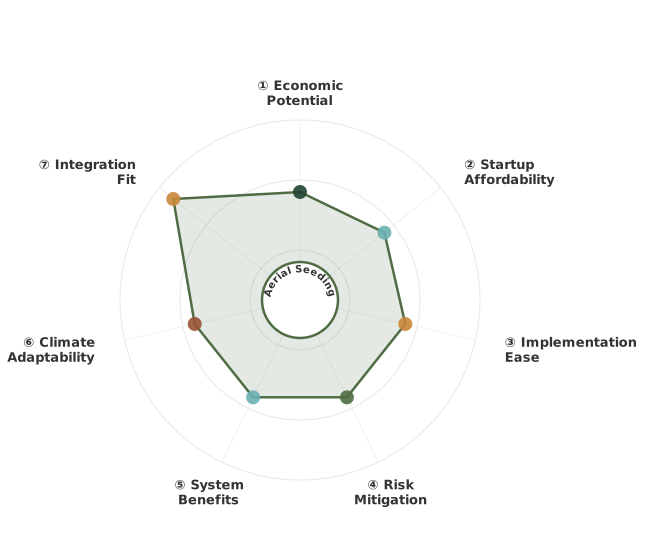
How These Traits Are Calculated
Trait dimensions are ordered clockwise starting from the top of the chart (12 o'clock position):
1. Economic Potential
Financial returns, annual value, and break-even timeline
WHAT: Evaluates financial viability by combining net annual value ($/ha from savings, income, and amortized harvests) with break-even timeline showing when practices pay for themselves.
WHY: Farmers need clear ROI understanding before committing resources. Fast payback (≤3 years) with strong returns (≥$300/ha) enables confident adoption, while long timelines (>10 years) restrict adoption to well-funded operations willing to wait for returns.
HOW: Calculated from net annual value in $/ha and break-even years. Exceptional (≥2.6): fast ROI ≤3 years + high value ≥$300/ha. Typical (1.8-2.5): moderate returns or longer timelines. Limited (<1.8): marginal economics or very long payback >10 years.
2. Startup Affordability
Initial investment costs and financial barrier to entry
WHAT: Measures financial barrier to entry through startup costs for equipment, infrastructure, consulting, and materials. Inverted scoring: lower costs = higher scores = more accessible adoption.
WHY: Affordability determines who can adopt. Low-cost practices (<$250/ha) enable widespread adoption across diverse scales, while high costs (>$2,500/ha) limit adoption to well-capitalized operations, creating barriers that slow regenerative transition.
HOW: Calculated from initial investment parsed from practice content. Inverted scoring: Exceptional (≥2.6): minimal investment <$250/ha. Typical (1.8-2.5): moderate costs $250-2,500/ha. Limited (<1.8): high barrier >$2,500/ha.
3. Implementation Ease
Learning curve and specialized knowledge required
WHAT: Measures how much learning, planning, and specialized knowledge a practice requires. Simpler practices with fewer steps score higher, while complex practices requiring extensive training or specialized resources score lower.
WHY: Complex practices create adoption barriers even when economically viable. Straightforward practices enable faster adoption and broader participation, while those requiring extensive training, timing precision, or specialized equipment limit who can succeed.
HOW: Evaluated by measuring documentation length and identifying complexity markers like location-specific requirements, seasonal timing windows, specialized skills, and dedicated equipment needs. Exceptional (≥2.6): straightforward practices with minimal prerequisites. Typical (1.8-2.5): moderate learning curve with some specialized needs. Limited (<1.8): steep learning curve requiring significant training or resources.
4. Risk Mitigation
Identified financial and ecological risk assessment
WHAT: Evaluates documented risks across financial (investment loss, market volatility) and ecological (crop failure, pest outbreaks) domains. Inverted scoring: fewer risks = higher scores.
WHY: Understanding risk exposure helps farmers make informed decisions. Low-risk practices allow confident implementation, while high-risk practices require careful planning and contingency resources. Risk transparency prevents costly failures.
HOW: Calculated from identified risks in practice content. Inverted scoring: Exceptional (≥2.6): ≤2 risks with manageable severity. Typical (1.8-2.5): 3-5 moderate risks. Limited (<1.8): 6+ risks or severe exposure.
5. System Benefits
How many ways the practice improves your land simultaneously
WHAT: Measures how many aspects of land health improve at once—carbon storage, soil quality, erosion control, water absorption, and biodiversity. Practices that improve multiple areas simultaneously create compounding benefits where each improvement reinforces the others.
WHY: The best practices solve multiple problems at once. For example, addressing erosion simultaneously builds carbon and improves water infiltration, creating a resilient system with positive feedback loops. Single-benefit approaches miss these compound transformation opportunities.
HOW: Evaluated across five key outcomes: carbon sequestration, soil organic matter increase, erosion reduction, water infiltration improvement, and biodiversity enhancement. Exceptional (≥2.6): high carbon storage (>8 t/ha/yr), improvements across 4-5 areas, transformative outcomes. Typical (1.8-2.5): moderate carbon (3-8 t/ha/yr), improvements across 2-3 areas. Limited (<1.8): modest impact (<3 t/ha/yr), single-area focus only.
6. Climate Adaptability
Geographic applicability across Köppen climate zones
WHAT: Evaluates geographic applicability by assessing how many Köppen climate zones successfully support a practice and what adaptation requirements are needed. Measures breadth of climates where farmers can implement with minimal to moderate modifications.
WHY: Universal practices working across diverse climates enable more farmers to adopt regenerative approaches. Practices limited to single climate types (only Mediterranean, only tropical) restrict adoption and slow global transition. Adaptability determines whether a practice serves niche regions or offers broad transformation.
HOW: LLM evaluation of regional success stories, Köppen zone coverage, and adaptation needs. Exceptional (≥2.6): 5+ zones or 4+ climate types, 3+ continents, minimal adaptation. Typical (1.8-2.5): 3-4 zones or 2-3 types, 2 continents, moderate adaptation. Limited (<1.8): 1-2 zones, single region, significant adaptation or highly specialized.
7. Integration Fit
How well this practice combines with others you're doing
WHAT: Measures how well a practice combines with other regenerative practices you might be doing. Some practices work as building blocks that make many other practices easier or more effective, while others work best on their own.
WHY: Practices that combine well with many others create more value on your farm. For example, cover cropping enables no-till, improves grazing, supports crop diversity, and helps water management—making all of them work better together. This helps you build a coherent system rather than juggling disconnected practices.
HOW: Evaluated by identifying which practices combine well and how strong those combinations are. 'Ideally Suited' means strong combinations where practices reinforce each other (practice A makes B easier, while B makes A more effective). 'Adequate' means complementary benefits that work well together. Exceptional (≥2.6): combines well with 6+ practices, serves as a building block. Typical (1.8-2.5): combines with 3-5 practices. Limited (<1.8): 1-2 practices or works best alone.
Going Deeper
1
WHY - The Benefits
Aerial seeding offers a unique set of advantages for farmers and ranchers looking to manage large areas, especially those facing challenges with terrain, existing vegetation, or time constraints. Its benefits span from direct economic efficiencies to crucial ecological...
Aerial seeding offers a unique set of advantages for farmers and ranchers looking to manage large areas, especially those facing challenges with terrain, existing vegetation, or time constraints. Its benefits span from direct economic efficiencies to crucial ecological...
WHY - The Benefits
Aerial seeding offers a unique set of advantages for farmers and ranchers looking to manage large areas, especially those facing challenges with terrain, existing vegetation, or time constraints. Its benefits span from direct economic efficiencies to crucial ecological...
Aerial seeding offers a unique set of advantages for farmers and ranchers looking to manage large areas, especially those facing challenges with terrain, existing vegetation, or time constraints. Its benefits span from direct economic efficiencies to crucial ecological...
Soil Health Benefits
When used strategically, aerial seeding directly contributes to keeping soil covered and maintaining living roots. For instance, seeding diverse cover crop mixes onto harvested corn fields in the US Midwest or across fallow wheat fields in southern Australia after the grain harvest prevents soil erosion by wind and water during the vulnerable inter-crop period. The established cover crops, even if shallow-rooted initially, protect the soil surface and begin to build organic matter through root exudates and eventual biomass decomposition.
In cases of land degradation, such as post-fire recovery in California (Mediterranean climate) or overgrazed rangelands in East Africa (savanna climate), aerial seeding of perennial grasses, legumes, and forbs can rapidly re-establish a vegetative layer. This revitalizes soil biology by providing a food source and habitat, reduces the erosive forces of rain on bare soil, and slowly builds soil organic matter over time.
Economic Benefits
The primary economic driver for aerial seeding is efficiency and speed over large areas. It can cover hundreds or even thousands of hectares (thousands of acres) in a single day, a feat impossible with ground-based equipment. This makes it cost-effective for specific applications where speed is critical or ground access is limited.
For ranchers, renovating vast expanses of degraded pasture that are too steep or rocky for tractors can be done more economically via aerial seeding. Instead of multiple costly passes with ground equipment over many seasons, a single aerial application can introduce a more diverse and productive forage mix. Similarly, large grain farmers can use it to quickly plant cover crops after harvest, a practice that can enhance soil fertility for the following cash crop, potentially reducing future input needs.
The reduced need for heavy ground machinery also means less soil compaction, which is a significant economic factor in agriculture. By avoiding repeated passes of tractors and planters, aerial seeding can help maintain favorable soil structure, reducing the long-term costs associated with yield losses and remediation of compacted soils.
Regenerative Systems Fit
Aerial seeding, when applied thoughtfully, aligns with several core regenerative agriculture principles, primarily acting as a tool to implement or accelerate other regenerative practices.
-
Keep Soil Covered (Principle 3): This is arguably the most direct and consistent benefit. By sowing seeds onto bare or minimally disturbed ground, aerial seeding aids in rapidly establishing a living mulch or protective cover. This is crucial for preventing erosion by wind and water, which is a common problem on large fields, steep slopes, or after harvest when soil is left bare. Seeding diverse cover crops or perennial pasture species using aerial methods ensures continuous soil protection.
-
Maintain Living Roots (Principle 4): The practice's ability to quickly introduce plants means a rapid establishment of living root systems. In agricultural systems that often experience fallow periods, aerial seeding can dramatically shorten or eliminate these bare soil phases, ensuring continuous root activity that supports soil microbial communities, promotes nutrient cycling, and contributes to carbon sequestration. This is particularly valuable for large-scale operations which might otherwise struggle to re-establish cover quickly.
-
Maximize Crop Diversity (Principle 2): Aerial seeding excels at broadcasting complex seed mixes. Farmers and ranchers can sow a broad spectrum of grasses, legumes, forbs, and even small grains simultaneously. This enhanced species diversity above ground translates to greater root diversity below ground, supporting a more robust and resilient soil food web. This is critical for improving soil structure, nutrient availability, and pest resistance in agricultural landscapes.
-
Transition Practice: For farms and ranches transitioning to regenerative systems, aerial seeding can be a powerful transition practice. It allows for the introduction of diverse forage species into existing, possibly degraded monoculture pastures or after conventional crop harvests without extensive soil disturbance or difficult logistical challenges. For example, a rancher in Montana (USA, semi-arid continental, USDA 4) with large, heavily grazed pastures might aerially seed a blend of native grasses and legumes to introduce drought-tolerant species and improve nutritional diversity for their livestock. This doesn't immediately "fix" the soil but initiates the process of building diversity and cover, paving the way for further regenerative management like rotational grazing. The "cold turkey" approach of trying to convert a large, degraded area to no-till pasture overnight might fail due to poor establishment. Aerial seeding offers a pragmatic first step to introduce the desired plant community faster.
The key is that aerial seeding itself does not inherently regenerate soil; it is a method of delivery for plants that can regenerate soil. Its integration into a regenerative system requires careful attention to species selection (choosing plants suited to the local climate and intended purpose) and subsequent management (e.g., establishing appropriate grazing or cover crop termination practices). The ultimate goal is to create a self-sustaining, biologically active system, and aerial seeding can be a crucial catalyst. It is worth noting, however, that some regenerative philosophies prioritize the elimination of all fossil-fuel-dependent machinery and external inputs, viewing practices like aerial seeding as a transitional tool to be eventually replaced by natural regeneration and animal impact.
Sources behind this view
Videos & Podcasts
-
Drone seeding with a 21-species mix onto canola stubble, followed by grazing ('graze follow'), significantly improved soil health over four years, increasing nitrogen and carbon. A diverse plant polyc
-
Details interseeding cover crops (barley, rye, medium red clover) via airplane or drill to increase GDUs, soil organic matter, and carbon sequestration. Discusses planting green, feed production, and
-
Drones enable exciting aerial seeding of cover crops like clover, radishes, and rye grass over existing crops (e.g., corn) for post-harvest grazing. This practice promotes soil health, nitrogen fixati
-
Provides comprehensive guidance on cover crop application methods (aerial, ground, integrated), timing, and equipment selection (drills, air seeders). Emphasizes adequate down pressure, residue manage
Community
-
Successful broadcast seeding requires good soil contact and strategic succession planting, starting with hardy soil-building species. Fall seeding is common, but timing and soil conditions (like sandy
Read more (opens in new window) permies.com
 Research
-
Aerial Seeding Promotes the Restoration of Ecosystem Health in Mu Us Sandy Grasslands in China (opens in new window)
This study found: Aerial seeding effectively restores health in degraded sandy grasslands in China, with plant vitality being a key indicator of success after 30 years.
2
WHERE - Regional Considerations
Aerial seeding is adaptable across a wide range of climates and landscapes, but success is significantly influenced by local conditions, particularly rainfall patterns, temperature regimes, and existing soil types. The effectiveness of seed-to-soil contact and ensuring...
Aerial seeding is adaptable across a wide range of climates and landscapes, but success is significantly influenced by local conditions, particularly rainfall patterns, temperature regimes, and existing soil types. The effectiveness of seed-to-soil contact and ensuring...
WHERE - Regional Considerations
Aerial seeding is adaptable across a wide range of climates and landscapes, but success is significantly influenced by local conditions, particularly rainfall patterns, temperature regimes, and existing soil types. The effectiveness of seed-to-soil contact and ensuring...
Aerial seeding is adaptable across a wide range of climates and landscapes, but success is significantly influenced by local conditions, particularly rainfall patterns, temperature regimes, and existing soil types. The effectiveness of seed-to-soil contact and ensuring...
Click Here to Look up your Region if you don't already know it
Humid Temperate Regions
Representative Locations: Northeastern United States, Northern Europe (e.g., UK, Germany), Eastern China, Japan, New Zealand. Climate Context: Warm to hot summers and cool to cold winters with moderate to high annual precipitation (75-150 cm or 30-60 inches) distributed relatively evenly. USDA Zones 5-7, Köppen Cfb/Cfa. Aerial Seeding Suitability: Highly suitable for establishing pasture mixes, cover crops, and re-vegetating disturbed lands. Consistent rainfall generally ensures good germination and establishment, even with less-than-ideal seed-to-soil contact. It can be used to quickly overseed legumes into existing grass pastures to improve fertility and protein content.
Mediterranean Regions
Representative Locations: California, Mediterranean basin (Spain, Italy, Greece), Central Chile, Southwestern Australia, Western Cape South Africa. Climate Context: Hot, dry summers and mild, wet winters. Annual precipitation 40-90 cm (15-35 inches), highly seasonal. USDA Zones 8-10, Köppen Csa/Csb. Aerial Seeding Suitability: Best applied in late autumn or early spring to coincide with natural rainfall. Species selection must focus on drought-tolerant varieties and those that can establish quickly. Success relies heavily on timing with winter rains; late rains may lead to establishment failure. Often used for rangeland renovation or seeding fire-resilient native species.
Arid/Semi-Arid Regions
Representative Locations: Western USA, North Africa, Central Asia, Interior Australia. Climate Context: Low annual precipitation (<40 cm or 15 inches), high temperatures, short and often unpredictable growing season. USDA Zones 7-9, Köppen BSh/BSk. Aerial Seeding Suitability: Highest risk of failure due to erratic rainfall and high evaporation rates. Requires careful species selection (drought-tolerant natives, deep-rooted perennials) and often needs to be paired with water harvesting techniques (e.g., contour ripping) to concentrate moisture. Success is often dependent on capturing significant rainfall events shortly after seeding. Best used for native plant restoration or maintaining ground cover during very small windows of opportunity.
Cold Continental Regions
Representative Locations: Northern USA and Canada, Northern Europe, Northern Asia. Climate Context: Very short growing seasons, extreme summer heat, severe winter cold. USDA Zones 3-5, Köppen Dfa/Dfb. Aerial Seeding Suitability: Applications are typically limited to early spring or very late summer/early fall seeding windows. Success depends on the chosen species' cold hardiness and ability to establish before temperature extremes. Common uses include seeding winter cover crops or annual forage for short grazing periods. Spring seeding of hardy grasses and legumes for pasture renovation is also feasible.
Subtropical Regions
Representative Locations: Southeastern USA, Southern China, Southern Brazil, Eastern Australia. Climate Context: Hot, humid summers and mild winters with generally ample rainfall. USDA Zones 9-11, Köppen Cfa/Cwa. Aerial Seeding Suitability: Excellent suitability due to long growing seasons and ample moisture. Can be used for overseeding winter forages into summer pastures, establishing cover crops between cash crops, or re-seeding large areas rapidly. The consistent moisture promotes good germination and establishment, making it a reliable tool for intensive forage production and soil health improvement.
Tropical Regions
Representative Locations: Central America, Southeast Asia, East Africa, Northern Australia, Northern South America. Climate Context: High temperatures year-round, with distinct wet and dry seasons or consistent high rainfall. Köppen Af/Am/Aw. Aerial Seeding Suitability: Can be highly effective during the onset of the wet season. Fast-growing, diverse mixes of tropical legumes, grasses, and forbs can be established rapidly to improve forage quality, provide ground cover, and enhance soil fertility. Consideration for heat and disease tolerance is important when selecting species. The practice is particularly useful for rapid re-vegetation on large plantations or degraded pasturages.
3
HOW - Implementation Process
Aerial seeding, while straightforward in concept, requires careful planning and execution to maximize seed success, especially when aiming for regenerative outcomes.
Aerial seeding, while straightforward in concept, requires careful planning and execution to maximize seed success, especially when aiming for regenerative outcomes.
HOW - Implementation Process
Aerial seeding, while straightforward in concept, requires careful planning and execution to maximize seed success, especially when aiming for regenerative outcomes.
Aerial seeding, while straightforward in concept, requires careful planning and execution to maximize seed success, especially when aiming for regenerative outcomes.
Prerequisites
1. Clear Objectives: Define what you want to achieve. Is it erosion control, pasture renovation, cover cropping for soil health, pollinator habitat, or weed suppression? Your objective dictates species selection. 2. Site Assessment: Understand the land's current condition: soil type (texture, pH), degree of compaction, existing vegetation, moisture availability, terrain, and access limitations. This informs species choice and seed mix density. 3. Species Selection: Choose plants adapted to your climate, soil, and objective. For regenerative goals, prioritize diverse mixes: * Cover Crops: Select species suited for your climate and harvest timing (e.g., deep-rooted brassicas, nitrogen-fixing legumes, fibrous-rooted grasses). * Pasture Renovation: Focus on legumes (clover, vetch), deep-rooted perennial grasses, and beneficial forbs known to improve soil fertility and animal nutrition. * Erosion Control/Biodiversity: Use native grasses, wildflowers, and shrubs resilient to local conditions. 4. Seed Viability and Purity: Source high-quality seed from reputable suppliers. Check germination rates and purity. Consider coated seeds for moisture retention or enhanced nutrient delivery if available and cost-effective. 5. Weather Forecast: Monitor weather closely. Optimal conditions include calm winds (ideally <8 km/h or 5 mph to prevent seed drift) and impending rainfall to aid germination. Avoid seeding before strong winds or prolonged dry spells.
Phase 1: Planning and Logistics
1. Ground Truth Information: Before aerial application, scout the target area. Identify problem spots (severe erosion, extreme compaction, dense weed patches) that might affect seed establishment or require special attention. Walk representative areas to understand the vegetative cover and soil conditions.
2. Develop Seed Mix: Create a diverse mix based on objectives and site assessment. For example, a pasture renovation mix might include: * Grasses: Perennial ryegrass, fescue, native prairie grasses (e.g., Big Bluestem in North America, Kangaroo Grass in Australia). * Legumes: White clover, birdsfoot trefoil, alfalfa, vetch varieties. * Forbs: Chicory, plantain, various native wildflowers (e.g., Echinacea, Yarrow). * Target species diversity: 8-15 species. Seed rates are typically higher (1.5x-2x conventional seeding) to compensate for broadcast losses and variable seed-to-soil contact.
3. Seed Procurement: Order seed well in advance, especially for custom mixes. Calculate total seed needed based on recommended rates per hectare/acre and target area.
4. Select Aerial Applicator: Choose a pilot/company experienced in agricultural seeding. Discuss objectives, seed mix, target area, and desired outcome. They can advise on aircraft suitability (Fixed-wing planes for very large areas, helicopters or drones for smaller/more sensitive areas). Drones offer precision application for smaller plots or targeted seeding.
5. Cost Analysis: Obtain quotes for the application service and seed. Compare this to the cost of ground-based methods considering time, labor, and machinery wear.
Phase 2: Application
1. Timing is Crucial: * Cool Season Mixes: Seed in early spring or late fall/early winter, timed with natural rainfall and cooler temperatures that promote germination and early growth. In regions like Ukraine or Canada, late fall seeding of hardy winter cover crops takes advantage of soil moisture and cold stratification. * Warm Season Mixes: Seed at the beginning of the rainy season or after significant rainfall events. For example, ranchers in the Brazilian Cerrado might seed tropical legumes and grasses as the wet season begins. * Avoid Dry Spells: Seeding just before or during extended dry periods significantly reduces success rates.
2. Aircraft Flight Path: Advise the pilot on flight paths to ensure even distribution and to target specific areas if needed. Overlapping passes slightly can improve uniformity. The goal is to distribute seeds adequately over the entire target area.
3. Seed Dispersion Rate: The applicator will set their equipment to a specific dispersal rate based on seed size, density, and desired seeding rate per hectare. For large areas, precise calibration is key to avoid over- or under-seeding.
4. Flight Height and Speed: These are critical for even distribution and seed trajectory. The pilot will adjust these based on aircraft type, seed characteristics, and wind conditions. Higher altitudes can lead to more drift.
Phase 3: Post-Seeding Management
1. Seed-to-Soil Contact: This is the most significant challenge. If seeding into dense sod or thick mulch, success is lower. Consider light harrowing or a light grazing pass after seeding in some scenarios, provided it doesn't bury seeds too deep or cause excessive soil disturbance. In very dry regions, a roller-crimper without residue removal prior to seeding (if using a specialized applicator) or a light pass with a cultipacker might improve contact, but this risks Principle 1 violation. The preferred regenerative approach is to seed into areas with minimal existing surface residue or where existing vegetation is sparse.
2. Moisture Management: Pray for rain! If possible, timing seeding with forecast precipitation is paramount. In some specialized cases (e.g., small, high-value plots), light irrigation may be an option, but this is rare for large-scale aerial seeding.
3. Grazing Management (for pastures/rangelands): * Avoid Grazing Immediately: Allow seedlings to establish for at least 4-8 weeks, or until grasses are well-rooted and legumes have started fixing nitrogen. * Controlled Grazing: Once established, use rotational or adaptive grazing. Move livestock through frequently with adequate rest periods to prevent overgrazing of young plants. This allows the new mix to thicken and compete. High-density, short-duration grazing can sometimes help press seeds into the soil in certain pasture renovation scenarios but needs careful management.
4. Cover Crop Termination (if applicable): If cover crops are seeded between cash crops, plan termination based on their growth stage and the needs of the subsequent crop. Roller-crimping is a preferred regenerative method that leaves residue as mulch.
Transition Timeline & Phase-Out Strategy (If applicable)
Aerial seeding as a transition practice typically focuses on introducing diversity or cover. The "phase-out" isn't of aerial seeding itself, but of the conventional practices it is replacing or enabling transition from.
-
Introducing Diversity into Degraded Pasture:
- Year 1: Aerially seed diverse pasture mix into existing monoculture. Minimal grazing pressure to allow establishment.
- Year 1-2: Observe species establishment. Begin implementing rotational grazing. Reduce or eliminate synthetic fertilizers.
- Year 3-5: As new species take hold and soil biology improves, ground-based methods (e.g., overseeding with planters if needed, controlled grazing) may be used for further refinement. Aerial seeding might be used again for specific species if gaps appear, but the focus shifts to building system resilience.
- Goal: Achieve a stable, diverse, soil-building pasture ecosystem supported by biological processes and adaptive grazing.
-
Cover Cropping Between Cash Crops:
- Year 0: Aerially seed cover crop mix after harvest.
- Year 1: Terminate cover crop via roller-crimping or minimal tillage. Plant subsequent cash crop. Observe soil health improvements.
- Year 2+: Continue aerial seeding or explore no-till planting of cover crops if feasible, aiming for maximum diversity and biomass.
- Goal: Year-round soil cover, increased organic matter, improved water infiltration, reduced soil erosion, and potentially reduced synthetic input needs for cash crops.
Aerial seeding's role diminishes as the land regenerates and becomes more resilient, allowing for more targeted or ground-based establishment methods. However, it remains a valuable tool for large-scale diversity and cover establishment on challenging terrain.
Sources behind this view
Videos & Podcasts
-
Drone seeding with a 21-species mix onto canola stubble, followed by grazing ('graze follow'), significantly improved soil health over four years, increasing nitrogen and carbon. A diverse plant polyc
-
Provides practical guidance on seeding the 'Rejuvenation' blend: direct seeding or broadcasting at 5-10 lbs/acre. Emphasizes the need for patience (1-4 years for establishment) and changes in grazing
-
Details regenerative 'resets' (seasonal vs. conventional), multi-species cropping for diversity, and restoring nutrient cycles. Discusses mechanical tools like Kelly chains, strategic planting times,
-
Discussions on full-season cover crop seeding depth, management in drought, and following crops. Plant diversity is key for resilience. Mycorrhizal-dependent crops like oats and corn thrive after cove
![Thumbnail for [S2E1] Farmer Panel: What Did We Learn in 2021? (Full Season Cover)](/static/thumbnails/pYyNeaEAiC4.jpg)
Community
-
Successful broadcast seeding requires good soil contact and strategic succession planting, starting with hardy soil-building species. Fall seeding is common, but timing and soil conditions (like sandy
Read more (opens in new window) permies.com -
To rehabilitate monocropped land, immediately seed a diverse cover crop blend (oats, wheat, rye, barley, clovers, alfalfa, peas, turnips, daikon, grasses) using hand-sowing or simple equipment, priori
Read more (opens in new window) permies.com -
Advocates broadcast and roll seeding for pastures, using diverse mixes and high plant density, with discussion on wheel hoes and lawn edgers for smaller-scale direct seeding.
Read more (opens in new window) permies.com
4
Know the Debate
Aerial seeding's effectiveness varies significantly by region and scale. In humid areas with reliable rainfall, it's a fast way to establish divers...
Know the Debate
Aerial seeding's effectiveness varies significantly by region and scale. In humid areas with reliable rainfall, it's a fast way to establish divers...
Aerial seeding's effectiveness varies significantly by region and scale. In humid areas with reliable rainfall, it's a fast way to establish diverse cover crops or pasture. However, in semi-arid rangeland, success is highly dependent on capturing limited moisture, demanding careful timing and species selection. Initial investment can range from $80/ha for large-scale operations to over $450/ha for specialized mixes or small acreages. Labor is minimal for application, but successful establishment requires significant follow-up management over 1-5 years for full regenerative benefits.
Cover crop establishment success: aerial vs. ground seeding?
Drilled/Incorporated (Higher Success Rate)
Ground methods like drilling or shallow incorporation offer superior seed-to-soil contact and depth control, leading to more consistent germination and establishment of cover crops and forages. This generally leads to higher yields and more reliable results, particularly in drier conditions or when seeding into challenging residue.
Sources behind this view
Sources behind this view
Videos & Podcasts
-
Drilling cover crops is the preferred method for optimal seed-to-soil contact and depth control. Broadcasting is less reliable, requiring multiple rains for germination, but can be a necessary option when access to the field is limited.
Research
-
A Comparison of Drill and Broadcast Methods for Establishing Cover Crops on Beds (opens in new window)
This study found: A study in Salinas, California, compared two ways of planting cover crops: using a drill seeder versus scattering seeds (broadcasting) and then working them into the soil with different tools (rototiller, cultivator, or disc). The research found that using a drill seeder or broadcasting seed followed by a rototiller resulted in more even cover crop stands. Plants also sprouted faster and in greater numbers when drilled. Drilled seeds were planted about 2 cm deep, while broadcast seeds were found emerging from much deeper, up to 11 cm, especially when incorporated with a disc or rototiller. For broadcasting to work as well as drilling, farmers might need to use 50% to 100% more seed. The cultivator and rototiller were the best tools for incorporating broadcast seed on raised beds.
-
Establishment of pasture on yellow‐brown loams near te anau (opens in new window)
This study found: A study on a specific soil type (yellow-brown loam) near Te Anau, New Zealand, found that planting pasture seeds in rows using a drill was much more effective than scattering them by hand or machine. When using a phosphate fertilizer (reverted superphosphate), drilling 3 cwt/acre (about 336 kg/ha) gave similar results to broadcasting 7.5 cwt/acre (about 840 kg/ha). Drilling even more fertilizer (7.5 cwt/acre) was far better than broadcasting the same amount. The researchers recommend using a drill for better pasture success and to potentially use less fertilizer.
 From the Web
-
Provides detailed instructions on pasture seeding techniques: frost seeding, no-till (into cover crops or established pastures), and prepared seedbeds. Covers seeding depth (1/4-1/2 inch for loam/clay, deeper for sand) and rates based on seed size, emphasizing erosion control and moisture retention with no-till.
Aerial/Broadcast (Speed & Access Focus)
Aerial seeding provides unmatched speed and access for large areas, remote terrain, or over existing crops. While germination can be less reliable due to poor seed-to-soil contact, success is achievable with higher seeding rates, good timing with rain, and follow-up practices like light grazing or rolling.
Sources behind this view
Sources behind this view
Videos & Podcasts
-
Aerial application via airplane is the primary cover crop seeding method, offering speed, timing flexibility, and cost-effectiveness for large acreages, though sensitive to wind and requiring pilot skill for precise coverage.
-
Drones enable exciting aerial seeding of cover crops like clover, radishes, and rye grass over existing crops (e.g., corn) for post-harvest grazing. This practice promotes soil health, nitrogen fixation, potential carbon credit income, and requires a clean seedbed for success.
Research
-
A comparison of broadcast and drill methods for no-till seeding winter wheat (opens in new window)
This study found: A two-year study in Saskatchewan compared two ways of planting winter wheat without tilling the soil: broadcasting seed from the air versus using a conventional drill. Planting winter wheat without tilling is important in western Canada to trap snow for protection. The study found that broadcasting seed resulted in less successful seedling establishment and lower overall grain yields compared to using a drill. While broadcasting is faster and can help avoid conflicts with spring crop harvest, it requires much higher seeding rates (up to 202 kg/ha, or about 180 lbs/acre) and relies heavily on timely rainfall after seeding, increasing the risk of crop failure. The best time for broadcast seeding was found to be August 15th.
-
Application Rate Accuracy and Distribution Uniformity of Cover Crop Seeding with an Unmanned Aerial System (UAS) (opens in new window)
This study found: This research tested how accurately and evenly a drone (DJI Agras T25) could spread cereal rye cover crop seed. The study found that the drone actually applied less seed than expected, between 9.5% and 17.7% under-application, regardless of the target rate or flight speed. The seed distribution was not uniform, with more seed landing to the left of the drone's path than to the right. While the drone's speed and the amount of seed targeted didn't change how evenly the seed was spread when overlapping passes, applying seed in one direction was better than a progressive method. The study suggests that narrower application widths didn't significantly improve evenness. Future research should look at other factors like application height and spinner speed, and test different seed types.
From the Web
-
Successful aerial seeding of cover crops requires timing overseeding to corn's black layer (or soybean's first yellow leaves), securing seed and pilot services, ensuring adequate rainfall (0.5"+), and an on-time harvest to allow cover crop growth.
Making Sense of the Differences
Ground methods like drilling offer more consistent establishment due to better seed-to-soil contact and depth control. Aerial seeding's advantage is speed and access to large or difficult areas. Success with aerial methods depends heavily on timing with rainfall, using higher seeding rates, species selection adapted for broadcasting, and potentially follow-up management like light grazing to improve seed-soil contact. Consider your specific climate, soil conditions, and available equipment.
5
HOW MUCH - Costs & Investment
Note: All costs are in USD equivalent. Multiply by local currency indices for materials and labor. Labor costs vary significantly by country and region.
Note: All costs are in USD equivalent. Multiply by local currency indices for materials and labor. Labor costs vary significantly by country and region.
HOW MUCH - Costs & Investment
Note: All costs are in USD equivalent. Multiply by local currency indices for materials and labor. Labor costs vary significantly by country and region.
Note: All costs are in USD equivalent. Multiply by local currency indices for materials and labor. Labor costs vary significantly by country and region.
Note: All costs are based on recent US economic data (2024–2026) and may vary substantially by region based on local labor rates, material costs, and regulatory requirements.
Seed Procurement and Logistics
Seed procurement represents the foundational investment in aerial seeding projects. Pricing is dictated heavily by the economy of scale and the complexity of the botanical mix. For small-scale operations (under 50 acres (20 ha)), producers typically purchase seed at retail prices, resulting in investments of $30 to $50 per acre ($74–$124/ha). These operators often require higher-diversity mixes to achieve ecological restoration goals, which command premium pricing. Mid-size operations (50–500 acres (20–202 ha)) typically leverage regional agricultural cooperatives, utilizing economies of scale to bring procurement costs down to $20 to $40 per acre ($49–$99/ha). Large-scale operations (500+ acres) capitalize on direct-to-wholesaler procurement, focusing on standard cover crop species like annual ryegrass or cereal rye, which lowers costs to $15 to $35 per acre ($37–$86/ha). Specialized, high-density requirements for forest restoration or heavy-use buffers necessitate larger seed volumes, which can push these figures up by an additional 25–40% per acre. Logistics costs—including shipping and localized storage—are often bundled into these tiers, but operators in remote areas should allocate a 10% contingency fund to cover additional freight or specialized delivery requirements.
Aerial Application and Mobilization
Application fees are bifurcated between a base per-acre charge and a mobilization (or "ferry") fee. For small-scale projects, the logistical burden of flying equipment to a localized site drives costs to $35 to $60 per acre ($86–$148/ha). This tier often involves a flat minimum-trip fee if the acreage is significantly small, effectively raising the price-per-acre threshold. Mid-size operations (50–500 acres (20–202 ha)) occupy a more efficient economic space, typically seeing fees of $20 to $45 per acre ($49–$111/ha) as the distance between flight paths and hangars is mitigated by flight duration efficiencies. Large-scale operations (500+ acres) benefit from the deployment of high-payload fixed-wing aircraft or coordinated drone swarms, which streamline flight-path optimization and reduce the total cost to $12 to $35 per acre ($30–$86/ha). Operators should note that fuel surcharges remain a significant variable in the 2024–2026 market, adding an additional $2 to $5 per acre ($4.9–$12/ha) for sites located more than 50 miles (80 km) from the nearest flight hub.
Site Preparation and Follow-up Management
Successfully establishing an aerially seeded stand requires more than the application itself; it requires management of the seed-to-soil interface. Pre-application ground work—including roller-crimping existing stubble, light grazing to reduce canopy cover, or chemical termination—costs between $15 and $40 per acre ($37–$99/ha). Given that seed germination is the primary point of failure, investing in technology is standard practice. Specialized coatings, including polymer-based moisture retainers or lime-based inoculants, typically add $8 to $20 per acre ($20–$49/ha). While these costs represent an "extra" expense, they are essential for success in low-moisture environments. Follow-up activities, such as precision mowing or light harrowing to promote contact in thin patches, should account for 10–15% of the total budget. Failure to allocate this secondary funding often results in stand failure, which may force a secondary seeding or "spot repair" using ground-based drill equipment, effectively doubling the cost of the initial project.
Most Spend: Most agricultural operations fall within the range of $45 to $105 per acre ($111–$259/ha). This middle 60% encompasses standard, mid-sized cover crop applications utilizing fixed-wing aircraft where moisture conditions and site accessibility are classified as average.
Why the Range?: The primary drivers of cost variance are the site's proximity to regional airports (driving mobilization/ferry fees) and the complexity of the seed mix. Smaller properties face higher per-acre premiums due to mobilization minimums, while operations with complex native species requirements face significant supply chain costs compared to those utilizing standard commodities.
Sources behind this view
Videos & Podcasts
-
Provides comprehensive guidance on cover crop application methods (aerial, ground, integrated), timing, and equipment selection (drills, air seeders). Emphasizes adequate down pressure, residue manage
-
Discussions on full-season cover crop seeding depth, management in drought, and following crops. Plant diversity is key for resilience. Mycorrhizal-dependent crops like oats and corn thrive after cove
-
Cover crops provide economic benefits through reduced seeding costs (optimizing rates, creative application), grazing (virtual fencing), nitrogen fixation from legumes, weed suppression (especially ce

-
Aerial application via airplane is the primary cover crop seeding method, offering speed, timing flexibility, and cost-effectiveness for large acreages, though sensitive to wind and requiring pilot sk
Community
-
Discusses equipment and techniques for direct drilling and overseeding pasture and crop seeds, including rental options for specialized no-till seeders and older farm drills suitable for quad bikes, e
Read more (opens in new window) permies.com -
Practical guidance on establishing cover crops, covering site preparation, preferred seeding methods (drilling, broadcasting with incorporation), early planting, legume inoculation, and calculating se
Read more (pp. 2-3) (opens PDF, pp. 2-3) efotg.sc.egov.usda.gov
Research
-
Farmers employ diverse cover crop management strategies to meet soil health goals (opens in new window)
This study found: Farmers use diverse cover crop methods, with costs around $99/ha. 'Planting green' increased. Varied practices and uncertain profitability make adoption challenging.
-
Farmers employ diverse cover crop management strategies to meet soil health goals (opens in new window)
This study found: Farmers use diverse cover crop strategies, with costs averaging $99/hectare. Experimentation and varied practices make predicting profitability challenging.
6
REWARDS AND RISKS - Economics & Risk Factors
Aerial seeding presents a mixed economic profile. While it offers cost-efficiencies in certain scenarios, risks related to establishment success and subsequent management can significantly impact financial outcomes.
Aerial seeding presents a mixed economic profile. While it offers cost-efficiencies in certain scenarios, risks related to establishment success and subsequent management can significantly impact financial outcomes.
REWARDS AND RISKS - Economics & Risk Factors
Aerial seeding presents a mixed economic profile. While it offers cost-efficiencies in certain scenarios, risks related to establishment success and subsequent management can significantly impact financial outcomes.
Aerial seeding presents a mixed economic profile. While it offers cost-efficiencies in certain scenarios, risks related to establishment success and subsequent management can significantly impact financial outcomes.
Aerial seeding functions as a strategic bet on soil health stability, with economics heavily tied to weather outcomes. In a best-case scenario—typically found in the US Midwest—a producer seeds a diverse cover crop into standing crops during the "yellowing" phase. If rainfall triggers timely germination, the stand achieves 75%+ success rates. The resulting biomass (1.5 to 2 tons (1.8 tonnes) of dry matter) provides 40 to 60 lbs (27 kg) of nitrogen per acre for the following crop, yielding a 10–15% boost in the next year's harvest. This surplus generally equates to $60–$90 per acre ($148–$222/ha) in net revenue, allowing the operation to recover the initial $50–$70 investment within a single cycle.
A typical scenario involves a rancher utilizing aerial seeding for pasture renovation. Following a stable rainfall year, a $80 per acre ($198/ha) investment in a multi-species mix provides a 50% successful establishment, leading to a 10–15% increase in seasonal forage production. This translates to $25–$40 per acre ($62–$99/ha) in annual livestock weight-gain revenue. In this model, the producer approaches the break-even point in year 2 or 3, with the secondary reward of long-term land valuation appreciation as organic matter accumulates.
Worst-case scenarios, however, are driven by severe weather volatility. If an operator allocates $120 per acre ($297/ha) for seed and aerial application and encounters a sustained dry spell during the critical 14-day germination window, the stand may fail completely. This represents a total loss of $120 per acre ($297/ha) in capital, combined with the opportunity cost of the lost management cycle.
Risk mitigation is essential for high-cost operations. Deploying "precision placement" drone technology, while carrying an overhead of $20–$30 per acre ($49–$74/ha) above fixed-wing rates, significantly improves seed-to-soil contact, often serving as an insurance policy against total failure.
Transition Period Risks are particularly acute for producers moving from conventional, synthetic-dependent systems to regenerative aerial seeding practices. During the first 1–3 years, the soil microbiome may experience restricted nutrient cycling, often resulting in a 5–10% temporary yield dip. To insulate the enterprise, managers must budget at least $30 per acre ($74/ha) in "resilience capital." This fund is dedicated exclusively to supplemental biological amendments and potential reseeding. By smoothing the transition, producers preserve the long-term potential for soil structure improvement without compromising essential cash-flow stability during the farm’s conversion phase.
Sources behind this view
Videos & Podcasts
-
Drone seeding with a 21-species mix onto canola stubble, followed by grazing ('graze follow'), significantly improved soil health over four years, increasing nitrogen and carbon. A diverse plant polyc
-
Explains combining cover crop seeding with harvest using Gandy seeders on draper heads (annual ryegrass/clover mix) or a Valmar on corn heads (annual ryegrass/turnip mix). Emphasizes efficiency, resid
-
Key factors for cover crop interceding include seed selection (species, mix, size), seeding rate, purpose, application method (homemade, aerial, drone, high clearance), and critical timing. Seed size

-
Drones enable exciting aerial seeding of cover crops like clover, radishes, and rye grass over existing crops (e.g., corn) for post-harvest grazing. This practice promotes soil health, nitrogen fixati
Community
-
Details cover crop termination methods, nutrient cycling (N scavenging/fixing, P availability), bio-controls, weed/pest/disease management, and specific mix recommendations. Emphasizes soil testing, r
Read more (pp. 10-20) (opens PDF, pp. 10-20) efotg.sc.egov.usda.gov -
Offers practical guidance on cover crop implementation, covering equipment, residue management, climate/weather considerations, establishment techniques, seeding methods (broadcast vs. drill), water m
Read more (pp. 8-10) (opens PDF, pp. 8-10) efotg.sc.egov.usda.gov -
Seven strategies accelerate cover crop ROI: managing weeds, grazing, addressing compaction, transitioning to no-till, improving soil moisture, managing nutrients (using legumes like Hairy Vetch/Austri
Read more (opens in new window) sustainableagriculture.net -
Research shows cover crop termination methods affect N availability (roll-killed hairy vetch best). Early corn allows better seeding timing. Aerial seeding can establish cover crops earlier. Cover cro
Read more (opens in new window) sustainableagriculture.net
Research
-
Drill and broadcast establishment methods influence interseeded cover crop performance in organic corn (opens in new window)
This study found: Interseeding cover crops into organic corn using a drill or broadcast method showed similar corn yields and nitrogen retention. Broadcasting may be more cost-effective. Post-harvest cereal rye outperf
-
Establishment and Function of Cover Crops Interseeded into Corn (opens in new window)
This study found: Planting cover crops between growing corn using a drill or light soil disturbance improved establishment and reduced soil nitrogen. Careful termination is key to avoid impacting subsequent soybean yie
-
Evaluating Cover Crops for Benefits, Costs and Performance within Cropping System Niches (opens in new window)
This study found: Review of cover crops highlights benefits (pest control, soil health, yield) and costs. Best species identified for different seasons/regions. Rye excels in winter, C4 grasses in summer. Legumes fix N
-
Optimizing cover crop practices as a sustainable solution for global agroecosystem services. (opens in new window)
This study found: Optimized cover crop strategies (long-term, no-till, legume/non-legume mix, residue mulch) significantly boost farm ecosystem services, including crop yields, carbon capture, and erosion control, whil
7
COMPATIBLE PRACTICES - Integration Opportunities
Aerial seeding is rarely a standalone solution for regenerative agriculture. Its true value lies in how it integrates with and supports other practices, acting as a rapid catalyst for plant establishment and soil health.
Aerial seeding is rarely a standalone solution for regenerative agriculture. Its true value lies in how it integrates with and supports other practices, acting as a rapid catalyst for plant establishment and soil health.
COMPATIBLE PRACTICES - Integration Opportunities
Aerial seeding is rarely a standalone solution for regenerative agriculture. Its true value lies in how it integrates with and supports other practices, acting as a rapid catalyst for plant establishment and soil health.
Aerial seeding is rarely a standalone solution for regenerative agriculture. Its true value lies in how it integrates with and supports other practices, acting as a rapid catalyst for plant establishment and soil health.
Diverse Cover Cropping
- Integration: Aerially seed complex mixes of grasses, legumes, and forbs between cash crop cycles or onto fallow land.
- Benefit: Rapidly establishes plant cover, increases soil organic matter, enhances soil biology, improves water infiltration, and reduces erosion. This is arguably the most powerful regenerative application for aerial seeding.
Rangeland Renovation
- Integration: Use aerial seeding to introduce drought-tolerant native grasses, legumes, and forbs onto degraded or eroded rangelands, often following light mechanical preparation like contour ripping in arid areas.
- Benefit: Rapidly re-establishes vegetative cover to prevent erosion, improves forage quality and quantity for livestock, increases biodiversity, and enhances ecosystem function on vast landscapes.
Rotational/Adaptive Grazing
- Integration: Aerially seed pasture renovation mixes (legumes, diverse grasses, forbs) into existing pastures, then manage livestock with tightly controlled grazing periods and long rest phases.
- Benefit: Introduces more nutritious and diverse forage, improves animal health and productivity, builds soil fertility through manure and urine, and supports long-term pasture resilience.
No-Till Farming
- Integration: Use aerial seeding to establish cover crops after cash crop harvest, followed by terminating the cover crop with a roller-crimper or minimal disturbance methods before planting the next cash crop no-till.
- Benefit: Maintains soil structure, minimizes erosion, conserves moisture, builds soil organic matter by keeping soil covered and roots active year-round.
Pollinator Habitat Development
- Integration: Aerially seed mixes of native wildflowers and beneficial forbs on field margins, buffer strips, or dedicated conservation areas.
- Benefit: Supports beneficial insect populations (pollinators, pest predators), enhances biodiversity, and contributes to a more resilient farm ecosystem.
Keyline Design / Water Harvesting
- Integration: Aerially seed cover crops or perennial species after contour ripping or other water-harvesting earthworks have been implemented.
- Benefit: Seed establishment is enhanced by concentrated moisture, accelerating vegetation recovery and soil improvement on sloped or eroded land.
Synergy Rating Explanation:
Aerial seeding's role in a regenerative system is often as an initial accelerator – quickly establishing the plant communities that will then be managed through other regenerative practices to build long-term soil health and ecosystem function.
Sources behind this view
Videos & Podcasts
-
Details interseeding cover crops (barley, rye, medium red clover) via airplane or drill to increase GDUs, soil organic matter, and carbon sequestration. Discusses planting green, feed production, and
-
Utilize multi-species cover crops based on specific 'resource concerns' to improve soil health, nitrogen fixation, and water retention. Integrate livestock for grazing, calving, and overwintering, enh
-
Farmers detail diverse cover cropping mixes (rye, vetch, oats, flax, sunflowers, peas, canola) and polyculture systems to boost soil health and reduce inputs. They emphasize continuous living roots, l
-
Drone seeding with a 21-species mix onto canola stubble, followed by grazing ('graze follow'), significantly improved soil health over four years, increasing nitrogen and carbon. A diverse plant polyc
Research
-
Drill and broadcast establishment methods influence interseeded cover crop performance in organic corn (opens in new window)
This study found: Interseeding cover crops into organic corn using a drill or broadcast method showed similar corn yields and nitrogen retention. Broadcasting may be more cost-effective. Post-harvest cereal rye outperf
-
Regenerative Agriculture: Insights and Challenges in Farmer Adoption (opens in new window)
This study found: Review of 7 regenerative agriculture practices (no-till, crop rotation, cover crops, etc.) highlights benefits and key adoption challenges like cost, farm size, and institutional barriers for scalable