
Alley Cropping
Alley cropping is an agroforestry practice that integrates trees into crop production systems by planting rows of trees or shrubs with wide alleys between them. These alleys are then used for growing annual crops, perennial forages, or raising livestock. This system aims to diversify farm income streams, enhance biodiversity, improve soil health, and create multiple ecological benefits.
Read More: Complete Description
Alley cropping weaves trees and crops together on the same piece of land, creating a layered agricultural system that leverages the strengths of both components. At its core, the practice involves establishing permanent rows of trees or shrubs, spaced 15-30 meters (50-100 feet) apart. Within the wide alleys between these tree rows, farmers can cultivate annual crops (like grains, vegetables, or oilseeds), manage perennial forages for livestock grazing, or incorporate other agroforestry elements. The trees provide numerous benefits to the crops and livestock in the alleys, and in return, the management of the alleys can support the health and growth of the trees.
This practice aligns powerfully with regenerative agriculture principles. By incorporating perennial woody plants, alley cropping inherently supports keeping soil covered (Principle 3) and maintaining living roots (Principle 4) year-round, contributing to continuous soil biological activity and structure building. The integration of multiple species—trees, understory crops, and potentially livestock—significantly maximizes crop diversity (Principle 2) above and below ground. Depending on the establishment method, minimizing soil disturbance (Principle 1) can be achieved, especially if no-till planting is used for alley crops and trees are established with minimal site disruption. Finally, if livestock are integrated into the cropped alleys or forage areas, it directly supports integrating livestock (Principle 5) for nutrient cycling and soil building.
The benefits of alley cropping are multifaceted. By shading crops, trees can reduce heat stress, conserve soil moisture, and lower irrigation needs, especially in warmer climates. They can also act as windbreaks, reducing wind erosion and potential crop damage. Nutrients like nitrogen can be 'pumped' up from deeper soil layers by tree roots and then deposited on the surface through leaf litter, improving fertility in the alleys. Trees can also host beneficial insects that help control crop pests, and the overall biodiversity of the farm ecosystem is enhanced. For the trees themselves, annual crops or managed forage in the alleys can provide early-season nutrients and moisture, aiding their establishment and growth, particularly in the first few years.
Alley cropping is a context-dependent practice, meaning its regenerative impact depends heavily on how it's implemented. When used to foster monocultures or relies heavily on synthetic inputs to maintain crop yields in the alleys, it risks becoming extractive. However, when designed to enhance species diversity, build soil organic matter, reduce reliance on external inputs, and diversify income, it becomes a potent regenerative tool. For instance, planting nitrogen-fixing trees like black locust or alder can reduce the need for synthetic nitrogen fertilizers in the alleys, directly supporting regenerative goals.
The management of an alley cropping system requires careful consideration of tree species selection, tree spacing, and the choice of alley crops or livestock. Tree species should be chosen based on their suitability to the local climate, soil type, and their potential secondary products (timber, nuts, fruit, fodder, biomass). Spacing needs to balance light penetration for the alley crops/forages with the shade and windbreak benefits from the trees. The management of the alleys must also consider the long-term needs of the trees, avoiding practices that could damage them or impede their growth. For example, heavy machinery or intensive grazing in the alleys needs to be managed to prevent compaction and physical damage to young trees.
Farmers and land managers globally are adopting alley cropping to build resilience into their farming systems. Systems range from large-scale timber plantations with corn or soybean alleys in temperate regions like North America and Europe, to systems integrating fruit trees with vegetables in Mediterranean climates, or nut trees with staple crops in Asia. In tropical and subtropical regions, alley cropping with nitrogen-fixing trees like Leucaena or Gliricidia can provide shade, fodder, and fertility for intercropped food crops, supporting smallholder farms. The adaptability of alley cropping to diverse climates and farming scales makes it a valuable tool for ecological and economic sustainability.
While the long-term benefits of alley cropping are significant, establishment requires patience and investment. Trees take several years to reach a size where they provide substantial benefits like shade or windbreak effect. During this establishment phase, alley productivity might be temporarily reduced, and protection for young trees from livestock or pests is crucial. However, with strategic planning and management, the integrated system can lead to greater overall farm productivity, enhanced ecosystem services, and a more resilient and profitable agricultural landscape.
Sources behind this view
Sources behind this view
 Videos & Podcasts
-
Alley cropping integrates trees/shrubs with annual crops on challenging land to rebuild soil, control erosion, improve water quality, and sequester carbon. It requires careful spacing (2-3x mature tre

-
Alley cropping integrates crops/forages between rows of trees/shrubs to diversify income, improve soil/water quality, and enhance habitat. It requires intensive management and market development, serv

-
Agroforestry, using alley cropping with wide tree spacing (24-36m), integrates trees (spruce, fruit, nut) with arable crops, creating 'three-dimensional farming' for diversity and carbon fixation.

-
Stephen Briggs shares practical insights on implementing a 24m alley cropping system with fruit trees, including advance planning, establishment challenges, pest management, economic returns (5-8 year

 Community
-
Alley cropping design integrates earthworks like keyline design for water distribution and parallel tree rows, often emulating oak savannahs. Tree spacing maximizes sunlight in alleys, supporting crop
Read more (opens in new window) permies.com -
Mark Shepard's agroforestry model integrates tree crops in rows with row crops in alleys, managed by rotational livestock grazing. This system enhances diversity, efficiency, and soil health through c
Read more (opens in new window) permies.com -
Alley cropping significantly improves soil erosion (sheet, rill, wind, ephemeral gully), organic matter, and water quality by reducing runoff and increasing infiltration. It also enhances air quality,
Read more (pp. 1-2) (opens PDF, pp. 1-2) efotg.sc.egov.usda.gov -
Designs an alley cropping food forest with 60ft row spacing for integrated harvest and animal fodder. Includes multiple plant layers from trees to annuals, emphasizing wildlife and natural fertilizati
Read more (opens in new window) permies.com
 Research
-
Frontiers in alley cropping: Transformative solutions for temperate agriculture. (opens in new window)
This study found: Alley cropping (trees with crops) offers climate benefits by reducing emissions and improving land use. Expanding to diverse tree mixes and tree crops can further enhance these benefits and farm resil
-
Soil Organic Carbon in Alley Cropping Systems: A Meta-Analysis (opens in new window)
This study found: Alley cropping can increase soil carbon over time, especially in low-carbon and tropical areas. Tree species and row spacing are key design factors.
-
Agroforestry: The North American Perspective (opens in new window)
This study found: Agroforestry integrates trees with crops/livestock, offering environmental benefits like climate adaptation and mitigation. Key North American practices include alley cropping, silvopasture, and ripar
-
Assessing the benefits of temperate cropland agroforestry for promoting soil biological health (opens in new window)
This study found: Farm trees (agroforestry) boost soil life, increasing microbes and soil animals, offering significant soil health benefits that can surpass other sustainable practices.
 From the Web
-
Alley cropping integrates trees/shrubs with crops in rows, offering ecological benefits like improved soil health, biodiversity, and reduced erosion. Key practices include selecting complementary spec
-
Alley cropping integrates crops between tree rows, with alley width based on equipment. It combats erosion, improves water/nutrient retention, and buffers against drought, with benefits often outweigh
-
A Swedish CAP-funded project implemented alley cropping on 25 hectares, integrating fruit and nut trees (apple, hazel, walnut) with arable crops. The initiative focused on enhancing farm resilience, s
-
Alley cropping integrates trees/shrubs with horticultural crops, offering ecological benefits like improved soil health, biodiversity, and carbon sequestration, alongside economic advantages through d
Key Points
What It Is
- Trees and crops grown in alternating strips
- Spacing: 15-30 m (50-100 ft) between tree rows
- Integrates woody perennials with annuals/livestock
- Diversifies agroecosystems and farm income
Why Do It
- Enhances biodiversity and multi-layered production
- Builds soil health and conserves water
- Provides valuable timber, nut, or fodder products
- Reduces wind erosion and pest pressure
Know the Debate
- Economic returns vary widely, often taking 10-20 years for significant tree product income.
- Species choice and management intensity critically affect profitability and establishment time.
- Early profits rely on alley crops or livestock, as trees mature slowly.
- Government cost-share programs can significantly reduce initial investment.
- Integration with other practices amplifies benefits and resilience.
Benefits - Financial
- Net income increases 20-60% by year 15 through diversified revenue streams.
- Input cost savings of 15-25% annually through enhanced nutrient cycling.
- Land value appreciation of 15-20% due to improved soil health.
Benefits - System
- Supports 4/5 regenerative principles (diversity, cover, living roots, livestock integration)
- Increases soil organic matter 0.5-1.5%
- Improves water infiltration by 30-60%
- Enhances beneficial insect populations
Risks - Financial
- Setup costs of $5,210-12,504 per acre ($12,874–$30,898 per hectare) before potential cost-share programs.
- Initial yield reduction of 15-20% in alleys during years 1-5.
- Potential 40-60% mortality rate due to poor site management.
Risks - System
- Tree species selection critical for climate match
- Competition for water/light if spacing too narrow
- Requires careful management to protect young trees
- Risk of introducing invasive tree species
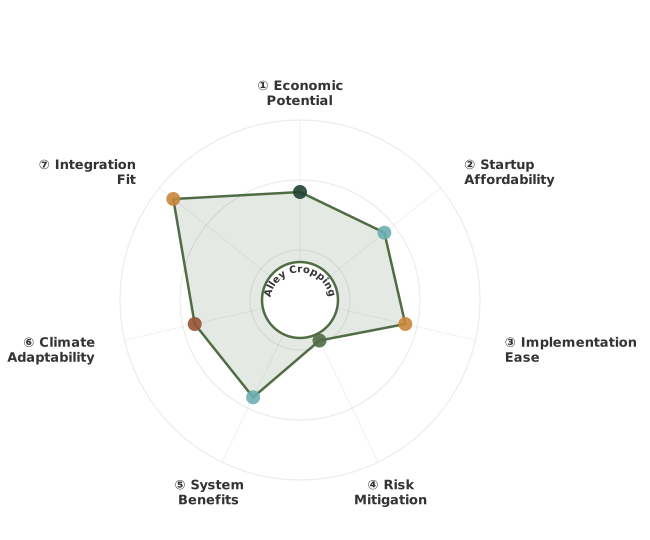
How These Traits Are Calculated
Trait dimensions are ordered clockwise starting from the top of the chart (12 o'clock position):
1. Economic Potential
Financial returns, annual value, and break-even timeline
WHAT: Evaluates financial viability by combining net annual value ($/ha from savings, income, and amortized harvests) with break-even timeline showing when practices pay for themselves.
WHY: Farmers need clear ROI understanding before committing resources. Fast payback (≤3 years) with strong returns (≥$300/ha) enables confident adoption, while long timelines (>10 years) restrict adoption to well-funded operations willing to wait for returns.
HOW: Calculated from net annual value in $/ha and break-even years. Exceptional (≥2.6): fast ROI ≤3 years + high value ≥$300/ha. Typical (1.8-2.5): moderate returns or longer timelines. Limited (<1.8): marginal economics or very long payback >10 years.
2. Startup Affordability
Initial investment costs and financial barrier to entry
WHAT: Measures financial barrier to entry through startup costs for equipment, infrastructure, consulting, and materials. Inverted scoring: lower costs = higher scores = more accessible adoption.
WHY: Affordability determines who can adopt. Low-cost practices (<$250/ha) enable widespread adoption across diverse scales, while high costs (>$2,500/ha) limit adoption to well-capitalized operations, creating barriers that slow regenerative transition.
HOW: Calculated from initial investment parsed from practice content. Inverted scoring: Exceptional (≥2.6): minimal investment <$250/ha. Typical (1.8-2.5): moderate costs $250-2,500/ha. Limited (<1.8): high barrier >$2,500/ha.
3. Implementation Ease
Learning curve and specialized knowledge required
WHAT: Measures how much learning, planning, and specialized knowledge a practice requires. Simpler practices with fewer steps score higher, while complex practices requiring extensive training or specialized resources score lower.
WHY: Complex practices create adoption barriers even when economically viable. Straightforward practices enable faster adoption and broader participation, while those requiring extensive training, timing precision, or specialized equipment limit who can succeed.
HOW: Evaluated by measuring documentation length and identifying complexity markers like location-specific requirements, seasonal timing windows, specialized skills, and dedicated equipment needs. Exceptional (≥2.6): straightforward practices with minimal prerequisites. Typical (1.8-2.5): moderate learning curve with some specialized needs. Limited (<1.8): steep learning curve requiring significant training or resources.
4. Risk Mitigation
Identified financial and ecological risk assessment
WHAT: Evaluates documented risks across financial (investment loss, market volatility) and ecological (crop failure, pest outbreaks) domains. Inverted scoring: fewer risks = higher scores.
WHY: Understanding risk exposure helps farmers make informed decisions. Low-risk practices allow confident implementation, while high-risk practices require careful planning and contingency resources. Risk transparency prevents costly failures.
HOW: Calculated from identified risks in practice content. Inverted scoring: Exceptional (≥2.6): ≤2 risks with manageable severity. Typical (1.8-2.5): 3-5 moderate risks. Limited (<1.8): 6+ risks or severe exposure.
5. System Benefits
How many ways the practice improves your land simultaneously
WHAT: Measures how many aspects of land health improve at once—carbon storage, soil quality, erosion control, water absorption, and biodiversity. Practices that improve multiple areas simultaneously create compounding benefits where each improvement reinforces the others.
WHY: The best practices solve multiple problems at once. For example, addressing erosion simultaneously builds carbon and improves water infiltration, creating a resilient system with positive feedback loops. Single-benefit approaches miss these compound transformation opportunities.
HOW: Evaluated across five key outcomes: carbon sequestration, soil organic matter increase, erosion reduction, water infiltration improvement, and biodiversity enhancement. Exceptional (≥2.6): high carbon storage (>8 t/ha/yr), improvements across 4-5 areas, transformative outcomes. Typical (1.8-2.5): moderate carbon (3-8 t/ha/yr), improvements across 2-3 areas. Limited (<1.8): modest impact (<3 t/ha/yr), single-area focus only.
6. Climate Adaptability
Geographic applicability across Köppen climate zones
WHAT: Evaluates geographic applicability by assessing how many Köppen climate zones successfully support a practice and what adaptation requirements are needed. Measures breadth of climates where farmers can implement with minimal to moderate modifications.
WHY: Universal practices working across diverse climates enable more farmers to adopt regenerative approaches. Practices limited to single climate types (only Mediterranean, only tropical) restrict adoption and slow global transition. Adaptability determines whether a practice serves niche regions or offers broad transformation.
HOW: LLM evaluation of regional success stories, Köppen zone coverage, and adaptation needs. Exceptional (≥2.6): 5+ zones or 4+ climate types, 3+ continents, minimal adaptation. Typical (1.8-2.5): 3-4 zones or 2-3 types, 2 continents, moderate adaptation. Limited (<1.8): 1-2 zones, single region, significant adaptation or highly specialized.
7. Integration Fit
How well this practice combines with others you're doing
WHAT: Measures how well a practice combines with other regenerative practices you might be doing. Some practices work as building blocks that make many other practices easier or more effective, while others work best on their own.
WHY: Practices that combine well with many others create more value on your farm. For example, cover cropping enables no-till, improves grazing, supports crop diversity, and helps water management—making all of them work better together. This helps you build a coherent system rather than juggling disconnected practices.
HOW: Evaluated by identifying which practices combine well and how strong those combinations are. 'Ideally Suited' means strong combinations where practices reinforce each other (practice A makes B easier, while B makes A more effective). 'Adequate' means complementary benefits that work well together. Exceptional (≥2.6): combines well with 6+ practices, serves as a building block. Typical (1.8-2.5): combines with 3-5 practices. Limited (<1.8): 1-2 practices or works best alone.
Going Deeper
1
WHY - The Benefits
Alley cropping offers a compelling suite of benefits that contribute to farm resilience, ecological health, and diversified economic returns. Its strength lies in creating synergistic interactions between trees and the systems managed in the alleys.
Alley cropping offers a compelling suite of benefits that contribute to farm resilience, ecological health, and diversified economic returns. Its strength lies in creating synergistic interactions between trees and the systems managed in the alleys.
WHY - The Benefits
Alley cropping offers a compelling suite of benefits that contribute to farm resilience, ecological health, and diversified economic returns. Its strength lies in creating synergistic interactions between trees and the systems managed in the alleys.
Alley cropping offers a compelling suite of benefits that contribute to farm resilience, ecological health, and diversified economic returns. Its strength lies in creating synergistic interactions between trees and the systems managed in the alleys.
Soil Health Benefits
Establishing trees provides long-term benefits for soil health by enhancing organic matter, improving soil structure, and increasing water infiltration. The leaf litter from trees, particularly hardwoods, contributes significant organic matter to the soil surface annually – typically 2.5-7.5 tonnes per hectare (1-3 tons per acre) once the canopy is established in years 5-10. This continuous input fuels soil microbial communities, leading to a cumulative increase in soil organic matter, often at a rate of 0.1-0.5% per year, compared to treeless systems.
Tree roots, which can penetrate soil to depths of 3-9 meters (10-30 feet), create stable, deep pore spaces that improve aeration and water infiltration. This helps reduce surface runoff and erosion, especially on slopes, where tree roots provide structural support to the soil mass. Studies indicate that alley cropping systems can improve water infiltration rates by 30-60% within 5-7 years, as roots, fungal networks, and increased organic matter contribute to better soil aggregation.
The diverse root systems of both trees and alley crops (or forages) provide continuous living roots throughout the year, feeding soil biology and preventing bare soil. This supports a more complex and resilient soil food web, attracting earthworms and beneficial microorganisms that further enhance soil structure and nutrient cycling. The presence of perennial woody plants creates a more stable environment for soil life, buffering against extremes of temperature and moisture.
Economic Benefits
Alley cropping offers a pathway to diversified farm income, reducing reliance on single commodity markets. While annual crops or livestock provide immediate cash flow, the trees represent a long-term investment that can yield high-value products like timber, nuts, or fruits. This diversification buffers against market volatility and provides multiple income streams from the same land base.
In the short to medium term (years 1-10), alley cropping can improve the economics of annual crop or livestock production. Trees provide shade that can reduce heat stress on crops and livestock, extending growing or grazing seasons and improving animal performance. For instance, cattle in silvopasture systems (a form of alley cropping with forage) can experience improved weight gains during hot periods due to shade availability. This can translate to 10-20% better animal performance in summer months, improving overall profitability.
The natural fertility provided by tree leaf litter and nitrogen fixation (from legume trees) can reduce the need for synthetic fertilizers in the alleys, lowering input costs. Similarly, trees can host predatory insects that help control common crop pests, diminishing the need for pesticides. While initial establishment costs for trees and protective fencing can be significant, they are often offset by government cost-share programs, reduced input requirements, and the long-term appreciation of tree assets.
Over the long term (years 10-25+), income from tree products can become substantial. Harvests of high-value timber like black walnut or oak can yield $7,400-37,000 per hectare ($3,000-15,000 per acre). Nut crops like chestnuts or pecans can provide annual revenues of $1,250-5,000 per hectare ($500-2,000 per acre) once mature. This dual-enterprise income stream creates a highly resilient and profitable farming operation.
Regenerative Systems Fit
Alley cropping is a high-synergy regenerative practice that effectively integrates multiple core principles:
Principle 1 (Minimize Soil Disturbance): When trees are established using no-till methods and alley crops are managed with minimal tillage or no-till, this practice drastically reduces soil disturbance compared to conventional annual cropping. The permanent tree rows foster stable soil conditions, and if alley crops are also managed regeneratively, the entire system actively rebuilds soil structure.
Principle 2 (Maximize Crop Diversity): Alley cropping inherently increases plant diversity by introducing perennial woody species alongside annual crops, perennial forages, or specialized understory plants. This structural diversity extends below ground, fostering a richer soil microbial community. The variety of root depths, exudate chemistries, and organic matter inputs creates a more resilient and functional soil ecosystem.
Principle 3 (Keep Soil Covered): The mature system provides multi-layered soil cover. The tree canopy intercepts rain and sun, living forages or crops cover the alleys, and leaf litter creates a protective mulch layer. This consistent cover minimizes erosion, conserves moisture, moderates soil temperatures, and provides habitat for soil organisms year-round.
Principle 4 (Maintain Living Roots): Perennial trees ensure living roots are present continuously, contributing to soil health and nutrient cycling throughout the year, especially in milder climates or during dormant periods for alley crops. Even in temperate zones, trees maintain root activity during cooler parts of the year, supporting soil biology when annual crops are absent.
Principle 5 (Integrate Livestock): Alley cropping is well-suited for integrating livestock. Animals can graze the forage in the alleys, gaining shade and access to browse from trees, while their manure contributes fertility to both the trees and the forage base. Managed grazing in alleys can also help manage understory vegetation, control weeds, and stimulate plant growth.
For farms transitioning to regenerative agriculture, alley cropping offers a robust pathway. It allows for crop production and immediate income while trees mature, providing a more economically feasible transition than solely relying on long-term tree product revenue. It builds foundational soil health and biodiversity, creating a more resilient on-farm ecosystem that becomes a stepping stone for further regenerative adoption. Farms can begin by establishing trees with minimal disturbance, then transition alley management to no-till or reduced tillage, progressively phasing out reliance on synthetic inputs as biodiversity and soil fertility increase.
Sources behind this view
Videos & Podcasts
-
Alley cropping integrates trees/shrubs with annual crops on challenging land to rebuild soil, control erosion, improve water quality, and sequester carbon. It requires careful spacing (2-3x mature tre
-
Alley cropping integrates crops/forages between rows of trees/shrubs to diversify income, improve soil/water quality, and enhance habitat. It requires intensive management and market development, serv
-
Agroforestry, using alley cropping with wide tree spacing (24-36m), integrates trees (spruce, fruit, nut) with arable crops, creating 'three-dimensional farming' for diversity and carbon fixation.
-
Stephen Briggs shares practical insights on implementing a 24m alley cropping system with fruit trees, including advance planning, establishment challenges, pest management, economic returns (5-8 year
Community
-
Alley cropping design integrates earthworks like keyline design for water distribution and parallel tree rows, often emulating oak savannahs. Tree spacing maximizes sunlight in alleys, supporting crop
Read more (opens in new window) permies.com -
Mark Shepard's agroforestry model integrates tree crops in rows with row crops in alleys, managed by rotational livestock grazing. This system enhances diversity, efficiency, and soil health through c
Read more (opens in new window) permies.com -
Alley cropping significantly improves soil erosion (sheet, rill, wind, ephemeral gully), organic matter, and water quality by reducing runoff and increasing infiltration. It also enhances air quality,
Read more (pp. 1-2) (opens PDF, pp. 1-2) efotg.sc.egov.usda.gov -
Designs an alley cropping food forest with 60ft row spacing for integrated harvest and animal fodder. Includes multiple plant layers from trees to annuals, emphasizing wildlife and natural fertilizati
Read more (opens in new window) permies.com
Research
-
Frontiers in alley cropping: Transformative solutions for temperate agriculture. (opens in new window)
This study found: Alley cropping (trees with crops) offers climate benefits by reducing emissions and improving land use. Expanding to diverse tree mixes and tree crops can further enhance these benefits and farm resil
-
Alley Cropping Agroforestry Systems: Using Monte-Carlo Simulation for a Risk Analysis in Comparison with Arable Farming Systems (opens in new window)
This study found: Alley cropping agroforestry in Germany showed higher profitability and often lower financial risk than traditional farming, according to Monte-Carlo simulations on two experimental farms.
-
Agroforestry: The North American Perspective (opens in new window)
This study found: Agroforestry integrates trees with crops/livestock, offering environmental benefits like climate adaptation and mitigation. Key North American practices include alley cropping, silvopasture, and ripar
-
Soil Organic Carbon in Alley Cropping Systems: A Meta-Analysis (opens in new window)
This study found: Alley cropping can increase soil carbon over time, especially in low-carbon and tropical areas. Tree species and row spacing are key design factors.
From the Web
-
Alley cropping integrates crops between tree rows, with alley width based on equipment. It combats erosion, improves water/nutrient retention, and buffers against drought, with benefits often outweigh
-
Alley cropping integrates trees/shrubs with crops in rows, offering ecological benefits like improved soil health, biodiversity, and reduced erosion. Key practices include selecting complementary spec
-
A Swedish CAP-funded project implemented alley cropping on 25 hectares, integrating fruit and nut trees (apple, hazel, walnut) with arable crops. The initiative focused on enhancing farm resilience, s
-
Alley cropping integrates understory crops between tree rows. Key considerations include selecting adapted species, managing light and soil fertility, and planning for crop succession. Tree row orient
2
WHERE - Regional Considerations
Alley cropping's success is deeply tied to regional climate and environmental factors. Careful selection of tree species, alley crops, and management strategies is essential for each specific location.
Alley cropping's success is deeply tied to regional climate and environmental factors. Careful selection of tree species, alley crops, and management strategies is essential for each specific location.
WHERE - Regional Considerations
Alley cropping's success is deeply tied to regional climate and environmental factors. Careful selection of tree species, alley crops, and management strategies is essential for each specific location.
Alley cropping's success is deeply tied to regional climate and environmental factors. Careful selection of tree species, alley crops, and management strategies is essential for each specific location.
Click Here to Look up your Region if you don't already know it
Humid Temperate Regions
Representative Locations: Midwestern and Northeastern United States, Northern Europe (UK, Germany, France, Poland), Eastern China, Japan, South Korea
Climate Context: Warm to hot summers, cool to cold winters with ample, well-distributed precipitation year-round (75-150 cm or 30-60 inches annually). USDA Zones 5-8, Köppen Cfb/Cfa.
Suitability: Highly suitable. These regions offer long growing seasons for both trees and alley crops. A wide range of hardwood timber species (oaks, maples, walnuts, cherries) and nut trees (chestnuts, filberts) thrive. Alley crops like corn, soybeans, wheat, potatoes, and vegetables can be grown successfully. Livestock integration is also feasible with perennial forages. Challenges include managing excess moisture and potential for increased pest and disease pressure in dense systems. Spring and fall planting windows are generally favorable.
Mediterranean Regions
Representative Locations: California (USA), Mediterranean Basin (Spain, Italy, Greece, North Africa), Central Chile, Southwestern Australia
Climate Context: Hot, dry summers and mild, wet winters. Precipitation is seasonal, concentrated in winter months (40-90 cm or 15-35 inches annually). USDA Zones 8-10, Köppen Csa/Csb.
Suitability: Suitable, with careful species selection. Drought-tolerant trees are crucial. Species like olive, carob, some oaks (holm oak), almonds, and pistachios are well-adapted. For alley crops, drought-tolerant grains (durum wheat, barley), pulses, and specialized crops like lavender or rosemary perform well. Irrigation may be necessary for optimal yields of annual crops or establishment of less drought-tolerant trees. Livestock grazing can be managed during the wet season or with drought-tolerant forages. Managing heat and water stress is paramount.
Arid and Semi-Arid Regions
Representative Locations: Western USA (Great Plains, Southwest), parts of North Africa, Central Asia, parts of Australia
Climate Context: Low annual precipitation (<40 cm or 15 inches), high temperatures, often with short and unpredictable growing seasons. USDA Zones 6-9, Köppen BSh/BSk.
Suitability: Challenging, but feasible with adapted species and water management. Focus on extremely drought-tolerant trees such as prosopis (mesquite), certain acacias, or native arid zone species selected for multiple uses (fodder, construction wood, biofuels). Alley crops intended for economic harvest are generally not viable without irrigation. However, forages adapted to arid conditions (e.g., native grasses, saltbush) can be grazed by livestock, with trees providing protection from sun and wind, and fodder during dry periods. Water harvesting techniques (e.g., Keyline design, swales) are essential. Small-scale systems with water harvesting might be more appropriate.
Cold Continental Regions
Representative Locations: Northern USA (Northern Plains, New England), Canada, Northern Europe (Scandinavia, Russia), Northern Asia
Climate Context: Very short growing seasons, extreme summer heat followed by severe winter cold, often with significant snowfall. USDA Zones 3-5, Köppen Dfa/Dfb.
Suitability: Suitable for cold-hardy, fast-growing species. Focus on timber species like hybrid poplars, aspens, or selected pines. For nut production, hardy walnuts, hazelnuts, and certain apples/plums can be viable. Alley crops are limited to fast-maturing varieties of grains (e.g., spring wheat, barley), oilseeds, or short-season vegetables. Livestock integration is possible with cold-hardy breeds and provision of shelter and supplemental feed during the long winter. Managing frost-heaving in trees and ensuring sufficient growing degree days for alley crops are key considerations.
Subtropical Regions
Representative Locations: Southeastern USA, Southern China, Southern Brazil, Eastern Australia, parts of India
Climate Context: Hot, humid summers and mild winters with generally ample rainfall, though seasonal dry spells can occur. USDA Zones 9-11, Köppen Cfa/Cwa.
Suitability: Highly suitable. Abundant rainfall and long growing seasons support vigorous growth for a wide range of trees, including many timber species (e.g., slash pine, eucalyptus), fruit trees (citrus, mango), and nut trees. Alley crops can include a vast array of commercial crops, vegetables, and fruits. Livestock integration is very practical with improved pasture species. Managing humidity, pest pressure, and ensuring adequate air circulation are important. Nitrogen-fixing trees are particularly beneficial due to high nutrient cycling demands.
Tropical Regions
Representative Locations: Central America, Southeast Asia, East Africa, Northern Australia, Northern South America
Climate Context: High temperatures year-round, with either consistent high rainfall or distinct wet and dry seasons. Köppen Af/Am/Aw.
Suitability: Highly suitable, often with rapid growth rates. Alley cropping is widely practiced in smallholder systems. Focus on nitrogen-fixing trees like Leucaena, Gliricidia, Erythrina, and Acacia species for fodder, fertility, and shade. These trees are well-adapted and provide significant benefits for intercropped food crops (e.g., maize, beans, cassava) and livestock. Timber species also grow very rapidly. Management is focused on controlling invasive species, managing moisture during wet/dry seasons, and selecting tree/crop combinations that minimize pest transfer. Livestock integration is highly feasible year-round.
3
HOW - Implementation Process
Successfully establishing and managing an alley cropping system requires systematic planning and execution, focusing on the long-term integration of trees and cropping.
Successfully establishing and managing an alley cropping system requires systematic planning and execution, focusing on the long-term integration of trees and cropping.
HOW - Implementation Process
Successfully establishing and managing an alley cropping system requires systematic planning and execution, focusing on the long-term integration of trees and cropping.
Successfully establishing and managing an alley cropping system requires systematic planning and execution, focusing on the long-term integration of trees and cropping.
Prerequisites
- Site Assessment: Evaluate soil type, fertility, water holding capacity, drainage, slope, and aspect. Identify potential areas of compaction or erosion that trees can help ameliorate.
- Climate Appropriateness: Confirm the local climate supports the growth of chosen tree species and desired alley crops/forages, considering temperature extremes, precipitation patterns, and growing season length.
- Water Availability: Assess natural rainfall and consider irrigation potential, especially for drier regions or for establishing young trees and specific alley crops.
- Market Research: Identify markets for tree products (timber, nuts, fruit, biomass) and alley crops/livestock products.
- Objective Setting: Define primary goals—timber production, livestock integration, soil building, crop diversification, windbreak effect, carbon sequestration, or a combination.
- Financial Resources: Secure funding for initial investment in trees, fencing, planting, and potentially modified equipment. Look for government cost-share programs.
Phase 1: Planning & Design
Tree Species Selection:
- Regional Adaptation: Choose species proven to thrive in your climate and soil conditions. Consult local forestry extension services, agricultural researchers, or experienced growers.
- Multiple Benefits: Select species that offer valuable products (timber, nuts, fruit, fodder, biomass) alongside ecological services (nitrogen fixation, shade, windbreak). Examples: Oaks, walnuts, chestnuts, maples, hybrid poplars, black locust, robinia, specific pines, eucalyptus, fruit trees (apple, pear, almond), nut trees (pecan, hazelnut).
- Growth Habit: Consider mature size, form, and rooting depth. Fast-growing species may offer quicker benefits, while slower-growing hardwoods offer higher timber value.
- Alley Compatibility: Ensure trees won't aggressively compete with alley crops/forages for light or water in early years. Consider root barrier requirements if necessary.
- Pest/Disease Resistance: Select varieties resistant to local threats to minimize management interventions.
Tree Spacing & Layout:
- Spacing: Typically 15-30 meters (50-100 feet) between tree rows. Wider spacing optimizes light for alley crops/forages and allows easier equipment maneuverability. Narrower spacing (10-15m) emphasizes tree growth or windbreak effect.
- Row Orientation: Align rows with contours on slopes to minimize erosion and manage water flow. On flat land, orient with prevailing winds for windbreak effect or with sun for light penetration. Consider access for farm machinery.
- Tree Spacing within Row: Varies by species. Dense planting initially for faster canopy closure, followed by thinning as trees mature, is a common strategy for timber production.
Alley Management Plan:
- Crop Selection: Choose annual crops, perennial forages, or a rotation that is compatible with tree root systems and light availability. Consider crops that benefit from shade or wind protection.
- Livestock Integration: If used, select appropriate livestock (cattle, sheep, goats, poultry), manage grazing density and duration to protect young trees and prevent overgrazing of forage.
- Fertility Management: Plan for natural fertility building through fallen leaves, nitrogen fixation, and manure. Supplementation might be needed only if soil tests indicate deficiencies and natural processes are insufficient.
- Pest & Disease Management: Plan for integrated pest management that leverages beneficial insects, diversity, and natural biological controls.
Phase 2: Establishment (Years 0-3)
Site Preparation:
- Minimize Disturbance: Ideally, establish trees on existing pasture or cover crop without extensive tilling. Use no-till tree planters, augers, or direct seeding methods. If heavy compaction exists, consider one-time deep tillage (see Transition Practices) followed by immediate cover cropping before tree planting.
- Weed Control: Initial weed control is crucial for seedling survival. Herbicide application at planting (spot treatment) or mulching can be effective. Over-reliance on herbicides should be avoided to allow beneficial ground cover.
Tree Planting:
- Planting Stock: Use high-quality seedlings or saplings from reputable nurseries, ideally adapted to local conditions. Bare-root or containerized stock can be used depending on species and season.
- Timing: Plant during favorable moisture periods, typically early spring or fall in temperate climates, or at the beginning of the wet season in tropical/subtropical regions.
- Planting Method: Follow recommended planting depth and spacing. Ensure good soil-to-root contact.
Protection & Initial Management:
- Protection: Young trees are vulnerable to browsing by livestock, deer, rabbits, and mechanical damage. Use tree guards, fencing (electric or permanent), or browse cages.
- Watering: Provide supplemental water during establishment, especially in dry periods or arid regions, until trees are well-rooted (normally 1-2 years).
- Alley Management: During the first 1-3 years, alley management should prioritize tree establishment. This might mean reduced alley crop yields, careful grazing management to avoid tree damage, or minimal disturbance to allow cover crops to stabilize soil around young trees.
- Weed Control: Maintain weed control around tree bases, especially in the first 2-3 years, to reduce competition for water and nutrients. Mulching with organic material is highly effective.
Phase 3: Growth and Integration (Years 4-10)
Tree Management:
- Pruning: Begin pruning for tree form, timber quality, or fruit production as appropriate for the species and objectives. This can also help manage canopy density and light penetration into alleys.
- Thinning: If trees were planted densely for timber, begin thinning mature or poorly formed trees to optimize growth of remaining trees and improve light for alley crops/forages.
Alley Management:
- Optimizing Alley Crops/Forages: As tree canopy develops, adjust alley crop choices or forage species to match light and moisture conditions. Consider shade-tolerant crops or perennial forages.
- Livestock Integration: If integrating livestock, ensure grazing management is regenerative: high density, short duration, long rest periods. This distributes manure, stimulates forage growth, and prevents compaction and tree damage. Stocking rates may increase as alleys become more productive.
- Cover Cropping: Continue using cover crops in alleys during off-seasons or between cash crops to maintain soil health, suppress weeds, and provide biomass.
Monitoring & Adaptation:
- Regular Assessment: Monitor tree growth, health, and product yield. Assess alley crop/forage performance and livestock productivity.
- Soil Health: Periodically test soil for organic matter, nutrient levels, and structure.
- Adaptation: Adjust management based on observations. For example, if trees are shading out alley crops too much, consider wider spacing in future plantings or more aggressive thinning. If soil erosion is an issue, adjust cover cropping or contour planting.
Phase 4: Mature System Management (Year 10+)
Harvesting Tree Products: Implement planned harvests of timber, nuts, fruits, or biomass. Manage harvesting operations to minimize soil disturbance and damage to remaining trees. Continued Alley Management: Fine-tune alley crop selection and management for maximized yield and profitability under established tree canopy. Regenerative Cycles: Ensure continuous cycling of nutrients, water, and carbon throughout the system. Livestock integration, cover cropping, and minimal disturbance practices should be well-established. Renewal & Succession: Plan for replanting or managing forest succession in harvested areas to ensure long-term productivity and ecological function.
Transition Timeline & Phase-Out Strategy (if applicable to specific inputs)
Alley cropping itself is not typically a transition practice that requires phasing out inputs, but rather an integration that potentially reduces reliance on them. However, if a farm is transitioning to alley cropping from conventional agriculture, the following applies:
- Synthetic Fertilizer Reduction: As trees establish and begin contributing fertility (leaf litter, nitrogen fixation), begin gradually reducing synthetic nitrogen fertilizer application in the alleys over 2-4 years. Monitor crop and forage responses. Aim to reach synthetic-free alleys within 5-7 years for nutrient management.
- Pesticide Reduction: Leverage increased biodiversity and beneficial insects attracted to trees and cover crops to reduce pesticide use. Implement integrated pest management (IPM) strategies. Aim to eliminate synthetic pesticides within 3-5 years as the ecosystem balances itself.
- Reduced Tillage: Establish alleys using no-till or reduced tillage methods from the outset. If transitioning from conventional tillage, phase out tillage over 1-3 years by using cover crops and progressively shallower tillage, aiming for permanent no-till in alleys.
- Tractor Time & Fuel: As the system matures, reduced need for intensive soil preparation and nutrient application can reduce tractor hours, saving fuel and maintenance costs.
Success in phasing out inputs is indicated by stable or increasing yields in the alleys, sustained soil health improvements (organic matter, aggregation), and a visible increase in beneficial biodiversity.
Sources behind this view
Videos & Podcasts
-
Alley cropping integrates trees/shrubs with annual crops on challenging land to rebuild soil, control erosion, improve water quality, and sequester carbon. It requires careful spacing (2-3x mature tre
-
Discusses agroforestry integration of livestock, climate change adaptation through diverse perennial crops, and scalability from small to large farms. Highlights organic challenges, carbon sequestrati
-
Stephen Briggs shares practical insights on implementing a 24m alley cropping system with fruit trees, including advance planning, establishment challenges, pest management, economic returns (5-8 year
-
Alley cropping integrates crops/forages between rows of trees/shrubs to diversify income, improve soil/water quality, and enhance habitat. It requires intensive management and market development, serv
Community
-
Alley cropping design integrates earthworks like keyline design for water distribution and parallel tree rows, often emulating oak savannahs. Tree spacing maximizes sunlight in alleys, supporting crop
Read more (opens in new window) permies.com -
Designs an alley cropping food forest with 60ft row spacing for integrated harvest and animal fodder. Includes multiple plant layers from trees to annuals, emphasizing wildlife and natural fertilizati
Read more (opens in new window) permies.com -
Designs a 2-acre alley cropping/food forest on a steep, clay-soil property with high rainfall, focusing on staggered harvest timing for human food, animal forage, and wildlife. Incorporates swales, in
Read more (opens in new window) permies.com -
Details Pacific Northwest site challenges (40% slope, clay soil, 65" rain) for alley cropping food forests. Focuses on synchronizing harvests into two-week windows across ten rows for efficient manage
Read more (opens in new window) permies.com
Research
-
Frontiers in alley cropping: Transformative solutions for temperate agriculture. (opens in new window)
This study found: Alley cropping (trees with crops) offers climate benefits by reducing emissions and improving land use. Expanding to diverse tree mixes and tree crops can further enhance these benefits and farm resil
-
Agroforestry: The North American Perspective (opens in new window)
This study found: Agroforestry integrates trees with crops/livestock, offering environmental benefits like climate adaptation and mitigation. Key North American practices include alley cropping, silvopasture, and ripar
-
Tree nut alley cropping in Missouri: opportunities across production scales (opens in new window)
This study found: Alley cropping with tree nuts (like hazelnuts) offers Missouri farmers opportunities to improve land efficiency, reduce erosion, and diversify income. New terms 'silvocropping' and 'silvohorticulture'
-
Soil Organic Carbon in Alley Cropping Systems: A Meta-Analysis (opens in new window)
This study found: Alley cropping can increase soil carbon over time, especially in low-carbon and tropical areas. Tree species and row spacing are key design factors.
From the Web
-
Alley cropping integrates crops between tree rows, with alley width based on equipment. It combats erosion, improves water/nutrient retention, and buffers against drought, with benefits often outweigh
-
Alley cropping integrates trees/shrubs with crops in rows, offering ecological benefits like improved soil health, biodiversity, and reduced erosion. Key practices include selecting complementary spec
-
A Swedish CAP-funded project implemented alley cropping on 25 hectares, integrating fruit and nut trees (apple, hazel, walnut) with arable crops. The initiative focused on enhancing farm resilience, s
-
Alley cropping integrates trees/shrubs with horticultural crops, offering ecological benefits like improved soil health, biodiversity, and carbon sequestration, alongside economic advantages through d
4
Know the Debate
Alley cropping's success is heavily influenced by your region's climate, available land scale, and management commitment. Humid temperate zones off...
Know the Debate
Alley cropping's success is heavily influenced by your region's climate, available land scale, and management commitment. Humid temperate zones off...
Alley cropping's success is heavily influenced by your region's climate, available land scale, and management commitment. Humid temperate zones offer the widest species choices and longer growing seasons, while arid regions require careful water management and drought-tolerant species. Entry costs can range from $1,750-$17,500 per hectare for establishment, with significant variations based on scale and protection needs. Ongoing labor involves intensive management of both trees and alleys, with a lengthy timeline before mature tree products generate substantial income, often requiring 15-30 years.
How long until alley cropping is economically profitable?
10-15 year returns with diversified income
Institute guides suggest profitability within 10-15 years due to diversified income from nuts/timber and improved alley crop yields. Early benefits stem from reduced input costs and enhanced productivity from trees' microclimate effects.
Sources behind this view
Sources behind this view
Videos & Podcasts
-
A five-hectare agroforestry system uses alley cropping with apple trees (10m spacing), surrounded by productive small fruits and elderberry. A diverse herb mix improves soil structure and provides forage, with future benefits including drought resistance and carbon capture.

From the Web
-
Alley cropping intercrops crops with trees, storing carbon in biomass and soil, preventing erosion, and sequestering an estimated 1.37 tonnes CO2e/acre/year, requiring careful species selection and management.
-
A Swedish CAP-funded project implemented alley cropping on 25 hectares, integrating fruit and nut trees (apple, hazel, walnut) with arable crops. The initiative focused on enhancing farm resilience, soil health, and biodiversity through participatory learning and tailored approaches, demonstrating practical benefits within two years and long-term potential.
20-30 year returns for mature tree products
Field practitioners often cite longer timelines for substantial economic returns, emphasizing that significant income from mature timber or nuts takes 20-30 years. This requires substantial upfront investment and patience, as early profits may be marginal.
Sources behind this view
Sources behind this view
Videos & Podcasts
-
Alley cropping integrates crops/forages between rows of trees/shrubs to diversify income, improve soil/water quality, and enhance habitat. It requires intensive management and market development, serving as a transitional practice while trees mature.
-
Alley cropping cultivates crops between widely spaced trees/shrubs, enhancing nutrient capture, reducing wind stress, and regenerating soil. Example in central Illinois with corn/soybeans and timber species. Requires long-term commitment.
-
Agroforestry techniques like alley cropping and silvopasture help monocrop farmers transition by integrating trees and livestock. This diversified approach can improve profitability and allows for long-term land stewardship and legacy building.

Making Sense of the Differences
The economic timeline for alley cropping varies significantly based on tree species chosen, their growth rate, and the success of integrating alley crops or livestock for early income. Fast-growing timber or high-value nut crops, combined with well-managed, productive alleys, can lead to profitability within 10-15 years. However, for traditional timber species or slower-maturing nut crops, realizing substantial returns can take 20-30 years. Farmers must carefully assess regional markets, species potential, and consider government cost-share programs to manage the financial investment during the initial establishment phase.
What tree species and management are critical for alley cropping success?
Adapted, diverse species with careful management
Institute and academic sources emphasize selecting species adapted to local climate and soil, considering their growth habits, potential products (timber, nuts, legumes), and compatibility with alley crops regarding light and water needs.
Sources behind this view
Sources behind this view
Research
-
Abundance, Diversity, and Function of Soil Microorganisms in Temperate Alley-Cropping Agroforestry Systems: A Review (opens in new window)
This study found: A review of studies over the past 20 years shows that planting trees alongside crops in moderate climates (alley-cropping) significantly boosts the health of the soil. Compared to fields with only one type of crop, these 'agroforestry' systems have more soil microbes, a greater variety of them, and they perform their essential functions better. This is thought to be due to the beneficial interactions between the trees and the crops, leading to healthier, more fertile soil that can better support plant growth.
-
The impact of tree height and distance on crop yields in a temperate short rotation alley cropping agroforestry system: a multi-year study (opens in new window)
This study found: A long-term study in Germany looked at how planting trees in rows with crops (alley cropping) affects the harvest of those crops. Researchers found that winter wheat, winter oilseed rape, silage corn, and spring barley all had lower yields when planted very close to the tree rows (within 1 meter). For silage corn, this effect extended to 4 meters. Generally, crops grown next to trees yielded less than those in open fields, except for corn at a distance of 24 meters. Taller trees had a bigger negative impact on yields right next to them, especially for spring barley. The study suggests that managing how often trees are harvested to keep them from getting too tall could help improve crop yields in these systems.
From the Web
-
Alley cropping integrates trees/shrubs with horticultural crops, offering ecological benefits like improved soil health, biodiversity, and carbon sequestration, alongside economic advantages through diverse income streams. Key practices include selecting suitable nitrogen-fixing species, diverse crop integration, strategic spatial arrangement, and adaptive management.
-
Alley cropping integrates crops between tree rows to improve soil health, control erosion, and sequester carbon. Key practices include selecting adapted species, managing competition for water and nutrients, and planning for light penetration and crop succession.
Pragmatic species selection and intensive management of alleys
Field farmers stress the practical challenges of species survival, managing alley competition for water/light, and the need for strategies that tolerate harvest traffic and variable moisture to ensure success.
Sources behind this view
Sources behind this view
Videos & Podcasts
-
Alley cropping integrates trees/shrubs with annual crops on challenging land to rebuild soil, control erosion, improve water quality, and sequester carbon. It requires careful spacing (2-3x mature tree height for long-term crops) and can transition to shade-tolerant crops or hay as trees mature, providing income and risk management.
-
Alley cropping requires intensive management, considering cash flow impacts, complex herbicide application, market research for specialty crops, seasonal labor, light/water competition, allelopathy, and equipment-compatible alley widths.
-
Alley cropping grows cash crops between tree rows, adapting plant choices from full-sun to shade-tolerant as trees mature. A pragmatic approach to herbicide use is recommended for transitioning conventional farmers.

-
Details alley cropping at Silverwood Park, featuring chestnuts, elderberries, black walnuts, and hybrid poplars in multi-row designs. Emphasizes ground cover (Dutch white clover), alley width for equipment, and challenges with soil moisture and erosion on glacial till.
Making Sense of the Differences
Success in alley cropping hinges on selecting tree species perfectly suited to the local climate and soil, ensuring they provide tangible benefits like nitrogen fixation, valuable timber/nut products, or effective windbreaks. Species choice must also account for their impact on alley crops, managing light penetration and water competition. Field experience emphasizes that practical management of the alleys—including adapted crop/forage selection, controlled livestock grazing, and careful timing of operations—is crucial for overcoming competition and ensuring the long-term health of both trees and alley crops.
What are the typical economic returns from alley cropping?
~10-15 year returns with diversified income
Institute discussions suggest profitability can be achieved within 10-15 years, driven by diversified income from nuts/timber and improved alley crop performance due to trees' microclimate and fertility benefits.
Sources behind this view
Sources behind this view
Videos & Podcasts
-
A five-hectare agroforestry system uses alley cropping with apple trees (10m spacing), surrounded by productive small fruits and elderberry. A diverse herb mix improves soil structure and provides forage, with future benefits including drought resistance and carbon capture.
From the Web
-
Alley cropping intercrops crops with trees, storing carbon in biomass and soil, preventing erosion, and sequestering an estimated 1.37 tonnes CO2e/acre/year, requiring careful species selection and management.
-
A Swedish CAP-funded project implemented alley cropping on 25 hectares, integrating fruit and nut trees (apple, hazel, walnut) with arable crops. The initiative focused on enhancing farm resilience, soil health, and biodiversity through participatory learning and tailored approaches, demonstrating practical benefits within two years and long-term potential.
20-30 year returns for mature tree products
Field practitioners often report longer timelines for substantial economic returns from mature timber or nut harvests, emphasizing that initial profits may be marginal and requiring significant patience and upfront investment.
Sources behind this view
Sources behind this view
Videos & Podcasts
-
Alley cropping integrates crops/forages between rows of trees/shrubs to diversify income, improve soil/water quality, and enhance habitat. It requires intensive management and market development, serving as a transitional practice while trees mature.
-
Alley cropping cultivates crops between widely spaced trees/shrubs, enhancing nutrient capture, reducing wind stress, and regenerating soil. Example in central Illinois with corn/soybeans and timber species. Requires long-term commitment.
-
Alley cropping is surprisingly profitable and beneficial for soil health in temperate zones, with historical examples in China and current growth in France. Adoption is hindered by herbicides in the US but supported by USDA programs and resources from institutions like the University of Missouri and Savannah Institute.
Making Sense of the Differences
Economic returns from alley cropping vary widely based on tree species chosen, their growth rate, and the effectiveness of alley crop management in providing early income. While studies suggest long-term profitability and risk reduction within 10-15 years from diversified products and input savings, field experience indicates that substantial returns from mature timber or nut harvests often take 20-30 years. Farmers achieving higher returns typically integrate high-value perennial products, optimize alley crops and livestock integration for early cash flow, and may benefit from government cost-share programs that offset initial investment.
5
HOW MUCH - Costs & Investment
Note: Costs shown in USD; multiply by local labor and material cost indices for your region. Labor costs vary significantly internationally. Figures are per hectare (2.5 acres).
Note: Costs shown in USD; multiply by local labor and material cost indices for your region. Labor costs vary significantly internationally. Figures are per hectare (2.5 acres).
HOW MUCH - Costs & Investment
Note: Costs shown in USD; multiply by local labor and material cost indices for your region. Labor costs vary significantly internationally. Figures are per hectare (2.5 acres).
Note: Costs shown in USD; multiply by local labor and material cost indices for your region. Labor costs vary significantly internationally. Figures are per hectare (2.5 acres).
Note: All costs are based on recent US economic data (2024–2026) and may vary substantially by region based on local labor rates, material costs, and regulatory requirements.
Tree Establishment, Seedlings, and Labor
Establishing the tree component of an alley cropping system is the primary capital burden. For small-scale operations (under 50 acres (20 ha)), seedling procurement costs range from $1,250 to $6,773 per acre ($3,089–$16,736/ha), heavily weighted by the purchase of high-value grafted nut cultivars or specialized hardwoods. Mid-sized operations (50–500 acres (20–202 ha)) benefit from volume discounts, seeing procurement costs range from $938 to $5,731 per acre ($2,318–$14,162/ha). Large-scale producers (500+ acres) leverage wholesale nursery contracts and mechanical planting efficiency to reduce costs to $625–$4,168 per acre ($1,544–$10,299/ha).
Labor expenses for planting follow a similar downward trajectory based on scale. Small operations relying on manual labor pay $417–$1,876 per acre ($1,030–$4,636/ha) to ensure high survivability through hand-planting. Mid-sized farms often balance manual and semi-mechanized tasks, averaging $260–$1,249 per acre ($642–$3,086/ha). Large-scale producers utilizing automated, tractor-mounted tree planters minimize labor exposure to $156–$625 per acre ($385–$1,544/ha), which is critical for projects covering several hundred acres.
Protection and Fencing Systems
Protecting young trees from herbivory and machinery is a non-negotiable expense. Small-scale operations incur costs of $313–$1,876 per acre ($773–$4,636/ha) for high-quality tree guards and cages. Mid-scale management typically costs $260–$1,249 per acre ($642–$3,086/ha), while large operations with wholesale materials see costs of $156–$834 per acre ($385–$2,061/ha).
If livestock integration is planned, perimeter and interior electric fencing becomes a major capital investment. Small plots require a budget of $1,563–$6,773 per acre ($3,862–$16,736/ha) for high-tensile electric systems. Mid-scale operations range from $1,042–$5,210 per acre ($2,575–$12,874/ha), and large-scale operations with simplified grid layouts manage costs at $521–$3,647 per acre ($1,287–$9,012/ha). These figures assume standard exclusion needs; projects in high-pressure deer or predator zones may require the upper bounds of these ranges.
Site Preparation and Irrigation
Site preparation—including vegetation management, stump removal, and initial soil amendments—serves as the foundation for long-term tree health. Small plots invest $156–$834 per acre ($385–$2,061/ha), whereas mid-scale operations invest $104–$625 per acre ($257–$1,544/ha). Large-scale efficiencies bring preparation costs to $52–$417 per acre ($128–$1,030/ha).
Irrigation is highly dependent on regional moisture availability. In arid or drought-prone regions, drip irrigation installation ranges from $521–$2,605 per acre ($1,287–$6,437/ha) for small operations. Large-scale producers, utilizing existing water rights and bulk hardware procurement, typically see costs ranging from $208–$1,249 per acre ($514–$3,086/ha). Annual tree maintenance—encompassing precision pruning, disease monitoring, and integrated pest management—requires a recurring budget of $31–$156 per acre ($77–$385/ha) across all scales, though labor efficiency significantly improves as the operational footprint expands.
Most Spend: Most agricultural operations (the middle 60%) fall within a total establishment investment range of $5,210 to $12,504 per acre ($12,874–$30,898/ha). This expenditure reflects the necessity of high-quality, site-appropriate genetic stock, professional planting labor, durable physical protection, and essential irrigation infrastructure required to ensure a high rate of seedling survivability within the first three years of the system.
Why the Range?: Costs vary primarily due to species-specific nursery prices, where specialized nut cultivars command higher premiums than timber-grade seedlings. Furthermore, the intensity of site preparation, such as initial land clearing or complex irrigation design, can shift total investment figures by 30-50% depending on soil conditions and terrain topography.
Sources behind this view
Videos & Podcasts
-
Alley cropping integrates trees/shrubs with annual crops on challenging land to rebuild soil, control erosion, improve water quality, and sequester carbon. It requires careful spacing (2-3x mature tre
-
Stephen Briggs shares practical insights on implementing a 24m alley cropping system with fruit trees, including advance planning, establishment challenges, pest management, economic returns (5-8 year
-
Discusses agroforestry integration of livestock, climate change adaptation through diverse perennial crops, and scalability from small to large farms. Highlights organic challenges, carbon sequestrati
-
Alley cropping integrates crops/forages between rows of trees/shrubs to diversify income, improve soil/water quality, and enhance habitat. It requires intensive management and market development, serv
Community
-
Alley cropping design integrates earthworks like keyline design for water distribution and parallel tree rows, often emulating oak savannahs. Tree spacing maximizes sunlight in alleys, supporting crop
Read more (opens in new window) permies.com
Research
-
Frontiers in alley cropping: Transformative solutions for temperate agriculture. (opens in new window)
This study found: Alley cropping (trees with crops) offers climate benefits by reducing emissions and improving land use. Expanding to diverse tree mixes and tree crops can further enhance these benefits and farm resil
-
Comparing the economic performance of poplar-based alley cropping systems with arable farming in Brandenburg under varying site conditions and policy scenarios (opens in new window)
This study found: Alley cropping with poplar trees in Brandenburg, Germany, can be financially competitive with traditional farming, especially with short rotations and high woodchip prices. Government subsidies are cr
-
Alley Cropping Agroforestry Systems: Using Monte-Carlo Simulation for a Risk Analysis in Comparison with Arable Farming Systems (opens in new window)
This study found: Alley cropping agroforestry in Germany showed higher profitability and often lower financial risk than traditional farming, according to Monte-Carlo simulations on two experimental farms.
-
Trade-Off between Energy Wood and Grain Production in Temperate Alley-Cropping Systems: An Empirical and Simulation-Based Derivation of Land Equivalent Ratio (opens in new window)
This study found: Alley cropping systems in Germany showed highest productivity when trees or crops dominated land area (>75%), not when shared equally. Optimal design favors one component for maximum land-use efficien
From the Web
-
Alley cropping integrates crops between tree rows, with alley width based on equipment. It combats erosion, improves water/nutrient retention, and buffers against drought, with benefits often outweigh
-
Alley cropping integrates trees/shrubs with crops in rows, offering ecological benefits like improved soil health, biodiversity, and reduced erosion. Key practices include selecting complementary spec
-
A Swedish CAP-funded project implemented alley cropping on 25 hectares, integrating fruit and nut trees (apple, hazel, walnut) with arable crops. The initiative focused on enhancing farm resilience, s
-
Alley cropping integrates trees/shrubs with horticultural crops, offering ecological benefits like improved soil health, biodiversity, and carbon sequestration, alongside economic advantages through d
6
REWARDS AND RISKS - Economics & Risk Factors
Economic Scenarios
Economic Scenarios
REWARDS AND RISKS - Economics & Risk Factors
Economic Scenarios
Economic Scenarios
Alley cropping is a long-term capital strategy that balances annual crop production with the temporal delay of tree maturity. In a Best Case Scenario, producers select high-value, fast-maturing species like grafted chestnuts or specialized hybrid poplars integrated with high-margin annuals or rotational grazing. By year 7, the trees begin providing quantifiable microclimate benefits and carbon sequestration potential, which can increase alley crop yields by 10–15% due to reduced wind desiccation. By year 15, annual timber thinning or nut sales generate $800–$2,000 per acre ($1,977–$4,942/ha), pushing net farm income up to 60% higher than traditional monocrop alternatives.
In a Typical Scenario, operations integrate slower-growth hardwoods, such as white oak or black walnut, with staple commodities like corn or soybeans. The first 10 years prioritize farm resilience and operational input reduction, with fertilization expenses dropping by 15–25% through improved nitrogen cycling and soil organic matter retention. Capital break-even for total system investment is typically achieved between years 18 and 24, as high-quality timber reaches maturity. At this stage, terminal land value increases by 15–20% due to permanent soil health gains and biodiversity improvements.
A Worst Case Scenario materializes when poor species selection or inadequate site preparation leads to a 40–60% tree mortality rate. Neglecting irrigation in arid environments can cause total establishment failure; replacement stocks and supplementary labor can cost upwards of $3,126 per acre ($7,725/ha), nullifying the projected return on investment. Furthermore, if canopy management is neglected, excessive crowding by year 15 can shade out the alleys, reducing annual crop sunlight exposure by more than 30%. This loss in primary crop productivity can result in an economic hit of $2,000–$4,500 per acre ($4,942–$11,120/ha) over a 20-year cycle when accounting for opportunity costs.
Market factors are critical to profitability. The development of local agroforestry cooperatives is essential; these entities can aggregate smaller harvests to provide consistent supply chains, reducing the shipping and logistics costs that often consume 10–20% of net profits for nut and timber products. Risk can be mitigated through phased planting, wherein 20% of the land is converted every three years. This maintains 80% of the acreage in conventional, high-yield production, effectively capping short-term capital risk at 10% of total farm revenue.
Transition Period Risks are concentrated between years 1 and 5. This "yield dip" is characterized by a 15–20% reduction in alley crop production caused by equipment maneuvering constraints during cultivation and early nutrient competition. Farmers mitigate this by designing wider alley configurations—ranging from 30 to 60 feet (18.3 m)—to accommodate standard large-scale agricultural machinery. By utilizing these precise row spacings, the transition period remains a strategic pivot rather than a financial bottleneck, with input savings in fertilizer and pesticides providing a partial offset beginning in year 4.
Sources behind this view
Videos & Podcasts
-
Alley cropping integrates trees/shrubs with annual crops on challenging land to rebuild soil, control erosion, improve water quality, and sequester carbon. It requires careful spacing (2-3x mature tre
-
Alley cropping integrates crops/forages between rows of trees/shrubs to diversify income, improve soil/water quality, and enhance habitat. It requires intensive management and market development, serv
-
Stephen Briggs shares practical insights on implementing a 24m alley cropping system with fruit trees, including advance planning, establishment challenges, pest management, economic returns (5-8 year
-
Discusses agroforestry integration of livestock, climate change adaptation through diverse perennial crops, and scalability from small to large farms. Highlights organic challenges, carbon sequestrati
Community
-
Alley cropping design integrates earthworks like keyline design for water distribution and parallel tree rows, often emulating oak savannahs. Tree spacing maximizes sunlight in alleys, supporting crop
Read more (opens in new window) permies.com -
Mark Shepard's agroforestry model integrates tree crops in rows with row crops in alleys, managed by rotational livestock grazing. This system enhances diversity, efficiency, and soil health through c
Read more (opens in new window) permies.com -
Cornell provides resources on silvopasture (integrating trees, forage, livestock for shade), windbreaks (reducing wind speed), and upcoming information on urban food forests and alley cropping.
Read more (opens in new window) smallfarms.cornell.edu -
Designs an alley cropping food forest with 60ft row spacing for integrated harvest and animal fodder. Includes multiple plant layers from trees to annuals, emphasizing wildlife and natural fertilizati
Read more (opens in new window) permies.com
Research
-
Frontiers in alley cropping: Transformative solutions for temperate agriculture. (opens in new window)
This study found: Alley cropping (trees with crops) offers climate benefits by reducing emissions and improving land use. Expanding to diverse tree mixes and tree crops can further enhance these benefits and farm resil
-
Comparing the economic performance of poplar-based alley cropping systems with arable farming in Brandenburg under varying site conditions and policy scenarios (opens in new window)
This study found: Alley cropping with poplar trees in Brandenburg, Germany, can be financially competitive with traditional farming, especially with short rotations and high woodchip prices. Government subsidies are cr
-
Alley Cropping Agroforestry Systems: Using Monte-Carlo Simulation for a Risk Analysis in Comparison with Arable Farming Systems (opens in new window)
This study found: Alley cropping agroforestry in Germany showed higher profitability and often lower financial risk than traditional farming, according to Monte-Carlo simulations on two experimental farms.
-
Agroforestry: The North American Perspective (opens in new window)
This study found: Agroforestry integrates trees with crops/livestock, offering environmental benefits like climate adaptation and mitigation. Key North American practices include alley cropping, silvopasture, and ripar
From the Web
-
Alley cropping integrates crops between tree rows, with alley width based on equipment. It combats erosion, improves water/nutrient retention, and buffers against drought, with benefits often outweigh
-
Alley cropping integrates trees/shrubs with crops in rows, offering ecological benefits like improved soil health, biodiversity, and reduced erosion. Key practices include selecting complementary spec
-
A Swedish CAP-funded project implemented alley cropping on 25 hectares, integrating fruit and nut trees (apple, hazel, walnut) with arable crops. The initiative focused on enhancing farm resilience, s
-
Alley cropping integrates understory crops between tree rows. Key considerations include selecting adapted species, managing light and soil fertility, and planning for crop succession. Tree row orient
7
COMPATIBLE PRACTICES - Integration Opportunities
Alley cropping thrives when integrated with other regenerative practices, amplifying its benefits and creating a more resilient farm ecosystem.
Alley cropping thrives when integrated with other regenerative practices, amplifying its benefits and creating a more resilient farm ecosystem.
COMPATIBLE PRACTICES - Integration Opportunities
Alley cropping thrives when integrated with other regenerative practices, amplifying its benefits and creating a more resilient farm ecosystem.
Alley cropping thrives when integrated with other regenerative practices, amplifying its benefits and creating a more resilient farm ecosystem.
Rotational Grazing
- Synergy: Essential for managing livestock in alleys without causing compaction or tree damage. High-density, short-duration grazing followed by long rest periods allows forage to recover and prevents overgrazing.
- Benefit: Distributes manure, stimulates plant growth, cycles nutrients, and promotes soil health. Avoids continuous grazing which re-compacts soil and harms young trees.
Cover Cropping
- Synergy: Applied in alleys between cash crops or during tree establishment phase to maintain soil cover, build organic matter, and suppress weeds.
- Benefit: Enhances soil fertility, improves soil structure through root activity, conserves moisture, and increases biodiversity in the soil ecosystem.
No-Till / Reduced Tillage
- Synergy: Minimizes disturbance in alleys when planting crops or forages. Tree establishment should also prioritize minimal disturbance methods.
- Benefit: Protects soil structure built by tree roots and cover crops, conserves soil moisture, avoids disruption of soil biology, and reduces fuel use.
Water Harvesting Techniques (e.g., Contour Swales, Keyline Design)
- Synergy: Especially beneficial in drier regions or on slopes to capture and infiltrate rainfall where trees and alley crops can utilize it.
- Benefit: Improves water availability for trees and crops, reduces runoff and erosion, recharges groundwater.
Integrated Pest Management (IPM)
- Synergy: Leverages the increased biodiversity of alley cropping systems (diverse plants, beneficial insects hosted by trees) to manage pests in alley crops.
- Benefit: Reduces or eliminates the need for synthetic pesticides, lowers input costs, and supports a healthier farm ecosystem.
Agroforestry Species Diversity
- Synergy: Planting a mix of tree species (e.g., timber, nut, nitrogen-fixing) rather than a monoculture can enhance ecological function and economic returns.
- Benefit: Increases resilience to pests/diseases, provides diverse habitat, offers multiple products, and maximizes nutrient cycling.
Silvopasture (Direct Relation):
Carbon Sequestration Focus:
Sources behind this view
Videos & Podcasts
-
Alley cropping integrates trees/shrubs with annual crops on challenging land to rebuild soil, control erosion, improve water quality, and sequester carbon. It requires careful spacing (2-3x mature tre
-
Agroforestry, using alley cropping with wide tree spacing (24-36m), integrates trees (spruce, fruit, nut) with arable crops, creating 'three-dimensional farming' for diversity and carbon fixation.
-
Discusses agroforestry integration of livestock, climate change adaptation through diverse perennial crops, and scalability from small to large farms. Highlights organic challenges, carbon sequestrati
-
Alley cropping integrates crops/forages between rows of trees/shrubs to diversify income, improve soil/water quality, and enhance habitat. It requires intensive management and market development, serv
Community
-
Mark Shepard's agroforestry model integrates tree crops in rows with row crops in alleys, managed by rotational livestock grazing. This system enhances diversity, efficiency, and soil health through c
Read more (opens in new window) permies.com -
Alley cropping design integrates earthworks like keyline design for water distribution and parallel tree rows, often emulating oak savannahs. Tree spacing maximizes sunlight in alleys, supporting crop
Read more (opens in new window) permies.com -
Cornell provides resources on silvopasture (integrating trees, forage, livestock for shade), windbreaks (reducing wind speed), and upcoming information on urban food forests and alley cropping.
Read more (opens in new window) smallfarms.cornell.edu -
Agroforestry integrates trees with crops (silvoarable) or livestock (silvopastoral) to enhance biodiversity, reduce erosion, sequester carbon, and improve land use efficiency. Careful planning, prunin
Read more (opens in new window) www.permaculture.org.uk
Research
-
Frontiers in alley cropping: Transformative solutions for temperate agriculture. (opens in new window)
This study found: Alley cropping (trees with crops) offers climate benefits by reducing emissions and improving land use. Expanding to diverse tree mixes and tree crops can further enhance these benefits and farm resil
-
Synergizing Agroforestry and Permaculture for Sustainable Organic Farming (opens in new window)
This study found: Agroforestry and permaculture enhance organic farming by integrating trees, crops, and livestock, improving soil health, biodiversity, and resilience. Challenges include funding, knowledge, and policy
-
Agroforestry: The North American Perspective (opens in new window)
This study found: Agroforestry integrates trees with crops/livestock, offering environmental benefits like climate adaptation and mitigation. Key North American practices include alley cropping, silvopasture, and ripar
-
Agroforestry Practices and Their Impact on Soil Health and Fertility: A Review (opens in new window)
This study found: Agroforestry (trees with crops/livestock) significantly improves soil health, fertility, and carbon storage globally. Challenges include cost and knowledge gaps, but benefits like increased yields are
From the Web
-
Alley cropping integrates trees/shrubs with crops in rows, offering ecological benefits like improved soil health, biodiversity, and reduced erosion. Key practices include selecting complementary spec
-
Alley cropping integrates crops between tree rows, with alley width based on equipment. It combats erosion, improves water/nutrient retention, and buffers against drought, with benefits often outweigh
-
A Swedish CAP-funded project implemented alley cropping on 25 hectares, integrating fruit and nut trees (apple, hazel, walnut) with arable crops. The initiative focused on enhancing farm resilience, s
-
Agroforestry, particularly alley cropping, integrates trees with crops for income diversification, improved microclimates, and habitat. Management of light interception and long-term commitment are ke