
Aquaculture Ponds
Regenerative aquaculture ponds are thoughtfully designed aquatic ecosystems that raise fish, shrimp, or shellfish while simultaneously enhancing surrounding environments. Instead of relying on synthetic inputs and intensive management, these systems mimic natural ecosystems by integrating beneficial plants, animals, and microbes to create a self-sustaining cycle of nutrient management, water purification, and biodiversity enhancement. They aim to produce food while improving water quality, restoring habitat, and building soil health on adjacent land.
Read More: Complete Description
Aquaculture ponds, when managed regeneratively, are designed bodies of water that cultivate aquatic organisms while actively contributing to ecosystem health. Instead of solely focusing on production through intensive feeding and water exchange, regenerative aquaculture ponds are an integral part of a larger, interconnected farm or landscape system. They are structured to mimic natural ecological processes, thereby reducing reliance on external inputs like synthetic fertilizers, antibiotics, and energy-intensive aeration.
The core philosophy behind regenerative aquaculture is to build resilience and fertility within the pond ecosystem itself. This involves maximizing biological diversity and creating symbiotic relationships between different species. For example, instead of purely single-species monocultures, regenerative ponds might incorporate polyculture systems—raising multiple species that complement each other. Fish might be raised alongside filter-feeding mollusks (oysters, mussels) that clean the water, or with aquatic plants that absorb excess nutrients. The integration of terrestrial components, such as carefully managed riparian buffers or adjacent land areas receiving pond effluent, is also a hallmark.
Regenerative aquaculture directly supports several key regenerative agriculture principles. Maximizing crop diversity (Principle 2) is achieved through polyculture and the introduction of various beneficial organisms, both within the pond and in its surrounding buffer zones. Keeping soil covered (Principle 3) is addressed by maintaining healthy vegetative cover around the pond’s edges, preventing erosion and sedimentation. Maintaining living roots (Principle 4) is crucial through the planting of aquatic and semi-aquatic vegetation, which stabilizes pond banks, filters water, and provides habitat. Integrating livestock (Principle 5) can occur through the strategic use of terrestrial animal manure (composted and applied cautiously to buffer zones, not directly into the pond) to fertilize surrounding aquatic vegetation or through the stocking of fish species that consume terrestrial insects or fallen organic matter. Minimizing soil disturbance (Principle 1) is inherent in pond design and maintenance, avoiding unnecessary dredging or bottom disturbance that could release stored carbon or disrupt benthic communities.
The practice is classified as Context-Dependent. The regenerative potential of an aquaculture pond hinges entirely on its design and management. A conventional, high-input pond focused solely on maximizing yield of a single species through artificial feeding and water exchange can be ecologically detrimental. Conversely, a pond designed to mimic natural wetlands, utilizing polyculture, integrated plant systems, and natural nutrient cycling, can be highly regenerative. The key is understanding that the pond is not an isolated unit but a bio-integrated component of the broader agroecosystem.
Transitioning to regenerative aquaculture ponds involves a shift in perspective from production efficiency to ecological restoration and resilience. It requires careful site selection, pond design that considers natural water flow and topography, and a commitment to understanding ecological interactions. This may involve phasing out synthetic feed additives and antibiotics over 3-5 years, gradually introducing polyculture species, and establishing robust vegetative buffer systems around the pond edges. The timeline for full integration into a regenerative system can vary, but gradual implementation over 3-7 years is typical, allowing ecosystems to stabilize and production to adapt.
A "cold turkey" approach, abruptly stopping all inputs without establishing biological self-regulation, could lead to dramatic shifts in water quality, potential crash of cultured species, and reduced yields. A phased transition, however, allows the natural biological systems to develop compensatory mechanisms, ensuring continued (though potentially initially lower) productivity while building long-term ecological health. The goal is to create closed-loop systems where waste from one component becomes food for another, minimizing external inputs and maximizing ecological services.
Sources behind this view
Sources behind this view
 Videos & Podcasts
-
Regenerative agriculture regenerates the environment through animal integration, building soil, biodiversity, and resilience, while promoting local food systems and a less perfectionist, more connecte
-
Victory Farms integrates regenerative principles (biodiversity, local feed, geothermal energy) at its core, driving positive environmental and economic outcomes, including significant tree planting an

-
Regenerative agriculture benefits ecosystems by improving soil health, biodiversity, water quality, and wildlife habitats, while also enhancing farm worker conditions and community well-being.

-
Regenerative agriculture principles, including low disturbance, biodiversity, and living roots, apply to both terrestrial and marine environments like kelp and shellfish farming, promoting ecological

 Research
-
Regenerative Agriculture: Restoring Ecosystems¢ Resilience and Productivity: A Review (opens in new window)
This study found: Regenerative agriculture builds soil health and ecosystem services through practices like no-till, cover crops, and diverse rotations. It increases soil organic matter, improves water infiltration, bo
-
Managing Grazing to Restore Soil Health, Ecosystem Function, and Ecosystem Services (opens in new window)
This study found: Properly managed grazing animals can reverse environmental damage. Regenerative practices, like Adaptive Multi-Paddock (AMP) grazing, boost soil health, increase soil carbon, reduce erosion, and enhan
-
Ecological engineering in pond aquaculture: a review from the whole‐process perspective in China (opens in new window)
This study found: Review of ecological engineering in Chinese pond aquaculture highlights methods to reduce water use, pollution, and improve fish quality for sustainable production. Offers guidance on water and efflue
-
Restoration Through Regeneration: a Scientific and Political Lens into Regenerative Agriculture in the United States (opens in new window)
This study found: Regenerative agriculture builds soil health and resilience using practices like no-till and cover crops, contrasting with industrial farming. Current U.S. policies hinder its adoption, requiring refor
Key Points
What It Is
- Integrated aquatic and terrestrial ecosystems
- Polyculture: multiple species co-cultured
- Relies on biological nutrient cycling
- Enhances water quality and habitat
Why Do It
- Reduces reliance on synthetic inputs
- Improves ecological function and biodiversity
- Creates diversified, resilient food production
- Builds soil health on adjacent land
Know the Debate
- Nutrient management varies: 70% reduction possible, but depends on design
- Regenerative transition takes 3-7+ years: avoid abrupt changes
- Polyculture & native buffers increase benefits & resilience
- Initial costs $2.7k-$38.5k/ha; annual $0.16k-$7k/ha
- Requires ecological understanding & steady labor commitment
Benefits - Financial
- Reduce supplemental feed costs by 50–90% within 3–5 years.
- Annual net income increase of 15–40% through diversified harvests.
- Capture 20–30% premium pricing for sustainably certified products.
- Long-term asset appreciation through restoration of aquatic ecosystem health.
Benefits - System
- Water quality improvement: nutrient removal up to 70%
- Increased biodiversity: supports 2-3x native species
- Habitat creation: vital for pollinators, birds
- Supports R.A. Principles: 2, 3, 4, 5
Risks - Financial
- Initial startup investments range from $1,876 to $22,924 per acre ($4,636–$56,646 per hectare).
- Yield decline of 10–25% during the 3–7 year transition.
- Potential catastrophic losses of $5,210–$15,630 per acre ($12,874–$38,623 per hectare) from management failure.
Risks - System
- Poor water quality from unbalanced polyculture
- Invasive species introduction (if not controlled)
- Potential for over-application of manure to buffers
- Violates Principle 1 if bottom is excessively disturbed
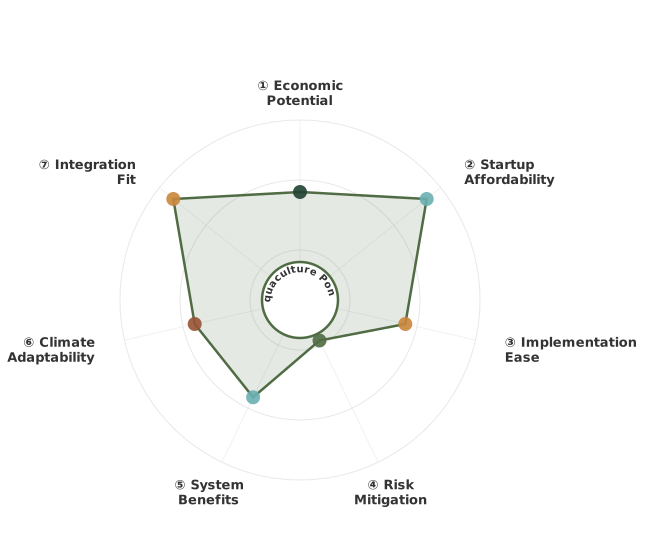
How These Traits Are Calculated
Trait dimensions are ordered clockwise starting from the top of the chart (12 o'clock position):
1. Economic Potential
Financial returns, annual value, and break-even timeline
WHAT: Evaluates financial viability by combining net annual value ($/ha from savings, income, and amortized harvests) with break-even timeline showing when practices pay for themselves.
WHY: Farmers need clear ROI understanding before committing resources. Fast payback (≤3 years) with strong returns (≥$300/ha) enables confident adoption, while long timelines (>10 years) restrict adoption to well-funded operations willing to wait for returns.
HOW: Calculated from net annual value in $/ha and break-even years. Exceptional (≥2.6): fast ROI ≤3 years + high value ≥$300/ha. Typical (1.8-2.5): moderate returns or longer timelines. Limited (<1.8): marginal economics or very long payback >10 years.
2. Startup Affordability
Initial investment costs and financial barrier to entry
WHAT: Measures financial barrier to entry through startup costs for equipment, infrastructure, consulting, and materials. Inverted scoring: lower costs = higher scores = more accessible adoption.
WHY: Affordability determines who can adopt. Low-cost practices (<$250/ha) enable widespread adoption across diverse scales, while high costs (>$2,500/ha) limit adoption to well-capitalized operations, creating barriers that slow regenerative transition.
HOW: Calculated from initial investment parsed from practice content. Inverted scoring: Exceptional (≥2.6): minimal investment <$250/ha. Typical (1.8-2.5): moderate costs $250-2,500/ha. Limited (<1.8): high barrier >$2,500/ha.
3. Implementation Ease
Learning curve and specialized knowledge required
WHAT: Measures how much learning, planning, and specialized knowledge a practice requires. Simpler practices with fewer steps score higher, while complex practices requiring extensive training or specialized resources score lower.
WHY: Complex practices create adoption barriers even when economically viable. Straightforward practices enable faster adoption and broader participation, while those requiring extensive training, timing precision, or specialized equipment limit who can succeed.
HOW: Evaluated by measuring documentation length and identifying complexity markers like location-specific requirements, seasonal timing windows, specialized skills, and dedicated equipment needs. Exceptional (≥2.6): straightforward practices with minimal prerequisites. Typical (1.8-2.5): moderate learning curve with some specialized needs. Limited (<1.8): steep learning curve requiring significant training or resources.
4. Risk Mitigation
Identified financial and ecological risk assessment
WHAT: Evaluates documented risks across financial (investment loss, market volatility) and ecological (crop failure, pest outbreaks) domains. Inverted scoring: fewer risks = higher scores.
WHY: Understanding risk exposure helps farmers make informed decisions. Low-risk practices allow confident implementation, while high-risk practices require careful planning and contingency resources. Risk transparency prevents costly failures.
HOW: Calculated from identified risks in practice content. Inverted scoring: Exceptional (≥2.6): ≤2 risks with manageable severity. Typical (1.8-2.5): 3-5 moderate risks. Limited (<1.8): 6+ risks or severe exposure.
5. System Benefits
How many ways the practice improves your land simultaneously
WHAT: Measures how many aspects of land health improve at once—carbon storage, soil quality, erosion control, water absorption, and biodiversity. Practices that improve multiple areas simultaneously create compounding benefits where each improvement reinforces the others.
WHY: The best practices solve multiple problems at once. For example, addressing erosion simultaneously builds carbon and improves water infiltration, creating a resilient system with positive feedback loops. Single-benefit approaches miss these compound transformation opportunities.
HOW: Evaluated across five key outcomes: carbon sequestration, soil organic matter increase, erosion reduction, water infiltration improvement, and biodiversity enhancement. Exceptional (≥2.6): high carbon storage (>8 t/ha/yr), improvements across 4-5 areas, transformative outcomes. Typical (1.8-2.5): moderate carbon (3-8 t/ha/yr), improvements across 2-3 areas. Limited (<1.8): modest impact (<3 t/ha/yr), single-area focus only.
6. Climate Adaptability
Geographic applicability across Köppen climate zones
WHAT: Evaluates geographic applicability by assessing how many Köppen climate zones successfully support a practice and what adaptation requirements are needed. Measures breadth of climates where farmers can implement with minimal to moderate modifications.
WHY: Universal practices working across diverse climates enable more farmers to adopt regenerative approaches. Practices limited to single climate types (only Mediterranean, only tropical) restrict adoption and slow global transition. Adaptability determines whether a practice serves niche regions or offers broad transformation.
HOW: LLM evaluation of regional success stories, Köppen zone coverage, and adaptation needs. Exceptional (≥2.6): 5+ zones or 4+ climate types, 3+ continents, minimal adaptation. Typical (1.8-2.5): 3-4 zones or 2-3 types, 2 continents, moderate adaptation. Limited (<1.8): 1-2 zones, single region, significant adaptation or highly specialized.
7. Integration Fit
How well this practice combines with others you're doing
WHAT: Measures how well a practice combines with other regenerative practices you might be doing. Some practices work as building blocks that make many other practices easier or more effective, while others work best on their own.
WHY: Practices that combine well with many others create more value on your farm. For example, cover cropping enables no-till, improves grazing, supports crop diversity, and helps water management—making all of them work better together. This helps you build a coherent system rather than juggling disconnected practices.
HOW: Evaluated by identifying which practices combine well and how strong those combinations are. 'Ideally Suited' means strong combinations where practices reinforce each other (practice A makes B easier, while B makes A more effective). 'Adequate' means complementary benefits that work well together. Exceptional (≥2.6): combines well with 6+ practices, serves as a building block. Typical (1.8-2.5): combines with 3-5 practices. Limited (<1.8): 1-2 practices or works best alone.
Going Deeper
1
WHY - The Benefits
Regenerative aquaculture ponds offer a paradigm shift from conventional, input-intensive systems to ecologically integrated food production. They are designed not just to grow aquatic species, but to become net contributors to environmental health, economic stability,...
Regenerative aquaculture ponds offer a paradigm shift from conventional, input-intensive systems to ecologically integrated food production. They are designed not just to grow aquatic species, but to become net contributors to environmental health, economic stability,...
WHY - The Benefits
Regenerative aquaculture ponds offer a paradigm shift from conventional, input-intensive systems to ecologically integrated food production. They are designed not just to grow aquatic species, but to become net contributors to environmental health, economic stability,...
Regenerative aquaculture ponds offer a paradigm shift from conventional, input-intensive systems to ecologically integrated food production. They are designed not just to grow aquatic species, but to become net contributors to environmental health, economic stability,...
Soil Health Benefits
While ponds are water-based, their management has profound impacts on adjacent land and soil health. Carefully designed outflow systems can direct nutrient-rich pond effluent to irrigate and fertilize riparian buffer zones and adjacent terrestrial crops or pastures. This effluent, rich in nitrogen and phosphorus, effectively acts as a natural fertilizer, reducing the need for synthetic inputs on land-based systems.
Perennial vegetation established around pond edges—such as reeds, cattails, sedges, and various shrubs—provides significant soil stabilization. Their extensive root systems bind soil particles, preventing erosion into the pond and protecting downstream waterways. This vegetative cover also builds soil organic matter through decomposition of plant material, fostering a healthy soil microbial community. Over time, this improves soil structure, water infiltration, and nutrient-holding capacity on the surrounding land, creating a more resilient agroecosystem.
The creation of buffer zones around ponds encourages biodiversity, which in turn supports soil health. These areas can host beneficial insects, amphibians, and birds that contribute to natural pest control in adjacent agricultural areas. The increased biological activity at the land-water interface also contributes to nutrient processing and ecosystem function.
Economic Benefits
Regenerative aquaculture shifts focus from simply maximizing yield of one species to optimizing the entire system's economic and ecological output. This often leads to diversified income streams and reduced operational costs over time.
Reduced Input Costs: By mimicking natural processes, regenerative ponds significantly reduce the need for costly external inputs. Integrated systems minimize reliance on synthetic fertilizers and feed additives. Poly culture can reduce the need for supplemental feeding as species consume by-products or waste from others. Similarly, natural filtration by plants and mollusks reduces the need for energy-intensive aeration and water exchange, lowering energy bills.
Diversified Revenue Streams: Instead of relying solely on fish or shrimp sales, regenerative systems can produce multiple high-value products. This includes edible aquatic plants (watercress, lotus root), mollusks (oysters, mussels), crustaceans (crayfish), and potentially even terrestrial products from managed buffer zones (herbs, berries, biomass for composting or biofuel). This diversification makes the operation more resilient to market fluctuations and reduces risk.
Value-Added Products: The higher quality and ecological story associated with regeneratively produced aquatic foods can command premium prices in niche markets. Consumers increasingly seek sustainably sourced products with clear environmental benefits, allowing producers to tap into growing markets like farmers' markets, direct-to-consumer sales, and eco-conscious restaurants.
Long-Term Stability: By building ecological health and resilience, regenerative aquaculture systems are less prone to catastrophic losses from disease outbreaks or environmental shocks, leading to more predictable and stable income over the long term.
Regenerative Systems Fit
Regenerative aquaculture ponds offer a unique opportunity to contribute to all five regenerative agriculture principles, making them a powerful tool for whole-farm integration.
Principle 1: Minimize Soil Disturbance: While pond construction inherently involves soil alteration, the goal in regenerative design is to minimize disturbance and focus on long-term ecological function. This means avoiding unnecessary dredging or bottom scouring that can release stored carbon and disrupt benthic communities. Maintenance strategies focus on stabilizing pond edges with vegetation rather than frequent mechanical reshaping. Pond effluent management aims to build soil health on adjacent land through natural fertilization.
Principle 2: Maximize Crop Diversity: This is a cornerstone of regenerative aquaculture. Polyculture systems, combining fish with mollusks, crustaceans, and aquatic plants, dramatically increase species diversity within the pond. Furthermore, integrating terrestrial plant buffers (e.g., native grasses, legumes, fruit-bearing shrubs) around the pond multiplies the above- and below-ground diversity of the entire system. This diversity creates functional redundancy, enhances nutrient cycling, and provides habitat for beneficial organisms.
Principle 3: Keep Soil Covered: The entire pond system contributes to keeping soil covered. Aquatic plants and algae form a living cover on the water surface and in the water column, preventing direct sunlight from reaching the pond bottom and stimulating algal blooms. Riparian buffer zones around the pond edges are densely planted with perennial vegetation, ensuring continuous ground cover year-round. This prevents erosion, filters runoff, and maintains soil biological activity.
Principle 4: Maintain Living Roots: Aquatic plants and the perennial vegetation in buffer zones ensure that living roots are present throughout the year, either in the water column or the saturated soil. These roots play a critical role in nutrient uptake, water filtration, bank stabilization, and providing habitat for aquatic and terrestrial invertebrates. In temperate regions, winter-hardy perennial species are selected to maintain root activity even through colder months.
Principle 5: Integrate Livestock: While not direct integration within the pond itself, livestock can be strategically integrated into the broader regenerative system. Composted manure from terrestrial livestock can be carefully applied to buffer zones to fertilize aquatic vegetation, providing nutrients that then cycle into the pond ecosystem. Terrestrial animals like poultry may be managed to consume insects that would otherwise enter the pond. This integration creates a closed-loop nutrient flow from terrestrial animal waste to aquatic plant growth and subsequently into the pond's food web.
Sources behind this view
Videos & Podcasts
-
Regenerative aquaculture, especially bivalve and seaweed farming, excels at habitat provisioning and pollutant removal (nitrogen, phosphorus). These systems inherently support biodiversity and clean w

-
Details an integrated livestock and plant system using a trophic web approach: herbivores consume biomass, their manure fertilizes mulch for insects eaten by chickens/pigs. A pond grows duckweed and m

-
Regenerative agriculture principles, including low disturbance, biodiversity, and living roots, apply to both terrestrial and marine environments like kelp and shellfish farming, promoting ecological
-
Victory Farms integrates regenerative principles (biodiversity, local feed, geothermal energy) at its core, driving positive environmental and economic outcomes, including significant tree planting an
 Community
-
Proposes ocean farming using permaculture methods like artificial reefs and habitat creation to boost marine food production, focusing on nutrient-rich sea vegetables and algae for sustainability.
Read more (opens in new window) permies.com -
Advocates for holistic farm ecosystem design integrating aquaponics, animal integration, and food forests to maximize efficiency and minimize waste through interconnected systems, moving beyond isolat
Read more (opens in new window) permies.com -
Ponds in permaculture provide food (watercress, taro, fish), water storage, and habitat, with potential for income generation through sales of produce and materials.
Read more (opens in new window) www.permaculture.org.uk -
Ecological permaculture ponds serve multiple functions including aquaculture, biodiversity, and recreation. Key site selection factors are topography (avoiding waterlogging and eutrophication), water
Read more (opens in new window) permies.com
Research
-
Ecological engineering in pond aquaculture: a review from the whole‐process perspective in China (opens in new window)
This study found: Review of ecological engineering in Chinese pond aquaculture highlights methods to reduce water use, pollution, and improve fish quality for sustainable production. Offers guidance on water and efflue
-
Regenerative Agriculture: Restoring Ecosystems¢ Resilience and Productivity: A Review (opens in new window)
This study found: Regenerative agriculture builds soil health and ecosystem services through practices like no-till, cover crops, and diverse rotations. It increases soil organic matter, improves water infiltration, bo
-
Intensifying aquaculture production through new approachesto manipulating natural food. (opens in new window)
This study found: New methods for using natural pond food can boost aquaculture yields, especially for plant-eating fish. Enhancing algae growth and using techniques like IMTA and activated suspension can significantly
-
Aquaponics: A Sustainable Approach to Integrated Fish and Plant Farming (opens in new window)
This study found: Aquaponics integrates fish and plant farming, using beneficial bacteria to create a sustainable food system. It overcomes limitations of separate systems and can improve food security, with water qual
2
WHERE - Regional Considerations
Regenerative aquaculture pond systems are highly adaptable but thrive best when integrated with local climate and available resources. The core principles apply globally, but species selection, design considerations, and management strategies must be tailored to specific...
Regenerative aquaculture pond systems are highly adaptable but thrive best when integrated with local climate and available resources. The core principles apply globally, but species selection, design considerations, and management strategies must be tailored to specific...
WHERE - Regional Considerations
Regenerative aquaculture pond systems are highly adaptable but thrive best when integrated with local climate and available resources. The core principles apply globally, but species selection, design considerations, and management strategies must be tailored to specific...
Regenerative aquaculture pond systems are highly adaptable but thrive best when integrated with local climate and available resources. The core principles apply globally, but species selection, design considerations, and management strategies must be tailored to specific...
Click Here to Look up your Region if you don't already know it
Tropical Regions
Representative Locations: Southeast Asia (Vietnam, Thailand, Philippines), Central America (Mexico, Nicaragua), East Africa (Kenya, Uganda), Northern Australia
Climate Context: High temperatures year-round (average >20°C or 68°F), abundant rainfall often with distinct wet and dry seasons, or uniformly high rainfall. Köppen Af/Am/Aw.
Considerations: Warm conditions allow for rapid growth of many fish species (tilapia, catfish, gourami) and aquatic plants (water spinach, duckweed). Shorter dry seasons may necessitate strategies for water conservation, such as efficient pond design and robust buffer zones. High biodiversity naturally supports polyculture. Humidity can increase disease pressure if ponds are not well-managed biologically, making diverse filtration systems and careful species selection key. High solar radiation supports intensive plant growth for nutrient management.
Subtropical Regions
Representative Locations: Southeastern USA, Southern China, Southern Brazil, Eastern Australia, Northern India
Climate Context: Hot, humid summers and mild winters, with generally ample rainfall. Köppen Cfa/Cwa.
Considerations: Long growing seasons allow for multi-species polyculture and extended harvest periods. Winter temperatures may limit the activity of some species, necessitating selection of cold-tolerant fish (e.g., certain catfish breeds, carp) or overwintering strategies for sensitive species. Extensive buffer zones with hardy perennial plants and trees can provide year-round soil cover and habitat. This region is ideal for integrating fruit-bearing trees or berry bushes in buffer zones whose fallen fruit can feed terrestrial insects, which in turn may be consumed by pond organisms.
Humid Temperate Regions
Representative Locations: Northern Europe (UK, Germany, France), Northeastern USA, Eastern China, Japan, New Zealand
Climate Context: Warm to hot summers and cool to cold winters with moderate to high annual precipitation (75-150 cm or 30-60 inches) distributed relatively evenly. USDA Zones 6-8, Köppen Cfb/Cfa.
Considerations: Distinct seasonal changes require careful species selection for cold tolerance or overwintering management. Short growing seasons may favor species with rapid growth cycles or obligate overwintering. Polyculture opportunities exist with cold-tolerant fish (e.g., trout, perch, carp) and hardy aquatic plants (e.g., watercress, reeds). Focus on maximizing spring and summer growth. Buffer zones with deciduous trees that shed leaves in fall can provide nutrients for decomposition and microbial activity during winter, while their summer shade moderates water temperature.
Mediterranean Regions
Representative Locations: California, Mediterranean basin (Spain, Italy, Greece), central Chile, southwestern Australia, South Africa (Western Cape)
Climate Context: Hot, dry summers and mild, wet winters. Annual precipitation 40-90 cm (15-35 inches), highly seasonal. USDA Zones 8-10, Köppen Csa/Csb.
Considerations: Water management is paramount due to pronounced dry summers. Designing ponds with efficient water retention, utilizing drought-tolerant native buffer plants, and potentially integrating with rainwater harvesting or greywater systems are critical. Polyculture species must tolerate a range of temperatures, with species selection for milder winters and hotter summers. Dry periods may mean reduced aquatic plant growth, so selecting species that can survive drought or using hardy buffer plants to shade ponds is important.
Arid/Semi-Arid Regions
Representative Locations: Western USA (Arizona, Nevada), North Africa, Central Asia, Interior Australia, parts of South America (Atacama region)
Climate Context: Low annual precipitation (<40 cm or 15 inches), high temperatures, short and often unpredictable growing seasons. USDA Zones 7-9, Köppen BSh/BSk.
Considerations: Water scarcity is the primary challenge. Regenerative aquaculture in these regions often involves highly efficient recirculating aquaculture systems (RAS) where ponds are smaller, or using pond effluent to irrigate drought-tolerant terrestrial crops or pastures. Selection of extremely drought-tolerant and heat-resistant aquatic species is crucial, often focusing on species adapted to brackish or saline water if groundwater is available. Buffer zones must consist of highly water-efficient native plants. Evaporation mitigation strategies (e.g., floating solar panels, natural shading from trees in buffer zones) are essential.
Cold Continental Regions
Representative Locations: Northern USA and Canada, Northern Europe, Northern Asia
Climate Context: Very short growing seasons, extreme summer heat, severe winter cold. USDA Zones 3-5, Köppen Dfa/Dfb.
Considerations: The limited ice-free period restricts production cycles. Overwintering fish in insulated ponds or indoor tanks is often necessary. Intensive polyculture may be limited by the short growing season and cold temperatures. Focus may be on hardy species that grow rapidly during warmer months, or on integrating ponds as part of a larger winter-hardy aquaponics system. Buffer zones need to be hardy perennials that can withstand extreme cold and snow cover, providing habitat and bank stability year-round.
3
HOW - Implementation Process
Implementing regenerative aquaculture ponds involves careful design, species selection, and management to create a self-sustaining ecosystem. This is a multi-year process that emphasizes biological processes over mechanical interventions.
Implementing regenerative aquaculture ponds involves careful design, species selection, and management to create a self-sustaining ecosystem. This is a multi-year process that emphasizes biological processes over mechanical interventions.
HOW - Implementation Process
Implementing regenerative aquaculture ponds involves careful design, species selection, and management to create a self-sustaining ecosystem. This is a multi-year process that emphasizes biological processes over mechanical interventions.
Implementing regenerative aquaculture ponds involves careful design, species selection, and management to create a self-sustaining ecosystem. This is a multi-year process that emphasizes biological processes over mechanical interventions.
Prerequisites
- Site Assessment: Evaluate topography, water sources (rainfall, groundwater, surface water availability), soil type (suitability for pond construction, water retention), nearby terrestrial farm/ecosystem context, and climate.
- Water Quality Baseline: Test existing water sources for pH, dissolved oxygen, nutrient levels (N, P), alkalinity, and presence of potential contaminants.
- Market Research: Identify demand for specific aquatic species and any value-added products.
- Permitting: Understand and comply with local, regional, and national regulations for aquaculture and water use, which vary widely internationally.
Phase 1: Design and Construction (Year 0-1)
-
Pond Design:
- Size & Depth: Varies by species and climate. Shallower ponds (<1.5 m or 5 ft) warm faster, supporting plant growth and short-cycle species in cooler climates. Deeper ponds (>2 m or 6.5 ft) offer more thermal stability, important in hot climates to prevent overheating and in cold climates to potentially overwinter species. Smaller ponds are generally easier to manage biologically.
- Shape: Rectangular or square ponds are easiest for management and harvest, but naturalistic shapes better mimic wetlands. Consider contouring with the land to minimize earthmoving.
- Multiple Ponds: Implement multiple ponds in series or parallel. This allows for rotation, harvest, and rest/regeneration periods, and can create varied habitats.
- Inlet/Outlet Structures: Design for gravity flow where possible to minimize pumping. Strategically place inlets to distribute water and outlets to manage water levels and for effluent management. Consider baffles or settling basins at outlets to capture solids before they leave the system.
- Riparian Buffer Zones: Designate wide (minimum 5-10 m or 16-33 ft), vegetated buffer zones around all ponds. These are critical for filtration, sediment control, habitat, and nutrient uptake.
- Construction Method: Aim for minimal disturbance. Use contour building where possible. Select liners (clay, geomembrane) based on soil permeability and local availability, considering longevity and environmental impact of materials.
-
Species Selection:
- Polyculture: Choose species that complement each other. Examples:
- Fish (e.g., Catfish, Tilapia, Carp): Consume supplementary feeds, waste products, or insects.
- Mollusks (e.g., Oysters, Mussels, Clams): Filter feeders that consume phytoplankton and suspended organic matter, improving water clarity and reducing nutrient load.
- Crustaceans (e.g., Crayfish, Prawns): Scavengers that can consume detritus and smaller organisms.
- Aquatic Plants (e.g., Duckweed, Water Hyacinth, Reeds, Cattails): Absorb excess dissolved nutrients (N, P) and provide habitat/shelter.
- Terrestrial Buffer Plants: Native grasses, legumes, fruit trees, berry bushes—selected for local climate, water tolerance, and ecological function (habitat, nutrient cycling).
- Native Species Priority: Prioritize native or locally adapted species to minimize risks of invasive species and maximize ecological integration.
- Polyculture: Choose species that complement each other. Examples:
-
Inoculation:
- Seed ponds with beneficial microbial communities. This can involve introducing water or sediment from healthy, established natural water bodies (with appropriate approvals) to introduce diverse bacteria, phytoplankton, and zooplankton.
Phase 2: Establishment and Initial Management (Year 1-2)
-
Stocking:
- Start with low-density stocking of a few complementary species. Focus on species that are robust and play a key role in nutrient cycling (e.g., filter feeders, hardy plants).
- Introduce young fish or juveniles of other species gradually.
- Ensure source of cultured species is reputable and disease-free.
-
Feeding:
- Until the pond's natural food web is established, supplemental feeding may be necessary. Use high-quality, preferably plant-based or insect-based feeds. Avoid feeds with artificial binders or high levels of non-digestible matter.
- Feed observationally, providing only what can be consumed within 15-20 minutes to avoid waste and excess nutrient loading.
- Gradually reduce supplemental feeding as polyculture species contribute to natural food availability and waste conversion.
-
Water Management:
- Minimize water exchange. Aim to maintain water levels through rainfall and minimal top-ups.
- Monitor key water quality parameters (pH, dissolved oxygen, turbidity, nutrient levels) regularly.
- If dissolved oxygen drops too low (below 4-5 mg/L), consider gentle aeration using solar-powered paddlewheels or natural methods like increasing plant cover to enhance photosynthesis.
-
Buffer Zone Management:
- Establish buffer vegetation. Protect young plants from potential initial grazing by livestock or pests.
- Allow buffer zones to grow and stabilize. Avoid disturbing soil in buffer areas.
- If using terrestrial manure, ensure it is well-composted and applied to buffer zones, not directly into the pond.
Phase 3: Maturation and Integration (Year 2-5+)
-
Population Balance:
- Observe and adjust stocking densities and species mixes. The goal is a balanced system where waste from one species becomes food for another.
- Monitor for algal blooms (potential indicator of excess nutrients) and adjust accordingly (increase filter feeder stocking, plant harvesting, or buffer zone nutrient uptake capacity).
-
Harvesting and Replenishment:
- Implement selective harvesting of mature species. This allows younger individuals to continue growing and maintains population balance.
- Replenish populations with appropriate species based on system needs and market demand.
- Harvest aquatic plants for consumption, composting, or sale.
-
Effluent Management:
- Direct pond overflow to adjacent terrestrial systems (fields, pastures, buffer zones) for irrigation and fertilization. Monitor nutrient levels in effluent to ensure it does not over-fertilize terrestrial systems.
-
Continuous Improvement:
- Gather data on growth rates, water quality, biodiversity, and yields. Use this information to refine species mixes, stocking densities, and management practices.
- Observe the surrounding ecosystem—increased insect, bird, and amphibian populations are indicators of systemic health.
Transition Timeline & Phase-Out Strategy
- Years 0-1 (Construction & Design): Traditional ponds might be converted. Phase out any existing synthetic feeds, antibiotics, or harsh chemicals. Design for biological filtration and polyculture from the outset. Establish buffer zones.
- Years 1-2 (Establishing Balance): Gradually introduce polyculture species, starting with hardy filter feeders or plants. Reduce supplemental feeding by 30-50% as natural food sources develop. Begin managing pond effluent for buffer zone fertilization. Monitor water quality closely for signs of imbalance.
- Years 3-5 (Maturation & Optimization): Full polyculture established. Supplemental feeding reduced by 70-90%. Effluent actively managed for land fertility. Market diversification explored. Focus on maintaining ecological balance and minimizing external inputs.
- Year 5+ (Mature Regenerative System): Pond operates largely on natural cycles. Minimal supplemental feed required. Water quality stable and improved. Buffer zones provide significant ecological services. Harvests are diversified. System is resilient to shocks.
Graduating to a fully regenerative approach means that the pond ecosystem is largely self-regulating, requiring minimal external intervention beyond initial species stocking, selective harvesting, and careful buffer management. The system actively contributes to water purification, soil fertility on adjacent land, and local biodiversity.
Sources behind this view
Videos & Podcasts
-
Explains a biofilter system for ponds using high dissolved oxygen to manage the nitrogen cycle for healthy aquatic life, integrating rainwater harvesting and native species, suitable for urban setting
-
Integrate fish into farm ponds for fast protein production and nutrient cycling. Design ponds with sediment catch basins, fish locks, and aeration systems. Consider species like catfish, carp, bass, a
-
Integrate aquaponics with ponds in permaculture by: 1) selecting a sunny location, 2) designing a multi-zone pond with circulation, 3) choosing suitable fish and plants, 4) setting up water circulatio

-
Discusses post-rain pond refinements, including bentonite sealing for leaks, managing silt and nutrients, and plans for aquatic ecosystems. Emphasizes proactive water management and using water levels
Community
-
Build self-sustaining fish ponds using principles from Sepp Holzer and Geoff Lawton, focusing on biodiversity, keyline design, and natural runoff. Stock with species like catfish and fathead minnows,
Read more (opens in new window) permies.com -
Provides detailed guidance on pond aeration and stocking for edible fish (catfish, tilapia) in Zone 8b, emphasizing low-tech aquaculture, plant-based oxygenation, and the challenges of warmer climates
Read more (opens in new window) permies.com -
Multifunctional farm ponds require ecosystem development through features like wetland edges and shallow water. Management includes diverse planting, avoiding mowing to the water's edge, and monitorin
Read more (opens in new window) smallfarms.cornell.edu -
Guidance on creating wildlife ponds using repurposed items or liners, emphasizing natural ecosystems with water plants, rocks, and wood for habitat. Recommends mosquito fish and avoiding chemicals to
Read more (opens in new window) ucanr.edu
Research
-
Ecological engineering in pond aquaculture: a review from the whole‐process perspective in China (opens in new window)
This study found: Review of ecological engineering in Chinese pond aquaculture highlights methods to reduce water use, pollution, and improve fish quality for sustainable production. Offers guidance on water and efflue
-
Intensifying aquaculture production through new approachesto manipulating natural food. (opens in new window)
This study found: New methods for using natural pond food can boost aquaculture yields, especially for plant-eating fish. Enhancing algae growth and using techniques like IMTA and activated suspension can significantly
-
Effect of initial planting on vegetation establishment in different depth zones of constructed farm ponds (opens in new window)
This study found: Newly built farm ponds with fertile conditions and seed sources can establish vegetation naturally and quickly, sometimes faster than planted ponds. Pond depth and management are key for restoration s
-
The Impact of Conservation Management on the Community Composition of Multiple Organism Groups in Eutrophic Interconnected Man-Made Ponds. (opens in new window)
This study found: Pond draining and fish management significantly impact species diversity in Belgian ponds, with draining benefiting plants and insects, and high fish numbers harming most life.
4
Know the Debate
Regenerative aquaculture pond outcomes are highly context-dependent, varying significantly with geography, scale, and management expertise. Regions...
Know the Debate
Regenerative aquaculture pond outcomes are highly context-dependent, varying significantly with geography, scale, and management expertise. Regions...
Regenerative aquaculture pond outcomes are highly context-dependent, varying significantly with geography, scale, and management expertise. Regions with consistent rainfall and warm temperatures, such as Southeast Asia or the Southeastern USA, may see faster establishment of polyculture. In contrast, arid zones demand careful water management, while cold climates require species adapted to short growing seasons. Farm scale dictates investment, with initial costs ranging from $2,700/ha for large systems to over $38,000/ha for intensive small-scale setups. Completing the transition to a self-sustaining system typically takes 3-7 years, requiring consistent labor and a deep understanding of ecological interactions.
How effectively do regenerative aquaculture ponds manage nutrient runoff?
Highly Effective in Balanced Systems
Well-managed regenerative ponds, through polyculture and integrated buffer zones, can significantly improve water quality, remove up to 70% of nutrients, and build soil health on adjacent land. This relies on careful species selection and established biological processes.
Sources behind this view
Sources behind this view
Videos & Podcasts
-
Regenerative agriculture benefits ecosystems by improving soil health, biodiversity, water quality, and wildlife habitats, while also enhancing farm worker conditions and community well-being.
 From the Web
-
Restorative aquaculture provides direct ecological benefits, including improved water quality through nutrient removal, habitat creation for marine life, and carbon sequestration via seaweed farming, with clear global principles guiding its implementation.
Variable & Context-Dependent Outcomes
Nutrient management effectiveness varies greatly with system design and management. Poorly balanced polyculture or poorly established buffers can lead to nutrient accumulation and water quality issues. Success requires careful species compatibility and ongoing labor.
Sources behind this view
Sources behind this view
Videos & Podcasts
-
Regenerative agriculture principles, including low disturbance, biodiversity, and living roots, apply to both terrestrial and marine environments like kelp and shellfish farming, promoting ecological health and sustainable food production.
From the Web
-
A regenerative system integrates poultry, aquaponics, and intercropping, using chicken waste to feed fish, which then fertilize aquaponic plants. This creates a closed-loop for nutrient cycling, minimizing inputs and maximizing energy reuse for soil health and food production.
Making Sense of the Differences
Nutrient management in regenerative aquaculture ponds is highly context-dependent. Well-designed systems with appropriate polyculture and robust buffer zones demonstrate significant nutrient removal and water quality improvement. However, success hinges on careful species selection, balanced ecosystem interactions, and consistent management, as imbalances can lead to nutrient accumulation or poor water quality. The level of farmer expertise and observational skill plays a crucial role in achieving consistent positive outcomes.
How long does it take for regenerative aquaculture ponds to become fully self-sufficient?
3-5 Years for Substantial Input Reduction
Within 3-5 years, established polyculture and buffer zones allow for significant reductions (30-90%) in supplemental feed and external inputs. Early-stage intervention may see temporary dips in productivity.
Sources behind this view
Sources behind this view
Videos & Podcasts
-
Regenerative agriculture uses diversity and understanding ecosystem function to improve soil health and nutrient density while yielding food. Key practices involve managing disturbance dosage, with resources like Gabe Brown and permaculture courses offering guidance.
From the Web
-
Regenerative agriculture is driven by principles like building soil health, promoting biodiversity, and enhancing climate resilience, adapted to local ecosystems, rather than a checklist of practices. Key challenges include patience, economic uncertainty during diversification, and scaling adoption.
5-7+ Years for Full Ecological Stability
Achieving full ecological self-sufficiency and stable polyculture in aquaculture ponds typically requires 5-7 years or more, with initial system instability possible. Phased transitions are essential for long-term success.
Sources behind this view
Sources behind this view
Videos & Podcasts
-
Regenerative agriculture principles, including low disturbance, biodiversity, and living roots, apply to both terrestrial and marine environments like kelp and shellfish farming, promoting ecological health and sustainable food production.
-
Regenerative agriculture uses diversity and understanding ecosystem function to improve soil health and nutrient density while yielding food. Key practices involve managing disturbance dosage, with resources like Gabe Brown and permaculture courses offering guidance.
Making Sense of the Differences
The timeline for regenerative aquaculture ponds to achieve full self-sufficiency varies, generally ranging from 3-5 years for substantial input reduction to 5-7+ years for complete ecological stability and polyculture balance. Factors influencing this timeline include the initial complexity of the design, the specific species introduced, local climate, and the management approach (phased vs. abrupt transition). Patience and consistent monitoring are key, with phased transitions and a focus on biological system development proving more reliable than rapid changes.
5
HOW MUCH - Costs & Investment
Note: All costs are estimates based on current US market conditions (2023-2025 USD equivalent) and can vary significantly by region due to local labor rates, material availability, regulatory requirements, and land costs. International conversion requires local price...
Note: All costs are estimates based on current US market conditions (2023-2025 USD equivalent) and can vary significantly by region due to local labor rates, material availability, regulatory requirements, and land costs. International conversion requires local price...
HOW MUCH - Costs & Investment
Note: All costs are estimates based on current US market conditions (2023-2025 USD equivalent) and can vary significantly by region due to local labor rates, material availability, regulatory requirements, and land costs. International conversion requires local price...
Note: All costs are estimates based on current US market conditions (2023-2025 USD equivalent) and can vary significantly by region due to local labor rates, material availability, regulatory requirements, and land costs. International conversion requires local price...
Note: All costs are based on recent US economic data (2024–2026) and may vary substantially by region based on local labor rates, material costs, and regulatory requirements.
Site Preparation and Excavation
Excavation represents the most significant capital expenditure, dictated by regional topography and soil profile stability. For small-scale operations under 50 acres (20 ha), intensive excavation and site leveling costs range from $4,168 to $12,504 per acre ($10,299–$30,898/ha). Mid-size operations managing 50 to 500 acres (20–202 ha) leverage heavy machinery to bring these costs to $2,084–$6,773 per acre ($5,150–$16,736/ha). Large-scale developers with 500-plus acres utilize extensive earth-moving contracts to minimize unit costs, landing between $834 and $3,647 per acre ($2,061–$9,012/ha). Sites requiring significant cut-and-fill operations to manage drainage or those demanding heavy soil compaction to ensure water depth retention face the higher end of these benchmarks.
Hydraulic Control and Liner Systems
Water retention and precise flow regulation are non-negotiable for system functionality. Geomembrane liners or professional clay-sealing services for small sites cost $2,605–$8,336 per acre ($6,437–$20,599/ha), while mid-size farms benefit from batch purchasing and economies of scale, costing $1,563–$5,210 per acre ($3,862–$12,874/ha). For large systems, costs drop to $521–$2,605 per acre ($1,287–$6,437/ha). Inlet and outlet infrastructure—typically constructed from high-density polyethylene or reinforced concrete—requires an investment of $417–$1,876 per acre ($1,030–$4,636/ha) for smaller parcels due to complexity. Large-scale modular control gates, benefiting from centralized hydraulic management, cost $156–$625 per acre ($385–$1,544/ha). Proper installation of gravity-fed circulation channels can reduce subsequent annual pumping energy expenses by up to 40% over the life of the pond.
Ecological Infrastructure and Riparian Buffers
Establishing biodiversity for nutrient filtration is essential to prevent costly water quality degradation. Small operations should budget $625–$2,605 per acre ($1,544–$6,437/ha) for native vegetation, aquatic filters, and buffer zone establishment. Mid-size farms generally spend $365–$1,563 per acre ($902–$3,862/ha), while large-scale farms leveraging mass-propagation techniques or professional hydroseeding report costs of $156–$729 per acre ($385–$1,801/ha). These expenses are frequently partially mitigated by federal and state cost-share programs, which provide incentives of roughly $52–$208 per acre ($128–$514/ha) for practitioners demonstrating verified soil and water stewardship.
Technology and Monitoring Systems
Digital management is the cornerstone of metabolic control in regenerative aquaculture. Solar-powered aeration arrays and multi-parameter sensors for dissolved oxygen are baseline requirements. Small systems cost $521–$2,084 per acre ($1,287–$5,150/ha) for entry-level monitoring. Mid-size producers commonly integrate automated software networks for $313–$1,250 per acre ($773–$3,089/ha). Large operations focusing on IoT-based predictive analytics secure competitive pricing, costing $156–$521 per acre ($385–$1,287/ha) as they centralize data collection across hundreds of acres.
Most Spend: Most commercially viable operations fall within the middle 60% of these ranges—specifically $2,500 to $7,500 per acre ($6,178–$18,533/ha) in total startup costs—as they prioritize essential hydraulic structures while scaling their ecological buffer zones moderately to meet regulatory benchmarks without over-capitalizing on boutique filtration designs.
Why the Range?: Cost volatility is driven by three primary factors: regional geotechnical requirements, the extent of required earthwork, and the sophistication of the automated monitoring gear. Regions prone to high water loss require more expensive sealing technologies, while sites with existing natural drainage patterns significantly lower excavation costs by reducing the need for imported fill and extensive grading.
Sources behind this view
Research
-
Benefit-Cost Analysis of Fish Farming in Azamgarh District of Uttar Pradesh, India (opens in new window)
This study found: Fish farming in Uttar Pradesh, India, is profitable across farm sizes, with labor, feed, and seed being major costs. Larger farms earn more but have slightly lower input efficiency. Optimizing costs a
-
Economics of U.S. catfish farming practices: Profitability, economies of size, and liquidity (opens in new window)
This study found: Catfish farming study found split-pond hybrid catfish systems cheapest ($1.97/kg). Larger farms and intensive methods (split-pond, high aeration) are more profitable and less risky. Low-intensity meth
-
System design and production practices of aquaponic stakeholders (opens in new window)
This study found: Survey of aquaponics stakeholders shows trend towards integrated systems, raft-style plant growing, and leafy greens/trout production. Diversification and established producers are key to success.
-
Economic analysis of aquaponics and hydroponics production in the U.S. Midwest (opens in new window)
This study found: Midwest study: Aquaponics costs more than hydroponics but can be profitable if organic produce sells at a premium. Basil sales are key for aquaponics profitability, especially in larger operations.
6
REWARDS AND RISKS - Economics & Risk Factors
REWARDS AND RISKS - Economics & Risk Factors
The economic trajectory of regenerative aquaculture involves a fundamental shift from high-input dependence to ecosystem-based resilience. In the Best Case Scenario, the maturation of the pond ecosystem leads to dramatic input reductions, with feed costs dropping by 70–90% within 4 years as natural forage cycles initialize. Product diversification—incorporating fish, mollusks, and aquatic vegetables—often commands a 20–40% premium in specialty markets. By year 5, net annual income typically clears the $50,000 threshold, with profit margins expanding as the system reaches autonomous nutrient balance.
In the Typical Scenario, stability is achieved by year 6. Feed utilization efficiency improves, resulting in average savings of 50–60%, and disease-related mortality drops by at least 15% as system water quality stabilizes. Revenue typically increases by 15–25% compared to conventional monoculture, with the initial capital investment recouped between years 5 and 7. Success in this scenario relies on maintaining oxygen parity through precise stocking schedules and consistent aeration schedules.
In the Worst Case Scenario, systemic failure is usually tied to poor pond architecture or mismanagement of species densities. Algal bloom toxicity or pathogen outbreaks can lead to total crop mortality, resulting in immediate losses of $5,210–$15,630 per acre ($12,874–$38,623/ha) for small-scale operators. Without functional biodiversity buffers, excessive nitrogen runoff may trigger regulatory penalties or mandatory remediation, potentially forcing insolvency within 36 months of operation.
Transition Period Risks: Practitioners must navigate the "productivity dip," a 3–7 year window where ecosystems adjust to reduced chemical inputs. During this phase, yields may fluctuate by 10–25%. A "staggered transition" strategy—limiting conversion to 30% of total acreage annually—prevents total income collapse. Maintaining cash reserves equal to 18 months of operating expenses, roughly $1,563–$3,647 per acre ($3,862–$9,012/ha), acts as a crucial financial insurance policy during this transition. Mitigating climate-related volatility requires investing an additional $104–$313 per acre ($257–$773/ha) in native species diversity, which enhances overall system resilience against temperature spikes or localized disease flares.
7
WHO - Labor & Expertise
Regenerative aquaculture pond management requires a blend of practical farming skills, ecological understanding, and dedicated attention. The labor and expertise needs evolve as the system matures. Skill Requirements:
Regenerative aquaculture pond management requires a blend of practical farming skills, ecological understanding, and dedicated attention. The labor and expertise needs evolve as the system matures. Skill Requirements:
WHO - Labor & Expertise
Regenerative aquaculture pond management requires a blend of practical farming skills, ecological understanding, and dedicated attention. The labor and expertise needs evolve as the system matures. Skill Requirements:
Regenerative aquaculture pond management requires a blend of practical farming skills, ecological understanding, and dedicated attention. The labor and expertise needs evolve as the system matures. Skill Requirements:
Skill Requirements:
- Aquatic Husbandry: Understanding of fish/invertebrate/plant biology, species-specific needs (diet, temperature, spawning), and recognizing signs of stress, disease, or imbalance.
- Ecological Management: Knowledge of food webs, nutrient cycling, water chemistry, and plant-aquatic animal interactions. Ability to identify beneficial and problematic species (algae, macrophytes, invertebrates).
- Water Quality Monitoring: Proficiency in using test kits and interpreting data (pH, DO, ammonia, nitrite, nitrate, alkalinity, salinity, turbidity).
- Plant Identification & Propagation: Ability to identify native and beneficial buffer zone species, propagate them, and manage their growth for optimal filtration and habitat.
- Animal Husbandry (Terrestrial if integrated): If using livestock manure, knowledge of composting and safe application techniques.
- Basic Construction & Maintenance: Skills for pond repairs, managing inlet/outlet structures, and maintaining fencing or buffer zone integrity.
- Pest & Disease Recognition: Understanding common aquaculture issues, but prioritizing biological controls and prevention over chemical treatments.
- Business & Marketing Skills: For commercial operations, understanding market trends, developing sales channels, and communicating the value of regenerative products.
Expertise Needs by Scale:
- Small Scale/Hobbyist: Self-taught or through workshops and online resources. Focus on simpler polyculture models, local species, and basic water quality. Labor intensive on a per-unit basis, but manageable by one person with time. Expertise can be developed part-time.
- Mid Scale/Commercial Diversified: Requires more formal training in aquaculture and ecology. May need part-time assistance for intensive monitoring or harvesting. Ability to manage multiple species and their interactions becomes critical. Expertise needs to be more in-depth, potentially involving consulting for initial design.
- Large Scale/Integrated Farm Systems: May require dedicated staff or a farm manager with strong experience in both aquaculture and ecology. Sophisticated monitoring systems and potentially automated controls may be needed. Emphasis on systemic design and long-term ecological health as the primary driver of productivity. Expertise is a combination of in-house knowledge and access to external scientific consultants.
Labor Intensity:
- Establishment Phase (Years 0-2): High labor input for construction, buffer planting, initial stocking, and intensive monitoring.
- Maturation Phase (Years 2-5): Labor shifts to observation, selective harvesting, species management, plant maintenance, and buffer zone care. Reduced need for intensive water interventions.
- Mature System (Year 5+): Labor becomes more strategic—monitoring, selective harvests, targeted buffer management, and responding to ecological signals. Less daily intervention needed than conventional systems, but requires consistent observation and ecological sense.
International Considerations:
- Labor Costs: In regions with lower labor costs, more labor-intensive practices (e.g., hand-weeding buffers, manual harvesting) may be economically viable. In high-labor-cost regions, automation and efficient design become more critical.
- Local Expertise: Access to local aquaculture extension services, universities, or experienced farmers is invaluable. Regions with established traditional aquaculture or wetland management practices may offer excellent local knowledge.
8
EQUIPMENT - Tools & Infrastructure
Regenerative aquaculture pond systems aim to minimize reliance on energy-intensive equipment, favoring tools that enhance biological processes or support natural mechanics. Essential Infrastructure:
Regenerative aquaculture pond systems aim to minimize reliance on energy-intensive equipment, favoring tools that enhance biological processes or support natural mechanics. Essential Infrastructure:
EQUIPMENT - Tools & Infrastructure
Regenerative aquaculture pond systems aim to minimize reliance on energy-intensive equipment, favoring tools that enhance biological processes or support natural mechanics. Essential Infrastructure:
Regenerative aquaculture pond systems aim to minimize reliance on energy-intensive equipment, favoring tools that enhance biological processes or support natural mechanics. Essential Infrastructure:
Essential Infrastructure:
- Pond(s): Excavated or constructed basins. Size and depth vary by objective and scale.
- Liner: Clay or synthetic (geomembrane) to ensure water retention where natural soil is insufficient.
- Inlet/Outlet Structures: Pipes, gates, or siphons for water management. Gravity flow systems are preferred.
- Buffer Zone Vegetation: Perennial grasses, reeds, legumes, trees, shrubs suited to local climate and waterlogged conditions.
- Access Roads/Paths: For moving equipment and accessing ponds for stocking, maintenance, and harvesting. Minimal impact construction is key.
Key Equipment & Tools:
-
Water Quality Monitoring Kit:
- Essential: pH meter, dissolved oxygen meter, thermometer, ammonia/nitrite/nitrate test strips or kits, alkalinity test, Secchi disk (turbidity).
- Optional: Salinity meter (for brackish/marine), conductivity meter.
- International Context: Availability varies. Look for reliable brands suitable for field use. Test strips are widely available and affordable, but kits offer higher accuracy.
-
Aeration Equipment (if needed):
- Preferred: Solar-powered paddlewheels or aspirators (use renewable energy, minimal operating cost).
- Alternative: Pedestal fans, diffused aeration systems (require electricity, higher operating cost).
- Note: Aeration should be a last resort. Optimize plant cover and stocking density first.
-
Harvesting Gear:
- Small Scale: Scoop nets, hand seines, lift nets, small baskets.
- Mid/Large Scale: Larger seines, cast nets, dip nets, simple traps, sometimes small boats or specialized harvest equipment.
- Mollusk/Plant Harvest: Scrapers, knives, baskets.
-
Plant Establishment & Maintenance:
- Tools: Shovels, spades, hoes, pruning shears, wheelbarrows.
- For Propagation: Seed trays, pots, rooting medium, propagating frames.
- For Larger Buffers: Brush cutters, small tractors with implements for light mowing/weeding (used sparingly to avoid soil disturbance).
-
Water Management Tools:
- Siphons: For controlled water removal.
- Pumps: For water exchange or transfer (use energy-efficient models, ideally solar-powered, if gravity flow is insufficient).
- Flow Meters/Gauges: To measure water levels and exchange rates.
-
Composting Equipment (if using terrestrial manure):
- Compost bins or piles, pitchforks, shovels, thermometers.
-
Seedstock/Fingerling Handling:
- Transport tanks, aeration for transport, dip nets.
Optional Infrastructure/Equipment:
- Greenhouses/Nursery: For propagating aquatic or buffer zone plants, starting seedstock.
- Recirculating Aquaculture System (RAS) Components: Filters, pumps, UV sterilizers (for highly controlled, intensive systems where water availability is severely limited). Not typical for broad regenerative pond systems focused on ecological function.
- Composting Toilets/Bio-digesters: To process animal waste and human waste (if applicable) for nutrient cycling.
- Fish Passage/Exclusion Structures: To prevent cultured species from escaping into natural waterways while allowing native species movement.
- Shading Structures: For ponds in very hot climates to reduce evaporation and thermal stress.
International Considerations:
- Material Sourcing: Prioritize locally sourced, sustainable materials for construction (e.g., local clay for liners, regionally appropriate timbers for buffer zones).
- Technology Choice: Select equipment appropriate for local infrastructure (e.g., reliable access to electricity, availability of spare parts). Solar power is highly advantageous in regions with abundant sunlight and less reliable grid power.
- DIY vs. Professional: In regions with high labor costs, investing in professional design and construction for efficiency and long-term durability is often more economical. In regions with low labor costs, more DIY approaches can be feasible.
Sources behind this view
Videos & Podcasts
-
Aquaculture is evolving to reduce environmental impact: onshore RAS, contained floating systems, submerged cages, and offshore operations aim to control nutrient load and disease like sea lice, contra
-
Integrate fish into farm ponds for fast protein production and nutrient cycling. Design ponds with sediment catch basins, fish locks, and aeration systems. Consider species like catfish, carp, bass, a
Community
-
Provides detailed guidance on pond aeration and stocking for edible fish (catfish, tilapia) in Zone 8b, emphasizing low-tech aquaculture, plant-based oxygenation, and the challenges of warmer climates
Read more (opens in new window) permies.com -
Provides practical guidance on simple aquaponics systems using local fish (goldfish, koi, trout), emphasizing minimal inputs, larger tanks for stability, and adaptation to local climates, with example
Read more (opens in new window) permies.com -
Build self-sustaining fish ponds using principles from Sepp Holzer and Geoff Lawton, focusing on biodiversity, keyline design, and natural runoff. Stock with species like catfish and fathead minnows,
Read more (opens in new window) permies.com -
Design an aquaponics system as a complete ecosystem analogue, incorporating multiple fish species, aquatic plants, and filtration organisms. Consider integration with other farm systems like duckweed
Read more (opens in new window) permies.com
Research
-
Ecological engineering in pond aquaculture: a review from the whole‐process perspective in China (opens in new window)
This study found: Review of ecological engineering in Chinese pond aquaculture highlights methods to reduce water use, pollution, and improve fish quality for sustainable production. Offers guidance on water and efflue
-
Intensifying aquaculture production through new approachesto manipulating natural food. (opens in new window)
This study found: New methods for using natural pond food can boost aquaculture yields, especially for plant-eating fish. Enhancing algae growth and using techniques like IMTA and activated suspension can significantly
-
Aquaponics: A Sustainable Approach to Integrated Fish and Plant Farming (opens in new window)
This study found: Aquaponics integrates fish and plant farming, using beneficial bacteria to create a sustainable food system. It overcomes limitations of separate systems and can improve food security, with water qual
-
System design and production practices of aquaponic stakeholders (opens in new window)
This study found: Survey of aquaponics stakeholders shows trend towards integrated systems, raft-style plant growing, and leafy greens/trout production. Diversification and established producers are key to success.
9
COMPATIBLE PRACTICES - Integration Opportunities
Regenerative aquaculture ponds thrive when integrated into a larger farm or landscape plan, amplifying their benefits and contributing to a resilient, closed-loop system. Synergy ratings indicate the strength of the combined benefits.
Regenerative aquaculture ponds thrive when integrated into a larger farm or landscape plan, amplifying their benefits and contributing to a resilient, closed-loop system. Synergy ratings indicate the strength of the combined benefits.
COMPATIBLE PRACTICES - Integration Opportunities
Regenerative aquaculture ponds thrive when integrated into a larger farm or landscape plan, amplifying their benefits and contributing to a resilient, closed-loop system. Synergy ratings indicate the strength of the combined benefits.
Regenerative aquaculture ponds thrive when integrated into a larger farm or landscape plan, amplifying their benefits and contributing to a resilient, closed-loop system. Synergy ratings indicate the strength of the combined benefits.
Native Plantings & Biodiversity Corridors
- Integration: Buffer zones are planted with diverse, native species that provide habitat for insects (including pollinators), amphibians, birds, and small mammals. These corridors connect the pond ecosystem to surrounding natural areas.
- Benefit: Increases functional biodiversity, natural pest control, pollination for adjacent crops, and overall ecological resilience.
- Regenerative Contribution: Directly supports Principle 2 (Maximize Crop Diversity) and Principle 3 (Keep Soil Covered) in buffer areas.
Rainwater Harvesting & Water Conservation
- Integration: Designing ponds and buffer zones to capture and utilize rainwater effectively. Integrating greywater or treated wastewater (where regulations permit) can supplement pond water.
- Benefit: Reduces reliance on groundwater or surface water sources in arid/semi-arid regions, enhancing water security and resilience.
- Regenerative Contribution: Supports sustainable resource management, critical for long-term soil and ecosystem health.
Rotational Grazing (Terrestrial Livestock)
- Integration: Well-composted manure from livestock (cattle, sheep, poultry) is applied to buffer zones or adjacent land that drains into ponds. Livestock also manage buffer zone vegetation through controlled grazing.
- Benefit: Creates a nutrient loop, reducing the need for external fertilizers. Manure application must be carefully managed to avoid over-fertilization of the pond; buffer zones act as a natural filter and nutrient sink.
- Regenerative Contribution: Enhances Principle 5 (Integrate Livestock).
Permaculture Design Principles
- Integration: Applying permaculture ethics and principles—observable pattern, stack functions, use renewable resources, integrate rather than segregate—to pond and landscape design.
- Benefit: Optimizes water flow, energy use, nutrient cycling, and overall system efficiency. Encourages multi-functional elements (e.g., a buffer plant that filters water, provides habitat, and yields a harvestable product).
- Regenerative Contribution: Underpins the holistic design approach that supports all five principles.
No-Till Farming / Direct Seeding
- Integration: Effluent from ponds can be used to irrigate and fertilize land managed with no-till practices. Reduced erosion from pond buffers protects no-till fields from sedimentation.
- Benefit: Improves soil health, moisture retention, and carbon sequestration on adjacent farmland.
- Regenerative Contribution: Indirectly supports Principle 1 (Minimize Soil Disturbance) on adjacent land.
Aquaponics Systems
- Integration: Pond effluent can be routed to a separate aquaponic system where fish waste fertilizes hydroponically grown plants.
- Benefit: Creates a highly efficient, integrated system that produces both fish and vegetables/herbs with minimal waste and high water conservation.
- Regenerative Contribution: Maximizes nutrient cycling and resource use efficiency, potentially supporting Principle 4 (Maintain Living Roots) through plant growth.
Forest Farming / Silvopasture Management of Buffer Zones
- Integration: Integrating trees and shrubs into buffer zones that produce timber, nuts, fruits, medicinal herbs, or fodder, managed in conjunction with ponds.
- Benefit: Diversifies income, enhances biodiversity, provides shade for ponds and livestock, improves soil health, and sequesters carbon.
- Regenerative Contribution: Strongly supports Principle 2 (Maximize Crop Diversity), Principle 3 (Keep Soil Covered), but also Principle 5 (Integrate Livestock if trees provide fodder).
The successful integration of regenerative aquaculture ponds means they are not isolated production units, but active biological filters, nutrient cyclers, and habitat creators that benefit the entire farm and its surrounding environment.
Sources behind this view
Videos & Podcasts
-
Integrating aquaponics with ponds in permaculture offers benefits through 'stacking functions,' enhancing resource efficiency via symbiotic fish-plant nutrient cycling, boosting sustainability with ec
-
Explores advanced permaculture techniques like integrated pond systems, sheep in orchards (silvopasture), hugelkultur, and multi-functional greenhouses, emphasizing synergy and reduced labor.

-
Ponds in permaculture systems offer water filtration with plants like water yacint, salvinia, and water lettuce. Fish provide fertilizer for aquaponics, and harvested plants serve as fodder or compost

Community
-
Advocates for holistic farm ecosystem design integrating aquaponics, animal integration, and food forests to maximize efficiency and minimize waste through interconnected systems, moving beyond isolat
Read more (opens in new window) permies.com -
Ecological permaculture ponds serve multiple functions including aquaculture, biodiversity, and recreation. Key site selection factors are topography (avoiding waterlogging and eutrophication), water
Read more (opens in new window) permies.com -
Ponds in permaculture provide food (watercress, taro, fish), water storage, and habitat, with potential for income generation through sales of produce and materials.
Read more (opens in new window) www.permaculture.org.uk
Research
-
Synergizing Agroforestry and Permaculture for Sustainable Organic Farming (opens in new window)
This study found: Agroforestry and permaculture enhance organic farming by integrating trees, crops, and livestock, improving soil health, biodiversity, and resilience. Challenges include funding, knowledge, and policy
-
Ecological engineering in pond aquaculture: a review from the whole‐process perspective in China (opens in new window)
This study found: Review of ecological engineering in Chinese pond aquaculture highlights methods to reduce water use, pollution, and improve fish quality for sustainable production. Offers guidance on water and efflue
-
Regenerative Agriculture: Restoring Ecosystems¢ Resilience and Productivity: A Review (opens in new window)
This study found: Regenerative agriculture builds soil health and ecosystem services through practices like no-till, cover crops, and diverse rotations. It increases soil organic matter, improves water infiltration, bo
-
Intensifying aquaculture production through new approachesto manipulating natural food. (opens in new window)
This study found: New methods for using natural pond food can boost aquaculture yields, especially for plant-eating fish. Enhancing algae growth and using techniques like IMTA and activated suspension can significantly