
Aquaponics
Aquaponics is a sustainable farming method that integrates aquaculture (raising fish) with hydroponics (growing plants without soil). Fish waste provides nutrients for the plants, which in turn purify the water for the fish, creating a closed-loop, symbiotic ecosystem. This system can produce both fish and fresh produce in a highly efficient and resource-conserving manner, often with significantly reduced water usage compared to conventional agriculture.
Read More: Complete Description
Aquaponics is a sophisticated symbiotic food production system that cleverly combines aquaculture (raising aquatic organisms like fish, shrimp, or snails) with hydroponics (cultivating plants in water). In this integrated approach, the nutrient-rich wastewater from fish tanks, laden with ammonia, is pumped to a hydroponic unit where plants are grown. Nitrifying bacteria convert the ammonia into nitrates and nitrites, which serve as potent fertilizers for the plants. As the plants absorb these nutrients, they effectively purify the water, which is then returned to the fish tanks, creating a self-sustaining, cyclical relationship.
This system offers a highly efficient method for producing food, often requiring significantly less water—up to 90% less—than traditional soil-based agriculture or even separate aquaculture and hydroponic operations. By minimizing water loss through evaporation and recirculation, aquaponics is particularly well-suited for arid and semi-arid regions or areas facing water scarcity. The closed-loop nature also means there are no nutrient-rich effluents discharged, making it an environmentally friendly practice. Aquaponics can be scaled from small backyard systems to large commercial operations, utilizing vertical farming techniques to maximize space efficiency.
From a regenerative agriculture perspective, aquaponics is best classified as a context-dependent practice. Its regenerative credentials hinge entirely on its design, inputs, and management. When implemented thoughtfully, it can contribute positively by minimizing disturbance of natural soils, conserving water, and producing food locally with reduced transportation needs. It can also provide valuable sources of protein and vegetables for communities. However, if managed without regard for ecological principles—for instance, by relying on synthetic nutrient supplements, energy-intensive pumping, or sourcing fish and feed from unsustainable origins—it can become extractive, consuming resources and potentially leading to waste challenges.
The regenerative potential of aquaponics lies in its ability to create a highly efficient, localized food system with minimal external inputs once established. The symbiotic relationship between fish and plants mimics natural nutrient cycling processes found in healthy ecosystems, where waste products are converted into valuable resources. By using fish waste as fertilizer, aquaponics avoids the need for synthetic fertilizers, which can disrupt soil biology and lead to water pollution. The water filtration provided by plants also reduces or eliminates the need for chemical water treatments often found in standalone aquaculture. This close loop reduces the overall environmental footprint of food production.
However, to be truly regenerative, aquaponics systems must be designed and operated with careful consideration of several factors. The source of fish feed is critical; using sustainably sourced or plant-based feeds minimizes the impact on wild fisheries and terrestrial ecosystems. Energy consumption for pumps and lighting must be minimized, ideally through renewable energy sources like solar power. Choosing appropriate fish and plant species that are well-suited to the local climate and the system's design is crucial for success and reduces the reliance on artificial environmental controls. Furthermore, managing waste, such as fish solids that are not fully utilized by plants, needs a sustainable solution.
The transition to aquaponics from conventional farming or even from separate aquaculture and hydroponics requires careful planning. If transitioning from soil-based agriculture, it involves a significant shift in technology and focus from soil health to water chemistry and biological balance within the man-made ecosystem. For farmers aiming for a regenerative approach, the transition would involve prioritizing organic or regeneratively produced fish feed, designing systems for maximum water and energy efficiency, and potentially integrating aquaponic waste solids into composting or soil amendment programs for nearby land. The timeline for phasing out reliance on external nutrient supplements and minimizing energy inputs would depend on the system's design and the availability of local, sustainable resources.
Common misconceptions about aquaponics often focus on its complexity or potential "unnaturalness." While it requires a good understanding of aquatic biology, plant physiology, and water chemistry, it is not inherently unnatural. It is essentially a highly engineered emulation of natural nutrient cycles. The challenge for regenerative practitioners is to ensure the inputs (feed, energy, fish stock) are sourced regeneratively and that waste streams are managed ecologically, rather than simply creating a closed loop that consumes external resources. The true regenerative strength lies in its resilience, efficiency, and ability to reduce pressure on terrestrial soils and water resources.
Sources behind this view
Sources behind this view
 Videos & Podcasts
-
Aquaponics and hydroponics are discussed, with aquaponics highlighted for its symbiotic, microbial-driven system that recycles water and nutrients from fish waste. Shipping container farms are present

-
Contrasts conventional aquaponics with biodiverse, nature-mimicking systems using amphipods, earthworms, and bacteria for self-balancing nutrient cycling, reducing technical monitoring and aligning wi

-
Regenerative agriculture principles, including low disturbance, biodiversity, and living roots, apply to both terrestrial and marine environments like kelp and shellfish farming, promoting ecological

-
Aquaponics creates a closed-loop system where fish waste fertilizes plants and plants filter water for fish, promoting water conservation. Experiment with fish tanks, PVC pipes, and crops like lettuce

 Community
-
Aquaponics combines aquaculture and hydroponics, using fish waste to fertilize soilless vegetables. This symbiotic system uses 70% less water, grows produce faster and more productively, and yields or
Read more (opens in new window) smallfarms.cornell.edu -
Aquaponics is a globally expanding, profitable, and sustainable agricultural model. It conserves water (70% less), increases yield (4-6x), and is easily scalable, making it a future solution for organ
Read more (opens in new window) smallfarms.cornell.edu -
Aquaponics offers a cost-effective, fertilizer-free system where plants filter water, creating a closed loop for water conservation and continuous farming.
Read more (opens in new window) permies.com -
Discusses designing aesthetically pleasing and functional aquaponics systems using quality materials, emphasizing slow constant water flow, worm integration for nutrient cycling, and 'Particulate/Prot
Read more (opens in new window) permies.com
 Research
-
Soilless Agriculture at a Crossroads: Strengths, Challenges, and Prospects of Hydroponics, Aquaponics, and Bioponics in Relation to Precision Farming (opens in new window)
This study found: Soil-less farming (hydroponics, aquaponics, bioponics) combined with precision agriculture offers solutions for global challenges, reducing resource use and increasing yields. Challenges include high
-
Aquaponic Farming for Sustainable Rural Agriculture: A Review Paper (opens in new window)
This study found: Aquaponics, combining fish farming and soil-less plant growth, is reviewed as a sustainable solution for rural agriculture, enhancing food security and economic stability with minimal resources.
-
Regenerative Agriculture: Restoring Ecosystems¢ Resilience and Productivity: A Review (opens in new window)
This study found: Regenerative agriculture builds soil health and ecosystem services through practices like no-till, cover crops, and diverse rotations. It increases soil organic matter, improves water infiltration, bo
-
Aquaponics: A Sustainable Approach to Integrated Fish and Plant Farming (opens in new window)
This study found: Aquaponics integrates fish and plant farming, using beneficial bacteria to create a sustainable food system. It overcomes limitations of separate systems and can improve food security, with water qual
Key Points
What It Is
- Integrates fish farming and plant cultivation
- Uses fish waste as plant fertilizer
- Systems are water-efficient, recirculating water
- Creates a symbiotic ecosystem
Why Do It
- Produces protein and produce with less water
- Reduces reliance on synthetic fertilizers
- Local food webs can be strengthened
- Can enable production in non-arable areas
Know the Debate
- Nutrient cycling efficiency varies: optimal when managed well.
- Scalability requires careful energy planning and system design.
- Biodiversity enhances system stability and resilience.
- Regenerative focus requires sustainable feed and energy.
Benefits - Financial
- Reduces water utility spending by up to 90% annually.
- Eliminates synthetic fertilizer costs, saving $200–$1,000 per acre ($494–$2,471 per hectare) farmed.
- Increases annual income stability through dual revenue fish and produce streams.
- Accelerates harvest cycles, potentially increasing yield by 50–200% per acre.
Benefits - System
- Closed-loop nutrient cycling (Principles 2, 3, 4)
- Minimizes fertilizer runoff (Principle 1 application)
- Reduces pressure on terrestrial soils
- Water conservation in arid regions
Risks - Financial
- High initial capital expenditure of $50–$200 per sq ft for setup.
- Power dependency risks total stock losses costing $10,000+ per event.
- Long 18–24 month payback periods for initial capital investment.
Risks - System
- High dependence on water chemistry
- Vulnerable to power outages
- Requires specialized knowledge/expertise
- Potential for ammonia spikes/fish kills
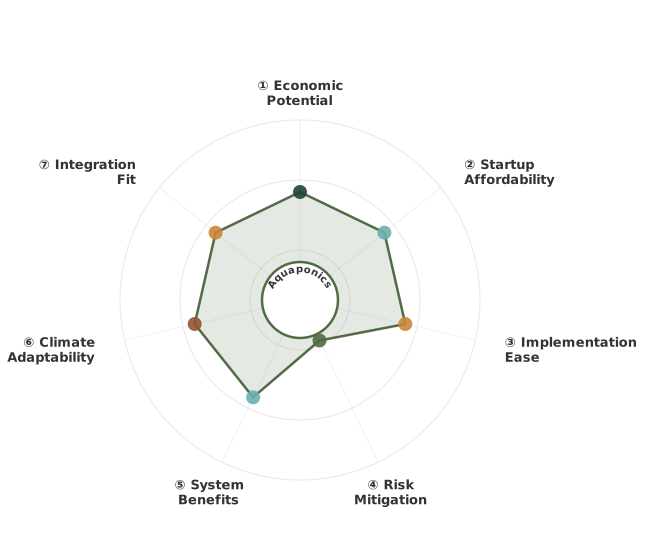
How These Traits Are Calculated
Trait dimensions are ordered clockwise starting from the top of the chart (12 o'clock position):
1. Economic Potential
Financial returns, annual value, and break-even timeline
WHAT: Evaluates financial viability by combining net annual value ($/ha from savings, income, and amortized harvests) with break-even timeline showing when practices pay for themselves.
WHY: Farmers need clear ROI understanding before committing resources. Fast payback (≤3 years) with strong returns (≥$300/ha) enables confident adoption, while long timelines (>10 years) restrict adoption to well-funded operations willing to wait for returns.
HOW: Calculated from net annual value in $/ha and break-even years. Exceptional (≥2.6): fast ROI ≤3 years + high value ≥$300/ha. Typical (1.8-2.5): moderate returns or longer timelines. Limited (<1.8): marginal economics or very long payback >10 years.
2. Startup Affordability
Initial investment costs and financial barrier to entry
WHAT: Measures financial barrier to entry through startup costs for equipment, infrastructure, consulting, and materials. Inverted scoring: lower costs = higher scores = more accessible adoption.
WHY: Affordability determines who can adopt. Low-cost practices (<$250/ha) enable widespread adoption across diverse scales, while high costs (>$2,500/ha) limit adoption to well-capitalized operations, creating barriers that slow regenerative transition.
HOW: Calculated from initial investment parsed from practice content. Inverted scoring: Exceptional (≥2.6): minimal investment <$250/ha. Typical (1.8-2.5): moderate costs $250-2,500/ha. Limited (<1.8): high barrier >$2,500/ha.
3. Implementation Ease
Learning curve and specialized knowledge required
WHAT: Measures how much learning, planning, and specialized knowledge a practice requires. Simpler practices with fewer steps score higher, while complex practices requiring extensive training or specialized resources score lower.
WHY: Complex practices create adoption barriers even when economically viable. Straightforward practices enable faster adoption and broader participation, while those requiring extensive training, timing precision, or specialized equipment limit who can succeed.
HOW: Evaluated by measuring documentation length and identifying complexity markers like location-specific requirements, seasonal timing windows, specialized skills, and dedicated equipment needs. Exceptional (≥2.6): straightforward practices with minimal prerequisites. Typical (1.8-2.5): moderate learning curve with some specialized needs. Limited (<1.8): steep learning curve requiring significant training or resources.
4. Risk Mitigation
Identified financial and ecological risk assessment
WHAT: Evaluates documented risks across financial (investment loss, market volatility) and ecological (crop failure, pest outbreaks) domains. Inverted scoring: fewer risks = higher scores.
WHY: Understanding risk exposure helps farmers make informed decisions. Low-risk practices allow confident implementation, while high-risk practices require careful planning and contingency resources. Risk transparency prevents costly failures.
HOW: Calculated from identified risks in practice content. Inverted scoring: Exceptional (≥2.6): ≤2 risks with manageable severity. Typical (1.8-2.5): 3-5 moderate risks. Limited (<1.8): 6+ risks or severe exposure.
5. System Benefits
How many ways the practice improves your land simultaneously
WHAT: Measures how many aspects of land health improve at once—carbon storage, soil quality, erosion control, water absorption, and biodiversity. Practices that improve multiple areas simultaneously create compounding benefits where each improvement reinforces the others.
WHY: The best practices solve multiple problems at once. For example, addressing erosion simultaneously builds carbon and improves water infiltration, creating a resilient system with positive feedback loops. Single-benefit approaches miss these compound transformation opportunities.
HOW: Evaluated across five key outcomes: carbon sequestration, soil organic matter increase, erosion reduction, water infiltration improvement, and biodiversity enhancement. Exceptional (≥2.6): high carbon storage (>8 t/ha/yr), improvements across 4-5 areas, transformative outcomes. Typical (1.8-2.5): moderate carbon (3-8 t/ha/yr), improvements across 2-3 areas. Limited (<1.8): modest impact (<3 t/ha/yr), single-area focus only.
6. Climate Adaptability
Geographic applicability across Köppen climate zones
WHAT: Evaluates geographic applicability by assessing how many Köppen climate zones successfully support a practice and what adaptation requirements are needed. Measures breadth of climates where farmers can implement with minimal to moderate modifications.
WHY: Universal practices working across diverse climates enable more farmers to adopt regenerative approaches. Practices limited to single climate types (only Mediterranean, only tropical) restrict adoption and slow global transition. Adaptability determines whether a practice serves niche regions or offers broad transformation.
HOW: LLM evaluation of regional success stories, Köppen zone coverage, and adaptation needs. Exceptional (≥2.6): 5+ zones or 4+ climate types, 3+ continents, minimal adaptation. Typical (1.8-2.5): 3-4 zones or 2-3 types, 2 continents, moderate adaptation. Limited (<1.8): 1-2 zones, single region, significant adaptation or highly specialized.
7. Integration Fit
How well this practice combines with others you're doing
WHAT: Measures how well a practice combines with other regenerative practices you might be doing. Some practices work as building blocks that make many other practices easier or more effective, while others work best on their own.
WHY: Practices that combine well with many others create more value on your farm. For example, cover cropping enables no-till, improves grazing, supports crop diversity, and helps water management—making all of them work better together. This helps you build a coherent system rather than juggling disconnected practices.
HOW: Evaluated by identifying which practices combine well and how strong those combinations are. 'Ideally Suited' means strong combinations where practices reinforce each other (practice A makes B easier, while B makes A more effective). 'Adequate' means complementary benefits that work well together. Exceptional (≥2.6): combines well with 6+ practices, serves as a building block. Typical (1.8-2.5): combines with 3-5 practices. Limited (<1.8): 1-2 practices or works best alone.
Going Deeper
1
WHY - The Benefits
Aquaponics offers a compelling synergy of food production and resource efficiency. By mimicking natural nutrient cycles in a controlled environment, it reduces waste, conserves water, and can significantly lower the environmental impact of growing food. Its benefits span...
Aquaponics offers a compelling synergy of food production and resource efficiency. By mimicking natural nutrient cycles in a controlled environment, it reduces waste, conserves water, and can significantly lower the environmental impact of growing food. Its benefits span...
WHY - The Benefits
Aquaponics offers a compelling synergy of food production and resource efficiency. By mimicking natural nutrient cycles in a controlled environment, it reduces waste, conserves water, and can significantly lower the environmental impact of growing food. Its benefits span...
Aquaponics offers a compelling synergy of food production and resource efficiency. By mimicking natural nutrient cycles in a controlled environment, it reduces waste, conserves water, and can significantly lower the environmental impact of growing food. Its benefits span...
Resource Efficiency & Water Conservation
Water is a critical resource globally, and aquaponics excels at its conservation. Unlike conventional agriculture, which can lose 50% or more of applied water to evaporation, runoff, and deep percolation, aquaponics recirculates water continuously. In a well-managed system, water loss is primarily through plant transpiration and evaporation from tank surfaces, often amounting to only 5-10% of the volume of continuously flowing systems. This makes aquaponics an ideal solution for regions experiencing drought or water stress, such as the arid plains of Australia, parts of the Mediterranean basin, or the semi-arid Sahel region of Africa.
For example, a typical hydroponic tomato farm might use 50-100 liters (13-26 gallons) of water per kilogram of produce. A soil-based farm might use even more. An aquaponic system producing tomatoes could use as little as 10-15 liters (2.5-4 gallons) per kilogram, representing a water saving of 80-90%. This is not only environmentally responsible but also economically advantageous, especially where water is metered and charged. The ability to locate aquaponic systems in urban areas or on non-arable land further enhances their resource-saving potential by reducing the need for long-distance transportation and utilizing otherwise unproductive spaces.
Nutrient Cycling and Reduced Chemical Inputs
One of aquaponics' most significant regenerative aspects is its inherent nutrient cycling capabilities and the consequent reduction in synthetic inputs. Fish excrete ammonia, which is toxic to them in high concentrations. In an aquaponic system, beneficial nitrifying bacteria convert this ammonia first into nitrites and then into nitrates. Plants readily absorb these nitrates as essential nutrients, effectively filtering the water for the fish. This closed-loop system eliminates the need for synthetic fertilizers, such as urea or ammonium nitrate, which are significant energy consumers in their production and can lead to eutrophication of natural water bodies if they leach from soil.
The direct conversion of fish waste to plant nutrients mimics natural biogeochemical cycles found in healthy aquatic ecosystems. This reduces the farm's reliance on external fertilizer inputs, both in terms of cost and environmental impact. Furthermore, the absence of soil in the plant grow beds eliminates the need for tillage, soil pesticides, and herbicides, aligning with regenerative principles of minimizing soil disturbance and maintaining healthy soil biology (even though the system itself is soil-less, its reduced pressure on terrestrial soils is a benefit).
Waste Minimization and Product Diversity
Aquaponics effectively transforms fish waste, which would otherwise be a source of pollution and disposal problems in traditional aquaculture, into a valuable input for plant growth. This significantly reduces the environmental burden of waste management. A well-balanced aquaponic system minimizes waste discharge, creating a nearly closed-loop cycle. The primary waste stream becomes fish solids, which can be periodically removed from the system. These solids are rich in organic matter and nutrients and can be composted and used as a valuable soil amendment for conventional or regenerative farms, further integrating the aquaponic system into a broader regenerative landscape.
The dual production of fish and plants offers economic diversification. Farmers can cultivate a variety of high-value crops like leafy greens (lettuce, spinach, kale), herbs (basil, mint), or fruiting plants (tomatoes, peppers, strawberries), alongside popular fish species such as tilapia, trout, catfish, or ornamental fish. This diversity can provide more stable income streams and buffer against market fluctuations for a single product. The ability to grow produce year-round in controlled environments also offers predictable harvests and market access.
Localized Food Production and Resilience
By enabling food production in diverse locations, including urban environments, aquaponics enhances food security and local food webs. Urban aquaponic farms can drastically shorten supply chains, reducing transportation costs, greenhouse gas emissions, and food spoilage. This contributes to more resilient communities by increasing access to fresh, nutritious food, especially in "food deserts" where fresh produce is scarce. The controlled environment also allows for consistent production regardless of external weather conditions, providing a reliable food source.
Furthermore, aquaponic systems can be designed to operate with significant energy independence. While pumps are necessary, they can be powered by renewable energy sources like solar panels. Heating and cooling systems, if required by the climate, can also be optimized for efficiency. This focus on energy self-sufficiency enhances the system's resilience, making it less vulnerable to disruptions in fossil fuel supplies or grid instability, a hallmark of regenerative systems.
Regenerative Systems Fit
Aquaponics, when carefully designed and managed, aligns exceptionally well with the goals and spirit of several regenerative agriculture principles. As a soil-less system, its application of these principles is often indirect or analogous compared to soil-based practices, positioning it as a unique, context-dependent regenerative practice.
Principle 1 (Minimize Soil Disturbance): While aquaponics does not involve soil, it significantly reduces the pressure on arable land that would otherwise be used for agriculture. By producing food in a soil-less system, it allows existing soils to be managed regeneratively for other purposes like carbon sequestration, biodiversity, or perennial food production without the annual disturbance of tillage. The waste from aquaponics can also be used to enrich soils, indirectly supporting this principle.
Principle 2 (Maximize Crop Diversity): Aquaponic systems allow for diverse plant cultivation in their hydroponic components, including leafy greens, herbs, fruiting vegetables, and even some root vegetables. Coupled with the diversity of fish species, this creates a rich biological system. The waste solids, when composted, can introduce a wealth of microbial diversity into soil-based systems.
Principle 3 (Keep Soil Covered): Directly, aquaponics keeps water surfaces covered by plants and fish. Indirectly, by reducing the demand for terrestrial agricultural land, it allows more land to be kept covered by perennial vegetation, leading to better soil health and reduced erosion elsewhere.
Principle 4 (Maintain Living Roots): The hydroponic component of aquaponics inherently maintains living roots throughout the growing cycle, continuously absorbing nutrients and contributing to water purification. This constant biological activity in the root zone is a core component of the system's function.
Principle 5 (Integrate Livestock): Aquaponics is essentially a form of livestock integration, where fish are the "livestock" that provide nutrients for plant "crops." When the system is designed with consideration for the well-being of the fish (e.g., appropriate stocking densities, water quality) and when its waste products are sustainably managed, it represents a highly integrated and efficient approach to food production.
For farms transitioning from conventional agriculture, aquaponics can be a strategic addition. It allows for diversification of income and a reduction in reliance on external inputs. If the farm has non-arable land or urban spaces, an aquaponic system can be established, producing high-value crops without competing for limited fertile land. The waste products can then be used to enrich existing farm soils, creating a synergistic loop. The key to its regenerative success is ensuring that inputs (fish feed, energy) are sourced from regenerative or renewable origins and that the entire cycle is managed to minimize external environmental impact.
Aquaponics is not a magic bullet for all agricultural challenges, but it is a powerful tool in the regenerative toolkit when implemented with ecological awareness. Its potential to produce food with minimal water and nutrient inputs, coupled with waste reduction and enhanced biodiversity within its own ecosystem, makes it a valuable practice for creating more resilient and sustainable food systems globally.
Sources behind this view
Videos & Podcasts
-
Aquaponics and hydroponics are discussed, with aquaponics highlighted for its symbiotic, microbial-driven system that recycles water and nutrients from fish waste. Shipping container farms are present
-
Developed integrated 'chickenponics' and 'kitchenponics' systems for urban agriculture in Vietnam, combining fish, chicken, waste management, and diverse vegetable/tree production for higher yields an

-
Contrasts conventional aquaponics with biodiverse, nature-mimicking systems using amphipods, earthworms, and bacteria for self-balancing nutrient cycling, reducing technical monitoring and aligning wi
-
Aquaponics creates a closed-loop system where fish waste fertilizes plants and plants filter water for fish, promoting water conservation. Experiment with fish tanks, PVC pipes, and crops like lettuce
Community
-
Aquaponics combines aquaculture and hydroponics, using fish waste to fertilize soilless vegetables. This symbiotic system uses 70% less water, grows produce faster and more productively, and yields or
Read more (opens in new window) smallfarms.cornell.edu -
Aquaponics is a globally expanding, profitable, and sustainable agricultural model. It conserves water (70% less), increases yield (4-6x), and is easily scalable, making it a future solution for organ
Read more (opens in new window) smallfarms.cornell.edu -
Provides practical guidance on simple aquaponics systems using local fish (goldfish, koi, trout), emphasizing minimal inputs, larger tanks for stability, and adaptation to local climates, with example
Read more (opens in new window) permies.com -
Aquaponics offers a cost-effective, fertilizer-free system where plants filter water, creating a closed loop for water conservation and continuous farming.
Read more (opens in new window) permies.com
Research
-
Soilless Agriculture at a Crossroads: Strengths, Challenges, and Prospects of Hydroponics, Aquaponics, and Bioponics in Relation to Precision Farming (opens in new window)
This study found: Soil-less farming (hydroponics, aquaponics, bioponics) combined with precision agriculture offers solutions for global challenges, reducing resource use and increasing yields. Challenges include high
-
Sustainable Production: Integrating Medicinal Plants with Fish Farming in Aquaponics—A Mini Review (opens in new window)
This study found: Aquaponics combines fish farming and plant growing, creating a sustainable system where fish waste fertilizes plants and plants clean water. This method can be used to grow medicinal plants year-round
-
Aquaponic Farming for Sustainable Rural Agriculture: A Review Paper (opens in new window)
This study found: Aquaponics, combining fish farming and soil-less plant growth, is reviewed as a sustainable solution for rural agriculture, enhancing food security and economic stability with minimal resources.
-
AQUAPONICS: A SUSTAINABLE FOOD PRODUCTION ALTERNATIVE (opens in new window)
This study found: Aquaponics integrates fish farming and plant growing for sustainable food production, offering consistent nutrient delivery and environmental benefits. It's a promising solution for future global food
 From the Web
-
Aquaponics combines hydroponics and aquaculture, using fish effluent nutrients for plant growth with 90% less water and higher yields. The system requires balancing fish and plant populations and is b
-
Aquaponics combines hydroponics and aquaculture, using fish effluent converted by microbes into plant nutrients, requiring 10% of water and yielding 20x more produce in controlled environments. Mainta
-
Aquaponics integrates aquaculture and hydroponics, using fish waste as fertilizer and biofiltration via microorganisms. Key components include fish tanks, biofilters, and grow beds. System types inclu
-
Aquaponics is an alternative horticultural system using fish waste as plant nutrients, reducing water use by 90%, eliminating pesticides/herbicides, and enabling year-round production. It mimics natur
2
WHERE - Regional Considerations
Aquaponics is highly adaptable to various climates due to its controlled environment nature, but regional factors profoundly influence system design, energy requirements, and species selection.
Aquaponics is highly adaptable to various climates due to its controlled environment nature, but regional factors profoundly influence system design, energy requirements, and species selection.
WHERE - Regional Considerations
Aquaponics is highly adaptable to various climates due to its controlled environment nature, but regional factors profoundly influence system design, energy requirements, and species selection.
Aquaponics is highly adaptable to various climates due to its controlled environment nature, but regional factors profoundly influence system design, energy requirements, and species selection.
Click Here to Look up your Region if you don't already know it
Tropical and Subtropical Regions
Representative Locations: Southeast Asia (e.g., Thailand, Philippines), Central America (e.g., Costa Rica, Mexico), Brazil, Northern Australia, South Florida (USA), Southern China.
Climate Context: Consistently warm to hot temperatures year-round, with moderate to high humidity. Rainfall patterns can vary from consistent to distinct wet/dry seasons. Köppen: Af, Am, Aw, Cfa, Cwa. USDA Zones 10-12.
Considerations: These regions are highly suited for aquaponics due to natural warmth, reducing energy costs for heating. However, high ambient temperatures can stress certain fish species (e.g., trout), requiring careful selection of heat-tolerant species like tilapia, catfish, or ornamental fish. Shading is crucial to prevent overheating of grow beds and tanks, which can stress plants and fish alike and promote algal blooms. Evaporative cooling or active ventilation may be necessary in very hot periods. For plant selection, heat-tolerant varieties are preferred. Pest pressure can be high, necessitating integrated pest management strategies that are safe for both fish and plants within the closed system.
Arid and Semi-Arid Regions
Representative Locations: Western USA (e.g., California, Arizona), North Africa (e.g., Morocco, Egypt), Central Asia (e.g., Uzbekistan), Interior Australia, parts of the Middle East.
Climate Context: Characterized by very low annual precipitation (<40 cm or 15 inches), high summer temperatures, and significant diurnal temperature fluctuations. Köppen: BSh, BSk. USDA Zones 7-10.
Considerations: Water conservation is paramount. Systems must employ stringent water recirculation, potentially utilizing designs that minimize surface area for evaporation. Covering tanks and grow beds is essential. Supplemental heating may be required during colder months, and cooling during extreme heatwaves, increasing energy demand. Species selection for fish and plants must be robust and tolerant of fluctuating temperatures and possibly slightly higher salinity if water treatment is minimal. The economic viability often hinges on the high water savings achieved. Access to electricity for pumps and environmental controls is critical.
Temperate Regions
Representative Locations: Northern Europe (e.g., UK, Germany, Netherlands), Eastern China, Northern USA (e.g., Northeast, Midwest), Canada, parts of Southern South America (e.g., Argentina, Chile).
Climate Context: Distinct seasons with warm to hot summers and cool to cold winters. Moderate to high annual precipitation. Köppen: Cfb, Cfa, Dfa, Dfb. USDA Zones 4-8.
Considerations: These regions present the greatest challenge for year-round production without significant energy input for heating and potentially cooling. Greenhouse or indoor facilities are almost always necessary to maintain optimal temperatures for fish and plants during colder months. This significantly increases capital and operating costs. Species selection is broad, allowing for a wide range of options if environmental controls are adequate. However, the energy demands for climate control make sourcing renewable energy (solar, wind) a critical component for regenerative aquaponics in these areas. Minimizing heat loss and maximizing solar gain are key design principles.
Cold Continental Regions
Representative Locations: Interior Canada, Northern USA, Siberia (Russia), Northern Europe.
Climate Context: Very short growing seasons, extreme summer heat, and severe winter cold. Köppen: Dfc, Dwc, Dfd. USDA Zones 2-5.
Considerations: Year-round production in these regions demands substantial investment in insulated structures and robust heating systems. The energy required to maintain optimal temperatures for aquaponic systems can be very high, making renewable energy sources essential for a regenerative approach. Species selection will be limited to cold-hardy fish and plants or species that thrive in heated indoor environments. The economic feasibility often relies on niche, high-value markets accessible from these locations or a strong focus on community-supported agriculture (CSA) models. Careful system design to prevent freezing and maintain stable conditions is paramount.
3
HOW - Implementation Process
Implementing an aquaponics system, especially with a regenerative focus, requires careful planning across several interconnected phases, from design and setup to ongoing management.
Implementing an aquaponics system, especially with a regenerative focus, requires careful planning across several interconnected phases, from design and setup to ongoing management.
HOW - Implementation Process
Implementing an aquaponics system, especially with a regenerative focus, requires careful planning across several interconnected phases, from design and setup to ongoing management.
Implementing an aquaponics system, especially with a regenerative focus, requires careful planning across several interconnected phases, from design and setup to ongoing management.
Prerequisites
Before initiating system setup, consider these foundational elements:
- Water Source: Access to a reliable, clean water source is paramount. Municipal water, well water, or rainwater harvesting are common options. If using municipal water, it may need de-chlorination as chlorine is toxic to fish and beneficial bacteria.
- Location & Space: Aquaponics can be done indoors, outdoors, or in greenhouses. The location must be able to accommodate the system's footprint, provide access to utilities (electricity for pumps, heating/cooling if needed), and protect it from extreme weather. Consider available sunlight for plants or the need for artificial lighting.
- Climate Assessment: Understand your local average temperatures, rainfall, and seasonal variations. This is critical for selecting fish and plant species suited to your climate or for designing appropriate environmental controls (heating, cooling, ventilation).
- Power Availability: Aquaponics relies on pumps for water circulation and aeration. Ensure stable and sufficient electrical power. For regenerative systems, prioritize access to renewable energy sources like solar or wind.
- Permits & Regulations: Check local agricultural, building, and environmental regulations regarding fish farming, water usage, and system construction. Some regions may have specific permitting requirements.
- Market Research: Identify potential markets for your produce and fish. What is in demand locally? What are the price points? This informs what species you'll grow and the scale of your operation.
Phase 1: Design and System Selection
The "best" system depends on your goals, climate, available space, and budget. Common types include:
- Media Bed Systems: Grow media (e.g., lava rock, expanded clay pebbles) supports plants and acts as a biofilter. Simple, robust, and good for beginners. Can also be used for shallow-rooted plants.
- Pros: Low cost, dual-function (biofilter + plant support), good for beginners.
- Cons: Heavy when wet, requires specific media, can be difficult to harvest solids.
- Deep Water Culture (DWC) / Raft Systems: Plants float on rafts with roots suspended in nutrient-rich water. Ideal for leafy greens and herbs. Requires a separate biofilter.
- Pros: High plant growth rates, easy harvest, scalable.
- Cons: Needs separate biofilter, requires consistent water temperature, roots can become waterlogged.
- Nutrient Film Technique (NFT) Systems: Plants are in channels; a thin film of nutrient solution flows over their roots. Also great for leafy greens and herbs. Requires separate biofilter.
- Pros: Water efficient, good for tight spaces, easy to observe roots.
- Cons: Small water volume is sensitive to temperature/nutrient fluctuations, risk of pump failure is high.
- Vertical Systems: Combines DWC or NFT practices in vertical towers or racks, maximizing space efficiency. Often used in urban settings.
Regenerative Design Considerations:
- Water Flow: Optimize flow rates to maximize dissolved oxygen and nutrient exchange, minimizing energy use. Gravity-fed systems are ideal where topography allows.
- Energy Efficiency: Use energy-efficient pumps and aerators. Design for passive cooling/heating or integrate with renewable energy sources.
- Material Sourcing: Choose durable, food-grade materials that are sustainably produced or have a long lifespan. Avoid single-use plastics where possible.
- Waste Management: Design for easy removal and composting of fish solid waste. Consider integration with other farm composting efforts.
- Species Selection: Choose fish and plant species appropriate for your climate and market. Prioritize species that tolerate system conditions and have low feed conversion ratios. Research sustainable feed options.
Phase 2: Construction and Setup
- Tank and Grow Bed Construction: Assemble fish tanks and hydroponic grow beds/channels. Ensure they are level and structurally sound. Use food-grade materials (e.g., IBC totes, food-grade plastic tanks, treated wood).
- Plumbing Installation: Connect tanks, grow beds, filters, and pumps with appropriate piping and fittings. Include shut-off valves for maintenance. Ensure water can flow freely by gravity where possible.
- Filtration System: Install mechanical filtration (to remove solids) and biological filtration (biofilter with large surface area for bacteria). Some systems integrate these functions.
- Aeration: Install air pumps and diffusers in fish tanks to maintain high dissolved oxygen levels essential for fish and nitrifying bacteria.
- Environmental Controls: Install heaters, chillers, fans, or irrigation systems as needed based on climate and species requirements. Integrate with a suitable power source, ideally renewable.
- Biological System Cycling: This is a critical biological startup step. Before adding fish and plants, establish the nitrifying bacteria colony. This involves adding an ammonia source to the water and monitoring ammonia, nitrite, and nitrate levels until ammonia and nitrite consistently read zero, and nitrates are present. This biological cycling process typically takes 4-6 weeks.
Phase 3: Stocking and Planting
- Introduce Fish: Once the system is biologically stable (cycled), introduce fish gradually at low stocking densities. Acclimate fish slowly to the tank water's temperature and chemistry.
- Planting: Introduce seedlings or seeds into the hydroponic grow beds. Ensure roots have access to the water flow or nutrient solution.
- Initial Monitoring: Closely monitor water quality parameters (pH, ammonia, nitrite, nitrate, dissolved oxygen, temperature) daily for the first few weeks. Observe fish health and plant growth for any signs of stress.
Transition Timeline & Phase-Out Strategy (for Regenerative Focus)
Moving towards a fully regenerative aquaponics system involves a gradual transition away from conventional inputs and practices:
Year 1-2: Establishing the foundation
- Focus: System stability, water quality, and initial species trials.
- Fish Feed: Begin researching and sourcing more sustainable feed options – those with lower reliance on wild-caught fish, using alternative proteins (insects, algae), or plant-based ingredients. Gradually phase out feed with problematic ingredients.
- Energy: Assess current energy use. If using grid power, start planning for renewable energy integration (e.g., solar panel sizing). If already using renewables, optimize their use.
- Waste Solids: Begin collecting fish solids. Experiment with composting methods and assess their nutrient value. Begin applying compost to nearby soil-based gardens or fields, or explore direct application if water dilution is managed.
- Plant & Fish Selection: Prioritize species that thrive in your climate with minimal energy input for heating/cooling.
Year 2-4: Optimizing and Reducing Inputs
- Fish Feed: Aim to source >75% of feed from sustainably certified or regeneratively produced options. Challenge feed suppliers for transparency and improvement.
- Energy: Implement renewable energy solutions. Aim for 50%+ of system energy from renewables by year 4. Improve insulation on greenhouses/tanks to reduce heating/cooling loads.
- Nutrient Supplements: If supplemental nutrients are used (beyond fish waste), aim to replace them with composted fish solids or other biologically derived amendments where possible.
- Water Efficiency: Fine-tune water flow rates and system design to minimize pump usage and evaporation.
Year 4-6+: Fully Regenerative Operation
- Fish Feed: 100% sustainably sourced or regeneratively produced feed.
- Energy: 100% renewable energy for pumps, lighting, and climate control.
- Nutrient Inputs: System relies solely on fish waste and composted solids for plant nutrition. No synthetic amendments.
- Waste Integration: Fish solids are fully integrated as compost into surrounding regenerative land management or sold as a high-value amendment.
- System Resilience: The system is robust, energy-independent, and integrated into the broader farm ecosystem, potentially supporting local biodiversity.
Phasing out "cold turkey": Abrupt elimination of synthetic inputs or switching to a completely new feed source without adjustment can shock the system, leading to plant nutrient deficiencies, fish stress, or water quality imbalances. A gradual, incremental approach allows the biological components (bacteria, fish, plants) to adapt. The timeline for full transition depends on the system's scale, complexity, and the farmer's commitment to sourcing and management.
4
Know the Debate
Aquaponics' regenerative potential is context-dependent, influenced by its location, scale, and management practices, particularly concerning energ...
Know the Debate
Aquaponics' regenerative potential is context-dependent, influenced by its location, scale, and management practices, particularly concerning energ...
Aquaponics' regenerative potential is context-dependent, influenced by its location, scale, and management practices, particularly concerning energy and nutrient cycling. In humid regions with ample rainfall and moderate temperatures, systems can be highly water and energy efficient. However, arid climates and colder regions demand greater investment in water conservation and climate control, respectively. The efficiency of nutrient conversion from fish waste to plant uptake can vary significantly, often requiring careful monitoring and potential supplementation. Furthermore, while basic aquaponics relies on core microbial cycles, experienced practitioners suggest greater biodiversity is key to long-term system stability.
How efficiently do fish waste nutrients feed plants?
Optimal nutrient recycling in controlled settings
Institute and academic sources highlight aquaponics' efficiency, noting that fish waste converted by microbes provides optimal nutrients, with minimal water use and high yields in controlled environments.
Sources behind this view
Sources behind this view
Research
-
AQUAPONICS: A SUSTAINABLE FOOD PRODUCTION ALTERNATIVE (opens in new window)
This study found: Aquaponics is a farming method that combines raising fish with growing plants, creating a sustainable way to produce both food sources. This review explains how aquaponics works, its benefits for the environment, and what's needed to make it successful. Studies show that plants grown in aquaponic systems are just as good as those grown in traditional hydroponics, and aquaponics can provide a more steady supply of nutrients to plants. This integrated approach is seen as a key solution for meeting future global food needs sustainably.
From the Web
-
Aquaponics combines hydroponics and aquaculture, using fish effluent converted by microbes into plant nutrients, requiring 10% of water and yielding 20x more produce in controlled environments. Maintaining balance between fish and plants is critical.
-
Aquaponics integrates aquaculture and hydroponics, using fish waste as fertilizer and biofiltration via microorganisms. Key components include fish tanks, biofilters, and grow beds. System types include NFT, flood and drain, and floating rafts. Success depends on managing fish and plant health, water quality, and component ratios.
-
Aquaponics combines hydroponics and aquaculture, using fish effluent nutrients for plant growth with 90% less water and higher yields. The system requires balancing fish and plant populations and is being explored for organic production and no-till-like soil practices.
Variable nutrient availability in real-world systems
Field practitioners frequently encounter nutrient imbalances, requiring supplemental inputs. Experience suggests nutrient conversions and uptake are not always optimal, necessitating careful monitoring and adjustments beyond the basic fish-plant symbiosis.
Sources behind this view
Sources behind this view
Videos & Podcasts
-
Aquaponics converts fish waste into plant nutrients via microbial action, with the dual root zone method enhancing this by creating 'aquatic soil' and fostering diverse microbial chains for better growth and flavor.

-
Aquaponics integrates fish farming and hydroponics, using fish waste (ammonia) converted by microbes into plant nutrients (nitrates). This system requires managing fish and plant species based on temperature, and using appropriate lighting and substrates like rock wool.

Making Sense of the Differences
Optimal nutrient conversion and plant uptake are highly dependent on managing fish, plants, and the microbial community. While ideal conditions allow for efficient recycling, real-world systems often face challenges with specific nutrient availability (e.g., phosphorus, potassium). Farmers should monitor plant health and water chemistry closely and be prepared to supplement nutrients, especially in systems with lower fish stocking densities or specialized plant needs, while optimizing microbial activity through proper aeration and solids management.
Are aquaponics systems scalable and energy-intensively managed?
Scalable and efficient in controlled settings
Academic sources emphasize aquaponics' inherent sustainability and high yields in controlled environments, suggesting broad scalability and efficiency with minimal water use.
Sources behind this view
Sources behind this view
Research
-
Practical Guide for Aquaponics as an Alternative Enterprise (opens in new window)
This study found: This guide introduces aquaponics, a farming method that combines raising fish and growing plants without soil. It's an intensive and sustainable way to produce crops using less water and fertilizer, making it ideal for small farms looking to sell locally or attract visitors. The system connects fish tanks with plant growing beds, creating a symbiotic relationship.
-
Review Paper Based On Organic Vertical Farming With Aquaponic Model In Urban Areas (opens in new window)
This study found: This paper reviews how combining vertical farming, organic methods, and aquaponics can be a smart approach for growing food in cities. Vertical farming means growing crops in stacked layers, often indoors. Hydroponics and aeroponics are ways to grow plants without soil, using water or mist infused with nutrients. Aquaponics takes this further by linking fish farming with plant growing: fish provide natural fertilizer for the plants, and the plants clean the water for the fish. This integrated system can lead to more food from less space and using much less water, helping us produce food sustainably in urban environments. More research is needed to make these systems even better and easier for more people to use.
-
Aquaponics a modern approach for integrated farming and wise utilization of components for sustainability of food security: A review (opens in new window)
This study found: Aquaponics offers a sustainable way to grow both fish and vegetables together in a single system, helping to tackle food shortages. This method is important because traditional farming often uses chemicals that harm the environment and reduces the amount of land available for growing food. Aquaponics is a soilless system that can be set up in places with poor soil, like deserts or salty islands, and it's more productive and economically efficient. It's a way to ensure food security and provide income for people with limited resources.
Scalability challenged by energy costs and management
Field reports often highlight significant energy demands for pumps, heating, and cooling in larger or climate-controlled systems, questioning scalability and regenerative claims due to high operational costs.
Sources behind this view
Sources behind this view
Videos & Podcasts
-
Aquaponics and hydroponics are discussed, with aquaponics highlighted for its symbiotic, microbial-driven system that recycles water and nutrients from fish waste. Shipping container farms are presented as a viable CEA method.
-
Jonathan Martinetto of Melbourne Aquaponics emphasizes aesthetic, functional backyard aquaponics systems using native fish like silver perch or trout, and plants like herbs and leafy greens. He advises a minimum system size of 500 liters for stability and warns against small, unworkable plastic kits.

Context-dependent energy and scale requirements
Institute sources indicate water savings and pesticide-free benefits but also mention high costs and energy use, pointing to system design variances.
Sources behind this view
Sources behind this view
From the Web
-
Aquaponics systems in arid lands use up to 95% less water than traditional farming, are pesticide/herbicide/fertilizer-free, and enable faster crop growth. They involve fish tanks, water treatment, and planting areas, circulating water at 10 m³/hr.
-
Hydroponics grows plants in nutrient water; aquaponics combines this with fish farming, where fish waste fertilizes plants and plants clean water. Benefits include organic growth and water conservation, but drawbacks are high costs and energy use.
-
Aquaponics integrates fish and plant production in a closed-loop system, reducing greenhouse gas emissions (GHGE) and resource use. Challenges in Kenya include high costs and lack of expertise, but community-based models and renewable energy can enhance adoption.
Making Sense of the Differences
The scalability and energy intensity of aquaponics are strongly influenced by climate, system size, and management ambition. While academic sources often focus on water-saving potential and controlled yields, field experience reveals that larger or climate-controlled systems can be energy-intensive. Regenerative approaches prioritize passive design, gravity flow, and integration of renewable energy to mitigate these costs and enhance resilience. Farmers should carefully assess local climate, desired production scale, and energy availability versus cost before implementing aquaponics, aiming for designs that minimize energy draw and maximize water and nutrient efficiency.
Is greater biodiversity a prerequisite for stable aquaponics?
Basic fish-plant symbiosis is sufficient
Academic and institute literature often presents aquaponics as a system focused on fish waste conversion to plant nutrients by nitrifying bacteria, implying a relatively simple core biological process.
Sources behind this view
Sources behind this view
Research
-
AQUAPONICS: A SUSTAINABLE FOOD PRODUCTION ALTERNATIVE (opens in new window)
This study found: Aquaponics is a farming method that combines raising fish with growing plants, creating a sustainable way to produce both food sources. This review explains how aquaponics works, its benefits for the environment, and what's needed to make it successful. Studies show that plants grown in aquaponic systems are just as good as those grown in traditional hydroponics, and aquaponics can provide a more steady supply of nutrients to plants. This integrated approach is seen as a key solution for meeting future global food needs sustainably.
-
Aquaponics: A Sustainable Approach to Integrated Fish and Plant Farming (opens in new window)
This study found: This review looks at how aquaponics, a system that combines fish farming with growing plants without soil, can help tackle food shortages and improve nutrition, especially in East Africa. Aquaponics works by creating a natural partnership between fish, plants, and helpful bacteria that clean the water. This integrated approach is better than separate fish tanks or hydroponic systems. The review discusses common aquaponics setups like media beds, deep water culture, and nutrient film technique, and mentions using insect larvae (like black soldier fly larvae) as a sustainable feed for the fish. Maintaining good water quality – checking pH, ammonia, oxygen, and temperature – is crucial for the system to work well. The success of growing more food with aquaponics depends on the size of the fish operation and the amount of waste nutrients available.
From the Web
-
Aquaponics integrates fish farming and hydroponics, using fish waste as plant fertilizer and plants as biofilters. This creates a closed-loop, zero-waste system that recycles water and nutrients through microbial activity.
-
A basic aquaponic system involves fish tanks, settling tanks, biofilters, and grow beds. Fish waste provides nutrients for plants, which in turn filter the water for the fish. Lettuce and herbs are well-suited for aquaponics.
Greater biodiversity enhances long-term stability
Experienced field practitioners suggest that a more complex biological community, including worms for solids processing and diverse microbes, is crucial for stable, resilient systems and efficient nutrient cycling.
Sources behind this view
Sources behind this view
Videos & Podcasts
-
Aquaponics converts fish waste into plant nutrients via microbial action, with the dual root zone method enhancing this by creating 'aquatic soil' and fostering diverse microbial chains for better growth and flavor.
-
Contrasts conventional aquaponics with biodiverse, nature-mimicking systems using amphipods, earthworms, and bacteria for self-balancing nutrient cycling, reducing technical monitoring and aligning with permaculture.
Making Sense of the Differences
While basic aquaponics functions on the core nitrifying bacteria cycle, field experience indicates that greater biological complexity, such as incorporating worms for solids processing or diverse microbial communities, enhances system stability and nutrient cycling. Simplified models may work in smaller setups but larger or more challenging environments benefit from a more biodiverse approach that mimics natural ecosystems more closely, leading to greater resilience and reduced need for external inputs.
5
HOW MUCH - Costs & Investment
Note: Costs are highly variable based on system complexity, scale, location, DIY vs. professional installation, and material sourcing. Prices are rough USD equivalents and subject to significant international variation based on local labor, material costs, and currency...
Note: Costs are highly variable based on system complexity, scale, location, DIY vs. professional installation, and material sourcing. Prices are rough USD equivalents and subject to significant international variation based on local labor, material costs, and currency...
HOW MUCH - Costs & Investment
Note: Costs are highly variable based on system complexity, scale, location, DIY vs. professional installation, and material sourcing. Prices are rough USD equivalents and subject to significant international variation based on local labor, material costs, and currency...
Note: Costs are highly variable based on system complexity, scale, location, DIY vs. professional installation, and material sourcing. Prices are rough USD equivalents and subject to significant international variation based on local labor, material costs, and currency...
Note: All costs are based on recent US economic data (2024–2026) and may vary substantially by region based on local labor rates, material costs, and regulatory requirements.
Structure and Tank Infrastructure
In aquaponic systems, structural investment is dictated by water containment and weight load management. For small-scale systems (under 50 acres (20 ha) of facility coverage), utilizing repurposed food-grade tanks ranges from $500–$2,000. For mid-size operations (50–500 acres (20–202 ha) total facility reach), systems transition to heavy-duty, professional-grade polyethylene tanks and galvanized support structures, costing $2,000–$10,000. In large-scale operations (500+ acres), the infrastructure requires high-density industrial fiberglass or reinforced concrete containment to handle massive weight loads—every gallon adds approximately 8.3 lbs (3.8 kg) of load—resulting in costs of $10,000–$50,000 per modular unit.
Pumping, Aeration, and Plumbing
Water movement is the primary mechanical necessity for ecosystem stability. Small-scale setups utilize entry-level submersible pumps and basic PVC piping, with costs ranging from $100–$500. Mid-size operations require more complex plumbing for drainage and overflow, plus redundant pumping arrays to prevent system failure, totaling $500–$2,500. Large-scale industrial systems, which must move massive volumes of water through multi-stage filtration loops, require variable frequency drive pumps and centralized oxygenation arrays, leading to expenditures of $2,500–$15,000 to maintain adequate dissolved oxygen levels for high fish densities.
Climate and Environmental Controls
Climate regulation protects high-value fish stock from temperature-related mortality. Small-scale systems typically rely on passive solar or simple heaters at costs of $200–$1,500. Mid-size operational setups, which often move into enclosed greenhouse environments, require automated environmental controllers, commercial-grade exhaust fans, and supplemental heaters or chillers, ranging from $1,000–$8,000. Large-scale commercial installations necessitate full-scale climate control, including industrial HVAC systems, automated humidity management, and supplemental LED lighting arrays, costing $5,000–$30,000+. These investments are critical for ensuring year-round production cycles.
Consumables and Biological Inputs
Consumables involve both the media and the living inventory. For small-scale operations, growth media (expanded clay or volcanic rock) and biofilter media are priced between $100–$350. Mid-size budgets for these materials generally range from $350–$1,750, prioritizing long-term durability of bio-filters. Large commercial operations require bulk substrate and high-surface-area technical bio-media, totaling $1,750–$8,000. Additionally, initial fingerling stocks and certified vegetable starts vary in cost starting from $70 for small setups, scaling to upwards of $5,000 for large-scale initial stocking events.
Most Spend: Most operations find their middle 60% of investment costs fall between $5,500 and $28,000 per modular unit. This range typically excludes high-end automation and land acquisition, focusing on the core hardware required for safe, productive aquaponic cycling.
Why the Range?: The primary driver of cost variation is the level of automation and structural redundancy. Systems relying on manual monitoring and passive environmental controls generally fall at the bottom of these ranges, while operations that invest in automated sensor arrays, industrial-grade filtration, and battery-backup power redundancy push toward the higher end of the spectrum.
Sources behind this view
Videos & Podcasts
-
Aquaponics systems vary from small home setups (IBC totes, concrete trays) to commercial operations, with media beds generally offering faster growth than DWC; dual root zone is adaptable across scale
Community
-
Aquaponic systems require specific fish (tilapia, trout, catfish, carp), holding tanks, grow beds, pumps, air bubblers, and heaters. Daily monitoring of pH and dissolved oxygen is crucial. Systems use
Read more (opens in new window) smallfarms.cornell.edu
Research
-
System design and production practices of aquaponic stakeholders (opens in new window)
This study found: Survey of aquaponics stakeholders shows trend towards integrated systems, raft-style plant growing, and leafy greens/trout production. Diversification and established producers are key to success.
-
Economic Viability of Aquaponics Across Global Climate Zones: A Meta‐Analytical Assessment (opens in new window)
This study found: Aquaponics in tropical climates showed better profitability due to lower costs, but data is uneven. Plant and fish revenue were key to net returns. A prototype calculator (APECO) was developed.
-
Economic Sustainability of Small-Scale Aquaponic Systems for Food Self-Production (opens in new window)
This study found: Small home aquaponics systems showed positive accounting profit but negative economic profit when family labor was valued. They achieved 44% food commoditization, offering partial food autonomy.
-
Economically viable aquaponics? Identifying the gap between potential and current uncertainties (opens in new window)
This study found: Aquaponics shows potential for sustainable food production but faces economic uncertainties. Larger systems, better business plans, and understanding consumer perception are key to profitability. Focu
From the Web
-
Aquaponics requires significant investment and operating costs, with profitability dependent on scale, marketing, and a strong business plan. Careful consideration of regulatory requirements, customer
-
Aquaponics profitability hinges on strong business and marketing plans, as high start-up and operating costs (especially for fish feed) are common. Premium pricing and market access are crucial for su
6
REWARDS AND RISKS - Economics & Risk Factors
REWARDS AND RISKS - Economics & Risk Factors
Aquaponic economics provide a unique pathway for growers to capture dual revenue streams—fish and produce—while optimizing resource efficiency. In a best-case scenario (high-end leafy greens and premium fish species like trout or perch sold via direct-to-consumer models), a 5,000 sq ft (465 m²) commercial system can generate $150,000–$250,000 in annual gross revenue. A typical scenario, selling standard varieties like tilapia and lettuce through wholesale channels, suggests an annual revenue expectation of $60,000–$120,000. In a worst-case scenario, such as a major disease outbreak, total system failure, or failure to secure premium shelf-space, annual revenue may drop below $30,000, failing to cover fundamental electricity, labor, and maintenance fixed costs.
Market factors significantly influence long-term profitability. Producers who obtain "sustainably grown" or organic-equivalent certifications frequently access premium pricing, shortening the typical path to positive cash flow. Because aquaponics utilizes 90% less water than soil-based farming, operators in arid, drought-prone regions gain a significant economic edge by minimizing water utility costs. However, electricity remains an inflexible variable cost; even with solar integration, the constant necessity for aeration, water circulation, and heating forces energy budgets to $3,000–$12,000 annually for commercial-sized facilities.
Risk mitigation is the defining factor of economic viability. Total livestock loss, often referred to as a "crop-kill" event, is the single greatest economic threat to aquaponic businesses. Professional operators mitigate this risk through high-cost, redundant electrical investments—including backup generators and battery-buffered systems—which cost $5,000–$15,000. These systems prevent total stock death during grid failures.
Transition Period Risks: Starting an aquaponic operation involves a foundational 3–6 month biological startup phase. During these months, revenue is typically zero or negligible while the system's nitrogen cycle matures. Yield volatility is expected in the first two harvests as the microbial colony stabilizes. Growers mitigate this risk by utilizing "phased stocking," where fish populations are introduced gradually over a period of 4 months. This pacing prevents ammonia spikes, which could otherwise lead to the loss of $500–$2,000 worth of initial stock. Expect a slow path to profitability, with positive cash flow typically not achieved until 18–24 months as market relationships mature and the system configuration is optimized for maximum nutrient uptake.
Sources behind this view
Community
-
Aquaponics is a globally expanding, profitable, and sustainable agricultural model. It conserves water (70% less), increases yield (4-6x), and is easily scalable, making it a future solution for organ
Read more (opens in new window) smallfarms.cornell.edu
Research
-
Economically viable aquaponics? Identifying the gap between potential and current uncertainties (opens in new window)
This study found: Aquaponics shows potential for sustainable food production but faces economic uncertainties. Larger systems, better business plans, and understanding consumer perception are key to profitability. Focu
-
Economic Viability of Aquaponics Across Global Climate Zones: A Meta‐Analytical Assessment (opens in new window)
This study found: Aquaponics in tropical climates showed better profitability due to lower costs, but data is uneven. Plant and fish revenue were key to net returns. A prototype calculator (APECO) was developed.
-
System design and production practices of aquaponic stakeholders (opens in new window)
This study found: Survey of aquaponics stakeholders shows trend towards integrated systems, raft-style plant growing, and leafy greens/trout production. Diversification and established producers are key to success.
-
Economic Sustainability of Small-Scale Aquaponic Systems for Food Self-Production (opens in new window)
This study found: Small home aquaponics systems showed positive accounting profit but negative economic profit when family labor was valued. They achieved 44% food commoditization, offering partial food autonomy.
From the Web
-
Aquaponics requires significant investment and operating costs, with profitability dependent on scale, marketing, and a strong business plan. Careful consideration of regulatory requirements, customer
-
Aquaponics profitability hinges on strong business and marketing plans, as high start-up and operating costs (especially for fish feed) are common. Premium pricing and market access are crucial for su
7
COMPATIBLE PRACTICES - Integration Opportunities
Aquaponics, particularly when focused on regenerative principles, can integrate powerfully with a range of other practices to create a more robust and sustainable food system.
Aquaponics, particularly when focused on regenerative principles, can integrate powerfully with a range of other practices to create a more robust and sustainable food system.
COMPATIBLE PRACTICES - Integration Opportunities
Aquaponics, particularly when focused on regenerative principles, can integrate powerfully with a range of other practices to create a more robust and sustainable food system.
Aquaponics, particularly when focused on regenerative principles, can integrate powerfully with a range of other practices to create a more robust and sustainable food system.
Cover Cropping & Soil Fertility Management
- Integration: Aquaponic solid waste, when composted, provides nutrient-rich organic matter for soil-based farms. This compost can be used to amend soils for cover crops, improving their establishment and performance.
- Regenerative Synergy: Aquaponics reduces pressure on arable land. Its compost can help regenerate soil health elsewhere, supporting principles of soil cover, living roots, and diversity in terrestrial systems. This closes the nutrient loop, moving from a "waste" product to a valuable soil amendment.
Renewable Energy Systems (Solar, Wind)
- Integration: Powering pumps, lights, and climate control with on-site solar panels or wind turbines.
- Regenerative Synergy: Significantly reduces operational energy costs and reliance on fossil fuels. Enhances system resilience against grid instability and price volatility. Critical for achieving true environmental sustainability.
Aquatic Ecosystem Health & Sustainable Fish Feed Sourcing
- Integration: Prioritizing fish species adapted to local climates and system conditions, maintaining optimal water quality for fish well-being, and sourcing fish feed that is sustainably caught or includes regenerative protein sources (e.g., insect meal, algae).
- Regenerative Synergy: Ensures the "livestock" component is managed ethically and ecologically. Reduces pressure on wild fisheries and minimizes the environmental impact of feed production, aligning with responsible resource management.
Integrated Pest Management (IPM)
- Integration: Using biological controls (beneficial insects trained for greenhouse environments), physical barriers (nets), and careful monitoring to manage pests on plants, rather than synthetic pesticides.
- Regenerative Synergy: Protects the delicate aquatic ecosystem by avoiding fish-toxic chemicals. Promotes biodiversity within the farm environment. Aligns with minimizing chemical disruption.
Water Harvesting & Conservation Technologies
- Integration: Incorporating rainwater harvesting from greenhouse roofs or surrounding structures to supplement system top-offs, reducing reliance on municipal or well water. Designing systems for maximum water recirculation and minimal evaporation.
- Regenerative Synergy: Addresses water scarcity concerns, reducing the system's overall water footprint and ecological impact, especially crucial in arid and semi-arid regions.
Crop Diversification & Companion Planting
- Integration: Selecting a wide variety of plants that thrive in aquaponic conditions, and strategically planting them together to leverage natural pest deterrence, nutrient uptake, or growth enhancement.
- Regenerative Synergy: Increases biodiversity within the aquaponic unit, potentially improving nutrient cycling and resilience to specific pests or diseases. Supports Principle 2 (Maximize Crop Diversity).
Local Food Networks & Direct Marketing
- Integration: Selling fish and produce directly to consumers, restaurants, or local grocers, often at farmers' markets or through Community Supported Agriculture (CSA) models.
- Regenerative Synergy: Shortens supply chains, reduces transportation emissions and food miles, increases freshness and reduces spoilage. Builds community resilience and provides consumers with transparently produced food.
By integrating aquaponics with these practices, a farm can move beyond a self-contained system to become a genuinely regenerative element within a larger ecological and community landscape. The success of aquaponics as a regenerative practice hinges on this holistic integration and a commitment to minimizing external inputs while maximizing ecological benefits and resource efficiency.
Sources behind this view
Videos & Podcasts
-
Aquaponics and hydroponics are discussed, with aquaponics highlighted for its symbiotic, microbial-driven system that recycles water and nutrients from fish waste. Shipping container farms are present
-
Regenerative agriculture principles, including low disturbance, biodiversity, and living roots, apply to both terrestrial and marine environments like kelp and shellfish farming, promoting ecological
-
Integrating aquaponics with ponds in permaculture offers benefits through 'stacking functions,' enhancing resource efficiency via symbiotic fish-plant nutrient cycling, boosting sustainability with ec

Community
-
Aquaponics is a globally expanding, profitable, and sustainable agricultural model. It conserves water (70% less), increases yield (4-6x), and is easily scalable, making it a future solution for organ
Read more (opens in new window) smallfarms.cornell.edu -
Aquaponics combines aquaculture and hydroponics, using fish waste to fertilize soilless vegetables. This symbiotic system uses 70% less water, grows produce faster and more productively, and yields or
Read more (opens in new window) smallfarms.cornell.edu -
Advocates for holistic farm ecosystem design integrating aquaponics, animal integration, and food forests to maximize efficiency and minimize waste through interconnected systems, moving beyond isolat
Read more (opens in new window) permies.com -
Aquaponics combines fish farming with soilless plant growth, using fish waste to fertilize plants and recirculating clean water. This system efficiently produces a variety of crops with minimal input,
Read more (opens in new window) permies.com
Research
-
Systematic review of regenerative farming: Addressing agricultural sustainability challenges (opens in new window)
This study found: Systematic review of 31 studies shows regenerative farming improves soil health, biodiversity, and carbon capture, aiding sustainability. Technology is key for adoption, but policy, farmer understandi
-
Soilless Agriculture at a Crossroads: Strengths, Challenges, and Prospects of Hydroponics, Aquaponics, and Bioponics in Relation to Precision Farming (opens in new window)
This study found: Soil-less farming (hydroponics, aquaponics, bioponics) combined with precision agriculture offers solutions for global challenges, reducing resource use and increasing yields. Challenges include high
-
Regenerative Agriculture: Restoring Ecosystems¢ Resilience and Productivity: A Review (opens in new window)
This study found: Regenerative agriculture builds soil health and ecosystem services through practices like no-till, cover crops, and diverse rotations. It increases soil organic matter, improves water infiltration, bo
-
Aquaponics: A Sustainable Approach to Integrated Fish and Plant Farming (opens in new window)
This study found: Aquaponics integrates fish and plant farming, using beneficial bacteria to create a sustainable food system. It overcomes limitations of separate systems and can improve food security, with water qual