
Building Beetle Banks
Beetle banks are elevated, narrow strips of land, typically 1-3 meters (3-10 feet) wide, planted with perennial grasses and wildflowers within cultivated fields or pastures. They serve as crucial habitat and refuge for beneficial insects, including pollinators and natural predators of crop pests, while also helping to reduce soil erosion and improve water management.
Read More: Complete Description
Beetle banks are essentially strips of perennial vegetation, designed to mimic natural field margins or hedgerows, integrated directly into agricultural landscapes. They are typically 1-3 meters (3-10 feet) wide and can be several hundred meters long, often running along field edges or through larger fields, perpendicular to the slope where possible. The key to their function is the planting of diverse, hardy perennial grasses and native wildflowers that are undisturbed by typical annual cultivation or grazing practices. This consistent habitat provides year-round shelter, overwintering sites, and food sources for a wide array of beneficial arthropods, including ladybugs, lacewings, ground beetles, hoverflies, and many pollinator species.
The establishment and management of beetle banks align powerfully with core regenerative agriculture principles. Minimizing soil disturbance (Principle 1) is inherent in their design; once established, they require minimal or no tillage, preserving soil structure and biology. Maximizing crop diversity (Principle 2) is achieved by planting a variety of species, creating a complex ecosystem that supports a diverse community of beneficial organisms. Keeping the soil covered (Principle 3) is a fundamental aspect, as the perennial vegetation ensures continuous groundcover, protecting soil from erosion and supporting microbial life. Maintaining living roots year-round (Principle 4) through perennial grasses and wildflowers fuels soil biology and nutrient cycling. While beetle banks don't directly integrate livestock (Principle 5), they create an environment that supports the beneficial insects needed to manage pest populations that might otherwise require livestock grazing or chemical intervention.
Beetle banks are considered a foundational regenerative practice, particularly valuable in increasingly simplified agricultural landscapes. Modern farming often reduces habitat complexity through monocropping, extensive pesticide use, and the removal of natural field boundaries. This creates fragmented landscapes that lack refuges for natural enemies of pests, leading to pest outbreaks that necessitate chemical interventions, a cycle regenerative agriculture aims to break. By reintroducing these complex habitat patches, beetle banks help restore ecological balance, making the entire farming system more resilient.
The practice’s effectiveness is well-documented across diverse agricultural systems. On farms in Europe, beetle banks have been shown to increase populations of ground beetles that prey on slugs and weed seeds, and hoverflies whose larvae consume aphids. In North America, similar strips planted with native flowering plants have boosted populations of native bees and parasitic wasps that target common agricultural pests like corn earworms. In rice paddies in Southeast Asia, strategically placed vegetated buffer strips can harbor predators that help control planthopper populations. Similarly, in pastoral systems in Australia, introducing native grasses and wildflowers along fence lines can support beneficial insects that prey on pasture pests.
The creation of beetle banks is a proactive ecological intervention. They are not merely ‘hedgerows’ but specifically designed habitat strips within active production areas. Their width and plant composition are crucial; too narrow, and they can be easily disrupted or offer insufficient habitat; too wide, and they might reduce effective arable land significantly. The choice of perennial grasses and wildflowers should prioritize native species adapted to the local climate and soil conditions, as these will best support local beneficial insect populations. Maintenance is typically minimal, involving occasional mowing (perhaps once every 2-3 years outside the main breeding season) to prevent dominance by woody species and encourage diversity.
Implementing beetle banks is a relatively low-cost, high-return strategy for enhancing on-farm biodiversity and ecological services. They require a commitment to dedicating a small portion of land to habitat, but the downstream benefits—reduced pest damage, enhanced pollination, improved soil health, and increased overall farm resilience—far outweigh the initial investment and minimal ongoing management. They are a tangible step towards creating more complex, self-regulating agricultural ecosystems.
Sources behind this view
Sources behind this view
 Videos & Podcasts
-
Farmers focus on maintaining beetle populations as the foundation of ecosystem health for natural pest control, particularly slugs. This involves habitat management and accepting slugs as a food sourc

-
Beetle banks provide habitat and food for beneficial insects, acting as biological pest control. They are established with native perennial grasses and flowering forbs, supporting insect life cycles a

-
Beetle banks, featuring native grasses and forbs on raised areas, provide essential habitat for beneficial beetles, enhancing pest management and pollinator support by increasing insect diversity and

-
Alistair Leake advocates for advanced integrated pest management by identifying plant species that provide pollen and nectar to sustain beneficial insects ('paratroops') for pest control, aiming to re

 Research
-
Supporting Beneficial Insects for Agricultural Sustainability: The Role of Livestock-Integrated Organic and Cover Cropping to Enhance Ground Beetle (Carabidae) Communities (opens in new window)
This study found: Organic farming, especially with livestock integration and cover crops, significantly increased beneficial ground beetle populations in Montana over five years, enhancing natural pest control.
-
Strip cropping shows promising increases in ground beetle community diversity compared to monocultures. (opens in new window)
This study found: Strip cropping on Dutch organic farms increased ground beetle species by 15% and individuals by 30% compared to monocultures over four years, enhancing biodiversity without yield loss.
-
Seasonality of Carabid Beetles on an Organic Agricultural Field and Its Effect on Foraging Use (opens in new window)
This study found: Organic farming attracts more beneficial ground beetles from field edges, enhancing natural pest control. Beetle movement into fields depends on their speed and seasonal activity.
-
Is the effectiveness of policy-driven mitigation measures on carabid populations driven by landscape and farmland heterogeneity? Applying a modelling approach in the Dutch agroecosystems. (opens in new window)
This study found: Modeling study in Dutch farms shows safer pesticides boost beetle range, while more field margins increase local beetle populations. Effectiveness is landscape-specific, requiring tailored policies.
 From the Web
-
Establish beetle banks using bunch grasses like little bluestem to provide overwintering habitat for predatory ground beetles, which control pests like Colorado potato beetles. Installation involves p
-
Farmers can support beneficial insects, crucial for pest control and soil health, by creating native habitat like beetle banks. Iowa farmer Jake Kundert established 1,300 feet of beetle banks with the
Key Points
What It Is
- Elevated strips of perennial grasses/wildflowers
- 1-3 m (3-10 ft) wide, integrated into fields
- Habitat for beneficial insects and pollinators
- Minimal disturbance, living roots year-round
Why Do It
- Boosts natural pest control by 30-50%
- Enhances crop pollination services
- Reduces wind and water erosion
- Increases biodiversity and ecosystem resilience
Know the Debate
- Habitat boosts beneficials 2-3x, reducing pests
- Yields improve 5-15% from better pollination
- Pesticide costs reduced by $20-60/acre
- Establishment costs $40-330/acre, low ongoing
- Effectiveness relies on native species selection
- Needs undisturbed perennial cover for function
Benefits - Financial
- Annual pesticide savings of $63–$188 per acre ($156–$465 per hectare) through improved IPM.
- Adjacent crop yields increase by 4–15% due to predatory insect activity.
- USDA grants can offset 50–75% of total initial establishment costs.
Benefits - System
- Supports 4 regenerative principles
- Increases beneficial arthropod populations: 2-3 fold
- Improves soil health through perennial cover
- Extends habitat connectivity across landscapes
Risks - Financial
- High initial establishment cost of $469–$729 per acre ($1,159–$1,801 per hectare) requires capital liquidity.
- Opportunity cost removes 1.5–3% of total revenue-generating land from production.
- Failure of species establishment results in 100% loss of initial investment.
Risks - System
- Ineffective if species poorly selected for region
- Can be disturbed by extreme weather if not established
- May harbor some target pests if not managed
- Requires commitment to leaving undisturbed
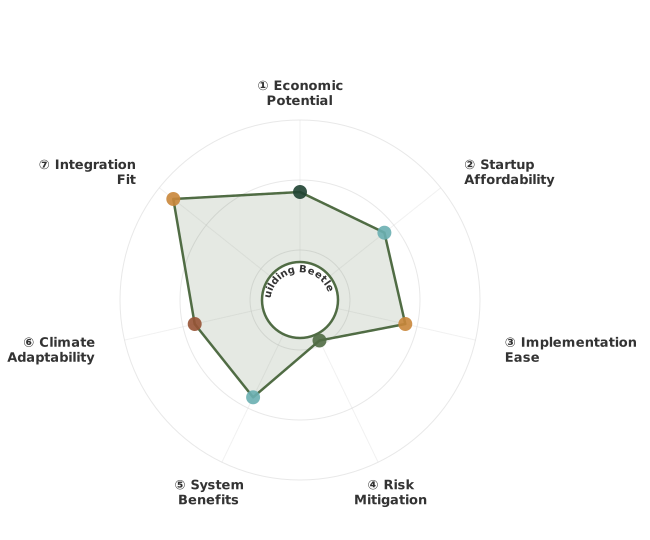
How These Traits Are Calculated
Trait dimensions are ordered clockwise starting from the top of the chart (12 o'clock position):
1. Economic Potential
Financial returns, annual value, and break-even timeline
WHAT: Evaluates financial viability by combining net annual value ($/ha from savings, income, and amortized harvests) with break-even timeline showing when practices pay for themselves.
WHY: Farmers need clear ROI understanding before committing resources. Fast payback (≤3 years) with strong returns (≥$300/ha) enables confident adoption, while long timelines (>10 years) restrict adoption to well-funded operations willing to wait for returns.
HOW: Calculated from net annual value in $/ha and break-even years. Exceptional (≥2.6): fast ROI ≤3 years + high value ≥$300/ha. Typical (1.8-2.5): moderate returns or longer timelines. Limited (<1.8): marginal economics or very long payback >10 years.
2. Startup Affordability
Initial investment costs and financial barrier to entry
WHAT: Measures financial barrier to entry through startup costs for equipment, infrastructure, consulting, and materials. Inverted scoring: lower costs = higher scores = more accessible adoption.
WHY: Affordability determines who can adopt. Low-cost practices (<$250/ha) enable widespread adoption across diverse scales, while high costs (>$2,500/ha) limit adoption to well-capitalized operations, creating barriers that slow regenerative transition.
HOW: Calculated from initial investment parsed from practice content. Inverted scoring: Exceptional (≥2.6): minimal investment <$250/ha. Typical (1.8-2.5): moderate costs $250-2,500/ha. Limited (<1.8): high barrier >$2,500/ha.
3. Implementation Ease
Learning curve and specialized knowledge required
WHAT: Measures how much learning, planning, and specialized knowledge a practice requires. Simpler practices with fewer steps score higher, while complex practices requiring extensive training or specialized resources score lower.
WHY: Complex practices create adoption barriers even when economically viable. Straightforward practices enable faster adoption and broader participation, while those requiring extensive training, timing precision, or specialized equipment limit who can succeed.
HOW: Evaluated by measuring documentation length and identifying complexity markers like location-specific requirements, seasonal timing windows, specialized skills, and dedicated equipment needs. Exceptional (≥2.6): straightforward practices with minimal prerequisites. Typical (1.8-2.5): moderate learning curve with some specialized needs. Limited (<1.8): steep learning curve requiring significant training or resources.
4. Risk Mitigation
Identified financial and ecological risk assessment
WHAT: Evaluates documented risks across financial (investment loss, market volatility) and ecological (crop failure, pest outbreaks) domains. Inverted scoring: fewer risks = higher scores.
WHY: Understanding risk exposure helps farmers make informed decisions. Low-risk practices allow confident implementation, while high-risk practices require careful planning and contingency resources. Risk transparency prevents costly failures.
HOW: Calculated from identified risks in practice content. Inverted scoring: Exceptional (≥2.6): ≤2 risks with manageable severity. Typical (1.8-2.5): 3-5 moderate risks. Limited (<1.8): 6+ risks or severe exposure.
5. System Benefits
How many ways the practice improves your land simultaneously
WHAT: Measures how many aspects of land health improve at once—carbon storage, soil quality, erosion control, water absorption, and biodiversity. Practices that improve multiple areas simultaneously create compounding benefits where each improvement reinforces the others.
WHY: The best practices solve multiple problems at once. For example, addressing erosion simultaneously builds carbon and improves water infiltration, creating a resilient system with positive feedback loops. Single-benefit approaches miss these compound transformation opportunities.
HOW: Evaluated across five key outcomes: carbon sequestration, soil organic matter increase, erosion reduction, water infiltration improvement, and biodiversity enhancement. Exceptional (≥2.6): high carbon storage (>8 t/ha/yr), improvements across 4-5 areas, transformative outcomes. Typical (1.8-2.5): moderate carbon (3-8 t/ha/yr), improvements across 2-3 areas. Limited (<1.8): modest impact (<3 t/ha/yr), single-area focus only.
6. Climate Adaptability
Geographic applicability across Köppen climate zones
WHAT: Evaluates geographic applicability by assessing how many Köppen climate zones successfully support a practice and what adaptation requirements are needed. Measures breadth of climates where farmers can implement with minimal to moderate modifications.
WHY: Universal practices working across diverse climates enable more farmers to adopt regenerative approaches. Practices limited to single climate types (only Mediterranean, only tropical) restrict adoption and slow global transition. Adaptability determines whether a practice serves niche regions or offers broad transformation.
HOW: LLM evaluation of regional success stories, Köppen zone coverage, and adaptation needs. Exceptional (≥2.6): 5+ zones or 4+ climate types, 3+ continents, minimal adaptation. Typical (1.8-2.5): 3-4 zones or 2-3 types, 2 continents, moderate adaptation. Limited (<1.8): 1-2 zones, single region, significant adaptation or highly specialized.
7. Integration Fit
How well this practice combines with others you're doing
WHAT: Measures how well a practice combines with other regenerative practices you might be doing. Some practices work as building blocks that make many other practices easier or more effective, while others work best on their own.
WHY: Practices that combine well with many others create more value on your farm. For example, cover cropping enables no-till, improves grazing, supports crop diversity, and helps water management—making all of them work better together. This helps you build a coherent system rather than juggling disconnected practices.
HOW: Evaluated by identifying which practices combine well and how strong those combinations are. 'Ideally Suited' means strong combinations where practices reinforce each other (practice A makes B easier, while B makes A more effective). 'Adequate' means complementary benefits that work well together. Exceptional (≥2.6): combines well with 6+ practices, serves as a building block. Typical (1.8-2.5): combines with 3-5 practices. Limited (<1.8): 1-2 practices or works best alone.
Going Deeper
1
WHY - The Benefits
Beetle banks are more than just strips of plants; they are intentionally designed ecological amplifiers within agricultural systems. Their primary function is to provide essential habitat for beneficial insects, which in turn deliver critical ecological services that...
Beetle banks are more than just strips of plants; they are intentionally designed ecological amplifiers within agricultural systems. Their primary function is to provide essential habitat for beneficial insects, which in turn deliver critical ecological services that...
WHY - The Benefits
Beetle banks are more than just strips of plants; they are intentionally designed ecological amplifiers within agricultural systems. Their primary function is to provide essential habitat for beneficial insects, which in turn deliver critical ecological services that...
Beetle banks are more than just strips of plants; they are intentionally designed ecological amplifiers within agricultural systems. Their primary function is to provide essential habitat for beneficial insects, which in turn deliver critical ecological services that...
Soil Health Benefits
While not their primary focus, beetle banks contribute to soil health by maintaining permanent vegetative cover. The dense root systems of perennial grasses and wildflowers stabilize the soil, preventing erosion from wind and water. This cover also supports a healthy soil microbial community, contributing to organic matter accumulation over time, albeit at a slower rate than actively managed cover crops. As perennial roots break down, they contribute organic matter and create pore space, improving infiltration and aeration in the adjacent areas. In regions with arid climates or on slopes, beetle banks can act as natural terraces, slowing water flow and allowing more infiltration.
Economic Benefits
The economic advantages of beetle banks stem from their ability to enhance natural pest control and pollination services. Studies have shown that the presence of beetle banks can increase populations of beneficial insects by 2-3 times, leading to a corresponding reduction in pest damage. This can translate into a 5-15% increase in crop yields due to better pest management and enhanced pollination. Reduced pest pressure also leads to lower pesticide expenditure, saving farmers an estimated $50-150 per hectare ($20-60 per acre) annually in US dollar equivalent. Furthermore, farms can sometimes access government grants or ecological payment schemes for establishing and maintaining biodiversity-enhancing features like beetle banks, providing an additional revenue stream.
Water Cycle Benefits
Beetle banks, especially when planted on contours or along field margins, can significantly influence water management. Their perennial vegetation and root systems intercept rainfall, slowing down runoff and allowing more water to infiltrate into the soil. This reduces soil erosion, particularly on sloping land, and helps replenish groundwater reserves. They can also act as natural filters, trapping sediment and nutrient runoff from adjacent fields before it enters waterways, thereby improving water quality. In drier regions, the increased soil moisture retention in and around beetle banks can create microclimates beneficial for surrounding crops.
Carbon Sequestration
By maintaining living roots and vegetative cover year-round, beetle banks contribute to carbon sequestration. The perennial plants draw carbon dioxide from the atmosphere through photosynthesis, storing carbon in their biomass and, more importantly, in the soil through root exudates and decomposition of plant material. While the total area dedicated to beetle banks is small, the per-hectare rate of carbon sequestration in perennial systems is often higher than in annual cropping systems. This contributes to the farm's overall carbon footprint reduction and supports climate change mitigation efforts.
Biodiversity and Ecosystem Resilience
Beetle banks are powerful tools for increasing on-farm biodiversity. They provide crucial habitat and resources for a wide range of beneficial insects, including pollinators, predatory insects, and parasitoids, as well as other wildlife like birds and small mammals. This increased biodiversity leads to a more resilient agricultural ecosystem that is better able to withstand pest outbreaks, disease pressure, and environmental stresses. A more diverse ecosystem is less reliant on external inputs and more capable of self-regulation, a hallmark of regenerative agriculture.
Regenerative Systems Fit
Beetle banks are foundational regenerative practices that directly support four of the five core principles: 1. Minimize Soil Disturbance: Once established, beetle banks require very little to no soil disturbance, preserving soil structure and biology. 2. Maximize Crop Diversity: They introduce a diverse mix of perennial plant species, creating a complex habitat that supports a wide array of life above and below ground. 3. Keep Soil Covered: The perennial vegetation ensures year-round soil cover, protecting it from erosion and supporting soil life. 4. Maintain Living Roots: Perennial plants ensure continuous living root activity throughout the year, feeding soil biology and cycling nutrients.
While they don't directly involve livestock, they create an environment that reduces the need for pest control methods that might otherwise be employed, indirectly supporting integration goals by fostering a more self-regulating system. Beetle banks are a key component in creating functional agroecosystems that mimic natural ecological processes, leading to greater sustainability and farm resilience.
Sources behind this view
Videos & Podcasts
-
Farmers focus on maintaining beetle populations as the foundation of ecosystem health for natural pest control, particularly slugs. This involves habitat management and accepting slugs as a food sourc
-
Implement farmscaping with 1-5% of land dedicated to beneficial insect attractants like buckwheat, flowers, and plants with extrafloral nectaries. Provide diverse nectar and pollen sources to support

-
Alistair Leake advocates for advanced integrated pest management by identifying plant species that provide pollen and nectar to sustain beneficial insects ('paratroops') for pest control, aiming to re
-
Beetle banks provide habitat and food for beneficial insects, acting as biological pest control. They are established with native perennial grasses and flowering forbs, supporting insect life cycles a
Research
-
Supporting Beneficial Insects for Agricultural Sustainability: The Role of Livestock-Integrated Organic and Cover Cropping to Enhance Ground Beetle (Carabidae) Communities (opens in new window)
This study found: Organic farming, especially with livestock integration and cover crops, significantly increased beneficial ground beetle populations in Montana over five years, enhancing natural pest control.
-
Strip cropping shows promising increases in ground beetle community diversity compared to monocultures. (opens in new window)
This study found: Strip cropping on Dutch organic farms increased ground beetle species by 15% and individuals by 30% compared to monocultures over four years, enhancing biodiversity without yield loss.
-
Seasonality of Carabid Beetles on an Organic Agricultural Field and Its Effect on Foraging Use (opens in new window)
This study found: Organic farming attracts more beneficial ground beetles from field edges, enhancing natural pest control. Beetle movement into fields depends on their speed and seasonal activity.
-
Changes during 15 years succession of the ground beetle fauna (Carabidae) after the conversion from conventional to organic farming on Ritzerau Manor (opens in new window)
This study found: 15-year study shows organic farming increased ground beetle diversity on German fields, with new species immigrating and rare ones reappearing, benefiting overall landscape biodiversity.
From the Web
-
Establish beetle banks using bunch grasses like little bluestem to provide overwintering habitat for predatory ground beetles, which control pests like Colorado potato beetles. Installation involves p
2
WHERE - Regional Considerations
The success of beetle banks hinges on selecting plant species that are well-adapted to local conditions, ensuring their long-term survival and effectiveness. While the concept is universally applicable, specific plant choices will vary significantly across climatic zones.
The success of beetle banks hinges on selecting plant species that are well-adapted to local conditions, ensuring their long-term survival and effectiveness. While the concept is universally applicable, specific plant choices will vary significantly across climatic zones.
WHERE - Regional Considerations
The success of beetle banks hinges on selecting plant species that are well-adapted to local conditions, ensuring their long-term survival and effectiveness. While the concept is universally applicable, specific plant choices will vary significantly across climatic zones.
The success of beetle banks hinges on selecting plant species that are well-adapted to local conditions, ensuring their long-term survival and effectiveness. While the concept is universally applicable, specific plant choices will vary significantly across climatic zones.
Click Here to Look up your Region if you don't already know it
Humid Temperate Regions
Representative Locations: Southeastern United States, Northern Europe (UK, Germany, Poland), Eastern China, Japan, New Zealand. Climate Context: Warm to hot summers and cool to cold winters with moderate to high annual precipitation (75-150 cm or 30-60 inches) distributed relatively evenly. USDA Zones 6-8, Köppen Cfb/Cfa. Considerations: These regions support a wide range of perennial grasses and wildflowers. Focus on species that are robust, non-invasive, and provide benefits throughout the growing season. Native grasses like Big Bluestem (Andropogon gerardii) or switchgrass (Panicum virgatum) in North America, or perennial ryegrass (Lolium perenne), fescues (Festuca spp.), and wildflowers like native daisies or poppies are excellent choices. Avoid monocultures of highly competitive grasses that may suppress beneficial wildflowers.
Mediterranean Regions
Representative Locations: California, Mediterranean basin (Spain, Italy, Greece), Central Chile, Southwestern Australia, Cape Town region of South Africa. Climate Context: Hot, dry summers and mild, wet winters. Annual precipitation 40-90 cm (15-35 inches), highly seasonal. USDA Zones 8-10, Köppen Csa/Csb. Considerations: Drought tolerance is paramount. Select native perennial grasses that thrive in dry conditions, such as various species of Stipa or Aristida. Wildflowers should include drought-resistant native species that bloom during the spring and early summer before the dry period. For example, California Bluegrass (Poa secunda) or various native perennial bunchgrasses in California, and Mediterranean native grasses like Bromus erectus or Festuca rubra in Europe. Prioritize plants that can survive summer dormancy and resprout with autumn rains.
Arid/Semi-Arid Regions
Representative Locations: Western USA, North Africa, Central Asia, Interior Australia. Climate Context: Low annual precipitation (<40 cm or 15 inches), high temperatures, short and often unpredictable growing season. USDA Zones 7-9, Köppen BSh/BSk. Considerations: Extreme drought tolerance and resilience are critical. Focus on native, hardy perennial grasses known for their survival in low-rainfall environments, such as native Bouteloua species (Gramas) or native Agrostis species in the Americas, or native Spinifex species in Australia. Integrated pest management (IPM) providers often highlight the importance of native forbs that can withstand arid conditions and flower for limited periods, supporting insect populations with ephemeral resources. Planting in swales or on contours can maximize moisture capture to support establishment.
Cold Continental Regions
Representative Locations: Northern USA and Canada, Northern Europe, Northern Asia. Climate Context: Very short growing seasons, extreme summer heat, severe winter cold. USDA Zones 3-5, Köppen Dfa/Dfb. Considerations: Species must withstand harsh winters and utilize a short growing season effectively. Hardy perennial grasses like native fescues, bromes, or prairie grasses can be suitable. Wildflowers should ideally be native species that can complete their life cycle quickly during the brief warm period, such as asters, goldenrods, or native lupines. Consider planting early-blooming species and those that continue to provide structure and overwintering habitat even after frost.
Subtropical Regions
Representative Locations: Southeastern USA, Southern China, Southern Brazil, Eastern Australia. Climate Context: Hot, humid summers and mild winters with generally ample rainfall. USDA Zones 9-11, Köppen Cfa/Cwa. Considerations: Select robust perennial grasses and wildflowers that tolerate high humidity and heat. Native species adapted to these conditions will perform best. In North America, species like Eastern Gamagrass (Tripsacum dactyloides) or various native Schizachyrium species could be used. In Australia, native grasses tolerant of warmer, wetter conditions are suitable. Avoid species that may become invasive in subtropical environments.
Tropical Regions
Representative Locations: Central America, Southeast Asia, East Africa, Northern Australia, Northern South America. Climate Context: High temperatures year-round, with distinct wet and dry seasons or consistent high rainfall. Köppen Af/Am/Aw. Considerations: Species need to tolerate high heat and humidity, and potentially monsoon conditions or long dry spells. Native perennial grasses adapted to local soil types are a priority. In Southeast Asia, consider native Imperata species (if non-invasive varieties) or Vetiver grass for its soil-binding properties and habitat value. In Africa, native drought-tolerant grasses and flowering shrubs will be effective. Focus on plants that can provide continuous habitat and food resources through fluctuating wet and dry periods.
3
HOW - Implementation Process
Establishing effective beetle banks involves careful planning, species selection, and minimal intervention to allow natural ecological processes to take hold.
Establishing effective beetle banks involves careful planning, species selection, and minimal intervention to allow natural ecological processes to take hold.
HOW - Implementation Process
Establishing effective beetle banks involves careful planning, species selection, and minimal intervention to allow natural ecological processes to take hold.
Establishing effective beetle banks involves careful planning, species selection, and minimal intervention to allow natural ecological processes to take hold.
Prerequisites
- Site Selection: Identify areas within fields or along farm edges that could benefit from enhanced habitat without significantly reducing productive area. Consider field shape, slope, and proximity to water sources or existing hedgerows that can serve as a species reservoir. Avoid areas prone to extreme waterlogging or drought unless using highly specialized species.
- Soil Assessment: While beetle banks are forgiving, a basic understanding of soil type and pH can aid in species selection. Most native perennials are adaptable, but extreme conditions might favor specific grass or wildflower species.
- Objective Clarity: Determine primary goals: pest control, pollination, erosion reduction, or a combination. This will influence plant selection and bank design.
- Resource Availability: Seed, suitable perennial grasses and wildflowers, basic tools (shovel, rake, possibly a small tractor with a drill or roller), and time for initial preparation and seeding.
Phase 1: Site Preparation (Post-Harvest or Early Spring)
This phase focuses on creating a clean seedbed for establishing the perennial mix. The goal is to minimize disturbance while removing competitive annual weeds or existing vegetation.
- Option A: Minimal Disturbance (Preferred): If establishing on existing pasture or weedy margins, a few years of mowing may be sufficient to reduce competition. For fields previously in annual crops, a light cultivation (e.g., shallow disking or harrowing) can prepare a seedbed if herbicide use is to be avoided. Alternatively, solarization or frost termination of a green manure crop can clear the area.
- Option B: Herbicide Application (If Necessary): If severe weed pressure exists and minimal disturbance is impossible, a targeted, non-residual herbicide application can be used. Follow label instructions carefully and allow sufficient time for the herbicide to break down before seeding. This is a compromise; aim to phase this out in subsequent years.
- Width and Length: Determine the desired width (1-3 m or 3-10 ft) and length. Longer banks are generally more effective. Consider running them perpendicular to the slope on fields to maximize their erosion control benefits.
Phase 2: Seeding and Establishment (Late Autumn or Early Spring)
This is the most critical phase for ensuring the long-term success of the beetle bank. Selecting the right seed mix and ensuring good seed-to-soil contact is paramount.
- Seed Mix Selection: Prioritize native perennial grasses and wildflowers adapted to your specific region (see Regional Considerations). Aim for a mix of at least 5-10 grass and 10-15 wildflower species to maximize diversity and ecological function.
- Grasses: Provide structural integrity and overwintering habitat for insects. Good options include various fescues, bromes, native prairie grasses like bluestem or grama, depending on region.
- Wildflowers: Provide nectar and pollen sources for pollinators and food or habitat for other beneficial insects. Include early, mid, and late-season bloomers to ensure continuous resources. Examples include native asters, goldenrods, coneflowers, poppies, clovers, and vetches.
- Seeding:
- Drill Seeding (Preferred): Use a no-till drill if possible, set to plant at the recommended depth for each species. This ensures good seed-to-soil contact and minimizes disturbance.
- Broadcast Seeding: If a drill is unavailable, broadcast seeds evenly and then lightly rake or cultipack to ensure seed-to-soil contact.
- Timing: Late autumn seeding (vernalization for some species) or early spring seeding (after last frost) are common. Consult local extension services for optimal timing in your climate.
- Initial Management: Water lightly if conditions are unseasonably dry during establishment. Avoid mowing the first year unless absolutely necessary to control aggressive annual weeds that threaten to outcompete the perennials. Remove any such weeds by hand if possible.
Phase 3: Ongoing Management and Expansion
Once established, beetle banks require minimal intervention, allowing them to develop into self-sustaining habitat.
- Minimal Mowing: Mow beetle banks very infrequently, perhaps once every 2-3 years, and ideally in late autumn or early spring outside the main insect breeding season. This prevents woody species from taking over and encourages a diversity of flowering plants. Avoid mowing if possible.
- No Pesticides: Never spray pesticides or herbicides on or near beetle banks. This directly kills the beneficial insects they are meant to support and pollutes their habitat.
- No Fertilizers: Perennial native species are adapted to nutrient-poor conditions and do not require fertilization. Adding synthetic fertilizers can encourage the dominance of less desirable plants or promote invasive species.
- Integration: Observe how the beetle bank interacts with your farm. Are beneficial insects moving into fields? Is pest pressure reduced? This provides valuable feedback for future planning.
- Expansion: If successful, consider expanding the beetle bank network or creating new ones in other areas of the farm to increase habitat connectivity.
Transition Timeline & Phase-Out Strategy
Beetle banks are considered a foundational regenerative practice, meaning they align with and support regenerative goals from the outset. There are no "non-regenerative" elements to phase out as this practice is inherently regenerative. The focus is on establishment and long-term commitment.
- Year 1: Focus entirely on establishment of the perennial mix. Minimal mowing, no herbicides, no pesticides. Monitor survival rates and weed pressure.
- Year 2: Beetle banks should be well-established. Begin observing insect populations. Consider occasional, very light mowing only if significant woody encroachment or dominance by a single grass species is observed. Continue strict adherence to no pesticides/herbicides.
- Year 3 onwards: Beetle banks should be largely self-sustaining. Mowing is rarely needed. The focus shifts to observing their impact on surrounding fields and potentially expanding the network.
The "phase-out" is not of a non-regenerative practice, but rather the gradual phasing out of pest problems and reliance on chemical interventions as the beetle bank’s habitat services become fully functional.
Sources behind this view
Videos & Podcasts
-
Beetle banks provide habitat and food for beneficial insects, acting as biological pest control. They are established with native perennial grasses and flowering forbs, supporting insect life cycles a
-
Beetle banks, featuring native grasses and forbs on raised areas, provide essential habitat for beneficial beetles, enhancing pest management and pollinator support by increasing insect diversity and
-
Permanent cover like beetle banks, prairie strips, and hedgerows support beneficial insects and pest management. Treated seed with neonicotinoids harms predators, causing issues like slug outbreaks, a
From the Web
-
Establish beetle banks using bunch grasses like little bluestem to provide overwintering habitat for predatory ground beetles, which control pests like Colorado potato beetles. Installation involves p
4
HOW MUCH - Costs & Investment
Note: Costs shown in USD equivalent; actual costs vary significantly by region based on local labor rates, material availability, and specific seed choices. Labor costs vary significantly internationally.
Note: Costs shown in USD equivalent; actual costs vary significantly by region based on local labor rates, material availability, and specific seed choices. Labor costs vary significantly internationally.
HOW MUCH - Costs & Investment
Note: Costs shown in USD equivalent; actual costs vary significantly by region based on local labor rates, material availability, and specific seed choices. Labor costs vary significantly internationally.
Note: Costs shown in USD equivalent; actual costs vary significantly by region based on local labor rates, material availability, and specific seed choices. Labor costs vary significantly internationally.
Note: All costs are based on recent US economic data (2024–2026) and may vary substantially by region based on local labor rates, material costs, and regulatory requirements. Estimates have been adjusted by 4.2% to reflect current inflationary pressures on inputs and specialized agricultural services.
Site Preparation
Site preparation is the primary driver of initial investment, influenced heavily by existing weed banks and soil compaction levels.
- Small-Scale (under 50 acres (20 ha)): Costs range from $63–$188 per acre ($156–$465/ha). These operations frequently require manual labor or high-cost custom tillage services because they lack specialized heavy-duty equipment for precisely narrow-strip, deep-soil cultivation.
- Mid-Size (50–500 acres (20–202 ha)): Costs range from $47–$125 per acre ($116–$309/ha). Operators in this category generally utilize existing tractor fleets to disc or till the strips during standard field rotations, significantly reducing the overhead compared to small-scale manual interventions.
- Large-Scale (500+ acres): Costs range from $31–$94 per acre ($77–$232/ha). Extensive operations achieve economies of scale by integrating beetle bank prep into wider precision agriculture workflows, often utilizing high-speed discing implements that cover linear feet rapidly. Costs rise when soil testing reveals significant pH imbalances or extreme compaction that requires sub-soiling, which can add upwards of $20–$40 per acre ($49–$99/ha) to these estimates.
Native Seed Mixes
The botanical composition of the beetle bank determines the success of pest predation rates.
- Small-Scale: Native floral mixes from boutique vendors range from $260–$521 per acre ($642–$1,287/ha). These vendors offer high-diversity mixes specifically curated for localized insect attractants, commanding a premium for seed purity and variety.
- Mid-Size: Accessing wholesale markets, mid-size farms secure diverse custom mixes for $187–$365 per acre ($462–$902/ha). These farms often purchase in bulk, allowing them to lower per-unit costs while maintaining essential diversity.
- Large-Scale: Strategic bulk procurement and long-term contracts with regional seed distributors drive costs down to $125–$292 per acre ($309–$722/ha). The primary variance here is the ratio of perennial bunchgrasses to forb-rich pollinator species; high-forb mixes designed for maximum predatory insect support are naturally more expensive to source than simple grass-focused cover.
Planting Expenses
Establishing these narrow, linear features requires precision equipment to avoid excessive seed drift into crop rows.
- Small-Scale: Manual broadcasting or rent-to-use small-scale seed driller costs range from $104–$261 per acre ($257–$645/ha), reflecting higher labor inputs and potential rental equipment fees.
- Mid-Size: Using standard farm-owned no-till drills, expenses fall into a moderate range of $78–$188 per acre ($193–$465/ha).
- Large-Scale: For large operations, these strips are effectively treated as part of the broader planting season workflow, resulting in costs of $52–$146 per acre ($128–$361/ha). If a farm does not own a no-till drill specialized for narrow strips, hiring a custom operator is the largest expenditure factor, potentially adding another $30–$60 per acre ($74–$148/ha) to fixed costs.
Initial Weed Management
The first 24 months are the most vulnerable period for establishing perennial habitat.
- Small-Scale: Intensive manual weeding and mechanical spot-treatment cycles range from $31–$94 per acre ($77–$232/ha). High reliance on labor creates the upper-end cost constraints.
- Mid-Size: Precision mowing and selective spot-treatments using standard farm machinery result in costs of $21–$73 per acre ($52–$180/ha).
- Large-Scale: Large operations focus heavily on pre-plant weed elimination to minimize post-establishment intervention, leveraging automated equipment or high-clearance sprayers for precision control, keeping ongoing maintenance at the lower end of the spectrum.
Most Spend: Most agricultural operations fall within the $350–$580 per acre ($865–$1,433/ha) range. This middle 60% represents farms that have optimized their own equipment use for planting and site preparation while utilizing standard, high-quality, regionally accessible seed mixes.
Why the Range?: The primary drivers of cost variance are the level of mechanized efficiency and the percentage of floral (forb) diversity in seed mixes. Sites with high perennial weed pressure (like Quackgrass or Canada Thistle) require more intensive pre-plant herbicide programs or multiple tillage passes, which pushes costs toward the higher end of the ranges mentioned, regardless of farm size.
Sources behind this view
Research
-
Financial Analysis of Converting Rural Lawns to Pollinator Habitat in the Corn Belt (opens in new window)
This study found: Converting rural lawns to pollinator habitat in the Corn Belt saves $54-$167/acre/year compared to lawn maintenance, offering financial and ecological benefits for pollinators.
5
REWARDS AND RISKS - Economics & Risk Factors
REWARDS AND RISKS - Economics & Risk Factors
Beetle banks represent a permanent land-use shift designed to create long-term natural capital. The economics of this practice depend heavily on the transition from "active management" to "ecosystem service provision."
Economic Scenarios
- Best-Case: Integrated pest management (IPM) results in an 8–15% yield increase in adjacent crop margins (up to 20 yards from the bank). When combined with a 40–60% reduction in insecticide applications, farmers generate annual savings of $63–$188 per acre ($156–$465/ha). Under optimal conditions, the initial establishment investment of $469–$729 per acre ($1,159–$1,801/ha) is recouped within three years.
- Typical-Case: Improved pest predation and pollinator activity produce a 4–8% yield gain in surrounding areas. Annual pesticide input savings reach $31–$83 per acre ($77–$205/ha). Full cost recovery for the initial establishment investment typically occurs within six to eight years.
- Worst-Case: Poor site selection or inadequate initial weed control creates a "weed harbor" rather than a beneficial insect bank. The investment of $469–$729 per acre ($1,159–$1,801/ha) is considered a total loss, as the farm incurs additional costs for eventual removal of the degraded strip and potentially suffers from spread of noxious weeds into primary crops.
Market Factors and Risk Mitigation Profitability is inherently linked to energy prices, which impact the cost of mechanical mowing and routine maintenance. Furthermore, if commodity markets for staple row crops reach record highs, the opportunity cost of removing 1.5–3.0% of acreage from production increases. Farmers should mitigate this by participating in USDA cost-share programs, specifically the Environmental Quality Incentives Program (EQIP), which can cover 50–75% of the establishment costs. By utilizing these grants, the break-even point can be accelerated by at least 24 months, significantly reducing the "capital lock-in" risk.
Transition Period Risks This is a multi-year establishment process. During the first two years, farmers often face a "biological lag" where the bank has yet to reach the critical floral or grass density required to support significant populations of ground beetles or spiders. During this transition, management costs remain higher, and the pest control benefits are negligible. To mitigate this risk, farmers are encouraged to utilize nurse crops or protective cover crops during the initial planting season. This reduces the risk of overall establishment failure to below 15%. Yield dips in the first two years should be anticipated, though they are usually confined to the precise acreage of the bank itself rather than the wider field. Establishing these banks during the dormant season (late fall) also maximizes moisture availability, which is the most significant factor in ensuring first-year survival in arid or semi-arid regions.
Sources behind this view
Videos & Podcasts
-
Farmers focus on maintaining beetle populations as the foundation of ecosystem health for natural pest control, particularly slugs. This involves habitat management and accepting slugs as a food sourc
-
Beetle banks provide habitat and food for beneficial insects, acting as biological pest control. They are established with native perennial grasses and flowering forbs, supporting insect life cycles a
-
Alistair Leake advocates for advanced integrated pest management by identifying plant species that provide pollen and nectar to sustain beneficial insects ('paratroops') for pest control, aiming to re
-
Beetle banks, featuring native grasses and forbs on raised areas, provide essential habitat for beneficial beetles, enhancing pest management and pollinator support by increasing insect diversity and
Research
-
Supporting Beneficial Insects for Agricultural Sustainability: The Role of Livestock-Integrated Organic and Cover Cropping to Enhance Ground Beetle (Carabidae) Communities (opens in new window)
This study found: Organic farming, especially with livestock integration and cover crops, significantly increased beneficial ground beetle populations in Montana over five years, enhancing natural pest control.
-
Is the effectiveness of policy-driven mitigation measures on carabid populations driven by landscape and farmland heterogeneity? Applying a modelling approach in the Dutch agroecosystems. (opens in new window)
This study found: Modeling study in Dutch farms shows safer pesticides boost beetle range, while more field margins increase local beetle populations. Effectiveness is landscape-specific, requiring tailored policies.
-
Impacts of Dryland Cropping Systems on Ground Beetle Communities (Coleoptera: Carabidae) in the Northern Great Plains (opens in new window)
This study found: Diverse cover crop mixes in dryland farming can support beneficial ground beetle populations, aiding natural pest control. Beetle numbers varied with cover crop type and season, but termination method
From the Web
-
Establish beetle banks using bunch grasses like little bluestem to provide overwintering habitat for predatory ground beetles, which control pests like Colorado potato beetles. Installation involves p
-
Beetle banks, planted with native prairie species, harbor predatory ground beetles that control Colorado potato beetles, reducing the need for chemical spraying and improving potato crop yields.
6
COMPATIBLE PRACTICES - Integration Opportunities
Beetle banks are highly compatible with virtually all regenerative agriculture practices, acting as a keystone habitat feature that amplifies the benefits of other on-farm ecology.
Beetle banks are highly compatible with virtually all regenerative agriculture practices, acting as a keystone habitat feature that amplifies the benefits of other on-farm ecology.
COMPATIBLE PRACTICES - Integration Opportunities
Beetle banks are highly compatible with virtually all regenerative agriculture practices, acting as a keystone habitat feature that amplifies the benefits of other on-farm ecology.
Beetle banks are highly compatible with virtually all regenerative agriculture practices, acting as a keystone habitat feature that amplifies the benefits of other on-farm ecology.
Cover Cropping
- Beetle banks provide a permanent habitat refuge for beneficial insects that can then disperse into cover-cropped fields.
- Integration benefit: Cover crops provide seasonal insect habitat and soil health benefits; beetle banks provide year-round, perennial habitat, ensuring a consistent population of beneficials that can move into cover crops as they grow.
No-Till Farming
- Beetle banks preserve soil structure and biology undisturbed, perfectly aligning with no-till principles. They provide a stable, undisturbed ecosystem component within a no-till farming system.
- Integration benefit: No-till farming reduces soil disturbance in production fields, while beetle banks provide critical habitat without disturbance, creating a complementary system that maximizes soil health and biodiversity benefits.
Integrated Pest Management (IPM) / Biological Control
- Beetle banks are a cornerstone of biological pest control, as they directly support the natural enemies of common agricultural pests.
- Integration benefit: By increasing populations of natural predators and parasitoids, beetle banks reduce the necessity and frequency of pesticide applications, a primary goal of IPM and regenerative agriculture.
Pollinator Conservation
- Beetle banks, particularly when planted with a diverse range of native flowering species, provide crucial pollen and nectar resources for bees, butterflies, and other pollinators, especially during periods when field crops are not blooming.
- Integration benefit: They directly contribute to pollinator health and abundance, which is vital for the yield of many crops that rely on insect pollination.
Rotational Grazing / Adaptive Multi-Paddock Grazing
- Beetle banks can be integrated along pasture edges or within larger paddocks, providing habitat for insects that prey on pasture pests or contaminate dung.
- Integration benefit: Livestock may be deterred from overgrazing the beetle banks due to their rougher textured grasses. The banks enhance the overall biodiversity within a grazing landscape, supporting insects that can help manage flies or other pests affecting livestock.
Hedgerows and Field Margins
- Beetle banks can be seen as a more integrated, field-level version of traditional hedgerows. They can be planted adjacent to or in conjunction with existing field margins or hedgerows to create a more cohesive ecological network.
- Integration benefit: Increases habitat connectivity, expands the ecological footprint of the farm, and provides more diverse resources for wildlife and beneficial insects across the landscape.
Agroforestry Systems
- In silvopasture or alley cropping systems, beetle banks can be established along the edges of tree lines or in underutilized corners.
- Integration benefit: They provide habitat for beneficial insects that can move into the cropped or grazed areas within the agroforestry system, complementing the diversity provided by trees and managed forage.
The establishment of beetle banks on a farm is a strategic decision that enhances the biological functioning of the entire agricultural landscape, making other regenerative practices more effective and the farm system as a whole more robust and self-sustaining.
Sources behind this view
Videos & Podcasts
-
Alistair Leake advocates for advanced integrated pest management by identifying plant species that provide pollen and nectar to sustain beneficial insects ('paratroops') for pest control, aiming to re
-
Implement farmscaping with 1-5% of land dedicated to beneficial insect attractants like buckwheat, flowers, and plants with extrafloral nectaries. Provide diverse nectar and pollen sources to support
-
Beetle banks provide habitat and food for beneficial insects, acting as biological pest control. They are established with native perennial grasses and flowering forbs, supporting insect life cycles a
-
Beetle banks, featuring native grasses and forbs on raised areas, provide essential habitat for beneficial beetles, enhancing pest management and pollinator support by increasing insect diversity and
Research
-
Supporting Beneficial Insects for Agricultural Sustainability: The Role of Livestock-Integrated Organic and Cover Cropping to Enhance Ground Beetle (Carabidae) Communities (opens in new window)
This study found: Organic farming, especially with livestock integration and cover crops, significantly increased beneficial ground beetle populations in Montana over five years, enhancing natural pest control.
-
Strip cropping shows promising increases in ground beetle community diversity compared to monocultures. (opens in new window)
This study found: Strip cropping on Dutch organic farms increased ground beetle species by 15% and individuals by 30% compared to monocultures over four years, enhancing biodiversity without yield loss.
-
Seasonality of Carabid Beetles on an Organic Agricultural Field and Its Effect on Foraging Use (opens in new window)
This study found: Organic farming attracts more beneficial ground beetles from field edges, enhancing natural pest control. Beetle movement into fields depends on their speed and seasonal activity.
-
Changes during 15 years succession of the ground beetle fauna (Carabidae) after the conversion from conventional to organic farming on Ritzerau Manor (opens in new window)
This study found: 15-year study shows organic farming increased ground beetle diversity on German fields, with new species immigrating and rare ones reappearing, benefiting overall landscape biodiversity.
From the Web
-
Establish beetle banks using bunch grasses like little bluestem to provide overwintering habitat for predatory ground beetles, which control pests like Colorado potato beetles. Installation involves p