
Building Berms
Building berms involves creating raised, elongated mounds of soil, typically constructed on contour across a slope. Their primary purpose is to intercept and temporarily store rainwater, slowing runoff, increasing infiltration into the soil profile, and reducing erosion. This practice is particularly effective in arid, semi-arid, or drought-prone regions and on sloping landscapes to improve water use efficiency and soil health.
Read More: Complete Description
Building berms, often referred to as contour dikes, contour banks, or level terraces, are a water management technique designed to slow down overland flow and increase water infiltration on sloping lands. Essentially, they are constructed as a series of earthen mounds arranged on contour lines (lines of equal elevation) across a field. When rain falls, the berms act as small dams, catching water runoff, creating temporary ponds, and allowing it to seep into the soil over time. This process significantly reduces soil erosion by slowing water velocity and prevents valuable topsoil from being washed away, particularly critical in agricultural systems prone to water loss.
The effectiveness of berms is deeply tied to contour farming principles. By orienting them across slopes, they catch water that would otherwise cascade downhill, carrying soil particles and nutrients with it. The slow infiltration process not only replenishes soil moisture reserves, making them more available for plant growth, but also recharges groundwater aquifers, a vital benefit in water-scarce regions. This improved soil moisture can extend the growing season, allow for the cultivation of more water-demanding crops, or enable the use of moisture-sensitive cover crops that would otherwise fail.
From a regenerative agriculture perspective, building berms is classified as a transition practice. While they directly support Principle 3 (Keep Soil Covered) by creating conditions that favor plant establishment and Principle 4 (Maintain Living Roots) by increasing water availability, they inherently involve Principle 1 (Minimize Soil Disturbance) through their construction. The creation of berms requires earthmoving, which is a form of disturbance. However, this disturbance is carefully planned and executed with the intent of enabling more profound regenerative outcomes in the long term.
The justification for this temporary disturbance lies in achieving significant improvements in water management and soil health that cannot be readily achieved through biological methods alone on severely degraded or arid landscapes. On land with highly impermeable layers or very low infiltration rates, conventional biological methods for improving water holding capacity may take many years to show significant results. Berms provide an immediate physical structure that arrests water runoff, allowing soil biology to then work more effectively in capturing and retaining that water. The goal is to use berms as a "stepping stone," creating the necessary conditions for lush perennial cover and intensive soil biological activity, after which the berms may become less critical or even be integrated into the landscape in a less disruptive way.
Transitioning farms can find berms invaluable, especially those in arid and semi-arid climates (Köppen BSk, BSh) or regions experiencing erratic rainfall, such as parts of Australia, the Mediterranean basin, the Sahel region in Africa, or the western United States and South America. For example, on wheat farms in Australia or pastoral systems in East Africa, controlling seasonal rainfall is paramount. Building berms can dramatically improve the success of both rainfed cropping and pasture regeneration by ensuring that precious water is absorbed rather than lost to runoff.
The design and scale of berms vary widely. They can range from small, hand-built mounds on individual fields to large, engineered contour banks scaled for heavy machinery on commercial farms. Their construction should ideally be preceded by detailed topographic surveys to ensure accurate contouring and adequate spacing for water management. Once established, berms are typically integrated with other practices like cover cropping, diverse pasture mixes, or silvopasture systems, which thrive in the improved moisture environment. The ultimate aim is to restore landscape function to a point where such physical interventions become less necessary, or are managed to actively enhance soil biology, minimizing their disruptive footprint.
Sources behind this view
Sources behind this view
 Videos & Podcasts
-
Explains berm and swale systems for water harvesting and soil building in challenging terrains, focusing on infiltration, passive irrigation, and erosion control. Discusses revegetation, spillways, al
-
Farm design incorporated swales (berm and basin systems) to manage flooding by collecting and infiltrating rainwater, creating planting sites for trees like willow. This system helps manage hydrology,

-
Brush berms (beaver dam analogs) are 12-18 inch high compacted features that catch sediment and leaf litter to build soil, slow water, and prevent erosion. Fire risk is low if managed actively, compac

-
Construct broad, flattened Z-shaped swales and berms on contour using laser leveling and on-site brush material for effective water harvesting and erosion control on hillsides, capturing ~18 gallons/l

 Community
-
Berms enhance water retention and create microclimates through increased surface area, capillary action, and dew harvesting. Alfalfa on a sand/rock berm demonstrated nitrogen fixation and water sharin
Read more (opens in new window) permies.com -
Learn to build landscaping berms for water management, drainage, and aesthetic appeal. This guide covers planning shape, using fill and topsoil, tamping for stability, adding plants, and mulching for
Read more (opens in new window) ucanr.edu -
Berms are valuable permaculture features that reduce wind, soil erosion, and wind chill, while enhancing dew formation. They can be built on poor soil to initiate soil building with plants and fire, w
Read more (opens in new window) permies.com -
Seeding berms during drought requires careful water management; immediate irrigation is recommended if possible. Berms enhance water retention and microclimates, and deep-rooted nitrogen fixers like a
Read more (opens in new window) permies.com
Key Points
What It Is
- Earthen mounds built on contour lines
- Intercept and store rainwater on slopes
- Slows runoff, reduces erosion, increases infiltration
- Temporary intervention for long-term regeneration
Why Do It
- Dramatically improves water infiltration and retention
- Reduces soil erosion, saving topsoil and fertility
- Enables plant establishment in arid/drought-prone areas
- Stepping stone to full regenerative soil health
Know the Debate
- Cost varies $50-1500+/ha, payoff 3-8 years with yield/feed savings.
- Most effective in semi-arid, Mediterranean, and erratic rainfall regions.
- Risks include construction failure, vegetation failure, and cost overruns.
- Berrms evolve from intervention to integrated landscape feature over 3-7 years.
Benefits - Financial
- Net annual irrigation cost savings of $104–$261 per acre ($257–$645 per hectare).
- Yield stability increase of 20–55% during extreme drought years.
- Long-term land value appreciation of 10–20% through soil restoration.
Benefits - System
- Soil organic matter increase: 0.5-1.5% per decade (Principles 3, 4)
- Water infiltration rate improvement: 2-5x
- Erosion reduction: 60-85% on treated areas
- Supports establishment of diverse perennial systems
Risks - Financial
- Initial capital expenditure of $417–$990 per acre ($1,030–$2,446 per hectare) without cost-share.
- Potential repair costs of $1,042–$2,605 per acre ($2,575–$6,437 per hectare) if engineering fails.
Risks - System
- Violates Principle 1 (Min. Disturbance) during construction
- Improper contouring can create runoff concentration points
- Requires ongoing maintenance to prevent wash-out
- Can impede machinery access if not designed well

How These Traits Are Calculated
Trait dimensions are ordered clockwise starting from the top of the chart (12 o'clock position):
1. Economic Potential
Financial returns, annual value, and break-even timeline
WHAT: Evaluates financial viability by combining net annual value ($/ha from savings, income, and amortized harvests) with break-even timeline showing when practices pay for themselves.
WHY: Farmers need clear ROI understanding before committing resources. Fast payback (≤3 years) with strong returns (≥$300/ha) enables confident adoption, while long timelines (>10 years) restrict adoption to well-funded operations willing to wait for returns.
HOW: Calculated from net annual value in $/ha and break-even years. Exceptional (≥2.6): fast ROI ≤3 years + high value ≥$300/ha. Typical (1.8-2.5): moderate returns or longer timelines. Limited (<1.8): marginal economics or very long payback >10 years.
2. Startup Affordability
Initial investment costs and financial barrier to entry
WHAT: Measures financial barrier to entry through startup costs for equipment, infrastructure, consulting, and materials. Inverted scoring: lower costs = higher scores = more accessible adoption.
WHY: Affordability determines who can adopt. Low-cost practices (<$250/ha) enable widespread adoption across diverse scales, while high costs (>$2,500/ha) limit adoption to well-capitalized operations, creating barriers that slow regenerative transition.
HOW: Calculated from initial investment parsed from practice content. Inverted scoring: Exceptional (≥2.6): minimal investment <$250/ha. Typical (1.8-2.5): moderate costs $250-2,500/ha. Limited (<1.8): high barrier >$2,500/ha.
3. Implementation Ease
Learning curve and specialized knowledge required
WHAT: Measures how much learning, planning, and specialized knowledge a practice requires. Simpler practices with fewer steps score higher, while complex practices requiring extensive training or specialized resources score lower.
WHY: Complex practices create adoption barriers even when economically viable. Straightforward practices enable faster adoption and broader participation, while those requiring extensive training, timing precision, or specialized equipment limit who can succeed.
HOW: Evaluated by measuring documentation length and identifying complexity markers like location-specific requirements, seasonal timing windows, specialized skills, and dedicated equipment needs. Exceptional (≥2.6): straightforward practices with minimal prerequisites. Typical (1.8-2.5): moderate learning curve with some specialized needs. Limited (<1.8): steep learning curve requiring significant training or resources.
4. Risk Mitigation
Identified financial and ecological risk assessment
WHAT: Evaluates documented risks across financial (investment loss, market volatility) and ecological (crop failure, pest outbreaks) domains. Inverted scoring: fewer risks = higher scores.
WHY: Understanding risk exposure helps farmers make informed decisions. Low-risk practices allow confident implementation, while high-risk practices require careful planning and contingency resources. Risk transparency prevents costly failures.
HOW: Calculated from identified risks in practice content. Inverted scoring: Exceptional (≥2.6): ≤2 risks with manageable severity. Typical (1.8-2.5): 3-5 moderate risks. Limited (<1.8): 6+ risks or severe exposure.
5. System Benefits
How many ways the practice improves your land simultaneously
WHAT: Measures how many aspects of land health improve at once—carbon storage, soil quality, erosion control, water absorption, and biodiversity. Practices that improve multiple areas simultaneously create compounding benefits where each improvement reinforces the others.
WHY: The best practices solve multiple problems at once. For example, addressing erosion simultaneously builds carbon and improves water infiltration, creating a resilient system with positive feedback loops. Single-benefit approaches miss these compound transformation opportunities.
HOW: Evaluated across five key outcomes: carbon sequestration, soil organic matter increase, erosion reduction, water infiltration improvement, and biodiversity enhancement. Exceptional (≥2.6): high carbon storage (>8 t/ha/yr), improvements across 4-5 areas, transformative outcomes. Typical (1.8-2.5): moderate carbon (3-8 t/ha/yr), improvements across 2-3 areas. Limited (<1.8): modest impact (<3 t/ha/yr), single-area focus only.
6. Climate Adaptability
Geographic applicability across Köppen climate zones
WHAT: Evaluates geographic applicability by assessing how many Köppen climate zones successfully support a practice and what adaptation requirements are needed. Measures breadth of climates where farmers can implement with minimal to moderate modifications.
WHY: Universal practices working across diverse climates enable more farmers to adopt regenerative approaches. Practices limited to single climate types (only Mediterranean, only tropical) restrict adoption and slow global transition. Adaptability determines whether a practice serves niche regions or offers broad transformation.
HOW: LLM evaluation of regional success stories, Köppen zone coverage, and adaptation needs. Exceptional (≥2.6): 5+ zones or 4+ climate types, 3+ continents, minimal adaptation. Typical (1.8-2.5): 3-4 zones or 2-3 types, 2 continents, moderate adaptation. Limited (<1.8): 1-2 zones, single region, significant adaptation or highly specialized.
7. Integration Fit
How well this practice combines with others you're doing
WHAT: Measures how well a practice combines with other regenerative practices you might be doing. Some practices work as building blocks that make many other practices easier or more effective, while others work best on their own.
WHY: Practices that combine well with many others create more value on your farm. For example, cover cropping enables no-till, improves grazing, supports crop diversity, and helps water management—making all of them work better together. This helps you build a coherent system rather than juggling disconnected practices.
HOW: Evaluated by identifying which practices combine well and how strong those combinations are. 'Ideally Suited' means strong combinations where practices reinforce each other (practice A makes B easier, while B makes A more effective). 'Adequate' means complementary benefits that work well together. Exceptional (≥2.6): combines well with 6+ practices, serves as a building block. Typical (1.8-2.5): combines with 3-5 practices. Limited (<1.8): 1-2 practices or works best alone.
Going Deeper
1
WHY - The Benefits
Building berms is a powerful technique for transforming landscapes challenged by low water availability, high erosion rates, or severe soil degradation. By physically managing water, berms create conditions where soil health can be rapidly improved, livestock enterprises...
Building berms is a powerful technique for transforming landscapes challenged by low water availability, high erosion rates, or severe soil degradation. By physically managing water, berms create conditions where soil health can be rapidly improved, livestock enterprises...
WHY - The Benefits
Building berms is a powerful technique for transforming landscapes challenged by low water availability, high erosion rates, or severe soil degradation. By physically managing water, berms create conditions where soil health can be rapidly improved, livestock enterprises...
Building berms is a powerful technique for transforming landscapes challenged by low water availability, high erosion rates, or severe soil degradation. By physically managing water, berms create conditions where soil health can be rapidly improved, livestock enterprises...
Soil Health Benefits
Berms' primary impact is on soil moisture dynamics. By intercepting runoff and holding water on the landscape, they increase the amount of moisture available to plants for extended periods. This is critical in arid and semi-arid climates (Köppen BSh/BSk, e.g., western India, parts of the Karoo in South Africa, the Australian Outback) where rainfall is scarce and erratic. Increased soil moisture promotes deeper root penetration, enhancing plant access to nutrients and making them more resilient to drought.
The enhanced water infiltration facilitated by berms directly combats soil erosion. Slowed water velocity means less shear force is exerted on the soil surface, preventing the detachment and transport of topsoil. This preservation of the fertile topsoil layer is fundamental to long-term agricultural productivity. For sloped fields in regions like the Mediterranean basin or parts of South America with Mediterranean climates (Csb/Csa), erosion control via berms is paramount to maintaining arable land.
With more consistent moisture and reduced erosion, Berms create an environment conducive to building soil organic matter (SOM). Increased plant growth, facilitated by better water availability, means more root exudates, larger root biomass, and greater above-ground litter after plant senescence. Over time, this extra organic material feeds soil microbes, leading to increased SOM accumulation—typically 0.5-1.5% over a decade in systems that incorporate the berms effectively. This enhanced SOM improves soil structure, water-holding capacity, and nutrient cycling.
As soil structure improves due to better moisture regimes and increased biological activity, the soil becomes more porous. This improves aeration, which is vital for aerobic soil microorganisms and plant root respiration. Earthworm populations often increase dramatically in areas managed with berms, as the more stable soil moisture and increased organic matter create a favorable habitat. These biological engineers further enhance soil structure and nutrient cycling.
Economic Benefits
The most immediate economic benefit of berms is often increased crop yields and livestock productivity. In dryland farming systems, improving water infiltration can lead to a 20-50% increase in yields during drought years, providing crucial stability in volatile agricultural economies. For example, a farmer in arid regions of Central Asia growing durum wheat might see yields improve from near failure to a viable harvest after implementing contour berming.
In pastoral systems, berms can enable or extend the grazing season. By capturing and infiltrating more rainfall between rainfall events, they promote the growth of perennial grasses and forbs on and around the berms. This can add 15-30 days per year to the effective grazing period, reducing reliance on costly supplementary feed during dry spells. This is particularly valuable in regions like the rangelands of East Africa or parts of Argentina.
While there is an initial financial investment in building berms, their long-term impact on land value and productivity can be substantial. A farm with improved water management and stable yields is more attractive and resilient, potentially increasing its value by 10-25% over a decade compared to similar unimproved land. This is a crucial consideration for long-term farm planning and asset management.
Furthermore, by reducing reliance on supplemental irrigation or feed, berms can significantly lower input costs. Water conservation reduces the need for, or the intensity of, irrigation pumping, saving energy and water resources. Similarly, extended grazing periods reduce the demand for expensive feed supplements, directly improving profit margins for livestock operations.
Carbon Sequestration and Climate Resilience
Berms contribute directly to Principle 3 (Keep Soil Covered) and Principle 4 (Maintain Living Roots) through increased plant growth and the establishment of perennial vegetation. This expanded living root system and the decomposition of plant residues enhance carbon sequestration in the soil. Studies suggest silvopasture systems incorporating berm-like structures can sequester 5-10 tonnes of CO2e per hectare per year, contributing to climate change mitigation.
The increased soil organic matter and improved soil structure also build resilience to climate extremes. Soils with higher SOM and better aggregation can withstand both drought (by holding more water) and heavy rainfall (by absorbing it more efficiently, reducing runoff and flooding). This makes agricultural systems more robust against the unpredictable weather patterns associated with climate change.
Regenerative Systems Fit
Building berms is classified as a transition practice, acknowledging that their construction involves physical disturbance. However, their integration into a regenerative system is strategically focused on enabling other principles.
Principle 1 (Minimize Soil Disturbance): The construction of berms is a significant soil disturbance. However, it is a one-time or infrequent event. Once built, the goal is to manage them in a way that fosters biological activity and minimizes further disturbance. The disturbance is justified by its ability to create optimal conditions for other regenerative practices.
Principle 2 (Maximize Crop Diversity): Berms create micro-landscapes with varied moisture and soil conditions. The wetter, more fertile soil on the berm itself, and the drier areas between them, can support a wider array of plant species. This encourages the planting of diverse cover crops, perennial grasses, legumes, and potentially trees (in silvopasture designs), leading to greater above- and below-ground biodiversity.
Principle 3 (Keep Soil Covered): The primary function of berms is to trap water, which in turn encourages plant growth. This creates a landscape where soil is kept covered for longer periods, either by living plants or by mulch from plant residues. This continuous cover protects the soil from erosion, suppresses weeds, and feeds soil biology.
Principle 4 (Maintain Living Roots): The improved water availability on and between berms allows for the sustained presence of living roots for more of the year. This is especially true when perennial species are integrated into the system. The continuous root systems provide ongoing carbon inputs to the soil, feed the soil food web, and maintain soil structure.
Principle 5 (Integrate Livestock): Berms can be particularly synergistic with livestock integration. Strategically grazed pastures on contoured berms can distribute manure and urine more effectively, promoting fertility. The improved forage quality and extended grazing season directly benefit livestock health and productivity. Furthermore, careful livestock management can help maintain berm integrity and prevent wash-out.
When used as a transition practice, berms serve to overcome initial limitations in soil function, particularly water infiltration and soil biology. They are typically phased out or integrated into a more holistic design as soil health improves. For instance, after successful establishment of perennial pasture or silvopasture, the berms might be allowed to vegetate, with their main purpose shifting from active water harvesting to serving as habitat, soil fertility traps, or structural elements within a more biologically active landscape. The timeline for this transition varies but typically involves 3-7 years to reach a point where the berms' direct physical role becomes less critical due to improved soil structure and extensive plant cover.
Sources behind this view
Videos & Podcasts
-
Explains berm and swale systems for water harvesting and soil building in challenging terrains, focusing on infiltration, passive irrigation, and erosion control. Discusses revegetation, spillways, al
-
Farm design incorporated swales (berm and basin systems) to manage flooding by collecting and infiltrating rainwater, creating planting sites for trees like willow. This system helps manage hydrology,
-
Construct broad, flattened Z-shaped swales and berms on contour using laser leveling and on-site brush material for effective water harvesting and erosion control on hillsides, capturing ~18 gallons/l
Community
-
Berms can mitigate herbicide drift from railroads. For drought seeding, irrigate if possible or wait for rain. Detailed steps include pre-sprouting oats and inoculating field peas, planting them into
Read more (opens in new window) permies.com -
Berms enhance water retention and create microclimates through increased surface area, capillary action, and dew harvesting. Alfalfa on a sand/rock berm demonstrated nitrogen fixation and water sharin
Read more (opens in new window) permies.com -
Learn to build landscaping berms for water management, drainage, and aesthetic appeal. This guide covers planning shape, using fill and topsoil, tamping for stability, adding plants, and mulching for
Read more (opens in new window) ucanr.edu -
Permeable landscapes, using surfaces like soil, mulch, gravel, and designed pavers, reduce water runoff and pollution while recharging groundwater. Berms and swales are key features that slow and infi
Read more (opens in new window) ucanr.edu
2
WHERE - Regional Considerations
Building berms are most effective in environments characterized by limited or erratic rainfall and sloping topography. Their application varies significantly based on climate, soil type, and prevailing agricultural practices. Careful site assessment is crucial to ensure...
Building berms are most effective in environments characterized by limited or erratic rainfall and sloping topography. Their application varies significantly based on climate, soil type, and prevailing agricultural practices. Careful site assessment is crucial to ensure...
WHERE - Regional Considerations
Building berms are most effective in environments characterized by limited or erratic rainfall and sloping topography. Their application varies significantly based on climate, soil type, and prevailing agricultural practices. Careful site assessment is crucial to ensure...
Building berms are most effective in environments characterized by limited or erratic rainfall and sloping topography. Their application varies significantly based on climate, soil type, and prevailing agricultural practices. Careful site assessment is crucial to ensure...
Click Here to Look up your Region if you don't already know it
Arid and Semi-Arid Regions
Representative Locations: Western United States (e.g., High Plains, Intermountain West), Sahel region of Africa (e.g., Burkina Faso, Niger), Central Australia, parts of Spain and North Africa, parts of India and Pakistan, Central Asia.
Climate Context: Low annual precipitation (<40 cm or 15 inches), high temperatures, short and often unpredictable growing seasons. Köppen classifications BSk (Cold Semi-Arid) and BSh (Hot Semi-Arid). USDA Zones vary widely but often include high heat and low humidity.
Considerations: Berm construction is vital for capturing every drop of scarce rainfall. Species selection for vegetation on and between berms must prioritize drought-tolerant, deep-rooted perennial grasses, legumes, and shrubs adapted to the local ecosystem. Techniques like "Fanya juu" terraces (a modified berm system) are widely used in African drylands. Conservation of water is paramount, and berms serve as the first line of defense against water loss.
Mediterranean Regions
Representative Locations: California, Mediterranean basin (Spain, Italy, Greece), central Chile, southwestern Australia, Western Cape South Africa.
Climate Context: Hot, dry summers and mild, wet winters. Annual precipitation 40-90 cm (15-35 inches), highly seasonal. USDA Zones 8-10, Köppen Csa/Csb.
Considerations: The distinct wet and dry seasons make water harvesting critical. Berms can be used to manage winter rainfall, allowing it to infiltrate and replenish soil moisture for summer crops or perennial pastures. Selecting species that can survive hot, dry summers and utilize stored soil moisture is key. Integration with olive groves or vineyards is common, where berms can help terrace the land and conserve water.
Humid Temperate Regions with Erratic Rainfall
Representative Locations: Parts of the Midwestern United States, southeastern Europe, parts of China, Australia (e.g., Murray-Darling Basin fringes).
Climate Context: Moderate to high annual precipitation (75-150 cm or 30-60 inches) but with periods of drought or intense rainfall events. USDA Zones 6-8, Köppen Cfb/Cfa.
Considerations: While abundant, rainfall can be inconsistent. Intense summer storms can still cause significant erosion, while prolonged dry spells can stress crops. Berms help buffer against these extremes by increasing infiltration during heavy rains and retaining moisture during dry spells. They are often used in conjunction with cover cropping to maximize soil health and water use efficiency, particularly on rolling terrain.
Tropical and Subtropical Regions with Distinct Dry Seasons
Representative Locations: India, Southeast Asia, East Africa, Northern Australia, Brazil (Cerrado region).
Climate Context: High temperatures year-round, with distinct wet and dry seasons or consistent high rainfall interspersed with dry periods. Köppen Af/Am/Aw/As.
Considerations: Managing intense monsoon rains and conserving water during dry spells are critical. Berms can prevent severe erosion during deluges and store water for longer dry periods. Vegetation selection should focus on rapid establishment of cover crops and drought-tolerant perennial species. Integration with other water harvesting techniques like check dams or micro-catchments can amplify benefits.
Cold Continental Regions (Limited Application)
Representative Locations: Northern United States, Canada, Northern Europe, Northern Asia.
Climate Context: Very short growing seasons, extreme summer heat, severe winter cold. USDA Zones 3-5, Köppen Dfa/Dfb.
Considerations: Berms are generally less critical in regions with abundant, evenly distributed rainfall and short growing seasons, where snowmelt is a primary water source. However, on highly erosive slopes with very poor infiltration, or where rapid spring melt poses erosion risks, contour berms might still be considered if they can be protected from freeze-thaw cycles and heavy freeze-thaw cycles can break down berm integrity over time if not vegetated. Their primary benefit is water retention, which is less of a constraint in these climates compared to water logging or erosion.
3
HOW - Implementation Process
Building berms is a physical process that requires careful planning and execution to ensure effectiveness and avoid unintended consequences. The approach can vary from simple, hand-built structures to large-scale engineered systems.
Building berms is a physical process that requires careful planning and execution to ensure effectiveness and avoid unintended consequences. The approach can vary from simple, hand-built structures to large-scale engineered systems.
HOW - Implementation Process
Building berms is a physical process that requires careful planning and execution to ensure effectiveness and avoid unintended consequences. The approach can vary from simple, hand-built structures to large-scale engineered systems.
Building berms is a physical process that requires careful planning and execution to ensure effectiveness and avoid unintended consequences. The approach can vary from simple, hand-built structures to large-scale engineered systems.
Prerequisites
- Topographic Survey: Essential for identifying contour lines and understanding slope gradients. This ensures berms are placed at the correct elevation to hold water and are not too steep, which could cause wash-out. Laser leveling equipment or GPS-guided machinery is ideal for large-scale projects. For smaller areas, A-frame levels or simple contour tracing can suffice.
- Climate and Soil Assessment: Understand the local rainfall patterns (intensity, seasonality), soil type (infiltration rate, erosivity), and existing vegetation. Berms are most beneficial where rainfall exceeds infiltration capacity of the soil or where dry spells are common.
- Vegetation Plan: Determine what will be planted on or between the berms. This vegetation is crucial for stabilizing the berms, preventing erosion, and utilizing the impounded water. Native, drought-tolerant, or perennial species are often preferred.
- Machinery or Labor Availability: Assess the availability of suitable equipment (e.g., bulldozers, excavators, motor graders for large scale; plows, disc harrows, or even shovels for smaller scale) or labor for construction.
Phase 1: Site Preparation and Survey
- Define the Area: Mark the boundaries of the field or slope where berms will be installed.
- Establish Contour Lines: Using surveyed data or leveling tools, mark the contour lines. The spacing between berms depends on slope steepness, soil type, and expected rainfall. Closer spacing is needed on steeper slopes or less permeable soils. A common rule of thumb is to space berms every 3-10 meters (10-30 feet) vertically, or based on a "drainage area ratio" where the area above a berm dictates its size and spacing.
- Clear Obstructions: Remove large rocks, trees, or other obstacles from the berm construction path. However, consider 'keyline' design principles where existing topography might be leveraged.
- Soil Moisture: Ideally, the soil should be moist but not saturated for construction. This allows for easier earthmoving and better compaction of the berm material. If the soil is too dry, temporary supplemental watering might be considered by some advanced operations; more commonly, construction occurs after rains.
Phase 2: Berm Construction
Construction methods vary based on scale and available equipment:
For Small-Scale Farms / DIY (Hand or light machinery):
- Method: Use shovels, pickaxes, or garden tractors to heap soil into mounds along the marked contour lines. The berm can be formed by digging a trench upslope of the berm and piling the excavated soil onto the downslope contour line.
- Dimensions: Typically 0.3-1 meter (1-3 feet) high and 0.5-1.5 meters (1.5-5 feet) wide at the base.
- Time/Labor: Can be time-consuming but requires minimal capital investment. Hundreds of meters of berm can be built per person per day depending on terrain and soil.
For Medium-Scale Farms (Tractors with plows, scrapers, or discs):
- Method: Use a moldboard plow or heavy disc harrow to turn and heap soil towards the contour line. Multiple passes may be needed to build height and width. A reversible plow can be efficient for building berms from a central trench.
- Dimensions: 0.5-1.5 meters (1.5-5 feet) high, 1-3 meters (3-10 feet) wide.
- Time/Labor: Can build hundreds of meters per day with a tractor.
For Large-Scale / Engineered Systems (Bulldozers, excavators, motor graders):
- Method: Earthmoving equipment is used to excavate soil from an upslope area (creating a channel or 'cut') and deposit it onto the downslope contour line to form the berm. This builds a "cut-and-fill" structure. The aim is often to create level terraces that impound water behind them.
- Dimensions: Can range from 1-5+ meters (3-15+ feet) high and 3-10+ meters (10-30+ feet) wide, depending on the scale of water management needed.
- Time/Labor: Highly efficient, covering large areas quickly, but requires significant capital investment for machinery and operation.
Key Construction Points:
- Compaction: Ensure berm material is well-compacted to prevent premature wash-out. This can be achieved by driving machinery over it or by tamping down material for smaller berms.
- Vegetation: Immediately after construction, vegetate the berms and surrounding areas. Seed or plant hardy, fast-growing species that can stabilize the soil. This is crucial to prevent erosion during the first rain events.
- Spillways/Outlets: On longer or larger berm systems, it's often necessary to include emergency spillways or outlets at strategic points. These are designed to safely release excess water if a berm is overtopped, preventing catastrophic failure of the entire system.
Phase 3: Stabilization and Integration
- Seeding/Planting: Use a mix of perennial grasses, legumes, and potentially shrubs or trees adapted to local conditions. Deep-rooted species are excellent for stabilizing berms and improving infiltration. Include species tolerant of both wet conditions (on the berm) and drier conditions (between berms).
- Mulching: For immediate protection, apply mulch (straw, wood chips) over seeded areas, especially on steeper slopes.
- Monitoring: Regularly inspect berms after rainfall, particularly after initial construction, to identify any signs of erosion or structural weakness.
- Maintenance: Remove any accumulated debris, repair wash-outs promptly, and manage vegetation to prevent woody species from breaking berm integrity.
Transition Timeline & Phase-Out Strategy
Building berms is a structural intervention rather than a management practice to be phased out in the conventional sense. However, their role evolves as soil health improves.
- Years 0-3 (Establishment): This is the critical period. Berms are actively performing their function of water harvesting and erosion control. Vegetation establishment is paramount. Any machinery access should be strictly limited to avoid compaction.
- Years 3-7 (Integration): As vegetation matures and soil biology improves, the berms become more stable. Their role can be integrated into broader landscape management. For example, in silvopasture, trees might be planted on or between berms. Grazing should be managed to distribute animals and prevent overgrazing and trampling that could damage berms.
- Years 7+ (Maturity/Incipient Phase-Out): In some advanced regenerative systems with high soil organic matter, excellent soil structure, and widespread perennial cover, the physical need for large berms may diminish. Water infiltrates readily and erosion is minimal. In such cases, berms might be:
- Maintained as part of the landscape: their structural presence continues to aid water distribution and habitat.
- Gradually flattened/integrated: using less disruptive methods like gradual disking (if acceptable in context) or allowing livestock to graze them down over time, encouraging natural leveling.
- Replaced by biological features: as soil health improves, dense perennial root systems and earthworm burrows achieve similar water infiltration benefits without large physical structures.
- The "phase-out" is not about removing the berms, but about their function evolving from a necessary engineered structure to a natural component of a highly functional, biologically restored landscape. The goal is to reach a state where the land's natural regenerative capacity manages water effectively.
Sources behind this view
Videos & Podcasts
-
Explains berm and swale systems for water harvesting and soil building in challenging terrains, focusing on infiltration, passive irrigation, and erosion control. Discusses revegetation, spillways, al
-
Construct broad, flattened Z-shaped swales and berms on contour using laser leveling and on-site brush material for effective water harvesting and erosion control on hillsides, capturing ~18 gallons/l
-
Farm design incorporated swales (berm and basin systems) to manage flooding by collecting and infiltrating rainwater, creating planting sites for trees like willow. This system helps manage hydrology,
Community
-
Berms can mitigate herbicide drift from railroads. For drought seeding, irrigate if possible or wait for rain. Detailed steps include pre-sprouting oats and inoculating field peas, planting them into
Read more (opens in new window) permies.com -
Learn to build landscaping berms for water management, drainage, and aesthetic appeal. This guide covers planning shape, using fill and topsoil, tamping for stability, adding plants, and mulching for
Read more (opens in new window) ucanr.edu -
Berms enhance water retention and create microclimates through increased surface area, capillary action, and dew harvesting. Alfalfa on a sand/rock berm demonstrated nitrogen fixation and water sharin
Read more (opens in new window) permies.com -
Construct a garden berm (12-18 inches high) using screened native clay soil mixed with 1/3 compost. Use granite rocks for edging. Plant for year-round color and pollinators, sourcing plants affordably
Read more (opens in new window) ucanr.edu
4
Know the Debate
Building berms are most effective in environments with limited or erratic rainfall and sloping topography, such as semi-arid grasslands, Mediterran...
Know the Debate
Building berms are most effective in environments with limited or erratic rainfall and sloping topography, such as semi-arid grasslands, Mediterran...
Building berms are most effective in environments with limited or erratic rainfall and sloping topography, such as semi-arid grasslands, Mediterranean climates, or regions experiencing intense storms. Costs vary widely from DIY labor to significant earthmoving investment ($50-$1500+/ha), with a projected payback of 3-8 years through yield increases and reduced input needs. While initial construction requires labor and careful planning, successful vegetation and integration with regenerative practices enable berms to evolve from necessary structures to components of a robust, biologically active landscape over 3-7 years.
How much does building berms cost and when does it pay off?
Cost-effective immediate benefits
Well-placed berms offer immediate erosion control and soil moisture improvement, directly boosting yields and forage, leading to rapid ROI within 3-5 years. Initial investment is manageable with DIY labor or phased implementation.
Sources behind this view
Sources behind this view
Videos & Podcasts
-
Details construction of berms and swales in San Marcos, CA for water management and erosion control, using excavated soil, rocks, and cover crops like buckwheat and cowpeas.

-
Explains how to build swales and berms on contour for water harvesting and tree planting. Emphasizes retaining topsoil, using nitrogen-fixing trees, and covering seeded areas with straw to prevent erosion. Notes 2-4 years for system establishment.
 From the Web
-
Provides a step-by-step guide for smallholder farmers on implementing contour farming to reduce soil erosion and conserve moisture on slopes, covering site assessment, technique implementation, and ongoing maintenance.
Significant investment, long-term payoff
Large-scale berm construction or professional engineering requires substantial upfront capital ($300-1500+/ha). Payoff is realized over 5-8 years through improved land value, sustained yields in dry years, and reduced long-term input costs.
Sources behind this view
Sources behind this view
Videos & Podcasts
-
Construct broad, flattened Z-shaped swales and berms on contour using laser leveling and on-site brush material for effective water harvesting and erosion control on hillsides, capturing ~18 gallons/linear foot.
-
Seth Holzer's 'high beds' (berms) are 10-15 ft tall structures used as property boundaries, creating microclimates and maximizing cultivation area. They incorporate soil and biomass for structural integrity, allowing steep sides that violate the angle of repose, with terraces for management.

From the Web
-
Chapter 4 details engineering approaches for soil conservation, including inter-stone bunds, alternating beds, terracing, and grass waterways, all designed to reduce runoff speed, conserve water, and prevent erosion, particularly on sloping or flood-prone lands.
-
Contour stone bunds in the Sahel control runoff and erosion, but require significant labor and nutrient management for optimal yield increases, with farmers preferring to improve individual plots first.
Making Sense of the Differences
The cost and payoff period for berms depend heavily on scale and labor availability. DIY or small-scale projects using hand labor and basic tools offer lower upfront costs with quicker returns driven by immediate erosion control and moisture retention. Larger, engineered systems require significant capital investment but can provide more significant, landscape-level benefits over a longer payback period of 5-8 years. Careful planning, Phased implementation, and exploring cost-share programs are key to maximizing financial viability.
Do berms work equally well in all climates and soil types?
Highly effective in arid/Mediterranean climates
Berms excel in regions with low, erratic, or seasonal rainfall, such as semi-arid rangelands or Mediterranean zones. They maximize capture of scarce precipitation, significantly reducing drought stress and erosion.
Sources behind this view
Sources behind this view
Videos & Podcasts
-
Explains water harvesting using swales and berms in arid areas to manage scarce rainfall, recharge soil, and prevent erosion, alongside the benefits of drought-resistant native plants like velvet mesquite and desert willow.

 Research
-
The Relationship between Erosion and Precipitation and the Effects of Different Riparian Practices on Soil and Total-P Losses via Streambank Erosion in Small Streams in Iowa, USA (opens in new window)
This study found: A seven-year study in Iowa looked at how different ways of managing land along streams affected soil erosion and phosphorus loss. They found that heavy rainfall, especially in spring and summer, was the main cause of stream bank erosion. Practices like planting trees or grass strips along rivers, and using fenced pastures for livestock, kept significantly more soil in place and reduced phosphorus runoff compared to intensive grazing or planting row crops right up to the stream. Row crops had the worst soil loss. The study shows that keeping natural vegetation along waterways is crucial for protecting soil and water quality, but this protection can be challenged by changing weather patterns.
From the Web
-
Bund walls (contour and semi-circular) are micro-catchment techniques for water conservation and soil erosion control in drylands, significantly increasing crop yields and soil carbon sequestration.
-
Provides a step-by-step guide for smallholder farmers on implementing contour farming to reduce soil erosion and conserve moisture on slopes, covering site assessment, technique implementation, and ongoing maintenance.
Beneficial supplement in humid climates with intense rain
In regions with high annual rainfall but periodic intense storms, berms manage runoff, prevent erosion, and retain moisture between rain events, supporting continuous ground cover and soil health.
Sources behind this view
Sources behind this view
Videos & Podcasts
-
Implement berms and swales for water harvesting and soil building on a 200-acre property in Central Texas. These structures capture runoff, increase soil microbiology, and aim to keep springs flowing year-round.
-
Explains the construction and function of water spreading banks and contour ditches to manage water flow, reduce erosion, and improve ground cover and soil health. The technique involves holding water on contour, increasing infiltration, and regenerating the landscape, transforming previously bare land into areas with 85-95% ground cover.
Research
-
The Relationship between Erosion and Precipitation and the Effects of Different Riparian Practices on Soil and Total-P Losses via Streambank Erosion in Small Streams in Iowa, USA (opens in new window)
This study found: A seven-year study in Iowa looked at how different ways of managing land along streams affected soil erosion and phosphorus loss. They found that heavy rainfall, especially in spring and summer, was the main cause of stream bank erosion. Practices like planting trees or grass strips along rivers, and using fenced pastures for livestock, kept significantly more soil in place and reduced phosphorus runoff compared to intensive grazing or planting row crops right up to the stream. Row crops had the worst soil loss. The study shows that keeping natural vegetation along waterways is crucial for protecting soil and water quality, but this protection can be challenged by changing weather patterns.
-
How much do conservation cropping practices mitigate runoff and soil erosion under Western European conditions: A focus on conservation tillage, tied ridging and winter cover crops (opens in new window)
This study found: A large review of 37 studies in Western Europe found that using conservation farming practices significantly reduces water runoff and soil loss. Planting winter cover crops, like cereal rye, hairy vetch, crimson clover, and tillage radish, cut seasonal runoff by an average of 68% and soil loss by 72% compared to leaving fields bare. In potato fields, creating tied ridges (small earth mounds) reduced runoff by 70% and soil erosion by 92%. Conservation tillage methods, which disturb the soil less, lowered runoff by 27% and soil loss by 66%, although the review noted a tendency to overstate these benefits. The benefits were generally greater for spring crops and increased over time as tillage was reduced. While deep non-inversion tillage was best for reducing runoff, no-till systems were most effective at preventing soil erosion. Despite identifying key factors, there's still considerable variation in how well these practices work in different situations.
Limited application in cold regions or flat terrain
In very short growing seasons with abundant snowmelt, or on flat, highly permeable soils, the benefits may be marginal compared to other practices, and freeze-thaw cycles can disrupt structures.
Sources behind this view
Sources behind this view
Research
-
How much do conservation cropping practices mitigate runoff and soil erosion under Western European conditions: A focus on conservation tillage, tied ridging and winter cover crops (opens in new window)
This study found: A large review of 37 studies in Western Europe found that using conservation farming practices significantly reduces water runoff and soil loss. Planting winter cover crops, like cereal rye, hairy vetch, crimson clover, and tillage radish, cut seasonal runoff by an average of 68% and soil loss by 72% compared to leaving fields bare. In potato fields, creating tied ridges (small earth mounds) reduced runoff by 70% and soil erosion by 92%. Conservation tillage methods, which disturb the soil less, lowered runoff by 27% and soil loss by 66%, although the review noted a tendency to overstate these benefits. The benefits were generally greater for spring crops and increased over time as tillage was reduced. While deep non-inversion tillage was best for reducing runoff, no-till systems were most effective at preventing soil erosion. Despite identifying key factors, there's still considerable variation in how well these practices work in different situations.
From the Web
-
Chapter 4 details engineering approaches for soil conservation, including inter-stone bunds, alternating beds, terracing, and grass waterways, all designed to reduce runoff speed, conserve water, and prevent erosion, particularly on sloping or flood-prone lands.
Making Sense of the Differences
Berms are exceptionally effective in arid and semi-arid regions where water scarcity is the primary limiting factor for plant growth and soil health. They are also highly beneficial in humid temperate zones prone to intense rainfall, where they manage runoff and erosion. Their application in continuously wet or very short-season cold climates is less common, though they can still play a role in erosion control in specific contexts. Soil type also matters: permeable soils benefit more from water infiltration, while clay soils may require careful design to avoid waterlogging.
What are the risks of building berms and how are they managed?
Construction failure and vegetation risk
Improper construction on steep slopes, inadequate spillways, or failure to establish vegetation can lead to berm breach, significant erosion, and loss of investment. Poor site selection or soil conditions can also hinder effectiveness.
Sources behind this view
Sources behind this view
Videos & Podcasts
-
Explains berm and swale systems for water harvesting and soil building in challenging terrains, focusing on infiltration, passive irrigation, and erosion control. Discusses revegetation, spillways, alternatives like brush/rock berms, and when not to use them due to cost, soil type, or feasibility.
From the Web
-
Provides a step-by-step guide for smallholder farmers on implementing contour farming to reduce soil erosion and conserve moisture on slopes, covering site assessment, technique implementation, and ongoing maintenance.
-
Practical methods to reduce soil loss include planting cover crops for longer soil cover and improved structure, establishing grass waterways for concentrated flow, installing water and sediment control basins, and using grade stabilization structures to prevent gully erosion.
-
Methods to reduce soil loss include cover crops for soil structure and erosion prevention, grass waterways for concentrated flow, water and sediment control basins to stop flow, and grade stabilization structures to halt gully erosion.
Machinery access and unintended water flow
Berms can impede conventional farm machinery access, requiring operational adjustments or specialized equipment. Improper contouring may inadvertently concentrate water, leading to localized erosion or flooding issues.
Sources behind this view
Sources behind this view
Videos & Podcasts
-
Explains berm and swale systems for water harvesting and soil building in challenging terrains, focusing on infiltration, passive irrigation, and erosion control. Discusses revegetation, spillways, alternatives like brush/rock berms, and when not to use them due to cost, soil type, or feasibility.
From the Web
-
Practical methods to reduce soil loss include planting cover crops for longer soil cover and improved structure, establishing grass waterways for concentrated flow, installing water and sediment control basins, and using grade stabilization structures to prevent gully erosion.
-
Structural measures like diversion ditches, grassed waterways, terracing, contour tilling, filter strips, and shelterbelts complement agronomic practices for soil conservation, managing runoff, wind erosion, and slope stability.
Long-term maintenance and regenerative integration
Berms require ongoing maintenance to prevent wash-outs and ensure vegetation health. Over-reliance on the structure can sideline biological improvements, and their role needs to evolve as soil health improves to avoid becoming permanent disruptive features.
Sources behind this view
Sources behind this view
Videos & Podcasts
-
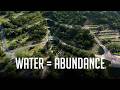
A system of berms is used to slow water runoff, capture it for infiltration, and prevent soil erosion, thereby conserving topsoil and cleaning water.
-
Brush berms (beaver dam analogs) are 12-18 inch high compacted features that catch sediment and leaf litter to build soil, slow water, and prevent erosion. Fire risk is low if managed actively, compacted, and placed away from structures or valuable trees.
-
Explains the construction and function of water spreading banks and contour ditches to manage water flow, reduce erosion, and improve ground cover and soil health. The technique involves holding water on contour, increasing infiltration, and regenerating the landscape, transforming previously bare land into areas with 85-95% ground cover.
Making Sense of the Differences
Key risks with berms involve initial construction failures (leading to erosion) and the challenge of successfully establishing and maintaining vegetation. These are mitigated through thorough site assessment, accurate contouring, proper construction techniques, careful species selection, and prompt maintenance. Over-reliance on the physical structure without fostering biological improvement or designing for long-term integration is also a risk; berms are most regenerative when they facilitate the land's natural capacity to manage water. Careful planning and phased implementation, alongside exploring cost-share programs, can significantly reduce financial and systemic risks.
How long does it take for berms to become truly regenerative structures?
Quick establishment, immediate benefits
Immediate benefits in erosion control and water holding are observed upon construction. Significant moisture retention and improved pasture growth can be seen within 1-2 years with proper vegetation and rainfall.
Sources behind this view
Sources behind this view
Videos & Podcasts
-
Implement berms and swales for water harvesting and soil building on a 200-acre property in Central Texas. These structures capture runoff, increase soil microbiology, and aim to keep springs flowing year-round.
-
Explains the construction and function of water spreading banks and contour ditches to manage water flow, reduce erosion, and improve ground cover and soil health. The technique involves holding water on contour, increasing infiltration, and regenerating the landscape, transforming previously bare land into areas with 85-95% ground cover.
Research
-
Contour bunding technology-evidence and experience in the semiarid region of southern Mali (opens in new window)
This study found: A three-year study in southern Mali investigated the benefits of contour bunding, a soil conservation technique using earth berms to slow water runoff. The research involved field experiments and farmer surveys. Planting crops like maize, millet, sorghum, and peanuts behind contour bunds led to significantly higher yields, especially for maize and millet. The bunds also helped the soil hold more water, saving about 162 mm of rainfall annually. Crucially, soil erosion was drastically reduced; fields with contour bunds lost 163% less soil compared to fields without them (losing an average of 13,090 kg of soil per hectare without bunds). Farmers reported higher incomes from crops grown on these protected plots, suggesting widespread adoption could improve agricultural productivity and resilience in this semi-arid region.
-
Effect of soil bunds on runoff, soil and nutrient losses, and crop yield in the central highlands of Ethiopia (opens in new window)
This study found: A three-year study in the Ethiopian highlands investigated how building soil bunds (small earth berms) affected farming. The research found that these bunds significantly reduced water runoff by 28% and soil erosion by 47% compared to land without bunds. This also helped to reduce the loss of nutrients and organic matter from the soil. However, while the soil health improved, the bunds did not increase the barley harvest. In fact, they slightly decreased the yield per acre because the bunds themselves take up about 8.6% of the land that could be used for crops. The study suggests that while bunds are good for preventing erosion, farmers need other methods to make up for the lost crop area to encourage their adoption.
Phased integration into regenerative systems (3-7 years)
While immediate benefits exist, berms transition from primary disturbance to stable landscape features over 3-7 years as vegetation matures and soil biology improves, minimizing their disruptive footprint.
Sources behind this view
Sources behind this view
Videos & Podcasts
-
Explains how to build swales and berms on contour for water harvesting and tree planting. Emphasizes retaining topsoil, using nitrogen-fixing trees, and covering seeded areas with straw to prevent erosion. Notes 2-4 years for system establishment.
-
Explains the construction and function of water spreading banks and contour ditches to manage water flow, reduce erosion, and improve ground cover and soil health. The technique involves holding water on contour, increasing infiltration, and regenerating the landscape, transforming previously bare land into areas with 85-95% ground cover.
Research
-
The Relationship between Erosion and Precipitation and the Effects of Different Riparian Practices on Soil and Total-P Losses via Streambank Erosion in Small Streams in Iowa, USA (opens in new window)
This study found: A seven-year study in Iowa looked at how different ways of managing land along streams affected soil erosion and phosphorus loss. They found that heavy rainfall, especially in spring and summer, was the main cause of stream bank erosion. Practices like planting trees or grass strips along rivers, and using fenced pastures for livestock, kept significantly more soil in place and reduced phosphorus runoff compared to intensive grazing or planting row crops right up to the stream. Row crops had the worst soil loss. The study shows that keeping natural vegetation along waterways is crucial for protecting soil and water quality, but this protection can be challenged by changing weather patterns.
Long-term evolution into natural landscape features
With advanced soil health (high SOM, robust biology), berms may become less critical structurally, evolving into natural features supporting biodiversity and further soil building over 7+ years.
Sources behind this view
Sources behind this view
Videos & Podcasts
-
Farm design incorporated swales (berm and basin systems) to manage flooding by collecting and infiltrating rainwater, creating planting sites for trees like willow. This system helps manage hydrology, supports pasture and tree health, and mitigates drought impacts.
Research
-
Agriculture Insights for Improving the Soil Conservation through Optimizing of Water Storage and Advanced Agricultural Methods (opens in new window)
This study found: Soil damage has worsened over recent decades due to human actions and urbanization. Protecting soil and managing water effectively are key to healthy agriculture. Adding organic matter to soil is vital because it improves soil structure, helps soil hold more water, allows water to soak in better, and protects the soil from being washed away or compacted. Optimizing water use for crops is important, and restoring soil health can help buffer against climate challenges and boost fertility. Water comes from rain, surface sources, and groundwater. Using groundwater for irrigation and exploring methods like solar-powered water storage can help. The study suggests that vertical flow constructed wetlands are more effective than horizontal ones for managing water in farmlands.
-
In-situ Soil and Water Conservation for Sustainable Agriculture (opens in new window)
This study found: This chapter highlights how farmers can save soil and water right on their fields to make farming more sustainable. Practices like planting cover crops (such as cereal rye, hairy vetch, crimson clover, and tillage radish), rotating crops, using mulch, and adding compost or manure help keep soil healthy and retain moisture. These methods boost water availability for crops, make farms more resilient to weather changes, and prevent land from degrading. The chapter also discusses how mapping tools (like satellite imagery) can help farmers understand their soil's nutrient and moisture levels, and identify the best spots for water-collecting structures. By focusing on these on-site conservation techniques, farmers can ensure good food production for the future and protect the environment.
Making Sense of the Differences
The timeline for berms to become 'regenerative structures' varies with context and management. Immediate benefits like erosion control and improved moisture storage are evident post-construction. Significant vegetation establishment and soil improvements typically occur within 1-4 years. Their full integration and evolution into stable landscape features, where their physical role may lessen due to improved soil biology, can take 3-7+ years. This transition is accelerated by careful vegetation selection, appropriate maintenance, and integration with other soil-building practices.
5
HOW MUCH - Costs & Investment
Note: Costs shown in USD; multiply by local labor and material cost indices for your region. Labor costs vary significantly internationally. Exchange rates and local purchasing power parity should be considered. A handyman in rural Kenya will have very different labor...
Note: Costs shown in USD; multiply by local labor and material cost indices for your region. Labor costs vary significantly internationally. Exchange rates and local purchasing power parity should be considered. A handyman in rural Kenya will have very different labor...
HOW MUCH - Costs & Investment
Note: Costs shown in USD; multiply by local labor and material cost indices for your region. Labor costs vary significantly internationally. Exchange rates and local purchasing power parity should be considered. A handyman in rural Kenya will have very different labor...
Note: Costs shown in USD; multiply by local labor and material cost indices for your region. Labor costs vary significantly internationally. Exchange rates and local purchasing power parity should be considered. A handyman in rural Kenya will have very different labor...
Note: All costs are based on recent US economic data (2024–2026) and may vary substantially by region based on local labor rates, material costs, and regulatory requirements.
Earthmoving and Site Preparation
The volume of soil displacement is the primary cost driver, dictated by slope severity and equipment scale.
- Small Scale (Under 50 acres (20 ha)): Costs range from $125–$469 per acre ($309–$1,159/ha). At this scale, operations often utilize skid steers or compact tractors with box blades. Labor constitutes 60–70% of this expenditure, as many farmers choose to self-manage the project to avoid minimum mobilization fees.
- Mid-size (50–500 acres (20–202 ha)): Costs range from $261–$782 per acre ($645–$1,932/ha). Efficiency at this level is driven by the use of full-sized tractors with towed terracers or hydraulic graders. While fuel usage typically consumes 3–5 gallons (11–19 L) per hour, the output per hour significantly offsets the per-acre labor cost compared to manual methods.
- Large Scale (500+ acres): Costs range from $521–$1,876 per acre ($1,287–$4,636/ha). Heavy machinery, such as motor graders and tracked dozers, is required. Although the capital outlay is higher, economies of scale are reached through consistent, contiguous design, which helps normalize the cost of heavy equipment mobilization that typically ranges from $1,563–$5,210 per deployment.
Surveying, Layout, and Design
Precision is the difference between a functional berm and a structural liability.
- Small Scale: Costs range from $21–$125 per acre ($52–$309/ha), usually utilizing hand-held laser levels or gravity-based A-frames.
- Mid-size: Costs range from $52–$261 per acre ($128–$645/ha), reflecting a shift toward professional GIS mapping and rental of commercial-grade survey equipment to ensure consistent fall grades.
- Large Scale: Costs range from $208–$625 per acre ($514–$1,544/ha). At this level, civil engineering standards for catchment capacity and runoff mitigation are usually mandatory. Costs here include drone-based RTK-GPS mapping and professional certification to ensure the system can effectively handle 50-year storm flood events without failure.
Vegetation and Establishment
Berms must be stabilized immediately to prevent erosion from rendering the capital investment moot.
- Small Scale: Costs range from $31–$156 per acre ($77–$385/ha). This includes hand-seeding, specialized seed mixes, and manual installation of erosion control blankets or fiber rolls.
- Mid-size: Costs range from $26–$104 per acre ($64–$257/ha), reflecting bulk seed purchase advantages and the transition to mechanized drill seeding or hydroseeding.
- Large Scale: Costs range from $21–$83 per acre ($52–$205/ha). Costs reach a floor due to economies of scale in seed procurement and the use of high-capacity seeding equipment that covers vast acreages with minimal labor passes.
Annual Maintenance
Regrading, debris clearing, and vegetation management are mandatory ongoing costs for all scales.
- All Scales: Expect recurring maintenance expenses of $16–$63 per acre ($40–$156/ha) annually. This covers periodic repairs after extreme weather events and the routine clearing of spillway obstructions.
Most Spend: The majority of farm operations fall within the $350–$950 per acre ($865–$2,347/ha) range. This segment typically encompasses mid-sized growers who have access to farm-owned tractors but outsource the professional topographic surveying required to ensure the berms function optimally on varying terrain.
Why the Range?: The primary driver of cost variation is the topographical complexity of the site; steeper or rockier slopes drastically increase the engine hours and fuel consumption required to move earth. Furthermore, the availability of specialized excavating contractors within a 50-mile (80 km) radius can swing mobilization costs by several thousand dollars, shifting a project from the budget-friendly end of the range to the professional premium.
6
REWARDS AND RISKS - Economics & Risk Factors
Building berms presents a strong return on investment, particularly in water-limited environments. However, like any land-altering practice, they carry risks that must be managed.
Building berms presents a strong return on investment, particularly in water-limited environments. However, like any land-altering practice, they carry risks that must be managed.
REWARDS AND RISKS - Economics & Risk Factors
Building berms presents a strong return on investment, particularly in water-limited environments. However, like any land-altering practice, they carry risks that must be managed.
Building berms presents a strong return on investment, particularly in water-limited environments. However, like any land-altering practice, they carry risks that must be managed.
Economic Scenarios
- Best Case: With managed vegetative cover and professional design, berms drive a 35–55% increase in moisture-limited crop production. In drought-prone landscapes, this translates to $208–$469 per acre ($514–$1,159/ha) in additional net revenue annually. By combining crop gains with irrigation savings of $104–$261 per acre ($257–$645/ha), the initial investment of $417–$990 per acre ($1,030–$2,446/ha) is often fully recouped in as little as 3.5 to 4 years.
- Typical Case: Productivity gains average 15–30% in standard years, with significant protection during dry cycles. Break-even occurs within 6–9 years. Operational risk is low, and the land benefits from long-term nutrient retention, saving roughly $31–$78 per acre ($77–$193/ha) in synthetic fertilizer inputs annually through reduced runoff.
- Worst Case: Poor hydraulic engineering leads to a structural breach during a major storm event. Repair costs in this scenario can spike to $1,042–$2,605 per acre ($2,575–$6,437/ha), effectively doubling the initial installation debt. Additionally, total crop loss in the affected drainage zone results in revenue drops of $417–$834 per acre ($1,030–$2,061/ha) in the season of failure.
Market Factors Profitability is heavily influenced by regional water policy and state-sponsored cost-share programs, such as EQIP. When these programs cover 50–75% of installation costs, the ROI timeline is slashed by up to 50%. Conversely, commodity price volatility creates an opportunity cost; when cereal or forage prices are at a multi-year high, the "land take" (the acreage occupied by the berm) represents a missed opportunity for revenue, requiring a 10–12% yield boost on remaining acreage to achieve neutrality.
Risk Mitigation Strategies
- Professional Hydraulic Modeling: Investing $104–$313 per acre ($257–$773/ha) in precision engineering dramatically lowers the risk of catastrophic breach by correctly sizing spillways.
- Perennial Buffers: Planting deep-rooted native grasses like switchgrass on the berm face adds $52–$104 per acre ($128–$257/ha) upfront but creates a "living dam" that reduces erosion failure risk by 70–80%.
- Staged Implementation: By starting on 10% of the farm, operators can refine their construction techniques and evaluate water movement before scaling up, capping the initial financial exposure.
Transition Period Risks
- Yield Drag: During the first 1–2 years, the compaction caused by construction machinery and the removal of topsoil for berm creation leads to a localized 5–10% yield reduction.
- Biological Stabilization: Soils require time to recover, and full vegetative stabilization of the berm is typically not achieved until the start of the third growing season.
- Mitigation: Producers should avoid heavy construction during wet soil conditions to prevent deep compaction and use temporary cover crops during the first year to restore soil structure.
Sources behind this view
Videos & Podcasts
-
Explains berm and swale systems for water harvesting and soil building in challenging terrains, focusing on infiltration, passive irrigation, and erosion control. Discusses revegetation, spillways, al
-
Construct broad, flattened Z-shaped swales and berms on contour using laser leveling and on-site brush material for effective water harvesting and erosion control on hillsides, capturing ~18 gallons/l
-
Farm design incorporated swales (berm and basin systems) to manage flooding by collecting and infiltrating rainwater, creating planting sites for trees like willow. This system helps manage hydrology,
-
Implement berms and swales for water harvesting and soil building on a 200-acre property in Central Texas. These structures capture runoff, increase soil microbiology, and aim to keep springs flowing
Community
-
Berms can mitigate herbicide drift from railroads. For drought seeding, irrigate if possible or wait for rain. Detailed steps include pre-sprouting oats and inoculating field peas, planting them into
Read more (opens in new window) permies.com -
Berms enhance water retention and create microclimates through increased surface area, capillary action, and dew harvesting. Alfalfa on a sand/rock berm demonstrated nitrogen fixation and water sharin
Read more (opens in new window) permies.com -
Learn to build landscaping berms for water management, drainage, and aesthetic appeal. This guide covers planning shape, using fill and topsoil, tamping for stability, adding plants, and mulching for
Read more (opens in new window) ucanr.edu -
Construct a garden berm (12-18 inches high) using screened native clay soil mixed with 1/3 compost. Use granite rocks for edging. Plant for year-round color and pollinators, sourcing plants affordably
Read more (opens in new window) ucanr.edu
7
COMPATIBLE PRACTICES - Integration Opportunities
Building berms are not standalone solutions but are most powerful when integrated with other regenerative and sustainable land management practices. This integration amplifies their benefits and ensures long-term success.
Building berms are not standalone solutions but are most powerful when integrated with other regenerative and sustainable land management practices. This integration amplifies their benefits and ensures long-term success.
COMPATIBLE PRACTICES - Integration Opportunities
Building berms are not standalone solutions but are most powerful when integrated with other regenerative and sustainable land management practices. This integration amplifies their benefits and ensures long-term success.
Building berms are not standalone solutions but are most powerful when integrated with other regenerative and sustainable land management practices. This integration amplifies their benefits and ensures long-term success.
Contour Farming
- Berms are a form of contour farming; the practice mandates their creation on contour lines.
- Integration benefit: Ensures water is held locally and spread across the landscape, maximizing infiltration and minimizing erosion; increases the effectiveness of all other contour-based practices.
Cover Cropping
- Planting diverse cover crops on and between berms immediately after construction.
- Integration benefit: Stabilizes newly constructed berms, adds organic matter to the soil, enhances soil biology, improves water infiltration, and provides habitat for beneficial insects. Selecting deep-rooted cover crops (e.g., daikon radish, forage turnips) is crucial for soil structure improvement.
Pasture Cropping / Perennial Pasture Establishment
- Using berms to establish or improve perennial grass and legume pastures, especially in dryland areas.
- Integration benefit: Berms create micro-habitats for ideal pasture species establishment, leading to more robust, drought-tolerant pastures with higher carrying capacity.
Silvopasture
- Planting trees or shrubs on the berms or in the swales between them, integrating livestock.
- Integration benefit: Berms provide improved water and fertility for trees, helping them establish. Trees offer shade and shelter for livestock, while livestock manage understory vegetation and add fertility. This creates a multi-layered, diversified system.
Keyline Design
- Using Keyline principles to determine the optimal spacing and layout of berms (and other water harvesting structures) to manage water flow across the entire landscape.
- Integration benefit: Elevates berm placement from simple contouring to a holistic landscape-level water management system, ensuring efficient water distribution and preventing undue water concentration or loss.
No-Till Farming
- In cropping systems, berms are combined with no-till to maintain overall soil disturbance minimization. Berms represent a significant one-time construction disturbance.
- Integration benefit: Berms ensure adequate moisture for cover crops and cash crops in no-till systems, particularly in drier climates where water availability limits no-till success. The challenge is managing berms with standard no-till equipment.
Livestock Integration (Rotational Grazing)
- Implementing adaptive or rotational grazing management on lands with berms.
- Integration benefit: Strategic grazing can help manage vegetation on berms, distribute fertility, and prevent overgrazing. However, careful timing and herd management are needed to avoid damaging berm structures.
Water Harvesting Structures (Check Dams, Swales, Ponds)
- Berms can be part of a larger water harvesting system.
- Integration benefit: Berms can feed water into check dams, ponds, or larger swales, maximizing water retention and infiltration across the landscape.
The success of berms lies in their integration. They are most effective when viewed as a component of a broader regenerative system that focuses on maintaining living roots, keeping soil covered, maximizing diversity, and integrating livestock, all while minimizing large-scale disturbances after initial construction.
Sources behind this view
Videos & Podcasts
-
Explains berm and swale systems for water harvesting and soil building in challenging terrains, focusing on infiltration, passive irrigation, and erosion control. Discusses revegetation, spillways, al
-
Farm design incorporated swales (berm and basin systems) to manage flooding by collecting and infiltrating rainwater, creating planting sites for trees like willow. This system helps manage hydrology,
-
Construct broad, flattened Z-shaped swales and berms on contour using laser leveling and on-site brush material for effective water harvesting and erosion control on hillsides, capturing ~18 gallons/l
Community
-
Provides guidance on constructing swales and berms for water control and erosion prevention, recommending specific dimensions, immediate grass seeding, and referencing Mark Shepard's 'Restoration Agri
Read more (opens in new window) permies.com -
Farmers in Wet Mountain Valley, CO, use fire mitigation slash, pine needles, and rock dams on contour for effective water harvesting and erosion control, promoting soil restoration and grass growth.
Read more (opens in new window) permies.com -
Learn to build landscaping berms for water management, drainage, and aesthetic appeal. This guide covers planning shape, using fill and topsoil, tamping for stability, adding plants, and mulching for
Read more (opens in new window) ucanr.edu -
Permeable landscapes, using surfaces like soil, mulch, gravel, and designed pavers, reduce water runoff and pollution while recharging groundwater. Berms and swales are key features that slow and infi
Read more (opens in new window) ucanr.edu