
Biological Nitrogen Fixation
Biological nitrogen fixation (BNF) is a natural process where specialized soil microbes convert atmospheric nitrogen gas (N₂) into plant-usable forms like ammonia. This makes atmospheric nitrogen available as a nutrient, reducing the need for synthetic fertilizers and building soil fertility organically. It's a cornerstone of healthy, self-sustaining agricultural ecosystems.
Read More: Complete Description
Biological nitrogen fixation (BNF) is one of nature's most sophisticated nutrient cycling mechanisms, primarily carried out by microorganisms that convert inert atmospheric nitrogen gas (N₂), making up about 78% of our air, into bioavailable forms such as ammonia (NH₃), ammonium (NH₄⁺), and nitrates (NO₃⁻). These converted forms are then accessible to plants, serving as essential building blocks for proteins and enzymes. This vital process underpins the fertility of natural ecosystems and is a critical component of sustainable agriculture.
The most well-known type of BNF occurs through symbiotic relationships, predominantly between legumes (like peas, beans, clover, alfalfa, soybeans, peanuts, and lupins) and specific soil bacteria called rhizobia. These bacteria infect the roots of legumes and form specialized structures called root nodules. Inside these nodules, the bacteria live in an anaerobic environment conducive to nitrogenase enzyme activity, which is responsible for reducing N₂ to ammonia. The plant provides the bacteria with carbohydrates (energy) and a protected environment, while the bacteria supply the plant with fixed nitrogen. This symbiosis is highly efficient, often supplying all of a legume plant's nitrogen needs.
Beyond legume-rhizobia symbiosis, other forms of BNF exist. Free-living bacteria in the soil, such as Azotobacter and Clostridium species, can fix nitrogen independently without forming specialized structures. Additionally, associative symbioses occur where nitrogen-fixing bacteria live in close proximity to plant roots (e.g., within the rhizosphere) or even within plant tissues of non-leguminous plants, such as certain grasses, corn, and sugarcane, providing some level of nitrogen contribution. Cyanobacteria, also known as blue-green algae, are photosynthetic microorganisms capable of nitrogen fixation and are particularly important in aquatic and paddy rice systems worldwide.
From a regenerative agriculture perspective, BNF is not merely a source of fertility; it is a foundational practice that directly supports multiple core principles. It actively minimizes the need for synthetic nitrogen fertilizers, which are energy-intensive to produce and can lead to soil degradation, nutrient runoff, and greenhouse gas emissions (like N₂O). By promoting diverse plant communities that include nitrogen-fixing species, BNF enhances crop diversity (Principle 2), fostering complex soil food webs and improving nutrient cycling. The presence of living roots from nitrogen-fixing plants, whether legumes or other species, ensures living roots are maintained for extended periods (Principle 4), contributing to soil structure and carbon sequestration. Furthermore, well-managed cover crops can keep soil covered year-round (Principle 3), with many nitrogen-fixing species contributing to this protective layer.
The integration of livestock (Principle 5) further amplifies the benefits of BNF. Legumes incorporated into pasture mixes or grazed on their own are highly nutritious for livestock. Animal manure then recycles nutrients, including nitrogen, back to the soil, potentially feeding free-living nitrogen-fixers or enriching soil for subsequent legume cycles. Strategic grazing management can also influence BNF by stimulating nodulation and growth of legumes.
Common misconceptions about BNF include assuming only legumes fix nitrogen or that all legumes are equally effective. While legumes are the most significant contributors in most agricultural systems, understanding the diversity of BNF organisms and their associations is crucial for optimizing its benefits internationally. Another misconception is that once a legume is planted, nitrogen fixation is guaranteed; nodulation success and efficiency depend heavily on soil pH, nutrient availability (especially phosphorus and molybdenum), soil moisture, and the presence of compatible rhizobial strains.
In arid regions, or soils with low natural fertility, BNF can be particularly transformative, reducing reliance on costly and often unavailable synthetic fertilizers. In rice cultivation systems across Asia, for instance, cyanobacteria and associative bacteria contribute significantly to nitrogen supply, and legume cover crops are increasingly integrated to boost this contribution. On grain farms in North America or Australia, planting legume cover crops or incorporating soybeans into crop rotations directly leverages BNF to build soil nitrogen for subsequent crops like wheat or corn, reducing input costs and environmental impact.
The practice is not without its nuances. Over-application of nitrogen from previous legume crops or excessive available nitrogen in the soil can actually suppress nodulation in subsequent legumes, as the plant may 'choose' to absorb available soil nitrogen rather than investing energy in symbiosis. Therefore, understanding the nitrogen balance of the soil and the needs of the entire cropping system is key to maximizing BNF's role. Ultimately, harnessing BNF is about mimicking natural processes to build soil fertility, enhance crop resilience, and create more self-sufficient and environmentally sound agricultural systems.
Sources behind this view
Sources behind this view
 Videos & Podcasts
-
Reduces input costs by utilizing legumes and free-living soil bacteria for nitrogen fixation. Explains nitrogen availability from legume biomass, the role of microbes, and the benefits of diverse cove

-
Advocates for capturing atmospheric nitrogen using legumes and cover crops to reduce synthetic nitrogen inputs for crops like corn. Suggests replacing 30 units of synthetic N with legumes and focusing

-
Atmospheric nitrogen is fixed biologically by free-living and symbiotic bacteria (like rhizobia in legumes) into plant-usable forms. Cover crops utilize this. The microbiometer test ($75, 20 mins) ass

 Community
-
Explains how legumes fix nitrogen via Rhizobium bacteria, and how this nitrogen becomes available to fruit trees through decomposition or chop-and-drop methods. Emphasizes building soil life with comp
Read more (opens in new window) permies.com -
Legumes fix 0-100% of nitrogen based on soil conditions and competition. Fixed nitrogen is mainly in leaves/flowers/seeds. Harvest between 10-50% flowering for maximum nitrogen availability to soil mi
Read more (opens in new window) permies.com -
Legumes fix atmospheric nitrogen via *Rhizobium* bacteria, reducing fertilizer needs and boosting crop yields. They should be left in the soil to decompose. Hardy legumes like broad beans can be integ
Read more (opens in new window) www.permaculture.org.uk -
Explains nitrogen cycling in pastures, detailing how legumes fix atmospheric nitrogen and how mineralization, denitrification, volatilization, and leaching impact nitrogen availability for forage grow
Read more (opens in new window) smallfarms.cornell.edu
 Research
-
Biological nitrogen fixation and prospects for ecological intensification in cereal-based cropping systems (opens in new window)
This study found: Review on biological nitrogen fixation (BNF) by plants, especially legumes, to boost cereal crops and reduce synthetic fertilizer use, aiming for sustainable farming intensification.
-
Current Progress in Nitrogen Fixing Plants and Microbiome Research (opens in new window)
This study found: Review on natural nitrogen fixation (BNF) by plants, especially legumes, to reduce synthetic fertilizer use. Research aims to transfer BNF to crops like corn and wheat by manipulating soil microbes.
-
Role of Environmental Factors in Legume- Symbiosis: A Review. (opens in new window)
This study found: Legume-bacteria partnerships for natural nitrogen fixing are sensitive to soil acidity, salt, temperature, water, and nutrients. Optimizing these factors maximizes legume benefits for crops and soil h
-
Building Soil Nitrogen Capital in Africa (opens in new window)
This study found: Building soil nitrogen capital requires increasing organic matter, influenced by soil type. Methods like legume cover crops, grass-legume leys, and minimum tillage are key. Collaboration with smallhol
 From the Web
-
Legumes fix atmospheric nitrogen via rhizobia in root nodules, requiring molybdenum for efficiency. Check nodules for size/color; use fish/seaweed products if molybdenum is low. Specific inoculants ar
-
Legumes fix atmospheric nitrogen via rhizobia bacteria in root nodules, requiring molybdenum for efficiency. Growers should use specific inoculants and check nodule health, using fish/seaweed products
-
Legumes facilitate biological nitrogen fixation (BNF), reducing synthetic fertilizer use and greenhouse gas emissions by forming a symbiotic relationship with Rhizobiaceae bacteria. This enriches soil
-
Agronomy is key to bridging the grain legume yield gap in sub-Saharan Africa by optimizing biological nitrogen fixation (BNF) through improved varieties, rhizobium inoculation, and phosphorus applicat
Key Points
What It Is
- Microbes convert atmospheric N₂ to plant-usable forms
- Primarily occurs in legumes but also other plants
- Essential for soil fertility and nutrient cycling
- Reduces synthetic nitrogen fertilizer needs
Why Do It
- Builds soil fertility naturally and sustainably
- Supports legume health and productivity
- Enhances crop nutrition and yield potential
- Directly supports multiple regenerative principles
Know the Debate
- Non-legumes may fix some N; legume inoculation is key.
- BNF reduces fertilizer costs and builds soil health.
- Soil conditions and rhizobia presence impact effectiveness.
- Integration with other regenerative practices amplifies benefits.
Benefits - Financial
- Synthetic fertilizer cost reductions of $60–$150 per acre ($148–$371 per hectare) annually.
- Increases subsequent cash crop yields by 3–6% via nutrient cycling.
- Enhances soil water-holding capacity, reducing irrigation costs $20–$40 per acre ($49–$99 per hectare).
Benefits - System
- Soil organic matter increase: 0.2-0.5% per year
- Supports biodiversity: legumes attract pollinators
- Promotes healthy soil food web development
- Directly supports principles 2, 3, 4, 5
Risks - Financial
- Initial startup investments range from $70–$205 per acre ($173–$507 per hectare) today.
- Possible 5–15% yield dip during 1–3 year system transition.
- Total stand failure risk impacts $100–$140 per acre ($247–$346 per hectare) lost investment.
Risks - System
- Incompatible soil pH or nutrient deficiencies
- Lack of effective rhizobia strains in soil
- Over-reliance: can suppress nodulation if too much N is available
- Inefficient nodulation if conditions are not optimal
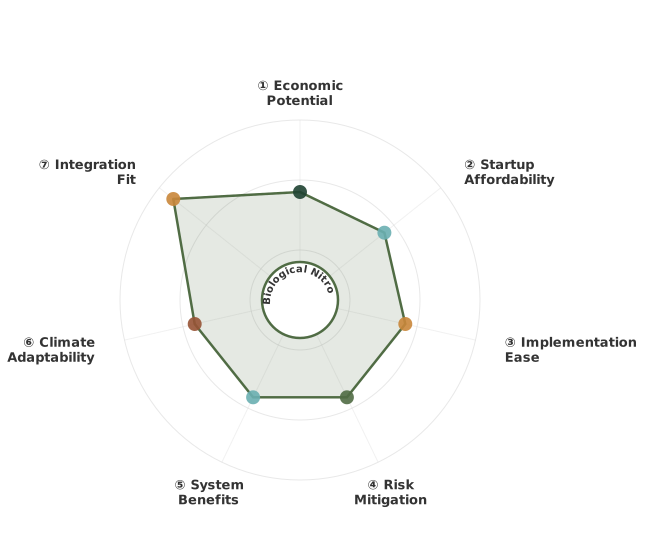
How These Traits Are Calculated
Trait dimensions are ordered clockwise starting from the top of the chart (12 o'clock position):
1. Economic Potential
Financial returns, annual value, and break-even timeline
WHAT: Evaluates financial viability by combining net annual value ($/ha from savings, income, and amortized harvests) with break-even timeline showing when practices pay for themselves.
WHY: Farmers need clear ROI understanding before committing resources. Fast payback (≤3 years) with strong returns (≥$300/ha) enables confident adoption, while long timelines (>10 years) restrict adoption to well-funded operations willing to wait for returns.
HOW: Calculated from net annual value in $/ha and break-even years. Exceptional (≥2.6): fast ROI ≤3 years + high value ≥$300/ha. Typical (1.8-2.5): moderate returns or longer timelines. Limited (<1.8): marginal economics or very long payback >10 years.
2. Startup Affordability
Initial investment costs and financial barrier to entry
WHAT: Measures financial barrier to entry through startup costs for equipment, infrastructure, consulting, and materials. Inverted scoring: lower costs = higher scores = more accessible adoption.
WHY: Affordability determines who can adopt. Low-cost practices (<$250/ha) enable widespread adoption across diverse scales, while high costs (>$2,500/ha) limit adoption to well-capitalized operations, creating barriers that slow regenerative transition.
HOW: Calculated from initial investment parsed from practice content. Inverted scoring: Exceptional (≥2.6): minimal investment <$250/ha. Typical (1.8-2.5): moderate costs $250-2,500/ha. Limited (<1.8): high barrier >$2,500/ha.
3. Implementation Ease
Learning curve and specialized knowledge required
WHAT: Measures how much learning, planning, and specialized knowledge a practice requires. Simpler practices with fewer steps score higher, while complex practices requiring extensive training or specialized resources score lower.
WHY: Complex practices create adoption barriers even when economically viable. Straightforward practices enable faster adoption and broader participation, while those requiring extensive training, timing precision, or specialized equipment limit who can succeed.
HOW: Evaluated by measuring documentation length and identifying complexity markers like location-specific requirements, seasonal timing windows, specialized skills, and dedicated equipment needs. Exceptional (≥2.6): straightforward practices with minimal prerequisites. Typical (1.8-2.5): moderate learning curve with some specialized needs. Limited (<1.8): steep learning curve requiring significant training or resources.
4. Risk Mitigation
Identified financial and ecological risk assessment
WHAT: Evaluates documented risks across financial (investment loss, market volatility) and ecological (crop failure, pest outbreaks) domains. Inverted scoring: fewer risks = higher scores.
WHY: Understanding risk exposure helps farmers make informed decisions. Low-risk practices allow confident implementation, while high-risk practices require careful planning and contingency resources. Risk transparency prevents costly failures.
HOW: Calculated from identified risks in practice content. Inverted scoring: Exceptional (≥2.6): ≤2 risks with manageable severity. Typical (1.8-2.5): 3-5 moderate risks. Limited (<1.8): 6+ risks or severe exposure.
5. System Benefits
How many ways the practice improves your land simultaneously
WHAT: Measures how many aspects of land health improve at once—carbon storage, soil quality, erosion control, water absorption, and biodiversity. Practices that improve multiple areas simultaneously create compounding benefits where each improvement reinforces the others.
WHY: The best practices solve multiple problems at once. For example, addressing erosion simultaneously builds carbon and improves water infiltration, creating a resilient system with positive feedback loops. Single-benefit approaches miss these compound transformation opportunities.
HOW: Evaluated across five key outcomes: carbon sequestration, soil organic matter increase, erosion reduction, water infiltration improvement, and biodiversity enhancement. Exceptional (≥2.6): high carbon storage (>8 t/ha/yr), improvements across 4-5 areas, transformative outcomes. Typical (1.8-2.5): moderate carbon (3-8 t/ha/yr), improvements across 2-3 areas. Limited (<1.8): modest impact (<3 t/ha/yr), single-area focus only.
6. Climate Adaptability
Geographic applicability across Köppen climate zones
WHAT: Evaluates geographic applicability by assessing how many Köppen climate zones successfully support a practice and what adaptation requirements are needed. Measures breadth of climates where farmers can implement with minimal to moderate modifications.
WHY: Universal practices working across diverse climates enable more farmers to adopt regenerative approaches. Practices limited to single climate types (only Mediterranean, only tropical) restrict adoption and slow global transition. Adaptability determines whether a practice serves niche regions or offers broad transformation.
HOW: LLM evaluation of regional success stories, Köppen zone coverage, and adaptation needs. Exceptional (≥2.6): 5+ zones or 4+ climate types, 3+ continents, minimal adaptation. Typical (1.8-2.5): 3-4 zones or 2-3 types, 2 continents, moderate adaptation. Limited (<1.8): 1-2 zones, single region, significant adaptation or highly specialized.
7. Integration Fit
How well this practice combines with others you're doing
WHAT: Measures how well a practice combines with other regenerative practices you might be doing. Some practices work as building blocks that make many other practices easier or more effective, while others work best on their own.
WHY: Practices that combine well with many others create more value on your farm. For example, cover cropping enables no-till, improves grazing, supports crop diversity, and helps water management—making all of them work better together. This helps you build a coherent system rather than juggling disconnected practices.
HOW: Evaluated by identifying which practices combine well and how strong those combinations are. 'Ideally Suited' means strong combinations where practices reinforce each other (practice A makes B easier, while B makes A more effective). 'Adequate' means complementary benefits that work well together. Exceptional (≥2.6): combines well with 6+ practices, serves as a building block. Typical (1.8-2.5): combines with 3-5 practices. Limited (<1.8): 1-2 practices or works best alone.
Going Deeper
1
WHY - The Benefits
Biological nitrogen fixation (BNF) is a natural process that converts atmospheric nitrogen gas (N₂) into plant-available forms, serving as a free and sustainable source of fertility. Embracing BNF is more than just fertilizing; it's about cultivating a healthy,...
Biological nitrogen fixation (BNF) is a natural process that converts atmospheric nitrogen gas (N₂) into plant-available forms, serving as a free and sustainable source of fertility. Embracing BNF is more than just fertilizing; it's about cultivating a healthy, self-sustaining soil ecosystem that reduces reliance on external inputs and enhances the overall resilience of the farming system.
WHY - The Benefits
Biological nitrogen fixation (BNF) is a natural process that converts atmospheric nitrogen gas (N₂) into plant-available forms, serving as a free and sustainable source of fertility. Embracing BNF is more than just fertilizing; it's about cultivating a healthy,...
Biological nitrogen fixation (BNF) is a natural process that converts atmospheric nitrogen gas (N₂) into plant-available forms, serving as a free and sustainable source of fertility. Embracing BNF is more than just fertilizing; it's about cultivating a healthy, self-sustaining soil ecosystem that reduces reliance on external inputs and enhances the overall resilience of the farming system.
Soil Health Benefits
BNF directly contributes to soil health by supporting legume growth, which in turn fosters diverse and active soil biology. Legumes, when effectively nodulated, fix significant amounts of nitrogen, enriching the soil organic matter content as plant residues decompose. This increased organic matter improves soil structure, enhances water infiltration and retention, and provides a food source for beneficial microorganisms. As legumes decompose, they release nitrogen slowly and steadily, mimicking natural nutrient cycling processes and avoiding the rapid mineralization and potential leaching associated with synthetic nitrogen fertilizers.
Studies show that legume cover crops and rotations can increase soil organic carbon by 0.2-0.5% per year when integrated into a system with other regenerative practices. The complex root systems of legumes also create channels in the soil, improving aeration and drainage, and providing habitats for soil fauna. These practices collectively foster a more robust and resilient soil food web, increasing the soil's capacity to cycle nutrients, suppress diseases, and improve plant health.
Economic Benefits
The most immediate economic benefit of BNF is the significant reduction in synthetic nitrogen fertilizer costs. Nitrogen is often the most expensive nutrient input for farmers globally. By substituting synthetic nitrogen with biologically fixed nitrogen, farmers can save USD equivalent of $50-300 per hectare annually, depending on the crop, region, and fertilizer prices. For grain farmers in regions like the Canadian Prairies or the Australian wheat belt, this translates to substantial operational cost savings.
Beyond direct savings, BNF can lead to improved crop yields. Legumes themselves often exhibit higher yields and better quality when well-nodulated. Subsequent crops in a rotation that benefit from residual nitrogen left by legumes can also see yield increases of up to 10-20%. For livestock producers, incorporating nitrogen-fixing forages like clover or alfalfa into pasture mixes enhances forage quality, leading to improved animal growth rates, milk production, and reproductive performance, thereby indirectly boosting profitability.
Furthermore, investing in BNF is a long-term investment in soil health, which underpins sustained productivity and reduced input costs over time. Healthier soils are more resilient to drought and extreme weather events, reducing risks and the need for costly interventions. The combined effect of reduced input costs, potentially higher yields, and enhanced forage quality can lead to a more profitable and sustainable farm business.
Regenerative Systems Fit
BNF is a foundational practice in regenerative agriculture, directly supporting multiple core principles:
Principle 2 (Maximize Crop Diversity): BNF is intrinsically linked to diversifying cropping systems. Incorporating legumes into rotations, cover crop mixes, or pastureland increases species diversity above and below ground. This botanical diversity is crucial for building a resilient soil ecosystem, as different plants support different microbial communities and nutrient cycling pathways.
Principle 3 (Keep Soil Covered): Nitrogen-fixing plants, especially legumes used as cover crops or in pasture systems, contribute significantly to keeping soil covered year-round. Their biomass protects the soil surface from erosion, conserves moisture, and moderates soil temperatures, creating a more stable environment for soil organisms.
Principle 4 (Maintain Living Roots): Legumes, whether cash crops or cover crops, are perennial or have extended growth cycles, ensuring living roots are in the soil for significant periods. This continuous root activity feeds soil microbes, builds soil structure, and contributes to soil organic matter year-round.
Principle 5 (Integrate Livestock): The synergy between legumes and livestock is profound. Legumes provide high-quality, protein-rich forage for grazing animals. Animal manure then recycles nutrients back to the soil, benefiting subsequent legume growth, and can also support free-living nitrogen-fixing bacteria. Rotational grazing of legume-rich pastures can enhance legume persistence and productivity.
By promoting BNF, farmers reduce their reliance on synthetic nitrogen fertilizers, which are often produced using fossil fuels and can cause environmental issues like eutrophication and greenhouse gas emissions. This makes BNF a key practice for building more self-sufficient, environmentally friendly, and economically viable agricultural systems. For farms transitioning away from high-input conventional systems, introducing legumes is often one of the first and most impactful steps toward building soil fertility and reducing external dependencies.
Sources behind this view
Videos & Podcasts
-
Reduces input costs by utilizing legumes and free-living soil bacteria for nitrogen fixation. Explains nitrogen availability from legume biomass, the role of microbes, and the benefits of diverse cove
-
Atmospheric nitrogen is fixed biologically by free-living and symbiotic bacteria (like rhizobia in legumes) into plant-usable forms. Cover crops utilize this. The microbiometer test ($75, 20 mins) ass
-
Explains how excessive nitrogen can harm root development and suppress beneficial soil biology, hindering nitrogen fixation. Stresses that healthy biology, fueled by digestible carbon from cover crops

Community
-
Explains how legumes fix nitrogen via Rhizobium bacteria, and how this nitrogen becomes available to fruit trees through decomposition or chop-and-drop methods. Emphasizes building soil life with comp
Read more (opens in new window) permies.com -
Legumes fix 0-100% of nitrogen based on soil conditions and competition. Fixed nitrogen is mainly in leaves/flowers/seeds. Harvest between 10-50% flowering for maximum nitrogen availability to soil mi
Read more (opens in new window) permies.com -
Legumes fix atmospheric nitrogen via *Rhizobium* bacteria, reducing fertilizer needs and boosting crop yields. They should be left in the soil to decompose. Hardy legumes like broad beans can be integ
Read more (opens in new window) www.permaculture.org.uk -
Explains that beans require specific Rhizobia bacteria for nitrogen fixation; deficiency causes poor growth. Recommends soil inoculation with Rhizobia and mycorrhizae, along with micronutrient supplem
Read more (opens in new window) permies.com
Research
-
Biological nitrogen fixation and prospects for ecological intensification in cereal-based cropping systems (opens in new window)
This study found: Review on biological nitrogen fixation (BNF) by plants, especially legumes, to boost cereal crops and reduce synthetic fertilizer use, aiming for sustainable farming intensification.
-
Current Progress in Nitrogen Fixing Plants and Microbiome Research (opens in new window)
This study found: Review on natural nitrogen fixation (BNF) by plants, especially legumes, to reduce synthetic fertilizer use. Research aims to transfer BNF to crops like corn and wheat by manipulating soil microbes.
-
Role of Environmental Factors in Legume- Symbiosis: A Review. (opens in new window)
This study found: Legume-bacteria partnerships for natural nitrogen fixing are sensitive to soil acidity, salt, temperature, water, and nutrients. Optimizing these factors maximizes legume benefits for crops and soil h
-
Advances in rhizobial technology: driving sustainable agriculture in the 21 st century. (opens in new window)
This study found: Rhizobial technology uses beneficial soil bacteria to naturally fertilize crops, reduce synthetic fertilizer use, and improve plant growth and stress resistance. Advances in bio-inoculants aim to over
From the Web
-
Legumes facilitate biological nitrogen fixation (BNF), reducing synthetic fertilizer use and greenhouse gas emissions by forming a symbiotic relationship with Rhizobiaceae bacteria. This enriches soil
-
Legumes fix atmospheric nitrogen through a symbiotic relationship with rhizobia microbes, forming nodules that reduce the need for synthetic N fertilizers. Elite rhizobia strains from peas and beans a
-
Agronomy is key to bridging the grain legume yield gap in sub-Saharan Africa by optimizing biological nitrogen fixation (BNF) through improved varieties, rhizobium inoculation, and phosphorus applicat
-
Explains biological nitrogen fixation (BNF) via legume-rhizobia symbiosis as a low-cost solution for African smallholder farmers to improve soil fertility and crop yields, emphasizing the need for ino
2
WHERE - Regional Considerations
Biological nitrogen fixation is a globally applicable process, but its effectiveness is influenced by regional climate, soil conditions, and the presence of compatible symbiotic partners. Understanding these factors can optimize its adoption and benefits across diverse...
Biological nitrogen fixation is a globally applicable process, but its effectiveness is influenced by regional climate, soil conditions, and the presence of compatible symbiotic partners. Understanding these factors can optimize its adoption and benefits across diverse agricultural landscapes.
WHERE - Regional Considerations
Biological nitrogen fixation is a globally applicable process, but its effectiveness is influenced by regional climate, soil conditions, and the presence of compatible symbiotic partners. Understanding these factors can optimize its adoption and benefits across diverse...
Biological nitrogen fixation is a globally applicable process, but its effectiveness is influenced by regional climate, soil conditions, and the presence of compatible symbiotic partners. Understanding these factors can optimize its adoption and benefits across diverse agricultural landscapes.
Click Here to Look up your Region if you don't already know it
Tropical Regions
Representative Locations: Southeast Asia (Indonesia, Vietnam), Central America (Costa Rica), East Africa (Kenya), Northern South America (Brazil), Northern Australia
Climate Context: High temperatures year-round, with distinct wet and dry seasons or consistent high rainfall. Köppen Af/Am/Aw. Legumes generally thrive due to warm temperatures and ample moisture, enabling rapid growth and substantial nitrogen fixation.
Considerations: High rainfall can lead to leaching of nitrates if not managed. Legume selection is critical: tropical legumes like cowpeas, lablab beans, and stylosanthes are well-adapted. Managing soil acidity and ensuring availability of essential micronutrients like molybdenum for nodulation are important. In paddy rice systems, water-tolerant cyanobacteria (e.g., Anabaena) and legumes like Sesbania are crucial for nitrogen management. Summer cover crops in dry tropical regions can be highly effective using drought-tolerant legumes with deep root systems.
Subtropical Regions
Representative Locations: Southeastern USA, Southern China, Southern Brazil, Eastern Australia
Climate Context: Hot, humid summers and mild winters. Generally ample rainfall, though dry spells can occur. USDA Zones 9-11, Köppen Cfa/Cwa. A wide variety of temperate and tropical legumes can be grown, often with extended growing seasons.
Considerations: Winter cover cropping with legumes like crimson clover, vetch, or Austrian winter peas is highly effective. In summer, soybean, peanut, or cowpea rotations are common. Careful timing is needed to select legumes that fit crop rotations and grazing plans without being negatively impacted by heat or occasional droughts. High soil organic matter is beneficial for supporting rhizobia populations.
Humid Temperate Regions
Representative Locations: Northern Europe (UK, Germany), Eastern China, Japan, Eastern USA
Climate Context: Warm to hot summers and cool to cold winters with moderate to high annual precipitation (75-150 cm or 30-60 inches) distributed relatively evenly. USDA Zones 5-8, Köppen Cfb/Cfa. Excellent conditions for a wide array of temperate legumes.
Considerations: Legumes like alfalfa, clover, vetch, winter peas, and beans are widely used in crop rotations, pastures, and cover cropping. Ensuring adequate soil pH (usually 6.0-7.0) and phosphorus/potassium levels is crucial for good nodulation. In northern areas, winter-hardy legumes extend biological nitrogen input into cooler months. Summer-killed legumes offer a way to fix nitrogen and then provide a mulch layer without excessive moisture draw in dry summers.
Mediterranean Regions
Representative Locations: California, Mediterranean basin (Spain, Italy, Greece), central Chile, southwestern Australia
Climate Context: Hot, dry summers and mild, wet winters. Annual precipitation 40-90 cm (15-35 inches), highly seasonal. USDA Zones 8-10, Köppen Csa/Csb. BNF is particularly valuable due to dry summers that can limit plant growth and increase nitrogen loss.
Considerations: Winter-growing legumes are ideal for this climate. Annual clovers (subterranean, rose, balansa), vetches, and field peas are widely used for winter cover and nitrogen input. Dryland farming systems can benefit greatly from legume inclusion to build soil organic matter and nitrogen. Ensuring adequate seed inoculation with the correct rhizobia strain is critical, as native rhizobia populations can be low in dry, infertile soils. Selection of drought-tolerant legume varieties is key.
Arid/Semi-Arid Regions
Representative Locations: Western USA, North Africa, Central Asia, Interior Australia
Climate Context: Low annual precipitation (<40 cm or 15 inches), high temperatures, short and often unpredictable growing season. USDA Zones 7-9, Köppen BSh/BSk. BNF can be challenging but highly rewarding here, as nitrogen is often the most limiting nutrient.
Considerations: Drought-tolerant legumes are essential (e.g., chickpea, certain vetches, certain medics for pasture). Inoculation with specific rhizobia is almost always necessary due to low native populations. Establishing deep-rooted legumes that can access moisture in deeper soil profiles is crucial. Managing water effectively to support legume growth during their critical stages is paramount. BNF in these regions significantly reduces the need for expensive and often inefficient irrigation-based synthetic fertilizer applications.
Cold Continental Regions
Representative Locations: Northern USA and Canada, Northern Europe, Northern Asia
Climate Context: Very short growing seasons, extreme summer heat, severe winter cold. USDA Zones 3-5, Köppen Dfa/Dfb.
Considerations: Winter-hardy legumes are limited to specific varieties that can survive extreme cold. Annual legumes used as short-season cover crops (e.g., peas, spring vetch) are more common. Short growing seasons mean careful management to maximize nitrogen fixation before frost. Species selection must prioritize rapid growth and cold tolerance. Genetic diversity within legume species is important to identify varieties best suited for the short, intense growing season.
3
HOW - Implementation Process
Successfully implementing Biological Nitrogen Fixation (BNF) requires understanding the symbiotic relationship between legumes and rhizobia, managing soil conditions, and integrating into your existing farming system.
Successfully implementing Biological Nitrogen Fixation (BNF) requires understanding the symbiotic relationship between legumes and rhizobia, managing soil conditions, and integrating into your existing farming system.
HOW - Implementation Process
Successfully implementing Biological Nitrogen Fixation (BNF) requires understanding the symbiotic relationship between legumes and rhizobia, managing soil conditions, and integrating into your existing farming system.
Successfully implementing Biological Nitrogen Fixation (BNF) requires understanding the symbiotic relationship between legumes and rhizobia, managing soil conditions, and integrating into your existing farming system.
Prerequisites
- Identify Nitrogen Needs: Determine the nitrogen requirement of your intended cash crop or forage. This guides the amount of BNF required.
- Assess Soil Conditions:
- pH: Most legumes thrive in slightly acidic to neutral soils (pH 6.0-7.0). Extreme pH values (<5.0 or >7.5) can inhibit rhizobia activity and nodulation.
- Nutrient Availability: Phosphorus (P) and Molybdenum (Mo) are critical for nodule formation and function. Ensure adequate levels through soil testing and targeted fertilization if needed. Cobalt is also required by rhizobia.
- Soil Moisture: Legumes need adequate moisture for germination and growth, but waterlogged conditions can hinder nodulation and lead to denitrification.
- Oxygen: Rhizobia require an anaerobic environment within nodules, but plant roots need oxygen in the soil. Well-drained soils are essential.
- Rhizobial Inoculation: Determine if the necessary compatible rhizobia strains are present in your soil. If planting a legume for the first time in a field or if soil tests indicate low populations, inoculation is crucial. Seed inoculants are readily available commercially.
- Legume Selection: Choose legume species or varieties suitable for your climate, soil type, and intended use (cash crop, cover crop, pasture). Consider growth habit, growth duration, and nutrient management goals. Examples:
- Cover Crops: Hairy vetch, crimson clover, field peas, Austrian winter peas, daikon radish (for breaking compaction and adding N).
- Pastures: White clover, red clover, alfalfa, birdsfoot trefoil, sericea lespedeza.
- Cash Crops: Soybeans, peanuts, beans, peas, lupins, lentils.
- Equipment Availability: Access to equipment for planting legume seeds (planter, drill, spreader) and potentially for harvesting if it's a cash or seed crop.
Phase 1: Legume Seed Selection and Inoculation
- Choose High-Quality Seed: Select certified seeds from reputable suppliers to ensure varietal purity and high germination rates.
- Select Appropriate Inoculant: Purchase the correct rhizobia inoculant for the legume species you are planting. Inoculants are specific (e.g., R. japonicum for soybeans, R. meliloti for alfalfa). Check the expiry date and storage instructions for the inoculant.
- Inoculate Seed: Mix the inoculant with the legume seed just before planting. Follow product instructions precisely, as rhizobia are sensitive to desiccation and UV light. For dry planting, create a slurry with water or a sticker-gum solution to ensure inoculant adheres to the seed. For moist conditions or planting into a moist seedbed, dry inoculant may suffice.
- Modern Methods: Many inoculants are applied as liquid slurries directly onto seeds by specialized planting equipment, providing better adhesion and viability.
- Timing: Inoculate only enough seed for one day's planting. Leftover inoculated seed should be discarded.
Phase 2: Planting and Establishment
- Planting Time: Plant legumes during their optimal growing season for your region. This maximizes growth and nitrogen fixation. In temperate regions, this might be spring or fall for cover crops, or summer for cash crops like soybeans. In Mediterranean climates, winter is the primary growing season for legumes.
- Planting Depth & Method: Plant legume seeds at the depth recommended for the species and soil type. Generally, smaller seeds need to be planted shallower than larger seeds.
- No-Till/Minimum Till: Many legumes establish well in no-till systems, especially when planted into residue from a previous crop or cover crop. This preserves soil structure and moisture.
- Conventional Tillage: If using conventional tillage, prepare a fine seedbed. Avoid excessive tillage, which can dry out the soil and reduce inoculant efficacy.
- Nutrient Management: Provide adequate phosphorus and molybdenum, as these are critical for nodulation. Starter fertilizer (low nitrogen, high P) may be beneficial. Avoid high-nitrogen starter fertilizers which can inhibit nodulation by satisfying the plant's nitrogen needs from the fertilizer.
- Weed Control: Manage weeds, especially during establishment, as they compete for light, water, and nutrients, hindering legume growth and nitrogen fixation. Selective herbicides may be used depending on the legume and crop.
Phase 3: Managing for Nitrogen Fixation
- Monitor Nodule Development: After 4-6 weeks, dig up a few plants and inspect their roots for nodules. Healthy nodules are typically pinkish-brown on the inside (indicating leghemoglobin, which facilitates nitrogenase activity). White or greenish nodules may indicate young or unhealthy ones. Lack of nodules suggests inoculation failure, incompatible rhizobia, or soil conditions unfavorable for nodulation.
- Grazing Management (if applicable): If legumes are part of a pasture or forage system:
- Grazing Intensity: Avoid overgrazing legumes, as this can damage nodules and reduce nitrogen fixation. Rotational grazing with adequate rest periods is crucial.
- Timing: Avoid grazing during critical nodulation or seed set stages.
- Animal Type: Ruminants (cattle, sheep) are generally well-suited to grazing legumes.
- Harvesting/Termination:
- Cash Crops: Harvest as usual. The legume's nitrogen contribution benefits subsequent crops.
- Cover Crops: Terminate cover crops at the appropriate time. If terminating before planting a nitrogen-demanding cash crop, allow sufficient time (2-4 weeks) for decomposition and nitrogen release. Roller-crimping is a common no-till method that effectively terminates cover crops while leaving residue to protect soil.
Transition Timeline & Phase-Out Strategy (N/A for BNF itself, but relevant for reducing synthetic N inputs)
BNF is a regenerative practice, not a transition practice that needs phasing out. However, its implementation is often part of a transition away from synthetic nitrogen.
- Year 1-2: Introduce legume cover crops or cash crops. Reduce synthetic nitrogen application to subsequent crops by 20-30% in fields with effective legume integration.
- Year 3-4: Increase legume presence in rotations or cover crop mixes. Further reduce synthetic nitrogen by 30-50% based on legume effectiveness and residual soil nitrogen tests.
- Year 5+: Aim for minimal or zero synthetic nitrogen application for crops following well-managed legumes. Rely on soil organic matter, BNF, and other regenerative nutrient cycling practices.
The "phase-out" is of synthetic nitrogen, enabled by effective BNF. Success is demonstrated by maintaining or improving yields while significantly reducing nitrogen fertilizer inputs and improving soil health indicators.
Sources behind this view
Videos & Podcasts
-
Reduces input costs by utilizing legumes and free-living soil bacteria for nitrogen fixation. Explains nitrogen availability from legume biomass, the role of microbes, and the benefits of diverse cove
-
Advocates for capturing atmospheric nitrogen using legumes and cover crops to reduce synthetic nitrogen inputs for crops like corn. Suggests replacing 30 units of synthetic N with legumes and focusing
-
Explains how to generate nitrogen for crops using cover crops, referencing Dr. Christine Jones. Details using clover for N fixation, showing analysis of nutrient accumulation and recommending a 30-uni
Community
-
Explains how legumes fix nitrogen via Rhizobium bacteria, and how this nitrogen becomes available to fruit trees through decomposition or chop-and-drop methods. Emphasizes building soil life with comp
Read more (opens in new window) permies.com -
Legumes fix 0-100% of nitrogen based on soil conditions and competition. Fixed nitrogen is mainly in leaves/flowers/seeds. Harvest between 10-50% flowering for maximum nitrogen availability to soil mi
Read more (opens in new window) permies.com -
Legumes fix atmospheric nitrogen via *Rhizobium* bacteria, reducing fertilizer needs and boosting crop yields. They should be left in the soil to decompose. Hardy legumes like broad beans can be integ
Read more (opens in new window) www.permaculture.org.uk -
Explains nitrogen cycling in pastures, detailing how legumes fix atmospheric nitrogen and how mineralization, denitrification, volatilization, and leaching impact nitrogen availability for forage grow
Read more (opens in new window) smallfarms.cornell.edu
Research
-
Biological nitrogen fixation and prospects for ecological intensification in cereal-based cropping systems (opens in new window)
This study found: Review on biological nitrogen fixation (BNF) by plants, especially legumes, to boost cereal crops and reduce synthetic fertilizer use, aiming for sustainable farming intensification.
-
Potential Nitrogen Contributions by Tropical Legume Summer Cover Crops in Mediterranean-Type Cropping Systems (opens in new window)
This study found: Six legume cover crops were tested in southern Australia for summer nitrogen fixation. Cowpea and sunn hemp added ~50 lbs N/acre, providing a benchmark for reducing fertilizer needs in dry Mediterrane
-
Current Progress in Nitrogen Fixing Plants and Microbiome Research (opens in new window)
This study found: Review on natural nitrogen fixation (BNF) by plants, especially legumes, to reduce synthetic fertilizer use. Research aims to transfer BNF to crops like corn and wheat by manipulating soil microbes.
-
BIOLOGICAL NITROGEN ACCUMULATION BY PERENNIAL LEGUMINOUS GRASSES AND LEGUME CROPS AS A WAY TO RESTORE SOIL FERTILITY (opens in new window)
This study found: Alfalfa and soybean studies show biological products and specific management practices can significantly boost natural nitrogen fixation, with alfalfa reaching 236 kg/ha and soybeans up to 165 kg/ha,
From the Web
-
Organic nitrogen management for small grains relies on legumes (green manure) and animal manure. Methods for calculating needs include soil tests, crop removal rates, and grain protein levels, with sp
-
Legumes facilitate biological nitrogen fixation (BNF), reducing synthetic fertilizer use and greenhouse gas emissions by forming a symbiotic relationship with Rhizobiaceae bacteria. This enriches soil
-
Agronomy is key to bridging the grain legume yield gap in sub-Saharan Africa by optimizing biological nitrogen fixation (BNF) through improved varieties, rhizobium inoculation, and phosphorus applicat
-
Legumes fix atmospheric nitrogen through a symbiotic relationship with rhizobia microbes, forming nodules that reduce the need for synthetic N fertilizers. Elite rhizobia strains from peas and beans a
4
Know the Debate
Biological nitrogen fixation (BNF) offers a sustainable pathway to enhance soil fertility and reduce synthetic fertilizer reliance, but its effecti...
Know the Debate
Biological nitrogen fixation (BNF) offers a sustainable pathway to enhance soil fertility and reduce synthetic fertilizer reliance, but its effecti...
Biological nitrogen fixation (BNF) offers a sustainable pathway to enhance soil fertility and reduce synthetic fertilizer reliance, but its effectiveness varies significantly. In warmer, humid climates with robust soil biology, BNF can be highly efficient, directly supplementing crop nutrition within a few years and saving substantial costs. However, in drier regions or soils lacking native rhizobia, establishment can be slower, requiring careful management and inoculation, with outcomes influenced by local conditions. Entry costs for legumes are modest, primarily seed and inoculation, but proper soil preparation and knowledge are essential for success, with labor requirements often related to integration into existing crop cycles or pasture management.
Do non-legume cover crops add significant fixed nitrogen?
Minor N contribution possible
Academic research notes that while legumes are primary fixers, some free-living and associative microbes in non-legume cover crops can fix atmospheric N. This contribution is often less significant and highly dependent on optimal soil conditions and the specific microbial community.
Sources behind this view
Sources behind this view
Videos & Podcasts
-
Non-legumes can fix nitrogen through free-living microbes and symbiotic relationships, like corn with bacteria. Entomopathogenic fungi also fix nitrogen by infecting insects and returning it to the plant, increasing soil nitrogen.

Research
-
A paradigm shift towards low-nitrifying systems: The role of biological nitrification inhibition (BNI) (opens in new window)
This study found: This paper proposes a new way to manage nitrogen fertilizer in farming by focusing on how plants themselves can control its conversion in the soil. Currently, most fertilizer nitrogen is converted through a process called nitrification, which leads to significant losses into the environment. The researchers introduce 'Biological Nitrification Inhibition' (BNI), a natural ability of some plants to release compounds from their roots that slow down this nitrification process. By using crops and pasture grasses, like Brachiaria, wheat, and sorghum, that have a strong BNI capacity, farmers could create 'low-nitrifying systems.' This would mean more nitrogen stays in the soil in a form that plants can use (ammonium), reducing fertilizer waste, environmental pollution, and potentially improving overall farm productivity and sustainability.
Significant N contribution observed by practitioners
Field practitioners often report noticeable soil enrichment and reduced nitrogen needs from diverse non-legume cover crops. They attribute this to the overall enhancement of soil microbial activity and natural nitrogen cycling stimulated by the cover crop's biomass and root exudates.
Sources behind this view
Sources behind this view
Videos & Podcasts
-
Atmospheric nitrogen is free and abundant but inert. Microbes like Rhizobia bacteria in legumes and free-living diazotrophs naturally fix nitrogen into plant-available forms, reducing the need for costly synthetic fertilizers. This biological process is key to soil fertility.
-
Diverse plant and microbial communities, not just legumes, are key to natural nitrogen fixation and soil health. Synthetic nitrogen disrupts this, leading to nutrient-poor crops, health issues, and reduced farm profitability. The current system is failing ecologically and economically.
Making Sense of the Differences
The scientific community focuses on quantifying direct nitrogen fixation rates, often finding lower contributions from non-legumes compared to legumes. Field practitioners, however, observe broader soil health improvements from diverse cover crops that enhance overall nitrogen availability. This difference may stem from varied measurement techniques, the focus on different soil processes (direct fixation vs. overall microbial activity), and the practical farmer experience of reduced N needs in systems with rich, biologically active soils.
Is legume seed inoculation always necessary for nitrogen fixation?
Inoculation is a crucial prerequisite
Academic and institute guidance consistently recommends or requires specific rhizobia inoculation for legumes, especially in new fields or degraded soils. This ensures compatibility and sufficiency of nitrogen-fixing bacteria, safeguarding against yield loss and maximizing BNF potential.
Sources behind this view
Sources behind this view
From the Web
-
Explains biological nitrogen fixation (BNF) via legume-rhizobia symbiosis as a low-cost solution for African smallholder farmers to improve soil fertility and crop yields, emphasizing the need for inoculants.
-
Legumes fix atmospheric nitrogen via rhizobia in root nodules, requiring molybdenum for efficiency. Check nodules for size/color; use fish/seaweed products if molybdenum is low. Specific inoculants are recommended.
-
This guideline details the process of collecting, isolating, characterizing, and evaluating rhizobia for biological nitrogen fixation in legumes. It covers nodule sampling, laboratory procedures, greenhouse and field trials, and essential data collection for sustainable agriculture in Ethiopia.
Inoculation can be optional in healthy soils
Many farmers with established healthy soils or a history of legume cultivation report successful nitrogen fixation without commercial inoculants. They rely on the existing indigenous rhizobia populations, suggesting that a thriving soil microbiome can provide the necessary bacteria.
Sources behind this view
Sources behind this view
Videos & Podcasts
-
Explains how legumes, through symbiotic Rhizobia bacteria in root nodules, fix atmospheric nitrogen into plant-usable ammonia. Recommends chopping legumes at flowering to retain soil nitrogen, inoculating seeds, and checking for pink nodules as a sign of successful nitrogen fixation.
-
Explains nitrogen fixation by legumes via Rhizobium bacteria, detailing the need for inoculation with specific inoculants for cover crops like cowpea, vetch, and field pea, and the traditional practice of using soil from nodulated plants as a natural inoculant.

Making Sense of the Differences
The decision on whether legume seed inoculation is necessary hinges on the specific field conditions and history. Academic and institute recommendations lean towards mandatory inoculation for consistent results and to de-risk crop establishment, especially in less-than-ideal soils. However, numerous farmers successfully utilize existing soil rhizobia in well-managed, biologically active systems, saving on input costs. Factors like soil pH, nutrient status, previous legume history, and the presence of indigenous rhizobia populations dictate the true necessity of inoculation.
5
HOW MUCH - Costs & Investment
Note: All costs are based on recent US economic data (2023-2025) and may vary substantially in other regions based on local labor rates, material costs, and regulatory requirements.
Note: All costs are based on recent US economic data (2023-2025) and may vary substantially in other regions based on local labor rates, material costs, and regulatory requirements.
HOW MUCH - Costs & Investment
Note: All costs are based on recent US economic data (2023-2025) and may vary substantially in other regions based on local labor rates, material costs, and regulatory requirements.
Note: All costs are based on recent US economic data (2023-2025) and may vary substantially in other regions based on local labor rates, material costs, and regulatory requirements.
Note: All costs are based on recent US economic data (2024–2026) and may vary substantially by region based on local labor rates, material costs, and regulatory requirements.
Seed Procurement and Variety Selection
Seed procurement is the primary driver of total investment in biological nitrogen fixation. For small-scale operations (under 50 acres (20 ha)), retail premiums for high-germination legume seeds like hairy vetch, crimson clover, or Austrian winter peas range from $85 to $175 per acre ($210–$432/ha). These producers generally lack leverage for volume discounts and often rely on smaller, more expensive retail packaging. Mid-size operations (50–500 acres (20–202 ha)) typically utilize pallet-lot purchasing or localized seed cooperative buying, which stabilizes costs between $55 and $120 per acre ($136–$297/ha). Large-scale producers (500+ acres) capitalize on direct-to-grower contracts or wholesale bulk procurement, effectively lowering acquisition costs to $40–$95 per acre ($99–$235/ha). Market variability is tied to seed lot purity and the presence of specialized fungal-resistant coatings that protect rhizobia viability in extreme soil climates.
Inoculant Application and Seed Treatment
Successful nitrogen fixation relies heavily on high-quality rhizobia. Retail costs for peat-based powders or liquid-injected inoculants span $6 to $18 per acre ($15–$44/ha). Beyond material usage, labor intensity varies by equipment scale. Small-scale farmers often rely on manual batch-mixing in seed hoppers, adding approximately 1 to 2 man-hours per 10 acres (4.0 ha); at $25/hour, this labor component adds $25–$50 per acre ($62–$124/ha) to the expense profile. Mid-size producers who upgrade to dedicated seed-box treatments or on-planter inoculation systems realize labor efficiencies that lower costs to $15–$30 per acre ($37–$74/ha). Large-scale operations utilize fully integrated, automated liquid injection systems on their no-till drills, achieving highly efficient delivery at a per-acre cost of $8–$18.
Machinery, Equipment, and Fuel Logistics
Precision drilling is vital for ensuring the nitrogen-fixing legumes make effective contact with the soil. For small-scale operators, the cost of hiring local custom contractors for a single-pass no-till drill operation, including transportation fees, ranges from $30–$65 per acre ($74–$161/ha). Mid-size farms utilizing their own independent iron encounter capital and operational costs—factor in maintenance, depreciation of drill coulters, and fuel consumption—totaling $18–$45 per acre ($44–$111/ha). Large-scale producers benefit from high-capacity equipment (60-foot (18.3 m) drills or wider), which amortizes fixed costs across higher acreage. In the 2024–2026 fuel market, these operators drive down operational costs, with dedicated fuel and maintenance expenditures for this practice resting strictly between $12–$28 per acre ($30–$69/ha).
Soil Fertility and Mineral Amendments
Biological nitrogen fixation is an energy-intensive metabolic process for the host plant, requiring sufficient phosphorus, potassium, and micronutrients like molybdenum to facilitate nodule development. Producers must account for a baseline baseline fertility maintenance budget of $15–$40 per acre ($37–$99/ha) to ensure the legume crop has the mineral availability to fix atmospheric nitrogen efficiently. Neglecting these soil test results often leads to poor nodule formation, essentially wasting the initial seed and inoculant investment.
Most Spend: Most agricultural operations (the middle 60%) fall within the $95–$165 per acre ($235–$408/ha) range for total establishment, blending the cost of high-quality seed, automated inoculation, and optimized fuel-efficient machinery passes.
Why the Range?: The primary drivers of cost variance are "Scale of Procurement" and "Equipment Efficiency." Small-scale farmers face higher overhead due to retail pricing and manual throughput, while large-scale producers offset these by moving volume and utilizing automated application systems. Additionally, variable soil pH at the field level can force secondary lime applications, adding $20–$40 per acre ($49–$99/ha) in specific geographic sites.
Sources behind this view
Videos & Podcasts
-
Reduces input costs by utilizing legumes and free-living soil bacteria for nitrogen fixation. Explains nitrogen availability from legume biomass, the role of microbes, and the benefits of diverse cove
-
Explores advanced nutrient management, emphasizing soil biology's role in nitrogen cycling and crop needs. Discusses alternatives to harmful nitrogen stabilizers, the importance of zinc for soybeans,

-
Advocates for capturing atmospheric nitrogen using legumes and cover crops to reduce synthetic nitrogen inputs for crops like corn. Suggests replacing 30 units of synthetic N with legumes and focusing
Community
-
Explains how legumes fix nitrogen via Rhizobium bacteria, and how this nitrogen becomes available to fruit trees through decomposition or chop-and-drop methods. Emphasizes building soil life with comp
Read more (opens in new window) permies.com -
Legumes fix 0-100% of nitrogen based on soil conditions and competition. Fixed nitrogen is mainly in leaves/flowers/seeds. Harvest between 10-50% flowering for maximum nitrogen availability to soil mi
Read more (opens in new window) permies.com -
Nitrogen fixation takes 2-3 months with inoculants. Sandy soils lacking cobalt/molybdenum can be amended with Sea90 or charged biochar; ammonia's role in kickstarting fixation is debated.
Read more (opens in new window) permies.com -
Proposes a method to force legumes to fix atmospheric nitrogen by growing them in a high-carbon bed that ties up soil nitrogen, creating nitrogen-rich biomass for green manure or liquid feed.
Read more (opens in new window) permies.com
Research
-
Challenges, strategies and research priorities in legume-based nitrogen management for organic small grain producers in the Northeastern US (opens in new window)
This study found: Northeastern organic grain farmers face challenges with nitrogen management costs, access, and predicting nutrient release from cover crops. Lack of livestock integration and diverse markets hinder ef
-
Building Soil Nitrogen Capital in Africa (opens in new window)
This study found: Building soil nitrogen capital requires increasing organic matter, influenced by soil type. Methods like legume cover crops, grass-legume leys, and minimum tillage are key. Collaboration with smallhol
-
Long-Term Inorganic Nitrogen Fertilization Drives a Trade-Off in the Soybean Symbiotic Network From Low-Loss Fixation to High-Loss Metabolism. (opens in new window)
This study found: Long-term heavy nitrogen fertilizer use disrupts soybean's beneficial soil microbe partnerships, shifting from efficient nitrogen fixation to high-waste external use, reducing nutrient retention and i
-
Nitrogen‐15‐Determined Nitrogen Fixation in Field‐Grown Chickpea, Lentil, Fababean, and Field Pea<sup>1</sup> (opens in new window)
This study found: Legumes like chickpea, lentil, fava bean, and pea can fix significant atmospheric nitrogen when inoculated. Barley and wheat are good control crops for measuring this fixation using the 15N method.
From the Web
-
Organic nitrogen management for small grains relies on legumes (green manure) and animal manure. Methods for calculating needs include soil tests, crop removal rates, and grain protein levels, with sp
6
REWARDS AND RISKS - Economics & Risk Factors
Economic Scenarios
Economic Scenarios
REWARDS AND RISKS - Economics & Risk Factors
Economic Scenarios
Economic Scenarios
Biological nitrogen fixation is an investment in soil natural capital. The economics hinge on the replacement value of synthetic nitrogen and the cumulative improvement of soil health.
Economic Scenarios
- Best Case Scenario: A producer in a temperate region manages to achieve optimal legume density. By fixing 140–170 lbs (64–77 kg) of nitrogen per acre, they displace 90–120 lbs (41–54 kg) of synthetic fertilizer per acre. This generates a direct cost avoidance of $100–$150 per acre ($247–$371/ha). Coupled with a moderate investment cost of $80 per acre ($198/ha), the operation secures a net financial gain of $20–$70 per acre ($49–$173/ha) in the first season, effectively self-funding the rotation.
- Typical Case Scenario: A grower integrates crimson clover into standard corn-soybean rotation, fixing 70–90 lbs (32–41 kg) of nitrogen per acre. This reduction of 60–70 lbs (27–32 kg) of synthetic inputs saves $60–$90 in current market prices. Even with a $95 per acre ($235/ha) establishment cost, the system reaches sustainability through a 3–6% secondary crop yield bump attributable to improved soil biological activity.
- Worst Case Scenario: Failure to correct soil pH leads to severe rhizobia mortality. With soil pH levels under 5.2, the investment of $110 per acre ($272/ha) in seed and inoculant is essentially non-productive. Beyond the lost capital, the subsequent cash crop fails to receive the expected nutrient credit, resulting in a yield penalty of 12–18%. This creates a total financial deficit of $100–$140 per acre ($247–$346/ha) relative to standard synthetic-heavy operations.
Market Factors The attractiveness of this practice is inversely correlated to synthetic nitrogen prices. When anhydrous ammonia or urea prices climb above $850 per ton, the "opportunity value" of biological fixation increases sharply, lowering the payback period. Conversely, in low-commodity-price years, the need for cost-efficient seed selection—balancing low-cost species with performance—becomes a critical management lever to protect annual cash flow.
Risk Mitigation Producers should view soil testing as a primary risk management tool, spending an additional $12–$18 per acre ($30–$44/ha) for verification to reduce the probability of stand failure by approximately 40%. It is highly recommended to limit initial implementation to 5–10% of total acreage. This "pilot-scale" risk exposure, restricted to $500–$1,500 of liquid capital, allows for the validation of specialized rhizobia strains and nodulation success without threatening total cash flow for the entire farm.
Transition Period Risks
- Yield Dip: A 5–15% yield reduction is common during the 1–3 year shift to biological-led nitrogen management, primarily due to recalibration of soil microbial populations.
- Recovery Timeline: System equilibrium and reliable fixation capacity are usually reached after 3–5 years of continuous site management.
- Mitigation: Producers should avoid a "cold turkey" approach. In the first year, reduce synthetic nitrogen inputs by 20–30% only. This controlled phase-down maintains crop productivity while the soil biology adjusts to the higher organic nitrogen availability.
Sources behind this view
Videos & Podcasts
-
Reduces input costs by utilizing legumes and free-living soil bacteria for nitrogen fixation. Explains nitrogen availability from legume biomass, the role of microbes, and the benefits of diverse cove
-
Explores advanced nutrient management, emphasizing soil biology's role in nitrogen cycling and crop needs. Discusses alternatives to harmful nitrogen stabilizers, the importance of zinc for soybeans,
-
Advocates for capturing atmospheric nitrogen using legumes and cover crops to reduce synthetic nitrogen inputs for crops like corn. Suggests replacing 30 units of synthetic N with legumes and focusing
Community
-
Explains how legumes fix nitrogen via Rhizobium bacteria, and how this nitrogen becomes available to fruit trees through decomposition or chop-and-drop methods. Emphasizes building soil life with comp
Read more (opens in new window) permies.com -
Legumes fix 0-100% of nitrogen based on soil conditions and competition. Fixed nitrogen is mainly in leaves/flowers/seeds. Harvest between 10-50% flowering for maximum nitrogen availability to soil mi
Read more (opens in new window) permies.com -
Legumes fix atmospheric nitrogen via *Rhizobium* bacteria, reducing fertilizer needs and boosting crop yields. They should be left in the soil to decompose. Hardy legumes like broad beans can be integ
Read more (opens in new window) www.permaculture.org.uk -
Explains nitrogen cycling in pastures, detailing how legumes fix atmospheric nitrogen and how mineralization, denitrification, volatilization, and leaching impact nitrogen availability for forage grow
Read more (opens in new window) smallfarms.cornell.edu
Research
-
Role of Environmental Factors in Legume- Symbiosis: A Review. (opens in new window)
This study found: Legume-bacteria partnerships for natural nitrogen fixing are sensitive to soil acidity, salt, temperature, water, and nutrients. Optimizing these factors maximizes legume benefits for crops and soil h
-
The role of legumes in the sustainable intensification of African smallholder agriculture: lessons learnt and challenges for the future (opens in new window)
This study found: Grain legumes are critical for African smallholders, boosting food security and soil fertility through natural nitrogen fixation. Research needs to focus on breeding better nitrogen-fixing legumes and
-
Long-Term Inorganic Nitrogen Fertilization Drives a Trade-Off in the Soybean Symbiotic Network From Low-Loss Fixation to High-Loss Metabolism. (opens in new window)
This study found: Long-term heavy nitrogen fertilizer use disrupts soybean's beneficial soil microbe partnerships, shifting from efficient nitrogen fixation to high-waste external use, reducing nutrient retention and i
-
Biological nitrogen fixation and prospects for ecological intensification in cereal-based cropping systems (opens in new window)
This study found: Review on biological nitrogen fixation (BNF) by plants, especially legumes, to boost cereal crops and reduce synthetic fertilizer use, aiming for sustainable farming intensification.
From the Web
-
Organic nitrogen management for small grains relies on legumes (green manure) and animal manure. Methods for calculating needs include soil tests, crop removal rates, and grain protein levels, with sp
-
Legumes fix atmospheric nitrogen via rhizobia in root nodules, requiring molybdenum for efficiency. Check nodules for size/color; use fish/seaweed products if molybdenum is low. Specific inoculants ar
-
Legumes fix atmospheric nitrogen via rhizobia bacteria in root nodules, requiring molybdenum for efficiency. Growers should use specific inoculants and check nodule health, using fish/seaweed products
-
Legumes facilitate biological nitrogen fixation (BNF), reducing synthetic fertilizer use and greenhouse gas emissions by forming a symbiotic relationship with Rhizobiaceae bacteria. This enriches soil
7
COMPATIBLE PRACTICES - Integration Opportunities
Biological Nitrogen Fixation (BNF) is enhanced and more effectively leveraged when integrated with a suite of other regenerative agriculture practices. This integration creates synergistic benefits, extending beyond just nitrogen management to improve overall farm health...
Biological Nitrogen Fixation (BNF) is enhanced and more effectively leveraged when integrated with a suite of other regenerative agriculture practices. This integration creates synergistic benefits, extending beyond just nitrogen management to improve overall farm health and profitability.
COMPATIBLE PRACTICES - Integration Opportunities
Biological Nitrogen Fixation (BNF) is enhanced and more effectively leveraged when integrated with a suite of other regenerative agriculture practices. This integration creates synergistic benefits, extending beyond just nitrogen management to improve overall farm health...
Biological Nitrogen Fixation (BNF) is enhanced and more effectively leveraged when integrated with a suite of other regenerative agriculture practices. This integration creates synergistic benefits, extending beyond just nitrogen management to improve overall farm health and profitability.
Crop Rotation
- Integration: Including legumes as cash crops or cover crops in regular rotation ensures periodic addition of biological nitrogen and improves soil health for subsequent non-legume crops.
- Synergy: Legumes break pest and disease cycles, improve soil structure, and contribute residual nitrogen, reducing the need for synthetic inputs for following crops.
Optimized Grazing Management (Rotational/Adaptive)
- Integration: Grazing legume-rich pastures or cover crops with livestock.
- Synergy: Animals consume high-protein forage, improving their performance. Their manure recycles nutrients, and managed grazing can stimulate legume growth and persistence while ensuring the soil is not over-compacted or over-grazed, which would reduce BNF.
Reduced/No-Till Farming
- Integration: Planting legumes into undisturbed soil residue or using them as cover crops in no-till systems.
- Synergy: No-till preserves soil structure, conserves moisture, and supports soil biology, all of which are beneficial for legume establishment and root development, including nodulation. Legumes also contribute to no-till systems by adding organic matter and nitrogen.
Soil pH and Nutrient Management
- Integration: Ensuring soil pH and levels of phosphorus, molybdenum, and cobalt are adequate for optimal rhizobia function through soil testing and targeted amendments.
- Synergy: Addressing these specific nutrient needs maximizes the nitrogen fixation potential of legumes, making the investment in seed and inoculation more effective and ensuring the legume provides its full agronomic benefit to the system.
Composting and Manure Application
- Integration: Applying compost or animal manure to fields where legumes are grown or will be grown.
- Synergy: These organic amendments improve soil structure, water-holding capacity, nutrient availability (especially P and Mo), and support healthy microbial populations, all of which can enhance legume growth and BNF. However, managers should be mindful of the nitrogen content of the amendment, as excessive nitrogen can suppress nodulation.
Intercropping
- Integration: Growing legumes alongside other crops (e.g., corn, sorghum).
- Synergy: The legume can fix nitrogen for itself and potentially transfer some to the companion crop, especially in systems with close plant proximity and root interactions. This also increases crop diversity and resilience.
By integrating BNF into these practices, farmers can achieve a more complex, resilient, and self-fertilizing agricultural system, minimizing reliance on synthetic inputs and building long-term soil fertility and farm profitability.
Sources behind this view
Videos & Podcasts
-
Reduces input costs by utilizing legumes and free-living soil bacteria for nitrogen fixation. Explains nitrogen availability from legume biomass, the role of microbes, and the benefits of diverse cove
-
Explains how legumes, through symbiotic Rhizobia bacteria in root nodules, fix atmospheric nitrogen into plant-usable ammonia. Recommends chopping legumes at flowering to retain soil nitrogen, inocula
-
Legumes, through symbiotic Rhizobia, fix atmospheric nitrogen, providing a carbon-neutral fertility source and reducing reliance on energy-intensive synthetic fertilizers and their associated greenhou
Community
-
Explains how legumes fix nitrogen via Rhizobium bacteria, and how this nitrogen becomes available to fruit trees through decomposition or chop-and-drop methods. Emphasizes building soil life with comp
Read more (opens in new window) permies.com -
Legumes fix 0-100% of nitrogen based on soil conditions and competition. Fixed nitrogen is mainly in leaves/flowers/seeds. Harvest between 10-50% flowering for maximum nitrogen availability to soil mi
Read more (opens in new window) permies.com -
Legumes fix atmospheric nitrogen via *Rhizobium* bacteria, reducing fertilizer needs and boosting crop yields. They should be left in the soil to decompose. Hardy legumes like broad beans can be integ
Read more (opens in new window) www.permaculture.org.uk -
Legumes use 'Sanctions Hypothesis' to detect and punish 'selfish' rhizobia in root nodules, rewarding cooperative strains that fix more nitrogen and take fewer carbohydrates, thereby improving plant y
Read more (opens in new window) ucanr.edu
Research
-
Role of Environmental Factors in Legume- Symbiosis: A Review. (opens in new window)
This study found: Legume-bacteria partnerships for natural nitrogen fixing are sensitive to soil acidity, salt, temperature, water, and nutrients. Optimizing these factors maximizes legume benefits for crops and soil h
-
Biological nitrogen fixation and prospects for ecological intensification in cereal-based cropping systems (opens in new window)
This study found: Review on biological nitrogen fixation (BNF) by plants, especially legumes, to boost cereal crops and reduce synthetic fertilizer use, aiming for sustainable farming intensification.
-
The role of legumes in the sustainable intensification of African smallholder agriculture: lessons learnt and challenges for the future (opens in new window)
This study found: Grain legumes are critical for African smallholders, boosting food security and soil fertility through natural nitrogen fixation. Research needs to focus on breeding better nitrogen-fixing legumes and
-
Advances in rhizobial technology: driving sustainable agriculture in the 21 st century. (opens in new window)
This study found: Rhizobial technology uses beneficial soil bacteria to naturally fertilize crops, reduce synthetic fertilizer use, and improve plant growth and stress resistance. Advances in bio-inoculants aim to over
From the Web
-
Legumes fix atmospheric nitrogen via rhizobia in root nodules, requiring molybdenum for efficiency. Check nodules for size/color; use fish/seaweed products if molybdenum is low. Specific inoculants ar
-
Legumes fix atmospheric nitrogen via rhizobia bacteria in root nodules, requiring molybdenum for efficiency. Growers should use specific inoculants and check nodule health, using fish/seaweed products
-
Organic nitrogen management for small grains relies on legumes (green manure) and animal manure. Methods for calculating needs include soil tests, crop removal rates, and grain protein levels, with sp
-
Legumes facilitate biological nitrogen fixation (BNF), reducing synthetic fertilizer use and greenhouse gas emissions by forming a symbiotic relationship with Rhizobiaceae bacteria. This enriches soil