
Chicken Tractors
Chicken tractors are small, ground-contact mobile pens moved regularly across pastures. They offer chickens access to fresh forage and insects while simultaneously fertilizing and lightly managing sod areas for subsequent crops or pasture renovation. Unlike larger egg mobiles, they are typically manually moved and used at backyard to small-farm scale.
Read More: Complete Description
Chicken tractors are compact, portable, ground-contact shelters for poultry, designed for mobility and integration into pasture-based management systems. They are typically constructed as small, enclosed pens, often with wire mesh sides and a sturdy frame, small enough to be easily moved by one or two people. The fundamental principle is to allow chickens controlled access to specific areas of pasture for short periods, maximizing benefits while minimizing drawbacks.
When moved across a field, chickens inside the tractor diligently forage for insects, weed seeds, and fresh greens, effectively acting as a mobile pest control unit. Their droppings are concentrated within the pen, depositing valuable nitrogen, phosphorus, potassium, and organic matter directly onto the soil surface. This localized fertilization can prepare the ground for future crop planting, boost the vigor of existing pastures, or even help break up stubborn sod for easier renovation, all without the need for synthetic inputs. The chickens' scratching and pecking also provide a light form of tillage, disturbing the sod layer and incorporating organic matter from their manure back into the soil, stimulating decomposition and nutrient release.
From a regenerative agriculture standpoint, chicken tractors align exceptionally well with several core principles. They strongly support integrating livestock (Principle 5) by strategically placing animals to build soil fertility and cycle nutrients. By moving regularly, they contribute to minimizing soil disturbance (Principle 1) on a larger scale compared to stationary poultry operations that can lead to over-grazing and soil compaction in one area. When used to convert sod or cover crops, they help maximize crop diversity (Principle 2) by preparing the ground for varied planting. The concentrated fertilization and manure deposition can stimulate the growth of new plant species, and if managed to follow a mowing or grazing event, they contribute to keeping soil covered (Principle 3) by adding organic matter and stimulating growth that will soon cover the soil surface. Crucially, they facilitate maintaining living roots (Principle 4) by allowing for the continuous growth and recovery of pasture or cover crops between tractor movements, ensuring photosynthetic activity is maintained.
Chicken tractors are distinct from larger, commercial-scale pastured poultry operations like egg mobiles developed by Joel Salatin. Those systems are larger, optimized for laying hen production, often semi-automated, and are typically integrated into much larger ruminant rotational grazing sequences. Chicken tractors are primarily for smaller-scale operations, backyard flocks, or specific land management tasks, and their mobility is usually manual. Their primary function is not commercial egg production, though they can contribute to it on a smaller scale; rather, their regenerative utility lies in targeted fertility, pest control, and sod management.
The practice is often considered a foundational regenerative practice because its core functions—nutrient cycling and targeted land management—are fundamental to building healthy soils. However, its small scale and manual nature might place it more as a supporting practice for larger farms transitioning to regenerative systems, a stepping stone to understanding livestock integration. For smallholders and homesteaders, it can be foundational.
The power of chicken tractors lies in their precise application of animal impact. Instead of broad-scale fertilization that can be inefficient and environmentally problematic, they concentrate manure exactly where it’s needed. They can be moved daily or every few days, ensuring the birds always have fresh forage and insects, and that no single area is over-fertilized or over-grazed. This controlled movement is key to preventing negative impacts like excessive soil disturbance or nutrient runoff. Research on well-managed poultry manure shows it is an excellent source of macro- and micro-nutrients, improving soil fertility and structure.
Implementation involves understanding flock size relative to land area. A common guideline suggests 5-10 laying hens per square meter (50-100 sq ft) for effective management in a chicken tractor, moved every 1-3 days depending on pasture growth and manure accumulation. The size of the tractor itself can vary, from a small 1.5m x 3m (5ft x 10ft) unit for a few birds to larger configurations for larger flocks, always ensuring they are manageable for movement. The key is regular, planned relocation to achieve the desired land management outcomes.
In international contexts, the principles remain universal. Farmers in diverse climates from humid subtropical zones in Southeast Asia to Mediterranean regions in Europe, or semi-arid areas in Africa, can adapt chicken tractors. The specific forage available to the birds will vary, influencing their diet and the precise nutrient contribution of their manure, but the core benefits of mobile fertilization and pest control remain. Local material sourcing for tractor construction—wood, salvaged materials, appropriate fencing—can significantly reduce costs globally. The practice provides a low-input, high-impact approach to improving soil health and integrating animal agriculture sustainably at a scale accessible to many.
Sources behind this view
Sources behind this view
 Videos & Podcasts
-
Rotational grazing with solar fencing and chicken tractors is key for integrating animals. Daily moves for meat birds ensure pasture rest (30-60 days). Chickens build pasture by scratching, eating wee

-
Use poultry (e.g., chickens in tractors) in market gardens for fertility via manure and to produce phytonutrient-rich eggs/meat. This enhances the nutritional value of crops grown in the system.

-
Utilizes chickens in mobile trailers for rotational grazing every three days to improve soil health by providing manure (nitrogen, phosphorus) and contributing to humus formation. Chickens also clean
-
Primal Pastures scales pasture-raised chicken production using 500-bird capacity metal coops moved daily on irrigated pastures, emphasizing a 'bugs not drugs' approach. They integrate Dorper sheep for

 Community
-
Guidance on broiler chicken tractors: a 4x8 ft tractor is suitable for 10 birds, requiring daily moves for fresh forage and manure management. Nesting boxes are unnecessary for broilers but essential
Read more (opens in new window) permies.com -
Utilize mobile poultry (chickens/ducks) with electric netting and portable coops to renovate pastures by concentrating droppings and disturbance. Sow diverse seeds (grasses, clovers, grains, amaranth)
Read more (opens in new window) permies.com -
Chicken tractors are mobile houses that mineralize, fertilize, and lightly till soil while controlling pests, providing healthy chickens for eggs or meat. The book by Foreman and Lee offers detailed g
Read more (opens in new window) permies.com -
A chicken tractor is a mobile house for chickens used to fertilize soil, control pests, and provide healthy poultry. The book 'The Chicken Tractor' by Lee and Foreman details this practice.
Read more (opens in new window) permies.com
 From the Web
-
Utilize mobile poultry shelters (chicken tractors) to spread manure, till soil, control pests, and shorten grass. Design for predator security, mobility, and weather protection, considering flock size
Key Points
What It Is
- Small, ground-contact mobile chicken pens
- Manually moved across pastures
- Portable poultry housing and fertilization tool
How This Differs
- Small, ground-contact pens moved across the landscape
- Targeted fertilization, pest control, and weed management
- Fresh forage for birds at each new position
- Backyard and small-farm scale
Why Do It
- Targeted fertilization and pest control
- Provides fresh forage for birds
- Improves soil fertility at small scale
- Integrates livestock regeneratively
Know the Debate
- Mechanisms: scratching loosens soil, manure fertilizes.
- Scale varies: backyard to small farm most effective.
- Soil benefits seen in weeks to years.
- Low cost, high fertility impact for small plots.
Benefits - Financial
- Net income potential of $54–$163 per acre ($133–$403 per hectare) annually
- Fertilizer value equivalent of $206–$620 saved per acre
- Breakeven milestone achieved within 1–2 years of active operation
Benefits - System
- Concentrates 90%+ of manure nutrients
- Stimulates beneficial soil biology
- Supports Principle 5 (Livestock Integration)
- Lightly prepares sod for planting
Risks - Financial
- Initial tractor investment range of $135–$677 per acre ($334–$1,673 per hectare)
- Potential 5–15% financial loss from mortality due to poor fencing
Risks - System
- Overgrazing/damage if left too long
- Escape risk if containment is poor
- Requires water access at new locations
- Limited scale for large operations
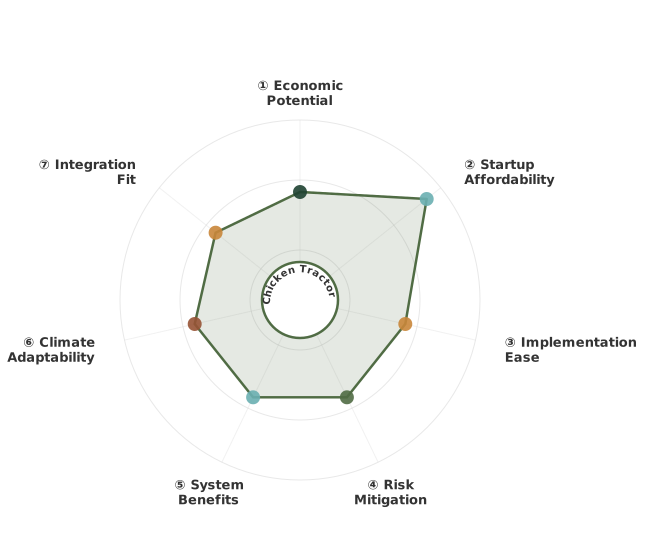
How These Traits Are Calculated
Trait dimensions are ordered clockwise starting from the top of the chart (12 o'clock position):
1. Economic Potential
Financial returns, annual value, and break-even timeline
WHAT: Evaluates financial viability by combining net annual value ($/ha from savings, income, and amortized harvests) with break-even timeline showing when practices pay for themselves.
WHY: Farmers need clear ROI understanding before committing resources. Fast payback (≤3 years) with strong returns (≥$300/ha) enables confident adoption, while long timelines (>10 years) restrict adoption to well-funded operations willing to wait for returns.
HOW: Calculated from net annual value in $/ha and break-even years. Exceptional (≥2.6): fast ROI ≤3 years + high value ≥$300/ha. Typical (1.8-2.5): moderate returns or longer timelines. Limited (<1.8): marginal economics or very long payback >10 years.
2. Startup Affordability
Initial investment costs and financial barrier to entry
WHAT: Measures financial barrier to entry through startup costs for equipment, infrastructure, consulting, and materials. Inverted scoring: lower costs = higher scores = more accessible adoption.
WHY: Affordability determines who can adopt. Low-cost practices (<$250/ha) enable widespread adoption across diverse scales, while high costs (>$2,500/ha) limit adoption to well-capitalized operations, creating barriers that slow regenerative transition.
HOW: Calculated from initial investment parsed from practice content. Inverted scoring: Exceptional (≥2.6): minimal investment <$250/ha. Typical (1.8-2.5): moderate costs $250-2,500/ha. Limited (<1.8): high barrier >$2,500/ha.
3. Implementation Ease
Learning curve and specialized knowledge required
WHAT: Measures how much learning, planning, and specialized knowledge a practice requires. Simpler practices with fewer steps score higher, while complex practices requiring extensive training or specialized resources score lower.
WHY: Complex practices create adoption barriers even when economically viable. Straightforward practices enable faster adoption and broader participation, while those requiring extensive training, timing precision, or specialized equipment limit who can succeed.
HOW: Evaluated by measuring documentation length and identifying complexity markers like location-specific requirements, seasonal timing windows, specialized skills, and dedicated equipment needs. Exceptional (≥2.6): straightforward practices with minimal prerequisites. Typical (1.8-2.5): moderate learning curve with some specialized needs. Limited (<1.8): steep learning curve requiring significant training or resources.
4. Risk Mitigation
Identified financial and ecological risk assessment
WHAT: Evaluates documented risks across financial (investment loss, market volatility) and ecological (crop failure, pest outbreaks) domains. Inverted scoring: fewer risks = higher scores.
WHY: Understanding risk exposure helps farmers make informed decisions. Low-risk practices allow confident implementation, while high-risk practices require careful planning and contingency resources. Risk transparency prevents costly failures.
HOW: Calculated from identified risks in practice content. Inverted scoring: Exceptional (≥2.6): ≤2 risks with manageable severity. Typical (1.8-2.5): 3-5 moderate risks. Limited (<1.8): 6+ risks or severe exposure.
5. System Benefits
How many ways the practice improves your land simultaneously
WHAT: Measures how many aspects of land health improve at once—carbon storage, soil quality, erosion control, water absorption, and biodiversity. Practices that improve multiple areas simultaneously create compounding benefits where each improvement reinforces the others.
WHY: The best practices solve multiple problems at once. For example, addressing erosion simultaneously builds carbon and improves water infiltration, creating a resilient system with positive feedback loops. Single-benefit approaches miss these compound transformation opportunities.
HOW: Evaluated across five key outcomes: carbon sequestration, soil organic matter increase, erosion reduction, water infiltration improvement, and biodiversity enhancement. Exceptional (≥2.6): high carbon storage (>8 t/ha/yr), improvements across 4-5 areas, transformative outcomes. Typical (1.8-2.5): moderate carbon (3-8 t/ha/yr), improvements across 2-3 areas. Limited (<1.8): modest impact (<3 t/ha/yr), single-area focus only.
6. Climate Adaptability
Geographic applicability across Köppen climate zones
WHAT: Evaluates geographic applicability by assessing how many Köppen climate zones successfully support a practice and what adaptation requirements are needed. Measures breadth of climates where farmers can implement with minimal to moderate modifications.
WHY: Universal practices working across diverse climates enable more farmers to adopt regenerative approaches. Practices limited to single climate types (only Mediterranean, only tropical) restrict adoption and slow global transition. Adaptability determines whether a practice serves niche regions or offers broad transformation.
HOW: LLM evaluation of regional success stories, Köppen zone coverage, and adaptation needs. Exceptional (≥2.6): 5+ zones or 4+ climate types, 3+ continents, minimal adaptation. Typical (1.8-2.5): 3-4 zones or 2-3 types, 2 continents, moderate adaptation. Limited (<1.8): 1-2 zones, single region, significant adaptation or highly specialized.
7. Integration Fit
How well this practice combines with others you're doing
WHAT: Measures how well a practice combines with other regenerative practices you might be doing. Some practices work as building blocks that make many other practices easier or more effective, while others work best on their own.
WHY: Practices that combine well with many others create more value on your farm. For example, cover cropping enables no-till, improves grazing, supports crop diversity, and helps water management—making all of them work better together. This helps you build a coherent system rather than juggling disconnected practices.
HOW: Evaluated by identifying which practices combine well and how strong those combinations are. 'Ideally Suited' means strong combinations where practices reinforce each other (practice A makes B easier, while B makes A more effective). 'Adequate' means complementary benefits that work well together. Exceptional (≥2.6): combines well with 6+ practices, serves as a building block. Typical (1.8-2.5): combines with 3-5 practices. Limited (<1.8): 1-2 practices or works best alone.
Going Deeper
1
WHY - The Benefits
Chicken tractors offer a compelling suite of benefits by mechanizing animal impact for focused regenerative outcomes. They transform a common farm animal into a sophisticated tool for soil improvement, pest management, and nutrient cycling, all while integrating into...
Chicken tractors offer a compelling suite of benefits by mechanizing animal impact for focused regenerative outcomes. They transform a common farm animal into a sophisticated tool for soil improvement, pest management, and nutrient cycling, all while integrating into diverse farming systems.
WHY - The Benefits
Chicken tractors offer a compelling suite of benefits by mechanizing animal impact for focused regenerative outcomes. They transform a common farm animal into a sophisticated tool for soil improvement, pest management, and nutrient cycling, all while integrating into...
Chicken tractors offer a compelling suite of benefits by mechanizing animal impact for focused regenerative outcomes. They transform a common farm animal into a sophisticated tool for soil improvement, pest management, and nutrient cycling, all while integrating into diverse farming systems.
Soil Health Benefits
Chicken manure is a rich source of essential nutrients, particularly nitrogen, phosphorus, and potassium, as well as micronutrients and organic matter. When confined within a chicken tractor, these nutrients are deposited directly onto the soil surface in a concentrated form. Unlike broadcast fertilization or stationary poultry operations where manure runoff can be an issue, the mobility of chicken tractors allows for precise placement of fertility. Over a season, areas treated by chicken tractors see enhanced soil organic matter content, typically by 0.5-2% where regularly moved. This organic matter is crucial for improving soil structure, water-holding capacity, and nutrient availability.
The scratching and pecking of chickens, combined with their manure, provide a light form of tillage. This action helps break down existing sod, incorporate organic matter into the topsoil, and aerate the soil surface. This stimulation of microbial activity aids in the decomposition of organic matter and the release of locked-up nutrients, making them available for subsequent crops or pasture regrowth. This process can be particularly beneficial in renovating old pastures or preparing a seedbed for new cover crops or cash crops without the need for heavy machinery.
The regular movement of chicken tractors prevents compaction that can occur with stationary poultry operations. By moving the birds every 1-3 days, they are never in one place long enough to significantly damage soil structure or cause anaerobic conditions. This mobility promotes the health of soil ecosystems, supporting earthworm populations and beneficial soil microbes that contribute to healthy soil structure and nutrient cycling. The targeted fertilization also encourages a flush of microbial activity that can further break down organic matter and improve soil aggregation.
Economic Benefits
The primary economic benefit of chicken tractors is reducing reliance on synthetic fertilizers. By converting manure into a valuable soil amendment, farmers can offset the cost of purchasing nitrogen, phosphorus, and potassium fertilizers. Depending on flock size, manure output, and the price of synthetic fertilizers, savings can range from $50-150 USD equivalent per acre annually. This is achieved by directly applying these nutrients where they are needed most, optimizing their uptake by plants and minimizing losses to the environment.
Chicken tractors can also lead to increased crop yields or improved pasture quality in treated areas. The heightened fertility and organic matter boost can result in stronger plant growth, better water retention, and increased resilience to pests and diseases. This translates to higher productivity from the land, whether measured in cash crops, forage for livestock, or increased resilience in perennial pasture systems. For small-scale farmers, this can significantly improve the profitability and sustainability of their operations.
The initial investment in a chicken tractor is relatively low, particularly if built using salvaged materials or basic woodworking skills. Costs can range from $100-300 USD equivalent for materials and basic hardware, making it an accessible practice for homesteaders and small farms worldwide. This low entry cost, combined with ongoing savings on fertilizer and potentially improved yields, offers a quick return on investment, often within the first 1-2 seasons of use.
While not always the primary goal, chicken tractors can contribute to egg production. By selecting a breed suited for both laying and foraging, farmers can benefit from a steady supply of fresh eggs in addition to the soil improvement aspects. This dual purpose enhances the economic viability of the practice on smaller farms.
Regenerative Systems Fit
Chicken tractors embody the principle of integrating livestock (Principle 5) by strategically using animals to perform specific land management functions. They enhance minimizing soil disturbance (Principle 1) by dispersing the impact of poultry across a wider area, preventing localized over-fertilization and compaction associated with static confinement. The mobility ensures that areas are only subjected to the chickens' presence for short durations before being rested, allowing for pasture or sod recovery.
By concentrating manure and stimulating new growth, the practice contributes to keeping soil covered (Principle 3) and maintaining living roots (Principle 4). The fertilized areas often experience a growth spurt, quickly covering the soil surface once the tractor is moved. This maintains photosynthetic activity and protects the soil from erosion. Furthermore, the act of planting cash crops or cover crops in areas recently managed by chicken tractors directly supports maximizing crop diversity (Principle 2) by preparing a fertile seedbed.
The practice is foundational for small-scale farmers looking to build soil fertility and manage pests organically. It can be a stepping stone for larger operations to begin integrating livestock and understanding the benefits of animal impact without the commitment of larger-scale mobile poultry systems. It provides a tangible, localized method for improving farm biology and reducing external inputs, aligning perfectly with the goals of building resilient, self-sustaining agricultural systems.
Sources behind this view
Videos & Podcasts
-
Utilizes chickens in mobile trailers for rotational grazing every three days to improve soil health by providing manure (nitrogen, phosphorus) and contributing to humus formation. Chickens also clean
-
Details a regenerative poultry system using chickens in agroforestry settings to enhance soil biology and energy transformation. Chickens forage on diverse plants and insects, leading to high-value ha
-
Use poultry (e.g., chickens in tractors) in market gardens for fertility via manure and to produce phytonutrient-rich eggs/meat. This enhances the nutritional value of crops grown in the system.
-
The 'Chicken Tractor on Steroids' system efficiently produces nutrient-rich compost and fertility using chickens, adaptable for urban settings, providing eggs, meat, and high-quality soil amendments.

Community
-
Utilize mobile poultry (chickens/ducks) with electric netting and portable coops to renovate pastures by concentrating droppings and disturbance. Sow diverse seeds (grasses, clovers, grains, amaranth)
Read more (opens in new window) permies.com -
Update on a regenerative chicken system in Kansas: paddocks integrated with food forest successfully grew crops, chickens sustained by garden produce and bugs, reducing bagged feed needs significantly
Read more (opens in new window) permies.com -
Researchers are quantifying the benefits of integrating broiler chickens into organic vegetable rotations using chicken tractors to graze cover crops and deposit manure, aiming to improve soil health
Read more (opens in new window) ucanr.edu -
Chickens are versatile 'enablers of local agriculture,' acting as recyclers, insect controllers, and soil enrichers. Pat Foreman's 'chicken tractor' method transforms waste into fertile soil, a concep
Read more (opens in new window) permies.com
 Research
-
The grass is greener: Farmers' experiences with pastured poultry (opens in new window)
This study found: California pastured poultry farmers cited soil fertility and marketing as key benefits, with indirect profits from savings on fertilizer and pest control being significant. Predation was the main chal
-
Sustainable poultry farming practices: a critical review of current strategies and future prospects. (opens in new window)
This study found: Review of sustainable poultry farming strategies: includes better breeding, alternative feeds (insects, algae), smart tech, waste management, and organic practices to boost animal welfare and environm
-
Soil fertility and crop growth under poultry/crop integration (opens in new window)
This study found: Integrating chickens into crop fields significantly boosted soil fertility and plant growth, with higher nutrients and organic matter observed. Effective for supplementing fertilizers, but phosphorus
-
Integrating pastured meat chickens into organic vegetable production increased nitrogen and microbial biomass with variability in presence of <i>E. coli</i> and <i>Salmonella spp</i> (opens in new window)
This study found: Integrating meat chickens into organic vegetable farms boosted soil nitrogen and microbial activity but raised food safety concerns due to E. coli and Salmonella presence in soil. Careful management i
From the Web
-
Pastured poultry are recommended for holistic grazing systems as a keystone species for ecosystem health, a marketing gateway for red meats, and for their 'flock effect' which improves soil fertility
2
WHERE - Regional Considerations
Chicken tractors are highly adaptable across various climates and regions due to their mobile nature and reliance on fundamental biological processes. Their success depends more on management and available resources than on specific climate types.
Chicken tractors are highly adaptable across various climates and regions due to their mobile nature and reliance on fundamental biological processes. Their success depends more on management and available resources than on specific climate types.
WHERE - Regional Considerations
Chicken tractors are highly adaptable across various climates and regions due to their mobile nature and reliance on fundamental biological processes. Their success depends more on management and available resources than on specific climate types.
Chicken tractors are highly adaptable across various climates and regions due to their mobile nature and reliance on fundamental biological processes. Their success depends more on management and available resources than on specific climate types.
Click Here to Look up your Region if you don't already know it
Temperate Regions (Humid and Dry)
Representative Locations: Midwestern United States, Western Europe (e.g., France, UK), Eastern Europe (e.g., Ukraine), Northeastern China, Southern Australia, New Zealand. Climate Context: Moderate to warm summers, cold winters with distinct seasons. Precipitation varies from moderate to high. USDA Zones 4-7, Köppen Cfb/Cfa/Csa/Csb. Adaptations: In humid temperate regions, ensure adequate drainage and ventilation for the tractor to prevent damp conditions. During colder months, provide insulation and supplemental feed as foraging opportunities decrease. In drier temperate zones, providing shade and ensuring access to water within the tractor's range is crucial during warmer periods.
Arid and Semi-Arid Regions
Representative Locations: Southwestern United States, North Africa (e.g., Morocco, Egypt), Central Asia (e.g., Kazakhstan, Uzbekistan), parts of East Africa (e.g., Kenya, Ethiopia) and Australia. Climate Context: Low and often erratic rainfall, high temperatures, significant diurnal temperature variations. USDA Zones 7-9, Köppen BSh/BSk. Adaptations: Shade is paramount. Construct tractors with solid roofing or allow birds access to shade structures when moved. Consistent water provision is critical; consider integration with portable water tanks or moving tractors near existing water sources. Select drought-tolerant ground cover or resilient pasture species that can recover quickly after rotational grazing by chickens. Manage stocking density to prevent overgrazing of sparse vegetation.
Tropical and Subtropical Regions
Representative Locations: Southeast Asia (e.g., Vietnam, Thailand), Central America (e.g., Costa Rica), South America (e.g., Brazil, Colombia), Sub-Saharan Africa (e.g., Nigeria, South Africa), Southeastern USA, Southern China. Climate Context: High temperatures year-round, high humidity, distinct wet and dry seasons or consistent rainfall. Köppen Af/Am/Aw/Cfa. Adaptations: Focus on ventilation and protection from extreme heat. Lighter-colored roofing materials can help reflect solar radiation. Ensure adequate shade. In wet seasons, manage drainage carefully to prevent muddy conditions within the tractor, which can exacerbate disease. During dry seasons, supplementing forage with grains may be necessary, and consistent access to water is even more critical. Pest pressure (insects, predators) can be higher, requiring robust containment and predator-proofing.
Cold Continental Regions
Representative Locations: Canada, Northern Europe (e.g., Sweden, Finland), Northern Russia. Climate Context: Very short growing seasons, extreme winter cold, hot summers. USDA Zones 2-5, Köppen Dfb/Dfc. Adaptations: Chicken tractors are primarily a tool for the warmer months (spring, summer, early fall). During winter, poultry are typically housed in insulated coops. The light tillage and fertilization can be used in spring to prepare areas for planting once the ground thaws, and in fall to incorporate crop residue or prepare for winter cover crops. Protection from predators and predators remains important.
3
HOW - Implementation Process
The successful use of chicken tractors revolves around a systematic approach to deployment, management, and integration.
The successful use of chicken tractors revolves around a systematic approach to deployment, management, and integration.
HOW - Implementation Process
The successful use of chicken tractors revolves around a systematic approach to deployment, management, and integration.
The successful use of chicken tractors revolves around a systematic approach to deployment, management, and integration.
Prerequisites
- ** Flock Composition**: A small flock of 5-20 birds (laying hens or meat birds) is ideal for backyard or small-farm scale. Larger flocks will require larger or multiple tractors.
-
** Tractor Design**: A functional tractor must be:
- Mobile: Easy to move by hand. Size and weight should be manageable for the intended operators.
- Secure: Predator-proof fencing (fine mesh) and secure door/lid to keep birds in and predators out.
- Weather-Resistant: Roof for shade and rain protection.
- Ground-Contact: Allowing birds to forage and enabling manure to reach the soil.
- Adequate Space: Minimum 0.5-1 m² (5-10 sq ft) per bird for comfort and to enable manure distribution.
-
** Water Source**: A portable waterer that can be refilled and moved with the tractor, or a plan to move the tractor to a water source every 1-2 days.
- ** Feed**: Supplemental feed will be necessary, especially if foraging is limited or during colder months.
- ** Site Selection**: Areas with desirable forage (grasses, legumes, insects) or areas needing soil amendment (e.g., after harvest, weak pasture).
Phase 1: Tractor Construction and Flock Acquisition
Construction:
- Materials: Utilize lumber, wire mesh (hardware cloth or chicken wire), roofing material (corrugated metal, wood, tarp), wheels or skids for mobility, and hardware (hinges, latches).
- Dimensions: A common size is 1.2m x 2.5m (4ft x 8ft). This can house 10-20 hens and is manageable for moving.
- Features: Integrate a small roosting bar, a feeder, and a covered waterer. Ensure ventilation is adequate to prevent heat buildup.
- Cost: USD equivalent $100-300 for materials. In regions with lower material and labor costs, DIY can be substantially cheaper. International sourcing of local timber or recycled materials is feasible.
Flock Acquisition:
- Source: Purchase chicks or pullets from local hatcheries, breeders, or farms.
- Health: Select healthy birds known for good foraging ability and temperament. Breeds like Rhode Island Reds, Plymouth Rocks, or Australorps are common choices for dual-purpose (eggs and foraging).
- Preparation: Ensure birds are at least 6-8 weeks old before introducing them to the tractor and moving to pasture, as they are more resilient to weather and predators.
Phase 2: Initial Pasture Deployment and Management
Site Selection: Choose an area with healthy, actively growing vegetation. Avoid overly wet or steeply sloped areas for initial placement. Consider areas that have been recently mowed or are due for renovation.
Placement: Position the tractor on the selected site. Ensure the door/access is secured. Provide fresh feed and water. Allow birds a day or two to acclimate inside the tractor before the first move.
First Move (After 1-3 days):
- Timing: Move in the cooler parts of the day (early morning or late evening) to reduce stress on the birds and operators.
- Method: Lift or pull the tractor to a new adjacent location. The goal is to provide fresh foraging and prevent over-concentration of manure.
- Frequency: Move every 1-3 days, depending on the density of birds, the growth rate of the forage, and the accumulation of manure. Overcrowding or leaving too long results in overgrazing and excessive mud.
Daily Management:
- Water & Feed: Refill waterers daily. Provide supplemental feed as needed, dispersed within the tractor to encourage foraging.
- Observation: Check birds for health and contentment. Ensure the tractor is secure and functioning properly.
- Manure Check: Observe manure accumulation. If it's becoming excessively wet or building up too quickly, reduce the move interval or increase flock size slightly if the tractor allows.
Phase 3: Rotating Management and Rotation Planning
Rotation Strategy: Maintain a systematic rotation across the pasture or field. Plan moves to cover the entire area over a period of weeks. The duration of occupancy for any single spot should be short (1-3 days).
Rest Periods: Crucially, allow significant rest periods for the soil and vegetation in areas where the tractor has been. A minimum of 3-4 weeks, and ideally 6-8 weeks, is needed for pasture species to recover, regrow, and for the soil to benefit from the applied nutrients. Longer rest periods are beneficial in drier climates or during slower growth seasons. This rest period ensures that the foraging and fertilization are regenerative, not extractive.
Crop Integration: After chickens have been moved off an area, the fertilized ground can be tilled (lightly, perhaps with a hand fork or tiller if desired) and planted with a garden crop or cover crop within a week or two. The residual fertility will give plants a strong start.
Monitoring and Adjustment: Continuously monitor the vegetation's response. If plants are overgrazed or bare spots begin to appear, move the tractor more frequently or reduce flock size. If manure is not being adequately distributed, the birds may need more space within the tractor or more foraging material to peck at.
Transition Timeline & Phase-Out Strategy
Chicken tractors are generally considered a foundational practice or a supporting practice for regenerative systems and do not typically require a "phase-out" in the same way a transition input might. The goal is to integrate them effectively into a whole-farm system.
However, if a farm is transitioning from conventional management to a regenerative system that includes chicken tractors, the "phase-out" refers to the eventual elimination of non-regenerative practices that the chicken tractor helps to replace:
- Reduced Synthetic Fertilizers: As soil fertility improves from manure application and improved decomposition, farmers can gradually reduce, and eventually eliminate, synthetic nitrogen, phosphorus, and potassium fertilizers. The timeline for this reduction is typically 2-5 years, depending on soil health improvement and the scale of chicken tractor use, alongside other regenerative practices like cover cropping and compost application.
- Reduced Pesticide/Herbicide Use: As the chickens' foraging and pest control capabilities improve, the need for chemical pesticides and herbicides can decrease. This is a more gradual process, often taking 3-7 years as the farm's ecosystem becomes more balanced and resilient.
The chicken tractor itself is not phased out; rather, it becomes a standard, regenerative tool within the diversified farm operation. The "success" of the transition is marked not by discontinuing chicken tractor use, but by observing the land's enhanced fertility, improved soil structure, decreased pest pressure, and reduced reliance on external inputs.
Sources behind this view
Videos & Podcasts
-
Rotational grazing with solar fencing and chicken tractors is key for integrating animals. Daily moves for meat birds ensure pasture rest (30-60 days). Chickens build pasture by scratching, eating wee
-
Utilizes chickens in mobile trailers for rotational grazing every three days to improve soil health by providing manure (nitrogen, phosphorus) and contributing to humus formation. Chickens also clean
-
Primal Pastures scales pasture-raised chicken production using 500-bird capacity metal coops moved daily on irrigated pastures, emphasizing a 'bugs not drugs' approach. They integrate Dorper sheep for
-
Utilize a 'chicken tractor on steroids' system with waste streams for feed to raise meat chickens efficiently, producing valuable compost as a byproduct and eliminating feed costs.

Community
-
Update on a regenerative chicken system in Kansas: paddocks integrated with food forest successfully grew crops, chickens sustained by garden produce and bugs, reducing bagged feed needs significantly
Read more (opens in new window) permies.com -
Chicken tractors are mobile houses that mineralize, fertilize, and lightly till soil while controlling pests, providing healthy chickens for eggs or meat. The book by Foreman and Lee offers detailed g
Read more (opens in new window) permies.com -
A chicken tractor is a mobile house for chickens used to fertilize soil, control pests, and provide healthy poultry. The book 'The Chicken Tractor' by Lee and Foreman details this practice.
Read more (opens in new window) permies.com -
Compares chicken tractor methods, favoring frequent moves for better feed and hygiene (2/10 feed value, 7/7 hygiene), while criticizing vegetation elimination ( -2/10 feed value). Discusses forum conf
Read more (opens in new window) permies.com
4
Know the Debate
Chicken tractors offer a versatile regenerative tool, adept from backyard gardens to small farms, by integrating poultry for targeted soil fertiliz...
Know the Debate
Chicken tractors offer a versatile regenerative tool, adept from backyard gardens to small farms, by integrating poultry for targeted soil fertiliz...
Chicken tractors offer a versatile regenerative tool, adept from backyard gardens to small farms, by integrating poultry for targeted soil fertilization and pest management. Their effectiveness, however, varies significantly with scale and management intensity. While immediate benefits like pest control and localized fertility are observable within weeks, substantial improvements in soil structure and health typically manifest over multiple seasons of consistent use. Costs are generally low, but labor for daily moves and proper predator-proofing are crucial investments, varying widely depending on regional material costs and flock size.
What's the main soil benefit of chicken tractors: scratching or fertilization?
Fertilization is primary mechanism
Academic research highlights that chicken manure significantly boosts soil fertility by providing essential nutrients like nitrogen and phosphorus, leading to increased organic matter and improved plant growth. This direct input of fertility is seen as the main driver of soil improvement.
Sources behind this view
Sources behind this view
Research
-
Soil fertility and crop growth under poultry/crop integration (opens in new window)
This study found: Integrating chickens into crop fields can significantly boost soil fertility and improve plant growth, according to a study on two organic farms. Fields recently used by free-ranging chickens showed higher levels of essential soil nutrients like nitrogen, phosphorus, and potassium, along with increased organic matter and better soil structure, compared to fields without chickens. This improved soil health led to noticeably larger and taller sunflowers and beans grown in the chicken-fertilized soil. The findings suggest that pastured poultry can be a valuable tool for replacing or supplementing synthetic fertilizers, though more research is needed on managing phosphorus levels and ensuring manure is spread evenly.
From the Web
-
Pastured poultry improve soil health by spreading manure, increasing organic matter, and fertility. Chickens following cattle consume fly larvae. Optimal planting for vegetables is 14 days after poultry move across a plot.
Scratching and fertilization are both crucial
Field practitioners emphasize that a chicken tractor's benefit comes from both the birds' concentrated droppings and their physical actions. Their scratching loosens soil, breaks up crusts, and incorporates organic matter, complementing the immediate nutrient boost.
Sources behind this view
Sources behind this view
Videos & Podcasts
-
Chickens were initially used via a 'chicken tractor' method to build soil fertility on sandy land, dramatically improving it. They also serve as valuable compost creators and biomass recyclers, turning waste into valuable soil amendments.
-
Chicken tractors are portable coops for regenerative poultry farming, enabling rotational grazing for fresh forage, pest control, and soil fertilization with chicken manure.
-
Utilizes chicken tractors for land preparation, where poultry till soil and fertilize. The prepared land is then sown with a diverse cover crop mix (field peas, snow peas, fenugreek, mustard, kale, clover, alfalfa) to enhance soil health.
Making Sense of the Differences
The main soil benefit of chicken tractors stems from both their concentrated fertilization and their physical actions. While manure provides essential nutrients and organic matter, the hens' scratching can also loosen soil, break crusts, and incorporate organic matter, especially on sod-bound or compacted ground. The relative importance of each mechanism may depend on the starting soil condition and the specific management goal.
How effective are chicken tractors on large vs. small farms?
Highly effective in gardens & small farms
Chicken tractors excel in small-scale settings like backyard gardens or market garden plots where manual movement is feasible. They allow for precise fertilization and pest control, and their benefits are readily apparent in these controlled environments.
Sources behind this view
Sources behind this view
Videos & Podcasts
-
Integrate young chickens into gardens using chicken tractors, moving them daily/weekly to fertilize and improve soil without nutrient concentration. Consider food safety (90/120-day rule) and predator protection for pullets.

-
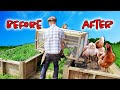
Details using a 40x8 ft chicken tractor in yards or garden beds for about two weeks to till soil, incorporate manure and food scraps, and prepare the ground for planting.
From the Web
-
Provides instructions for building portable chicken tractors ('folds'/'arks') with specific dimensions (54" W x 8' L, A-frame housing) and materials (treated 2x4s, plywood, 1x2 wire mesh). Recommends 4-6 sq ft per bird for pasture integration, insect consumption, and manure breakdown, while ensuring a full laying ration.
-
Establish pastured poultry by assessing goals, choosing products/markets, budgeting, selecting breeds (e.g., Cornish Cross, Rhode Island Red), designing mobile housing and pastures, managing nutrition, and maintaining flock health with predator protection. Direct marketing and resource recycling are key for economic and environmental sustainability.
Scalability challenging for large farm operations
Field experience indicates that scaling chicken tractors to large farms (hundreds of acres, thousands of birds) is logistically challenging due to daily labor requirements for movement and predator protection. While possible, it often requires different systems or specialized designs.
Sources behind this view
Sources behind this view
Videos & Podcasts
-
Describes moving chickens with a portable 'chick show' into a market garden plot to break pest cycles and add fertility, detailing the setup of electric poultry netting for containment and predator protection.
-
Utilizes chickens in mobile trailers for rotational grazing every three days to improve soil health by providing manure (nitrogen, phosphorus) and contributing to humus formation. Chickens also clean up crop residue and graze green manures, reducing reliance on external inputs and supporting a low-input farming system.
Research
-
Introducing Chicken Farming into Traditional Ruminant‐Grazing Dominated Production Systems for Promoting Ecological Restoration of Degraded Rangeland in Northern China (opens in new window)
This study found: A study in degraded rangelands in northern China found that free-range chicken farming can significantly improve vegetation growth and soil health compared to traditional livestock grazing. Raising chickens at a moderate density (about 333 birds per hectare) boosted plant growth and ground cover by over 80% compared to just grazing animals. This chicken farming approach also improved soil by increasing organic matter, total nitrogen, available nitrogen, and available phosphorus. The benefits of chicken farming on the land were greater with lower stocking densities. Economically, chicken farming provided about twice the net income per hectare compared to livestock grazing, suggesting a promising model for restoring degraded lands and supporting local families.
Making Sense of the Differences
Chicken tractors are most effective and manageable for backyard gardens and small-scale market farms where manual movement is feasible. For larger ranch or farm operations, the daily labor required for moves becomes a significant challenge, limiting broad scalability. While principles of managed poultry impact can be applied to larger systems (e.g., with egg mobiles or larger trailers), the traditional chicken tractor concept is best suited for smaller footprints.
How quickly do chicken tractors improve soil health?
Immediate benefits and fertilization within weeks
The direct impact of chicken tractors provides immediate fertilization from droppings and pest control from foraging. Farmers observe noticeable improvements in weed suppression and crop vigor in treated areas within weeks of application.
Sources behind this view
Sources behind this view
Videos & Podcasts
-
Chicken tractors are portable coops for regenerative poultry farming, enabling rotational grazing for fresh forage, pest control, and soil fertilization with chicken manure.
-
Integrate young chickens into gardens using chicken tractors, moving them daily/weekly to fertilize and improve soil without nutrient concentration. Consider food safety (90/120-day rule) and predator protection for pullets.
Research
-
Integrating pastured meat chickens into organic vegetable production increased nitrogen and microbial biomass with variability in presence of <i>E. coli</i> and <i>Salmonella spp</i> (opens in new window)
This study found: A three-year study looked at adding meat chickens to organic vegetable farms to see how it affected soil and food safety. They compared fields with just vegetables and cover crops (control) to fields where chickens were added either before or after the cover crops. Adding chickens significantly increased soil nitrogen (nitrates) and phosphorus, especially when chickens were rotated into the fields. Soil microbial activity (measured as microbial biomass carbon) also increased by about 25% in the fields with chickens. This suggests chickens can help recycle nutrients and improve soil health. However, the study also found harmful bacteria like E. coli and Salmonella in the soil, though not on the spinach crop itself. This means farmers need to be very careful about food safety when integrating chickens into vegetable production, treating fields as if raw manure has been applied. While chickens can reduce the need for off-farm fertilizers, their feed is often an external input, and more research is needed on optimal timing and stocking densities to maximize benefits and minimize risks.
Lasting soil regeneration takes multiple seasons
Long-term, significant soil health improvements like increased organic matter and enhanced soil structure are typically observed after consistent application over multiple seasons or years. This allows residual fertility to build and microbial communities to flourish.
Sources behind this view
Sources behind this view
Videos & Podcasts
-
Utilizes chickens in mobile trailers for rotational grazing every three days to improve soil health by providing manure (nitrogen, phosphorus) and contributing to humus formation. Chickens also clean up crop residue and graze green manures, reducing reliance on external inputs and supporting a low-input farming system.
Research
-
Introducing Chicken Farming into Traditional Ruminant‐Grazing Dominated Production Systems for Promoting Ecological Restoration of Degraded Rangeland in Northern China (opens in new window)
This study found: A study in degraded rangelands in northern China found that free-range chicken farming can significantly improve vegetation growth and soil health compared to traditional livestock grazing. Raising chickens at a moderate density (about 333 birds per hectare) boosted plant growth and ground cover by over 80% compared to just grazing animals. This chicken farming approach also improved soil by increasing organic matter, total nitrogen, available nitrogen, and available phosphorus. The benefits of chicken farming on the land were greater with lower stocking densities. Economically, chicken farming provided about twice the net income per hectare compared to livestock grazing, suggesting a promising model for restoring degraded lands and supporting local families.
From the Web
-
Pastured poultry improve soil health by spreading manure, increasing organic matter, and fertility. Chickens following cattle consume fly larvae. Optimal planting for vegetables is 14 days after poultry move across a plot.
Making Sense of the Differences
Chicken tractors provide both immediate and long-term soil benefits. Within weeks, their managed manure deposition offers localized fertilization and pest control in treated areas. However, systemic soil health regeneration—such as significant increases in organic matter and soil structure improvement—is a process that typically occurs over multiple seasons (2-5 years) of consistent management, allowing residual fertility to build and microbial communities to establish.
5
HOW MUCH - Costs & Investment
Note: Costs shown in USD equivalent; multiply by local labor and material cost indices for your region. Labor costs vary significantly internationally.
Note: Costs shown in USD equivalent; multiply by local labor and material cost indices for your region. Labor costs vary significantly internationally.
HOW MUCH - Costs & Investment
Note: Costs shown in USD equivalent; multiply by local labor and material cost indices for your region. Labor costs vary significantly internationally.
Note: Costs shown in USD equivalent; multiply by local labor and material cost indices for your region. Labor costs vary significantly internationally.
Note: All costs are based on recent US economic data (2024–2026) and may vary substantially by region based on local labor rates, material costs, and regulatory requirements.
Capital Investment: Infrastructure and Construction
The primary capital investment for chicken tractor integration is the mobile unit itself. For small-scale operations under 50 acres (20 ha), the capital expenditure ranges from $135 to $275 per unit. These units often utilize lightweight cedar or treated pine framing, 19-gauge poultry netting, and corrugated metal or UV-resistant polycarbonate roofing to balance cost with predator deterrence. Operators at this scale frequently perform DIY construction to minimize overhead, relying on recycled materials to keep their per-acre investment contribution towards the lower end of the $135–$677 range.
Mid-size operations managing 50–500 acres (20–202 ha) often scale up to more durable, modular designs that accommodate larger flocks. These units, which prioritize longevity and ease of mobility, require investments between $300 and $550 per unit. At this scale, hardware cloth (16-gauge or better) becomes standard to prevent heavy losses from raccoons, foxes, and raptors, significantly reducing long-term replacement costs. These tractors often incorporate pneumatic all-terrain tires and integrated, automated weather-proofing to reduce daily labor requirements by 15–20% compared to static or light-grade models.
Large-scale farming operations (500+ acres) that utilize specialized, heavy-duty industrial mobile units encounter capital costs between $550 and $677 per unit. These systems often utilize aluminum or galvanized steel skeletons to withstand the physical stress of being moved across massive acreage daily. Investment at this level includes additional integrated water delivery systems (pressure-regulated nipple drinkers), solar-powered electric fencing attachments for expanded nocturnal perimeter security, and high-tensile hardware that prevents the "sag and tear" common in entry-level materials.
Operational Expenditure: Maintenance, Feed, and Labor
Ongoing operational costs are heavily tied to the scale of the rotation and the input strategy utilized by the farmer. Small operations typically manage their working capital between $30 and $60 per month, accounting for supplement feed, water maintenance, and daily biosecurity protocols. At this scale, labor represents a significant "hidden" cost, typically consuming 15–25 minutes of daily personnel time for herd relocation and enclosure sanitation.
In mid-size operations, economies of scale allow for bulk feed purchasing, which stabilizes monthly operational expenditures at $75–$135 per month. The focus here shifts from basic care to intensive nutrient management, requiring investment in supplemental minerals to ensure that the poultry effectively mineralize the soil. For large-scale 500+ acre operations, monthly operational costs range from $150 to $250. This higher expenditure is driven by the necessity of high-capacity water systems, advanced supplemental electrolytes during heat stress, and the logistical labor cost associated with managing multiple satellite units across vast terrain.
Additionally, every operation must account for the consistent acquisition of inputs that replace synthetic fertilizers. For farms utilizing these units to manage soil health, there is an equivalent fertilizer value provided by the poultry excrement ranging from $206 to $620 per acre ($509–$1,532/ha). This benefit offsets the high capital cost, ensuring that even systems on the higher end of the $135–$677 investment range find long-term economic reconciliation.
Most Spend: The middle 60% of US-based regenerative practitioners typically spend between $275 and $525 per tractor for mid-tier, professional-grade units that balance durability with mobility.
Why the Range?: The primary variance is driven by the choice of frame materials (wood versus galvanized steel), the choice of predator protection, and whether the labor is manual or augmented with mechanical pull-systems. Increased investment in high-tensile mesh and puncture-proof pneumatic wheels consistently pushes costs to the upper bound of the $677 range but decreases depreciation costs over the first 5 years of operation.
Sources behind this view
Videos & Podcasts
-
Primal Pastures scales pasture-raised chicken production using 500-bird capacity metal coops moved daily on irrigated pastures, emphasizing a 'bugs not drugs' approach. They integrate Dorper sheep for
-
Detailed financial analysis of pastured poultry shows economies of scale are crucial for profitability, targeting $50/hour labor and 2x money factor. Specific costs, pricing ($4.99/lb whole chicken),
![Thumbnail for Earn $10000 an Acre Raising Pastured Poultry [PROFIT not GROSS]](/static/thumbnails/Ej-qyb6GrOA.jpg)
-
Details managing chickens in pasture tractors, including feed/water needs (14-15 lbs feed/bird, 15-20% forage diet), using a free tracking sheet for profitability, and securing tractors with firewood.

-
Pastured meat chickens offer high profitability (€15-€20/bird) and rapid scaling due to a 7-8 week cycle. On-farm slaughtery, built affordably, processes 5-10k birds on 3-3.5 hectares, improving soil
Community
-
Discusses Joel Salatin's chicken tractor method, noting profitability requires large scale (20k birds for $100k income) and significant expenses like feed and labor. Land constraints and licensing are
Read more (opens in new window) permies.com -
Discusses financial viability of chicken farming using Joel Salatin's methods, with estimated $5/bird profit. Key factors include land, labor, licensing, and scale. Compliance costs and selling whole
Read more (opens in new window) permies.com -
Provides plans for building 'Stress Free Chicken Tractors' for pastured broilers, addressing predation, daily moves, and ease of use. Includes detailed instructions, materials lists, and cost breakdow
Read more (opens in new window) smallfarms.cornell.edu -
New England small-scale broiler enterprises using pasture-raised methods and mobile coops can achieve higher profitability per bird than large operations due to strong local demand and premium pricing
Read more (opens in new window) smallfarms.cornell.edu
Research
-
The grass is greener: Farmers' experiences with pastured poultry (opens in new window)
This study found: California pastured poultry farmers cited soil fertility and marketing as key benefits, with indirect profits from savings on fertilizer and pest control being significant. Predation was the main chal
From the Web
-
Pastured poultry production requires specific housing like portable pens, colony houses, and chicken tractors. Brooders, efficient feed/water systems, and feed options (including soy-free and organic)
-
Establish pastured poultry by assessing goals, choosing products/markets, budgeting, selecting breeds (e.g., Cornish Cross, Rhode Island Red), designing mobile housing and pastures, managing nutrition
-
Start-up costs for small-scale poultry include mobile/stationary coops, feeders, waterers, fencing, incubators, brooders, and transport crates. Sourcing chicks, ducklings, goslings, and turkey poults
-
Pastured poultry operations require careful economic planning, utilizing budget tools for profitability estimation. Starting small (around 1,000 birds) and gaining experience over five years is crucia
6
REWARDS AND RISKS - Economics & Risk Factors
Economic Scenarios
Economic Scenarios
REWARDS AND RISKS - Economics & Risk Factors
Economic Scenarios
Economic Scenarios
Economic Scenarios
The economic viability of chicken tractors is defined by their ability to provide high-value protein yields while simultaneously acting as biological fertilizer spreaders.
- Best Case Scenario: A producer invests $350 in a customized, high-durability tractor. Through intensive daily rotation on high-quality pasture, the flock achieves maximum foraging efficiency, resulting in a net income potential of $163 per acre ($403/ha). In this setting, the tractor pays for itself within 12 months through a combination of premium egg sales and total elimination of synthetic nitrogen applications, which save the farm $620 per acre ($1,532/ha) in annual input costs.
- Typical Case Scenario: The average operator spends approximately $450 on a sturdy mid-size unit. With consistent management, the system returns a net income of $108 per acre ($267/ha). The labor investment of 15 minutes per move is balanced by the recovery of pasture sod, which reduces the need for external herbicide and seed interventions. The breakeven point is historically achieved by the 18th month, following the peak of the second production season.
- Worst Case Scenario: Inadequate site selection—resulting in extreme compaction or exposure to high-pressure predator corridors—leads to a net income deficit. If equipment failure results in a 15% loss of flock assets, the net income potential drops to $54 per acre ($133/ha). This outcome highlights that the system is only as profitable as it is mobile; failure to rotate the unit daily leads to pathogen accumulation, which forces costly biosecurity interventions that negate all potential fertilizer savings.
Market Factors and Risk Mitigation
Profitability is sensitive to fluctuations in grain commodity prices, which can sway feed costs by 12–18% annually. To mitigate this volatility, practitioners should integrate on-farm forage production into the tractor placement schedule, reducing reliance on conventional pelleted feed by up to 20%. Regarding infrastructure, every $100 spent on construction should see an additional $15–$25 allocation for reinforcement hardware; this ratio reduces net financial risk from predator loss by 40%. Simple design modifications, such as the installation of lightweight tension cables, can reduce daily move labor by 10 minutes per unit, lowering the total human-labor expenditure by approximately $800 annually for a medium-sized flock.
Transition Period Risks
While chicken tractors transition soil biology rapidly, managers experience a 3-month "operational learning curve." Productivity often dips by 10–12% as the flock acclimates to the rotational schedule and the local forage profile. This period is characterized by higher labor hours as the manager optimizes the "chore route." Farmers mitigate this by selecting a manageable flock size for the first 90 days, avoiding equipment saturation until the rotational rhythm is firmly established. Recovery to peak productivity typically occurs by month 5, once the pasture response to the manure becomes visible, providing a clear visual and economic return on the initial investment.
Sources behind this view
Videos & Podcasts
-
Details managing chickens in pasture tractors, including feed/water needs (14-15 lbs feed/bird, 15-20% forage diet), using a free tracking sheet for profitability, and securing tractors with firewood.
-
Primal Pastures scales pasture-raised chicken production using 500-bird capacity metal coops moved daily on irrigated pastures, emphasizing a 'bugs not drugs' approach. They integrate Dorper sheep for
-
Utilize a 'chicken tractor on steroids' system with waste streams for feed to raise meat chickens efficiently, producing valuable compost as a byproduct and eliminating feed costs.
-
Cluster cluck design prioritizes animal containment, durability (20-year lifespan), and ease of use, with economic viability achieved through multi-species enterprise stacking and integration into cor
Community
-
Guidance on broiler chicken tractors: a 4x8 ft tractor is suitable for 10 birds, requiring daily moves for fresh forage and manure management. Nesting boxes are unnecessary for broilers but essential
Read more (opens in new window) permies.com -
Provides plans for building 'Stress Free Chicken Tractors' for pastured broilers, addressing predation, daily moves, and ease of use. Includes detailed instructions, materials lists, and cost breakdow
Read more (opens in new window) smallfarms.cornell.edu -
Discusses financial viability of chicken farming using Joel Salatin's methods, with estimated $5/bird profit. Key factors include land, labor, licensing, and scale. Compliance costs and selling whole
Read more (opens in new window) permies.com -
Discusses Joel Salatin's chicken tractor method, noting profitability requires large scale (20k birds for $100k income) and significant expenses like feed and labor. Land constraints and licensing are
Read more (opens in new window) permies.com
7
COMPATIBLE PRACTICES - Integration Opportunities
Chicken tractors are highly compatible with numerous regenerative agriculture practices, amplifying their benefits and contributing to a more resilient, integrated system.
Chicken tractors are highly compatible with numerous regenerative agriculture practices, amplifying their benefits and contributing to a more resilient, integrated system.
COMPATIBLE PRACTICES - Integration Opportunities
Chicken tractors are highly compatible with numerous regenerative agriculture practices, amplifying their benefits and contributing to a more resilient, integrated system.
Chicken tractors are highly compatible with numerous regenerative agriculture practices, amplifying their benefits and contributing to a more resilient, integrated system.
Cover Cropping
- Integration: Move chicken tractors over established cover crops before they are terminated for planting cash crops, or use them to "till" and fertilize sod for new cover crop establishment.
- Synergy: Chickens forage on cover crop seeds, insects, and emerging growth, while their manure fertilizes the next planting. This accelerates nutrient cycling and seedbed preparation.
Integrated Pest Management (IPM)
- Integration: Deploy chicken tractors in vegetable gardens or orchards to graze down insect pests (e.g., tomato hornworms, slugs, grasshoppers) and weed seeds.
- Synergy: Chickens act as a biological control agent, reducing the need for chemical pesticides. Their foraging can also help manage weed pressure in the early stages of crop or pasture establishment.
Small-Scale Livestock Integration
- Integration: Chicken tractors are a primary tool for integrating poultry into diverse small farm systems. They can be moved in rotation with other poultry or livestock, breaking pest cycles and distributing fertility.
- Synergy: Allows for diversified income streams and a more robust, self-fertilizing farm ecosystem. The birds benefit from fresh forage, and the land benefits from their managed impact.
Rotational Grazing
- Integration: Use chicken tractors to "pre-loosen" and fertilize sod just before or after a section is rested from larger livestock grazing. Or, move tractors through aftermath of larger herds.
- Synergy: Chickens can pick over droppings from cattle or sheep, eating fly larvae and parasites, thus helping to break pest cycles for larger animals. Their fertilization complements the resting period of the pasture.
Composting
- Integration: Chicken tractor manure can be collected and added to compost piles to speed decomposition and enrich the compost.
- Synergy: Provides a high-nitrogen input to carbon-rich compost materials, creating a balanced, nutrient-dense fertilizer for broader farm application.
No-Till Farming
- Integration: Use chicken tractors to prepare beds for no-till planting, especially for gardens or smaller vegetable plots where light tillage is acceptable. They can also be used to fertilize overwintered cover crops before they are crimped or rolled for no-till.
- Synergy: The manure's nutrients and organic matter improve soil structure, making it more receptive to no-till methods and enhancing the biology that supports a no-till system.
The synergistic benefits of combining chicken tractors with other regenerative practices are significant. They provide a low-cost, high-impact method to improve fertility, manage pests, and enhance soil biological activity, contributing to a more closed-loop, resilient farm system. They prepare the ground, fertilize it, and provide a valuable product (eggs) all at once, reducing reliance on external inputs and building long-term soil health.
Sources behind this view
Videos & Podcasts
-
The Regenerative Agriculture Alliance integrates poultry into silvopasture systems, using chickens to fertilize trees and improve soil health, leading to enhanced nutrient cycling, higher yields (e.g.
-
Use poultry (e.g., chickens in tractors) in market gardens for fertility via manure and to produce phytonutrient-rich eggs/meat. This enhances the nutritional value of crops grown in the system.
-
Utilizes chickens in mobile trailers for rotational grazing every three days to improve soil health by providing manure (nitrogen, phosphorus) and contributing to humus formation. Chickens also clean
-
Rotational grazing with solar fencing and chicken tractors is key for integrating animals. Daily moves for meat birds ensure pasture rest (30-60 days). Chickens build pasture by scratching, eating wee
Community
-
Update on a regenerative chicken system in Kansas: paddocks integrated with food forest successfully grew crops, chickens sustained by garden produce and bugs, reducing bagged feed needs significantly
Read more (opens in new window) permies.com -
Proposes a 10-acre system of pastured poultry and heirloom tomatoes using chicken tractors for fertilization and weed control, with detailed planting, management, and conservative profit projections.
Read more (opens in new window) permies.com -
Researchers are quantifying the benefits of integrating broiler chickens into organic vegetable rotations using chicken tractors to graze cover crops and deposit manure, aiming to improve soil health
Read more (opens in new window) ucanr.edu -
Offers three alternatives to free-ranging chickens: chicken tractors, rotational paddocks, and composting coops, emphasizing carbon integration to manage manure and improve soil health, suitable for h
Read more (opens in new window) permies.com
Research
-
Soil fertility and crop growth under poultry/crop integration (opens in new window)
This study found: Integrating chickens into crop fields significantly boosted soil fertility and plant growth, with higher nutrients and organic matter observed. Effective for supplementing fertilizers, but phosphorus
-
Integrating pastured meat chickens into organic vegetable production increased nitrogen and microbial biomass with variability in presence of <i>E. coli</i> and <i>Salmonella spp</i> (opens in new window)
This study found: Integrating meat chickens into organic vegetable farms boosted soil nitrogen and microbial activity but raised food safety concerns due to E. coli and Salmonella presence in soil. Careful management i
-
The grass is greener: Farmers' experiences with pastured poultry (opens in new window)
This study found: California pastured poultry farmers cited soil fertility and marketing as key benefits, with indirect profits from savings on fertilizer and pest control being significant. Predation was the main chal
-
Sustainable poultry farming practices: a critical review of current strategies and future prospects. (opens in new window)
This study found: Review of sustainable poultry farming strategies: includes better breeding, alternative feeds (insects, algae), smart tech, waste management, and organic practices to boost animal welfare and environm