
Complementary Grazing
Complementary grazing is the practice of grazing two or more different species of livestock, or livestock and wildlife, together on the same pasture. This strategic combination leverages the varied grazing habits of each animal type to utilize forage more completely, improve pasture health, and enhance overall ecosystem function on farms and ranches.
Read More: Complete Description
Complementary grazing, often called mixed-species grazing, involves integrating different types of livestock—such as cattle and sheep, or cattle and goats, or even poultry and ruminants—onto the same pasture area for their grazing periods. The core principle is that various species have distinct preferences and physical adaptations for consuming different plant species and parts of plants. For example, cattle are bulk grazers, preferring mature grasses, while sheep are more selective grazers, preferring broadleaf plants and short, tender grass shoots. Goats are browsers, adept at eating woody brush and forbs. Wildlife species, like native ungulates, also have unique foraging habits that can be mimicked.
By strategically combining these animals, land managers can achieve a more holistic and balanced utilization of available forage. Instead of one species preferentially grazing certain plants, leading to overgrowth of less preferred species and potential weed invasion, a mixed-species approach can lead to a more uniform grazing impact. This uniform impact encourages a more diverse and resilient pasture sward. For instance, combining cattle and sheep can reduce the dominance of aggressive grasses, promote the growth of beneficial legumes, and suppress unwanted weeds that cattle might ignore but sheep will readily consume.
From a regenerative agriculture perspective, complementary grazing directly supports several key principles when implemented thoughtfully. It significantly enhances Integrate Livestock (Principle 5) by using animal diversity strategically to build soil health and cycle nutrients more effectively than single-species grazing. By optimizing forage utilization and encouraging plant diversity, it supports Maximize Crop Diversity (Principle 2) above and below ground, as a more diverse plant community fosters a more complex soil microbial ecosystem. When managed to ensure adequate rest periods for pasture regrowth, it helps Keep Soil Covered (Principle 3) and Maintain Living Roots (Principle 4) by promoting perennial plant health and continuous growth. If implemented to avoid overgrazing and compaction, it also aligns with Minimize Soil Disturbance (Principle 1).
The practice is often considered contextual or a transitional practice, depending on its implementation. If used solely to maximize animal production without regard for forage diversity or soil health, it can be extractive. However, when aimed at improving pasture health, increasing biodiversity, and enhancing ecological function, it becomes regenerative. For farms transitioning from conventional grazing, complementary grazing can be a powerful stepping stone. It allows for continued livestock income while enhancing landscape health, preparing the land for more intensive regenerative practices and reducing reliance on external inputs.
Research has shown that incorporating species with different grazing habits can lead to significant improvements in pasture composition and productivity. For instance, studies in the United States and Australia have documented reduced weed infestations and improved pasture quality when sheep followed cattle. In Europe, traditional dehesa systems in Spain and Portugal have long integrated cattle, sheep, and Iberian pigs within wooded pastures, demonstrating long-term ecological and economic sustainability. In pastoral systems across East Africa, a mix of cattle, goats, and sheep is common, naturally adapted to diverse semi-arid landscapes.
The success of complementary grazing hinges on careful planning. This includes understanding the dietary preferences and grazing behaviors of each species chosen, the current pasture composition, the environmental conditions (climate, soil type), and the specific goals of the land manager. Overstocking, improper species ratios, or insufficient rest periods can still lead to overgrazing and soil degradation, negating the potential benefits. Therefore, adaptive management based on observation and monitoring of pasture and animal health is crucial.
Key considerations include the nutritional needs of each species and ensuring that co-grazing does not lead to competition that negatively impacts animal performance. For example, if sheep overgraze grass to a point where cattle can no longer find adequate bulk forage, the complementary aspect is lost. Conversely, if cattle's preference for grass allows brush to dominate, goats or sheep can be introduced to manage this woody encroachment. The duration of co-grazing and the sequence of species rotation are vital management tools.
Ultimately, complementary grazing is more than just putting different animals on the same field. It's a strategic integration that optimizes resource utilization, enhances ecological resilience, and builds soil health. When viewed through a regenerative lens, it becomes a powerful tool for land stewards aiming for diversified ecosystems and diversified income streams.
Sources behind this view
Sources behind this view
 Videos & Podcasts
-
Multi-species grazing (cattle, sheep, goats) offers synergistic benefits by improving plant palatability and expression, enhancing biodiversity and productivity, unlike monoculture systems.
-
Multi-species grazing with sheep and cattle enhances soil health and rangeland by utilizing sheep's ability to graze weeds (leafy spurge, buck brush) that cattle avoid. This improves plant diversity,
-
Laura Payne details how managed grazing enhances soil health, water quality, and wildlife habitat, citing research on reduced erosion, improved stream health, and support for grassland birds. Key prin
-
Advocates for diverse perennial pasture mixes, highlighting improved animal performance and soil health. Discusses short-term perennial rotations and the role of new fencing technologies like virtual

 Community
-
Advocates for sustainable grazing by leaving over half of pasture plants after grazing for regrowth and soil health, contrasting it with overgrazing which depletes reserves and degrades soil. This app
Read more (opens in new window) smallfarms.cornell.edu -
Recommends increasing pasture diversity and resilience through multispecies grazing, integrating various livestock types to improve forage utilization and ecosystem health.
Read more (opens in new window) smallfarms.cornell.edu -
Multispecies grazing enhances pasture health and carrying capacity by utilizing diverse forages and livestock habits for uniform defoliation. Adding sheep to cattle can boost productivity by 20-25%, w
Read more (opens in new window) smallfarms.cornell.edu
 Research
-
Managing Grazing to Restore Soil Health, Ecosystem Function, and Ecosystem Services (opens in new window)
This study found: Properly managed grazing animals can reverse environmental damage. Regenerative practices, like Adaptive Multi-Paddock (AMP) grazing, boost soil health, increase soil carbon, reduce erosion, and enhan
-
Grassland biodiversity and ecosystem functions benefit more from cattle than sheep in mixed grazing: A meta-analysis. (opens in new window)
This study found: Mixed grazing with cattle and sheep benefits grasslands more than single-species grazing. Cattle in mixed systems significantly boost plant diversity, soil carbon, and livestock gains, suggesting a ke
-
Diversifying livestock promotes multidiversity and multifunctionality in managed grasslands. (opens in new window)
This study found: Mixing livestock species (sheep and cattle) in grasslands significantly boosted biodiversity and multiple ecosystem functions, including plant growth and nutrient cycling, over three years.
-
Regenerative agriculture improves productivity and profitability while reducing greenhouse gas emissions on Australian sheep farms. (opens in new window)
This study found: Australian sheep farms show regenerative practices like AMP grazing and diverse pastures improve soil carbon and reduce emissions, but trade-offs exist between profitability and environmental benefits
 From the Web
-
Multispecies grazing, especially with cattle and sheep, boosts carrying capacity by 20-25%, improves pasture health through uniform defoliation, and can reduce methane emissions. It aids vegetation ma
-
Explains multispecies grazing with sheep, goats, and cattle for income diversification, vegetation management, weed and parasite control, and outlines implementation considerations. Also covers extend
-
Multispecies grazing with cattle, sheep, and goats enhances pasture diversity and health, increasing carrying capacity and soil organic matter. It improves nutrient cycling, suppresses weeds, and can
Key Points
What It Is
- Two or more livestock species grazed together
- Uses varied grazing habits for forage utilization
- Can include cattle, sheep, goats, poultry, wildlife
- Strategic rotational management is key
Why Do It
- Optimizes forage utilization across pasture
- Improves pasture species diversity
- Increases soil biological activity
- Supports other regenerative principles effectively
Know the Debate
- Increased carrying capacity up to 15% with mixed species.
- Reduced input costs from better forage and weed control.
- Diversified income streams improve financial stability.
- Pasture health and diversity boosted by varied grazing.
Benefits - Financial
- Increased carrying capacity adds $52–$208 per acre ($128–$514 per hectare) in supplemental gross revenue.
- Reduced annual herbicide and weed control spending by 20–50%.
- Enhanced livestock weight gain performance adds 5–10% to annual income.
Benefits - System
- Pasture species diversity boost: 10-25% increase (Principle 2)
- Enhanced soil organic matter: 0.2-0.8% per decade
- Improved nutrient cycling through diverse manure
- Increased biodiversity above and below ground
Risks - Financial
- Initial capital infrastructure costs range from $42–$521 per acre ($104–$1,287 per hectare).
- Potential 10–15% labor cost increase during the 24-month transition phase.
Risks - System
- Overgrazing if not managed properly
- Competition for resources between species
- Potential for parasite transmission between species
- Requires specialized knowledge of multiple species
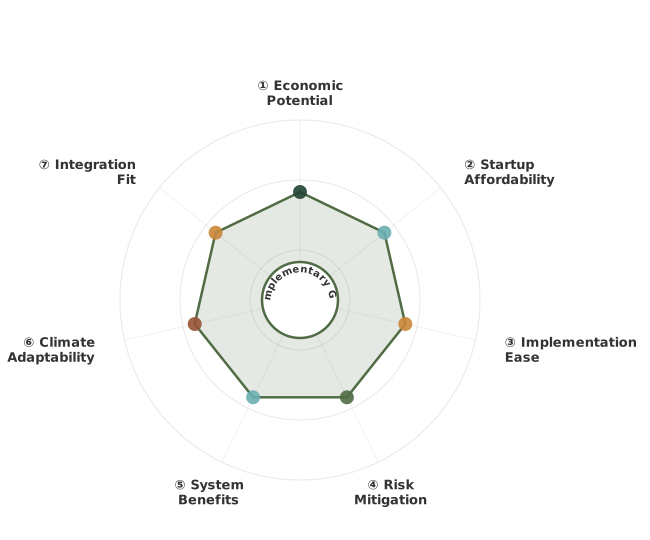
How These Traits Are Calculated
Trait dimensions are ordered clockwise starting from the top of the chart (12 o'clock position):
1. Economic Potential
Financial returns, annual value, and break-even timeline
WHAT: Evaluates financial viability by combining net annual value ($/ha from savings, income, and amortized harvests) with break-even timeline showing when practices pay for themselves.
WHY: Farmers need clear ROI understanding before committing resources. Fast payback (≤3 years) with strong returns (≥$300/ha) enables confident adoption, while long timelines (>10 years) restrict adoption to well-funded operations willing to wait for returns.
HOW: Calculated from net annual value in $/ha and break-even years. Exceptional (≥2.6): fast ROI ≤3 years + high value ≥$300/ha. Typical (1.8-2.5): moderate returns or longer timelines. Limited (<1.8): marginal economics or very long payback >10 years.
2. Startup Affordability
Initial investment costs and financial barrier to entry
WHAT: Measures financial barrier to entry through startup costs for equipment, infrastructure, consulting, and materials. Inverted scoring: lower costs = higher scores = more accessible adoption.
WHY: Affordability determines who can adopt. Low-cost practices (<$250/ha) enable widespread adoption across diverse scales, while high costs (>$2,500/ha) limit adoption to well-capitalized operations, creating barriers that slow regenerative transition.
HOW: Calculated from initial investment parsed from practice content. Inverted scoring: Exceptional (≥2.6): minimal investment <$250/ha. Typical (1.8-2.5): moderate costs $250-2,500/ha. Limited (<1.8): high barrier >$2,500/ha.
3. Implementation Ease
Learning curve and specialized knowledge required
WHAT: Measures how much learning, planning, and specialized knowledge a practice requires. Simpler practices with fewer steps score higher, while complex practices requiring extensive training or specialized resources score lower.
WHY: Complex practices create adoption barriers even when economically viable. Straightforward practices enable faster adoption and broader participation, while those requiring extensive training, timing precision, or specialized equipment limit who can succeed.
HOW: Evaluated by measuring documentation length and identifying complexity markers like location-specific requirements, seasonal timing windows, specialized skills, and dedicated equipment needs. Exceptional (≥2.6): straightforward practices with minimal prerequisites. Typical (1.8-2.5): moderate learning curve with some specialized needs. Limited (<1.8): steep learning curve requiring significant training or resources.
4. Risk Mitigation
Identified financial and ecological risk assessment
WHAT: Evaluates documented risks across financial (investment loss, market volatility) and ecological (crop failure, pest outbreaks) domains. Inverted scoring: fewer risks = higher scores.
WHY: Understanding risk exposure helps farmers make informed decisions. Low-risk practices allow confident implementation, while high-risk practices require careful planning and contingency resources. Risk transparency prevents costly failures.
HOW: Calculated from identified risks in practice content. Inverted scoring: Exceptional (≥2.6): ≤2 risks with manageable severity. Typical (1.8-2.5): 3-5 moderate risks. Limited (<1.8): 6+ risks or severe exposure.
5. System Benefits
How many ways the practice improves your land simultaneously
WHAT: Measures how many aspects of land health improve at once—carbon storage, soil quality, erosion control, water absorption, and biodiversity. Practices that improve multiple areas simultaneously create compounding benefits where each improvement reinforces the others.
WHY: The best practices solve multiple problems at once. For example, addressing erosion simultaneously builds carbon and improves water infiltration, creating a resilient system with positive feedback loops. Single-benefit approaches miss these compound transformation opportunities.
HOW: Evaluated across five key outcomes: carbon sequestration, soil organic matter increase, erosion reduction, water infiltration improvement, and biodiversity enhancement. Exceptional (≥2.6): high carbon storage (>8 t/ha/yr), improvements across 4-5 areas, transformative outcomes. Typical (1.8-2.5): moderate carbon (3-8 t/ha/yr), improvements across 2-3 areas. Limited (<1.8): modest impact (<3 t/ha/yr), single-area focus only.
6. Climate Adaptability
Geographic applicability across Köppen climate zones
WHAT: Evaluates geographic applicability by assessing how many Köppen climate zones successfully support a practice and what adaptation requirements are needed. Measures breadth of climates where farmers can implement with minimal to moderate modifications.
WHY: Universal practices working across diverse climates enable more farmers to adopt regenerative approaches. Practices limited to single climate types (only Mediterranean, only tropical) restrict adoption and slow global transition. Adaptability determines whether a practice serves niche regions or offers broad transformation.
HOW: LLM evaluation of regional success stories, Köppen zone coverage, and adaptation needs. Exceptional (≥2.6): 5+ zones or 4+ climate types, 3+ continents, minimal adaptation. Typical (1.8-2.5): 3-4 zones or 2-3 types, 2 continents, moderate adaptation. Limited (<1.8): 1-2 zones, single region, significant adaptation or highly specialized.
7. Integration Fit
How well this practice combines with others you're doing
WHAT: Measures how well a practice combines with other regenerative practices you might be doing. Some practices work as building blocks that make many other practices easier or more effective, while others work best on their own.
WHY: Practices that combine well with many others create more value on your farm. For example, cover cropping enables no-till, improves grazing, supports crop diversity, and helps water management—making all of them work better together. This helps you build a coherent system rather than juggling disconnected practices.
HOW: Evaluated by identifying which practices combine well and how strong those combinations are. 'Ideally Suited' means strong combinations where practices reinforce each other (practice A makes B easier, while B makes A more effective). 'Adequate' means complementary benefits that work well together. Exceptional (≥2.6): combines well with 6+ practices, serves as a building block. Typical (1.8-2.5): combines with 3-5 practices. Limited (<1.8): 1-2 practices or works best alone.
Going Deeper
1
WHY - The Benefits
Complementary grazing offers a suite of benefits that enhance both the ecological and economic vitality of farms and ranches. By tapping into the natural foraging behaviors of different livestock species, land managers can unlock underutilized forage resources, improve...
Complementary grazing offers a suite of benefits that enhance both the ecological and economic vitality of farms and ranches. By tapping into the natural foraging behaviors of different livestock species, land managers can unlock underutilized forage resources, improve...
WHY - The Benefits
Complementary grazing offers a suite of benefits that enhance both the ecological and economic vitality of farms and ranches. By tapping into the natural foraging behaviors of different livestock species, land managers can unlock underutilized forage resources, improve...
Complementary grazing offers a suite of benefits that enhance both the ecological and economic vitality of farms and ranches. By tapping into the natural foraging behaviors of different livestock species, land managers can unlock underutilized forage resources, improve...
Soil Health Benefits
Complementary grazing, when managed adaptively, can significantly boost soil health. Different animal species have varied impacts on soil structure and nutrient cycling. For instance, cattle, with their wider mouths and bulk grazing, tend to stimulate grass growth and leave a higher proportion of coarser organic matter. Sheep, with their finer mouths, graze more selectively and closely, helping to manage grass height and prevent the dominance of tall, coarse species. Their droppings, often smaller and more distributed than cattle dung pats, can integrate more readily into the soil surface.
The combined effect of different grazing impacts on plant communities leads to more diverse root systems below ground. A greater variety of root depths and architectures can improve soil aggregation, water infiltration, and aeration. As different species deposit manure in varied patterns and chemical compositions, nutrient cycling becomes more heterogeneous and efficient. This heterogeneity can stimulate microbial diversity and activity throughout the soil profile, leading to a gradual increase in soil organic matter over time, typically between 0.1-0.5% per year, depending on climate, soil type, and management intensity, enhancing soil's water-holding capacity and fertility.
Reduced reliance on external inputs is another significant benefit. By optimizing plant diversity and nutrient cycling through grazing, the need for synthetic fertilizers and herbicides can decrease. This not only offers economic savings but also reduces the potential for the negative impacts of these inputs on soil biology and water quality. For example, improved pasture swards utilizing legumes can fix atmospheric nitrogen, reducing the need for nitrogenous fertilizers.
Economic Benefits
Economically, complementary grazing offers several advantages. The most direct benefit is increased carrying capacity. While gains are highly variable based on context, complementary grazing can increase carrying capacity by 5-20% as different species utilize a wider range of forage. This means more livestock can be supported on the same acreage, leading to higher overall farm income. For instance, combining sheep with cattle can increase total biomass production and utilization, potentially boosting by 10-20% the economic output of a given pasture area.
Reduced costs are another economic driver. Better utilization of forages can mean less need for supplemental feed, particularly during periods when one species might struggle to find ideal forage. Furthermore, the improved pasture health and diversity can suppress broadleaf weeds that sheep and goats consume, reducing the need for expensive herbicide applications, sometimes by 20-50%. This integrated weed management is a cornerstone of regenerative agriculture.
Diversified income streams are a significant advantage for economic stability. Running multiple species means that if one market faces downturns, revenue from other species can provide a buffer. For example, fluctuations in cattle prices might be offset by stable or increasing sheep and goat markets. This diversification reduces overall farm risk and provides a more consistent cash flow throughout the year.
Improved animal performance can also contribute to economic gains. Providing animals with a more balanced diet from a diverse pasture, and offering shade or shelter through managed co-grazing, can lead to better weight gains, improved reproductive rates, and reduced stress. These improvements, while sometimes subtle (5-10% better weights), compound over time to significantly enhance profitability.
Regenerative Systems Fit
Complementary grazing is a potent example of how integrating livestock strategically can drive regenerative outcomes, aligning perfectly with the five core principles when managed intentionally.
Principle 5 (Integrate Livestock): This principle is inherently met as the practice is about how livestock are integrated—using diversity to enhance ecosystem function. By employing multiple species, each with unique grazing habits, land managers can optimize forage utilization, manage plant communities more effectively, and improve nutrient distribution across the landscape. This intelligent integration moves beyond simple stocking, using animals as biological tools for land management.
Principle 2 (Maximize Crop Diversity): Complementary grazing directly fosters greater plant diversity. Cattle might graze mid-height grasses, sheep target broadleaf forbs and grass shoots, and goats might browse woody shrubs. This balanced grazing pressure prevents any single plant type from outcompeting others, encouraging a wider array of perennial grasses, legumes, and forbs to flourish. Above-ground diversity leads to below-ground diversity, supporting a richer and more resilient soil food web.
Principle 3 (Keep Soil Covered): By promoting a diverse and vigorous pasture sward, complementary grazing ensures that soil remains covered for a longer duration throughout the year. Continuous grazing without adequate rest can still lead to bare soil, but well-managed rotational grazing with mixed species typically results in denser ground cover and a more consistent live plant presence, which protects against erosion and conserves moisture.
Principle 4 (Maintain Living Roots): A diverse, healthy pasture maintained by mixed-species grazing ensures that living roots are present in the soil for extended periods. Different species often have varying root structures and growth cycles, contributing to continuous soil biological activity and nutrient uptake. This sustained root presence is vital for building soil carbon and improving soil structure over time.
Principle 1 (Minimize Soil Disturbance): While grazing itself can cause soil compaction if not managed properly, complementary grazing can help mitigate this when combined with rotational grazing. By distributing grazing pressure and ensuring adequate rest periods, pasture can recover, and soil structure can be maintained or improved by the diverse root systems. The practice is not about eliminating disturbance but about managing it beneficially.
For farms transitioning, complementary grazing offers a pathway to enhanced land health without necessarily requiring immediate abandonment of current livestock enterprises. It can be implemented incrementally, perhaps by introducing a small flock of sheep to a cattle operation, or vice versa. This practice builds ecological capital—improving soil, water, and biodiversity—while also building economic capital through diversified and potentially more efficient livestock production. It's a stepping stone that can create the ecological and financial stability needed to move towards more intensive regenerative practices.
Sources behind this view
Videos & Podcasts
-
Multi-species grazing (cattle, sheep, goats) offers synergistic benefits by improving plant palatability and expression, enhancing biodiversity and productivity, unlike monoculture systems.
-
Laura Payne details how managed grazing enhances soil health, water quality, and wildlife habitat, citing research on reduced erosion, improved stream health, and support for grassland birds. Key prin
-
Integrating livestock grazing into cropping systems enhances soil regeneration and provides both economic and ecological profit. Mutually beneficial arrangements with cattle owners deliver high-qualit
-
Holistic management with cattle is key to improving soil health, water cycles, and carbon sequestration. Maximize animal impact (hooves, dung, urine) for diversity and plant growth, while breeding cat
Community
-
Discusses regenerative grazing with cattle, sheep, and goats, emphasizing high-density impact and long recovery periods for soil health and ecosystem restoration in arid regions. Debates overgrazing,
Read more (opens in new window) permies.com -
Adopts a holistic grazing management approach emphasizing diverse perennial pastures, higher residuals (4"), and longer rest periods (avg. 45 days) to build soil health, increase organic matter (3.4%
Read more (opens in new window) smallfarms.cornell.edu -
Manage rotational grazing by setting recovery (15-40+ days, adapting to region/season) and grazing periods (2-3 days). Aim to 'take half, leave half' for livestock and soil microbes. High stocking den
Read more (opens in new window) smallfarms.cornell.edu -
Integrates livestock (cows, sheep, goats, chickens, pigs) into oak woodlands using silvopasture and rotational grazing, prioritizing soil health and plant welfare with regular animal movement and clim
Read more (opens in new window) permies.com
Research
-
Managing Grazing to Restore Soil Health, Ecosystem Function, and Ecosystem Services (opens in new window)
This study found: Properly managed grazing animals can reverse environmental damage. Regenerative practices, like Adaptive Multi-Paddock (AMP) grazing, boost soil health, increase soil carbon, reduce erosion, and enhan
-
Grassland biodiversity and ecosystem functions benefit more from cattle than sheep in mixed grazing: A meta-analysis. (opens in new window)
This study found: Mixed grazing with cattle and sheep benefits grasslands more than single-species grazing. Cattle in mixed systems significantly boost plant diversity, soil carbon, and livestock gains, suggesting a ke
-
Regenerative agriculture improves productivity and profitability while reducing greenhouse gas emissions on Australian sheep farms. (opens in new window)
This study found: Australian sheep farms show regenerative practices like AMP grazing and diverse pastures improve soil carbon and reduce emissions, but trade-offs exist between profitability and environmental benefits
-
Adaptive multi-paddock grazing management’s influence on soil food web community structure for: increasing pasture forage production, soil organic carbon, and reducing soil respiration rates in southeastern USA ranches (opens in new window)
This study found: Adaptive multi-paddock grazing in the southeastern US increased pasture growth by 46%, improved soil food webs, reduced soil respiration by 19.5%, and boosted soil organic carbon by 20.6% compared to
From the Web
-
Adaptive grazing, emphasizing longer paddock rest periods, promotes pasture diversity and soil health. This leads to improved livestock nutrition, milk/meat quality, and extended grazing seasons, as d
-
Multispecies grazing with sheep or goats alongside cattle enhances soil health through diverse grazing habits, boosts profitability via diversified revenue streams, and improves drought resilience.
-
Regenerative grazing, especially adaptive multi-paddock (AMP) grazing, enhances farm profitability, ecosystem health, and food system resiliency. Studies show AMP grazing increases soil carbon by 13%
-
Multispecies grazing diversifies income, improves pasture health, and aids in weed and parasite control. Strategies for managing plant toxicity, including bloat, grass tetany, prussic acid, nitrate po
2
WHERE - Regional Considerations
Complementary grazing is highly adaptable across diverse climates and landscapes, but specific species choices and management strategies must align with regional conditions. Successful implementation depends on understanding local forage availability, climate patterns,...
Complementary grazing is highly adaptable across diverse climates and landscapes, but specific species choices and management strategies must align with regional conditions. Successful implementation depends on understanding local forage availability, climate patterns,...
WHERE - Regional Considerations
Complementary grazing is highly adaptable across diverse climates and landscapes, but specific species choices and management strategies must align with regional conditions. Successful implementation depends on understanding local forage availability, climate patterns,...
Complementary grazing is highly adaptable across diverse climates and landscapes, but specific species choices and management strategies must align with regional conditions. Successful implementation depends on understanding local forage availability, climate patterns,...
Click Here to Look up your Region if you don't already know it
Temperate Regions (Humid & Dry)
Representative Locations: North America (Midwest, Eastern US, Great Plains), Europe (Western, Central, Northern), parts of Australia and New Zealand. Climate Context: USDA Zones 3-8; Köppen Cfa, Cfb, Csa, Csb. Moderate temperatures, variable precipitation (40-120 cm or 15-47 inches annually), distinct seasons. Suitability: High. These regions typically support a wide range of pasture grasses and forbs suitable for cattle and sheep. Introduction of goats can help manage woody encroaching species. Poultry can be integrated in systems with trees or where insect control is needed.
Arid and Semi-Arid Regions
Representative Locations: Western US, North Africa, Central Asia, Interior Australia, Sahel region of Africa. Climate Context: USDA Zones 6-9; Köppen BSh, BSk, BWh. Low and unpredictable rainfall (<40 cm or 15 inches annually), high temperatures, sparse vegetation. Suitability: Moderate to High, with careful species selection. Goats and sheep are often better adapted to arid conditions and browse or dwarf shrub utilization than cattle. Complementary grazing here is critical for managing sparse resources, preventing desertification by utilizing diverse plant structures (grasses, shrubs, forbs), and improving nutrient cycling in low-rainfall environments. Systems often mimic traditional pastoralism with mixed herds.
Tropical and Subtropical Regions
Representative Locations: Southeast Asia, Central Africa, South America (Brazil, Colombia), Southern US, Eastern Australia. Climate Context: Köppen Af, Am, Aw, Cfa. High temperatures year-round, abundant rainfall (often seasonal: distinct wet/dry periods), long growing seasons. Suitability: High. These regions support lush growth, but also challenges like rapid weed invasion and insect-borne diseases. Mixed grazing can manage rank grass and woody growth effectively. Cattle and small ruminants (sheep/goats) are common. Integrating poultry can help control pasture insects. Challenges include heat stress management and potential for intense pest/disease pressure.
Cold Continental and Alpine Regions
Representative Locations: Northern Canada, Siberia, Scandinavian countries, mountainous regions globally. Climate Context: USDA Zones 2-5; Köppen Dfc, Dwc, Dfd, ET. Short growing seasons, cold winters, potential for snow cover. Suitability: Moderate. Growing season length is the primary constraint. Species choice is critical; animals must be well-adapted to cold. Sheep and certain cattle breeds can thrive, but winter feeding strategies are paramount. Goats can be useful for brush control in summer months. Complementary grazing offers benefits in maximizing utilization during the frost-free period.
Mediterranean Regions
Representative Locations: Mediterranean basin, California, Central Chile, SW Australia, parts of South Africa. Climate Context: USDA Zones 8-10; Köppen Csa, Csb. Hot, dry summers; mild, wet winters. Highly seasonal rainfall. Suitability: High. These regions are well-suited for mixed grazing, particularly for managing the transition from abundant spring growth to summer dryness. Sheep and goats are adept at utilizing dry grasses and browse. Cattle can utilize higher-quality pastures in wet seasons. Managing water resources and fire risk is key.
3
HOW - Implementation Process
Successfully implementing complementary grazing involves careful planning, animal selection, and adaptive management. It's not simply about putting different animals together; it's about strategically leveraging their unique traits for mutual benefit and ecosystem...
Successfully implementing complementary grazing involves careful planning, animal selection, and adaptive management. It's not simply about putting different animals together; it's about strategically leveraging their unique traits for mutual benefit and ecosystem...
HOW - Implementation Process
Successfully implementing complementary grazing involves careful planning, animal selection, and adaptive management. It's not simply about putting different animals together; it's about strategically leveraging their unique traits for mutual benefit and ecosystem...
Successfully implementing complementary grazing involves careful planning, animal selection, and adaptive management. It's not simply about putting different animals together; it's about strategically leveraging their unique traits for mutual benefit and ecosystem...
Prerequisites
- Defined Goals: Clearly articulate what you aim to achieve. Is it increased carrying capacity, improved pasture diversity, weed control, diversified income, or a combination?
- Pasture Assessment: Understand your current forage base. What plant species dominate? What are the underutilized species or brush? What is the terrain and soil condition?
- Animal Availability: Identify which species you have access to or can realistically acquire. Consider their dietary needs, grazing behaviors, and management requirements.
- Infrastructure Assessment: Evaluate existing fencing (permanent vs. electric), water sources, and handling facilities. Are they adequate for multiple species?
Phase 1: Species Selection and Ratio Determination
- Identify Key Grazing Habits:
- Cattle: Bulk grazers of mature grasses, prefer longer grass, more likely to impact soil structure through trampling.
- Sheep: Selective grazers, prefer short, tender grasses and broadleaf plants ("forbs"), graze closer to the ground.
- Goats: Browsers, prefer woody species (shrubs, brush, young trees), can eat broadleaf plants.
- Poultry: Scavengers, insectivores, can consume seeds and some weeds, distribute manure finely.
- Match Species to Pasture Needs:
- If grass dominance is high, introduce sheep or goats to manage it and encourage broadleafs.
- If brush or woody invasives are a problem, goats are highly effective.
- If insect pressure is high, poultry can be integrated.
- Determine Initial Ratio: Start with a small pilot or a conservative ratio. A common starting point for cattle-sheep integration is 1:1 or 2:1 cattle to ewes, adjusted based on pasture type. For cattle-goat integration, start with fewer goats (e.g., 1 goat per 5-10 cattle) to manage brush without over-grazeing other species. Ratios depend heavily on forage availability and species management goals.
- Consider Animal Health: Understand disease and parasite transmission risks between species. Sheep and cattle can share some parasites, but goats have different needs and potential disease vectors. Co-grazing needs to be informed by local veterinary advice.
Phase 2: Infrastructure and Planning
- Fencing: Mobile electric fencing is ideal for adaptive rotational grazing, allowing quick adjustments to paddock size and movement. If permanent fencing exists, evaluate if it can be subdivided or adapted for mixed species. Separate handling facilities for different species may be necessary for health and market purposes.
- Water: Ensure adequate water access for all species. Animals will seek water more frequently in warmer climates or during periods of high-intensity grazing. Consider distributed water points.
- Grazing Plan: Develop a rotational grazing plan that considers the needs of each species. This involves:
- Paddock Layout: Design paddocks that allow for strategic species placement and movement.
- Rest Periods: Allocate sufficient rest days/weeks for pasture to regrow based on climate and species needs. Shorter rest might be needed for sheep to prevent grass dominance, longer for cattle to recover grazed grass.
- Grazing Sequence: Decide which species grazes a paddock first. Often, cattle might graze mature grasses followed by sheep to clean up, or goats might browse brush first before cattle/sheep graze the understory.
- Stocking Density: Calculate appropriate stocking rates based on forage availability and the combined needs of all species. It's often higher than single-species stocking.
Phase 3: Implementation and Monitoring
- Phased Introduction: Introduce species gradually onto the pasture, especially if introducing new animals to an existing herd/flock. Ensure they are accustomed to electric fencing and their associated herd mates.
- Close Observation: Regularly monitor animal behavior, pasture condition, and soil impact.
- Animal Health: Watch for signs of stress, injury, parasite load, or competition.
- Pasture Health: Assess forage utilization. Are preferred plants being overgrazed? Are less-preferred species or weeds growing unchecked? Is there adequate ground cover?
- Soil Impact: Check for signs of overgrazing, excessive trampling, or erosion.
- Adaptive Management: Be prepared to adjust the grazing plan based on observations. This is the essence of regenerative grazing. If sheep are overgrazing grass, shorten their grazing duration in that paddock or increase the follow-up rest. If brush isn't being controlled by goats, increase their browsing time or stocking density in those areas.
- Record Keeping: Maintain detailed records of stocking rates, grazing duration, rest periods, animal performance, pasture condition scores, and any interventions. This data is invaluable for refining future management.
Transition Timeline & Phase-Out Strategy (if applicable)
Complementary grazing is generally not a transition practice involving phasing out inputs. Instead, it's a practice that enables a more regenerative system. However, if introducing a new species to an existing flock/herd, the transition involves:
- Gradual Introduction: Start with a small group of the new species in a separate, controlled area or a specific paddock with minimal overlap with existing animals initially.
- Acclimation Period: Allow animals to adapt to each other and the new fencing/handling routines over a few weeks.
- Integrated Grazing Trial: Introduce them to mixed grazing in a limited number of paddocks, closely monitoring their interactions and impact.
- Full Integration: Once initial trials are successful and risks understood, integrate fully into the primary grazing rotation.
The "phase-out" in this context is more about moving towards a fully integrated, balanced complementary grazing system as management expertise and infrastructure are developed, rather than phasing out an external input. It's about refining the ratios, rotational timing, and species mix over several years for optimal results.
4
Know the Debate
Complementary grazing offers significant benefits across diverse climates by optimizing forage utilization and enhancing pasture health. Success hi...
Know the Debate
Complementary grazing offers significant benefits across diverse climates by optimizing forage utilization and enhancing pasture health. Success hi...
Complementary grazing offers significant benefits across diverse climates by optimizing forage utilization and enhancing pasture health. Success hinges on careful species selection and management for local conditions, from humid temperate regions to arid rangelands. Labor demands increase with complexity, requiring 1-2 daily hours for moves. Initial infrastructure costs, particularly for adaptive fencing and water, can range from $100-$500/acre, with ongoing costs varying by management intensity and scale. While it requires learning new skills, it can unlock new economic and ecological potential.
What are the real benefits of multi-species grazing?
Significant Environmental & Economic Gains
Academic and Institute sources highlight documented benefits like improved pasture diversity, higher carrying capacity (5-15%), reduced reliance on inputs (herbicides/feed), and diversified income streams. Field reports confirm these gains, especially for weed control and soil health.
Sources behind this view
Sources behind this view
Videos & Podcasts
-
Multi-species grazing with sheep and cattle enhances soil health and rangeland by utilizing sheep's ability to graze weeds (leafy spurge, buck brush) that cattle avoid. This improves plant diversity, balances grazing pressure, and optimizes forage use, leading to better soil health.
Research
-
Grassland biodiversity and ecosystem functions benefit more from cattle than sheep in mixed grazing: A meta-analysis. (opens in new window)
This study found: A review of many studies from Europe, the US, and China found that grazing grasslands with a mix of cattle and sheep generally leads to better results than grazing with just one type of animal. While cattle alone boosted plant variety and soil carbon, sheep alone had little effect. When both cattle and sheep grazed together, plant density and the variety of beneficial insects increased, but soil life like nematodes became less diverse. Importantly, cattle in mixed grazing systems were key drivers of improvements, increasing plant diversity, boosting the growth of wildflowers and nitrogen-fixing plants (like clover), increasing soil carbon, and improving livestock weight gain. The benefits were influenced by weather, how intensely the land was grazed, and for how long. This research suggests that mixed grazing, with a strong role for cattle, is a promising strategy for improving grassland health, soil carbon, and animal production.
From the Web
-
Discusses the benefits of multispecies grazing with sheep, cattle, and goats for improved pasture efficiency, increased meat production, and environmental advantages like reduced greenhouse gas emissions.
-
Multispecies grazing with sheep or goats alongside cattle enhances soil health through diverse grazing habits, boosts profitability via diversified revenue streams, and improves drought resilience.
Benefits Highly Context-Dependent & Variable
Field reports suggest benefits observed directly by practitioners, such as improved weed control and soil structure, but acknowledge that optimal results depend on careful management, timing, and species compatibility. Some academic review suggests the magnitude of benefits can be subtle or situation-specific.
Sources behind this view
Sources behind this view
Videos & Podcasts
-
Mixed grazing benefits vegetation and animal performance but faces copper toxicity issues in some regions. Leader-follower systems optimize nutrient needs and weed control. Parasite management and infrastructure (fencing, water access) are key considerations.
-
Greg Judy of Green Pastures Farm explains how sheep and cattle grazing together control invasive brush and weeds, improve pasture diversity by targeting different plants, and manage parasites. Frequent moving of sheep and using clean land is key. This mixed-species approach also diversifies farm income.
Research
-
Benefits of Multi-Paddock Grazing Management on Rangelands: Limitations of Experimental Grazing Research and Knowledge Gaps (opens in new window)
This study found: This review looks at why farmers often see great benefits from moving livestock frequently between pastures (multi-paddock grazing), but many scientific studies don't show these same advantages compared to leaving animals in one field all the time. The authors suggest that how research is done might be missing key factors that experienced farmers understand. They point out that when studies are designed more like real-world farming, they do show that moving animals more often can lead to better plant growth and higher livestock production than continuous grazing or very light stocking rates. The review aims to bridge the gap between practical experience and research findings.
From the Web
-
Multispecies grazing diversifies income, improves pasture health, and aids in weed and parasite control. Strategies for managing plant toxicity, including bloat, grass tetany, prussic acid, nitrate poisoning, and fescue toxicosis, are provided.
Management Intensity Impacts Perceived Value
While many field practitioners report substantial advantages, the level of management intensity required means the 'benefit' is often tied to the farmer's skill and labor. Some benefits like parasite control or weed suppression are more readily apparent and consistent than others like soil carbon enhancement.
Sources behind this view
Sources behind this view
Videos & Podcasts
-
Rotational grazing with poultry or small ruminants improves soil health, reduces erosion, and promotes plant diversity. Adjust pasture sizes seasonally and start small, observing results.
-
Implement long wait times (min 90 days) between grazing cycles for parasite control. Multi-species grazing (cattle/sheep, sheep/goats, poultry/ruminants) enhances forage use, diversity, and weed/insect control, but requires careful management and pasture observation.
Research
-
Soil and ruminant gut microbiomes in diverse pasture systems and regenerative agriculture: a review (opens in new window)
This study found: This review looks at how different types of pastures, especially those used in regenerative farming, affect the tiny living things (microbes) in both the soil and the guts of grazing animals like cattle and sheep. Standard pastures, often just grass and clover, have less impact than diverse pastures that have many different plants. Diverse pastures are thought to improve soil health by increasing organic matter and the number of soil microbes. They also provide varied nutrients and compounds that can lead to a more diverse and stable gut microbiome in animals. This could strengthen the connection between soil health and animal health. The review points out that more research is needed, especially using advanced 'omics' technologies, to fully understand these connections in regenerative systems.
Making Sense of the Differences
Observed benefits of complementary grazing range from significant productivity gains and cost savings in well-managed systems to more subtle improvements in others. Success is highly sensitive to species selection, pasture composition, climate, and the farmer's adaptive management skills. Contexts with diverse forage species and complex weed/pest pressures often see the greatest gains, while simpler systems or those with less intensive management may find benefits are moderate but still valuable.
5
HOW MUCH - Costs & Investment
Note: Costs shown in USD; multiply by local labor and material cost indices for your region. Labor costs vary significantly internationally. Complementary grazing is often about optimizing existing resources rather than massive new capital outlays, but significant...
Note: Costs shown in USD; multiply by local labor and material cost indices for your region. Labor costs vary significantly internationally. Complementary grazing is often about optimizing existing resources rather than massive new capital outlays, but significant...
HOW MUCH - Costs & Investment
Note: Costs shown in USD; multiply by local labor and material cost indices for your region. Labor costs vary significantly internationally. Complementary grazing is often about optimizing existing resources rather than massive new capital outlays, but significant...
Note: Costs shown in USD; multiply by local labor and material cost indices for your region. Labor costs vary significantly internationally. Complementary grazing is often about optimizing existing resources rather than massive new capital outlays, but significant...
Note: All costs are based on recent US economic data (2024–2026) and may vary substantially by region based on local labor rates, material costs, and regulatory requirements.
Fencing and Containment
Fencing serves as the primary capital expenditure for complementary grazing systems. For a small operation (under 50 acres (20 ha)), managers typically invest in portable electric netting or high-tensile poly-wire to manage intense, daily rotations, costing $156–$521 per acre ($385–$1,287/ha). Mid-size operations (50–500 acres (20–202 ha)) benefit from cross-fencing larger tracts into smaller cells, reducing capital intensity to $83–$261 per acre ($205–$645/ha). Large operations (over 500 acres (202 ha)) utilize perimeter fencing combined with inexpensive, high-speed, single-strand electric wires for interior subdivision, lowering costs to $31–$125 per acre ($77–$309/ha). High-cost scenarios involve challenging terrain requiring heavy timber brace posts and high-tensile wire, whereas lower-cost scenarios leverage existing fence lines or perimeter boundaries to subdivide pastures.
Water Infrastructure and Delivery
Access to reliable water at every individual paddock is a non-negotiable requirement for multi-species animal welfare. Small operations often lack existing infrastructure, requiring modular trough systems, hose extensions, or solar-powered pumps, costing $104–$417 per acre ($257–$1,030/ha). Mid-size operations scale this by installing gravity-fed piping or larger solar-powered water pumps, ranging from $63–$261 per acre ($156–$645/ha). Large-scale producers utilize extensive polyethylene pipe networks and centralized solar-powered storage systems, which drop costs to $21–$104 per acre ($52–$257/ha) due to the massive distribution of fixed infrastructure costs over a wider land base. Spending at the high end usually indicates extensive piping runs exceeding 2,000 feet (609.6 m) or the need for deeper well drilling to meet the pressure requirements of multiple species.
Animal Health and Handling Management
Integrated livestock systems require specialized infrastructure for effective sorting and medical treatment. Small-scale producers often spend $42–$156 per acre ($104–$385/ha) on portable, multi-species handling chutes or specialized crowding tubs that can manage diverse body weights and behaviors. Mid-size operations typically retrofit existing facilities, costing $21–$83 per acre ($52–$205/ha), while large operations rarely modify standard infrastructure, focusing instead on mobile handling trailers at approximately $5–$31 per acre ($12–$77/ha). Ancillary health costs, including targeted parasite management programs, add $10–$42 per acre ($25–$104/ha), as diverse species often require distinct health protocols to prevent cross-contamination.
Most Spend: The middle 60% of operations typically invest $104–$365 per acre ($257–$902/ha). This range represents established farms that prioritize high-quality electric fencing and reliable, automated water distribution but are not yet utilizing fully automated, high-end, or luxury-grade handling structures.
Why the Range?: Costs vary primarily based on the scale of land, the frequency of subdivisions, and existing infrastructure. High-cost scenarios generally involve "from-scratch" implementations on raw land, whereas low-cost scenarios occur when producers integrate new species into mature, pre-fenced systems with established water access points.
Sources behind this view
Videos & Podcasts
-
Improved grazing management boosts ranch economics through higher stocking rates, better cows-per-man ratios, extended grazing seasons, and reduced feeding costs. Strategic fencing and water developme
-
Increase grazing frequency (e.g., twice daily) for better pasture utilization and animal performance. Invest heavily in water infrastructure and use temporary fencing in long, narrow paddocks to maxim
-
Details the financial benefits of investing in fencing and water infrastructure for grazing, estimating costs ($175/acre) and returns (66% increase in carrying capacity). Discusses specific paddock de
-
Implemented mob grazing by moving cattle daily to fresh pasture, resulting in thousands saved annually, a 30% increase in stocking rate, and improved soil organic matter (up to 9%) by feeding soil mic
Community
-
Grazing dairy heifers and cull cows reduces costs compared to confinement, with potential savings on feed, labor, and equipment. Producers can manage pastures themselves or use custom grazers, seeking
Read more (opens in new window) smallfarms.cornell.edu
Research
-
Increasing Intensity of Pasture Use with Dairy Cattle: An Economic Analysis (opens in new window)
This study found: Intensive grazing on Pennsylvania dairy farms was more profitable than hay/corn silage, returning $129/acre. High debt and poor cash flow motivated increased grazing intensity, which lowered feed cost
-
192 Towards Year-Round Grazing in the Southeastern U.S (opens in new window)
This study found: Southeastern U.S. sheep/goat farmers can boost profits by reducing winter feed costs through better grazing management, diverse forages, improved infrastructure, and proper hay storage, enabling year-
-
Regenerative agriculture improves productivity and profitability while reducing greenhouse gas emissions on Australian sheep farms. (opens in new window)
This study found: Australian sheep farms show regenerative practices like AMP grazing and diverse pastures improve soil carbon and reduce emissions, but trade-offs exist between profitability and environmental benefits
-
Pasture-Based Dairy Systems in Temperate Lowlands: Challenges and Opportunities for the Future (opens in new window)
This study found: Pasture-based dairy in temperate lowlands can improve efficiency and sustainability by using more legumes for nitrogen, extending grazing, and selecting robust cows. This reduces chemical inputs, lowe
From the Web
-
In the Northern Plains, cattle and sheep can significantly improve small grain production by enhancing soil structure, managing weeds/pests, and reducing costs. Options include grazing fees ($0.10/hea
-
Analyzes ROI for high stock density grazing, detailing infrastructure costs ($3,250 with grant), labor ($3600 estimate), and a 257% carrying capacity increase. Discusses scaling challenges and lists k
6
REWARDS AND RISKS - Economics & Risk Factors
Complementary grazing offers significant rewards but also presents risks that require careful consideration and management. A pragmatic approach balances the potential for increased productivity and ecological health against the operational challenges and market...
Complementary grazing offers significant rewards but also presents risks that require careful consideration and management. A pragmatic approach balances the potential for increased productivity and ecological health against the operational challenges and market...
REWARDS AND RISKS - Economics & Risk Factors
Complementary grazing offers significant rewards but also presents risks that require careful consideration and management. A pragmatic approach balances the potential for increased productivity and ecological health against the operational challenges and market...
Complementary grazing offers significant rewards but also presents risks that require careful consideration and management. A pragmatic approach balances the potential for increased productivity and ecological health against the operational challenges and market...
Economic Scenarios In a Best Case Scenario, within 36 months, the system achieves a 15–20% increase in carrying capacity per acre. By reducing supplemental feed dependence via improved forage utilization, overhead costs decrease by 15–25% annually. When combined with a 10% improvement in weight gain due to superior diet selection across diverse species, net profitability increases by $261–$417 per acre ($645–$1,030/ha).
In a Typical Case Scenario, between years 3 and 5, the operation sees a 10% increase in stocking capacity. Reduced pressure on primary pastures decreases fertilizer or herbicide applications, saving $42–$83 per acre ($104–$205/ha) annually. Improved animal performance adds $52–$104 per acre ($128–$257/ha) to gross revenue, resulting in a 10–15% increase in annual net profit.
In a Worst Case Scenario, suboptimal species combinations lead to overgrazing, causing a 10–20% decrease in beneficial forage density. If health protocols are neglected, increased parasite loads result in $52–$156 per acre ($128–$385/ha) in additional veterinary costs and animal performance loss. Consequently, profitability declines by 5–10% as labor costs rise to manage the decline in herd health.
Market Factors and Risk Mitigation Profitability is driven by the producer's ability to market secondary species at a premium. Complementary livestock—such as goats following cattle—convert aggressive weeds or "waste" browse into weight, turning an $83 per acre ($205/ha) management hurdle into a $208–$313 per acre ($514–$773/ha) revenue stream. However, market volatility for non-primary species can impact returns by $52–$208 per acre ($128–$514/ha) if the producer lacks established sales channels.
Transition Period Risks Introducing a new species frequently causes a "yield dip" during the first 18 months as the manager optimizes the rotation. This period typically involves 10–15% higher labor requirements. Operators should plan for a 24-month return on investment timeline for new fencing and water assets. We recommend a "cohort pilot" strategy, stocking the new species at only 20% of the total livestock unit requirement. This limits the financial impact of potential health outbreaks, such as lungworm or internal parasites common to multiple species, saving approximately $31 per acre ($77/ha) in potential veterinary losses. Collaborating with local cooperative extension agents to design an integrated rotational plan reduces the risk of "pasture fatigue" and protects future forage resilience.
Sources behind this view
Videos & Podcasts
-
Multi-species grazing (cattle, sheep, goats) offers synergistic benefits by improving plant palatability and expression, enhancing biodiversity and productivity, unlike monoculture systems.
-
A New Zealand dairy farmer achieved rapid topsoil building, increased milk production, and improved animal health by switching from rye grass/clover and nitrogen fertilizer to a 12-species forage mix,
-
Laura Payne details how managed grazing enhances soil health, water quality, and wildlife habitat, citing research on reduced erosion, improved stream health, and support for grassland birds. Key prin
-
Holistic grazing, with high-density short grazing (2-3 days) and long rest periods (3-4 months), dramatically increases pasture diversity, eliminates pests like grasshoppers, and boosts livestock prod
Community
-
Practical rotational grazing advice for small acreage with goats, sheep, and chickens, emphasizing frequent moves, sacrificial paddocks, and specific forage types (fescue, rye, Bermuda) for Zone 8b. M
Read more (opens in new window) permies.com -
Adopts a holistic grazing management approach emphasizing diverse perennial pastures, higher residuals (4"), and longer rest periods (avg. 45 days) to build soil health, increase organic matter (3.4%
Read more (opens in new window) smallfarms.cornell.edu -
Details an integrated system of Managed Intensive Rotational Grazing and rotational cropping using holistic management. It emphasizes increasing forage availability, integrating livestock (cattle, chi
Read more (opens in new window) permies.com -
Manage rotational grazing by setting recovery (15-40+ days, adapting to region/season) and grazing periods (2-3 days). Aim to 'take half, leave half' for livestock and soil microbes. High stocking den
Read more (opens in new window) smallfarms.cornell.edu
Research
-
Why and how farmers manage mixed cattle–sheep farming systems and cope with economic, climatic and workforce-related hazards (opens in new window)
This study found: Farmers combining cattle and sheep reported better financial stability and pasture use, with flexible work organization helping them adapt to weather and economic risks. Mixed systems are promising fo
-
Diversifying livestock promotes multidiversity and multifunctionality in managed grasslands. (opens in new window)
This study found: Mixing livestock species (sheep and cattle) in grasslands significantly boosted biodiversity and multiple ecosystem functions, including plant growth and nutrient cycling, over three years.
-
Grassland biodiversity and ecosystem functions benefit more from cattle than sheep in mixed grazing: A meta-analysis. (opens in new window)
This study found: Mixed grazing with cattle and sheep benefits grasslands more than single-species grazing. Cattle in mixed systems significantly boost plant diversity, soil carbon, and livestock gains, suggesting a ke
-
Integrated crop and livestock systems increase both climate change adaptation and mitigation capacities. (opens in new window)
This study found: Combining crops with beef cattle grazing in Brazil boosted farm productivity and soil carbon over 18 years. Moderate grazing levels were best for resilience and climate change adaptation/mitigation.
From the Web
-
Multispecies grazing diversifies income, improves pasture health, and aids in weed and parasite control. Strategies for managing plant toxicity, including bloat, grass tetany, prussic acid, nitrate po
-
Multispecies grazing with sheep or goats alongside cattle enhances soil health through diverse grazing habits, boosts profitability via diversified revenue streams, and improves drought resilience.
-
Multi-species grazing improves soil health, plant diversity, and resilience through increased microbial activity. Practical tips for adding sheep/goats include consulting experts, infrastructure needs
-
Explains multispecies grazing with sheep, goats, and cattle for income diversification, vegetation management, weed and parasite control, and outlines implementation considerations. Also covers extend
7
WHO - Labor & Expertise
Complementary grazing can increase labor and expertise demands compared to single-species systems, but the specific requirements vary greatly depending on the scale of operation, the species involved, and the level of infrastructure and management sophistication. Labor...
Complementary grazing can increase labor and expertise demands compared to single-species systems, but the specific requirements vary greatly depending on the scale of operation, the species involved, and the level of infrastructure and management sophistication. Labor...
WHO - Labor & Expertise
Complementary grazing can increase labor and expertise demands compared to single-species systems, but the specific requirements vary greatly depending on the scale of operation, the species involved, and the level of infrastructure and management sophistication. Labor...
Complementary grazing can increase labor and expertise demands compared to single-species systems, but the specific requirements vary greatly depending on the scale of operation, the species involved, and the level of infrastructure and management sophistication. Labor...
Labor Considerations:
- Increased Monitoring: Managing multiple species requires more frequent observation. You need to monitor the health, behavior, and interactions of each species, as well as their collective impact on the pasture. This can add 1-2 hours per day for observational tasks, especially during intensive grazing periods.
- Fencing Management: Rotational grazing, especially with portable electric fencing, requires daily or every-other-day movement of lines, which can be more time-consuming with smaller, mixed paddocks.
- Handling and Health: Separate handling facilities or strategies for different species mean more complex routine health management (e.g., shearing sheep, managing goat browsers, handling cattle). This can require specialized skills.
- Feeding and Watering: Ensuring all species have access to appropriate feed and water, especially during supplemental feeding periods or in challenging weather, might require more logistical planning.
- Skill Specialization: If the operation is large enough, labor can be specialized. One person might focus on sheep management, another on cattle, and a third on infrastructure and fencing. On smaller farms, the farmer often wears all hats.
Expertise Considerations:
- Animal Husbandry for Multiple Species: A deeper understanding of the unique nutritional needs, health requirements, parasite cycles, reproductive behaviors, and temperament of each species involved. For example, understanding goat browsing behavior differs significantly from sheep grazing or cattle rumination.
- Pasture Ecology and Management: Knowing how different species interact with various plant communities, how to balance their grazing impacts to promote diversity, and how to adjust rest periods and grazing sequences to optimize pasture health. This requires an understanding of plant physiology and inter-species competition.
- Rotational Grazing Strategy: Designing and adapting grazing plans that benefit all species simultaneously, which is more complex than single-species rotation. This includes understanding how different species utilize diverse forage types (grasses, forbs, browse) and how they can complement each other's grazing impacts.
- Infrastructure Adaptation: Knowledge of how to adapt or install fencing and water systems suitable for multiple species with different physical capabilities and behaviors.
- Risk Management: Understanding the specific risks associated with mixed-species grazing, such as parasite cross-transmission, inter-species conflict, or market risks for multiple products.
International Labor Cost Variations:
- In regions with high labor costs (e.g., parts of North America, Europe, Australia), the increased labor demand of complementary grazing might be offset by investing in more robust infrastructure (e.g., automated water systems, more robust permanent fencing) or electric fencing systems that require less physical exertion. Efficiency through better planning becomes paramount.
- In regions with lower labor costs (e.g., parts of South America, Africa, Asia), the increased labor demand might be more manageable, making complementary grazing a viable option even with less sophisticated infrastructure, provided the expertise is available. The challenge here may be access to specialized veterinary or advisory services.
Acquiring Expertise:
- Farmers' Networks: Connecting with experienced complementary grazers is invaluable.
- Extension Services/Advisory: Utilize local agricultural extension services, universities, or private consultants specializing in livestock and pasture management.
- Workshops and Field Days: Attend educational events focused on mixed-species grazing.
- Reading and Research: Study relevant literature and research papers.
While complementary grazing can increase demands, the enhanced productivity and ecological benefits often justify the investment in labor and expertise.
Sources behind this view
Videos & Podcasts
-
Multi-species grazing (cattle, sheep, goats) offers synergistic benefits by improving plant palatability and expression, enhancing biodiversity and productivity, unlike monoculture systems.
-
This cluster details ultra-high stock density grazing (UHSDG) and 'total grazing' for cattle, emphasizing intensive management, long pasture recovery, and increased stocking rates. The speaker advocat
-
Greg Judy of Green Pastures Farm explains the benefits of running sheep and cattle together ('flerd'). This system helps control parasites, improves pasture management by targeting different plants (s
-
Laura Payne details how managed grazing enhances soil health, water quality, and wildlife habitat, citing research on reduced erosion, improved stream health, and support for grassland birds. Key prin
Community
-
Multispecies grazing enhances pasture health and carrying capacity by utilizing diverse forages and livestock habits for uniform defoliation. Adding sheep to cattle can boost productivity by 20-25%, w
Read more (opens in new window) smallfarms.cornell.edu -
Recommends increasing pasture diversity and resilience through multispecies grazing, integrating various livestock types to improve forage utilization and ecosystem health.
Read more (opens in new window) smallfarms.cornell.edu -
A grass-based polycultural pasture mix is optimal for livestock, maximizing calories, soil health, and carbon sequestration. Diverse mixes support wildlife, and working with local conditions is key, d
Read more (opens in new window) permies.com
Research
-
Why and how farmers manage mixed cattle–sheep farming systems and cope with economic, climatic and workforce-related hazards (opens in new window)
This study found: Farmers combining cattle and sheep reported better financial stability and pasture use, with flexible work organization helping them adapt to weather and economic risks. Mixed systems are promising fo
-
Grassland biodiversity and ecosystem functions benefit more from cattle than sheep in mixed grazing: A meta-analysis. (opens in new window)
This study found: Mixed grazing with cattle and sheep benefits grasslands more than single-species grazing. Cattle in mixed systems significantly boost plant diversity, soil carbon, and livestock gains, suggesting a ke
-
Diversifying livestock promotes multidiversity and multifunctionality in managed grasslands. (opens in new window)
This study found: Mixing livestock species (sheep and cattle) in grasslands significantly boosted biodiversity and multiple ecosystem functions, including plant growth and nutrient cycling, over three years.
-
Combining beef cattle and sheep in an organic system. I. Co-benefits for promoting the production of grass-fed meat and strengthening self-sufficiency. (opens in new window)
This study found: Combining beef cattle and sheep in an organic system boosted pasture-finished lamb production, reduced supplemental feed and dewormer use in sheep, and improved cow weight gain over four years.
From the Web
-
Multispecies grazing diversifies income, improves pasture health, and aids in weed and parasite control. Strategies for managing plant toxicity, including bloat, grass tetany, prussic acid, nitrate po
-
Multispecies grazing, especially with cattle and sheep, boosts carrying capacity by 20-25%, improves pasture health through uniform defoliation, and can reduce methane emissions. It aids vegetation ma
-
Multi-species grazing improves soil health, plant diversity, and resilience through increased microbial activity. Practical tips for adding sheep/goats include consulting experts, infrastructure needs
-
Multispecies grazing with cattle, sheep, and goats enhances pasture diversity and health, increasing carrying capacity and soil organic matter. It improves nutrient cycling, suppresses weeds, and can
8
EQUIPMENT - Tools & Infrastructure
The equipment and infrastructure required for complementary grazing are largely an extension of what’s needed for single-species grazing, with a focus on adaptability and the ability to manage multiple species effectively. The goal is to facilitate different species’...
The equipment and infrastructure required for complementary grazing are largely an extension of what’s needed for single-species grazing, with a focus on adaptability and the ability to manage multiple species effectively. The goal is to facilitate different species’...
EQUIPMENT - Tools & Infrastructure
The equipment and infrastructure required for complementary grazing are largely an extension of what’s needed for single-species grazing, with a focus on adaptability and the ability to manage multiple species effectively. The goal is to facilitate different species’...
The equipment and infrastructure required for complementary grazing are largely an extension of what’s needed for single-species grazing, with a focus on adaptability and the ability to manage multiple species effectively. The goal is to facilitate different species’...
Fencing: The Backbone of Rotational Grazing
- Electric Fencing: This is often the most critical and versatile tool.
- Portable Reels & Electro-Net: Essential for creating temporary paddocks quickly. Available in various heights and mesh sizes suitable for sheep, goats, and smaller cattle.
- Polywire & Step-in Posts: Ideal for subdivision and quick adjustments. Using different colored wires can help animals visually distinguish between fences (e.g., lower for sheep, higher for cattle).
- Insulators: Need a variety for different post types (wooden, metal, fiberglass) and gate handles.
- Energizer (Charger): A robust electric fence energizer is crucial, with sufficient output (joules) to power the planned fence length and account for potential vegetation contact. Solar-powered options are excellent for remote areas.
- Permanent Fencing:
- Barbed Wire/Woven Wire: Standard for perimeter fencing. If managing sheep and goats, consider woven wire that prevents smaller animals from getting through or goats from getting heads stuck. Fencing must be robust enough to contain the largest species planned.
- Hot Wire Integration: Adding a temporary hot wire to the top of permanent fences can deter climbing goats or deter cattle from pressing against the fence.
- Gates: Easily accessible gates are needed for moving animals between paddocks. Consider multiple gates per paddock for flexibility, and potentially different gate types or sizes if handling very different species.
Water Systems: Ensuring Access for All
- Troughs/Waterers:
- Size & Number: The number and size of water troughs should be sufficient for the combined animal units. Animals require more water in hotter climates and during periods of high activity.
- Material: Frost-proof waterers are essential in colder climates. Durable materials like galvanized steel, concrete, or heavy-duty plastic are recommended.
- Placement: Locate water sources to encourage animal movement across paddocks, but avoid placing them where they can become highly fouled or lead to excessive pugging (mudding) around the trough. Placing waterers at paddock corners can distribute traffic.
- Water Delivery:
- Piping: Extensive poly pipe networks are common for larger operations, allowing water to be delivered to pastures remotely.
- Pumps: If using wells or ponds, reliable pumps (submersible, solar, or PTO-driven) are needed.
- Gravity Feed: Utilising natural slopes for water delivery is most cost-effective where possible.
Handling and Containment Facilities
- Corrals/Yards:
- Multi-Species Capability: Design or adapt yards that can safely handle different species. This might involve adjustable internal gates, separate pens, or different working pressures for cattle versus sheep or goats.
- Materials: Robust steel panels are common for cattle and significant goat operations; lighter aluminum or specialized systems might be used for sheep.
- Loading Ramps: Essential for transporting animals to market or between farms.
- Specialized Equipment:
- Sheep Drafts/Crushes: For handling sheep for routine checks, shearing, or treatment.
- Goat Handling Systems: May include specific restraint devices or working positions.
- Cattle Chutes/Crushes: Standard for cattle handling.
- Portable Handling: For smaller or more adaptive operations, portable corrals or panels can be erected as needed.
Grazing Management Tools
- Paddock Mapping & Planning Tools: Physical maps or digital apps (e.g., for GPS tracking, paddock subdivisions, pasture scoring) aid in designing and implementing rotational plans.
- Pasture Monitoring Tools: Tools like pasture probes, sward sticks, or apps to measure forage height and estimated biomass help make informed decisions about grazing duration and rest periods.
- Animal Health Supplies: A well-stocked first-aid kit for common livestock ailments, including drenches, vaccines, wound care, and basic diagnostic tools.
International Sourcing & Cost Considerations
- Local Suppliers: Prioritise local suppliers for fencing materials, water troughs, and handling equipment to reduce shipping costs and support local economies.
- Second-hand Equipment: Used handling yards, water tanks, or fencing materials can significantly reduce capital costs, but require careful inspection for condition and suitability.
- DIY vs. Professional Installation: For fencing and water systems, DIY can save significant labor costs, but requires learning the skills and investing time. Professional installation guarantees quality but is more expensive.
- Adaptation: In regions with limited access to specific imported equipment (e.g., specialized electric fence energizers), adapt with locally available equivalents where possible. For example, strong wire and well-managed wooden posts can serve as robust fencing bases, supplemented with electric tape.
Sources behind this view
Videos & Podcasts
-
Advocates for rotational grazing, especially for sheep on small farms, to improve pasture recovery, animal health, and soil health. Proper paddock division, water access, and frequent animal movement

-
Implementing rotational grazing requires basic electric fencing, chargers, reels, and posts. Key elements include grass, water, minerals, shade, hot fence, and the right animal. Focus on observation,
-
Increase grazing frequency (e.g., twice daily) for better pasture utilization and animal performance. Invest heavily in water infrastructure and use temporary fencing in long, narrow paddocks to maxim
-
Maintaining strong sheep fences and moving them twice daily is crucial for preventing escapes and reducing parasite exposure. Mixed grazing with cattle acts as a natural parasite control for both spec
Community
-
Practical guide to rotational grazing for sheep/goats in BC mountains: durable electric netting, high-voltage predator fencing, movable shelters, efficient water systems, and a 4-day pasture rotation
Read more (opens in new window) permies.com -
Practical rotational grazing advice for small acreage with goats, sheep, and chickens, emphasizing frequent moves, sacrificial paddocks, and specific forage types (fescue, rye, Bermuda) for Zone 8b. M
Read more (opens in new window) permies.com -
Essential sheep farming infrastructure includes high-tensile woven wire fencing for predator control, portable electric fences for rotational grazing, basic shelter, and a water-hauling trailer. Buyin
Read more (opens in new window) smallfarms.cornell.edu -
Implement rotational grazing with strong perimeter and interior fencing (high tensile electric recommended, focus on grounding) and reliable water systems, using resources like 'The Art and Science of
Read more (opens in new window) smallfarms.cornell.edu
Research
-
Review: Precision Livestock Farming technologies in pasture-based livestock systems. (opens in new window)
This study found: Smart farming tech (GPS, drones, virtual fencing) can improve livestock management on pasture for cattle, sheep, goats, pigs, and poultry, despite challenges like battery life and cost.
From the Web
-
Practical implementation of multispecies grazing involves understanding grazing dynamics of cattle, sheep, goats, pigs, and poultry. Key considerations include adaptable fencing, species-specific hand
9
COMPATIBLE PRACTICES - Integration Opportunities
Complementary grazing is not a standalone practice but a system component that synergistically enhances other regenerative land management techniques. Its integration amplifies benefits by creating a more diverse, resilient, and efficient ecosystem.
Complementary grazing is not a standalone practice but a system component that synergistically enhances other regenerative land management techniques. Its integration amplifies benefits by creating a more diverse, resilient, and efficient ecosystem.
COMPATIBLE PRACTICES - Integration Opportunities
Complementary grazing is not a standalone practice but a system component that synergistically enhances other regenerative land management techniques. Its integration amplifies benefits by creating a more diverse, resilient, and efficient ecosystem.
Complementary grazing is not a standalone practice but a system component that synergistically enhances other regenerative land management techniques. Its integration amplifies benefits by creating a more diverse, resilient, and efficient ecosystem.
Rotational Grazing
- Synergy: Complementary grazing's success fundamentally relies on adaptive rotational grazing. Different species' needs for forage quality, rest periods, and palates dictate the rotation sequence and duration in each paddock.
- Integration Benefit: Optimizes forage utilization, prevents overgrazing by specific species, allows pasture recovery, and distributes manure more evenly. Different species can "clean up" after each other, promoting pasture health and diversity.
Cover Cropping
- Synergy: Mixed-species grazing can be used on cover crop mixes, targeting different plant types within the cover crop (e.g., sheep grazing broadleafs, cattle grazing grasses).
- Integration Benefit: Improves utilization of cover crops, adds fertility through diverse manure deposits, and can help manage cover crop termination by grazing specific plant types. This maximizes the value derived from cover crops and prepares the land for the next cash crop or grazing cycle.
Silvopasture
- Synergy: Integrating animals with trees provides distinct grazing niches. Cattle might graze open pasture areas, sheep might graze understory broadleaves and grasses, and goats effectively manage woody shrub encroachment under tree canopies.
- Integration Benefit: Enhances forage diversity by utilizing the varied plant communities found in silvopasture systems. Different species can manage different components of the vegetation (grass, forb, browse) simultaneously, improving pasture ecology and reducing weed pressure. Shade from trees can also benefit all livestock species, especially cattle.
Keyline Design / Water Harvesting
- Synergy: While not directly integrated, complementary grazing can be managed in conjunction with keyline plowing or swales.
- Integration Benefit: Managed grazing can help trampling in swales to incorporate organic matter, and diverse animal impact can improve soil structure, aiding water infiltration in keyline-designed landscapes. This improves the effectiveness of water harvesting structures by enhancing soil's ability to absorb water.
Habitat Corridors / Biodiversity Enhancement
- Synergy: Creating diverse pastures through mixed-species grazing supports a wider array of insects, birds, and soil organisms.
- Integration Benefit: Healthy, diverse pastures provide better habitat for beneficial insects, pollinators, and ground-nesting birds. The varied manure inputs can also support a richer soil microbiome, contributing to overall biodiversity. This practice directly builds on the ecological complexity.
Transition Readiness: Complementary grazing often acts as a transitional practice itself, preparing land and farmers for more advanced regenerative systems. By improving pasture health and demonstrating the benefits of diverse livestock integration, it builds confidence and ecological capital. This often leads to further adoption of practices like silvopasture, advanced rotational grazing, or integrating poultry for pest control, making the farm system more robust and resilient.
Sources behind this view
Videos & Podcasts
-
Utilize multi-species cover crops based on specific 'resource concerns' to improve soil health, nitrogen fixation, and water retention. Integrate livestock for grazing, calving, and overwintering, enh

-
Multi-species grazing (cattle, sheep, goats) offers synergistic benefits by improving plant palatability and expression, enhancing biodiversity and productivity, unlike monoculture systems.
-
Integrating livestock grazing into cropping systems enhances soil regeneration and provides both economic and ecological profit. Mutually beneficial arrangements with cattle owners deliver high-qualit
-
Holistic management with cattle is key to improving soil health, water cycles, and carbon sequestration. Maximize animal impact (hooves, dung, urine) for diversity and plant growth, while breeding cat
Community
-
Adopts a holistic grazing management approach emphasizing diverse perennial pastures, higher residuals (4"), and longer rest periods (avg. 45 days) to build soil health, increase organic matter (3.4%
Read more (opens in new window) smallfarms.cornell.edu -
Details an integrated system of Managed Intensive Rotational Grazing and rotational cropping using holistic management. It emphasizes increasing forage availability, integrating livestock (cattle, chi
Read more (opens in new window) permies.com -
Advocates for sustainable grazing by leaving over half of pasture plants after grazing for regrowth and soil health, contrasting it with overgrazing which depletes reserves and degrades soil. This app
Read more (opens in new window) smallfarms.cornell.edu -
Integrates livestock (cows, sheep, goats, chickens, pigs) into oak woodlands using silvopasture and rotational grazing, prioritizing soil health and plant welfare with regular animal movement and clim
Read more (opens in new window) permies.com
Research
-
Managing Grazing to Restore Soil Health, Ecosystem Function, and Ecosystem Services (opens in new window)
This study found: Properly managed grazing animals can reverse environmental damage. Regenerative practices, like Adaptive Multi-Paddock (AMP) grazing, boost soil health, increase soil carbon, reduce erosion, and enhan
-
Integration of organic dairy cattle into a whole farm context (opens in new window)
This study found: Integrating organic dairy cattle with other farm enterprises can create synergistic systems, improving resource use, animal welfare, and nutrient recycling through cooperation and circular economy pri
-
Diversification and ecosystem services for conservation agriculture: Outcomes from pastures and integrated crop–livestock systems (opens in new window)
This study found: Conservation farming with diverse plants and integrated crop-livestock systems enhances environmental benefits like soil carbon storage and nutrient cycling, while minimizing soil disturbance and maxi
-
Farming with forages can reconnect crop and livestock operations to enhance circularity and foster ecosystem services (opens in new window)
This study found: Integrating crops and livestock with forages can boost sustainability by improving nutrient cycling, soil health, and biodiversity, reducing pollution and emissions. Practices like using cover crops f
From the Web
-
Multispecies grazing diversifies farms, enhancing ecological resiliency, pasture health, and profitability by integrating livestock species for better land use and income stability.
-
Multispecies grazing with cattle, sheep, and goats enhances pasture diversity and health, increasing carrying capacity and soil organic matter. It improves nutrient cycling, suppresses weeds, and can