
Composting Toilets
Composting toilets are waterless sanitation systems that treat human waste through an aerobic decomposition process, transforming it into a safe, nutrient-rich compost. They eliminate the need for water and conventional sewage systems, offering a decentralized and sustainable solution for human waste management, particularly valuable in areas lacking or wishing to conserve traditional infrastructure.
Read More: Complete Description
Composting toilets harness the power of natural decomposition to process human waste, converting it into an inert, humus-like material often referred to as "compost" or "humus" over a period that can range from several months to over a year, depending on the system's design and management. Unlike flush toilets that require water and connect to centralized sewage treatment or septic systems, composting toilets operate on principles of controlled aerobic decomposition, utilizing microbes, fungi, and moisture to break down organic matter and pathogens. This practice diverts nutrients from potential water pollution and recycles them into a valuable soil amendment.
Their regenerative agriculture significance lies in their ability to close nutrient loops locally and sustainably, especially in off-grid or remote settings like eco-lodges, small homesteads, or farms. By treating waste on-site, they prevent the loss of valuable nitrogen, phosphorus, and potassium into waterways, which can cause eutrophication and harm aquatic ecosystems. Instead, these nutrients are returned to the soil as compost, enriching its organic matter content, improving soil structure, enhancing water-holding capacity, and supporting beneficial soil biology. This practice directly contributes to Principle 5 (Integrate Livestock) and Principle 2 (Maximize Crop Diversity) by providing a source of organic fertility for soil, which in turn supports diverse plant life and can be utilized in integrated farming systems.
The complexity of composting toilets varies greatly. Simple "batch" systems—where waste accumulates for a period before being composted—offer basic functionality. More advanced "continuous" systems separate liquids and solids, actively aerate the composting material, and may incorporate heating elements to accelerate decomposition and reduce pathogen load. The ideal system balances simplicity with effectiveness, ensuring safe and pathogen-free compost while minimizing labor and resource input. Careful management is crucial, including the addition of carbon-rich bulking materials (like sawdust, wood shavings, or coconut coir), proper ventilation, and monitoring of moisture levels to ensure an aerobic environment, which is essential for efficient composting and odor control. Without this, anaerobic decomposition can occur, leading to unpleasant odors and incomplete composting.
From a regenerative perspective, while the direct impact of composting toilets on soil is secondary to practices like cover cropping or regenerative grazing, they are instrumental in closing on-farm nutrient cycles. They represent a critical step in resource management for farms that are not connected to sewage systems or that wish to reduce their reliance on external inputs for fertility. They embody the principle of "waste to resource," transforming a potential pollutant into a valuable soil amendment. This on-site nutrient cycling significantly reduces the farm's ecological footprint and contributes to a more self-sufficient and resilient farming system. For farms aiming to minimize disturbance (Principle 1) and keep soil covered (Principle 3) through increased organic matter application, composting toilet humus is a valuable addition.
However, it's important to acknowledge the "Context-Dependent" nature of this practice within regenerative agriculture. When implemented with robust composting protocols to ensure pathogen destruction and odor management, it is regenerative. If systems are poorly managed, leading to odor, contamination, or incomplete composting, they can become an environmental liability. Transitioning to composting toilets often involves initial investment in the unit and learning proper management techniques. For established farms, integrating composting toilets might be a phased approach, starting with a unit for an outbuilding or remote work area and gradually expanding. The timeline for realizing the full benefits of nutrient recycling depends on the system's capacity and the scale of application, but on a farm scale, the benefits manifest as improved soil fertility over time.
The "transition" aspect arises when a farm or rural operation relies heavily on external fertilizer inputs, and the availability of on-site compost from toilets becomes a partial replacement. Abruptly eliminating synthetic fertilizers while relying solely on compost might cause a temporary dip in fertility if the compost production rate is insufficient. A gradual reduction in synthetic inputs (e.g., 10-20% per year) while increasing compost application from toilets, alongside other regenerative soil-building practices like cover cropping and reduced tillage, is a more pragmatic pathway to full reliance on on-site fertility. Over 3-5 years, as soil biology strengthens and compost production stabilizes, the farm can move towards minimizing or eliminating external nutrient inputs.
Sources behind this view
Sources behind this view
 Videos & Podcasts
-
Explains the benefits, science (C:N ratio, moisture, oxygen, temperature), and methods (windrows, in-vessel) of manure composting. Highlights NRCS 317 standards, regulatory considerations, and the nee

-
Human waste is a critical nutrient source for agriculture, with finite phosphorus, nitrogen, and potassium reserves. Composting toilets, balanced with carbon sources like woodchips, effectively recycl
-
Details the composting process for humanure, focusing on achieving pathogen destruction through temperature, oxygen, moisture, and time. Discusses carbon-to-nitrogen ratios, material choices (straw ba
-
Brad Lancaster promotes humanure composting in dryland environments to build soil organic matter, enhancing water infiltration and retention. He details the process of legalizing site-built compost to

 Community
-
Comprehensive discussion on transitioning to and managing composting toilets (bucket, barrel, Humanure system). Covers cover materials (sawdust, peat moss, leaves), urine diversion, composting methods
Read more (opens in new window) permies.com -
Compares humanure composting (hot composting) with dry outhouses, debating pathogen control, nutrient cycling, and groundwater protection. Discusses the roles of urine, sawdust, C:N ratio, and moistur
Read more (opens in new window) permies.com -
Compost, a product of controlled organic decomposition, offers numerous agricultural benefits including increased soil organic matter, improved water retention, enhanced microbial activity, and nutrie
Read more (opens in new window) ucanr.edu -
Highlights horse manure as a valuable resource on an 18-acre North Devon site, emphasizing thoughtful composting for soil health by understanding carbon-nitrogen balance, air, moisture, and time.
Read more (opens in new window) www.permaculture.org.uk
 Research
-
Low-Cost and Labour-Efficient Innovations in Household Recycling of Organic Wastes for Soil Improvement (opens in new window)
This study found: Review of low-cost innovations for household organic waste recycling to improve soil health in low-income countries, focusing on composting, anaerobic digestion, and pyrolysis for stabilized organic m
-
Recycling Improves Soil Fertility Management in Smallholdings in Tanzania (opens in new window)
This study found: Recycling household waste (cooking and sanitation byproducts) in Tanzania improved soil fertility, preventing nutrient losses and restoring soil organic matter. Special composts significantly boosted
-
Perspectives on Regenerative Agriculture for Sustainable Agricultural Waste Management (opens in new window)
This study found: Regenerative agriculture offers a transformative approach to farm waste management by integrating ecological principles and practices like composting, biochar, and anaerobic digestion to reduce waste,
-
Sustainable Agriculture Through Agricultural Waste Management: A Comprehensive Review of Composting’s Impact on Soil Health in Moroccan Agricultural Ecosystems (opens in new window)
This study found: Review shows composting farm waste in Morocco boosts soil health and fertility, creating valuable natural fertilizers and supporting circular economy principles.
 From the Web
-
Composting toilets create nutrient-rich compost from human waste, enhancing soil health and crop yield by providing nitrogen, phosphorus, and potassium. This method conserves water, reduces runoff, ba
-
This module details compost manure production and application for soil health in watersheds. It covers green/brown materials, C:N ratio, moisture, aeration, and maturity indicators. Four methods are e
Key Points
What It Is
- Waterless human waste treatment system
- Converts waste to safe compost/humus
- Aerobic decomposition process
- Decentralized sanitation solution
Why Do It
- Closes on-farm nutrient loops locally
- Reduces water usage and sewage needs
- Creates valuable soil amendment
- Essential for off-grid sustainability
Benefits - Financial
- Reduces annual septic pumping costs by $200–$600 per year.
- Offsets $50–$250 in annual fertilizer purchasing costs through compost production.
- Reduces water utility expenditures by $50–$200 per person annually.
Benefits - System
- Nutrient recycling: returning N, P, K to soil
- Increases soil organic matter (0.5-1.5% annually)
- Improves soil structure and water retention
- Supports Principles 2, 3, 4, 5 indirectly
Risks - Financial
- High initial capital outlay of $500–$18,000 depending on system scale.
- Potential for $500–$1,500 in maintenance costs if management protocols fail.
Risks - System
- Odor issues if anaerobic decomposition
- Incomplete pathogen destruction if poorly managed
- System failure without adequate carbon material
- Requires user education and consistent management
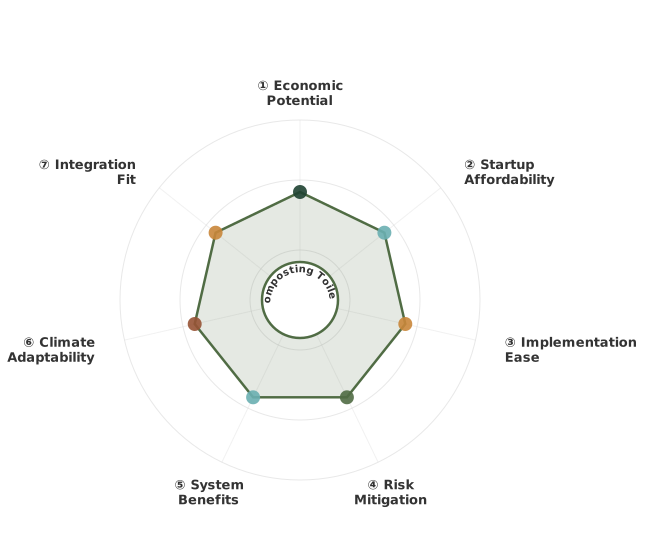
How These Traits Are Calculated
Trait dimensions are ordered clockwise starting from the top of the chart (12 o'clock position):
1. Economic Potential
Financial returns, annual value, and break-even timeline
WHAT: Evaluates financial viability by combining net annual value ($/ha from savings, income, and amortized harvests) with break-even timeline showing when practices pay for themselves.
WHY: Farmers need clear ROI understanding before committing resources. Fast payback (≤3 years) with strong returns (≥$300/ha) enables confident adoption, while long timelines (>10 years) restrict adoption to well-funded operations willing to wait for returns.
HOW: Calculated from net annual value in $/ha and break-even years. Exceptional (≥2.6): fast ROI ≤3 years + high value ≥$300/ha. Typical (1.8-2.5): moderate returns or longer timelines. Limited (<1.8): marginal economics or very long payback >10 years.
2. Startup Affordability
Initial investment costs and financial barrier to entry
WHAT: Measures financial barrier to entry through startup costs for equipment, infrastructure, consulting, and materials. Inverted scoring: lower costs = higher scores = more accessible adoption.
WHY: Affordability determines who can adopt. Low-cost practices (<$250/ha) enable widespread adoption across diverse scales, while high costs (>$2,500/ha) limit adoption to well-capitalized operations, creating barriers that slow regenerative transition.
HOW: Calculated from initial investment parsed from practice content. Inverted scoring: Exceptional (≥2.6): minimal investment <$250/ha. Typical (1.8-2.5): moderate costs $250-2,500/ha. Limited (<1.8): high barrier >$2,500/ha.
3. Implementation Ease
Learning curve and specialized knowledge required
WHAT: Measures how much learning, planning, and specialized knowledge a practice requires. Simpler practices with fewer steps score higher, while complex practices requiring extensive training or specialized resources score lower.
WHY: Complex practices create adoption barriers even when economically viable. Straightforward practices enable faster adoption and broader participation, while those requiring extensive training, timing precision, or specialized equipment limit who can succeed.
HOW: Evaluated by measuring documentation length and identifying complexity markers like location-specific requirements, seasonal timing windows, specialized skills, and dedicated equipment needs. Exceptional (≥2.6): straightforward practices with minimal prerequisites. Typical (1.8-2.5): moderate learning curve with some specialized needs. Limited (<1.8): steep learning curve requiring significant training or resources.
4. Risk Mitigation
Identified financial and ecological risk assessment
WHAT: Evaluates documented risks across financial (investment loss, market volatility) and ecological (crop failure, pest outbreaks) domains. Inverted scoring: fewer risks = higher scores.
WHY: Understanding risk exposure helps farmers make informed decisions. Low-risk practices allow confident implementation, while high-risk practices require careful planning and contingency resources. Risk transparency prevents costly failures.
HOW: Calculated from identified risks in practice content. Inverted scoring: Exceptional (≥2.6): ≤2 risks with manageable severity. Typical (1.8-2.5): 3-5 moderate risks. Limited (<1.8): 6+ risks or severe exposure.
5. System Benefits
How many ways the practice improves your land simultaneously
WHAT: Measures how many aspects of land health improve at once—carbon storage, soil quality, erosion control, water absorption, and biodiversity. Practices that improve multiple areas simultaneously create compounding benefits where each improvement reinforces the others.
WHY: The best practices solve multiple problems at once. For example, addressing erosion simultaneously builds carbon and improves water infiltration, creating a resilient system with positive feedback loops. Single-benefit approaches miss these compound transformation opportunities.
HOW: Evaluated across five key outcomes: carbon sequestration, soil organic matter increase, erosion reduction, water infiltration improvement, and biodiversity enhancement. Exceptional (≥2.6): high carbon storage (>8 t/ha/yr), improvements across 4-5 areas, transformative outcomes. Typical (1.8-2.5): moderate carbon (3-8 t/ha/yr), improvements across 2-3 areas. Limited (<1.8): modest impact (<3 t/ha/yr), single-area focus only.
6. Climate Adaptability
Geographic applicability across Köppen climate zones
WHAT: Evaluates geographic applicability by assessing how many Köppen climate zones successfully support a practice and what adaptation requirements are needed. Measures breadth of climates where farmers can implement with minimal to moderate modifications.
WHY: Universal practices working across diverse climates enable more farmers to adopt regenerative approaches. Practices limited to single climate types (only Mediterranean, only tropical) restrict adoption and slow global transition. Adaptability determines whether a practice serves niche regions or offers broad transformation.
HOW: LLM evaluation of regional success stories, Köppen zone coverage, and adaptation needs. Exceptional (≥2.6): 5+ zones or 4+ climate types, 3+ continents, minimal adaptation. Typical (1.8-2.5): 3-4 zones or 2-3 types, 2 continents, moderate adaptation. Limited (<1.8): 1-2 zones, single region, significant adaptation or highly specialized.
7. Integration Fit
How well this practice combines with others you're doing
WHAT: Measures how well a practice combines with other regenerative practices you might be doing. Some practices work as building blocks that make many other practices easier or more effective, while others work best on their own.
WHY: Practices that combine well with many others create more value on your farm. For example, cover cropping enables no-till, improves grazing, supports crop diversity, and helps water management—making all of them work better together. This helps you build a coherent system rather than juggling disconnected practices.
HOW: Evaluated by identifying which practices combine well and how strong those combinations are. 'Ideally Suited' means strong combinations where practices reinforce each other (practice A makes B easier, while B makes A more effective). 'Adequate' means complementary benefits that work well together. Exceptional (≥2.6): combines well with 6+ practices, serves as a building block. Typical (1.8-2.5): combines with 3-5 practices. Limited (<1.8): 1-2 practices or works best alone.
Going Deeper
1
WHY - The Benefits
Composting toilets offer a unique blend of environmental benefits, practical utility, and contributions to regenerative agriculture, primarily through efficient nutrient cycling and water conservation. Their value extends beyond mere sanitation to become a tool for...
Composting toilets offer a unique blend of environmental benefits, practical utility, and contributions to regenerative agriculture, primarily through efficient nutrient cycling and water conservation. Their value extends beyond mere sanitation to become a tool for...
WHY - The Benefits
Composting toilets offer a unique blend of environmental benefits, practical utility, and contributions to regenerative agriculture, primarily through efficient nutrient cycling and water conservation. Their value extends beyond mere sanitation to become a tool for...
Composting toilets offer a unique blend of environmental benefits, practical utility, and contributions to regenerative agriculture, primarily through efficient nutrient cycling and water conservation. Their value extends beyond mere sanitation to become a tool for...
Soil Health Benefits
The primary soil health benefit of composting toilets is the creation of a rich organic amendment. The compost produced is high in stable organic matter, often with an organic matter content exceeding 50%. When applied to agricultural land, it directly increases the soil's total organic matter content, which is the bedrock of regenerative soil health. An increase of 0.5-1.5% in soil organic matter per year is achievable with consistent application, significantly improving soil structure.
This increased organic matter enhances soil aggregation, creating a more crumbly structure with well-defined pores. This improved structure enhances water infiltration, allowing rainfall and irrigation water to penetrate the soil profile more readily, reducing surface runoff and erosion. It also improves aeration, crucial for root respiration and plant growth, and provides habitat for beneficial soil organisms like earthworms and microbes. In arid and semi-arid regions (e.g., parts of Australia, the Mediterranean basin, or the Western USA; Köppen BWh/BSk climates), the increased water-holding capacity becomes especially critical, buffering crops against drought stress.
The compost is also a source of essential nutrients, including nitrogen, phosphorus, and potassium, as well as micronutrients. While not as concentrated as synthetic fertilizers, these nutrients are released slowly as the organic matter decomposes further in the soil, feeding soil biology and plants over time. This slow release reduces the risk of nutrient leaching and supports a more resilient soil food web. The presence of beneficial microorganisms in the compost can also contribute to suppressing plant diseases and improving nutrient availability through biological processes.
Over time, consistent application of compost from toilets can buffer soil pH, improve cation exchange capacity (CEC), and provide food for earthworms, which further enhance soil structure through their burrowing and casting activities. This all contributes to a more fertile, resilient, and biologically active soil ecosystem, a core goal of regenerative agriculture.
Water Cycle Benefits
Composting toilets are inherently water-saving devices, directly addressing water conservation goals. A conventional flush toilet can use 5-15 liters (1.3-4 gallons) of water per flush. With multiple users flushing several times a day, this adds up quickly. A household of four could save 50-150 liters (13-40 gallons) of water per person per day, translating to 7,000-55,000 liters (1,800-14,500 gallons) per person annually, with significant cost savings on water bills, especially in water-scarce regions.
By eliminating the need for flushing water, composting toilets reduce the demand on municipal water supplies and on-farm wells. This is particularly important for farms located in regions experiencing drought or water scarcity, such as parts of California (USA), the Mediterranean basin, or central Australia, where water resources are often strained. Reducing water extraction also lessens pressure on local aquifers and surface water bodies.
Furthermore, by treating waste on-site, composting toilets avoid the generation of wastewater that requires treatment. This diverts a significant load from municipal sewage treatment plants or septic systems, which themselves consume energy and water. This localized solution reduces the energy footprint associated with water transportation and treatment processes, aligning with regenerative principles of local resource utilization and reduced external inputs.
Economic Benefits
The economic benefits of composting toilets accrue from reduced operational costs and the value of the created compost. Water savings alone can be substantial, as mentioned, reducing household or operational water bills significantly. In many areas, sewer connection fees or septic system maintenance costs are considerable. Composting toilets eliminate these ongoing expenses, representing a direct saving.
The initial purchase price of a composting toilet unit can range from $500 to $5,000+ USD equivalent, depending on the system's technology, capacity, and brand. However, these upfront costs are offset by the long-term savings in water bills, sewer fees, and the reduced need for external fertilizer purchases. Some more advanced units may also have lower ongoing operational costs if they utilize passive ventilation or solar power, further enhancing economic efficiency.
The compost produced is a valuable soil amendment. While its market value varies, it can offset the cost of purchasing organic fertilizers, compost, or manure. For a farm operation, this on-site fertility source reduces reliance on external inputs, lowering operating expenses and contributing to greater farm self-sufficiency. If the farm sells produce directly, a soil amendment that improves crop quality and yield can lead to increased revenue. The longevity and durability of well-maintained composting toilets often exceed that of conventional septic systems, offering a long-term, cost-effective sanitation solution.
The potential for reduced reliance on synthetic fertilizers by utilizing the toilet compost aligns with the broader regenerative goal of minimizing external inputs. This not only saves money but also reduces the farm's carbon footprint associated with fertilizer production and transportation. As synthetic fertilizer prices fluctuate, having an on-site source of fertility provides greater economic stability.
Regenerative Systems Fit
Composting toilets are not a 'foundational' regenerative practice like cover cropping or adaptive grazing, but they are a vital component for farms seeking to achieve greater self-sufficiency and close nutrient loops locally. They function as a context-dependent practice that enhances the regenerative system significantly, especially for operations not connected to municipal sewer systems or those aiming to minimize water use and external nutrient inputs.
Principle 1 (Minimize Soil Disturbance): While composting toilets themselves do not directly involve soil disturbance, the compost they produce and its application contribute to soil health. Applying compost increases organic matter, improving soil structure and resilience, which ultimately supports minimal disturbance by creating a more robust soil environment that resists compaction and erosion.
Principle 2 (Maximize Crop Diversity): By providing a source of organic fertility, compost from toilets supports the growth of diverse plant communities. Healthier, more fertile soil can sustain a wider array of plant species, including legumes and cover crops that are key to maximizing crop diversity in regenerative systems. This improved fertility can provide the necessary foundation for establishing complex polycultures or diverse pasture mixes.
Principle 3 (Keep Soil Covered): The compost produced is a direct amendment that enriches the soil. Applying compost helps build organic matter, which is crucial for maintaining soil cover. Healthier soil with better aggregation, aided by compost application, supports vigorous plant growth that keeps the soil surface covered year-round.
Principle 4 (Maintain Living Roots): Better soil health and fertility derived from compost application encourage deeper and more extensive root systems. This greater root activity throughout the soil profile contributes to maintaining living roots for longer periods, enhancing carbon sequestration and soil structure.
Principle 5 (Integrate Livestock): For farms with livestock, the compost can be strategically applied to pastures or incorporated into animal feed areas (if processed appropriately) to manage fertility. While not direct integration, it provides fertility that can reduce the need for external inputs that might otherwise be acquired through livestock products or off-farm sources. For integrated crop-livestock systems, on-farm nutrient recycling via compost contributes to the overall loop closure, reducing the need for purchased fertilizers.
Transition Pathway: For a farm not currently connected to sewage or relying on external fertilizers, adopting composting toilets is a gradual step towards self-sufficiency. The timeline for moving away from synthetic fertilizers depends on the scale of compost production and the farm's fertility needs. A pragmatic approach involves gradually reducing synthetic fertilizer application rates by 10-20% per year as compost production increases and soil health improves via other regenerative practices. This ensures adequate fertility without causing yield crashes. Success looks like a farm that can sustain its fertility needs from on-site resources, with compost from toilets playing a significant role.
Sources behind this view
Videos & Podcasts
-
Human waste is a critical nutrient source for agriculture, with finite phosphorus, nitrogen, and potassium reserves. Composting toilets, balanced with carbon sources like woodchips, effectively recycl
-
Brad Lancaster promotes humanure composting in dryland environments to build soil organic matter, enhancing water infiltration and retention. He details the process of legalizing site-built compost to
-
Explains the benefits, science (C:N ratio, moisture, oxygen, temperature), and methods (windrows, in-vessel) of manure composting. Highlights NRCS 317 standards, regulatory considerations, and the nee
-
Using human waste as fertilizer is technologically feasible and safe with proper processing, but regulatory ambiguity and the 'ick factor' are major barriers. Investors are advised to focus on practic

Community
-
Comprehensive discussion on transitioning to and managing composting toilets (bucket, barrel, Humanure system). Covers cover materials (sawdust, peat moss, leaves), urine diversion, composting methods
Read more (opens in new window) permies.com -
Argues that humanure is a vital resource for soil fertility and a sustainable agricultural system, reframing human waste as essential for the fertility cycle and thriving land.
Read more (opens in new window) permies.com -
Composting garden waste is a core permaculture practice that enriches soil with nutrients, boosts biodiversity, improves water retention, controls erosion, cleanses contaminated soil, and significantl
Read more (opens in new window) www.permaculture.org.uk -
Composting humanure, as detailed in Joe Jenkins' handbook, is presented as a vital, low-cost skill for transforming human waste into a valuable soil amendment. Proper management is crucial for safety
Read more (opens in new window) permies.com
Research
-
Low-Cost and Labour-Efficient Innovations in Household Recycling of Organic Wastes for Soil Improvement (opens in new window)
This study found: Review of low-cost innovations for household organic waste recycling to improve soil health in low-income countries, focusing on composting, anaerobic digestion, and pyrolysis for stabilized organic m
-
Recycling Improves Soil Fertility Management in Smallholdings in Tanzania (opens in new window)
This study found: Recycling household waste (cooking and sanitation byproducts) in Tanzania improved soil fertility, preventing nutrient losses and restoring soil organic matter. Special composts significantly boosted
-
Human urine as a new-gen fertilizer for sustainable agriculture: a review towards a circular nutrient economy (opens in new window)
This study found: Review finds human urine can be a sustainable fertilizer, matching or exceeding synthetic fertilizers with yield increases of 10-70%. Key nutrient recovery technologies are evaluated, with challenges
-
Sustainable Agriculture Through Agricultural Waste Management: A Comprehensive Review of Composting’s Impact on Soil Health in Moroccan Agricultural Ecosystems (opens in new window)
This study found: Composting farm waste turns it into valuable natural fertilizers, improving soil health and reducing pollution, particularly in Morocco. It's a key strategy for sustainable agriculture and fits circul
From the Web
-
Composting toilets create nutrient-rich compost from human waste, enhancing soil health and crop yield by providing nitrogen, phosphorus, and potassium. This method conserves water, reduces runoff, ba
2
WHERE - Regional Considerations
Composting toilets are highly adaptable to various regions, from cold climates to tropical zones, with success depending on appropriate system selection and management. Their primary benefit in many regions is water conservation and localized nutrient recycling, which is...
Composting toilets are highly adaptable to various regions, from cold climates to tropical zones, with success depending on appropriate system selection and management. Their primary benefit in many regions is water conservation and localized nutrient recycling, which is...
WHERE - Regional Considerations
Composting toilets are highly adaptable to various regions, from cold climates to tropical zones, with success depending on appropriate system selection and management. Their primary benefit in many regions is water conservation and localized nutrient recycling, which is...
Composting toilets are highly adaptable to various regions, from cold climates to tropical zones, with success depending on appropriate system selection and management. Their primary benefit in many regions is water conservation and localized nutrient recycling, which is...
Click Here to Look up your Region if you don't already know it
Humid Temperate Regions
Representative Locations: Southeastern United States, much of Europe (e.g., UK, Germany, Poland), eastern China, Japan, New Zealand. Climate Context: Warm to hot summers and cool to cold winters; moderate to high annual precipitation (75-150 cm or 30-60 inches) distributed relatively evenly. USDA Zones 4-8, Köppen Cfb/Cfa. Composting Toilet Suitability: Generally excellent. Ample moisture is available within the unit, and cooler periods may require consideration for system insulation if freezing occurs. Humus production is consistent. Ventilation is key to managing moisture. These regions often have established markets for organic compost, offering potential small-scale sales opportunities.
Mediterranean Regions
Representative Locations: California (USA), Mediterranean basin (Spain, Italy, Greece), central Chile, southwestern Australia, South Africa (Western Cape). Climate Context: Hot, dry summers and mild, wet winters; precipitation highly seasonal (40-90 cm or 15-35 inches annually). USDA Zones 8-10, Köppen Csa/Csb. Composting Toilet Suitability: Very well-suited, especially for water conservation. The dry climate means users may need to add moisture periodically to the composting process. The dry summers mean the finished compost is less likely to have issues with mold or excessive dampness. Ventilation is crucial to prevent odors, especially in higher temperatures. Regions with strict water use regulations benefit greatly.
Arid/Semi-Arid Regions
Representative Locations: Western USA, North Africa, Central Asia, interior Australia. Climate Context: Low annual precipitation (<40 cm or 15 inches), high temperatures, short, unpredictable growing seasons. USDA Zones 7-9, Köppen BSh/BSk. Composting Toilet Suitability: Highly beneficial for water conservation. Users must ensure adequate moisture is added to the composting chamber; too little moisture will halt decomposition. Insulation may be needed in extreme heat to prevent overheating, or in moderate cold to prevent freezing. The finished compost is highly valuable for improving soil water-holding capacity in these water-scarce environments.
Cold Continental Regions (Boreal / Taiga)
Representative Locations: Northern USA and Canada, Scandinavia, Siberia. Climate Context: Very short growing seasons, extreme summer heat, severe winter cold; variable precipitation. USDA Zones 3-5, Köppen Dfc/Dwc/Dfd. Composting Toilet Suitability: Practical but requires careful management. Systems need to be well-insulated or housed in insulated outbuildings to prevent freezing. Active composting slows significantly in winter, sometimes requiring a "cold composting" phase or a capacity large enough to accommodate slower decomposition over longer periods. Careful emptying and management schedules are necessary. Heating elements or composting accelerators might be considered for faster processing in colder months.
Subtropical Regions
Representative Locations: Southeastern USA, Southern China, Southern Brazil, Eastern Australia. Climate Context: Hot, humid summers and mild winters; ample rainfall. USDA Zones 9-11, Köppen Cfa/Cwa. Composting Toilet Suitability: Excellent. High ambient temperatures and humidity generally promote fast composting. However, careful moisture management is crucial to avoid an overly wet compost pile, which can lead to anaerobic conditions and odors. Excellent ventilation and regular addition of carbon bulking materials are necessary. Regions with high humidity benefit from systems with efficient dehumidification or vapor management.
Tropical Regions
Representative Locations: Central America, Southeast Asia, East Africa, Northern Australia, Northern South America. Climate Context: High temperatures year-round, with distinct wet and dry seasons or consistently high rainfall. Köppen Af/Am/Aw. Composting Toilet Suitability: Ideal for rapid composting due to high ambient temperatures. However, managing moisture in extremely humid and rainy tropical regions is critical. Systems must have excellent ventilation and drainage to prevent waterlogging and anaerobic conditions. Regular addition of dry carbon materials is important to balance the high moisture content of waste and ambient air. Bio-digesters can also be a suitable technology in these regions.
3
HOW - Implementation Process
HOW - Implementation Process
- Site Assessment: Identify location with good ventilation, easy access for maintenance, and sufficient space for compost curing/storage. Consider proximity to usage point vs. compost management area. For farms, consider proximity to fields for compost application.
- System Choice: Select a composting toilet model appropriate for the climate, expected usage volume, and desired level of management effort. Options range from simple non-powered units to advanced powered systems. For agricultural use, capacity needs to match farmstead or worker housing requirements.
- Bulking Material: Secure a continuous supply of carbon-rich "bulking" material such as sawdust (untreated), wood shavings, coco coir, or peat moss. This is crucial for maintaining an aerobic environment, absorbing moisture, and providing carbon for decomposition. Aim for roughly a 1:1 to 2:1 ratio of carbon material to waste by volume, adjusted based on the system and waste moisture.
- Understanding Principles: Educate users on proper operation: what can and cannot be put in the toilet (e.g., avoid excessive liquids, harsh chemicals, or non-compostable items), the importance of adding bulking material after each use, and basic maintenance.
Phase 1: Installation and Initial Setup
Unit Setup: Follow manufacturer's instructions rigorously. This typically involves: 1. Positioning the unit on a level base. 2. Connecting ventilation pipes to ensure good airflow (passive or active via fan). 3. Installing any water vapor management systems or urine diversion components. 4. For waterless systems, ensuring the composting chamber is ready for use, often with an initial layer of bulking material.
Bulking Material Preparation: Have a generous supply of dry bulking material readily accessible near the toilet. This is the most frequent input required. Store it in a dry location to prevent clumping.
First Use and Management: Begin using the toilet after setup. It's critical to add bulking material after each use—approximately 1-2 shovels worth—to cover the waste and introduce carbon. This should become a routine for all users. Aim to keep the composting material moist but not wet, like a wrung-out sponge.
Phase 2: Active Composting and Maintenance
Regular Contributions: Continue daily use and adding bulking material. The bulking material absorbs moisture and provides essential carbon for microbial activity, preventing anaerobic conditions and odor.
Aeration and Turning: Depending on the system:
- Passive Systems: Rely on natural convection via ventilation pipes. May require periodic manual turning or agitation to speed decomposition and ensure aerobic conditions throughout the mass.
- Active Systems: May have manual levers or electric augers for stirring/aerating. Follow manufacturer recommendations for frequency.
- General Guideline: Turning or mixing every 1-3 months can significantly speed up the composting process and improve aeration.
Moisture Monitoring: Check moisture levels regularly (e.g., weekly). If too dry, add small amounts of water. If too wet (especially in humid climates or after heavy rain), add more dry bulking material and ensure good ventilation.
Urine Diversion (if applicable): Many systems separate urine. Urine is a valuable nitrogen-rich liquid fertilizer but can contribute to odor and ammonia volatilization if mixed directly into the compost without sufficient carbon. It can be diluted and used on crops or pastures, or managed in a separate system.
Phase 3: Curing and Compost Harvesting
Compost Maturity: Composting time varies from 6 months (for highly managed active systems in warm climates) to 1-2 years or more (for simpler passive systems in cooler climates). Compost is mature when it is dark, crumbly, has an earthy smell, and no longer resembles the original waste. Pathogen destruction is critical; mature compost should be safe for agricultural use.
Curing: After the composting chamber is full and "finished," it's often moved to a separate curing bin for several months. This allows the compost to stabilize, cool down, and further mature, ensuring maximum pathogen destruction. This curing period is vital for safety, especially for food crops.
Harvesting and Application: Once deemed mature and cured, the compost can be harvested. Screen it to remove any unfinished material or large particles. Apply to fields, gardens, or pastures according to local best practices for compost application, typically 1-5 cm (0.4-2 inches) thick depending on soil fertility and crop needs. (Note: Application rates for bulky materials like compost are often given by volume or depth, whereas denser, powdered amendments are typically measured by weight. Direct comparison requires knowing the bulk density of each material.) For farms, larger capacity systems or multiple units may be needed to generate sufficient compost for significant acreage.
Transition Timeline & Phase-Out Strategy
(Applicable if using compost to replace synthetic fertilizers)
Years 1-2: Integration and Observation
- Install unit(s) and establish routine management.
- Begin applying compost to a portion of fields or gardens where crop fertility needs are moderate.
- Observe crop response and soil changes.
- Reduce synthetic fertilizer application by 10-20% on compost-amended areas only.
- Continue cover cropping and other regenerative practices.
- Goal: Understand compost quality, application rates, and preliminary impact on crop growth.
Years 3-5: Gradual Substitution
- Increase compost application rates as soil health and compost production allow.
- Gradually decrease synthetic fertilizer applications further, by another 20-30% across the farm, focusing on areas receiving compost.
- Monitor soil nutrient levels (e.g., N, P, K, organic matter) and crop yields.
- Goal: Achieve significant reduction in synthetic fertilizer use (50-70%) while maintaining or improving yields and soil health.
Year 5+: Self-Sufficiency
- Compost production from toilets, combined with other on-farm fertility sources (e.g., manure, cover crops), meets most nutrient requirements.
- Synthetic fertilizer use minimized to a small percentage or eliminated entirely for routine fertility needs.
- Compost from toilets is a standard soil amendment, contributing to increased soil organic matter and overall fertility.
- Goal: Sustainable on-farm fertility management with minimal external nutrient inputs.
Sources behind this view
Videos & Podcasts
-
Details the composting process for humanure, focusing on achieving pathogen destruction through temperature, oxygen, moisture, and time. Discusses carbon-to-nitrogen ratios, material choices (straw ba
-
Explains the benefits, science (C:N ratio, moisture, oxygen, temperature), and methods (windrows, in-vessel) of manure composting. Highlights NRCS 317 standards, regulatory considerations, and the nee
-
Human waste is a critical nutrient source for agriculture, with finite phosphorus, nitrogen, and potassium reserves. Composting toilets, balanced with carbon sources like woodchips, effectively recycl
-
Explains humanure composting in a Northern Ontario climate, using a two-bin system and carbon materials (straw, sawdust). Details winter composting challenges, snow-based bucket cleaning, and a two-bu

Community
-
Comprehensive discussion on transitioning to and managing composting toilets (bucket, barrel, Humanure system). Covers cover materials (sawdust, peat moss, leaves), urine diversion, composting methods
Read more (opens in new window) permies.com -
Composting humanure, as detailed in Joe Jenkins' handbook, is presented as a vital, low-cost skill for transforming human waste into a valuable soil amendment. Proper management is crucial for safety
Read more (opens in new window) permies.com -
Compares humanure composting (hot composting) with dry outhouses, debating pathogen control, nutrient cycling, and groundwater protection. Discusses the roles of urine, sawdust, C:N ratio, and moistur
Read more (opens in new window) permies.com -
Debates the safety and effectiveness of humanure composting versus dry outhouses, focusing on pathogen control, groundwater protection, and the importance of C:N ratio, moisture, and air. Discusses ur
Read more (opens in new window) permies.com
Research
-
Low-Cost and Labour-Efficient Innovations in Household Recycling of Organic Wastes for Soil Improvement (opens in new window)
This study found: Review of low-cost innovations for household organic waste recycling to improve soil health in low-income countries, focusing on composting, anaerobic digestion, and pyrolysis for stabilized organic m
-
Recycling Improves Soil Fertility Management in Smallholdings in Tanzania (opens in new window)
This study found: Recycling household waste (cooking and sanitation byproducts) in Tanzania improved soil fertility, preventing nutrient losses and restoring soil organic matter. Special composts significantly boosted
-
Microbial Risk Assessment of Mature Compost from Human Excreta, Cattle Manure, Organic Waste, and Biochar (opens in new window)
This study found: Composting human waste with organic matter and biochar for 7-8 months safely eliminated pathogens, meeting organic fertilizer safety standards and making it a viable nutrient source.
-
The science of composting (opens in new window)
This study found: This 1996 review details the science of composting, covering microbial and biochemical processes, assessing compost readiness, managing contaminants like heavy metals and pathogens, and its benefits f
From the Web
-
This manual guides farmers on composting organic waste for soil health, detailing processes, benefits, materials (browns/greens), C:N ratio, methods (pit, heap, windrow), and quality control. It empha
4
HOW MUCH - Costs & Investment
Note: All costs are approximate and in USD; multiply by local currency conversion rates and adjust for regional labor and material costs. Labor costs vary significantly internationally.
Note: All costs are approximate and in USD; multiply by local currency conversion rates and adjust for regional labor and material costs. Labor costs vary significantly internationally.
HOW MUCH - Costs & Investment
Note: All costs are approximate and in USD; multiply by local currency conversion rates and adjust for regional labor and material costs. Labor costs vary significantly internationally.
Note: All costs are approximate and in USD; multiply by local currency conversion rates and adjust for regional labor and material costs. Labor costs vary significantly internationally.
Note: All costs are based on recent US economic data (2024–2026) and may vary substantially by region based on local labor rates, material costs, and regulatory requirements.
Unit Purchase & Capital Equipment
The initial capital outlay is the primary barrier for composting toilet systems, heavily dependent on the throughput requirements and automation levels needed for the operation's scale. For small operations under 50 acres (20 ha), such as remote orchard sheds or small-scale market garden offices, basic gravity-fed systems typically cost $500–$2,000. These systems prioritize simplicity and utilize non-mechanical aerobic decomposition. For mid-size farm operations spanning 50–500 acres (20–202 ha), which often accommodate multi-person crews or moderate agritourism foot traffic, investment ranges from $2,500–$7,000. These models frequently integrate urine diversion components and advanced bin systems to prevent odor and optimize decomposition rates. For large-scale operations exceeding 500 acres (202 ha) or those hosting high-volume agritourism events, commercial-grade active systems cost $8,000–$18,000+. These units feature industrial-strength aeration, internal heating elements for climate-controlled pathogen destruction, and high-capacity storage modules capable of managing 50–100 uses per day.
Installation & Site Preparation
Installation expenditures are dictated by site-specific infrastructure and regulatory compliance. Small operations typically self-install, incurring costs of $100–$600 to cover essential venting kits, custom floor modifications, and fasteners. Mid-size operations often require professional plumbing, carpentry for venting adjustments, and specific site preparation to meet local sanitation codes, typically ranging from $800–$2,500. Large operations face significant hurdles, often requiring site grading, ADA-compliant structures, and electrical grid connectivity for forced-air ventilation or internal heating elements. These projects drive installation costs to $3,000–$7,000+. Additional expenses include building dedicated shelters if existing structures are not utilized, and acquiring health department permits, which may add $200–$1,000 depending on county-specific zoning ordinances and environmental impact assessments.
Ongoing Operations & Maintenance
Operational costs scale linearly with the intensity of use and the mechanical complexity of the unit. Small operations maintain lean budgets, spending $40–$120 annually on carbon-rich bulking materials such as sawdust, wood shavings, or straw, plus minor replacement parts like fan filters or gaskets. Mid-size operations, requiring higher volumes of bulking agents and continuous electrical consumption for ventilation, spend $150–$400 annually. Large-scale operations may incur $500–$1,200 annually, encompassing professional service contracts, replacement of high-wear mechanical components like aeration motors, and potential laboratory testing costs for mature compost to ensure compliance with food safety standards. Regarding energy consumption, a standard 12V ventilation fan adds approximately $15–$45 per year, while heating elements for cold-climate pathogen control increase utility costs by $50–$150 annually.
Most Spend: For the majority of agricultural operations, the total combined initial investment, including purchase and installation, falls within the $2,100–$8,500 range. This represents the "middle 60%" of the market, balancing functional capacity with reasonable infrastructure requirements for conventional farm use.
Why the Range?: The wide cost variance is determined by three variables: the degree of automation (manual vs. industrial aeration), the necessity of ADA-compliant structural upgrades, and the rigor of local sanitation regulations which dictate whether simple self-install kits or professional, certified installations are required.
5
REWARDS AND RISKS - Economics & Risk Factors
REWARDS AND RISKS - Economics & Risk Factors
Economic Scenarios
- Best Case Scenario: A mid-sized farm invests $4,500 in a top-tier, mid-capacity system. By eliminating the necessity for a $15,000 septic expansion or the $500 annual cost of recurring portable toilet rentals, the investment achieves break-even in approximately 6 years. With utility savings of $200 per year and the redirection of waste to organic fertility, the farm offsets $150 in annual fertilizer costs. Over a 15-year system lifespan, the operation saves a total of approximately $9,000 relative to conventional sanitation.
- Typical Case Scenario: A small-scale operation spends $2,200 on a passive system. The system saves the owner $300 annually in avoided septic pumping fees and utility costs. After accounting for $100 in annual maintenance and bulking materials, the system produces a net operational gain of $200 per year. The initial capital investment is recovered within 8–10 years, providing a reliable, long-term sanitation solution for remote site infrastructure.
- Worst Case Scenario: A large-scale operation invests $12,000 in an advanced unit but fails to implement a robust management protocol. Improper bulking ratios lead to persistent odors and facility closure by local health inspectors. The unit sits idle, still incurring $400 in annual electricity costs for ventilation and requiring $1,500 in professional remediation efforts. The asset becomes a liability, and the 10-year projected $5,000 gain is converted into a $3,000 net loss.
Market Factors & Risk Mitigation Profitability is significantly influenced by local regulatory environments. In regions with high septic installation costs, often $20,000–$40,000 for standard systems, composting toilets offer a potent capital avoidance strategy. To mitigate risk, producers should prioritize systems with modular designs, allowing for easy repair of mechanical parts rather than relying on proprietary units that necessitate expensive manufacturer-specific replacements. Standardized training protocols for staff are essential, as moisture mismanagement is the primary driver of system failure and increased maintenance efforts. Risks are further minimized by utilizing locally sourced, free carbon-rich waste—such as shredded dry leaves or wood chips—which can reduce operational expenditures by up to 60% compared to purchasing premium, store-bought bulking additives.
Transition Period Risks The transition toward utilizing humanure (composted human waste) involves a critical biological time lag. The risks involve the time needed for pathogen reduction, which must be strictly monitored to meet USDA organic or food safety standards. Producers often experience a "fertility gap" in the first 2–3 years, where the volume of finished, safe-to-use compost is insufficient to replace synthetic inputs. Mitigation requires a tiered phase-in, utilizing the small amounts of early production as a test-case soil amendment while maintaining a secondary, conventional fertility strategy during the initial 36-month stabilization period.
Sources behind this view
Videos & Podcasts
-
Explains the benefits, science (C:N ratio, moisture, oxygen, temperature), and methods (windrows, in-vessel) of manure composting. Highlights NRCS 317 standards, regulatory considerations, and the nee
-
Details the composting process for humanure, focusing on achieving pathogen destruction through temperature, oxygen, moisture, and time. Discusses carbon-to-nitrogen ratios, material choices (straw ba
-
Human waste is a critical nutrient source for agriculture, with finite phosphorus, nitrogen, and potassium reserves. Composting toilets, balanced with carbon sources like woodchips, effectively recycl
-
Explains humanure composting in a Northern Ontario climate, using a two-bin system and carbon materials (straw, sawdust). Details winter composting challenges, snow-based bucket cleaning, and a two-bu
Community
-
Comprehensive discussion on transitioning to and managing composting toilets (bucket, barrel, Humanure system). Covers cover materials (sawdust, peat moss, leaves), urine diversion, composting methods
Read more (opens in new window) permies.com -
Compares humanure composting (hot composting) with dry outhouses, debating pathogen control, nutrient cycling, and groundwater protection. Discusses the roles of urine, sawdust, C:N ratio, and moistur
Read more (opens in new window) permies.com -
Debates the safety and effectiveness of humanure composting versus dry outhouses, focusing on pathogen control, groundwater protection, and the importance of C:N ratio, moisture, and air. Discusses ur
Read more (opens in new window) permies.com -
Composting humanure, as detailed in Joe Jenkins' handbook, is presented as a vital, low-cost skill for transforming human waste into a valuable soil amendment. Proper management is crucial for safety
Read more (opens in new window) permies.com
Research
-
Low-Cost and Labour-Efficient Innovations in Household Recycling of Organic Wastes for Soil Improvement (opens in new window)
This study found: Review of low-cost innovations for household organic waste recycling to improve soil health in low-income countries, focusing on composting, anaerobic digestion, and pyrolysis for stabilized organic m
-
Recycling Improves Soil Fertility Management in Smallholdings in Tanzania (opens in new window)
This study found: Recycling household waste (cooking and sanitation byproducts) in Tanzania improved soil fertility, preventing nutrient losses and restoring soil organic matter. Special composts significantly boosted
-
Sustainable Management of the Organic Fraction of Municipal Solid Waste: Microbiological Quality Control During Composting and Its Application in Agriculture on a Pilot Scale (opens in new window)
This study found: Composting household organic waste effectively reduced harmful microbes to safe levels for agricultural use. Applied compost did not negatively impact soil microbes during the growing season, showing
-
Microbial Risk Assessment of Mature Compost from Human Excreta, Cattle Manure, Organic Waste, and Biochar (opens in new window)
This study found: Composting human waste with organic matter and biochar for 7-8 months safely eliminated pathogens, meeting organic fertilizer safety standards and making it a viable nutrient source.
6
WHO - Labor & Expertise
Composting toilets require varying levels of labor and expertise depending on the system's design and scale. User Education and Habit Change:
Composting toilets require varying levels of labor and expertise depending on the system's design and scale. User Education and Habit Change:
WHO - Labor & Expertise
Composting toilets require varying levels of labor and expertise depending on the system's design and scale. User Education and Habit Change:
Composting toilets require varying levels of labor and expertise depending on the system's design and scale. User Education and Habit Change:
User Education and Habit Change:
- Requirement: Minimal specialized expertise, but significant habit change and user education.
- Labor: Involved for all users to add bulking material after each use and avoid prohibited items. Can be 1-2 minutes per use. Consistent user compliance is critical for system health.
Basic Maintenance (Passive Systems):
- Requirement: Basic handyman skills. Ability to understand simple mechanics, perform light cleaning, and monitor conditions.
- Labor: Weekly checks of moisture levels, adding bulking material, clearing ventilation pipes. Monthly or quarterly tasks might involve minor stirring or agitation. This could be 1-2 hours per month for a household system. International context: In regions with lower labor costs, professional services might be affordable for these tasks.
Advanced Maintenance (Active/Large Systems):
- Requirement: More technical aptitude. Understanding of basic electrical components (for fans, heaters), mechanics (for augers), and composting science principles.
- Labor: Higher frequency of checks, managing mechanical components, potentially dealing with more complex issues like temperature regulation or airflow problems. Could range from 1-5 hours per week for busy commercial or farmstead systems. For very large agricultural operations, dedicated staff may be required.
Compost Management:
- Requirement: Understanding of composting principles (aerobic process, C:N ratio, moisture, temperature) and safe handling of compost.
- Labor: Periodic turning/aeration of the compost mass, monitoring its progress toward maturity, screening, and application to land. This can be labor-intensive, especially for large systems or when dealing with curing bins. The time commitment increases with volume.
Expert Support:
- Availability: Manufacturers offer support for installation and troubleshooting. Some offer maintenance service contracts.
- Local Context: In many rural parts of Africa, Asia, and South America, community-based sanitation programs or trained local technicians provide installation and ongoing support with varying costs. In North America or Europe, specialized eco-building or sanitation consultants may be available for larger projects or complex system design and troubleshooting.
Overall: While initial setup might require skilled installation for complex units, ongoing operation mainly relies on consistent user behavior and basic maintenance. For larger farm/commercial applications, integrating these tasks into existing farm operations or hiring specific labor might be necessary, but the required expertise is generally accessible.
7
COMPATIBLE PRACTICES - Integration Opportunities
Composting toilets are valuable for closing nutrient loops and conserving water, making them compatible with various regenerative practices.
Composting toilets are valuable for closing nutrient loops and conserving water, making them compatible with various regenerative practices.
COMPATIBLE PRACTICES - Integration Opportunities
Composting toilets are valuable for closing nutrient loops and conserving water, making them compatible with various regenerative practices.
Composting toilets are valuable for closing nutrient loops and conserving water, making them compatible with various regenerative practices.
Cover Cropping
- Description: Planting non-cash crops to improve soil health.
- Integration: Compost from toilets provides organic matter and nutrients to improve cover crop establishment and vigor. Healthier cover crops lead to better soil structure and fertility, creating a synergistic loop.
- Synergy Rating: Essential integration for maximizing the regenerative benefit of both compost application and cover cropping.
Adaptive Multi-Paddock Grazing
- Description: Managing livestock in small paddocks with long rest periods.
- Integration: Compost can be applied to pastures to improve forage quality and quantity, supporting higher stocking densities in grazing systems. This reduces reliance on external feed or fertilizer.
- Synergy Rating: High. Compost enhances the very resource (forage) that drives the grazing system.
Reduced Tillage / No-Till Farming
- Description: Minimizing soil disturbance during cropping.
- Integration: Compost application improves soil structure and organic matter, making soil more resilient under reduced tillage systems. It feeds the soil biology that helps maintain no-till structure.
- Synergy Rating: High. Compost supports the biological activity that underpins successful no-till operations.
Water Harvesting and Conservation
- Description: Techniques like swales, rain gardens, and mulching to capture and retain water.
- Integration: Composting toilets drastically reduce household water demand, freeing up water resources for other farm uses or conservation efforts. The compost's water-holding capacity also improves soil water retention.
- Synergy Rating: High. Both practices target water scarcity and efficiency, especially vital in arid/semi-arid regions.
Permaculture Design
- Description: Holistic design system that integrates elements to create efficient, sustainable ecosystems.
- Integration: Composting toilets are a key component of decentralized sanitation and nutrient cycling in permaculture designs, providing fertility and reducing waste within a closed-loop system.
- Synergy Rating: High. Fits seamlessly into permaculture ethics and principles of waste reduction and resource cycling.
Agroforestry Systems
- Description: Integrating trees with crops or livestock.
- Integration: Compost can be used to fertilize trees and understory crops in agroforestry systems, especially in remote areas where external fertilizer is difficult to access.
- Synergy Rating: High. Enhances the fertility and growth of diverse plantings.
Transition Strategy: If a farm is transitioning away from synthetic fertilizers, composting toilets provide an on-site source of organic fertility that can supplement or gradually replace external inputs. This supports a phased transition (as outlined in the "Transition Timeline & Phase-Out Strategy") by providing a tangible resource that contributes to soil health and fertility goals, making the shift to regenerative practices more economically feasible and ecologically sound.
Sources behind this view
Videos & Podcasts
-
Human waste is a critical nutrient source for agriculture, with finite phosphorus, nitrogen, and potassium reserves. Composting toilets, balanced with carbon sources like woodchips, effectively recycl
-
Reducing chemical and mechanical disturbance is key to soil health. Adding compost inoculates soil with diverse microorganisms, improving aggregation, water infiltration, and plant resilience via myco
-
Details regenerative tobacco farming practices: lower-cost compost use, improved fertilization and pest management leading to fewer pests (7 vs 11 incidents) and reduced costs. Highlights ecosystem de

-
Build soil health by increasing organic matter through composting food scraps and leaves, using various methods suitable for urban or rural settings, which also reduces waste and supports a healthy so

Community
-
Argues that humanure is a vital resource for soil fertility and a sustainable agricultural system, reframing human waste as essential for the fertility cycle and thriving land.
Read more (opens in new window) permies.com -
Advocates for composting humanure and using greywater/rainwater to build soil, emphasizing no smell/flies/complexity with DIY systems. Recommends urban processing of black/grey water for fertilizer an
Read more (opens in new window) permies.com -
Composting garden waste is a core permaculture practice that enriches soil with nutrients, boosts biodiversity, improves water retention, controls erosion, cleanses contaminated soil, and significantl
Read more (opens in new window) www.permaculture.org.uk -
Compost toilets provide a cost-effective permaculture solution, yielding garden compost and avoiding septic system expenses. Joseph Jenkins' 'Humanure Handbook' is a key resource for this practice.
Read more (opens in new window) permies.com
Research
-
Low-Cost and Labour-Efficient Innovations in Household Recycling of Organic Wastes for Soil Improvement (opens in new window)
This study found: Review of low-cost innovations for household organic waste recycling to improve soil health in low-income countries, focusing on composting, anaerobic digestion, and pyrolysis for stabilized organic m
-
Recycling Improves Soil Fertility Management in Smallholdings in Tanzania (opens in new window)
This study found: Recycling household waste (cooking and sanitation byproducts) in Tanzania improved soil fertility, preventing nutrient losses and restoring soil organic matter. Special composts significantly boosted
-
Building Soil Health and Fertility through Organic Amendments and Practices: A Review (opens in new window)
This study found: Review of organic amendments (manures, compost, cover crops) and regenerative practices (no-till, crop diversity, agroecology) shows they restore soil health by increasing organic matter and beneficia
-
Building Soil Health and Fertility through Organic Amendments and Practices: A Review (opens in new window)
This study found: Using organic amendments (manures, composts, cover crops) and regenerative practices (no-till, crop diversity) restores soil health by increasing organic matter and beneficial microbes, leading to mor