
Composting
Composting is the managed breakdown of organic materials like plant waste, animal manure, and food scraps into a nutrient-rich, stable soil amendment. This biological process transforms discarded resources into a valuable product that enhances soil health, fertility, and water-holding capacity. Effectively, it's turning "waste" into "black gold" for your farm.
Read More: Complete Description
Composting is a controlled, aerobic decomposition process that transforms diverse organic materials—from crop residues and animal manures to food waste and yard trimmings—into a stable, nutrient-rich humus. This black, earthy material, often called "black gold," is an invaluable soil amendment that enhances soil structure, fertility, and beneficial microbial life. It's not simply decay; it's a managed biological transformation driven by a complex ecosystem of microorganisms and invertebrates working under optimal conditions.
The fundamental principle of composting is to create an environment where these decomposers can thrive. This typically involves balancing four key ingredients: "Greens" (nitrogen-rich materials like fresh grass clippings, manure, food scraps), "Browns" (carbon-rich materials like dry leaves, straw, wood chips), moisture, and air. When these are mixed in the right ratios and moisture levels are maintained, naturally occurring bacteria, fungi, and actinomycetes rapidly break down the organic matter. Heat is generated during this active decomposition phase, which helps eliminate weed seeds and pathogens.
From a regenerative agriculture perspective, composting is a foundational practice that directly supports multiple core principles. It embodies the spirit of resource cycling rather than waste disposal. By creating compost, farmers divert organic materials from landfills or burning, returning valuable nutrients and carbon to the soil. This process directly feeds into Principle 5 (Integrate Livestock) when used with animal manures, closing nutrient loops. It also significantly contributes to Principle 2 (Maximize Crop Diversity) by providing a rich, diverse food source for soil biology, which in turn supports a wider variety of plant life. Furthermore, applying compost to soil helps build organic matter, which is crucial for Principle 3 (Keep Soil Covered) by improving soil structure and water infiltration, making it more resilient to bare periods. While composting itself can involve some disturbance, its application aims to minimize disturbance to the soil ecosystem itself by adding stable organic matter rather than relying on tillage. Properly managed composting also has the potential to support Principle 4 (Maintain Living Roots) by creating a soil environment where diverse perennial plants and cover crops can thrive year-round.
Composting is highly adaptable to different scales and environments. Small-scale operations might use simple backyard bins or pallet systems with kitchen scraps and yard waste. Larger farms and ranches can implement windrow composting, aerated static piles, or in-vessel systems to process tons of material. The choice of method depends on the volume and type of organic materials available, climate conditions (temperature, rainfall), land availability, labor resources, and desired end-product quality. For instance, in humid climates, more attention must be paid to drainage and aeration to prevent anaerobic conditions, while in arid regions, moisture preservation is paramount.
The benefits of compost extend far beyond simple nutrient supply. It acts as a soil conditioner, dramatically improving soil structure. In clay soils, compost particles help aggregate fine clay particles, enhancing drainage and aeration. In sandy soils, it acts like a sponge, binding sand particles together and increasing water and nutrient retention. This improved soil structure means better root penetration, increased water infiltration, reduced runoff and erosion, and enhanced aeration for soil organisms.
Compost also acts as a slow-release fertilizer. Unlike synthetic fertilizers, which provide nutrients in readily available forms that can leach quickly, compost releases nutrients gradually as soil microbes mineralize the organic matter, matching plant needs and minimizing nutrient losses to the environment. The microbial community within compost also inoculates the soil with beneficial bacteria, fungi, and actinomycetes that can suppress plant diseases, improve nutrient availability (e.g., fixing nitrogen, solubilizing phosphorus), and actively build soil structure.
Common misconceptions about composting include it being inherently smelly or difficult. While poorly managed compost piles can become anaerobic and foul-smelling, a well-aerated, correctly balanced Active compost pile will generally have an earthy aroma. The process requires attention to detail (balancing greens/browns, moisture, aeration) but is not overly complex and can be learned through practice and observation. The investment in learning and managing the process is repaid manifold by the improved soil health and reduced need for external inputs.
Internationally, composting is a universal practice. From ancient Roman agricultural texts describing compost heaps to modern anaerobic digestion facilities processing urban organic waste in Europe and Asia, the principle of transforming organic matter for soil enrichment is timeless. In regions with abundant agricultural waste, such as the rice paddies of Southeast Asia or the pastoral lands of East Africa, composting offers a vital pathway to recycle nutrients and build soil fertility, reducing reliance on costly external inputs.
Sources behind this view
Sources behind this view
 Videos & Podcasts
-
Explains the benefits, science (C:N ratio, moisture, oxygen, temperature), and methods (windrows, in-vessel) of manure composting. Highlights NRCS 317 standards, regulatory considerations, and the nee

-
Compost is manufactured using high-carbon materials, layered with nitrogen sources and rock minerals in a slurry, with minimal turning to favor fungal decomposition. This 'no-till compost' is surface-

-
A guide to composting, detailing benefits for soil health and waste reduction. Explains the 'greens' and 'browns' ratio (2:1 browns to greens), layering, aeration, moisture management, and what materi

-
Matt Powers explains various composting methods (hot, Johnson-Su, EM, vermicompost) and stresses testing compost properties (pH, oxidative/fermentative, fungal/bacterial) to match soil needs. He advis

 Community
-
Composting technologies range from static piles to in-vessel systems, with site selection and management intensity crucial. Quality standards like STA and Solvita help ensure compost suitability for v
Read more (opens in new window) cias.wisc.edu -
Compost, a product of controlled organic decomposition, offers numerous agricultural benefits including increased soil organic matter, improved water retention, enhanced microbial activity, and nutrie
Read more (opens in new window) ucanr.edu -
Optimal composting requires balancing feedstocks for ideal C:N ratio (25-35:1), moisture (45-60%), oxygen (>10%), particle size (<1 inch), pH (6.5-8.0), and temperature (130-140°F) to promote aerobic
Read more (opens in new window) cias.wisc.edu -
Successful composting requires managing aeration, moisture (45-60%), volume (min 3x3x3 ft), particle size (1-3 in), and a 30:1 C:N ratio of browns and greens. Compost is ready in 3-6 months when dark,
Read more (opens in new window) ucanr.edu
 Research
-
Waste Management through Composting: Challenges and Potentials (opens in new window)
This study found: Composting recycles farm waste into soil amendments, but faces challenges like long duration and odor. Chemical fertilizers have environmental downsides, driving a return to compost for soil fertility
-
Duration of Composting and Changes in Temperature, pH and C/N Ratio during Composting: A Review (opens in new window)
This study found: Review on composting biodegradable waste: completion time depends on waste type and method. Key factors are moisture, temperature, pH, and C:N ratio, which change during decomposition.
-
Compare and Contrast Various Composting Techniques to Examine the Impact of Composting on the Environment (opens in new window)
This study found: Review compares composting techniques (piles, pits) for recycling organic waste, highlighting temperature and C:N ratio's role in microbial activity and environmental impact.
-
Compost organic matter content varied five-fold and determined compost quality across 107 composts of the North Sea Region. (opens in new window)
This study found: Study of 107 composts in the North Sea Region found wide variation in quality. Higher organic matter correlated with more microbes and nutrients. Farm-made compost had more microbes; green waste compo
 From the Web
-
This manual guides farmers on composting organic waste for soil health, detailing processes, benefits, materials (browns/greens), C:N ratio, methods (pit, heap, windrow), and quality control. It empha
-
This module details compost manure production and application for soil health in watersheds. It covers green/brown materials, C:N ratio, moisture, aeration, and maturity indicators. Four methods are e
-
Composting for market gardens requires significant volume (10 tons/acre) and adherence to NOP guidelines for organic crops (specific temperatures, C:N ratios, curing). Sourcing green materials from st
-
Farm compost systems include passive, windrow, and aerated static piles. Annual application rates of 5-20 tons/acre are suggested, guided by soil tests to manage nutrients like nitrogen and avoid exce
Key Points
What It Is
- Managed decomposition of organic materials
- Transformed into nutrient-rich soil amendment
- Turns waste into "black gold"
- Enhances soil structure and fertility
Why Do It
- Closes nutrient loops (Principle 5)
- Builds soil organic matter (Principles 3, 4)
- Supports diverse soil biology (Principle 2)
- Reduces waste and reliance on inputs
Know the Debate
- Compost takes 4 weeks to 1 year depending on method
- Scale varies from backyard bins to industrial windrows
- Nutrient content ranges widely; testing advised
- Can reduce synthetic fertilizer needs significantly
Benefits - Financial
- Reduces synthetic fertilizer annual expenditures by 30-60% across most crops.
- Increases average crop yield performance by 10-25% annually.
- Enhanced water retention reduces irrigation-related energy costs by 15-20% annually.
Benefits - System
- Soil organic matter +0.5-1.5% per year (Principles 3, 4)
- Water infiltration improved by 30-60%
- Beneficial microbial populations increase dramatically
- Supports diverse plant and soil life (Principle 2)
Risks - Financial
- Initial capital equipment investments range from $1,550 to $240,000.
- Mismanaged compost piles can cost $520-2,100 in lost inputs.
- Annual operational labor costs range from $11-32 per ton.
Risks - System
- Poor aeration leads to anaerobic (smelly) compost
- Imbalance of C:N ratio slows decomposition
- Pathogen survival if temperatures too low
- Weed seed viability if pile too cool
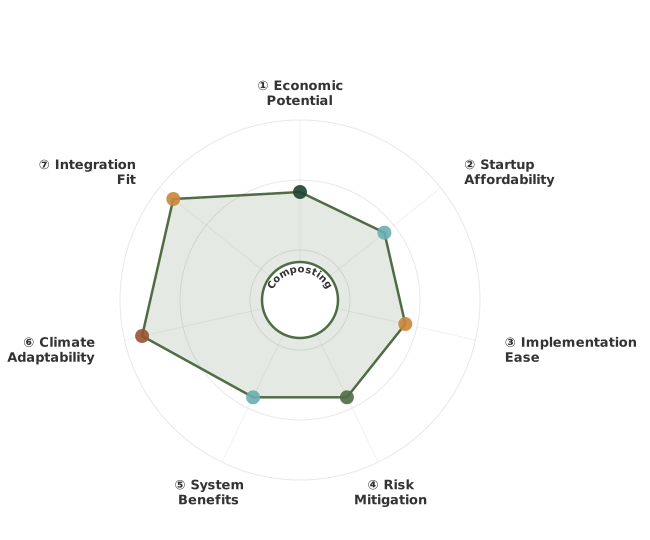
How These Traits Are Calculated
Trait dimensions are ordered clockwise starting from the top of the chart (12 o'clock position):
1. Economic Potential
Financial returns, annual value, and break-even timeline
WHAT: Evaluates financial viability by combining net annual value ($/ha from savings, income, and amortized harvests) with break-even timeline showing when practices pay for themselves.
WHY: Farmers need clear ROI understanding before committing resources. Fast payback (≤3 years) with strong returns (≥$300/ha) enables confident adoption, while long timelines (>10 years) restrict adoption to well-funded operations willing to wait for returns.
HOW: Calculated from net annual value in $/ha and break-even years. Exceptional (≥2.6): fast ROI ≤3 years + high value ≥$300/ha. Typical (1.8-2.5): moderate returns or longer timelines. Limited (<1.8): marginal economics or very long payback >10 years.
2. Startup Affordability
Initial investment costs and financial barrier to entry
WHAT: Measures financial barrier to entry through startup costs for equipment, infrastructure, consulting, and materials. Inverted scoring: lower costs = higher scores = more accessible adoption.
WHY: Affordability determines who can adopt. Low-cost practices (<$250/ha) enable widespread adoption across diverse scales, while high costs (>$2,500/ha) limit adoption to well-capitalized operations, creating barriers that slow regenerative transition.
HOW: Calculated from initial investment parsed from practice content. Inverted scoring: Exceptional (≥2.6): minimal investment <$250/ha. Typical (1.8-2.5): moderate costs $250-2,500/ha. Limited (<1.8): high barrier >$2,500/ha.
3. Implementation Ease
Learning curve and specialized knowledge required
WHAT: Measures how much learning, planning, and specialized knowledge a practice requires. Simpler practices with fewer steps score higher, while complex practices requiring extensive training or specialized resources score lower.
WHY: Complex practices create adoption barriers even when economically viable. Straightforward practices enable faster adoption and broader participation, while those requiring extensive training, timing precision, or specialized equipment limit who can succeed.
HOW: Evaluated by measuring documentation length and identifying complexity markers like location-specific requirements, seasonal timing windows, specialized skills, and dedicated equipment needs. Exceptional (≥2.6): straightforward practices with minimal prerequisites. Typical (1.8-2.5): moderate learning curve with some specialized needs. Limited (<1.8): steep learning curve requiring significant training or resources.
4. Risk Mitigation
Identified financial and ecological risk assessment
WHAT: Evaluates documented risks across financial (investment loss, market volatility) and ecological (crop failure, pest outbreaks) domains. Inverted scoring: fewer risks = higher scores.
WHY: Understanding risk exposure helps farmers make informed decisions. Low-risk practices allow confident implementation, while high-risk practices require careful planning and contingency resources. Risk transparency prevents costly failures.
HOW: Calculated from identified risks in practice content. Inverted scoring: Exceptional (≥2.6): ≤2 risks with manageable severity. Typical (1.8-2.5): 3-5 moderate risks. Limited (<1.8): 6+ risks or severe exposure.
5. System Benefits
How many ways the practice improves your land simultaneously
WHAT: Measures how many aspects of land health improve at once—carbon storage, soil quality, erosion control, water absorption, and biodiversity. Practices that improve multiple areas simultaneously create compounding benefits where each improvement reinforces the others.
WHY: The best practices solve multiple problems at once. For example, addressing erosion simultaneously builds carbon and improves water infiltration, creating a resilient system with positive feedback loops. Single-benefit approaches miss these compound transformation opportunities.
HOW: Evaluated across five key outcomes: carbon sequestration, soil organic matter increase, erosion reduction, water infiltration improvement, and biodiversity enhancement. Exceptional (≥2.6): high carbon storage (>8 t/ha/yr), improvements across 4-5 areas, transformative outcomes. Typical (1.8-2.5): moderate carbon (3-8 t/ha/yr), improvements across 2-3 areas. Limited (<1.8): modest impact (<3 t/ha/yr), single-area focus only.
6. Climate Adaptability
Geographic applicability across Köppen climate zones
WHAT: Evaluates geographic applicability by assessing how many Köppen climate zones successfully support a practice and what adaptation requirements are needed. Measures breadth of climates where farmers can implement with minimal to moderate modifications.
WHY: Universal practices working across diverse climates enable more farmers to adopt regenerative approaches. Practices limited to single climate types (only Mediterranean, only tropical) restrict adoption and slow global transition. Adaptability determines whether a practice serves niche regions or offers broad transformation.
HOW: LLM evaluation of regional success stories, Köppen zone coverage, and adaptation needs. Exceptional (≥2.6): 5+ zones or 4+ climate types, 3+ continents, minimal adaptation. Typical (1.8-2.5): 3-4 zones or 2-3 types, 2 continents, moderate adaptation. Limited (<1.8): 1-2 zones, single region, significant adaptation or highly specialized.
7. Integration Fit
How well this practice combines with others you're doing
WHAT: Measures how well a practice combines with other regenerative practices you might be doing. Some practices work as building blocks that make many other practices easier or more effective, while others work best on their own.
WHY: Practices that combine well with many others create more value on your farm. For example, cover cropping enables no-till, improves grazing, supports crop diversity, and helps water management—making all of them work better together. This helps you build a coherent system rather than juggling disconnected practices.
HOW: Evaluated by identifying which practices combine well and how strong those combinations are. 'Ideally Suited' means strong combinations where practices reinforce each other (practice A makes B easier, while B makes A more effective). 'Adequate' means complementary benefits that work well together. Exceptional (≥2.6): combines well with 6+ practices, serves as a building block. Typical (1.8-2.5): combines with 3-5 practices. Limited (<1.8): 1-2 practices or works best alone.
Going Deeper
1
WHY - The Benefits
Composting is a cornerstone practice in regenerative agriculture, offering a multifaceted approach to resource management and soil building. It transforms what would otherwise be considered waste into a vital input that regenerates soil health, enhances economic...
Composting is a cornerstone practice in regenerative agriculture, offering a multifaceted approach to resource management and soil building. It transforms what would otherwise be considered waste into a vital input that regenerates soil health, enhances economic...
WHY - The Benefits
Composting is a cornerstone practice in regenerative agriculture, offering a multifaceted approach to resource management and soil building. It transforms what would otherwise be considered waste into a vital input that regenerates soil health, enhances economic...
Composting is a cornerstone practice in regenerative agriculture, offering a multifaceted approach to resource management and soil building. It transforms what would otherwise be considered waste into a vital input that regenerates soil health, enhances economic...
Soil Health Benefits
The most significant benefit of compost is its transformative effect on soil structure. Compost acts as a physical conditioner, improving the tilth of both clayey and sandy soils. In heavy clay soils, compost particles help bind soil colloids into stable aggregates, creating larger pore spaces that enhance drainage and aeration. This prevents waterlogging and allows roots to penetrate more freely. In sandy soils, compost particles act like microscopic sponges, increasing the soil's cation exchange capacity (CEC) and water-holding capacity. This means nutrients and water are better retained within the root zone, reducing leaching and improving drought resilience.
Compost is rich in stable organic matter, which is the "glue" that holds soil together. As this organic matter decomposes further in the soil, it fuels a vibrant soil food web. This web of bacteria, fungi, protozoa, nematodes, and larger organisms actively builds soil structure through their feeding activities, waste products (like glues and burrows), and the decomposition of their bodies. The result is a more resilient, porous soil profile that resists compaction and erosion. Studies consistently show that in systems with regular, heavy compost application, soil organic matter can increase by 0.5-1.5% annually. This higher rate reflects the direct addition of organic matter and is a substantial improvement for long-term soil fertility. Actual rates vary significantly with climate and soil type.
The microbial populations inoculated into the soil via compost are invaluable. Compost acts as a living inoculant, introducing beneficial microorganisms that can outcompete or suppress soil-borne pathogens. These microbes also play critical roles in nutrient cycling, making nitrogen, phosphorus, and other essential elements more available to plants. For example, mycorrhizal fungi form symbiotic relationships with plant roots, extending their reach for nutrients and water, while nitrogen-fixing bacteria convert atmospheric nitrogen into plant-usable forms. This biological enhancement reduces the need for synthetic fertilizers and pesticides.
Economic Benefits
Composting provides significant economic advantages by reducing reliance on external inputs and creating valuable products on-farm. The most direct financial benefit is the reduction in costs for fertilizers and soil amendments. Compost provides a slow-release source of nitrogen, phosphorus, potassium, and micronutrients, often reducing the need for synthetic fertilizers by 30-60% or more, depending on soil test results and crop needs. This not only saves money but also avoids the environmental risks associated with synthetic fertilizer use, such as nutrient runoff and greenhouse gas emissions.
When applied to soil, compost enhances water infiltration and retention. This directly translates to reduced irrigation costs in water-scarce regions and improved crop resilience during dry spells. Farms that incorporate compost often report needing 20-40% less irrigation water. Furthermore, improved soil structure means better seed germination and root development, leading to healthier, more vigorous plants that are less susceptible to pests and diseases, potentially reducing pesticide applications as well.
The improved soil health from compost application leads to increased crop yields and quality. Studies and farmer experiences show yield increases of 10-25% for a wide range of crops as soil becomes more fertile, holds water better, and supports a healthier plant root system. Over time, the sustained increase in soil organic matter also builds long-term land value, making the farm more productive and resilient for future generations. The compost itself can be a marketable product, with prices ranging from $50-200 per cubic meter ($40-160 per cubic yard) depending on quality, feedstock, and local market demand.
Regenerative Systems Fit
Composting is a foundational practice that deeply integrates with and enhances the five regenerative agriculture principles. When viewed as a cycle of resource utilization, it forms the backbone of many regenerative farm systems.
Principle 1 (Minimize Soil Disturbance): While the composting process itself involves turning and managing materials, its application to the soil aims to minimize disturbance. Applying compost builds soil structure organically, reducing the need for tillage over time. A healthy, well-aggregated soil built by compost can withstand more traffic and resist compaction, decreasing the pressure for disruptive interventions like plowing. Compost also feeds the soil biology that actively works to maintain structure and prevent compaction from arising.
Princ 2 (Maximize Crop Diversity): Compost is the ultimate food source for a diverse soil ecosystem. By providing a wide array of carbon compounds and nutrients, it supports a complex web of beneficial microorganisms, fungi, and invertebrates. This rich soil biological community, in turn, supports more diverse plant communities, including cover crops, perennials, and cash crops with varied root structures and nutrient needs. A diverse soil food web can outcompete pathogens, leading to healthier plants that thrive in a diverse farming system.
Principle 3 (Keep Soil Covered): Applying compost improves soil structure, making it more resilient and better able to maintain cover. Soils rich in organic matter develop better aggregate stability, which helps shed water and resist wind erosion, keeping the soil surface protected. Furthermore, the increased biological activity spurred by compost can support the vigorous growth of cover crops and perennial forages, which actively cover the soil year-round.
Principle 4 (Maintain Living Roots): Compost creates a habitat where living roots can flourish consistently. The improved soil structure, water retention, and nutrient availability fostered by compost allow plants to establish and grow deeper, longer root systems. This directly supports the principle of maintaining living roots in the soil for as much of the year as possible, providing continuous carbon input to the soil food web and improving soil health.
Principle 5 (Integrate Livestock): Composting is a prime example of integrating livestock into nutrient cycling. Animal manures (from cattle, sheep, poultry, horses, etc.) are rich feedstocks for compost. Properly composting manure not only recycles valuable nutrients back to the land but also neutralizes odors, kills pathogens and weed seeds, and stabilizes the nitrogen, preventing gaseous losses. This returns fertility to pastures or crop fields, closing the nutrient loop on the farm and reducing the need for external fertilizer. The process turns an animal production byproduct into a land-building resource.
For farms transitioning toward regenerative systems, composting offers a low-risk entry point. It doesn't require immediate radical changes in cropping or grazing patterns. Instead, it enhances the soil's capacity to support more regenerative practices over time. By building soil health, compost enables farmers to gradually reduce synthetic inputs, adopt cover cropping more effectively, and potentially transition to reduced tillage or no-till systems. It lays the biological and structural foundation for further regenerative adoption.
Sources behind this view
Videos & Podcasts
-
Compost is a useful tool for soil health, providing microbial food and nutrients, but use judiciously. Focus on cover crops, rotations, and livestock for fundamental soil building, as compost is a pra
-
Prioritize building healthy soil by making compost through various methods (grazing, chop-and-drop, chicken tractors). Healthy soil enhances plant and animal health, farm management, drought resilienc

-
Healthy soils support biological functions, water/nutrient cycling, and contaminant binding. Compost enhances soil health by increasing organic matter and carbon, improving CEC, water retention, and n
-
Compost is a valuable microbial food source for soil health, but use judiciously to avoid nutrient imbalances. While not essential for soil health, it's a useful practice, especially on degraded land.

Community
-
Compost is a useful amendment but not a primary soil health practice; living plants and root exudates are the key drivers of stable organic matter and soil aggregation. Implementing regenerative princ
Read more (opens in new window) understandingag.com -
Composting recycles organic waste into a soil amendment that improves structure, aeration, and drainage, while providing nutrients released slowly over time.
Read more (opens in new window) ucanr.edu -
Compost, a product of controlled organic decomposition, offers numerous agricultural benefits including increased soil organic matter, improved water retention, enhanced microbial activity, and nutrie
Read more (opens in new window) ucanr.edu -
Composting is controlled decomposition of organic waste into stable soil amendments, improving soil health, water retention, fertility, and reducing fertilizer needs. It also aids in pathogen suppress
Read more (opens in new window) cias.wisc.edu
Research
-
Microbial Community in the Composting Process and Its Positive Impact on the Soil Biota in Sustainable Agriculture (opens in new window)
This study found: Compost's microbial communities are key to improving soil health and promoting sustainable agriculture by boosting beneficial soil organisms and essential ecosystem functions.
-
Recycling of Organic Wastes through Composting: Process Performance and Compost Application in Agriculture (opens in new window)
This study found: Composting organic waste creates a valuable soil amendment that improves fertility and can suppress diseases. The review covers compost quality, application methods, and potential downsides of over-ap
-
Recycling of Organic Wastes through Composting: Process Performance and Compost Application in Agriculture (opens in new window)
This study found: Composting organic wastes creates a valuable soil amendment that improves fertility and can suppress diseases. The review covers compost quality, application, and potential negative effects of overuse
-
On-Farm Composting Methods (opens in new window)
This study found: Review of on-farm composting methods, emphasizing rapid techniques to turn farm waste into soil-improving resources, especially for developing countries.
From the Web
-
Explains composting as a biological process for soil and water conservation, detailing its benefits for soil fertility and structure, and providing steps for planning, the composting process, and appl
-
Compost effectively builds soil fertility by increasing organic matter, improving water retention, and releasing nutrients slowly. It offers advantages like reduced runoff and fewer weed seeds but is
2
WHERE - Regional Considerations
Composting is a climate-independent practice, with methods adapted to nearly any environment. The primary considerations are managing moisture and temperature for optimal microbial activity, and sourcing appropriate carbon and nitrogen inputs.
Composting is a climate-independent practice, with methods adapted to nearly any environment. The primary considerations are managing moisture and temperature for optimal microbial activity, and sourcing appropriate carbon and nitrogen inputs.
WHERE - Regional Considerations
Composting is a climate-independent practice, with methods adapted to nearly any environment. The primary considerations are managing moisture and temperature for optimal microbial activity, and sourcing appropriate carbon and nitrogen inputs.
Composting is a climate-independent practice, with methods adapted to nearly any environment. The primary considerations are managing moisture and temperature for optimal microbial activity, and sourcing appropriate carbon and nitrogen inputs.
Click Here to Look up your Region if you don't already know it
Arid and Semi-Arid Regions
Representative Locations: Southwestern United States, North Africa, Central Asia, Interior Australia, parts of Brazil (Cerrado) Climate Context: Low annual precipitation (<40 cm or 15 inches), high temperatures, short and often unpredictable growing season. Köppen BSh/BSk.
In arid regions, the primary challenge is moisture conservation. Compost piles can lose water rapidly through evaporation. Methods must focus on retaining moisture. Pile construction may involve using denser materials, creating a more compact windrow, or using materials with higher water-holding capacity like peat or biochar. Covering piles with tarps, mulch, or a layer of finished compost is crucial, especially during active heating phases. The high ambient temperatures can be an advantage for achieving pathogen kill temperatures quickly, but risk overheating if not properly aerated. Sourcing sufficient "greens" (nitrogen) can be challenging in some arid landscapes, making crop residues, animal manures, and even urban organic waste valuable. Composting in arid zones is particularly impactful because it dramatically improves soil's water-holding capacity, making scarce rainfall more effective for plant growth.
Mediterranean Regions
Representative Locations: California, Mediterranean basin (Spain, Italy, Greece), central Chile, southwestern Australia, Western Cape South Africa Climate Context: Hot, dry summers and mild, wet winters. Annual precipitation 40-90 cm (15-35 inches), highly seasonal. Köppen Csa/Csb.
Composting in Mediterranean climates balances the need to retain moisture during dry summers with the risk of over-saturation during wet winters. Pile construction needs to consider drainage. Windrows should be well-formed with good aeration, or elevated composting systems (e.g., static aerated piles) can prevent waterlogging. The dry summers accelerate decomposition but require vigilant moisture monitoring and adding water. Sourcing carbon materials like straw, wood chips, or olive pomace is often feasible. The high temperatures during summer can be excellent for active composting, quickly reaching kill temperatures for pathogens and weed seeds. Compost application significantly enhances soil's water-holding capacity, directly counteracting the arid summer conditions prevalent in these regions.
Humid Temperate Regions
Representative Locations: Southeastern United States, northern Europe (UK, Germany, Poland), eastern China, Japan, New Zealand Climate Context: Warm to hot summers and cool to cold winters with moderate to high annual precipitation (75-150 cm or 30-60 inches) distributed relatively evenly. USDA Zones 6-8, Köppen Cfb/Cfa.
Composting in humid temperate regions offers favorable conditions for microbial activity due to moderate temperatures and reliable moisture. However, managing excess moisture and ensuring sufficient aeration are key challenges, especially during rainy seasons. Windrows should be built to allow good airflow, and turning frequency might need to be higher to prevent anaerobic conditions. Materials like crop residues, grass clippings, and manures are typically abundant. The moderate temperatures allow for relatively consistent composting throughout the year, though very cold winters in some areas might slow down or halt active decomposition, requiring pile insulation or larger pile sizes to retain heat. Compost enhances soil structure, mitigating some impacts of heavy rainfall through improved infiltration and reduced runoff.
Cold Continental Regions
Representative Locations: Northern USA and Canada, Northern Europe, Northern Asia Climate Context: Very short growing seasons, extreme summer heat, severe winter cold. USDA Zones 3-5, Köppen Dfa/Dfb.
Composting in cold climates requires careful management of temperature. Decomposition slows significantly or stops during freezing winter months. The strategy often involves: 1. Summer composting: Maximizing pile heating during the short warm season. 2. Insulation: Building larger piles or insulating them with straw or finished compost to retain internal heat through colder periods. 3. Spring/Fall emphasis: Focusing active management during shoulder seasons. 4. Aeration: Ensuring consistent oxygen supply even as temperatures drop. Materials like manure, crop residues, and wood chips are common. Aerated Static Pile (ASP) systems can be effective by forcing air through the pile, maintaining heat and aerobic conditions even in cold weather. Due to shorter growing seasons, compost’s ability to build soil health and improve water management is critical for maximizing crop production. Pre-composting during warmer months ensures finished compost is available for spring application.
Subtropical and Tropical Regions
Representative Locations: Southeastern USA, Southern China, Southern Brazil, Eastern Australia, Southeast Asia, Central Africa Climate Context: Hot, humid summers and mild winters with generally ample rainfall. Köppen Cfa/Cwa (Subtropical), Af/Am/Aw (Tropical).
Composting in hot and humid regions is often rapid due to high temperatures and moisture. The main challenges are preventing anaerobic conditions from waterlogging and managing high volumes. Frequent turning might be needed for aeration. The abundance of diverse organic materials (crop residues, animal manures, food waste) facilitates composting. High temperatures in tropical regions can quickly achieve pathogen kill, making it an excellent method for processing materials that might carry disease risks. However, composting too quickly can lead to nutrient loss (especially nitrogen) if not managed carefully. Ensuring finished compost is stabilized is important, as it stores carbon that would otherwise decompose rapidly in warm soils. Compost improves soil structure, crucial for managing heavy rainfall and preventing erosion in these climates.
3
HOW - Implementation Process
Composting varies based on scale, available materials, climate, and desired end product. This guide outlines common methods for farm and ranch settings.
Composting varies based on scale, available materials, climate, and desired end product. This guide outlines common methods for farm and ranch settings.
HOW - Implementation Process
Composting varies based on scale, available materials, climate, and desired end product. This guide outlines common methods for farm and ranch settings.
Composting varies based on scale, available materials, climate, and desired end product. This guide outlines common methods for farm and ranch settings.
Prerequisites
- Material Availability: Access to a consistent supply of "Greens" (nitrogen-rich: manure, fresh plant matter, food scraps) and "Browns" (carbon-rich: straw, dry leaves, wood chips, paper). A C:N ratio of 25:1 to 30:1 is ideal for rapid decomposition.
- Space: Dedicated area for composting, considering volume and turning needs.
- Water Access: For maintaining optimal moisture (damp sponge consistency).
- Turning Equipment: Pitchfork, manure fork, front-end loader, or specialized compost turner depending on scale.
- Temperature Monitoring: Compost thermometer.
- Time Commitment: Varies based on method, from monthly checks to daily turning.
Phase 1: Site Selection and Material Preparation
Site Selection: Choose a location convenient to material sources and fields where compost will be applied. It should be well-drained to prevent waterlogging. Partial shade can help retain moisture in hot climates, while full sun might help generate heat in cooler climates. Consider proximity to water sources. For larger operations, concrete pads or specialized bins can improve material containment and runoff control.
Material Collection and Sorting: Gather available "greens" and "browns." Store them separately until ready to mix. Shredding or chopping larger materials (e.g., woody debris) can speed up decomposition. Pre-composted solids from anaerobic digestion can also be used as a feedstock.
Phase 2: Mixing and Pile Construction
Volumetric Ratios: Aim for approximately 2 parts Browns to 1 part Greens by volume. This is a starting point; finer adjustments depend on material type. Dry manure is "greener" than wet manure; fresh grass is "greener" than dry straw.
Layering Method (for smaller scales): 1. Start with a base layer of coarse "browns" (e.g., straw, wood chips) for aeration and drainage. 2. Add alternating layers of "greens" and "browns." 3. Apply materials evenly to avoid large clumps of one type. 4. Moisten each layer as it's added to achieve the consistency of a wrung-out sponge.
Windrow Method (for larger scales): 1. Create alternating piles of "greens" and "browns" in a designated area. 2. Mix them thoroughly using a front-end loader or compost turner to achieve desired C:N ratio. Aim for a pile at least 1.5 meters (5 ft) high to self-insulate and generate heat. 3. Mix materials to form long, narrow piles (windrows), typically 2-3 m (6-10 ft) wide and 1-2 m (3-6 ft) high.
Aerated Static Pile (ASP) Method: 1. Layer materials as above but without initial mixing into a static pile. 2. Install PVC pipes or aeration tubing within the pile. 3. Use blowers to periodically or continuously force air through the material. This method is faster and requires less turning but has higher initial equipment costs.
Phase 3: Decomposition and Turning (Active Phase)
Temperature Monitoring: Use a compost thermometer to monitor the pile's internal temperature. During the active phase, temperatures should reach 55-65°C (131-150°F) for at least 3-5 days to kill most weed seeds and pathogens.
Turning for Aeration:
- Hot Composting (Faster): Turn the pile when temperatures start to drop below 55°C (131°F) after the initial heating phase (typically every 5-14 days). Turning reintroduces oxygen, mixes materials, and ensures even decomposition. The entire process can take 4-12 weeks.
- Cold Composting (Slower, Less Labor): Minimal turning required. Materials break down more slowly over 6-12 months, with less active heating. Weed seeds and pathogens may not be killed. This is generally less desirable unless material inputs are very consistent and speed isn't critical.
Moisture Management: Check moisture levels regularly by squeezing a handful of material. It should feel like a wrung-out sponge; if it drips, it's too wet; if it crumbles, it's too dry. Add water during turning if dry, or add more "browns" if too wet.
Phase 4: Curing and Maturation
Curing: Once the material has largely decomposed (no longer heats up significantly after turning, and recognizable feedstock materials are mostly gone), the pile enters a curing phase. This period allows temperatures to cool to ambient levels, and fungal and actinomycete activity increases, producing a stable humus. This phase can take 2-6 months. Water during curing may become more critical, especially in hot climates, to support fungal growth.
Maturation: The compost is considered mature when it has a uniform, dark brown color, an earthy smell, and no recognizable feedstock materials remain. It should be crumbly and loose.
Transition Timeline & Phase-Out Strategy
Composting itself is a regenerative practice, so there's no "phase-out" of a non-regenerative component of the practice itself. However, its integration into a farm system is a transition:
- Year 1: Start small-scale composting with readily available materials (e.g., manure from a small livestock operation, yard waste). Focus on learning the basics of C:N ratios, moisture, and turning. Apply compost to a few test strips or a single field.
- Year 2-3: Scale up composting operations based on learnings. Integrate with crop rotation plans, applying compost before planting cover crops or cash crops. Begin tracking soil health indicators (organic matter, infiltration) on composted vs. non-composted areas.
- Year 4-5+: Compost becomes a routine part of farm fertility management. Nutrient budgets are adjusted to account for compost's contribution, reducing synthetic input purchase. Aim to compost all available on-farm organic waste. Track economic savings from reduced inputs and improved yields. Note that these timelines are estimates and depend heavily on climate, initial soil health, and specific management goals. For a more detailed discussion of transition variables, see the Farm System Design page.
The "phase-out" is of reliance on synthetic inputs. As soil health improves with consistent compost application, the need for nitrogen fertilizers, phosphorus amendments, and even some pesticides should decrease. The timeline for this reduction depends on baseline soil health and intensity of compost use, typically requiring 3-7 years of consistent application combined with other regenerative practices.
Sources behind this view
Videos & Podcasts
-
On-site aerobic composting of manure with woody and green materials, requiring regular turning, produces finished compost in ~4 weeks. This improves pastures, soil structure, and animal health, reduci
-
A guide to composting, detailing benefits for soil health and waste reduction. Explains the 'greens' and 'browns' ratio (2:1 browns to greens), layering, aeration, moisture management, and what materi
-
Compost is manufactured using high-carbon materials, layered with nitrogen sources and rock minerals in a slurry, with minimal turning to favor fungal decomposition. This 'no-till compost' is surface-
-
Explains the benefits, science (C:N ratio, moisture, oxygen, temperature), and methods (windrows, in-vessel) of manure composting. Highlights NRCS 317 standards, regulatory considerations, and the nee
Community
-
Successful composting requires managing aeration, moisture (45-60%), volume (min 3x3x3 ft), particle size (1-3 in), and a 30:1 C:N ratio of browns and greens. Compost is ready in 3-6 months when dark,
Read more (opens in new window) ucanr.edu -
Recommends a three-tiered composting system for efficiency, emphasizing aerobic conditions, moisture, and temperature management. Suggests 90% completion is sufficient for soil amendments, with potent
Read more (opens in new window) permies.com -
Composting technologies range from static piles to in-vessel systems, with site selection and management intensity crucial. Quality standards like STA and Solvita help ensure compost suitability for v
Read more (opens in new window) cias.wisc.edu -
This guide from University of Illinois Extension details composting methods, emphasizing the need for balanced carbon/nitrogen materials, air, moisture, and temperature for microbial decomposition. It
Read more (opens in new window) extension.illinois.edu
Research
-
Waste Management through Composting: Challenges and Potentials (opens in new window)
This study found: Composting recycles farm waste into soil amendments, but faces challenges like long duration and odor. Chemical fertilizers have environmental downsides, driving a return to compost for soil fertility
-
On-Farm Composting Methods (opens in new window)
This study found: Review of on-farm composting methods, emphasizing rapid techniques to turn farm waste into soil-improving resources, especially for developing countries.
-
Recycling of Organic Wastes through Composting: Process Performance and Compost Application in Agriculture (opens in new window)
This study found: Composting organic waste creates a valuable soil amendment that improves fertility and can suppress diseases. The review covers compost quality, application methods, and potential downsides of over-ap
-
Duration of Composting and Changes in Temperature, pH and C/N Ratio during Composting: A Review (opens in new window)
This study found: Review on composting biodegradable waste: completion time depends on waste type and method. Key factors are moisture, temperature, pH, and C:N ratio, which change during decomposition.
From the Web
-
This manual guides farmers on composting organic waste for soil health, detailing processes, benefits, materials (browns/greens), C:N ratio, methods (pit, heap, windrow), and quality control. It empha
-
This module details compost manure production and application for soil health in watersheds. It covers green/brown materials, C:N ratio, moisture, aeration, and maturity indicators. Four methods are e
4
Know the Debate
Composting is highly adaptable to nearly any climate or scale, but successful implementation hinges on managing moisture and temperature. In arid r...
Know the Debate
Composting is highly adaptable to nearly any climate or scale, but successful implementation hinges on managing moisture and temperature. In arid r...
Composting is highly adaptable to nearly any climate or scale, but successful implementation hinges on managing moisture and temperature. In arid regions, retaining water is paramount, while humid areas focus on aeration. Small-scale operations can use simple bins and readily available waste, while large farms may invest in specialized equipment for efficiency. The process itself is generally low-risk, but managing feedstocks to avoid pathogens and ensuring proper maturity are key to maximizing benefits and avoiding soil imbalances. Farmers should consider their specific context, available resources, and desired outcomes when choosing a composting method.
How long does compost take to mature?
Rapid Maturation (4-8 weeks)
Field practitioners using thermophilic methods and careful feedstock management can achieve usable compost for soil amendment in 4-8 weeks, often after a short curing phase. This speed is crucial for timely application on farms with tight planting windows.
Sources behind this view
Sources behind this view
Videos & Podcasts
-
On-site aerobic composting of manure with woody and green materials, requiring regular turning, produces finished compost in ~4 weeks. This improves pastures, soil structure, and animal health, reducing costs and reliance on synthetic inputs.
-
Details a market garden's homemade compost system using cardboard, kitchen waste, grass clippings, and horse manure. The process involves filling, slumping, refilling, and one turn, with compost ready in 4-6 weeks, crucial for garden fertility.
-
Reiterates composting basics: balancing 'greens' and 'browns' (2:1 ratio), layering, aeration, and moisture management. Avoids meat, dairy, and diseased plants. Ready compost is dark, crumbly, and earthy-smelling, enhancing garden health.
Traditional Maturity (6-12 months+)
Academic and extension sources often describe compost maturity taking 6-12 months or longer through cold composting or curing phases, emphasizing nutrient stability and pathogen kill for safety, especially for fresh vegetable production.
Sources behind this view
Sources behind this view
Videos & Podcasts
-
A guide to composting, detailing benefits for soil health and waste reduction. Explains the 'greens' and 'browns' ratio (2:1 browns to greens), layering, aeration, moisture management, and what materials to avoid. Compost is ready in months to a year when dark, crumbly, and earthy-smelling.
Research
-
Composting and Its Benefits (opens in new window)
This study found: This chapter explains the basics of composting, covering its many benefits for the environment, your wallet, and your soil. It details the key things that affect how well compost breaks down, such as the balance of carbon and nitrogen in the materials, how wet it is, how much air it gets, and the temperature. It also touches on the different types of tiny organisms, like bacteria and fungi, that do the work of composting. The goal is to help you understand and improve your composting practices, fitting into a system where resources are reused.
From the Web
-
This manual guides farmers on composting organic waste for soil health, detailing processes, benefits, materials (browns/greens), C:N ratio, methods (pit, heap, windrow), and quality control. It emphasizes pathogen deactivation and safety, recommending specific nutrient targets and pathogen-controlling plant additions.
Making Sense of the Differences
The timeline for compost maturity varies greatly depending on the method, materials used, and desired end-product quality. Rapid methods (4-8 weeks) can produce biologically active compost suitable for direct soil application with careful management and feedstock selection. Traditional or cold composting methods take much longer (6-12 months) but require less labor and can be more forgiving. Farmers' choices depend on their scale, labor availability, material sources, and whether they prioritize speed or passive management and nutrient stability, especially for fresh vegetable production.
What scale of operation is best for composting methods?
Small-Scale & Garden Methods
Low-capital methods like static piles, bins, and vermicomposting are ideal for small gardens and farms, utilizing readily available kitchen scraps and yard waste with minimal equipment.
Sources behind this view
Sources behind this view
Videos & Podcasts
-
Utilize composting and worm tea on small-scale farms to recycle organic matter and nutrients. These inputs improve soil structure, enhance water holding capacity, and provide slow-release fertility for healthier plants.
-
Making high-quality compost is key for home growers to build soil microbial communities. Simple methods like using tights for extracts, combined with mulching and green growing plants, can transform soil and reduce reliance on purchased inputs.
-
Worm farms using tiger worms process kitchen waste into vermicompost and 'worm juice' fertilizer. This small-scale system is effective for gardens and complements larger farm composting efforts.
From the Web
-
Learn to make your own compost using farm organic waste, leaves, plant cuttings, sawdust, straw, kitchen waste, and poultry manure for soil amendment.
Farm & Ranch Scale Methods
Larger operations benefit from windrows or aerated static piles (ASP) using front-end loaders or specialized machinery to process greater volumes of manure and crop residues efficiently.
Sources behind this view
Sources behind this view
Videos & Podcasts
-
Explains the benefits, science (C:N ratio, moisture, oxygen, temperature), and methods (windrows, in-vessel) of manure composting. Highlights NRCS 317 standards, regulatory considerations, and the need for monitoring and management for soil health and waste reduction.
Research
-
Waste Management through Composting: Challenges and Potentials (opens in new window)
This study found: Composting is a valuable way to manage farm waste by breaking down organic materials into nutrient-rich soil amendments. However, composting can face challenges like taking too long, producing unpleasant smells, or not having enough nutrients initially. These issues have sometimes led farmers to rely on chemical fertilizers. While chemical fertilizers quickly provide nutrients, they can harm the environment by contributing to pollution, harming soil life, and depleting the ozone layer. Because of these downsides, many farmers are returning to compost to rebuild soil health. This review looks at the reasons why composting can take a long time, what factors influence it, and how to improve the process. Suggestions include developing quick tests for contaminants, using odor-trapping methods, and adding natural activators to boost nutrient content. Using compost that releases nutrients slowly could be beneficial for long-term crops, and adding natural plant-based treatments could further enhance compost quality and speed up the process.
From the Web
-
This manual guides farmers on composting organic waste for soil health, detailing processes, benefits, materials (browns/greens), C:N ratio, methods (pit, heap, windrow), and quality control. It emphasizes pathogen deactivation and safety, recommending specific nutrient targets and pathogen-controlling plant additions.
-
Compost improves garden soil structure, enhancing drainage in clay and water retention in sand. It slowly releases nutrients and can be supplemented with manure for organic crop production, while also recycling waste.
Making Sense of the Differences
Composting is highly adaptable to various scales, from backyard gardens to large commercial farms. The choice of method depends on available space, feedstock volume, and capital investment. Small-scale operations can utilize simple bins or static piles, while larger farms may benefit from windrows or in-vessel systems using front-end loaders and specialized tuners. The critical factor is not the specific method but consistent management of the composting process: balancing materials, maintaining moisture, and ensuring aeration. Successful composting is accessible to almost any scale, with different methods offering trade-offs in labor, speed, and initial investment.
How does compost nutrient content vary, and should farmers supplement?
Variable Nutrients, Supplementation Often Needed
Academic studies acknowledge compost's slow-release nutrient profile and variability, suggesting precise application without soil testing is difficult and supplementation may be needed for high-demand crops, especially during transition.
Sources behind this view
Sources behind this view
Research
-
Recycling of Organic Wastes through Composting: Process Performance and Compost Application in Agriculture (opens in new window)
This study found: This review looks at how composting turns organic waste like food scraps and yard trimmings into a valuable soil amendment. It covers how to make good quality compost that's ready to use, and the best ways to apply it to farms. The review explains how compost can boost soil health, help protect plants from diseases, and also warns about potential problems if too much compost is applied. Composting is a flexible method that can be used on any scale, from home gardens to large municipal facilities.
-
Recycling of Organic Wastes through Composting: Process Performance and Compost Application in Agriculture (opens in new window)
This study found: This review looks at how composting organic wastes like food scraps and yard trimmings can create a valuable soil amendment for farms. It covers the important factors that make compost good quality, like ensuring it's mature and stable. The review also explains how to best use compost on crops and land, detailing its benefits for soil health and its ability to help suppress plant diseases. It also cautions against using too much compost. Composting is a flexible technology that can be used at any scale to turn waste into a resource for healthier soils.
-
Composting and Its Benefits (opens in new window)
This study found: This chapter explains the basics of composting, covering its many benefits for the environment, your wallet, and your soil. It details the key things that affect how well compost breaks down, such as the balance of carbon and nitrogen in the materials, how wet it is, how much air it gets, and the temperature. It also touches on the different types of tiny organisms, like bacteria and fungi, that do the work of composting. The goal is to help you understand and improve your composting practices, fitting into a system where resources are reused.
Compost as Primary Fertility, Supplement Less Critical
Field practitioners focus on compost as a soil builder reducing or eliminating synthetic fertilizers. They emphasize compost's role in improving soil biology for nutrient cycling, with soil tests guiding application but often showing reduced need for supplemental inputs over time.
Sources behind this view
Sources behind this view
Videos & Podcasts
-
Composting breaks down organic matter into a nutrient-rich amendment, improving soil health, biodiversity, and reducing chemical fertilizer needs and waste.
-
Compost is a useful tool for soil health, providing microbial food and nutrients, but use judiciously. Focus on cover crops, rotations, and livestock for fundamental soil building, as compost is a practice, not a core principle.
-
Compost is a valuable microbial food source for soil health, but use judiciously to avoid nutrient imbalances. While not essential for soil health, it's a useful practice, especially on degraded land. Focus on on-site composting and the six core soil health principles.
-
Prioritize building healthy soil by making compost through various methods (grazing, chop-and-drop, chicken tractors). Healthy soil enhances plant and animal health, farm management, drought resilience, and reduces reliance on synthetic fertilizers and dewormers.
Making Sense of the Differences
Compost's nutrient content is highly variable, influenced by the feedstock inputs (manure source, plant type, food waste) and the composting process itself. While compost offers broad-spectrum soil health benefits and some slow-release nutrients, relying on average nutrient values can be misleading. Farmers should adjust their approach based on soil tests and crop needs: for depleted soils or high-demand crops, supplemental fertility might be necessary during transition. As soil biology improves with regular compost application, the soil's capacity to cycle nutrients and support plant life increases, potentially reducing the need for direct fertilization over time.
Can compost fully replace synthetic fertilizers?
Partial Replacement, Supplemental Needed
Academic research highlights compost's role in building soil health and nutrient cycling, but its slow-release nature and variability make it challenging to meet precise crop demands without supplementation, especially during transition or for heavily depleted soils.
Sources behind this view
Sources behind this view
Research
-
Recycling of Organic Wastes through Composting: Process Performance and Compost Application in Agriculture (opens in new window)
This study found: This review looks at how composting turns organic waste like food scraps and yard trimmings into a valuable soil amendment. It covers how to make good quality compost that's ready to use, and the best ways to apply it to farms. The review explains how compost can boost soil health, help protect plants from diseases, and also warns about potential problems if too much compost is applied. Composting is a flexible method that can be used on any scale, from home gardens to large municipal facilities.
-
Recycling of Organic Wastes through Composting: Process Performance and Compost Application in Agriculture (opens in new window)
This study found: This review looks at how composting organic wastes like food scraps and yard trimmings can create a valuable soil amendment for farms. It covers the important factors that make compost good quality, like ensuring it's mature and stable. The review also explains how to best use compost on crops and land, detailing its benefits for soil health and its ability to help suppress plant diseases. It also cautions against using too much compost. Composting is a flexible technology that can be used at any scale to turn waste into a resource for healthier soils.
-
Composting and Its Benefits (opens in new window)
This study found: This chapter explains the basics of composting, covering its many benefits for the environment, your wallet, and your soil. It details the key things that affect how well compost breaks down, such as the balance of carbon and nitrogen in the materials, how wet it is, how much air it gets, and the temperature. It also touches on the different types of tiny organisms, like bacteria and fungi, that do the work of composting. The goal is to help you understand and improve your composting practices, fitting into a system where resources are reused.
Significant Reduction, Aim for Elimination
Field practitioners increasingly demonstrate reducing or eliminating synthetic fertilizers by relying on compost and diverse soil biology, citing cost savings and improved soil health as primary drivers for moving away from synthetics.
Sources behind this view
Sources behind this view
Videos & Podcasts
-
Composting breaks down organic matter into a nutrient-rich amendment, improving soil health, biodiversity, and reducing chemical fertilizer needs and waste.
-
Prioritize building healthy soil by making compost through various methods (grazing, chop-and-drop, chicken tractors). Healthy soil enhances plant and animal health, farm management, drought resilience, and reduces reliance on synthetic fertilizers and dewormers.
-
Compost is a useful tool for soil health, providing microbial food and nutrients, but use judiciously. Focus on cover crops, rotations, and livestock for fundamental soil building, as compost is a practice, not a core principle.
-
Compost is a valuable microbial food source for soil health, but use judiciously to avoid nutrient imbalances. While not essential for soil health, it's a useful practice, especially on degraded land. Focus on on-site composting and the six core soil health principles.
Making Sense of the Differences
The debate over whether compost can fully replace synthetic fertilizers hinges on goals and context. For broad soil health improvement and reduced chemical reliance, compost is excellent; it fuels soil biology and improves nutrient cycling. However, for meeting specific, high crop nutrient demands precisely (e.g., high-N crops in early stages), compost's slow-release nature and inherent variability can be challenging. Many regenerative farmers successfully reduce synthetic inputs significantly, using compost as a primary fertility source and supplementing only when soil tests and crop observation indicate specific deficiencies. The 'replacement' is often gradual, evolving as soil biology matures and gains more capacity to mineralize nutrients.
5
HOW MUCH - Costs & Investment
Note: Costs are approximate USD equivalents and vary significantly by region due to local labor rates, material availability, fuel costs, and equipment access. Always research local pricing for materials and services.
Note: Costs are approximate USD equivalents and vary significantly by region due to local labor rates, material availability, fuel costs, and equipment access. Always research local pricing for materials and services.
HOW MUCH - Costs & Investment
Note: Costs are approximate USD equivalents and vary significantly by region due to local labor rates, material availability, fuel costs, and equipment access. Always research local pricing for materials and services.
Note: Costs are approximate USD equivalents and vary significantly by region due to local labor rates, material availability, fuel costs, and equipment access. Always research local pricing for materials and services.
Note: All costs are based on recent US economic data (2024–2026) and may vary substantially by region based on local labor rates, material costs, and regulatory requirements.
Infrastructure & Equipment
The capital intensity of composting shifts dramatically based on the scale of the facility and the desired throughput. For small operations (under 50 acres (20 ha)), the initial capital requirement is primarily categorized as low-barrier. Farmers typically spend between $100 and $1,050. This investment covers basic essential tools such as heavy-duty pitchforks, long-stemmed thermometers for monitoring, and high-quality, reinforced tarps used for moisture management to prevent nutrient runoff.
Mid-sized operations (50 to 500 acres (20–202 ha)) require a more specialized mechanical approach to manage higher volumes of biomass. Total capital investment ranges from $1,550 to $36,500. The focal point of this expenditure is the construction of a dedicated composting pad, ideally made of crushed rock or compacted clay to prevent leachate seepage, costing between $550 and $2,100. Furthermore, mechanization becomes a necessity; farmers often invest $10,500 to $31,500 in used skid steers or tractors equipped with high-capacity loaders. Supplemental infrastructure, such as dedicated water lines, pumps, and hoses for maintaining optimal pile moisture, adds $550 to $3,150.
Large operations (over 500 acres (202 ha)) encounter significantly higher capital thresholds, with investments spanning $7,300 to $240,000. At this scale, manual turning is replaced by industrial-grade tractor-pulled or self-propelled compost turners, which run between $52,000 and $208,000. Site improvement costs are substantial, as large-scale facilities often require engineered concrete pads and advanced stormwater containment systems to meet environmental regulations, with these foundational improvements often exceeding $10,500 for initial compliance work.
Operational Costs: Labor, Fuel, and Feedstocks
Annual operational costs are largely dictated by the efficiency of feedstock sourcing and the level of mechanization. For small-scale operations, annual costs range from $19 to $89 per ton of finished compost. Labor accounts for approximately 60% of these expenses, as the turning process is often performed manually. If carbon-rich supplemental materials like straw or wood chips must be purchased, they add an additional $0 to $21 per ton.
Mid-sized operations realize greater efficiency, with operational costs falling between $17 and $68 per ton. Labor usage is optimized through the use of hydraulic equipment, reducing the time commitment per ton, with labor costs averaging $11 to $32 per ton. Fuel consumption for the operation of skid steers and tractors adds $1 to $8 per ton, depending on local diesel pricing and the frequency of turning cycles required to maintain aerobic conditions.
Large-scale operations achieve the highest potential economy of scale, with operational costs ranging between $7 and $62 per ton. At the lower end of this range, farms that position themselves as local hubs for municipal green waste collection can earn tipping fees, which essentially subsidize the cost of the composting operation. Conversely, on the high end, farms utilizing advanced forced aeration systems (ASP) to accelerate decomposition face higher recurring costs. Electricity and equipment maintenance forThese complex, electrified mechanical systems can elevate total operating expenditures by $6 to $21 per ton.
Regulatory Compliance and Site Management
Management costs scale with the volume of on-site decomposition activity and environmental regulatory scrutiny. For small-scale operations, management is largely informal, with minimal or no mandatory testing, costing roughly $0 to $55 annually. Mid-sized operations generally require a more formal approach, allocating $55 to $320 annually for periodic nutrient and pathogen testing to satisfy organic certification requirements or soil quality standards. Large-scale operations may face significant regulatory oversight, often necessitating annual audit costs and intensive laboratory analysis for heavy metals or persistent herbicides that could be present in incoming feedstocks, potentially costing between $500 and $2,500 annually.
Most Spend: The middle 60% of operations typically invest between $15,000 and $125,000 in capital infrastructure and spend $25 to $55 per ton on operational management, excluding scenarios involving free municipal feedstock subsidies.
Why the Range?: Cost variation is driven primarily by the degree of mechanical automation and the availability of free, local, or waste-product feedstocks. Operations that source materials purely from on-farm waste remain at the lower end of the cost spectrum, while those relying on external trucking, specialized aeration technology, or complex permitting processes for large-scale waste management face costs at the higher end of the ranges.
Sources behind this view
Videos & Podcasts
-
For small-scale farmers, buying compost (e.g., 20 yards for $600 in San Diego) is often more time-efficient and cost-effective than making it, especially when time is a major constraint.
6
REWARDS AND RISKS - Economics & Risk Factors
REWARDS AND RISKS - Economics & Risk Factors
Composting offers a tiered economic landscape based on how effectively a producer integrates the practice into their existing crop management system.
Economic Scenarios
- Best Case ($200–$500/acre ($494–$1,236/ha) net gain): The farm successfully secures free carbon-rich feedstocks from local businesses while minimizing transport distances. High-efficiency internal management yields a 50% reduction in synthetic fertilizer reliance and a 20% surge in crop production. The combined effect of $160 per acre ($395/ha) saved in inputs and $340 per acre ($840/ha) gained in yield performance and localized compost sales drives this high-end outcome.
- Typical Case ($50–$150/acre ($124–$371/ha) net gain): Utilizing primarily on-farm crop residues and barnyard waste, the farm reduces synthetic fertilizer usage by 30%. Improvements in water infiltration and soil moisture retention reduce irrigation-related energy expenses by 15%. This scenario results in an 8-10% yield improvement, effectively amortizing the investment in used machinery within 4 to 5 years.
- Worst Case ($200–$600/acre ($494–$1,483/ha) net loss): Mismanagement of the carbon-to-nitrogen ratio frequently results in anaerobic, foul-smelling piles. Odor issues lead to community complaints or regulatory intervention, resulting in $1,100+ in potential fines or forced operational shutdowns. If the compost fails to mature, the farm realizes no fertilizer savings while losing $600 per acre ($1,483/ha) in labor, fuel, and unused organic inputs.
Market Factors Profitability is acutely sensitive to the tipping fee market. In regions where municipalities pay farmers to accept green waste, the practice shifts from a sunk-cost liability to a consistent revenue stream. Conversely, diesel fuel volatility deeply affects larger operations using industrial turners, as energy use often accounts for 15-25% of annual operational costs. The “Certified Organic” label also acts as a powerful market lever; compost that qualifies for organic certification can command a 25-40% price premium over bulk commodity soil amendments.
Risk Mitigation Strategies
- Modular Growth: Start with a simple windrow system and a sub-$600 investment in monitoring equipment to confirm biological success before scaling to equipment-heavy systems.
- Feedstock Analysis: Periodic laboratory testing (costing ~$110/year) prevents the total loss of a compost batch. Identifying early that a feedstock contains contaminants or has improper nutrient ratios saves the $20/ton fuel cost associated with removing a failed, unmarketable pile.
- NRCS Cost-Sharing: Engage with local natural resource offices to access Environmental Quality Incentives Program (EQIP) funds. These programs frequently subsidize 50–75% of the infrastructure costs for concrete pads, specialized runoff containment, and water infrastructure.
Transition Period Risks Shifting to a biological, compost-based fertility program often results in a 1–2 year "yield lag," where crops experience a 5–10% reduction as the soil microbiome undergoes a structural transition. The soil must shift from a state heavily reliant on readily available synthetic ions to one dependent on biologically mediated nutrient cycling. To mitigate this risk, farmers should avoid the immediate termination of synthetic inputs; instead, implement a gradual 20-30% reduction in fertilizers over three years to allow soil biology to recalibrate without collapsing total crop output.
Sources behind this view
Videos & Podcasts
-
Farming without purchased compost is possible but requires creativity for mulching and fertility. Strategies include using hay mulch, homemade compost, animal inputs, foliar sprays, and cover crops. C
-
On-site aerobic composting of manure with woody and green materials, requiring regular turning, produces finished compost in ~4 weeks. This improves pastures, soil structure, and animal health, reduci
-
Compost is a useful tool for soil health, providing microbial food and nutrients, but use judiciously. Focus on cover crops, rotations, and livestock for fundamental soil building, as compost is a pra
-
Explains the benefits, science (C:N ratio, moisture, oxygen, temperature), and methods (windrows, in-vessel) of manure composting. Highlights NRCS 317 standards, regulatory considerations, and the nee
Community
-
Importing compost carries risks of contamination (pathogens, weeds, chemicals) due to lack of control; ask specific questions about source and processing. Cover cropping and on-site composting are pre
Read more (opens in new window) permies.com -
Large-scale compost can cause issues like high pH, salts, metals, and herbicide residuals. Farmers should test compost, run demos, and consider on-farm production or extracts, as living plants are the
Read more (opens in new window) understandingag.com -
Composting technologies range from static piles to in-vessel systems, with site selection and management intensity crucial. Quality standards like STA and Solvita help ensure compost suitability for v
Read more (opens in new window) cias.wisc.edu -
Compost is a useful amendment but not a primary soil health practice; living plants and root exudates are the key drivers of stable organic matter and soil aggregation. Implementing regenerative princ
Read more (opens in new window) understandingag.com
Research
-
Waste Management through Composting: Challenges and Potentials (opens in new window)
This study found: Composting recycles farm waste into soil amendments, but faces challenges like long duration and odor. Chemical fertilizers have environmental downsides, driving a return to compost for soil fertility
-
Recycling of Organic Wastes through Composting: Process Performance and Compost Application in Agriculture (opens in new window)
This study found: Composting organic waste creates a valuable soil amendment that improves fertility and can suppress diseases. The review covers compost quality, application methods, and potential downsides of over-ap
-
Recycling of Organic Wastes through Composting: Process Performance and Compost Application in Agriculture (opens in new window)
This study found: Composting organic wastes creates a valuable soil amendment that improves fertility and can suppress diseases. The review covers compost quality, application, and potential negative effects of overuse
-
On-Farm Composting Methods (opens in new window)
This study found: Review of on-farm composting methods, emphasizing rapid techniques to turn farm waste into soil-improving resources, especially for developing countries.
7
COMPATIBLE PRACTICES - Integration Opportunities
Composting is a powerful standalone practice, but its regenerative benefits are amplified when integrated with other management strategies.
Composting is a powerful standalone practice, but its regenerative benefits are amplified when integrated with other management strategies.
COMPATIBLE PRACTICES - Integration Opportunities
Composting is a powerful standalone practice, but its regenerative benefits are amplified when integrated with other management strategies.
Composting is a powerful standalone practice, but its regenerative benefits are amplified when integrated with other management strategies.
Cover Cropping
- Integration: Compost provides the nutrients and soil biology to support vigorous cover crop growth. Cover crops, in turn, provide diverse carbon feedstocks for future composting and their root systems contribute to soil structure that complements compost benefits.
- Regenerative Benefit: Maximizes soil organic matter, promotes living roots year-round, suppresses weeds, and enhances nutrient cycling beyond what compost alone can achieve.
Rotational Grazing / Adaptive Multi-Paddock Grazing
- Integration: Animal manures are a prime feedstock for compost. Composting manure before application ensures nutrients are stabilized and pathogens/weed seeds are killed, making it safe and effective for pasture improvement. Compost can also be used to boost pasture health in areas needing restoration.
- Regenerative Benefit: Closes nutrient loops, reduces risk of nutrient runoff from raw manure, improves pasture fertility and resilience, making grazing systems more sustainable and productive.
Reduced Tillage / No-Till Farming
- Integration: Compost adds organic matter that improves soil structure, making it more resilient to traffic and reducing compaction, thereby enabling reduced tillage. Healthier soil structure from compost supports no-till planters and reduces the need for cultivation.
- Regenerative Benefit: Achieves Principle 1 (Minimize Soil Disturbance) by creating physical conditions where tillage is unnecessary, further protecting soil biology and structure.
Keyline Design / Water Management
- Integration: Compost improves soil's infiltration and water retention, making water management systems like Keyline design more effective. Compost-amended soils absorb more rainfall rather than allowing it to run off.
- Regenerative Benefit: Maximizes water use efficiency, reduces erosion, and provides consistent soil moisture, which benefits cover crops and cash crops, especially in drier climates.
Mulching
- Integration: Finished compost itself is a form of mulch. It can be applied with other mulches (straw, wood chips) to suppress weeds, retain moisture, and moderate soil temperature.
- Regenerative Benefit: Directly supports Principle 3 (Keep Soil Covered) by actively protecting the soil surface, fueling soil biology as it breaks down.
Anaerobic Digestion (AD) Integration
- Integration: AD produces biogas (energy) and digestate. Digestate, primarily liquid and semi-solid, can be an excellent compost feedstock, providing nitrogen and moisture. Composting the digestate stabilizes nutrients and eliminates pathogens.
- Regenerative Benefit: Maximizes resource recovery by generating energy and then further recycling nutrients through composting, closing loops and creating valuable soil amendments.
By integrating composting with these practices, farms can build robust, self-sustaining agricultural systems that enhance soil health, economic returns, and environmental resilience, moving decisively toward full regenerative agriculture.
Sources behind this view
Videos & Podcasts
-
Compost is a useful tool for soil health, providing microbial food and nutrients, but use judiciously. Focus on cover crops, rotations, and livestock for fundamental soil building, as compost is a pra
-
Adopting regenerative practices should start small and incrementally, focusing on soil health over short-term yields. Collaboration, strategic nutrient sourcing, and leveraging resources like Continuu
-
Minimize soil disturbance to preserve soil structure and infrastructure. Use diverse life-promoting inputs like compost, biochar, Jadam Microorganism Solution (JMS), and animals (scaled appropriately)
-
Reducing chemical and mechanical disturbance is key to soil health. Adding compost inoculates soil with diverse microorganisms, improving aggregation, water infiltration, and plant resilience via myco
Community
-
Compost is a useful amendment but not a primary soil health practice; living plants and root exudates are the key drivers of stable organic matter and soil aggregation. Implementing regenerative princ
Read more (opens in new window) understandingag.com
Research
-
Building Soil Health and Fertility through Organic Amendments and Practices: A Review (opens in new window)
This study found: Review of organic amendments (manures, compost, cover crops) and regenerative practices (no-till, crop diversity, agroecology) shows they restore soil health by increasing organic matter and beneficia
-
Building Soil Health and Fertility through Organic Amendments and Practices: A Review (opens in new window)
This study found: Using organic amendments (manures, composts, cover crops) and regenerative practices (no-till, crop diversity) restores soil health by increasing organic matter and beneficial microbes, leading to mor
-
Regenerative Agriculture: Restoring Ecosystems¢ Resilience and Productivity: A Review (opens in new window)
This study found: Regenerative agriculture builds soil health and ecosystem services through practices like no-till, cover crops, and diverse rotations. It increases soil organic matter, improves water infiltration, bo
-
Estrategias de agricultura regenerativa para mejorar la salud del suelo (opens in new window)
This study found: Review of research shows cover crops, composting, and crop rotation significantly improve soil health, carbon capture, and erosion resistance in regenerative agriculture.