
Building Constructed Wetlands
Constructed wetlands are engineered systems that use natural biological processes in artificially created wetland environments to treat wastewater, manage stormwater runoff, and improve water quality. They mimic natural wetlands by utilizing vegetation, soil, and microbial activity to filter pollutants, reduce sediment, and provide valuable habitat, thereby regenerating ecological function within managed landscapes.
Read More: Complete Description
Constructed wetlands are designed systems that leverage the water purification and habitat-creation properties of natural wetlands through engineered applications. They consist of carefully designed basins, often lined to control water flow, planted with water-tolerant vegetation like reeds, cattails, bulrushes, and sedges, and filled with media such as sand, gravel, or soil. Water flows slowly through these systems, allowing a complex interplay of physical, chemical, and biological processes to occur.
At a fundamental level, constructed wetlands function as natural filters. As water passes through the wetland media and vegetation, suspended solids settle out due to reduced flow velocity. Plant roots and associated microorganisms then break down pollutants, including excess nutrients like nitrogen and phosphorus, and volatile organic compounds. Microbial communities in the saturated soil and on plant roots transform and sequester these contaminants. Vegetation also plays a role in absorbing nutrients and minerals directly from the water.
From a regenerative agriculture perspective, constructed wetlands are primarily context-dependent and transition practices, capable of immense ecological restoration when applied strategically. They do not fall into the "foundational" category because their core function is water treatment rather than direct soil biology building, though they provide significant ecological co-benefits. Their regenerative value lies in their ability to clean water that might otherwise carry pollutants back to the farm or into local ecosystems, effectively closing nutrient loops and reducing off-farm impacts.
When integrated into agricultural landscapes, constructed wetlands can manage runoff from tile drains, silage leachate, feedlots, or effluent from animal housing. Instead of these nutrient-rich waters potentially entering local streams and causing eutrophication, they are directed into a constructed wetland. Here, they are processed, reducing nitrogen load by 30-70% and phosphorus by 20-50% annually, depending on design and climate. This nutrient retention is a form of nutrient cycling, preventing loss and making some nutrients available for plant uptake within the wetland ecosystem itself.
The practice aligns with regenerative principles by: 1. Minimizing Soil Disturbance: While the initial construction involves excavation, the long-term management aims for minimal surface disturbance. The saturated conditions prevent typical soil tillage. 2. Maximizing Crop Diversity: The planted vegetation creates a diverse aquatic and semi-aquatic ecosystem. This diversity supports a wide range of invertebrates, amphibians, birds, and beneficial microbes, vastly increasing biodiversity compared to monoculture fields or degraded waterways. 3. Keeping Soil Covered: The wetland basin is perpetually covered with water and living vegetation, preventing erosion and allowing soil biology to thrive in its intended anaerobic or saturated environment. 4. Maintaining Living Roots: The perennial wetland plants provide continuous living roots year-round, supporting soil structure and microbial communities. 5. Integrating Livestock: While livestock are not typically grazed within a constructed wetland treating agricultural effluent, the cleansed water can support more robust pasture growth on downstream pastures, indirectly improving livestock integration. Furthermore, constructed wetlands can be designed as part of broader landscape water management that supports livestock operations.
However, constructing wetlands can require significant upfront investment and knowledge. Their effectiveness is highly dependent on proper design, matching wetland type (e.g., subsurface flow, surface flow) and plant species to the specific water quality issues and local climate. An improperly designed wetland can become a source of nutrient loss (e.g., ammonia volatilization) or breeding grounds for disease vectors if not managed correctly.
For farms transitioning from conventional practices, constructed wetlands can be a critical component in addressing water pollution and improving overall site resilience. They serve as a "stepping stone" by mitigating the most immediate environmental impacts of agricultural activities, creating a buffer zone that allows soil health and other regenerative practices to be built up over time. An abrupt shift without addressing water management could undermine regenerative efforts elsewhere on the farm.
The timeline for phasing out reliance on such intensive water treatment systems depends on the success of other regenerative practices. As farm soil health improves, infiltration rates rise, and nutrient management becomes more precise, the volume and pollutant load of wastewater or runoff requiring treatment at a constructed wetland can decrease. Ideally, a mature regenerative system aims for a closed-loop nutrient cycle where waste is minimized and reintegrated on-farm through soil health and diversified cropping, reducing the need for extensive engineered water treatment over many years.
Constructed wetlands are not a standalone regenerative solution but powerful ecological infrastructure. They provide critical water quality benefits, support biodiversity, and can be integrated into a farm's overall strategy for ecological regeneration, especially where legacy pollution or intensive operations necessitate advanced water management. Their success hinges on understanding local hydrology, soil, climate, and the specific water contaminants to be treated.
Sources behind this view
Sources behind this view
 Community
-
Brookside Farm in the UK uses a low-energy constructed wetland system based on permaculture principles to purify wastewater, harvest nutrients (nitrogen, phosphorous), and produce biomass, enhancing f
Read more (opens in new window) www.permaculture.org.uk -
Brookside Farm utilizes a permaculture-designed constructed wetland (WET system) for low-energy wastewater treatment, harvesting nutrients like nitrogen and phosphorous to create a productive ecosyste
Read more (opens in new window) www.permaculture.org.uk -
Brookside Farm utilizes a permaculture-designed constructed wetland (WET) system for low-energy wastewater treatment, harvesting nitrogen and phosphorous to create yield, enhance biodiversity, and imp
Read more (opens in new window) www.permaculture.org.uk
 Research
-
A Review on Constructed Treatment Wetlands for Removal of Pollutants in the Agricultural Runoff (opens in new window)
This study found: Man-made wetlands effectively treat farm runoff, removing over 90% of pollutants like pesticides and animal medicines. Optimal water flow and retention times are key, but more long-term field research
-
Contaminant Removal Processes in Subsurface-Flow Constructed Wetlands: A Review (opens in new window)
This study found: Review of constructed wetlands shows how oxygen levels and biological processes effectively remove organic matter, nutrients, pesticides, and other pollutants from wastewater. Modeling tools aid under
-
Nutrient removal in a slow-flowing constructed wetland treating aquaculture effluent (opens in new window)
This study found: Danish trout farm wetland study shows seasonal nutrient removal, with dissolved nutrients dependent on biological activity and temperature. Carbon dosing may improve nitrate removal; reducing influent
-
Influence of sediment quality and microbial community on the functioning capacity of a constructed wetland treating alkaline leachate after 5.5 years in operation. (opens in new window)
This study found: An artificial wetland effectively cleaned alkaline mine wastewater for over 5 years, reducing pH and removing heavy metals. Microbial activity and plant roots were key to its long-term success, especi
Key Points
What It Is
- Engineered system mimicking natural wetlands
- Uses plants, microbes, and soil to purify water
- Treats agricultural runoff, leachate, and wastewater
- Creates habitat for diverse aquatic and avian life
Why Do It
- Reduces nutrient pollution downstream
- Improves water quality for irrigation or livestock
- Enhances biodiversity and ecological function
- Supports on-farm nutrient cycling
Know the Debate
- Wetlands take 2-5+ years to reach full ecological function
- Pollutant removal uses microbes and physical processes
- Formal engineering is often less critical than smart design
- Biodiversity and water quality benefits are key rewards
Benefits - Financial
- Avoidance of regulatory fines, saving up to $15,000–$25,000 per incident.
- Water reuse reduces annual utility and pumping costs by $1,000–$4,000.
- Property valuation increases by 2–5% through permanent ecological infrastructure.
Benefits - System
- Nutrient reduction: N 30-70%, P 20-50% annually
- Enhanced biodiversity: supports 100+ avian species
- Perpetual soil coverage (Principles 3, 4)
- Continuous living roots (Principle 4)
Risks - Financial
- Initial capital expenditure of $3,500–$12,500 per acre ($8,649–$30,888 per hectare) before cost-share.
- Annual O&M costs typically range from $500–$1,500 per acre ($1,236–$3,707 per hectare).
- Remediation of failed systems can cost 75% of original construction budget.
Risks - System
- May require significant land area
- Effectiveness varies with climate and water load
- Can become breeding grounds for mosquitoes if poorly designed
- Transition practice: may not be needed in mature regen systems
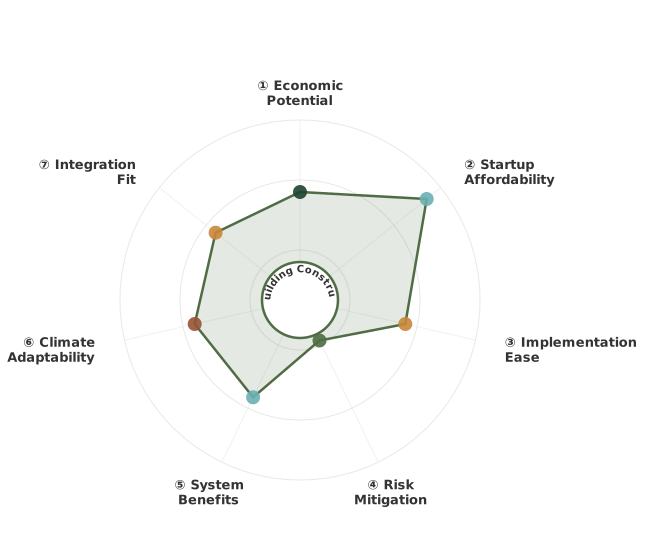
How These Traits Are Calculated
Trait dimensions are ordered clockwise starting from the top of the chart (12 o'clock position):
1. Economic Potential
Financial returns, annual value, and break-even timeline
WHAT: Evaluates financial viability by combining net annual value ($/ha from savings, income, and amortized harvests) with break-even timeline showing when practices pay for themselves.
WHY: Farmers need clear ROI understanding before committing resources. Fast payback (≤3 years) with strong returns (≥$300/ha) enables confident adoption, while long timelines (>10 years) restrict adoption to well-funded operations willing to wait for returns.
HOW: Calculated from net annual value in $/ha and break-even years. Exceptional (≥2.6): fast ROI ≤3 years + high value ≥$300/ha. Typical (1.8-2.5): moderate returns or longer timelines. Limited (<1.8): marginal economics or very long payback >10 years.
2. Startup Affordability
Initial investment costs and financial barrier to entry
WHAT: Measures financial barrier to entry through startup costs for equipment, infrastructure, consulting, and materials. Inverted scoring: lower costs = higher scores = more accessible adoption.
WHY: Affordability determines who can adopt. Low-cost practices (<$250/ha) enable widespread adoption across diverse scales, while high costs (>$2,500/ha) limit adoption to well-capitalized operations, creating barriers that slow regenerative transition.
HOW: Calculated from initial investment parsed from practice content. Inverted scoring: Exceptional (≥2.6): minimal investment <$250/ha. Typical (1.8-2.5): moderate costs $250-2,500/ha. Limited (<1.8): high barrier >$2,500/ha.
3. Implementation Ease
Learning curve and specialized knowledge required
WHAT: Measures how much learning, planning, and specialized knowledge a practice requires. Simpler practices with fewer steps score higher, while complex practices requiring extensive training or specialized resources score lower.
WHY: Complex practices create adoption barriers even when economically viable. Straightforward practices enable faster adoption and broader participation, while those requiring extensive training, timing precision, or specialized equipment limit who can succeed.
HOW: Evaluated by measuring documentation length and identifying complexity markers like location-specific requirements, seasonal timing windows, specialized skills, and dedicated equipment needs. Exceptional (≥2.6): straightforward practices with minimal prerequisites. Typical (1.8-2.5): moderate learning curve with some specialized needs. Limited (<1.8): steep learning curve requiring significant training or resources.
4. Risk Mitigation
Identified financial and ecological risk assessment
WHAT: Evaluates documented risks across financial (investment loss, market volatility) and ecological (crop failure, pest outbreaks) domains. Inverted scoring: fewer risks = higher scores.
WHY: Understanding risk exposure helps farmers make informed decisions. Low-risk practices allow confident implementation, while high-risk practices require careful planning and contingency resources. Risk transparency prevents costly failures.
HOW: Calculated from identified risks in practice content. Inverted scoring: Exceptional (≥2.6): ≤2 risks with manageable severity. Typical (1.8-2.5): 3-5 moderate risks. Limited (<1.8): 6+ risks or severe exposure.
5. System Benefits
How many ways the practice improves your land simultaneously
WHAT: Measures how many aspects of land health improve at once—carbon storage, soil quality, erosion control, water absorption, and biodiversity. Practices that improve multiple areas simultaneously create compounding benefits where each improvement reinforces the others.
WHY: The best practices solve multiple problems at once. For example, addressing erosion simultaneously builds carbon and improves water infiltration, creating a resilient system with positive feedback loops. Single-benefit approaches miss these compound transformation opportunities.
HOW: Evaluated across five key outcomes: carbon sequestration, soil organic matter increase, erosion reduction, water infiltration improvement, and biodiversity enhancement. Exceptional (≥2.6): high carbon storage (>8 t/ha/yr), improvements across 4-5 areas, transformative outcomes. Typical (1.8-2.5): moderate carbon (3-8 t/ha/yr), improvements across 2-3 areas. Limited (<1.8): modest impact (<3 t/ha/yr), single-area focus only.
6. Climate Adaptability
Geographic applicability across Köppen climate zones
WHAT: Evaluates geographic applicability by assessing how many Köppen climate zones successfully support a practice and what adaptation requirements are needed. Measures breadth of climates where farmers can implement with minimal to moderate modifications.
WHY: Universal practices working across diverse climates enable more farmers to adopt regenerative approaches. Practices limited to single climate types (only Mediterranean, only tropical) restrict adoption and slow global transition. Adaptability determines whether a practice serves niche regions or offers broad transformation.
HOW: LLM evaluation of regional success stories, Köppen zone coverage, and adaptation needs. Exceptional (≥2.6): 5+ zones or 4+ climate types, 3+ continents, minimal adaptation. Typical (1.8-2.5): 3-4 zones or 2-3 types, 2 continents, moderate adaptation. Limited (<1.8): 1-2 zones, single region, significant adaptation or highly specialized.
7. Integration Fit
How well this practice combines with others you're doing
WHAT: Measures how well a practice combines with other regenerative practices you might be doing. Some practices work as building blocks that make many other practices easier or more effective, while others work best on their own.
WHY: Practices that combine well with many others create more value on your farm. For example, cover cropping enables no-till, improves grazing, supports crop diversity, and helps water management—making all of them work better together. This helps you build a coherent system rather than juggling disconnected practices.
HOW: Evaluated by identifying which practices combine well and how strong those combinations are. 'Ideally Suited' means strong combinations where practices reinforce each other (practice A makes B easier, while B makes A more effective). 'Adequate' means complementary benefits that work well together. Exceptional (≥2.6): combines well with 6+ practices, serves as a building block. Typical (1.8-2.5): combines with 3-5 practices. Limited (<1.8): 1-2 practices or works best alone.
Going Deeper
1
WHY - The Benefits
Constructed wetlands offer a vital ecological service by mimicking the functions of natural wetlands to manage water quality and enhance biodiversity within agricultural landscapes. While not a direct soil-building practice, their ability to intercept and process...
Constructed wetlands offer a vital ecological service by mimicking the functions of natural wetlands to manage water quality and enhance biodiversity within agricultural landscapes. While not a direct soil-building practice, their ability to intercept and process agricultural runoff, diffuse wastewater, and mitigate the impacts of concentrated animal feeding operations makes them essential tools for farms aiming for holistic ecological regeneration and reduced environmental footprint.
WHY - The Benefits
Constructed wetlands offer a vital ecological service by mimicking the functions of natural wetlands to manage water quality and enhance biodiversity within agricultural landscapes. While not a direct soil-building practice, their ability to intercept and process...
Constructed wetlands offer a vital ecological service by mimicking the functions of natural wetlands to manage water quality and enhance biodiversity within agricultural landscapes. While not a direct soil-building practice, their ability to intercept and process agricultural runoff, diffuse wastewater, and mitigate the impacts of concentrated animal feeding operations makes them essential tools for farms aiming for holistic ecological regeneration and reduced environmental footprint.
Water Quality Improvement
The primary benefit and driver for constructing wetlands on farms is water quality enhancement. Agricultural runoff can carry significant loads of nutrients (nitrogen, phosphorus), suspended solids, pathogens, and pesticides into local waterways, leading to eutrophication, algal blooms, oxygen depletion, and harm to aquatic life. Constructed wetlands act as highly effective biofilters to remediate these pollutants.
- Nutrient Removal: Depending on design (e.g., subsurface flow vs. surface flow) and vegetation selection, constructed wetlands can remove 30-70% of total nitrogen and 20-50% of total phosphorus from influent water annually. This is achieved through plant uptake, microbial nitrification/denitrification, and assimilation into plant biomass and organic matter.
- Sediment Reduction: Slow water flow rates within wetland basins promote settling of suspended solids, reducing turbidity and siltation of downstream water bodies. This can protect aquatic habitats and reduce the need for dredging in adjacent water channels.
- Pathogen Removal: Through UV exposure, predation by higher organisms, and sedimentation, constructed wetlands can significantly reduce the load of E. coli and other fecal coliform bacteria.
- Pesticide and Chemical Degradation: Microbial communities, particularly in saturated, anoxic conditions, can degrade certain pesticides and other organic contaminants.
Effectively treated water can be reused for irrigation, reducing reliance on freshwater sources, or safely discharged, minimizing environmental impact and potential regulatory penalties.
Biodiversity Enhancement
Constructed wetlands, by their very design, create diverse habitats that attract and support a wide array of wildlife. These engineered ecosystems transition from open water to emergent vegetation zones, mimicking natural wetland gradients.
- Habitat Creation: The presence of permanent water, varied vegetation structure, and invertebrate populations provides crucial breeding, foraging, and resting grounds for numerous species.
- Avian Support: Wetlands are vital for bird populations, serving as stopover points for migratory birds and as permanent homes for resident species. Depending on the size and design, a constructed wetland can support over 100 different avian species, including waterfowl, wading birds, and shorebirds.
- Amphibian and Reptile Habitat: The saturated soil and permanent water bodies are ideal for amphibians like frogs and newts, as well as reptiles such as turtles and snakes.
- Invertebrate Communities: Wetlands teem with insect larvae (dragonflies, damselflies, midges), aquatic worms, crustaceans, and mollusks, forming the base of the food web for larger animals and playing roles in nutrient cycling.
- Pollinator Support: Forage and nectar-rich emergent plants can attract diverse insect pollinators, contributing to the farm's overall pollination services.
This increased biodiversity contributes to a more resilient and ecologically functional farm landscape, offering aesthetic value and educational opportunities.
Economic Benefits
While constructed wetlands require initial investment, they offer long-term economic advantages, particularly in the context of regenerative agriculture and increasing environmental regulations.
- Reduced Input Costs: By recycling nutrients and improving water quality for irrigation, wetlands can decrease the need for costly purchased fertilizers or irrigation water.
- Regulatory Compliance & Risk Mitigation: For operations with high nutrient outputs (e.g., dairies, hog farms), wetlands are essential for meeting environmental regulations concerning wastewater discharge, avoiding potential fines and legal liabilities.
- Improved Pasture Health: Downstream benefits of cleaner water can lead to more productive and resilient pastures, supporting higher livestock carrying capacities or improved animal performance.
- Ecological Asset Value: Wetlands can increase property values by providing ecosystem services, aesthetic appeal, and recreational opportunities (e.g., bird watching).
- Long-Term Cost-Effectiveness: Compared to mechanical treatment systems (e.g., aeration, pumps), well-designed and maintained constructed wetlands often have lower operational and energy costs over their lifespan.
Regenerative Systems Fit
Constructed wetlands, while not foundational soil-building practices like cover cropping or agroforestry, are crucial context-dependent and transition tools in regenerative agriculture. Their role is primarily in managing water resources and mitigating non-point source pollution, thereby creating conditions where soil health practices can be more successful.
- Enabling Soil Health: By capturing and retaining nutrients and preventing their loss downstream, constructed wetlands keep valuable resources on or near the farm. They reduce the total nutrient load that needs to be managed systemically, making other regenerative soil fertility strategies more effective. Cleaned water can also support better forage growth on down-gradient pastures, enhancing grazing management.
- Principle 3 (Keep Soil Covered): The wetland basin is inherently covered with water and vegetation year-round, providing perpetual soil cover. This prevents erosion and maintains substrate for microbial communities.
- Principle 4 (Maintain Living Roots): The perennial wetland plants ensure continuous living roots are in the soil profile throughout the year, supporting soil structure, nutrient cycling, and water infiltration within the wetland itself.
- Principle 2 (Maximize Crop Diversity): The diverse assemblage of plants and microbial communities within a wetland creates a highly biodiverse ecosystem. This increases the functional diversity of the farm landscape, acting as a reservoir for beneficial insects and microorganisms.
- Transition Practice: For farms with significant wastewater or runoff issues, constructing wetlands can be a necessary intermediate step before achieving fully closed-loop nutrient cycles. It allows for immediate reduction of off-farm pollution, creating environmental compliance and public acceptance while other regenerative soil health practices are implemented. The ultimate goal may be to reduce reliance on engineered solutions as overall farm water management improves.
- Synergy: Wetlands integrate well with buffer strips, riparian zone restoration, and strategic grazing management, forming part of a comprehensive water catchment strategy.
Ultimately, constructed wetlands in regenerative systems are about regenerating ecological function at a landscape level. They treat water, restore habitat, and provide essential services that complement direct soil building efforts, contributing to a more resilient and ecologically balanced farm ecosystem.
Sources behind this view
Community
-
Brookside Farm in the UK uses a low-energy constructed wetland system based on permaculture principles to purify wastewater, harvest nutrients (nitrogen, phosphorous), and produce biomass, enhancing f
Read more (opens in new window) www.permaculture.org.uk -
Brookside Farm utilizes a permaculture-designed constructed wetland (WET system) for low-energy wastewater treatment, harvesting nutrients like nitrogen and phosphorous to create a productive ecosyste
Read more (opens in new window) www.permaculture.org.uk -
Brookside Farm utilizes a permaculture-designed constructed wetland (WET) system for low-energy wastewater treatment, harvesting nitrogen and phosphorous to create yield, enhance biodiversity, and imp
Read more (opens in new window) www.permaculture.org.uk
Research
-
A Review on Constructed Treatment Wetlands for Removal of Pollutants in the Agricultural Runoff (opens in new window)
This study found: Man-made wetlands effectively treat farm runoff, removing over 90% of pollutants like pesticides and animal medicines. Optimal water flow and retention times are key, but more long-term field research
-
Restoration of On-farm Constructed Wetland Systems Used to Treat Agricultural Wastewater (opens in new window)
This study found: Farm wetlands in Eastern Canada treating wastewater for over a decade are losing effectiveness. Study outlines steps to restore them, considering land, water flow, function, and farm goals.
-
Contaminant Removal Processes in Subsurface-Flow Constructed Wetlands: A Review (opens in new window)
This study found: Review of constructed wetlands shows how oxygen levels and biological processes effectively remove organic matter, nutrients, pesticides, and other pollutants from wastewater. Modeling tools aid under
-
A review of nature-based solutions for greywater treatment: Applications, hydraulic design, and environmental benefits (opens in new window)
This study found: Review of natural systems (wetlands, green roofs/walls) for cleaning household wastewater (greywater). These nature-based solutions offer environmental benefits and effective water reuse, with design
2
WHERE - Regional Considerations
Constructed wetlands are highly adaptable due to their engineered nature, but their performance and design are significantly influenced by regional factors, primarily climate and local hydrology.
Constructed wetlands are highly adaptable due to their engineered nature, but their performance and design are significantly influenced by regional factors, primarily climate and local hydrology.
WHERE - Regional Considerations
Constructed wetlands are highly adaptable due to their engineered nature, but their performance and design are significantly influenced by regional factors, primarily climate and local hydrology.
Constructed wetlands are highly adaptable due to their engineered nature, but their performance and design are significantly influenced by regional factors, primarily climate and local hydrology.
Click Here to Look up your Region if you don't already know it
Humid Temperate Regions
Representative Locations: Southeastern United States, Northern Europe (UK, Germany, Poland), Eastern China, Japan, New Zealand
Climate Context: Warm to hot summers and cool to cold winters with moderate to high annual precipitation (75-150 cm or 30-60 inches) distributed relatively evenly. USDA Zones 6-8, Köppen Cfb/Cfa.
Considerations: These regions generally have ample precipitation and moderate temperatures that support consistent plant growth and biological activity year-round. This is advantageous for wetland performance, allowing for high nutrient removal rates and robust vegetation establishment. However, high rainfall can increase the volume of influent water, potentially overwhelming smaller systems or requiring larger basins. Designs often focus on managing seasonal rainfall peaks and ensuring adequate flow through the system to prevent stagnation. Plant selection favors species adapted to both saturated and mesic conditions, with extended growing seasons.
Mediterranean Regions
Representative Locations: California, Mediterranean basin (Spain, Italy, Greece), Central Chile, Southwestern Australia, Western Cape South Africa
Climate Context: Hot, dry summers and mild, wet winters. Annual precipitation 40-90 cm (15-35 inches), highly seasonal. USDA Zones 8-10, Köppen Csa/Csb.
Considerations: The primary challenge in these regions is the extreme seasonality of water availability. Wet winters provide high influent volumes, making this the peak period for nutrient removal. Hot, dry summers can lead to reduced flow, potentially stressing plants and lowering treatment efficiency if not managed. Designs often incorporate larger storage volumes to buffer summer drawdowns or require supplemental irrigation to maintain vegetation vigor and some level of treatment function. Plant selection must focus on drought-tolerant emergent species capable of surviving extended dry periods or species that can tolerate fluctuating water levels.
Arid/Semi-Arid Regions
Representative Locations: Western USA (Colorado Plateau, parts of the Great Basin), North Africa, Central Asia, Interior Australia
Climate Context: Low annual precipitation (<40 cm or 15 inches), high temperatures, short and often unpredictable growing season. USDA Zones 7-9, Köppen BSh/BSk.
Considerations: Constructed wetlands in arid regions are particularly valuable for water conservation, as they treat and recycle scarce water resources. However, performance is heavily driven by supplemental water inputs (e.g., treated wastewater, managed irrigation tailwater). Low precipitation means influent flow is generally low, but high evaporation rates can significantly reduce water volume and concentrate pollutants. Designs must prioritize water conservation, minimize evaporation (e.g., using deeper basins, floating cover species), and focus on drought-tolerant native species. Effective pollutant removal can be achieved but often requires careful management of flow rates and nutrient loads to avoid system overload during peak seasons or periods of supplemental watering.
Cold Continental Regions
Representative Locations: Northern USA and Canada, Northern Europe, Northern Asia
Climate Context: Very short growing seasons, extreme summer heat, severe winter cold. USDA Zones 3-5, Köppen Dfa/Dfb.
Considerations: Freezing temperatures present a significant challenge for constructed wetlands in these regions. Biological activity slows dramatically or ceases altogether during winter, impacting treatment efficiency. Designs typically incorporate features to maximize performance during the ice-free period and manage accumulated pollutants over winter. This may involve larger treatment areas, deeper water cells to prevent complete freezing, or relying on accumulated organic matter and residual microbial activity to perform some treatment during milder winter spells. Plant selection is critical, favoring extremely cold-hardy emergent species that can tolerate ice scour and survive dormancy. Treatment rates are inherently lower annually due to the extended non-growing season.
Subtropical Regions
Representative Locations: Southeastern USA, Southern China, Southern Brazil, Eastern Australia
Climate Context: Hot, humid summers and mild winters with generally ample rainfall. USDA Zones 9-11, Köppen Cfa/Cwa.
Considerations: These regions provide ideal conditions for wetland plant growth and microbial activity throughout much of the year, leading to high treatment efficiencies. The challenge is managing high volumes of influent water, especially during monsoon seasons or periods of high rainfall, which can lead to rapid flushing and reduced residence time. Designs often focus on creating multiple treatment cells to allow for seasonal flow management and optimization. Plant selection utilizes a wide range of warm-season and mild-winter tolerant species. The primary focus is on efficient nutrient processing and managing potentially high pathogen loads from agricultural sources.
Tropical Regions
Representative Locations: Central America, Southeast Asia, East Africa, Northern Australia, Northern South America
Climate Context: High temperatures year-round, with distinct wet and dry seasons or consistent high rainfall. Köppen Af/Am/Aw.
Considerations: Warm temperatures and high humidity generally promote vigorous plant growth and high rates of microbial decomposition, leading to excellent treatment potential. However, the intensity of rainfall can be extreme, similar to subtropical regions, necessitating robust designs to handle high flow events and prevent short-circuiting. Effluent water quality can be challenging due to intense agricultural activity. Designs can leverage diverse tropical wetland plants. A key consideration is managing solids loading from intense wet seasons and ensuring adequate aeration in designs. The year-round growing season allows for continuous treatment performance, provided flow volumes are managed.
3
HOW - Implementation Process
Building a constructed wetland involves several key phases. While the specifics vary greatly based on farm needs, site conditions, and available resources, the general process remains consistent.
Building a constructed wetland involves several key phases. While the specifics vary greatly based on farm needs, site conditions, and available resources, the general process remains consistent.
HOW - Implementation Process
Building a constructed wetland involves several key phases. While the specifics vary greatly based on farm needs, site conditions, and available resources, the general process remains consistent.
Building a constructed wetland involves several key phases. While the specifics vary greatly based on farm needs, site conditions, and available resources, the general process remains consistent.
Prerequisites
Before starting, conduct a thorough site assessment and define project goals:
- Identify Water Source and Contaminants: What type of water needs treatment (e.g., feedlot runoff, dairy parlor wash water, silage leachate, tile drainage)? What are the primary pollutants (nutrients, solids, pathogens, specific chemicals)? Test influent water quality if possible.
- Determine Treatment Goals: What level of treatment is required? Are there discharge regulations to meet, or is the goal on-farm water reuse? Target pollutant reduction levels (e.g., 50% N reduction, <1000 mg/L solids).
- Site Evaluation: Assess land availability, topography (sloping land is ideal for gravity flow), soil type (clay soils are best for lining basins naturally), proximity to water sources and discharge points, and surrounding land use. Check local regulations regarding wetland construction and water discharge.
- Climate and Hydrology: Understand local rainfall patterns, temperature ranges, evaporation rates, and prevailing winds.
Phase 1: Design and Planning
This is the most critical phase, determining the wetland's effectiveness and longevity.
-
System Type Selection:
- Surface Flow (SF): Water flows over the soil surface, typically planted with emergent vegetation. Best for high flows, lower pollutant loads, and general polishing. Requires larger land area. Simpler system.
- Subsurface Flow (SSF): Water flows through a porous medium (gravel, sand) saturated below the surface, planted with emergent vegetation. More efficient for treatment, especially nutrient removal, and less land is required. Can be horizontal or vertical flow. Preferred for higher pollutant loads and smaller areas.
- Hybrid Systems: Combine SF and SSF elements for enhanced treatment.
-
Sizing and Configuration: Calculations are based on influent flow rate, contaminant concentrations, desired pollutant removal efficiency, local climate (evaporation, temperature), and desired hydraulic residence time. This is often done using established design manuals or software. Typically, 1-2% of the contributing agricultural area may be needed for a wetland, but this varies hugely.
- Media and Vegetation Selection: Choose inert, porous media (e.g., washed gravel, sand) for SSF systems and native substrate for SF. Select robust, water-tolerant native emergent plant species adapted to the local climate, which will colonize and thrive in the wetland environment. Avoid invasive species.
- Inlet and Outlet Structures: Design structures to manage inflow and outflow, control water levels, and prevent erosion. This may include energy dissipators, level control weirs, and flow measurement devices.
- Lining: For SF wetlands or SSF systems to prevent groundwater contamination, a liner (e.g., clay, geomembrane) is usually required. Clay lining is preferable for its natural qualities and stability.
Phase 2: Construction
This phase involves earthworks and installation of infrastructure.
- Excavation: Excavate basins to design depths and contours. Ensure slopes are stable.
- Lining: Install liner—compact clay layers or lay out geomembrane as per design.
- Inlet/Outlet Structures: Install pipes, weirs, and controls.
- Media Placement (for SSF): Fill basins with carefully selected and graded gravel/sand media.
- Vegetation Establishment: Plant wetland vegetation seedlings or sprigs at appropriate densities. This can also be done by collecting and scattering seeds from local, healthy wetland areas with permission.
- Initial Flooding: Slowly fill the wetland to allow vegetation to establish and any leaks to be identified and repaired.
Phase 3: Operation and Maintenance
Constructed wetlands require ongoing management to ensure optimal performance.
- Inflow Management: Direct all target wastewater or runoff to the wetland. Avoid allowing untreated water to bypass it. Manage flow rates to maintain appropriate residence times.
- Vegetation Management: Mow or harvest excess vegetation annually or biannually to remove accumulated nutrients and prevent the wetland from becoming choked. Control invasive species.
- Outlet Control: Maintain desired water levels at the outlet structure.
- Sediment Removal: Periodically (every 5-15 years, depending on design and load), accumulated sediment may need to be dredged and removed. This material, rich in nutrients, can sometimes be composted and reapplied to fields.
- Monitoring: Regularly (monthly to annually) monitor influent and effluent water quality, water levels, vegetation health, and signs of system failure (e.g., odors, short-circuiting, excessive algae blooms).
Transition Timeline & Phase-Out Strategy (for Constructed Wetlands as a Transition Practice)
When constructed wetlands are used as a transition tool, the goal is to reduce reliance on them as other regenerative practices improve farm-wide water management.
- Years 1-3 (Establishment & Baseline): Focus on building the wetland, establishing vegetation, and achieving initial treatment targets. Document baseline water quality and flow volumes. Implement other regenerative practices (cover cropping, reduced tillage, improved grazing on surrounding lands) simultaneously.
- Years 4-7 (Optimizing & Reducing Load): As soil health improves on farm (better infiltration, reduced nutrient runoff), the volume and pollutant load entering the wetland may decrease. Monitor this trend. Optimize wetland operation and vegetation management for maximum efficiency. Experiment with reducing downstream irrigation needs using treated water.
- Years 8-15 (Phasing Out Dependence): If farm-wide nutrient management and soil health are highly effective, the wetland's role may shift from primary treatment to tertiary polishing or a backup system. Gradually reduce total influent volume if possible, or reconfigure wetland cells for reduced footprint if treatment needs diminish significantly. The ultimate goal of a mature regenerative system is to minimize the need for engineered water treatment through superior on-farm nutrient management and water retention.
- Maintenance: Even as reliance diminishes, minimal maintenance (e.g., maintaining outlet, controlling invasives) may be needed indefinitely as a safeguard.
Graduation from this practice means: The farm's overall water management strategy (integrated soil health, diversified cropping, controlled livestock operations) effectively retains most nutrients on-farm and minimizes pollutant loads in wastewater/runoff, rendering the constructed wetland a secondary polishing step or even redundant, rather than an essential treatment facility.
Sources behind this view
Community
-
Brookside Farm in the UK uses a low-energy constructed wetland system based on permaculture principles to purify wastewater, harvest nutrients (nitrogen, phosphorous), and produce biomass, enhancing f
Read more (opens in new window) www.permaculture.org.uk -
Brookside Farm utilizes a permaculture-designed constructed wetland (WET system) for low-energy wastewater treatment, harvesting nutrients like nitrogen and phosphorous to create a productive ecosyste
Read more (opens in new window) www.permaculture.org.uk -
Brookside Farm utilizes a permaculture-designed constructed wetland (WET) system for low-energy wastewater treatment, harvesting nitrogen and phosphorous to create yield, enhance biodiversity, and imp
Read more (opens in new window) www.permaculture.org.uk
Research
-
A Review on Constructed Treatment Wetlands for Removal of Pollutants in the Agricultural Runoff (opens in new window)
This study found: Man-made wetlands effectively treat farm runoff, removing over 90% of pollutants like pesticides and animal medicines. Optimal water flow and retention times are key, but more long-term field research
-
Contaminant Removal Processes in Subsurface-Flow Constructed Wetlands: A Review (opens in new window)
This study found: Review of constructed wetlands shows how oxygen levels and biological processes effectively remove organic matter, nutrients, pesticides, and other pollutants from wastewater. Modeling tools aid under
-
Restoration of On-farm Constructed Wetland Systems Used to Treat Agricultural Wastewater (opens in new window)
This study found: Farm wetlands in Eastern Canada treating wastewater for over a decade are losing effectiveness. Study outlines steps to restore them, considering land, water flow, function, and farm goals.
-
Pollutant removal within hybrid constructed wetland systems in tropical regions (opens in new window)
This study found: Hybrid constructed wetlands in Taiwan effectively removed solids, organic pollution, copper, and zinc from dormitory sewage. They also significantly reduced total nitrogen through nitrification and de
4
Know the Debate
Constructed wetland effectiveness and establishment timelines vary by climate and design approach. Humid temperate and subtropical regions generall...
Know the Debate
Constructed wetland effectiveness and establishment timelines vary by climate and design approach. Humid temperate and subtropical regions generall...
Constructed wetland effectiveness and establishment timelines vary by climate and design approach. Humid temperate and subtropical regions generally support faster growth and higher treatment rates, while arid and cold climates present challenges requiring careful plant selection and system resilience design. Initial establishment can take 1-2 years for basic pollutant reduction, but achieving full ecological function with mature plant communities and diverse wildlife often requires 3-5 years or more. While complex engineered designs offer precision, simpler, adapted systems using local materials can also be effective, particularly on smaller scales or where technical expertise is limited.
How long until constructed wetlands reach full ecological function?
Early establishment of function (1-2 years)
Academic and institute sources often suggest that constructed wetlands can achieve significant pollutant removal within 1-2 years, focusing on measurable water quality improvements. This timeline assumes proper design and favorable environmental conditions for rapid microbial activity and plant establishment.
Sources behind this view
Sources behind this view
Research
-
A Review on Constructed Treatment Wetlands for Removal of Pollutants in the Agricultural Runoff (opens in new window)
This study found: This review looks at how man-made wetlands, called constructed wetlands, can help clean up water that runs off farms. While we know they're good at removing nutrients, this paper focuses on other harmful substances like pesticides, animal medicines, and even genes that make bacteria resistant to antibiotics. The review explains how different wetland designs work and what makes them most effective. It highlights that a good water flow rate and letting the water sit in the wetland for about 6-8 days seems to work best for cleaning up farm runoff. Although these wetlands are very effective (removing over 90% of many pollutants), more research is needed to understand how they perform over long periods in real-world conditions, considering weather, different plants, and how the wetland is set up.
-
Constructed Wetlands for Wastewater Treatment (opens in new window)
This study found: Man-made wetlands, often called constructed wetlands or reed beds, have been used to clean wastewater since the 1950s. These systems use aquatic plants to treat various types of dirty water. They can be designed in different ways based on the types of plants used and how the water flows through them (either on the surface or underground). Combining different types of these wetland systems can improve their ability to clean water, especially for removing nitrogen.
 From the Web
-
Constructed wetlands connected to tile drains can improve water quality by reducing nitrates and pesticides. They require specific substrate, planting (reed canary grass, Glyceria maxima), and a 2:1000-3:1000 wetland to catchment ratio, with establishment involving site mapping and administrative approvals.
Extended function development (3-5+ years)
Field practitioners and land managers often observe that it takes 3-5 years or longer for constructed wetlands to reach their full ecological potential, including established plant communities, diverse wildlife, and peak biodiversity. This reflects the natural colonization and ecosystem development processes.
Sources behind this view
Sources behind this view
 Videos & Podcasts
-
Three years of data on Runoff Treatment Systems (ARTS) using constructed wetlands show significant reductions in TSS and phosphorus, with varying dissolved phosphorus dynamics influenced by manure application and rainfall. The system meets 100-year storm standards and offers habitat benefits.

-
Wetlands are valuable ecosystems that act as carbon sinks, cool air temperatures, filter water, and support biodiversity. Historically used for food production, modern agriculture often drains them, releasing carbon and pollution. The speaker advocates for rethinking our engagement with wetlands and exploring ecological restoration.

Making Sense of the Differences
Wetlands show early gains in pollutant removal within 1-2 years, but the full development of mature plant communities, stable microbial populations, and diverse wildlife habitat typically takes 3-5 years or more. This disparity highlights that 'full ecological function' can be defined differently; while water quality metrics may improve quickly, establishment of a complex, resilient ecosystem is a longer process influenced by climate, plant colonization, and microbial succession.
What is the primary mechanism for pollutant removal in constructed wetlands?
Microbial action in the root zone
Academic research emphasizes the role of plant roots and associated microbes in breaking down complex pollutants and transforming nutrients. This biological activity is considered the primary driver for removing pesticides, organic matter, and nitrogen through processes like denitrification.
Sources behind this view
Sources behind this view
Research
-
A Review on Constructed Treatment Wetlands for Removal of Pollutants in the Agricultural Runoff (opens in new window)
This study found: This review looks at how man-made wetlands, called constructed wetlands, can help clean up water that runs off farms. While we know they're good at removing nutrients, this paper focuses on other harmful substances like pesticides, animal medicines, and even genes that make bacteria resistant to antibiotics. The review explains how different wetland designs work and what makes them most effective. It highlights that a good water flow rate and letting the water sit in the wetland for about 6-8 days seems to work best for cleaning up farm runoff. Although these wetlands are very effective (removing over 90% of many pollutants), more research is needed to understand how they perform over long periods in real-world conditions, considering weather, different plants, and how the wetland is set up.
-
Contaminant Removal Processes in Subsurface-Flow Constructed Wetlands: A Review (opens in new window)
This study found: This review looks at how constructed wetlands, which are engineered systems mimicking natural wetlands, clean up wastewater. It explains that the oxygen levels (redox conditions) inside these systems are key to removing pollutants. The review details how organic materials are broken down by various biological processes, like those involving bacteria. It also covers the removal of common contaminants such as farm chemicals (pesticides and herbicides), nutrients like nitrogen and phosphorus, heavy metals, and harmful bacteria. The authors highlight that computer models are becoming useful tools to better understand and manage these wetland systems for effective water purification.
-
Modification of agricultural wastes to improve sorption capacities for pollutant removal from water – a review (opens in new window)
This study found: This review looks at how farmers' byproducts, like crop residues, can be treated to become better at cleaning polluted water. Raw farm waste often doesn't absorb much pollution because of its natural structure. However, by using different treatment methods, these wastes can be transformed into effective materials for removing a wide variety of contaminants from water. The review details these treatment techniques, explains how they improve the waste's ability to capture pollutants, and discusses the costs and benefits of using these modified materials for water purification. It aims to guide the better use of farm byproducts for cleaner water.
Physical capture and sedimentation
Field experience and some institute guides highlight the significant role of physical processes such as reduced flow velocity leading to sedimentation of suspended solids and filtration by substrate and vegetation. This is seen as crucial for removing larger particles and improving water clarity.
Sources behind this view
Sources behind this view
Videos & Podcasts
-
Details a wetland filtration system using native plants, biochar, and a clay base with a meandering design to clean parking lot runoff, slowing water and promoting sedimentation to improve water quality.
-
Proposes creating a soft-engineered wetland with native plants and biochar-inoculated woodchips to treat runoff from cornfields, reduce algae in a pond, and capture nutrients. Incorporates concepts of flow farming and mycelial integration for enhanced surface area and microbial activity.
-
Biological systems and wetland treatments, using materials like bentonite clay, clean water by harnessing soil microbes to process pollutants. This approach drives soil carbon capture and water retention for regenerative cycles.

Making Sense of the Differences
Constructed wetlands achieve pollutant removal through a combination of microbial processes and physical mechanisms. While microbial activity in the root zone is vital for breaking down dissolved and organic contaminants, physical sedimentation and filtration by substrate and vegetation play a significant role in removing suspended solids and larger particles. The relative importance of each mechanism can vary based on wetland design and the specific contaminants present.
Are complex engineered designs essential for constructed wetlands to work?
Complex engineering ensures optimal function
Academic and Institute sources often promote detailed engineering principles for constructed wetlands, emphasizing precise substrate requirements, hydraulic calculations, and specific design considerations to ensure optimal and reliable pollutant removal.
Sources behind this view
Sources behind this view
Research
-
Constructed Wetlands for Wastewater Treatment (opens in new window)
This study found: Man-made wetlands, often called constructed wetlands or reed beds, have been used to clean wastewater since the 1950s. These systems use aquatic plants to treat various types of dirty water. They can be designed in different ways based on the types of plants used and how the water flows through them (either on the surface or underground). Combining different types of these wetland systems can improve their ability to clean water, especially for removing nitrogen.
-
Constructed Wetlands for Wastewater Treatment (opens in new window)
This study found: Artificial wetlands, using aquatic plants to clean wastewater, have been around since the 1950s and are now a proven technology. These systems can be designed in different ways based on the types of plants used, how water flows through them (above or below ground), and the direction of that flow. Combining different wetland designs into 'hybrid systems' can improve their ability to clean water, especially for removing nitrogen.
From the Web
-
Explains how constructed wetlands treat residential wastewater using plants and microorganisms, detailing design, installation, and maintenance requirements, including NDEQ permits and professional engineering. Key aspects cover septic tank effluent, gravel cell treatment, water level management, vegetation care, and final dispersal to drainfields or ponds.
Simpler, adapted designs can also be effective
Field practitioners demonstrate successful wetland implementations using simpler designs, native volunteer plants, local materials, and less formal engineering. These often achieve functional water quality benefits and habitat creation, especially at smaller scales.
Sources behind this view
Sources behind this view
Videos & Podcasts
-
Farm design incorporated swales (berm and basin systems) to manage flooding by collecting and infiltrating rainwater, creating planting sites for trees like willow. This system helps manage hydrology, supports pasture and tree health, and mitigates drought impacts.

-
Details a wetland filtration system using native plants, biochar, and a clay base with a meandering design to clean parking lot runoff, slowing water and promoting sedimentation to improve water quality.
-
Proposes creating a soft-engineered wetland with native plants and biochar-inoculated woodchips to treat runoff from cornfields, reduce algae in a pond, and capture nutrients. Incorporates concepts of flow farming and mycelial integration for enhanced surface area and microbial activity.
-
Bioswales capture and filter runoff, turning wastewater into resources for ecological food forests. This system, following nature's no-waste principle, infiltrates water for edible ecosystems and can be adapted to various scales and locations.

Making Sense of the Differences
While complex engineered designs provide optimal pollutant removal and regulatory assurance, simpler, adaptive wetland solutions can be highly effective, particularly for farm-scale applications. Success hinges on understanding local hydrology, soil conditions, and available resources, rather than strictly adhering to high-end engineering specifications. Simpler systems may require more adaptive management and can be cost-effective for achieving significant ecological benefits.
5
HOW MUCH - Costs & Investment
Note: Costs are shown in USD equivalent and can vary significantly by country and region based on local material availability, labor rates, and regulatory requirements. They represent typical ranges for agricultural applications.
Note: Costs are shown in USD equivalent and can vary significantly by country and region based on local material availability, labor rates, and regulatory requirements. They represent typical ranges for agricultural applications.
HOW MUCH - Costs & Investment
Note: Costs are shown in USD equivalent and can vary significantly by country and region based on local material availability, labor rates, and regulatory requirements. They represent typical ranges for agricultural applications.
Note: Costs are shown in USD equivalent and can vary significantly by country and region based on local material availability, labor rates, and regulatory requirements. They represent typical ranges for agricultural applications.
Note: All costs are based on recent US economic data (2024–2026) and may vary substantially by region based on local labor rates, material costs, and regulatory requirements.
Design & Engineering
Developing a constructed wetland requires specialized hydrological modeling to ensure compliance with state water quality standards. Small operations (under 50 acres (20 ha)) typically range from $250 – $900 per acre ($618–$2,224/ha), often relying on standardized NRCS templates which reduce professional drafting fees. Mid-size operations (50–500 acres (20–202 ha)) face costs of $150 – $600 per acre ($371–$1,483/ha), as these projects necessitate certified engineering stamps to meet rigorous EPA-aligned water quality permits. Large-scale operations (500+ acres) benefit from economy of scale, costing $80 – $400 per acre ($198–$988/ha); professional engineering time is amortized over a much larger footprint, and regional master planning significantly lowers the per-acre survey and design burden.
Earthwork & Excavation
This category captures the physical modification of the landscape, including site clearing, basin grading, and soil removal. Small-scale projects cost $500 – $2,500 per acre ($1,236–$6,178/ha), as they often require smaller, less fuel-efficient machinery that involves more concentrated, site-specific labor. Mid-size projects transition toward heavy civil equipment, moving into a $400 – $1,800 per acre ($988–$4,448/ha) bracket. Large-scale projects, priced at $300 – $1,200 per acre ($741–$2,965/ha), maximize efficiency through "cut-and-fill" earthmoving strategies, where soil excavated from the wetland basin is repurposed for the construction of mandatory berms and embankments, eliminating the need for expensive off-site trucking.
Liners (Clay & Geomembranes)
Controlling fluid infiltration is mandatory for environmental regulatory compliance, especially in sensitive watersheds. Small operations incur $750 – $3,700 per acre ($1,853–$9,143/ha) due to premium pricing on small-lot bentonite clay or geomembrane rolls. Mid-size projects see a reduction to $550 – $2,700 per acre ($1,359–$6,672/ha) through bulk procurement of industrial-grade liners. Large operations, moving into the $400 – $1,800 per acre ($988–$4,448/ha) range, benefit from direct-to-manufacturer pricing and the use of wide-format geomembrane sheeting. This minimizes the total length of seam-welding required, a labor-intensive task that often accounts for 30% of total liner installation costs.
Treatment Media (Gravel, Sand, Specialized Substrates)
Subsurface flow (SSF) wetlands require specific substrates to foster microbial activity. This is the most volatility-prone category due to local transit logistics. Small systems cost $1,200 – $5,000 per acre ($2,965–$12,355/ha) because of high short-haul trucking fees for small aggregate volumes. Mid-size systems range from $800 – $3,500 per acre ($1,977–$8,649/ha). Large-scale systems perform at $600 – $2,500 per acre ($1,483–$6,178/ha), where proximity to a regional quarry determines the viability of the project. Every 50 miles (80 km) of trucking distance can shift these figures by 15–20%.
Piping, Structures & Hydraulic Control
Proper hydrology ensures the system doesn't bypass or flood. Small systems cost $250 – $1,250 per acre ($618–$3,089/ha) using off-the-shelf gated pipes and basic level control boxes. Mid-size projects incur $200 – $950 per acre ($494–$2,347/ha). Large-scale systems range between $150 – $600 per acre ($371–$1,483/ha); while the structures themselves are more complex—often requiring custom-welded aluminum or stainless steel flow-control gates—the total capital expenditure is spread across a massive acreage, significantly lowering the "per-acre" hydraulic cost.
Vegetation Establishment
Establishing native riparian and aquatic plants is essential for nutrient stripping (nitrogen and phosphorus uptake). Initial nursery costs range from $500 – $1,500 per acre ($1,236–$3,707/ha) across all scales, though larger projects often utilize seed-drilling or large-scale plug installation, which is significantly cheaper on a per-acre basis than the manual labor required for small-scale projects.
Most Spend: The middle 60% of total installation costs for the average mid-size wetland typically falls between $2,800 and $7,500 per acre ($6,919–$18,533/ha). This range represents the primary construction tier where standard earthmoving, middle-tier liner materials, and local gravel sourcing converge for most profitable farm operations.
Why the Range?: Cost variation is driven primarily by hydrological complexity and distance to resource suppliers. High-end costs occur when specific geological constraints—such as high clay content removal or rocky subsoil—require specialized excavation equipment, or when the system is located more than 100 miles (161 km) from an aggregate quarry. Low-end costs reflect projects on flat, easily graded terrain with naturally impermeable soils, which reduce the need for synthetic liners and complex excavation.
6
REWARDS AND RISKS - Economics & Risk Factors
Economic Scenarios
Economic Scenarios
REWARDS AND RISKS - Economics & Risk Factors
Economic Scenarios
Economic Scenarios
Constructed wetlands function as both high-value ecological infrastructure and a defensive financial asset. In the Best Case scenario, ranging from $8,000 to $15,000 in annual net benefit, the wetland acts as a profit center by providing high-quality filtered water for irrigation. This offsets utility and pumping costs by $2,000 to $4,000 per year and effectively hedges against EPA or state-level clean water fines, which can reach $25,000 per day for repeat violations.
In the Typical Case, the system operates at a neutral or slightly positive $2,000 net benefit per year. While the direct annual financial gain is modest, the system serves as a permanent "insurance policy" for the farm’s social license to operate. Owners frequently report a 2–5% increase in total property valuation due to improved water management infrastructure and enhanced ecological branding, which is increasingly recognized by agricultural land appraisers.
The Worst Case—often the result of poor initial design or lack of sediment management—can result in a $5,000 to $20,000 loss per incident. If a system becomes clogged with silt or experiences a liner breach, immediate remediation is required to satisfy environmental inspectors. Replacing substrate media can cost up to 75% of the initial construction budget, demonstrating why upfront investment in pre-treatment is non-negotiable.
Market Factors & Profitability: Profitability is highly sensitive to regional Nutrient Management Plans (NMPs). In areas with strictly enforced Total Maximum Daily Loads (TMDLs) for nitrogen, the constructed wetland provides immediate financial utility. Conversely, in regions with lax enforcement, the payback period lengthens as the economic value is purely internal. Carbon market integration is emerging, with potential sequestration credits worth $100 to $800 per acre ($247–$1,977/ha) per year, contingent on verifiable soil and biomass protocols.
Risk Mitigation: The primary risk to system longevity is sedimentation. Constructing a sediment forebay—an initial, deeper cell that collects solids before they hit the filter media—costs an additional $1,000 to $3,000 but adds over a decade to the operational life of the primary cell. Annual monitoring, requiring $200 – $600 in water quality testing, allows the farm manager to adjust inflow rates, preventing the system overload that leads to catastrophic failures.
Transition Period Risks: Converting land to a wetland entails an immediate opportunity cost. If the site was previously high-value, irrigated cropland, the manager must account for $800 – $2,000 per acre ($1,977–$4,942/ha) in lost annual revenue. Furthermore, nutrient-stripping efficiency is not instantaneous. During the 1–2 year vegetation establishment window, managers should keep temporary buffer strips intact, requiring an additional $500 – $1,000 for erosion control materials like coconut-fiber matting until the native vegetation is fully established.
Sources behind this view
Community
-
Brookside Farm in the UK uses a low-energy constructed wetland system based on permaculture principles to purify wastewater, harvest nutrients (nitrogen, phosphorous), and produce biomass, enhancing f
Read more (opens in new window) www.permaculture.org.uk -
Brookside Farm utilizes a permaculture-designed constructed wetland (WET system) for low-energy wastewater treatment, harvesting nutrients like nitrogen and phosphorous to create a productive ecosyste
Read more (opens in new window) www.permaculture.org.uk -
Brookside Farm utilizes a permaculture-designed constructed wetland (WET) system for low-energy wastewater treatment, harvesting nitrogen and phosphorous to create yield, enhance biodiversity, and imp
Read more (opens in new window) www.permaculture.org.uk
Research
-
A Review on Constructed Treatment Wetlands for Removal of Pollutants in the Agricultural Runoff (opens in new window)
This study found: Man-made wetlands effectively treat farm runoff, removing over 90% of pollutants like pesticides and animal medicines. Optimal water flow and retention times are key, but more long-term field research
-
Improving Environmental Water Supply in Wetlands through Optimal Cropping Patterns (opens in new window)
This study found: New framework optimizes crop choices to improve wetland water supply and farm profits simultaneously, showing flexible, yearly crop planning is key for environmental and economic benefits.
-
Restoration of On-farm Constructed Wetland Systems Used to Treat Agricultural Wastewater (opens in new window)
This study found: Farm wetlands in Eastern Canada treating wastewater for over a decade are losing effectiveness. Study outlines steps to restore them, considering land, water flow, function, and farm goals.
-
Contaminant Removal Processes in Subsurface-Flow Constructed Wetlands: A Review (opens in new window)
This study found: Review of constructed wetlands shows how oxygen levels and biological processes effectively remove organic matter, nutrients, pesticides, and other pollutants from wastewater. Modeling tools aid under
7
COMPATIBLE PRACTICES - Integration Opportunities
Constructed wetlands are highly compatible with and synergistic to other regenerative practices, forming an integral part of a holistic farm water management and ecological restoration strategy.
Constructed wetlands are highly compatible with and synergistic to other regenerative practices, forming an integral part of a holistic farm water management and ecological restoration strategy.
COMPATIBLE PRACTICES - Integration Opportunities
Constructed wetlands are highly compatible with and synergistic to other regenerative practices, forming an integral part of a holistic farm water management and ecological restoration strategy.
Constructed wetlands are highly compatible with and synergistic to other regenerative practices, forming an integral part of a holistic farm water management and ecological restoration strategy.
Vegetated Filter Strips / Buffer Zones
- Integration: Planted with grasses, sedges, and forbs, strategically placed upstream of constructed wetlands where runoff first enters the management area.
- Benefit: Acts as a pre-treatment step, trapping large amounts of sediment and some dissolved nutrients before water enters the wetland, thereby reducing solids loading and extending the wetland's operational life. Improves overall water quality entering the system.
Strategic Nutrient Management / Closed-Loop Systems
- Integration: This represents the ultimate goal. As soil health practices build on-farm nutrient cycling capacity, the need for engineered water treatment systems like constructed wetlands decreases.
- Benefit: A well-functioning regenerative farm ideally minimizes the generation of concentrated waste streams. Nutrients are retained in soil organic matter, cycled by diverse plant-root-microbe systems, and utilized efficiently by crops and forages, reducing the effluent load requiring wetland treatment progressively over time.
Riparian Zone Restoration
- Integration: Re-establishing native vegetation along streams and waterways adjacent to or downstream of the constructed wetland.
- Benefit: Stabilizes streambanks, filters overland flow that might bypass the wetland, shades water bodies to improve temperature regimes, and provides habitat connectivity. Complements the biodiversity goals of the wetland.
Rotational Grazing / Adaptive Multi-Paddock Grazing
- Integration: When wetlands treat runoff from pastures, regenerative grazing ensures that pasture health improves. Livestock are moved frequently, allowing sufficient rest periods for plants to recover.
- Benefit: Stronger perennial pasture root systems and better soil structure from regenerative grazing reduces runoff volume and nutrient loss from fields, thus reducing the load on the constructed wetland. It also ensures downstream pastures benefit from cleaner water for more robust growth.
Cover Cropping
- Integration: Cover crops can be used to manage soil on land adjacent to or potentially within non-submerged areas of a constructed wetland.
- Benefit: While not directly integrated into the wetland's core function, cover crops improve soil health and water infiltration on associated fields, reducing runoff volume and nutrient export to the wetland.
No-Till Farming / Reduced Tillage
- Integration: On fields surrounding or feeding into a wetland, minimizing soil disturbance preserves soil structure and increases water infiltration.
- Benefit: Reduced tillage maintains soil structure, leading to slower runoff and less sediment transport into the constructed wetland. This lowers the wetland's maintenance needs and improves treatment efficiency.
When constructed wetlands are integrated with these practices, they become part of a larger landscape restoration strategy. They manage immediate pollution issues while supporting the long-term transition to a farm system that inherently retains nutrients and water on-site, minimizing environmental impact and maximizing ecological health.
Sources behind this view
Community
-
Brookside Farm utilizes a permaculture-designed constructed wetland (WET) system for low-energy wastewater treatment, harvesting nitrogen and phosphorous to create yield, enhance biodiversity, and imp
Read more (opens in new window) www.permaculture.org.uk
Research
-
A Review on Constructed Treatment Wetlands for Removal of Pollutants in the Agricultural Runoff (opens in new window)
This study found: Man-made wetlands effectively treat farm runoff, removing over 90% of pollutants like pesticides and animal medicines. Optimal water flow and retention times are key, but more long-term field research
-
Restoration of On-farm Constructed Wetland Systems Used to Treat Agricultural Wastewater (opens in new window)
This study found: Farm wetlands in Eastern Canada treating wastewater for over a decade are losing effectiveness. Study outlines steps to restore them, considering land, water flow, function, and farm goals.
-
Tradeoffs and synergies in wetland multifunctionality: A scaling issue. (opens in new window)
This study found: Restoring wetlands in agricultural areas requires a 'wetlandscape' approach to achieve multiple benefits like water quality, biodiversity, and climate mitigation, moving beyond single wetland focus.
-
Contaminant Removal Processes in Subsurface-Flow Constructed Wetlands: A Review (opens in new window)
This study found: Review of constructed wetlands shows how oxygen levels and biological processes effectively remove organic matter, nutrients, pesticides, and other pollutants from wastewater. Modeling tools aid under
8
WHO - Labor & Expertise
Constructing and managing a successful constructed wetland requires a combination of skills and resources, varying in intensity based on the wetland's size, complexity, and the specific contaminants being treated.
Constructing and managing a successful constructed wetland requires a combination of skills and resources, varying in intensity based on the wetland's size, complexity, and the specific contaminants being treated.
WHO - Labor & Expertise
Constructing and managing a successful constructed wetland requires a combination of skills and resources, varying in intensity based on the wetland's size, complexity, and the specific contaminants being treated.
Constructing and managing a successful constructed wetland requires a combination of skills and resources, varying in intensity based on the wetland's size, complexity, and the specific contaminants being treated.
Initial Design & Construction
-
Design Expertise:
- Hydraulic Engineers: Essential for calculating flow rates, residence times, water balance, and sizing treatment cells. Expertise in fluid dynamics and water resource engineering is critical.
- Ecologists / Wetland Specialists: Crucial for selecting appropriate native plant species, designing vegetation zones, understanding microbial processes, and ensuring biological effectiveness and habitat suitability.
- Soil Scientists / Geotechnical Engineers: Needed to assess site soils for liner suitability (clay content), recommend lining materials (if needed), and advise on basin stability.
- Environmental Consultants: Often combine expertise from the above fields and are familiar with local regulations and permitting processes.
-
Construction Labor:
- Heavy Equipment Operators: Skilled operators are needed for excavation, grading, and competent installation of liners and piping. Experience with pond construction is beneficial.
- Skilled Trades (Plumbers/Pipefitters): For installing inlet/outlet structures, distribution pipes, and control mechanisms.
- General Labor: For planting vegetation, placing media, and site cleanup.
Ongoing Operation & Maintenance
- Farm Staff / Land Manager: The primary responsibility for day-to-day monitoring and routine tasks falls here. This requires an understanding of basic wetland function, visual assessment of vegetation health, flow management, and identifying potential problems. Training in wetland monitoring is highly recommended.
- Environmental Technicians / Specialists: For periodic water quality testing, advanced troubleshooting, invasive species identification, and vegetation management planning.
- Maintenance Contractors: For occasional tasks like major vegetation harvesting, sediment dredging, or repair of structures. Availability and cost vary significantly by region.
Budgeting for Labor
- International Variations: Labor costs vary dramatically. In regions with high labor costs (e.g., Western Europe, North America), professional design and construction services are expensive, and DIY construction or utilizing existing farm equipment may be more economical. In regions with lower labor costs, hiring specialized contractors may be feasible across a wider range of project sizes.
- DIY Potential: Smaller, simpler constructed wetlands (especially surface flow systems) can be constructed with significant DIY effort, reducing capital expenditure but requiring substantial time investment in learning and execution.
- Contracted Services: For larger, more complex, or regulated systems, professional design, construction, and ongoing monitoring are generally indispensable. Budget for specialized expertise as a critical investment.
Sources behind this view
Research
-
A Review on Constructed Treatment Wetlands for Removal of Pollutants in the Agricultural Runoff (opens in new window)
This study found: Man-made wetlands effectively treat farm runoff, removing over 90% of pollutants like pesticides and animal medicines. Optimal water flow and retention times are key, but more long-term field research
-
Restoration of On-farm Constructed Wetland Systems Used to Treat Agricultural Wastewater (opens in new window)
This study found: Farm wetlands in Eastern Canada treating wastewater for over a decade are losing effectiveness. Study outlines steps to restore them, considering land, water flow, function, and farm goals.
-
Contaminant Removal Processes in Subsurface-Flow Constructed Wetlands: A Review (opens in new window)
This study found: Review of constructed wetlands shows how oxygen levels and biological processes effectively remove organic matter, nutrients, pesticides, and other pollutants from wastewater. Modeling tools aid under
9
EQUIPMENT - Tools & Infrastructure
The equipment and infrastructure required for constructing and operating a constructed wetland range from basic tools to specialized heavy machinery and engineered components, depending on scale and complexity.
The equipment and infrastructure required for constructing and operating a constructed wetland range from basic tools to specialized heavy machinery and engineered components, depending on scale and complexity.
EQUIPMENT - Tools & Infrastructure
The equipment and infrastructure required for constructing and operating a constructed wetland range from basic tools to specialized heavy machinery and engineered components, depending on scale and complexity.
The equipment and infrastructure required for constructing and operating a constructed wetland range from basic tools to specialized heavy machinery and engineered components, depending on scale and complexity.
Construction Phase
-
Earthmoving Equipment:
- Excavator: Essential for digging basins, shaping contours, and moving large volumes of soil. Different sizes are needed based on project scale.
- Bulldozer / Grader: For site preparation, leveling, and creating stable berms.
- Compactor: Vibratory or sheepsfoot compactors are necessary for properly compacting clay liners.
-
Liner Installation Equipment:
- Geotextile Rollers / Specialized Tools: For deploying and fusing geomembrane liners.
- Clay Compaction Equipment: Specialized trenchers and compactors for clay liners.
-
Piping and Structures:
- Pipe Cutters, Trenchers, Backfill Equipment: for installing inlet/outlet pipes and level control structures.
- Concrete Mixing and Pouring Equipment: For constructing inlet/outlet manholes, weirs, or energy dissipators.
-
Planting Tools:
- Hand Trowels, Shovels: For planting seedlings.
- Specialized Wetland Planters: For larger-scale operations.
- Seed Spreading Equipment: For broadcasting seeds if not using plugs/seedlings.
-
Media Handling (for SSF):
- Loaders, Dump Trucks: For transporting and placing gravel or sand media.
Operation & Maintenance Phase
-
Monitoring Equipment:
- Water Level Indicators: Staff gauges, dipsticks, or automated loggers.
- Flow Meters: If precise inflow/outflow needs to be measured.
- Water Samplers: For collecting water samples for laboratory analysis.
- Basic Field Testing Kits: For parameters like pH, dissolved oxygen, temperature.
- Laboratory Access: For detailed pollutant analysis.
-
Vegetation Management Tools:
- Lawn Mowers / Brush Cutters: For controlling unwanted growth at edges or within access paths.
- Sickles, Loppers, Pruning Saws: For manual harvesting of emergent vegetation.
- Small Tractors with Mowers/Harvesters: For larger areas.
- Small Boathandling Equipment: If access to wetland cells is by watercraft.
-
Maintenance & Repair Tools:
- Hand Tools (Shovels, Rakes, Wrenches): For routine tasks.
- Small Dredging Equipment: For periodic sediment removal (e.g., long-reach excavators, specialized vacuum systems). This may require hiring contractors.
- Repair Materials: For fixing minor leaks in liners, pipes, or structures.
-
Safety Equipment:
- Personal Protective Equipment (PPE): Waders, gloves, life vests, eye protection, appropriate footwear.
- First Aid Kit: Including protocols for water-related injuries.
- Communication Devices: Especially for remote or large sites.
Infrastructure
-
Access Roads / Paths:
- Properly designed access for construction equipment and subsequent maintenance vehicles is crucial for large or complex systems.
-
Fencing:
- May be required to exclude livestock from treatment areas during establishment or for safety reasons.
-
Source Water Infrastructure:
- Piping or channels to direct influent water to the wetland inlet.
-
Discharge Infrastructure:
- Outlet structures and piping to convey treated water to its destination (downstream waterway, irrigation system).
International Sourcing: Most standard construction equipment and piping are globally available. Specialized wetland components (e.g., specific control structures, native plant suppliers) may require research into local manufacturers or suppliers. The availability and cost of construction materials like gravel, sand, and liners can vary significantly by region.
10
COMPATIBLE PRACTICES - Integration Opportunities
Constructed wetlands are highly compatible with and synergistic to other regenerative practices, forming an integral part of a holistic farm water management and ecological restoration strategy.
Constructed wetlands are highly compatible with and synergistic to other regenerative practices, forming an integral part of a holistic farm water management and ecological restoration strategy.
COMPATIBLE PRACTICES - Integration Opportunities
Constructed wetlands are highly compatible with and synergistic to other regenerative practices, forming an integral part of a holistic farm water management and ecological restoration strategy.
Constructed wetlands are highly compatible with and synergistic to other regenerative practices, forming an integral part of a holistic farm water management and ecological restoration strategy.
Vegetated Filter Strips / Buffer Zones (⭐⭐⭐⭐⭐ Essential):
- Integration: Planted with grasses, sedges, and forbs, strategically placed upstream of constructed wetlands where runoff first enters the management area.
- Benefit: Acts as a pre-treatment step, trapping large amounts of sediment and some dissolved nutrients before water enters the wetland, thereby reducing solids loading and extending the wetland's operational life. Improves overall water quality entering the system.
Riparian Zone Restoration (⭐⭐⭐⭐ High Synergy):
- Integration: Re-establishing native vegetation along streams and waterways adjacent to or downstream of the constructed wetland.
- Benefit: Stabilizes streambanks, filters overland flow that might bypass the wetland, shades water bodies to improve temperature regimes, and provides habitat connectivity. Complements the biodiversity goals of the wetland.
Rotational Grazing / Adaptive Multi-Paddock Grazing (⭐⭐⭐⭐ High Synergy):
- Integration: When wetlands treat runoff from pastures, regenerative grazing ensures that pasture health improves. Livestock are moved frequently, allowing sufficient rest periods for plants to recover.
- Benefit: Stronger perennial pasture root systems and better soil structure from regenerative grazing reduces runoff volume and nutrient loss from fields, thus reducing the load on the constructed wetland. It also ensures downstream pastures benefit from cleaner water for more robust growth.
Cover Cropping (⭐⭐⭐ Moderate Synergy):
- Integration: Cover crops can be used to manage soil on land adjacent to or potentially within non-submerged areas of a constructed wetland.
- Benefit: While not directly integrated into the wetland's core function, cover crops improve soil health and water infiltration on associated fields, reducing runoff volume and nutrient export to the wetland.
No-Till Farming / Reduced Tillage (⭐⭐⭐ Moderate Synergy):
- Integration: On fields surrounding or feeding into a wetland, minimizing soil disturbance preserves soil structure and increases water infiltration.
- Benefit: Reduced tillage maintains soil structure, leading to slower runoff and less sediment transport into the constructed wetland. This lowers the wetland's maintenance needs and improves treatment efficiency.
Strategic Nutrient Management / Closed-Loop Systems (⭐⭐⭐⭐⭐ Essential for Transition Goal):
- Integration: This represents the ultimate goal. As soil health practices build on-farm nutrient cycling capacity, the need for engineered water treatment systems like constructed wetlands decreases.
- Benefit: A well-functioning regenerative farm ideally minimizes the generation of concentrated waste streams. Nutrients are retained in soil organic matter, cycled by diverse plant-root-microbe systems, and utilized efficiently by crops and forages, reducing the effluent load requiring wetland treatment progressively over time.
When constructed wetlands are integrated with these practices, they become part of a larger landscape restoration strategy. They manage immediate pollution issues while supporting the long-term transition to a farm system that inherently retains nutrients and water on-site, minimizing environmental impact and maximizing ecological health.
Sources behind this view
Community
-
Brookside Farm utilizes a permaculture-designed constructed wetland (WET) system for low-energy wastewater treatment, harvesting nitrogen and phosphorous to create yield, enhance biodiversity, and imp
Read more (opens in new window) www.permaculture.org.uk
Research
-
A Review on Constructed Treatment Wetlands for Removal of Pollutants in the Agricultural Runoff (opens in new window)
This study found: Man-made wetlands effectively treat farm runoff, removing over 90% of pollutants like pesticides and animal medicines. Optimal water flow and retention times are key, but more long-term field research
-
Restoration of On-farm Constructed Wetland Systems Used to Treat Agricultural Wastewater (opens in new window)
This study found: Farm wetlands in Eastern Canada treating wastewater for over a decade are losing effectiveness. Study outlines steps to restore them, considering land, water flow, function, and farm goals.
-
Tradeoffs and synergies in wetland multifunctionality: A scaling issue. (opens in new window)
This study found: Restoring wetlands in agricultural areas requires a 'wetlandscape' approach to achieve multiple benefits like water quality, biodiversity, and climate mitigation, moving beyond single wetland focus.
-
Contaminant Removal Processes in Subsurface-Flow Constructed Wetlands: A Review (opens in new window)
This study found: Review of constructed wetlands shows how oxygen levels and biological processes effectively remove organic matter, nutrients, pesticides, and other pollutants from wastewater. Modeling tools aid under