
Contour Farming
Contour farming is a method of cultivating land by planting and plowing along lines of equal elevation, also known as contour lines. This practice creates a series of level basins across sloping land, slowing water runoff and reducing soil erosion. It's a foundational technique for managing water and soil on sloped terrain, crucial for maintaining land health and productivity.
Read More: Complete Description
Contour farming involves establishing agricultural operations, primarily plowing and planting, along the natural contours of the land, effectively following the shape of the hillsides. Instead of plowing up and down the slope, which creates channels for water to quickly erode topsoil, contour farming lays out rows and furrows across the slope, perpendicular to the direction of the steepest incline. This creates a series of small dams or level benches that hold water, allowing it to infiltrate into the soil rather than running off.
The primary environmental benefit of contour farming is its dramatic impact on erosion control. By breaking the flow of water into shorter, level segments, it significantly reduces the velocity of runoff, minimizing the detachment and transport of soil particles. This preservation of topsoil is fundamental to maintaining long-term soil fertility and productivity. It also helps to retain moisture in the soil, which is particularly beneficial in arid or semi-arid regions or during periods of low rainfall, thus improving water use efficiency.
From a regenerative agriculture perspective, contour farming directly supports the principle of minimizing soil disturbance (Principle 1) by reducing the erosive forces that degrade soil structure. It is intrinsically linked to the principle of keeping soil covered (Principle 3), as the altered landscape encourages more uniform plant establishment and residue retention along the contour lines, preventing bare soil exposure. While not directly maximizing crop diversity (Principle 2), it creates an environment where diverse cover crops and crop rotations can be more successful by promoting better water infiltration and soil stability. Similarly, it indirectly supports maintaining living roots (Principle 4) by creating conditions where perennial forages and cover crops can establish and thrive, extending the period of living root presence in the soil. Its integration with livestock (Principle 5) is also significant, as contour farming can be applied on pastures, reducing erosion from grazing and improving water management for livestock access.
The efficacy of contour farming is well-documented across diverse agricultural landscapes globally. On wheat farms in Ukraine, it has been employed for decades to manage vast expanses of rolling terrain, mitigating soil loss during spring thaws and heavy rains. In the vineyards of France and Italy, contour planting helps preserve precious topsoil on steep slopes, protecting soil structure and water quality. Similarly, on cattle ranches in Brazil and mixed farms in Australia, contour plowing and planting strategies conserve soil and water resources, particularly on lands prone to erosion from intense rainfall events or wind.
Historically, contour farming gained prominence in the dust bowl era of the United States in the 1930s as a critical soil conservation measure. Its adoption spread globally as it proved effective in preventing soil degradation on a wide range of topographies and cropping systems. While modern regenerative practices like no-till farming and cover cropping address soil health holistically, contour farming remains a vital supporting practice, especially on medium to steep slopes, or as a transitional strategy facilitating the adoption of more advanced regenerative techniques by first stabilizing the landscape.
The practice can be implemented with relatively simple equipment, making it accessible to farmers across different economic contexts. Standard plows, cultivators, and seed drills can be operated along contour lines. The key is establishing a reference contour line and then following it accurately across the field. This can be done using traditional surveying methods, GPS guidance systems, or even by observing natural drainage patterns. The shape and frequency of contour "staggered" checks or furrows are adjusted based on slope gradient and soil type, with steeper slopes and more erodible soils requiring more frequent contour ridges to effectively slow water.
A common misconception is that contour farming creates an uneven planting surface. However, the goal is to create level basins, which actually optimize conditions for plant growth by ensuring even water distribution and reducing the risk of waterlogging in some areas while others remain dry. When paired with other regenerative practices, contour farming becomes an integrated system component that enhances water infiltration, reduces nutrient runoff, and builds a more resilient agricultural landscape, safeguarding soil resources for future generations.
Sources behind this view
Sources behind this view
 Videos & Podcasts
-
Conservation planning solutions require balancing economics, agronomy, and environment. Key practices include no-till, cover crops, grass waterways, contour buffers, terraces, and buffers, each with b

-
Implement contours using a tractor and grader blade to slow water runoff, spread it across the landscape, and increase infiltration. This intervention supports plant growth and improves soil moisture,
-
An Australian farmer implements contour farming to capture and retain rainfall on hydrophobic soils, spreading water across the landscape to improve soil moisture and build landscape resilience, even
-
Conservation agriculture relies on three principles: minimal soil disturbance (no-till), always keeping ground covered with cover crops, and growing crop diversity. These practices build soil fertilit

 Community
-
Contour farming reduces sheet and rill erosion by slowing runoff and increasing water infiltration, which benefits soil health and crop productivity. It also improves water quality by decreasing sedim
Read more (pp. 1-2) (opens PDF, pp. 1-2) efotg.sc.egov.usda.gov -
NRCS diagram details how contour farming and buffer strips mitigate erosion, improve soil health and water infiltration, and reduce contaminants in runoff, while considering farmer costs and returns.
Read more (p. 1) (opens PDF, p. 1) efotg.sc.egov.usda.gov -
Contour buffer strips (NRCS Code 332) reduce soil erosion, sediment transport, and runoff velocity by using vegetated strips on the contour, improving water quality and wildlife habitat.
Read more (pp. 1-2) (opens PDF, pp. 1-2) efotg.sc.egov.usda.gov
 Research
-
In-situ Soil and Water Conservation for Sustainable Agriculture (opens in new window)
This study found: On-site conservation practices like cover crops, crop rotation, and organic amendments improve soil moisture, farm resilience, and prevent land degradation, supported by mapping tools for better water
-
Regenerative Agriculture: Restoring Ecosystems¢ Resilience and Productivity: A Review (opens in new window)
This study found: Regenerative agriculture builds soil health and ecosystem services through practices like no-till, cover crops, and diverse rotations. It increases soil organic matter, improves water infiltration, bo
-
Soil and Water Conservation Practices for Enhancing Productivity in Dryland Farming: A Review (opens in new window)
This study found: Dryland farming faces challenges from drought and soil degradation. Soil and water conservation practices like conservation tillage, cover crops, and rainwater harvesting improve soil moisture, health
-
Role of Conservation Agriculture Practices in Improving Soil Health and Crop Yield Sustainability (opens in new window)
This study found: Conservation Agriculture (CA) improves soil health and crop yields through minimal soil disturbance, permanent cover, and diverse planting. It boosts soil carbon, microbes, and earthworms, increasing
 From the Web
-
Provides a step-by-step guide for smallholder farmers on implementing contour farming to reduce soil erosion and conserve moisture on slopes, covering site assessment, technique implementation, and on
Key Points
What It Is
- Planting and plowing along contour lines
- Creates level basins on slopes
- Slows water runoff, reduces erosion
- Foundational soil & water conservation practice
Why Do It
- Prevents topsoil loss and degradation
- Improves water infiltration and retention
- Supports establishment of other regenerative practices
- Enhances farm resilience to drought/heavy rain
Know the Debate
- Contour effectiveness varies with slope: simple on gentle, engineered on steep.
- Low-tech methods are viable, but precision aids results.
- Costs depend on tech use and earthwork needs.
- Essential for soil health and water management on slopes.
Benefits - Financial
- Yield increases of 10–30% on sloped fields annually.
- Irrigation cost savings of $50–$150 per acre ($124–$371 per hectare) each season.
- Long-term soil health asset protection valued at $5,000–$10,000 per acre ($12,355–$24,710 per hectare).
- Potential additional revenue of $15–$30 per acre ($37–$74 per hectare) via carbon market credits.
Benefits - System
- Keeps soil covered through stabilized planting (Principle 3)
- Maximizes water infiltration (supporting Principles 2, 4, 5)
- Reduces nutrient runoff, protecting water quality
- Creates more uniform soil moisture across field
Risks - Financial
- Initial startup and surveying expenses of $5–$20 per acre ($12–$49 per hectare).
- Potential 5–10% increase in fuel and labor costs annually.
- Remediation costs of $100–$500 per acre ($247–$1,236 per hectare) if water management systems fail.
Risks - System
- Inaccurate contouring: Becomes ineffective, may worsen erosion
- Requires careful design for specific slope/soil
- May require adjustments for different crop types
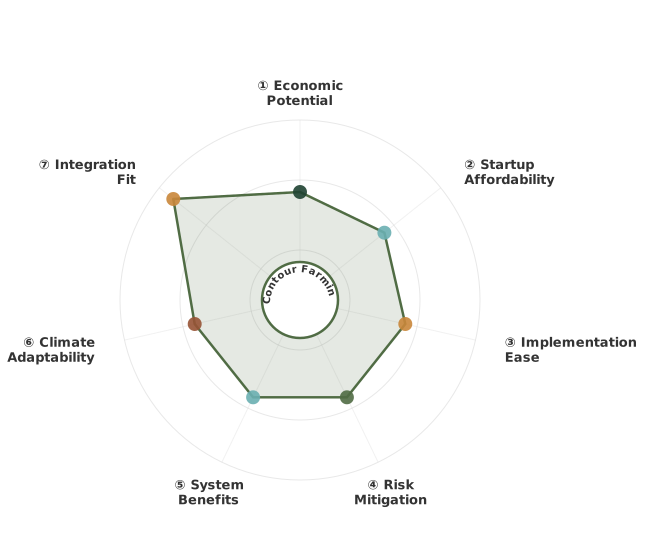
How These Traits Are Calculated
Trait dimensions are ordered clockwise starting from the top of the chart (12 o'clock position):
1. Economic Potential
Financial returns, annual value, and break-even timeline
WHAT: Evaluates financial viability by combining net annual value ($/ha from savings, income, and amortized harvests) with break-even timeline showing when practices pay for themselves.
WHY: Farmers need clear ROI understanding before committing resources. Fast payback (≤3 years) with strong returns (≥$300/ha) enables confident adoption, while long timelines (>10 years) restrict adoption to well-funded operations willing to wait for returns.
HOW: Calculated from net annual value in $/ha and break-even years. Exceptional (≥2.6): fast ROI ≤3 years + high value ≥$300/ha. Typical (1.8-2.5): moderate returns or longer timelines. Limited (<1.8): marginal economics or very long payback >10 years.
2. Startup Affordability
Initial investment costs and financial barrier to entry
WHAT: Measures financial barrier to entry through startup costs for equipment, infrastructure, consulting, and materials. Inverted scoring: lower costs = higher scores = more accessible adoption.
WHY: Affordability determines who can adopt. Low-cost practices (<$250/ha) enable widespread adoption across diverse scales, while high costs (>$2,500/ha) limit adoption to well-capitalized operations, creating barriers that slow regenerative transition.
HOW: Calculated from initial investment parsed from practice content. Inverted scoring: Exceptional (≥2.6): minimal investment <$250/ha. Typical (1.8-2.5): moderate costs $250-2,500/ha. Limited (<1.8): high barrier >$2,500/ha.
3. Implementation Ease
Learning curve and specialized knowledge required
WHAT: Measures how much learning, planning, and specialized knowledge a practice requires. Simpler practices with fewer steps score higher, while complex practices requiring extensive training or specialized resources score lower.
WHY: Complex practices create adoption barriers even when economically viable. Straightforward practices enable faster adoption and broader participation, while those requiring extensive training, timing precision, or specialized equipment limit who can succeed.
HOW: Evaluated by measuring documentation length and identifying complexity markers like location-specific requirements, seasonal timing windows, specialized skills, and dedicated equipment needs. Exceptional (≥2.6): straightforward practices with minimal prerequisites. Typical (1.8-2.5): moderate learning curve with some specialized needs. Limited (<1.8): steep learning curve requiring significant training or resources.
4. Risk Mitigation
Identified financial and ecological risk assessment
WHAT: Evaluates documented risks across financial (investment loss, market volatility) and ecological (crop failure, pest outbreaks) domains. Inverted scoring: fewer risks = higher scores.
WHY: Understanding risk exposure helps farmers make informed decisions. Low-risk practices allow confident implementation, while high-risk practices require careful planning and contingency resources. Risk transparency prevents costly failures.
HOW: Calculated from identified risks in practice content. Inverted scoring: Exceptional (≥2.6): ≤2 risks with manageable severity. Typical (1.8-2.5): 3-5 moderate risks. Limited (<1.8): 6+ risks or severe exposure.
5. System Benefits
How many ways the practice improves your land simultaneously
WHAT: Measures how many aspects of land health improve at once—carbon storage, soil quality, erosion control, water absorption, and biodiversity. Practices that improve multiple areas simultaneously create compounding benefits where each improvement reinforces the others.
WHY: The best practices solve multiple problems at once. For example, addressing erosion simultaneously builds carbon and improves water infiltration, creating a resilient system with positive feedback loops. Single-benefit approaches miss these compound transformation opportunities.
HOW: Evaluated across five key outcomes: carbon sequestration, soil organic matter increase, erosion reduction, water infiltration improvement, and biodiversity enhancement. Exceptional (≥2.6): high carbon storage (>8 t/ha/yr), improvements across 4-5 areas, transformative outcomes. Typical (1.8-2.5): moderate carbon (3-8 t/ha/yr), improvements across 2-3 areas. Limited (<1.8): modest impact (<3 t/ha/yr), single-area focus only.
6. Climate Adaptability
Geographic applicability across Köppen climate zones
WHAT: Evaluates geographic applicability by assessing how many Köppen climate zones successfully support a practice and what adaptation requirements are needed. Measures breadth of climates where farmers can implement with minimal to moderate modifications.
WHY: Universal practices working across diverse climates enable more farmers to adopt regenerative approaches. Practices limited to single climate types (only Mediterranean, only tropical) restrict adoption and slow global transition. Adaptability determines whether a practice serves niche regions or offers broad transformation.
HOW: LLM evaluation of regional success stories, Köppen zone coverage, and adaptation needs. Exceptional (≥2.6): 5+ zones or 4+ climate types, 3+ continents, minimal adaptation. Typical (1.8-2.5): 3-4 zones or 2-3 types, 2 continents, moderate adaptation. Limited (<1.8): 1-2 zones, single region, significant adaptation or highly specialized.
7. Integration Fit
How well this practice combines with others you're doing
WHAT: Measures how well a practice combines with other regenerative practices you might be doing. Some practices work as building blocks that make many other practices easier or more effective, while others work best on their own.
WHY: Practices that combine well with many others create more value on your farm. For example, cover cropping enables no-till, improves grazing, supports crop diversity, and helps water management—making all of them work better together. This helps you build a coherent system rather than juggling disconnected practices.
HOW: Evaluated by identifying which practices combine well and how strong those combinations are. 'Ideally Suited' means strong combinations where practices reinforce each other (practice A makes B easier, while B makes A more effective). 'Adequate' means complementary benefits that work well together. Exceptional (≥2.6): combines well with 6+ practices, serves as a building block. Typical (1.8-2.5): combines with 3-5 practices. Limited (<1.8): 1-2 practices or works best alone.
Going Deeper
1
WHY - The Benefits
Contour farming is a widely adopted and effective practice for mitigating soil erosion and improving water management on sloping lands. Its benefits extend across multiple dimensions, from immediate soil conservation to long-term economic and ecological resilience. This...
Contour farming is a widely adopted and effective practice for mitigating soil erosion and improving water management on sloping lands. Its benefits extend across multiple dimensions, from immediate soil conservation to long-term economic and ecological resilience. This...
WHY - The Benefits
Contour farming is a widely adopted and effective practice for mitigating soil erosion and improving water management on sloping lands. Its benefits extend across multiple dimensions, from immediate soil conservation to long-term economic and ecological resilience. This...
Contour farming is a widely adopted and effective practice for mitigating soil erosion and improving water management on sloping lands. Its benefits extend across multiple dimensions, from immediate soil conservation to long-term economic and ecological resilience. This...
Soil Health Benefits
The primary soil health benefit of contour farming is erosion control. By creating level furrows and basins across the slope, it significantly reduces the velocity of surface runoff, which is the main driver of soil erosion. Studies consistently show that contour farming can reduce soil loss by 50-90% compared to up-and-down slope cultivation. This direct prevention of topsoil erosion preserves the fertile upper layers of the soil, which are rich in organic matter, nutrients, and beneficial microorganisms.
Improved water infiltration is another critical soil health outcome. The level basins act as small holding ponds, allowing water more time to soak into the soil profile. This increased infiltration reduces water runoff and associated nutrient and pesticide losses, thereby protecting water quality in downstream ecosystems. In regions prone to drought, this retained moisture extends the growing season and improves crop resilience. Soil moisture can increase by 15-40% on contour-farmed land compared to conventionally farmed slopes.
Contour farming also contributes to better soil structure over time. As water is slowed and retained, it has less erosive power, allowing soil particles to settle and aggregate. Improved aggregation leads to better soil aeration, water-holding capacity, and root penetration. While not a direct soil-building practice like cover cropping, it creates an environment where biological soil-building processes can function more effectively by ensuring consistent moisture and preventing the physical disruption caused by erosion.
The practice indirectly supports soil biology by maintaining more stable soil moisture levels and reducing the physical shock of severe runoff. A more consistent soil moisture regime supports a thriving microbial community, which is essential for nutrient cycling and decomposition. By preventing the loss of fertile topsoil, contour farming helps maintain the biological capital of the soil for future productivity.
Economic Benefits
The economic advantages of contour farming stem primarily from increased productivity and reduced costs associated with erosion and water management. The direct reduction in soil loss means that the inherent fertility of the land is preserved. This leads to more stable and often higher crop yields over the long term, reducing the need for increased fertilizer inputs to compensate for lost topsoil. On sloped fields, yield increases of 10-30% are common due to better moisture availability and root development.
Water savings represent another significant economic benefit. By improving infiltration and reducing runoff, contour farming decreases the reliance on irrigation in water-scarce regions. This translates to lower pumping costs, reduced energy consumption, and greater water use efficiency. In some cases, irrigation needs can be reduced by 15-40%.
Reduced erosion also mitigates costly damages. Soil deposition in lower fields, ditches, and water bodies is minimized, lessening the need for clean-up operations. Prevention of gully formation preserves usable land area and avoids costly repairs associated with severe erosion damage. Flood damage downstream may also be reduced, leading to fewer insurance claims and less damage to infrastructure.
The initial adoption costs for contour farming are typically low, most often involving adjustments to existing tillage or planting equipment and increased attention to field layout. Many farmers can implement contour farming using their current machinery. The labor requirement may increase slightly due to the need for more precise field operations during the initial layout and planting, but this is generally offset by the long-term gains in productivity and reduced soil/water management costs. The break-even period for the practice is usually short, often within one to two years, as the gains from reduced soil loss and improved water management quickly outweigh any minor additional costs.
Regenerative Systems Fit
Contour farming is a foundational practice that strongly aligns with and supports multiple principles of regenerative agriculture, making it a valuable component of any regenerative transition strategy.
Principle 1 (Minimize Soil Disturbance): While contour farming itself doesn't eliminate tillage, it significantly reduces the erosive impact of any tillage that is performed. By orienting rows across the slope, it prevents the tillage operations from creating pathways for water erosion. This stabilization is a crucial first step for farms looking to transition to reduced or no-till systems, as it creates an environment where soil structure is less likely to be degraded by rainfall before biological processes can take over.
Principle 2 (Maximize Crop Diversity): Contour farming creates more uniform soil moisture and nutrient distribution across a field, especially on slopes. This provides a more stable and favorable environment for establishing diverse cover crop mixes and, for annual crops, for implementing complex crop rotations. By preventing waterlogged areas at the bottom of slopes and drought-stressed areas at the top, contour farming allows a wider range of species to thrive, leading to increased aboveground and belowground diversity.
Principle 3 (Keep Soil Covered): Contour farming inherently promotes better soil coverage. By slowing runoff, it allows crop residues to settle and accumulate along the contour lines, forming a protective mulch layer. The level basins also facilitate more even establishment of crops and cover crops, reducing the likelihood of bare patches forming on slopes where erosion is most likely. This continuous or near-continuous soil cover protects the soil surface from raindrop impact and wind erosion.
Principle 4 (Maintain Living Roots): By conserving moisture and reducing erosion, contour farming creates more favorable conditions for both cash crops and perennial cover crops to establish and maintain living roots. This is particularly beneficial on sloped land where root growth can be limited by dry conditions or soil loss. The improved water availability can extend the growing season for cover crops, leading to longer periods of continuous living root presence in the soil.
Principle 5 (Integrate Livestock): Contour farming can be applied to pastures and rangelands. By creating contour furrows or small earthworks, it slows down and infiltrates water in grazing areas, reducing erosion caused by livestock traffic and rain. This improves pasture productivity and prevents degradation of rangelands, making them more resilient and supportive of livestock integration. Livestock manure can also help build fertility within the contour basins.
For farms transitioning to regenerative systems, contour farming often serves as an early-stage practice. It provides immediate benefits in soil and water conservation, building confidence and financial stability while more complex regenerative practices are developed. It's a stepping stone that stabilizes the landscape, making it more amenable to the introduction of cover cropping, no-till, and diverse rotations without the prohibitive risk of severe erosion. As soil health improves through other regenerative methods, the reliance on contouring might decrease, but it remains a valuable tool for managing water and soil on sloped terrain indefinitely.
Sources behind this view
Videos & Podcasts
-
Conservation planning solutions require balancing economics, agronomy, and environment. Key practices include no-till, cover crops, grass waterways, contour buffers, terraces, and buffers, each with b
-
Implement contours using a tractor and grader blade to slow water runoff, spread it across the landscape, and increase infiltration. This intervention supports plant growth and improves soil moisture,
-
Learn practical, human-scale water management techniques like 'water bars' and 'silt traps' to slow, spread, and sink water, preventing erosion and retaining soil. Use observation to guide incremental
-
Conservation agriculture principles (minimum soil disturbance, permanent soil cover, crop diversification) improve soil health, combat climate change impacts like erosion and drought, reduce costs, an

Community
-
Conservation agriculture, specifically no-tillage and cover crops, significantly improves soil health by increasing biodiversity, water infiltration, and soil carbon, while reducing water and fertiliz
Read more (opens in new window) ucanr.edu -
NRCS diagram details how contour farming and buffer strips mitigate erosion, improve soil health and water infiltration, and reduce contaminants in runoff, while considering farmer costs and returns.
Read more (p. 1) (opens PDF, p. 1) efotg.sc.egov.usda.gov -
Contour farming reduces sheet and rill erosion by slowing runoff and increasing water infiltration, which benefits soil health and crop productivity. It also improves water quality by decreasing sedim
Read more (pp. 1-2) (opens PDF, pp. 1-2) efotg.sc.egov.usda.gov -
Contour buffer strips (NRCS Code 332) reduce soil erosion, sediment transport, and runoff velocity by using vegetated strips on the contour, improving water quality and wildlife habitat.
Read more (pp. 1-2) (opens PDF, pp. 1-2) efotg.sc.egov.usda.gov
Research
-
Soil and Water Conservation Practices for Enhancing Productivity in Dryland Farming: A Review (opens in new window)
This study found: Dryland farming faces challenges from drought and soil degradation. Soil and water conservation practices like conservation tillage, cover crops, and rainwater harvesting improve soil moisture, health
-
In-situ Soil and Water Conservation for Sustainable Agriculture (opens in new window)
This study found: On-site conservation practices like cover crops, crop rotation, and organic amendments improve soil moisture, farm resilience, and prevent land degradation, supported by mapping tools for better water
-
Role of Conservation Agriculture Practices in Improving Soil Health and Crop Yield Sustainability (opens in new window)
This study found: Conservation Agriculture (CA) improves soil health and crop yields through minimal soil disturbance, permanent cover, and diverse planting. It boosts soil carbon, microbes, and earthworms, increasing
-
Soil Health, Crop Yield and Carbon Footprint Trade‐Offs Between Conservation and Conventional Farming: A Case Study (opens in new window)
This study found: Conservation farming in Central Europe improved soil health by 7% and cut GHG emissions by 43% over 8 years, maintaining crop yields. Key practices include reduced tillage, diverse rotations, and cove
From the Web
-
Provides a step-by-step guide for smallholder farmers on implementing contour farming to reduce soil erosion and conserve moisture on slopes, covering site assessment, technique implementation, and on
2
WHERE - Regional Considerations
Contour farming is adaptable to a wide range of climates and soil types, but its effectiveness is influenced by topography, rainfall patterns, and soil erodibility. Successful implementation requires understanding these regional factors.
Contour farming is adaptable to a wide range of climates and soil types, but its effectiveness is influenced by topography, rainfall patterns, and soil erodibility. Successful implementation requires understanding these regional factors.
WHERE - Regional Considerations
Contour farming is adaptable to a wide range of climates and soil types, but its effectiveness is influenced by topography, rainfall patterns, and soil erodibility. Successful implementation requires understanding these regional factors.
Contour farming is adaptable to a wide range of climates and soil types, but its effectiveness is influenced by topography, rainfall patterns, and soil erodibility. Successful implementation requires understanding these regional factors.
Click Here to Look up your Region if you don't already know it
Humid Temperate Regions
Representative Locations: Midwestern United States, Northern Europe (e.g., UK, Germany), Eastern China, Japan, New Zealand
Climate Context: Moderate precipitation distributed relatively evenly throughout the year, with warm to hot summers and cool to cold winters. Köppen Cfa/Cfb/Cfc. USDA Zones 4-8.
Suitability: Highly suitable and widely practiced. These regions often have rolling to steep topography with significant rainfall, making soil erosion a major concern for crops like corn, soybeans, wheat, and pastures. Contour farming is essential for preventing yield losses and maintaining long-term soil productivity in these areas. The presence of perennial forages and pastures also benefits from contouring, enhancing water infiltration and reducing runoff from grazing lands.
Mediterranean Regions
Representative Locations: California (USA), Mediterranean Basin (e.g., Spain, Italy, Greece), Central Chile, Southwestern Australia, Cape Region (South Africa)
Climate Context: Hot, dry summers and mild, wet winters with concentrated rainfall. Köppen Csa/Csb. USDA Zones 8-10.
Suitability: Very suitable, particularly for managing intense winter rainfall events. The dry summers mean that when rain does occur, it can be heavy and fall on dry, potentially crusted soils, leading to rapid runoff. Contour farming effectively captures this precious winter rainfall, increasing soil moisture availability for dry-season crops like olives, grapes, cereals, and almonds. It is also critical for preventing erosion on steep vineyards and fruit orchards.
Arid/Semi-Arid Regions
Representative Locations: Western United States (e.g., Montana, Colorado), North Africa, Central Asia, Interior Australia
Climate Context: Low and erratic rainfall, high evaporation rates, and often short growing seasons. Köppen BSh/BSk. USDA Zones 4-9.
Suitability: Highly beneficial for water harvesting. Contour farming, often combined with minor earthworks like contour furrows or broad-based terraces, is crucial for maximizing water capture and infiltration. This practice allows farmers to make the most of limited rainfall for crops like sorghum, millet, wheat, or forbs and grasses in rangeland systems. Contour farming reduces wind erosion as well, by creating physical barriers in the form of furrows and vegetation.
Cold Continental Regions
Representative Locations: Northern United States and Canada, Northern Europe, Siberia (Russia)
Climate Context: Very short growing seasons, hot summers, and extremely cold winters with heavy snowfall. Köppen Dfa/Dfb/Dfc. USDA Zones 2-5.
Suitability: Suitable, especially for managing spring meltwater. As snow melts rapidly, it can cause significant erosion on thawing soils. Contour farming helps to retain this meltwater, making it available for spring planting and reducing immediate runoff. It's applicable for staple crops like wheat, barley, and canola, as well as for pasture management in these cooler climates. Steep slopes can still pose challenges, requiring careful design and implementation.
Subtropical Regions
Representative Locations: Southeastern United States, Southern China, Southern Brazil, Eastern Australia
Climate Context: Hot, humid summers with abundant rainfall, and mild winters. Köppen Cfa/Cwa. USDA Zones 9-11.
Suitability: Highly suitable. These regions often experience intense convective rainfall events that can cause severe erosion. Contour farming is a standard practice for managing slopes in row crop agriculture (corn, soybeans, cotton) and for maintaining pastures and orchards. It helps prevent runoff from carrying away fertile topsoil and polluting waterways with sediment and nutrients.
Tropical Regions
Representative Locations: Central America, Southeast Asia, East Africa, Northern South America, Northern Australia
Climate Context: High temperatures year-round with either consistent high rainfall or distinct wet and dry seasons. Köppen Af/Am/Aw.
Suitability: Essential, especially in areas with distinct wet seasons or on steep terrain for tree crops. During heavy monsoon or tropical storm rainfall, contour farming is critical for preventing catastrophic soil loss. For coffee, cocoa, citrus, and banana plantations on slopes, contour planting is a standard and necessary practice. On lower slopes or flatter areas, it can still improve water penetration and reduce nutrient leaching, particularly during intense rainfall periods.
3
HOW - Implementation Process
Contour farming requires careful planning and execution to be effective. It's not simply plowing in circles, but an accurate measurement and management process.
Contour farming requires careful planning and execution to be effective. It's not simply plowing in circles, but an accurate measurement and management process.
HOW - Implementation Process
Contour farming requires careful planning and execution to be effective. It's not simply plowing in circles, but an accurate measurement and management process.
Contour farming requires careful planning and execution to be effective. It's not simply plowing in circles, but an accurate measurement and management process.
Prerequisites
- Topography Assessment: Identify slopes greater than 2% that are susceptible to erosion. Slopes exceeding 10-15% often require more intensive conservation measures alongside contouring.
- Soil Type: Understand soil characteristics. Highly erodible soils (sandy, low organic matter, poor structure) benefit more from contouring. Clay soils with poor infiltration may require more frequent contour lines or broader-based terraces.
- Crop Type/System: Contour farming is most effective for row crops and forages. Its application in broadcast-sown crops like small grains can be challenging but still beneficial.
- Equipment Availability: Standard tillage and planting equipment can be used. GPS guidance systems can greatly enhance accuracy.
Phase 1: Establishing Contour Lines
This is the most critical phase and requires precision.
Method 1: Traditional Surveying (Abney Level/Dumpy Level)
- Objective: Trace lines of constant elevation across the field.
- Process: 1. Select a starting point on the highest part of the field or at a natural drainage way. 2. Use an Abney level or Dumpy level to find a point exactly level with your starting point. 3. Mark this point temporarily. 4. Move to the marked point and find the next level point, creating a continuous line. 5. For steeper slopes, adjust the contour line to follow a slight fall (0.5-2%) to allow slow drainage rather than creating a complete dam. This is often called "contoured with grade". 6. Repeat this process across the entire field, aiming for contour lines that are roughly equidistant, typically 20-50 meters (65-165 feet) apart depending on slope gradient. Steeper slopes need closer lines.
- Tools: Abney level, surveying rods, stakes, flag markers.
- Labor: Requires trained personnel or significant farmer learning curve.
Method 2: GPS Guidance Systems
- Objective: Utilize GPS technology for highly accurate contour line following.
- Process: 1. Use a GPS receiver with a contour mapping function. 2. Drive a vehicle or implement along potential contour lines. The system records elevation data for each point. 3. The system identifies the best-fit contour lines, or you can manually select them based on elevation data. 4. The guidance system then directs the operator to stay on or parallel to these lines during subsequent operations.
- Tools: GPS receiver with auto-steer and contour mapping capabilities, farm management software.
- Labor: Operator needs to be proficient with GPS technology. Initial setup and data acquisition required.
Method 3: Visual Observation (Less Accurate, Supplemental)
- Objective: Follow natural contours visually, often used in less critical areas or for lighter slopes.
- Process: Observe the natural shape of the land and orient plowing/planting rows parallel to the general shape of the terrain across the slope.
- Limitations: Least accurate method, only suitable for gentle slopes or as a rough guide.
Phase 2: Implementing Tillage and Planting
Once contour lines are established and marked, all subsequent field operations must follow them.
- Plowing/Tillage: Plow in narrow lands or strips parallel to the contour lines. The aim is to create ridges and furrows that follow the contour, acting as mini-dams.
- Planting: Sow seeds in the furrows or on the ridges according to the established contour lines. Ensure planting rows are continuous and follow the curve of the land precisely.
- Equipment Calibration: Ensure planting equipment is calibrated to maintain consistent row spacing and depth along the contours.
- Waterways/Outlets: On steeper slopes or where water accumulation is high, design grassed waterways or controlled outlets at appropriate intervals to safely channel excess water off the field, preventing gully formation. These should be situated in natural drainage paths.
Phase 3: Management and Maintenance
- Residue Management: Leave crop residue on the surface as much as possible. This mulch helps trap soil, absorb moisture, and protect against erosion, particularly between planting seasons.
- Cover Cropping: Implement cover crops between cash crop cycles to maintain living roots, add organic matter, and further protect the soil surface. Contour farming creates better conditions for cover crop establishment.
- Pasture Management: For grazing lands, contour plowing or creating contour furrows can improve water infiltration and reduce erosion from animal traffic. This involves contour ripping or making shallow furrows.
- Terracing: On very steep slopes (>15-20%), contour farming is often combined with more engineered structures. These can include broad-based terraces or raised mounds of soil known as berms, which are designed to hold more water and prevent severe erosion. For more detail on their construction, see the Building Berms page.
Transition Timeline & Phase-Out Strategy
Contour farming is generally not a transition practice in the sense of being phased out. It is a fundamental soil and water management technique that can be applied indefinitely. However, as farms transition to full regenerative systems, its role may evolve:
- Early Transition: Contour farming is highly beneficial when introducing other practices like cover cropping or reduced tillage. It stabilizes the land, making these new practices more successful by ensuring better water availability and preventing erosion before soil health improves enough to self-regulate.
- Mature Regenerative Systems: In systems with very high organic matter, robust fungal networks, and excellent soil structure (e.g., from long-term no-till, diverse perennial cover crops, or silvopasture), the natural undulations and water-holding capacity of the soil may reduce the absolute necessity of precise contour plowing. However, even in such systems, orienting annual crop rows along the contour remains advantageous for optimal water management and erosion control on sloped land.
- No Phase-Out, but Synergy: Contour farming is best viewed as a foundational layer. Practices like no-till and cover cropping build upon the stable land base that contouring helps create. The goal is not to phase out contour farming, but to integrate it so well that it becomes a natural part of a resilient landscape.
Sources behind this view
Videos & Podcasts
-
Conservation planning solutions require balancing economics, agronomy, and environment. Key practices include no-till, cover crops, grass waterways, contour buffers, terraces, and buffers, each with b
-
Implement contours using a tractor and grader blade to slow water runoff, spread it across the landscape, and increase infiltration. This intervention supports plant growth and improves soil moisture,
-
Conservation planning involves offering producers diverse options like contour buffer strips, cover crops, no-till, and other practices, while adapting to changing soil surveys and prioritizing sustai
-
Implemented 'leaky contours' and planted 3,000 trees to improve water infiltration and reduce topsoil loss. Used 'soil key' technique after winter grazing to enhance water penetration and unlock soil
Community
-
NRCS diagram details how contour farming and buffer strips mitigate erosion, improve soil health and water infiltration, and reduce contaminants in runoff, while considering farmer costs and returns.
Read more (p. 1) (opens PDF, p. 1) efotg.sc.egov.usda.gov -
Contour farming reduces sheet and rill erosion by slowing runoff and increasing water infiltration, which benefits soil health and crop productivity. It also improves water quality by decreasing sedim
Read more (pp. 1-2) (opens PDF, pp. 1-2) efotg.sc.egov.usda.gov
Research
-
In-situ Soil and Water Conservation for Sustainable Agriculture (opens in new window)
This study found: On-site conservation practices like cover crops, crop rotation, and organic amendments improve soil moisture, farm resilience, and prevent land degradation, supported by mapping tools for better water
-
Soil and Water Conservation Practices for Enhancing Productivity in Dryland Farming: A Review (opens in new window)
This study found: Dryland farming faces challenges from drought and soil degradation. Soil and water conservation practices like conservation tillage, cover crops, and rainwater harvesting improve soil moisture, health
-
Transition to Regenerative Farming (opens in new window)
This study found: A 5-year case study shows a farm successfully transitioned to regenerative practices, reducing soil erosion and increasing wildlife by using cover crops, diversified rotations, and reduced tillage. Pr
-
Role of Conservation Agriculture Practices in Improving Soil Health and Crop Yield Sustainability (opens in new window)
This study found: Conservation Agriculture (CA) improves soil health and crop yields through minimal soil disturbance, permanent cover, and diverse planting. It boosts soil carbon, microbes, and earthworms, increasing
From the Web
-
Provides a step-by-step guide for smallholder farmers on implementing contour farming to reduce soil erosion and conserve moisture on slopes, covering site assessment, technique implementation, and on
4
Know the Debate
Contour farming is a cornerstone practice for managing water and soil on sloped terrain, applicable across diverse climates from humid temperate to...
Know the Debate
Contour farming is a cornerstone practice for managing water and soil on sloped terrain, applicable across diverse climates from humid temperate to...
Contour farming is a cornerstone practice for managing water and soil on sloped terrain, applicable across diverse climates from humid temperate to arid regions. Its effectiveness hinges on the specific topography and rainfall patterns. Implementation can range from low-cost, labor-intensive methods using simple tools suitable for smallholders, to higher-investment approaches leveraging GPS technology for greater precision on larger operations. While establishment requires careful planning, ongoing management is often minimal, yielding significant long-term benefits in erosion control, water infiltration, and farm resilience.
How steep can slopes be for contour farming?
Effective on moderate slopes (2-15%)
Academic research and some institute guidelines suggest contour farming is most effective on moderate slopes (2-8%), necessitating engineering like terracing for steeper terrain (12-30%) due to runoff energy and potential for failure.
Sources behind this view
Sources behind this view
Research
-
Reducing the Average P Factor Value in Sloping Land Through Scenarios that Incorporate Terracing and Contour Farming Practices (opens in new window)
This study found: Researchers developed four strategies for managing soil erosion on sloped land by using terraces and contour farming (planting rows across the slope). They found that combining these methods could significantly reduce the soil loss factor, decreasing it by 42% in their study area. Contour farming is best for gentler slopes (6-12%), while terracing is ideal for steeper slopes (12-30%). This approach offers a practical way to lower erosion risk in hilly or sloped agricultural regions.
-
Exploring the interaction of surface roughness and slope gradient in controlling rates of soil loss from sloping farmland on the Loess Plateau of China (opens in new window)
This study found: A study on farmland in China's Loess Plateau looked at how soil surface roughness and the steepness of the land (slope) work together to cause soil erosion from rain. They tested different ways of preparing the soil (like plowing in rows or digging) to create rougher surfaces, and simulated heavy rain on slopes ranging from gentle to very steep. They found that on gentler slopes, a rougher soil surface helped reduce erosion. But on steeper slopes, the steepness became the dominant factor, and making the surface rougher didn't help much to stop soil from washing away. There's a 'tipping point' slope where this change happens, and this tipping point is reached sooner with heavier rain. This information is important for managing soil and water on sloped farmland.
From the Web
-
Details terracing as a soil and water conservation method for slopes, outlining steps for site assessment, construction of terraces (bench, contour bunds), and essential maintenance practices for erosion control and water conservation.
Works on varied slopes with adaptive design
Field practitioners demonstrate success on a wider range of slopes using adaptive techniques like 'leaky contours', integrating earthworks, or relying on high soil organic matter to manage water and erosion on challenging terrain.
Sources behind this view
Sources behind this view
Videos & Podcasts
-
Tilling downhill causes severe erosion; implementing contour-lined swales significantly reduces erosion and improves water infiltration. This practice, using a polydozer, has been effective on the farm for about 8-9 years.

-
Spencer Rudolph details terracing and contour farming on sloped land in Southern California. Key practices include creating wider beds on terraces, using New Zealand white clover for weed control and nitrogen fixation, and ensuring a slight slope (approx. 2 degrees) for drainage to prevent anaerobic soil. Methods for managing runoff on contour beds include straw waddles and inter-row buckwheat cover cropping.
-
Phoebe used leaky weirs and level contours to manage water in erosion gullies over 2.5 years. This technique slows water, promotes infiltration, spreads it across the land, and rehydrates the landscape, leading to improved soil, biodiversity, and pasture quality.
Making Sense of the Differences
The effectiveness of contour farming across different slope gradients varies significantly based on rainfall intensity, soil type, and technique. While academic research often recommends terracing for slopes steeper than 8-15% due to runoff energy, experienced farmers demonstrate success on more challenging terrain by employing adapted methods like 'leaky contours' and integrating earthworks. Farmers should assess their specific slope, soil erodibility, and rainfall patterns, and consider complementary practices or more robust engineering solutions for steeper terrain.
How much effort is needed for contour farming?
Requires precise layout and potentially higher labor/investment
Academic and institute sources often emphasize the need for precise surveying, GPS guidance, and potential earthworks, suggesting higher initial costs and more diligent labor for accurate, effective contour farming.
Sources behind this view
Sources behind this view
Research
-
Application of Geographic Information System and Automated Guidance System in Optimizing Contour and Terrace Farming (opens in new window)
This study found: This study shows how to use mapping software (GIS) and auto-steer systems with GPS to make contour and terrace farming more effective, especially on sloped land. Researchers in the Texas High Plains developed ways to improve the guidance lines that auto-steer systems follow. These methods include smoothing out rough lines, combining multiple guidance paths into simpler ones, and creating clearer navigation routes for complex fields. They also show how to create these guidance lines using elevation data from GPS. By combining mapping tools with auto-steer technology, farmers can operate their equipment more precisely, which helps conserve soil and water resources. The key is to adjust the settings based on the specific field and what the farmer needs for easy and effective operation.
From the Web
-
Provides a step-by-step guide for smallholder farmers on implementing contour farming to reduce soil erosion and conserve moisture on slopes, covering site assessment, technique implementation, and ongoing maintenance.
-
Chapter 4 details engineering approaches for soil conservation, including inter-stone bunds, alternating beds, terracing, and grass waterways, all designed to reduce runoff speed, conserve water, and prevent erosion, particularly on sloping or flood-prone lands.
Achievable with low-tech, minimal cost methods
Field practitioners highlight low-cost, human-scale techniques using tools like A-frames or visual observation, demonstrating that contour farming can be implemented with minimal investment and labor, especially for smaller farms.
Sources behind this view
Sources behind this view
Videos & Podcasts
-
Learn practical, human-scale water management techniques like 'water bars' and 'silt traps' to slow, spread, and sink water, preventing erosion and retaining soil. Use observation to guide incremental shovel work, creating S-curves in the landscape and enhancing soil fertility.
-
Implement contours using a tractor and grader blade to slow water runoff, spread it across the landscape, and increase infiltration. This intervention supports plant growth and improves soil moisture, addressing issues like aluminum toxicity and compaction over time.
-
Farming on contour, marked with laser and GPS, significantly reduces soil erosion and increases water holding capacity by slowing and spreading water. It's a low-cost, long-term regenerative input.

Making Sense of the Differences
The perceived effort and cost of contour farming vary significantly with scale, technology, and local expertise. While academic and institute sources often emphasize precise methods and potential higher investments for accuracy, field practitioners demonstrate highly effective, low-cost techniques using basic tools suitable for smaller farms or resource-limited regions. The key is tailoring implementation to the farm's specific scale, budget, and topography, recognizing that even simpler approaches offer substantial soil and water conservation benefits.
5
HOW MUCH - Costs & Investment
Note: Costs shown in USD; multiply by local labor and material cost indices for your region. Labor costs vary significantly internationally.
Note: Costs shown in USD; multiply by local labor and material cost indices for your region. Labor costs vary significantly internationally.
HOW MUCH - Costs & Investment
Note: Costs shown in USD; multiply by local labor and material cost indices for your region. Labor costs vary significantly internationally.
Note: Costs shown in USD; multiply by local labor and material cost indices for your region. Labor costs vary significantly internationally.
Note: All costs are based on recent US economic data (2024–2026) and may vary substantially by region based on local labor rates, material costs, and regulatory requirements.
GPS Guidance and Auto-Steer Systems
Precision technology is the primary driver of capital investment for contour farming efficiency, as maintaining precise elevations requires high-fidelity steering. For small farms under 50 acres (20 ha), basic handheld or lightbar guidance systems range from $2,000 to $8,000. These entries represent the lower end of the investment spectrum, focusing on manual guidance that increases operator concentration requirements. Mid-size operations ranging from 50 to 500 acres (20–202 ha) typically invest in mid-tier integrated units or software upgrades that interface directly with tractor hydraulics, costing $8,000 to $20,000. These systems provide improved line consistency on uneven topography. Large-scale producers managing over 500 acres (202 ha), who must maintain sub-inch accuracy on complex slopes to prevent row misalignment, typically spend between $20,000 and $50,000 plus. These systems reduce the “turning penalty”—the inefficiency caused by irregular field boundaries—and ensure row consistency year-over-year, which is critical for maximizing planter speed without compromising depth control.
Field Surveying and Contour Layout
Establishing verified, equidistant contour lines requires technical planning to ensure water is directed correctly rather than concentrated in gully-prone areas. For small operations, DIY surveying is common, though professional consulting for initial layout can cost $8 to $20 per acre ($20–$49/ha). Mid-sized operations generally pay $5 to $12 per acre ($12–$30/ha) for third-party mapping or technical service provider assistance to ensure drainage gradients are mathematically sound. Large-scale operations, utilizing digital elevation models and precision terrain mapping software, typically see lower per-acre costs of $3 to $8 per acre ($7.4–$20/ha). This reduction is attributed to economies of scale, where fixed-cost assets like drone mapping and site-specific GIS software are amortized across significantly larger acreages.
Operational Implementation (Plowing and Planting)
Contour farming inherently increases the number of turns required at field boundaries, which typically increases fuel and labor consumption by 5% to 15% compared to conventional parallel row farming. For small farms utilizing shorter rows or tighter turning radii, the additional labor cost fluctuates between $15 and $40 per acre ($37–$99/ha). Mid-sized farms, which leverage better equipment synchronization and larger headlands, generally see an added operational overhead of $10 to $25 per acre ($25–$62/ha). Large-scale operations, having optimized equipment paths and higher-horsepower tractors capable of maneuvering heavier implements, experience a minimal incremental cost of $5 to $15 per acre ($12–$37/ha). These figures account for the increased idling and turning time necessitated by non-linear row configurations.
Terracing and Infrastructure Earthworks
In scenarios where slope gradients exceed 10–15%, simple contouring is often insufficient, necessitating physical structures like broad-based terraces, back-sloped ridges, or permanent grassed waterways. On small sites, heavy earthwork projects are capital-intensive, costing $200 to $600 per acre ($494–$1,483/ha) to establish stable, engineered slopes. Mid-sized sites requiring complex, engineered drainage solutions generally spend $150 to $400 per acre ($371–$988/ha) to prevent premature structural failure during heavy precipitation events. Large-scale projects, which utilize heavy machinery for mass excavation and precise earth moving, typically incur costs of $100 to $300 per acre ($247–$741/ha). These infrastructure costs are often subsidized by federal programs like the Environmental Quality Incentives Program (EQIP), which can cover 50% to 75% of the total project costs, significantly lowering the out-of-pocket burden.
Most Spend: Most agricultural operations (the middle 60% of producers) spend approximately $30 to $70 per acre ($74–$173/ha) on total implementation, including initial surveying and annual operational adjustments.
Why the Range?: The primary drivers of cost variance are topography complexity and existing technology maturity. Steeper, highly irregular terrain requires a higher intensity of survey labor and potentially significant infrastructure investment, driving costs toward the upper end of the ranges provided. Smaller scale operations lack the ability to amortize high-tech precision equipment over large acres, which keeps their per-acre capital investment higher than their industrial-scale counterparts. Additionally, the need for earthworks is highly geography-dependent; regions prone to intense, short-duration rainfall require more robust engineering, whereas stable, gentle slopes can often be managed with minimal infrastructure.
Sources behind this view
Videos & Podcasts
-
Century is integrating soil disturbance reduction (saving £30-£100+/hectare), cover crops, and input reduction (improving nitrogen use efficiency to 92%) across its farms, utilizing grants and explori

-
Farming on contour, marked with laser and GPS, significantly reduces soil erosion and increases water holding capacity by slowing and spreading water. It's a low-cost, long-term regenerative input.
6
REWARDS AND RISKS - Economics & Risk Factors
REWARDS AND RISKS - Economics & Risk Factors
Contour farming transforms the economics of sloped land by shifting the focus from high-input output to long-term resource stabilization. In a best-case scenario, producers often report a 20–30% increase in crop yield for sloped fields, contributing $150–$300 per acre ($371–$741/ha) in added revenue, depending on commodity pricing cycles. Simultaneously, the increased water infiltration provided by contour basins reduces the need for supplemental irrigation by 15–40%, saving $50–$150 per acre ($124–$371/ha) annually in electricity, fuel, and water pumping costs. Under these conditions, the investment achieves a positive ROI within 18–24 months.
In a typical scenario, farmers observe a 10–15% yield gain and a 50–70% reduction in soil erosion, effectively stabilizing land value. While yield gains are more modest, the long-term conservation of the soil as a capital asset—valued at $5,000–$10,000 per acre ($12,355–$24,710/ha)—serves as the primary economic driver. For most, the payback period for implementation costs remains within 2–3 years.
In a worst-case scenario, poor layout or failure to maintain water outlets leads to concentrated flow, which triggers catastrophic gully erosion. This failure can result in a 5–10% yield loss and requires immediate remediation costs of $100–$500 per acre ($247–$1,236/ha) to repair damaged field infrastructure. If the contour layout deviates by more than 5 degrees from the true elevation, the water-harvesting benefit fails, potentially leading to localized flooding that can destroy entire crop patches on the slope.
Market factors, specifically energy and commodity volatility, play a decisive role in profitability. Fuel costs, representing 10–15% of annual budgets, rise slightly due to the increased turning requirements of contour farming. However, these costs are balanced by the protection of high-value topsoil. High-value crop markets often reward the sustained, consistent moisture levels and organic matter density maintained by contour practices. Risk is largely mitigated through accurate initial surveying and the integration of grassed waterways. Farmers should proactively allocate $5–$20 per acre ($12–$49/ha) annually for structure maintenance to prevent long-term failure. Furthermore, utilizing high-fidelity satellite imagery for planning reduces the probability of layout errors. Integrating cover crops alongside contours provides a secondary layer of protection, with carbon credit payments ranging from $15–$30 per acre ($37–$74/ha) in certain markets, which helps to offset annual maintenance expenses.
Transition Period Risks: During the first 12–18 months of implementation, producers face a “learning curve” that can lead to a 5–10% reduction in operational efficiency, specifically during planting and harvest. This dip is caused by the transition from straight-line to curved navigation. To mitigate yield dips, farmers should avoid aggressive changes in row direction on extremely steep sections during year one. A phased implementation strategy, where the producer begins by converting only the most sensitive 20% of their acreage, allows operators to adapt to new machinery geometry without risking the entire harvest, reducing the total financial exposure.
Sources behind this view
Videos & Podcasts
-
Conservation planning solutions require balancing economics, agronomy, and environment. Key practices include no-till, cover crops, grass waterways, contour buffers, terraces, and buffers, each with b
-
Transitioning to regenerative agriculture can avoid the 'J curve' by first optimizing agrochemical use and reducing tillage intensity to generate savings. These freed-up funds are then reinvested grad
-
Spencer Rudolph details terracing and contour farming on sloped land in Southern California. Key practices include creating wider beds on terraces, using New Zealand white clover for weed control and
-
Addresses difficult conservation planning for soil erosion, emphasizing field observation, solutions like contour buffer strips, cover crops, no-till, and residue management. NRCS seeks economically v
Community
-
NRCS diagram details how contour farming and buffer strips mitigate erosion, improve soil health and water infiltration, and reduce contaminants in runoff, while considering farmer costs and returns.
Read more (p. 1) (opens PDF, p. 1) efotg.sc.egov.usda.gov -
Contour farming reduces sheet and rill erosion by slowing runoff and increasing water infiltration, which benefits soil health and crop productivity. It also improves water quality by decreasing sedim
Read more (pp. 1-2) (opens PDF, pp. 1-2) efotg.sc.egov.usda.gov
Research
-
How much do conservation cropping practices mitigate runoff and soil erosion under Western European conditions: A focus on conservation tillage, tied ridging and winter cover crops (opens in new window)
This study found: Western European review: Winter cover crops cut runoff by 68% and soil loss by 72%. Tied ridging reduced runoff by 70% and erosion by 92%. Conservation tillage also showed significant benefits, with n
-
Reducing the Average P Factor Value in Sloping Land Through Scenarios that Incorporate Terracing and Contour Farming Practices (opens in new window)
This study found: Combining terracing and contour farming on slopes reduced the soil erosion factor by 42%. Contour farming for 6-12% slopes, terracing for 12-30% slopes.
-
Transition to Regenerative Farming (opens in new window)
This study found: A 5-year case study shows a farm successfully transitioned to regenerative practices, reducing soil erosion and increasing wildlife by using cover crops, diversified rotations, and reduced tillage. Pr
-
Role of Conservation Agriculture Practices in Improving Soil Health and Crop Yield Sustainability (opens in new window)
This study found: Conservation Agriculture (CA) improves soil health and crop yields through minimal soil disturbance, permanent cover, and diverse planting. It boosts soil carbon, microbes, and earthworms, increasing
From the Web
-
Provides a step-by-step guide for smallholder farmers on implementing contour farming to reduce soil erosion and conserve moisture on slopes, covering site assessment, technique implementation, and on
7
WHO - Labor & Expertise
The labor and expertise requirements for contour farming vary depending on the scale of operation and the precision of implementation.
The labor and expertise requirements for contour farming vary depending on the scale of operation and the precision of implementation.
WHO - Labor & Expertise
The labor and expertise requirements for contour farming vary depending on the scale of operation and the precision of implementation.
The labor and expertise requirements for contour farming vary depending on the scale of operation and the precision of implementation.
Labor Requirements
- Operational Labor: Farmers familiar with standard plowing, planting, and cultivating equipment can readily adopt contour farming. The primary difference is the need for greater attention to field navigation. For farms without GPS guidance, this might involve an additional person in the field to mark lines or guide the operator.
- Setup & Planning Labor: The initial establishment of contour lines requires more intensive labor or expertise. This involves surveying, marking lines, and planning field operations. For smaller farms or those with less experience, hiring a local agricultural extension service, a conservation district professional, or a private consultant for the initial layout is common.
- Maintenance Labor: Ongoing maintenance of contour furrows and grassed waterways is typically minimal but requires periodic checks and clearing, especially after heavy rainfall events.
Expertise Requirements
- Basic Understanding: A basic understanding of topography and how water flows on slopes is essential. Farmers should understand the concept of contour lines and the importance of following them accurately.
- Intermediate Expertise: To optimize contour design, knowledge of soil types, slope gradients, and their interaction with rainfall intensity is beneficial. This includes understanding how to design "contoured with grade" where a gentle fall is incorporated into contour lines to manage water flow safely.
- Advanced Expertise: For large-scale operations or regions with complex topography and high erosion risk, advanced expertise in conservation engineering, GPS guidance systems, GIS mapping, and advanced soil hydrology can significantly enhance the effectiveness and efficiency of contour farming. Professional training or consultation is recommended in these cases.
International Labor and Cost Considerations
- Labor-Intensive Regions: In regions with lower labor costs and less access to advanced GPS technology, traditional surveying methods supplemented by visual observation are often employed. This can be labor-intensive but is cost-effective in terms of direct cash outlay.
- Technology Adoption: In regions with higher labor costs and greater access to technology, GPS-guided contour farming is becoming the norm, reducing labor requirements and increasing precision. The upfront investment in GPS is often recouped through increased efficiency and reduced input needs.
- Cost of Expertise: Consulting services for contour design and implementation vary greatly by region. Local agricultural extension services or government conservation programs sometimes offer this expertise at reduced or no cost to farmers.
Sources behind this view
Videos & Podcasts
-
Farming on contour, marked with laser and GPS, significantly reduces soil erosion and increases water holding capacity by slowing and spreading water. It's a low-cost, long-term regenerative input.
Community
-
Contour farming reduces sheet and rill erosion by slowing runoff and increasing water infiltration, which benefits soil health and crop productivity. It also improves water quality by decreasing sedim
Read more (pp. 1-2) (opens PDF, pp. 1-2) efotg.sc.egov.usda.gov
From the Web
-
Provides a step-by-step guide for smallholder farmers on implementing contour farming to reduce soil erosion and conserve moisture on slopes, covering site assessment, technique implementation, and on
8
COMPATIBLE PRACTICES - Integration Opportunities
Contour farming is rarely implemented in isolation. It is highly compatible with, and often serves as a foundation for, a suite of other regenerative agricultural practices.
Contour farming is rarely implemented in isolation. It is highly compatible with, and often serves as a foundation for, a suite of other regenerative agricultural practices.
COMPATIBLE PRACTICES - Integration Opportunities
Contour farming is rarely implemented in isolation. It is highly compatible with, and often serves as a foundation for, a suite of other regenerative agricultural practices.
Contour farming is rarely implemented in isolation. It is highly compatible with, and often serves as a foundation for, a suite of other regenerative agricultural practices.
Cover Cropping
- Integration: Contour farming creates ideal conditions for cover crops by ensuring they are planted on level surfaces with consistent moisture. Cover crops, in turn, add organic matter, improve soil structure, and provide continuous living cover, making contouring even more effective.
- Benefit: Enhanced soil health, increased organic matter, better water infiltration, and further erosion prevention.
No-Till or Reduced Tillage
- Integration: Contour farming significantly reduces the erosive impact of tillage. This makes it a crucial preparatory step for transitioning to no-till or reduced tillage systems, where preventing soil disturbance and erosion is paramount.
- Benefit: Stabilized soil structure, reduced fuel and labor costs, increased soil organic matter over time, and improved water retention.
Crop Rotation
- Integration: Contour farming supports diverse crop rotations by creating more uniform field conditions. This allows for better establishment of different crop species with varying root structures and water needs.
- Benefit: Increased biodiversity, improved nutrient cycling, better pest and disease management, and enhanced soil health through varied root systems.
Terracing and Water Management Structures
- Integration: On steeper slopes, contour farming is often combined with broader conservation structures like contour furrows, micro-basins, or broad-based terraces to further enhance water retention and erosion control.
- Benefit: Maximized water harvesting in arid regions, prevention of severe erosion, and creation of more productive micro-habitats on challenging topography.
Pasture Management and Silvopasture
- Integration: Contour plowing and furrows are used in pastures to manage water flow and reduce erosion from grazing animals. This can be extended to silvopasture systems, where contouring helps manage water for both trees and forage.
- Benefit: Improved pasture productivity, reduced rangeland degradation, better water distribution for livestock, and enhanced rangeland health.
Precision Agriculture and GPS Guidance
- Integration: GPS guidance systems allow for highly accurate contour line establishment and farming operations, significantly improving efficiency and effectiveness.
- Benefit: Increased precision in field operations, reduced labor, better utilization of land, and more efficient resource management.
Contour farming is a versatile practice that serves as a stable base, enabling and enhancing the effectiveness of many other regenerative agriculture techniques, particularly on sloped landscapes. It is a key component in building resilient and productive farming systems that protect soil and water resources.
Sources behind this view
Videos & Podcasts
-
Conservation planning solutions require balancing economics, agronomy, and environment. Key practices include no-till, cover crops, grass waterways, contour buffers, terraces, and buffers, each with b
-
Three key regenerative principles for agriculture are: minimal soil disturbance (no-till), keeping ground covered with cover crops, and growing a diversity of crops. These practices build soil fertili

-
Conservation planning involves offering producers diverse options like contour buffer strips, cover crops, no-till, and other practices, while adapting to changing soil surveys and prioritizing sustai
-
Farming on contour, marked with laser and GPS, significantly reduces soil erosion and increases water holding capacity by slowing and spreading water. It's a low-cost, long-term regenerative input.
Community
-
NRCS diagram details how contour farming and buffer strips mitigate erosion, improve soil health and water infiltration, and reduce contaminants in runoff, while considering farmer costs and returns.
Read more (p. 1) (opens PDF, p. 1) efotg.sc.egov.usda.gov -
Contour farming reduces sheet and rill erosion by slowing runoff and increasing water infiltration, which benefits soil health and crop productivity. It also improves water quality by decreasing sedim
Read more (pp. 1-2) (opens PDF, pp. 1-2) efotg.sc.egov.usda.gov
Research
-
Integrating Conservation Agriculture with Precision Farming for Improved Yield Stability (opens in new window)
This study found: Combining conservation agriculture with precision farming boosts yield stability and environmental health by improving soil and optimizing resource use, making farms more resilient to climate challeng
-
Systematic review of regenerative farming: Addressing agricultural sustainability challenges (opens in new window)
This study found: Systematic review of 31 studies shows regenerative farming improves soil health, biodiversity, and carbon capture, aiding sustainability. Technology is key for adoption, but policy, farmer understandi
-
In-situ Soil and Water Conservation for Sustainable Agriculture (opens in new window)
This study found: On-site conservation practices like cover crops, crop rotation, and organic amendments improve soil moisture, farm resilience, and prevent land degradation, supported by mapping tools for better water
-
Soil and Water Conservation Practices for Enhancing Productivity in Dryland Farming: A Review (opens in new window)
This study found: Dryland farming faces challenges from drought and soil degradation. Soil and water conservation practices like conservation tillage, cover crops, and rainwater harvesting improve soil moisture, health
From the Web
-
Provides a step-by-step guide for smallholder farmers on implementing contour farming to reduce soil erosion and conserve moisture on slopes, covering site assessment, technique implementation, and on