
Cover Crop Cocktails
Cover crop cocktails are intentionally designed multispecies mixes that mimic natural plant community diversity to drive soil biological response. The approach centers on leveraging functional complementarity—the idea that a diverse mix of species achieves greater synergistic benefits than a single species or even simple additive plantings—to manage system complexity and enhance soil health. This practice moves beyond traditional single-species cover cropping by prioritizing diversity to unlock the full potential of soil biology.
Read More: Complete Description
Cover crop cocktails represent a sophisticated evolution of cover cropping, moving beyond single-species selections to harness the power of functional complementarity within diverse plant communities. Unlike traditional cover cropping, which might focus on a single goal like nitrogen fixation with clover or erosion control with rye, cocktails are meticulously designed multispecies blends. The underlying principle is that diverse root architectures, nutrient acquisition strategies, and plant-soil interactions create a more robust and resilient soil ecosystem than any single species could achieve. This approach is championed by regenerative pioneers like Adelaida Hardin, Gabe Brown, Steve Groff, and Christine Jones, who see them as critical tools for actively engineering biological solutions for soil health and farm resilience.
The core of cover crop cocktails lies in their ability to mimic the complexity of natural ecosystems. Natural plant communities are rarely monocultures; they are vibrant mosaics of species interacting in ways that enhance overall system function. By planting a carefully selected mix—often including grasses, legumes, brassicas, and other broadleaf plants—farmers and ranchers can encourage a cascade of positive biological responses. These species work synergistically: deep-rooted plants break up compaction and mine nutrients from lower soil profiles, while shallow-rooted plants add organic matter to the surface. Legumes fix atmospheric nitrogen, and other plants scavenge residual nutrients, preventing their loss. The diverse root exudates feed a wider array of soil microbes, fostering a more complex and resilient soil food web. This functional diversity ensures that the soil ecosystem is supported throughout the year, even during periods when cash crops are not actively growing.
Cover crop cocktails directly support key regenerative agriculture principles. They excel at maximizing crop diversity (Principle 2) by introducing many species above and below ground, creating varied habitat and food sources for soil life. They are fundamental to keeping soil covered (Principle 3) year-round, preventing erosion, conserving moisture, and feeding soil biology with living or decomposing plant material. By extending photosynthetic activity beyond the cash crop season, they ensure the presence of living roots in the soil for as long as possible (Principle 4), continuously feeding the soil food web and building structure. While they don't inherently involve minimizing soil disturbance (Principle 1) during planting (especially when no-till drills are used), they create conditions that drastically reduce the need for tillage by improving soil structure and fertility over time. When integrated with livestock (Principle 5), their impact is amplified, with animal impact distributing nutrients and stimulating plant growth.
The benefits of cover crop cocktails extend to improved water infiltration and retention, increased soil organic matter, enhanced nutrient cycling, and greater resilience to pests and diseases across the farm system. They can transform degraded soils into vibrant, self-sustaining ecosystems within a few years, a testament to biological agency operating on compressed operational timescales, not geological ones. This rapid recovery is a hallmark of well-managed regenerative systems.
While the concept of planting multiple cover crops together isn't entirely new, the "cocktail" approach, championed by practitioners like Gabe Brown and Steve Groff, emphasizes intentional design and system complexity management. It's not simply about putting several species in a planter; it’s about understanding how different plant functional groups interact to achieve synergistic outcomes. A 12-species mix is not just "cover crops"; it's a carefully orchestrated biological intervention designed to stimulate earthworms, promote fungal networks, and enhance soil aeration and water-holding capacity in ways single-species plantings cannot. When transitioning to regenerative agriculture, cover crop cocktails offer a powerful pathway to accelerate soil health improvements and build farm resilience, often outperforming conventional approaches in terms of both environmental and economic outcomes.
The development of what are now known as cover crop cocktails began with farmers seeking to overcome limitations of single-species cover crops. For instance, planting only cereal rye provides excellent biomass and erosion control but offers less biological diversity for soil microbes. Adding a legume like crimson clover fixes nitrogen, and a brassica like forage radish can break through compacted layers. Expanding this to include species with different root depths, nutrient scavenging abilities, and pest-suppressing properties creates a synergistic effect. The goal is not just to plant more species, but to plant species that perform complementary functions, creating a microbial and structural efflorescence in the soil.
International adoption of cover crop cocktails has been significant. Farmers in diverse climates, from the humid subtropics of Brazil to the Mediterranean regions of Australia and the challenging semi-arid zones of Africa, are adapting these multispecies mixes. They adjust selections based on local rainfall patterns, growing season length, and available species, but the core principle of maximizing functional diversity remains constant. This global application underscores the adaptability and effectiveness of the cocktail approach as a regenerative practice.
This practice is classified as Foundational: It directly supports multiple core regenerative principles and is central to building a healthy, resilient soil ecosystem.
Sources behind this view
Sources behind this view
 Videos & Podcasts
-
Cocktail cover crops with 8-12 species break up compacted soil. Grazing livestock on them yields 3+ lbs/day gain and rapidly builds soil carbon, as pioneered by Gabe Brown.

-
Multi-species cover crops (at least six types like cereals, legumes, broadleaves) are crucial for soil health, stimulating the soil food web and improving soil structure. Alternative methods like Kore

-
Plan cover crop use based on specific goals (e.g., nutrient management, weed competition). Mixtures enhance diversity and nutrient cycling. Continuous low-disturbance no-till with diverse rotations an

-
Achieving cover crop diversity (10 plant families) requires moving beyond corn-soybean rotations. Strategies include livestock management, relay cropping, and understanding termination methods. Start

 Community
-
Explains cover crop functions (green manure, nutrient cycling, erosion control, weed suppression) and categorizes them into six functional groups. Compares single-species vs. multispecies mixes, highl
Read more (pp. 2-5) (opens PDF, pp. 2-5) efotg.sc.egov.usda.gov
 Research
-
Cover Crops Enhance Soil Organic Carbon and Soil Quality for Sustainable Crop Yield: A Systematic Review (opens in new window)
This study found: A review of 38 studies shows diverse cover crop mixes, used long-term, boost soil organic matter (5-30%), soil quality (87%), and crop yields (55%), supporting climate-smart agriculture.
-
Optimizing cover crop practices as a sustainable solution for global agroecosystem services. (opens in new window)
This study found: Optimized cover crop strategies (long-term, no-till, legume/non-legume mix, residue mulch) significantly boost farm ecosystem services, including crop yields, carbon capture, and erosion control, whil
-
The Role of Cover Crops in North American Cropping Systems (opens in new window)
This study found: Cover crops offer multiple benefits in North American farming, including nitrogen fixation, erosion control, weed/pest management, and improved soil health through organic matter and reduced compactio
-
Engineering a plant community to deliver multiple ecosystem services (opens in new window)
This study found: UK study found 1-4 diverse legume cover crop species optimally deliver multiple ecosystem services, balancing farming needs with environmental protection.
Key Points
What It Is
- Multispecies cover crop mixes for synergy
- Mimics natural plant community diversity
- Stresses functional complementarity, not just additive benefits
- Intentional design for soil biological response
How This Differs
- Intentionally designed multispecies mixes
- Species diversity drives functional complementarity
- System-complexity management, not just more species
- Grounded in ecological community principles
Why Do It
- Rapid soil health improvement
- Enhanced water infiltration and retention
- Increased soil organic matter and fertility
- Supports five regenerative principles
Know the Debate
- Cover crop cocktails create diverse soil ecosystems.
- Benefits include improved soil health and reduced inputs.
- Cost varies by species count and scale.
- Success depends on regional suitability and management.
- Profitability can be enhanced through grazing and yield stability.
- Long-term investment yields significant returns.
Benefits - Financial
- Input cost savings of $85-225 per acre ($210–$556 per hectare) by year three or later
- Yield stability improvements of 15-25% over five to seven years
- Potential nitrogen input reductions of up to 30-50% annually
Benefits - System
- Soil organic matter increase: 0.5-2.0% over 5 years
- Water infiltration: 40-70% improvement
- Erosion reduction: 60-85% decrease
- Supports all five regenerative principles
Risks - Financial
- Initial seed cost investment between $34-105 per acre ($84–$259 per hectare) annually
- Total loss of establishment cost: $50-150 per acre ($124–$371 per hectare) during drought failure
- Potential yield drag of 10-15% during the two-year transition period
Risks - System
- Seeding rates require careful calibration
- Termination timing critical for cash crop yield
- Can attract pests if not managed properly
- Requires learning about diverse species interactions
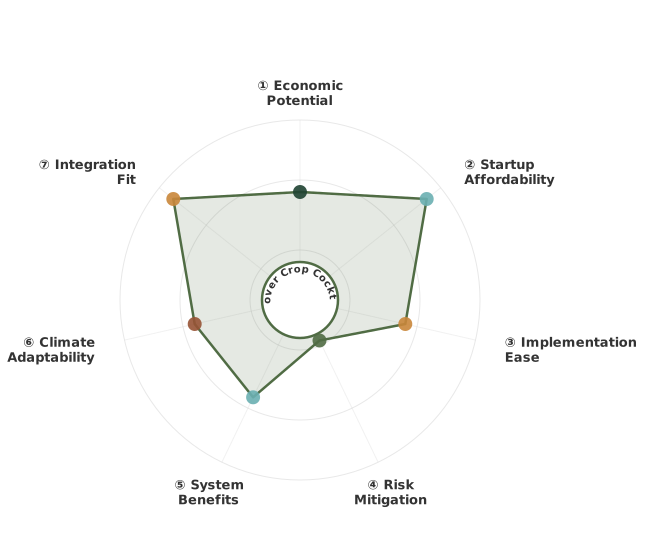
How These Traits Are Calculated
Trait dimensions are ordered clockwise starting from the top of the chart (12 o'clock position):
1. Economic Potential
Financial returns, annual value, and break-even timeline
WHAT: Evaluates financial viability by combining net annual value ($/ha from savings, income, and amortized harvests) with break-even timeline showing when practices pay for themselves.
WHY: Farmers need clear ROI understanding before committing resources. Fast payback (≤3 years) with strong returns (≥$300/ha) enables confident adoption, while long timelines (>10 years) restrict adoption to well-funded operations willing to wait for returns.
HOW: Calculated from net annual value in $/ha and break-even years. Exceptional (≥2.6): fast ROI ≤3 years + high value ≥$300/ha. Typical (1.8-2.5): moderate returns or longer timelines. Limited (<1.8): marginal economics or very long payback >10 years.
2. Startup Affordability
Initial investment costs and financial barrier to entry
WHAT: Measures financial barrier to entry through startup costs for equipment, infrastructure, consulting, and materials. Inverted scoring: lower costs = higher scores = more accessible adoption.
WHY: Affordability determines who can adopt. Low-cost practices (<$250/ha) enable widespread adoption across diverse scales, while high costs (>$2,500/ha) limit adoption to well-capitalized operations, creating barriers that slow regenerative transition.
HOW: Calculated from initial investment parsed from practice content. Inverted scoring: Exceptional (≥2.6): minimal investment <$250/ha. Typical (1.8-2.5): moderate costs $250-2,500/ha. Limited (<1.8): high barrier >$2,500/ha.
3. Implementation Ease
Learning curve and specialized knowledge required
WHAT: Measures how much learning, planning, and specialized knowledge a practice requires. Simpler practices with fewer steps score higher, while complex practices requiring extensive training or specialized resources score lower.
WHY: Complex practices create adoption barriers even when economically viable. Straightforward practices enable faster adoption and broader participation, while those requiring extensive training, timing precision, or specialized equipment limit who can succeed.
HOW: Evaluated by measuring documentation length and identifying complexity markers like location-specific requirements, seasonal timing windows, specialized skills, and dedicated equipment needs. Exceptional (≥2.6): straightforward practices with minimal prerequisites. Typical (1.8-2.5): moderate learning curve with some specialized needs. Limited (<1.8): steep learning curve requiring significant training or resources.
4. Risk Mitigation
Identified financial and ecological risk assessment
WHAT: Evaluates documented risks across financial (investment loss, market volatility) and ecological (crop failure, pest outbreaks) domains. Inverted scoring: fewer risks = higher scores.
WHY: Understanding risk exposure helps farmers make informed decisions. Low-risk practices allow confident implementation, while high-risk practices require careful planning and contingency resources. Risk transparency prevents costly failures.
HOW: Calculated from identified risks in practice content. Inverted scoring: Exceptional (≥2.6): ≤2 risks with manageable severity. Typical (1.8-2.5): 3-5 moderate risks. Limited (<1.8): 6+ risks or severe exposure.
5. System Benefits
How many ways the practice improves your land simultaneously
WHAT: Measures how many aspects of land health improve at once—carbon storage, soil quality, erosion control, water absorption, and biodiversity. Practices that improve multiple areas simultaneously create compounding benefits where each improvement reinforces the others.
WHY: The best practices solve multiple problems at once. For example, addressing erosion simultaneously builds carbon and improves water infiltration, creating a resilient system with positive feedback loops. Single-benefit approaches miss these compound transformation opportunities.
HOW: Evaluated across five key outcomes: carbon sequestration, soil organic matter increase, erosion reduction, water infiltration improvement, and biodiversity enhancement. Exceptional (≥2.6): high carbon storage (>8 t/ha/yr), improvements across 4-5 areas, transformative outcomes. Typical (1.8-2.5): moderate carbon (3-8 t/ha/yr), improvements across 2-3 areas. Limited (<1.8): modest impact (<3 t/ha/yr), single-area focus only.
6. Climate Adaptability
Geographic applicability across Köppen climate zones
WHAT: Evaluates geographic applicability by assessing how many Köppen climate zones successfully support a practice and what adaptation requirements are needed. Measures breadth of climates where farmers can implement with minimal to moderate modifications.
WHY: Universal practices working across diverse climates enable more farmers to adopt regenerative approaches. Practices limited to single climate types (only Mediterranean, only tropical) restrict adoption and slow global transition. Adaptability determines whether a practice serves niche regions or offers broad transformation.
HOW: LLM evaluation of regional success stories, Köppen zone coverage, and adaptation needs. Exceptional (≥2.6): 5+ zones or 4+ climate types, 3+ continents, minimal adaptation. Typical (1.8-2.5): 3-4 zones or 2-3 types, 2 continents, moderate adaptation. Limited (<1.8): 1-2 zones, single region, significant adaptation or highly specialized.
7. Integration Fit
How well this practice combines with others you're doing
WHAT: Measures how well a practice combines with other regenerative practices you might be doing. Some practices work as building blocks that make many other practices easier or more effective, while others work best on their own.
WHY: Practices that combine well with many others create more value on your farm. For example, cover cropping enables no-till, improves grazing, supports crop diversity, and helps water management—making all of them work better together. This helps you build a coherent system rather than juggling disconnected practices.
HOW: Evaluated by identifying which practices combine well and how strong those combinations are. 'Ideally Suited' means strong combinations where practices reinforce each other (practice A makes B easier, while B makes A more effective). 'Adequate' means complementary benefits that work well together. Exceptional (≥2.6): combines well with 6+ practices, serves as a building block. Typical (1.8-2.5): combines with 3-5 practices. Limited (<1.8): 1-2 practices or works best alone.
Going Deeper
1
WHY - The Benefits
Cover crop cocktails, by design, are engineered to deliver a holistic suite of benefits that rapidly improve soil health, system resilience, and economic viability. This advanced cover cropping strategy goes beyond single-species functions to create synergistic effects...
Cover crop cocktails, by design, are engineered to deliver a holistic suite of benefits that rapidly improve soil health, system resilience, and economic viability. This advanced cover cropping strategy goes beyond single-species functions to create synergistic effects that accelerate the transition to a truly regenerative agricultural system.
WHY - The Benefits
Cover crop cocktails, by design, are engineered to deliver a holistic suite of benefits that rapidly improve soil health, system resilience, and economic viability. This advanced cover cropping strategy goes beyond single-species functions to create synergistic effects...
Cover crop cocktails, by design, are engineered to deliver a holistic suite of benefits that rapidly improve soil health, system resilience, and economic viability. This advanced cover cropping strategy goes beyond single-species functions to create synergistic effects that accelerate the transition to a truly regenerative agricultural system.
Soil Health Benefits
The primary benefit of cover crop cocktails is the profound improvement in soil health. By planting a diverse mix of species—typically including grasses, legumes, brassicas, and other broadleaves—farmers and ranchers stimulate a wide spectrum of soil biological activity.
- Increased Soil Organic Matter (SOM): Diverse roots penetrate to varying depths, adding organic carbon to different soil horizons. The decomposition of varied plant material provides a continuous food source for a broad spectrum of soil microbes, fungi, and earthworms. Over 3-5 years, this can lead to an increase of 0.5-2.0% in SOM, which improves soil structure, water-holding capacity, and nutrient availability.
- Improved Water Infiltration and Retention: The complex root systems create biological channels, and fungal hyphae bind soil particles into stable aggregates. This dramatically enhances water infiltration rates (40-70% improvement over monocultures or bare soil) and increases water-holding capacity, making the soil more resilient to both drought and heavy rainfall. Reduced runoff also minimizes soil erosion.
- Enhanced Nutrient Cycling and Availability: Legumes fix atmospheric nitrogen, while other plants scavenge residual nutrients. Diverse root exudates attract a wide array of beneficial microbes that mineralize soil nutrients, making them available to subsequent cash crops. This reduces reliance on synthetic fertilizers and promotes a more efficient nutrient cycle.
- Suppressed Weeds and Pests: Rapidly growing, dense cover crop cocktails can outcompete weeds for light, water, and nutrients. The diverse plant community can also release beneficial compounds that deter soil-borne pests or attract beneficial insects, reducing the need for pesticides.
- Improved Soil Structure: The combined action of diverse roots, earthworms, and microbial glues creates stable soil aggregates, leading to better aeration, reduced bulk density, and improved tilth. This makes it easier for cash crop roots to penetrate, access resources, and grow robustly.
Economic Benefits
The economic advantages of cover crop cocktails are multifaceted and accrue over time as soil health improves.
- Reduced Input Costs: As soil fertility and water-holding capacity improve, the need for synthetic fertilizers, pesticides, and irrigation decreases. Farmers can typically reduce synthetic nitrogen applications by 20-50% within 3-5 years, and other inputs may also be lowered. This can translate to savings of $75-150 per hectare per year.
- Increased Yield Stability and Potential: Healthier soils with better water management and nutrient cycling lead to more consistent crop yields, less susceptible to extreme weather events. Over 5-7 years, yield increases of 10-25% are commonly observed in systems transitioning to regenerative practices incorporating cover crop cocktails.
- Enhanced Livestock Performance: Where livestock are integrated, improved pasture quality from diverse cover crops can lead to better animal weight gains, improved reproductive rates, and reduced need for supplemental feed during extended grazing periods.
- Long-Term Land Value Appreciation: Soils are a farm's primary asset. Improving soil health through practices like cover crop cocktails increases the land's productivity, resilience, and inherent value.
- Market Access and Premiums: Increasingly, consumers and supply chains are seeking sustainably produced goods. Demonstrating the use of regenerative practices like cover crop cocktails can open access to premium markets and supply contracts.
- Ecosystem Service Payments: Emerging programs offer payments for ecosystem services like carbon sequestration or improved water quality, which cover crop cocktails directly contribute to.
Regenerative Systems Fit
Cover crop cocktails are a foundational regenerative practice that actively supports and amplifies the core principles of regenerative agriculture:
- Principle 1: Minimize Soil Disturbance: While planting cover crops typically involves some soil disturbance (especially with conventional drills), using no-till or minimum-till planters dramatically reduces this. The improved soil structure from cocktails also makes future tillage unnecessary and less effective, naturally steering systems towards minimal disturbance.
- Principle 2: Maximize Crop Diversity: Cocktails are the epitome of this principle, introducing 5-20+ plant species to the system, vastly increasing above- and below-ground diversity. This fuels a richer soil food web and creates a more complex, resilient agroecosystem.
- Principle 3: Keep Soil Covered: Dense biomass from cover crop cocktails ensures living plants or mulch cover the soil surface year-round, preventing erosion, suppressing weeds, and providing continuous food for soil life.
- Principle 4: Maintain Living Roots: Cocktails significantly extend the period of active photosynthesis and root exudation, feeding soil biology for a much longer duration than a single cash crop or short-season cover crop. This sustained biological activity is crucial for building soil structure and fertility.
- Principle 5: Integrate Livestock: Cover crop cocktails are highly compatible with integrated livestock systems. Grazing livestock can effectively terminate cover crops, cycle nutrients through manure, and stimulate regrowth, further enhancing the cover crop's benefits. The increased forage quality and extended grazing season from diverse mixes benefit animal health and productivity.
The practice of cover crop cocktails is instrumental in transitioning farms towards full regenerative maturity. They act as a powerful catalyst, rapidly improving soil function and creating conditions that make other regenerative practices (like no-till, reduced synthetic inputs, adaptive grazing) easier to implement and more effective. For farms not yet ready to fully eliminate synthetic inputs, cover crop cocktails provide a pathway to gradually reduce reliance on them while building soil biology's capacity to provide those functions naturally.
Sources behind this view
Videos & Podcasts
-
Utilize multi-species cover crops based on specific 'resource concerns' to improve soil health, nitrogen fixation, and water retention. Integrate livestock for grazing, calving, and overwintering, enh

-
Cover crops attract beneficial insects and pollinators, suppress pests, and improve soil biology. Mimicking nature's integration of animals and plants, alongside practices like no-till and diversity,

-
Discusses the positive impacts of cover crops on soil health, including increased organic matter, improved biology, reduced compaction, and cooler soil temperatures. Highlights earthworm activity and

-
Plan cover crop use based on specific goals (e.g., nutrient management, weed competition). Mixtures enhance diversity and nutrient cycling. Continuous low-disturbance no-till with diverse rotations an
Community
-
Details cover crop termination methods, nutrient cycling (N scavenging/fixing, P availability), bio-controls, weed/pest/disease management, and specific mix recommendations. Emphasizes soil testing, r
Read more (pp. 10-20) (opens PDF, pp. 10-20) efotg.sc.egov.usda.gov -
Cover crops offer cost-effective benefits for soil health, including building organic matter, managing nutrients (nitrogen scavenging by grasses/brassicas, fixation by legumes), suppressing weeds, and
Read more (opens in new window) ucanr.edu -
Cover crops offer cost-effective benefits for soil health, including building organic matter, managing nutrients (nitrogen scavenging and fixation), suppressing weeds and pests, and improving soil str
Read more (opens in new window) ucanr.edu -
Explains cover crop functions (green manure, nutrient cycling, erosion control, weed suppression) and categorizes them into six functional groups. Compares single-species vs. multispecies mixes, highl
Read more (pp. 2-5) (opens PDF, pp. 2-5) efotg.sc.egov.usda.gov
Research
-
The Role of Cover Crops in North American Cropping Systems (opens in new window)
This study found: Cover crops offer multiple benefits in North American farming, including nitrogen fixation, erosion control, weed/pest management, and improved soil health through organic matter and reduced compactio
-
Cover Crops Enhance Soil Organic Carbon and Soil Quality for Sustainable Crop Yield: A Systematic Review (opens in new window)
This study found: A review of 38 studies shows diverse cover crop mixes, used long-term, boost soil organic matter (5-30%), soil quality (87%), and crop yields (55%), supporting climate-smart agriculture.
-
Optimizing cover crop practices as a sustainable solution for global agroecosystem services. (opens in new window)
This study found: Optimized cover crop strategies (long-term, no-till, legume/non-legume mix, residue mulch) significantly boost farm ecosystem services, including crop yields, carbon capture, and erosion control, whil
-
Evaluating Cover Crops for Benefits, Costs and Performance within Cropping System Niches (opens in new window)
This study found: Review of cover crops highlights benefits (pest control, soil health, yield) and costs. Best species identified for different seasons/regions. Rye excels in winter, C4 grasses in summer. Legumes fix N
2
WHERE - Regional Considerations
Cover crop cocktails are highly adaptable, but species selection within the cocktail must be tailored to regional climate, soil types, and intended outcomes to maximize success. The fundamental principle of diverse functional groups remains constant across all regions.
Cover crop cocktails are highly adaptable, but species selection within the cocktail must be tailored to regional climate, soil types, and intended outcomes to maximize success. The fundamental principle of diverse functional groups remains constant across all regions.
WHERE - Regional Considerations
Cover crop cocktails are highly adaptable, but species selection within the cocktail must be tailored to regional climate, soil types, and intended outcomes to maximize success. The fundamental principle of diverse functional groups remains constant across all regions.
Cover crop cocktails are highly adaptable, but species selection within the cocktail must be tailored to regional climate, soil types, and intended outcomes to maximize success. The fundamental principle of diverse functional groups remains constant across all regions.
Click Here to Look up your Region if you don't already know it
3
HOW - Implementation Process
Implementing cover crop cocktails effectively involves careful planning, species selection, seeding, and termination management. The goal is to create a symbiotic ecosystem that benefits the soil and subsequent cash crop.
Implementing cover crop cocktails effectively involves careful planning, species selection, seeding, and termination management. The goal is to create a symbiotic ecosystem that benefits the soil and subsequent cash crop.
HOW - Implementation Process
Implementing cover crop cocktails effectively involves careful planning, species selection, seeding, and termination management. The goal is to create a symbiotic ecosystem that benefits the soil and subsequent cash crop.
Implementing cover crop cocktails effectively involves careful planning, species selection, seeding, and termination management. The goal is to create a symbiotic ecosystem that benefits the soil and subsequent cash crop.
Prerequisites
Before planting a cover crop cocktail, consider:
- Your climate and soil type: This dictates suitable species.
- Your primary goals: Nutrient building, weed suppression, soil structure improvement, pest management, overwintering protection.
- Your cash crop system: Timing of planting, termination needs, and potential nutrient demands.
- Equipment availability: You'll need a planter or drill suitable for seeding into existing residue (no-till preferred).
- Seed sourcing: Finding reputable suppliers for diverse species can be challenging.
Phase 1: Designing Your Cocktail
Species selection is paramount. Aim for functional diversity from 5-20+ species, balancing different categories:
- Grasses/Cereals: Provide bulk biomass, extensive fibrous root systems, nutrient scavenging (e.g., cereal rye, oats, annual ryegrass, sorghum-sudangrass).
- Legumes: Fix atmospheric nitrogen, some have deep roots (e.g., vetch, clover, peas, cowpeas, sunn hemp).
- Brassicas: Deep taproots for compaction breaking, rapid nutrient scavenging (especially phosphorus), some biofumigant properties (e.g., forage radish, turnips, mustard, canola).
- Broadleaves/Other: Offer unique benefits like pollinator attraction, deep rooting, phosphorus extraction, or rapid ground cover (e.g., buckwheat, sunflower, phacelia, flax).
General Mix Ratios:
- Grasses/Cereals: 40-60% of the mix by weight or seeding rate.
- Legumes: 20-30%.
- Brassicas/Broadleaves: 20-30%.
Considerations for species selection:
- Growth habit: Ensure mixes combine different root depths (deep taproots, fibrous roots).
- Maturity: Select species that generally mature around the same time or offer staggered benefits.
- Winter hardiness: Choose based on your climate—some species should winter-kill beneficial for residue management, others should overwinter for extended soil protection and nitrogen fixation.
- Suppressed species: Avoid species that aggressively outcompete others, especially legumes.
- Local availability: Prioritize species that are readily available and proven in your region.
- Cost-effectiveness: Balance diversity with the cost of seed.
Phase 2: Seed Sourcing and Preparation
- Source from reputable suppliers: Look for seed companies specializing in cover crops or custom mixes. Ensure seed is high quality, pure, and has good germination rates.
- Purchase seed early: Diverse mixes can be harder to source close to planting season.
- Consider custom mixes: Many seed suppliers offer custom blending services, which can be more efficient than mixing yourself.
- Seed treatments: Legumes often benefit from inoculation with specific rhizobia bacteria to ensure nitrogen fixation. Ensure correct inoculant is used for the legume species and local soil conditions.
Phase 3: Planting
- Timing: Plant after cash crop harvest in fall, or in spring before cash crop or during summer fallow, depending on your system and climate. Aim for adequate moisture for germination and establishment.
-
Seeding Method:
- No-till drill: Ideal for planting into existing residue. Adjust seed box settings for different seed sizes and densities. Ensure good seed-to-soil contact.
- Broadcast seeding: Can be done before removing cash crop residue, then incorporate lightly with a cultipacker or light harrow, or rely on rainfall for seed-to-soil contact. Timing is critical.
-
Seeding Rate: Mixes are typically seeded at a higher total rate (e.g., 75-200 kg/ha or 60-180 lbs/acre, depending on species and purpose) than single species to ensure resilience and diversity. Consult with seed suppliers for recommended rates for your specific cocktail.
Phase 4: Management and Termination
- Establishment: Allow cover crops to establish without traffic or grazing for at least 3-4 weeks. Monitor for any issues like pest pressure or poor germination.
- Grazing (Optional): If integrating livestock, controlled rotational grazing can stimulate growth and manage biomass. Ensure adequate rest periods for plants to recover. Introduce livestock carefully to avoid overgrazing or re-compaction.
- Termination: This is a critical step. Termination should occur when cover crops have reached sufficient biomass and ecological function but before they negatively impact the next cash crop.
- Timing: Terminate 10-21 days before planting the next cash crop, depending on species and their decomposition rate. Ensure soil moisture is adequate for cash crop planting.
- Methods:
- Roller-crimper: Most regenerative method, folds stems flat to create a mulch layer. Requires mature cover crops (flowering stage for many legumes and some grasses/brassicas) for efficient crimping.
- Mowing: Can be effective, but less consistent than roller-crimping for creating mulch.
- Herbicides: Acceptable as a transition tool if mechanical termination is not feasible or effective, but use judiciously to minimize impact on soil biology.
- Allowing winter-kill: In colder climates, species like radishes, turnips, and oats will die naturally, leaving residue.
Transition Timeline & Phase-Out Strategy (Not Applicable for Foundational Practices like Cover Crop Cocktails)
As a foundational practice, cover crop cocktails are not designed for phasing out but for integration and long-term use. The goal is not to transition out of cover crops but to transition to cover crop cocktails from simpler or extractive practices.
Sources behind this view
Videos & Podcasts
-
Plan cover crop use based on specific goals (e.g., nutrient management, weed competition). Mixtures enhance diversity and nutrient cycling. Continuous low-disturbance no-till with diverse rotations an
-
Achieving cover crop diversity (10 plant families) requires moving beyond corn-soybean rotations. Strategies include livestock management, relay cropping, and understanding termination methods. Start
-
Cocktail cover crops with 8-12 species break up compacted soil. Grazing livestock on them yields 3+ lbs/day gain and rapidly builds soil carbon, as pioneered by Gabe Brown.
-
Kent Soberg discusses integrating cover crops with livestock for soil health, emphasizing diversified rotations, minimal tillage, and ruminant contributions. He shares examples of double cropping, see
Community
-
Details cover crop termination methods, nutrient cycling (N scavenging/fixing, P availability), bio-controls, weed/pest/disease management, and specific mix recommendations. Emphasizes soil testing, r
Read more (pp. 10-20) (opens PDF, pp. 10-20) efotg.sc.egov.usda.gov -
Cover crop mixes should include grasses, legumes, and broadleaves for soil health and nutrient cycling. Timing of planting and termination is critical, and while single species can be a starting point
Read more (pp. 11-13) (opens PDF, pp. 11-13) efotg.sc.egov.usda.gov -
Details cover crop termination methods (mowing, tillage, herbicides) in spring before cash crop planting, emphasizing timing to prevent seeding and manage residue for soil health and subsequent crop s
Read more (opens in new window) ucanr.edu -
Explains cover crop functions (green manure, nutrient cycling, erosion control, weed suppression) and categorizes them into six functional groups. Compares single-species vs. multispecies mixes, highl
Read more (pp. 2-5) (opens PDF, pp. 2-5) efotg.sc.egov.usda.gov
Research
-
Optimizing cover crop practices as a sustainable solution for global agroecosystem services. (opens in new window)
This study found: Optimized cover crop strategies (long-term, no-till, legume/non-legume mix, residue mulch) significantly boost farm ecosystem services, including crop yields, carbon capture, and erosion control, whil
-
The Role of Cover Crops in North American Cropping Systems (opens in new window)
This study found: Cover crops offer multiple benefits in North American farming, including nitrogen fixation, erosion control, weed/pest management, and improved soil health through organic matter and reduced compactio
-
Cover Crops Enhance Soil Organic Carbon and Soil Quality for Sustainable Crop Yield: A Systematic Review (opens in new window)
This study found: A review of 38 studies shows diverse cover crop mixes, used long-term, boost soil organic matter (5-30%), soil quality (87%), and crop yields (55%), supporting climate-smart agriculture.
-
A Review of Supporting Evidence, Limitations and Challenges of Using Cover Crops in Agricultural Systems (opens in new window)
This study found: Review of cover crops for sustainability, emphasizing species choice and management to benefit main crops. Highlights importance of local soil/climate and need for more research on nutrient cycling be
 From the Web
-
Guides cover crop selection based on farmer objectives, rotation integration, and soil health goals, emphasizing mixed species for nutrient cycling and erosion control. Includes details on establishme
4
Know the Debate
Cover crop cocktails are highly adaptable, but success hinges on aligning species selection with specific regional climates, soil types, and farm g...
Know the Debate
Cover crop cocktails are highly adaptable, but success hinges on aligning species selection with specific regional climates, soil types, and farm g...
Cover crop cocktails are highly adaptable, but success hinges on aligning species selection with specific regional climates, soil types, and farm goals like nutrient management or weed suppression. They require a moderate initial investment in seed and planting, a learning curve for species interaction and termination timing, but offer substantial long-term financial and ecological returns. Different regions present unique challenges: humid areas focus on structural diversity and weed suppression, semi-arid regions prioritize drought tolerance, while cold climates demand fast-growing, frost-hardy species. Labor varies with scale and integration of livestock, but expertise in plant ecology and soil health is essential for optimal results.
Optimal cover crop diversity: complex mixes versus targeted species?
Complex mixes (8-12+ species) for broad benefits
The 'cocktail' approach with high species diversity leverages functional complementarity for broad soil health, resilience, and ecosystem services. This comprehensive approach is supported by research showing synergistic advantages in biomass, weed control, and soil organic matter over simpler mixes, particularly in environments conducive to diverse growth.
Sources behind this view
Sources behind this view
Videos & Podcasts
-
Complex cover crop mixtures ('cocktails') with high plant diversity are crucial for soil health. Optimal microbial activity occurs around 75°F; cover crops help maintain this temperature and moisture, unlike bare soil.

-
Cover crops offer multiple benefits: reducing erosion, improving water infiltration, suppressing weeds, enhancing nutrient availability, and providing livestock forage. Diverse mixes are key to achieving these goals.

Research
-
Cover Crops Enhance Soil Organic Carbon and Soil Quality for Sustainable Crop Yield: A Systematic Review (opens in new window)
This study found: A comprehensive review of 38 studies found that planting cover crops, especially diverse mixes used consistently over time, significantly improves soil health. On average, these practices increased soil organic matter by 5-30%, boosted soil quality in 87% of studies, and improved crop yields in 55% of cases. While cover crops generally lead to better harvests, some studies noted yield decreases in dry areas or when cover crops were removed at the wrong time. The review highlights that cover crops are a key strategy for climate-resilient farming and sustainable soil management. To get the best results, farmers need region-specific advice, support, and clear guidelines on how to best use cover crops.
From the Web
-
Mitch Hunter explains how to assemble cover crop cocktails by considering farm objectives, crop rotation, and complementary species traits.
Targeted mixes (2-4 species) for specific goals
Focusing on goal-specific species in simpler mixes offers greater predictability and management ease. Research suggests little difference in performance between complex mixes and single species for specific functions; simpler mixes avoid species competition and potential failure of desired components.
Sources behind this view
Sources behind this view
Videos & Podcasts
-
Inspired by Brazilian 'cocktail mixes' in 2006, Nebraska farmers found multi-species cover crops were more water-efficient than monocultures, leading to the founding of Green Cover Seed in 2009 to provide diverse blends.

-
For small-scale growers, pre-made cover crop mixes are recommended. Options include Overwintering, Cool Season Soil Builder, Warm Season Soil Builder, pollinator, grazing, mycorrhizal, and high diversity mixes. The Milpa Garden Mix is also available with a free seed program. Mixes are often interchangeable in gardens, allowing for annual experimentation.

Research
-
Do diverse cover crop mixtures perform better than monocultures? A systematic review (opens in new window)
This study found: A review of 27 studies looking at cover crops found that planting a mix of several species (three or more) generally did not perform better than planting the best single cover crop species alone. In most cases (88%), the mixed cover crops and the best single cover crop performed about the same. In a few instances (10%), the single cover crop did better, and only in a small fraction of cases (2%) did the mix show a clear advantage. This suggests that while mixed cover crops are popular, the evidence for their widespread superiority over single species for benefits like more plant growth, better weed control, or improved soil life is currently limited.
From the Web
-
Discusses designing cover crop mixtures by combining grasses, legumes, brassicas, and broadleaves to achieve goals like soil improvement, erosion prevention, nitrogen fixation, and weed suppression. Advice from Penn State Extension and producers is highlighted, along with considerations for cost-effectiveness and professional guidance.
Functional diversity over species count
The key is including species from different functional groups (grasses, legumes, brassicas, broadleaves) for balanced benefits, rather than maximizing species numbers. Optimal mixes balance functional representation with practicality and cost-effectiveness.
Sources behind this view
Sources behind this view
Videos & Podcasts
-
Emphasizes cover crop diversity for soil health, with species like okra, lentils, and squash contributing varied root structures and exudates. Soil smell indicates health. Mix selection depends on goals, subsequent crops, and system history; starting simple and observing is key.

From the Web
-
Principles for assembling diverse cover crop 'cocktails' are discussed, focusing on complementary species traits to enhance productivity, sustainability, and resilience, particularly for drought and weed management.
-
Cover crop selection requires defining objectives (N fixation, soil health, weed control). Legumes (clover, vetch, peas) add N; non-legumes (rye, wheat, brassicas) scavenge nutrients and build OM. Mixtures offer combined benefits but are more complex. Timing and rotation fit are critical.
Making Sense of the Differences
The debate over cover crop cocktail diversity centers on whether maximum species count or functional representation leads to optimal outcomes. While extensive research and some field examples support the broad benefits of 8-12+ species for overall soil health and resilience, practitioners often find that targeted 2-4 species mixes focusing on specific functions (nitrogen fixation, weed suppression) are more predictable, cost-effective, and easier to manage, especially in challenging climates or for specific cash crops. The consensus leans towards ensuring functional diversity—including grasses, legumes, and brassicas—and adapting the complexity of the mix to regional conditions, available resources, and primary farm goals, rather than a one-size-fits-all approach to species numbers.
Cover crop cocktail economics: initial investment versus long-term savings?
High initial investment for long-term savings
Academic and institute sources detail significant upfront seed costs ($60-250/ha) and potential establishment failures due to weather. However, they project substantial long-term savings ($75-150/ha annually) over 3-5 years through reduced synthetic inputs and yield stabilization, making it a sound investment for resilience.
Sources behind this view
Sources behind this view
Research
-
Enhancing Sustainable Farming and Climate Resilience: The Role of Cover Crops (opens in new window)
This study found: Planting cover crops is a vital farming practice that improves soil health, prevents erosion, holds more water, and supports beneficial insects and wildlife. By using a mix of cover crops, especially those that fix nitrogen (like legumes), farmers can naturally add fertilizer to the soil, reducing the need for synthetic products. Cover crops also help control weeds, attract natural pest predators, and pull carbon out of the atmosphere to store in the soil, which helps fight climate change. These practices make farms more profitable by cutting costs and more resilient to unpredictable weather. While challenges like initial costs exist, research, policy, and education can help more farmers adopt this beneficial practice.
From the Web
-
Cover crop selection requires defining objectives (N fixation, soil health, weed control). Legumes excel at N fixation (50-150 lbs/acre), while non-legumes scavenge nutrients (30-150 lbs/acre) and add biomass. Cocktails offer multiple benefits but require complex management.
-
Principles for assembling diverse cover crop 'cocktails' are discussed, focusing on complementary species traits to enhance productivity, sustainability, and resilience, particularly for drought and weed management.
Focus on immediate and ongoing economic returns
Field practitioners emphasize tangible benefits such as improved calf weight gain, reduced weed pressure, and enhanced soil resilience, framing the initial seed investment as crucial for long-term farm viability and self-sufficiency. These benefits can offer quicker returns, especially when livestock grazing is integrated.
Sources behind this view
Sources behind this view
Videos & Podcasts
-
Cocktail cover crops with 8-12 species break up compacted soil. Grazing livestock on them yields 3+ lbs/day gain and rapidly builds soil carbon, as pioneered by Gabe Brown.
-
Cover crop mix selection depends on goals (e.g., nitrogen for corn, forage for cattle) and system maturity. While cover crops use moisture, long-term benefits like soil resilience and moisture retention outweigh short-term deficits. Soil armor protects biology.
-
Utilizes a 7x17 species cover crop mix ('cocktail') for grazing, which improves calf weight gain and overall economic viability, even if direct crop yields are low.

Making Sense of the Differences
The economic case for cover crop cocktails is debated based on timeframe and primary farm goals. Academic and institute sources detail upfront investment and projected long-term savings from input reductions and yield stability, often emphasizing a 3-7 year payback. Field practitioners highlight immediate economic benefits like improved livestock performance and reduced weed pressure, alongside enhanced farm resilience. The primary financial risk is establishment failure, which can lead to lost seed investment. However, by carefully selecting species for regional conditions, managing termination timing, and integrating livestock, farmers can typically realize strong returns within 3-5 years, as soil health improvements reduce input reliance and stabilize yields.
5
HOW MUCH - Costs & Investment
Cover crop cocktail costs vary significantly based on the number of species, seed quality, region, and purchase volume. The investment is for the seed, planting operation, and any management involved (e.g., termination).
Cover crop cocktail costs vary significantly based on the number of species, seed quality, region, and purchase volume. The investment is for the seed, planting operation, and any management involved (e.g., termination).
HOW MUCH - Costs & Investment
Cover crop cocktail costs vary significantly based on the number of species, seed quality, region, and purchase volume. The investment is for the seed, planting operation, and any management involved (e.g., termination).
Cover crop cocktail costs vary significantly based on the number of species, seed quality, region, and purchase volume. The investment is for the seed, planting operation, and any management involved (e.g., termination).
Note: All costs are based on recent US economic data (2024–2026) and may vary substantially by region based on local labor rates, material costs, and regulatory requirements.
Seed Costs (Diverse Mixes)
The seed purchase requirement represents the most significant variable cost in establishing a complex cover crop cocktail. For small operations (under 50 acres (20 ha)), diverse, locally sourced mixes cost $42–$105 per acre ($104–$259/ha), largely due to lack of volume procurement power. Mid-size operations (50–500 acres (20–202 ha)) typically leverage bulk pricing or standardized regional blends, resulting in costs of $34–$84 per acre ($84–$208/ha). Large operations (over 500 acres (202 ha)) benefit from direct-to-grower contracts and wholesale pricing, bringing seed costs to $26–$64 per acre ($64–$158/ha). This variance depends heavily on the inclusion of high-cost species like cereal rye, hairy vetch, or radish, alongside the total number of species included in the cocktail, which typically ranges from 5 to 20+ varieties.
Planting Operation (No-Till)
Planting costs for multispecies mixes must account for precision seed-to-soil contact. For small-scale farmers, utilizing personal high-speed no-till equipment or engaging custom operators results in costs of $21–$42 per acre ($52–$104/ha). Mid-size operations managing larger fields often see more consistent operational efficiency, with total planting costs ranging from $17–$34 per acre ($42–$84/ha), assuming standard 30-inch row spacing or broadcast seeding with vertical tillage integration. Large-scale operations, which maximize machinery throughput and diesel efficiency, record costs of $13–$26 per acre ($32–$64/ha). These figures assume the use of no-till drills or air seeders; overhead for equipment depreciation is excluded here but remains a capital factor for 2025–2026 infrastructure planning, which often runs an additional $15–$30 per acre ($37–$74/ha) annually for owned assets.
Total Investment
When combining seed and operational expenses, the total investment profile reflects the economy of scale afforded to larger land management units. Small operations report total outlays of $66–$147 per acre ($163–$363/ha), while mid-size operations fall into the $51–$118 per acre ($126–$292/ha) bracket. Large-scale producers achieve significantly lower costs of $39–$90 per acre ($96–$222/ha). These totals represent the full upfront commitment required before factoring in potential cost-share programs, such as those under the USDA EQCS or CSP programs, which can offset 50–75% of these establishment expenses for qualifying producers.
Most Spend: Most small operations spend $84–$118 per acre ($208–$292/ha), mid-size operations spend $68–$93 per acre ($168–$230/ha), and large-scale operations spend $55–$73 per acre ($136–$180/ha). This reflects the middle 60% of the cost range, excluding extreme outliers—such as those sourcing $200+/acre ultra-diverse custom blends or those using minimal single-species cover crops within a cocktail management frame.
Why the Range?: Cost variation is driven primarily by seed diversity and source; custom-blended mixes containing legumes and specialty brassicas command higher per-pound prices than standard cereal blends. Additionally, operational efficiency—specifically the number of passes required to establish the cocktail—plays a critical role, as operations using multi-variety seeding techniques in a single pass experience substantially lower labor and fuel costs compared to those requiring specialized or separate seeding applications.
Sources behind this view
Videos & Podcasts
-
Multispecies cover crops (e.g., 'winter super mix') costing $40/ha seed produced 8 tons/ha dry matter and improved soil structure, outperforming conventional canola/faba bean crops on challenging sodi

-
Perennial legumes are best for long-term cover crops (e.g., year-long grazing) due to higher cost; annuals like crimson clover, lentils, or vetch are better for short windows. The Smart Mix calculator

-
Classroom experiments and surveys show cover crop ground cover and biomass vary by species and seeding rate, with costs influencing farmer willingness to spend. Organic farmers may spend more than con

-
Cover crops can be planted cost-effectively using methods like broadcasting with vertical tillage/harrow, or drone seeding for $10-$20/acre. This addresses three soil health principles: diversity, liv

Research
-
Farmers employ diverse cover crop management strategies to meet soil health goals (opens in new window)
This study found: Farmers use diverse cover crop methods, with costs around $99/ha. 'Planting green' increased. Varied practices and uncertain profitability make adoption challenging.
-
Farmers employ diverse cover crop management strategies to meet soil health goals (opens in new window)
This study found: Farmers use diverse cover crop strategies, with costs averaging $99/hectare. Experimentation and varied practices make predicting profitability challenging.
6
REWARDS AND RISKS - Economics & Risk Factors
Cover crop cocktails offer substantial rewards but also present risks that need careful management.
Cover crop cocktails offer substantial rewards but also present risks that need careful management.
REWARDS AND RISKS - Economics & Risk Factors
Cover crop cocktails offer substantial rewards but also present risks that need careful management.
Cover crop cocktails offer substantial rewards but also present risks that need careful management.
Economic Scenarios
- Best Case Scenario: Through the implementation of a 10+ species cocktail, farmers observe an organic matter increase of 1.0–2.0% within 3–5 years. Improved water infiltration significantly mitigates drought impact, while optimized nutrient cycling allows for a 30–50% reduction in synthetic nitrogen and phosphorus inputs, saving $85–$225 per acre ($210–$556/ha) annually after the third year of implementation.
- Typical Scenario: Producers planting moderately diverse cocktails (5–8 species) achieve a 15–25% increase in yield stability over a 5–7 year period. Seed investment is offset by a 20–30% reduction in synthetic inputs, with net positive ROI typically reached by year 4. Resilience to minor drought stress yields an estimated stabilization of $40–$75 per acre ($99–$185/ha) in protected income annually.
- Worst Case Scenario: Suboptimal species selection or severe weather results in a 100% loss of initial seed investment ($50–$150 per acre ($124–$371/ha)) with no residual soil benefit. Failure to properly terminate the cocktail, such as in instances where high-biomass rye interferes with cash crop emergence, can result in yield drags of 10–15%, equating to a potential revenue hit of $100–$200 per acre ($247–$494/ha) for that season.
Market Factors & Risk Mitigation
Profitability is heavily influenced by the ability to terminate the cover crop precisely at the physiological "green bridge" window; failure here requires additional herbicide, increasing costs by $15–$30 per acre ($37–$74/ha). To mitigate financial risk, farmers should utilize "starter" cocktails that leverage cheaper, proven species to establish baseline soil health before diversifying into expensive specialty seeds. Establishing a contingency fund of $20 per acre ($49/ha) for emergency termination or re-seeding mitigates the risk of catastrophic establishment failure.
Transition Period Risks
The transition to cover crop cocktails often involves a "biological adjustment" phase in years 1–2. Producers may experience a transient yield dip of 5–10% as soil biology realigns and temporary nitrogen immobilization occurs during the biomass decomposition of high-carbon species. This "transition tax" is typical and should be budgeted as a temporary expense of $50–$100 per acre ($124–$247/ha) in revenue foregone. Timely termination and "C to N" ratio management (ensuring the mix is balanced with leguminous nitrogen-fixing species) are the primary management tools to reduce this window to less than 24 months, accelerating the return to baseline profitability projections.
Sources behind this view
Videos & Podcasts
-
Plan cover crop use based on specific goals (e.g., nutrient management, weed competition). Mixtures enhance diversity and nutrient cycling. Continuous low-disturbance no-till with diverse rotations an
-
Emphasizes multi-species cover crop mixes (e.g., black oat, hairy vetch, radish) for soil health, nitrogen fixation, and erosion control in no-till systems, advocating for regionally adapted rotations

-
Data shows cover crops significantly cool soil, improve water retention, increase soybean yields, enhance drought tolerance, and reduce erosion, potentially lowering fertilizer and pesticide needs.

-
Practical advice on cover crop establishment without equipment, moisture management in dry areas, and the benefits of pre-made mixes. Adoption barriers and increasing acceptance are discussed, with fu
Community
-
Details cover crop termination methods, nutrient cycling (N scavenging/fixing, P availability), bio-controls, weed/pest/disease management, and specific mix recommendations. Emphasizes soil testing, r
Read more (pp. 10-20) (opens PDF, pp. 10-20) efotg.sc.egov.usda.gov -
Cover crop mixes should include grasses, legumes, and broadleaves for soil health and nutrient cycling. Timing of planting and termination is critical, and while single species can be a starting point
Read more (pp. 11-13) (opens PDF, pp. 11-13) efotg.sc.egov.usda.gov -
Seven strategies accelerate cover crop ROI: managing weeds, grazing, addressing compaction, transitioning to no-till, improving soil moisture, managing nutrients (using legumes like Hairy Vetch/Austri
Read more (opens in new window) sustainableagriculture.net -
Cover crops offer cost-effective benefits for soil health, including building organic matter, managing nutrients (nitrogen scavenging by grasses/brassicas, fixation by legumes), suppressing weeds, and
Read more (opens in new window) ucanr.edu
Research
-
Optimizing cover crop practices as a sustainable solution for global agroecosystem services. (opens in new window)
This study found: Optimized cover crop strategies (long-term, no-till, legume/non-legume mix, residue mulch) significantly boost farm ecosystem services, including crop yields, carbon capture, and erosion control, whil
-
Cover Crops Enhance Soil Organic Carbon and Soil Quality for Sustainable Crop Yield: A Systematic Review (opens in new window)
This study found: A review of 38 studies shows diverse cover crop mixes, used long-term, boost soil organic matter (5-30%), soil quality (87%), and crop yields (55%), supporting climate-smart agriculture.
-
The Role of Cover Crops in North American Cropping Systems (opens in new window)
This study found: Cover crops offer multiple benefits in North American farming, including nitrogen fixation, erosion control, weed/pest management, and improved soil health through organic matter and reduced compactio
-
Evaluating Cover Crops for Benefits, Costs and Performance within Cropping System Niches (opens in new window)
This study found: Review of cover crops highlights benefits (pest control, soil health, yield) and costs. Best species identified for different seasons/regions. Rye excels in winter, C4 grasses in summer. Legumes fix N
From the Web
-
Analyzes the economics and limitations of cover crops, highlighting benefits like reduced input costs (nitrogen, herbicides) and improved soil health, but also noting limitations such as water consump
-
Details economic benefits of cover crops, including reduced input costs, erosion control, improved soil fertility, and enhanced water storage. Addresses concerns like seed cost and potential for unwan
-
Guides cover crop selection based on farmer objectives, rotation integration, and soil health goals, emphasizing mixed species for nutrient cycling and erosion control. Includes details on establishme
7
COMPATIBLE PRACTICES - Integration Opportunities
Cover crop cocktails are highly synergistic and integrate seamlessly with a wide array of regenerative agriculture practices, amplifying their benefits and accelerating the transition to a resilient system.
Cover crop cocktails are highly synergistic and integrate seamlessly with a wide array of regenerative agriculture practices, amplifying their benefits and accelerating the transition to a resilient system.
COMPATIBLE PRACTICES - Integration Opportunities
Cover crop cocktails are highly synergistic and integrate seamlessly with a wide array of regenerative agriculture practices, amplifying their benefits and accelerating the transition to a resilient system.
Cover crop cocktails are highly synergistic and integrate seamlessly with a wide array of regenerative agriculture practices, amplifying their benefits and accelerating the transition to a resilient system.
Adaptive Multi-Paddock Grazing
- Integration Note: Livestock graze cover crop cocktails, terminating them, cycling nutrients via manure, and stimulating plant regrowth. Ensure adequate rest periods for plants to recover and rebuild soil.
- Synergy: Grazing manages biomass, distributes fertility, and provides biological impact that enhances the cover crop's benefits. Well-managed grazing on cocktails creates superior forage quality.
Reduced Synthetic Inputs
- Integration Note: As cocktails build soil fertility and improve nutrient cycling, the need for synthetic fertilizers and pesticides decreases.
- Synergy: Cocktails provide nitrogen fixation and nutrient scavenging, directly replacing synthetic inputs and improving the soil's natural capacity.
Composting and Organic Amendments
- Integration Note: Application of compost or biochar can boost soil biology and further enhance the effectiveness of cover crop cocktails.
- Synergy: Amendments provide readily available food and habitat for the soil food web, kickstarting biological activity that cocktails then sustain and expand.
Keyline Design/Water Management
- Integration Note: Implementing water harvesting techniques can improve the success of cover crop cocktails, especially in drier regions, by optimizing moisture availability.
- Synergy: Improved water infiltration from cocktails complements keyline design, allowing more water to enter the soil profile sustainably.
Sources behind this view
Videos & Podcasts
-
Utilize multi-species cover crops based on specific 'resource concerns' to improve soil health, nitrogen fixation, and water retention. Integrate livestock for grazing, calving, and overwintering, enh
-
Farmers detail diverse cover cropping mixes (rye, vetch, oats, flax, sunflowers, peas, canola) and polyculture systems to boost soil health and reduce inputs. They emphasize continuous living roots, l

-
Plan cover crop use based on specific goals (e.g., nutrient management, weed competition). Mixtures enhance diversity and nutrient cycling. Continuous low-disturbance no-till with diverse rotations an
-
Cover crops attract beneficial insects and pollinators, suppress pests, and improve soil biology. Mimicking nature's integration of animals and plants, alongside practices like no-till and diversity,
Community
-
Details cover crop termination methods, nutrient cycling (N scavenging/fixing, P availability), bio-controls, weed/pest/disease management, and specific mix recommendations. Emphasizes soil testing, r
Read more (pp. 10-20) (opens PDF, pp. 10-20) efotg.sc.egov.usda.gov -
Enhance soil health through plant diversity, continuous soil cover (living plants/residues), and livestock integration. Manage carbon-to-nitrogen ratios of residues and adopt no-till practices to impr
Read more (opens in new window) permies.com -
Explains cover crop functions (green manure, nutrient cycling, erosion control, weed suppression) and categorizes them into six functional groups. Compares single-species vs. multispecies mixes, highl
Read more (pp. 2-5) (opens PDF, pp. 2-5) efotg.sc.egov.usda.gov -
Cover crops offer additional benefits like breaking soil compaction with deep roots and supporting pest management by attracting beneficial insects. Farmers should select cover crops based on specific
Read more (opens in new window) ucanr.edu
Research
-
Optimizing cover crop practices as a sustainable solution for global agroecosystem services. (opens in new window)
This study found: Optimized cover crop strategies (long-term, no-till, legume/non-legume mix, residue mulch) significantly boost farm ecosystem services, including crop yields, carbon capture, and erosion control, whil
-
The Role of Cover Crops in North American Cropping Systems (opens in new window)
This study found: Cover crops offer multiple benefits in North American farming, including nitrogen fixation, erosion control, weed/pest management, and improved soil health through organic matter and reduced compactio
-
Cover Crops Enhance Soil Organic Carbon and Soil Quality for Sustainable Crop Yield: A Systematic Review (opens in new window)
This study found: A review of 38 studies shows diverse cover crop mixes, used long-term, boost soil organic matter (5-30%), soil quality (87%), and crop yields (55%), supporting climate-smart agriculture.
-
A Review of Supporting Evidence, Limitations and Challenges of Using Cover Crops in Agricultural Systems (opens in new window)
This study found: Review of cover crops for sustainability, emphasizing species choice and management to benefit main crops. Highlights importance of local soil/climate and need for more research on nutrient cycling be
8
WHO - Labor & Expertise
Implementing cover crop cocktails requires a moderate level of expertise, primarily focused on plant identification, ecological interactions, and management timing.
Implementing cover crop cocktails requires a moderate level of expertise, primarily focused on plant identification, ecological interactions, and management timing.
WHO - Labor & Expertise
Implementing cover crop cocktails requires a moderate level of expertise, primarily focused on plant identification, ecological interactions, and management timing.
Implementing cover crop cocktails requires a moderate level of expertise, primarily focused on plant identification, ecological interactions, and management timing.
- Management Complexity: Medium. While the concept is simple, designing effective cocktails and managing their growth and termination requires understanding of species functions, soil types, climate, and the cash cropping system.
-
Labor Requirements:
- Planning & Sourcing: Requires upfront time for research, consulting with experts, and finding reliable seed sources. This can range from 1-5 days per year for a mixed-grain farm depending on complexity.
- Planting: Similar labor to planting single-species cover crops or cash crops, often done with a no-till drill. Time investment varies based on farm scale and equipment availability.
- Management (Monitoring/Grazing): Requires regular observation of growth, pest pressures, and soil conditions. If livestock are integrated, their rotational management adds labor.
- Termination: Requires careful timing and execution of roller-crimping, mowing, or herbicide application, depending on the chosen method.
-
Expertise Needed:
- Agronomy & Soil Science Basics: Understanding plant nutrient needs, soil structure, and biological processes.
- Plant Identification: Ability to recognize key species in the cocktail to assess their health and predict their impact.
- Ecological Principles: Grasping concepts of functional complementarity, symbiosis, and food web dynamics.
- Equipment Operation: Familiarity with no-till drills, roller-crimpers, or other termination equipment.
- International Context: Expertise in identifying regionally specific species and understanding their performance under local climatic conditions is crucial. Consulting with local cover crop specialists or experienced regenerative farmers is highly recommended.
9
EQUIPMENT - Tools & Infrastructure
Successful implementation of cover crop cocktails relies on appropriate planting and termination equipment, along with infrastructure to support grazing if applicable.
Successful implementation of cover crop cocktails relies on appropriate planting and termination equipment, along with infrastructure to support grazing if applicable.
EQUIPMENT - Tools & Infrastructure
Successful implementation of cover crop cocktails relies on appropriate planting and termination equipment, along with infrastructure to support grazing if applicable.
Successful implementation of cover crop cocktails relies on appropriate planting and termination equipment, along with infrastructure to support grazing if applicable.
-
Planting Equipment:
- No-Till Drill: Highly recommended. Most effective for planting diverse seed mixes into existing residue, ensuring good seed-to-soil contact. Features like adjustable openers, depth control, and different seed box options for various seed sizes are beneficial.
- Aerial Seeder/Spreader: Useful for broadcasting seed, especially into standing cash crops ("green bridging"). Requires good rainfall for germination and may result in less uniform stands than drilling.
- Broadcast Seeder with Cultipacker/Harrow: Can be used for broadcasting followed by light incorporation, improving seed-to-soil contact but adding a pass over the field.
-
Termination Equipment:
- Roller-Crimper: The gold standard for regenerative termination, creating a dense mulch layer without killing soil biology. Requires mature cover crops for effective crimping. Various sizes exist, from small tractor attachments to large integrated units.
- Flail Mower: Can be used for termination, but may be less effective for creating a persistent mulch layer compared to roller-crimpers and can chop residue too finely, leading to faster decomposition.
- Herbicides: Applied via standard sprayers. Acceptable as a transitional tool but minimised in mature regenerative systems.
-
Livestock Management Equipment (if applicable):
- Portable Fencing: Electric netting or polywire for creating temporary paddocks for rotational grazing.
- Water Infrastructure: Troughs, portable water lines, or access to natural water sources.
-
Soil Testing Tools:
- Penetrometer: For measuring soil compaction.
- Infiltration Rings: For assessing water infiltration rates.
- Soil Sampling Probes: For collecting soil for organic matter and nutrient analysis.
International Context: Equipment availability and cost vary significantly by region. Smaller farms in developing countries may rely on manual broadcasting, lighter tillage equipment, or sharing resources. Larger operations in developed countries may invest in specialized no-till drills and advanced roller-crimpers. Sourcing parts and servicing specialized equipment can also be challenging in remote areas. Local agricultural extension services or international NGOs can often provide guidance on equipment suitable for specific regions.
Sources behind this view
Videos & Podcasts
-
Key factors for cover crop interceding include seed selection (species, mix, size), seeding rate, purpose, application method (homemade, aerial, drone, high clearance), and critical timing. Seed size

-
Strongly advocates for no-till combined with cover crops, detailing benefits like erosion control, water conservation, improved soil structure, and increased biological activity. Emphasizes uniform re

-
Implementing no-till and cover crops is achievable with adapted equipment, focusing on planter modifications, seed firmers, and sprayers for management. The speaker shares personal experiences demonst

-
Provides comprehensive guidance on cover crop application methods (aerial, ground, integrated), timing, and equipment selection (drills, air seeders). Emphasizes adequate down pressure, residue manage

Community
-
Details cover crop termination methods, nutrient cycling (N scavenging/fixing, P availability), bio-controls, weed/pest/disease management, and specific mix recommendations. Emphasizes soil testing, r
Read more (pp. 10-20) (opens PDF, pp. 10-20) efotg.sc.egov.usda.gov -
Offers practical guidance on cover crop implementation, covering equipment, residue management, climate/weather considerations, establishment techniques, seeding methods (broadcast vs. drill), water m
Read more (pp. 8-10) (opens PDF, pp. 8-10) efotg.sc.egov.usda.gov -
Details various equipment for cover crop termination and residue management, including Lopez Coulter Sled, Unverferth Ripper Stripper, Yetter Strip Till, and others, with operational guidance for diff
-
Explains no-till cover cropping using a roller-crimper to kill cover crops and create mulch, reducing costs, improving soil health, and suppressing weeds. Key components include specific cover crop mi
Read more (opens in new window) permies.com
Research
-
Equipment Development for Small and Urban Conservation Farming Systems (opens in new window)
This study found: New no-till equipment for walk-behind tractors enables small farms to effectively use cover crops (like cereal rye) and transplant cash crops (like tomatoes), reducing labor and improving soil health.
-
Establishment and Function of Cover Crops Interseeded into Corn (opens in new window)
This study found: Planting cover crops between growing corn using a drill or light soil disturbance improved establishment and reduced soil nitrogen. Careful termination is key to avoid impacting subsequent soybean yie
-
Timing of Cover Crop Termination: Management Considerations for the Southeast (opens in new window)
This study found: Cover crop termination timing is crucial for maximizing soil health and crop yields in conservation tillage systems in the Southeast. Consider growing season, soil moisture, N management, and equipmen
-
Cover Crop-Based, Organic Rotational No-Till Corn and Soybean Production Systems in the Mid-Atlantic United States (opens in new window)
This study found: Organic no-till farming with cover crops in the mid-Atlantic US shows promise for soybean yields, but corn fertility and weed control remain challenges. Specialized equipment and cover crop breeding a
From the Web
-
Integrating cover crops with no-till, crop rotation, and grazing enhances soil health, aids manure spreading, and alleviates compaction. Proper termination timing is essential for subsequent crops.