
Cover Crop
Cover cropping is the practice of planting non-cash crops, often referred to as "green manure," to protect and improve soil health between primary production cycles. These temporary crops enhance soil structure, feed microbial communities, suppress weeds, and can provide nitrogen, making them a cornerstone for building resilient agricultural systems.
Read More: Complete Description
Cover cropping involves planting specific species or mixtures of plants not for harvest, but to serve the soil and the broader farming system. These "living mulches" or "green manures" are strategically sown during fallow periods, interseeded within cash crops, or grown as a primary winter crop. The fundamental goal is to maintain continuous living cover, which directly supports several core regenerative agriculture principles. Unlike leaving land bare, cover crops prevent erosion from wind and rain, conserve soil moisture by reducing evaporation, and sequester atmospheric carbon through photosynthesis.
The diversity of cover crop species is a key differentiator. Some are chosen for their deep taproots that break up soil compaction and mine nutrients from lower profiles, like daikon radish or forage turnips. Others, such as annual ryegrass or cereal rye, provide fibrous root systems that build soil structure at the surface and add significant organic matter. Legumes like hairy vetch or crimson clover fix atmospheric nitrogen, reducing the need for synthetic nitrogen inputs in subsequent cash crops. This intentional selection contributes directly to maximizing crop diversity (Principle 2) above and below ground, creating a more complex and resilient soil ecosystem.
Cover cropping directly supports the principle of keeping soil covered (Principle 3) year-round. Bare soil is vulnerable to degradation, erosion, and loss of microbial activity. By ensuring there is always a living plant or its residue on the soil surface, cover crops act as a protective blanket, stabilizing soil aggregates, buffering temperature extremes, and providing a consistent food source for soil biology. Similarly, maintaining living roots (Principle 4) throughout the year ensures continuous soil biological activity, nutrient cycling, and carbon sequestration, which are vital for building soil fertility and structure over time.
While cover cropping itself is a foundational regenerative practice, its implementation can involve transitionary phases. For example, on severely degraded land accustomed to annual tillage, establishing robust cover crops might require minimizing soil disturbance (Principle 1) as much as possible during seeding. If early attempts at cover cropping struggle to establish due to residual compaction or poor soil biology, a temporary measure like one-time deep tillage (a transition practice) might be considered, immediately followed by a diverse cover crop mix and a commitment to no further tillage. This approach uses the cover crop as the primary tool to rebuild soil structure and biology after the initial mechanical intervention.
The benefits of cover cropping extend beyond soil health to tangible economic advantages. By improving soil fertility and water-holding capacity, cover crops can reduce the need for synthetic fertilizers and irrigation. They also contribute to weed suppression, lessening herbicide reliance. Over time, healthier soils lead to more consistent and resilient crop yields, and the added organic matter sequesters carbon, potentially opening avenues for carbon sequestration payments in some regions. Integrating cover cropping into a regenerative system also supports livestock integration (Principle 5), as cover crops can provide valuable grazing forage between cash crop cycles, adding another enterprise to the farm.
Sources behind this view
Sources behind this view
 Videos & Podcasts
-
Cover cropping is the gateway to regenerative agriculture, improving soil health, nitrogen management, and drainage while reducing tillage and input costs. It offers a significant return on investment

-
Utilize multi-species cover crops based on specific 'resource concerns' to improve soil health, nitrogen fixation, and water retention. Integrate livestock for grazing, calving, and overwintering, enh

-
Discusses the positive impacts of cover crops on soil health, including increased organic matter, improved biology, reduced compaction, and cooler soil temperatures. Highlights earthworm activity and

-
Cover crops attract beneficial insects and pollinators, suppress pests, and improve soil biology. Mimicking nature's integration of animals and plants, alongside practices like no-till and diversity,

 Community
-
Details cover crop termination methods, nutrient cycling (N scavenging/fixing, P availability), bio-controls, weed/pest/disease management, and specific mix recommendations. Emphasizes soil testing, r
Read more (pp. 10-20) (opens PDF, pp. 10-20) efotg.sc.egov.usda.gov -
Enhance soil health through plant diversity, continuous soil cover (living plants/residues), and livestock integration. Manage carbon-to-nitrogen ratios of residues and adopt no-till practices to impr
Read more (opens in new window) permies.com -
Cover crops offer cost-effective benefits for soil health, including building organic matter, managing nutrients (nitrogen scavenging and fixation), suppressing weeds and pests, and improving soil str
Read more (opens in new window) ucanr.edu -
Cover crops offer cost-effective benefits for soil health, including building organic matter, managing nutrients (nitrogen scavenging by grasses/brassicas, fixation by legumes), suppressing weeds, and
Read more (opens in new window) ucanr.edu
 Research
-
The Role of Cover Crops in North American Cropping Systems (opens in new window)
This study found: Cover crops offer multiple benefits in North American farming, including nitrogen fixation, erosion control, weed/pest management, and improved soil health through organic matter and reduced compactio
-
Cover Crops Enhance Soil Organic Carbon and Soil Quality for Sustainable Crop Yield: A Systematic Review (opens in new window)
This study found: A review of 38 studies shows diverse cover crop mixes, used long-term, boost soil organic matter (5-30%), soil quality (87%), and crop yields (55%), supporting climate-smart agriculture.
-
Optimizing cover crop practices as a sustainable solution for global agroecosystem services. (opens in new window)
This study found: Optimized cover crop strategies (long-term, no-till, legume/non-legume mix, residue mulch) significantly boost farm ecosystem services, including crop yields, carbon capture, and erosion control, whil
-
A Review of Supporting Evidence, Limitations and Challenges of Using Cover Crops in Agricultural Systems (opens in new window)
This study found: Review of cover crops for sustainability, emphasizing species choice and management to benefit main crops. Highlights importance of local soil/climate and need for more research on nutrient cycling be
 From the Web
-
Cover crops like cereal rye, turnips, and radishes are increasingly adopted, with selection based on climate and farm needs. They improve soil health, increase water retention, reduce fertilizer use b
-
Cover crops enhance soil health by feeding soil organisms, increasing earthworms, building soil carbon and organic matter, improving nutrient management, preventing erosion, boosting biodiversity, aer
-
Prioritize fall cover crop establishment for bio-tillage and soil stabilization, applying nutrients in-season when plants need them. This is crucial for manure management, reduces nitrogen loss, and f
-
Cover crops stabilize soil via roots and top growth, build organic matter, stimulate beneficial microbes for nutrient cycling and disease suppression, and fix atmospheric nitrogen (legumes). Specific
Key Points
What It Is
- Planting non-cash crops for soil benefit
- Covers soil between production cycles
- Enhances soil structure and fertility
- Supports living roots year-round
How This Differs
- Non-cash crops planted to protect and improve soil
- Encompasses single-species and multi-species approaches
- Diverse functional goals: erosion, nitrogen, weed suppression
- Broad practice, not a specific methodology
Why Do It
- Builds soil health and resilience
- Fixes atmospheric nitrogen
- Suppresses weeds and pests
- Maximizes crop diversity (Principle 2)
Know the Debate
- Cover crop benefits emerge over 3-7 years, varying by climate.
- Equipment needs range from broadcast to specialized no-till drills.
- Nitrogen credit from legumes is variable, often reducing, not replacing N.
Benefits - Financial
- Net income potential of $75–$180 per acre ($185–$445 per hectare) after stabilization
- Reduces synthetic fertilizer reliance by 25–40% annually
- Boosts moisture retention, increasing yield stability by 5–15%
Benefits - System
- Soil organic matter increase: 0.5-2.0% over decade
- Erosion reduction: 60-85% decrease
- Supports 5 Regenerative Principles directly
- Enhances microbial diversity and activity
Risks - Financial
- Initial practice investment ranges from $51–$216 per acre ($126–$534 per hectare) seasonally
- 3–5 year window required to reach full financial breakeven
- Potential 5–10% yield drag during initial three-year transition
Risks - System
- Establishment failure in harsh conditions
- Can harbor specific pests/diseases if not diverse
- Requires careful termination to avoid unwanted seeding
- Compaction risk if traffic managed poorly
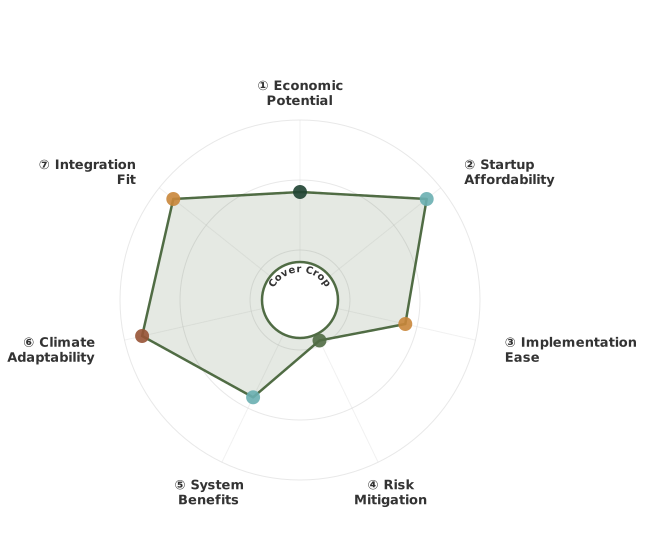
How These Traits Are Calculated
Trait dimensions are ordered clockwise starting from the top of the chart (12 o'clock position):
1. Economic Potential
Financial returns, annual value, and break-even timeline
WHAT: Evaluates financial viability by combining net annual value ($/ha from savings, income, and amortized harvests) with break-even timeline showing when practices pay for themselves.
WHY: Farmers need clear ROI understanding before committing resources. Fast payback (≤3 years) with strong returns (≥$300/ha) enables confident adoption, while long timelines (>10 years) restrict adoption to well-funded operations willing to wait for returns.
HOW: Calculated from net annual value in $/ha and break-even years. Exceptional (≥2.6): fast ROI ≤3 years + high value ≥$300/ha. Typical (1.8-2.5): moderate returns or longer timelines. Limited (<1.8): marginal economics or very long payback >10 years.
2. Startup Affordability
Initial investment costs and financial barrier to entry
WHAT: Measures financial barrier to entry through startup costs for equipment, infrastructure, consulting, and materials. Inverted scoring: lower costs = higher scores = more accessible adoption.
WHY: Affordability determines who can adopt. Low-cost practices (<$250/ha) enable widespread adoption across diverse scales, while high costs (>$2,500/ha) limit adoption to well-capitalized operations, creating barriers that slow regenerative transition.
HOW: Calculated from initial investment parsed from practice content. Inverted scoring: Exceptional (≥2.6): minimal investment <$250/ha. Typical (1.8-2.5): moderate costs $250-2,500/ha. Limited (<1.8): high barrier >$2,500/ha.
3. Implementation Ease
Learning curve and specialized knowledge required
WHAT: Measures how much learning, planning, and specialized knowledge a practice requires. Simpler practices with fewer steps score higher, while complex practices requiring extensive training or specialized resources score lower.
WHY: Complex practices create adoption barriers even when economically viable. Straightforward practices enable faster adoption and broader participation, while those requiring extensive training, timing precision, or specialized equipment limit who can succeed.
HOW: Evaluated by measuring documentation length and identifying complexity markers like location-specific requirements, seasonal timing windows, specialized skills, and dedicated equipment needs. Exceptional (≥2.6): straightforward practices with minimal prerequisites. Typical (1.8-2.5): moderate learning curve with some specialized needs. Limited (<1.8): steep learning curve requiring significant training or resources.
4. Risk Mitigation
Identified financial and ecological risk assessment
WHAT: Evaluates documented risks across financial (investment loss, market volatility) and ecological (crop failure, pest outbreaks) domains. Inverted scoring: fewer risks = higher scores.
WHY: Understanding risk exposure helps farmers make informed decisions. Low-risk practices allow confident implementation, while high-risk practices require careful planning and contingency resources. Risk transparency prevents costly failures.
HOW: Calculated from identified risks in practice content. Inverted scoring: Exceptional (≥2.6): ≤2 risks with manageable severity. Typical (1.8-2.5): 3-5 moderate risks. Limited (<1.8): 6+ risks or severe exposure.
5. System Benefits
How many ways the practice improves your land simultaneously
WHAT: Measures how many aspects of land health improve at once—carbon storage, soil quality, erosion control, water absorption, and biodiversity. Practices that improve multiple areas simultaneously create compounding benefits where each improvement reinforces the others.
WHY: The best practices solve multiple problems at once. For example, addressing erosion simultaneously builds carbon and improves water infiltration, creating a resilient system with positive feedback loops. Single-benefit approaches miss these compound transformation opportunities.
HOW: Evaluated across five key outcomes: carbon sequestration, soil organic matter increase, erosion reduction, water infiltration improvement, and biodiversity enhancement. Exceptional (≥2.6): high carbon storage (>8 t/ha/yr), improvements across 4-5 areas, transformative outcomes. Typical (1.8-2.5): moderate carbon (3-8 t/ha/yr), improvements across 2-3 areas. Limited (<1.8): modest impact (<3 t/ha/yr), single-area focus only.
6. Climate Adaptability
Geographic applicability across Köppen climate zones
WHAT: Evaluates geographic applicability by assessing how many Köppen climate zones successfully support a practice and what adaptation requirements are needed. Measures breadth of climates where farmers can implement with minimal to moderate modifications.
WHY: Universal practices working across diverse climates enable more farmers to adopt regenerative approaches. Practices limited to single climate types (only Mediterranean, only tropical) restrict adoption and slow global transition. Adaptability determines whether a practice serves niche regions or offers broad transformation.
HOW: LLM evaluation of regional success stories, Köppen zone coverage, and adaptation needs. Exceptional (≥2.6): 5+ zones or 4+ climate types, 3+ continents, minimal adaptation. Typical (1.8-2.5): 3-4 zones or 2-3 types, 2 continents, moderate adaptation. Limited (<1.8): 1-2 zones, single region, significant adaptation or highly specialized.
7. Integration Fit
How well this practice combines with others you're doing
WHAT: Measures how well a practice combines with other regenerative practices you might be doing. Some practices work as building blocks that make many other practices easier or more effective, while others work best on their own.
WHY: Practices that combine well with many others create more value on your farm. For example, cover cropping enables no-till, improves grazing, supports crop diversity, and helps water management—making all of them work better together. This helps you build a coherent system rather than juggling disconnected practices.
HOW: Evaluated by identifying which practices combine well and how strong those combinations are. 'Ideally Suited' means strong combinations where practices reinforce each other (practice A makes B easier, while B makes A more effective). 'Adequate' means complementary benefits that work well together. Exceptional (≥2.6): combines well with 6+ practices, serves as a building block. Typical (1.8-2.5): combines with 3-5 practices. Limited (<1.8): 1-2 practices or works best alone.
Going Deeper
1
WHY - The Benefits
Cover cropping is a cornerstone practice in regenerative agriculture, offering a profound suite of benefits for soil health, farm economics, and ecosystem resilience. By bringing a continuous living cover to the land, it directly counters degradation and actively builds...
Cover cropping is a cornerstone practice in regenerative agriculture, offering a profound suite of benefits for soil health, farm economics, and ecosystem resilience. By bringing a continuous living cover to the land, it directly counters degradation and actively builds long-term productivity. These benefits are not abstract; they are quantifiable outcomes resulting from the biological activity cover crops stimulate.
WHY - The Benefits
Cover cropping is a cornerstone practice in regenerative agriculture, offering a profound suite of benefits for soil health, farm economics, and ecosystem resilience. By bringing a continuous living cover to the land, it directly counters degradation and actively builds...
Cover cropping is a cornerstone practice in regenerative agriculture, offering a profound suite of benefits for soil health, farm economics, and ecosystem resilience. By bringing a continuous living cover to the land, it directly counters degradation and actively builds long-term productivity. These benefits are not abstract; they are quantifiable outcomes resulting from the biological activity cover crops stimulate.
Soil Health Benefits
The most significant impact of cover crops is on soil structure and health. By maintaining living roots in the soil for extended periods, cover crops continuously feed soil microbial communities, creating a vibrant underground ecosystem. These microbes are the engine of soil fertility, breaking down organic matter, cycling nutrients, and forming soil aggregates. A diverse cover crop mix, incorporating plants with varied root structures—deep taproots, fibrous roots, and legumes—exacerbates this effect.
Deep tap-rooted cover crops, such as forage radishes or turnips, can penetrate compacted layers that hinder root growth of cash crops, creating channels for water and air. Fibrous-rooted grasses and legumes form dense mats that bind soil particles together, dramatically improving aggregate stability, which is crucial for resisting erosion and enhancing water infiltration. Studies have shown cover cropping can increase soil organic matter by 0.5-2.0% over a decade, a fundamental indicator of soil health and fertility.
Improved water infiltration and retention are critical outcomes, especially in regions facing drought or intense rainfall. Healthy soil structure, fostered by cover crops, allows water to penetrate the soil surface rather than running off. This reduces erosion, replenishes soil moisture reserves, and can decrease the need for irrigation. Cover crops also smother weeds by outcompeting them for light, nutrients, and water, thereby reducing weed pressure on cash crops and potentially lessening herbicide reliance.
Furthermore, legume cover crops, such as clovers, vetches, and peas, have the remarkable ability to fix atmospheric nitrogen through a symbiotic relationship with soil bacteria. This biological nitrogen fixation can provide a significant portion of the nitrogen required by subsequent crops, reducing reliance on synthetic nitrogen fertilizers, which are energy-intensive to produce and can disrupt soil biology.
Economic Benefits
The economic advantages of cover cropping are multifaceted and accrue over time. While there is an initial investment in seed and planting, the returns are significant and compounding. Reduced input costs are a primary benefit: less synthetic fertilizer is needed due to nitrogen fixation and improved nutrient cycling, herbicide use can be reduced through weed suppression, and enhanced water infiltration can lower irrigation expenses.
Farmers often report improved crop yields within 2-5 years of adopting cover cropping, with gains of 5-15% being common as soil health improves. This enhanced productivity, combined with lower input costs, leads to improved profitability and farm resilience. Cover crops also contribute to long-term asset value by building soil fertility and structure, making the land more productive and valuable for future generations.
In some parts of the world, cover cropping can open new revenue streams. The biomass produced by cover crops can be grazed by livestock, providing valuable forage and integrating animal fertility into cropping systems. Furthermore, the carbon sequestration achieved through increased soil organic matter presents emerging opportunities for farmers to participate in carbon markets and receive payments for ecosystem services. The long-term economic security and reduced market volatility provided by healthy, resilient soils are arguably the most substantial economic benefits.
Regenerative Systems Fit
Cover cropping is a linchpin practice that fundamentally supports all five principles of regenerative agriculture when implemented effectively. It is not merely an add-on but a core component that enables and amplifies the benefits of other regenerative practices.
Principle 1 (Minimize Soil Disturbance): Cover cropping inherently reduces the need for routine tillage, as it maintains protective cover and builds soil structure naturally over time. Planting cover crops with minimal disturbance methods (e.g., no-till drills) further enhances this principle. The "living roots" and organic matter accumulation actively improve soil tilth, making it more resistant to compaction, thereby decreasing the likelihood of future tillage needs.
Principle 2 (Maximize Crop Diversity): Cover cropping intentionally introduces species diversity into the farming system. This diversity extends below ground with varied root architectures and above ground with different plant physiologies. This botanical diversity fosters a greater diversity of soil microbial communities, enhancing the soil's functional resilience and its ability to cycle nutrients and suppress diseases. Mixing species in cover crop cocktails further amplifies this principle.
Principle 3 (Keep Soil Covered): This is perhaps the most direct contribution of cover cropping. By planting a cover crop, the soil is continuously protected from the erosive forces of wind and rain, as well as from sun and wind-induced desiccation. This stable cover provides habitat and food for soil organisms, allows organic matter to accumulate, and maintains a more stable soil temperature and moisture regime.
Principle 4 (Maintain Living Roots): Cover crops extend the period of photosynthesis and nutrient uptake beyond the cash crop season. This continuous activity in the soil profile feeds microbes, builds organic matter, and keeps soil pores open. The longer living roots are present, the more robust the soil biological system becomes, leading to greater soil structure development and nutrient cycling efficiency. This practice is crucial for building soil carbon and fertility year-round.
Principle 5 (Integrate Livestock): Cover crops can serve as vital forage for grazing livestock between cash crop cycles in many cropping systems. This integration allows animals to cycle nutrients from the cover crop biomass back into the soil through manure, supplementing the fertility of the cropping system. It also provides a valuable feed source, enhancing the economic viability of mixed crop-livestock operations. Strategic grazing of cover crops can also help manage termination and incorporate residue, but requires careful management to avoid negative impacts on soil health.
For farms transitioning from conventional practices, cover cropping is often a gateway to full regeneration. It directly addresses the problem of bare soil and declining soil health, delivering visible improvements that build confidence. The reduced need for synthetic inputs and improved efficiency pave the way for the gradual elimination of these conventional tools. Cover crops are a key stepping stone that makes other regenerative practices, such as no-till farming and reduced reliance on synthetic fertilizers, more achievable and successful.
Sources behind this view
Videos & Podcasts
-
Utilize multi-species cover crops based on specific 'resource concerns' to improve soil health, nitrogen fixation, and water retention. Integrate livestock for grazing, calving, and overwintering, enh
-
Cover crops attract beneficial insects and pollinators, suppress pests, and improve soil biology. Mimicking nature's integration of animals and plants, alongside practices like no-till and diversity,
-
Discusses the positive impacts of cover crops on soil health, including increased organic matter, improved biology, reduced compaction, and cooler soil temperatures. Highlights earthworm activity and
-
Demonstrates how cover crops improve soil health by enhancing moisture retention, moderating soil temperature, increasing root depth, and boosting nutrient cycling. This leads to higher yields, reduce
Community
-
Cover crops offer cost-effective benefits for soil health, including building organic matter, managing nutrients (nitrogen scavenging and fixation), suppressing weeds and pests, and improving soil str
Read more (opens in new window) ucanr.edu -
Details cover crop termination methods, nutrient cycling (N scavenging/fixing, P availability), bio-controls, weed/pest/disease management, and specific mix recommendations. Emphasizes soil testing, r
Read more (pp. 10-20) (opens PDF, pp. 10-20) efotg.sc.egov.usda.gov -
Cover crops offer cost-effective benefits for soil health, including building organic matter, managing nutrients (nitrogen scavenging by grasses/brassicas, fixation by legumes), suppressing weeds, and
Read more (opens in new window) ucanr.edu -
Enhance soil health through plant diversity, continuous soil cover (living plants/residues), and livestock integration. Manage carbon-to-nitrogen ratios of residues and adopt no-till practices to impr
Read more (opens in new window) permies.com
Research
-
The Role of Cover Crops in North American Cropping Systems (opens in new window)
This study found: Cover crops offer multiple benefits in North American farming, including nitrogen fixation, erosion control, weed/pest management, and improved soil health through organic matter and reduced compactio
-
Cover Crops Enhance Soil Organic Carbon and Soil Quality for Sustainable Crop Yield: A Systematic Review (opens in new window)
This study found: A review of 38 studies shows diverse cover crop mixes, used long-term, boost soil organic matter (5-30%), soil quality (87%), and crop yields (55%), supporting climate-smart agriculture.
-
Optimizing cover crop practices as a sustainable solution for global agroecosystem services. (opens in new window)
This study found: Optimized cover crop strategies (long-term, no-till, legume/non-legume mix, residue mulch) significantly boost farm ecosystem services, including crop yields, carbon capture, and erosion control, whil
-
The Role of Cover Crops towards Sustainable Soil Health and Agriculture—A Review Paper (opens in new window)
This study found: Cover crops improve soil fertility, prevent erosion, boost soil life, and capture carbon, contributing to sustainable agriculture. While some challenges exist, they are vital for overall soil health.
From the Web
-
Cover crops enhance soil health by feeding soil organisms, increasing earthworms, building soil carbon and organic matter, improving nutrient management, preventing erosion, boosting biodiversity, aer
-
Cover crops like cereal rye, turnips, and radishes are increasingly adopted, with selection based on climate and farm needs. They improve soil health, increase water retention, reduce fertilizer use b
-
Cover crops stabilize soil via roots and top growth, build organic matter, stimulate beneficial microbes for nutrient cycling and disease suppression, and fix atmospheric nitrogen (legumes). Specific
-
Cover crops enhance soil health by feeding soil organisms, increasing earthworms, building carbon and organic matter, improving nutrient management, reducing erosion, increasing biodiversity, aerating
2
WHERE - Regional Considerations
Successfully implementing cover cropping requires selecting species and management strategies appropriate for your specific climate, soil type, and cropping system. The goal is to choose a cover crop that will thrive during the off-season and deliver maximum benefit...
Successfully implementing cover cropping requires selecting species and management strategies appropriate for your specific climate, soil type, and cropping system. The goal is to choose a cover crop that will thrive during the off-season and deliver maximum benefit without compromising the following cash crop.
WHERE - Regional Considerations
Successfully implementing cover cropping requires selecting species and management strategies appropriate for your specific climate, soil type, and cropping system. The goal is to choose a cover crop that will thrive during the off-season and deliver maximum benefit...
Successfully implementing cover cropping requires selecting species and management strategies appropriate for your specific climate, soil type, and cropping system. The goal is to choose a cover crop that will thrive during the off-season and deliver maximum benefit without compromising the following cash crop.
Click Here to Look up your Region if you don't already know it
Humid Temperate Regions
Representative Locations: Midwestern United States, northern Europe (UK, Germany, France), eastern China, Japan, New Zealand
Climate Context: Warm to hot summers and cool to cold winters with moderate to high annual precipitation (75-150 cm or 30-60 inches) distributed relatively evenly. USDA Zones 6-8, Köppen Cfb/Cfa.
Management Considerations: These regions offer long growing seasons with ample moisture, providing excellent opportunities for cover cropping. Winter cereals like cereal rye, wheat, or oats are excellent choices for overwintering, providing soil protection and biomass. Legumes such as crimson clover, hairy vetch, or Austrian winter peas can be undersown or planted after harvest, fixing nitrogen. In spring, management focuses on terminating the cover crop effectively before planting the main crop, using roller-crimping, mowing, or timely herbicide application if necessary. Some regions may experience challenging spring conditions, requiring selection of cover crops that terminate easily or tolerate wet soils.
Mediterranean Regions
Representative Locations: California, Mediterranean basin (Spain, Italy, Greece), central Chile, southwestern Australia, Western Cape South Africa
Climate Context: Hot, dry summers and mild, wet winters. Annual precipitation 40-90 cm (15-35 inches), highly seasonal. USDA Zones 8-10, Köppen Csa/Csb.
Management Considerations: The mild, wet winters are ideal for planting cool-season cover crops after cash crop harvest. Winter cereals like oats, barley, and wheat are reliable choices, along with legumes like lana vetch, crimson clover, and fava beans, which tolerate cooler temperatures and moderate rainfall. The key challenge is managing the cover crop termination in late spring when dry conditions can set in. Cover crops that produce significant biomass and terminate cleanly are preferred. Integrating cover crops can also help manage drought stress by improving soil water infiltration and retention.
Arid/Semi-Arid Regions
Representative Locations: Western USA (Great Plains, parts of California), North Africa, Central Asia, Interior Australia
Climate Context: Low annual precipitation (<40 cm or 15 inches), high temperatures, short and often unpredictable growing season. USDA Zones 7-9, Köppen BSh/BSk.
Management Considerations: Cover cropping in arid regions demands careful water management. Species selection is critical, prioritizing drought-tolerant, low-water-use cover crops like certain millets, sorghum-sudangrass hybrids, or deep-rooted legumes adapted to dry conditions. Fall planting of winter cereals or legumes is common, utilizing winter moisture. The primary goals are soil moisture conservation, erosion control, and improving soil organic matter. Terminating cover crops before they excessively deplete soil moisture for the following cash crop is paramount. Practices like stubble mulch farming or early termination are often employed.
Cold Continental Regions
Representative Locations: Northern USA and Canada, Northern Europe, Northern Asia
Climate Context: Very short growing seasons, extreme summer heat, severe winter cold. USDA Zones 3-5, Köppen Dfa/Dfb.
Management Considerations: Cover cropping opportunities are often limited to short windows between cash crop harvest and winter freeze, or brief spring periods before planting. Fast-growing, cold-tolerant species are essential. Buckwheat, oats, and field peas can be planted in late spring or early summer for quick biomass production and soil health benefits before fall. In cooler regions, annual ryegrass or cereal rye can be planted in late summer for overwintering, providing spring soil protection before termination. Snow cover can offer some insulation for overwintering cover crops.
Subtropical Regions
Representative Locations: Southeastern USA, Southern China, Southern Brazil, Eastern Australia
Climate Context: Hot, humid summers and mild winters with generally ample rainfall. USDA Zones 9-11, Köppen Cfa/Cwa.
Management Considerations: These regions offer a long window for cover cropping, often allowing for multiple cover crop sequences within a year. Warm-season crops like sorghum-sudangrass, cowpeas, sunn hemp, and millet are excellent choices for summer cover. For overwintering, cool-season cereals, brassicas, and legumes thrive. The high humidity and rainfall can increase the risk of disease transmission from cover crops to cash crops, so diverse species mixes and careful rotation are important. Managing residue termination can also be challenging with abundant biomass.
Tropical Regions
Representative Locations: Central America, Southeast Asia, East Africa, Northern Australia, Northern South America
Climate Context: High temperatures year-round, with distinct wet and dry seasons or consistent high rainfall. Köppen Af/Am/Aw.
Management Considerations: In tropical climates, cover crops can be grown year-round. Legumes like sunn hemp, pigeon pea, and velvet bean are highly effective for nitrogen fixation and biomass production. Grasses such as pearl millet and sorghums are great for soil conditioning and weed suppression. Focus is on selecting species that can thrive in high heat and humidity or survive dry periods. Managing termination is key to prevent excessive water use or unwanted reseeding before cash crop establishment. Practices can mimic rice paddy systems where some cover crops can tolerate waterlogged conditions between paddy cycles.
3
HOW - Implementation Process
Implementing cover crops effectively involves careful planning from species selection to termination. The process should be adapted to your specific region, soil type, and farm goals.
Implementing cover crops effectively involves careful planning from species selection to termination. The process should be adapted to your specific region, soil type, and farm goals.
HOW - Implementation Process
Implementing cover crops effectively involves careful planning from species selection to termination. The process should be adapted to your specific region, soil type, and farm goals.
Implementing cover crops effectively involves careful planning from species selection to termination. The process should be adapted to your specific region, soil type, and farm goals.
Prerequisites
- Goal Setting: Define your primary objectives: improving soil structure, increasing organic matter, suppressing weeds, fixing nitrogen, preventing erosion, providing forage, or a combination thereof.
- Cropping System Understanding: Know your cash crop rotation, planting windows, and termination requirements.
- Climate and Soil Assessment: Understand your region's typical rainfall patterns, temperature extremes, growing season length, and soil types.
- Available Equipment: Access to seeding and termination equipment (no-till drill, roller-crimper, mower, etc.).
- Seed Availability and Cost: Research local suppliers and budget for cover crop seed.
Phase 1: Species Selection and Planning
Objective: Choose cover crop(s) best suited to achieve your goals and thrive in your conditions.
Action: 1. Identify Primary Goals: If nitrogen fixation is key, prioritize legumes. For soil structure and organic matter, focus on grasses and deep-rooted brassicas. For weed suppression, select dense, fast-growing species. 2. Consider Climate and Season: Select species that are adapted to your region's temperatures and rainfall patterns during the cover cropping period. For overwintering, choose winter-hardy species. 3. Evaluate Compatibility: Ensure the cover crop won't negatively impact the subsequent cash crop (e.g., some grasses can increase soil acidity or suppress later crops if not terminated properly). Research potential allelopathic effects. 4. Mix Species for Synergy: Combine different types of cover crops (grasses, legumes, brassicas) to leverage multiple benefits and create a more resilient system. A mix can improve nutrient cycling, increase diversity, and reduce the risk of relying on a single species' performance. Aim for 3-5 species initially, scaling up to 10-20+ for advanced systems. 5. Source Seed: Identify reliable local or regional seed suppliers. Buying in bulk or forming a farmer co-op can reduce costs.
International Context: Seed availability and variety vary greatly. In Southeast Asia, sunn hemp and pigeon pea are common. In East Africa, cowpeas and dolichos beans are popular. In Australia, annual ryegrass and brassicas are widely used. Always consult local agricultural extension services or experienced farmers for regional recommendations.
Phase 2: Establishment
Objective: Seed cover crops at the right time and depth to ensure successful germination and growth.
Action: 1. Determine Optimal Timing: Sow cover crops as soon as possible after cash crop harvest, or during available windows in intercropping systems. Earlier sowing typically leads to more biomass and greater benefits. Aim for moisture availability for germination. 2. Prepare Seedbed (Minimally): If possible, use a no-till drill which minimally disturbs the soil, preserving existing structure and organic matter. This is crucial for regenerative systems. If a no-till drill isn't available, a light tillage or broadcasting seed followed by a cultipacker/harvester can be used, but aim to minimize disturbance. 3. Seed Depth and Rate: Follow recommended seeding rates and depths for chosen species. Seeding too deep or too shallow can significantly impact germination success. Using a higher seeding rate than recommended for monocultures can help ensure a dense stand, especially with diverse mixes. 4. Fertility Management: Legumes will fix nitrogen, but early vigour might be enhanced by a small starter application of phosphorus or potassium, especially on nutrient-poor soils. Avoid high nitrogen applications, which can hinder legume nodulation.
Equipment:
- No-till seed drill: Ideal for minimal soil disturbance. Provides precise depth control.
- Broadcast spreader + cultipacker/harvester: For broadcasting seed, then lightly pressing it into the soil. Available internationally for various tractor sizes.
- Rotary hoe or light harrow: Can be used for shallow incorporation if no-till option unavailable, but increases disturbance.
- Aerial seeding: Used in some larger-scale operations or in difficult-to-access areas.
Phase 3: Growth and Management
Objective: Allow cover crops to grow to maturity (or desired size) to maximize benefits while preparing for termination.
Action: 1. Monitor Growth: Observe stand establishment, plant health, and species composition. Identify any pest or disease issues early. 2. Grazing (Optional): If integrating livestock, manage grazing carefully. Strip grazing with electric fences can distribute manure evenly and prevent overgrazing, allowing plants to recover between grazing periods. Do not graze too closely, as this can harm root systems and reduce biomass for soil health. 3. Winter Survival (if applicable): For overwintering cover crops, ensure they have sufficient root development to survive freezing temperatures. Snow cover can provide beneficial insulation.
Phase 4: Termination
Objective: Kill the cover crop effectively to prevent unwanted volunteers and prepare the soil for the next cash crop, while retaining residue.
Action: 1. Timing is Crucial: Terminate cover crops at the optimal stage for your following cash crop and equipment capabilities. - Pre-Cash Crop Planting: Terminate 2-4 weeks before cash crop planting to allow residue to break down, reduce weed seed bank amplification, and minimize moisture competition. - Flowering Stage (Legumes, Brassicas): Typically the stage of maximum nitrogen fixation or biomass production. - Vegetative Stage (Grasses): Can be terminated earlier for less fibrous residue or later for more biomass and carbon content. 2. Methods: - Roller-Crimper: Flattens and crimps stems, killing the plant and creating a mulch residue without tillage. Ideal for regenerative systems. Requires specific equipment. Works best when cover crop is in the reproductive stage (flowering for legumes/brassicas, heading for grasses). - Mowing: Can terminate smaller cover crops but may not kill perennial species effectively. Creates less residue than roller-crimping. - Herbicides: A timed application of a broad-spectrum herbicide (like glyphosate) can provide quick and effective termination, though it deviates from full regenerative principles. Use as a transitional tool if other methods fail or are unavailable. Follow label directions precisely. - Tillage (Last Resort): If no other method is feasible, light tillage can terminate cover crops, but it sacrifices many regenerative benefits. This should be avoided if possible.
International Considerations: Termination methods depend on available machinery and local regulations. Roller-crimpers are gaining popularity but might be less common in some developing regions where manual termination or targeted herbicide use are more prevalent.
Transition Timeline & Phase-Out Strategy
Cover cropping itself is a foundational regenerative practice, but its implementation might require transitional support from other methods.
- Initial Phase (Years 1-2): Focus on establishing resilient cover crops that provide clear benefits like erosion control, weed suppression, and basic biomass addition. Expect an initial investment in seed and potentially new equipment or custom hiring for planting/termination. Yields may fluctuate as soil biology recalibrates.
- Intermediate Phase (Years 3-5): As soil health improves, cover crops will likely produce more biomass and contribute significantly to nutrient cycling. Nitrogen fixation from legume cover crops will start reducing synthetic nitrogen needs by 20-40%. Weed pressure will likely decrease, potentially reducing herbicide requirements. Cover crop selection may become more sophisticated, incorporating species for specific soil biological benefits.
- Mature Regenerative Phase (Year 5+): Cover crops are an integrated and indispensable part of the farming system. They consistently improve soil organic matter, fertility, and structure, significantly reducing reliance on synthetic inputs. Economic benefits (yield stability, reduced costs) are clearly evident. Cover crop termination methods are predominantly regenerative (roller-crimping, planned grazing, or no-till drilling). The focus shifts to optimizing biodiversity and system complexity through advanced cover crop mixes and integration with other regenerative practices.
Sources behind this view
Videos & Podcasts
-
Plan cover crop use based on specific goals (e.g., nutrient management, weed competition). Mixtures enhance diversity and nutrient cycling. Continuous low-disturbance no-till with diverse rotations an

-
Cover cropping is a strategy to 'put beds to sleep,' maintaining soil health via living roots and exudates. Methods include termination via string trimming or crimping, followed by direct seeding or t
-
Recommends killing cover crops at full bloom using rolling or chain methods for low-till/no-till systems, as taught by Dr. Ron Morris (Virginia Tech). This maximizes organic matter, conserves soil moi

-
Keith Burns details the 'why' behind post-harvest cover crops: boosting biology, preventing erosion, weed control, nitrogen fixation, nutrient cycling, beneficial insect habitat, and forage. He stress

Community
-
Details cover crop termination methods, nutrient cycling (N scavenging/fixing, P availability), bio-controls, weed/pest/disease management, and specific mix recommendations. Emphasizes soil testing, r
Read more (pp. 10-20) (opens PDF, pp. 10-20) efotg.sc.egov.usda.gov -
Provides detailed cover crop termination methods including herbicide, winter kill, grazing/haying, mechanical, and roller-crimper techniques. Emphasizes timely execution to manage soil moisture, nutri
Read more (pp. 9-11) (opens PDF, pp. 9-11) efotg.sc.egov.usda.gov -
Practical guidance on cover crop planting dates (fall/spring) and termination methods (mechanical, chemical, biological) to integrate with cash crops and crop rotation in Indiana.
Read more (opens in new window) ucanr.edu -
Provides practical guidance on cover crop planting dates (fall after harvest, spring before cash crop) and termination methods (roller-crimping, mowing, tillage, herbicides) for Indiana, emphasizing s
Read more (opens in new window) ucanr.edu
Research
-
The Role of Cover Crops in North American Cropping Systems (opens in new window)
This study found: Cover crops offer multiple benefits in North American farming, including nitrogen fixation, erosion control, weed/pest management, and improved soil health through organic matter and reduced compactio
-
Optimizing cover crop practices as a sustainable solution for global agroecosystem services. (opens in new window)
This study found: Optimized cover crop strategies (long-term, no-till, legume/non-legume mix, residue mulch) significantly boost farm ecosystem services, including crop yields, carbon capture, and erosion control, whil
-
Timing of Cover Crop Termination: Management Considerations for the Southeast (opens in new window)
This study found: Cover crop termination timing is crucial for maximizing soil health and crop yields in conservation tillage systems in the Southeast. Consider growing season, soil moisture, N management, and equipmen
-
A Review of Supporting Evidence, Limitations and Challenges of Using Cover Crops in Agricultural Systems (opens in new window)
This study found: Review of cover crops for sustainability, emphasizing species choice and management to benefit main crops. Highlights importance of local soil/climate and need for more research on nutrient cycling be
From the Web
-
Cover crop management requires careful planning regarding planting and termination timing to avoid water deficits and nutrient immobilization. Herbicide programs must be reconsidered, as some herbicid
-
Effective cover crop management requires careful planning, especially regarding water utilization and termination timing to avoid yield loss. Choosing species based on objectives (e.g., legumes for N,
-
Guides cover crop selection based on farmer objectives, rotation integration, and soil health goals, emphasizing mixed species for nutrient cycling and erosion control. Includes details on establishme
4
Know the Debate
Cover cropping success and benefits are shaped by farm context. In humid regions with ample rainfall and active soil biology, farmers often see soi...
Know the Debate
Cover cropping success and benefits are shaped by farm context. In humid regions with ample rainfall and active soil biology, farmers often see soi...
Cover cropping success and benefits are shaped by farm context. In humid regions with ample rainfall and active soil biology, farmers often see soil structure improvements and weed suppression within 1-2 years. However, in arid climates or on degraded soils, realizing significant organic matter gains and economic advantages like reduced fertilizer needs may take 3-5 years or longer. The required equipment also varies: while no-till drills offer optimal performance, simpler methods like broadcasting with light tillage are viable, though potentially with more establishment variability. Similarly, the actual nitrogen credit from legume cover crops is highly context-dependent, often 'reducing' rather than 'replacing' synthetic nitrogen needs, especially during the transition period.
How quickly do cover crops provide tangible farm benefits?
Benefits emerge in 1-3 years
Academic and institutional sources project tangible soil health, weed suppression, and nutrient cycling benefits within 1-3 years, particularly in favorable climates.
Sources behind this view
Sources behind this view
Research
-
Cover crops for soil health (opens in new window)
This study found: Cover crops are extra plants grown in fields to add organic matter and diversity, both above and below the soil. They provide many environmental benefits, including protecting the soil and improving its health. This review looks at where cover crops fit best in different farming regions and how they affect soil health. This includes their impact on soil organic matter, how the soil holds water, how nutrients and diseases are managed, soil structure, crop yields, and farm economics. While we're learning more about how cover crops work, there are still areas needing more research. Short growing seasons or poor soil conditions can limit how well cover crops grow and the benefits they provide. Overall, cover crops have a high potential to improve soil health, though results can vary depending on the specific farm and conditions.
From the Web
-
Cover crops protect and enrich soil, improving health by rebuilding organic matter and microbial communities. They prevent erosion and runoff, increase water retention, and enhance plant resilience to drought, pests, and disease.
Economic returns take 3-7 years
Field practitioners report that while soil structure improvements may appear sooner, measurable economic returns like yield increases or significant fertilizer savings often take 3-7 years, especially in challenging environments.
Sources behind this view
Sources behind this view
Videos & Podcasts
-
Cover crops significantly improve soil health by reducing erosion, increasing organic matter and earthworms, and enhancing water movement and aeration, leading to healthier crops.

-
Cover crops prevent erosion and nutrient loss, investing in long-term soil fertility. Legumes fix nitrogen, daikon radishes aerate soil, and some types provide livestock forage. Farmers can save an estimated $50/acre on fertilizer and amendments.
Making Sense of the Differences
The timeline for observing tangible farm benefits from cover cropping depends on climate, soil health, species selection, and management. Humid regions with active soil biology may see soil structure and weed suppression benefits in 1-2 years. However, arid or degraded soils require 3-5+ years for significant organic matter gains and economic savings from reduced inputs. Farmers should expect a transition period of 3-5 years to realize compounding economic advantages.
What equipment is needed for successful cover crop establishment?
No-till drill ideal but not essential
Academic and institutional sources often suggest no-till drills are ideal for minimizing soil disturbance and ensuring proper seed placement for optimal cover crop establishment.
Sources behind this view
Sources behind this view
From the Web
-
Cover crops benefit soil health by increasing organic matter, improving structure, and supporting microbes. They aid nutrient management, suppress weeds, reduce erosion, and can break pest cycles, as explained by Purdue University Extension.
Broadcasting, harrowing, or aerial seeding are viable alternatives
Field practitioners demonstrate successful cover crop establishment using broadcasting followed by light incorporation, or even aerial seeding, offering accessible alternatives to expensive no-till drills.
Sources behind this view
Sources behind this view
Videos & Podcasts
-
Cover crops provide economic benefits through reduced seeding costs (optimizing rates, creative application), grazing (virtual fencing), nitrogen fixation from legumes, weed suppression (especially cereal rye's allelopathy), and soil compaction management. The DTN marketplace facilitates sales of cover crop outputs.

-
Cover crop selection should address specific goals like erosion control (grasses), soil organic matter increase (biomass), nutrient management, and nitrogen fixation (legumes/grasses). Proper inoculation of legumes is crucial, with specific strains needed for different species, and careful storage and application of inoculants are advised.
Making Sense of the Differences
While no-till drills offer precise control and minimal disturbance, they represent a significant capital investment. Field evidence shows that farmers frequently achieve successful cover crop establishment with broadcasting and light incorporation (harrow, cultipacker) or aerial seeding, especially when cost is a major factor. The choice depends on farm scale, budget, desired precision, and risk tolerance, with simpler methods being more accessible but potentially requiring more careful management for optimal results.
How much nitrogen can be reliably credited from legume cover crops?
Significant N credits possible (40-150 lbs/acre)
Academic literature suggests legume cover crops can fix substantial nitrogen, potentially providing a near-complete replacement for synthetic nitrogen in some situations.
Sources behind this view
Sources behind this view
Research
-
Cover Crops (opens in new window)
This study found: Cover crops are plants grown specifically to benefit the soil and subsequent crops, rather than for direct harvest. They are a common practice in organic farming. Legumes among cover crops can naturally add nitrogen to the soil, helping the next crop grow. Planting cover crops also helps prevent soil erosion, especially when fields are otherwise bare. More recently, cover crops are being used to naturally control weeds, pests, and diseases. They also improve soil health by increasing organic matter, helping nutrients move around, and reducing soil compaction. Using cover crops can also lower farming costs and even provide new ways to make money.
-
Cover crop and soil quality interactions in agroecosystems (opens in new window)
This study found: This review highlights cover crops as a key practice for sustainable farming, offering two main benefits: protecting fields from wind and water erosion, and adding carbon to the soil to improve its overall health. Healthy soil, rich in organic matter, is crucial for managing water, temperature, and air, and for good soil structure. The plant material from cover crops, both above and below ground, plays a big role in how nutrients move through the soil and supports beneficial soil life. Legume cover crops are particularly valuable because they can fix nitrogen from the air, providing a natural source of fertility and reducing the need for synthetic fertilizers. Some cover crops also have natural abilities to suppress weeds, potentially lowering the reliance on herbicides. While there are economic considerations, the environmental benefits of cover crops make them a significant contributor to a healthy farm and environment.
Variable N credits (0-60 lbs/acre) common in practice
Field reports show highly variable nitrogen credit realization, often only reducing, not replacing, synthetic nitrogen needs, due to factors like termination timing and soil conditions.
Sources behind this view
Sources behind this view
Videos & Podcasts
-
Cover crops enhance soil health through organic matter increase, nitrogen fixation, and nutrient cycling, while also providing weed suppression and supporting beneficial insects. Timing nutrient release for cash crops and considering crop rotation and herbicide plans are key.

-
Cover crops prevent erosion and nutrient loss, investing in long-term soil fertility. Legumes fix nitrogen, daikon radishes aerate soil, and some types provide livestock forage. Farmers can save an estimated $50/acre on fertilizer and amendments.
Making Sense of the Differences
The nitrogen credit from legume cover crops is inconsistently realized between research settings and farm fields. While academic studies indicate high fixation potential (40-150 lbs N/acre), field reports show practical credits often range from 0-60 lbs N/acre. This variability stems from termination timing's impact on nutrient release, in-field conditions limiting microbial activity, and the cash crop's actual uptake efficiency. Farmers often find cover crops reduce, but don't fully replace, synthetic nitrogen, especially during the transition phase, necessitating on-farm testing to determine actual credits.
5
HOW MUCH - Costs & Investment
Note: Costs shown in USD; multiply by local labor and material cost indices for your region. Labor costs vary significantly internationally. Figures represent typical ranges for establishment and annual management.
Note: Costs shown in USD; multiply by local labor and material cost indices for your region. Labor costs vary significantly internationally. Figures represent typical ranges for establishment and annual management.
HOW MUCH - Costs & Investment
Note: Costs shown in USD; multiply by local labor and material cost indices for your region. Labor costs vary significantly internationally. Figures represent typical ranges for establishment and annual management.
Note: Costs shown in USD; multiply by local labor and material cost indices for your region. Labor costs vary significantly internationally. Figures represent typical ranges for establishment and annual management.
Note: All costs are based on recent US economic data (2024–2026) and may vary substantially by region based on local labor rates, material costs, and regulatory requirements.
Seed Procurement and Logistics
Seed investment is the foundational cost of the cover crop cycle, with total per-acre investment ranging from $51–$216 per acre ($126–$534/ha) for the entire practice. For small-scale operations (under 50 acres (20 ha)), seed costs frequently hit the upper quartiles of the total expenditure due to the purchase of high-diversity, multi-species cocktails sourced in smaller, premium-priced lots. Mid-sized operations (50–500 acres (20–202 ha)) typically utilize regional grain supply chains, keeping seed costs significantly lower by securing standardized cereal rye or annual ryegrass blends at scale. Large-scale operations (500+ acres) maximize bulk procurement discounts, often securing the necessary cover crop volumes at the lowest end of the aggregate $51–$216 per acre ($126–$534/ha) cost spectrum by contracting directly with seed processors and bypass regional markups.
Equipment, Fuel, and Operational Costs
Operational expenditures specifically for fuel and machinery maintenance are audited at $39–$137 per acre ($96–$339/ha). Small-scale producers operating under 50 acres (20 ha) often rely on older, secondary-market equipment or require multiple tillage passes for broadcast seeding, placing their fuel and labor intensity in the $100–$137 per acre ($247–$339/ha) segment of the range. Mid-sized operations (50–500 acres (20–202 ha)) typically optimize these costs by utilizing dedicated no-till drills, which consolidate seeding and light compaction into a single pass, typically reflecting $60–$90 per acre ($148–$222/ha) in operational spend. Large-scale entities (500+ acres) leverage high-capacity precision planters and automated fleet management to push operational fuel costs toward the lower $39–$60 per acre ($96–$148/ha) tier, benefiting from the mechanical efficiency of broader working widths and GPS-guided precision.
Most Spend: $95–$160 per acre ($235–$395/ha). This central range encompasses the majority of mid-to-large scale operations that balance the use of diverse seed mixes—which cost more than monocultures—with efficient, single-pass mechanical drilling and consolidated logistics.
Why the Range?: Cost variation is driven primarily by the diversity of the seed mix and the mechanical method of establishment. Operations utilizing complex 8-to-12-way species cocktails will necessarily trend toward the $216 per acre ($534/ha) ceiling, while those using single-species rye seeded via precision drills remain near the $51 per acre ($126/ha) floor.
Sources behind this view
Videos & Podcasts
-
Data shows cover crops significantly cool soil, improve water retention, increase soybean yields, enhance drought tolerance, and reduce erosion, potentially lowering fertilizer and pesticide needs.

-
Cover crops provide economic benefits through reduced seeding costs (optimizing rates, creative application), grazing (virtual fencing), nitrogen fixation from legumes, weed suppression (especially ce
-
Cover crops are an 'investment crop,' not an expense, offering low-cost fertility and soil health benefits. They are managed with a flail mower, minimal tillage, bed shaping, and tarping for two weeks

-
National survey data shows cover crops increase corn and soybean yields by 5-10%, with costs around $37/acre. Additional benefits include nitrogen credits, reduced pest/weed management, profitable gra
Community
-
Seven strategies accelerate cover crop ROI: managing weeds, grazing, addressing compaction, transitioning to no-till, improving soil moisture, managing nutrients (using legumes like Hairy Vetch/Austri
Read more (opens in new window) sustainableagriculture.net -
Details cover crop termination methods, nutrient cycling (N scavenging/fixing, P availability), bio-controls, weed/pest/disease management, and specific mix recommendations. Emphasizes soil testing, r
Read more (pp. 10-20) (opens PDF, pp. 10-20) efotg.sc.egov.usda.gov -
Oregon State University research over six years, funded by SARE, developed a calculator for cover crop N contribution and cost savings, showing vetch can replace feather meal for broccoli, saving $500
Read more (opens in new window) smallfarms.cornell.edu -
Cover crops offer cost-effective benefits for soil health, including building organic matter, managing nutrients (nitrogen scavenging by grasses/brassicas, fixation by legumes), suppressing weeds, and
Read more (opens in new window) ucanr.edu
Research
-
Evaluating Cover Crops for Benefits, Costs and Performance within Cropping System Niches (opens in new window)
This study found: Review of cover crops highlights benefits (pest control, soil health, yield) and costs. Best species identified for different seasons/regions. Rye excels in winter, C4 grasses in summer. Legumes fix N
-
The Role of Cover Crops in North American Cropping Systems (opens in new window)
This study found: Cover crops offer multiple benefits in North American farming, including nitrogen fixation, erosion control, weed/pest management, and improved soil health through organic matter and reduced compactio
-
Economic Impacts of Cover Crops for a Missouri Wheat–Corn–Soybean Rotation (opens in new window)
This study found: Missouri study: Cover crops in wheat-corn-soybean rotation initially reduced profits but became positive by year four. Improved soil health and carbon sequestration potential.
-
Optimizing cover crop practices as a sustainable solution for global agroecosystem services. (opens in new window)
This study found: Optimized cover crop strategies (long-term, no-till, legume/non-legume mix, residue mulch) significantly boost farm ecosystem services, including crop yields, carbon capture, and erosion control, whil
From the Web
-
Cover crops like cereal rye, turnips, and radishes are increasingly adopted, with selection based on climate and farm needs. They improve soil health, increase water retention, reduce fertilizer use b
-
A budget analysis for cover crops with soybeans shows negative net returns in year one but positive returns by year three and five. Faster returns are possible when managing herbicide-resistant weeds,
-
Cover crops with soybeans show increasing net returns over 1, 3, and 5 years, becoming profitable by year three ($0.42) and year five ($10.18) in normal years. Faster returns are achievable through he
-
Cover crop economics vary, with potential for profitability through reduced input costs (fertilizer, herbicides) and improved soil health. However, initial costs and management nuances, including till
6
REWARDS AND RISKS - Economics & Risk Factors
Cover cropping offers significant long-term rewards but, like any agricultural practice, carries inherent risks that must be managed. Understanding these trade-offs is key to successful implementation.
Cover cropping offers significant long-term rewards but, like any agricultural practice, carries inherent risks that must be managed. Understanding these trade-offs is key to successful implementation.
REWARDS AND RISKS - Economics & Risk Factors
Cover cropping offers significant long-term rewards but, like any agricultural practice, carries inherent risks that must be managed. Understanding these trade-offs is key to successful implementation.
Cover cropping offers significant long-term rewards but, like any agricultural practice, carries inherent risks that must be managed. Understanding these trade-offs is key to successful implementation.
The economic impact of cover cropping is a multi-year proposition, with operations currently projecting a breakeven timeline of 3–5 years from the initial planting. In a best-case economic scenario, producers see net income increases of $180 per acre ($445/ha) as soil health improvements reduce synthetic fertilizer reliance and capture moisture more effectively. A typical-case scenario yields a net income boost of $75–$125 per acre ($185–$309/ha), following the successful integration of cover crops into existing row-crop nutrient plans. Conversely, in a worst-case scenario—often caused by poor termination timing or extreme drought—the practice can represent a temporary net cost of $216 per acre ($534/ha) if the cover crop competes for moisture, reducing the following cash crop’s yield by 5–10%.
Market factors influencing this profitability include the shifting cost of synthetic nitrogen. Because cover crops—particularly legumes—can displace 30–50 lbs (14–23 kg) of nitrogen per acre, producers successfully shielding themselves from synthetic fertilizer price spikes gain a buffer of several thousand dollars annually on a 500-acre (202 ha) farm. Risk mitigation is inherently tied to monitoring; investing 1–2% of the total budget in soil moisture sensors prevents the worst-case scenario by providing data to trigger termination 14–21 days before primary planting. Furthermore, state-level cost-share programs frequently cover 25–40% of the $51–$216 per acre ($126–$534/ha) setup cost, which serves as a critical runway for farmers during the first three years of adoption.
Transition Period Risks: The first three years are characterized by a "transition lag." During this window, high-carbon residues from certain grasses can temporarily tie up soil nitrogen, potentially inducing a 5–10% yield drag on the subsequent cash crop. To mitigate this $216-equivalent loss, practitioners must ensure that the termination of high-residue cover crops occurs 21 days prior to planting and that nitrogen timing is adjusted to compensate for microbial immobilization. Farmers should budget 5–10% contingency funds in years 1–2 to cover emergency nitrogen applications or potential pest management if a "green bridge" of aphids or slugs develops.
Sources behind this view
Videos & Podcasts
-
Data shows cover crops significantly cool soil, improve water retention, increase soybean yields, enhance drought tolerance, and reduce erosion, potentially lowering fertilizer and pesticide needs.
-
Cover crops provide economic benefits through reduced seeding costs (optimizing rates, creative application), grazing (virtual fencing), nitrogen fixation from legumes, weed suppression (especially ce
-
Discusses the positive impacts of cover crops on soil health, including increased organic matter, improved biology, reduced compaction, and cooler soil temperatures. Highlights earthworm activity and
-
Utilize multi-species cover crops based on specific 'resource concerns' to improve soil health, nitrogen fixation, and water retention. Integrate livestock for grazing, calving, and overwintering, enh
Community
-
Details cover crop termination methods, nutrient cycling (N scavenging/fixing, P availability), bio-controls, weed/pest/disease management, and specific mix recommendations. Emphasizes soil testing, r
Read more (pp. 10-20) (opens PDF, pp. 10-20) efotg.sc.egov.usda.gov -
Seven strategies accelerate cover crop ROI: managing weeds, grazing, addressing compaction, transitioning to no-till, improving soil moisture, managing nutrients (using legumes like Hairy Vetch/Austri
Read more (opens in new window) sustainableagriculture.net -
Cover crops offer cost-effective benefits for soil health, including building organic matter, managing nutrients (nitrogen scavenging by grasses/brassicas, fixation by legumes), suppressing weeds, and
Read more (opens in new window) ucanr.edu -
Cover crops offer cost-effective benefits for soil health, including building organic matter, managing nutrients (nitrogen scavenging and fixation), suppressing weeds and pests, and improving soil str
Read more (opens in new window) ucanr.edu
Research
-
The Role of Cover Crops in North American Cropping Systems (opens in new window)
This study found: Cover crops offer multiple benefits in North American farming, including nitrogen fixation, erosion control, weed/pest management, and improved soil health through organic matter and reduced compactio
-
Optimizing cover crop practices as a sustainable solution for global agroecosystem services. (opens in new window)
This study found: Optimized cover crop strategies (long-term, no-till, legume/non-legume mix, residue mulch) significantly boost farm ecosystem services, including crop yields, carbon capture, and erosion control, whil
-
Evaluating Cover Crops for Benefits, Costs and Performance within Cropping System Niches (opens in new window)
This study found: Review of cover crops highlights benefits (pest control, soil health, yield) and costs. Best species identified for different seasons/regions. Rye excels in winter, C4 grasses in summer. Legumes fix N
-
Cover Crops Enhance Soil Organic Carbon and Soil Quality for Sustainable Crop Yield: A Systematic Review (opens in new window)
This study found: A review of 38 studies shows diverse cover crop mixes, used long-term, boost soil organic matter (5-30%), soil quality (87%), and crop yields (55%), supporting climate-smart agriculture.
From the Web
-
Cover crops like cereal rye, turnips, and radishes are increasingly adopted, with selection based on climate and farm needs. They improve soil health, increase water retention, reduce fertilizer use b
-
Cover crop management requires careful planning regarding planting and termination timing to avoid water deficits and nutrient immobilization. Herbicide programs must be reconsidered, as some herbicid
-
Cover crops enhance soil conservation, nutrient cycling, and weed suppression by reducing erosion, improving soil organic matter, scavenging nutrients, fixing nitrogen (legumes), and competing with we
-
An 8-year Kansas study by Dr. Augustine Obour shows cover crop grazing provides net economic benefits and improves soil health without reducing biomass for soil cover. Barriers include seed costs and
7
COMPATIBLE PRACTICES - Integration Opportunities
Cover cropping is highly synergistic with many other regenerative agriculture practices, amplifying their benefits and creating a more resilient, productive system.
Cover cropping is highly synergistic with many other regenerative agriculture practices, amplifying their benefits and creating a more resilient, productive system.
COMPATIBLE PRACTICES - Integration Opportunities
Cover cropping is highly synergistic with many other regenerative agriculture practices, amplifying their benefits and creating a more resilient, productive system.
Cover cropping is highly synergistic with many other regenerative agriculture practices, amplifying their benefits and creating a more resilient, productive system.
No-Till Farming
- Cover crops provide the living mulch that protects soil, suppresses weeds, and adds organic matter, making it possible to transition to and maintain no-till systems.
- Benefit: Eliminates soil disturbance from tillage, preserves soil structure, saves fuel and labor, sequesters carbon.
Crop Rotation
- Cover crops are integral to crop rotation planning, providing biomass, nutrients, and pest/disease management between cash crops.
- Benefit: Increases biodiversity, breaks pest cycles, diversifies nutrient cycling, improves overall system resilience.
Diverse Species Mixes (Cover Crop Cocktails)
- Combining multiple functional groups (grasses, legumes, brassicas, forbs) in cover crop blends maximizes benefits and resilience.
- Benefit: Leverages diverse root structures, nutrient contributions, pest/weed management capabilities, and support for varied soil biology.
Reduced Synthetic Inputs
- As cover crops improve soil fertility and nitrogen fixation, the need for synthetic fertilizers and pesticides diminishes significantly.
- Benefit: Lowers input costs, improves soil biology (unaffected by synthetic toxicity), reduces environmental pollution.
Livestock Integration
- Cover crops can provide high-quality forage for grazing livestock when cash crops are out of season.
- Benefit: Adds an income stream, cycles nutrients through animal manure, stimulates plant growth through managed grazing, reduces reliance on stored feed.
Composting and Organic Amendments
- Cover crop biomass can be composted, or incorporated into systems that use compost or biochar to further boost soil organic matter and microbial activity.
- Benefit: Accelerates soil building, improves soil structure and fertility, enhances the benefits of both cover cropping and amendment application.
Keyline Design and Water Management
- Cover crops improve soil infiltration, making water management practices like Keyline design more effective at capturing and storing water.
- Benefit: Enhances water use efficiency, reduces runoff and erosion, replenishes groundwater.
Cover cropping is the foundation upon which many other regenerative practices are built. Its ability to keep soil covered, maintain living roots, add diversity, and facilitate nutrient cycling makes it indispensable for building robust, high-functioning ecosystems.
Sources behind this view
Videos & Podcasts
-
Utilize multi-species cover crops based on specific 'resource concerns' to improve soil health, nitrogen fixation, and water retention. Integrate livestock for grazing, calving, and overwintering, enh
-
Farmers detail diverse cover cropping mixes (rye, vetch, oats, flax, sunflowers, peas, canola) and polyculture systems to boost soil health and reduce inputs. They emphasize continuous living roots, l

-
Plan cover crop use based on specific goals (e.g., nutrient management, weed competition). Mixtures enhance diversity and nutrient cycling. Continuous low-disturbance no-till with diverse rotations an
-
Cover crops attract beneficial insects and pollinators, suppress pests, and improve soil biology. Mimicking nature's integration of animals and plants, alongside practices like no-till and diversity,
Community
-
Details cover crop termination methods, nutrient cycling (N scavenging/fixing, P availability), bio-controls, weed/pest/disease management, and specific mix recommendations. Emphasizes soil testing, r
Read more (pp. 10-20) (opens PDF, pp. 10-20) efotg.sc.egov.usda.gov -
Enhance soil health through plant diversity, continuous soil cover (living plants/residues), and livestock integration. Manage carbon-to-nitrogen ratios of residues and adopt no-till practices to impr
Read more (opens in new window) permies.com -
Building healthy soil involves minimizing tillage (no-till) and keeping it covered year-round with living plants and cover crops. These practices enhance water retention, nutrient cycling, and soil re
Read more (opens in new window) smallfarms.cornell.edu -
Explains cover crop functions (green manure, nutrient cycling, erosion control, weed suppression) and categorizes them into six functional groups. Compares single-species vs. multispecies mixes, highl
Read more (pp. 2-5) (opens PDF, pp. 2-5) efotg.sc.egov.usda.gov
Research
-
The Role of Cover Crops in North American Cropping Systems (opens in new window)
This study found: Cover crops offer multiple benefits in North American farming, including nitrogen fixation, erosion control, weed/pest management, and improved soil health through organic matter and reduced compactio
-
Optimizing cover crop practices as a sustainable solution for global agroecosystem services. (opens in new window)
This study found: Optimized cover crop strategies (long-term, no-till, legume/non-legume mix, residue mulch) significantly boost farm ecosystem services, including crop yields, carbon capture, and erosion control, whil
-
Cover Crops Enhance Soil Organic Carbon and Soil Quality for Sustainable Crop Yield: A Systematic Review (opens in new window)
This study found: A review of 38 studies shows diverse cover crop mixes, used long-term, boost soil organic matter (5-30%), soil quality (87%), and crop yields (55%), supporting climate-smart agriculture.
-
No‐Till Legume Cover Crops Enhance Soil Carbon, Mitigate Greenhouse Gas Emissions, and Increase Yield in Dryland Wheat: A Global Meta‐Analysis (opens in new window)
This study found: Global meta-analysis shows no-till + legume cover crops significantly boost dryland wheat soil carbon (+28.5%), yield (+24.1%), and resource efficiency, while cutting GHG emissions. Long-term use yiel
From the Web
-
Cover crops like cereal rye, turnips, and radishes are increasingly adopted, with selection based on climate and farm needs. They improve soil health, increase water retention, reduce fertilizer use b
-
Cover crops enhance soil conservation, nutrient cycling, and weed suppression by reducing erosion, improving soil organic matter, scavenging nutrients, fixing nitrogen (legumes), and competing with we
-
Cover crops enhance no-till and organic farming by improving soil health, water infiltration, and moisture conservation. They aid weed and pest management, attract beneficial insects, and contribute t
-
Cover crops stabilize soil via roots and top growth, build organic matter, stimulate beneficial microbes for nutrient cycling and disease suppression, and fix atmospheric nitrogen (legumes). Specific