
Creep Feeding
Creep feeding provides young, still-nursing livestock, such as calves or lambs, with supplementary access to a specially designed feeding area separate from their mothers. This allows them to consume specially formulated feed, rich in nutrients, at their own pace and before they are weaned. It's a practice aimed at improving their growth rates and condition during the milk-drinking phase.
Read More: Complete Description
Creep feeding is a management technique where young animals, typically calves or lambs still nursing their mothers, are given access to a feed source in a designated area that their mothers cannot easily reach. This "creep" area is designed with openings or barriers that allow the young to pass through but exclude the larger adults. The feed offered in the creep is usually a dry ration, often a pelleted concentrate, that is higher in digestible energy and protein than what the young animal can obtain solely from its mother's milk or available pasture.
The primary goal of creep feeding is to supplement the nutrient intake of young livestock during the pre-weaning period, thereby enhancing their growth rate, improving their body condition score, and potentially making weaning a smoother transition. For calves, for instance, creep feeding aims to provide them with additional energy and protein that might be lacking in the dam's milk supply, especially if the dam is in poor condition or if pasture quality is suboptimal. This can lead to heavier weaning weights and a more uniform group of animals ready for market or replacement.
From a regenerative agriculture perspective, creep feeding is a transition practice, and its regenerative value is highly context-dependent. It can be viewed as a tool to manage livestock in ways that support other regenerative goals, but it is not a foundational practice in itself and can carry regenerative principles when used strategically. In its purest form, creep feeding might seem to violate the principle of integrating livestock by creating a separate feeding system, and potentially keeping soil covered or maintaining living roots if it concentrates animals in a non-vegetated area. However, its use can be framed regeneratively when it allows for more strategic grazing management of the mothers, alleviating grazing pressure on certain pastures or extending the grazing season.
The practice becomes more regenerative when it enables the farmer to achieve outcomes that would otherwise be impossible or detrimental to soil health. For example, if creep feeding allows for heavier pre-weaning weights, it might enable earlier marketing of animals, thus reducing grazing pressure on pastures during critical regenerative recovery periods or allowing for the establishment of cover crops on a larger scale. It can also be used to condition animals for future forage-based diets, potentially reducing their reliance on supplemental feeds post-weaning that might be less sustainably sourced.
However, if creep feeding is used simply to push for maximum growth without considering the nutritional needs of the mother or the broader ecosystem, it can become extractive. Over-reliance on high-energy creep feeds might lead to bloat in young animals, dependency on external feed sources, and potentially high costs. Furthermore, if the creep feeding station is a concrete pad or a heavily trafficked area, it can lead to soil degradation, weed invasion, and nutrient runoff, counteracting regenerative goals. The key lies in using creep feeding as a targeted intervention, guided by animal needs and land stewardship, rather than an indiscriminate growth promoter.
The transition pathway for creep feeding within a regenerative system involves phasing out its necessity. As soil health improves through practices like cover cropping, improved rotational grazing, and diverse pastures, the nutritional quality of forage increases. This enhanced forage quality can then provide sufficient nutrients for young animals, diminishing the need for creep feed. The goal is to reach a point where animals thrive on pasture alone, supported by healthy soil biology and diverse forage species, making external creep feeding obsolete.
Therefore, while creep feeding can offer short-term economic and management benefits, its long-term application in a regenerative system should be evaluated critically. It is most effective when used judiciously, as part of a whole-systems approach, and with a clear plan for eventually weaning animals off supplemental feeds by building a healthier forage base from the ground up.
Sources behind this view
Sources behind this view
 Videos & Podcasts
-
Creep feeding's value hinges on marketing goals; it accelerates growth to meet specific weight targets and timelines, potentially improving resilience to parasites. However, it's not always necessary

-
Creep feeding significantly increases weaning weights, making it a profitable investment when analyzed against feed costs and current market prices. It may also improve rumen development for better gr

-
Utilize portable creep feeders starting around September 30th to acclimate calves to concentrated feed before weaning, preventing competition from cows and ensuring a smoother transition to winter rat
-
Discusses strategic creep feeder placement on pasture, often near mineral feeders and water sources, to increase lamb creep feed intake. This method is anecdotally linked to reduced coccidiosis in lam

 Research
-
51 Observing the Effect of Creep Feeding on Calf Behavior Before and After Weaning (opens in new window)
This study found: Creep feeding supplements altered calf behavior before and after weaning. Control calves ate more and vocalized more post-weaning compared to supplemented calves.
-
Creep Feed as a Factor Influencing Performance of Cows and Calves (opens in new window)
This study found: A 21-year study found creep feeding increased calf weights initially but negatively impacted heifer growth post-weaning and cow productivity long-term. Progeny of creep-fed cows were lighter at weanin
-
ESTIMATES OF CREEP FEED REQUIREMENTS OF NURSING CALVES AND THE TOTAL ENERGY REQUIREMENTS OF BOTH COW AND CALF TO PRODUCE THE WEANED CALF (opens in new window)
This study found: Energy models estimate creep feed needs for nursing calves, considering cow size and milk production. Larger cows with lower milk yield were found to be more biologically efficient for producing weane
-
125 Residual Effects of Creep Feed Management on Reproductive Performance of Meat Goat does Across Multiple Years (opens in new window)
This study found: Creep feeding young meat goats did not show lasting benefits for adult reproductive performance or kid production over five years, though sire breed influenced doe weight and total weight weaned.
 From the Web
-
Nebraska Extension's guide details creep feeding for beef calves to increase weaning weight, offering example rations, economic calculations, and management advice. It emphasizes careful appraisal of
-
Creep feeding beef calves increases weaning weight and profitability by supplementing nutrition when milk and forage are insufficient. Benefits include heavier calves and better carcass quality, but p
Key Points
What It Is
- Supplemental feed for young livestock
- Separate feeding area accessible to young only
- Targets calves, lambs, and other young ruminants
- Pre-weaning nutrition enhancement
Why Do It
- Improves young animal growth rates
- Can increase weaning weights
- Eases transition to weaned diets
- May enable strategic herd management
Know the Debate
- Economic viability varies; feed costs vs. market prices matter.
- Can increase weaning weights but risks over-conditioning.
- Strategic tool for herd management, not an end goal.
- Phasing out is key to regenerative alignment with better pastures.
Benefits - Financial
- Increases weaning weight revenue by $50–$175 per head annually.
- Improves first-season conception rates, saving $100–$300 on replacement costs.
- Reduces livestock mortality by 2% to 5% through improved nutritional status.
Benefits - System
- May reduce pre-weaning mortality: 2-5% reduction
- Enables earlier turnout or marketing, reducing pasture pressure
- Supports better soil biology by improving forage quality for mothers
- Can be a tool for breeding program success
Risks - Financial
- Feed price volatility can create a net loss of -$76 per head.
- Rapid intake causes mortality risks resulting in $500–$600 per loss.
- High initial infrastructure costs of $700–$12,500 per station.
Risks - System
- Can lead to nutritional imbalances if feed not optimized
- Creation of nutrient-dense, potentially denuded "sacrifice areas"
- Might reduce mother's milk production if over-consumed by young
- Temptation to push growth overrides natural development rates
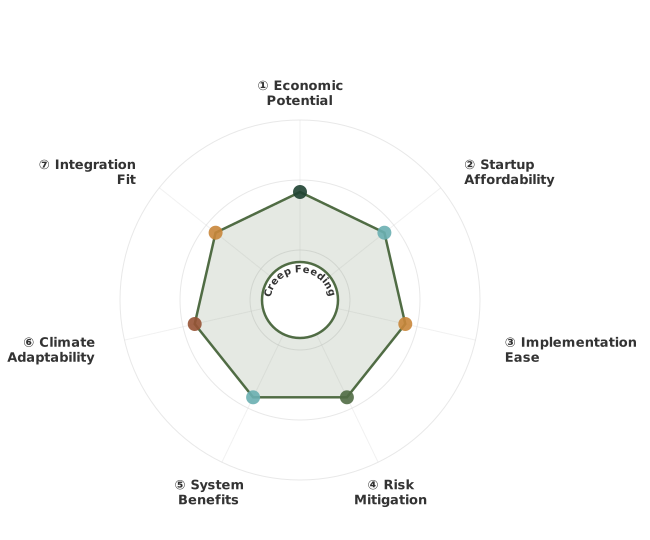
How These Traits Are Calculated
Trait dimensions are ordered clockwise starting from the top of the chart (12 o'clock position):
1. Economic Potential
Financial returns, annual value, and break-even timeline
WHAT: Evaluates financial viability by combining net annual value ($/ha from savings, income, and amortized harvests) with break-even timeline showing when practices pay for themselves.
WHY: Farmers need clear ROI understanding before committing resources. Fast payback (≤3 years) with strong returns (≥$300/ha) enables confident adoption, while long timelines (>10 years) restrict adoption to well-funded operations willing to wait for returns.
HOW: Calculated from net annual value in $/ha and break-even years. Exceptional (≥2.6): fast ROI ≤3 years + high value ≥$300/ha. Typical (1.8-2.5): moderate returns or longer timelines. Limited (<1.8): marginal economics or very long payback >10 years.
2. Startup Affordability
Initial investment costs and financial barrier to entry
WHAT: Measures financial barrier to entry through startup costs for equipment, infrastructure, consulting, and materials. Inverted scoring: lower costs = higher scores = more accessible adoption.
WHY: Affordability determines who can adopt. Low-cost practices (<$250/ha) enable widespread adoption across diverse scales, while high costs (>$2,500/ha) limit adoption to well-capitalized operations, creating barriers that slow regenerative transition.
HOW: Calculated from initial investment parsed from practice content. Inverted scoring: Exceptional (≥2.6): minimal investment <$250/ha. Typical (1.8-2.5): moderate costs $250-2,500/ha. Limited (<1.8): high barrier >$2,500/ha.
3. Implementation Ease
Learning curve and specialized knowledge required
WHAT: Measures how much learning, planning, and specialized knowledge a practice requires. Simpler practices with fewer steps score higher, while complex practices requiring extensive training or specialized resources score lower.
WHY: Complex practices create adoption barriers even when economically viable. Straightforward practices enable faster adoption and broader participation, while those requiring extensive training, timing precision, or specialized equipment limit who can succeed.
HOW: Evaluated by measuring documentation length and identifying complexity markers like location-specific requirements, seasonal timing windows, specialized skills, and dedicated equipment needs. Exceptional (≥2.6): straightforward practices with minimal prerequisites. Typical (1.8-2.5): moderate learning curve with some specialized needs. Limited (<1.8): steep learning curve requiring significant training or resources.
4. Risk Mitigation
Identified financial and ecological risk assessment
WHAT: Evaluates documented risks across financial (investment loss, market volatility) and ecological (crop failure, pest outbreaks) domains. Inverted scoring: fewer risks = higher scores.
WHY: Understanding risk exposure helps farmers make informed decisions. Low-risk practices allow confident implementation, while high-risk practices require careful planning and contingency resources. Risk transparency prevents costly failures.
HOW: Calculated from identified risks in practice content. Inverted scoring: Exceptional (≥2.6): ≤2 risks with manageable severity. Typical (1.8-2.5): 3-5 moderate risks. Limited (<1.8): 6+ risks or severe exposure.
5. System Benefits
How many ways the practice improves your land simultaneously
WHAT: Measures how many aspects of land health improve at once—carbon storage, soil quality, erosion control, water absorption, and biodiversity. Practices that improve multiple areas simultaneously create compounding benefits where each improvement reinforces the others.
WHY: The best practices solve multiple problems at once. For example, addressing erosion simultaneously builds carbon and improves water infiltration, creating a resilient system with positive feedback loops. Single-benefit approaches miss these compound transformation opportunities.
HOW: Evaluated across five key outcomes: carbon sequestration, soil organic matter increase, erosion reduction, water infiltration improvement, and biodiversity enhancement. Exceptional (≥2.6): high carbon storage (>8 t/ha/yr), improvements across 4-5 areas, transformative outcomes. Typical (1.8-2.5): moderate carbon (3-8 t/ha/yr), improvements across 2-3 areas. Limited (<1.8): modest impact (<3 t/ha/yr), single-area focus only.
6. Climate Adaptability
Geographic applicability across Köppen climate zones
WHAT: Evaluates geographic applicability by assessing how many Köppen climate zones successfully support a practice and what adaptation requirements are needed. Measures breadth of climates where farmers can implement with minimal to moderate modifications.
WHY: Universal practices working across diverse climates enable more farmers to adopt regenerative approaches. Practices limited to single climate types (only Mediterranean, only tropical) restrict adoption and slow global transition. Adaptability determines whether a practice serves niche regions or offers broad transformation.
HOW: LLM evaluation of regional success stories, Köppen zone coverage, and adaptation needs. Exceptional (≥2.6): 5+ zones or 4+ climate types, 3+ continents, minimal adaptation. Typical (1.8-2.5): 3-4 zones or 2-3 types, 2 continents, moderate adaptation. Limited (<1.8): 1-2 zones, single region, significant adaptation or highly specialized.
7. Integration Fit
How well this practice combines with others you're doing
WHAT: Measures how well a practice combines with other regenerative practices you might be doing. Some practices work as building blocks that make many other practices easier or more effective, while others work best on their own.
WHY: Practices that combine well with many others create more value on your farm. For example, cover cropping enables no-till, improves grazing, supports crop diversity, and helps water management—making all of them work better together. This helps you build a coherent system rather than juggling disconnected practices.
HOW: Evaluated by identifying which practices combine well and how strong those combinations are. 'Ideally Suited' means strong combinations where practices reinforce each other (practice A makes B easier, while B makes A more effective). 'Adequate' means complementary benefits that work well together. Exceptional (≥2.6): combines well with 6+ practices, serves as a building block. Typical (1.8-2.5): combines with 3-5 practices. Limited (<1.8): 1-2 practices or works best alone.
Going Deeper
1
WHY - The Benefits
Creep feeding, when strategically implemented, can offer a range of benefits that extend beyond simple growth promotion, impacting animal health, marketability, and the farmer's ability to manage their land regeneratively. These benefits are best understood when...
Creep feeding, when strategically implemented, can offer a range of benefits that extend beyond simple growth promotion, impacting animal health, marketability, and the farmer's ability to manage their land regeneratively. These benefits are best understood when...
WHY - The Benefits
Creep feeding, when strategically implemented, can offer a range of benefits that extend beyond simple growth promotion, impacting animal health, marketability, and the farmer's ability to manage their land regeneratively. These benefits are best understood when...
Creep feeding, when strategically implemented, can offer a range of benefits that extend beyond simple growth promotion, impacting animal health, marketability, and the farmer's ability to manage their land regeneratively. These benefits are best understood when...
Soil Health Benefits
While creep feeding itself doesn't directly build soil health, it can indirectly contribute by enabling better grazing management. By improving the condition of young stock, farmers can potentially achieve heavier weaning weights, which might allow for:
- Reduced post-weaning grazing pressure: Animals can be moved to market or to different management areas sooner, reducing the time they graze on sensitive pastures, thereby allowing more time for plant recovery and root development.
- Improved forage quality: When young animals are well-nourished, mothers might experience less stress, potentially leading to better milk production and condition, which in turn supports pasture regeneration. However, this is secondary to the direct impact of forage quality itself.
- Strategic herd management: If creep feeding allows for improved condition of replacement heifers or ewe lambs, it can lead to more robust breeding stock that are better adapted to forage-based diets, indirectly supporting soil health in the long run as these animals thrive on regenerative pastures.
However, it's crucial to acknowledge that if creep feeding areas are not managed or are located on vulnerable land, they can lead to soil degradation. Concentrated manure, overgrazing of surrounding vegetation, and soil compaction can occur. Therefore, the soil health benefits are entirely dependent on how the creep feeding station is managed and what wider land management practices it supports.
Economic Benefits
Creep feeding can offer significant direct economic advantages, particularly in conventional systems, and can be part of a transition strategy in regenerative ones.
- Increased weaning weights: Studies and producer experiences consistently show that calves or lambs on creep feed gain an additional 20-40 kg (45-90 lbs) or more by weaning compared to non-creep fed contemporaries, depending on the duration and creep ration quality. At market prices for weaned animals, this can translate to an additional $30-70 per head (USD equivalent) in revenue, significantly improving the profitability of the breeding enterprise.
- Improved marketability and price premiums: Heavier, well-conditioned weaned animals often fetch higher prices per kilogram or pound. They may also meet specific market premiums for grade or condition, further boosting returns.
- Reduced replacement costs: For operations retaining replacement females (heifers/ewe lambs), creep feeding can improve their body condition, potentially leading to higher conception rates in their first breeding season and reducing the likelihood of needing to purchase replacements due to poor condition. This can save $100-300 per head (USD equivalent) by reducing culling rates or the need for purchased stock.
- Extended grazing season potential: By improving the condition of young stock, creep feeding can allow for earlier weaning, reducing the grazing pressure on late-season pastures. This can preserve forage for the breeding stock or allow for better plant recovery going into winter, potentially shortening the winter feeding period.
- Feed conversion efficiency: While the feed itself is an expense, young ruminants are highly efficient at converting energy and protein in specialized rations into lean body mass. This efficiency can be higher than what they might extract from forage alone during this rapid growth phase, particularly in less-than-ideal pasture conditions.
Regenerative Systems Fit
Creep feeding’s fit within regenerative agriculture is nuanced and depends heavily on its application. It is not inherently regenerative but can be used as a transition practice to achieve regenerative outcomes or to manage livestock in a way that supports other regenerative goals.
Supporting Principle 5 (Integrate Livestock): Creep feeding requires careful integration of livestock management. By allowing young animals to receive supplemental nutrition, it can reduce selective grazing pressure on mothers and encourage them to graze more broadly, potentially improving pasture utilization and diversity. If creep feeding enables earlier weaning or movement of young stock off their mothers' pastures, it allows those pastures extended rest periods, which is crucial for plant recovery and soil health building.
Enabling Other Regenerative Goals: In some scenarios, creep feeding can be a stepping stone. For instance, if a farm is transitioning to an all-forage diet for all animals, creep feeding might ensure that young animals are strong enough to thrive on this diet post-weaning. It can also help condition animals for grazing systems where forage quality may be variable. This is particularly relevant if the goal is to phase out less sustainable supplemental feeds or intensive finishing systems.
Transition Pathway: The ultimate goal in a regenerative system is for pastures and maternal nutrition to be so robust that creep feeding becomes unnecessary. As soil health improves through cover cropping, diverse perennial forages, and excellent grazing management, the nutritional quality of forage for lactating mothers increases. This leads to better milk production and condition for calves/lambs, making supplementary creep feeds redundant. A farm "graduating" from creep feeding would see healthy, well-grown young stock thriving solely on their mother's milk and pasture. The timeline for this practice phase-out transition can range from 3-7 years, depending on the starting soil health and the rate of regenerative practice adoption. This long-term ecological project presents near-term business challenges, as the farm must manage costs and cash flow while soil and pasture health improve.
Potential Drawbacks: Creep feeding can create a "sacrifice area" or a heavily trafficked, potentially denuded zone around the feeders, leading to soil compaction and nutrient runoff if not managed properly. Over-reliance on high-energy feeds can lead to digestive issues like bloat and can make animals less efficient at utilizing forage post-weaning. It can also create a dependency on off-farm feed inputs, which may not align with the regenerative principle of creating closed-loop systems.
Therefore, creep feeding fits best as a temporary tool to manage challenges during a regenerative transition, with a clear exit strategy. It should always be supported by efforts to improve pasture quality and mother's nutrition through regenerative land management rather than being seen as a permanent solution.
Sources behind this view
Videos & Podcasts
-
Creep feeding significantly increases weaning weights, making it a profitable investment when analyzed against feed costs and current market prices. It may also improve rumen development for better gr
-
Creep feeding's value hinges on marketing goals; it accelerates growth to meet specific weight targets and timelines, potentially improving resilience to parasites. However, it's not always necessary
-
Explores strategic creep feeder placement on pasture to influence lamb intake, nutrient distribution, and manure spreading. Recommends daily movement to spread nutrients and avoid bare spots, leveragi
-
Utilize portable creep feeders starting around September 30th to acclimate calves to concentrated feed before weaning, preventing competition from cows and ensuring a smoother transition to winter rat
Research
-
Creep Feed as a Factor Influencing Performance of Cows and Calves (opens in new window)
This study found: A 21-year study found creep feeding increased calf weights initially but negatively impacted heifer growth post-weaning and cow productivity long-term. Progeny of creep-fed cows were lighter at weanin
-
51 Observing the Effect of Creep Feeding on Calf Behavior Before and After Weaning (opens in new window)
This study found: Creep feeding supplements altered calf behavior before and after weaning. Control calves ate more and vocalized more post-weaning compared to supplemented calves.
-
LAMB FEEDING STRATEGIES DURING THE PRE-WEANING PERIOD IN INTENSIVE MEAT PRODUCTION SYSTEMS (opens in new window)
This study found: Pre-weaning lamb feeding is key for consistent meat quality. Creep feeding from birth aids stomach development and growth, outperforming abrupt early weaning by reducing stress. More research on optim
-
ESTIMATES OF CREEP FEED REQUIREMENTS OF NURSING CALVES AND THE TOTAL ENERGY REQUIREMENTS OF BOTH COW AND CALF TO PRODUCE THE WEANED CALF (opens in new window)
This study found: Energy models estimate creep feed needs for nursing calves, considering cow size and milk production. Larger cows with lower milk yield were found to be more biologically efficient for producing weane
From the Web
-
Nebraska Extension's guide details creep feeding for beef calves to increase weaning weight, offering example rations, economic calculations, and management advice. It emphasizes careful appraisal of
-
Creep feeding beef calves increases weaning weight and profitability by supplementing nutrition when milk and forage are insufficient. Benefits include heavier calves and better carcass quality, but p
2
WHERE - Regional Considerations
Creep feeding is a practice applicable across diverse climates and agricultural systems worldwide, primarily wherever ruminant livestock are raised before weaning. Its effectiveness and specific implementation details are influenced by regional climate, forage...
Creep feeding is a practice applicable across diverse climates and agricultural systems worldwide, primarily wherever ruminant livestock are raised before weaning. Its effectiveness and specific implementation details are influenced by regional climate, forage...
WHERE - Regional Considerations
Creep feeding is a practice applicable across diverse climates and agricultural systems worldwide, primarily wherever ruminant livestock are raised before weaning. Its effectiveness and specific implementation details are influenced by regional climate, forage...
Creep feeding is a practice applicable across diverse climates and agricultural systems worldwide, primarily wherever ruminant livestock are raised before weaning. Its effectiveness and specific implementation details are influenced by regional climate, forage...
Click Here to Look up your Region if you don't already know it
Temperate Humid Regions
Representative Locations: Northern Europe (UK, France, Germany), Eastern United States, Southeastern Australia, Southern Canada. Climate Context: Warm summers, mild to cold winters, consistent rainfall (75-150 cm or 30-60 inches annually), long growing seasons. USDA Zones 5-8, Köppen Cfb/Cfa. Regional Considerations: Abundant forage during the growing season. Creep feeding often used to boost growth rates for finishing animals or to ensure replacement stock are in optimal condition before a potentially harsh winter. Management focuses on avoiding over-grazing around feeders, especially during wet periods where compaction is a risk. Can be particularly useful for extending gains when pasture quality declines in late summer/early autumn.
Temperate Dry/Continental Regions
Representative Locations: Western United States, Central Asia, parts of Southern Brazil, Eastern Argentina. Climate Context: Hot summers, cold winters, limited and often seasonal rainfall (25-50 cm or 10-20 inches annually), variable growing seasons. USDA Zones 4-7, Köppen BSk/Dfa/Dfb. Regional Considerations: Pasture quality can be highly variable, with significant dry periods. Creep feeding can be essential for maintaining growth rates when forage is scarce or of low nutritional value, especially for calves destined for a stocker or feedlot phase. Management must be sensitive to water availability and avoiding creating denuded areas around feeders during dry spells. Ensuring mothers are in good condition is paramount, as they rely on the creep feed's benefits to maintain milk production.
Mediterranean Regions
Representative Locations: Mediterranean basin (Spain, Italy, Greece), California, Chile, South-western Australia, South Africa. Climate Context: Hot, dry summers; mild, wet winters. Rainfall is seasonal (40-90 cm or 15-35 inches). USDA Zones 8-10, Köppen Csa/Csb. Regional Considerations: Drought in summer can severely limit forage, making creep feeding critical for maintaining young animal condition. The dry conditions can exacerbate soil disturbance around feeders. Management should focus on placing feeders strategically to minimize impact and move them frequently. Pasture regeneration after winter rains is important, and creep feeding can help ensure young stock convert this seasonal flush of nutrients efficiently.
Subtropical Humid Regions
Representative Locations: Southeastern United States, Southern China, Eastern India, Southern Brazil. Climate Context: Hot, humid summers; mild winters; ample rainfall year-round (100-150+ cm or 40-60+ inches). USDA Zones 9-11, Köppen Cfa/Cwa. Regional Considerations: Long growing seasons but potential for heat stress and high parasite loads. Creep feeding can help young animals adapt to the heat while ensuring adequate nutrient intake. Management requires attention to parasite control around feeders and ensuring adequate shade. High rainfall can increase risk of soil compaction and runoff from feeder sites if not managed with appropriate infrastructure.
Tropical Regions
Representative Locations: Southeast Asia, Central Africa, Northern Australia, Central America, Northern South America. Climate Context: High temperatures year-round, with distinct wet and dry seasons or consistent high rainfall. Rainfall varies widely but is typically abundant (150+ cm or 60+ inches annually). Köppen Af/Am/Aw. Regional Considerations: Tropical forages can be fibrous and low in protein. Creep feeding is often vital for achieving acceptable growth rates in young stock. Heat stress management is paramount. Feeder placement must consider drainage and avoid creating waterlogged, fly-breeding sites. Disease transmission can be a concern in high-humidity environments. The focus is on nutrient supplementation to overcome tropical forage limitations and ensure robust development before weaning.
Arid & Semi-Arid Regions
Representative Locations: Western USA, North Africa, Central Asia, interior Australia, Middle East. Climate Context: Low rainfall (<25 cm or 10 inches annually), high temperatures, short or unpredictable growing seasons. USDA Zones 5-9, Köppen BWh/BWk. Regional Considerations: Extreme limitations on forage availability and quality. Creep feeding can be nearly essential for survival and growth of young animals, or to enable them to reach market weight. Management must prioritize conserving moisture and avoiding overgrazing around creep feeder sites, which can become denuded dust bowls if not carefully managed. Feeder location must be planned to minimize water usage and potential for trampling fragile arid ecosystems.
3
HOW - Implementation Process
Successfully implementing creep feeding requires careful planning relative to the animals' age, the available forage, and the desired outcomes. It's a phased approach that involves preparation, ongoing management, and a strategy for eventual phase-out in a regenerative...
Successfully implementing creep feeding requires careful planning relative to the animals' age, the available forage, and the desired outcomes. It's a phased approach that involves preparation, ongoing management, and a strategy for eventual phase-out in a regenerative...
HOW - Implementation Process
Successfully implementing creep feeding requires careful planning relative to the animals' age, the available forage, and the desired outcomes. It's a phased approach that involves preparation, ongoing management, and a strategy for eventual phase-out in a regenerative...
Successfully implementing creep feeding requires careful planning relative to the animals' age, the available forage, and the desired outcomes. It's a phased approach that involves preparation, ongoing management, and a strategy for eventual phase-out in a regenerative...
Prerequisites
- Animal Age & Size: Young livestock typically start creep feeding when they are around 3-4 months old, weigh approximately 100-150 kg (220-330 lbs) for calves, or 20-30 kg (45-65 lbs) for lambs. They should be mobile and curious enough to explore new feed sources.
- Forage Assessment: Evaluate the condition of the pasture and the nutritional quality of the forage available to lactating mothers. If mothers are in poor body condition, milk production is likely low, and young animals will benefit more from creep feed.
- Breeding Program Goals: Determine if the goal is simply growth promotion, conditioning for replacement stock, or preparing animals for a specific market endpoint.
- Availability of Supplemental Feed: Source a high-quality creep feed ration formulated for young ruminants. This should be palatable, digestible, and provide adequate protein, energy, vitamins, and minerals. Avoid rations that are too high in starch or protein for the age of the animals to prevent digestive upset.
- Infrastructure: Identify or construct a suitable creep feeding area with appropriate feeders.
Phase 1: Setup and Ration Formulation
1. Feeder Design and Placement:
- Access: Openings should be large enough for young animals but too small for adults. For calves, this might be 1.2-1.5 m (4-5 ft) high openings or adjustable bar spacing. For lambs, smaller openings are needed.
- Stationary vs. Movable: If using permanent feeders that are not moved, create a hardened pad (e.g., gravel, concrete, geotextile with stone) around the feeder to prevent mud and compaction. Movable feeders (on skids or wheels) are preferable for regenerative systems to distribute impact and manure.
- Capacity: Ensure feeders have enough feeding space per head to avoid overcrowding and competition, which can lead to stress and reduced intake. Rule of thumb: 15-20 cm (6-8 inches) of feeding space per calf, 8-10 cm (3-4 inches) per lamb.
- Protection: Feeders should offer protection from weather (rain, sun) to keep feed dry and palatable.
- Location: Place feeders strategically near water sources but not directly adjacent to them, to avoid creating muddy, overgrazed "sacrifice zones." Position them in areas that are convenient for livestock to access and for you to monitor. Avoid placing feeders in environmentally sensitive areas like riparian zones.
2. Ration Formulation:
- Nutritional Balance: Creep feeds are typically high in energy (from grains or molasses) and protein (from protein meals, certain forages), and fortified with essential vitamins and minerals. Typical formulations might include cracked corn, soybean meal, dehydrated alfalfa, molasses, and a mineral-vitamin premix.
- Palatability: The feed must be palatable to encourage intake. Pelleted forms are often preferred as they are less dusty and easier for young animals to consume.
- Avoid Ratios that Promote Bloat/Digestive Upset: High levels of rapidly fermentable carbohydrates (like finely ground corn) can lead to bloat and acidosis if animals gorge themselves on it. Formulations should be balanced to slowly release energy and protein.
- Cost-Effectiveness: Balance nutritional needs with the cost of ingredients. Local availability of ingredients often dictates the most economical ration.
Phase 2: Implementation and Initial Feeding
- Introduce Feed Gradually: Initially fill feeders with a small amount of feed to encourage exploration. Young animals are curious and will investigate. Don't overfill.
- Monitor Intake & Animal Behavior: Observe young animals to ensure they are accessing the creep. Watch for signs of digestive upset (scouring, bloat) – reducing the amount of feed or changing the ration may be necessary. Monitor mothers – if mothers are breaking into the creep, the openings may need adjustment.
- Adjust Feed Availability: As young animals become accustomed to the creep, gradually increase the amount of feed provided. The goal is to provide a consistent supply without significant waste. Some producers offer feed free-choice, while others feed once or twice daily. Free-choice can lead to overconsumption and digestive issues; timed feeding allows for better control and observation.
- Weaning Preparation: A general guideline is to offer creep feed from about 3 months of age until weaning, which typically occurs at 6-9 months for calves, and 3-5 months for lambs.
Phase 3: Ongoing Management and Transition Planning
- Regular Monitoring of Feeders: Check feeders daily or every other day. Remove old/wasted feed, clean feeders if necessary, and replenish with fresh feed.
- Observe Animal Health: Continue monitoring young animals for any signs of digestive upset, bloat, or other health issues potentially linked to creep feeding.
- Observe Pasture Impact: Pay attention to the vegetation around the creep feeders. If it is becoming denuded or compacted, consider moving the feeders or implementing a hardened pad.
- Environmental Considerations: In wet or humid climates, ensure feed stays dry and prevent the creep area from becoming a source of nutrient runoff.
- Transition Planning (Regenerative Focus):
- Improve Pasture Quality: Continuously work on improving soil health and forage diversity through practices like cover cropping, rotational grazing, and species diversity. This is key to increasing mother's milk production and nutritional quality, naturally reducing reliance on creep feed.
- Extended Maternal Nutrition: Target better condition of nursing mothers through improved grazing management. A well-nourished mother produces more milk, making creep feed less critical.
- Phased Reduction: As pasture quality improves, gradually reduce the amount or concentrate of creep feed offered. Observe young animal condition and growth rates to ensure they are not negatively impacted.
- Feed Quality Optimization: If creep feeding is still necessary, ensure the ration is as nutritionally complete and digestible as possible, focusing on moderate energy and protein to complement forage rather than replace it.
- Objective: The ultimate regenerative goal is to reach a point where creep feed is no longer needed, as the animals are thriving on high-quality forage and maternal nutrition. This indicates the soil-pasture-animal system is functioning holistically.
Transition Timeline & Phase-Out Strategy:
- Year 1-2: Focus on initial establishment of regenerative pasture practices (cover crops, rotational grazing, fencing improvements). Monitor need for creep feed based on pasture quality and animal condition.
- Year 3-4: As pasture quality demonstrably improves, begin reducing creep feed offered, offering it only during periods of lowest forage quality (e.g., late summer drought, early spring before flush). Target a 25-40% reduction in feed offered.
- Year 5-6: With established perennial pastures and robust soil biology, aim to eliminate creep feeding altogether. Monitor weaning weights and overall health to confirm success. If supplementation is still essential, reassess the sustainability of your feed sources and focus on further improving pasture nutrition.
- Success Indicator: Weaning weights and overall health of young stock are consistently good with no creep feeding, demonstrating the effectiveness of a regenerative forage system.
Sources behind this view
Videos & Podcasts
-
Creep feeding significantly increases weaning weights, making it a profitable investment when analyzed against feed costs and current market prices. It may also improve rumen development for better gr
-
Creep feeding's value hinges on marketing goals; it accelerates growth to meet specific weight targets and timelines, potentially improving resilience to parasites. However, it's not always necessary
-
Explores strategic creep feeder placement on pasture to influence lamb intake, nutrient distribution, and manure spreading. Recommends daily movement to spread nutrients and avoid bare spots, leveragi
-
Utilize portable creep feeders starting around September 30th to acclimate calves to concentrated feed before weaning, preventing competition from cows and ensuring a smoother transition to winter rat
Research
-
51 Observing the Effect of Creep Feeding on Calf Behavior Before and After Weaning (opens in new window)
This study found: Creep feeding supplements altered calf behavior before and after weaning. Control calves ate more and vocalized more post-weaning compared to supplemented calves.
-
Creep Feed as a Factor Influencing Performance of Cows and Calves (opens in new window)
This study found: A 21-year study found creep feeding increased calf weights initially but negatively impacted heifer growth post-weaning and cow productivity long-term. Progeny of creep-fed cows were lighter at weanin
-
LAMB FEEDING STRATEGIES DURING THE PRE-WEANING PERIOD IN INTENSIVE MEAT PRODUCTION SYSTEMS (opens in new window)
This study found: Pre-weaning lamb feeding is key for consistent meat quality. Creep feeding from birth aids stomach development and growth, outperforming abrupt early weaning by reducing stress. More research on optim
-
125 Residual Effects of Creep Feed Management on Reproductive Performance of Meat Goat does Across Multiple Years (opens in new window)
This study found: Creep feeding young meat goats did not show lasting benefits for adult reproductive performance or kid production over five years, though sire breed influenced doe weight and total weight weaned.
From the Web
-
Nebraska Extension's guide details creep feeding for beef calves to increase weaning weight, offering example rations, economic calculations, and management advice. It emphasizes careful appraisal of
-
Creep feeding beef calves increases weaning weight and profitability by supplementing nutrition when milk and forage are insufficient. Benefits include heavier calves and better carcass quality, but p
4
Know the Debate
Creep feeding outcomes and appropriateness vary significantly based on region, scale, and management goals. In humid temperate zones with abundant ...
Know the Debate
Creep feeding outcomes and appropriateness vary significantly based on region, scale, and management goals. In humid temperate zones with abundant ...
Creep feeding outcomes and appropriateness vary significantly based on region, scale, and management goals. In humid temperate zones with abundant forage, it's often used for market finishing, while drier regions rely on it to combat forage scarcity for both young stock and mothers. Large-scale operations might invest in movable feeders to distribute impact, whereas smaller farms may use custom-built pens. The labor commitment is typically daily for feeding and observation, but becomes less critical as pasture quality improves and the need for creep feeding diminishes. Understanding these factors helps determine if and how creep feeding fits your operation.
Is creep feeding economically viable for calves and lambs?
Potentially viable, but high risk dependent on market
Creep feeding can provide significant revenue increases through heavier weaning weights and better carcass quality, potentially adding $30-70/head for calves. However, high daily feed costs ($0.50-$1.50/head for calves) can easily negate profits if market prices are low or feed is wasted, making careful economic appraisal essential.
Sources behind this view
Sources behind this view
Videos & Podcasts
-
Creep feeding provides lambs with supplemental concentrate (oats, corn, soybean meal) in a separate area to promote growth and reduce competition with ewes. Early introduction aids digestive adaptation, and consistent availability prevents issues. It can also support lambs during weaning while ewes dry up.
Research
-
Effects of Distillers Dried Grains with Solubles as a Protein Source in Creep Feed. 2. Subsequent Feedlot Performance, Carcass Measurements, and Plasma Parameters (opens in new window)
This study found: A two-year study looked at how different protein sources (corn by-products called DDGS or soybean meal) in early calf starter feed (creep feed) affected steer performance later in the feedlot. They also compared calves that received this starter versus those that didn't. Calves that received creep feed tended to eat more and, in the first year, gained weight faster. The cost to gain weight was often lower for calves that had creep feed. In the first year, calves that were creep-fed ended up heavier with better carcass weights. However, in the second year, these differences weren't seen. The corn by-product (DDGS) tended to lower the cost of gaining weight, but in the second year, it resulted in a smaller muscle area in the meat compared to soybean meal.
-
Creep Feed as a Factor Influencing Performance of Cows and Calves (opens in new window)
This study found: A long-term study over 21 years looked at how feeding young calves extra feed (creep feeding) affected their growth and how well their mothers produced calves later on. For male calves, creep feeding led to significantly heavier weights at weaning and as yearlings. Female calves were heavier at weaning, but this advantage disappeared by one year old, and creep feeding actually seemed to slow their growth after weaning. For the mother cows, being creep-fed as calves negatively impacted their ability to raise calves later in life, affecting the number of calves weaned, their birth and weaning weights, and overall lifetime production. Calves born to cows that were creep-fed tended to be lighter at weaning, regardless of whether those calves themselves were creep-fed.
From the Web
-
Creep feeding beef calves increases weaning weight and profitability by supplementing nutrition when milk and forage are insufficient. Benefits include heavier calves and better carcass quality, but potential drawbacks include reduced future milk production and year-dependent economics.
Profitability uncertain; can lead to losses if not managed
While creep feeding can boost weaning weights, the $45-$135 per head cost for calves can outweigh the market value of extra gain if prices are unfavorable. Risks of bloat and over-conditioning also pose direct financial threats.
Sources behind this view
Sources behind this view
Videos & Podcasts
-
Utilize portable creep feeders starting around September 30th to acclimate calves to concentrated feed before weaning, preventing competition from cows and ensuring a smoother transition to winter rations.
Research
-
PSII-40 Effects of combining nose flap weaning with short-term creep feeding of beef calves on cow and calf performance (opens in new window)
This study found: A study with 103 Angus calves tested different weaning methods over three weeks. Combining a short period of supplemental feeding (creep feed) with nose flaps (devices that deter nursing) before weaning led to the best results for both calves and their mothers. Calves receiving creep feed for three weeks before weaning, especially those also fitted with nose flaps for the final week, gained more weight and had a better overall weight increase compared to calves weaned traditionally or just with nose flaps. Their mothers also showed better weight gain. While this combination improved performance, it didn't affect how well calves responded to vaccinations, though one group receiving creep feed before weaning showed higher BVD levels later.
From the Web
-
Advantages of early weaning include improved cow fertility and calf growth efficiency, with pasture methods like fence-line weaning detailed. Economic benefits often require retaining ownership post-weaning to leverage calves' feed conversion.
Making Sense of the Differences
The profitability of creep feeding is highly sensitive to feed costs versus market prices for weaned animals. While additional weight gain is achievable, careful economic analysis is needed, tracking input costs and potential revenue. Over-conditioning and bloat are significant health and financial risks. Regenerative systems aim to reduce this dependency by improving pasture quality, making the economic decision more nuanced over time.
Does creep feeding harm or help regenerative goals?
Strategic tool for herd management support
Creep feeding can be a transition practice, enabling better herd management by facilitating earlier weaning or better condition of young stock. This can then improve pasture rest periods and mother's condition, indirectly supporting regenerative outcomes.
Sources behind this view
Sources behind this view
Videos & Podcasts
-
Pasture and cross-fence weaning methods are highly effective, resulting in healthier calves and improved fertility, especially when calves learn plant knowledge from mothers before weaning closer to ten months of age.
Research
-
Creep Feed as a Factor Influencing Performance of Cows and Calves (opens in new window)
This study found: A long-term study over 21 years looked at how feeding young calves extra feed (creep feeding) affected their growth and how well their mothers produced calves later on. For male calves, creep feeding led to significantly heavier weights at weaning and as yearlings. Female calves were heavier at weaning, but this advantage disappeared by one year old, and creep feeding actually seemed to slow their growth after weaning. For the mother cows, being creep-fed as calves negatively impacted their ability to raise calves later in life, affecting the number of calves weaned, their birth and weaning weights, and overall lifetime production. Calves born to cows that were creep-fed tended to be lighter at weaning, regardless of whether those calves themselves were creep-fed.
From the Web
-
Pasture weaning methods like fence-line weaning and creep feeding are detailed. Advantages include improved cow reproduction, efficient feed use during drought, and better calf growth potential. Retaining ownership post-weaning is often economically beneficial.
Risks dependency and creates 'sacrifice areas'
Creep feeding can create dependency on external inputs and lead to over-conditioning, potentially masking issues with maternal nutrition or pasture quality. Feeder sites can become denuded, compacted 'sacrifice areas' counteracting soil health goals.
Sources behind this view
Sources behind this view
Videos & Podcasts
-
Creep feeding's value hinges on marketing goals; it accelerates growth to meet specific weight targets and timelines, potentially improving resilience to parasites. However, it's not always necessary and depends heavily on individual farm context, market demands, and desired growth rates.
Research
-
51 Observing the Effect of Creep Feeding on Calf Behavior Before and After Weaning (opens in new window)
This study found: This study looked at how feeding young calves extra supplements (creep feeding) before they are weaned affects their behavior. Researchers compared calves that received no supplement (control), a lower protein supplement, or a higher protein supplement for 82 days. Before weaning, calves on the lower protein feed nursed more, while control calves grazed more. After weaning, calves that did not receive any supplement ate more and made more vocalizations (called out more) compared to the supplemented calves. Calves on the higher protein supplement walked more after weaning. The study found that creep feeding changed how calves behaved both before and after they were separated from their mothers.
From the Web
-
Nebraska Extension's guide details creep feeding for beef calves to increase weaning weight, offering example rations, economic calculations, and management advice. It emphasizes careful appraisal of costs versus benefits, especially in drought conditions, and notes potential impacts on replacement heifers.
Making Sense of the Differences
Creep feeding's regenerative value is contentious, seen by some as a tool for managing transitions and supporting herd health, while others caution against its risks of creating dependencies and soil degradation. When used strategically to enable better pasture management, reduce pressure on mothers, or improve replacement stock, it can align with regenerative goals. However, the creation of 'sacrifice areas' and potential for over-conditioning necessitate careful management and a clear plan to phase out its use as pasture quality improves, making it a transitional practice rather than a permanent staple.
5
HOW MUCH - Costs & Investment
Note: Costs shown in USD; multiply by local labor and material cost indices for your region. Labor costs vary significantly internationally. Many countries offer government programs or subsidies for animal health infrastructure and feed, check local agricultural agencies.
Note: Costs shown in USD; multiply by local labor and material cost indices for your region. Labor costs vary significantly internationally. Many countries offer government programs or subsidies for animal health infrastructure and feed, check local agricultural agencies.
HOW MUCH - Costs & Investment
Note: Costs shown in USD; multiply by local labor and material cost indices for your region. Labor costs vary significantly internationally. Many countries offer government programs or subsidies for animal health infrastructure and feed, check local agricultural agencies.
Note: Costs shown in USD; multiply by local labor and material cost indices for your region. Labor costs vary significantly internationally. Many countries offer government programs or subsidies for animal health infrastructure and feed, check local agricultural agencies.
Note: All costs are based on recent US economic data (2024–2026) and may vary substantially by region based on local labor rates, material costs, and regulatory requirements. All figures below include a 4.2% inflation adjustment to reflect current market realities for construction materials and feed inputs.
Infrastructure & Capital Investment
Initial investment for creep feeding is dictated by the durability of the equipment and the scale of the site preparation required to maintain sanitary conditions.
- Small Scale (Under 50 acres (20 ha)): For smaller herds, producers typically invest in one or two rugged, steel-constructed creep panels and trough systems, ranging from $417 to $1,250. Site preparation involves a small, clean gravel pad, approximately 100 to 200 square feet (19 m²), to prevent poaching, which costs $313 to $834 depending on local stone delivery fees and base depth requirements. Total initial setup ranges from $730 to $2,084.
- Mid-Scale (50–500 acres (20–202 ha)): Operations usually require larger hopper-style feeders with capacities of 1,000 to 2,000 lbs (907 kg). These units cost between $1,563 and $3,647. Because throughput is higher, infrastructure often requires multiple high-traffic pads to prevent mud accumulation, estimated at $1,042 to $2,605 per site. Operators frequently opt for heavy-duty rubber matting or six-inch crushed stone bases for longevity, bringing the total setup per site to $2,605 to $6,252.
- Large-Scale (500+ acres): Commercial producers at this level utilize mobile, trailer-based creep feeding systems designed for rapid relocation between pastures. These weather-proof units are a significant capital commitment, costing $3,126 to $7,815. Site preparation shifts toward formal, semi-permanent hardened zones near water sources, requiring specialized sub-soiling and drainage to support heavy equipment movement. These stations require an investment of $2,605 to $5,210 to ensure the safety and health of the herd throughout the season.
Operating & Feed Costs
Ongoing operational expenses are primarily categorized by the efficiency at which high-protein supplemental rations are sourced and delivered to the animals.
- Small Scale: With limited purchasing power, producers often rely on retail bagged feed. Costs fluctuate based on brand and nutrient density, averaging $0.94 to $1.82 per head per day. This lack of economy of scale makes the program highly sensitive to market fluctuations in grain prices.
- Mid-Scale: By purchasing in pallet-sized volumes or heavy-duty bulk bags, operations can reduce feed expenses to $0.68 to $1.25 per head per day. This scale allows for consistent nutrition management, sourcing creep pellets that optimize gain-to-cost ratios.
- Large-Scale: Utilizing bulk bin deliveries and long-term supply contracts, large-scale operations optimize ration costs to $0.47 to $0.99 per head per day. This efficiency is driven by direct-from-mill purchasing and volume discounts that are unavailable to smaller producers.
Labor & Waste Management
Labor represents a significant recurring expense often underestimated in budget projections.
- Small Scale: Manual filling of feeders at current market wage averages of $18–$22 per hour results in a weekly labor cost of $21 to $42. Due to exposure to the elements, waste rates remain high at 10–15% of the total feed volume purchased annually.
- Mid-Scale: Mechanized loading and strategically placed bulk storage reduce labor to $31 to $63 per week. Improved weather-proof feeder design reduces annual feed waste to 5–8%, protecting the operational bottom line.
- Large-Scale: Systems using automated feeding mechanisms, such as solar-powered augers or low-maintenance central self-feeders, keep labor costs at $52 to $104 per week. Advanced management styles ensure feed waste is kept to a 3–5% threshold, maximizing the utilization of expensive protein inputs.
Most Spend: Most operations fall within the middle 60% of the cost range, spending $1,250 to $4,500 on infrastructure and $0.70 to $1.15 per head/day on feed. This represents the "sweet spot" where equipment is durable enough to survive multiple seasons but not over-engineered to the point of unrecoverable capital.
Why the Range?: The primary drivers of cost variation are regional labor market rates, the distance from feed suppliers, and the specific durability requirements of the equipment. Higher-than-average costs are typically associated with operations requiring specialized concrete or compacted stone pad construction in high-moisture climates.
Sources behind this view
Videos & Podcasts
-
Creep feeding's value hinges on marketing goals; it accelerates growth to meet specific weight targets and timelines, potentially improving resilience to parasites. However, it's not always necessary
Research
-
51 Observing the Effect of Creep Feeding on Calf Behavior Before and After Weaning (opens in new window)
This study found: Creep feeding supplements altered calf behavior before and after weaning. Control calves ate more and vocalized more post-weaning compared to supplemented calves.
-
Creep Feed as a Factor Influencing Performance of Cows and Calves (opens in new window)
This study found: A 21-year study found creep feeding increased calf weights initially but negatively impacted heifer growth post-weaning and cow productivity long-term. Progeny of creep-fed cows were lighter at weanin
-
ESTIMATES OF CREEP FEED REQUIREMENTS OF NURSING CALVES AND THE TOTAL ENERGY REQUIREMENTS OF BOTH COW AND CALF TO PRODUCE THE WEANED CALF (opens in new window)
This study found: Energy models estimate creep feed needs for nursing calves, considering cow size and milk production. Larger cows with lower milk yield were found to be more biologically efficient for producing weane
-
Effects of Distillers Dried Grains with Solubles as a Protein Source in Creep Feed. 2. Subsequent Feedlot Performance, Carcass Measurements, and Plasma Parameters (opens in new window)
This study found: Early calf starter feed (creep feed) with corn by-products (DDGS) or soybean meal showed mixed effects on steer feedlot performance and carcass traits over two years. DDGS tended to lower cost of gain
From the Web
-
Nebraska Extension's guide details creep feeding for beef calves to increase weaning weight, offering example rations, economic calculations, and management advice. It emphasizes careful appraisal of
6
REWARDS AND RISKS - Economics & Risk Factors
Creep feeding, like any agricultural practice, carries both economic rewards and significant risks. Understanding these nuances is crucial for making informed decisions aligned with regenerative goals.
Creep feeding, like any agricultural practice, carries both economic rewards and significant risks. Understanding these nuances is crucial for making informed decisions aligned with regenerative goals.
REWARDS AND RISKS - Economics & Risk Factors
Creep feeding, like any agricultural practice, carries both economic rewards and significant risks. Understanding these nuances is crucial for making informed decisions aligned with regenerative goals.
Creep feeding, like any agricultural practice, carries both economic rewards and significant risks. Understanding these nuances is crucial for making informed decisions aligned with regenerative goals.
Economic outcomes are governed by the "conversion ratio"—the weight added to the animal versus the total cost of the supplemental feed consumed during the weaning period.
Economic Scenarios
- Best Case Scenario: High-intensity management yields an additional 80 lbs (36 kg) of weaning weight. Sold at a premium market price of $2.20/lb ($176 gain), and deducting total feed costs of $89 per head, the net benefit is $87 per head.
- Typical Case Scenario: An average program provides 50 lbs (23 kg) of additional gain, sold at $2.00/lb ($100 gain). After allocating $78 per head for total feed expenses, the net profit is $22 per head.
- Worst Case Scenario: Excessive feed price inflation increases costs to $136 per head. If environmental stress limits growth to 30 lbs (14 kg) ($60 revenue), the producer incurs a net loss of $76 per head, highlighting the risk of feeding during low-market performance windows.
Market & Performance Factors Marketability is the primary non-financial incentive for creep feeding. Heavier, well-finished animals move through auction tiers with significantly higher efficiency. However, producers must guard against "over-conditioning." Large, "fleshy" animals may be discounted in specific markets that prefer feeder-ready yearlings over fat animals. Risk mitigation via a "managed intake" approach is critical; limiting access during the first 14 days minimizes the risk of bloat or digestive distress, which can cause mortality rates of 2–5%. Avoiding a single death prevents an immediate $520+ financial loss.
Transition Period Risks The "rumen-prep" window, covering the first 21 days of supplementation, is a high-stakes transition.
- Yield Dips: A rapid introduction causes digestive upset, resulting in a "growth check" where weight gain stalls for 7–10 days.
- Timeline to Recovery: Rumen microflora requires approximately 14 days to adapt to high-starch creep rations. Producers often see a break-even or negative ROI status during the first three weeks.
- Mitigation Strategy: A gradual step-up approach—starting with a 10% protein starter and phasing up to 14% high-energy ration over 21 days—reduces metabolic stasis. This approach safely protects capital and reduces potential veterinary costs by approximately 5% compared to accidental high-intake feeding.
Sources behind this view
Videos & Podcasts
-
Creep feeding significantly increases weaning weights, making it a profitable investment when analyzed against feed costs and current market prices. It may also improve rumen development for better gr
-
Creep feeding's value hinges on marketing goals; it accelerates growth to meet specific weight targets and timelines, potentially improving resilience to parasites. However, it's not always necessary
-
Utilize portable creep feeders starting around September 30th to acclimate calves to concentrated feed before weaning, preventing competition from cows and ensuring a smoother transition to winter rat
Research
-
Creep Feed as a Factor Influencing Performance of Cows and Calves (opens in new window)
This study found: A 21-year study found creep feeding increased calf weights initially but negatively impacted heifer growth post-weaning and cow productivity long-term. Progeny of creep-fed cows were lighter at weanin
-
51 Observing the Effect of Creep Feeding on Calf Behavior Before and After Weaning (opens in new window)
This study found: Creep feeding supplements altered calf behavior before and after weaning. Control calves ate more and vocalized more post-weaning compared to supplemented calves.
-
Application of Creep Feed and Phytase Super-Dosing as Tools to Support Digestive Adaption and Feed Efficiency in Piglets at Weaning (opens in new window)
This study found: Creep feeding piglets before weaning and adding phytase after weaning improved weight gain and feed efficiency by enhancing stomach conditions and nutrient availability, not by reducing stress.
-
125 Residual Effects of Creep Feed Management on Reproductive Performance of Meat Goat does Across Multiple Years (opens in new window)
This study found: Creep feeding young meat goats did not show lasting benefits for adult reproductive performance or kid production over five years, though sire breed influenced doe weight and total weight weaned.
From the Web
-
Nebraska Extension's guide details creep feeding for beef calves to increase weaning weight, offering example rations, economic calculations, and management advice. It emphasizes careful appraisal of
-
Creep feeding beef calves increases weaning weight and profitability by supplementing nutrition when milk and forage are insufficient. Benefits include heavier calves and better carcass quality, but p
7
COMPATIBLE PRACTICES - Integration Opportunities
Creep feeding, when framed as a transition or supplementary tool in a regenerative system, integrates with several practices that enhance its effectiveness or contribute to the overall regenerative goals of the farm.
Creep feeding, when framed as a transition or supplementary tool in a regenerative system, integrates with several practices that enhance its effectiveness or contribute to the overall regenerative goals of the farm.
COMPATIBLE PRACTICES - Integration Opportunities
Creep feeding, when framed as a transition or supplementary tool in a regenerative system, integrates with several practices that enhance its effectiveness or contribute to the overall regenerative goals of the farm.
Creep feeding, when framed as a transition or supplementary tool in a regenerative system, integrates with several practices that enhance its effectiveness or contribute to the overall regenerative goals of the farm.
Improved Forage Diversity
- Integration: This is the most crucial integration point for phasing out creep feeding. Focusing on planting diverse perennial forages (grasses, legumes, forbs) and improving soil health makes pastures nutritionally rich.
- Benefit: Higher quality forage for lactating mothers leads to better milk production and condition for young animals, reducing or eliminating the need for creep feed. This directly supports regenerative goals of maximizing plant diversity and soil health to meet animal needs.
Moveable/Portable Feeders
- Integration: Utilizing feeders on skids or trailers allows for frequent movement across pastures.
- Benefit: Distributes manure more evenly, reduces soil compaction and denudation around feeder sites, and minimizes the creation of permanent "sacrifice zones." This aligns perfectly with regenerative principles of minimizing soil disturbance and distributing impact.
Phase-out Strategy from Creep Feeding
- Integration: This practice is fundamentally about creating a system where creep feeding becomes unnecessary. This involves a deliberate, planned reduction in its use as other regenerative practices mature.
- Benefit: Directly supports the regenerative goal of achieving self-sufficiency and animal health through a thriving ecosystem rather than external inputs, ultimately graduating the farm to a fully regenerative model.
Rotational Grazing
- Integration: Creep feeding stations can be integrated into rotational grazing systems. By strategically placing feeders and moving them frequently, the impact can be distributed. In larger systems, you might have creep feeders in specific paddocks that young animals are moved into.
- Benefit: Allows for more controlled impact around feeder sites, distributing manure and preventing severe denudation. Can help manage the grazing pressure on mothers, allowing them to graze more uniformly across pastures if creep feed availability is limited.
Cover Cropping
- Integration: While creep feeders are often placed on non-vegetated or hardened areas, the surrounding land can benefit greatly from cover cropping. When feeders are moved, the old site can be seeded down to cover crops to rejuvenate the soil and prevent nutrient leaching.
- Benefit: Cover crops improve soil structure, increase organic matter, and utilize excess nutrients from manure, mitigating potential nutrient runoff from feeder sites. This helps reclaim areas impacted by concentrated animal activity.
Strategic Supplementation of Mothers
- Integration: Rather than creep feeding young animals, focus on providing targeted nutritional supplementation to the mothers, especially during periods of low forage quality.
- Benefit: Addresses the root cause of poor calf/lamb condition by improving maternal nutrition and milk production. This supports the whole animal system and can be more cost-effective and ecologically sound than solely focusing on young animal supplementation.
Nutrient Management Planning
- Integration: If creep feeders are placed in permanent locations, their impact on nutrient concentration needs to be mapped and managed.
- Benefit: Helps prevent excessive nutrient accumulation and potential runoff from feeder sites. Manure can be strategically incorporated into fertility plans for surrounding fields or composted.
The ultimate integration goal for creep feeding in a regenerative system is for it to become obsolete. Its value lies in its potential to manage challenging transitions, but its long-term presence may indicate areas where land regeneration and pasture quality can be further improved.
Sources behind this view
Videos & Podcasts
-
Explores strategic creep feeder placement on pasture to influence lamb intake, nutrient distribution, and manure spreading. Recommends daily movement to spread nutrients and avoid bare spots, leveragi
-
Creep feeding's value hinges on marketing goals; it accelerates growth to meet specific weight targets and timelines, potentially improving resilience to parasites. However, it's not always necessary