
Community Supported Agriculture
Community Supported Agriculture (CSA) is a direct partnership between consumers and farmers where individuals buy "shares" of a farm's upcoming harvest upfront. This provides farmers with essential capital before the growing season, and consumers receive a regular supply of fresh, local produce directly from the farm. It fosters a strong connection between people and their food source, building resilient local food systems.
Read More: Complete Description
Community Supported Agriculture (CSA) is a direct-to-consumer agricultural model that fundamentally changes the traditional farmer-consumer relationship. Instead of farmers selling produce piece-by-piece at market or through intermediaries, consumers purchase a "share" of the farm's anticipated harvest upfront, typically for a full growing season. This upfront investment provides farmers with vital early-season financial capital—often helping to cover costs like seeds, compost, labor, and equipment maintenance—before the bulk of the harvest is even realized. In return, shareholders receive a regular box or allocation of fresh, seasonal produce throughout the farming season.
The appeal of CSA extends beyond economic transactions. For consumers, it offers unparalleled access to ultra-fresh, often organic or regeneratively grown produce, directly from the source. They gain a deeper understanding of seasonality, food production cycles, and the challenges faced by farmers. Many CSAs foster a strong sense of community, organizing farm visits, volunteer days, potlucks, or educational workshops, connecting people to their land and food in a meaningful way. This connection can lead to improved dietary habits, reduced food waste, and a greater appreciation for agricultural labor.
From a regenerative agriculture perspective, CSA is a potent tool for building resilient and equitable local food systems. While not inherently a regenerative practice itself, it is highly compatible with and can serve as a powerful enabler of regenerative principles.
Regenerative Principles Integration: When a CSA is operated by a farmer committed to regenerative agriculture, it directly supports several core principles.
- Principle 1 (Minimize Soil Disturbance): Farmers operating CSAs can choose to implement regenerative practices like no-till or reduced tillage for their cropping systems. The upfront capital from CSA shares can fund investments in equipment like no-till drills or roller-crimpers that allow for minimizing soil disturbance, leading to improved soil structure and reduced erosion over time.
- Principle 2 (Maximize Crop Diversity): To provide a diverse array of produce throughout the season, CSA farmers naturally select a wide range of crops. This often includes heritage varieties, diverse vegetable families, and accompanying cover crops or companion plants that enhance soil biology and pest resilience. This focus on diversity mirrors regenerative goals for both above-ground and below-ground ecological health.
- Principle 3 (Keep Soil Covered): CSA farmers often prioritize practices that maintain living roots and cover. By planning for continuous cropping and using cover crops between cash crops or during shoulder seasons, soil is kept covered, protecting it from erosion, retaining moisture, and feeding soil organisms year-round. The CSA model's demand for varied produce supports this diverse planting strategy.
- Principle 4 (Maintain Living Roots): The very nature of growing a diverse harvest for a full season requires maintaining living roots in the soil for as long as possible. This extends photosynthetic activity beyond typical monoculture cycles, building soil carbon and feeding soil microbiology.
- Principle 5 (Integrate Livestock): While not always part of a CSA (which can be strictly plant-based), some CSA models are integrated with livestock operations. This can include offering shares of eggs, meat, or dairy alongside vegetables, or using livestock as part of the farming system to manage cover crops, cycle nutrients, and build soil fertility.
Transitioning to Regenerative CSA: For farmers transitioning to regenerative practices, CSA can be a crucial stepping stone. The financial stability provided by CSA allows them to invest in regenerative infrastructure (like compost turners or no-till seeders), dedicate land to longer-term cover cropping, and experiment with diverse crop rotations. While a CSA model itself doesn't mandate regenerative practices, the direct relationship with consumers often encourages greater transparency and a willingness to adopt practices that align with consumer values for health and sustainability.
Challenges and Considerations: The success of a CSA model, especially as a regenerative pathway, depends on careful planning and management. Establishing realistic expectations for crop yields, managing diverse planting schedules, and ensuring fair distribution of produce are critical. Communication with shareholders is paramount, especially regarding what to expect week-to-week and how the farm operates. For farmers aiming for regenerative goals, this communication can also serve as an educational opportunity, explaining why certain practices are employed, such as the use of cover crops or the phased reduction of external inputs.
Globally, CSA models vary widely, adapting to different climates, cultures, and market demands. In many parts of Europe and North America, it's a well-established model for small to medium-sized farms. In other regions, such as parts of Africa or Asia, similar community-based food systems might exist, sometimes formalizing into CSA structures or operating through traditional community agreements. The core principle of direct consumer-farm partnership for mutual benefit remains consistent.
The inherent structure of a CSA aligns well with building local food resilience. By shortening supply chains, it reduces transportation emissions and food spoilage. The upfront capital model offers a degree of economic security to farmers, making farming a more viable long-term career. When coupled with regenerative practices, it fosters landscapes that are more biologically active, resilient to climate change, and supportive of rural communities.
Sources behind this view
Sources behind this view
 Videos & Podcasts
-
Community Supported Agriculture (CSA) shares risk between farmers and consumers, promoting agroecological practices, resilience, and direct sales. Benefits include improved health, environmental gains

-
CSA programs and Farm Share Farms allow customers to invest in farms upfront for produce shares, fostering direct support for farmers and applying crowdfunding principles to land and capital needs.

-
Details establishing a regenerative CSA on 0.8 acres, providing 7-9 types of fresh vegetables weekly. Emphasizes soil nurturing, closed-loop system, increased wildlife, and reduced pests as benefits,
-
Community Supported Agriculture (CSA) is a partnership model benefiting people, planet, and producers by building local community, biodiversity, and resilience through direct farm-member relationships

 Community
-
Explores various Community Supported Agriculture (CSA) models emphasizing farmer-consumer cooperation and shared risk, including member participation, multi-farm CSAs, and organizational support from
Read more (opens in new window) smallfarms.cornell.edu -
Enhance CSAs with long-term contracts (10-year/lifetime), stronger member work participation, improved 'fridge-to-table' support through social cooking, and 'mastermind' peer-to-peer learning, inspire
Read more (opens in new window) permies.com -
CSA is a subscription model connecting farms and consumers, where customers pay upfront for a season's produce, sharing the farm's risks and rewards, with origins in Japan in the 1960s.
Read more (opens in new window) ucanr.edu -
Community Supported Agriculture (CSA) in the US and Canada originated in the 1980s to support family farms. Successful CSAs emphasize community, risk-sharing, and meeting farmer/shareholder needs, wit
Read more (opens in new window) smallfarms.cornell.edu
 Research
-
MANAGING A CONSUMER-FARMER RELATIONSHIP IN RUSSIAN COMMUNITY SUPPORTED AGRICULTURE (opens in new window)
This study found: A Russian CSA case study found that strong farmer-consumer ties are built on quality food, eco-friendly farming, shared responsibility, and direct communication, with flexibility enhancing sustainabil
-
Climate-Smart Agriculture in Practice: Evidence from Adaptive Farming Systems (opens in new window)
This study found: Climate-Smart Agriculture (CSA) integrates farming productivity with climate adaptation and environmental protection. Practices like conservation agriculture, agroforestry, and water-efficient irrigat
-
The role of community supported agriculture in the development of organic agriculture in Croatia (opens in new window)
This study found: Croatian study: CSA members are younger, educated urban dwellers motivated by health/environment. Farmers practice organic on smaller farms, benefiting from easier sales and community connection, supp
-
Community Supported Agriculture, Human Capital, and Community Health (opens in new window)
This study found: New Mexico CSAs build skills and improve health by offering training, jobs, education, and access to healthy food, strengthening local food systems and community well-being.
 From the Web
-
Details Community Supported Agriculture (CSA) models, including management tools, benefits like economic viability and social capital, and strategies for customer retention, such as product diversity
-
Community Supported Agriculture (CSA) involves upfront payment from consumers for weekly produce boxes, fostering risk-sharing and customer loyalty. Success requires careful planning for continuous ha
-
Community Supported Agriculture (CSA) is defined by community and shared risk between farmers and consumers, rooted in environmental stewardship and mutual support, not just transactional food deliver
-
Community Supported Agriculture (CSA) involves upfront payment for a season of farm-fresh food. Various models exist, including multi-farm shares and flexible dollar accounts. Learn to use, store, and
Key Points
What It Is
- Direct farmer-consumer partnership model
- Consumers buy shares of farm harvest upfront
- Provides farmers with early-season capital
- Consumers receive regular produce boxes
Why Do It
- Builds financial resilience for farmers
- Fosters strong community-food connections
- Enhances transparency in food production
- Supports local economies and food security
Know the Debate
- CSA profits vary widely by scale and management.
- Strong community trust is key for member retention.
- Upfront capital reduces farmer financial risk.
- Regenerative practices enhance soil health and resilience.
Benefits - Financial
- Direct consumer pricing adds $150–300 more revenue per acre annually.
- Upfront capital access covers 60–80% of total annual operating expenses.
- Premium direct marketing increases annual net margins by 10–15%.
Benefits - System
- Maximizes crop diversity (Principle 2)
- Keeps soil covered (Principle 3)
- Maintains living roots (Principle 4)
- Enhances local food system resilience
Risks - Financial
- Initial startup infrastructure requires $15,630–$52,100 in upfront capital investment.
- Member attrition leads to 10–20% revenue volatility each fiscal season.
- Yield dip during 3-year transition reduces gross revenue by 10–20%.
Risks - System
- Yield variability impacts share contents
- Managing diverse crop schedules challenging
- Seasonal labor peaks require careful planning
- Can perpetuate conventional farming if not regenerative
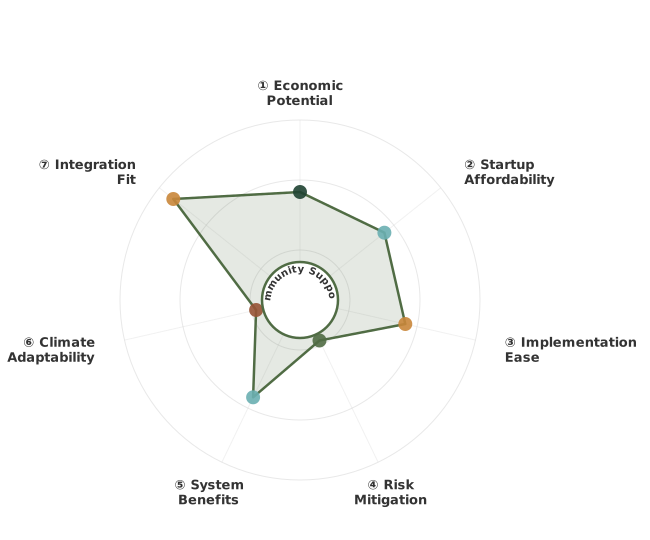
How These Traits Are Calculated
Trait dimensions are ordered clockwise starting from the top of the chart (12 o'clock position):
1. Economic Potential
Financial returns, annual value, and break-even timeline
WHAT: Evaluates financial viability by combining net annual value ($/ha from savings, income, and amortized harvests) with break-even timeline showing when practices pay for themselves.
WHY: Farmers need clear ROI understanding before committing resources. Fast payback (≤3 years) with strong returns (≥$300/ha) enables confident adoption, while long timelines (>10 years) restrict adoption to well-funded operations willing to wait for returns.
HOW: Calculated from net annual value in $/ha and break-even years. Exceptional (≥2.6): fast ROI ≤3 years + high value ≥$300/ha. Typical (1.8-2.5): moderate returns or longer timelines. Limited (<1.8): marginal economics or very long payback >10 years.
2. Startup Affordability
Initial investment costs and financial barrier to entry
WHAT: Measures financial barrier to entry through startup costs for equipment, infrastructure, consulting, and materials. Inverted scoring: lower costs = higher scores = more accessible adoption.
WHY: Affordability determines who can adopt. Low-cost practices (<$250/ha) enable widespread adoption across diverse scales, while high costs (>$2,500/ha) limit adoption to well-capitalized operations, creating barriers that slow regenerative transition.
HOW: Calculated from initial investment parsed from practice content. Inverted scoring: Exceptional (≥2.6): minimal investment <$250/ha. Typical (1.8-2.5): moderate costs $250-2,500/ha. Limited (<1.8): high barrier >$2,500/ha.
3. Implementation Ease
Learning curve and specialized knowledge required
WHAT: Measures how much learning, planning, and specialized knowledge a practice requires. Simpler practices with fewer steps score higher, while complex practices requiring extensive training or specialized resources score lower.
WHY: Complex practices create adoption barriers even when economically viable. Straightforward practices enable faster adoption and broader participation, while those requiring extensive training, timing precision, or specialized equipment limit who can succeed.
HOW: Evaluated by measuring documentation length and identifying complexity markers like location-specific requirements, seasonal timing windows, specialized skills, and dedicated equipment needs. Exceptional (≥2.6): straightforward practices with minimal prerequisites. Typical (1.8-2.5): moderate learning curve with some specialized needs. Limited (<1.8): steep learning curve requiring significant training or resources.
4. Risk Mitigation
Identified financial and ecological risk assessment
WHAT: Evaluates documented risks across financial (investment loss, market volatility) and ecological (crop failure, pest outbreaks) domains. Inverted scoring: fewer risks = higher scores.
WHY: Understanding risk exposure helps farmers make informed decisions. Low-risk practices allow confident implementation, while high-risk practices require careful planning and contingency resources. Risk transparency prevents costly failures.
HOW: Calculated from identified risks in practice content. Inverted scoring: Exceptional (≥2.6): ≤2 risks with manageable severity. Typical (1.8-2.5): 3-5 moderate risks. Limited (<1.8): 6+ risks or severe exposure.
5. System Benefits
How many ways the practice improves your land simultaneously
WHAT: Measures how many aspects of land health improve at once—carbon storage, soil quality, erosion control, water absorption, and biodiversity. Practices that improve multiple areas simultaneously create compounding benefits where each improvement reinforces the others.
WHY: The best practices solve multiple problems at once. For example, addressing erosion simultaneously builds carbon and improves water infiltration, creating a resilient system with positive feedback loops. Single-benefit approaches miss these compound transformation opportunities.
HOW: Evaluated across five key outcomes: carbon sequestration, soil organic matter increase, erosion reduction, water infiltration improvement, and biodiversity enhancement. Exceptional (≥2.6): high carbon storage (>8 t/ha/yr), improvements across 4-5 areas, transformative outcomes. Typical (1.8-2.5): moderate carbon (3-8 t/ha/yr), improvements across 2-3 areas. Limited (<1.8): modest impact (<3 t/ha/yr), single-area focus only.
6. Climate Adaptability
Geographic applicability across Köppen climate zones
WHAT: Evaluates geographic applicability by assessing how many Köppen climate zones successfully support a practice and what adaptation requirements are needed. Measures breadth of climates where farmers can implement with minimal to moderate modifications.
WHY: Universal practices working across diverse climates enable more farmers to adopt regenerative approaches. Practices limited to single climate types (only Mediterranean, only tropical) restrict adoption and slow global transition. Adaptability determines whether a practice serves niche regions or offers broad transformation.
HOW: LLM evaluation of regional success stories, Köppen zone coverage, and adaptation needs. Exceptional (≥2.6): 5+ zones or 4+ climate types, 3+ continents, minimal adaptation. Typical (1.8-2.5): 3-4 zones or 2-3 types, 2 continents, moderate adaptation. Limited (<1.8): 1-2 zones, single region, significant adaptation or highly specialized.
7. Integration Fit
How well this practice combines with others you're doing
WHAT: Measures how well a practice combines with other regenerative practices you might be doing. Some practices work as building blocks that make many other practices easier or more effective, while others work best on their own.
WHY: Practices that combine well with many others create more value on your farm. For example, cover cropping enables no-till, improves grazing, supports crop diversity, and helps water management—making all of them work better together. This helps you build a coherent system rather than juggling disconnected practices.
HOW: Evaluated by identifying which practices combine well and how strong those combinations are. 'Ideally Suited' means strong combinations where practices reinforce each other (practice A makes B easier, while B makes A more effective). 'Adequate' means complementary benefits that work well together. Exceptional (≥2.6): combines well with 6+ practices, serves as a building block. Typical (1.8-2.5): combines with 3-5 practices. Limited (<1.8): 1-2 practices or works best alone.
Going Deeper
1
WHY - The Benefits
Community Supported Agriculture (CSA) offers a compelling value proposition for both farmers and consumers, fostering a more equitable, resilient, and transparent food system. Its economic, social, and ecological benefits are significant, especially when a CSA farm...
Community Supported Agriculture (CSA) offers a compelling value proposition for both farmers and consumers, fostering a more equitable, resilient, and transparent food system. Its economic, social, and ecological benefits are significant, especially when a CSA farm adopts regenerative agriculture practices.
WHY - The Benefits
Community Supported Agriculture (CSA) offers a compelling value proposition for both farmers and consumers, fostering a more equitable, resilient, and transparent food system. Its economic, social, and ecological benefits are significant, especially when a CSA farm...
Community Supported Agriculture (CSA) offers a compelling value proposition for both farmers and consumers, fostering a more equitable, resilient, and transparent food system. Its economic, social, and ecological benefits are significant, especially when a CSA farm adopts regenerative agriculture practices.
Soil Health Benefits
When a CSA farm adheres to regenerative principles, the benefits to soil health are substantial. The financial stability provided by upfront share purchases allows farmers to invest in soil-building practices like cover cropping, composting, and reduced tillage. This leads to increased soil organic matter (0.5-1.5% per year), improved water infiltration (40-70% increase), and enhanced soil structure. The diverse crops grown for CSA boxes naturally increase below-ground biodiversity, supporting a robust soil food web essential for nutrient cycling and disease suppression.
Economic Benefits
Financially, CSA offers a more stable and predictable income stream for farmers compared to traditional wholesale or market channels. Shareholders pay upfront, providing essential capital before the growing season begins, significantly reducing financial risk and the need for external loans. Farmers can earn $500-1,500 (USD equivalent) per share annually, depending on the size of the share and the farm's location and offerings. This model also reduces marketing and distribution costs (10-30% savings) by establishing a direct link with consumers. For consumers, CSA often provides access to high-quality produce at a competitive price, especially when considering the freshness and value of in-season items.
Regenerative Systems Fit
CSA is a highly compatible model for regenerative agriculture, acting as a financial and operational enabler for regenerative principles.
- Principle 1 (Minimize Soil Disturbance): The upfront capital from CSA shares can fund investments in no-till drills, reduced tillage equipment, or rolling crimpers, allowing farmers to transition away from annual tillage. This fosters healthy soil structure, reduces erosion, and protects soil biology.
- Principle 2 (Maximize Crop Diversity): CSAs inherently require growing a wide variety of crops to supply diverse weekly boxes throughout the season. This leads to increased species and genetic diversity in fields, which in turn supports a more diverse and resilient soil ecosystem, repels pests, and cycles nutrients more effectively.
- Principle 3 (Keep Soil Covered): The demand for continuous harvest from CSA members encourages farmers to maintain living crops or cover crops in the field year-round. This protects soil from erosion, conserves moisture, suppresses weeds, and provides a continuous food source for soil organisms.
- Principle 4 (Maintain Living Roots): The model necessitates keeping living roots in the soil for extended periods, as farmers are committed to providing produce throughout a defined season. This sustained photosynthesis builds soil carbon, fuels soil biology, and contributes to long-term soil health.
- Principle 5 (Integrate Livestock): While not all CSAs include livestock, many do, or can easily integrate them. Offering shares of eggs, meat, or dairy alongside vegetables, or using livestock for cover crop management and fertility on the farm, amplifies the regenerative benefits. This requires well-managed grazing (e.g., rotational or adaptive) to build soil health; continuous or set stocking is antithetical to this goal and can quickly degrade pasture land. This creates a more closed-loop system.
Transitioning to Regenerative CSA: For farmers transitioning to regenerative systems, CSA provides a crucial financial buffer. It allows them to invest in regenerative infrastructure, experiment with diverse crop plans, reduce reliance on synthetic inputs, and absorb potential short-term yield fluctuations as soil health improves. The direct relationship with consumers often fosters transparency and education, encouraging members to support the farmer's regenerative journey and understand the value of ecologically sound farming.
Water Cycle Benefits
Regenerative CSA farms significantly improve water management. Increased soil organic matter and improved soil structure lead to higher water infiltration rates (40-70% better), reducing runoff and erosion. The prolonged presence of living roots and soil cover maintains soil moisture, making crops more resilient to drought and reducing irrigation needs. This protects local water sources and builds landscape-level water resilience, crucial in regions facing increased climate variability.
Carbon Sequestration Benefits
By minimizing soil disturbance, maximizing living roots, and maintaining diverse plant cover, regenerative CSA farms become significant carbon sinks. Improved soil health leads to increased soil organic matter, effectively sequestering atmospheric carbon dioxide into the soil. While this provides a clear ecological benefit and builds soil fertility, monetizing this sequestered carbon through formal carbon markets involves significant costs, long-term legal commitments, and financial risks that must be carefully evaluated.
Biodiversity Benefits
The diverse planting strategies common in CSAs—growing multiple crop species, heritage varieties, and often including pollinator habitats or buffer strips—greatly enhance biodiversity above and below ground. This creates habitat for beneficial insects, pollinators, birds, and a wider array of soil organisms. A more biodiverse farm ecosystem is inherently more resilient to pests and diseases, reducing the need for external interventions and creating a more self-regulating system.
Sources behind this view
Videos & Podcasts
-
Community Supported Agriculture (CSA) shares risk between farmers and consumers, promoting agroecological practices, resilience, and direct sales. Benefits include improved health, environmental gains
-
CSA programs and Farm Share Farms allow customers to invest in farms upfront for produce shares, fostering direct support for farmers and applying crowdfunding principles to land and capital needs.
-
Details establishing a regenerative CSA on 0.8 acres, providing 7-9 types of fresh vegetables weekly. Emphasizes soil nurturing, closed-loop system, increased wildlife, and reduced pests as benefits,
-
Community Supported Agriculture (CSA) is a partnership model benefiting people, planet, and producers by building local community, biodiversity, and resilience through direct farm-member relationships
Community
-
Explores various Community Supported Agriculture (CSA) models emphasizing farmer-consumer cooperation and shared risk, including member participation, multi-farm CSAs, and organizational support from
Read more (opens in new window) smallfarms.cornell.edu -
Enhance CSAs with long-term contracts (10-year/lifetime), stronger member work participation, improved 'fridge-to-table' support through social cooking, and 'mastermind' peer-to-peer learning, inspire
Read more (opens in new window) permies.com -
CSA is a subscription model connecting farms and consumers, where customers pay upfront for a season's produce, sharing the farm's risks and rewards, with origins in Japan in the 1960s.
Read more (opens in new window) ucanr.edu -
Explains the history and benefits of Community Supported Agriculture (CSA), originating with Booker T. Whatley's 'clientele membership clubs' and farms like Indian Line and Temple- Wilton. CSAs offer
Read more (opens in new window) ucanr.edu
Research
-
MANAGING A CONSUMER-FARMER RELATIONSHIP IN RUSSIAN COMMUNITY SUPPORTED AGRICULTURE (opens in new window)
This study found: A Russian CSA case study found that strong farmer-consumer ties are built on quality food, eco-friendly farming, shared responsibility, and direct communication, with flexibility enhancing sustainabil
-
Regenerative Agriculture: Restoring Ecosystems¢ Resilience and Productivity: A Review (opens in new window)
This study found: Regenerative agriculture builds soil health and ecosystem services through practices like no-till, cover crops, and diverse rotations. It increases soil organic matter, improves water infiltration, bo
-
Conservation agriculture for sustainable crop production: A comprehensive review of soil health, climate resilience and productivity (opens in new window)
This study found: Conservation Agriculture (CA) – less soil disturbance, crop residue retention, crop diversity – boosts soil health, carbon, and microbial activity. It enhances climate resilience, water retention, and
-
Nurturing Soil Health through Conservation Agriculture Practices (opens in new window)
This study found: Conservation Agriculture (minimum soil disturbance, permanent cover, crop rotation) significantly improves soil health, nutrient cycling, and carbon sequestration, while offering climate resilience an
From the Web
-
Details Community Supported Agriculture (CSA) models, including management tools, benefits like economic viability and social capital, and strategies for customer retention, such as product diversity
-
Community Supported Agriculture (CSA) involves upfront payment from consumers for weekly produce boxes, fostering risk-sharing and customer loyalty. Success requires careful planning for continuous ha
-
CSAs offer upfront payment for produce shares, reducing farmer risk and aiding financial planning. Success requires diverse crops and managing market saturation. NOFA NY offers resources.
-
Community Supported Agriculture (CSA) is defined by community and shared risk between farmers and consumers, rooted in environmental stewardship and mutual support, not just transactional food deliver
2
WHERE - Regional Considerations
Community Supported Agriculture (CSA) can be implemented in virtually any region with sufficient arable land and a consumer base willing to participate. Its success and specific implementation details, however, are significantly influenced by local climate, growing...
Community Supported Agriculture (CSA) can be implemented in virtually any region with sufficient arable land and a consumer base willing to participate. Its success and specific implementation details, however, are significantly influenced by local climate, growing season length, available resources, and cultural food traditions.
WHERE - Regional Considerations
Community Supported Agriculture (CSA) can be implemented in virtually any region with sufficient arable land and a consumer base willing to participate. Its success and specific implementation details, however, are significantly influenced by local climate, growing...
Community Supported Agriculture (CSA) can be implemented in virtually any region with sufficient arable land and a consumer base willing to participate. Its success and specific implementation details, however, are significantly influenced by local climate, growing season length, available resources, and cultural food traditions.
Click Here to Look up your Region if you don't already know it
Humid Temperate Regions
Representative Locations: Southeastern United States, northern Europe (UK, Germany, Poland), eastern China, Japan, New Zealand
Climate Context: Warm to hot summers and cool to cold winters with moderate to high annual precipitation (75-150 cm or 30-60 inches) distributed relatively evenly. USDA Zones 6-8, Köppen Cfb/Cfa.
Implementation: These regions often have long growing seasons suitable for a wide variety of vegetables, fruits, and grains. The sufficient rainfall can support continuous cropping and robust cover crop growth, aiding in keeping soil covered and maintaining living roots. Challenges can include managing fungal diseases due to humidity and planning for pest pressures unique to these climates. Many successful CSAs are found here, offering diverse seasonal produce.
Mediterranean Regions
Representative Locations: California, Mediterranean basin (Spain, Italy, Greece), central Chile, southwestern Australia, Western Cape South Africa
Climate Context: Hot, dry summers and mild, wet winters. Annual precipitation 40-90 cm (15-35 inches), highly seasonal. USDA Zones 8-10, Köppen Csa/Csb.
Implementation: CSA in Mediterranean climates often focuses on drought-tolerant crops and managing water resources efficiently. Irrigation may be necessary for consistent harvests during dry summers, highlighting the importance of regenerative irrigation techniques that prioritize water conservation. Season extension techniques like hoop houses or winter tunnels are valuable for providing produce during the mild, wet winters. Emphasis on water-wise crop choices and soil health to maximize water retention is key.
Arid/Semi-Arid Regions
Representative Locations: Western USA, North Africa, Central Asia, Interior Australia
Climate Context: Low annual precipitation (<40 cm or 15 inches), high temperatures, short and often unpredictable growing season. USDA Zones 7-9, Köppen BSh/BSk.
Implementation: CSA in these regions requires a strong focus on water management and drought-resilient crops. Techniques like drip irrigation, mulching, and water-harvesting (e.g., swales, keyline design) are paramount. Choosing crops and varieties suited to arid conditions, and potentially extending the growing season through season-appropriate greenhouses or coldframes, becomes critical for providing consistent shares. Farmers may also integrate livestock that are adapted to arid environments. Smaller, more focused shares or different delivery models might be necessary.
Cold Continental Regions
Representative Locations: Northern USA and Canada, Northern Europe, Northern Asia
Climate Context: Very short growing seasons, extreme summer heat, severe winter cold. USDA Zones 3-5, Köppen Dfa/Dfb.
Implementation: CSAs in these regions typically have shorter harvest seasons. Season extension technologies like row covers, high tunnels, and greenhouses are essential for maximizing yield and duration. Root vegetables, hardy greens, and crops that can be stored (potatoes, onions, winter squash) play a larger role in later season shares. Preserves, ferments, and value-added products may supplement fresh produce to extend the CSA offering throughout the year.
Subtropical Regions
Representative Locations: Southeastern USA, Southern China, Southern Brazil, Eastern Australia
Climate Context: Hot, humid summers and mild winters with generally ample rainfall. USDA Zones 9-11, Köppen Cfa/Cwa.
Implementation: These regions can support year-round or near year-round production. Managing the challenges of high humidity, intense heat, and significant pest/disease pressure is key. Regenerative practices focusing on soil health, disease-resistant varieties, and beneficial insect habitats are highly effective. Shade structures and irrigation management are important for summer crops. The diversity of crops that can be grown makes for very abundant and varied CSA shares.
Tropical Regions
Representative Locations: Central America, Southeast Asia, East Africa, Northern Australia, Northern South America
Climate Context: High temperatures year-round, with distinct wet and dry seasons or consistent high rainfall. Köppen Af/Am/Aw.
Implementation: Tropical CSAs can often provide produce year-round, but they face challenges related to intense heat, high rainfall (leading to erosion and disease), and rapid pest/disease cycles. Regenerative practices like agroforestry, dense cover cropping, and integrated pest management are crucial. Crop diversification is often easier, but managing for specific harvest windows and ensuring variety throughout the year requires skillful planning. Local food crops and traditional varieties are often naturally suited to the environment.
3
HOW - Implementation Process
Implementing a successful Community Supported Agriculture (CSA) program, especially one that embraces regenerative practices, requires careful planning across several phases, from initial setup to ongoing management and community engagement.
Implementing a successful Community Supported Agriculture (CSA) program, especially one that embraces regenerative practices, requires careful planning across several phases, from initial setup to ongoing management and community engagement.
HOW - Implementation Process
Implementing a successful Community Supported Agriculture (CSA) program, especially one that embraces regenerative practices, requires careful planning across several phases, from initial setup to ongoing management and community engagement.
Implementing a successful Community Supported Agriculture (CSA) program, especially one that embraces regenerative practices, requires careful planning across several phases, from initial setup to ongoing management and community engagement.
Prerequisites
Before launching a CSA, consider these foundational elements:
- Land Base: Sufficient suitable land for diverse crop production, including space for buffer zones, compost production, potential livestock integration, and possibly season extension structures. A minimum of 0.5-2 hectares (1-5 acres) is often recommended for a viable CSA serving 30-50 members, scaling up from there.
- Market Demand: Understanding local demand for CSA shares. Conduct surveys, talk to potential consumers, and assess existing community food initiatives.
- Core Crops: Identify a selection of reliable, high-demand crops that can be grown successfully in your region and climate to form the basis of your weekly shares.
- Financial Planning: Develop a realistic budget covering all anticipated expenses for the season, including seeds, compost, labor, equipment, insurance, marketing, and a modest owner draw.
- Basic Infrastructure: Access to water, basic tools, a wash/pack station, and a system for distribution (on-farm pickup, drop-off points).
Phase 1: Planning & Design (6-12 Months Pre-Launch)
- Define Your Mission: Clearly articulate your farm's values, especially regarding regenerative practices, community engagement, and food access.
- Crop Planning: Develop a detailed crop plan for the entire season, aiming for variety and continuity. Plan for succession planting of staple crops and incorporate diverse, specialty crops. Consider which crops are best suited for year-round cover (Principle 3) and which have deep root systems (Principle 4).
- Share Size & Pricing: Determine the size of shares (full, half) and set pricing based on your budget, production costs, and local market rates. Aim for pricing that is both fair to members and sustainable for the farm. Typical full share prices range from $500-1,200 USD equivalent per season.
- Membership Structure: Decide on the number of members you can realistically serve. Start small and scale up. Define membership terms, payment schedules, and cancellation policies.
- Distribution Model: Plan how members will receive their shares: on-farm pickup, central drop-off locations, or direct delivery. Organize logistics for transportation and pickup times.
- Regenerative Integration:
- Soil Health: Plan for cover cropping between cash crops, compost application, and reduced tillage practices. Identify where investments in no-till equipment might be beneficial.
- Diversity: Intentionally select heritage varieties, open-pollinated seeds, and a wide range of crop families to maximize botanical diversity.
- Living Roots & Covered Soil: Design crop rotations and planting schedules to ensure living roots and soil cover year-round.
- Livestock Integration: If applicable, plan how livestock will contribute to fertility, weed management, or soil health.
Phase 2: Setup & Marketing (3-6 Months Pre-Launch)
- Infrastructure Development: Install necessary infrastructure: irrigation systems, season extension structures (hoop houses, coldframes), compost bins, wash/pack facilities, fencing for livestock (if integrated).
- Seed/Input Procurement: Order seeds, compost, and other necessary inputs. Prioritize organic, untreated, and regionally appropriate varieties. Source from suppliers committed to sustainable practices.
- Marketing & Outreach: Develop marketing materials (website, flyers, social media), promote your CSA to your target audience, and begin accepting member sign-ups. Clearly communicate your farm's mission and regenerative commitments.
- Build Community: Start engaging with potential members through farm tours, workshops, or online forums to build anticipation and a sense of shared purpose.
Phase 3: Operations & Engagement (During Season)
-
Planting & Management: Execute your crop plan, focusing on regenerative techniques:
- Minimize Disturbance: Use no-till or reduced tillage methods where possible.
- Maximize Diversity: Plant diverse crops in blocks or intercropping systems.
- Keep Soil Covered: Utilize cover crops or heavy mulching between planting cycles.
- Maintain Living Roots: Implement succession planting and fallow period management to keep roots active.
- Integrate Livestock: Manage animals strategically for fertility and pasture impact (if applicable).
-
Harvest & Packing: Harvest produce at peak freshness and quality. Implement efficient washing, sorting, and packing procedures to maintain quality and reduce waste.
- Share Distribution: Distribute shares reliably according to your planned model. Ensure clear communication about what is in the share and how to store/use it.
- Member Communication: Maintain regular communication with members through newsletters, emails, or social media. Share farm updates, recipes, farming insights, and information about your regenerative practices.
- On-Farm Events: Host farm tours, workshops, or volunteer days to deepen member connection to the farm and their food. This educates members about regenerative agriculture.
- Record Keeping: Maintain detailed records of plantings, yields, labor, expenses, sales, and member feedback. This is crucial for evaluating performance and refining operations.
Phase 4: Evaluation & Planning (End of Season)
- Post-Season Review: Evaluate the season's successes and challenges. Analyze crop performance, yield data, financial records, and member feedback.
- Soil Health Assessment: Conduct soil tests to measure improvements in organic matter, infiltration, and nutrient levels. Document changes resulting from regenerative practices.
- Financial Analysis: Review profitability, identify cost efficiencies, and adjust pricing for the following season if necessary.
- Member Feedback: Solicit detailed feedback from members on share contents, distribution, communication, and overall experience.
- Planning for Next Season: Use evaluation insights to refine crop plans, adjust share offerings, improve operational efficiency, and deepen regenerative commitments for the upcoming year.
Transitioning to Regenerative CSA: If transitioning to regenerative practices, integrate this into your planning and communication:
- Transition Timeline: Be transparent with members about your phased approach, e.g., "This year we are reducing tillage on 20% of our land and have introduced a new diverse cover crop mix."
- Investment Justification: Explain how CSA funds support regenerative infrastructure (e.g., "Your share purchase helped us buy a no-till seeder").
- Education Focus: Use newsletters and farm events to educate members about the benefits of regenerative agriculture for them, the community, and the planet.
- Measuring Progress: Share soil health data and other indicators of regenerative progress to demonstrate the impact of their membership.
Sources behind this view
Videos & Podcasts
-
Details establishing a regenerative CSA on 0.8 acres, providing 7-9 types of fresh vegetables weekly. Emphasizes soil nurturing, closed-loop system, increased wildlife, and reduced pests as benefits,
-
Farm planning focused on regenerative agriculture: simplifying crop mix, expanding cover crops, trialing no-till in a dedicated 'proving ground,' and balancing regenerative principles with operational

-
CSA crop planning prioritizes storage crops (sweet potatoes, winter squash) and herbs for variety. Manage high-volume crops like zucchini by alternating CSA availability with market sales. Work backwa

Community
-
Building a profitable CSA takes years, requiring significant infrastructure investment and focus on staple crops. Off-farm income may be necessary initially, and understanding production costs is key.
Read more (opens in new window) permies.com -
Enhance CSAs with long-term contracts (10-year/lifetime), stronger member work participation, improved 'fridge-to-table' support through social cooking, and 'mastermind' peer-to-peer learning, inspire
Read more (opens in new window) permies.com -
Offers practical advice for CSA success: strategic location, hands-on market gardening experience, fair initial pricing, and appropriate scaling (hand tools for small scale or tractor for larger scale
Read more (opens in new window) permies.com
Research
-
Transition to Regenerative Farming (opens in new window)
This study found: A 5-year case study shows a farm successfully transitioned to regenerative practices, reducing soil erosion and increasing wildlife by using cover crops, diversified rotations, and reduced tillage. Pr
-
Regenerative Agriculture: Restoring Ecosystems¢ Resilience and Productivity: A Review (opens in new window)
This study found: Regenerative agriculture builds soil health and ecosystem services through practices like no-till, cover crops, and diverse rotations. It increases soil organic matter, improves water infiltration, bo
-
Regenerative Agriculture: Insights and Challenges in Farmer Adoption (opens in new window)
This study found: Review of 7 regenerative agriculture practices (no-till, crop rotation, cover crops, etc.) highlights benefits and key adoption challenges like cost, farm size, and institutional barriers for scalable
4
Know the Debate
Community Supported Agriculture (CSA) models vary significantly across regions, influenced by climate, scale, and consumer base. Humid climates oft...
Know the Debate
Community Supported Agriculture (CSA) models vary significantly across regions, influenced by climate, scale, and consumer base. Humid climates oft...
Community Supported Agriculture (CSA) models vary significantly across regions, influenced by climate, scale, and consumer base. Humid climates often support year-round harvest, while arid regions demand water-smart crops, and cold climates require season extension. Entry costs range from $10,000-$15,000 for small farms to $60,000-80,000+ for large operations. Labor is high and seasonal, requiring dedicated crews or strong volunteer engagement.
How much can a CSA farm reliably earn?
Stable Income & Expansion Possible
Well-managed CSAs in mature markets with strong community ties can provide farmers with stable income and capital for expansion. Benefits include reduced marketing costs and improved financial planning, allowing for reinvestment in infrastructure and regenerative practices.
Sources behind this view
Sources behind this view
Research
-
Community‐supported agriculture in the United States: Social, ecological, and economic benefits to farming (opens in new window)
This study found: A study of farmers involved in Community-Supported Agriculture (CSA) programs in Massachusetts found that while these farmers tend to earn more from their farms than many other types of farmers in the US, their income is often not enough to make a living wage. However, these farmers highlighted that the benefits go beyond just money. They value the strong social connections with their community, the positive impact on the environment, and the overall sense of well-being that comes from their work. Despite the economic struggles, these non-monetary benefits are a major reason they continue in CSA.
From the Web
-
Community Supported Agriculture (CSA) connects farmers and consumers, who buy shares for upfront capital and regular produce, sharing farm risks and rewards. This model supports farm sustainability, provides guaranteed income, and fosters community connection.
-
Community Supported Agriculture (CSA) connects farmers and consumers, sharing risks and rewards. It provides farmers with upfront capital and stable income, while consumers gain fresh produce, improved health, and a connection to their food system. This model fosters economic, social, and environmental sustainability.
Challenging to Profit & Secure Living Wage
Many farmers, especially those new to the model or in less mature markets, struggle with CSA profitability. High labor, member attrition, price sensitivity, and the need for extensive reputation building can make it difficult to earn a living wage solely from CSA shares.
Sources behind this view
Sources behind this view
Videos & Podcasts
-
Farmers markets are a key sales channel for new farmers, offering cash flow and community engagement to build reputation, which is vital for CSA sales. A listener's struggle to find CSA members highlights the challenge of selling an unfamiliar concept.
![Thumbnail for Why Most New Farmers Struggle With CSAs (and how to fix it) [S1W19]](/static/thumbnails/C-JhnSwk_Dw.jpg)
-
Successful CSAs depend on pre-existing community trust and farmer reputation, not just marketing. New farmers should build relationships via farmers' markets and restaurants before launching a CSA, as upfront payment requires significant trust.

-
New farmers must build community and reputation through farmers' markets and restaurants for 3+ years before CSA sales can succeed. Trust, not marketing, is the key currency for CSA subscriptions.
-
Discusses the pros and cons of CSA farming, highlighting benefits like crop diversity and upfront cash flow, versus challenges such as seasonal stress, managing excess produce, and financial accessibility for customers.

Context-Dependent Profitability & Value
CSA economics are highly context-specific, varying by region, management intensity, and consumer market sophistication. While farms may not always achieve high profits, the model's value extends to social capital, community building, and ecological benefits, which are often core motivations.
Sources behind this view
Sources behind this view
Videos & Podcasts
-
Community Supported Agriculture (CSA) shares risk between farmers and consumers, promoting agroecological practices, resilience, and direct sales. Benefits include improved health, environmental gains, community building, and stable cash flow for farmers, serving as a vital entry point for new farmers.
-
Diversify sales beyond struggling CSAs; explore farmers markets or aggregator models. CSAs are context-dependent; what works in Vermont may fail in Vista, CA due to community understanding. Build reputation through other channels first.
From the Web
-
CSAs offer upfront payment for produce shares, reducing farmer risk and aiding financial planning. Success requires diverse crops and managing market saturation. NOFA NY offers resources.
Making Sense of the Differences
CSA farm earnings depend heavily on local market maturity, farm management efficiency, and the ability to build and maintain member trust. While upfront capital is a significant benefit, achieving a robust living wage often requires scaling well beyond initial membership numbers or complementing CSA income with other revenue streams. Transitioning to regenerative practices can improve long-term soil health and yield resilience, potentially boosting profitability, but may also involve upfront costs and a learning curve that temporarily impacts finances.
How do CSAs effectively find and keep members?
Build Trust Over Time via Direct Sales
Securing CSA members requires building deep community trust and a strong reputation over several years, typically by establishing a presence at farmers' markets and through restaurant sales. This long-term engagement is crucial, as consumers need to feel confident before committing upfront payment.
Sources behind this view
Sources behind this view
Videos & Podcasts
-
Farmers markets are a key sales channel for new farmers, offering cash flow and community engagement to build reputation, which is vital for CSA sales. A listener's struggle to find CSA members highlights the challenge of selling an unfamiliar concept.
-
Successful CSAs depend on pre-existing community trust and farmer reputation, not just marketing. New farmers should build relationships via farmers' markets and restaurants before launching a CSA, as upfront payment requires significant trust.
-
New farmers must build community and reputation through farmers' markets and restaurants for 3+ years before CSA sales can succeed. Trust, not marketing, is the key currency for CSA subscriptions.
Leverage Community & Farm Connection
Strong member retention is driven by consistent high-quality produce, clear communication about farm practices and seasonality, and fostering a sense of partnership. Farm visits, educational events, and transparent sharing of challenges and successes deepen members' connection and loyalty.
Sources behind this view
Sources behind this view
Videos & Podcasts
-
Community Supported Agriculture (CSA) shares risk between farmers and consumers, promoting agroecological practices, resilience, and direct sales. Benefits include improved health, environmental gains, community building, and stable cash flow for farmers, serving as a vital entry point for new farmers.
-
Community Supported Agriculture (CSA) is a partnership model benefiting people, planet, and producers by building local community, biodiversity, and resilience through direct farm-member relationships.
Research
-
MANAGING A CONSUMER-FARMER RELATIONSHIP IN RUSSIAN COMMUNITY SUPPORTED AGRICULTURE (opens in new window)
This study found: This study looked at Russia's first official Community Supported Agriculture (CSA) program, which started in 2018, to understand how to build strong, lasting relationships between farmers and the people who buy their food. By analyzing how this CSA operated, researchers found that several key practices are crucial for success. These include providing healthy, high-quality food boxes, using farming methods that are good for the environment and organic, sharing the risks, rewards, and responsibilities between farmers and consumers, and maintaining open communication through social media, community events, and ongoing education. The study also highlighted that making the CSA more flexible, like involving fewer consumers in farm decisions, focusing on biodynamic farming, expanding to include multiple farms, offering flexible payment options, and selling to people outside the CSA group, can lead to a more resilient and sustainable model.
-
Community Supported Agriculture, Human Capital, and Community Health (opens in new window)
This study found: A study in New Mexico looked at how Community Supported Agriculture (CSA) programs, where people buy shares of a local farm's harvest, help build people's skills and improve community health. Researchers surveyed 13 CSA programs and found that those that responded offered activities like job training, education, better access to healthy food, and fostered social connections. These programs strengthen local food systems by creating community, providing economic opportunities, and helping people develop personally. The study suggests public health should support CSAs by researching their benefits and advocating for policies that boost local economies and food justice.
Strategic Marketing & Diverse Models
While trust is paramount, effective CSA marketing involves clear communication of benefits, highlighting seasonality and the farm's values. Diverse CSA models (flexible shares, multi-farm options, delivery) and convenient pick-up locations can be strategic for broader reach and member convenience.
Sources behind this view
Sources behind this view
Videos & Podcasts
-
Strategies for building a CSA membership include leveraging existing members for referrals, using social media, and participating in farmers markets to cultivate relationships and reach new customers, particularly those interested in local food and agriculture.
-
CSAs offer upfront capital and significant legal advantages (non-commerce status, reduced liability, no sales tax) due to shared risk. Downsides include non-customized boxes, potential waste, and the need for customer education, but they greatly improve inventory control.

Research
-
Community Supported Agriculture, Human Capital, and Community Health (opens in new window)
This study found: A study in New Mexico looked at how Community Supported Agriculture (CSA) programs, where people buy shares of a local farm's harvest, help build people's skills and improve community health. Researchers surveyed 13 CSA programs and found that those that responded offered activities like job training, education, better access to healthy food, and fostered social connections. These programs strengthen local food systems by creating community, providing economic opportunities, and helping people develop personally. The study suggests public health should support CSAs by researching their benefits and advocating for policies that boost local economies and food justice.
From the Web
-
Community Supported Agriculture (CSA) involves upfront payment from consumers for weekly produce boxes, fostering risk-sharing and customer loyalty. Success requires careful planning for continuous harvests, labor-intensive packing, and community building through events and newsletters.
Making Sense of the Differences
Acquiring and retaining CSA members requires a long-term strategy balancing building deep community trust with practical marketing and operational advantages. For new farmers, establishing a strong reputation through farmers markets over several years is often a prerequisite to CSA success. For established farms, consistent high-quality produce, transparent communication about regenerative practices, and fostering a sense of partnership are key to member loyalty. Offering diverse share options and convenient distribution can also broaden appeal, but the core element remains the trust built through direct relationships and shared commitment.
5
HOW MUCH - Costs & Investment
Note: All costs are based on recent US economic data (2023-2025) and may vary substantially in other regions based on local labor rates, material costs, economic development, and regulatory requirements. Labor costs vary significantly internationally.
Note: All costs are based on recent US economic data (2023-2025) and may vary substantially in other regions based on local labor rates, material costs, economic development, and regulatory requirements. Labor costs vary significantly internationally.
HOW MUCH - Costs & Investment
Note: All costs are based on recent US economic data (2023-2025) and may vary substantially in other regions based on local labor rates, material costs, economic development, and regulatory requirements. Labor costs vary significantly internationally.
Note: All costs are based on recent US economic data (2023-2025) and may vary substantially in other regions based on local labor rates, material costs, economic development, and regulatory requirements. Labor costs vary significantly internationally.
Note: All costs are based on recent US economic data (2024–2026) and may vary substantially by region based on local labor rates, material costs, and regulatory requirements.
Initial Land Preparation and Soil Development
For small-scale CSA operations under 50 acres (20 ha), the investment for soil building focuses on manual-scale cover cropping and restorative compost applications. These practitioners typically allocate $15,630 to $20,000 to improve soil biological activity, ensuring consistent yields for a diverse, subscription-based crop mix. Mid-size operations managing 50–500 acres (20–202 ha) focus on mechanizing soil health to scale, often utilizing large-scale broadforking or specialized minimal-till drills, with spending shifting into the $20,001 to $35,000 range. Large-scale operations exceeding 500 acres (202 ha) must invest $35,001 to $52,100 to address soil structure across significant acreage, primarily driven by bulk organic amendments and large-scale irrigation mapping to ensure uniform moisture delivery across diverse field blocks.
Seed, Nursery, and Regenerative Inputs
Regenerative CSA models necessitate high-value crop turnover, leading to specific biological input requirements. Small farms spend $15,630 to $22,000 on high-diversity seed stocks, microbial inoculants, and organic-approved liquid fertilizers required to maintain nutrient density. Mid-size producers navigate the $22,001 to $40,000 bracket, as they must secure bulk pricing on cover crop seed blends designed specifically for suppressing soil-borne pathogens. Large-scale operations, while gaining economies of scale through volume purchasing, still allocate $40,001 to $52,100 annually to ensure that large-acreage crop blocks meet the quality standards expected by shareholders anticipating premium, local produce.
Infrastructure and Wash/Pack Facilities
Food safety compliance (FSMA) is a non-negotiable expense for any CSA. Small operations starting under 50 acres (20 ha) often transform existing farm infrastructure like shipping containers into rudimentary wash-pack stations, budgeting $15,630 to $25,000 for food-grade surfaces, basic refrigeration, and stainless-steel sorting tables. Mid-size farms require an investment of $25,001 to $42,000 to support expanded walk-in cooler capacity and standardized labeling equipment necessary for high-volume distributions. For large-scale operations, investment costs reside between $42,001 and $52,100 to support mechanized conveyor-assisted wash lines, climate-controlled greenhouses, and automated logistics software, which are essential when managing memberships exceeding several hundred households.
Season Extension and Equipment
Season extension is the primary method for maintaining cash flow between harvest windows. Small-scale CSA farmers invest $15,630 to $28,000 in high-performance low tunnels or small hoop houses to bridge supply gaps in shoulder seasons. Mid-size operations transition to professional-grade high tunnels, utilizing $28,001 to $45,000 to ensure, at minimum, a six-month consistent harvest window. Large-scale farms, requiring significant precision in planting and harvesting to maintain output volume, invest $45,001 to $52,100 in climate-controlled greenhouse tech and low-impact, high-horsepower tractors equipped with precision seed drills to manage labor costs efficiently during peak harvest periods.
Operational Overheads: Marketing and Insurance
Modern CSA operations require a professional digital aesthetic. Small farms typically spend $15,630 to $22,000 on community engagement and platforms like Harvie or Farmigo. Mid-size operations expand their marketing budget to $22,001 to $38,000, covering professional liability insurance, regional food hub memberships, and social media advertising to secure member retention. Large operations allocate $38,001 to $52,100, focusing on brand development and specialized courier-related liability insurance required when operating regional drop-off points, which remain the hallmark of large-scale CSA success.
Most Spend: The middle 60% of operations typically fall within the $25,000 to $42,000 range. This expenditure represents the consolidation of infrastructure and biological inputs required for farms transitioning from initial startup to a stable, market-ready regenerative production cycle.
Why the Range?: The primary variables driving costs are farm size and the degree of mechanization. Operations closer to the lower $15,630 threshold usually rely on higher labor inputs and low-tech infrastructure, whereas those reaching toward $52,100 utilize advanced automation for wash-pack and precision cultivation, significantly reducing cumulative labor hours while accelerating the return on investment.
Sources behind this view
Videos & Podcasts
-
To increase revenue by 40%, the farm is optimizing by standardizing beds, intensifying crop spacing, and diversifying sales with more customer choice. Integrating perennials and exploring small enterp

-
Starting a profitable urban farm involves five key costs: essential core equipment, post-harvest infrastructure (like a walk-in cooler), land access and site prep, crucial cash flow buffers for living
-
Farm startup costs are categorized into three tiers: backyard (<$5k), committed ($10-15k), and full build-out ($25-30k). Choose a tier based on affordability and risk tolerance, prioritizing learning

Community
-
Building a profitable CSA takes years, requiring significant infrastructure investment and focus on staple crops. Off-farm income may be necessary initially, and understanding production costs is key.
Read more (opens in new window) permies.com -
Successful CSA market gardens often require diversified income streams beyond just the CSA model, including seedling sales and internships. Key success factors include strategic location, adequate han
Read more (opens in new window) permies.com -
CSAs can be profitable for small farms, with prices around $30-$40 per box, but require careful cost management, installment plans, and strategies to address crop failures and customer satisfaction. M
Read more (opens in new window) permies.com
6
REWARDS AND RISKS - Economics & Risk Factors
The Community Supported Agriculture (CSA) model, while offering significant rewards, is not without its economic and operational risks. Understanding these factors is crucial for long-term success, especially when integrating regenerative practices.
The Community Supported Agriculture (CSA) model, while offering significant rewards, is not without its economic and operational risks. Understanding these factors is crucial for long-term success, especially when integrating regenerative practices.
REWARDS AND RISKS - Economics & Risk Factors
The Community Supported Agriculture (CSA) model, while offering significant rewards, is not without its economic and operational risks. Understanding these factors is crucial for long-term success, especially when integrating regenerative practices.
The Community Supported Agriculture (CSA) model, while offering significant rewards, is not without its economic and operational risks. Understanding these factors is crucial for long-term success, especially when integrating regenerative practices.
The economic viability of a CSA depends heavily on the farm’s ability to manage its membership cohort and optimize annual yield. In a best-case scenario, where land health is optimized and member retention remains above 95%, the farm achieves a net income of $312.6 per acre ($772/ha). This is supported by high-margin add-ons like artisanal bread or farm-raised eggs, which increase the valuation of the average subscriber basket. A typical scenario involves a 15% attrition rate, where the farm generates a net income of approximately $234.45 per acre ($579/ha). In this context, the farm functions as a self-sustaining ecosystem that covers operational costs but may require additional off-farm income for owner draw. In a worst-case scenario, where poor soil health limits output and retention dips below 60%, the farm net income falls to $156.3 per acre ($386/ha). This scenario often forces producers to rely on wholesale markets to move excess inventory, sacrificing the price premiums usually reserved for direct-to-consumer sales.
Market factors significantly dictate profitability, primarily through local food density and the "convenience factor." CSA operations situated near urban centers can charge higher premiums, as they provide a direct substitute for high-end retail grocery shopping. Farmers mitigate climate risk—the biggest threat to yield—by incorporating a portfolio of 40+ crop varieties. If a singular pest outbreak impacts brassicas, the diversified harvest of roots, fruiting vegetables, and herbs acts as a financial buffer.
Risk management involves aggressive early contracting. Charging a large portion of the share price as a pre-season deposit is the most effective way to eliminate interest on operating loans. This practice shifts the financial burden from high-interest debt to community-backed capital, saving farmers the standard 8–12% APR typically attached to traditional agricultural operating lines.
Transition Period Risks: The 2–3 year "yield gap" is the most significant economic risk. As a farm pivots from conventional, synthetic-reliant methods to regenerative, soil-biology-focused practices, soil resilience is lower than the eventual plateau. Farmers can expect an initial 10–20% reduction in total vegetable output as the micro-biome reorganizes. Mitigate this by planning a smaller initial member intake, perhaps aiming for 85% capacity in Year 1. Shift the crop mix toward higher-margin, low-input crops like salad greens or herbs to maintain cash flow during the transition. Full yield recovery—and the subsequent 15% reduction in synthetic fertilizer reliance—typically manifests by Year 4, once soil organic matter increases by 1–2%.
Sources behind this view
Videos & Podcasts
-
Community Supported Agriculture (CSA) shares risk between farmers and consumers, promoting agroecological practices, resilience, and direct sales. Benefits include improved health, environmental gains
-
Details establishing a regenerative CSA on 0.8 acres, providing 7-9 types of fresh vegetables weekly. Emphasizes soil nurturing, closed-loop system, increased wildlife, and reduced pests as benefits,
-
The best aspect of a CSA is consistent upfront sales enabling better planning for labor and supplies. The worst is the pressure of the first harvest week. Crop diversity and extra plantings are key fo
-
Use Farmigo for CSA management and marketing. Build a strong website, encourage word-of-mouth, and keep customers happy by telling your farm's story. Focus pest control on healthy plants, understandin

Community
-
Building a profitable CSA takes years, requiring significant infrastructure investment and focus on staple crops. Off-farm income may be necessary initially, and understanding production costs is key.
Read more (opens in new window) permies.com -
Successful CSA market gardens often require diversified income streams beyond just the CSA model, including seedling sales and internships. Key success factors include strategic location, adequate han
Read more (opens in new window) permies.com -
Provides guidance for urban farmers on establishing CSAs, including share sizing, pricing based on production costs and market rates, and selecting distribution sites, with resources from Just Food an
Read more (opens in new window) smallfarms.cornell.edu -
Offers practical advice for CSA success: strategic location, hands-on market gardening experience, fair initial pricing, and appropriate scaling (hand tools for small scale or tractor for larger scale
Read more (opens in new window) permies.com
Research
-
MANAGING A CONSUMER-FARMER RELATIONSHIP IN RUSSIAN COMMUNITY SUPPORTED AGRICULTURE (opens in new window)
This study found: A Russian CSA case study found that strong farmer-consumer ties are built on quality food, eco-friendly farming, shared responsibility, and direct communication, with flexibility enhancing sustainabil
From the Web
-
Community Supported Agriculture (CSA) involves upfront payment from consumers for weekly produce boxes, fostering risk-sharing and customer loyalty. Success requires careful planning for continuous ha
-
Guidance on establishing Community Supported Agriculture (CSA) programs, detailing advantages like upfront capital and loyal customers, and critical considerations for planning continuous harvest, lab
7
WHO - Labor & Expertise
The human element is central to the success of a Community Supported Agriculture (CSA) program, particularly one with regenerative goals. It requires dedicated individuals with a blend of horticultural, managerial, community-building, and increasingly, regenerative...
The human element is central to the success of a Community Supported Agriculture (CSA) program, particularly one with regenerative goals. It requires dedicated individuals with a blend of horticultural, managerial, community-building, and increasingly, regenerative farming expertise.
WHO - Labor & Expertise
The human element is central to the success of a Community Supported Agriculture (CSA) program, particularly one with regenerative goals. It requires dedicated individuals with a blend of horticultural, managerial, community-building, and increasingly, regenerative...
The human element is central to the success of a Community Supported Agriculture (CSA) program, particularly one with regenerative goals. It requires dedicated individuals with a blend of horticultural, managerial, community-building, and increasingly, regenerative farming expertise.
Skill Requirements
- Horticultural & Agronomic Skills: Deep knowledge of crop planning, planting, pest and disease management (especially integrated and biological methods), harvesting techniques, and post-harvest handling. For regenerative CSAs, this includes understanding soil biology, cover cropping, composting, reduced tillage, and potentially agroforestry or integrated livestock management.
- Organizational & Management Skills: Ability to plan crop rotations, manage labor schedules, oversee distribution logistics, handle finances, and maintain detailed records. This is crucial for a complex operation like a CSA, which involves managing many crops and relationships simultaneously.
- Community Engagement & Communication Skills: Excellent interpersonal skills are needed to build and maintain strong relationships with CSA members. This includes clear, transparent communication about farm operations, what's in the share, challenges faced, and the farm's regenerative mission. Public speaking and teaching abilities are beneficial for farm tours and workshops.
- Business Acumen: Understanding of marketing, sales, pricing, budgeting, and customer service is essential for financial sustainability.
- Regenerative Farming Expertise: For CSAs aiming for regenerative outcomes, dedicated knowledge in soil health, carbon sequestration, biodiversity enhancement, and ecological whole-systems thinking is increasingly important. This often involves ongoing learning through research, conferences, and peer networks.
Labor Needs & Structure
The labor demands of a CSA are highly seasonal, peaking during planting, active growing, harvesting, and distribution periods, and are often more intensive than conventional farming due to the diversity of crops and direct customer interaction.
- Owner/Operator(s): Typically responsible for overall farm management, strategic planning, key decision-making, and often significant hands-on work. Their expertise and commitment are paramount.
- Farm Manager (Mid to Large CSAs): Oversees daily operations, supervises staff, manages planting schedules, and liaises with members. Requires strong agronomic and managerial skills.
-
Field Crew/Farm Hands: Perform the bulk of the physical labor: planting, weeding, harvesting, washing, packing, and distribution. Skills range from basic labor to more specialized roles in greenhouse management or composting.
- International Context: In regions with lower labor costs (e.g., parts of Southeast Asia, Latin America, Africa), smaller farms might rely heavily on manual labor for most tasks. In regions with higher labor costs (e.g., Western Europe, North America, Australia), efficiency and labor-saving equipment (even for regenerative practices) become more critical, or the model shifts towards higher value-added products or services.
-
Interns/Apprentices/Volunteers: Many CSAs utilize interns or apprentices for a learning experience, often in exchange for room, board, and a small stipend. Some also engage members in occasional volunteer days. This can help manage labor peaks but requires structured training and supervision.
- Administrative Support (Mid to Large CSAs): May handle member communication, payments, marketing, and website management, freeing up farm managers for production tasks.
Expertise Development & Acquisition
- Formal Education: Degrees or certificates in sustainable agriculture, agronomy, horticulture, or environmental science can provide a strong foundation.
- Apprenticeship Programs: Working on established regenerative farms through formal apprenticeship programs (e.g., Carrot Birth, ATTRA) offers invaluable hands-on experience and mentorship.
- Workshops & Conferences: Attending regenerative agriculture conferences and workshops provides practical knowledge, networking opportunities, and exposure to latest research and techniques.
- Peer-to-Peer Learning: Connecting with other CSA farmers, especially regenerative ones, through networks, online forums, or farm visits is critical for sharing best practices, troubleshooting challenges, and gaining practical insights.
- Online Resources: Many organizations (e.g., Rodale Institute, MOFGA, local extension services) offer webinars, publications, and online courses on regenerative agriculture and CSA management.
International Labor & Cost Considerations: When evaluating labor needs for a CSA, especially for international operations, it's essential to consider local wage rates, access to skilled agricultural labor, and cultural norms around work. A farm in a region with very low labor costs might be able to employ a larger crew for intensive manual tasks, potentially reducing the need for expensive specialized equipment. Conversely, in high-wage economies, investing in labor-saving regenerative technologies and streamlining operations becomes more economically sensible. Always research prevailing local wages and labor laws.
Sources behind this view
Videos & Podcasts
-
Community Supported Agriculture (CSA) shares risk between farmers and consumers, promoting agroecological practices, resilience, and direct sales. Benefits include improved health, environmental gains
-
Details establishing a regenerative CSA on 0.8 acres, providing 7-9 types of fresh vegetables weekly. Emphasizes soil nurturing, closed-loop system, increased wildlife, and reduced pests as benefits,
-
Use Farmigo for CSA management and marketing. Build a strong website, encourage word-of-mouth, and keep customers happy by telling your farm's story. Focus pest control on healthy plants, understandin
-
Strategies for building a CSA membership include leveraging existing members for referrals, using social media, and participating in farmers markets to cultivate relationships and reach new customers,
Community
-
Provides step-by-step guidance for businesses and farmers on establishing workplace CSAs, covering business approval, employee interest, farm selection, logistics, and the critical role of an on-site
Read more (opens in new window) smallfarms.cornell.edu -
Explores various Community Supported Agriculture (CSA) models emphasizing farmer-consumer cooperation and shared risk, including member participation, multi-farm CSAs, and organizational support from
Read more (opens in new window) smallfarms.cornell.edu -
Enhance CSAs with long-term contracts (10-year/lifetime), stronger member work participation, improved 'fridge-to-table' support through social cooking, and 'mastermind' peer-to-peer learning, inspire
Read more (opens in new window) permies.com -
Offers practical advice for CSA success: strategic location, hands-on market gardening experience, fair initial pricing, and appropriate scaling (hand tools for small scale or tractor for larger scale
Read more (opens in new window) permies.com
Research
-
MANAGING A CONSUMER-FARMER RELATIONSHIP IN RUSSIAN COMMUNITY SUPPORTED AGRICULTURE (opens in new window)
This study found: A Russian CSA case study found that strong farmer-consumer ties are built on quality food, eco-friendly farming, shared responsibility, and direct communication, with flexibility enhancing sustainabil
-
Who Gets Included in Community Supported Agriculture? Governance Design, Transaction Costs, and Socio-Demographic Patterns among Small Organic Farmers in Indonesia (opens in new window)
This study found: Indonesian study shows CSA organization structure determines farmer inclusion: decentralized models favor experienced landowners, while centralized models benefit younger/landless farmers by managing
-
The role of community supported agriculture in the development of organic agriculture in Croatia (opens in new window)
This study found: Croatian study: CSA members are younger, educated urban dwellers motivated by health/environment. Farmers practice organic on smaller farms, benefiting from easier sales and community connection, supp
-
Participation in cost-offset community-supported agriculture by low-income households in the USA is associated with community characteristics and operational practices (opens in new window)
This study found: Cost-offset CSA programs with varied share sizes saw higher participation from low-income families. Central pick-up locations were associated with lower engagement.
From the Web
-
Details Community Supported Agriculture (CSA) models, including management tools, benefits like economic viability and social capital, and strategies for customer retention, such as product diversity
-
Community Supported Agriculture (CSA) involves upfront payment from consumers for weekly produce boxes, fostering risk-sharing and customer loyalty. Success requires careful planning for continuous ha
-
CSA farms can mitigate farmer self-exploitation and improve labor conditions by deepening consumer relationships and risk-sharing through 'Core Groups.' However, farmworkers often face precarity with
-
Guidance on establishing Community Supported Agriculture (CSA) programs, detailing advantages like upfront capital and loyal customers, and critical considerations for planning continuous harvest, lab
8
EQUIPMENT - Tools & Infrastructure
The equipment and infrastructure required for a Community Supported Agriculture (CSA) program can range from basic hand tools to sophisticated season extension technologies and specialized regenerative farming implements. The scale of the operation, climate, and the...
The equipment and infrastructure required for a Community Supported Agriculture (CSA) program can range from basic hand tools to sophisticated season extension technologies and specialized regenerative farming implements. The scale of the operation, climate, and the specific regenerative practices employed will dictate the needs.
EQUIPMENT - Tools & Infrastructure
The equipment and infrastructure required for a Community Supported Agriculture (CSA) program can range from basic hand tools to sophisticated season extension technologies and specialized regenerative farming implements. The scale of the operation, climate, and the...
The equipment and infrastructure required for a Community Supported Agriculture (CSA) program can range from basic hand tools to sophisticated season extension technologies and specialized regenerative farming implements. The scale of the operation, climate, and the specific regenerative practices employed will dictate the needs.
Essential Infrastructure
- Land Base: Suitable land with appropriate soil type, sunlight, and water access.
- Water Source & Irrigation: Reliable source (well, municipal, rainwater harvesting) and an efficient irrigation system (drip irrigation is highly regenerative, minimizing water waste).
- Wash/Pack Area: A dedicated, clean space for washing, sorting, packing, and temporarily storing produce. This can range from a simple outdoor area with tables and sinks to a more elaborate insulated packing shed with refrigeration.
- Storage: Sufficient cool storage for harvested produce (e.g., root cellars, walk-in coolers) to maintain quality and extend shelf life.
- Tool Shed/Storage: Secure storage for hand tools, machinery, and supplies.
- Distribution Method: Depending on the model: pickup point setup (tables, signage), trailer, or a dedicated delivery vehicle (van, truck).
Essential Tools & Hand Equipment
- Hand Tools: Shovels, spades, hoes, trowels, forks, rakes, hand cultivators, weeding tools (e.g., collinear hoe, stirrup hoe).
- Harvesting Tools: Harvest knives, lettuce knifes, berry rakes, snips.
- Carrying Equipment: Wheelbarrows, harvest crates, buckets.
- Watering Cans/Hoses: For supplementary watering, especially for young plants.
- Basic First Aid Kit: Essential for farm safety.
Regenerative Farming Equipment (Optional but Recommended)
- Composting Equipment: Tools for turning compost piles (pitchforks, compost aerator) or a dedicated compost turner (for larger operations).
- Cover Crop Seeder: A no-till drill or a broadcast seeder with a cultipacker for spreading cover crop seed efficiently into existing beds without prior tillage.
- Cover Crop Roller/Crimper: A heavy roller that flattens cover crops to create a mulch layer, preparing a "green manure" bed for no-till planting.
- Mulch Layers (e.g., Straw Blower): For efficiently applying organic mulch.
- Drip Irrigation System: Highly water-efficient, delivers water directly to plant roots, minimizing evaporation and weed growth.
- Broadfork: A tool for loosening soil structure without inverting it, helping to break up compaction and improve aeration.
- Grazing Management Equipment (if integrating livestock): Electric fence posts and reels, portable water troughs, grazing tools.
Season Extension Equipment
- Row Covers & Tunnels: Lightweight fabric or plastic covers to protect crops from light frost, wind, and pests, extending the growing season.
- Cold Frames: Low, unheated structures with transparent lids to harden off transplants and grow hardy crops in cooler weather.
- Hoop Houses/High Tunnels: Larger, unheated structures that create a protected microclimate, allowing for significant season extension and protection from extreme weather. These are a major investment but can dramatically increase the yield and duration of a CSA harvest.
- Greenhouses (Heated): For starting transplants early in spring or overwintering sensitive crops or plants in very cold climates. This is the most significant investment in season extension.
Larger Machinery (Scale-Dependent)
- Tractor: Essential for larger operations (mid-scale and up) for mowing, tilling (if still part of transition), cover crop cultivation, and operating implements. For regenerative farms, focus is on lighter, more fuel-efficient models and matching implements to minimize soil disturbance.
- No-Till Planter/Drill: A significant investment that allows planting directly into undisturbed soil, a cornerstone of regenerative no-till systems.
- Compost Turner: For larger operations to efficiently manage large volumes of compost.
- Delivery Vehicle: A reliable van or truck for transporting produce to distribution points or members.
International Sourcing & Cost Considerations
- Availability: Equipment availability varies by region. Some specialized regenerative tools may be harder to source in certain international markets. Farmers may need to adapt designs or build equipment locally.
- Cost: Prices for machinery and infrastructure can vary significantly. A tractor in North America might cost $20,000-80,000 USD equivalent, while in other regions it could be half or double that, depending on local manufacturing, import duties, and currency exchange rates.
- DIY & Local Solutions: In regions with lower capital availability, a strong emphasis on DIY solutions, local materials, and shared equipment can be crucial for reducing costs while still implementing effective practices. For example, building simple hoop houses from local bamboo or PVC pipe.
- Used Equipment: Purchasing used equipment is often a cost-effective strategy for smaller farms or those transitioning to regenerative practices.
When choosing equipment, prioritize durability, efficiency, and alignment with regenerative principles. A phased approach, starting with essential tools and gradually investing in more specialized regenerative equipment as the CSA grows and finances allow, is often the most practical strategy.
Sources behind this view
Videos & Podcasts
-
Practical, cost-effective regenerative farming techniques are detailed, including DIY drills, liquid fertilizer applicators, and microtubing for compost extracts. Overwinter cover crops offer signific

-
For new farmers on a small budget in the high desert Southwest, prioritize essential tools for soil prep (tiller, shovel, hoes), harvest (knife, totes), and washing/packing (wash tote, drying rack, co

-
Large-scale farmers can adopt regenerative practices by adapting existing machinery for soil testing and compost application. Trials are recommended for learning and ensuring buy-in, leading to scalab

Research
-
Regenerative Agriculture: Insights and Challenges in Farmer Adoption (opens in new window)
This study found: Review of 7 regenerative agriculture practices (no-till, crop rotation, cover crops, etc.) highlights benefits and key adoption challenges like cost, farm size, and institutional barriers for scalable
9
COMPATIBLE PRACTICES - Integration Opportunities
Community Supported Agriculture (CSA) is a powerful model that can be enhanced and made more resilient by integrating with other regenerative agriculture practices. The partnership with consumers often creates a receptive audience for learning about and supporting these...
Community Supported Agriculture (CSA) is a powerful model that can be enhanced and made more resilient by integrating with other regenerative agriculture practices. The partnership with consumers often creates a receptive audience for learning about and supporting these integrated systems.
COMPATIBLE PRACTICES - Integration Opportunities
Community Supported Agriculture (CSA) is a powerful model that can be enhanced and made more resilient by integrating with other regenerative agriculture practices. The partnership with consumers often creates a receptive audience for learning about and supporting these...
Community Supported Agriculture (CSA) is a powerful model that can be enhanced and made more resilient by integrating with other regenerative agriculture practices. The partnership with consumers often creates a receptive audience for learning about and supporting these integrated systems.
1. Diverse Cover Cropping
- Description: Planting a mix of non-cash crops (grasses, legumes, brassicas, forbs) between cash crop cycles or on fallow land.
- Integration Benefit: Directly supports Principles 2 (Maximize Diversity), 3 (Keep Soil Covered), and 4 (Maintain Living Roots). Cover crops prevent soil erosion, suppress weeds, fix atmospheric nitrogen, break up compaction with deep roots, add organic matter, and feed soil microbial communities. For a CSA, diverse cover crops can extend the growing season and provide varied biological benefits that translate to healthier produce and more resilient yields.
- Synergy Rating: ⭐⭐⭐⭐⭐ Essential for regenerative CSA success.
2. No-Till or Reduced Tillage
- Description: Minimizing or eliminating soil disturbance from plowing or disking.
- Integration Benefit: Directly aligns with Principle 1 (Minimize Soil Disturbance). This practice protects soil structure, preserves soil organic matter, reduces erosion, conserves moisture, and fosters a healthy soil food web. CSA funds can enable investment in no-till seeders or roller-crimpers, allowing this practice to be implemented.
- Synergy Rating: ⭐⭐⭐⭐⭐ Achievable and highly beneficial for regenerative CSA.
3. Compost & Organic Soil Amendments
- Description: Adding biologically active compost, aged manure, or other organic materials to the soil.
- Integration Benefit: Directly supports soil health goals by increasing soil organic matter, improving soil structure, enhancing nutrient availability, and boosting microbial activity. This leads to more resilient crops, better water retention through Principle 3, and healthier produce for CSA members.
- Synergy Rating: ⭐⭐⭐⭐⭐ Crucial for building soil fertility in any regenerative system.
5. Crop Rotation & Diversification
- Description: Systematically sequencing different crops in the same field over time.
- Integration Benefit: Directly supports Principle 2 (Maximize Crop Diversity). Prevents pest and disease buildup, improves soil nutrient cycling (e.g., following legumes with heavy feeders), and enhances soil structure through varied root systems. This is inherent in successful CSA crop planning.
- Synergy Rating: ⭐⭐⭐⭐⭐ Core to successful CSA production.
4. Integrated Pest Management (IPM)
- Description: Using a combination of biological, cultural, physical, and chemical strategies (with the last resort being synthetic pesticides) to manage pests.
- Integration Benefit: Aligns with reducing reliance on harmful synthetic inputs, supporting biodiversity (Principle 2), and producing healthy food. For a CSA, it ensures produce is safe for consumption and supports the farm's commitment to ecological stewardship, which members often value.
- Synergy Rating: ⭐⭐⭐⭐ High, as it supports the 'healthy food' aspect valued by CSA members.
6. Season Extension Techniques
- Description: Using methods like hoop houses, cold frames, or row covers to lengthen the harvest season.
- Integration Benefit: Helps keep soil covered and living roots active for longer periods (Principles 3 & 4), increasing the number of weeks a CSA can provide fresh produce. It also contributes to economic stability by extending revenue generation potential.
- Synergy Rating: ⭐⭐⭐⭐ Highly beneficial for CSA model, especially in temperate/cold climates.
7. Livestock Integration
- Description: Incorporating animals (poultry, sheep, cattle) onto crop fields or into pasture systems.
- Integration Benefit: Directly supports Principle 5 (Integrate Livestock). Livestock can manage cover crops, cycle nutrients through manure, graze down weeds, and improve soil structure through careful grazing management. This creates a more circular, self-sufficient farm ecosystem. A CSA could offer shares of eggs, meat, or dairy alongside vegetables.
- Synergy Rating: ⭐⭐⭐⭐ Very high if a farm context allows for effective and ethical integration.
8. Water Harvesting & Conservation
- Description: Techniques like swales, contour planting, drip irrigation, and mulching to capture and conserve water.
- Integration Benefit: Supports more resilient crop production, especially in water-scarce regions, allowing for Principle 3 (Keep Soil Covered) and 4 (Maintain Living Roots) even during dry periods. Reduces reliance on external water sources.
- Synergy Rating: ⭐⭐⭐⭐ Crucial for sustainability in dry or variable climates.
Integrating these practices into a CSA model not only enhances the farm's regenerative capacity and ecological impact but also provides compelling narratives and educational opportunities for CSA members, strengthening their connection to the farm and the food they eat. ```
Sources behind this view
Videos & Podcasts
-
Three Manitoba farmers discuss their regenerative agriculture practices, including intercropping, cover crops, and livestock integration, to improve soil health and reduce synthetic inputs. They share

-
Adopts regenerative agriculture principles: minimize disturbance, keep living roots, use soil armor, integrate animals (livestock grazing, multi-species), and increase biodiversity. These practices bu

-
Community Supported Agriculture (CSA) shares risk between farmers and consumers, promoting agroecological practices, resilience, and direct sales. Benefits include improved health, environmental gains
-
Advocates for a gradual transition to regenerative practices, emphasizing soil health, diverse crop rotations, livestock integration, and smart nutrient management. Stresses the need for farmers to 'e

Community
-
Enhance CSAs with long-term contracts (10-year/lifetime), stronger member work participation, improved 'fridge-to-table' support through social cooking, and 'mastermind' peer-to-peer learning, inspire
Read more (opens in new window) permies.com
Research
-
The Indigenous Roots of Regenerative Agriculture (opens in new window)
This study found: Modern regenerative agriculture practices are rooted in millennia of Indigenous land stewardship, offering profound knowledge and a crucial value system of respect and reciprocity for true transformat
-
MANAGING A CONSUMER-FARMER RELATIONSHIP IN RUSSIAN COMMUNITY SUPPORTED AGRICULTURE (opens in new window)
This study found: A Russian CSA case study found that strong farmer-consumer ties are built on quality food, eco-friendly farming, shared responsibility, and direct communication, with flexibility enhancing sustainabil
-
Systematic review of regenerative farming: Addressing agricultural sustainability challenges (opens in new window)
This study found: Systematic review of 31 studies shows regenerative farming improves soil health, biodiversity, and carbon capture, aiding sustainability. Technology is key for adoption, but policy, farmer understandi
-
Regenerative Agriculture: Restoring Ecosystems¢ Resilience and Productivity: A Review (opens in new window)
This study found: Regenerative agriculture builds soil health and ecosystem services through practices like no-till, cover crops, and diverse rotations. It increases soil organic matter, improves water infiltration, bo