
Custom Grazing
Custom grazing is a contractual arrangement where a livestock owner pays a land manager to graze their animals on the land manager's property. The land manager is responsible for the animals' care and management, and the payment is typically based on a per-head per-day or per-animal-month rate. This practice can be regenerative when it's strategically designed to improve soil health and ecosystem function.
Read More: Complete Description
Custom grazing, at its core, is a business model that facilitates the movement and management of livestock on land owned or controlled by someone other than the livestock owner. The land manager, often referred to as the "custom grazer" or "contract manager," is paid a fee to provide grazing services. This fee structure typically operates on a per-animal-per-day or per-animal-month basis, covering the cost of land use, animal care, fencing, water, and general pasture management. The livestock owner retains ownership of the animals and shoulders the risks associated with their health and performance, while the land manager focuses on optimizing grazing conditions and animal well-being within the contracted scope.
The regenerative potential of custom grazing lies in the land manager's ability to implement regenerative principles within the grazing plan. Rather than simply providing space for animals, a regenerative custom grazer will use adaptive grazing strategies—such as high-density, short-duration grazing followed by long rest periods. This approach aims to mimic the natural behavior of grazing herds, stimulating plant growth, increasing soil organic matter, and enhancing biodiversity. When designed with regenerative goals in mind, custom grazing can become a powerful tool for rebuilding soil health, improving water infiltration, and sequestering carbon, all while producing livestock.
However, the practice is context-dependent and can easily become extractive if not managed regeneratively. Without a conscious effort to improve soil and ecosystem health, custom grazing can lead to overgrazing, soil compaction, reduced plant diversity, and nutrient runoff, especially if the land manager prioritizes short-term animal performance or simply maximizing animal numbers without regard for land health. The contractual agreement is crucial: it must incentivize or at least permit practices that build long-term land resilience. This often requires detailed agreements that outline grazing duration, rest periods, stocking rates, and importantly, the land manager's commitment to regenerative outcomes.
Globally, custom grazing arrangements vary widely. In the vast pastoral systems of Australia or the extensive ranches of South America, custom grazing might involve moving large herds across vast acreages for seasonal grazing. In more fragmented landscapes, such as parts of Europe or North America, it might involve smaller operations utilizing diverse forage types or integrating livestock into mixed farming systems. In East Africa, traditional pastoralist systems often involve complex custom grazing arrangements where herders pay for access to seasonal grazing lands, frequently managing large herds of cattle, sheep, and goats across communal or private lands. The success of these arrangements, from a regenerative standpoint, hinges on the contractual terms and the skill set of the land manager.
The regenerative classification of custom grazing is Context-Dependent. Its impact hinges entirely on the management decisions made by the land manager and the contractual agreements that incentivize these decisions. A regenerative approach requires the land manager to treat the land as a living ecosystem that needs to be regenerated. This means moving beyond simply "storing" animals and towards actively "growing" soil and improving ecosystem function through strategic grazing. When executed regeneratively, custom grazing integrates livestock (Principle 5) effectively, while also supporting the other four principles by promoting living roots (Principle 4), keeping soil covered (Principle 3), maximizing plant diversity (Principle 2), and minimizing soil disturbance (Principle 1) through thoughtful mob grazing and rotational management.
Sources behind this view
Sources behind this view
 Videos & Podcasts
-
Regenerative grazing (adaptive multi-paddock) uses high-density, short-duration grazing with long recovery to stimulate soil health, increase biomass, and improve water infiltration, mimicking natural
-
Laura Payne details how managed grazing enhances soil health, water quality, and wildlife habitat, citing research on reduced erosion, improved stream health, and support for grassland birds. Key prin
-
Holistic management with cattle is key to improving soil health, water cycles, and carbon sequestration. Maximize animal impact (hooves, dung, urine) for diversity and plant growth, while breeding cat
-
Regenerative agriculture shifts focus to land management, using holistic grazing with short impact and long recovery periods. This builds soil organic matter, improves water retention, and increases r
 Community
-
Allan Savory explains holistic management prevents desertification by using livestock to mimic nature, replacing prescriptive grazing systems. Holistic Planned Grazing, with decisions guided by a holi
Read more (opens in new window) permies.com -
Manage rotational grazing by setting recovery (15-40+ days, adapting to region/season) and grazing periods (2-3 days). Aim to 'take half, leave half' for livestock and soil microbes. High stocking den
Read more (opens in new window) smallfarms.cornell.edu -
Advocates for sustainable grazing by leaving over half of pasture plants after grazing for regrowth and soil health, contrasting it with overgrazing which depletes reserves and degrades soil. This app
Read more (opens in new window) smallfarms.cornell.edu
 Research
-
Managing Grazing to Restore Soil Health, Ecosystem Function, and Ecosystem Services (opens in new window)
This study found: Properly managed grazing animals can reverse environmental damage. Regenerative practices, like Adaptive Multi-Paddock (AMP) grazing, boost soil health, increase soil carbon, reduce erosion, and enhan
-
FORAGES AND PASTURES SYMPOSIUM: COVER CROPS IN LIVESTOCK PRODUCTION: WHOLE-SYSTEM APPROACH: Managing grazing to restore soil health and farm livelihoods1 (opens in new window)
This study found: Regenerative grazing management is key to sustainable, climate-resilient farms. It restores soil health, enhances ecosystem services like carbon capture and water infiltration, and improves farm profi
-
Climate change mitigation as a co-benefit of regenerative ranching: insights from Australia and the United States (opens in new window)
This study found: Regenerative ranching appeals to ranchers for a mix of ecological, economic, and social benefits, with climate and soil carbon improvements often seen as co-benefits. Success requires understanding ec
-
FORAGES AND PASTURES SYMPOSIUM: Improving soil health and productivity on grasslands using managed grazing of livestock. (opens in new window)
This study found: Managed grazing on grasslands can boost plant diversity, soil organic matter, and water infiltration. While results vary, integrating livestock and ecological goals is key for optimal grassland manage
 From the Web
-
Integrate livestock using regenerative grazing methods (e.g., mob grazing, rotational grazing) to manage weeds, pests, and build soil organic matter. Prohibits synthetic inputs, GMOs, CAFOs, and damag
-
Regenerative grazing benefits consumers and communities by producing nutrient-dense food, improving water resilience, and supporting local food systems. Thoughtful grazing management creates healthier
-
Regenerative grazing is an adaptive, flexible approach focused on improving soil health by managing grazing intensity, duration, and recovery periods, considering animal species and their physiologica
Key Points
What It Is
- Livestock owner pays land manager for grazing
- Land manager provides care and pasture management
- Often per-head per-day or per-month fee
- Can incorporate adaptive grazing strategies
Why Do It
- Livestock owner retains ownership, diversifies risk
- Land manager generates income from owned land
- Enables regenerative soil building through grazing
- Strategic placement of animals for ecosystem benefits
Know the Debate
- Regenerative grazing benefits vary widely by climate and management.
- Contracts are key to managing risks and expectations.
- Land manager expertise crucial for positive outcomes.
- Integration with other practices amplifies benefits.
Benefits - Financial
- Enhanced management fees yield +15% to 35% more revenue per acre
- Reduced overhead for owners by avoiding 10–15% annual asset depreciation
- Regenerative management increases annual forage productivity by 20–40% by year 4
Benefits - System
- Strategic nutrient cycling and distribution (Principle 5)
- Stimulates plant growth and diversity (Principle 2)
- Improves soil organic matter 0.2-1.0% (Principles 3,4)
- Enhances soil structure and water infiltration
Risks - Financial
- Drought-induced stocking reductions can slash total revenue by 40–60% annually
- Infrastructure maintenance costs often exceed baseline budget projections by 15–25% annually
Risks - System
- Risk of overgrazing if not managed adaptively
- Soil compaction from excessive animal traffic
- Reduced plant diversity from poor grazing
- Can become extractive if solely profit-driven
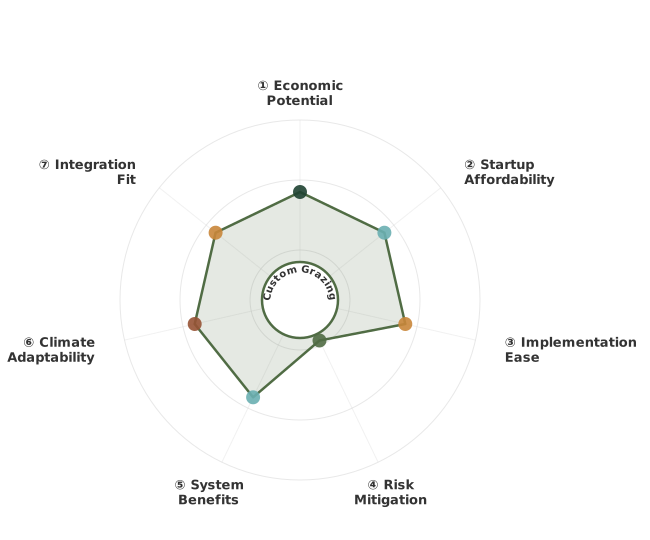
How These Traits Are Calculated
Trait dimensions are ordered clockwise starting from the top of the chart (12 o'clock position):
1. Economic Potential
Financial returns, annual value, and break-even timeline
WHAT: Evaluates financial viability by combining net annual value ($/ha from savings, income, and amortized harvests) with break-even timeline showing when practices pay for themselves.
WHY: Farmers need clear ROI understanding before committing resources. Fast payback (≤3 years) with strong returns (≥$300/ha) enables confident adoption, while long timelines (>10 years) restrict adoption to well-funded operations willing to wait for returns.
HOW: Calculated from net annual value in $/ha and break-even years. Exceptional (≥2.6): fast ROI ≤3 years + high value ≥$300/ha. Typical (1.8-2.5): moderate returns or longer timelines. Limited (<1.8): marginal economics or very long payback >10 years.
2. Startup Affordability
Initial investment costs and financial barrier to entry
WHAT: Measures financial barrier to entry through startup costs for equipment, infrastructure, consulting, and materials. Inverted scoring: lower costs = higher scores = more accessible adoption.
WHY: Affordability determines who can adopt. Low-cost practices (<$250/ha) enable widespread adoption across diverse scales, while high costs (>$2,500/ha) limit adoption to well-capitalized operations, creating barriers that slow regenerative transition.
HOW: Calculated from initial investment parsed from practice content. Inverted scoring: Exceptional (≥2.6): minimal investment <$250/ha. Typical (1.8-2.5): moderate costs $250-2,500/ha. Limited (<1.8): high barrier >$2,500/ha.
3. Implementation Ease
Learning curve and specialized knowledge required
WHAT: Measures how much learning, planning, and specialized knowledge a practice requires. Simpler practices with fewer steps score higher, while complex practices requiring extensive training or specialized resources score lower.
WHY: Complex practices create adoption barriers even when economically viable. Straightforward practices enable faster adoption and broader participation, while those requiring extensive training, timing precision, or specialized equipment limit who can succeed.
HOW: Evaluated by measuring documentation length and identifying complexity markers like location-specific requirements, seasonal timing windows, specialized skills, and dedicated equipment needs. Exceptional (≥2.6): straightforward practices with minimal prerequisites. Typical (1.8-2.5): moderate learning curve with some specialized needs. Limited (<1.8): steep learning curve requiring significant training or resources.
4. Risk Mitigation
Identified financial and ecological risk assessment
WHAT: Evaluates documented risks across financial (investment loss, market volatility) and ecological (crop failure, pest outbreaks) domains. Inverted scoring: fewer risks = higher scores.
WHY: Understanding risk exposure helps farmers make informed decisions. Low-risk practices allow confident implementation, while high-risk practices require careful planning and contingency resources. Risk transparency prevents costly failures.
HOW: Calculated from identified risks in practice content. Inverted scoring: Exceptional (≥2.6): ≤2 risks with manageable severity. Typical (1.8-2.5): 3-5 moderate risks. Limited (<1.8): 6+ risks or severe exposure.
5. System Benefits
How many ways the practice improves your land simultaneously
WHAT: Measures how many aspects of land health improve at once—carbon storage, soil quality, erosion control, water absorption, and biodiversity. Practices that improve multiple areas simultaneously create compounding benefits where each improvement reinforces the others.
WHY: The best practices solve multiple problems at once. For example, addressing erosion simultaneously builds carbon and improves water infiltration, creating a resilient system with positive feedback loops. Single-benefit approaches miss these compound transformation opportunities.
HOW: Evaluated across five key outcomes: carbon sequestration, soil organic matter increase, erosion reduction, water infiltration improvement, and biodiversity enhancement. Exceptional (≥2.6): high carbon storage (>8 t/ha/yr), improvements across 4-5 areas, transformative outcomes. Typical (1.8-2.5): moderate carbon (3-8 t/ha/yr), improvements across 2-3 areas. Limited (<1.8): modest impact (<3 t/ha/yr), single-area focus only.
6. Climate Adaptability
Geographic applicability across Köppen climate zones
WHAT: Evaluates geographic applicability by assessing how many Köppen climate zones successfully support a practice and what adaptation requirements are needed. Measures breadth of climates where farmers can implement with minimal to moderate modifications.
WHY: Universal practices working across diverse climates enable more farmers to adopt regenerative approaches. Practices limited to single climate types (only Mediterranean, only tropical) restrict adoption and slow global transition. Adaptability determines whether a practice serves niche regions or offers broad transformation.
HOW: LLM evaluation of regional success stories, Köppen zone coverage, and adaptation needs. Exceptional (≥2.6): 5+ zones or 4+ climate types, 3+ continents, minimal adaptation. Typical (1.8-2.5): 3-4 zones or 2-3 types, 2 continents, moderate adaptation. Limited (<1.8): 1-2 zones, single region, significant adaptation or highly specialized.
7. Integration Fit
How well this practice combines with others you're doing
WHAT: Measures how well a practice combines with other regenerative practices you might be doing. Some practices work as building blocks that make many other practices easier or more effective, while others work best on their own.
WHY: Practices that combine well with many others create more value on your farm. For example, cover cropping enables no-till, improves grazing, supports crop diversity, and helps water management—making all of them work better together. This helps you build a coherent system rather than juggling disconnected practices.
HOW: Evaluated by identifying which practices combine well and how strong those combinations are. 'Ideally Suited' means strong combinations where practices reinforce each other (practice A makes B easier, while B makes A more effective). 'Adequate' means complementary benefits that work well together. Exceptional (≥2.6): combines well with 6+ practices, serves as a building block. Typical (1.8-2.5): combines with 3-5 practices. Limited (<1.8): 1-2 practices or works best alone.
Going Deeper
1
WHY - The Benefits
Custom grazing, when implemented with regenerative principles at its core, offers a synergistic approach that benefits not only the livestock owner and land manager but also the land itself. It moves beyond a simple transactional relationship to one where livestock...
Custom grazing, when implemented with regenerative principles at its core, offers a synergistic approach that benefits not only the livestock owner and land manager but also the land itself. It moves beyond a simple transactional relationship to one where livestock become a tool for ecosystem improvement.
WHY - The Benefits
Custom grazing, when implemented with regenerative principles at its core, offers a synergistic approach that benefits not only the livestock owner and land manager but also the land itself. It moves beyond a simple transactional relationship to one where livestock...
Custom grazing, when implemented with regenerative principles at its core, offers a synergistic approach that benefits not only the livestock owner and land manager but also the land itself. It moves beyond a simple transactional relationship to one where livestock become a tool for ecosystem improvement.
Soil Health Benefits
Regenerative custom grazing significantly enhances soil health through strategic animal integration. By mimicking natural grazing patterns—high-density herds with short grazing periods followed by extended rest—land managers stimulate plant growth and encourage deeper root development. This process leads to a measurable increase in soil organic matter, typically ranging from 0.2% to 1.0% annually on well-managed pastures, transforming soil from a relatively inert medium into a living ecosystem.
The increased organic matter improves soil structure, leading to better water infiltration and retention. Fields managed regeneratively can absorb 40-70% more water, reducing runoff and erosion, and increasing drought resilience. This is critical in regions prone to intense rainfall or prolonged dry spells, such as parts of India, Eastern Europe, or the Sahel region of Africa. Improved water infiltration also means less water is lost to evaporation, making more available for plant growth.
Livestock manure and urine, when distributed strategically through rotational grazing, act as a natural fertilizer, providing essential nutrients for plant growth and soil microbes. This process enhances soil biological activity, supporting larger and more diverse populations of earthworms, fungi, and bacteria. These organisms are vital for nutrient cycling, soil aeration, and maintaining soil structure. Regenerative custom grazing creates a vibrant soil food web that underpins the entire ecosystem's health and productivity.
Furthermore, by promoting diverse forage species and maintaining living roots year-round through careful management of rest periods, regenerative custom grazing prevents soil from being left bare. This continuous soil cover, coupled with the improved structure, drastically reduces wind and water erosion. Over time, this leads to a more stable, fertile, and resilient soil profile that can support higher plant productivity and animal performance.
Economic Benefits
For livestock owners, custom grazing offers cost-effective access to forage, especially when their own land may be insufficient, degraded, or seasonally unavailable. This allows them to scale their operations without significant capital investment in land acquisition. The owner retains ownership of the animals, thus benefiting directly from any market price increases or improved animal performance, while offloading the day-to-day pasture management burdens to the land manager. This specialization can lead to reduced overhead and better focus on animal husbandry.
For land managers, custom grazing provides a reliable income stream. Fees are typically paid on a recurring basis, offering financial stability. This income can be particularly valuable for landowners who may not have livestock of their own but possess suitable land. It transforms underutilized or degraded pastures into income-generating assets, incentivizing the landowner to invest in pasture health. This model can revitalize rural economies, creating demand for skilled grazing management and related services.
When managed regeneratively, custom grazing can lead to improved livestock performance due to better forage quality and reduced heat stress from shade-providing trees or the overall improved pasture environment. Enhanced animal health can translate to better weight gains, higher fertility rates, and reduced veterinary costs, benefiting the livestock owner. The land manager, in turn, can command higher fees for providing superior grazing environments that demonstrably improve animal outcomes.
Ultimately, by improving soil health and ecosystem function, regenerative custom grazing can lead to increased long-term land productivity and value. Healthier soils support more resilient and productive forage, which in turn supports more animals with less supplemental feed. This long-term value creation benefits both parties, fostering a partnership built on shared success and land stewardship. This is particularly relevant in regions facing declining agricultural productivity or land degradation, offering a pathway to economic renewal. The potential for carbon sequestration also opens avenues for future environmental payments, further enhancing economic viability.
Regenerative Systems Fit
Custom grazing, when deliberately designed and managed through a regenerative lens, significantly contributes to all five regenerative agricultural principles, especially Principle 5 (Integrate Livestock), making it a powerful tool for system-level regeneration.
Principle 5 (Integrate Livestock): This is the de facto principle of custom grazing. A regenerative approach elevates this integration from simple animal containment to strategic ecosystem management. By employing adaptive grazing techniques—such as mob grazing, planned grazing, or high-density short-duration grazing—the land manager uses animals to actively improve the land. This involves careful planning of herd movement, stocking density, and rest periods to stimulate plant growth, break up soil crusts, distribute manure beneficially, and manage plant succession. The "custom" aspect allows livestock owners to place their animals where they can provide the most ecological benefit, or where the land manager has the expertise to maximize this benefit.
Principle 4 (Maintain Living Roots): Regenerative custom grazing ensures that living roots are in the soil for as much of the year as possible. By implementing long rest periods between grazing events, land managers allow perennial grasses, legumes, and forbs to regrow and re-establish root systems. This continuous photosynthetic activity fuels soil biology and prevents dormancy periods that would lead to soil degradation. Carefully managed grazing can even stimulate root growth, deepening the root systems and enhancing soil carbon sequestration.
Principle 3 (Keep Soil Covered): Strategic grazing prevents overgrazing, ensuring that a sufficient residual plant biomass remains after animals move on. This residual cover protects the soil surface from direct sun, wind, and rain impact, preventing erosion and conserving moisture. The organic matter generated by living roots and subsequent decomposition further contributes to a living mulch layer. In systems where trees are present (e.g., silvopasture), the custom grazing component also ensures that the understory is managed to maintain a healthy cover of forage and ground litter.
Principle 2 (Maximize Crop Diversity): Effective custom grazing encourages plant diversity by rotating animal impact and rest periods, which favors different species at different times. By avoiding prolonged, uniform grazing pressure, the land manager allows less competitive species to establish and thrive. This diversity in aboveground forage translates to a more resilient and biodiverse belowground ecosystem, supporting a complex soil food web. The land manager may also advocate for or implement diverse cover crop mixes on non-pasture areas if the contract allows.
Principle 1 (Minimize Soil Disturbance): While grazing involves animal traffic, regenerative custom grazing aims to minimize disruptive soil disturbance. Adaptive grazing, with its emphasis on moving animals frequently and providing long rest periods, avoids the persistent soil compaction that continuous grazing causes. The goal is to manage animal impact to improve soil structure (e.g., through trampling to incorporate organic matter) rather than causing degradation. This contrasts with conventional grazing where dense animal populations can lead to severe compaction and pugging, especially in wet conditions. When custom grazing is integrated into a farm or ranch adopting other regenerative practices like cover cropping, silvopasture, or no-till agriculture, the synergistic benefits amplify. For example, custom grazing can be used to manage cover crops, prepare land for no-till planting, or utilize forage in silvopastoral systems. This practice serves as a crucial bridge for integrating livestock into diverse regenerative farming systems, turning animals into active ecosystem builders.
Sources behind this view
Videos & Podcasts
-
Holistic management with cattle is key to improving soil health, water cycles, and carbon sequestration. Maximize animal impact (hooves, dung, urine) for diversity and plant growth, while breeding cat
-
Judy L's 'Grazing Management Principles' course covers grassland ecosystems, plant-soil-animal interactions, and practical methods like monitoring and planned grazing. It emphasizes universal principl
-
Regenerative grazing (adaptive multi-paddock) uses high-density, short-duration grazing with long recovery to stimulate soil health, increase biomass, and improve water infiltration, mimicking natural
-
Laura Payne details how managed grazing enhances soil health, water quality, and wildlife habitat, citing research on reduced erosion, improved stream health, and support for grassland birds. Key prin
Community
-
Advocates for simpler regenerative methods based on Soil Foodweb and Holistic Management, emphasizing soil restructuring for water retention and reducing reliance on inputs like biochar. Promotes holi
Read more (opens in new window) permies.com -
Adopts a holistic grazing management approach emphasizing diverse perennial pastures, higher residuals (4"), and longer rest periods (avg. 45 days) to build soil health, increase organic matter (3.4%
Read more (opens in new window) smallfarms.cornell.edu -
Advocates for Soil Foodweb principles and Holistic Management, emphasizing land leasing and custom grazing/growing over labor-intensive methods. Focuses on soil restructuring for water availability an
Read more (opens in new window) permies.com -
Build healthy pasture soils by minimizing tillage, maintaining living roots and species diversity, and implementing proper grazing management. Livestock are essential for nutrient cycling and stimulat
Read more (opens in new window) smallfarms.cornell.edu
Research
-
Managing Grazing to Restore Soil Health, Ecosystem Function, and Ecosystem Services (opens in new window)
This study found: Properly managed grazing animals can reverse environmental damage. Regenerative practices, like Adaptive Multi-Paddock (AMP) grazing, boost soil health, increase soil carbon, reduce erosion, and enhan
-
FORAGES AND PASTURES SYMPOSIUM: COVER CROPS IN LIVESTOCK PRODUCTION: WHOLE-SYSTEM APPROACH: Managing grazing to restore soil health and farm livelihoods1 (opens in new window)
This study found: Regenerative grazing management is key to sustainable, climate-resilient farms. It restores soil health, enhances ecosystem services like carbon capture and water infiltration, and improves farm profi
-
The Indigenous Roots of Regenerative Agriculture (opens in new window)
This study found: Modern regenerative agriculture practices are rooted in millennia of Indigenous land stewardship, offering profound knowledge and a crucial value system of respect and reciprocity for true transformat
-
Regenerative Livestock Farming as a Socioeconomic Model for Sustainable Agribusiness in Latin America (opens in new window)
This study found: Regenerative livestock farming in Latin America improved soil carbon, biodiversity, and water quality, while boosting farmer income and quality of life. Government support is key for wider adoption.
From the Web
-
Key regenerative agriculture methods include no-till farming, cover cropping, agroforestry, perennial crops, planned rotational grazing (Holistic Management), and compost application, all aimed at imp
-
Organic farming and rotational grazing are presented as solutions, enhancing soil health, sequestering carbon, and preventing erosion. Managed grazing boosts plant roots, improving soil fertility and
-
Six soil health principles (context, cover, minimize disturbance, diversity, living roots, integrate livestock) guide regenerative agriculture within four ecosystem processes (energy, water, nutrient
-
Five steps to regenerative agriculture: Holistic Planned Grazing, no-till farming, planting diverse cover crops/interseeding, using compost/inoculants (with caution), and incorporating silvopasture/wo
2
WHERE - Regional Considerations
Custom grazing can be applied across a vast array of climates and landscapes worldwide, but success and management strategies are heavily influenced by regional conditions.
Custom grazing can be applied across a vast array of climates and landscapes worldwide, but success and management strategies are heavily influenced by regional conditions.
WHERE - Regional Considerations
Custom grazing can be applied across a vast array of climates and landscapes worldwide, but success and management strategies are heavily influenced by regional conditions.
Custom grazing can be applied across a vast array of climates and landscapes worldwide, but success and management strategies are heavily influenced by regional conditions.
Click Here to Look up your Region if you don't already know it
Arid and Semi-Arid Regions
Representative Locations: Western United States, Australia, North Africa, Central Asia, parts of South America (e.g., Patagonia), parts of the Middle East. Climate Context: Low annual rainfall (<40 cm or 15 inches), high temperatures, often short and unpredictable growing seasons, high evaporation rates. Köppen BSh/BSk. USDA Zones vary widely. Suitability & Management: Custom grazing in these regions requires exceptional management to avoid depleting fragile ecosystems. Stocking rates must be exceptionally conservative, and grazing periods extremely short, followed by very long rest periods (months to years). Water availability is a primary constraint, necessitating careful planning of animal movement to reliable sources. Land managers must prioritize drought-tolerant native perennial grasses and shrubs, and contracts should emphasize maintaining residual vegetation (e.g., 50-70% ground cover). Extreme care is needed to prevent soil compaction and desertification. The value of custom grazing here is often in utilizing sparse, seasonal forage to keep livestock off more productive areas, or as a means to strategically manage overgrown or fire-prone areas.
Mediterranean Regions
Representative Locations: California, Mediterranean basin (Spain, Italy, Greece), central Chile, southwestern Australia, Western Cape South Africa. Climate Context: Hot, dry summers and mild, wet winters. Precipitation is seasonal (40-90 cm or 15-35 inches annually), with drought common in summer. Köppen Csa/Csb. USDA Zones typically 8-10. Suitability & Management: Custom grazing can be highly effective during the wet winter and spring growing season. The challenge is managing livestock during the dry summer, either by moving them to irrigated pastures or utilizing drought-tolerant species. Contracts should account for this seasonality. Land managers can focus on grazing off annual grasses and weeds that would otherwise dry out and become fire hazards, or prepare land for summer cropping. Careful rotation is needed to prevent overgrazing of limited winter/spring forage and to manage plant succession. Practices like prescribed grazing to manage fuel loads are common.
Temperate Regions (Humid and Dry)
Representative Locations: North America (Midwest, Great Plains, Northeast), Europe (Western, Central, Eastern), parts of South America (e.g., Pampas), Asia (Northern China, South Korea, Japan), Australia (Victoria, Tasmania). Climate Context: Humid temperate regions have moderate rainfall distributed throughout the year, with warm to hot summers and cool to cold winters (Köppen Cfb/Cfa, USDA 5-8). Dry temperate regions have more seasonal rainfall and greater temperature extremes (Köppen BSk/Csa, USDA 6-8). Suitability & Management: This is where custom grazing often thrives. A wide range of perennial forage species can support livestock for extended periods. The challenge is managing the full productive cycle. Regenerative custom grazing here focuses on multi-paddock rotational grazing to maximize pasture growth in spring and summer, manage autumn fodder banks, and maintain soil health through winter. Contracts should specify rest periods to allow plants to recover and build root reserves. Managing for extreme heat in summer or prolonged cold in winter is also key. Livestock choice (cattle, sheep, goats) will also influence how well they utilize forage and manage plant communities.
Subtropical Regions
Representative Locations: Southeastern United States, Southern China, Southern Brazil, Eastern Australia, parts of India (e.g., Deccan Plateau). Climate Context: Hot, humid summers and mild winters with ample rainfall, though seasonal dry periods can occur. Köppen Cfa/Cwa. USDA Zones typically 9-11. Suitability & Management: Custom grazing can be productive year-round in many subtropical areas, but managing heat stress for animals is critical. Land managers should incorporate shade strategies, either through trees (silvopasture) or provision of artificial shade. Forage management must account for potential summer dormancy in some grasses or the dominance of warm-season species. Contracts need to address the cost and logistics of providing water, especially during dry spells, and managing invasive species that thrive in these climates. Biodiversity of forage species is key to animal health and pasture resilience.
Tropical Regions
Representative Locations: Central America, Southeast Asia, East Africa, Northern Australia, Northern South America. Climate Context: High temperatures year-round with distinct wet and dry seasons, or consistent high rainfall. Köppen Af/Am/Aw. Suitability & Management: Custom grazing is highly viable but can be challenging due to intense heat, high humidity, and potential for intense rainy seasons that can lead to soil compaction and parasite loads. Management must focus on species selection adapted to tropical conditions, ensuring long rest periods during intense wet or dry seasons, and providing shade and water. Contracts should address parasite management strategies and soil protection during heavy rainfall events. Rotational grazing is crucial to prevent overgrazing and degradation of tropical pastures, which can be less resilient than temperate forages.
Cold Continental Regions
Representative Locations: Northern United States and Canada, Northern Europe, Northern Asia. Climate Context: Very short growing seasons, extreme summer heat, and severe winter cold. USDA Zones 3-5. Köppen Dfa/Dfb. Suitability & Management: Custom grazing is largely limited to the frost-free growing season. The primary focus is maximizing forage production during this short window. Contracts must stipulate when grazing begins and ends, often dictated by snowmelt and first frost. Winter feeding management might also be part of the contract if livestock remain on pasture. Land managers need to select cold-hardy forage species and manage soil to prevent damage from freeze-thaw cycles. The short window means intensive management during the growing season is crucial for the success of the grazing enterprise.
3
HOW - Implementation Process
Successful implementation of custom grazing requires careful planning, clear communication, and a commitment to regenerative practices from both the livestock owner and the land manager.
Successful implementation of custom grazing requires careful planning, clear communication, and a commitment to regenerative practices from both the livestock owner and the land manager.
HOW - Implementation Process
Successful implementation of custom grazing requires careful planning, clear communication, and a commitment to regenerative practices from both the livestock owner and the land manager.
Successful implementation of custom grazing requires careful planning, clear communication, and a commitment to regenerative practices from both the livestock owner and the land manager.
Prerequisites
-
Land Assessment: The land manager must conduct a thorough assessment of the available land. This includes evaluating:
- Forage Type and Quantity: What perennial grasses, legumes, forbs, and shrubs are present? What is their current production and nutritional value? Are there invasive species?
- Water Availability: Are there reliable water sources (ponds, troughs, springs, wells)? What is the quality and quantity? Will supplemental water infrastructure be needed?
- Fencing and Infrastructure: Is the perimeter fencing secure? Are there internal fences for rotational grazing? Is there adequate handling facilities for animals (e.g., corrals, loading ramps)?
- Soil Health: What is the current soil organic matter, infiltration rate, and general structure? Are there signs of compaction or erosion?
- Topography: Steep slopes, drainage patterns, and accessibility for animals and equipment.
- Climate and Growing Season: Understanding the local climate, rainfall patterns, temperature extremes, and length of the frost-free growing season.
-
Livestock Owner's Needs: Understanding the livestock owner's goals for the animals: breeding stock, stockers, finishing animals? What are their performance expectations (weight gain, fertility)? What is their risk tolerance? What is their budget?
-
Regulatory & Environmental Awareness: Understanding local regulations regarding livestock grazing, water usage, and environmental protection.
-
Regenerative Commitment: Both parties must agree on the goals for land health. If regenerative outcomes are desired, the land manager needs the expertise or willingness to learn regenerative grazing techniques.
Phase 1: Contract Development and Planning
This phase is critical for establishing clear expectations and responsibilities.
-
Define Scope of Service:
- Grazing Period: Start and end dates, accounting for seasonal forage availability.
- Stocking Rate: Define the maximum number of animals per hectare/acre per unit time (e.g., Animal Unit Months - AUMs). This should be based on forage availability and regenerative principles (e.g., leaving adequate residual biomass).
- Grazing Management Strategy: Specify the rotational grazing plan (e.g., number of paddocks, rotation frequency, rest periods). This should prioritize regenerative outcomes like soil health and plant diversity.
- Animal Care: Outline responsibilities for animal health (mineral supplementation, deworming, vaccination according to owner's protocol), predator protection, and handling.
- Water Management: Responsibility for providing access to clean water, maintaining troughs, and managing water infrastructure.
-
Economic Terms:
- Payment Structure: Per-head-per-day, per-animal-month, or a fixed lease rate. Clearly define what is included in the fee (pasture use, labor, basic animal care, water, fencing maintenance).
- Cost Responsibility: Who pays for supplemental feed, salt/minerals, veterinary care, fencing repairs beyond normal wear and tear, infrastructure development (new water points, fences)?
- Performance Incentives/Penalties: Consider clauses for exceeding defined goals (e.g., improved soil organic matter) or for actions that degrade the land (e.g., overgrazing).
-
Regenerative Clauses (If applicable):
- Residual Biomass Targets: Minimum amount of forage to be left after grazing (e.g., 4-6 inches for cattle, 2-3 inches for sheep).
- Rest Period Requirements: Minimum duration of rest for paddocks (e.g., 30-90 days depending on climate and season).
- Prohibition of Certain Practices: Restriction on continuous grazing, tilling pasture, use of synthetic pesticides or fertilizers (if agreed).
- Monitoring and Reporting: Agreement on how soil health, plant diversity, and animal performance will be tracked and shared with the owner.
-
Liability and Insurance: Clarify responsibilities for animal loss, injury, or damage to property. Ensure adequate insurance coverage for both parties.
Phase 2: Operational Execution (Regenerative Focus)
This phase involves the day-to-day management from the land manager's perspective, guided by regenerative principles.
-
Grazing Plan Implementation:
- Paddock Subdivision: Use portable electric fencing or permanent infrastructure to create paddocks optimized for rotational grazing. The number of paddocks should facilitate the desired rest periods.
- Animal Density and Duration: Move animals frequently to fresh paddocks, allowing them to graze intensely for short periods (1-3 days typically). This maximizes nutrient distribution and stimulates plants without causing overconsumption.
- Rest and Recovery: Ensure paddocks receive adequate rest periods, especially during dormant seasons or periods of slow growth. This allows plants to regrow roots, replenish energy reserves, and set seed. The length of rest depends on seasonal conditions and plant species.
- Animal Health and Nutrition: Provide clean water, appropriate salt/mineral supplements, and supplemental feed only when necessary and as agreed in the contract. Monitor animals daily for signs of stress, illness, or injury.
-
Infrastructure Maintenance: Regularly check and repair fences, gates, water systems, and corrals to ensure containment and animal safety.
-
Monitoring and Adaptive Management:
- Pasture Monitoring: Regularly assess forage availability, plant species composition, and residual heights in grazed and ungrazed paddocks.
- Soil Monitoring: Periodically check for signs of soil compaction or erosion. If resources allow, conduct basic tests for soil organic matter or infiltration.
- Animal Performance Monitoring: Track weight gains, body condition scores, and reproductive performance of the livestock.
- Record Keeping: Maintain detailed records of animal movements, grazing durations, rest periods, supplementation, veterinary treatments, and observations on pasture condition. This data is vital for adapting the grazing plan and demonstrating outcomes to the livestock owner.
Transition Timeline & Phase-Out Strategy (If applicable to moving toward regenerative goals)
If the land manager is transitioning their own practices or encouraging a livestock owner to shift toward more regenerative outcomes within the custom grazing contract, a phased approach is often beneficial:
- Year 1-2: Establish Foundational Management: Focus on implementing basic rotational grazing principles: subdividing pastures, achieving adequate rest periods, and establishing grazing limits (residual height). Gradually reduce or eliminate synthetic fertilizers and pesticides if used. Begin monitoring soil health indicators.
- Year 3-4: Enhance Diversity and Soil Biology: Introduce more diverse forage species into pastures. Implement strategies to increase soil organic matter (e.g., through manure incorporation and cover cropping if feasible within the contract scope). Begin proactive parasite management if relevant, reducing reliance on chemical treatments.
- Year 5+: Optimize and Integrate: Aim for continuous living cover year-round, deep root systems, and a healthy soil food web. Integrate livestock with other regenerative practices like silvopasture or agroforestry if possible. Phase out all synthetic inputs and transition to natural methods of fertility and pest management.
Success means: The land manager consistently meets or exceeds regenerative goals outlined in the contract, evidenced by measurable improvements in soil health, plant diversity, and animal performance, often with reduced reliance on external inputs.
Sources behind this view
Videos & Podcasts
-
A 5-year case study in Mississippi transformed a degraded farm using adaptive grazing, bale grazing, and plant diversity. Soil organic matter, water infiltration, and forage species increased dramatic

-
Judy L's 'Grazing Management Principles' course covers grassland ecosystems, plant-soil-animal interactions, and practical methods like monitoring and planned grazing. It emphasizes universal principl
-
Seven grazing principles are detailed: maintain stocking below capacity, leave ample forage, allow full plant recovery, rest pastures, top graze, increase pasture numbers (30+), and use high stock den
-
Regenerative grazing (adaptive multi-paddock) uses high-density, short-duration grazing with long recovery to stimulate soil health, increase biomass, and improve water infiltration, mimicking natural
Community
-
Adopts a holistic grazing management approach emphasizing diverse perennial pastures, higher residuals (4"), and longer rest periods (avg. 45 days) to build soil health, increase organic matter (3.4%
Read more (opens in new window) smallfarms.cornell.edu -
Allan Savory explains holistic management prevents desertification by using livestock to mimic nature, replacing prescriptive grazing systems. Holistic Planned Grazing, with decisions guided by a holi
Read more (opens in new window) permies.com -
Build healthy pasture soils by minimizing tillage, maintaining living roots and species diversity, and implementing proper grazing management. Livestock are essential for nutrient cycling and stimulat
Read more (opens in new window) smallfarms.cornell.edu -
Advocates for Soil Foodweb principles and Holistic Management, emphasizing land leasing and custom grazing/growing over labor-intensive methods. Focuses on soil restructuring for water availability an
Read more (opens in new window) permies.com
Research
-
Managing Grazing to Restore Soil Health, Ecosystem Function, and Ecosystem Services (opens in new window)
This study found: Properly managed grazing animals can reverse environmental damage. Regenerative practices, like Adaptive Multi-Paddock (AMP) grazing, boost soil health, increase soil carbon, reduce erosion, and enhan
-
FORAGES AND PASTURES SYMPOSIUM: COVER CROPS IN LIVESTOCK PRODUCTION: WHOLE-SYSTEM APPROACH: Managing grazing to restore soil health and farm livelihoods1 (opens in new window)
This study found: Regenerative grazing management is key to sustainable, climate-resilient farms. It restores soil health, enhances ecosystem services like carbon capture and water infiltration, and improves farm profi
-
Regenerative Livestock Farming as a Socioeconomic Model for Sustainable Agribusiness in Latin America (opens in new window)
This study found: Regenerative livestock farming in Latin America improved soil carbon, biodiversity, and water quality, while boosting farmer income and quality of life. Government support is key for wider adoption.
-
Regenerative Agriculture: Restoring Ecosystems¢ Resilience and Productivity: A Review (opens in new window)
This study found: Regenerative agriculture builds soil health and ecosystem services through practices like no-till, cover crops, and diverse rotations. It increases soil organic matter, improves water infiltration, bo
From the Web
-
A 10-step plan for regenerative grazing emphasizes adaptive management, goal setting, mapping, infrastructure assessment, and proper stocking rates. It advises starting small to gain experience before
-
Transitioning to adaptive grazing involves mapping land, soil testing (Haney test), evaluating carrying capacity, starting small, and measuring progress. Developing a written grazing plan with specifi
-
Five steps to regenerative agriculture: Holistic Planned Grazing, no-till farming, planting diverse cover crops/interseeding, using compost/inoculants (with caution), and incorporating silvopasture/wo
-
Provides guidance on transitioning to regenerative grazing, emphasizing Holistic Planned Grazing principles and planning. Covers stock density, herd management, and monitoring for improved soil health
4
Know the Debate
Custom grazing outcomes are deeply tied to context, varying significantly by region and scale. In humid temperate zones with reliable rainfall, fas...
Know the Debate
Custom grazing outcomes are deeply tied to context, varying significantly by region and scale. In humid temperate zones with reliable rainfall, fas...
Custom grazing outcomes are deeply tied to context, varying significantly by region and scale. In humid temperate zones with reliable rainfall, faster soil health improvements and better forage production can be seen within 1-3 years. Semi-arid rangelands, however, require more conservative management and longer timelines (5-7 years) for similar soil regeneration due to limited moisture. Entry costs for land managers, especially for regenerative infrastructure like fencing and water systems, can range from $1,000-$7,000 for smaller operations to over $20,000 for larger undertakings. Daily labor of 1-3 hours for animal care and paddock moves is typical regardless of scale but demanding at all levels.
How much do regenerative grazing benefits vary?
Generally Positive Outcomes (0.2-1.0% SOM/yr)
Academic studies and institute guidelines often highlight consistent soil health improvements, such as 0.2-1.0% annual increases in soil organic matter, improved water infiltration, and reduced compaction when regenerative grazing is implemented.
Sources behind this view
Sources behind this view
Research
-
Response of Grazing Land Soil Health to Management Strategies: A Summary Review (opens in new window)
This study found: This review looks at how different ways of managing pastures affect soil health, specifically how well water soaks in, how much carbon the soil stores, and how efficiently plants use nitrogen. Generally, good grazing practices like moderate, continuous grazing or planned rotational grazing with fewer animals per acre tend to improve these soil functions. Healthy, complete plant cover helps water penetrate the soil better, as does more soil carbon. Planting diverse, fast-growing forage species can boost carbon storage. However, overgrazing or incorrect fertilizer use can lead to carbon loss. Getting the right balance of manure and fertilizer, along with the correct number of animals, is key for plants to use nitrogen effectively. The best approach involves combining these practices based on the specific farm and climate to improve both soil health and overall farm productivity.
-
FORAGES AND PASTURES SYMPOSIUM: COVER CROPS IN LIVESTOCK PRODUCTION: WHOLE-SYSTEM APPROACH: Managing grazing to restore soil health and farm livelihoods. (opens in new window)
This study found: This paper argues that shifting from high-input farming to low-input methods, especially focusing on how we manage crops and grazing livestock, is key to making farms sustainable and resilient for the long haul. The authors believe that smart soil management, particularly through well-planned grazing by animals like cattle and sheep, can rebuild soil health. This leads to better natural processes like capturing carbon from the air, allowing water to soak into the ground, improving soil fertility, and supporting more diverse plant and animal life. By working together, scientists and farmers can develop these regenerative practices to create farms that are not only good for the environment but also financially successful. Implementing these grazing strategies is seen as crucial for the future of farming.
From the Web
-
Contract grazing involves managing livestock for others, offering stable profits with lower capital investment. Success requires expertise in pasture and animal management, risk management, and marketing services to livestock owners.
-
Regenerative grazing benefits consumers and communities by producing nutrient-dense food, improving water resilience, and supporting local food systems. Thoughtful grazing management creates healthier soil, which has far-reaching positive impacts on food quality and ecological health.
Variable Outcomes (Slow to Negligible Gains)
Field reports and practitioner experiences reveal outcomes that vary considerably, with some operations seeing significant changes in 2-3 years while others report slow progress over 5+ years, particularly in challenging climates.
Sources behind this view
Sources behind this view
Videos & Podcasts
-
Greg Judy explains regenerative mob grazing, where cattle trample ~70% of forage to build soil health and increase grass growth. This practice, requiring years of management, relies on sunlight and animals, reducing equipment and input costs.
-
Regenerative grazing (adaptive multi-paddock) uses high-density, short-duration grazing with long recovery to stimulate soil health, increase biomass, and improve water infiltration, mimicking natural systems.
-
Laura Payne details how managed grazing enhances soil health, water quality, and wildlife habitat, citing research on reduced erosion, improved stream health, and support for grassland birds. Key principles include rotation, residual, and rest, with multi-species pastures outperforming simple mixes.
Making Sense of the Differences
The speed and extent of regenerative grazing benefits are heavily influenced by regional climate, starting soil conditions, and management intensity. Humid temperate zones with abundant rainfall and longer growing seasons generally allow for faster soil biological improvement and forage regrowth. In contrast, arid or semi-arid conditions, characterized by limited moisture and cooler temperatures, necessitate longer rest periods and slower progress. The land manager's skill in adaptive management, herd movement, and pasture planning plays a critical role in maximizing outcomes regardless of location, but progress is inherently slower in resilience-limited environments.
What are the main risks in custom grazing contracts?
Contractual & Operational Risks
Institute and academic sources highlight risks such as animal health issues, infrastructure failures, and contract disputes, emphasizing the need for clear agreements, insurance, and defined responsibilities.
Sources behind this view
Sources behind this view
Research
-
FORAGES AND PASTURES SYMPOSIUM: COVER CROPS IN LIVESTOCK PRODUCTION: WHOLE-SYSTEM APPROACH: Managing grazing to restore soil health and farm livelihoods. (opens in new window)
This study found: This paper argues that shifting from high-input farming to low-input methods, especially focusing on how we manage crops and grazing livestock, is key to making farms sustainable and resilient for the long haul. The authors believe that smart soil management, particularly through well-planned grazing by animals like cattle and sheep, can rebuild soil health. This leads to better natural processes like capturing carbon from the air, allowing water to soak into the ground, improving soil fertility, and supporting more diverse plant and animal life. By working together, scientists and farmers can develop these regenerative practices to create farms that are not only good for the environment but also financially successful. Implementing these grazing strategies is seen as crucial for the future of farming.
From the Web
-
Contract grazing involves managing livestock for others, offering stable profits with lower capital investment. Success requires expertise in pasture and animal management, risk management, and marketing services to livestock owners.
-
Effective grazing contracts require clear definitions of responsibilities, pricing structures (flat or incentive rates), economic projections, and meticulous recordkeeping for animal identification, health, weights, and costs.
Ecological & Management Risks
Field experience points to risks arising from overgrazing, soil degradation, and unrealistic livestock owner expectations, emphasizing the land manager's role in ecological stewardship and adaptive grazing.
Sources behind this view
Sources behind this view
Videos & Podcasts
-
Custom grazing requires a written contract with drought clauses. Removing livestock during drought prevents overgrazing, allows for grass recovery, and maximizes long-term income potential.
-
Prescribed grazing, including custom and contract grazing, is a growing business for fire prevention and ecological goals, especially in California. Key aspects include legal compliance, risk management, animal husbandry, and choosing the right animals for the context. Building a legal, equitable, and safe business is crucial.
-
Implementing public land grazing involves key challenges: water infrastructure (significant upfront cost, various systems), fencing (existing or removed), and liability (less discussed but important). Strong relationships, communication, and adaptive grazing strategies are crucial for success and cost-effectiveness.
Making Sense of the Differences
Risks in custom grazing are driven by both the logistical complexities of animal management and the ecological realities of the land. Academic and institute sources focus on the need for robust contractual frameworks and operational preparedness to mitigate financial and liability issues. Field experience stresses that the land manager's ability to implement regenerative grazing—preventing overgrazing, managing drought, and aligning with the land's carrying capacity—is critical for ecological health and long-term financial viability, often requiring proactive education of livestock owners regarding realistic outcomes.
5
HOW MUCH - Costs & Investment
Note: Costs are presented in USD equivalent. Actual costs will vary significantly based on local labor rates, material costs, land quality, availability of existing infrastructure, and prevailing economic conditions in your region. It is essential to research local pricing.
Note: Costs are presented in USD equivalent. Actual costs will vary significantly based on local labor rates, material costs, land quality, availability of existing infrastructure, and prevailing economic conditions in your region. It is essential to research local pricing.
HOW MUCH - Costs & Investment
Note: Costs are presented in USD equivalent. Actual costs will vary significantly based on local labor rates, material costs, land quality, availability of existing infrastructure, and prevailing economic conditions in your region. It is essential to research local pricing.
Note: Costs are presented in USD equivalent. Actual costs will vary significantly based on local labor rates, material costs, land quality, availability of existing infrastructure, and prevailing economic conditions in your region. It is essential to research local pricing.
Note: All costs are based on recent US economic data (2024–2026) and may vary substantially by region based on local labor rates, material costs, and regulatory requirements. All figures below reflect a 4.2% inflation adjustment to standard industry baseline costs.
Pasture Lease & Management Fees
This represents the primary overhead for the land manager. Pricing is dictated by the complexity of daily animal movement and the intensity of the monitoring required.
- Small Operations (under 50 acres (20 ha)): Costs range from $31.26 to $104.20 per acre ($77–$257/ha). These operators face premium costs due to the higher labor intensity and lack of automated rotational infrastructure, often requiring more frequent site visits to ensure animal welfare and pasture recovery.
- Mid-size Operations (50–500 acres (20–202 ha)): Costs range from $20.84 to $62.52 per acre ($51–$154/ha). At this scale, the implementation of more robust internal paddock systems begins to pay dividends, allowing for more labor-efficient grazing patterns that stabilize management expenses.
- Large Operations (500+ acres): Economies of scale drive costs down to $12.50 to $41.68 per acre ($31–$103/ha). These operations manage larger, contiguous tracts where the time spent per head regarding management duties is minimized, allowing for significant efficiency gains in labor overhead.
Fencing Maintenance & Installation
Rotational grazing requires consistent investment in fencing materials and labor to maintain paddock integrity and ensure that animals achieve the desired forage utilization.
- Small Operations: Annual maintenance costs range from $8.34 to $20.84 per acre ($21–$51/ha). Frequent manual moves of portable electric fencing remain the primary labor expense, often requiring daily or bi-daily adjustments that inflate per-acre costs relative to acreage.
- Mid-size Operations: Costs range from $6.25 to $16.67 per acre ($15–$41/ha). The use of specialized equipment, such as heavy-duty reels and geared step-in posts, allows these operators to service more ground with less labor, lowering the cost profile compared to manual-only setups.
- Large Operations: Costs range from $4.17 to $12.50 per acre ($10–$31/ha). These operations benefit from lower per-foot installation costs when using high-tensile perimeter fencing in combination with centralized power units, significantly reducing the maintenance footprint once established.
Water Infrastructure
High-density water access is non-negotiable for regenerative outcomes to prevent animal congregation and ensure uniform nutrient distribution via manure.
- Small Operations: Fixed costs range from $10.42 to $31.26 per acre ($26–$77/ha). Small operations struggle with high fixed costs related to stand-alone pumping or hauling systems, which do not benefit from the amortization across large herd sizes.
- Mid-size Operations: Costs range from $8.34 to $25.01 per acre ($21–$62/ha). These producers generally utilize gravity-fed header tanks or modular solars, which offer higher capacity at a lower price point than individual trough setups used on smaller parcels.
- Large Operations: Costs range from $6.25 to $20.84 per acre ($15–$51/ha). Large-scale networked pipelines allow a single high-capacity well or solar pump to distribute water across hundreds of acres, slashing the cost per unit of area serviced.
Supplemental Minerals & Salt
Animal health is heavily dependent on precise mineral supplementation, especially given the variance in nutritional profiles across regenerative pasture systems.
- Small Operations: Yearly expenditures are $4.17 to $12.50 per acre ($10–$31/ha). Due to a smaller animal count, these operators rarely qualify for wholesale pricing, increasing their cost per head compared to larger-scale peers.
- Mid-size Operations: Costs range from $2.08 to $8.34 per acre ($5.1–$21/ha). Purchasing in one-ton pallets provides a significant buffer against market price volatility, bringing costs into a more sustainable range for the manager.
- Large Operations: Costs range from $2.08 to $6.25 per acre ($5.1–$15/ha). Maximum volume leverage allows these operations to obtain feed-grade minerals at the lowest possible market rate, maximizing margin per head.
Most Spend: The middle 60% of total operational costs for an average farm fall within the $45–$115 per acre ($111–$284/ha) range. This band represents operations with moderate infrastructure density and efficient livestock management, where capital investment is balanced against the revenue-generating potential of high-density grazing.
Why the Range?: Costs vary primarily due to "infrastructure density," which is the amount of physical assets deployed per acre. Farms with high-density fencing and distributed water points initially occupy the high end of the cost spectrum, while operations that utilize existing passive fencing and natural water sources sit at the lower end. Additionally, local regional labor rates can shift these range estimates by 10–15%.
Sources behind this view
Videos & Podcasts
-
Improved grazing management boosts ranch economics through higher stocking rates, better cows-per-man ratios, extended grazing seasons, and reduced feeding costs. Strategic fencing and water developme
-
The Pasture Project Grazing Calculator offers a user-friendly tool to compare financial returns of cow-calf ($309/acre), finishing ($119/acre), and direct marketing ($155/acre before post-harvest cost
-
Details the financial benefits of investing in fencing and water infrastructure for grazing, estimating costs ($175/acre) and returns (66% increase in carrying capacity). Discusses specific paddock de
-
Implemented mob grazing by moving cattle daily to fresh pasture, resulting in thousands saved annually, a 30% increase in stocking rate, and improved soil organic matter (up to 9%) by feeding soil mic
Community
-
Grazing dairy heifers and cull cows reduces costs compared to confinement, with potential savings on feed, labor, and equipment. Producers can manage pastures themselves or use custom grazers, seeking
Read more (opens in new window) smallfarms.cornell.edu
Research
-
Increasing Intensity of Pasture Use with Dairy Cattle: An Economic Analysis (opens in new window)
This study found: Intensive grazing on Pennsylvania dairy farms was more profitable than hay/corn silage, returning $129/acre. High debt and poor cash flow motivated increased grazing intensity, which lowered feed cost
-
Production Costs of Grass-Fed Organic Milk in the Northeastern United States: Empirical Results from Survey Data and Implications for Sustainable Development (opens in new window)
This study found: Grass-fed organic dairy farms in the Northeast US had average production costs of $45.91/cwt. Higher labor efficiency and milk per cow reduced costs, while more land per cow and smaller farm size incr
6
REWARDS AND RISKS - Economics & Risk Factors
Custom grazing, when approached regeneratively, offers a balanced economic and ecological proposition. However, like any agricultural enterprise, it carries inherent risks.
Custom grazing, when approached regeneratively, offers a balanced economic and ecological proposition. However, like any agricultural enterprise, it carries inherent risks.
REWARDS AND RISKS - Economics & Risk Factors
Custom grazing, when approached regeneratively, offers a balanced economic and ecological proposition. However, like any agricultural enterprise, it carries inherent risks.
Custom grazing, when approached regeneratively, offers a balanced economic and ecological proposition. However, like any agricultural enterprise, it carries inherent risks.
Economic Scenarios
- Best Case Scenario: Managers optimizing forage through adaptive grazing can realize revenues of $208–$365 per acre ($514–$902/ha). Livestock owners, in turn, achieve a 15–25% increase in weight gain compared to set-stocked control groups. This efficiency represents an additional $150–$300 in profit per head at market, driven by constant access to high-quality vegetative-stage forage.
- Typical Case Scenario: Stable revenue ranges from $83–$187 per acre ($205–$462/ha). In these scenarios, forage quality remains consistent, leading to standard industry-average performance. Both parties stabilize their cash flow, with the land manager effectively covering land maintenance taxes and the livestock owner avoiding the 10–15% annual capital depreciation associated with land ownership.
- Worst Case Scenario: Failure to account for climate volatility, specifically severe drought, can cause revenues to collapse to $31–$42 per acre ($77–$104/ha) as herd sizes must be cut to prevent long-term soil damage. The livestock owner risks individual losses of $100–$210 per head due to poor weight gain and forced liquidation in depressed market conditions.
Market Factors & Risk Mitigation
Profitability is tightly linked to "Cattle-on-Feed" report data and localized demand for grass-finished products. Because custom grazing rates often lag behind beef price rallies by 6–12 months, managers should utilize "sliding scale" contracts. These contracts tie fees to forage biomass measurements (pounds per acre) rather than fixed head counts, effectively shielding the landowner during droughts while protecting the manager during periods of high surplus. Establishing a mandatory "maintenance reserve fund" of $5.21–$10.42 per acre ($13–$26/ha) annually protects the operation from catastrophic equipment failures, such as well-pump burnout or multi-acre fencing destruction during severe weather events.
Transition Period Risks
Transitioning to regenerative custom grazing initiates a "recovery phase" as soil biology shifts away from synthetic dependency. In years 1–2, forage yields may experience a 10–20% decline while microbial communities recalibrate. To mitigate this, managers should use phased grazing—starting with 3–5 day movement rotations to keep stress levels low while the pasture gains resilience. Input costs usually reach a breakeven point by year 3, as improved soil organic matter increases water holding capacity, eventually allowing for a 20–40% increase in seasonal grazing duration compared to pre-transition baselines.
Sources behind this view
Videos & Podcasts
-
This cluster details ultra-high stock density grazing (UHSDG) and 'total grazing' for cattle, emphasizing intensive management, long pasture recovery, and increased stocking rates. The speaker advocat
-
A 5-year case study in Mississippi transformed a degraded farm using adaptive grazing, bale grazing, and plant diversity. Soil organic matter, water infiltration, and forage species increased dramatic
-
Integrating livestock grazing into cropping systems enhances soil regeneration and provides both economic and ecological profit. Mutually beneficial arrangements with cattle owners deliver high-qualit
-
Laura Payne details how managed grazing enhances soil health, water quality, and wildlife habitat, citing research on reduced erosion, improved stream health, and support for grassland birds. Key prin
Community
-
Adopts a holistic grazing management approach emphasizing diverse perennial pastures, higher residuals (4"), and longer rest periods (avg. 45 days) to build soil health, increase organic matter (3.4%
Read more (opens in new window) smallfarms.cornell.edu -
Manage rotational grazing by setting recovery (15-40+ days, adapting to region/season) and grazing periods (2-3 days). Aim to 'take half, leave half' for livestock and soil microbes. High stocking den
Read more (opens in new window) smallfarms.cornell.edu -
Advocates for sustainable grazing by leaving over half of pasture plants after grazing for regrowth and soil health, contrasting it with overgrazing which depletes reserves and degrades soil. This app
Read more (opens in new window) smallfarms.cornell.edu
Research
-
Managing Grazing to Restore Soil Health, Ecosystem Function, and Ecosystem Services (opens in new window)
This study found: Properly managed grazing animals can reverse environmental damage. Regenerative practices, like Adaptive Multi-Paddock (AMP) grazing, boost soil health, increase soil carbon, reduce erosion, and enhan
-
Regenerative Livestock Farming as a Socioeconomic Model for Sustainable Agribusiness in Latin America (opens in new window)
This study found: Regenerative livestock farming in Latin America improved soil carbon, biodiversity, and water quality, while boosting farmer income and quality of life. Government support is key for wider adoption.
-
Transitioning from conventional continuous grazing to planned rest-rotation grazing: A beef cattle case study from central Texas (opens in new window)
This study found: A 5-year Texas case study found planned rest-rotation grazing showed potential for more forage and better soil health on cultivated paddocks compared to continuous grazing, with similar overall profit
-
Integrated crop and livestock systems increase both climate change adaptation and mitigation capacities. (opens in new window)
This study found: Combining crops with beef cattle grazing in Brazil boosted farm productivity and soil carbon over 18 years. Moderate grazing levels were best for resilience and climate change adaptation/mitigation.
From the Web
-
Experts advocate for gradual adoption of high-density/mob grazing and strategic livestock marketing to improve soil health and capture energy. Combining herds and managing towards a holistic goal can
-
Transition to adaptive grazing with a three-step approach: inventory land/animals/infrastructure, start small using existing resources to increase stock density gradually, and observe/measure progress
7
WHO - Labor & Expertise
Custom grazing requires a spectrum of labor and expertise depending on scale, complexity, and the agreed-upon scope of services.
Custom grazing requires a spectrum of labor and expertise depending on scale, complexity, and the agreed-upon scope of services.
WHO - Labor & Expertise
Custom grazing requires a spectrum of labor and expertise depending on scale, complexity, and the agreed-upon scope of services.
Custom grazing requires a spectrum of labor and expertise depending on scale, complexity, and the agreed-upon scope of services.
Labor Requirements
- Daily Animal Checks: Essential for monitoring animal health, locating lost or injured animals, and observing grazing patterns. This can range from a quick visual scan to multiple rounds per day.
- Fencing and Water System Maintenance: Routine checks and repairs are constant. This involves fixing breaks, clearing debris from water sources, ensuring troughs are clean and functional.
- Animal Handling: Moving livestock between paddocks is a recurring task, often requiring ropes, electric flagging, or specialized herding skills. This may involve working with dogs or horses.
- Supplemental Feeding/Supplementation: If required by contract, this involves preparing and distributing feed, minerals, or salt.
- Infrastructure Development/Repair: Larger tasks like installing new water lines, building or repairing corrals, or constructing new paddocks.
- Record Keeping: Documenting grazing rotations, animal movements, health observations, and pasture condition.
International Labor Cost Variation: Labor costs for these tasks vary enormously. In regions with high labor costs (e.g., Western Europe, North America, Australia), it may be economically viable for the land manager to hire dedicated staff. In regions with lower labor costs (e.g., parts of Asia, Africa, South America), a single individual might manage custom grazing for multiple farms or large areas, or it might be integrated into a family farming operation. The availability of skilled labor, particularly for regenerative grazing management, can also be a limiting factor globally.
Expertise Required
-
Grazing Management: This is the cornerstone of regenerative custom grazing. Expertise includes:
- Rotational Grazing: Understanding paddock design, stocking densities, grazing durations, and critically, rest periods tailored to local plant species, climate, and season.
- Plant Identification and Health: Recognizing desirable forage species, understanding their growth cycles, nutritional value, and susceptibility to overgrazing or drought. Identifying weeds and understanding their palatability and management.
- Soil Health Principles: Basic understanding of how grazing impacts soil organic matter, infiltration, and structure. Ability to recognize signs of soil degradation or improvement.
- Adaptive Management: The ability to critically observe the land and animals, and adjust grazing plans based on real-time conditions, rather than rigidly following a pre-set schedule.
-
Animal Husbandry:
- Basic Health Monitoring: Recognizing signs of illness or distress, common ailments, and basic first aid.
- Nutrition: Understanding the nutritional needs of the specific livestock type being managed and how to meet them (through forage, minerals, or supplemental feed, as per contract).
- Handling Skills: Safely and effectively moving livestock, which can be crucial for controlled grazing and animal well-being.
-
Infrastructure Management:
- Fencing: Knowledge of electric and permanent fencing, and skills to repair them effectively.
- Water Systems: Understanding of pumps, pipes, troughs, and managing water flow.
-
Contractual Understanding and Communication:
- Negotiation Skills: To establish clear, fair, and mutually beneficial contracts.
- Communication: Regular, transparent reporting to the livestock owner is crucial for building trust and managing expectations.
- Problem Solving: Ability to handle unexpected issues with animals, infrastructure, or land conditions.
-
Regenerative Agriculture Knowledge (If focusing on regeneration):
- Deeper understanding of soil biology, nutrient cycling, carbon sequestration principles, and how grazing influences these processes.
- Familiarity with techniques like mob grazing, cover cropping integration, and silvopasture management.
- Commitment to long-term land stewardship over short-term profit maximization.
Expertise Gap: Many land managers may possess strong animal husbandry skills but may lack specific expertise in regenerative grazing management or soil health. Conversely, some regenerative agriculture practitioners might not have direct experience managing livestock. The most successful custom grazing operations, especially those focused on regeneration, often have land managers who bridge these skill sets or who actively partner with livestock owners and other specialists.
Sources behind this view
Videos & Podcasts
-
Judy L's 'Grazing Management Principles' course covers grassland ecosystems, plant-soil-animal interactions, and practical methods like monitoring and planned grazing. It emphasizes universal principl
-
This cluster details ultra-high stock density grazing (UHSDG) and 'total grazing' for cattle, emphasizing intensive management, long pasture recovery, and increased stocking rates. The speaker advocat
-
Key lessons for custom grazing: use a detailed grazing plan, rent equipment, invest in portable corrals and strong electric fence power. Cultivate relationships with customers, peers, family, and cons
-
Holistic management with cattle is key to improving soil health, water cycles, and carbon sequestration. Maximize animal impact (hooves, dung, urine) for diversity and plant growth, while breeding cat
Community
-
Adopts a holistic grazing management approach emphasizing diverse perennial pastures, higher residuals (4"), and longer rest periods (avg. 45 days) to build soil health, increase organic matter (3.4%
Read more (opens in new window) smallfarms.cornell.edu -
Allan Savory explains holistic management prevents desertification by using livestock to mimic nature, replacing prescriptive grazing systems. Holistic Planned Grazing, with decisions guided by a holi
Read more (opens in new window) permies.com -
Manage rotational grazing by setting recovery (15-40+ days, adapting to region/season) and grazing periods (2-3 days). Aim to 'take half, leave half' for livestock and soil microbes. High stocking den
Read more (opens in new window) smallfarms.cornell.edu -
Planned Holistic Grazing by Allan Savory is recommended for large, dry farms to regenerate land and improve stocking rates. Key practices include using swales and ditches for water infiltration, adapt
Read more (opens in new window) permies.com
Research
-
Managing Grazing to Restore Soil Health, Ecosystem Function, and Ecosystem Services (opens in new window)
This study found: Properly managed grazing animals can reverse environmental damage. Regenerative practices, like Adaptive Multi-Paddock (AMP) grazing, boost soil health, increase soil carbon, reduce erosion, and enhan
-
FORAGES AND PASTURES SYMPOSIUM: COVER CROPS IN LIVESTOCK PRODUCTION: WHOLE-SYSTEM APPROACH: Managing grazing to restore soil health and farm livelihoods1 (opens in new window)
This study found: Regenerative grazing management is key to sustainable, climate-resilient farms. It restores soil health, enhances ecosystem services like carbon capture and water infiltration, and improves farm profi
-
Climate change mitigation as a co-benefit of regenerative ranching: insights from Australia and the United States (opens in new window)
This study found: Regenerative ranching appeals to ranchers for a mix of ecological, economic, and social benefits, with climate and soil carbon improvements often seen as co-benefits. Success requires understanding ec
-
FORAGES AND PASTURES SYMPOSIUM: COVER CROPS IN LIVESTOCK PRODUCTION: WHOLE-SYSTEM APPROACH: Managing grazing to restore soil health and farm livelihoods. (opens in new window)
This study found: Shifting to low-input, regenerative farming with smart grazing management can restore soil health, improve ecosystem services like carbon capture and water infiltration, and boost farm profitability f
From the Web
-
A 10-step plan for regenerative grazing emphasizes adaptive management, goal setting, mapping, infrastructure assessment, and proper stocking rates. It advises starting small to gain experience before
8
COMPATIBLE PRACTICES - Integration Opportunities
Custom grazing is rarely a standalone practice; its regenerative potential is amplified when integrated with other land management strategies.
Custom grazing is rarely a standalone practice; its regenerative potential is amplified when integrated with other land management strategies.
COMPATIBLE PRACTICES - Integration Opportunities
Custom grazing is rarely a standalone practice; its regenerative potential is amplified when integrated with other land management strategies.
Custom grazing is rarely a standalone practice; its regenerative potential is amplified when integrated with other land management strategies.
Rotational Grazing
- Description: Dividing pastures into smaller paddocks and rotating livestock through them, allowing for adequate recovery periods.
- Synergy: Fundamental to regenerative custom grazing. It allows for ecological rest, promoting diverse forage growth, deeper root systems, and better soil health. Prevents overgrazing and compaction, which are major risks of continuous grazing common in less regenerative custom grazing contracts.
- Benefit: Higher carrying capacity, improved soil fertility, increased plant diversity, better animal health.
Contract Farming Agreements
- Description: The formal agreement detailing terms between livestock owner and land manager.
- Synergy: A well-structured contract is critical for enabling regenerative custom grazing. It must incentivize and clearly define regenerative practices, performance indicators, and mutual responsibilities.
- Benefit: Ensures alignment of goals, provides legal and financial clarity, and can formally incorporate financial incentives for achieving regenerative outcomes, thereby driving the success of the integrated practices.
Cover Cropping
- Description: Planting non-cash crops primarily to benefit the soil (fertility, structure, pest suppression).
- Synergy: Custom grazing can be used to manage cover crops. Animals can graze cover crops, terminating them at the optimal time (if using grazing termination) and distributing manure. This cycle helps build soil organic matter and nutrients.
- Benefit: Enhanced soil biology, nutrient cycling, weed suppression, improved soil structure, extended living root activity.
Silvopasture
- Description: Integrating trees with pasture and livestock on the same land.
- Synergy: Custom grazing can provide the livestock component for silvopastoral systems. Animals graze under the trees, managing understory forage, while benefiting from shade and trees accumulating value. The land manager's role is critical in ensuring animals don't damage young trees.
- Benefit: Diversified income (livestock, timber/nuts), shade for animals, improved microclimate, enhanced soil health, carbon sequestration.
No-Till Farming
- Description: Avoiding plowing or tilling the soil, planting seeds directly into residue from the previous crop.
- Synergy: If custom grazing is used on land that will also be used for cropping, regenerative grazing can improve soil health (organic matter, structure) making it more suitable for no-till. Conversely, livestock can graze crop residue or cover crops between cash crops.
- Benefit: Reduced soil erosion, improved water infiltration, increased soil organic matter, lower fuel costs, supports soil biology.
Holistic Management / Keyline Design
- Description: Integrated planning systems that consider landforms, water flow, and animal impact to optimize land management.
- Synergy: Custom grazing is a key tool within these frameworks. Animal movements are planned in conjunction with water catchment and distribution strategies (Keyline) or overall ecological goals (Holistic Management) to maximize positive impacts across the landscape.
- Benefit: Enhanced water cycle management, improved soil health, increased biodiversity, resilient ecosystems.
Sources behind this view
Videos & Podcasts
-
Regenerative grazing (adaptive multi-paddock) uses high-density, short-duration grazing with long recovery to stimulate soil health, increase biomass, and improve water infiltration, mimicking natural
-
Holistic management with cattle is key to improving soil health, water cycles, and carbon sequestration. Maximize animal impact (hooves, dung, urine) for diversity and plant growth, while breeding cat
-
Details regenerative practices like using livestock (cattle, sheep) to trample organic matter for soil building, especially on degraded land. Covers techniques such as strip grazing with temporary fen

-
Holistic management and planned grazing are foundational for 100% grass-fed dairy, improving soil health, nutrient cycling, and economic viability by reducing feed costs. This regenerative approach be
Community
-
Advocates for Soil Foodweb principles and Holistic Management, emphasizing land leasing and custom grazing/growing over labor-intensive methods. Focuses on soil restructuring for water availability an
Read more (opens in new window) permies.com -
Advocates for simpler regenerative methods based on Soil Foodweb and Holistic Management, emphasizing soil restructuring for water retention and reducing reliance on inputs like biochar. Promotes holi
Read more (opens in new window) permies.com -
Adopts a holistic grazing management approach emphasizing diverse perennial pastures, higher residuals (4"), and longer rest periods (avg. 45 days) to build soil health, increase organic matter (3.4%
Read more (opens in new window) smallfarms.cornell.edu -
Manage rotational grazing by setting recovery (15-40+ days, adapting to region/season) and grazing periods (2-3 days). Aim to 'take half, leave half' for livestock and soil microbes. High stocking den
Read more (opens in new window) smallfarms.cornell.edu
Research
-
Managing Grazing to Restore Soil Health, Ecosystem Function, and Ecosystem Services (opens in new window)
This study found: Properly managed grazing animals can reverse environmental damage. Regenerative practices, like Adaptive Multi-Paddock (AMP) grazing, boost soil health, increase soil carbon, reduce erosion, and enhan
-
FORAGES AND PASTURES SYMPOSIUM: COVER CROPS IN LIVESTOCK PRODUCTION: WHOLE-SYSTEM APPROACH: Managing grazing to restore soil health and farm livelihoods1 (opens in new window)
This study found: Regenerative grazing management is key to sustainable, climate-resilient farms. It restores soil health, enhances ecosystem services like carbon capture and water infiltration, and improves farm profi
-
Regenerative Livestock Farming as a Socioeconomic Model for Sustainable Agribusiness in Latin America (opens in new window)
This study found: Regenerative livestock farming in Latin America improved soil carbon, biodiversity, and water quality, while boosting farmer income and quality of life. Government support is key for wider adoption.
-
Regenerative Agriculture: Restoring Ecosystems¢ Resilience and Productivity: A Review (opens in new window)
This study found: Regenerative agriculture builds soil health and ecosystem services through practices like no-till, cover crops, and diverse rotations. It increases soil organic matter, improves water infiltration, bo
From the Web
-
Five steps to regenerative agriculture: Holistic Planned Grazing, no-till farming, planting diverse cover crops/interseeding, using compost/inoculants (with caution), and incorporating silvopasture/wo
-
Six soil health principles (context, cover, minimize disturbance, diversity, living roots, integrate livestock) guide regenerative agriculture within four ecosystem processes (energy, water, nutrient
-
Adaptive grazing, emphasizing longer paddock rest periods, promotes pasture diversity and soil health. This leads to improved livestock nutrition, milk/meat quality, and extended grazing seasons, as d
-
Regenerative grazing, especially adaptive multi-paddock (AMP) grazing, enhances farm profitability, ecosystem health, and food system resiliency. Studies show AMP grazing increases soil carbon by 13%