
Disease Control
Disease control in regenerative agriculture shifts focus from eliminating pathogens with chemicals to building a healthy, diverse ecosystem that naturally resists diseases. It involves fostering resilient soils, diverse plant communities, and beneficial microbial populations that outcompete or suppress disease-causing organisms. This approach strengthens crop and livestock health, reducing reliance on external inputs and improving long-term farm sustainability.
Read More: Complete Description
Disease control in regenerative agriculture is fundamentally about building ecological resilience, rather than managing individual disease outbreaks. This differs from conventional approaches that often focus on chemical eradication of specific pathogens. Regenerative disease management views disease as a symptom of an unbalanced or stressed ecosystem, rather than the primary problem itself. The goal is to prevent diseases from taking hold by creating conditions that favor healthy, vigorous plants and livestock, which are naturally more resistant.
This philosophy of resilience is deeply intertwined with the five core regenerative agriculture principles. Minimizing soil disturbance is crucial because tillage and chemical inputs disrupt the complex soil food web—the foundation of plant health. A thriving soil biology, rich in diverse bacteria, fungi, protozoa, and nematodes, forms a natural barrier against pathogens. These beneficial microbes can outcompete pathogens for resources, produce inhibitory compounds, or even directly parasitize disease agents. Keeping soil covered year-round with living roots or mulch (Principles 3 & 4) provides continuous food and habitat for these beneficial organisms, preventing the soil from becoming fallow and vulnerable to invasion.
Maximizing crop diversity (Principle 2) is another cornerstone of regenerative disease control. Monocultures, common in conventional farming, create ideal conditions for specific pathogens to thrive by providing a vast, uniform food source. Diverse planting systems, including crop rotations with different plant families, intercropping, and polycultures, break disease cycles. Different plants have varying susceptibility to diseases, and a mix means that if one crop is affected, others will likely remain healthy. Furthermore, diverse plant root systems support a wider array of soil microbes, enhancing the overall soil health and resilience.
Maintaining living roots (Principle 4) throughout the year ensures continuous feeding of the soil food web. Plants are constantly exuding carbon compounds from their roots, which fuel microbial life. This consistent microbial activity helps keep pathogen populations in check. Bare soil, prevalent in conventional fallow periods, starves soil microbes and allows populations of disease-causing organisms to increase unchecked, waiting for a susceptible host.
Integrating livestock (Principle 5) can significantly contribute to disease control. Properly managed grazing can help manage weed and pest populations, cycle nutrients, and improve soil health through manure deposition. For example, strategic grazing can help break pest and disease cycles by removing host plants or by introducing beneficial microbes through manure. Furthermore, animals themselves often exhibit greater disease resistance when living in systems that mimic their natural environments—with diverse forage, access to varying microclimates, and natural immune support from their diet.
The transition to regenerative disease control involves a shift in mindset. Instead of reacting to outbreaks, farmers focus on proactive ecological health. This might mean spending more time observing plant and soil health, understanding the interactions within the farm ecosystem, and making management decisions that enhance biological diversity and function. For instance, instead of a blanket fungicide application, a regenerative farmer might implement a targeted cover crop mix, improve drainage, or adjust grazing rotations.
However, transitioning from conventional chemical-based disease control can present challenges. Farms heavily reliant on synthetic pesticides and fungicides may have weakened soil biology and less resilient plant-root systems. An abrupt cessation of these inputs without building up ecological defenses can lead to significant disease pressure in the short term. This is where a transition practice approach is vital. For example, a farmer might gradually reduce synthetic fungicide use over 3-5 years while simultaneously implementing diverse cover cropping, improving soil health, and introducing beneficial microbial inoculants. The goal is to build the farm's natural defense system before complete phase-out.
While regenerative practices aim to eliminate the need for synthetic inputs, recognizing the scale of deviation from healthy function is important. For instance, a farm with severe, long-standing soil compaction might struggle to build sufficient soil biology quickly. In such cases, one-time deep tillage followed immediately by extreme diversity in cover crops might be a necessary, albeit principle-violating, transition step to break the cycle of anaerobic soil conditions and allow biological processes to re-establish. This is not a regenerative practice in itself, but a pathway toward enabling regenerative practices to succeed.
Ultimately, regenerative disease control is about long-term sustainability and farm health. By focusing on building a robust, diverse ecosystem, farmers can create systems that are inherently more resistant to diseases, require fewer external inputs, and are more resilient to environmental stresses, leading to healthier crops, healthier livestock, and healthier land.
Sources behind this view
Sources behind this view
 Videos & Podcasts
-
Regenerative agriculture provides solutions for climate change, human health, and soil degradation, contrasting with industrial agriculture's harmful impacts, including glyphosate use. Practices like
-
Transitioning to regenerative agriculture is a human/psychological process requiring trials to reduce risk and build trust. Increased consumer awareness of ecology and health would drive demand for re

-
Provides actionable steps for regenerative agronomy: balanced N:C inputs (molasses, humates), microbial teas, yeast metabolites, calcium, and effective seed treatments. Emphasizes scalability, systems
-
Adopts regenerative agriculture principles: minimize disturbance, keep living roots, use soil armor, integrate animals (livestock grazing, multi-species), and increase biodiversity. These practices bu

 Community
-
Build healthy pasture soils by minimizing tillage, maintaining living roots and species diversity, and implementing proper grazing management. Livestock are essential for nutrient cycling and stimulat
Read more (opens in new window) smallfarms.cornell.edu -
Advocates for converting conventional land to permaculture, recommending a gradual transition with cover crops and farmer collaboration, aiming to reduce chemical inputs over 3 years as soil heals.
Read more (opens in new window) permies.com -
Regenerative agriculture reverses soil harm by sequestering carbon through cover crops, no-till, compost, and crop rotation, improving soil health and resilience for both farms and home gardens.
Read more (opens in new window) ucanr.edu
 Research
-
The Indigenous Roots of Regenerative Agriculture (opens in new window)
This study found: Modern regenerative agriculture practices are rooted in millennia of Indigenous land stewardship, offering profound knowledge and a crucial value system of respect and reciprocity for true transformat
-
Regenerative Agriculture: Restoring Ecosystems¢ Resilience and Productivity: A Review (opens in new window)
This study found: Regenerative agriculture builds soil health and ecosystem services through practices like no-till, cover crops, and diverse rotations. It increases soil organic matter, improves water infiltration, bo
-
Regenerative Agriculture and Sustainable Plant Protection: Enhancing Resilience Through Natural Strategies (opens in new window)
This study found: Regenerative agriculture enhances crop protection and farm resilience by restoring ecosystems, reducing artificial inputs, and adopting agro-ecological pest control methods, promoting sustainability.
-
Systematic review of regenerative farming: Addressing agricultural sustainability challenges (opens in new window)
This study found: Systematic review of 31 studies shows regenerative farming improves soil health, biodiversity, and carbon capture, aiding sustainability. Technology is key for adoption, but policy, farmer understandi
 From the Web
-
Five steps to regenerative agriculture: Holistic Planned Grazing, no-till farming, planting diverse cover crops/interseeding, using compost/inoculants (with caution), and incorporating silvopasture/wo
-
Regenerative Agriculture rebuilds soil health and biodiversity through four principles: no tillage, continuous soil cover, increased plant diversity, and livestock integration. This approach aims for
-
Regenerative agriculture restores soil health through practices like cover cropping and crop rotation, leading to carbon sequestration, increased resiliency, and reduced reliance on off-farm inputs, b
-
Regenerative agriculture, using cover crops and no-till farming, is presented as key to farm profitability and soil health. These practices restore soil biology, reduce reliance on chemicals, and meet
Key Points
What It Is
- Building ecosystem resilience against disease
- Fostering soil biology and plant health
- Diverse plant and microbial communities
- Multi-faceted, system-based approach
Why Do It
- Reduces reliance on chemical inputs
- Improves crop and livestock health naturally
- Builds long-term farm resilience
- Supports healthy soil ecosystems (Principle 1)
Know the Debate
- Regenerative disease control builds ecosystem resilience, not eradication.
- Soil health and plant diversity are key defense strategies.
- Effectiveness varies by starting conditions and transition pace.
- Long-term focus reduces chemical input reliance.
Benefits - Financial
- Net annual income increase of $62–$365 per acre ($153–$902 per hectare) by year 7
- Reduction in annual synthetic fungicide input costs by 50–100%
- Improved yield stability of 10–25% over a 5-10 year period
Benefits - System
- Enhanced soil biology: 2-3x microbial diversity
- Improved plant vigor and nutrient uptake
- Increased resistance to pests and weeds
- Supports 5 regenerative principles
Risks - Financial
- Initial equipment investment of $5,210–$260,500 based on scale
- Potential 10–20% yield reduction during the 1–3 year transition period
Risks - System
- Short-term increase in disease pressure possible
- Requires patience and observation, not quick fixes
- Transition timing is critical for success
- Ecosystem imbalances take time to correct
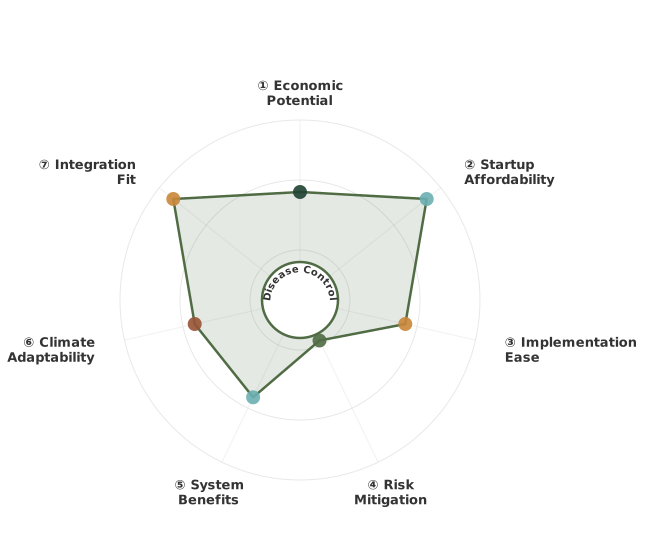
How These Traits Are Calculated
Trait dimensions are ordered clockwise starting from the top of the chart (12 o'clock position):
1. Economic Potential
Financial returns, annual value, and break-even timeline
WHAT: Evaluates financial viability by combining net annual value ($/ha from savings, income, and amortized harvests) with break-even timeline showing when practices pay for themselves.
WHY: Farmers need clear ROI understanding before committing resources. Fast payback (≤3 years) with strong returns (≥$300/ha) enables confident adoption, while long timelines (>10 years) restrict adoption to well-funded operations willing to wait for returns.
HOW: Calculated from net annual value in $/ha and break-even years. Exceptional (≥2.6): fast ROI ≤3 years + high value ≥$300/ha. Typical (1.8-2.5): moderate returns or longer timelines. Limited (<1.8): marginal economics or very long payback >10 years.
2. Startup Affordability
Initial investment costs and financial barrier to entry
WHAT: Measures financial barrier to entry through startup costs for equipment, infrastructure, consulting, and materials. Inverted scoring: lower costs = higher scores = more accessible adoption.
WHY: Affordability determines who can adopt. Low-cost practices (<$250/ha) enable widespread adoption across diverse scales, while high costs (>$2,500/ha) limit adoption to well-capitalized operations, creating barriers that slow regenerative transition.
HOW: Calculated from initial investment parsed from practice content. Inverted scoring: Exceptional (≥2.6): minimal investment <$250/ha. Typical (1.8-2.5): moderate costs $250-2,500/ha. Limited (<1.8): high barrier >$2,500/ha.
3. Implementation Ease
Learning curve and specialized knowledge required
WHAT: Measures how much learning, planning, and specialized knowledge a practice requires. Simpler practices with fewer steps score higher, while complex practices requiring extensive training or specialized resources score lower.
WHY: Complex practices create adoption barriers even when economically viable. Straightforward practices enable faster adoption and broader participation, while those requiring extensive training, timing precision, or specialized equipment limit who can succeed.
HOW: Evaluated by measuring documentation length and identifying complexity markers like location-specific requirements, seasonal timing windows, specialized skills, and dedicated equipment needs. Exceptional (≥2.6): straightforward practices with minimal prerequisites. Typical (1.8-2.5): moderate learning curve with some specialized needs. Limited (<1.8): steep learning curve requiring significant training or resources.
4. Risk Mitigation
Identified financial and ecological risk assessment
WHAT: Evaluates documented risks across financial (investment loss, market volatility) and ecological (crop failure, pest outbreaks) domains. Inverted scoring: fewer risks = higher scores.
WHY: Understanding risk exposure helps farmers make informed decisions. Low-risk practices allow confident implementation, while high-risk practices require careful planning and contingency resources. Risk transparency prevents costly failures.
HOW: Calculated from identified risks in practice content. Inverted scoring: Exceptional (≥2.6): ≤2 risks with manageable severity. Typical (1.8-2.5): 3-5 moderate risks. Limited (<1.8): 6+ risks or severe exposure.
5. System Benefits
How many ways the practice improves your land simultaneously
WHAT: Measures how many aspects of land health improve at once—carbon storage, soil quality, erosion control, water absorption, and biodiversity. Practices that improve multiple areas simultaneously create compounding benefits where each improvement reinforces the others.
WHY: The best practices solve multiple problems at once. For example, addressing erosion simultaneously builds carbon and improves water infiltration, creating a resilient system with positive feedback loops. Single-benefit approaches miss these compound transformation opportunities.
HOW: Evaluated across five key outcomes: carbon sequestration, soil organic matter increase, erosion reduction, water infiltration improvement, and biodiversity enhancement. Exceptional (≥2.6): high carbon storage (>8 t/ha/yr), improvements across 4-5 areas, transformative outcomes. Typical (1.8-2.5): moderate carbon (3-8 t/ha/yr), improvements across 2-3 areas. Limited (<1.8): modest impact (<3 t/ha/yr), single-area focus only.
6. Climate Adaptability
Geographic applicability across Köppen climate zones
WHAT: Evaluates geographic applicability by assessing how many Köppen climate zones successfully support a practice and what adaptation requirements are needed. Measures breadth of climates where farmers can implement with minimal to moderate modifications.
WHY: Universal practices working across diverse climates enable more farmers to adopt regenerative approaches. Practices limited to single climate types (only Mediterranean, only tropical) restrict adoption and slow global transition. Adaptability determines whether a practice serves niche regions or offers broad transformation.
HOW: LLM evaluation of regional success stories, Köppen zone coverage, and adaptation needs. Exceptional (≥2.6): 5+ zones or 4+ climate types, 3+ continents, minimal adaptation. Typical (1.8-2.5): 3-4 zones or 2-3 types, 2 continents, moderate adaptation. Limited (<1.8): 1-2 zones, single region, significant adaptation or highly specialized.
7. Integration Fit
How well this practice combines with others you're doing
WHAT: Measures how well a practice combines with other regenerative practices you might be doing. Some practices work as building blocks that make many other practices easier or more effective, while others work best on their own.
WHY: Practices that combine well with many others create more value on your farm. For example, cover cropping enables no-till, improves grazing, supports crop diversity, and helps water management—making all of them work better together. This helps you build a coherent system rather than juggling disconnected practices.
HOW: Evaluated by identifying which practices combine well and how strong those combinations are. 'Ideally Suited' means strong combinations where practices reinforce each other (practice A makes B easier, while B makes A more effective). 'Adequate' means complementary benefits that work well together. Exceptional (≥2.6): combines well with 6+ practices, serves as a building block. Typical (1.8-2.5): combines with 3-5 practices. Limited (<1.8): 1-2 practices or works best alone.
Going Deeper
1
WHY - The Benefits
Regenerative disease control offers a paradigm shift from reactive, input-driven management to proactive ecological strengthening. The benefits are cascading, impacting soil health, economic viability, water cycles, carbon sequestration, and biodiversity. By fostering a...
Regenerative disease control offers a paradigm shift from reactive, input-driven management to proactive ecological strengthening. The benefits are cascading, impacting soil health, economic viability, water cycles, carbon sequestration, and biodiversity. By fostering a...
WHY - The Benefits
Regenerative disease control offers a paradigm shift from reactive, input-driven management to proactive ecological strengthening. The benefits are cascading, impacting soil health, economic viability, water cycles, carbon sequestration, and biodiversity. By fostering a...
Regenerative disease control offers a paradigm shift from reactive, input-driven management to proactive ecological strengthening. The benefits are cascading, impacting soil health, economic viability, water cycles, carbon sequestration, and biodiversity. By fostering a...
Soil Health Benefits
A core tenet of regenerative disease control is the understanding that healthy soil equals healthy plants. By minimizing soil disturbance (Principle 1), keeping soil covered (Principle 3), and maintaining living roots (Principle 4), we cultivate a rich and diverse soil microbiome. This microbiome acts as the farm's primary defense system. Beneficial fungi (like mycorrhizae) form symbiotic relationships with plant roots, increasing their access to nutrients and water while simultaneously outcompeting or inhibiting soil-borne pathogens. Bacteria can produce antibiotics or enzymatic compounds that suppress disease-causing organisms.
Diverse microbial communities also improve soil structure, which in turn enhances water infiltration and aeration. Better soil structure means roots can penetrate deeper, accessing more nutrients and water, leading to more vigorous plant growth less susceptible to disease. Studies show that regenerative practices can increase soil microbial biomass by 30-50% and fungal diversity by up to 2-3 times compared to conventional systems within 5-10 years. This enhanced biological activity reduces the reliance on chemical fertilizers, which can harm beneficial soil life and indirectly promote disease issues.
Moreover, increased soil organic matter, a hallmark of regenerative systems, improves water-holding capacity. This reduces drought stress on plants, making them less vulnerable to diseases that thrive in stressed conditions. By building soil health, we create an environment where plants are inherently stronger and better equipped to fend off pathogens.
Economic Benefits
The economic advantages of regenerative disease control are manifold, primarily stemming from reduced input costs and improved yield stability and quality. Conventional disease management often relies on repeated applications of synthetic pesticides, fungicides, and herbicides, which represent a significant annual expense for farmers. Regenerative practices substantially reduce or eliminate these costs. For example, replacing synthetic fungicides with biological controls or improved crop rotations can save farmers $20-80 per hectare ($8-32 per acre) annually, depending on the intensity of past chemical use.
Beyond direct input savings, regenerative systems lead to improved yield stability and quality over time. Healthier soils and more resilient plants are less susceptible to disease outbreaks, reducing crop losses. While year-to-year yields might fluctuate naturally with weather, the trend in regenerative systems is towards greater stability and higher quality produce that commands premium prices in many markets. Over a 5-10 year transition, farmers often see yield increases of 10-25% due to improved soil fertility, nutrient cycling, and disease resistance.
Reduced disease pressure also translates to less post-harvest loss and improved marketability. Produce from regeneratively managed systems is often perceived as healthier and higher quality, opening access to direct-to-consumer markets, farmers' markets, and value-added processing opportunities. The long-term economic resilience of the farm is enhanced by building natural capital—soil health, biodiversity, and a robust ecosystem—which provides ongoing, compounding benefits without requiring increasing external investments.
Regenerative Systems Fit
Regenerative disease control is not a standalone practice but an outcome of applying the core regenerative principles holistically. It is inherently aligned with the goal of building self-sustaining, resilient agricultural ecosystems.
Principle 1 (Minimize Soil Disturbance): Regenerative practices fundamentally involve biological intervention over mechanical or chemical. Reduced tillage protects the soil structure and the complex web of life within it. This soil biology is the first line of defense against soil-borne pathogens.
Principle 2 (Maximize Crop Diversity): Diverse planting systems (crop rotation, intercropping, polycultures) break disease cycles by preventing susceptible hosts from growing consecutively in the same spot. Different plant species also support different beneficial microbes, creating a more robust and diverse soil ecosystem that can suppress a wider range of pathogens.
Principle 3 (Keep Soil Covered): Continuous living cover or mulch protects soil from erosion and extreme temperature fluctuations, which can stress plants. Bare soil is an open invitation for opportunistic pathogens. Living cover continuously feeds soil microbes, keeping them active and ready to suppress disease.
Principle 4 (Maintain Living Roots): Plants with deep, extensive root systems are healthier and more resilient. Continuous living roots year-round provide a steady food source for soil microbes, fostering a thriving biological community that outcompetes pathogens.
Principle 5 (Integrate Livestock): Managed grazing can help remove disease reservoirs (e.g., overwintering pests or pathogens) from pasture. Animal manure, when composted or applied strategically, adds beneficial microbes to the soil, further enhancing its disease-suppressive capacity.
The integration of these principles creates a synergistic effect. For example, the diverse microbial communities fostered by minimal soil disturbance and maximum crop diversity are better equipped to suppress a wider range of pathogens. Similarly, the improved soil structure and plant vigor resulting from keeping soil covered and maintaining living roots make plants less susceptible to diseases that thrive on stressed or nutrient-deprived hosts.
For a farm in transition, adopting regenerative disease control means gradually phasing out chemical inputs while actively building ecological capacity. This might involve starting with improved crop rotations and cover cropping, followed by more advanced intercropping or integrated pest and disease management strategies that leverage beneficial insects and microbes. The pathway is not about eliminating disease overnight, but progressively strengthening the farm's natural defenses until external interventions are no longer necessary. Farms successfully implementing these practices observe a marked decrease in disease incidence and severity over 3-7 years, with reduced need for intervention becoming evident much earlier.
Sources behind this view
Videos & Podcasts
-
Regenerative agriculture provides solutions for climate change, human health, and soil degradation, contrasting with industrial agriculture's harmful impacts, including glyphosate use. Practices like
-
Provides actionable steps for regenerative agronomy: balanced N:C inputs (molasses, humates), microbial teas, yeast metabolites, calcium, and effective seed treatments. Emphasizes scalability, systems
-
Case studies of farmers like Duane Beck, Kofi Boa, David Brandt, and Gabe Brown demonstrate that regenerative agriculture (no-till, cover crops, diverse rotations) significantly increases soil health,
-
Adopts regenerative agriculture principles: minimize disturbance, keep living roots, use soil armor, integrate animals (livestock grazing, multi-species), and increase biodiversity. These practices bu
Community
-
Build healthy pasture soils by minimizing tillage, maintaining living roots and species diversity, and implementing proper grazing management. Livestock are essential for nutrient cycling and stimulat
Read more (opens in new window) smallfarms.cornell.edu -
Explains regenerative agriculture principles: no-till gardening to support soil microbiome and sequester carbon; using compost to reduce erosion and compaction; and planting diverse cover crops (grass
Read more (opens in new window) ucanr.edu -
Regenerative gardening principles include minimizing soil disruption (avoiding excessive tilling), keeping soil covered with plants or organic matter, promoting plant diversity through crop rotation a
Read more (opens in new window) ucanr.edu -
Regenerative agriculture reverses soil harm by sequestering carbon through cover crops, no-till, compost, and crop rotation, improving soil health and resilience for both farms and home gardens.
Read more (opens in new window) ucanr.edu
Research
-
The Indigenous Roots of Regenerative Agriculture (opens in new window)
This study found: Modern regenerative agriculture practices are rooted in millennia of Indigenous land stewardship, offering profound knowledge and a crucial value system of respect and reciprocity for true transformat
-
Regenerative Agriculture: Restoring Ecosystems¢ Resilience and Productivity: A Review (opens in new window)
This study found: Regenerative agriculture builds soil health and ecosystem services through practices like no-till, cover crops, and diverse rotations. It increases soil organic matter, improves water infiltration, bo
-
Systematic review of regenerative farming: Addressing agricultural sustainability challenges (opens in new window)
This study found: Systematic review of 31 studies shows regenerative farming improves soil health, biodiversity, and carbon capture, aiding sustainability. Technology is key for adoption, but policy, farmer understandi
-
Regenerative Agriculture and Sustainable Plant Protection: Enhancing Resilience Through Natural Strategies (opens in new window)
This study found: Regenerative agriculture enhances crop protection and farm resilience by restoring ecosystems, reducing artificial inputs, and adopting agro-ecological pest control methods, promoting sustainability.
From the Web
-
Regenerative Agriculture rebuilds soil health and biodiversity through four principles: no tillage, continuous soil cover, increased plant diversity, and livestock integration. This approach aims for
-
Regenerative agriculture restores soil health through practices like cover cropping and crop rotation, leading to carbon sequestration, increased resiliency, and reduced reliance on off-farm inputs, b
-
Regenerative agriculture restores degraded soils by working with nature, enhancing soil health and profitability. Key practices reduce input costs, improve resilience, and benefit the environment thro
-
Regenerative agriculture principles focus on enhancing soil health and carbon sequestration through biodiversity above and below ground. Key practices include diverse crop rotations, cover cropping, i
2
WHERE - Regional Considerations
Disease pressure and management strategies vary significantly with climate and geographic location. Regenerative approaches must be adapted to local conditions, leveraging native biodiversity and climate-appropriate practices to build resilience.
Disease pressure and management strategies vary significantly with climate and geographic location. Regenerative approaches must be adapted to local conditions, leveraging native biodiversity and climate-appropriate practices to build resilience.
WHERE - Regional Considerations
Disease pressure and management strategies vary significantly with climate and geographic location. Regenerative approaches must be adapted to local conditions, leveraging native biodiversity and climate-appropriate practices to build resilience.
Disease pressure and management strategies vary significantly with climate and geographic location. Regenerative approaches must be adapted to local conditions, leveraging native biodiversity and climate-appropriate practices to build resilience.
Click Here to Look up your Region if you don't already know it
Humid Temperate Regions
Representative Locations: Southeastern United States, Northern Europe (UK, Germany, France), Eastern China, Japan, New Zealand
Climate Context: Warm to hot summers and cool to cold winters with moderate to high annual precipitation (75-150 cm or 30-60 inches) distributed relatively evenly. USDA Zones 6-8, Köppen Cfb/Cfa.
Regenerative Disease Control: High rainfall can increase fungal disease pressure. Emphasize diverse crop rotations with disease-resistant varieties, maintaining good drainage, and utilizing cover crops to break disease cycles. Integrated pest and disease management (IPM) strategies that incorporate beneficial insects and microbial inoculants are especially effective here. Polycultures and intercropping can reduce pathogen spread by creating physical barriers and altering microclimates. Emphasis on soil health is critical to manage soil-borne diseases exacerbated by wet conditions.
Mediterranean Regions
Representative Locations: California, Mediterranean basin (Spain, Italy, Greece), central Chile, southwestern Australia, Western Cape South Africa
Climate Context: Hot, dry summers and mild, wet winters. Annual precipitation 40-90 cm (15-35 inches), highly seasonal. USDA Zones 8-10, Köppen Csa/Csb.
Regenerative Disease Control: Water stress during dry summers can predispose plants to certain diseases. Focus on drought-tolerant species, drought-resistant cover crops, and practices that enhance water infiltration and retention (e.g., increasing soil organic matter). Fungal diseases can be prevalent in mild, wet winters. Diverse rotations, avoiding susceptible crops during wet periods, and using compost teas or beneficial microbial applications can help. Managing soil to reduce salinity and nutrient imbalances, which can stress plants, is also key.
Arid/Semi-Arid Regions
Representative Locations: Western USA, North Africa, Central Asia, Interior Australia
Climate Context: Low annual precipitation (<40 cm or 15 inches), high temperatures, short and often unpredictable growing season. USDA Zones 7-9, Köppen BSh/BSk.
Regenerative Disease Control: Water scarcity is the primary stressor. Focus on drought-tolerant crops and livestock breeds, water-efficient irrigation (if used at all), and practices that maximize soil water infiltration and retention (e.g., permanent ground cover, high organic matter). Fungal diseases are less common than issues arising from heat and drought stress, but certain pathogens can thrive on stressed plants. Selecting disease-resistant varieties suited to water-limited conditions and building soil health to maximize available water are paramount. Dust-borne diseases may also be a concern.
Cold Continental Regions
Representative Locations: Northern USA and Canada, Northern Europe, Northern Asia
Climate Context: Very short growing seasons, extreme summer heat, severe winter cold. USDA Zones 3-5, Köppen Dfa/Dfb.
Regenerative Disease Control: Short growing seasons limit opportunities for disease development but also for plant recovery. Focus on disease-resistant varieties that mature quickly and can withstand frost. Cover cropping strategies must be adapted to short windows for establishment and growth. Winter-hardy cover crops that survive cold and provide living roots into spring are valuable. Soil health practices improve plant vigor, enabling crops to develop faster and potentially outgrow early disease pressure. Pathogen survival in frozen soil can be a consideration for specific diseases.
Subtropical Regions
Representative Locations: Southeastern USA, Southern China, Southern Brazil, Eastern Australia
Climate Context: Hot, humid summers and mild winters with generally ample rainfall. USDA Zones 9-11, Köppen Cfa/Cwa.
Regenerative Disease Control: High humidity and warm temperatures create ideal conditions for fungal and bacterial diseases. Emphasize disease-resistant varieties, excellent drainage, and diverse crop rotations to break cycles. Cover cropping with species that can tolerate high humidity and heat is important. Utilizing beneficial microbial inoculants and encouraging natural predators of disease-carrying insects are key strategies. Managing for airflow and reducing plant stress from nutrient imbalances are critical.
Tropical Regions
Representative Locations: Central America, Southeast Asia, East Africa, Northern Australia, Northern South America
Climate Context: High temperatures year-round, with distinct wet and dry seasons or consistent high rainfall. Köppen Af/Am/Aw.
Regenerative Disease Control: Year-round growing seasons and high humidity often lead to continuous disease pressure. Extreme diversity is essential: complex rotations, intercropping, agroforestry systems (silvopasture, perennial crops), and integrating a wide array of beneficial organisms. Selecting disease-resistant cultivars is paramount. Practices that enhance soil organic matter and drainage are critical for managing root diseases common in wet tropical soils. Biological controls, compost teas, and plant-derived bio-pesticides play a significant role when conventional disease pressure is high.
3
HOW - Implementation Process
Regenerative disease control is a proactive, integrated strategy that builds natural resilience. It involves optimizing soil health, plant diversity, microbial populations, and management timing to prevent diseases from establishing.
Regenerative disease control is a proactive, integrated strategy that builds natural resilience. It involves optimizing soil health, plant diversity, microbial populations, and management timing to prevent diseases from establishing.
HOW - Implementation Process
Regenerative disease control is a proactive, integrated strategy that builds natural resilience. It involves optimizing soil health, plant diversity, microbial populations, and management timing to prevent diseases from establishing.
Regenerative disease control is a proactive, integrated strategy that builds natural resilience. It involves optimizing soil health, plant diversity, microbial populations, and management timing to prevent diseases from establishing.
Prerequisites
Before beginning regenerative disease control, consider these foundational elements:
- Soil Assessment: Understand current soil health—organic matter content, structure, drainage, and microbial activity. This provides a baseline.
- Past Disease History: Identify common diseases and susceptible crops on your land.
- Resource Availability: Access to diverse seed mixes, biological inoculants, and information on regenerative practices.
- Commitment to Observation: Willingness to regularly monitor plant and soil health to detect subtle changes and identify early warning signs.
Phase 1: Building Soil Health (Years 1-3)
The first step is to significantly improve the soil's natural defense capabilities.
- Minimize Soil Disturbance: Transition to no-till or reduced-till methods. This protects soil structure and the beneficial organisms that reside there. If severe compaction exists, a one-time deep tillage may be a transition practice followed by immediate cover cropping and permanent no-till commitment.
- Keep Soil Covered: Implement year-round cover cropping or permanent pasture. This provides continuous food for soil microbes, prevents erosion, and maintains soil moisture. Use diverse species mixes (e.g., grasses, legumes, brassicas) suited to your climate.
- Maintain Living Roots: Ensure a living root system is in the soil as much as possible. Perennial crops, diverse cover crop mixes extending into fallow periods, and agroforestry systems provide consistent exudates that fuel beneficial soil biology, which suppresses pathogens.
- Integrate Livestock Strategically: If applicable, use rotational grazing to manage pasture health, cycle nutrients, and encourage beneficial soil organisms. Avoid overgrazing, which stresses plants and harms soil structure.
Phase 2: Enhancing Biodiversity (Years 2-5)
With a foundation of healthy soil, focus on increasing above-ground and below-ground diversity.
- Maximize Crop Diversity: Implement longer and more diverse crop rotations (4-7+ years). Incorporate intercropping (growing two or more crops together) and polycultures. Select disease-resistant varieties based on local research and your farm's disease history.
- Introduce Beneficial Organisms: Use compost teas, microbial inoculants (e.g., arbuscular mycorrhizal fungi, Trichoderma species), and attract beneficial insects (predators of pests and disease vectors) through diverse habitat plantings like hedgerows or insectaries.
- Integrate Trees/Shrubs: Consider agroforestry systems like silvopasture or alley cropping. Trees can provide habitat for beneficial insects, improve soil structure, and support a wider array of soil microbes.
Phase 3: Optimized Management and Monitoring (Years 4+)
As the ecosystem gains resilience, fine-tune management and monitoring.
- Adaptive Grazing: For livestock systems, ensure grazing periods are short and rest periods are long enough to allow forage recovery and prevent soil compaction.
- Site-Specific Interventions: Monitor crops/pastures closely. If minor disease issues arise, consider biologically-based solutions first: improving drainage, adjusting planting density, targeted compost tea application, or introducing specific beneficial microbes.
- Refine Cover Crop Mixes: Tailor cover crop species to address any remaining soil deficiencies or disease pressures. For example, leguminous cover crops enhance nitrogen, while brassicas can suppress some soil-borne diseases.
- Record Keeping: Maintain detailed records of disease incidence, weather patterns, management practices, and their effects. This data is invaluable for refining strategies over time.
Transition Timeline & Phase-Out Strategy
For farms transitioning from conventional chemical-dependent disease control:
- Years 1-2: Begin incorporating diverse cover crops and improving soil health practices while reducing synthetic fungicide/pesticide use by 30-50%. Focus on observation.
- Years 3-4: Increase cover crop diversity and complexity of rotations. Introduce beneficial microbial inoculants or compost teas. Reduce synthetic inputs by another 30-50%. Monitor for increases in beneficial insect populations and improved soil biological activity.
- Years 5-7 onwards: Aim for near elimination of synthetic inputs. Rely primarily on soil health, crop diversity, and biological controls. Some spot applications of approved organic pesticides might be necessary for specific, high-pressure outbreaks during the late transition, but the goal is to phase these out.
Success Indicators for Graduation:
- Significantly reduced occurrence and severity of common diseases.
- Observable increase in beneficial insects and soil organisms.
- Improved crop vigor, nutrient density, and yield stability.
- Reduced need for crop scouting focused solely on disease outbreaks.
- The ability to successfully manage minor disease issues with non-chemical interventions.
Sources behind this view
Videos & Podcasts
-
Regenerative agriculture provides solutions for climate change, human health, and soil degradation, contrasting with industrial agriculture's harmful impacts, including glyphosate use. Practices like
-
Provides actionable steps for regenerative agronomy: balanced N:C inputs (molasses, humates), microbial teas, yeast metabolites, calcium, and effective seed treatments. Emphasizes scalability, systems
-
Transitioning to regenerative agriculture is a human/psychological process requiring trials to reduce risk and build trust. Increased consumer awareness of ecology and health would drive demand for re
-
Case studies of farmers like Duane Beck, Kofi Boa, David Brandt, and Gabe Brown demonstrate that regenerative agriculture (no-till, cover crops, diverse rotations) significantly increases soil health,
Community
-
Build healthy pasture soils by minimizing tillage, maintaining living roots and species diversity, and implementing proper grazing management. Livestock are essential for nutrient cycling and stimulat
Read more (opens in new window) smallfarms.cornell.edu -
Advocates for converting conventional land to permaculture, recommending a gradual transition with cover crops and farmer collaboration, aiming to reduce chemical inputs over 3 years as soil heals.
Read more (opens in new window) permies.com -
Explains regenerative agriculture principles: no-till gardening to support soil microbiome and sequester carbon; using compost to reduce erosion and compaction; and planting diverse cover crops (grass
Read more (opens in new window) ucanr.edu -
Regenerative gardening principles include minimizing soil disruption (avoiding excessive tilling), keeping soil covered with plants or organic matter, promoting plant diversity through crop rotation a
Read more (opens in new window) ucanr.edu
Research
-
Regenerative Agriculture: Restoring Ecosystems¢ Resilience and Productivity: A Review (opens in new window)
This study found: Regenerative agriculture builds soil health and ecosystem services through practices like no-till, cover crops, and diverse rotations. It increases soil organic matter, improves water infiltration, bo
-
The Indigenous Roots of Regenerative Agriculture (opens in new window)
This study found: Modern regenerative agriculture practices are rooted in millennia of Indigenous land stewardship, offering profound knowledge and a crucial value system of respect and reciprocity for true transformat
-
Building Soil Health and Fertility through Organic Amendments and Practices: A Review (opens in new window)
This study found: Review of organic amendments (manures, compost, cover crops) and regenerative practices (no-till, crop diversity, agroecology) shows they restore soil health by increasing organic matter and beneficia
-
Transition to Regenerative Farming (opens in new window)
This study found: A 5-year case study shows a farm successfully transitioned to regenerative practices, reducing soil erosion and increasing wildlife by using cover crops, diversified rotations, and reduced tillage. Pr
From the Web
-
Five steps to regenerative agriculture: Holistic Planned Grazing, no-till farming, planting diverse cover crops/interseeding, using compost/inoculants (with caution), and incorporating silvopasture/wo
4
Know the Debate
Disease control in regenerative agriculture prioritizes ecosystem health over chemical intervention. While the principles of building soil biology ...
Know the Debate
Disease control in regenerative agriculture prioritizes ecosystem health over chemical intervention. While the principles of building soil biology ...
Disease control in regenerative agriculture prioritizes ecosystem health over chemical intervention. While the principles of building soil biology and plant diversity are universally applicable, the speed and effectiveness of disease suppression vary significantly based on climate, starting soil health, and the farmer's transition length. Humid regions may see rapid fungal disease management with diverse systems, while arid zones focus on water stress resilience. Farms transitioning from chemical-heavy systems may experience initial disease pressure before biological controls establish.
How effective are regenerative practices at controlling plant diseases?
Highly Effective with Systemic Health
Academic research and detailed field observations indicate that robust regenerative systems, particularly those with high soil organic matter, intense crop diversity, and active soil biology, can achieve significant disease reduction (up to 70-90% decrease over 5-10 years). These systems naturally suppress pathogens and boost plant immunity.
Sources behind this view
Sources behind this view
Videos & Podcasts
-
Regenerative agriculture can build plant immunity to pests and diseases through optimal nutrition and microbiome support, eliminating the need for pesticides, as demonstrated by contrasting farm field observations in northeast Ohio.
Research
-
Sustainable Practices in Organic Agriculture: Reducing Environmental Impact and Improving Efficiency (opens in new window)
This study found: Organic farming offers an environmentally friendly way to grow food by focusing on biodiversity, healthy soil, and less chemical use. This article highlights practices that reduce environmental harm and improve farm efficiency. Rotating crops, especially using legumes like clover or peas, builds soil fertility and helps manage pests. Composting turns farm waste into rich soil amendment, improving soil structure and its ability to hold water, while also boosting beneficial microbes. Using natural predators to control pests instead of chemicals protects the environment and pollinators. Other methods like planting trees with crops (agroforestry), managing water wisely, and using cover crops also make farms stronger, recycle nutrients better, and prevent soil erosion. These organic approaches show that farming can be productive while being good for the planet, leading to more resilient and regenerative systems.
From the Web
-
Organic strawberry disease control focuses on soil health, crop rotation, compost, and solarization/ASD. Covers root rot, anthracnose, Botrytis, leaf spot, and powdery mildew with specific organic methods and preventative treatments.
Variable Results During Transition
Field experience shows that disease control effectiveness is highly variable, especially during the initial transition phase (1-5 years). While some farmers report quick success, others face prolonged disease pressure if soil biology is severely compromised or management is inconsistent.
Sources behind this view
Sources behind this view
Videos & Podcasts
-
Plant health relies on photosynthesis, balanced soil nutrition, and beneficial microbes. Practices like compost teas and cover crops boost plant defenses and disease resistance. Achieving healthy soil biology, with diverse fungi and bacteria, is crucial and takes time.
-
Farmer minimizes disease in popcorn and pinto beans by prioritizing plant health through nutrient management, eliminating routine fungicide use. Focuses on balanced nutrition (avoiding excess nitrate, addressing zinc/manganese deficiencies) and healthy soil biology to build natural plant resistance, preventing reliance on chemical treatments.
-
Long-term strategies for reduced input costs include no-till farming, improving soil drainage, and managing cover crops to build soil health and resilience. These practices reduce reliance on tillage, enhance nutrient efficiency, and mitigate disease risks, leading to less need for fuel, fertilizer, and fungicide.
Climate and Context Dependent
The success of regenerative disease control is strongly influenced by climate and specific farm context. Humid, temperate regions may see faster improvements in fungal disease suppression, while arid or heavily polluted soils present unique challenges requiring tailored strategies.
Sources behind this view
Sources behind this view
Videos & Podcasts
-
Organic disease management focuses on soil health and microbiome support. Anaerobic Soil Disinfestation (ASD) uses carbon amendments and tarps to create disease-suppressive soil. Practices like green manures, compost, specific cover crops (sunn hemp, brassicas), and proper nutrient management also enhance plant resilience against pathogens and nematodes.
Research
-
Soil health paradigms and implications for disease management. (opens in new window)
This study found: This review looks at how improving soil health can help manage plant diseases. Soil health means having soil that functions as a living system, supporting healthy plant growth and a good environment. Practices like rotating crops, using cover crops (like rye or clover), adding compost or manure, and reducing tillage generally help suppress diseases. This is because these practices boost the amount and activity of beneficial microbes in the soil, which can fight off disease-causing organisms. While these methods are mostly beneficial, the review notes that some soil health practices might also create specific disease challenges. Overall, building healthy soil is key for sustainable farming and managing plant diseases.
From the Web
-
Organic pest and disease management prioritizes preventative cultural practices, followed by biological/physical controls, and finally allowed materials. Cover crops and habitat management enhance natural enemies, while resistant varieties and sanitation are key for disease control.
Making Sense of the Differences
The effectiveness of regenerative disease control hinges on the farm's starting point and environmental context. Degraded soils or those with a history of chemical inputs require more time for biological systems to re-establish defenses, potentially leading to higher disease pressure initially. Conversely, farms with naturally healthier soils or those implementing diverse practices diligently over several years tend to see significant and lasting reductions in disease. Climate also plays a role, with humid regions facing different challenges than arid ones, requiring adaptation in cover crop choice and management.
5
HOW MUCH - Costs & Investment
Note: Costs shown in USD; multiply by local labor and material cost indices for your region. Labor costs vary significantly internationally.
Note: Costs shown in USD; multiply by local labor and material cost indices for your region. Labor costs vary significantly internationally.
HOW MUCH - Costs & Investment
Note: Costs shown in USD; multiply by local labor and material cost indices for your region. Labor costs vary significantly internationally.
Note: Costs shown in USD; multiply by local labor and material cost indices for your region. Labor costs vary significantly internationally.
Note: All costs are based on recent US economic data (2024–2026) and may vary substantially by region based on local labor rates, material costs, and regulatory requirements.
Cover Crop and Biodiversity Seed Mixes
Regenerative disease control relies on complex botanical structures that suppress pathogens before they reach economic thresholds. Seed mix costs are dominated by species diversity and regional supply chain logistics. Small operations (under 50 acres (20 ha)) typically source specialized, low-volume mixes for niche disease suppression, costing $26–$52 per acre ($64–$128/ha). These producers often lack the leverage to command volume pricing found in broader markets. Mid-size operations (50–500 acres (20–202 ha)) occupy a more favorable middle ground, utilizing standardized regional mixes that balance cost and efficacy, ranging from $21–$42 per acre ($52–$104/ha). Large-scale operations (500+ acres) leverage their ability to secure bulk discounts on core regenerative species such as cereal rye, crimson clover, and hairy vetch, often realizing reduced costs of $16–$31 per acre ($40–$77/ha). These price tiers reflect the logistical reality that shipping costs, seed lot testing, and diversity specifications heavily weight the per-acre outcome more than the raw acreage alone.
Beneficial Inoculants and Biologicals
This category encompasses the specialized toolkit for soil-borne pathogen regulation, including compost teas, mycorrhizal fungi colonization agents, and beneficial bacterial inoculants. Small operations often rely on high-quality, read-to-apply liquid biologicals, which maximize ease of use but drive cost to $13–$31 per acre ($32–$77/ha). Mid-size operations, often scaling their labor to include on-farm management, find greater value in mid-range biological programs costing $10–$26 per acre ($25–$64/ha). Large-scale operations generally transition toward onsite fermentation or brewing of liquid extracts, which significantly lowers material costs while requiring higher baseline investments in liquid-handling equipment, keeping their direct input costs to $8–$21 per acre ($20–$52/ha). Producers at every scale must account for the consistent shelf-life costs of biological products, which require cold-chain stability that can drive up regional delivery expenses.
Transition-Specific Equipment
Transitioning toward regenerative disease control necessitates a mechanical paradigm shift—moving away from deep-tillage that disrupts soil structure and toward no-till or reduced-tillage regimes. Capital investment represents the largest barrier to entry. For small operations, this often involves the procurement of light, tractor-mounted no-till attachments or specialized hand-operated or walk-behind equipment designed for intensive plot management, with total outlays of $5,210–$26,050. Mid-size operations typically invest in heavy-duty used no-till drills or multi-species planters that can handle diverse, high-residue cover crop mixes, requiring $31,260–$83,360. Large-scale operations require high-capacity, precision-engineered planting systems, including air-cart systems and down-pressure control technology, to maintain uniform seeding depths across varying terrain, necessitating investments of $104,200–$260,500+.
Education, Training, and Professional Consultation
Unlike conventional systems defined by preventative calendar-based spraying, regenerative management requires a steep learning curve focused on biological, rather than synthetic, intervention. Annual budgets for soil microbial testing, professional consultation to interpret microbial reports, and attendance at regenerative workshops are critical. Small operations should budget an annual expenditure of $208–$1,042 to ensure they avoid common pitfalls during the early biological transition phase. Mid-size producers often contract with specialized agronomists, resulting in annual costs of $521–$2,605. Large-scale operations, due to the complexity of managing large acreage across diverse soil types, often require more formalized, subscription-based advisory services, costing $1,042–$5,210+ annually.
Most Spend: The middle 60% of operations allocate $36–$73 per acre ($89–$180/ha) annually toward combined operating costs (seeds and biologicals). This range accounts for standard, non-premium seed sourcing and moderate reliance on commercial biological inputs rather than full-scale on-farm brewing.
Why the Range?: Cost variability is primarily driven by seed species diversity; a complex 15-species 'cocktail' designed for maximum pathogen suppression can cost 30% more than a basic 3-species system. Additionally, the labor-vs-input trade-off is significant: farms that choose to "home-grow" their own beneficial inoculants through onsite brewing can reduce their biological expenditure by 40–60%, provided they have the staff capacity for consistent management.
Sources behind this view
Videos & Podcasts
-
Transitioning to regenerative agriculture and biodynamics shifts costs from synthetic inputs to compost and labor, requiring a long-term view but ultimately improving soil health, carbon sequestration
-
Regenerative farming reduces synthetic fertilizer and pesticide costs (30-50% and up to 75% respectively, per USDA) by building soil organic matter, improving soil chemistry, and enhancing microbial d
-
Transitioning to regenerative farming costs $75k-$140k over two years but saves money compared to conventional nitrogen expenses ($195k/year). Start small (50-100 acres) with cover crops (hairy vetch,
Research
-
Regenerative Agriculture: Restoring Ecosystems¢ Resilience and Productivity: A Review (opens in new window)
This study found: Regenerative agriculture builds soil health and ecosystem services through practices like no-till, cover crops, and diverse rotations. It increases soil organic matter, improves water infiltration, bo
6
REWARDS AND RISKS - Economics & Risk Factors
REWARDS AND RISKS - Economics & Risk Factors
The transition to a proactive, ecosystem-based disease control model involves shifting from variable synthetic costs to fixed biological investments.
Economic Scenarios
- Best Case Scenario: Within 5–7 years, enhanced soil health leads to a decline in disease incidence by 70–90%. By replacing synthetic fungicides with biological competition, farmers can realize net annual income increases of $156–$365 per acre ($385–$902/ha). This assumes steady crop yields and access to price premiums for regeneratively grown products.
- Typical Case Scenario: Over 7–10 years, disease incidence stabilizes at a 50–70% reduction level. With input cost savings of 50–85%, initial transition investments are fully amortized. Net annual profitability increases in the $62–$156 per acre ($153–$385/ha) range are expected by year 8.
- Worst Case Scenario: In situations where soil biology fails to reach threshold density, disease pressure remains high, with only a 20–30% reduction. Cost savings are limited to $16–$42 per acre ($40–$104/ha) annually. If yields stagnate due to high pressure in wet years, the net return remains flat, effectively failing to recoup the capital transition investment within the projected window.
Transition Period Risks
- Yield Dips (Years 1–3): Farmers may face a 10–20% yield contraction as chemical inputs are withdrawn before the soil-microbial network is sufficiently established to provide natural immunity. This is a critical period where the lack of defensive chemistry leaves plants vulnerable.
- Mitigation Strategy: Gradual input weaning is vital. Reducing synthetic fungicides by 20–30% annually while increasing cover crop intensity creates a buffer. This requires an extra $10–$21 per acre ($25–$52/ha) for precision soil monitoring and microbial assay testing to ensure the crop has adequate protection throughout the transition phase.
- Financial Buffering: We recommend an emergency contingency fund of $52–$104 per acre ($128–$257/ha) in liquid capital during the first 3 years. This allows for rapid, targeted organic-compliant interventions if a sudden disease outbreak risks a total crop failure that a standard preventative model might prevent.
Market Factors Affecting Profitability The "transition gap" remains the greatest market risk: the period where the farm loses the predictable yield safety of conventional chemistry but has not yet secured the "regenerative premium" at market. Commodity-only producers are most exposed, as they lack the price flexibility to offset minor dips in output. Mitigating this risk requires securing contracts with direct-to-consumer outlets or specialty processors that explicitly value soil-health indicators, which can improve market pricing by $0.15–$0.50 per pound, significantly de-risking the transition.
Sources behind this view
Videos & Podcasts
-
Regenerative agriculture provides solutions for climate change, human health, and soil degradation, contrasting with industrial agriculture's harmful impacts, including glyphosate use. Practices like
-
Case studies of farmers like Duane Beck, Kofi Boa, David Brandt, and Gabe Brown demonstrate that regenerative agriculture (no-till, cover crops, diverse rotations) significantly increases soil health,
-
Transitioning to regenerative agriculture is a human/psychological process requiring trials to reduce risk and build trust. Increased consumer awareness of ecology and health would drive demand for re
-
Soil Capital's strategy for regenerative transition: 1) Optimize agrochemical/pesticide use for 10-40% savings. 2) Invest savings in multi-species cover crops and crop rotation diversification (oats,
Community
-
Advocates for converting conventional land to permaculture, recommending a gradual transition with cover crops and farmer collaboration, aiming to reduce chemical inputs over 3 years as soil heals.
Read more (opens in new window) permies.com -
Adopting no-till farming and non-GMO seeds improves soil health, reduces input costs (fuel, fertilizer, herbicides), and increases yields and profitability, leading to farmer adoption within 4-5 years
Read more (opens in new window) permies.com
Research
-
Regenerative Agriculture: Restoring Ecosystems¢ Resilience and Productivity: A Review (opens in new window)
This study found: Regenerative agriculture builds soil health and ecosystem services through practices like no-till, cover crops, and diverse rotations. It increases soil organic matter, improves water infiltration, bo
-
Systematic review of regenerative farming: Addressing agricultural sustainability challenges (opens in new window)
This study found: Systematic review of 31 studies shows regenerative farming improves soil health, biodiversity, and carbon capture, aiding sustainability. Technology is key for adoption, but policy, farmer understandi
-
Transition to Regenerative Farming (opens in new window)
This study found: A 5-year case study shows a farm successfully transitioned to regenerative practices, reducing soil erosion and increasing wildlife by using cover crops, diversified rotations, and reduced tillage. Pr
-
Soil Microbial Dynamics in Regenerative Agriculture Systems: A Data-Driven Synthesis for Soil Health, Pest Suppression, and Yield Sustainability in the Western Canadian Prairies (opens in new window)
This study found: Regenerative farming in Western Canada boosts soil microbes (up to 86%), fungi (up to 60%), and carbon, improving soil health and water retention. This leads to more stable yields and reduced syntheti
From the Web
-
Regenerative agriculture can be profitable despite potential initial yield decreases, driven by reduced input costs and access to premium markets. Research shows comparable yields after transition, im
7
COMPATIBLE PRACTICES - Integration Opportunities
Regenerative disease control is not a standalone practice but a result of integrating multiple regenerative principles and practices. Its effectiveness is amplified when combined with other soil-building and biodiversity-enhancing strategies.
Regenerative disease control is not a standalone practice but a result of integrating multiple regenerative principles and practices. Its effectiveness is amplified when combined with other soil-building and biodiversity-enhancing strategies.
COMPATIBLE PRACTICES - Integration Opportunities
Regenerative disease control is not a standalone practice but a result of integrating multiple regenerative principles and practices. Its effectiveness is amplified when combined with other soil-building and biodiversity-enhancing strategies.
Regenerative disease control is not a standalone practice but a result of integrating multiple regenerative principles and practices. Its effectiveness is amplified when combined with other soil-building and biodiversity-enhancing strategies.
Diverse Cover Cropping
- Integration: Using multi-species cover crop mixes (8-20+ species) that include grasses, legumes, brassicas, and forbs. Selecting species known for disease suppression or those that support beneficial microbes.
- Benefit: Provides continuous living cover, fixes nitrogen, feeds soil biology, breaks pest and disease cycles, improves soil structure, and suppresses weeds. Directly enhances soil health and plant resilience.
Intensive Rotations
- Integration: Planning crop sequences of 5-7 years or longer, including different plant families (e.g., legumes, grasses, brassicas, alliums). Avoiding consecutive planting of disease-susceptible crops.
- Benefit: Disrupts life cycles of specific pests and pathogens, improves soil fertility and structure through varied root systems, increases overall plant biodiversity.
No-Till or Reduced Till
- Integration: Eliminating or significantly reducing soil disturbance during planting and harvest.
- Benefit: Protects soil structure, preserves soil biology and fungal networks, increases soil organic matter, enhances water infiltration and retention. Healthier soil means healthier roots and plants less prone to disease.
Intercropping/Polycultures
- Integration: Growing two or more crops simultaneously in the same field.
- Benefit: Increases plant diversity above and below ground, can attract beneficial insects and pollinators, can attract or deter pests/diseases of companion crops, improves resource utilization, and enhances soil biology.
Agroforestry (Silvopasture, Alley Cropping)
- Integration: Incorporating trees, shrubs, or perennial woody plants into crop or pasture systems.
- Benefit: Creates diverse microclimates, supports beneficial insects and birds that prey on pests, improves soil structure via tree roots, can provide additional income streams, and increases overall biodiversity.
Compost & Biological Inoculants
- Integration: Applying high-quality compost or using specific microbial inoculants (e.g., beneficial fungi, bacteria, Trichoderma) to enhance soil biology.
- Benefit: Directly increases populations of beneficial microbes that suppress pathogens, improve nutrient availability, and enhance plant health. Enhances the soil's natural defense mechanisms.
Strategic Livestock Integration
- Integration: Using managed rotational or adaptive grazing to improve pasture health and manage plant communities. Applying composted manure.
- Benefit: Distributes nutrients, stimulates plant growth through grazing, can help break disease cycles by removing infected plant material or by introducing beneficial microbes through manure. Improves soil biology and structure.
By combining these practices, farmers create a highly resilient ecosystem where diseases struggle to gain a foothold. The synergistic interaction between diverse plants, healthy soil, beneficial microbes, and strategic management builds a farm that can thrive with minimal reliance on synthetic interventions.
Sources behind this view
Videos & Podcasts
-
Regenerative agriculture provides solutions for climate change, human health, and soil degradation, contrasting with industrial agriculture's harmful impacts, including glyphosate use. Practices like
-
Provides actionable steps for regenerative agronomy: balanced N:C inputs (molasses, humates), microbial teas, yeast metabolites, calcium, and effective seed treatments. Emphasizes scalability, systems
-
Utilize multi-species cover crops based on specific 'resource concerns' to improve soil health, nitrogen fixation, and water retention. Integrate livestock for grazing, calving, and overwintering, enh
-
Cover crops attract beneficial insects and pollinators, suppress pests, and improve soil biology. Mimicking nature's integration of animals and plants, alongside practices like no-till and diversity,

Community
-
Enhance soil health through plant diversity, continuous soil cover (living plants/residues), and livestock integration. Manage carbon-to-nitrogen ratios of residues and adopt no-till practices to impr
Read more (opens in new window) permies.com -
Build healthy pasture soils by minimizing tillage, maintaining living roots and species diversity, and implementing proper grazing management. Livestock are essential for nutrient cycling and stimulat
Read more (opens in new window) smallfarms.cornell.edu -
Gabe Brown's regenerative practices emphasize no-till, polyculture (ideally 7-20 species), and minimizing bare soil to build soil health and organic matter. These methods reduce water needs, increase
Read more (opens in new window) permies.com
Research
-
Building Soil Health and Fertility through Organic Amendments and Practices: A Review (opens in new window)
This study found: Review of organic amendments (manures, compost, cover crops) and regenerative practices (no-till, crop diversity, agroecology) shows they restore soil health by increasing organic matter and beneficia
-
The Indigenous Roots of Regenerative Agriculture (opens in new window)
This study found: Modern regenerative agriculture practices are rooted in millennia of Indigenous land stewardship, offering profound knowledge and a crucial value system of respect and reciprocity for true transformat
-
The Impact of Biodiversity on Plant Disease Dynamics in Organic Farming and Disease Management (opens in new window)
This study found: Biodiversity in organic farming helps control plant diseases by suppressing pathogens, boosting soil microbes, and enhancing plant defenses. Diverse cropping, natural amendments, and cover crops are k
-
Soil Microbial Dynamics in Regenerative Agriculture Systems: A Data-Driven Synthesis for Soil Health, Pest Suppression, and Yield Sustainability in the Western Canadian Prairies (opens in new window)
This study found: Regenerative farming in Western Canada boosts soil microbes (up to 86%), fungi (up to 60%), and carbon, improving soil health and water retention. This leads to more stable yields and reduced syntheti