
Dry Farming
Dry farming is a group of strategies for growing crops with minimal or no supplemental irrigation in regions receiving less than 500-600 mm (20-24 inches) of predictable annual rainfall. It focuses on soil health, moisture conservation, and drought-tolerant crop selection to maximize water use efficiency and ensure viable harvests in arid and semi-arid climates.
Read More: Complete Description
Dry farming is a system of agricultural practices designed to cultivate crops in regions with low, unreliable, and often seasonal rainfall, typically receiving less than 600 mm (24 inches) of annual precipitation. It is not about "farming without water," but about maximizing the capture, conservation, and efficient use of every drop of natural rainfall. This approach is crucial for land managers in arid, semi-arid, and Mediterranean climates worldwide where conventional irrigation is often unsustainable or unavailable.
At its core, dry farming is regenerative because it prioritizes soil health as the primary driver of water management and crop resilience. By minimizing soil disturbance, keeping the soil covered with living plants or mulches, maximizing crop diversity, and maintaining living roots, dry farmers build a soil ecosystem that acts like a sponge—able to absorb and store moisture effectively and release it to crops over longer periods. This stands in contrast to extractive systems that deplete soil organic matter, leading to reduced water retention, increased erosion, and a greater dependence on external inputs like synthetic fertilizers and irrigation.
The practice is context-dependent within regenerative agriculture. While its goal of maximizing water use efficiency and building soil health aligns perfectly with regenerative principles, its specific application can vary. In severely degraded soils with low organic matter, dry farming may initially require careful management of temporary compromises to enable long-term regeneration. For instance, breaking severe plow pans with a one-time tillage event might be necessary in extremely compacted soils to allow any water infiltration, immediately followed by cover cropping and a commitment to no further disturbance. However, on land with even moderate soil health, dry farming can be implemented as a foundational regenerative practice, directly supporting all five principles.
Dry farming techniques focus on capturing moisture through practices like the establishment of effective mulch layers, which reduce evaporation from the soil surface. Deep-rooted crops are favored as they can access soil moisture from greater depths. Crop rotation and the use of drought-tolerant crop varieties are also central to dry farming's success, ensuring that the land remains productive even under water stress. By managing the land to retain moisture and support healthy soil biology, dry farming creates a resilient agricultural system that can withstand the challenges of unpredictable rainfall patterns common in many regions.
Internationally, dry farming has been practiced for millennia. Ancient techniques developed by cultures in the Mediterranean basin, the Middle East, and parts of Asia laid the groundwork for many modern dry farming methods. Wheat and barley cultivation in regions like ancient Mesopotamia, or the careful water harvesting systems in dryland farming areas of India and the Sahel, demonstrate the long history and effectiveness of these practices. Today, farmers in parts of Australia, the western United States, Southern Europe, North Africa, and Central Asia continue to adapt and refine these techniques.
Common dry farming methods include:
- Summer Fallowing (with a twist): In regions with distinct wet and dry seasons, fields are tilled or cultivated after harvest to create a fine, dry mulch layer that prevents evaporation of soil moisture gained from winter rains. This moisture is then available for a crop planted in late summer or fall. Regenerative dry farmers enhance this by using cover crops during the fallow period to keep soil covered and maintain living roots.
- Contour Farming and Terracing: On sloping land, plowing and planting along contour lines and building small terraces or berms slows water runoff, allowing more time for infiltration into the soil.
- Mulching: Covering the soil surface with organic matter (crop residues, compost) or inorganic materials (like gravel in specific arid contexts) to suppress weeds, reduce evaporation, and regulate soil temperature.
- Deep Tillage (with caution): When necessary and used judiciously, deep tillage can break up compacted layers (hardpans) that prevent water infiltration and root penetration, thereby improving soil structure for better water absorption. This is a temporary measure, not a regenerative principle itself, and must be paired with immediate cover cropping and a commitment to no further disturbance.
- Crop Selection: Choosing species and varieties with low water requirements, deep root systems, and resilience to heat and drought. Examples include certain wheat varieties, barley, millet, sorghum, pulses, and drought-tolerant fruits and nuts.
Dry farming is inherently regenerative when managed to build soil health. By increasing soil organic matter, farmers improve soil's water-holding capacity, often doubling or even tripling its ability to store moisture compared to degraded soils. This not only allows crops to survive and thrive with less water but also reduces erosion, enhances nutrient cycling, and supports a more diverse soil ecosystem. The transition to dry farming requires a shift in mindset from maximizing yield potential through irrigation to maximizing water use efficiency and the resilience of the entire soil-plant system.
Sources behind this view
Sources behind this view
 Videos & Podcasts
-
Dry farming success depends on high water-holding capacity soils (clay/organic matter), deep soil profiles, early soil prep, deep planting (2-3 inches), increased plant spacing, soil compression for c
-
Provides dry farming tips: use soil blocks for flexible transplanting, time planting with rain forecasts, utilize temporary and permanent mulches, increase soil organic matter, and adjust plant spacin
-
Dry farming in arid regions requires building soil water-holding capacity via compost, cover crops, and mulches. Maximize water retention and minimize irrigation, especially for annual vegetables, by

-
To regenerate soils in dry climates, focus on improving water-holding capacity by breaking compaction and building soil structure with biology. Use cover crops alongside soil biology to reduce evapora

 Community
-
Dry farming is presented as the optimal method for arid regions (<10 inches rain/year), focusing on maximizing infiltration and retention. Large above-ground rainwater catchments are critiqued for eva
Read more (opens in new window) permies.com -
Detailed experiences in dryland farming and water harvesting, focusing on soil decompaction, swales, basins, mulch, and roof catchment, especially in California's Mediterranean climate. References Bra
Read more (opens in new window) permies.com -
Combats drought by using drought-resistant plants, restorative agriculture techniques like rotational grazing, and water retention methods such as swales and mulching to build soil health and ecosyste
Read more (opens in new window) www.permaculture.org.uk -
Farming in arid climates requires predictability, utilizing dry farming, runoff agriculture, and drought-adapted plant varieties. Soil amendments and mulch are vital for water retention, with drip irr
Read more (opens in new window) permies.com
 Research
-
Soil and Water Conservation Practices for Enhancing Productivity in Dryland Farming: A Review (opens in new window)
This study found: Dryland farming faces challenges from drought and soil degradation. Soil and water conservation practices like conservation tillage, cover crops, and rainwater harvesting improve soil moisture, health
-
Exploring the nexus between regenerative agriculture and soil health: a special emphasis on semi-arid and arid agriculture (opens in new window)
This study found: Regenerative agriculture (RA) practices like reduced tillage, cover crops, and crop rotation can improve soil health, especially in dry regions. However, adoption is hindered by potential yield loss,
-
Regenerative Agriculture: Restoring Ecosystems¢ Resilience and Productivity: A Review (opens in new window)
This study found: Regenerative agriculture builds soil health and ecosystem services through practices like no-till, cover crops, and diverse rotations. It increases soil organic matter, improves water infiltration, bo
-
In-situ Soil and Water Conservation for Sustainable Agriculture (opens in new window)
This study found: On-site conservation practices like cover crops, crop rotation, and organic amendments improve soil moisture, farm resilience, and prevent land degradation, supported by mapping tools for better water
Key Points
What It Is
- Growing crops with minimal or no irrigation
- Maximizes capture, conservation, and use of rainfall
- Focuses on soil health and water storage
- Requires drought-tolerant crops and varieties
Why Do It
- Sustains agriculture in arid/semi-arid climates
- Builds resilient, drought-tolerant soils
- Reduces reliance on external water resources
- Enhances soil organic matter and carbon sequestration
Know the Debate
- Water conservation depends on soil health, not just tillage
- Timelines for resilience range from 1-2 to 5+ years
- Some soils require significant prior soil building
- Drought tolerance varies by crop and soil conditions
Benefits - Financial
- Reduce annual irrigation and liquid input expenses by $150–$600 per acre ($371–$1,483 per hectare)
- Increase long-term land market value by 10–25% via improved soil quality
- Stabilize net income, reducing risk of annual crop failure by 40–60%
Benefits - System
- Water infiltration improvement: 40-70% increase
- Soil organic matter +0.5-1.5% over decade
- Erosion reduction: 60-85% decrease on slopes
- Supports dryland biodiversity and soil biology
Risks - Financial
- Initial "Regenerative Dip" causes yield reductions of 10–20% for 3 years
- Potential income loss of $300–$600 per acre ($741–$1,483 per hectare) during extreme drought years
Risks - System
- Severe drought spells can still lead to crop failure
- Risk of erosion if soil cover is compromised
- Can become extractive if soil organic matter declines
- May violate no-disturbance principle (e.g. fallow cultivation) if not managed regeneratively
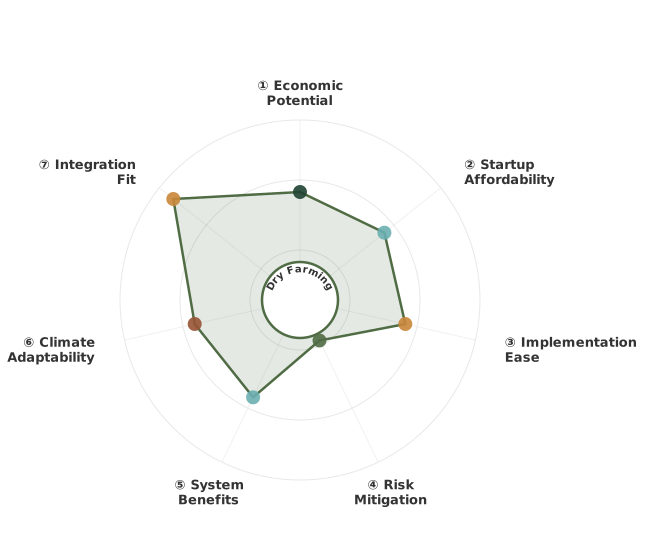
How These Traits Are Calculated
Trait dimensions are ordered clockwise starting from the top of the chart (12 o'clock position):
1. Economic Potential
Financial returns, annual value, and break-even timeline
WHAT: Evaluates financial viability by combining net annual value ($/ha from savings, income, and amortized harvests) with break-even timeline showing when practices pay for themselves.
WHY: Farmers need clear ROI understanding before committing resources. Fast payback (≤3 years) with strong returns (≥$300/ha) enables confident adoption, while long timelines (>10 years) restrict adoption to well-funded operations willing to wait for returns.
HOW: Calculated from net annual value in $/ha and break-even years. Exceptional (≥2.6): fast ROI ≤3 years + high value ≥$300/ha. Typical (1.8-2.5): moderate returns or longer timelines. Limited (<1.8): marginal economics or very long payback >10 years.
2. Startup Affordability
Initial investment costs and financial barrier to entry
WHAT: Measures financial barrier to entry through startup costs for equipment, infrastructure, consulting, and materials. Inverted scoring: lower costs = higher scores = more accessible adoption.
WHY: Affordability determines who can adopt. Low-cost practices (<$250/ha) enable widespread adoption across diverse scales, while high costs (>$2,500/ha) limit adoption to well-capitalized operations, creating barriers that slow regenerative transition.
HOW: Calculated from initial investment parsed from practice content. Inverted scoring: Exceptional (≥2.6): minimal investment <$250/ha. Typical (1.8-2.5): moderate costs $250-2,500/ha. Limited (<1.8): high barrier >$2,500/ha.
3. Implementation Ease
Learning curve and specialized knowledge required
WHAT: Measures how much learning, planning, and specialized knowledge a practice requires. Simpler practices with fewer steps score higher, while complex practices requiring extensive training or specialized resources score lower.
WHY: Complex practices create adoption barriers even when economically viable. Straightforward practices enable faster adoption and broader participation, while those requiring extensive training, timing precision, or specialized equipment limit who can succeed.
HOW: Evaluated by measuring documentation length and identifying complexity markers like location-specific requirements, seasonal timing windows, specialized skills, and dedicated equipment needs. Exceptional (≥2.6): straightforward practices with minimal prerequisites. Typical (1.8-2.5): moderate learning curve with some specialized needs. Limited (<1.8): steep learning curve requiring significant training or resources.
4. Risk Mitigation
Identified financial and ecological risk assessment
WHAT: Evaluates documented risks across financial (investment loss, market volatility) and ecological (crop failure, pest outbreaks) domains. Inverted scoring: fewer risks = higher scores.
WHY: Understanding risk exposure helps farmers make informed decisions. Low-risk practices allow confident implementation, while high-risk practices require careful planning and contingency resources. Risk transparency prevents costly failures.
HOW: Calculated from identified risks in practice content. Inverted scoring: Exceptional (≥2.6): ≤2 risks with manageable severity. Typical (1.8-2.5): 3-5 moderate risks. Limited (<1.8): 6+ risks or severe exposure.
5. System Benefits
How many ways the practice improves your land simultaneously
WHAT: Measures how many aspects of land health improve at once—carbon storage, soil quality, erosion control, water absorption, and biodiversity. Practices that improve multiple areas simultaneously create compounding benefits where each improvement reinforces the others.
WHY: The best practices solve multiple problems at once. For example, addressing erosion simultaneously builds carbon and improves water infiltration, creating a resilient system with positive feedback loops. Single-benefit approaches miss these compound transformation opportunities.
HOW: Evaluated across five key outcomes: carbon sequestration, soil organic matter increase, erosion reduction, water infiltration improvement, and biodiversity enhancement. Exceptional (≥2.6): high carbon storage (>8 t/ha/yr), improvements across 4-5 areas, transformative outcomes. Typical (1.8-2.5): moderate carbon (3-8 t/ha/yr), improvements across 2-3 areas. Limited (<1.8): modest impact (<3 t/ha/yr), single-area focus only.
6. Climate Adaptability
Geographic applicability across Köppen climate zones
WHAT: Evaluates geographic applicability by assessing how many Köppen climate zones successfully support a practice and what adaptation requirements are needed. Measures breadth of climates where farmers can implement with minimal to moderate modifications.
WHY: Universal practices working across diverse climates enable more farmers to adopt regenerative approaches. Practices limited to single climate types (only Mediterranean, only tropical) restrict adoption and slow global transition. Adaptability determines whether a practice serves niche regions or offers broad transformation.
HOW: LLM evaluation of regional success stories, Köppen zone coverage, and adaptation needs. Exceptional (≥2.6): 5+ zones or 4+ climate types, 3+ continents, minimal adaptation. Typical (1.8-2.5): 3-4 zones or 2-3 types, 2 continents, moderate adaptation. Limited (<1.8): 1-2 zones, single region, significant adaptation or highly specialized.
7. Integration Fit
How well this practice combines with others you're doing
WHAT: Measures how well a practice combines with other regenerative practices you might be doing. Some practices work as building blocks that make many other practices easier or more effective, while others work best on their own.
WHY: Practices that combine well with many others create more value on your farm. For example, cover cropping enables no-till, improves grazing, supports crop diversity, and helps water management—making all of them work better together. This helps you build a coherent system rather than juggling disconnected practices.
HOW: Evaluated by identifying which practices combine well and how strong those combinations are. 'Ideally Suited' means strong combinations where practices reinforce each other (practice A makes B easier, while B makes A more effective). 'Adequate' means complementary benefits that work well together. Exceptional (≥2.6): combines well with 6+ practices, serves as a building block. Typical (1.8-2.5): combines with 3-5 practices. Limited (<1.8): 1-2 practices or works best alone.
Going Deeper
1
WHY - The Benefits
Dry farming addresses a fundamental challenge faced by a significant portion of the world's agricultural lands: water scarcity. By prioritizing the health and structure of the soil, it transforms the land's ability to capture and store precious rainfall, making...
Dry farming addresses a fundamental challenge faced by a significant portion of the world's agricultural lands: water scarcity. By prioritizing the health and structure of the soil, it transforms the land's ability to capture and store precious rainfall, making agriculture viable and resilient in typically challenging environments. The benefits extend beyond yield, encompassing economic stability, reduced input dependence, and ecological regeneration.
WHY - The Benefits
Dry farming addresses a fundamental challenge faced by a significant portion of the world's agricultural lands: water scarcity. By prioritizing the health and structure of the soil, it transforms the land's ability to capture and store precious rainfall, making...
Dry farming addresses a fundamental challenge faced by a significant portion of the world's agricultural lands: water scarcity. By prioritizing the health and structure of the soil, it transforms the land's ability to capture and store precious rainfall, making agriculture viable and resilient in typically challenging environments. The benefits extend beyond yield, encompassing economic stability, reduced input dependence, and ecological regeneration.
Soil Health Benefits
The cornerstone of dry farming's success is its direct impact on soil health. By implementing practices that minimize disturbance, keep the soil covered, and maximize microbial diversity, dry farmers build soils with significantly enhanced water-holding capacity. Healthy soils with 3-5% organic matter can store up to 100,000 liters (26,000 gallons) more water per hectare than degraded soils with 1% organic matter. This means that the limited rainfall received infiltrates into the soil rather than running off, providing a reservoir for crops during dry spells.
In water-limited environments, progress is slower. Studies show that regenerative dry farming systems, particularly those incorporating cover cropping and conservation tillage, can lead to a 0.5-1.5% increase in soil organic matter over a decade (equivalent to 0.05-0.15% annually). This increase builds deeper, more stable soil aggregates, improving aeration and reducing bulk density, which further enhances water infiltration and root penetration. The diverse root systems of dry-farmed crops and cover crops create channels that water can follow deep into the soil profile, reducing the risk of drought stress even when surface moisture is low.
Erosion is a major threat in arid and semi-arid regions, where intense storms can occur on bare, dry soil. Dry farming principles, by emphasizing continuous soil cover through crop residues, mulches, and cover crops, dramatically reduce soil erosion. Reduced soil disturbance also protects the delicate soil structure built by beneficial organisms like earthworms and mycorrhizal fungi, which are vital for nutrient cycling and water infiltration.
The improved soil structure and water availability in dry-farmed fields also support a more robust soil food web. Increased organic matter fuels microbial populations, which in turn break down organic materials into plant-available nutrients. This creates a more self-sustaining system, reducing the need for synthetic fertilizers and improving the overall health and fertility of the land.
Economic Benefits
Dry farming offers significant economic advantages, especially in regions where irrigation is costly, unsustainable, or non-existent. The most immediate benefit is the reduction, or complete elimination, of irrigation costs, which can save farmers $100-1,000 per hectare ($40-400 per acre) annually, depending on local electricity and water prices. This direct saving immediately improves the bottom line.
While dry farming might appear riskier due to yield variability, a regenerative approach builds resilience that stabilizes yields over time, reducing the devastating impact of total crop failure during drought years. By conserving moisture and fostering a healthy soil ecosystem, crops can better withstand periods of water stress, leading to more consistent and predictable harvests compared to non-resilient systems. This stability is crucial for farm planning and financial security.
Reduced reliance on synthetic inputs is another economic win. Healthy, biologically active soils require less synthetic fertilizer and pesticides. This further lowers operational costs and minimizes the financial exposure associated with fluctuating input prices. Over time, the improved soil fertility can lead to reduced seed costs as well, as crops become more vigorous and less prone to disease and pest pressure.
The long-term economic benefits accumulate as soil health improves. Increased water infiltration and storage mean that land becomes more productive and valuable. Furthermore, the carbon sequestration inherent in regenerative dry farming practices can open up new income streams through carbon markets or ecosystem service payments, adding a significant revenue diversification opportunity.
Regenerative Systems Fit
Dry farming aligns powerfully with all five regenerative agriculture principles, making it a foundational practice for arid and semi-arid regions.
Principle 1 (Minimize Soil Disturbance): Dry farming inherently promotes reduced tillage. While some methods, like summer fallowing, historically involved tillage, modern regenerative dry farming emphasizes no-till or minimal-till approaches. Maintaining crop residues, using cover crops, and building organic matter create soil structure that resists compaction and allows for direct seeding. This protects soil aggregates, fungal networks, and microbial habitats.
Principle 2 (Maximize Crop Diversity): Since water is a limiting factor, maximizing diversity is key. Dry farmers select drought-tolerant species and varieties, often incorporating cereals (wheat, barley, millet), pulses (lentils, chickpeas), oilseeds, and sometimes perennial forage crops or trees. Diversified crop rotations, intercropping, and the inclusion of cover crops ensure that a wider range of root depths and nutrient requirements are met by the soil ecosystem, maximizing the capture and use of available moisture and nutrients.
Principle 3 (Keep Soil Covered): This is paramount in dry farming to conserve soil moisture. Practices include leaving crop residue on the surface, planting cover crops after cash crop harvest, and using mulches. Continuous cover protects the soil from wind and water erosion, regulates soil temperature, keeps the soil surface cooler, and drastically reduces evaporation, ensuring that rainfall is available to plants.
Principle 4 (Maintain Living Roots): Dry farming often emphasizes perennial crops, deep-rooted annuals, and cover crops that keep roots in the soil for as long as possible. Living roots continuously feed soil microbes, maintain soil structure through their biological channels, and help cycle nutrients. Even dormant roots contribute to soil stability and provide a pathway for water and nutrient uptake once conditions improve.
Principle 5 (Integrate Livestock): Livestock, when managed regeneratively, can be integrated into dry farming systems. Rotational grazing of drought-tolerant forages between crop cycles or on fallowed land can add fertility, manage crop residues, and stimulate plant growth through grazing. This integration helps cycle nutrients and build soil organic matter, further enhancing the system's water-holding capacity and resilience.
The goal in dry farming is to create a self-sustaining system where the soil's natural capacity to capture and store water enables viable crop production without unsustainable external inputs. This directly supports the transition away from water-intensive and input-dependent agriculture towards a more resilient and ecologically sound future.
Sources behind this view
Videos & Podcasts
-
Advocates for a gradual transition to regenerative practices, emphasizing soil health, diverse crop rotations, livestock integration, and smart nutrient management. Stresses the need for farmers to 'e

-
Regenerative farming, using no-till, cover crops, and diverse rotations, rapidly rebuilds soil organic matter and soil life. Examples from Ohio and Ghana show these practices increase profitability by

-
Dry farming success depends on high water-holding capacity soils (clay/organic matter), deep soil profiles, early soil prep, deep planting (2-3 inches), increased plant spacing, soil compression for c
-
Adopts regenerative agriculture principles: minimize disturbance, keep living roots, use soil armor, integrate animals (livestock grazing, multi-species), and increase biodiversity. These practices bu

Community
-
Dry farming is presented as the optimal method for arid regions (<10 inches rain/year), focusing on maximizing infiltration and retention. Large above-ground rainwater catchments are critiqued for eva
Read more (opens in new window) permies.com -
Regenerative agriculture principles, including pasture-based systems, cover cropping, and livestock integration, are discussed for improving soil health and water infiltration in arid African climates
Read more (opens in new window) permies.com -
Detailed experiences in dryland farming and water harvesting, focusing on soil decompaction, swales, basins, mulch, and roof catchment, especially in California's Mediterranean climate. References Bra
Read more (opens in new window) permies.com
Research
-
The Indigenous Roots of Regenerative Agriculture (opens in new window)
This study found: Modern regenerative agriculture practices are rooted in millennia of Indigenous land stewardship, offering profound knowledge and a crucial value system of respect and reciprocity for true transformat
-
Soil Microbial Dynamics in Regenerative Agriculture Systems: A Data-Driven Synthesis for Soil Health, Pest Suppression, and Yield Sustainability in the Western Canadian Prairies (opens in new window)
This study found: Regenerative farming in Western Canada boosts soil microbes (up to 86%), fungi (up to 60%), and carbon, improving soil health and water retention. This leads to more stable yields and reduced syntheti
-
Exploring the nexus between regenerative agriculture and soil health: a special emphasis on semi-arid and arid agriculture (opens in new window)
This study found: Regenerative agriculture (RA) practices like reduced tillage, cover crops, and crop rotation can improve soil health, especially in dry regions. However, adoption is hindered by potential yield loss,
-
Regenerative Agriculture: Restoring Ecosystems¢ Resilience and Productivity: A Review (opens in new window)
This study found: Regenerative agriculture builds soil health and ecosystem services through practices like no-till, cover crops, and diverse rotations. It increases soil organic matter, improves water infiltration, bo
2
WHERE - Regional Considerations
Dry farming's suitability and specific techniques are highly dependent on local climate, soil type, and typical rainfall patterns. These considerations guide species selection, management intensity, and the overall feasibility of water-saving strategies.
Dry farming's suitability and specific techniques are highly dependent on local climate, soil type, and typical rainfall patterns. These considerations guide species selection, management intensity, and the overall feasibility of water-saving strategies.
WHERE - Regional Considerations
Dry farming's suitability and specific techniques are highly dependent on local climate, soil type, and typical rainfall patterns. These considerations guide species selection, management intensity, and the overall feasibility of water-saving strategies.
Dry farming's suitability and specific techniques are highly dependent on local climate, soil type, and typical rainfall patterns. These considerations guide species selection, management intensity, and the overall feasibility of water-saving strategies.
Click Here to Look up your Region if you don't already know it
Semi-Arid Mediterranean Climates
Representative Locations: California (USA), Mediterranean basin (Spain, Italy, Greece, Turkey), central Chile, southwestern Australia, Western Cape (South Africa)
Climate Context: Hot, dry summers and mild, wet winters. Annual precipitation typically 300-600 mm (12-24 inches), with most falling between autumn and spring. USDA Zones 7-10, Köppen Csa/Csb.
Considerations: These regions often have distinct dry summer periods, making moisture conservation during the growing season (fall to spring) critical. Dry farming is widely practiced here for grains, legumes, and certain tree crops like olives and grapes. Regenerative dry farming focuses on building deep soil organic matter to extend the moisture available into late spring and early summer. Summer fallowing with a protective mulch layer is common, but replacing fallow with drought-tolerant cover crops or perennial pastures can further enhance soil health and water efficiency. Wind erosion can be a concern, making continuous soil cover and windbreaks essential.
Arid and Hyper-Arid Climates
Representative Locations: Southwestern USA (Arizona, Nevada), North Africa (Egypt, Algeria), Middle East (Saudi Arabia, Jordan), Central Asia (Uzbekistan, Turkmenistan), interior Australia
Climate Context: Very low annual rainfall (<300 mm or 12 inches), often erratic and infrequent. High temperatures, extreme diurnal temperature variations, and long periods of drought. USDA Zones 8-10, Köppen BSh/BSk.
Considerations: In these extreme environments, dry farming is challenging and often relies on very specific, highly drought-tolerant crops (e.g., certain millets, sorghum, native grains) and innovative water harvesting techniques. Contour furrows, Patoral systems, and small-scale terracing can capture scarce rainfall. Soil organic matter is extremely low, so building it is a slow process requiring careful management of limited residues and integrating livestock with managed grazing to deposit fertility. The focus is on survival and resilience, often with lower yields but greater predictability than conventional approaches. Protecting the fragile soil surface from wind erosion is paramount; continuous vegetative cover, even sparse, is essential.
Subtropical Dry/Dry Summer Climates
Representative Locations: Parts of Brazil (Cerrado region), India (interior, rain-shadow areas), eastern Australia (inland regions)
Climate Context: Hot, humid summers with distinct wet seasons, but often dry winters or prolonged dry periods during the hot season. Precipitation can be higher overall but is highly seasonal. Köppen Aw/As or Cwa.
Considerations: While regions may receive more total rainfall than arid zones, the defining characteristic is the distinct dry season. Dry farming principles are applied to manage water during this dry period for year-round or winter crops. Techniques focus on maximizing water storage during the wet season for use during the dry. This can involve deep tillage to improve infiltration, maintaining heavy mulch layers, and selecting crops that can either complete their lifecycle in the wet season or are exceptionally drought-tolerant. Integrated crop-livestock systems can be very effective here, using livestock to manage residues and build fertility on land that is not currently cropped.
Cold Arid/Semi-Arid Climates
Representative Locations: High Plains USA, Canadian Prairies, parts of Russia (Siberia), inland China, central Asia
Climate Context: Low precipitation, but with cold winters and short, often hot summers. Extreme temperature fluctuations. USDA Zones 3-6, Köppen BSk/BWk.
Considerations: Dry farming in these regions must contend with both water scarcity and extreme cold. Summer fallowing is common to conserve moisture for spring-planted crops, but a key regenerative strategy is using cold-hardy winter cover crops that can survive the winter and provide living roots and residue for moisture conservation. Species like winter rye or triticale are valuable. Crop selection prioritizes early-maturing, cold-tolerant varieties. Building soil organic matter is crucial to improve water retention and resilience against both drought and extreme temperature swings. Wind erosion is a significant concern due to exposed flat terrain and soil dryness.
3
HOW - Implementation Process
Implementing dry farming regeneratively requires careful planning, focusing on soil health as the primary tool for water management. The process involves understanding your local context, selecting appropriate practices, and committing to long-term soil improvement.
Implementing dry farming regeneratively requires careful planning, focusing on soil health as the primary tool for water management. The process involves understanding your local context, selecting appropriate practices, and committing to long-term soil improvement.
HOW - Implementation Process
Implementing dry farming regeneratively requires careful planning, focusing on soil health as the primary tool for water management. The process involves understanding your local context, selecting appropriate practices, and committing to long-term soil improvement.
Implementing dry farming regeneratively requires careful planning, focusing on soil health as the primary tool for water management. The process involves understanding your local context, selecting appropriate practices, and committing to long-term soil improvement.
Prerequisites
Before adopting dry farming, evaluate your land and resources:
- Annual Rainfall: Must be predictably low (typically <600 mm or 24 inches), with extended dry periods.
- Soil Type: Soils with good water infiltration and retention capacity are ideal. Sandy soils may require more intensive organic matter building and mulching. Heavy clay soils may need careful management to prevent waterlogging during wet periods but can store significant moisture if well-structured.
- Topography: Gentle slopes are easier to manage for water harvesting and erosion control. Steep slopes require contour farming, terracing, or windbreaks.
- Crop Suitability: Identify locally adapted, drought-tolerant crop varieties. Consult local extension services, research institutions, or experienced farmers.
- Market Access: Understand the demand and logistics for the crops you plan to grow.
Phase 1: Soil Assessment and Baseline
Conduct a thorough soil assessment to understand your starting point:
- Soil Organic Matter: Test for % O.M. It should ideally be 3-5% or higher for effective dry farming. If lower, prioritize building O.M.
- Water Infiltration Rate: Measure how quickly water enters the soil. Low infiltration (<0.5 inches/hour or 1.3 cm/hour) indicates compaction and poor structure.
- Soil Structure: Examine aggregates. Do they crumble easily, or are they hard and cloddy?
- Nutrient Levels: Assess baseline fertility. Healthy soils with high O.M. reduce reliance on synthetic inputs.
- Compaction: Use a penetrometer to check for hardpans.
Document these baseline measurements. This will help you track progress as you implement dry farming techniques.
Phase 2: Moisture Conservation & Soil Building
Implement practices that enhance water capture and soil health:
1. Minimize Soil Disturbance (No-Till/Minimum Till):
- Transition to direct seeding or minimal tillage systems. Avoid plowing or heavy disking, which destroys soil structure and dries out the soil profile.
- If existing compaction is severe, consider one-time deep tillage (subsoiling) followed immediately by diverse cover crops and a permanent no-till commitment (see 'Transition Practices' context).
2. Keep Soil Covered:
- Residue Management: Leave crop residues on the soil surface after harvest. This acts as a natural mulch, reducing evaporation and protecting soil from wind and water erosion.
- Cover Cropping: Plant cover crops during fallow periods or between cash crops. Select drought-tolerant species (e.g., certain legumes, grasses, brassicas) that will grow with limited moisture and leave residue. Aim for diverse mixes.
- Mulching: In vegetable dry farming, apply organic mulches (straw, wood chips) or use living mulches.
3. Maintain Living Roots:
- Use crop rotations that include deep-rooted species.
- Implement cover cropping systems that ensure living roots are in the soil for as much of the year as possible.
- Consider perennial crops or silvopasture systems where appropriate.
4. Maximize Crop Diversity:
- Select drought-tolerant species and varieties suited to your climate.
- Employ diverse crop rotations and consider intercropping.
- Integrate a variety of cover crop species for maximum ecological benefit.
5. Integrate Livestock (where feasible):
- Use rotational grazing on cover crops or crop residues to add fertility and manage biomass.
- Ensure livestock are managed to avoid soil compaction, especially during wet periods.
Phase 3: Crop Management & Monitoring
1. Timing of Operations:
- Planting: Adjust planting dates to capture early rainfall and maximize the growing season before summer heat and drought set in.
- Harvest: Harvest promptly to leave soil covered with residue as soon as possible.
2. Weed Management:
- Weeds compete for scarce water. Prioritize weed control through:
- Cover cropping (suppresses weed establishment)
- Mulching
- Adjusting planting dates to outcompete weeds
- Mechanical cultivation (used minimally and only when necessary, e.g., pre-planting)
- Crop rotation to disrupt weed cycles.
3. Monitoring and Adaptation:
- Regularly monitor soil moisture levels to understand crop water use.
- Observe crop performance, noting which varieties and practices are most resilient.
- Track soil health indicators (O.M., infiltration, structure) annually.
- Be prepared to adapt your plan based on weather patterns and observed results. The system is dynamic.
Transition Timeline & Phase-Out Strategy (If applicable)
If starting from a severely degraded and compacted site, the transition may involve specific steps:
First 1-2 Years:
- Focus on breaking severe compaction (if necessary) using one-time deep tillage followed immediately by intensive, diverse cover cropping.
- Establish continuous cover and living root systems.
- Minimize any soil disturbance outside this initial intervention.
- Begin selecting drought-tolerant cash crop varieties.
Years 2-4:
- Transition to permanent no-till for cash crop establishment.
- Continue diverse cover cropping between cash crops.
- Focus on building soil organic matter through healthy residues and potentially integrated livestock.
- Monitor soil health indicators for improvement (infiltration, O.M., earthworm populations).
Year 4+:
- The system should be self-sustaining. Reliance on external inputs (water, synthetic fertilizers) should be minimal.
- Yields should be stable and resilient to drought.
- Soil health indicators should show continuous improvement. The need for mechanical intervention (like tillage) should be eliminated.
International Context & Equipment
- Equipment: Many dry farming tools are globally available. Modified plows, chisel plows, seed drills designed for minimal disturbance, and rotary tillers are common. Specialized equipment like roller-cramblers for cover crop termination are also accessible. In regions with lower capital, adapted bullock-drawn or hand tools for cultivation and water harvesting can be effective.
- Labor: Dry farming can be more labor-intensive initially, especially for soil building and cover crop management, but long-term, it reduces labor related to irrigation, pumping, and synthetic input application.
- Local Expertise: Consult local agricultural extension services, universities, or farmer networks for region-specific crop recommendations, planting calendars, and management advice. Organizations like the Rodale Institute (USA) and IFOAM (global) provide resources on regenerative agriculture.
Sources behind this view
Videos & Podcasts
-
Advocates for a gradual transition to regenerative practices, emphasizing soil health, diverse crop rotations, livestock integration, and smart nutrient management. Stresses the need for farmers to 'e
-
Gradual transition to regenerative systems is advised, prioritizing knowledge sharing. Increased soil organic matter (0.1% increase = 16,000 L/ha water holding) builds resilience against drought and w
-
Provides dry farming tips: use soil blocks for flexible transplanting, time planting with rain forecasts, utilize temporary and permanent mulches, increase soil organic matter, and adjust plant spacin
-
Dry farming success depends on high water-holding capacity soils (clay/organic matter), deep soil profiles, early soil prep, deep planting (2-3 inches), increased plant spacing, soil compression for c
Community
-
Dry farming is presented as the optimal method for arid regions (<10 inches rain/year), focusing on maximizing infiltration and retention. Large above-ground rainwater catchments are critiqued for eva
Read more (opens in new window) permies.com -
Regenerative agriculture principles, including pasture-based systems, cover cropping, and livestock integration, are discussed for improving soil health and water infiltration in arid African climates
Read more (opens in new window) permies.com -
Detailed experiences in dryland farming and water harvesting, focusing on soil decompaction, swales, basins, mulch, and roof catchment, especially in California's Mediterranean climate. References Bra
Read more (opens in new window) permies.com
Research
-
Exploring the nexus between regenerative agriculture and soil health: a special emphasis on semi-arid and arid agriculture (opens in new window)
This study found: Regenerative agriculture (RA) practices like reduced tillage, cover crops, and crop rotation can improve soil health, especially in dry regions. However, adoption is hindered by potential yield loss,
-
Soil and Water Conservation Practices for Enhancing Productivity in Dryland Farming: A Review (opens in new window)
This study found: Dryland farming faces challenges from drought and soil degradation. Soil and water conservation practices like conservation tillage, cover crops, and rainwater harvesting improve soil moisture, health
-
Soil Microbial Dynamics in Regenerative Agriculture Systems: A Data-Driven Synthesis for Soil Health, Pest Suppression, and Yield Sustainability in the Western Canadian Prairies (opens in new window)
This study found: Regenerative farming in Western Canada boosts soil microbes (up to 86%), fungi (up to 60%), and carbon, improving soil health and water retention. This leads to more stable yields and reduced syntheti
-
Regenerative Agriculture: Restoring Ecosystems¢ Resilience and Productivity: A Review (opens in new window)
This study found: Regenerative agriculture builds soil health and ecosystem services through practices like no-till, cover crops, and diverse rotations. It increases soil organic matter, improves water infiltration, bo
4
Know the Debate
Dry farming success hinges on understanding local conditions, balancing immediate moisture conservation with long-term soil building. In humid temp...
Know the Debate
Dry farming success hinges on understanding local conditions, balancing immediate moisture conservation with long-term soil building. In humid temp...
Dry farming success hinges on understanding local conditions, balancing immediate moisture conservation with long-term soil building. In humid temperate zones with distinct dry summers, techniques focus on capturing seasonal rains and holding moisture with minimal disturbance. In arid and hyper-arid regions, sheer survival depends on extreme water harvesting and maximizing every drop. Labor and capital investment vary significantly, from DIY soil-building on small plots to specialized equipment for large-scale operations. Farmers achieve resilience within 3-7 years by integrating practices like cover cropping, no-till, and careful crop selection, but initial transition yields may be lower.
How does dry farming primarily conserve water?
Dust Mulch & Tillage Focus
Academic perspectives often highlight the 'dust mulch' effect of shallow tillage as key to reducing surface evaporation and improving immediate soil moisture. This 'patch' approach aims to conserve moisture in the upper soil layers for shallow-rooted crops.
Sources behind this view
Sources behind this view
Research
-
Dry‐farming (opens in new window)
This study found: Dry-farming is a way of growing crops in areas that get very little rain, typically less than 10 inches (250 mm) per year. It involves specific farming techniques to make the most of the limited water available.
-
Rainfed farming prospects in the low rainfall zone of northern Iraq based on meteorological and soil moisture measurements (opens in new window)
This study found: Farmers in the dry regions of northern Iraq, where rainfall is typically between 12 and 16 inches per year, can potentially grow wheat and barley without irrigation. This study measured soil moisture levels over two years, one very wet and one very dry, to understand how water behaves in the soil. It looked at how different plowing methods, fertilization, and ways to save soil moisture could help make rainfed farming successful in these low-rainfall areas. The findings aim to provide a practical guide for farmers in this challenging environment.
Soil Health & Sponge-like Capacity
Regenerative practitioners emphasize building soil organic matter and structure through no-till farming and cover crops. This creates a 'sponge-like' soil that holds significant moisture deeper in the profile, improving long-term drought resilience.
Sources behind this view
Sources behind this view
Videos & Podcasts
-
Provides dry farming tips: use soil blocks for flexible transplanting, time planting with rain forecasts, utilize temporary and permanent mulches, increase soil organic matter, and adjust plant spacing. These methods reduce water usage and improve crop success.
-
Capturing rainfall requires reducing runoff and evaporation through no-till, cover crops, and mulch. Historical and modern techniques, like roller crimping cover crops, enhance water infiltration and retention, making soil functional. Cover crops also aid weed control.

 From the Web
-
Preserving soil moisture through conservation agriculture techniques like reduced tillage, rainwater harvesting, and improved infiltration is vital for rainfed agriculture and adaptation to climate variability.
Making Sense of the Differences
The primary mechanism for water conservation in dry farming is debated between surface management via tillage and deep soil health improvements. While dust mulch offers immediate surface benefits, regenerative practices focus on building a sponge-like soil through organic matter and no-till for lasting moisture retention. A true regenerative system aims to minimize disturbance to create deeper, more permanent water storage, potentially using soil disturbance only temporarily to initiate biological recovery on severely degraded land.
How long until dry farming shows significant resilience?
1-2 Year Initial Improvements
Academic and institute guidance suggests that initial improvements in water conservation and drought resilience can be observed within 1-2 seasons of adopting water-saving techniques.
Sources behind this view
Sources behind this view
Research
-
In-situ Soil and Water Conservation for Sustainable Agriculture (opens in new window)
This study found: This chapter highlights how farmers can save soil and water right on their fields to make farming more sustainable. Practices like planting cover crops (such as cereal rye, hairy vetch, crimson clover, and tillage radish), rotating crops, using mulch, and adding compost or manure help keep soil healthy and retain moisture. These methods boost water availability for crops, make farms more resilient to weather changes, and prevent land from degrading. The chapter also discusses how mapping tools (like satellite imagery) can help farmers understand their soil's nutrient and moisture levels, and identify the best spots for water-collecting structures. By focusing on these on-site conservation techniques, farmers can ensure good food production for the future and protect the environment.
From the Web
-
Practical adaptation strategies for African dryland agriculture include rainwater harvesting (e.g., sand dams, spate irrigation) and land productivity enhancement through techniques like Zaï, green manuring, improved fallows, no-till farming, and conservation farming.
-
Details rainwater harvesting as a soil and water conservation technique, covering planning, installation of collection and storage systems, and ongoing management for drought resilience and resource efficiency.
3-5+ Years for Deep Resilience
Field practitioners report that substantial improvements in soil's water-holding capacity and consistent dry farming success across variable conditions (especially in arid regions) often take 3-5 years or longer of dedicated soil building.
Sources behind this view
Sources behind this view
Videos & Podcasts
-
Dry farming in arid regions requires building soil water-holding capacity via compost, cover crops, and mulches. Maximize water retention and minimize irrigation, especially for annual vegetables, by adapting to local conditions and historical indigenous methods.
-
Regenerative agriculture practices, focusing on soil moisture retention and eliminating bare earth with cover crops, have significantly improved the farm's drought resilience over three years.

-
Dry farming utilizes residual soil moisture during dry seasons, common in Mediterranean climates like the Willamette Valley, for crops like tomatoes, potatoes, squash, and melons, as an alternative to irrigation due to climate change and land costs.
Making Sense of the Differences
The timeline for observing dry farming success varies, with initial gains in water conservation possible within 1-2 years. However, achieving deep, resilient soil water storage that reliably buffers against prolonged drought often requires 3-5 years or more of consistent regenerative management. Experiential farmers highlight that building substantial soil organic matter and structure takes time, whereas research may capture more immediate benefits from specific water-saving techniques. Farmers should anticipate earlier improvements in moisture availability and longer-term resilience building.
Is dry farming feasible on challenging soils?
Suited to Loam/Clay Loam
Academic and institute literature frequently mentions that dry farming is best suited to soils with good water infiltration and retention, typically loam to clay loam types.
Sources behind this view
Sources behind this view
Research
-
In-situ Soil and Water Conservation for Sustainable Agriculture (opens in new window)
This study found: This chapter highlights how farmers can save soil and water right on their fields to make farming more sustainable. Practices like planting cover crops (such as cereal rye, hairy vetch, crimson clover, and tillage radish), rotating crops, using mulch, and adding compost or manure help keep soil healthy and retain moisture. These methods boost water availability for crops, make farms more resilient to weather changes, and prevent land from degrading. The chapter also discusses how mapping tools (like satellite imagery) can help farmers understand their soil's nutrient and moisture levels, and identify the best spots for water-collecting structures. By focusing on these on-site conservation techniques, farmers can ensure good food production for the future and protect the environment.
From the Web
-
This chapter details nutrient management and water use efficiency strategies for rain-fed agriculture in dry areas, emphasizing integrated soil and water conservation, rainwater harvesting, and the synergy between water and nutrients.
Requires Extensive Prior Soil Building on Sandy/Compacted Soils
Field practitioners warn that success on very sandy or severely compacted soils is difficult without significant prior soil health improvements, such as adding substantial organic matter or using deep tillage only once.
Sources behind this view
Sources behind this view
Videos & Podcasts
-
Dry farming in arid regions requires building soil water-holding capacity via compost, cover crops, and mulches. Maximize water retention and minimize irrigation, especially for annual vegetables, by adapting to local conditions and historical indigenous methods.
-
Dry farming success depends on high water-holding capacity soils (clay/organic matter), deep soil profiles, early soil prep, deep planting (2-3 inches), increased plant spacing, soil compression for capillarity, and dust mulch for surface protection. Suitable crops include tomatoes, potatoes, squash, melons, and dry beans.
-
Provides dry farming tips: use soil blocks for flexible transplanting, time planting with rain forecasts, utilize temporary and permanent mulches, increase soil organic matter, and adjust plant spacing. These methods reduce water usage and improve crop success.
Making Sense of the Differences
Dry farming's success is strongly tied to soil type. While loamy soils with good organic matter are ideal, farmers on sandy or severely compacted soils face significant challenges. These soils may require intensive prior soil building (organic matter addition, mulching) or even temporary deep tillage to enable water infiltration and root growth. Farmers should carefully assess their soil type and be prepared for a longer transition or more intensive management on less ideal soils.
5
HOW MUCH - Costs & Investment
Note: Costs shown in USD; multiply by local labor and material cost indices for your region. Labor costs vary significantly internationally. Prices are for transitioning to or managing regenerative dry farming, assuming existing land and basic farm infrastructure.
Note: Costs shown in USD; multiply by local labor and material cost indices for your region. Labor costs vary significantly internationally. Prices are for transitioning to or managing regenerative dry farming, assuming existing land and basic farm infrastructure.
HOW MUCH - Costs & Investment
Note: Costs shown in USD; multiply by local labor and material cost indices for your region. Labor costs vary significantly internationally. Prices are for transitioning to or managing regenerative dry farming, assuming existing land and basic farm infrastructure.
Note: Costs shown in USD; multiply by local labor and material cost indices for your region. Labor costs vary significantly internationally. Prices are for transitioning to or managing regenerative dry farming, assuming existing land and basic farm infrastructure.
Note: All costs are based on recent US economic data (2024–2026) and may vary substantially by region based on local labor rates, material costs, and regulatory requirements.
Transition & Establishment Costs
Establishing a dry farming operation is a capital-intensive process designed to optimize future water resilience. For small-scale operations under 50 acres (20 ha), capital expenditure ranges from $208 to $834 per acre ($514–$2,061/ha), primarily allocated toward retrofitting lightweight, narrow-row equipment and implementing minimal-disturbance seeding techniques. Mid-size farms operating between 50 and 500 acres (20–202 ha) generally require an investment of $834 to $3,334 per acre ($2,061–$8,238/ha), as these producers must typically acquire specialized no-till seed drills and heavy-duty subsoilers to penetrate legacy plow pans and improve deep-profile moisture infiltration. Large-scale producers managing over 500 acres (202 ha) face the highest initial entry costs, ranging from $3,334 to $12,504 per acre ($8,238–$30,898/ha). This tier necessitates heavy investment in high-capacity, GPS-guided precision seeding units that allow for narrow windows of moisture availability, as well as digital infrastructure for moisture sensing and automated field health mapping.
Equipment & Infrastructure
Direct drill planters serve as the foundational investment for dry farming. Small farms typically budget $83 to $365 per acre ($205–$902/ha) for refurbished or entry-level drill attachments, while large-scale operations often spend $1,250 to $6,252 per acre ($3,089–$15,449/ha) for advanced, high-efficiency, multi-row, GPS-tracked precision drill units that minimize seed wastage and soil disturbance. The integration of roller-crimpers for cover crop termination adds a secondary expense; small units for modular or tractor-pulled setups cost between $42 and $125 per acre ($104–$309/ha), whereas large, high-speed multi-row crimpers drop to roughly $16 to $52 per acre ($40–$128/ha) due to economies of scale. Additionally, initial soil amendments, including organic matter boosters and mineral dusting to stabilize soil surface tension, cost between $12.50 and $42 per acre ($31–$104/ha), with higher costs assigned to plots identified with severe compaction or critical nutrient deficits found via baseline laboratory testing.
Labor & Professional Services
Personnel costs are highest during the initial transition period. For small farms, engaging with professional consultants or regenerative land-planning services costs $21 to $63 per acre ($52–$156/ha) to map out hydrological zones and seeding strategies. Mid-size operations, often leveraging more integrated farm management systems, spend $16 to $42 per acre ($40–$104/ha) on specialized agronomic consulting. Large-scale entities frequently employ full-time regenerative managers or contract with national firms at costs between $10.40 and $31 per acre ($26–$77/ha). Regardless of scale, the operational onboarding process—involving training staff on new equipment and monitoring protocols—adds an average of $42 to $125 per acre ($104–$309/ha) in labor expenses. Once established, ongoing annual operating costs, including supplemental compost, specialized drought-tolerant seeds, and reduced-pass fuel utilization, represent an annual recurring expenditure ranging from $63 to $313 per acre ($156–$773/ha), depending on the intensity of the cover crop rotation.
Most Spend: Most agricultural enterprises in the dry farming sector fall within the annual operating expenditure range of $125–$250 per acre ($309–$618/ha). This "middle" segment typically represents producers who have moved past the initial three-year transition dip and are realizing the intended reduction in liquid input costs, finding a balance between precision monitoring and routine mechanical maintenance.
Why the Range?: The primary drivers of cost variability include the baseline soil health at the time of conversion and the chosen level of technological integration. Farms with existing healthy microbial profiles require fewer supplemental amendments, while those with significant degradation may spend on the higher end of the range to restore water retention. Additionally, regional labor rates for specialized technicians versus general farm hands significantly dictate the final per-acre expenditure.
Sources behind this view
Videos & Podcasts
-
Transitioning to regenerative farming costs $75k-$140k over two years but saves money compared to conventional nitrogen expenses ($195k/year). Start small (50-100 acres) with cover crops (hairy vetch,
-
Case studies of farmers like Duane Beck, Kofi Boa, David Brandt, and Gabe Brown demonstrate that regenerative agriculture (no-till, cover crops, diverse rotations) significantly increases soil health,
-
Soil Capital's strategy for regenerative transition: 1) Optimize agrochemical/pesticide use for 10-40% savings. 2) Invest savings in multi-species cover crops and crop rotation diversification (oats,

-
A North Dakota farmer achieved significant economic success through regenerative agriculture, reducing fertilizer (40-60%), eliminating seed treatments, fungicides, and crop burndown, and cutting herb

Community
-
A commercial farm trial on 250 acres of soybeans and wheat showed regenerative methods (cover crops, compost tea, no-till) increased yields by 5-25 bu/acre and saved $9,000 in the first year compared
Read more (opens in new window) permies.com
Research
-
Transition to Regenerative Farming (opens in new window)
This study found: A 5-year case study shows a farm successfully transitioned to regenerative practices, reducing soil erosion and increasing wildlife by using cover crops, diversified rotations, and reduced tillage. Pr
-
Regenerative Agriculture: Restoring Ecosystems¢ Resilience and Productivity: A Review (opens in new window)
This study found: Regenerative agriculture builds soil health and ecosystem services through practices like no-till, cover crops, and diverse rotations. It increases soil organic matter, improves water infiltration, bo
-
Regenerative farming and conservation tillage: economic benefits and ecological impacts in contemporary agriculture (opens in new window)
This study found: Regenerative farming with conservation tillage (no-till, strip-till) improves soil health, reduces emissions, and boosts farm profits by cutting costs and stabilizing yields. Requires farmer training
-
Regenerative agriculture improves soil functioning and the complexity of soil food webs after a short transition period (opens in new window)
This study found: Five years of regenerative farming in horticultural systems boosted soil moisture, organic matter, and beneficial soil enzymes. Soil animal life shifted from mites/worms to larger invertebrates, indic
6
REWARDS AND RISKS - Economics & Risk Factors
Economic Scenarios
Economic Scenarios
REWARDS AND RISKS - Economics & Risk Factors
Economic Scenarios
Economic Scenarios
Dry farming is fundamentally an investment in ecological capital, trading immediate liquid inputs for long-term production stability. In a best-case scenario, farmers observe a 1.5% increase in soil organic matter within 3 to 5 years. This increase can boost the soil’s water-holding capacity by up to 25,000 gallons (94,635 L) per acre for every percentage point gained, effectively reducing necessary irrigation by 60–80%. Profitability is projected to increase by $250–$500 per acre ($618–$1,236/ha) due to the elimination of pumping costs and a dramatic reduction in synthetic fertilizer dependency.
In a typical scenario, which manifests over a 5 to 7-year horizon, an increase of 0.75% in soil organic matter provides an essential buffer against mild to moderate seasonal dry spells. This resilience results in consistent annual input savings of $100–$250 per acre ($247–$618/ha). When regional yields drop by 30–40% during heat events, operations utilizing these methods often maintain base revenue targets, protecting the farm from market collapse. Conversely, the worst-case scenario involves severe multi-year drought during the first 2 years of the transition. Without established water-holding capacity, yield losses can reach 50–70%, resulting in annual financial losses of $300–$600 per acre ($741–$1,483/ha). If cover crops fail to establish, the initial investment in seed and labor is largely lost, which may delay the return on investment (ROI) timeline by 3 to 5 years.
Market factors are critical to mitigating these risks. Dry-farmed produce, such as heirloom grains, drought-hardy legumes, or specific dry-farmed row crops, often achieve price premiums of 15–30% in upscale or niche markets. Farmers should prioritize crop diversification—integrating at least three distinct drought-tolerant varieties—which stabilizes cash flow. It is financially prudent to allocate 5–10% of the annual budget toward "moisture buffering" contingencies, including crop insurance specifically tailored to dryland production, which can offset costs during catastrophic failures.
The "Regenerative Dip" defines the first 3 years of the transition, during which yields often decline by 10–20%. This reduction occurs as the biology of the soil undergoes the stress of weaning off synthetic chemicals. Operating costs during this period remain high due to investment in new equipment. To mitigate this risk to the balance sheet, producers are encouraged to transition their acreage in 25% increments. This strategy ensures that three-quarters of the operation continues to provide stable revenue while the experimental acreage adjusts to the new hydrological management system. Regular soil and tissue testing, costing $5–$15 per acre ($12–$37/ha) annually, is a mandatory risk-management expense to track when inputs can be successfully reduced.
Sources behind this view
Videos & Podcasts
-
Regenerative agriculture provides solutions for climate change, human health, and soil degradation, contrasting with industrial agriculture's harmful impacts, including glyphosate use. Practices like
-
Case studies of farmers like Duane Beck, Kofi Boa, David Brandt, and Gabe Brown demonstrate that regenerative agriculture (no-till, cover crops, diverse rotations) significantly increases soil health,
-
Transitioning to regenerative agriculture is a human/psychological process requiring trials to reduce risk and build trust. Increased consumer awareness of ecology and health would drive demand for re

-
Gradual transition to regenerative systems is advised, prioritizing knowledge sharing. Increased soil organic matter (0.1% increase = 16,000 L/ha water holding) builds resilience against drought and w
Community
-
Dry farming is presented as the optimal method for arid regions (<10 inches rain/year), focusing on maximizing infiltration and retention. Large above-ground rainwater catchments are critiqued for eva
Read more (opens in new window) permies.com -
Regenerative agriculture principles, including pasture-based systems, cover cropping, and livestock integration, are discussed for improving soil health and water infiltration in arid African climates
Read more (opens in new window) permies.com
Research
-
Regenerative Agriculture: Restoring Ecosystems¢ Resilience and Productivity: A Review (opens in new window)
This study found: Regenerative agriculture builds soil health and ecosystem services through practices like no-till, cover crops, and diverse rotations. It increases soil organic matter, improves water infiltration, bo
-
Soil Microbial Dynamics in Regenerative Agriculture Systems: A Data-Driven Synthesis for Soil Health, Pest Suppression, and Yield Sustainability in the Western Canadian Prairies (opens in new window)
This study found: Regenerative farming in Western Canada boosts soil microbes (up to 86%), fungi (up to 60%), and carbon, improving soil health and water retention. This leads to more stable yields and reduced syntheti
-
The Indigenous Roots of Regenerative Agriculture (opens in new window)
This study found: Modern regenerative agriculture practices are rooted in millennia of Indigenous land stewardship, offering profound knowledge and a crucial value system of respect and reciprocity for true transformat
-
Systematic review of regenerative farming: Addressing agricultural sustainability challenges (opens in new window)
This study found: Systematic review of 31 studies shows regenerative farming improves soil health, biodiversity, and carbon capture, aiding sustainability. Technology is key for adoption, but policy, farmer understandi
From the Web
-
Five steps to regenerative agriculture: Holistic Planned Grazing, no-till farming, planting diverse cover crops/interseeding, using compost/inoculants (with caution), and incorporating silvopasture/wo
7
WHO - Labor & Expertise
Dry farming requires a dedicated and knowledgeable manager, with labor needs varying by scale and specific practices.
Dry farming requires a dedicated and knowledgeable manager, with labor needs varying by scale and specific practices.
WHO - Labor & Expertise
Dry farming requires a dedicated and knowledgeable manager, with labor needs varying by scale and specific practices.
Dry farming requires a dedicated and knowledgeable manager, with labor needs varying by scale and specific practices.
Skill Requirements
- Understanding Soil Biology: A deep appreciation for how soil health, organic matter, and microbial activity drive water availability is crucial. This is a shift from solely focusing on synthetic inputs.
- Crop Management Specificity: Knowledge of drought-tolerant crops, their planting windows, growth cycles, and specific water needs in arid conditions is essential.
- Cover Crop Expertise: Selecting the right species and mixes for local conditions, understanding their growth patterns, and knowing when and how to terminate them effectively is key.
- Water Management Intuition: While not irrigating, managers must understand how to maximize infiltration, conserve soil moisture, and anticipate how weather patterns will affect soil water reserves.
- Pest/Disease Identification: Vigilance is needed to identify and manage dryland pests and diseases, often through diverse cropping and healthy soil, rather than relying on external controls.
- Equipment Operation: Proficiency in operating no-till drills, roller-crimpers, and potentially cultivation equipment for controlled weed management.
Labor Needs
- Planning & Observation: Significant upfront time is needed for planning rotations, cover crop mixes, and analyzing weather patterns. Regular observation of soil conditions, crop health, and weed pressure throughout the season is vital.
- Field Operations: Seeding, residue management, cover cropping, and harvesting require dedicated labor, but typically less than intensively irrigated or conventionally tilled systems.
- Weed Management: In dry farming, especially during transition, manual or mechanical weed control can be more labor-intensive if not managed through cover cropping and mulching.
- Soil Health Monitoring: Periodic soil testing and field observations to track progress.
Expertise Development & Sourcing
- Local Agricultural Extension: Often provide region-specific crop and soil management advice.
- Regenerative Agriculture Organizations: Rodale Institute, Savory Institute, and numerous regional groups offer training, workshops, and resources.
- Farmer-to-Farmer Networks: Connecting with experienced dry farmers or regenerative farmers in your region is invaluable for practical, site-specific knowledge.
- Specialized Consultants: For complex transitions or large-scale operations, soil health or regenerative agriculture consultants can provide expert guidance.
- Community Colleges & Universities: Offer courses in agronomy, soil science, and sustainable agriculture.
International Labor Cost Considerations
- Labor costs vary dramatically worldwide. In regions with lower labor costs, manual or less mechanized approaches to cover crop management, mulching, and residue manipulation might be more economically viable than in high-labor-cost regions, where investment in specialized equipment might be prioritized.
- Access to skilled labor can be a challenge in remote dryland regions. Investing in training for on-farm labor is often a sound strategy.
Sources behind this view
Videos & Podcasts
-
Dry farming success depends on high water-holding capacity soils (clay/organic matter), deep soil profiles, early soil prep, deep planting (2-3 inches), increased plant spacing, soil compression for c
-
Provides dry farming tips: use soil blocks for flexible transplanting, time planting with rain forecasts, utilize temporary and permanent mulches, increase soil organic matter, and adjust plant spacin
-
Advocates for a gradual transition to regenerative practices, emphasizing soil health, diverse crop rotations, livestock integration, and smart nutrient management. Stresses the need for farmers to 'e
-
Dry farming in arid regions requires building soil water-holding capacity via compost, cover crops, and mulches. Maximize water retention and minimize irrigation, especially for annual vegetables, by
Community
-
Dry farming is presented as the optimal method for arid regions (<10 inches rain/year), focusing on maximizing infiltration and retention. Large above-ground rainwater catchments are critiqued for eva
Read more (opens in new window) permies.com -
Detailed experiences in dryland farming and water harvesting, focusing on soil decompaction, swales, basins, mulch, and roof catchment, especially in California's Mediterranean climate. References Bra
Read more (opens in new window) permies.com -
Regenerative agriculture principles, including pasture-based systems, cover cropping, and livestock integration, are discussed for improving soil health and water infiltration in arid African climates
Read more (opens in new window) permies.com -
Farming in arid climates requires predictability, utilizing dry farming, runoff agriculture, and drought-adapted plant varieties. Soil amendments and mulch are vital for water retention, with drip irr
Read more (opens in new window) permies.com
Research
-
Exploring the nexus between regenerative agriculture and soil health: a special emphasis on semi-arid and arid agriculture (opens in new window)
This study found: Regenerative agriculture (RA) practices like reduced tillage, cover crops, and crop rotation can improve soil health, especially in dry regions. However, adoption is hindered by potential yield loss,
-
Soil and Water Conservation Practices for Enhancing Productivity in Dryland Farming: A Review (opens in new window)
This study found: Dryland farming faces challenges from drought and soil degradation. Soil and water conservation practices like conservation tillage, cover crops, and rainwater harvesting improve soil moisture, health
-
The pros and cons of increasing soil organic matter in dryland cropping systems (opens in new window)
This study found: Review of strategies to increase soil organic matter in drylands, balancing benefits (soil health, resilience) with costs (economic, environmental). Highlights context-specific optima and unique dryla
-
Transition to Regenerative Farming (opens in new window)
This study found: A 5-year case study shows a farm successfully transitioned to regenerative practices, reducing soil erosion and increasing wildlife by using cover crops, diversified rotations, and reduced tillage. Pr
8
EQUIPMENT - Tools & Infrastructure
Dry farming often requires adjustments to existing equipment or investment in specialized tools to maximize water conservation and minimize soil disturbance.
Dry farming often requires adjustments to existing equipment or investment in specialized tools to maximize water conservation and minimize soil disturbance.
EQUIPMENT - Tools & Infrastructure
Dry farming often requires adjustments to existing equipment or investment in specialized tools to maximize water conservation and minimize soil disturbance.
Dry farming often requires adjustments to existing equipment or investment in specialized tools to maximize water conservation and minimize soil disturbance.
Core Equipment Recommendations
-
No-Till Seed Drill or Planter: Essential for establishing cash crops and cover crops directly into existing crop residue or mulch. This preserves soil structure and moisture. Different models are suitable for various soil types and cropping systems.
- International Sourcing: Widely available from global manufacturers, with adaptations for local conditions. Used equipment can be a cost-effective option.
-
Residue Management Tools:
- Roller-Crimper: Used to terminate cover crops effectively without tillage, creating a dense mulch mat that suppresses weeds and conserves moisture.
- Residue Spreaders/Chop-Spreaders: For larger operations, ensuring uniform distribution of crop residue is important for even soil coverage.
- International Sourcing: Can be integrated with tractors.
-
Cover Crop Seeders:
- Broadcast Spreaders: For aerial seeding of cover crops into standing cash crops or onto residue.
- Drill Seeders: For more precise placement, especially into lighter residue.
-
Cultivation Equipment (Used Sparingly):
- Narrow Strip-Till or Row-Crop Cultivators: If mechanical weed control is necessary, these tools can disturb minimal soil surface area.
- Under-Row Cultivators: Can be used in row crops to manage weeds near the plant without disturbing the inter-row mulch.
Specialty Equipment/Infrastructure (Depending on Scale & Region)
-
Subsoiler or Deep Ripper: Necessary only if severe soil compaction is a limiting factor and other biological methods have failed. This is a one-time intervention tool.
- International Sourcing: Common in heavy equipment portfolios.
-
Water Harvesting Structures:
- Contour Plows/Rips: Create furrows along contour lines to slow runoff.
- Terracing Equipment: For steeper slopes, specialized equipment is needed to build and maintain terraces.
- Swales/Digging Equipment: For contour swales or small retention ponds to capture overland flow.
- International Sourcing: Available through construction and agricultural equipment suppliers.
-
Windbreaks: Planting belts of trees or shrubs around fields to reduce wind erosion and create microclimates. Requires planting equipment and initial protection for young trees.
-
Soil Moisture Monitoring Equipment:
- Probes (e.g., TDR, capacitance probes): Provide real-time soil moisture data.
- Rainfall Gauges: Essential for tracking precipitation accumulation.
Infrastructure Considerations
- Storage for Cover Crop Seed: Maintaining quality seed stocks is crucial.
- Secure Residue Management Area: If residues are removed from fields for other purposes, plan for their return or alternative organic matter sources.
- On-Farm Water Storage: If water harvesting is employed, facilities for storing collected water may be needed.
Cost Variability & Sourcing
- New vs. Used: Investing in used equipment can significantly reduce upfront costs, especially for items like no-till drills.
- Rental/Custom Hire: For specialized or infrequently used equipment (like subsoilers or complex planters), custom hire services can be more economical than ownership.
- Local vs. International: Access to and cost of equipment vary greatly by country. Robust local dealer networks are important for maintenance and parts. In some regions, adapting existing machinery or using simpler, hand-operated tools can be a viable strategy on smaller scales.
Sources behind this view
Videos & Podcasts
-
Implementing no-till and cover crops is achievable with adapted equipment, focusing on planter modifications, seed firmers, and sprayers for management. The speaker shares personal experiences demonst
Research
-
Soil and Water Conservation Practices for Enhancing Productivity in Dryland Farming: A Review (opens in new window)
This study found: Dryland farming faces challenges from drought and soil degradation. Soil and water conservation practices like conservation tillage, cover crops, and rainwater harvesting improve soil moisture, health
-
In-situ Soil and Water Conservation for Sustainable Agriculture (opens in new window)
This study found: On-site conservation practices like cover crops, crop rotation, and organic amendments improve soil moisture, farm resilience, and prevent land degradation, supported by mapping tools for better water
-
Agronomic practices for optimising soil water retention (opens in new window)
This study found: Review of farming practices (tillage, cover crops, rotation, grazing) and their impact on soil water retention, offering suggestions for optimization.
9
COMPATIBLE PRACTICES - Integration Opportunities
Dry farming is most effective and regenerative when integrated with a suite of other practices that enhance soil health, biodiversity, and water use efficiency.
Dry farming is most effective and regenerative when integrated with a suite of other practices that enhance soil health, biodiversity, and water use efficiency.
COMPATIBLE PRACTICES - Integration Opportunities
Dry farming is most effective and regenerative when integrated with a suite of other practices that enhance soil health, biodiversity, and water use efficiency.
Dry farming is most effective and regenerative when integrated with a suite of other practices that enhance soil health, biodiversity, and water use efficiency.
Cover Cropping
- Integration: The backbone of regenerative dry farming. Cover crops maintain living roots, keep soil covered, build organic matter, suppress weeds, and improve water infiltration.
- Synergy: Directly addresses Principles 2, 3, and 4. The diversity of cover crops enhances soil biology and resilience, making cash crops more productive and drought-tolerant.
No-Till/Minimum Till Farming
- Integration: Dry farming necessitates minimizing soil disturbance to preserve soil structure and moisture. No-till allows planting directly into cover crop residue or mulch.
- Synergy: Protects soil aggregates, fungal networks, and moisture, directly supporting Principle 1 and creating ideal conditions for cover crops to thrive.
Drought-Tolerant Crop/Variety Selection
- Integration: Consciously choosing species and varieties known for their low water requirements, deep root systems, and resilience to heat and drought stress.
- Synergy: Enables the entire dry farming system by ensuring crops can survive and produce with available moisture, maximizing the effectiveness of all other water conservation practices.
Crop Rotation & Diversity
- Integration: Rotating cash crops with cover crops, and within cash crops, using diverse species with varying root depths and nutrient needs.
- Synergy: Maximizes Principle 2 across the farm system, breaks pest cycles, improves soil nutrient cycling, and utilizes soil moisture at different profile depths.
Mulching
- Integration: Utilizing crop residue, compost, or cover crop biomass as a surface mulch to reduce evaporation, suppress weeds, and moderate soil temperature.
- Synergy: Directly supports Principle 3 by maintaining soil cover, significantly enhancing moisture conservation crucial for dry farming.
Contour Farming & Water Harvesting
- Integration: On slopes, planting along contour lines, creating small berms (like on-farm windbreaks acting as mini-terraces), or swales to slow and infiltrate runoff.
- Synergy: Maximizes water capture and infiltration where rainfall is scarce but intense, directly supporting water cycle benefits and reducing erosion.
Integrated Livestock Management
- Integration: Rotational grazing of drought-tolerant forages or crop residues to recycle nutrients, manage biomass, and potentially stimulate pasture growth.
- Synergy: Supports Principle 5, adding fertility and organic matter to the soil, which in turn improves water-holding capacity. Must be managed carefully to avoid compaction.
Silvopasture/Agroforestry
- Integration: In suitable semi-arid regions, integrating drought-tolerant trees or shrubs can provide shade, windbreaks, additional forage, and long-term soil improvements.
- Synergy: Can enhance soil moisture regulation, reduce wind erosion, and diversify income streams, though requires careful species selection to avoid excessive water competition with crops or pastures.
These integrated practices create a synergistic system where each component—soil, plants, water, biology—works together to build resilience and productivity under water-limited conditions. Dry farming, when managed regeneratively, becomes a powerful tool for adapting to arid climates and creating sustainable food systems.
Sources behind this view
Videos & Podcasts
-
Provides dry farming tips: use soil blocks for flexible transplanting, time planting with rain forecasts, utilize temporary and permanent mulches, increase soil organic matter, and adjust plant spacin
-
Regenerative agriculture revives the water cycle by restoring soils to act as sponges, improving infiltration and reducing runoff to combat drought. Practices like soil cover, water retention, reduced
-
Gradual transition to regenerative systems is advised, prioritizing knowledge sharing. Increased soil organic matter (0.1% increase = 16,000 L/ha water holding) builds resilience against drought and w
-
Building soil carbon is key to managing water issues, increasing infiltration rates from 0.5 to 8 inches/hour. Improving soil porosity via biological activity, especially fungi, enhances resilience to
Community
-
Dry farming is presented as the optimal method for arid regions (<10 inches rain/year), focusing on maximizing infiltration and retention. Large above-ground rainwater catchments are critiqued for eva
Read more (opens in new window) permies.com -
Detailed experiences in dryland farming and water harvesting, focusing on soil decompaction, swales, basins, mulch, and roof catchment, especially in California's Mediterranean climate. References Bra
Read more (opens in new window) permies.com -
Regenerative agriculture principles, including pasture-based systems, cover cropping, and livestock integration, are discussed for improving soil health and water infiltration in arid African climates
Read more (opens in new window) permies.com -
Advanced water management techniques like biochar, mulching, waffle gardens, and dust mulching are discussed for soil building and reversing desertification, emphasizing natural water retention.
Read more (opens in new window) permies.com
Research
-
Soil and Water Conservation Practices for Enhancing Productivity in Dryland Farming: A Review (opens in new window)
This study found: Dryland farming faces challenges from drought and soil degradation. Soil and water conservation practices like conservation tillage, cover crops, and rainwater harvesting improve soil moisture, health
-
In-situ Soil and Water Conservation for Sustainable Agriculture (opens in new window)
This study found: On-site conservation practices like cover crops, crop rotation, and organic amendments improve soil moisture, farm resilience, and prevent land degradation, supported by mapping tools for better water
-
Systematic review of regenerative farming: Addressing agricultural sustainability challenges (opens in new window)
This study found: Systematic review of 31 studies shows regenerative farming improves soil health, biodiversity, and carbon capture, aiding sustainability. Technology is key for adoption, but policy, farmer understandi
-
Impact of Water Deficit and Soil Conditioners Under a Solar Operated Automatic Drip Irrigation System: A Comprehensive Review (opens in new window)
This study found: Combining deficit irrigation, soil conditioners, and solar drip irrigation saves water (up to 50%), improves soil moisture, and can boost yields by 10-25% in dry regions. This integrated approach supp
From the Web
-
Healthy soil, achieved through regenerative practices, significantly increases water retention, drought resilience, and farm profitability by acting like a sponge and reducing runoff.
-
CGIAR promotes regenerative, conservation, and agroecological practices for soil, land, and water management in drylands, focusing on water harvesting, soil health, rangeland restoration, and solar en