
Ecovillages
Ecovillages are intentional communities of people seeking to live regenerative lifestyles that are ecologically sustainable and socially equitable. They design their settlements and practices to integrate human habitation with the natural environment, often employing regenerative agriculture techniques for food production, resource management, and community resilience. They prioritize minimizing environmental impact while maximizing social well-being, aiming to demonstrate viable models for sustainable living.
Read More: Complete Description
Ecovillages are fundamentally about creating human settlements that function as living ecosystems, mirroring natural processes to achieve sustainability and resilience. The core idea is to reduce human ecological footprints while simultaneously enhancing the health of the land and the social fabric of the community. While diverse in their specific manifestations, most ecovillages share a commitment to principles of ecological design, social cohesion, cultural vitality, and economic viability. They are often pioneers in adopting and demonstrating practices that regenerate the environment, including regenerative agriculture.
From a regenerative agriculture standpoint, ecovillages serve as living laboratories and demonstration sites. They frequently implement foundational regenerative practices such as cover cropping, no-till farming, diverse crop rotations, and integrated livestock systems within their agricultural components. The philosophy of "working with nature" inherent in ecovillage design directly aligns with the five regenerative principles: minimizing soil disturbance, maximizing crop diversity, keeping soil covered, maintaining living roots, and integrating livestock. Many ecovillages actively strive to embody these principles not just in their farms, but in their holistic approach to resource management, waste reduction, and community planning.
The complexity of ecovillages lies in their multi-faceted nature, integrating ecological, social, economic, and cultural dimensions. They are not simply farms or environmental projects, but social experiments in sustainable living. This necessitates a broad range of skills and a high degree of collaboration among residents. The agricultural component within an ecovillage is therefore one part of a larger, interconnected system. Food production is often geared towards local consumption, reducing food miles and reconnecting inhabitants with the origin and process of their sustenance. This often leads to a focus on intensive, biodiverse gardening and farming methods that build soil health and resilience.
Housing in ecovillages frequently incorporates sustainable building materials and passive solar design, further reducing environmental impact. Waste management systems are typically closed-loop, with composting of organic waste feeding back into agricultural systems. Water management often involves rainwater harvesting, greywater recycling, and constructed wetlands for wastewater treatment. Energy production is increasingly localized and renewable, utilizing solar, wind, or micro-hydro systems. These interconnected systems create a synergistic effect, where each component supports the others, moving away from extractive, linear models common in conventional society.
The regenerative principles are not abstract ideals for ecovillage residents but lived realities. Minimizing soil disturbance is achieved through practices like no-till gardening, agroforestry, and avoiding heavy machinery where possible. Maximizing crop diversity is a hallmark, with residents often cultivating a wide array of vegetables, fruits, herbs, grains, and cover crops in polycultures and food forests, fostering resilience against pests and diseases. Keeping soil covered is paramount, utilizing mulching, cover crops, and perennial plantings year-round to prevent erosion and maintain soil moisture. Maintaining living roots is achieved through sequences of perennial plantings and winter cover crops, ensuring continuous biological activity in the soil. Livestock, where integrated, are managed regeneratively, often through rotational grazing, to build soil fertility and cycle nutrients.
Transitioning to an ecovillage model is a journey that often involves a phased approach. For individuals or groups, this might start with adopting regenerative agriculture practices on their own land or within their communities, gradually expanding to encompass broader aspects of sustainable living. For established communities, it might involve retrofitting existing infrastructure with renewable energy systems, implementing closed-loop waste management, or developing on-site food production. The "cold turkey" approach to adopting all elements of an ecovillage model simultaneously can be overwhelming and may lead to failure due to the complexity and resource demands. A gradual, iterative approach, learning and adapting as the community evolves, is generally more successful.
Ecovillages are not immune to challenges. Social dynamics can be complex, requiring robust conflict resolution mechanisms and clear governance structures. Economic sustainability can be a hurdle, as many ecovillages prioritize non-monetary value and local exchange over profit-driven models. Learning curves for adopting complex integrated systems and adapting to local climate and soil conditions are steep. However, their inherent dedication to ecological regeneration, community well-being, and resourcefulness makes them vital examples of how humanity can live in greater harmony with the planet. They offer a tangible vision for a future where ecological health and human prosperity are not mutually exclusive.
Many ecovillages are globally connected through networks like the Global Ecovillage Network (GEN), sharing knowledge, best practices, and fostering collaboration. This international exchange is crucial for testing and adapting models across diverse climates and cultures. From arid regions in Australia to temperate zones in Europe and tropical areas in Brazil, ecovillage principles are being applied to create localized, resilient, and regenerative ways of life. Their success lies in their holistic, integrated approach, recognizing that sustainability is not just about environmental protection but about creating healthy, balanced systems for both people and the planet.
Sources behind this view
Sources behind this view
 Community
-
An ecovillage is defined as an intentional community prioritizing ecological, economic, and social sustainability, acting as a demonstration model through education. Key aspects include ecological val
Read more (opens in new window) permies.com
Key Points
What It Is
- Intentional communities focused on sustainability
- Integrate human habitation with natural systems
- Often pioneer regenerative agriculture
- Diverse models: rural, urban, peri-urban
Why Do It
- Build ecological resilience and regeneration
- Foster strong social cohesion and well-being
- Demonstrate sustainable living models
- Reduce environmental footprint drastically
Know the Debate
- Implementation timelines vary widely with scale and complexity
- Economic factors range from low operating costs to high upfront investment
- Social dynamics require strong governance and conflict resolution
- Ecological regeneration potential depends on climate and management intensity
Benefits - Financial
- Shared efficiency reduces household utility and food expenses by $8,300–$15,600.
- Community-owned infrastructure reduces individual overhead costs by 20–40% annually.
- Sustainability premiums drive long-term property appreciation of 5–15% annually.
Benefits - System
- Enhances soil health and fertility (Principles 1,2,3,4)
- Maximizes biodiversity on managed land (Principle 2)
- Creates closed-loop resource systems
- Fosters local food security and resilience
Risks - Financial
- Startup capital requirements often exceed $3,100,000–$5,200,000 before initial move-in.
- High risk of 15–30% capital loss if project dissolves during transition.
- Long ROI timelines often extend 15–20 years for full capitalization recoupment.
Risks - System
- Complex social dynamics require skilled management
- Transition can be challenging for residents
- Vulnerability to external regulations/land use policies
- Maintaining balance between ideals and practicality
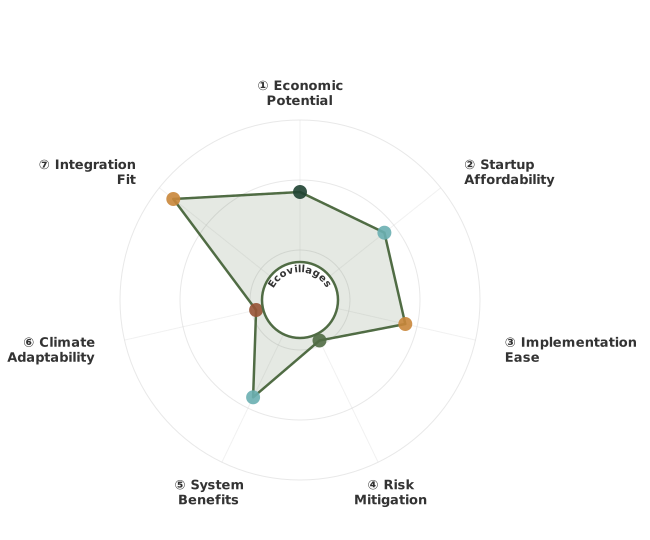
How These Traits Are Calculated
Trait dimensions are ordered clockwise starting from the top of the chart (12 o'clock position):
1. Economic Potential
Financial returns, annual value, and break-even timeline
WHAT: Evaluates financial viability by combining net annual value ($/ha from savings, income, and amortized harvests) with break-even timeline showing when practices pay for themselves.
WHY: Farmers need clear ROI understanding before committing resources. Fast payback (≤3 years) with strong returns (≥$300/ha) enables confident adoption, while long timelines (>10 years) restrict adoption to well-funded operations willing to wait for returns.
HOW: Calculated from net annual value in $/ha and break-even years. Exceptional (≥2.6): fast ROI ≤3 years + high value ≥$300/ha. Typical (1.8-2.5): moderate returns or longer timelines. Limited (<1.8): marginal economics or very long payback >10 years.
2. Startup Affordability
Initial investment costs and financial barrier to entry
WHAT: Measures financial barrier to entry through startup costs for equipment, infrastructure, consulting, and materials. Inverted scoring: lower costs = higher scores = more accessible adoption.
WHY: Affordability determines who can adopt. Low-cost practices (<$250/ha) enable widespread adoption across diverse scales, while high costs (>$2,500/ha) limit adoption to well-capitalized operations, creating barriers that slow regenerative transition.
HOW: Calculated from initial investment parsed from practice content. Inverted scoring: Exceptional (≥2.6): minimal investment <$250/ha. Typical (1.8-2.5): moderate costs $250-2,500/ha. Limited (<1.8): high barrier >$2,500/ha.
3. Implementation Ease
Learning curve and specialized knowledge required
WHAT: Measures how much learning, planning, and specialized knowledge a practice requires. Simpler practices with fewer steps score higher, while complex practices requiring extensive training or specialized resources score lower.
WHY: Complex practices create adoption barriers even when economically viable. Straightforward practices enable faster adoption and broader participation, while those requiring extensive training, timing precision, or specialized equipment limit who can succeed.
HOW: Evaluated by measuring documentation length and identifying complexity markers like location-specific requirements, seasonal timing windows, specialized skills, and dedicated equipment needs. Exceptional (≥2.6): straightforward practices with minimal prerequisites. Typical (1.8-2.5): moderate learning curve with some specialized needs. Limited (<1.8): steep learning curve requiring significant training or resources.
4. Risk Mitigation
Identified financial and ecological risk assessment
WHAT: Evaluates documented risks across financial (investment loss, market volatility) and ecological (crop failure, pest outbreaks) domains. Inverted scoring: fewer risks = higher scores.
WHY: Understanding risk exposure helps farmers make informed decisions. Low-risk practices allow confident implementation, while high-risk practices require careful planning and contingency resources. Risk transparency prevents costly failures.
HOW: Calculated from identified risks in practice content. Inverted scoring: Exceptional (≥2.6): ≤2 risks with manageable severity. Typical (1.8-2.5): 3-5 moderate risks. Limited (<1.8): 6+ risks or severe exposure.
5. System Benefits
How many ways the practice improves your land simultaneously
WHAT: Measures how many aspects of land health improve at once—carbon storage, soil quality, erosion control, water absorption, and biodiversity. Practices that improve multiple areas simultaneously create compounding benefits where each improvement reinforces the others.
WHY: The best practices solve multiple problems at once. For example, addressing erosion simultaneously builds carbon and improves water infiltration, creating a resilient system with positive feedback loops. Single-benefit approaches miss these compound transformation opportunities.
HOW: Evaluated across five key outcomes: carbon sequestration, soil organic matter increase, erosion reduction, water infiltration improvement, and biodiversity enhancement. Exceptional (≥2.6): high carbon storage (>8 t/ha/yr), improvements across 4-5 areas, transformative outcomes. Typical (1.8-2.5): moderate carbon (3-8 t/ha/yr), improvements across 2-3 areas. Limited (<1.8): modest impact (<3 t/ha/yr), single-area focus only.
6. Climate Adaptability
Geographic applicability across Köppen climate zones
WHAT: Evaluates geographic applicability by assessing how many Köppen climate zones successfully support a practice and what adaptation requirements are needed. Measures breadth of climates where farmers can implement with minimal to moderate modifications.
WHY: Universal practices working across diverse climates enable more farmers to adopt regenerative approaches. Practices limited to single climate types (only Mediterranean, only tropical) restrict adoption and slow global transition. Adaptability determines whether a practice serves niche regions or offers broad transformation.
HOW: LLM evaluation of regional success stories, Köppen zone coverage, and adaptation needs. Exceptional (≥2.6): 5+ zones or 4+ climate types, 3+ continents, minimal adaptation. Typical (1.8-2.5): 3-4 zones or 2-3 types, 2 continents, moderate adaptation. Limited (<1.8): 1-2 zones, single region, significant adaptation or highly specialized.
7. Integration Fit
How well this practice combines with others you're doing
WHAT: Measures how well a practice combines with other regenerative practices you might be doing. Some practices work as building blocks that make many other practices easier or more effective, while others work best on their own.
WHY: Practices that combine well with many others create more value on your farm. For example, cover cropping enables no-till, improves grazing, supports crop diversity, and helps water management—making all of them work better together. This helps you build a coherent system rather than juggling disconnected practices.
HOW: Evaluated by identifying which practices combine well and how strong those combinations are. 'Ideally Suited' means strong combinations where practices reinforce each other (practice A makes B easier, while B makes A more effective). 'Adequate' means complementary benefits that work well together. Exceptional (≥2.6): combines well with 6+ practices, serves as a building block. Typical (1.8-2.5): combines with 3-5 practices. Limited (<1.8): 1-2 practices or works best alone.
Going Deeper
1
WHY - The Benefits
Ecovillages offer a compelling vision for integrated, regenerative living, demonstrating how human settlements can foster ecological health and social well-being. Their benefits extend from the micro-level of soil biology to the macro-level of global sustainability.
Ecovillages offer a compelling vision for integrated, regenerative living, demonstrating how human settlements can foster ecological health and social well-being. Their benefits extend from the micro-level of soil biology to the macro-level of global sustainability.
WHY - The Benefits
Ecovillages offer a compelling vision for integrated, regenerative living, demonstrating how human settlements can foster ecological health and social well-being. Their benefits extend from the micro-level of soil biology to the macro-level of global sustainability.
Ecovillages offer a compelling vision for integrated, regenerative living, demonstrating how human settlements can foster ecological health and social well-being. Their benefits extend from the micro-level of soil biology to the macro-level of global sustainability.
Soil Health Benefits
In ecovillages, soil health is not merely a goal but a foundational pillar of their existence. Agricultural areas within ecovillages often serve as prime examples of regenerative principles in action. By minimizing soil disturbance through no-till methods, cover cropping, and agroforestry, they prevent erosion and maintain soil structure. Maximum crop diversity, achieved through polycultures, food forests, and diverse rotations, enriches the soil microbiome, enhancing nutrient cycling and disease resistance. Keeping soil covered with living plants or mulch year-round protects against desiccation and nutrient loss, while maintaining living roots ensures continuous biological activity, feeding soil organisms and building organic matter. Where livestock are integrated, they are managed rotationally to build fertility and improve soil structure, embodying regenerative principle 5. This holistic approach leads to tangible improvements: increased soil organic matter (often 0.5-2% higher than conventional farms), enhanced water infiltration (reducing runoff and drought vulnerability), improved aeration, and a more robust population of beneficial soil organisms like earthworms and mycorrhizal fungi.
Economic Benefits
Ecovillages often demonstrate robust economic benefits through their focus on localization, resource efficiency, and reduced reliance on external inputs. Food produced within the ecovillage often replaces costly imported produce, directly saving residents money on groceries. Energy generated on-site from renewable sources significantly cuts utility bills. Water conservation measures reduce water costs. Shared resources and community labor reduce the need for individual capital investment in tools, machinery, and infrastructure. While initial investments in sustainable infrastructure (renewable energy, natural building, water systems) can be substantial, the long-term savings and increased resilience often lead to greater economic stability and reduced financial vulnerability compared to conventional lifestyles reliant on fluctuating markets for energy, food, and manufactured goods. Furthermore, some ecovillages develop enterprises aligned with their values, such as selling surplus organic produce, eco-tourism, or offering educational workshops, creating diversified income streams.
Regenerative Systems Fit
Ecovillages are inherently designed around regenerative principles, making them a context-dependent practice that exemplifies all five principles when implemented intentionally.
Principle 1 (Minimize Soil Disturbance): Many ecovillage agricultural systems employ no-till or low-till methods, use hand tools where practical, and avoid heavy machinery to preserve soil structure. Landscape design often mimics natural contours to reduce erosion.
Principle 2 (Maximize Crop Diversity): Polycultures, food forests, and varied crop rotations are common. This intentionally incorporates a wide range of plant species, genetic diversity, and root structures that support a richer soil microbiome and create more resilient agroecosystems.
Principle 3 (Keep Soil Covered): Year-round ground cover is a priority, achieved through continuous cropping, cover crops, mulching with local organic materials, and the stable litter layer in agroforestry systems. This prevents erosion, conserves moisture, and feeds soil biology.
Principle 4 (Maintain Living Roots): Perennial crops, fruit trees, nut trees, and sequential cover cropping ensure that living roots are in the soil for as much of the year as possible, continuously feeding soil biology and maintaining soil structure.
Principle 5 (Integrate Livestock): Where present, livestock (chickens, goats, sheep, cattle) are typically managed through rotational or adaptive grazing, nutrient cycling via composting manure, and using animals for weed control or tilling softer ground, rather than intensive confinement operations.
Ecovillages serve as dynamic systems where these principles reinforce each other. For example, diverse perennial plantings (Principle 2 & 4) provide stable ground cover (Principle 3) and habitat for beneficial insects and soil organisms, reducing the need for external pest/disease management. Livestock manure (Principle 5) fertilizes diverse crops (Principle 2) grown with minimal soil disturbance (Principle 1). This holistic integration creates a highly resilient and productive system that regenerates natural capital. The transition to this integrated model typically involves a gradual shift from conventional resource use to local, renewable, and circular systems. Existing ecovillages demonstrate successful transitions that can take years or even decades to fully implement, often starting with food production and gradually incorporating other systems like energy and waste management.
Water Cycle Benefits
Ecovillages prioritize water conservation and the restoration of healthy water cycles. By minimizing soil disturbance and keeping soil covered, they significantly improve infiltration rates, allowing rainwater to percolate into aquifers rather than running off and causing erosion. Practices like rainwater harvesting, greywater recycling for irrigation, and the use of constructed wetlands for wastewater treatment reduce reliance on municipal water supplies and prevent contamination of local waterways. Diverse perennial planting in agroforestry and permaculture designs create extensive root systems that help regulate water flow, reduce peak flows during heavy rainfall, and maintain soil moisture during dry periods. This leads to more resilient water resources, less prone to drought or flood stresses.
Carbon Sequestration Benefits
A core tenet of ecovillage design is to actively sequester carbon in soil and biomass, contributing to climate change mitigation. By focusing on soil health through cover cropping, composting, and minimizing tillage, ecovillages significantly increase soil organic matter, which is primarily carbon. Agroforestry and food forest systems, with their multi-layered perennial plantings, store substantial amounts of carbon in woody biomass above and below ground. Reduced reliance on fossil fuels for transportation, energy, and agriculture further lowers the community's overall carbon footprint. While specific sequestration rates vary by climate, soil type, and management practices, ecovillage systems are designed to maximize carbon drawdown, often achieving rates several times higher than conventional monocultures.
Biodiversity Benefits
Ecovillages are often havens for biodiversity. By eschewing monocultures and synthetic inputs, they create habitats and food sources for a wide array of species. Diverse plantings provide ecological niches, food sources, and shelter for insects, birds, small mammals, and beneficial soil organisms. Reduced pesticide and herbicide use protects non-target species, including pollinators vital for agricultural success. The restoration of native plant species in hedgerows, windbreaks, and integrated landscape designs further enhances local ecosystems. This dedication to biodiversity not only enriches the ecological health of the surrounding landscape but also contributes to a more resilient and self-regulating agricultural system within the ecovillage itself.
Sources behind this view
 Research
-
Regenerative Agriculture: Restoring Ecosystems¢ Resilience and Productivity: A Review (opens in new window)
This study found: Regenerative agriculture builds soil health and ecosystem services through practices like no-till, cover crops, and diverse rotations. It increases soil organic matter, improves water infiltration, bo
2
WHERE - Regional Considerations
Ecovillages are adaptable to a wide range of regions, requiring careful consideration of local climate, resources, and cultural context to achieve success. The specific implementation of regenerative practices, building materials, and governance models will be shaped by...
Ecovillages are adaptable to a wide range of regions, requiring careful consideration of local climate, resources, and cultural context to achieve success. The specific implementation of regenerative practices, building materials, and governance models will be shaped by...
WHERE - Regional Considerations
Ecovillages are adaptable to a wide range of regions, requiring careful consideration of local climate, resources, and cultural context to achieve success. The specific implementation of regenerative practices, building materials, and governance models will be shaped by...
Ecovillages are adaptable to a wide range of regions, requiring careful consideration of local climate, resources, and cultural context to achieve success. The specific implementation of regenerative practices, building materials, and governance models will be shaped by...
Click Here to Look up your Region if you don't already know it
Arid and Semi-Arid Regions
Representative Locations: Southwestern United States, North Africa, Central Asia, Interior Australia, parts of the Middle East
Climate Context: Low annual precipitation (<40 cm or 15 inches), high temperatures, short and often unpredictable growing season. Köppen BSh/BSk. USDA Zones typically 7-9.
In arid and semi-arid regions, water management is paramount. Ecovillages here focus heavily on rainwater harvesting, contour ploughing, swales, check dams, and greywater recycling to maximize water capture and infiltration. Permaculture principles are often central, designing systems that mimic desert ecosystems to capture and utilize every drop of moisture. Species selection for food production and agroforestry will prioritize drought-tolerant trees (e.g., mesquite, carob, certain acacia species), shrubs, and grasses. Soil building emphasizes increasing organic matter to enhance water-holding capacity. Integrated livestock would likely involve drought-adapted breeds managed carefully to prevent overgrazing and soil degradation. The social structure may need to emphasize resource sharing and strong community cooperation to manage water scarcity effectively. Governance will likely focus on equitable distribution and conservation of precious water resources.
Mediterranean Regions
Representative Locations: Mediterranean basin (Spain, Italy, Greece), California, central Chile, southwestern Australia, Western Cape South Africa
Climate Context: Hot, dry summers and mild, wet winters. Annual precipitation 40-90 cm (15-35 inches), highly seasonal. Köppen Csa/Csb. USDA Zones typically 8-10.
Mediterranean climates offer opportunities for extended growing seasons with careful management. Ecovillages in these regions often integrate olive groves, vineyards, nut trees, and resilient vegetables. Focus is on managing the dry summer, utilizing drought-tolerant species and water-harvesting techniques such as terracing and contour planting. Agroforestry systems, incorporating trees like carob, olives, and almonds with understory crops and grazing animals (sheep and goats are common), thrive here. Soil management emphasizes building organic matter to improve water retention and prevent erosion during winter rains and summer dry spells. Building design may focus on passive cooling for summer heat and insulation for winter mildness. Community governance might emphasize shared responsibility for maintaining shared water infrastructure and land management practices that prevent summer wildfires.
Humid Temperate Regions
Representative Locations: Southeastern United States, Northern Europe (UK, Germany, Poland), Eastern China, Japan, New Zealand
Climate Context: Warm to hot summers and cool to cold winters with moderate to high annual precipitation (75-150 cm or 30-60 inches) distributed relatively evenly. Köppen Cfb/Cfa. USDA Zones typically 6-8.
These regions support a wide diversity of agricultural and building approaches. Ecovillages in humid temperate zones often excel in establishing lush perennial food forests, diverse vegetable gardens, and pasture systems. Ample rainfall means water conservation is less about scarcity and more about efficient management, flood prevention, and maintaining water quality. Building design may focus on passive solar heating for winter, while good insulation and ventilation are key for summer cooling. Integration of livestock like cattle, sheep, or pigs is highly feasible, managed through rotational grazing to build soil fertility. This region offers excellent potential for sequestering carbon in soil and biomass due to favorable growing conditions. Community governance often focuses on managing shared land resources, coordinating diverse agricultural plots, and ensuring shared labor contributions.
Cold Continental Regions
Representative Locations: Northern USA and Canada, Northern Europe, Northern Asia
Climate Context: Very short growing seasons, extreme summer and winter temperatures. Köppen Dfa/Dfb. USDA Zones typically 3-5.
Ecovillages in cold continental climates face challenges with short growing seasons and extreme temperatures. The primary focus is on maximizing productivity within this limited window and ensuring resilience against harsh winters. This involves intensive, season-extending techniques like greenhouses, hoop houses, and cold frames. Crop selection prioritizes fast-maturing varieties and hardy perennials. Soil management emphasizes building organic matter to improve its thermal properties (warmer soil aids germination) and water-holding capacity for summer droughts, with year-round cover being crucial. Livestock management must consider winter care and feed storage. Building design is critical, focusing on extreme insulation, efficient passive solar heating, and robust construction to withstand snow loads and cold. Community governance often emphasizes shared resource management for energy and food storage, collaborative building projects, and strong social support networks to navigate challenging seasons.
Subtropical Regions
Representative Locations: Southeastern USA, Southern China, Southern Brazil, Eastern Australia
Climate Context: Hot, humid summers and mild winters with generally ample rainfall. Köppen Cfa/Cwa. USDA Zones typically 9-11.
Subtropical regions offer long growing seasons with high rainfall, ideal for developing diverse, multi-layered food systems. Ecovillages here can implement extensive food forests, diverse vegetable gardens, and rich pasture systems. Managing humidity and intense rainfall is key; strategies include contour planting, swales to manage water runoff, and selecting disease-resistant varieties. Building design emphasizes passive cooling, natural ventilation, and appropriate roofing to manage heavy rains. Livestock integration is highly productive, but heat stress management for animals during summer is important. Focus on soil health includes building organic matter to improve drainage and prevent compaction under high rainfall conditions. Community governance may focus on managing shared natural resources, coordinating sustainable land use, and ensuring equitable access to water and land.
Tropical Regions
Representative Locations: Central America, Southeast Asia, East Africa, Northern Australia, Northern South America
Climate Context: High temperatures year-round, with distinct wet and dry seasons or consistent high rainfall. Köppen Af/Am/Aw.
Tropical ecovillages leverage year-round warmth for continuous production but must manage high humidity, intense rainfall, and specific dry seasons. This climate is ideal for developing complex, multi-layered food forests and diverse perennial cropping systems using local and indigenous species. Soil management is critical to prevent nutrient leaching and erosion under heavy rains, emphasizing mulching, cover cropping, and the maintenance of perennial cover with deep root systems. Water management focuses on capturing rainfall during wet seasons for use during dry spells and improving drainage. Building design prioritizes passive cooling, ventilation, and storm resilience. Livestock integration is possible but requires managing heat stress and disease prevalence. Community governance often emphasizes sustainable forest management, equitable land tenure, and building collaboration to adapt to the unique challenges and opportunities of the tropics.
3
HOW - Implementation Process
The implementation of an ecovillage is a complex, long-term process that balances ideals with practical realities. It involves land acquisition, community building, ecological design, infrastructure development, and establishing regenerative food systems.
The implementation of an ecovillage is a complex, long-term process that balances ideals with practical realities. It involves land acquisition, community building, ecological design, infrastructure development, and establishing regenerative food systems.
HOW - Implementation Process
The implementation of an ecovillage is a complex, long-term process that balances ideals with practical realities. It involves land acquisition, community building, ecological design, infrastructure development, and establishing regenerative food systems.
The implementation of an ecovillage is a complex, long-term process that balances ideals with practical realities. It involves land acquisition, community building, ecological design, infrastructure development, and establishing regenerative food systems.
Prerequisites
- Vision and Core Values: A clear, shared vision for sustainable living, regenerative practices, social equity, and governance is essential. This forms the foundation for all decisions.
- Core Group Formation: A committed group of individuals with diverse skills (e.g., design, agriculture, construction, facilitation, finance, legal) who are willing to invest significant time and energy.
- Legal Structure: Establishing a legal entity (e.g., cohousing, land trust, cooperative, non-profit) to hold land and manage shared assets and responsibilities.
- Financial Planning: Developing a realistic financial model, including land purchase, initial infrastructure, and ongoing operational costs, as well as fundraising and investment strategies.
- Site Selection Criteria: Identifying land that meets ecological needs (water, soil fertility, climate suitability for desired practices), legal zoning requirements, and proximity to necessary external resources or markets.
Phase 1: Land Acquisition and Legal Foundation (Typically 1-3 Years)
- Identify and Secure Land: Based on criteria established by the core group, acquire suitable land. This may involve purchasing, long-term lease, or donation.
- Establish Legal Framework: Formalize the community's legal structure. This is critical for land ownership, member agreements, and governance.
- Initial Site Assessment: Conduct thorough ecological surveys (soil types, water sources, existing vegetation, microclimates, biodiversity) and infrastructure assessments. This informs the master plan.
- Master Planning: Develop a comprehensive site plan that integrates housing, common spaces, agricultural areas, energy systems, water management, and waste processing, aligning with regenerative principles.
Phase 2: Foundational Infrastructure and Community Building (Typically 2-5 Years)
- Basic Infrastructure: Install essential services: access roads, potable water supply, sanitation (e.g., composting toilets, constructed wetlands), initial renewable energy systems (e.g., solar panels for common areas).
- Common Facilities: Construct core community buildings: a gathering hall, kitchen/dining area, workshops, and potentially initial housing prototypes.
- Agricultural Foundation: Begin establishing food production systems. This may start with no-till gardens using local organic matter for mulch, planting cover crops on designated agricultural zones, and planning for future food forests or agroforestry systems. If livestock are part of the plan, establish temporary fencing and shelter.
- Membership Expansion and Integration: Welcome new members who align with the vision and values, ensuring they are integrated into decision-making processes and contributing to community tasks.
Phase 3: Integrated Regenerative Systems Development (Ongoing, Years 3-10+)
- Develop Diverse Food Production: Implement planned food forests, agroforestry, intensive vegetable gardens, and perennial field crops. Establish the practice of minimizing soil disturbance, maximizing diversity, keeping soil covered, and maintaining living roots. Integrate livestock following regenerative grazing principles if applicable.
- Expand Renewable Energy: Scale up on-site renewable energy generation (solar, wind, micro-hydro) and implement energy-efficient building designs for all dwellings.
- Closed-Loop Water and Waste Systems: Implement comprehensive rainwater harvesting, greywater recycling, and advanced wastewater treatment systems (e.g., biofilters, constructed wetlands). Develop robust composting systems for all organic waste, feeding back into agricultural areas.
- Housing and Infrastructure Expansion: Construct individual or clustered dwellings based on sustainable building principles (natural materials, passive design). Expand and refine infrastructure as membership grows.
Phase 4: Maturation and Replication (Years 10+)
- Optimize Systems: Refine all integrated systems for maximum efficiency, resilience, and regenerative impact. Transition from managing the establishment of systems to optimizing their long-term performance.
- Knowledge Sharing and Education: Develop educational programs, workshops, and visitor centers to share learnings and replicate successful models.
- Economic Sustainability: Develop stable economic models that support the community's needs, potentially through value-added products, eco-tourism, or consulting.
- Governance Evolution: Continuously adapt governance structures to ensure continued participation, fair decision-making, and effective conflict resolution as the community grows and evolves.
Transition Timeline & Phase-Out Strategy
Ecovillages inherently represent a transition away from conventional, extractive lifestyles to regenerative ones. The transition is less about phasing out individual chemical inputs (as they are often avoided from the outset) and more about gradually shifting from unsustainable practices to integrated, regenerative ones across all domains.
- Initial Stage (Years 0-2, Arrival/Foundation): New members and the community at large may still have habits or dependencies from prior lifestyles. This can include reliance on external goods, residual use of non-organic inputs in gardens (though less common), or less efficient energy use. The focus is on establishing core community and initial infrastructure. Regenerative practices are introduced and prioritized in new developments and agricultural areas.
- Development Stage (Years 2-5, System Building): As infrastructure is built and agricultural systems are established, the community actively phases out unsustainable practices.
- Waste: Transition from landfill reliance to comprehensive composting and recycling programs.
- Energy: Gradually increase renewable energy share, phase out fossil fuel reliance for heating and transport.
- Food: Shift from purchased food to increasing on-site production, prioritizing regenerative methods.
- Inputs: If any synthetic fertilizers or pesticides were used minimally, phase these out entirely as soil health improves and biodiversity increases.
- Maturity Stage (Years 5-10+, Regenerative State): The ecovillage functions as a largely self-sufficient and regenerative system. Closed loops for water, waste, and nutrients are operational. Energy is predominantly renewable. Food is largely produced on-site using regenerative agriculture. Governance is robust, and social systems support collaboration and conflict resolution. The "phase-out" is complete; the focus is on continuous improvement and resilience.
Success indicators for graduating to a fully regenerative state include:
- Demonstrable improvement in soil health metrics (organic matter, infiltration, biodiversity) in agricultural areas.
- Significant reduction in waste sent to landfill or external treatment.
- Majority of energy needs met by on-site renewables.
- High percentage of food consumed is produced within the ecovillage using regenerative methods.
- Reduced reliance on external commodity inputs for food, fuel, and materials.
- Functional and equitable governance structures that enable sustained community participation and decision-making.
4
HOW MUCH - Costs & Investment
Note: Costs shown in USD; multiply by local labor and material cost indices for your region. Labor costs vary significantly internationally.
Note: Costs shown in USD; multiply by local labor and material cost indices for your region. Labor costs vary significantly internationally.
HOW MUCH - Costs & Investment
Note: Costs shown in USD; multiply by local labor and material cost indices for your region. Labor costs vary significantly internationally.
Note: Costs shown in USD; multiply by local labor and material cost indices for your region. Labor costs vary significantly internationally.
Note: All costs are based on recent US economic data (2024–2026) and may vary substantially by region based on local labor rates, material costs, and regulatory requirements.
Land Acquisition and Legal Structuring
Land remains the primary barrier to entry. Small-scale projects (under 50 acres (20 ha)) targeting peri-urban areas require $208,400–$1,563,000 for procurement, with legal and permitting costs adding $15,630–$46,890. Mid-size developments (50–500 acres (20–202 ha)) typically require $521,000–$4,168,000 for acquisition, with site assessments and zoning variances costing $41,680–$125,040. Large-scale ecological developments (500+ acres) necessitate $2,084,000–$10,420,000 for land, with master planning and multi-parcel legal entity formation fees reaching $104,200–$364,700 or more.
Infrastructure and Site Development
Sustainable living requires significant upfront investment in energy and waste systems to ensure long-term autonomy. High-performance housing units range from $260,500–$573,100 per unit, meaning a community of 10–25 units represents a total investment of $2,605,000–$14,259,000. Community facilities, such as commercial kitchens and communal halls, require $312,600–$833,600 for small sites, $833,600–$2,605,000 for mid-size, and $2,605,000–$6,252,000 for large sites. Energy and water systems, including micro-grids and constructed wetlands, range from $156,300–$416,800 (small), $416,800–$1,250,400 (mid), and $1,250,400–$3,647,000 (large). Agricultural startup, focusing on soil remediation and irrigation, generally costs $1,042–$3,126 per acre ($2,575–$7,725/ha).
Roads and Utility Integration
Connecting dense living clusters to modern infrastructure requires civil engineering. Gravel roadway construction for rural access costs $15,630–$46,890 per half-mile. Implementing decentralized wastewater solutions, such as anaerobic biodigesters or engineered wetlands, adds $52,100–$260,500 to the total site development bill depending on the community scale and volume requirements.
Most Spend: The middle 60% of small to mid-size ecovillage projects require an initial capitalization of $3,647,000–$8,336,000. This tier covers standard construction, typical regulatory hurdles, and essential professional fees, excluding high-end luxury infrastructure or extensive large-scale land clearing.
Why the Range?: Costs fluctuate primarily based on existing site maturity and local compliance requirements. "Greenfield" sites lacking grid access and road infrastructure can drive capital needs 30% higher than sites with primary utilities already in place. Additionally, rigorous local zoning protections or restrictive environmental permitting can effectively double the legal and administrative budget compared to more lenient rural jurisdictions.
5
REWARDS AND RISKS - Economics & Risk Factors
Ecovillages present a unique economic proposition, offering substantial long-term rewards in exchange for upfront investment and a paradigm shift in how value is perceived and generated.
Ecovillages present a unique economic proposition, offering substantial long-term rewards in exchange for upfront investment and a paradigm shift in how value is perceived and generated.
REWARDS AND RISKS - Economics & Risk Factors
Ecovillages present a unique economic proposition, offering substantial long-term rewards in exchange for upfront investment and a paradigm shift in how value is perceived and generated.
Ecovillages present a unique economic proposition, offering substantial long-term rewards in exchange for upfront investment and a paradigm shift in how value is perceived and generated.
Economic Scenarios In a Best Case Scenario, a community reaches 80% autonomy within 7–10 years. Specialized on-site enterprises—ranging from educational workshops to value-added fermented goods—yield $156,300–$364,700 in annual gross revenue. Property values typically outpace local markets by 5–15%, and individual residents realize $12,500–$20,840 in annual savings on personal living expenses. In a Typical Scenario, by year 12, the community achieves base stability. Shared infrastructure and garden production reduce individual household grocery and utility expenses by $4,170–$8,340, while collective ownership lowers overall cost of living by 25% versus suburban standards. In a Worst Case Scenario, capital reserves are exhausted, leading to "maintenance debt" where essential systems fail. Financial distress manifests as a 15–30% loss of member investment during forced sales. Carrying costs for stagnant, unfinished infrastructure can drain community coffers by $104,200–$208,400 annually through debt service and property taxes.
Market Factors and Mitigation Profitability is inextricably linked to regional organic food market demand and land appreciation trends. Risk mitigation must focus on phased development; by building just 30–40% of planned infrastructure first, developers avoid over-leveraging until community viability is proven. Maintaining a liquidity reserve of 15% of the annual operating budget is non-negotiable for emergency repairs. Legal risks are best mitigated by robust Operating Agreements that codify exit strategies—preventing a single member's financial departure from triggering a community-wide liquidity crisis.
Transition Period Risks The first 36 months constitute the "Valley of Death" for ecovillages. During this phase, members often face a "double-rent" scenario, maintaining an off-site home while paying construction loans on-site, totaling an extra $1,563–$3,126 per month. Crop yields during the formative years of soil regeneration are frequently 30–50% lower than mature system targets, delaying the promised grocery savings. To mitigate this, projects should establish a "Bridge Financing" fund covering 18 months of operating expenses, ensuring the community remains solvent even if initial member recruitment or business revenue lags against projections.
6
COMPATIBLE PRACTICES - Integration Opportunities
Ecovillages are dynamic systems that excel when multiple regenerative practices are integrated, creating synergistic benefits that enhance resilience and productivity.
Ecovillages are dynamic systems that excel when multiple regenerative practices are integrated, creating synergistic benefits that enhance resilience and productivity.
COMPATIBLE PRACTICES - Integration Opportunities
Ecovillages are dynamic systems that excel when multiple regenerative practices are integrated, creating synergistic benefits that enhance resilience and productivity.
Ecovillages are dynamic systems that excel when multiple regenerative practices are integrated, creating synergistic benefits that enhance resilience and productivity.
Permaculture Design Principles
- Foundation for whole-system design, focusing on observing nature, understanding ethics (earth care, people care, fair share), and applying principles like "observe and interact," "catch and store energy," "use and value diversity."
- Integration benefit: Provides the overarching framework for designing ecovillage layouts, agricultural systems, housing, and community structures to be regenerative and resilient.
Agroforestry and Food Forests
- Planting trees, shrubs, and perennial crops in multi-layered systems mimicking natural forests.
- Integration benefit: Maximizes land use efficiency, enhances biodiversity, builds soil organic matter, sequesters carbon, provides diverse food and material resources year-round, and stabilizes water cycles. Directly supports Regenerative Principles 1, 2, 3, 4.
Integrated Pest Management (IPM) & Biological Pest Control
- Focusing on prevention, biological controls (beneficial insects, predatory birds), and judicious use of organic-approved, non-harmful pest deterrents rather than synthetic pesticides.
- Integration benefit: Protects biodiversity both above and below ground (including pollinators and soil organisms), reduces external input costs, and ensures food safety, aligning with Regenerative Principles 2 and 3.
Holistic Planned Grazing/Rotational Grazing
- Strategically moving livestock to manage grazing impact, allow forage recovery, and distribute manure.
- Integration benefit: Builds soil fertility, increases soil organic matter, enhances plant diversity, improves water infiltration, and cycles nutrients effectively. Directly supports Regenerative Principle 5.
Natural Building Techniques
- Using local, renewable materials like straw bale, cob, earthship construction, bamboo, and sustainably harvested timber.
- Integration benefit: Reduces embodied energy and carbon footprint of housing, lowers construction costs, creates healthy indoor environments, and minimizes waste.
Renewable Energy Systems
- Solar photovoltaic, solar thermal, micro-hydro, wind turbines, and passive solar design for heating and lighting.
- Integration benefit: Drastically reduces reliance on fossil fuels, lowers energy costs, enhances resilience against grid failures, and contributes to carbon sequestration goals.
Water Harvesting and Management
- Rainwater catchment, greywater recycling, constructed wetlands, swales, and contour plowing.
- Integration benefit: Conserves water, improves water quality, reduces erosion, recharges groundwater, and creates localized water security, crucial for regenerative agriculture (Principles 3 & 4).
Closed-Loop Waste Management
- Composting all organic waste (food scraps, humanure, agricultural residues) to create valuable soil amendments. Recycling and minimizing non-organic waste.
- Integration benefit: Transforms waste into a resource, directly feeding into regenerative agriculture systems (Principle 1, 2, 3, 5), reducing pollution, and closing nutrient cycles.
Community Governance and Sociocracy/Holacracy
- Decision-making frameworks that promote participation, efficiency, and adaptability.
- Integration benefit: Enables effective management of complex integrated systems, resolves conflicts constructively, and ensures equitable participation, which is critical for the long-term success of an ecovillage.
Ecovillages are not just about adopting individual practices but about weaving them together into a cohesive, resilient, and regenerative whole. The alignment of these practices with the five regenerative principles creates a synergistic effect, leading to a more flourishing ecosystem and a more equitable and sustainable human settlement. ```
Sources behind this view
 Videos & Podcasts
-
Gabe Brown details the six principles of regenerative agriculture: Context, Least Disturbance, Soil Armor, Diversity, Living Root, and Animal Integration, which drive the four ecosystem processes for
-
Details regenerative agriculture principles: Feed the system, Keep soil covered, Minimize disturbance, Integrate animals, Increase diversity. Also covers broader principles: Enhance ecosystem function
-
Explains the six principles of regenerative agriculture (context, minimal disturbance, soil armor, diversity, living roots, animal integration) that drive four ecosystem processes to repair and restor
Community
-
Permaculture design principles focus on working with natural succession, increasing diversity, ensuring elements serve multiple functions and functions are supported by multiple elements, using local
Read more (opens in new window) permies.com
Research
-
Regenerative Agriculture: Restoring Ecosystems¢ Resilience and Productivity: A Review (opens in new window)
This study found: Regenerative agriculture builds soil health and ecosystem services through practices like no-till, cover crops, and diverse rotations. It increases soil organic matter, improves water infiltration, bo
-
Regenerative Agriculture: Insights and Challenges in Farmer Adoption (opens in new window)
This study found: Review of 7 regenerative agriculture practices (no-till, crop rotation, cover crops, etc.) highlights benefits and key adoption challenges like cost, farm size, and institutional barriers for scalable
-
Synergizing Agroforestry and Permaculture for Sustainable Organic Farming (opens in new window)
This study found: Agroforestry and permaculture enhance organic farming by integrating trees, crops, and livestock, improving soil health, biodiversity, and resilience. Challenges include funding, knowledge, and policy
-
Weaving disciplines to conceptualize a regenerative food system (opens in new window)
This study found: A new regenerative food system concept integrates nature-inspired design with Indigenous knowledge, aiming for net-positive environmental and social impact, verified by U.S. Southwest Indigenous produ