
Egg Mobile
An Egg Mobile is a commercial-scale, mobile laying house designed to follow cattle or other ruminant herds in a multi-species grazing rotation. These units are much larger than backyard chicken tractors, designed for production agriculture where flocks of hundreds or thousands of birds clean up manure, control parasites, and add a second beneficial fertility pass to the pasture, stacking economic and ecological returns from the same land.
Read More: Complete Description
The Egg Mobile is a sophisticated, mobile chicken coop designed for commercial-scale poultry production integrated into pasture-based livestock systems. Unlike small, ground-contact 'chicken tractors' used for backyard or niche small-farm operations, Egg Mobiles are industrialized units housing hundreds or even thousands of laying hens. Their primary function is to follow ruminant herds, such as cattle or sheep, as they move through a rotational grazing plan. This creates a multi-species grazing synergy where the birds capitalize on the residual forage and concentrated manure deposits left by the ruminants.
As the Egg Mobile follows the grazing herd, the chickens actively engage with the pasture in several regenerative ways. They scratch and peck at the ground, breaking up old manure pats left by the cattle, which accelerates their decomposition and reintegrates nutrients into the soil. This action also disrupts the life cycles of internal parasites common in livestock, acting as a natural form of parasite control and reducing the need for chemical dewormers. The chickens forage for insects, grubs, and weed seeds present in the pasture, helping to manage pest populations and plant species that may be undesirable in excessive numbers.
Crucially, the manure deposited by the hens themselves, while they are housed in or around the mobile unit, provides a second, highly concentrated fertilization pass on areas already benefited by ruminant grazing. This creates a stacked fertility effect, significantly boosting the nutrient availability for pasture regrowth. This dual-action fertility—breaking down older manure and adding fresh, balanced droppings—enhances soil organic matter, stimulates microbial activity, and promotes vigorous pasture growth. This practice directly supports multiple regenerative agriculture principles, making it a valuable tool for farms seeking to build soil health and economic resilience.
From a regenerative perspective, the Egg Mobile embodies Principle 5: Integrate Livestock. It strategically places birds to exploit the ecological niches created by other livestock, enhancing nutrient cycling and biological activity. By supporting the breakdown of manure pats and adding new fertility, it directly contributes to Principle 1: Minimize Soil Disturbance, as the need for synthetic fertilizers or mechanical disturbance to incorporate nutrients is reduced. The presence of actively foraging birds can also contribute to Principle 2: Maximize Crop Diversity (in this context, forage diversity) by controlling certain weed species and stimulating grass growth through their scratching and fertilization. Furthermore, by keeping the pasture actively managed and promoting healthy forage growth, the Egg Mobile supports Principle 3: Keep Soil Covered and Principle 4: Maintain Living Roots through continuous pasture development.
This practice is not a transitional step that violates regenerative principles; rather, it is a well-established foundational practice when implemented within a system that prioritizes soil health and animal welfare. Its scale and integration into commercial livestock operations clearly distinguish it from small "chicken tractor" systems. Farms that operate Egg Mobiles often report improved pasture quality, reduced reliance on external inputs, and enhanced profitability through the sale of high-quality eggs, making it a compelling component of diversified regenerative farming systems. Canonical practitioners like Joel Salatin of Polyface Farm have demonstrated consistent success with this model for decades, highlighting its potential for both ecological regeneration and economic viability.
Sources behind this view
Sources behind this view
 Videos & Podcasts
-
Chickens in mobile 'egg mobiles' follow cows for pasture sanitation, consuming pests and converting waste into eggs. This 'whole-on-holic farming' creates additional income and utilizes waste streams.
-
Details egg production using laying hens and an 'Egg Mobile' with 'Millennium Feathernet' (solar-powered electric netting) for containment and predator exclusion. Highlights superior egg nutrition and

-
Utilizes mobile chicken coops ('Egg Mobile') with electrified netting for pasture sanitation, consuming larvae in cow patties and fertilizing soil with manure. Coop features automatic doors and open t
-
Details a profitable pastured layer enterprise using eggmobiles and automated nest boxes in Sweden. Focuses on low-cost infrastructure, predator protection, daily operations (20-40 mins), manure compo
 Community
-
Utilize mobile poultry (chickens/ducks) with electric netting and portable coops to renovate pastures by concentrating droppings and disturbance. Sow diverse seeds (grasses, clovers, grains, amaranth)
Read more (opens in new window) permies.com -
Describes a movable chicken pen system with hard-plastic slat floors and roll-out nests, designed for year-round ranging in Upstate New York. The system simplifies manure management via tractor-assist
Read more (opens in new window) smallfarms.cornell.edu -
Discusses advanced mobile chicken coop features: robust predator protection, easy-clean perches, effective water management, and electronet for rotational grazing and soil building.
Read more (opens in new window) permies.com -
UC Davis has developed and tested various mobile coop designs ('chickshas', 'eggmobile') for pastured hens, optimizing mobility, biosecurity, and cost, and has researched BSFL as a methionine suppleme
Read more (opens in new window) ucanr.edu
Key Points
What It Is
- Commercial-scale mobile chicken housing
- Follows ruminant herds on pasture
- Birds break up manure, control pests
- Adds second fertility pass to pasture
How This Differs
- Commercial-scale mobile house following ruminant herds
- Birds break up manure, control parasites, add fertility
- Stacked economic and ecological return from same pasture
- Multi-species rotation at commercial scale
Why Do It
- Enhances pasture fertility and health
- Controls livestock parasites naturally
- Produces high-quality, premium eggs
- Builds ecosystem resilience and diversity
Know the Debate
- Egg mobile profitability varies by market access and input costs.
- Scale and labor needs impact feasibility across farm sizes.
- Mobile units require upfront investment in housing and flock.
- Integrated with ruminants for enhanced pasture fertility.
Benefits - Financial
- $30-75/hen per year revenue potential from premium egg sales
- 10-15% reduction in annual feed costs through natural pasture foraging
- $20-60 per acre ($49–$148 per hectare) in annual savings on synthetic fertilizer inputs
Benefits - System
- Soil organic matter increase: 0.5-1.5%
- Improved water infiltration rates
- Breaks manure pats, speeds nutrient cycling
- Supports 5 regenerative principles through integration
Risks - Financial
- $50-200/hen upfront startup cost for equipment and stock
- 5-10% potential annual flock loss from unmitigated predation risks
Risks - System
- Requires careful management and flock movement
- Vulnerable to extreme weather events
- Potential for localized over-fertilization
- Needs access to water and electricity
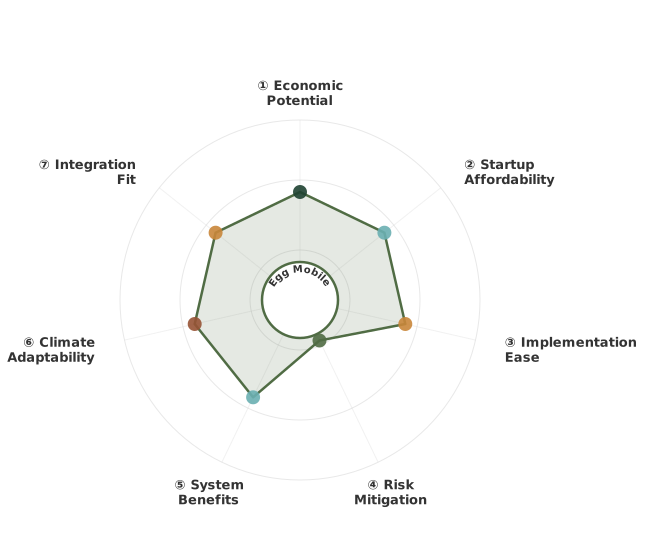
How These Traits Are Calculated
Trait dimensions are ordered clockwise starting from the top of the chart (12 o'clock position):
1. Economic Potential
Financial returns, annual value, and break-even timeline
WHAT: Evaluates financial viability by combining net annual value ($/ha from savings, income, and amortized harvests) with break-even timeline showing when practices pay for themselves.
WHY: Farmers need clear ROI understanding before committing resources. Fast payback (≤3 years) with strong returns (≥$300/ha) enables confident adoption, while long timelines (>10 years) restrict adoption to well-funded operations willing to wait for returns.
HOW: Calculated from net annual value in $/ha and break-even years. Exceptional (≥2.6): fast ROI ≤3 years + high value ≥$300/ha. Typical (1.8-2.5): moderate returns or longer timelines. Limited (<1.8): marginal economics or very long payback >10 years.
2. Startup Affordability
Initial investment costs and financial barrier to entry
WHAT: Measures financial barrier to entry through startup costs for equipment, infrastructure, consulting, and materials. Inverted scoring: lower costs = higher scores = more accessible adoption.
WHY: Affordability determines who can adopt. Low-cost practices (<$250/ha) enable widespread adoption across diverse scales, while high costs (>$2,500/ha) limit adoption to well-capitalized operations, creating barriers that slow regenerative transition.
HOW: Calculated from initial investment parsed from practice content. Inverted scoring: Exceptional (≥2.6): minimal investment <$250/ha. Typical (1.8-2.5): moderate costs $250-2,500/ha. Limited (<1.8): high barrier >$2,500/ha.
3. Implementation Ease
Learning curve and specialized knowledge required
WHAT: Measures how much learning, planning, and specialized knowledge a practice requires. Simpler practices with fewer steps score higher, while complex practices requiring extensive training or specialized resources score lower.
WHY: Complex practices create adoption barriers even when economically viable. Straightforward practices enable faster adoption and broader participation, while those requiring extensive training, timing precision, or specialized equipment limit who can succeed.
HOW: Evaluated by measuring documentation length and identifying complexity markers like location-specific requirements, seasonal timing windows, specialized skills, and dedicated equipment needs. Exceptional (≥2.6): straightforward practices with minimal prerequisites. Typical (1.8-2.5): moderate learning curve with some specialized needs. Limited (<1.8): steep learning curve requiring significant training or resources.
4. Risk Mitigation
Identified financial and ecological risk assessment
WHAT: Evaluates documented risks across financial (investment loss, market volatility) and ecological (crop failure, pest outbreaks) domains. Inverted scoring: fewer risks = higher scores.
WHY: Understanding risk exposure helps farmers make informed decisions. Low-risk practices allow confident implementation, while high-risk practices require careful planning and contingency resources. Risk transparency prevents costly failures.
HOW: Calculated from identified risks in practice content. Inverted scoring: Exceptional (≥2.6): ≤2 risks with manageable severity. Typical (1.8-2.5): 3-5 moderate risks. Limited (<1.8): 6+ risks or severe exposure.
5. System Benefits
How many ways the practice improves your land simultaneously
WHAT: Measures how many aspects of land health improve at once—carbon storage, soil quality, erosion control, water absorption, and biodiversity. Practices that improve multiple areas simultaneously create compounding benefits where each improvement reinforces the others.
WHY: The best practices solve multiple problems at once. For example, addressing erosion simultaneously builds carbon and improves water infiltration, creating a resilient system with positive feedback loops. Single-benefit approaches miss these compound transformation opportunities.
HOW: Evaluated across five key outcomes: carbon sequestration, soil organic matter increase, erosion reduction, water infiltration improvement, and biodiversity enhancement. Exceptional (≥2.6): high carbon storage (>8 t/ha/yr), improvements across 4-5 areas, transformative outcomes. Typical (1.8-2.5): moderate carbon (3-8 t/ha/yr), improvements across 2-3 areas. Limited (<1.8): modest impact (<3 t/ha/yr), single-area focus only.
6. Climate Adaptability
Geographic applicability across Köppen climate zones
WHAT: Evaluates geographic applicability by assessing how many Köppen climate zones successfully support a practice and what adaptation requirements are needed. Measures breadth of climates where farmers can implement with minimal to moderate modifications.
WHY: Universal practices working across diverse climates enable more farmers to adopt regenerative approaches. Practices limited to single climate types (only Mediterranean, only tropical) restrict adoption and slow global transition. Adaptability determines whether a practice serves niche regions or offers broad transformation.
HOW: LLM evaluation of regional success stories, Köppen zone coverage, and adaptation needs. Exceptional (≥2.6): 5+ zones or 4+ climate types, 3+ continents, minimal adaptation. Typical (1.8-2.5): 3-4 zones or 2-3 types, 2 continents, moderate adaptation. Limited (<1.8): 1-2 zones, single region, significant adaptation or highly specialized.
7. Integration Fit
How well this practice combines with others you're doing
WHAT: Measures how well a practice combines with other regenerative practices you might be doing. Some practices work as building blocks that make many other practices easier or more effective, while others work best on their own.
WHY: Practices that combine well with many others create more value on your farm. For example, cover cropping enables no-till, improves grazing, supports crop diversity, and helps water management—making all of them work better together. This helps you build a coherent system rather than juggling disconnected practices.
HOW: Evaluated by identifying which practices combine well and how strong those combinations are. 'Ideally Suited' means strong combinations where practices reinforce each other (practice A makes B easier, while B makes A more effective). 'Adequate' means complementary benefits that work well together. Exceptional (≥2.6): combines well with 6+ practices, serves as a building block. Typical (1.8-2.5): combines with 3-5 practices. Limited (<1.8): 1-2 practices or works best alone.
Going Deeper
1
WHY - The Benefits
The Egg Mobile, when integrated into a well-managed rotational grazing system, offers a powerful combination of ecological and economic benefits. It's a system designed to leverage the natural behaviors of poultry and their synergistic relationship with ruminant...
The Egg Mobile, when integrated into a well-managed rotational grazing system, offers a powerful combination of ecological and economic benefits. It's a system designed to leverage the natural behaviors of poultry and their synergistic relationship with ruminant livestock to enhance soil fertility, improve pasture health, control pests, and create a valuable, high-quality product. This practice actively contributes to the five regenerative agriculture principles by creating a more dynamic, resilient, and productive ecosystem.
WHY - The Benefits
The Egg Mobile, when integrated into a well-managed rotational grazing system, offers a powerful combination of ecological and economic benefits. It's a system designed to leverage the natural behaviors of poultry and their synergistic relationship with ruminant...
The Egg Mobile, when integrated into a well-managed rotational grazing system, offers a powerful combination of ecological and economic benefits. It's a system designed to leverage the natural behaviors of poultry and their synergistic relationship with ruminant livestock to enhance soil fertility, improve pasture health, control pests, and create a valuable, high-quality product. This practice actively contributes to the five regenerative agriculture principles by creating a more dynamic, resilient, and productive ecosystem.
Soil Health Benefits
The most significant soil health benefit of Egg Mobiles is their role in accelerating nutrient cycling and improving soil structure. By following cattle or sheep, the hens consume insects and weed seeds, but most importantly, they scratch and peck at the older, drier manure pats left by the ruminants. This action breaks up these pats, exposing them to moisture and microbial action, thereby speeding up decomposition. This is crucial because poorly decomposed manure pats can tie up nutrients and hinder pasture growth.
The hens also deposit their own manure, which is rich in nitrogen, phosphorus, and potassium, in areas already fertilized by the ruminants. This provides a second, highly concentrated fertility pass. This process effectively creates a more uniform distribution of nutrients across the pasture landscape over time. Studies show that the aggressive breaking up of manure pats and the addition of fresh droppings can lead to a 15-30% increase in pasture productivity.
Furthermore, the increased biological activity from faster decomposition and nutrient availability stimulates microbial populations in the soil. This enhanced microbial life contributes to soil aggregation, improves soil structure, and increases water infiltration and retention. Over time, this translates to more resilient pastures that can better withstand drought or heavy rainfall, supporting Principle 3: Keep Soil Covered and Principle 4: Maintain Living Roots. The reduced need for synthetic fertilizers due to this natural fertility also minimizes soil disturbance (Principle 1).
Economic Benefits
Economically, the Egg Mobile provides a direct revenue stream from high-quality eggs, which can command premium prices in local markets, farmers' markets, or restaurants due to their superior freshness and perceived nutritional value. For a flock of 500-1000 birds, this can represent a substantial income source. A typical laying hen can produce 250-300 eggs per year, translating to significant output over the lifespan of a commercial laying flock.
Beyond egg sales, the system offers indirect economic advantages. Improved pasture health leads to better nutrition for the grazing livestock, potentially increasing their weight gain, milk production, or reproductive rates, thereby boosting the profitability of the primary livestock enterprise. The natural parasite control provided by the hens can reduce veterinary costs for deworming. The reduced reliance on synthetic fertilizers—which can be costly and volatile in price—further lowers input expenses. Farmers often report saving $50-150 per hectare ($20-60 per acre) annually on fertilizer costs.
The Egg Mobile is a capital investment, but its portability and dual function (poultry housing and fertility management) offer flexibility. The ability to create localized fertility wherever the herd has grazed can reduce the need for extensive pasture renovation or large-scale fertilization equipment. The overall effect is a more robust, diversified farm economy where multiple enterprises—poultry, beef/dairy/sheep, and pasture—synergistically enhance each other's profitability.
Regenerative Systems Fit
The Egg Mobile is a foundational regenerative practice that directly embodies and supports multiple core principles, particularly when integrated into a multi-species grazing system.
Principle 1: Minimize Soil Disturbance: While the Egg Mobile itself is mobile and doesn't inherently disturb soil, its function reduces the need for other forms of disturbance. By accelerating manure decomposition and adding natural fertility, it decreases or eliminates the need for plowing, tilling, or extensive mechanical aeration to incorporate nutrients or prepare seedbeds in pasture renovation. The foraging activity of chickens is a very light, surface-level disturbance that stimulates plant growth without damaging soil structure.
Principle 2: Maximize Crop Diversity: In the context of pasture-based systems, "crop diversity" refers to the diversity of forage species, as well as the beneficial insect and microbial communities within the ecosystem. The Egg Mobile contributes by consuming insects, including potential pest species, and their manure fertilizes a wider range of plants, promoting a healthier and more diverse pasture sward. The added fertility can also support a greater variety of beneficial microorganisms in the soil, enhancing overall ecosystem function.
Principle 3: Keep Soil Covered: By enhancing pasture health and productivity, the Egg Mobile indirectly supports this principle. The improved fertility leads to denser, more vigorous grass growth, which provides better ground cover year-round. This continuous canopy protects the soil from erosion by wind and rain, conserves moisture, and moderates soil temperature.
Principle 4: Maintain Living Roots: A thriving, well-fertilized pasture has continuous root activity. The Egg Mobile's contribution to pasture health ensures that living roots are present for as long as possible in the growing season, feeding soil biology and maintaining soil structure.
Principle 5: Integrate Livestock: This is where the Egg Mobile truly shines. It's not just about housing chickens; it's about integrating them strategically into a system with ruminants. The Egg Mobile capitalizes on the ecosystem services provided by cattle (fertilization, grazing pressure) and, in turn, provides services back to the pasture and the ruminant herd (parasite control, enhanced nutrient cycling, insect management). This multi-species integration creates a more resilient, efficient, and productive farm system.
For farms transitioning to regenerative agriculture, the Egg Mobile offers a clear pathway to enhancing ecosystem function while generating direct economic returns. It's a practice that capitalizes on natural processes, reducing reliance on external inputs and building the soil's capacity to support both plant and animal life. It's not a transitional practice that violates principles, but a core regenerative tool.
Sources behind this view
Videos & Podcasts
-
Chickens in mobile 'egg mobiles' follow cows for pasture sanitation, consuming pests and converting waste into eggs. This 'whole-on-holic farming' creates additional income and utilizes waste streams.
-
Utilizes mobile chicken coops ('Egg Mobile') with electrified netting for pasture sanitation, consuming larvae in cow patties and fertilizing soil with manure. Coop features automatic doors and open t
-
Details egg production using laying hens and an 'Egg Mobile' with 'Millennium Feathernet' (solar-powered electric netting) for containment and predator exclusion. Highlights superior egg nutrition and
-
Details a profitable pastured layer enterprise using eggmobiles and automated nest boxes in Sweden. Focuses on low-cost infrastructure, predator protection, daily operations (20-40 mins), manure compo
Community
-
Utilize mobile poultry (chickens/ducks) with electric netting and portable coops to renovate pastures by concentrating droppings and disturbance. Sow diverse seeds (grasses, clovers, grains, amaranth)
Read more (opens in new window) permies.com -
Discusses advanced mobile chicken coop features: robust predator protection, easy-clean perches, effective water management, and electronet for rotational grazing and soil building.
Read more (opens in new window) permies.com -
Describes a successful hybrid chicken system using mobile electric pens rotated around a central house, providing fresh forage and deterring predators. Incorporates black soldier flies, charcoal, and
Read more (opens in new window) permies.com
2
WHERE - Regional Considerations
The success of an Egg Mobile operation is influenced by climate, market access, and local agricultural norms. While adaptable to many regions, specific considerations are needed for optimal performance and profitability.
The success of an Egg Mobile operation is influenced by climate, market access, and local agricultural norms. While adaptable to many regions, specific considerations are needed for optimal performance and profitability.
WHERE - Regional Considerations
The success of an Egg Mobile operation is influenced by climate, market access, and local agricultural norms. While adaptable to many regions, specific considerations are needed for optimal performance and profitability.
The success of an Egg Mobile operation is influenced by climate, market access, and local agricultural norms. While adaptable to many regions, specific considerations are needed for optimal performance and profitability.
Click Here to Look up your Region if you don't already know it
Humid Temperate Regions
Representative Locations: Southeastern United States, Northern Europe (UK, Germany, Poland), Eastern China, Japan, New Zealand
Climate Context: Warm to hot summers and cool to cold winters with moderate to high annual precipitation (75-150 cm or 30-60 inches) distributed relatively evenly. USDA Zones 6-8, Köppen Cfb/Cfa.
Considerations: This climate generally supports vigorous year-round pasture growth, making it ideal for integrating Egg Mobiles. The primary challenge might be managing high moisture levels, which can increase parasite loads for both poultry and ruminants. Proper drainage around the Egg Mobile's resting spots is crucial. Extended periods of high humidity can also make birds more susceptible to diseases if management is not optimal. Market access for premium eggs is often strong in these regions due to established farmers' markets and a consumer appreciation for locally sourced food. Ensure adequate shade is provided for birds during hot summers, and consider winter insulation for colder climates to maintain egg production.
Mediterranean Regions
Representative Locations: California, Mediterranean basin (Spain, Italy, Greece), Central Chile, Southwestern Australia, Western Cape South Africa
Climate Context: Hot, dry summers and mild, wet winters. Annual precipitation 40-90 cm (15-35 inches), highly seasonal. USDA Zones 8-10, Köppen Csa/Csb.
Considerations: The Egg Mobile is well-suited to Mediterranean climates, as the dry summers encourage insect foraging and reduce parasite issues. The challenge lies in the dry season's impact on pasture growth. Integration with irrigated pastures or drought-tolerant forage species becomes important to ensure consistent feed for both ruminants and chickens. Shade is paramount during the long, hot summers; the Egg Mobile provides some shelter, but producers may need to supplement with natural shade from trees or shade structures. During the wet winters, managing mud and ensuring the Egg Mobile can be moved to drier ground is essential to prevent the unit from becoming stuck and to avoid creating heavily trafficked, muddy areas.
Arid/Semi-Arid Regions
Representative Locations: Western USA, North Africa, Central Asia, Interior Australia
Climate Context: Low annual precipitation (<40 cm or 15 inches), high temperatures, short and often unpredictable growing season. USDA Zones 7-9, Köppen BSh/BSk.
Considerations: Egg Mobiles can be highly effective in arid regions where insect populations may be more concentrated due to limited water. However, water availability for the hens is a critical concern and requires a robust on-farm water supply and regular transport of water to the mobile unit. Pasture growth will be dependent on rainfall and irrigation, requiring careful planning of grazing rotations and Egg Mobile movement to align with available forage. Extreme heat necessitates ample shade and cooling measures for the birds, while the mobile nature of the unit can help avoid over-pasturing and soil degradation in fragile arid ecosystems. Market access might be more challenging in remote regions, often requiring direct sales or cooperative efforts.
Cold Continental Regions
Representative Locations: Northern USA and Canada, Northern Europe, Siberia
Climate Context: Very short growing seasons, extreme summer heat, severe winter cold. USDA Zones 3-5, Köppen Dfa/Dfb.
Considerations: While possible, operating an Egg Mobile year-round in extreme cold is challenging and typically requires significant modifications for winter insulation and potentially reduced egg production during the coldest months. The short growing season means pasture management is critical to maximize forage availability during the warmer period. The mobility of the Egg Mobile is an advantage for moving birds to fresh pasture as it becomes available, but challenges include frost, snow, and ice affecting access and operability. Many producers in these regions may choose to move their Egg Mobile to sheltered locations or reduce flock size during winter, focusing production efforts on the warmer months.
Subtropical Regions
Representative Locations: Southeastern USA, Southern China, Southern Brazil, Eastern Australia
Climate Context: Hot, humid summers and mild winters with generally ample rainfall. USDA Zones 9-11, Köppen Cfa/Cwa.
Considerations: Similar to humid temperate regions, these climates offer excellent potential for pasture growth and Egg Mobile integration. Humidity and heat can be significant factors affecting bird health and production. Providing adequate shade, ventilation, and water is paramount. Parasite management also requires diligent attention due to year-round favorable conditions for life cycles. The ability to move the Egg Mobile to fresh pasture with good forage is key to maximizing efficiency. Market demand for fresh, pastured eggs is usually high in densely populated subtropical areas.
Tropical Regions
Representative Locations: Central America, Southeast Asia, East Africa, Northern Australia, Northern South America
Climate Context: High temperatures year-round, with distinct wet and dry seasons or consistent high rainfall. Köppen Af/Am/Aw.
Considerations: Egg Mobiles can thrive in tropical regions, where insect populations are abundant and pasture can grow rapidly. The primary challenge is managing heat stress and humidity, which can significantly impact hen welfare and egg production. Excellent ventilation, shade, and access to water are non-negotiable. The wet season can present challenges with mud and disease, requiring careful placement and movement of the unit. During the dry season, available forage may diminish, necessitating supplementary feeding or carefully managed grazing rotations. High insect populations can be beneficial for foraging but may also attract predators, requiring robust predator protection for the Egg Mobile.
3
HOW - Implementation Process
Implementing an Egg Mobile system effectively requires careful planning, appropriate infrastructure, and diligent management practices tailored to your specific farm and climate. This process focuses on creating a synergistic environment for poultry, ruminants, and pasture.
Implementing an Egg Mobile system effectively requires careful planning, appropriate infrastructure, and diligent management practices tailored to your specific farm and climate. This process focuses on creating a synergistic environment for poultry, ruminants, and pasture.
HOW - Implementation Process
Implementing an Egg Mobile system effectively requires careful planning, appropriate infrastructure, and diligent management practices tailored to your specific farm and climate. This process focuses on creating a synergistic environment for poultry, ruminants, and pasture.
Implementing an Egg Mobile system effectively requires careful planning, appropriate infrastructure, and diligent management practices tailored to your specific farm and climate. This process focuses on creating a synergistic environment for poultry, ruminants, and pasture.
Prerequisites
- Market Access: Identify buyers for premium pastured eggs (local markets, restaurants, direct sales, cooperatives). Secure these relationships before scaling up significantly.
- Water Source: Reliable access to clean water is essential for flock health and egg production. This might involve water lines to pastures, portable water tanks, or regular water transport.
- Pasture Management Plan: A rotational grazing plan for your ruminant herd is critical. The Egg Mobile's movement must align with this plan, ensuring balanced grazing pressure and adequate rest for pastures.
- Predator Protection: The Egg Mobile must be designed or reinforced to protect birds from common predators in your region (foxes, coyotes, birds of prey, raccoons, snakes).
- Flock Health Plan: A basic understanding of poultry health and disease prevention is necessary.
Phase 1: Infrastructure Setup and Flock Acquisition
Egg Mobile Design/Selection:
- Scale: Determine flock size based on market demand and pasture capacity. Typical units house 300-1000 birds.
-
Construction/Purchase: Options range from DIY builds using trailers or truck beds to purchasing pre-fabricated units. Key features include:
- Ventilation: Ample windows, vents, and possibly fans for air circulation.
- Roosting Bars: Elevated bars for birds to sleep on, away from droppings.
- Nest Boxes: Adequate number of private, comfortable nest boxes (1 per 4-5 hens) to encourage proper egg laying.
- Feeders & Waterers: Integrated systems designed for mobility and to minimize waste.
- Mobility: Robust trailer, wheels, and hitch system for towing. Consider how it will be moved (tractor, ATV, truck).
- Predator Proofing: Solid construction, secure latches, solid flooring or fine mesh to prevent entry.
-
Cost: Varies widely. DIY can range from $3,000-10,000 USD equivalent. Pre-fabricated units can cost $15,000-50,000+ USD equivalent depending on size and features.
Flock Acquisition:
- Source healthy chicks or pullets from reputable hatcheries or local breeders.
- Brooding: Chicks require a heated brooder setup for the first 3-6 weeks before transitioning to the Egg Mobile. Ensure this is managed separately.
- Introduce to Mobile Unit: Gradually introduce birds to the Egg Mobile as they mature (around 16-20 weeks old), ensuring they are comfortable with confinement and find the nest boxes.
Phase 2: Integration with Grazing Rotation
Fencing Strategy:
- Perimeter Fencing: Maintain robust perimeter fencing for your pastures to contain ruminants and protect the Egg Mobile from external predators.
- Subdivision Fencing: Electric fencing is often used to create smaller paddocks for rotational grazing, dictating the movement of the ruminant herd. The Egg Mobile's position should be managed in conjunction with these paddocks.
Daily/Weekly Routine:
-
Morning (Approx. 1-2 hours):
- Open doors to release birds from the Egg Mobile for foraging.
- Check water and feed levels, refill as needed.
- Collect eggs from nest boxes.
- Ensure birds are released in or near the paddock the ruminant herd occupied the previous day.
-
Evening (Approx. 1-2 hours):
- Encourage birds to return to the Egg Mobile (often before dusk).
- Secure doors to protect from predators.
- Check water and feeders again if necessary.
-
Movement: Typically, the Egg Mobile is moved every 1-3 days, depending on pasture growth, manure accumulation, and the grazing schedule of the ruminant herd. Movement is often done using a tractor or ATV. Ensure the Egg Mobile is placed on relatively level ground.
- Watering: Transport water to the Egg Mobile daily or every few days, depending on flock size and climate. A gravity-fed system or small pump can automate this if water lines are available.
- Feed Supplementation: While birds forage for insects and greens, they require supplemental layer feed for balanced nutrition and consistent egg production.
Phase 3: Management and Optimization
Pasture Management:
- Grazing Intervals: Ensure ruminants graze a paddock for 1-3 days, then move. The Egg Mobile follows, and the paddock is rested for a minimum of 30-60 days, with longer rests in dry or cold periods.
- Manure Management: The Egg Mobile's droppings act as a localized fertilizer. While beneficial, avoid placing the mobile unit in the same spot for extended periods, which could lead to over-fertilization and potential runoff issues.
- Parasite Control: Monitor parasite loads in both poultry and ruminants. Move the Egg Mobile frequently to prevent birds from becoming re-infested from their own droppings.
Flock Health and Production:
- Molting: Laying hens naturally molt once a year, typically in fall, reducing egg production. Manage feed and light to ensure healthy molt.
- Molting Management: If egg production is critical year-round, consider a split flock or replacement strategy.
- Record Keeping: Track egg production, feed consumption, mortality, and health observations. This data is vital for economic analysis and management adjustments.
- Predator Deterrence: Regularly inspect the Egg Mobile for weak points. Use motion-activated lights, deterrents, or guardian animals (dogs) if predator pressure is high.
Transition Timeline & Phase-Out Strategy
The Egg Mobile is not a transitional practice that violates regenerative principles; it is a foundational practice. Therefore, there's no "phase-out" strategy for the Egg Mobile itself if it's implemented regeneratively. Instead, the "transition" involves integrating it into a regenerative system and optimizing its contribution.
- Year 1: Focus on establishing the Egg Mobile operation, securing market access, and integrating it into the existing grazing schedule. Learn bird management and daily routines. Monitor pasture response and egg quality.
- Year 2-3: Optimize flock size and movement based on learnings. Refine supplemental feeding based on foraging success and egg production. Strengthen market relationships and potentially expand flock size if demand allows. Begin tracking detailed economic data.
- Year 4+: Fully integrated regenerative system. The Egg Mobile is a consistent contributor to fertility, parasite control, and farm income. Focus shifts to refining efficiency, continuing to build soil health indicators, and potentially expanding to include other integrated livestock species. The practice is sustained as a key component of the regenerative farm strategy.
Sources behind this view
Videos & Podcasts
-
Chickens in mobile 'egg mobiles' follow cows for pasture sanitation, consuming pests and converting waste into eggs. This 'whole-on-holic farming' creates additional income and utilizes waste streams.
-
Details egg production using laying hens and an 'Egg Mobile' with 'Millennium Feathernet' (solar-powered electric netting) for containment and predator exclusion. Highlights superior egg nutrition and
-
Utilizes mobile chicken coops ('Egg Mobile') with electrified netting for pasture sanitation, consuming larvae in cow patties and fertilizing soil with manure. Coop features automatic doors and open t
-
Details a profitable pastured layer enterprise using eggmobiles and automated nest boxes in Sweden. Focuses on low-cost infrastructure, predator protection, daily operations (20-40 mins), manure compo
Community
-
Utilize mobile poultry (chickens/ducks) with electric netting and portable coops to renovate pastures by concentrating droppings and disturbance. Sow diverse seeds (grasses, clovers, grains, amaranth)
Read more (opens in new window) permies.com -
Discusses advanced mobile chicken coop features: robust predator protection, easy-clean perches, effective water management, and electronet for rotational grazing and soil building.
Read more (opens in new window) permies.com -
Describes a successful hybrid chicken system using mobile electric pens rotated around a central house, providing fresh forage and deterring predators. Incorporates black soldier flies, charcoal, and
Read more (opens in new window) permies.com
4
Know the Debate
Operating an Egg Mobile, a specialized commercial poultry housing unit, integrates poultry with ruminant livestock for enhanced pasture fertility a...
Know the Debate
Operating an Egg Mobile, a specialized commercial poultry housing unit, integrates poultry with ruminant livestock for enhanced pasture fertility a...
Operating an Egg Mobile, a specialized commercial poultry housing unit, integrates poultry with ruminant livestock for enhanced pasture fertility and economic returns. While adaptable across many climates, outcomes are significantly shaped by regional rainfall patterns, temperature extremes, and market access for premium eggs. Larger farms benefit from economies of scale in infrastructure and labor efficiency, while smaller operations may adopt hybrid systems. Typical initial investments range from $12,000 to over $100,000 USD equivalent, with annual operating costs dominated by feed. Careful planning for predators, water, and daily management routines is essential for success.
Egg Mobile profitability: direct sales vs. integrated benefits?
Strong ROI from direct sales & integrated savings
The Egg Mobile can be highly profitable through direct sales of premium eggs, supplemented by significant savings from reduced feed costs and fertilizer use due to poultry foraging and manure.
Sources behind this view
Sources behind this view
Videos & Podcasts
-
Utilizes an 'Egg Mobile' (mobile chicken coop) to follow cattle, allowing chickens to consume manure, control flies, spread nutrients, and produce eggs.
-
Details on building cost-effective mobile chicken coops (egg mobiles) for pastured eggs, including self-made feeders and optimal flock management for approximately 1,000 birds.
 From the Web
-
Pastured poultry production requires specific housing like portable pens, colony houses, and chicken tractors. Brooders, efficient feed/water systems, and feed options (including soy-free and organic) are detailed. Foraging supplements diets, and feed costs range from $2-$6 per bird for Cornish Cross.
Profitability reliant on market access & managing risks
While egg sales offer revenue, profitability depends heavily on establishing strong markets for premium eggs and mitigating risks like high capital investment, feed cost volatility, and labor intensity.
Sources behind this view
Sources behind this view
Videos & Podcasts
-
Egg mobiles are best for >50 acres due to land extensiveness; smaller acreages require hybrid systems (limited access or daily rotation) to maintain terrain novelty and prevent birds from settling elsewhere. Always move the mobile with birds inside.

 Research
-
The grass is greener: Farmers' experiences with pastured poultry (opens in new window)
This study found: A study of 18 farmers in California who raise chickens on pasture for eggs and meat found that their main reasons for doing so were the influence of farmer-author Joel Salatin and a desire to produce food sustainably. The biggest benefit they reported was improved soil fertility on their land, followed by the appeal of their products to consumers. The most common challenges they faced were birds being preyed upon by wild animals and the cost of feed. While half of the farmers said their pastured poultry operation was directly profitable, nearly 80% saw indirect profits through savings on things like fertilizer and pest control.
From the Web
-
Alchemist Farm uses regenerative pasturing with multi-paddock systems, composting, and cover cropping for soil health. They employ zero-waste practices, durable watering systems, and renewable energy, demonstrating scalable, humane poultry management.
Making Sense of the Differences
Economic outcomes for Egg Mobiles vary by market access for premium eggs, efficiency in managing flock size, feed costs, and labor. Direct egg sales can be highly profitable, especially when integrated with the savings from reduced fertilizer and improved pasture productivity. However, high initial capital outlay and the need for consistent daily labor and predator management are critical economic risks. Successfully scaling involves securing reliable demand and mitigating operational costs through efficient management and, where applicable, leveraging existing infrastructure.
Egg Mobile scalability and labor needs?
Commercial scale requires dedicated infrastructure and daily labor
Commercial Egg Mobiles designed for flocks of 300-1000 birds demand significant investment in housing, towing, water systems, and consistent daily labor for management.
Sources behind this view
Sources behind this view
From the Web
-
Utilize mobile poultry shelters (chicken tractors) to spread manure, till soil, control pests, and shorten grass. Design for predator security, mobility, and weather protection, considering flock size, climate, and materials like wood or heavy-duty plastic pipe.
-
Provides instructions for building portable chicken tractors ('folds'/'arks') with specific dimensions (54" W x 8' L, A-frame housing) and materials (treated 2x4s, plywood, 1x2 wire mesh). Recommends 4-6 sq ft per bird for pasture integration, insect consumption, and manure breakdown, while ensuring a full laying ration.
-
Pastured poultry systems like the 'Pastured Poultry Pen' and 'Chicken Tractor' use daily moved, floorless pens for birds to forage and fertilize soil, while 'Net' Range and 'Free Range' offer broader pasture access with varying predation risks.
Smaller farms may need hybrid systems over large mobile units
For farms under 50 acres or with limited capital, full-scale Egg Mobiles may be impractical; hybrid systems or smaller-scale chicken tractors are suggested to manage labor and land constraints.
Sources behind this view
Sources behind this view
Videos & Podcasts
-
On small acreages (<50 acres), a hybrid chicken ranging model is recommended. This involves a mobile shelter with limited, supervised daily access to the yard to prevent chickens from developing familiarity with the area and encourage laying in the shelter.
-
Utilizes a mobile chicken tractor for pastured poultry in small spaces, moving it daily for fertilization and predator control. Design features ease of movement and heat reflection; advises checking local ordinances.
-
Egg mobiles are best for >50 acres due to land extensiveness; smaller acreages require hybrid systems (limited access or daily rotation) to maintain terrain novelty and prevent birds from settling elsewhere. Always move the mobile with birds inside.
Making Sense of the Differences
The operational scale and labor requirements significantly dictate the suitability of Egg Mobile systems. Commercial Egg Mobiles (300-1000+ birds) require substantial initial investment in housing, water, and towing equipment, alongside a consistent daily labor input for feeding, egg collection, and moving the unit. For smaller farms or those with less-than-50-acre operations, the labor and land extensiveness of large Egg Mobiles can be prohibitive, suggesting hybrid systems or smaller chicken tractors may be more practical. Matching the scale of the Egg Mobile operation to farm resources and labor availability is key to success and economic viability.
5
HOW MUCH - Costs & Investment
Note: All costs are based on recent US economic data (2023-2025) and may vary substantially in other regions based on local labor rates, material costs, and regulatory requirements. Costs are annualized where applicable.
Note: All costs are based on recent US economic data (2023-2025) and may vary substantially in other regions based on local labor rates, material costs, and regulatory requirements. Costs are annualized where applicable.
HOW MUCH - Costs & Investment
Note: All costs are based on recent US economic data (2023-2025) and may vary substantially in other regions based on local labor rates, material costs, and regulatory requirements. Costs are annualized where applicable.
Note: All costs are based on recent US economic data (2023-2025) and may vary substantially in other regions based on local labor rates, material costs, and regulatory requirements. Costs are annualized where applicable.
Note: All costs are based on recent US economic data (2024–2026) and may vary substantially by region based on local labor rates, material costs, and regulatory requirements.
Mobile Infrastructure & Housing
For small-scale operations (under 50 acres (20 ha)), mobile units range from $4,000 to $12,000, typically involving DIY builds or refurbished trailers. Mid-size operations (50–500 acres (20–202 ha)) require more durable, frequently moved units, costing $15,000 to $25,000, often sourced from specialized manufacturers. Large-scale operations (500+ acres) invest in custom, multi-compartment mobile barns designed for 1,000+ birds, costing $25,000 to $50,000 or more to accommodate advanced solar venting and mechanized manure management.
Flock Acquisition & Brooding Setup
Initial investment for a pullet flock remains relatively stable across scales. For a 500-bird unit, acquiring quality laying pullets represents an expense of $5,000 to $10,000. Brooding facilities, essential for starting chicks before they move to pasture, require $500 to $1,500 for small setups, while large-scale operations with dedicated, climate-controlled brooding sheds spend $1,500 to $3,000 to ensure high survival rates during the first 6–8 weeks.
Watering and Fencing Infrastructure
Water delivery is a critical logistics cost in pasture-based systems. Small operations use gravity-fed barrels costing $300 to $1,000. Mid-size operations, requiring higher flow and centralized water hauling, typically spend $1,000 to $3,000 on high-capacity tanks and agricultural plumbing. Large-scale operations, covering vast acreage, require durable, high-pressure systems and specialized mobile lines costing $2,000 to $5,000. Simultaneously, electric fencing for predator deterrence ranges from $500 to $2,000 for small plots and $2,000 to $6,000 for complex, multi-paddock fencing arrays required for 500+ acres.
Transport & Operational Contingency
Moving an Egg Mobile daily or every few days requires reliable towing. Small operations utilize existing farm trucks or utility vehicles ($1,000–$5,000), while medium setups require heavy-duty multipurpose tractors ($3,000–$10,000). Large-scale operations prioritize high-torque mechanical equipment to move heavy infrastructure over rough terrain, investing $5,000 to $20,000+. A contingency fund of 10–20% is non-negotiable for success, adding $1,230 to $10,400+ depending on total scale to cover sudden equipment repairs or feed spikes.
Most Spend: The middle 60% of total initial investment typically ranges from $18,000 to $25,000 for small operations, $35,000 to $45,000 for mid-size operations, and $60,000 to $80,000 for large-scale producers. These brackets represent the "sweet spot" where producers purchase professional-grade, reliable infrastructure balance without excessive gold-plating.
Why the Range?: Costs fluctuate primarily due to material sourcing (DIY vs. off-the-shelf) and the degree of automation implemented. Producers utilizing repurposed trailers and existing fence-line infrastructure land at the lower end of the ranges, while those prioritizing labor-saving automation, predator-proof security, and high-efficiency watering systems occupy the upper end.
Sources behind this view
Videos & Podcasts
-
Details a profitable pastured layer enterprise using eggmobiles and automated nest boxes in Sweden. Focuses on low-cost infrastructure, predator protection, daily operations (20-40 mins), manure compo
-
On a Swedish farm, pastured broilers are raised for quick sale, and eggs from mobile hen houses are sold via a three-month subscription to ensure cash flow and customer loyalty, leveraging their high
-
Details mobile coop use for layers (350 birds/coop) and broilers, emphasizing daily moves for efficiency and land regeneration. Discusses joint venture for egg production, regulatory compliance (under
-
Details egg production using laying hens and an 'Egg Mobile' with 'Millennium Feathernet' (solar-powered electric netting) for containment and predator exclusion. Highlights superior egg nutrition and
Community
-
Utilize mobile poultry (chickens/ducks) with electric netting and portable coops to renovate pastures by concentrating droppings and disturbance. Sow diverse seeds (grasses, clovers, grains, amaranth)
Read more (opens in new window) permies.com -
Discusses advanced mobile chicken coop features: robust predator protection, easy-clean perches, effective water management, and electronet for rotational grazing and soil building.
Read more (opens in new window) permies.com -
Designs a hand-moveable chicken coop for 45 layers, prioritizing portability and cost-effectiveness for small farms using aluminum tubing. Features include adequate space per bird and nest boxes, with
Read more (p. 1) (opens PDF, p. 1) ucanr.edu -
Plan for pastured chickens (100 birds on 5 acres, 40-day rotation) to produce free-range eggs, aiming for $10k/year by selling at $6-7/dozen, with a focus on No-GMO, No-Soy feed and direct marketing i
Read more (opens in new window) permies.com
Research
-
Partial budget analysis of laying hens' transition from cages to production systems of improved welfare: a case study in Greece. (opens in new window)
This study found: Switching laying hens to higher welfare systems in Greece was financially viable, with all three tested transitions showing positive net income despite increased unit costs. This aligns with market tr
From the Web
-
Pastured poultry production requires specific housing like portable pens, colony houses, and chicken tractors. Brooders, efficient feed/water systems, and feed options (including soy-free and organic)
-
Establish pastured poultry by assessing goals, choosing products/markets, budgeting, selecting breeds (e.g., Cornish Cross, Rhode Island Red), designing mobile housing and pastures, managing nutrition
6
REWARDS AND RISKS - Economics & Risk Factors
Economic Rewards
Economic Rewards
REWARDS AND RISKS - Economics & Risk Factors
Economic Rewards
Economic Rewards
The economics of the Egg Mobile are driven by the premium pricing of high-quality, pasture-raised eggs. In a best-case scenario with a 500-bird flock, producers generating 130,000 eggs per year at a harvest rate of 260 eggs per bird, selling at a premium of $8 per dozen, can achieve up to $87,360 in annual gross revenue. With feed costs managed at $0.40/lb, the typical case generates a gross margin of $31,600 to $64,360, providing a robust return on invested capital. The worst-case scenario involves a collapse in market demand or a severe disease outbreak, where revenue drops significantly while fixed costs remain; if revenue dips below $45,000, the operation may struggle to cover labor and overhead.
Market factors profoundly influence profitability. Producers must secure consistent direct-to-consumer contracts (Farmers Markets, CSAs) to capture the full $5–8 per dozen price point. Selling into wholesale markets often forces prices down by 30–50%, which may render small-scale operations unprofitable. Furthermore, layer feed represents 60–70% of variable costs; producers who mitigate risk by bulk-purchasing during low-market-price windows or by sourcing local grains save an average of 10–15% annually.
Risk mitigation strategies involve diversified revenue streams and infrastructure hardening. Investing in robust daily electric fencing ($2,000–$6,000 initial spend) significantly reduces the risk of predation, which can otherwise destroy 5–10% of a flock annually at a replacement cost of $25 per pullet. Diversifying product output—such as selling manure-rich pasture health improvements to other farm enterprises—adds defensive value.
Transitioning land to an Egg Mobile system involves a "biological startup risk." During the first 12–18 months, soil fertility and pasture biomass may be inconsistent. Yield dips in egg production are possible if the flock is not adapted to the field conditions by month 3. Producers must plan for this lag by layering egg revenue with other grazing enterprise income, ensuring at least six months of working capital is accessible to cover feed costs while the system approaches steady-state nutritional performance.
Sources behind this view
Videos & Podcasts
-
Details a profitable pastured layer enterprise using eggmobiles and automated nest boxes in Sweden. Focuses on low-cost infrastructure, predator protection, daily operations (20-40 mins), manure compo
-
Details egg production using laying hens and an 'Egg Mobile' with 'Millennium Feathernet' (solar-powered electric netting) for containment and predator exclusion. Highlights superior egg nutrition and
-
On a Swedish farm, pastured broilers are raised for quick sale, and eggs from mobile hen houses are sold via a three-month subscription to ensure cash flow and customer loyalty, leveraging their high
-
Introduces 16-week-old layer hens to pasture using mobile 'egg mobiles', emphasizing predator management with electric fencing and drone training. Nest boxes in the mobile encourage consistent egg lay
Community
-
Utilize mobile poultry (chickens/ducks) with electric netting and portable coops to renovate pastures by concentrating droppings and disturbance. Sow diverse seeds (grasses, clovers, grains, amaranth)
Read more (opens in new window) permies.com -
Living solely on egg income requires hundreds of hens, premium pricing, and selling all eggs, but is often unsustainable due to high expenses. Diversifying income streams (vegetables, other animals) a
Read more (opens in new window) permies.com -
Discusses advanced mobile chicken coop features: robust predator protection, easy-clean perches, effective water management, and electronet for rotational grazing and soil building.
Read more (opens in new window) permies.com -
Plan for pastured chickens (100 birds on 5 acres, 40-day rotation) to produce free-range eggs, aiming for $10k/year by selling at $6-7/dozen, with a focus on No-GMO, No-Soy feed and direct marketing i
Read more (opens in new window) permies.com
Research
-
The grass is greener: Farmers' experiences with pastured poultry (opens in new window)
This study found: California pastured poultry farmers cited soil fertility and marketing as key benefits, with indirect profits from savings on fertilizer and pest control being significant. Predation was the main chal
-
The grass is greener: Farmers' experiences with pastured poultry (opens in new window)
This study found: California pastured poultry farmers cited soil fertility and marketing as key benefits, driven by sustainability and Joel Salatin's influence. Predation and feed costs were major challenges, though mo
-
Partial budget analysis of laying hens' transition from cages to production systems of improved welfare: a case study in Greece. (opens in new window)
This study found: Switching laying hens to higher welfare systems in Greece was financially viable, with all three tested transitions showing positive net income despite increased unit costs. This aligns with market tr
From the Web
-
Pastured poultry production requires specific housing like portable pens, colony houses, and chicken tractors. Brooders, efficient feed/water systems, and feed options (including soy-free and organic)
7
COMPATIBLE PRACTICES - Integration Opportunities
The Egg Mobile's true regenerative power is unlocked when integrated with other complementary practices. This synergy enhances soil health, economic returns, and overall farm resilience.
The Egg Mobile's true regenerative power is unlocked when integrated with other complementary practices. This synergy enhances soil health, economic returns, and overall farm resilience.
COMPATIBLE PRACTICES - Integration Opportunities
The Egg Mobile's true regenerative power is unlocked when integrated with other complementary practices. This synergy enhances soil health, economic returns, and overall farm resilience.
The Egg Mobile's true regenerative power is unlocked when integrated with other complementary practices. This synergy enhances soil health, economic returns, and overall farm resilience.
Rotational Grazing of Ruminants
- Integration: The Egg Mobile is designed to follow ruminant herds through paddocks. The timing and movement of the Egg Mobile are dictated by the ruminant grazing rotation.
- Benefit: Ruminants create the initial fertilization and clear residual vegetation that chickens then scavenge and improve. The animals' presence also helps cue the chickens to return to the mobile unit in the evening for protection. This creates a highly efficient, multi-species nutrient cycling system.
- Outcome: Accelerated manure decomposition, more uniform nutrient distribution, reduced parasite load for both species, healthier pasture.
Adaptive Multi-Paddock Grazing
- Integration: This is a more refined version of rotational grazing where paddocks are smaller, rest periods are longer, and stocking density is very high for short durations.
- Benefit: This intensive grazing strategy creates more concentrated manure deposits from ruminants and allows for precise placement of the Egg Mobile. It also maximizes pasture regrowth and health, providing better foraging for the chickens.
- Outcome: Dramatically improved soil structure, increased soil organic matter, prolonged green grass availability, and highly effective nutrient cycling.
Cover Cropping and Perennial Pastures
- Integration: The presence of healthy, diverse cover crops or established perennial pastures provides ample foraging for chickens.
- Benefit: Chickens consume insects and weed seeds within the cover crop mix, aiding in their management. They fertilize the cover crops, potentially enhancing their growth and nutrient uptake.
- Outcome: Reduced pressure on supplemental feed costs for chickens, better weed and insect management within pasture/cover crop systems, enhanced soil biology.
Water Harvesting and Management
- Integration: Utilizing practices like keyline design, swales, or strategic pond placement to manage water across the landscape.
- Benefit: Ensures a reliable water supply for both the ruminant herd and the Egg Mobile, especially critical in drier regions. Healthier pastures due to better water infiltration support more birds and ruminants.
- Outcome: More drought-resilient farm, improved pasture productivity, reduced water transport labor and costs.
Diversified Market Channels
- Integration: Developing multiple avenues for selling eggs and potentially other farm products.
- Benefit: Reduces risk associated with relying on a single market. Can include direct-to-consumer sales (farmers' markets, CSAs, farm gate), wholesale to restaurants or retailers, or cooperative sales with other farmers.
- Outcome: More stable and potentially higher income, better farm visibility, increased consumer engagement.
Predator Management Systems
- Integration: Employing strategies such as guardian dogs, secure Egg Mobile construction, electric fencing around the unit, and strategic placement away from brushy predator cover.
- Benefit: Minimizes flock losses to predators, protecting the economic investment and ensuring consistent egg production.
- Outcome: Reduced mortality, reduced stress from predator threats, increased profitability.
Summary of Synergy: The Egg Mobile is not an isolated practice but a key component within a larger, integrated regenerative farm system. Its success is amplified by the health and management of the ruminant herd, the quality of the pastures, and the farm's ability to manage resources like water and markets efficiently. When integrated effectively, it contributes significantly to farm profitability, soil health, and ecological resilience.
Sources behind this view
Videos & Podcasts
-
Chickens in mobile 'egg mobiles' follow cows for pasture sanitation, consuming pests and converting waste into eggs. This 'whole-on-holic farming' creates additional income and utilizes waste streams.
-
Details egg production using laying hens and an 'Egg Mobile' with 'Millennium Feathernet' (solar-powered electric netting) for containment and predator exclusion. Highlights superior egg nutrition and
-
Utilizes mobile chicken coops ('Egg Mobile') with electrified netting for pasture sanitation, consuming larvae in cow patties and fertilizing soil with manure. Coop features automatic doors and open t
-
Polyface Farm uses chickens to sanitize cow patties, control pests, and spread fertility. Egg-laying hens are in mobile 'egg mobiles,' and broilers/rabbits use mobile tractors. Winter housing integrat

Community
-
Utilize mobile poultry (chickens/ducks) with electric netting and portable coops to renovate pastures by concentrating droppings and disturbance. Sow diverse seeds (grasses, clovers, grains, amaranth)
Read more (opens in new window) permies.com -
Discusses advanced mobile chicken coop features: robust predator protection, easy-clean perches, effective water management, and electronet for rotational grazing and soil building.
Read more (opens in new window) permies.com -
Describes a successful hybrid chicken system using mobile electric pens rotated around a central house, providing fresh forage and deterring predators. Incorporates black soldier flies, charcoal, and
Read more (opens in new window) permies.com