
Farm Business Management
Farm business management is the strategic planning, organization, and oversight of all farm operations to ensure profitability, sustainability, and long-term resilience. In a regenerative context, it prioritizes building ecological capital alongside financial capital, integrating soil health, biodiversity, and water stewardship into core business decisions for enduring farm vitality.
Read More: Complete Description
Farm business management forms the operational backbone of any agricultural enterprise, dictating how resources are allocated, risks are managed, and goals are pursued. It’s a dynamic process of continuous assessment, planning, and adjustment, ensuring that the farm not only produces food or fiber but does so profitably and sustainably. In a conventional paradigm, this often focuses on maximizing short-term yield and minimizing immediate costs, sometimes at the expense of long-term soil health and ecological balance. However, transitioning to regenerative agriculture fundamentally reframes this discipline.
Regenerative farm business management views the farm as an interconnected ecosystem and a living organism. It integrates ecological health with financial performance, recognizing that true long-term profitability is inextricably linked to the vitality of the land. This means moving beyond simple profit-and-loss statements to encompass metrics of soil organic matter, biodiversity enhancement, water cycle restoration, and carbon sequestration as integral components of business success. The goal is not just to farm, but to farm in a way that regenerates the land's capacity to produce, adapt, and provide ecosystem services for generations to come.
This shift requires a fundamental re-evaluation of standard business practices. For instance, instead of solely focusing on input costs like synthetic fertilizers and pesticides, regenerative business management emphasizes investing in ecological capital. This might involve allocating budgets for diverse cover crop seed mixes, implementing rotational grazing infrastructure, or investing in specialized equipment that minimizes soil disturbance. The return on these "ecological investments" is measured in improved soil structure, enhanced nutrient cycling, greater pest and disease resilience, and reduced reliance on costly and environmentally damaging external inputs.
The five regenerative principles provide a framework for this new approach. Minimizing soil disturbance (Principle 1) translates to investing in no-till or reduced-till equipment, planning field operations to minimize compaction, and prioritizing practices that build aggregate stability. Maximizing crop diversity (Principle 2) means developing business plans that support complex rotations, intercropping, agroforestry, and the integration of diverse perennial species, rather than relying on monocultures. Keeping soil covered (Principle 3) and maintaining living roots (Principle 4) are viewed as essential risk management strategies, reducing erosion, conserving moisture, and ensuring continuous biological activity – all of which have direct economic benefits by stabilizing yields and reducing the need for irrigation or remedial actions.
Integrating livestock (Principle 5) is often a key component of regenerative business models. While requiring investment in fencing, water systems, and animal management, livestock provide a critical service in nutrient cycling, fertility management, and vegetation control, often reducing the need for external inputs. Their economic contribution can be significant, providing consistent cash flow while also contributing to soil health. The business model must therefore account for the synergistic benefits of integrating livestock effectively, rather than treating them as a secondary or ancillary enterprise.
The transition to regenerative farm business management is not always a straight path. Many farms operate within existing conventional economic and regulatory frameworks. Therefore, strategic planning is crucial. This might involve a phased approach, gradual reduction of synthetic inputs, and investment in education and peer-to-peer learning. The business plan must accommodate the time lag for ecological improvements to manifest as economic benefits. For example, while improved soil health may lead to higher yields and lower input costs over 5-10 years, initial investments and potential yield dips during transition must be financially planned for. This requires a longer-term perspective, often extending beyond typical annual planning cycles.
Internationally, the principles of regenerative farm business management are universal, but their application varies greatly. Factors such as climate, soil types, market access, government programs, and local labor costs profoundly influence the specific strategies employed. A farm in a semi-arid region of Australia might prioritize water harvesting and drought-tolerant perennial systems, while a farm in humid temperate Europe might focus on complex organic rotations with integrated livestock. The business plan must be tailored to the local context, leveraging regional strengths and mitigating specific vulnerabilities. Collaboration with local extension services, research institutions, and farmer networks is vital for adapting these principles effectively.
Ultimately, regenerative farm business management is about building resilience and long-term viability. It’s about creating enterprises that are not only profitable today but also capable of adapting to a changing climate, market demands, and ecological challenges tomorrow. By viewing ecological health as a core asset and investing in its regeneration, farmers can build businesses that are more robust, profitable, and contribute positively to the environment and society.
Sources behind this view
Sources behind this view
 Videos & Podcasts
-
Regenerative agriculture's cost savings depend on implementation and transition time. While some costs decrease over time (fertilizers, pesticides), others require upfront investment (fencing). Farms
-
Transitioning to regenerative agriculture can avoid the 'J curve' by first optimizing agrochemical use and reducing tillage intensity to generate savings. These freed-up funds are then reinvested grad
-
Century is integrating soil disturbance reduction (saving £30-£100+/hectare), cover crops, and input reduction (improving nitrogen use efficiency to 92%) across its farms, utilizing grants and explori

-
To transition to regenerative agriculture, start small, increase diversity, reduce expenses, and focus on profit over yield. Avoid product-based 'regenerative' solutions and be wary of conventional mo
 Research
-
Regenerative Agriculture: Restoring Ecosystems¢ Resilience and Productivity: A Review (opens in new window)
This study found: Regenerative agriculture builds soil health and ecosystem services through practices like no-till, cover crops, and diverse rotations. It increases soil organic matter, improves water infiltration, bo
-
Transition to Regenerative Farming (opens in new window)
This study found: A 5-year case study shows a farm successfully transitioned to regenerative practices, reducing soil erosion and increasing wildlife by using cover crops, diversified rotations, and reduced tillage. Pr
Key Points
What It Is
- Strategic financial planning, organization, and oversight
- Integrates ecological and financial goals
- Focuses on long-term farm resilience
- Adapts to local climate and markets
Why Do It
- Builds ecological capital for enduring profit
- Enhances soil health and biodiversity
- Reduces reliance on external inputs
- Increases farm resilience to climate shocks
Know the Debate
- Profitability takes 5-10 years, not immediate
- Investments include equipment, infrastructure, and learning
- Cost savings from inputs offset transition expenses
- Profitability increases with soil health and diversification
Benefits - Financial
- Net revenue increases by $100–250 per acre ($247–$618 per hectare) by year 5.
- Reduced chemical and fertilizer input costs save producers 25–40%.
- Verified regenerative products command 10–20% higher revenue per unit.
- Soil health improvements support 10–22% increase in land value.
Benefits - System
- Supports all five regenerative principles
- Improves soil organic matter: 0.5-1.5% increase
- Enhances water infiltration: 40-70% improvement
- Sequesters 3-8 tonnes CO2e per hectare per year
Risks - Financial
- Initial capital requirements range from $45,000–150,000 for mid-sized operations.
- Short-term yield dips experience losses of 10–25% during transition.
- Up-front equipment costs consume 30–50% of the total transition budget.
Risks - System
- Requires learning new management skills
- Integrating livestock adds complexity
- Understanding soil biology takes time and observation
- Weather variability still impacts outcomes
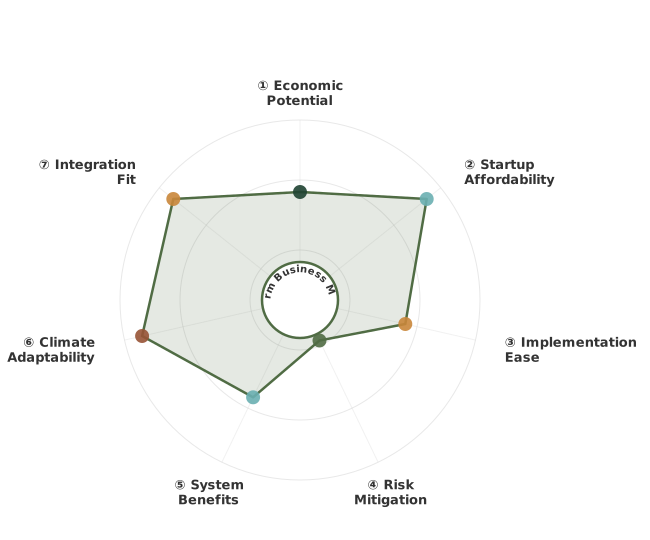
How These Traits Are Calculated
Trait dimensions are ordered clockwise starting from the top of the chart (12 o'clock position):
1. Economic Potential
Financial returns, annual value, and break-even timeline
WHAT: Evaluates financial viability by combining net annual value ($/ha from savings, income, and amortized harvests) with break-even timeline showing when practices pay for themselves.
WHY: Farmers need clear ROI understanding before committing resources. Fast payback (≤3 years) with strong returns (≥$300/ha) enables confident adoption, while long timelines (>10 years) restrict adoption to well-funded operations willing to wait for returns.
HOW: Calculated from net annual value in $/ha and break-even years. Exceptional (≥2.6): fast ROI ≤3 years + high value ≥$300/ha. Typical (1.8-2.5): moderate returns or longer timelines. Limited (<1.8): marginal economics or very long payback >10 years.
2. Startup Affordability
Initial investment costs and financial barrier to entry
WHAT: Measures financial barrier to entry through startup costs for equipment, infrastructure, consulting, and materials. Inverted scoring: lower costs = higher scores = more accessible adoption.
WHY: Affordability determines who can adopt. Low-cost practices (<$250/ha) enable widespread adoption across diverse scales, while high costs (>$2,500/ha) limit adoption to well-capitalized operations, creating barriers that slow regenerative transition.
HOW: Calculated from initial investment parsed from practice content. Inverted scoring: Exceptional (≥2.6): minimal investment <$250/ha. Typical (1.8-2.5): moderate costs $250-2,500/ha. Limited (<1.8): high barrier >$2,500/ha.
3. Implementation Ease
Learning curve and specialized knowledge required
WHAT: Measures how much learning, planning, and specialized knowledge a practice requires. Simpler practices with fewer steps score higher, while complex practices requiring extensive training or specialized resources score lower.
WHY: Complex practices create adoption barriers even when economically viable. Straightforward practices enable faster adoption and broader participation, while those requiring extensive training, timing precision, or specialized equipment limit who can succeed.
HOW: Evaluated by measuring documentation length and identifying complexity markers like location-specific requirements, seasonal timing windows, specialized skills, and dedicated equipment needs. Exceptional (≥2.6): straightforward practices with minimal prerequisites. Typical (1.8-2.5): moderate learning curve with some specialized needs. Limited (<1.8): steep learning curve requiring significant training or resources.
4. Risk Mitigation
Identified financial and ecological risk assessment
WHAT: Evaluates documented risks across financial (investment loss, market volatility) and ecological (crop failure, pest outbreaks) domains. Inverted scoring: fewer risks = higher scores.
WHY: Understanding risk exposure helps farmers make informed decisions. Low-risk practices allow confident implementation, while high-risk practices require careful planning and contingency resources. Risk transparency prevents costly failures.
HOW: Calculated from identified risks in practice content. Inverted scoring: Exceptional (≥2.6): ≤2 risks with manageable severity. Typical (1.8-2.5): 3-5 moderate risks. Limited (<1.8): 6+ risks or severe exposure.
5. System Benefits
How many ways the practice improves your land simultaneously
WHAT: Measures how many aspects of land health improve at once—carbon storage, soil quality, erosion control, water absorption, and biodiversity. Practices that improve multiple areas simultaneously create compounding benefits where each improvement reinforces the others.
WHY: The best practices solve multiple problems at once. For example, addressing erosion simultaneously builds carbon and improves water infiltration, creating a resilient system with positive feedback loops. Single-benefit approaches miss these compound transformation opportunities.
HOW: Evaluated across five key outcomes: carbon sequestration, soil organic matter increase, erosion reduction, water infiltration improvement, and biodiversity enhancement. Exceptional (≥2.6): high carbon storage (>8 t/ha/yr), improvements across 4-5 areas, transformative outcomes. Typical (1.8-2.5): moderate carbon (3-8 t/ha/yr), improvements across 2-3 areas. Limited (<1.8): modest impact (<3 t/ha/yr), single-area focus only.
6. Climate Adaptability
Geographic applicability across Köppen climate zones
WHAT: Evaluates geographic applicability by assessing how many Köppen climate zones successfully support a practice and what adaptation requirements are needed. Measures breadth of climates where farmers can implement with minimal to moderate modifications.
WHY: Universal practices working across diverse climates enable more farmers to adopt regenerative approaches. Practices limited to single climate types (only Mediterranean, only tropical) restrict adoption and slow global transition. Adaptability determines whether a practice serves niche regions or offers broad transformation.
HOW: LLM evaluation of regional success stories, Köppen zone coverage, and adaptation needs. Exceptional (≥2.6): 5+ zones or 4+ climate types, 3+ continents, minimal adaptation. Typical (1.8-2.5): 3-4 zones or 2-3 types, 2 continents, moderate adaptation. Limited (<1.8): 1-2 zones, single region, significant adaptation or highly specialized.
7. Integration Fit
How well this practice combines with others you're doing
WHAT: Measures how well a practice combines with other regenerative practices you might be doing. Some practices work as building blocks that make many other practices easier or more effective, while others work best on their own.
WHY: Practices that combine well with many others create more value on your farm. For example, cover cropping enables no-till, improves grazing, supports crop diversity, and helps water management—making all of them work better together. This helps you build a coherent system rather than juggling disconnected practices.
HOW: Evaluated by identifying which practices combine well and how strong those combinations are. 'Ideally Suited' means strong combinations where practices reinforce each other (practice A makes B easier, while B makes A more effective). 'Adequate' means complementary benefits that work well together. Exceptional (≥2.6): combines well with 6+ practices, serves as a building block. Typical (1.8-2.5): combines with 3-5 practices. Limited (<1.8): 1-2 practices or works best alone.
Going Deeper
1
WHY - The Benefits
Effective farm business management is crucial for the success and longevity of any agricultural operation. In the context of regenerative agriculture, it transcends traditional financial metrics to embrace a holistic approach that prioritizes ecological health as a...
Effective farm business management is crucial for the success and longevity of any agricultural operation. In the context of regenerative agriculture, it transcends traditional financial metrics to embrace a holistic approach that prioritizes ecological health as a...
WHY - The Benefits
Effective farm business management is crucial for the success and longevity of any agricultural operation. In the context of regenerative agriculture, it transcends traditional financial metrics to embrace a holistic approach that prioritizes ecological health as a...
Effective farm business management is crucial for the success and longevity of any agricultural operation. In the context of regenerative agriculture, it transcends traditional financial metrics to embrace a holistic approach that prioritizes ecological health as a...
Soil Health Benefits
Regenerative farm business management actively invests in soil health, recognizing it as a primary asset. By budgeting for practices that minimize soil disturbance (Principle 1), maximize crop diversity (Principle 2), keep soil covered (Principle 3), and maintain living roots (Principle 4), farms build soil organic matter (SOM). Studies show that SOM can increase by 0.5-1.5% over a decade, leading to improved soil structure, greater water infiltration (40-70% increase), enhanced cation exchange capacity, and increased nutrient availability. This biological uplift reduces the need for synthetic fertilizers, leading to direct cost savings and improved nutrient use efficiency.
The business plan in regenerative agriculture prioritizes long-term soil productivity. This means accounting for the capital cost of cover crop seed, no-till equipment, or integrated livestock systems as investments in future yield stability and reduced input dependency. For example, on wheat farms in Ukraine, investing in a diverse cover crop mix for fallow periods, costing perhaps $50-100/ha ($20-40/acre) USD equivalent, can lead to a 10-20% increase in subsequent cash crop yields and reduced weed pressure, often offsetting the initial cost within 1-2 years.
Economic Benefits
The economic rationale for regenerative farm business management is compelling, though it often requires a multi-year perspective. While upfront investments in new equipment or livestock might seem high, they are offset by reduced input costs, increased yield stability, and diversified income streams. Many farms adopting regenerative practices report savings on synthetic fertilizers and pesticides ranging from $150-500 per hectare annually ($60-200/acre) over time. Diversified systems, such as integrating timber or nut trees with livestock (silvopasture), can add 1-3 new revenue sources, buffering against price volatility in any single commodity.
The financial planning must also account for the long-term appreciation of land value. Healthy soils with robust biological activity, excellent water infiltration, and reduced erosion potential are inherently more valuable and resilient. Some studies suggest land managed regeneratively can see a 10-25% increase in market value over a decade compared to conventionally managed land, reflecting its enhanced productivity and ecological capital. This long-term view is critical for estate planning and intergenerational farm transfer.
For farmers in regions like Brazil, where cattle ranching has historically led to land degradation, adopting silvopastoral regenerative models can increase land carrying capacity, improve animal performance through shade and better forage, and provide future timber revenue. This diversification unlocks greater profitability per hectare over the long term, transforming a degraded resource into a multi-faceted productive asset.
Regenerative Systems Fit
Regenerative farm business management is fundamentally designed to support and optimize all five regenerative agriculture principles. It moves beyond treating these principles as isolated agronomic practices and integrates them into a cohesive business strategy.
Principle 1 (Minimize Soil Disturbance): Business plans must allocate capital for equipment that supports low-disturbance practices, such as no-till planters, zone builders, or direct seeders. Budgets should account for the higher upfront cost of such equipment but highlight long-term savings from reduced fuel use, labor, and soil erosion. Financial projections should model the gradual rebuilding of soil structure and its impact on long-term productivity and reduced input needs.
Principle 2 (Maximize Crop Diversity): This translates to diversifying revenue streams beyond single commodity cash crops. Business plans should explore rotations that include legumes for nitrogen fixation, cover crops for soil building and potential grazing, and integrating perennial crops or agroforestry elements. These diversifications reduce market risk and create more stable income over time. For instance, a mixed farm in Australia might plan to intercrop pulses with cereals, adding a nitrogen-fixing component that reduces fertilizer costs for the cereal and provides a separate market for the pulse crop.
Principle 3 (Keep Soil Covered): Business strategy should prioritize year-round ground cover. This means budgeting for diverse cover crop seed mixes, ensuring a plan for livestock grazing or mulch production to maintain cover after cash crop harvest. The economic benefit is reduced erosion, improved water retention (less irrigation needed), and greater resilience to extreme weather, all of which stabilize farm income.
Principle 4 (Maintain Living Roots): Extending the growing season through perennial crops, cover crops, and silvopasture is a core business objective. Living roots continuously feed soil biology, maintain soil structure, and cycle nutrients. Financially, this translates to more efficient nutrient use, less reliance on synthetic fertilizers, and a more stable productive base that buffers against market fluctuations.
Principle 5 (Integrate Livestock): For mixed farms, integrating livestock is often a powerful regenerative strategy. Business plans must account for infrastructure costs (fencing, water), animal purchase, feed, and labor. However, the return on investment comes from nutrient cycling (manure fertilizing crops or pastures), weed control, vegetation management, and diversified income streams from animal products. For example, a farm in East Africa might integrate cattle grazing with staple crop production, using manure for fertility and grazing to manage crop residues, enhancing overall farm productivity and resilience.
The transition requires careful financial planning. Businesses must project potential yield dips during early transition years, manage cash flow to accommodate new investments, and seek out market opportunities for regeneratively produced goods. Many governments offer cost-share programs or incentives for adopting ecological practices, which should be factored into the business plan. The ultimate goal is to build a farm business that is not only profitable but also enhances the ecological capital upon which its long-term success depends.
Sources behind this view
Videos & Podcasts
-
Enhancing soil biology is key to profitable regenerative farming by reducing chemical inputs. Farmers must consider social, environmental, and financial contexts, analyze enterprise numbers, and fully

-
Regenerative agriculture's cost savings depend on implementation and transition time. While some costs decrease over time (fertilizers, pesticides), others require upfront investment (fencing). Farms
-
Adopting regenerative practices should start small and incrementally, focusing on soil health over short-term yields. Collaboration, strategic nutrient sourcing, and leveraging resources like Continuu
-
To transition to regenerative agriculture, start small, increase diversity, reduce expenses, and focus on profit over yield. Avoid product-based 'regenerative' solutions and be wary of conventional mo
 Community
-
Regenerative agriculture shifts focus from yield to net profit, reducing input costs by leveraging nature's free resources. This requires new financial and observational skills, potentially culling li
Read more (opens in new window) understandingag.com -
Regenerative agriculture regenerates topsoil, increases biodiversity, and improves carbon/water cycles through methods like minimal tillage, soil cover, diversity, and animal integration, boosting pro
Read more (opens in new window) understandingag.com
Research
-
Regenerative Agriculture: Restoring Ecosystems¢ Resilience and Productivity: A Review (opens in new window)
This study found: Regenerative agriculture builds soil health and ecosystem services through practices like no-till, cover crops, and diverse rotations. It increases soil organic matter, improves water infiltration, bo
-
Transition to Regenerative Farming (opens in new window)
This study found: A 5-year case study shows a farm successfully transitioned to regenerative practices, reducing soil erosion and increasing wildlife by using cover crops, diversified rotations, and reduced tillage. Pr
-
Regenerative Agriculture: Insights and Challenges in Farmer Adoption (opens in new window)
This study found: Review of 7 regenerative agriculture practices (no-till, crop rotation, cover crops, etc.) highlights benefits and key adoption challenges like cost, farm size, and institutional barriers for scalable
-
The Economic Viability of Regenerative Agriculture: A Systematic Review from a Cost-Benefit Analysis Perspective (opens in new window)
This study found: Regenerative agriculture is economically viable long-term, improving farmer well-being and soil health despite initial costs. Supportive policies and advanced tech like AI are key for wider adoption.
 From the Web
-
Regenerative agriculture restores degraded soils by working with nature, enhancing soil health and profitability. Key practices reduce input costs, improve resilience, and benefit the environment thro
-
Regenerative agriculture improves soil health, forage, and resilience, but adoption faces practical, political, and personal barriers, requiring education, adaptation, and a mindset shift.
-
Regenerative agriculture aligns environmental and financial goals by improving soil health, leading to cost savings and better plant nutrition. This approach demonstrates economic viability, encouragi
2
WHERE - Regional Considerations
Successful implementation of regenerative farm business management is highly context-specific, adapting to the unique ecological and economic conditions of each region. General principles apply, but their expression varies widely based on climate, soil type, market...
Successful implementation of regenerative farm business management is highly context-specific, adapting to the unique ecological and economic conditions of each region. General principles apply, but their expression varies widely based on climate, soil type, market...
WHERE - Regional Considerations
Successful implementation of regenerative farm business management is highly context-specific, adapting to the unique ecological and economic conditions of each region. General principles apply, but their expression varies widely based on climate, soil type, market...
Successful implementation of regenerative farm business management is highly context-specific, adapting to the unique ecological and economic conditions of each region. General principles apply, but their expression varies widely based on climate, soil type, market...
Click Here to Look up your Region if you don't already know it
Humid Temperate Regions
Representative Locations: Southeastern United States, Northern Europe (UK, Germany, Poland), Eastern China, Japan, New Zealand. Climate Context: Warm to hot summers and cool to cold winters with moderate to high annual precipitation (75-150 cm or 30-60 inches) distributed relatively evenly. USDA Zones 6-8, Köppen Cfb/Cfa. Business Management Considerations: These regions often support diverse cropping systems and excellent forage production, ideal for integrating livestock rotationally with cash crops or cover crops. Opportunities exist for high-value specialty crops, direct-to-consumer sales, and building soil organic matter through intensive cover cropping. However, potential for soil erosion and nutrient leaching from high rainfall requires robust soil cover strategies and efficient nutrient management plans. Market access for organic or regeneratively produced goods is often strong, supporting premium pricing. Cost-share programs for soil health and conservation practices are frequently available.
Mediterranean Regions
Representative Locations: California (USA), Mediterranean basin (Spain, Italy, Greece), Central Chile, Southwestern Australia, Western Cape (South Africa). Climate Context: Hot, dry summers and mild, wet winters. Annual precipitation 40-90 cm (15-35 inches), highly seasonal. USDA Zones 8-10, Köppen Csa/Csb. Business Management Considerations: Water management is a critical business consideration. Regenerative strategies focus on maximizing water infiltration and retention through cover cropping, reduced tillage, and contour farming. Drought-tolerant perennial crops, olives, nuts, and adapted livestock breeds are key to economic resilience. Diversifying income through agro-tourism or specialty products can offset risks associated with water scarcity. Business plans must account for the higher costs and technical expertise required for efficient irrigation systems if used, and emphasize drought resilience strategies.
Arid/Semi-Arid Regions
Representative Locations: Western USA, North Africa, Central Asia, Interior Australia. Climate Context: Low annual precipitation (<40 cm or 15 inches), high temperatures, short and often unpredictable growing season. USDA Zones 7-9, Köppen BSh/BSk. Business Management Considerations: Water conservation and drought resilience are paramount. Business models prioritize low-input, drought-tolerant crops, extensive grazing systems (e.g., integrated livestock with arid-adapted perennials), and water harvesting techniques. Carbon sequestration in soils is a major potential benefit, and business plans may explore opportunities to monetize carbon credits. Reduced disturbance farming and maximizing living roots (via drought-hardy perennials or winter annuals) are critical for soil health. The financial model must account for potentially lower yields and higher variability, emphasizing efficient resource use and diversified income.
Cold Continental Regions
Representative Locations: Northern USA and Canada, Northern Europe, Northern Asia. Climate Context: Very short growing seasons, extreme summer heat, severe winter cold. USDA Zones 3-5, Köppen Dfa/Dfb. Business Management Considerations: The business plan must account for a short growing season and winter dormancy. Focus is on cool-season crops, hardy cover crops that can survive winter, and livestock that can withstand cold. Building soil organic matter is crucial to enhance soil warming in spring and improve water retention for a short, intense growing season. Strategies include extending the season with hoop houses or early/late planting of hardy annuals. Dairy, beef, and hardy grain production are common. Market access for value-added products can be important for profitability.
Subtropical Regions
Representative Locations: Southeastern USA, Southern China, Southern Brazil, Eastern Australia. Climate Context: Hot, humid summers and mild winters with generally ample rainfall. USDA Zones 9-11, Köppen Cfa/Cwa. Business Management Considerations: High humidity and temperatures can support year-round production but also promote disease and weed pressure. Business plans must incorporate strategies for managing these challenges, such as diverse rotations, biological pest control, and selecting disease-resistant varieties. Opportunities for multiple crop cycles per year are significant. Livestock integration is often highly feasible. Cash flow planning needs to account for potential disease outbreaks or pest infestations impacting yields. Market opportunities may include year-round produce or diverse fruit and nut production.
Tropical Regions
Representative Locations: Central America, Southeast Asia, East Africa, Northern Australia, Northern South America. Climate Context: High temperatures year-round, with distinct wet and dry seasons or consistent high rainfall. Köppen Af/Am/Aw. Business Management Considerations: Year-round production is possible, but managing high rainfall, intense sun, and potential for disease and pest outbreaks is key. Regenerative business models emphasize agroforestry (integrating trees with crops and livestock), soil fertility building through composting and biological nitrogen fixation, and water management (water harvesting in dry seasons, erosion control in wet seasons). Diversification is essential, often involving a mix of staple crops, fruit trees, timber, and livestock. Market access for niche tropical products can provide premium pricing. Business plans must also consider rapid nutrient cycling and potential for nutrient losses in high rainfall environments.
3
HOW - Implementation Process
Implementing regenerative farm business management requires a structured approach that integrates ecological principles into financial and operational planning. It's a journey of continuous learning, adaptation, and refinement.
Implementing regenerative farm business management requires a structured approach that integrates ecological principles into financial and operational planning. It's a journey of continuous learning, adaptation, and refinement.
HOW - Implementation Process
Implementing regenerative farm business management requires a structured approach that integrates ecological principles into financial and operational planning. It's a journey of continuous learning, adaptation, and refinement.
Implementing regenerative farm business management requires a structured approach that integrates ecological principles into financial and operational planning. It's a journey of continuous learning, adaptation, and refinement.
Prerequisites
- Vision and Commitment: Clearly define your long-term goals for soil health, ecological function, farm resilience, and financial performance. This vision should be shared by all key decision-makers on the farm.
- Education and Knowledge Acquisition: Invest time in learning about regenerative agriculture principles, practices, and business models. This can involve workshops, online courses, reading literature, and visiting regenerative farms. International resources from organizations like IFOAM, Rodale Institute, and The Savory Institute are invaluable.
- Soil and Resource Assessment: Conduct a thorough assessment of your farm's current state: soil types, organic matter levels, topography, water resources, existing biodiversity, and compaction issues. This baseline data is crucial for setting realistic goals and measuring progress.
- Financial Baseline: Understand your current farm financials—income sources, expenses, debt, and profitability per enterprise. This provides a starting point for evaluating the economic implications of transition.
Phase 1: Transition Planning and Goal Setting (Year 0-1)
- Develop a Regenerative Business Plan: This is the core document. It should outline your long-term vision, specific ecological and financial goals, your chosen transition pathway, key practices to be adopted, estimated timelines, required investments, and risk mitigation strategies. Adapt global principles to your local context (climate, markets, regulations).
- Identify Key Regenerative Practices: Based on your assessment and goals, select 1-3 foundational regenerative practices to introduce initially. Examples include:
- Cover Cropping: Plan species mixes suitable for your climate and soil. Budget for seed costs ($50-150/ha or $20-60/acre USD equivalent).
- Rotational Grazing: If livestock are present, plan paddock layouts, fencing needs (portable or permanent), and water access. Budget for infrastructure investment ($5,000-20,000/ha or $2,000-8,000/acre for silvopasture, depending on scale and complexity).
- Reduced Tillage: Assess current tillage practices. If transitioning from intensive tillage, plan for reduced tillage first, then move to no-till. Budget for appropriate seeding equipment.
- Secure Financing and Cost-Share: Research government programs, grants, or low-interest loans available for regenerative agriculture or conservation practices in your region. Many international programs exist to support soil health and biodiversity improvements. Factor these into your financial projections.
- Network and Seek Mentorship: Connect with experienced regenerative farmers in your region or internationally. Peer-to-peer learning is invaluable for practical advice and problem-solving.
Phase 2: Initial Implementation and Monitoring (Year 1-3)
- Implement Selected Practices: Begin establishing cover crops, adjusting grazing rotations, or modifying tillage operations according to your plan. Focus on executing these practices with precision.
- Establish Monitoring Systems: Continuously monitor key indicators of soil health and farm performance. This includes:
- Soil Tests: Regular testing for organic matter, nutrient levels, and biology.
- Infiltration Tests: Measuring water infiltration rates.
- Visual Assessments: Observing soil structure, root growth, and plant health.
- Financial Tracking: Meticulously record all income and expenses related to the transition.
- Make Adaptive Adjustments: Based on monitoring data, be prepared to adjust your plan. If cover crops aren't performing as expected, research alternative species or timing. If grazing impacts soil structure, adjust rest periods. The business plan should be a living document, reviewed annually.
- Explore Market Opportunities: Begin exploring markets for regeneratively produced goods. This might involve direct-to-consumer sales, farmers' markets, or partnerships with distributors seeking sustainably sourced products.
Phase 3: Expansion and Integration (Year 3-7)
- Scale Up Successes: If initial practices are proving effective, gradually expand their implementation across more of the farm.
- Incorporate Additional Principles: Introduce more regenerative practices that align with your goals and resources. This could include integrating livestock if not already present, establishing agroforestry components, or implementing keyline design for water management.
- Refine Financial Models: As you gain more data, update your financial projections to reflect actual cost savings, yield improvements, and new revenue streams. Develop budgets that account for the synergistic benefits of integrated practices. For example, the fertility provided by integrating livestock can offset fertilizer costs for cash crops.
- Build Ecological Capital: Focus on practices that demonstrably improve soil structure, water cycles, and biodiversity. This forms the foundation of long-term economic resilience.
Transition Timeline & Phase-Out Strategy (If applicable for conventional inputs)
If transitioning from heavily reliant conventional systems, a phased approach to input reduction is crucial:
- Years 1-2: Reduce synthetic nitrogen and phosphorus by 20-30% as cover cropping and legume integration begin to build soil fertility. Reduce pesticide use by 20-30% by introducing diverse rotations and biological pest controls. Monitor crop performance closely. Maintain existing synthetic input schedules for herbicides if critical for weed control during early transition stages.
- Years 3-4: Further reduce synthetic nitrogen and phosphorus by another 30-40% as soil biology becomes more robust and nutrient cycling improves. Reduce pesticide use by another 30-40%. Critically evaluate herbicide needs – can some applications be replaced by cover crop management or mechanical weeding?
- Years 5-7: Aim to eliminate synthetic nitrogen and phosphorus completely, relying on cover crops, livestock manure, and improved biological nutrient cycling. Aim to eliminate synthetic pesticides and herbicides entirely, managing pests and weeds through diverse cropping systems, beneficial insects, and timely mechanical interventions.
- Ongoing: Continuous monitoring and adaptation. The goal is to reach a point where external inputs are minimal, replaced by the farm's internal ecological processes. Success is measured by stable or increasing yields, improved soil health indicators, and sustained profitability without relying on synthetic inputs.
This phased approach mitigates the risk of yield crashes associated with "cold turkey" elimination of inputs, allowing soil biology time to adapt and take over essential functions.
Sources behind this view
Videos & Podcasts
-
Adopting regenerative practices should start small and incrementally, focusing on soil health over short-term yields. Collaboration, strategic nutrient sourcing, and leveraging resources like Continuu
-
Regenerative farming transition takes 1-3 years. First year focuses on 10% land for learning, developing observation skills. By year two, farmers are mostly independent; by year three, confident. Phas

-
Soil Capital's strategy for regenerative transition: 1) Optimize agrochemical/pesticide use for 10-40% savings. 2) Invest savings in multi-species cover crops and crop rotation diversification (oats,

-
Transitioning to regenerative agriculture can be managed with a slow approach, reallocating 10% of current spending to biological practices over 12 months, rather than going 'cold turkey.'

Community
-
Regenerative agriculture shifts focus from yield to net profit, reducing input costs by leveraging nature's free resources. This requires new financial and observational skills, potentially culling li
Read more (opens in new window) understandingag.com -
A three-year farmstead development plan: Year 1 for observation, soil building with cover crops, and basic infrastructure; Year 2 for major earthworks (water/access) and planting; Year 3 for establish
Read more (opens in new window) permies.com -
A nine-step farm establishment plan, progressing from climate/geography analysis and water systems to access, buildings, fencing, soil improvement (cover cropping, compost teas), planting, animal intr
Read more (opens in new window) permies.com -
Regenerative agriculture requires intentional management and understanding of complex, non-linear biological systems, as traditional research and simple BMPs are insufficient. Progress is an ongoing j
Read more (opens in new window) understandingag.com
Research
-
Transition to Regenerative Farming (opens in new window)
This study found: A 5-year case study shows a farm successfully transitioned to regenerative practices, reducing soil erosion and increasing wildlife by using cover crops, diversified rotations, and reduced tillage. Pr
-
Regenerative Agriculture: Restoring Ecosystems¢ Resilience and Productivity: A Review (opens in new window)
This study found: Regenerative agriculture builds soil health and ecosystem services through practices like no-till, cover crops, and diverse rotations. It increases soil organic matter, improves water infiltration, bo
-
FORAGES AND PASTURES SYMPOSIUM: COVER CROPS IN LIVESTOCK PRODUCTION: WHOLE-SYSTEM APPROACH: Managing grazing to restore soil health and farm livelihoods. (opens in new window)
This study found: Shifting to low-input, regenerative farming with smart grazing management can restore soil health, improve ecosystem services like carbon capture and water infiltration, and boost farm profitability f
-
Regenerative agriculture improves soil functioning and the complexity of soil food webs after a short transition period (opens in new window)
This study found: Five years of regenerative farming in horticultural systems boosted soil moisture, organic matter, and beneficial soil enzymes. Soil animal life shifted from mites/worms to larger invertebrates, indic
From the Web
-
Mandates brief management plans covering environmental (soil health, biodiversity), social (fair wages, gender equity), governance (farm, marketing, financial), and transition strategies to regenerati
4
Know the Debate
Successful farm business management in regenerative agriculture hinges on balancing ecological health with financial viability. While the principle...
Know the Debate
Successful farm business management in regenerative agriculture hinges on balancing ecological health with financial viability. While the principle...
Successful farm business management in regenerative agriculture hinges on balancing ecological health with financial viability. While the principles of minimizing disturbance, maximizing diversity, keeping soil covered, and integrating livestock apply globally, their implementation and outcomes are shaped by local conditions. Factors like climate variability, soil type, scale of operation, and market access dictate realistic timelines for profitability, the nature of essential investments, and the ongoing labor commitments required for adaptive management.
How long until regenerative agriculture is profitable?
3-5 years with support and efficiency
Academic and institute sources suggest profitability can be achieved within 3-5 years, highlighting reduced input costs, yield stability, and supportive policies as key drivers.
Sources behind this view
Sources behind this view
Videos & Podcasts
-
Enhancing soil biology is key to profitable regenerative farming by reducing chemical inputs. Farmers must consider social, environmental, and financial contexts, analyze enterprise numbers, and fully adopt regenerative principles for exponential returns.
Research
-
Regenerative Agriculture: Insights and Challenges in Farmer Adoption (opens in new window)
This study found: This paper reviews seven key practices of regenerative agriculture: no-till farming, rotating crops, using cover crops, green manures (crops grown to be tilled back into the soil), planting multiple crops together (intercropping), using permanent ground cover, and integrating crops with livestock. Regenerative agriculture focuses on improving soil health, biodiversity, and fairness for people. It's designed to work on large farms, unlike some other ecological farming methods. While it emphasizes natural principles, its certification can be flexible, sometimes allowing certain manufactured inputs if regenerative practices are followed. The review highlights the benefits of these practices but also points out major hurdles for farmers, such as initial costs, farm size limitations, and systemic issues. Overcoming these challenges is crucial for more farmers to adopt regenerative approaches.
From the Web
-
Regenerative agriculture restores degraded soils by working with nature, enhancing soil health and profitability. Key practices reduce input costs, improve resilience, and benefit the environment through cleaner air and water.
5-10+ years with full transition and observation
Experienced farmers emphasize that true profitability and resilience take 5-10+ years, involving significant investment and a deep learning curve, to fully realize benefits from rebuilt soil biology.
Sources behind this view
Sources behind this view
Videos & Podcasts
-
Regenerative agriculture's cost savings depend on implementation and transition time. While some costs decrease over time (fertilizers, pesticides), others require upfront investment (fencing). Farms see increased profitability (avg. 78% after 5-10 years) and build resilience.
-
Enhancing soil biology is key to profitable regenerative farming by reducing chemical inputs. Farmers must consider social, environmental, and financial contexts, analyze enterprise numbers, and fully adopt regenerative principles for exponential returns.
-
Barriers to regenerative agriculture adoption include economic misconceptions (it's not less profitable), complexity of soil-plant cycles (manager decisions dictate degradation vs. regeneration), and risk aversion due to unfamiliarity with regenerative practices.

-
Transitioning to regenerative agriculture requires a whole-systems mindset, focusing on soil health principles: reduce tillage/compaction, increase diversity (plants, animals), eliminate bio-cides/fertilizers. Plan transitions gradually, involve employees, monitor changes, and understand that soil regeneration is a long-term process.

Making Sense of the Differences
The timeline for profitability in regenerative agriculture varies significantly based on initial farm conditions, learning curve, adoption speed, and market access. Farms starting with depleted soils or conventional infrastructure may experience slower returns, while those with existing healthy soils or direct market access may see faster gains. Planning for 5-7 years of transition is a prudent financial strategy.
What are the essential investments for regenerative farm management?
Efficient focus on core tools and knowledge
Academic and institute perspectives suggest essential investments center on practical tools like no-till equipment, cover crop seed, and essential education, assuming efficient resource scaling.
Sources behind this view
Sources behind this view
Research
-
Regenerative Agriculture: Insights and Challenges in Farmer Adoption (opens in new window)
This study found: This paper reviews seven key practices of regenerative agriculture: no-till farming, rotating crops, using cover crops, green manures (crops grown to be tilled back into the soil), planting multiple crops together (intercropping), using permanent ground cover, and integrating crops with livestock. Regenerative agriculture focuses on improving soil health, biodiversity, and fairness for people. It's designed to work on large farms, unlike some other ecological farming methods. While it emphasizes natural principles, its certification can be flexible, sometimes allowing certain manufactured inputs if regenerative practices are followed. The review highlights the benefits of these practices but also points out major hurdles for farmers, such as initial costs, farm size limitations, and systemic issues. Overcoming these challenges is crucial for more farmers to adopt regenerative approaches.
From the Web
-
Regenerative agriculture restores degraded soils by working with nature, enhancing soil health and profitability. Key practices reduce input costs, improve resilience, and benefit the environment through cleaner air and water.
-
Profitability is crucial for enabling regenerative agriculture, allowing farmers to focus on soil health, sunshine, rainfall, and ingenuity over fossil fuels. Key management areas include production, economics, people, and marketing, with strategies for grazing, livestock, farming systems (no-till, cover crops), and marketing.
Comprehensive investment including infrastructure and mentorship
Experienced farmers emphasize significant investments in fencing, water systems, and extensive education/mentorship, particularly for livestock integration and managing complexity at scale.
Sources behind this view
Sources behind this view
Videos & Podcasts
-
Regenerative agriculture's cost savings depend on implementation and transition time. While some costs decrease over time (fertilizers, pesticides), others require upfront investment (fencing). Farms see increased profitability (avg. 78% after 5-10 years) and build resilience.
-
Transitioning to regenerative agriculture requires a whole-systems mindset, focusing on soil health principles: reduce tillage/compaction, increase diversity (plants, animals), eliminate bio-cides/fertilizers. Plan transitions gradually, involve employees, monitor changes, and understand that soil regeneration is a long-term process.
-
Scaling regenerative agriculture requires addressing farmer risk and ROI, emphasizing soil health for climate resilience. Knowledge sharing via platforms like WhatsApp is key. Policy support, including domestic production targets and true cost accounting, is crucial for making regenerative farming attractive and economically viable.

-
Adopting regenerative practices should start small and incrementally, focusing on soil health over short-term yields. Collaboration, strategic nutrient sourcing, and leveraging resources like Continuum Ag are key to successful implementation.
Making Sense of the Differences
Essential investments for regenerative management vary by scale and enterprise. While crop-focused operations might prioritize cover crop seeds and reduced tillage equipment, farms integrating livestock require substantial upfront capital for fencing, water systems, and potentially animals. Beyond physical assets, continuous investment in education, soil monitoring, and potentially mentorship is critical for adaptive management.
How does regenerative agriculture affect profitability?
Profitability increases long-term with reduced inputs
Academic and institute sources suggest regenerative agriculture leads to enhanced long-term profitability due to reduced input costs, stabilized yields, and diversified income, often supported by niche markets.
Sources behind this view
Sources behind this view
Research
-
The Economic Viability of Regenerative Agriculture: A Systematic Review from a Cost-Benefit Analysis Perspective (opens in new window)
This study found: A review of studies looking at the economics of regenerative agriculture shows that while it might cost more to start, these farming methods are profitable in the long run. Farmers practicing regenerative agriculture see better financial returns, improved well-being, and healthier soil. The review suggests that regenerative agriculture is a strong approach for resilience, but it needs government policies to help it spread. The authors also recommend using new technologies like big data and AI to better predict outcomes and monitor farm health and finances, leading to smarter decisions for sustainable food systems.
From the Web
-
Regenerative agriculture restores degraded soils by working with nature, enhancing soil health and profitability. Key practices reduce input costs, improve resilience, and benefit the environment through cleaner air and water.
-
Regenerative agriculture aligns environmental and financial goals by improving soil health, leading to cost savings and better plant nutrition. This approach demonstrates economic viability, encouraging farmer and landowner adoption.
Significant profit increases after transition via input savings & diversification
Experienced farmers report significant profitability increases (avg. 78% after 5-10 years) due to input reductions, yield stability, and diversified income, though initial transition costs are acknowledged.
Sources behind this view
Sources behind this view
Videos & Podcasts
-
Regenerative agriculture's cost savings depend on implementation and transition time. While some costs decrease over time (fertilizers, pesticides), others require upfront investment (fencing). Farms see increased profitability (avg. 78% after 5-10 years) and build resilience.
-
Enhancing soil biology is key to profitable regenerative farming by reducing chemical inputs. Farmers must consider social, environmental, and financial contexts, analyze enterprise numbers, and fully adopt regenerative principles for exponential returns.
-
Data from 1,600+ farms show regenerative practices reduce feed/vet costs by 40%, increase forage/organic matter, and improve arable efficiency. Soil health is the foundation for profitability, making it a necessity, not a choice.
-
New farmers must prioritize profitability and financial sustainability. Analyze limiting factors, keep good records, and focus on profitable practices to ensure the farm's long-term viability and ability to enact positive change.

Making Sense of the Differences
Regenerative agriculture generally leads to improved long-term profitability driven by reduced input costs, stabilized yields, and diversified income. While initial transition may involve investment and potential short-term yield dips, the gains from enhanced soil health, reduced reliance on external inputs, and a growing market for regenerative products typically outweigh these challenges over 5-10 years.
5
HOW MUCH - Costs & Investment
Note: All costs are based on recent US economic data (2023-2025) and may vary substantially in other regions based on local labor rates, material costs, and regulatory requirements. Cost-share programs can significantly reduce upfront investment.
Note: All costs are based on recent US economic data (2023-2025) and may vary substantially in other regions based on local labor rates, material costs, and regulatory requirements. Cost-share programs can significantly reduce upfront investment.
HOW MUCH - Costs & Investment
Note: All costs are based on recent US economic data (2023-2025) and may vary substantially in other regions based on local labor rates, material costs, and regulatory requirements. Cost-share programs can significantly reduce upfront investment.
Note: All costs are based on recent US economic data (2023-2025) and may vary substantially in other regions based on local labor rates, material costs, and regulatory requirements. Cost-share programs can significantly reduce upfront investment.
Note: All costs are based on recent US economic data (2024–2026) and may vary substantially by region based on local labor rates, material costs, and regulatory requirements.
Operational Transition Costs (Annualized)
The primary annual operating costs for farm business management in transition include cover crop inputs, ecological monitoring, and external technical advisory services. For small operations (under 50 acres (20 ha)), these costs range from $85–280 per acre ($210–$692/ha) annually. This segment often relies on premium boutique seed mixes and higher-frequency manual labor for monitoring soil health indicators. Mid-sized operations (50–500 acres (20–202 ha)) experience economies of scale due to labor efficiencies and bulk purchasing of biological amendments, bringing their annual costs to $60–190 per acre ($148–$469/ha). Large-scale operations (500+ acres) navigate these requirements at a cost of $40–120 per acre ($99–$297/ha), leveraging advanced data collection systems and streamlined logistical pipelines. Managing these costs requires careful tracking of expenditures against specific regenerative benchmarks to prevent budget slippage during the early stages of the institutional shift.
Capital Equipment & Infrastructure
Strategic regenerative management mandates a pivot from conventional machinery focus to system-level infrastructure. Small farms investing in high-quality no-till drills or modular fencing systems should anticipate capital outlays of $12,000–35,000. These assets carry a heavy upfront price tag relative to acreage, resulting in an amortized cost of $120–350 per acre ($297–$865/ha). Mid-sized operations require robust multi-paddock watering systems and automated livestock monitoring gear, leading to capital expenditures of $45,000–135,000. These investments provide the structural foundation for intensive rotational grazing, a hallmark of regenerative farm management. Large-scale operations, requiring heavy-duty, high-capacity equipment and extensive water piping systems, often see investments exceeding $150,000–450,000. When amortized over 10 years, these capital costs hover at $15–65 per acre ($37–$161/ha). These figures highlight the significant disparity in equipment intensity between smallholder farms and industrial-scale producers.
Yield Buffer and Risk Management
Managing the business transition requires a dedicated financial "yield dip" reserve to mitigate the volatility inherent in shifting from conventional dependency to biological soil health. For small-scale operations, we advise budgeting a $100–350 per acre ($247–$865/ha) reserve to cover unexpected production gaps. Mid-sized producers generally mitigate this risk with a smaller $75–250 per acre ($185–$618/ha) reserve, as their diversified portfolios often provide a natural hedge against single-crop failure. Large operations with 500+ acres frequently manage this buffer at $40–180 per acre ($99–$445/ha) through sophisticated risk-hedging instruments and larger crop portfolios. This pool of liquidity acts as a vital financial backstop, ensuring that farmers can maintain basic management protocols even if microbial recovery leads to temporary nutrient deficiencies. By keeping these reserves tied to operational, not speculative, goals, producers protect their solvency during the critical 36-month transition window.
Most Spend: Most farms in transition fall into the middle 60% of these expenditure ranges. Mid-sized operations typically spend $130–225 per acre ($321–$556/ha) annually, while larger commercial operations cluster around $85–150 per acre ($210–$371/ha). These figures reflect a blend of self-led, low-cost management and essential external professional certification or consulting services.
Why the Range?: The wide cost variance is primarily driven by the "legacy-to-regenerative" intensity gap. Farms that elect to purchase high-tech, real-time monitoring sensors and premium multispecies cover crop seed mixes sit at the higher end of the spectrum, whereas farms focusing on low-input, adaptive management sit at the lower end.
Sources behind this view
Videos & Podcasts
-
Century is integrating soil disturbance reduction (saving £30-£100+/hectare), cover crops, and input reduction (improving nitrogen use efficiency to 92%) across its farms, utilizing grants and explori
-
Transitioning to regenerative agriculture can avoid the 'J curve' by first optimizing agrochemical use and reducing tillage intensity to generate savings. These freed-up funds are then reinvested grad
-
Regenerative agriculture's cost savings depend on implementation and transition time. While some costs decrease over time (fertilizers, pesticides), others require upfront investment (fencing). Farms
-
Transitioning to regenerative agriculture can be cost-effective by starting with basic rotational grazing principles and viewing infrastructure upgrades as asset investments. Tools like Myograzing aid

Research
-
Regenerative Agriculture: Restoring Ecosystems¢ Resilience and Productivity: A Review (opens in new window)
This study found: Regenerative agriculture builds soil health and ecosystem services through practices like no-till, cover crops, and diverse rotations. It increases soil organic matter, improves water infiltration, bo
6
REWARDS AND RISKS - Economics & Risk Factors
Regenerative farm business management offers significant rewards but also carries inherent risks, particularly during the transition period. Understanding and planning for these is crucial for long-term success.
Regenerative farm business management offers significant rewards but also carries inherent risks, particularly during the transition period. Understanding and planning for these is crucial for long-term success.
REWARDS AND RISKS - Economics & Risk Factors
Regenerative farm business management offers significant rewards but also carries inherent risks, particularly during the transition period. Understanding and planning for these is crucial for long-term success.
Regenerative farm business management offers significant rewards but also carries inherent risks, particularly during the transition period. Understanding and planning for these is crucial for long-term success.
Economic outcomes in regenerative business management are defined by the velocity of soil health regeneration and the ability to capture value-added market segments.
In a Best Case Scenario, the farm successfully integrates regenerative practices within 3–5 years. By year 4, input costs for synthetic fertilizers and chemical pesticides drop by 25–40%. Enhanced soil water holding capacity grants superior yield stability, allowing the producer to command a $0.50–1.50 per bushel premium in niche or identity-preserved markets. Cumulative net income gains often hit $150–300 per acre ($371–$741/ha) by year 5. Furthermore, land value appreciates by 15–22% as soil organic matter increases, significantly improving the farm's collateral strength for future lending.
In a Typical Scenario, the transition spans 5–8 years. Input costs see a gradual decline of 15–25%, while yield variability smooths out after year 3. Producers successfully capture additional revenue through ecosystem service payments, potential federal carbon credits, or direct-to-consumer regenerative grain sales, contributing $50–150 per acre ($124–$371/ha) annually. The farm achieves long-term viability by reducing its dependency on high-volatility inputs. By year 7, the cumulative operational costs are offset by the higher margins per acre, resulting in a net ROI of 5–12% on the capital transition investment, signaling the reaching of self-sustaining financial health.
In a Worst Case Scenario, characterized by insufficient soil diagnostics or excessive upfront debt, the farm experiences prolonged yield slumps of 20–35% through the first 5 years. Total infrastructure expenditures exceeding $500 per acre ($1,236/ha) without corresponding revenue gains can lead to annual cash flow gaps of $200–400 per acre ($494–$988/ha). This scenario is almost exclusively caused by a failure to monitor real-time soil dynamics, leading to nutrient deficiencies that suppress growth. If the debt-to-asset ratio exceeds 50% during this period, the farm faces significant insolvency risk, forcing an aggressive pivot back to lower-cost commodity production to stop cash leakage.
Transition Period Risks: The "valley of death" occurring in years 1–3 represents the greatest challenge, where conventional inputs are removed before biological soil functions fully compensate. Yields can dip by 10–25% as the microbial community adjusts to the absence of synthetic nitrogen. Mitigation requires a phased implementation: transition 20% of the acreage in year 1, 30% in year 2, and 50% in year 3. This maintains 80% stable cash flow initially. Leveraging government cost-share grants to cover up to 50–75% of fencing and cover crop costs is the most effective mitigation strategy, lowering out-of-pocket setup risk by $10–40 per acre ($25–$99/ha) per year.
Sources behind this view
Videos & Podcasts
-
To transition to regenerative agriculture, start small, increase diversity, reduce expenses, and focus on profit over yield. Avoid product-based 'regenerative' solutions and be wary of conventional mo
-
Transitioning to regenerative agriculture can be managed with a slow approach, reallocating 10% of current spending to biological practices over 12 months, rather than going 'cold turkey.'
-
Regenerative transition requires careful budgeting for machinery capital and tax implications, phased implementation (5-10 years), soil assessment (addressing pans/drainage), and potentially alternati
-
Adopting regenerative practices should start small and incrementally, focusing on soil health over short-term yields. Collaboration, strategic nutrient sourcing, and leveraging resources like Continuu
Community
-
Regenerative agriculture shifts focus from yield to net profit, reducing input costs by leveraging nature's free resources. This requires new financial and observational skills, potentially culling li
Read more (opens in new window) understandingag.com
Research
-
Transition to Regenerative Farming (opens in new window)
This study found: A 5-year case study shows a farm successfully transitioned to regenerative practices, reducing soil erosion and increasing wildlife by using cover crops, diversified rotations, and reduced tillage. Pr
-
Regenerative Agriculture: Restoring Ecosystems¢ Resilience and Productivity: A Review (opens in new window)
This study found: Regenerative agriculture builds soil health and ecosystem services through practices like no-till, cover crops, and diverse rotations. It increases soil organic matter, improves water infiltration, bo
-
Regenerative Agriculture: Insights and Challenges in Farmer Adoption (opens in new window)
This study found: Review of 7 regenerative agriculture practices (no-till, crop rotation, cover crops, etc.) highlights benefits and key adoption challenges like cost, farm size, and institutional barriers for scalable
-
FORAGES AND PASTURES SYMPOSIUM: COVER CROPS IN LIVESTOCK PRODUCTION: WHOLE-SYSTEM APPROACH: Managing grazing to restore soil health and farm livelihoods. (opens in new window)
This study found: Shifting to low-input, regenerative farming with smart grazing management can restore soil health, improve ecosystem services like carbon capture and water infiltration, and boost farm profitability f
7
COMPATIBLE PRACTICES - Integration Opportunities
Farm business management in a regenerative system thrives on integrating multiple practices that create synergistic benefits, amplifying ecological and economic returns.
Farm business management in a regenerative system thrives on integrating multiple practices that create synergistic benefits, amplifying ecological and economic returns.
COMPATIBLE PRACTICES - Integration Opportunities
Farm business management in a regenerative system thrives on integrating multiple practices that create synergistic benefits, amplifying ecological and economic returns.
Farm business management in a regenerative system thrives on integrating multiple practices that create synergistic benefits, amplifying ecological and economic returns.
Rotational Grazing
- Integration Benefit: Distributes animal impact, synchronizes nutrient cycling with crop needs, builds soil organic matter, stimulates plant growth, and prevents overgrazing. Financial benefits come from improved animal performance and reduced feed costs as pasture quality improves. Business plans should account for livestock infrastructure costs and management.
- Synergy Rating: ⭐⭐⭐⭐⭐
Cover Cropping
- Integration Benefit: Maintains soil cover, feeds soil biology, improves water infiltration, suppresses weeds, fixes nitrogen (legumes), and can provide grazing or biomass. Reduces need for synthetic inputs and reduces erosion. Financial return via yield increases, reduced input costs, and potential soil carbon sequestration.
- Synergy Rating: ⭐⭐⭐⭐⭐
No-Till/Reduced Tillage
- Integration Benefit: Minimizes soil disturbance, preserves soil structure, conserves moisture, reduces fuel and labor costs, builds soil organic matter, and supports biological activity. Critical for long-term resilience. Business plans must factor in equipment costs or custom hire.
- Synergy Rating: ⭐⭐⭐⭐⭐
Agroforestry/Silvopasture
- Integration Benefit: Adds new revenue streams (timber, nuts, fruit), provides shade and shelter for livestock or crops, enhances biodiversity, sequesters carbon, and improves microclimates. Creates a more resilient and diversified business model. Requires longer-term planning and investment.
- Synergy Rating: ⭐⭐⭐⭐
Composting and Organic Amendments
- Integration Benefit: Recycles farm organic waste into valuable fertility amendments, improves soil structure, and enhances soil biology. Can reduce reliance on synthetic fertilizers and soil amendments over time. Cost-effective if managed efficiently on-farm.
- Synergy Rating: ⭐⭐⭐
Water Harvesting and Conservation (e.g., Keyline Design)
- Integration Benefit: Maximizes water infiltration and storage in the landscape, reducing reliance on irrigation, improving drought resilience, and enhancing plant growth. Crucial for economic stability in water-scarce regions.
- Synergy Rating: ⭐⭐⭐⭐
Direct Marketing and Value-Added Products
- Integration Benefit: Captures more of the consumer dollar, builds direct customer relationships, and allows for premiums on regeneratively produced goods. Requires marketing expertise and time investment but can significantly boost farm profitability.
- Synergy Rating: ⭐⭐⭐⭐
Carbon Farming and Ecosystem Service Markets
- Integration Benefit: Offers potential revenue streams from carbon sequestration, improved water quality, or biodiversity enhancement. Requires robust monitoring, reporting, and verification (MRV) systems. Business plans should explore emerging markets.
- Synergy Rating: ⭐⭐⭐
By strategically integrating these practices and aligning them with a sound business plan, farms can achieve remarkable improvements in both ecological health and financial prosperity, creating truly resilient and regenerative enterprises.
Sources behind this view
Videos & Podcasts
-
Enhancing soil biology is key to profitable regenerative farming by reducing chemical inputs. Farmers must consider social, environmental, and financial contexts, analyze enterprise numbers, and fully
-
Adopting regenerative practices should start small and incrementally, focusing on soil health over short-term yields. Collaboration, strategic nutrient sourcing, and leveraging resources like Continuu
-
Regenerative adoption varies; SFI/Countryside Stewardship fund cover crops and rotational mixes. Carbon markets and branding offer future opportunities, but cautious, profitable transitions, supported
-
Regenerative agriculture is assessed via characteristics (economic sustainability, diversity, resilience), inputs (origin, fertility), and practices (tillage, disease management). Low tillage and ecos
Community
-
Regenerative agriculture shifts focus from yield to net profit, reducing input costs by leveraging nature's free resources. This requires new financial and observational skills, potentially culling li
Read more (opens in new window) understandingag.com
Research
-
Regenerative Agriculture: Restoring Ecosystems¢ Resilience and Productivity: A Review (opens in new window)
This study found: Regenerative agriculture builds soil health and ecosystem services through practices like no-till, cover crops, and diverse rotations. It increases soil organic matter, improves water infiltration, bo
-
Smart and regenerative agriculture in the function of agricultural entrepreneurship (opens in new window)
This study found: Combining smart farming tech with regenerative practices enhances farm businesses by improving soil health, resilience, and meeting consumer demand for sustainable food.
-
Regenerative Agriculture: Insights and Challenges in Farmer Adoption (opens in new window)
This study found: Review of 7 regenerative agriculture practices (no-till, crop rotation, cover crops, etc.) highlights benefits and key adoption challenges like cost, farm size, and institutional barriers for scalable
-
Regenerative Agriculture: Integrating Soil Health, Carbon Management and Socio-ecological Outcomes (opens in new window)
This study found: Regenerative agriculture integrates soil health, carbon storage, and community resilience using practices like cover crops and reduced tillage for sustainable food systems.