
Farm Data Analysis & Decision Support
Farm data analysis is the systematic process of collecting, organizing, interpreting, and leveraging diverse farm and environmental information to make informed decisions that enhance profitability, productivity, and long-term sustainability. It’s about understanding your farm’s current performance, identifying trends, and guiding strategic shifts toward regenerative goals.
Read More: Complete Description
Farm data analysis is the backbone of informed management, transforming raw information into actionable insights. This practice involves meticulously gathering data from various sources – soil tests, weather stations, crop yields, livestock performance, financial records, satellite imagery, sensor readings, and even observational notes taken during daily farm walks. Once collected, this data is organized, cleaned, and subjected to rigorous analysis. The objective isn't just to know numbers, but to understand their interrelationships and implications for farm operations and profitability. By analyzing historical data, farmers can identify trends, understand variability, and pinpoint areas for improvement.
Integrating farm data analysis into a regenerative agriculture framework elevates its purpose beyond mere efficiency. In regenerative systems, data analysis becomes a tool to monitor progress towards ecological health and resilience, alongside economic viability. This practice is context-dependent. In a regenerative context, data analysis is regenerative when it guides decisions that uphold the five regenerative principles: minimizing soil disturbance (e.g., analyzing compaction data to guide tillage decisions or lack thereof), maximizing crop diversity (e.g., analyzing yield and soil health response to different cover crop mixes), keeping soil covered (e.g., analyzing residual soil moisture and plant growth under cover crops versus bare ground), maintaining living roots (e.g., analyzing root depth and soil biology assays to confirm year-round biological activity), and integrating livestock (e.g., analyzing animal performance, pasture recovery, and soil nutrient cycling in response to grazing management).
Conversely, data analysis can be extractive if it primarily serves to optimize conventional, high-input systems that degrade soil and ecological capital. For example, using data solely to maximize yield at the expense of soil health, or to determine the precise (and often increasing) amount of synthetic fertilizer needed for monocultures. The intent behind the analysis and the actions taken based on that analysis determine its regenerative or extractive nature.
For a farm transitioning to regenerative agriculture, data analysis is crucial for tracking progress and making informed adjustments. It can help a farmer understand the economic implications of reducing synthetic inputs, by monitoring yield and soil nutrient levels over time. For instance, analyzing soil organic matter and microbial activity data can signal when the soil is becoming resilient enough to further reduce fertilizer application without significant yield loss. Similarly, tracking water infiltration rates and soil moisture content can confirm the benefits of cover cropping and no-till, validating the shift away from conventional practices.
A critical aspect for farms in transition is establishing baseline data before implementing new regenerative practices. This baseline—soil health indicators, yield history, input costs, animal performance metrics—becomes the comparison point for evaluating the effectiveness of regenerative strategies. Without this benchmark, it's impossible to objectively assess progress or identify what’s working and what isn’t. This is particularly true when phasing out conventional inputs; data analysis helps quantify yield stability or fluctuations during the transition, guiding the pace of input reduction.
Data analysis also plays a role in informed decision-making regarding the integration of livestock. Monitoring pasture regrowth rates, soil disturbance from animal impact, and subsequent soil nutrient changes helps optimize grazing rotation frequency and duration. This data can reveal how different grazing intensities affect soil organic matter accumulation or weed pressure, thereby guiding more regenerative livestock management.
The international context of data analysis is vital. Data collection methods and analytical tools can be adapted to local conditions, available technologies, and specific farming systems. For example, farmers in Southeast Asia with rice paddies might analyze soil saturation, nutrient leaching, and rice variety performance, while pastoralists in East Africa might focus on pasture biomass, rainfall patterns, and livestock herd health. Advanced technologies like remote sensing and data analytics platforms are increasingly accessible globally, but simpler, low-tech methods like detailed farm diaries and basic record-keeping remain invaluable. The core principle – using objective information to improve decision-making – is universally applicable.
Ultimately, farm data analysis in a regenerative context is about building knowledge and fostering adaptive management. It empowers farmers to understand complex ecological and economic interactions, enabling them to make increasingly precise and effective decisions that enhance farm resilience, profitability, and environmental stewardship. It shifts the focus from simply reacting to problems to proactively building a healthier, more productive system.
Sources behind this view
Sources behind this view
 Videos & Podcasts
-
Regenerative agriculture provides solutions for climate change, human health, and soil degradation, contrasting with industrial agriculture's harmful impacts, including glyphosate use. Practices like
-
Regenerative agriculture is successfully implemented globally, including in the UK, with examples of adaptive grazing and diverse systems. Regenerative products show significantly higher nutrient dens

-
The conversation explores advanced soil and plant analysis for nutrient density, the role of regenerative agriculture in political movements like MAHA, and the importance of outcomes-based funding, em

-
Transitioning to regenerative agriculture is a human/psychological process requiring trials to reduce risk and build trust. Increased consumer awareness of ecology and health would drive demand for re

 Research
-
Systematic review of regenerative farming: Addressing agricultural sustainability challenges (opens in new window)
This study found: Systematic review of 31 studies shows regenerative farming improves soil health, biodiversity, and carbon capture, aiding sustainability. Technology is key for adoption, but policy, farmer understandi
-
Regenerative Agriculture: Restoring Ecosystems¢ Resilience and Productivity: A Review (opens in new window)
This study found: Regenerative agriculture builds soil health and ecosystem services through practices like no-till, cover crops, and diverse rotations. It increases soil organic matter, improves water infiltration, bo
-
The Indigenous Roots of Regenerative Agriculture (opens in new window)
This study found: Modern regenerative agriculture practices are rooted in millennia of Indigenous land stewardship, offering profound knowledge and a crucial value system of respect and reciprocity for true transformat
-
The Revolutionary Impact of Regenerative Agriculture on Ecosystem Restoration and Land Vitality: A Review (opens in new window)
This study found: Regenerative agriculture in India enhances soil health, biodiversity, and carbon capture, offering solutions to degradation and climate change. Community and policy support are vital for its widesprea
 From the Web
-
Regenerative Agriculture rebuilds soil health and biodiversity through four principles: no tillage, continuous soil cover, increased plant diversity, and livestock integration. This approach aims for
Key Points
What It Is
- Collecting, analyzing, and interpreting farm data
- Includes soil, yield, financial, environmental metrics
- Supports informed, adaptive management decisions
- Context-dependent: regenerative or extractive
Why Do It
- Improves decision-making accuracy
- Identifies trends and patterns
- Guides transition to regenerative practices
- Enhances profitability and resilience
Know the Debate
- Profitability varies: high ROI potential vs. slow/uncertain returns.
- Tech aids adaptation, but observation is key for regenerative goals.
- Data quality, farm context, and clear objectives influence outcomes.
- Costs range from $1,000 to $30,000+ initially.
Benefits - Financial
- Net annual profit increases of $125–$625 per acre ($309–$1,544 per hectare) by years 3–5.
- Reduction in annual input costs of 15–30% within 3 years.
- Potential 5–15% revenue lift through verified regenerative premium market access.
Benefits - System
- Supports all 5 regenerative principles
- Enhances soil health and structure
- Improves water cycle efficiency
- Increases biodiversity above and below ground
Risks - Financial
- Unused data infrastructure startup costs of $2,084–$26,050+ per operation.
- Potential first-year yield drops of 5–15% during system calibration.
Risks - System
- Data overload reducing effective decision-making
- Ignoring qualitative data or farmer intuition
- Over-reliance on metrics at expense of ecological observation
- Failure to act on analysis results
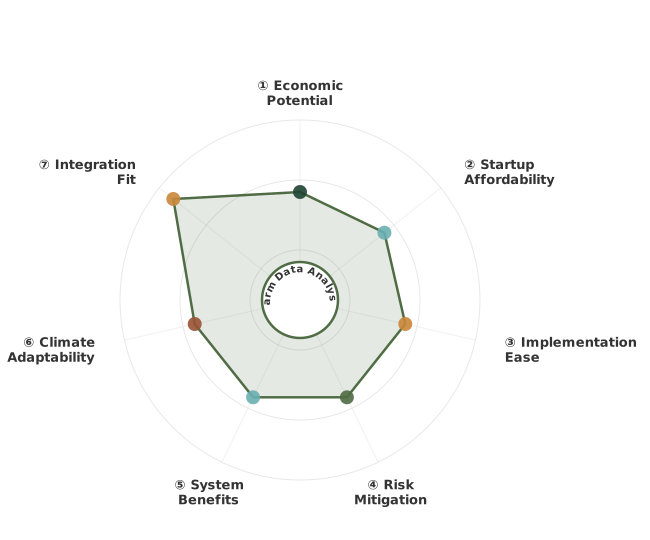
How These Traits Are Calculated
Trait dimensions are ordered clockwise starting from the top of the chart (12 o'clock position):
1. Economic Potential
Financial returns, annual value, and break-even timeline
WHAT: Evaluates financial viability by combining net annual value ($/ha from savings, income, and amortized harvests) with break-even timeline showing when practices pay for themselves.
WHY: Farmers need clear ROI understanding before committing resources. Fast payback (≤3 years) with strong returns (≥$300/ha) enables confident adoption, while long timelines (>10 years) restrict adoption to well-funded operations willing to wait for returns.
HOW: Calculated from net annual value in $/ha and break-even years. Exceptional (≥2.6): fast ROI ≤3 years + high value ≥$300/ha. Typical (1.8-2.5): moderate returns or longer timelines. Limited (<1.8): marginal economics or very long payback >10 years.
2. Startup Affordability
Initial investment costs and financial barrier to entry
WHAT: Measures financial barrier to entry through startup costs for equipment, infrastructure, consulting, and materials. Inverted scoring: lower costs = higher scores = more accessible adoption.
WHY: Affordability determines who can adopt. Low-cost practices (<$250/ha) enable widespread adoption across diverse scales, while high costs (>$2,500/ha) limit adoption to well-capitalized operations, creating barriers that slow regenerative transition.
HOW: Calculated from initial investment parsed from practice content. Inverted scoring: Exceptional (≥2.6): minimal investment <$250/ha. Typical (1.8-2.5): moderate costs $250-2,500/ha. Limited (<1.8): high barrier >$2,500/ha.
3. Implementation Ease
Learning curve and specialized knowledge required
WHAT: Measures how much learning, planning, and specialized knowledge a practice requires. Simpler practices with fewer steps score higher, while complex practices requiring extensive training or specialized resources score lower.
WHY: Complex practices create adoption barriers even when economically viable. Straightforward practices enable faster adoption and broader participation, while those requiring extensive training, timing precision, or specialized equipment limit who can succeed.
HOW: Evaluated by measuring documentation length and identifying complexity markers like location-specific requirements, seasonal timing windows, specialized skills, and dedicated equipment needs. Exceptional (≥2.6): straightforward practices with minimal prerequisites. Typical (1.8-2.5): moderate learning curve with some specialized needs. Limited (<1.8): steep learning curve requiring significant training or resources.
4. Risk Mitigation
Identified financial and ecological risk assessment
WHAT: Evaluates documented risks across financial (investment loss, market volatility) and ecological (crop failure, pest outbreaks) domains. Inverted scoring: fewer risks = higher scores.
WHY: Understanding risk exposure helps farmers make informed decisions. Low-risk practices allow confident implementation, while high-risk practices require careful planning and contingency resources. Risk transparency prevents costly failures.
HOW: Calculated from identified risks in practice content. Inverted scoring: Exceptional (≥2.6): ≤2 risks with manageable severity. Typical (1.8-2.5): 3-5 moderate risks. Limited (<1.8): 6+ risks or severe exposure.
5. System Benefits
How many ways the practice improves your land simultaneously
WHAT: Measures how many aspects of land health improve at once—carbon storage, soil quality, erosion control, water absorption, and biodiversity. Practices that improve multiple areas simultaneously create compounding benefits where each improvement reinforces the others.
WHY: The best practices solve multiple problems at once. For example, addressing erosion simultaneously builds carbon and improves water infiltration, creating a resilient system with positive feedback loops. Single-benefit approaches miss these compound transformation opportunities.
HOW: Evaluated across five key outcomes: carbon sequestration, soil organic matter increase, erosion reduction, water infiltration improvement, and biodiversity enhancement. Exceptional (≥2.6): high carbon storage (>8 t/ha/yr), improvements across 4-5 areas, transformative outcomes. Typical (1.8-2.5): moderate carbon (3-8 t/ha/yr), improvements across 2-3 areas. Limited (<1.8): modest impact (<3 t/ha/yr), single-area focus only.
6. Climate Adaptability
Geographic applicability across Köppen climate zones
WHAT: Evaluates geographic applicability by assessing how many Köppen climate zones successfully support a practice and what adaptation requirements are needed. Measures breadth of climates where farmers can implement with minimal to moderate modifications.
WHY: Universal practices working across diverse climates enable more farmers to adopt regenerative approaches. Practices limited to single climate types (only Mediterranean, only tropical) restrict adoption and slow global transition. Adaptability determines whether a practice serves niche regions or offers broad transformation.
HOW: LLM evaluation of regional success stories, Köppen zone coverage, and adaptation needs. Exceptional (≥2.6): 5+ zones or 4+ climate types, 3+ continents, minimal adaptation. Typical (1.8-2.5): 3-4 zones or 2-3 types, 2 continents, moderate adaptation. Limited (<1.8): 1-2 zones, single region, significant adaptation or highly specialized.
7. Integration Fit
How well this practice combines with others you're doing
WHAT: Measures how well a practice combines with other regenerative practices you might be doing. Some practices work as building blocks that make many other practices easier or more effective, while others work best on their own.
WHY: Practices that combine well with many others create more value on your farm. For example, cover cropping enables no-till, improves grazing, supports crop diversity, and helps water management—making all of them work better together. This helps you build a coherent system rather than juggling disconnected practices.
HOW: Evaluated by identifying which practices combine well and how strong those combinations are. 'Ideally Suited' means strong combinations where practices reinforce each other (practice A makes B easier, while B makes A more effective). 'Adequate' means complementary benefits that work well together. Exceptional (≥2.6): combines well with 6+ practices, serves as a building block. Typical (1.8-2.5): combines with 3-5 practices. Limited (<1.8): 1-2 practices or works best alone.
Going Deeper
1
WHY - The Benefits
Farm data analysis, when aligned with regenerative goals, transforms farms from systems operating on habit and intuition to intelligently managed enterprises. It provides the objective evidence needed to guide difficult transition decisions, optimize complex...
Farm data analysis, when aligned with regenerative goals, transforms farms from systems operating on habit and intuition to intelligently managed enterprises. It provides the objective evidence needed to guide difficult transition decisions, optimize complex interactions, and demonstrate tangible improvements in both ecological health and economic prosperity. The benefits are multifaceted, impacting soil, water, biodiversity, finances, and overall farm resilience.
WHY - The Benefits
Farm data analysis, when aligned with regenerative goals, transforms farms from systems operating on habit and intuition to intelligently managed enterprises. It provides the objective evidence needed to guide difficult transition decisions, optimize complex...
Farm data analysis, when aligned with regenerative goals, transforms farms from systems operating on habit and intuition to intelligently managed enterprises. It provides the objective evidence needed to guide difficult transition decisions, optimize complex interactions, and demonstrate tangible improvements in both ecological health and economic prosperity. The benefits are multifaceted, impacting soil, water, biodiversity, finances, and overall farm resilience.
Soil Health Benefits
Data analysis allows precise monitoring of soil health indicators essential for regenerative agriculture. By analyzing regular soil tests (organic matter, NPK, micronutrients, CEC, pH), farmers can track changes over time. For example, data showing a steady increase in soil organic matter by 0.3-0.7% per year following cover cropping and reduced tillage validates the effectiveness of these practices and informs future management adjustments. Tracking aggregate stability and soil structure through visual observations or simple spade tests, correlated with data on root penetration, confirms the success of efforts to build soil structure (Principle 1, 2, 4).
Infiltration rates, measured through simple ring infiltrometers or more advanced sensors, provide critical data on how well soil manages water. A trend of increasing infiltration rates (e.g., from 0.5 inches/hour to 2+ inches/hour) indicates improved soil structure and biological activity, directly supporting regenerative goals for water cycle efficiency (Principle 1, 3, 4). Data on soil moisture levels at different depths can reveal drought resilience improvements, showing how restructured soil retains water better, reducing reliance on irrigation and mitigating drought risk.
Analysis of soil biology assays (e.g., earthworm counts, microbial biomass carbon, mycorrhizal colonization) provides direct evidence of a thriving soil food web. Tracking these metrics demonstrates the success of practices that foster beneficial organisms, thereby supporting regenerative principles by enhancing nutrient cycling and ecosystem function. For instance, observing a significant increase in earthworm populations and diversity after implementing no-till and diverse cover crops validates those practices.
Economic Benefits
The primary economic driver for farm data analysis is improved decision-making, leading to measurable gains in profitability and efficiency. By analyzing input costs versus yields for different fields or rotations, farmers can identify which strategies are the most profitable and resource-efficient. This data can guide precise nutrient management, reducing over-application of fertilizers and pesticides, leading to direct cost savings of 15-30% over 3-5 years in many regenerative transitions.
Profitability often increases through yield stability and improvement facilitated by better soil health. Data showing increased resilience to drought and pests in regenerative systems reduces yield variability, leading to more predictable income. For example, farms adopting regenerative practices often report reduced crop losses during extreme weather events, with data showing maintained yields on 20-40% more acres compared to conventional neighbors during droughts, translating to significant revenue protection.
Furthermore, data analysis helps farms identify new or enhanced revenue streams. For example, analyzing carbon sequestration potential based on soil organic matter trends can support participation in emerging carbon markets. Tracking the performance and health of livestock integrated into diverse cropping or grazing systems can reveal opportunities for premium pricing or direct marketing based on regenerative production.
Optimizing resource use is another economic benefit. Analyzing water usage in relation to crop needs, or fuel consumption per hectare for different field operations, can highlight inefficiencies. Regenerative systems, with their focus on building soil health and reducing reliance on external inputs, naturally tend to be more resource-efficient. Data analysis provides the metrics to quantify these improvements and uncover further optimization opportunities.
Improved risk management is a key economic reward. By understanding yield variability, input cost sensitivity, and the resilience of their systems to weather events, farmers can make more informed decisions about crop selection, insurance, and financial planning. Data analysis contributes to a more robust and predictable farm business, less susceptible to market volatility or environmental shocks.
Regenerative Systems Fit
Farm data analysis is a context-dependent practice that is foundational for achieving and verifying regenerative outcomes. It does not inherently support or violate regenerative principles; its impact depends entirely on the questions asked and the actions taken based on the analysis.
When used to monitor and guide practices that align with regenerative goals, data analysis becomes a powerful enabler of all five principles:
-
Minimize Soil Disturbance: Data from penetrometers, soil moisture sensors, and yield mapping can evaluate the impact of tillage (or no-till) on root development, water infiltration, and crop yields. Analyzing this data allows farmers to confirm the benefits of reduced or eliminated tillage and identify subtle negative impacts from traffic compaction, guiding strategies like controlled traffic farming.
-
Maximize Crop Diversity: Analyzing the performance (yield, soil health benefits, pest suppression) of different crop rotations, cover crop mixes, and intercropping systems provides the evidence base for optimizing diversity. This ensures that the chosen species are not only ecologically beneficial but also economically viable, guiding strategic planting decisions.
-
Keep Soil Covered: Data on residual soil moisture, soil temperature, and weed pressure under different ground cover scenarios (living plants, mulch, bare soil) helps quantify the benefits of keeping soil covered year-round. This analysis informs decisions about cover crop selection, termination timing, and the use of mulches to maintain continuous soil protection.
-
Maintain Living Roots: Analyzing data on root depth, seasonal root activity, and soil biology markers provides direct evidence of the success of maintaining living roots. This data validates the practice of extending the growing season with cover crops or integrating perennial systems, confirming year-round biological activity that supports soil structure, nutrient cycling, and organic matter building.
-
Integrate Livestock: Data analysis is critical for optimizing livestock integration. Monitoring pasture growth, recovery rates, soil impact (compaction, nutrient deposition), and animal performance under different grazing management systems (e.g., rotational vs. continuous) helps refine grazing plans. This data guides decisions on stocking density, rest periods, and animal movement to maximize soil fertility benefits and pasture health while minimizing negative impacts.
For farms transitioning to regenerative management, data analysis is essential for adaptation and verification. It allows farmers to:
- Establish Baselines: Collect pre-transition data on soil health, yields, input costs, and animal performance.
- Track Progress: Monitor changes in these metrics as regenerative practices are implemented.
- Quantify Benefits: Measure improvements in soil organic matter, water infiltration, nutrient cycling, and biodiversity.
- Optimize Practices: Identify which cover crop mixes, grazing rotations, or crop sequences yield the best results in their specific context.
- Justify Changes: Use objective data to demonstrate economic and ecological returns to stakeholders, lenders, or consumers.
- Phase Out Inputs: Analyze yield and soil data to determine the optimal pace for reducing synthetic fertilizers and pesticides without causing significant yield crashes. For example, data might show that a certain level of soil biology can support crop needs with 30% less nitrogen fertilizer, enabling a gradual reduction strategy.
The ultimate regenerative use of data analysis is to fosters a deep understanding of the farm ecosystem, enabling proactive and adaptive management that builds resilience, enhances natural capital, and ensures long-term viability.
Sources behind this view
Videos & Podcasts
-
Regenerative agriculture provides solutions for climate change, human health, and soil degradation, contrasting with industrial agriculture's harmful impacts, including glyphosate use. Practices like
-
Transitioning to regenerative agriculture is a human/psychological process requiring trials to reduce risk and build trust. Increased consumer awareness of ecology and health would drive demand for re
-
Case studies of farmers like Duane Beck, Kofi Boa, David Brandt, and Gabe Brown demonstrate that regenerative agriculture (no-till, cover crops, diverse rotations) significantly increases soil health,

-
Regenerative agriculture is successfully implemented globally, including in the UK, with examples of adaptive grazing and diverse systems. Regenerative products show significantly higher nutrient dens
 Community
-
Key takeaways for scaling regenerative agriculture include consistent certification standards, secure data sharing, long-term investment and financing, supply chain transparency, and collaborative eff
Read more (opens in new window) ucanr.edu
Research
-
Systematic review of regenerative farming: Addressing agricultural sustainability challenges (opens in new window)
This study found: Systematic review of 31 studies shows regenerative farming improves soil health, biodiversity, and carbon capture, aiding sustainability. Technology is key for adoption, but policy, farmer understandi
-
Regenerative Agriculture: Restoring Ecosystems¢ Resilience and Productivity: A Review (opens in new window)
This study found: Regenerative agriculture builds soil health and ecosystem services through practices like no-till, cover crops, and diverse rotations. It increases soil organic matter, improves water infiltration, bo
-
The Indigenous Roots of Regenerative Agriculture (opens in new window)
This study found: Modern regenerative agriculture practices are rooted in millennia of Indigenous land stewardship, offering profound knowledge and a crucial value system of respect and reciprocity for true transformat
-
Regenerative Agriculture: Insights and Challenges in Farmer Adoption (opens in new window)
This study found: Review of 7 regenerative agriculture practices (no-till, crop rotation, cover crops, etc.) highlights benefits and key adoption challenges like cost, farm size, and institutional barriers for scalable
From the Web
-
Regenerative Agriculture rebuilds soil health and biodiversity through four principles: no tillage, continuous soil cover, increased plant diversity, and livestock integration. This approach aims for
2
WHERE - Regional Considerations
Farm data analysis is universally applicable, but the types of data collected, the tools used, and the specific metrics prioritized vary significantly by region due to differing climates, soil types, predominant farming systems, and local economic conditions. Generic...
Farm data analysis is universally applicable, but the types of data collected, the tools used, and the specific metrics prioritized vary significantly by region due to differing climates, soil types, predominant farming systems, and local economic conditions. Generic data collection protocols need adaptation to be relevant and actionable globally.
WHERE - Regional Considerations
Farm data analysis is universally applicable, but the types of data collected, the tools used, and the specific metrics prioritized vary significantly by region due to differing climates, soil types, predominant farming systems, and local economic conditions. Generic...
Farm data analysis is universally applicable, but the types of data collected, the tools used, and the specific metrics prioritized vary significantly by region due to differing climates, soil types, predominant farming systems, and local economic conditions. Generic data collection protocols need adaptation to be relevant and actionable globally.
Click Here to Look up your Region if you don't already know it
Humid Temperate Regions
Representative Locations: Northeastern United States, Western Europe, Eastern China, Japan, New Zealand South Island
Climate Context: Warm to hot summers and cool to cold winters with moderate to high annual precipitation (75-150 cm or 30-60 inches) distributed relatively evenly throughout the year. USDA Zones 4-7, Köppen Cfb/Cfa.
Key Data Points: Emphasis on managing moisture excess (drainage, infiltration), detecting compaction from heavy equipment in wet seasons, tracking disease pressure related to humidity, and monitoring soil organic matter build-up in fertile soils. Data on cover crop performance during cooler, wetter periods and the impact of increased perennialization on soil structure are vital. Farmers in these regions may use advanced sensor networks for soil moisture and temperature, combined with detailed field scouting for disease and pest outbreaks. Financial analysis may focus on optimizing the cost-effectiveness of diverse rotations and livestock integration in potentially high-output environments.
Arid & Semi-Arid Regions
Representative Locations: Western United States (Great Plains, Intermountain West), North Africa, Central Asia, Interior Australia, Middle East
Climate Context: Low annual precipitation (<40 cm or 15 inches), high temperatures, short and often unpredictable growing seasons. USDA Zones 5-9 (highly variable), Köppen BSh/BSk.
Key Data Points: Water use efficiency, drought resilience, and soil moisture conservation are paramount. Data analysis focuses heavily on rainfall capture, soil water holding capacity (analyzing organic matter, aggregate stability), and the effectiveness of different water-harvesting techniques (e.g., contour farming, keyline design). Livestock management data, particularly rotational grazing impacts on pasture regeneration and hydration, is crucial. Crop selection data will emphasize drought-tolerant varieties and species. Economic analysis will prioritize cost-effective inputs and maximizing returns from water-scarce environments. Remote sensing data for monitoring pasture health and soil moisture across large areas is highly valuable.
Mediterranean Regions
Representative Locations: California, Mediterranean basin (Spain, Italy, Greece), central Chile, southwestern Australia, Western Cape South Africa
Climate Context: Hot, dry summers and mild, wet winters. Annual precipitation 40-90 cm (15-35 inches), highly seasonal. USDA Zones 8-10, Köppen Csa/Csb.
Key Data Points: Managing seasonal drought and intense winter rains is critical. Data analysis focuses on building soil organic matter to enhance water retention during dry periods and improve infiltration to reduce erosion during wet periods. Analyzing the performance of drought-tolerant cover crops and perennial forages that can survive dry summers, and the impact of livestock grazing on managing summer dryness and winter wetness, is essential. Tree crop integration (olives, nuts, grapes) often involves data on irrigation efficiency, pruning impacts, and soil health under canopy. Economic analysis may focus on high-value niche crops and the resilience provided by diversified farming systems.
Humid Subtropical Regions
Representative Locations: Southeastern United States, Southern China, Eastern India, Eastern Australia, Southern Brazil
Climate Context: Hot, often humid summers and mild winters with generally ample rainfall, although monsoon or hurricane seasons can bring intense wet periods and dry spells. USDA Zones 9-11, Köppen Cfa/Cwa.
Key Data Points: Managing heat stress, high humidity, and intense rainfall events are key. Data analysis will focus on improving soil structure to handle heavy downpours and prevent erosion, as well as optimizing plant and animal performance in high heat and humidity. Data on cover crop selection that thrives in warm, wet conditions and provides benefits during humid summers is important. Livestock data will focus on heat stress mitigation strategies and pasture management during distinct wet and dry periods. Economic analysis might involve optimizing production of summer crops and managing input costs in a high-growth season environment.
Tropical & Equatorial Regions
Representative Locations: Southeast Asia, Central Africa, Northern South America, Northern Australia, Pacific Islands
Climate Context: High temperatures year-round, with consistent high rainfall or distinct wet and dry seasons. No frost. Köppen Af/Am/Aw.
Key Data Points: Managing intense rainfall, rapid decomposition of organic matter, and high pest/disease pressure are common challenges. Data analysis will focus on building soil organic matter rapidly in the face of decomposition (e.g., using biochar, compost, and fast-growing cover crops), improving soil structure to withstand intense rains, and leveraging year-round growing seasons for continuous cover and diverse cropping sequences. Livestock data may focus on heat tolerance, parasite management, and the role of animals in nutrient cycling within intensive agroecological systems. Economic analysis may involve optimizing diverse smallholder farming systems and understanding market access for tropical commodities.
Cold Continental Regions
Representative Locations: Northern United States, Canada, Northern Europe, Northern Asia (Siberia)
Climate Context: Very short growing seasons, extreme summer heat, and severe winter cold with prolonged snow cover. USDA Zones 3-5, Köppen Dfa/Dfb.
Key Data Points: Maximizing the short growing season and surviving extreme winters are paramount. Data analysis will focus on the precise timing of planting and harvesting, the performance of fast-maturing crops and cover crops, and the impact of winter cover on soil moisture retention and spring thaw. Livestock management will involve data on winter feeding strategies, shelter effectiveness, and herd health during extreme cold. Soil health data will focus on building organic matter quickly during the short growing season and preventing soil erosion during spring thaw. Economic analysis will prioritize strategies that maximize return within a limited production window.
3
HOW - Implementation Process
Implementing farm data analysis effectively requires a structured approach, moving from basic data collection to advanced interpretation and adaptive management. While specific tools and metrics will vary by farm and region, the core process remains consistent.
Implementing farm data analysis effectively requires a structured approach, moving from basic data collection to advanced interpretation and adaptive management. While specific tools and metrics will vary by farm and region, the core process remains consistent.
HOW - Implementation Process
Implementing farm data analysis effectively requires a structured approach, moving from basic data collection to advanced interpretation and adaptive management. While specific tools and metrics will vary by farm and region, the core process remains consistent.
Implementing farm data analysis effectively requires a structured approach, moving from basic data collection to advanced interpretation and adaptive management. While specific tools and metrics will vary by farm and region, the core process remains consistent.
Prerequisites
Before embarking on systematic data analysis, establish fundamental farm management practices:
- Basic Record-Keeping: A reliable system for recording critical events and observations—planting dates, harvest yields, input applications, fertilizer rates, pest/disease sightings, grazing movements, weather events, and livestock performance. This can be a simple field notebook, spreadsheets, or a farm management software.
- Clear Objectives: Define what you want to achieve. Are you trying to increase profitability, improve soil health, reduce input costs, enhance water efficiency, build resilience, or transition to regenerative practices? This guides what data is most important to collect.
- Access to Reliable Data Sources: Identify sources of relevant data:
- On-Farm Sensors: Soil moisture, temperature, weather stations, tank levels (for irrigation), animal health monitors.
- Farm Equipment: GPS data, yield monitors, variable rate applicators (if used).
- External Data: Weather forecasts, regional climate data, commodity prices, satellite imagery, soil test results from certified labs.
- Labor & Observation: Detailed field notes taken by farm staff, visual assessments of crop health and soil condition.
Phase 1: Data Collection & Organization
Objective: Establish consistent routines for gathering accurate, relevant data.
Steps: 1. Inventory Data Sources: List all existing data streams and identify gaps relative to your objectives. For example, if soil health is a key goal but you don't have baseline organic matter data, plan for soil sampling. 2. Standardize Collection Methods: Ensure data is collected consistently over time and across different individuals. * Soil Sampling: Establish a grid, sampling depth, timing (e.g., fall before cover crop termination or spring before planting), and sample handling procedures. Use a reputable lab. * Yield Monitoring: Calibrate yield monitors annually. Record yield data by field or zone. * Weather Data: Install an on-farm weather station or subscribe to a reliable local forecast service. Record daily rainfall, temperature, and extreme events. * Livestock Metrics: Standardize daily/weekly recording of animal weights, feed intake, reproduction rates, and pasture grazing duration. * Field Observations: Create simple, standardized data sheets for recording observations on plant health, pest/disease presence, weed pressure, soil structure, and animal behavior. 3. Choose a Data Management System: Select a system that fits your farm's scale, budget, and technical comfort level. * Low-Tech: Field notebooks, binders, manual spreadsheets (e.g., Excel, Google Sheets). * Mid-Tech: Farm management software (many global options available), specialized apps for specific tasks (e.g., grazing management, soil sampling). * High-Tech: Integrated farm data platforms, IoT sensor networks, precision agriculture software. 4. Establish Data Entry Routines: Schedule regular data entry tasks (daily, weekly, monthly) to prevent data backlog and maintain accuracy. Train all personnel involved in data collection and entry.
Phase 2: Data Cleaning & Initial Analysis
Objective: Ensure data quality and derive preliminary insights.
Steps: 1. Data Cleaning: Review collected data for errors, outliers, and inconsistencies. Correct typos, missing values, or data points that are clearly erroneous (e.g., rainfall of 1000mm in one day). This is crucial for reliable analysis. 2. Descriptive Statistics: Calculate basic summary statistics: averages, sums, ranges, minimums, maximums for key metrics. What was the average yield last year? What was the total rainfall? What was the soil organic matter change over 5 years? 3. Trend Identification: Plot data over time to identify trends. Are yields increasing or decreasing? Is soil organic matter rising? Is fertilizer cost per unit of output changing? Visualizations (graphs, charts) are your best friend here. 4. Comparison Analysis: Compare data across different fields, management zones, years, or management practices. This helps isolate the impact of specific actions. For example, compare yield and soil organic matter in a field managed with cover crops versus one without. 5. Correlation Analysis: Explore relationships between different variables. Does increased soil organic matter correlate with higher soil moisture retention? Does a specific cover crop mix correlate with reduced weed pressure in the following cash crop?
Phase 3: Advanced Analysis and Interpretation
Objective: Draw deeper insights and inform strategic decisions.
Steps: 1. Geospatial Analysis: If yield monitors, soil maps, or satellite imagery are used, analyze data spatially. Create yield maps, soil property maps, or Normalized Difference Vegetation Index (NDVI) maps. Identify high-performing and low-performing zones within fields. 2. Economic Modeling: Integrate yield data with input costs and product prices to calculate profitability per hectare/acre, cost of production, and return on investment for different practices or crop rotations. 3. Predictive Analysis: Use historical data to forecast future outcomes. This can range from simple crop yield predictions based on weather to more complex models for financial forecasting or pest outbreak potential. 4. Benchmarking: Compare your farm's performance (yields, input costs, profitability, environmental metrics) against regional averages, industry standards, or other regenerative farms (global peer groups). 5. Root Cause Analysis: When problems arise (e.g., yield dips, pest outbreaks, poor water infiltration), use data to investigate causes. Was it a specific weather event, an input change, soil condition, or a management decision?
Phase 4: Decision Making & Adaptive Management
Objective: Translate analysis into actionable changes that move the farm toward its goals.
Steps: 1. Identify Actionable Insights: Based on the analysis, what specific changes should be made? If data shows a specific field consistently underperforms due to compaction, the action might be to implement targeted cover cropping or consider one-time remediation. If soil tests indicate low organic matter, the action might be increased cover cropping duration or diversity. 2. Plan and Implement Changes: Develop a plan for implementing the identified actions. This could involve adjusting planting dates, changing crop rotations, modifying grazing plans, or investing in new equipment. 3. Monitor and Re-evaluate: After implementing changes, continue collecting data and analyzing its impact. Did the changes achieve the desired outcomes? Were there unintended consequences? 4. Iterate and Refine: Farm data analysis is an ongoing process. Use the new data to refine strategies, adapt to changing conditions, and continuously improve farm performance. This iterative cycle embodies adaptive management, a cornerstone of regenerative agriculture.
Transition Focus: For farms transitioning to regenerative practices, this phase is critical for managing risk. Data analysis helps guide the gradual phase-out of conventional inputs. For example, if soil tests show sufficient available nutrients and healthy microbial populations, it supports reducing synthetic nitrogen fertilizer by 10-20% and monitoring for any yield impact in the subsequent crop. If livestock data shows improved pasture recovery after implementing adaptive grazing, it supports further extending rest periods, building soil health, and potentially reducing reliance on purchased feed.
Sources behind this view
Videos & Podcasts
-
Transitioning to regenerative agriculture is a human/psychological process requiring trials to reduce risk and build trust. Increased consumer awareness of ecology and health would drive demand for re
-
Regenerative agriculture provides solutions for climate change, human health, and soil degradation, contrasting with industrial agriculture's harmful impacts, including glyphosate use. Practices like
-
Provides actionable steps for regenerative agronomy: balanced N:C inputs (molasses, humates), microbial teas, yeast metabolites, calcium, and effective seed treatments. Emphasizes scalability, systems
-
Transitioning to regenerative agriculture requires a whole-systems mindset, focusing on soil health principles: reduce tillage/compaction, increase diversity (plants, animals), eliminate bio-cides/fer

Community
-
Key takeaways for scaling regenerative agriculture include consistent certification standards, secure data sharing, long-term investment and financing, supply chain transparency, and collaborative eff
Read more (opens in new window) ucanr.edu
Research
-
Systematic review of regenerative farming: Addressing agricultural sustainability challenges (opens in new window)
This study found: Systematic review of 31 studies shows regenerative farming improves soil health, biodiversity, and carbon capture, aiding sustainability. Technology is key for adoption, but policy, farmer understandi
-
The Indigenous Roots of Regenerative Agriculture (opens in new window)
This study found: Modern regenerative agriculture practices are rooted in millennia of Indigenous land stewardship, offering profound knowledge and a crucial value system of respect and reciprocity for true transformat
-
Regenerative Agriculture: Restoring Ecosystems¢ Resilience and Productivity: A Review (opens in new window)
This study found: Regenerative agriculture builds soil health and ecosystem services through practices like no-till, cover crops, and diverse rotations. It increases soil organic matter, improves water infiltration, bo
-
Giving regenerative agriculture an agronomic perspective: a proposed framework from the food and beverage industry (opens in new window)
This study found: A new framework from the food industry offers a standardized, outcome-based approach to regenerative agriculture, focusing on soil, biodiversity, water, and climate, with a four-step process for imple
From the Web
-
Five steps to regenerative agriculture: Holistic Planned Grazing, no-till farming, planting diverse cover crops/interseeding, using compost/inoculants (with caution), and incorporating silvopasture/wo
-
Transitioning to regenerative agriculture requires a paradigm shift beyond technical practices, driven by values, emotions, and worldviews. Farmers' experiences reveal 'zones of friction and traction'
4
Know the Debate
Farm data analysis can unlock significant benefits for regenerative agriculture, yet its effectiveness and return on investment are highly context-...
Know the Debate
Farm data analysis can unlock significant benefits for regenerative agriculture, yet its effectiveness and return on investment are highly context-...
Farm data analysis can unlock significant benefits for regenerative agriculture, yet its effectiveness and return on investment are highly context-dependent. While some operations see substantial profit increases and improved soil health within years, others face costly implementations with less defined outcomes. The key lies in understanding that rigorous data collection, when guided by an adaptive, ecological framework rather than purely prescriptive technology, is essential for both economic success and genuine regeneration.
Farm data analysis: Profitability gains vs. initial investment?
Significant Profit Gains (Long-Term)
Academic research and field data suggest substantial long-term profitability increases (10-30%) and cost reductions (15-30%) within 3-7 years, driven by optimized resource use, resilience, and yield stability.
Sources behind this view
Sources behind this view
Videos & Podcasts
-
Data from 1,600+ farms show regenerative practices reduce feed/vet costs by 40%, increase forage/organic matter, and improve arable efficiency. Soil health is the foundation for profitability, making it a necessity, not a choice.

-
Farm data's value lies in driving profitability and yield optimization through agronomic support. It's crucial for validating regenerative practices, defining 'regenerative,' and tracking outcomes like soil health and emissions, as seen in programs incentivizing nitrogen reduction.

Research
-
Systematic review of regenerative farming: Addressing agricultural sustainability challenges (opens in new window)
This study found: This review looked at 31 studies from the last decade to understand how regenerative farming helps make agriculture more sustainable. It found that regenerative practices are good for the environment by improving soil health, increasing the variety of plants and animals (biodiversity), and capturing carbon from the atmosphere. This helps restore ecosystems and improve the climate. Technologies like smart soil monitoring and precision agriculture are key to using resources efficiently and helping more farmers adopt these methods. However, challenges remain, including unsupportive policies, farmers' understanding and willingness to adopt new practices, and a lack of funding. The review suggests combining different types of research to fully understand how regenerative farming can transform agriculture globally.
From the Web
-
Regenerative agriculture increases profitability by ~20% (up to 40% with carbon credits) due to lower costs and stable yields, unlike conventional farming's soil degradation. Banks avoid small farm loans due to regulatory issues.
Slow/Uncertain Returns (Initial Investment)
Field reports highlight significant initial investment ($1,000-$15,000+) and labor commitment (2-15 hrs/week) potentially overshadowing early gains, with risks of analysis paralysis or poor ROI due to data inaccuracies or lack of clear objectives.
Sources behind this view
Sources behind this view
Videos & Podcasts
-
Producers should actively gather reliable data on soil health and finances using management systems. This data ensures informed decisions, supports legacy planning, and provides future generations with a clear foundation for farm management.
-
Curtis Stone stresses meticulous farm data and sales tracking using smartphones and spreadsheets. This allows for real-time adjustments and trend prediction, crucial for financial viability, as many farmers neglect the business aspect in favor of ideology.
-
Scaling regenerative agriculture requires addressing farmer risk and ROI, emphasizing soil health for climate resilience. Knowledge sharing via platforms like WhatsApp is key. Policy support, including domestic production targets and true cost accounting, is crucial for making regenerative farming attractive and economically viable.

From the Web
-
Regenerative agriculture faces data interoperability challenges due to complex, adaptive management and siloed tech tools, unlike simpler industrial systems. This hinders connecting practices to ecological and business outcomes.
Making Sense of the Differences
Economics of farm data analysis vary with implementation clarity and farm context. Clear regenerative goals, consistent data, and phased investment lead to best ROI by building soil health and resilience. Conversely, unclear objectives, data inaccuracies, or over-reliance on technology without ecological understanding can lead to slower returns or financial strain, emphasizing the need for realistic expectations and focused analytical skills.
Regenerative data analysis: Principles vs. prescriptive tech?
Tech-guided Ecological Adaptation
Technology should support adaptive management aligned with regenerative principles, enhancing observation and understanding of ecological interactions, not dictate actions.
Sources behind this view
Sources behind this view
Videos & Podcasts
-
Technology can aid regenerative agriculture by improving landscape-level planning, enabling consistent soil health measurement, facilitating in-field nutrient density analysis, and developing specialized machinery for practices like agroforestry.
-
Key regenerative tools include finding diverse mentors, consistent observation with photography, landrace seed breeding, using a microscope to view microbes, and conducting soil tests. Management decisions must enhance all four ecological processes and avoid harming any single one.
Research
-
Approaches to Sustainable Agriculture: A Retrospective Analysis for Soil Health Improvement (opens in new window)
This study found: To improve our farms and meet global sustainability goals, it's vital to listen to what farmers think and do. This review suggests that using regenerative farming methods, which work with nature's principles and smart technology, can build healthier soil and cut down on the need for outside products. Working together with scientists and leaders, we can use new tools like AI to make farming more efficient and get nutrients directly to plants. The study encourages farmers to understand how soil microbes and nutrients work together, suggesting natural options like beneficial bacteria (including those that fix nitrogen), biofertilizers, and animal manure. By valuing farmers' experience and adopting practices like smart tillage, residue management, and weed control, we can significantly boost farm productivity and soil health.
-
Data-driven agriculture and sustainable farming: friends or foes? (opens in new window)
This study found: Farming for the future, or sustainability, relies heavily on knowledge and technology. This paper argues that using smart farming tools and precision agriculture methods, powered by data and artificial intelligence (AI), can help farmers understand how different parts of nature work together. This understanding is key to being both sustainable and ensuring we have enough food. The authors suggest that research needs to focus on overcoming challenges like developing complete farm management systems, accurately measuring animal feed intake, creating affordable environmental sensors, improving how robots navigate, combining satellite data with crop models, better ways to teach farmers about data-driven methods, using natural farm experiments, and creating trustworthy systems for sharing farm data. They emphasize the need for public funding to support this research and drive innovation.
From the Web
-
Scaling regenerative farm advice requires a collective intelligence system where practitioners answer context-specific questions, fostering knowledge application and income generation for experts.
Prescriptive Tech & Data-Centric Management
Rigorous data collection and analysis, facilitated by technology, are essential for objective decision-making, preventing subjective biases and ensuring adherence to regenerative principles.
Sources behind this view
Sources behind this view
Videos & Podcasts
-
Curtis Stone stresses meticulous farm data and sales tracking using smartphones and spreadsheets. This allows for real-time adjustments and trend prediction, crucial for financial viability, as many farmers neglect the business aspect in favor of ideology.
-
Agri Purpose monitors four outcomes: biomass productivity, soil cover, soil health (SOC, pH, nutrients), and efficiency (sellable yield vs. inputs). Satellite data and external soil sampling guide optimization, focusing on improving metrics against regional benchmarks and minimizing external inputs.
Research
-
Smart and regenerative agriculture in the function of agricultural entrepreneurship (opens in new window)
This study found: This paper discusses how combining 'smart' farming technologies with 'regenerative' farming practices can boost farm businesses. Smart farming uses technology like sensors and data analysis to use resources more efficiently. Regenerative farming focuses on improving soil health, increasing the variety of plants and animals, and capturing carbon from the atmosphere. When used together, these approaches can lead to healthier soils, better resilience against climate change, lower costs for farmers, and meet the increasing demand for sustainably produced food. This can create new market opportunities and support farmers, especially in developing areas.
-
From Smart Farming towards Agriculture 5.0: A Review on Crop Data Management (opens in new window)
This study found: This review looks at how farms are becoming 'smarter' and moving towards 'Agriculture 5.0' by better managing the information crops provide. It explains that using data collected by sensors, along with artificial intelligence, is key to making better decisions on the farm. By effectively managing this crop data, farmers can increase their yields, use resources more efficiently (like water and fertilizer), and reduce pollution. The paper covers the journey from collecting data in the field to applying inputs precisely where and when they are needed, ultimately aiming for more productive and sustainable food production for a growing population.
From the Web
-
A simple scoring system with <10 yes/no questions differentiates regenerative from conventional farms, showing higher scores correlate with improved soil health, biodiversity, and profitability. Developed by Dr. Jonathan Lundgren in South Dakota.
Making Sense of the Differences
The role of technology in regenerative data analysis is debated between a tool for adaptive ecological management and a potential driver of prescriptive, checklist-based farming. While technology enhances observation and quantifies outcomes, over-reliance on rigid algorithms risks overlooking qualitative insights and local context. Successful regenerative data analysis integrates nuanced observation and farmer intuition with precise measurement, ensuring technology supports ecological principles.
5
HOW MUCH - Costs & Investment
Note: All costs are based on recent US economic data (2023-2025) and may vary substantially in other regions based on local labor rates, material costs, and regulatory requirements. International costs are often presented as USD equivalents, which require adjustment for...
Note: All costs are based on recent US economic data (2023-2025) and may vary substantially in other regions based on local labor rates, material costs, and regulatory requirements. International costs are often presented as USD equivalents, which require adjustment for local purchasing power and currency exchange rates.
HOW MUCH - Costs & Investment
Note: All costs are based on recent US economic data (2023-2025) and may vary substantially in other regions based on local labor rates, material costs, and regulatory requirements. International costs are often presented as USD equivalents, which require adjustment for...
Note: All costs are based on recent US economic data (2023-2025) and may vary substantially in other regions based on local labor rates, material costs, and regulatory requirements. International costs are often presented as USD equivalents, which require adjustment for local purchasing power and currency exchange rates.
Note: All costs are based on recent US economic data (2024–2026) and may vary substantially by region based on local labor rates, material costs, and regulatory requirements.
Data Infrastructure: Hardware & Software
Small farms (under 50 acres (20 ha)) establish a foundational data layer using entry-level farm management software, which typically requires a recurring budget of $208–$1,042 annually. Hardware investments for this scale include foundational tools such as basic soil moisture probes priced at $313–$1,042 and automated rain gauges costing $208–$521. Consequently, the total startup investment for a smaller operation ranges from $730–$4,170. Mid-size farms (50–500 acres (20–202 ha)) require more robust platforms with enterprise-level integrations, resulting in annual subscription fees of $521–$3,126. Hardware investments for these operations scale upward to include permanent weather stations and multi-node sensor arrays, pushing initial upfront equipment costs to $2,084–$11,462. Large-scale operations (over 500 acres (202 ha)) transition into high-end, data-dense ecosystems. Annual subscription fees for these advanced analytics suites range from $1,042–$5,210+, while comprehensive hardware arrays—including drone-equipped multispectral imaging and real-time remote telemetry—bring initial capital investments to between $6,252–$26,050.
Data Collection & Professional Analysis Labor
Labor remains the most significant long-term variable, as operators must dedicate time to data hygiene, cleaning, and interpretation. For a small farm, the operator spends approximately 2–5 hours per week on these tasks, translating to an opportunity cost of $1,563–$5,210 annually. Mid-size farms frequently shift this burden to a dedicated farm manager or a professional data consultant, increasing the investment to $3,126–$12,504 per year. Large-scale operations often utilize internal staff specifically tasked with precision agriculture management or contract with specialized agronomic firms, driving labor-related expenses to $7,294–$26,050+ per year. This cost is highly sensitive to the complexity of the data stack and the level of integration between field sensors and financial software, with integration services adding an average of $500–$1,500 in one-time configuration fees for larger operations.
Data Security & Storage
Managing digital assets requires robust storage and cybersecurity. Small farms typically utilize cloud-based storage solutions costing $52–$208 per year. Mid-size operations, which require higher levels of redundancy to protect against hardware failure or cyber-threats, invest $104–$521 per year in enterprise-grade cloud protection and automated backup suites. Large farms frequently implement a dual-layer strategy, combining local redundant servers with off-site cloud storage to ensure operational continuity, resulting in annual maintenance costs of $208–$1,042. These security expenditures are currently trending upward at a rate of 3–5% annually due to the growing necessity for sophisticated encryption and data sovereignty protocols in the agricultural sector.
Most Spend: The majority of operations fall within the middle 60% of these expenditure ranges. Small farms typically spend $2,084–$3,647, mid-size farms invest $7,294–$12,504, and large-scale operations budget $15,630–$26,050 annually. These figures exclude outlier expenditures for experimental research or highly customized proprietary analytical tools.
Why the Range?: Costs deviate based on the intensity of the data collection hardware chosen—such as comparing satellite imagery vs. ground-truth sensors—and the degree to which an operator relies on third-party consultants versus in-house labor. Farms with higher existing infrastructure, such as precision-ready machinery, face lower startup costs, while farms requiring connectivity retrofits for remote fields experience costs at the upper end of these ranges.
6
REWARDS AND RISKS - Economics & Risk Factors
Economic Scenarios
Economic Scenarios
REWARDS AND RISKS - Economics & Risk Factors
Economic Scenarios
Economic Scenarios
Economic outcomes vary based on the strategic maturity of the data management system implemented. In the Best Case Scenario, a farm utilizes real-time soil nitrate testing rather than blanket industry standards. This identifies specific nitrogen cycling bottlenecks, allowing the operator to reduce synthetic input costs by 20% while maintaining yield. When combined with a 10% increase in water use efficiency provided by sensor-guided irrigation, the net profit improves by $365–$625 per acre ($902–$1,544/ha) over a 3-year period, effectively recouping the total initial investment within 24 months.
In the Typical Case Scenario, data collected over 36 months isolates consistent underperformance in specific low-yielding soil zones. By converting these 5–10 acre (2.0–4.0 ha) patches into pollinator strips or non-production wildlife areas, the farmer eliminates high-input costs on marginal ground. Through continued optimization of fertilizers and crop inputs, the farmer achieves a modest net benefit of $125–$261 per acre ($309–$645/ha) across the total acreage by year 4.
The Worst Case Scenario involves an investment of $15,630 into hardware without a defined operational plan. If sensors fail or are installed in non-representative areas, the resulting "noisy" data leads to incorrect fertilization rates. A resulting yield loss of 5–8% manifests as a net financial loss of $208–$417 per acre ($514–$1,030/ha) in that season, often causing the operator to fully abandon the technology.
Market factors significantly amplify the benefits of these investments. Data-driven operations can demonstrate specific regenerative outcomes—such as soil organic matter accumulation or water quality improvements—which facilitate entry into premium supply chains. This "verifiable data" can potentially add $0.10–$0.50 per bushel or per pound to market prices if the operator successfully secures a contract. Risk mitigation should focus on interoperability; selecting hardware with open-source API compatibility avoids "vendor lock-in" and represents a 10–15% upfront price premium, which is a necessary insurance policy against future technical obsolescence. Conducting an annual "data audit" with a third-party expert, at a cost of $521–$1,563, serves as a vital safeguard against making decisions based on faulty sensor inputs or mismatched software integrations.
Transition Period Risks are centered on the initial "calibration period" of 2–4 years. During this time, the soil biology shifts in response to regenerative management, often resulting in a Yield Dip Risk of 5–15% during the first 24 months. Data analysis is the primary tool for mitigating this; by tracking input savings against yield fluctuations, the operator can confirm if a 20% reduction in costs compensates for a marginal yield decline, thereby protecting the net profit margin. To combat Analysis Paralysis, which can cost $2,084+ in lost time and stalled decisions, farmers should focus their first 12 months of monitoring on only two specific KPIs, such as soil moisture and net input cost per acre, before expanding the analytical scope.
Sources behind this view
Videos & Podcasts
-
Case studies of farmers like Duane Beck, Kofi Boa, David Brandt, and Gabe Brown demonstrate that regenerative agriculture (no-till, cover crops, diverse rotations) significantly increases soil health,
-
Regenerative agriculture is key for climate resilience and financial sense, but requires data and local adaptation. Autonomy will transform farming by reducing labor costs and increasing precision, le

-
Adopting regenerative agriculture requires convincing farmers through risk mitigation, mindset change, and demonstrating results via trials and monitoring. Benefits include reduced costs, improved soi
-
Nicolas Fraser (Soil Capital) states financial barriers are key to regenerative transition. He advises optimizing agrochemical/external input use (10-40% savings possible) to generate internal funds f
Research
-
Systematic review of regenerative farming: Addressing agricultural sustainability challenges (opens in new window)
This study found: Systematic review of 31 studies shows regenerative farming improves soil health, biodiversity, and carbon capture, aiding sustainability. Technology is key for adoption, but policy, farmer understandi
-
Regenerative Agriculture: Restoring Ecosystems¢ Resilience and Productivity: A Review (opens in new window)
This study found: Regenerative agriculture builds soil health and ecosystem services through practices like no-till, cover crops, and diverse rotations. It increases soil organic matter, improves water infiltration, bo
-
Regenerative Agriculture in the 21st Century: A Systematic Review of Environmental, Agronomic, and Socio-Economic Outcomes (opens in new window)
This study found: Systematic review finds Regenerative Agriculture boosts environment but faces yield gaps (16-21%) and socio-economic barriers. Advocates for resilience over maximum yields, needing financial support a
-
SMART FARMING REVOLUTION: IOT-DRIVEN SOIL ANALYSIS AND AI-POWERED CROP RECOMMENDATION MODELS (opens in new window)
This study found: IoT sensors and AI models provide real-time soil analysis and crop recommendations, boosting yields by 15-20% and cutting input costs by 18% on 50 farms over two years.
7
COMPATIBLE PRACTICES - Integration Opportunities
Farm data analysis is not a standalone practice but an enabler, enhancing the effectiveness of virtually all other regenerative agriculture practices. Its integration amplifies their benefits and provides the evidence base for their continued adoption and refinement.
Farm data analysis is not a standalone practice but an enabler, enhancing the effectiveness of virtually all other regenerative agriculture practices. Its integration amplifies their benefits and provides the evidence base for their continued adoption and refinement.
COMPATIBLE PRACTICES - Integration Opportunities
Farm data analysis is not a standalone practice but an enabler, enhancing the effectiveness of virtually all other regenerative agriculture practices. Its integration amplifies their benefits and provides the evidence base for their continued adoption and refinement.
Farm data analysis is not a standalone practice but an enabler, enhancing the effectiveness of virtually all other regenerative agriculture practices. Its integration amplifies their benefits and provides the evidence base for their continued adoption and refinement.
Cover Cropping
- Integration: Analyze soil organic matter, water infiltration, weed suppression, and subsequent cash crop yield data in fields with different cover crop management strategies (species mix, planting window, termination method).
- Benefit Amplification: Data analysis quantifies the direct soil health and fertility benefits of specific cover crops, justifying their ongoing use and guiding selection for specific field conditions or crop needs. It helps track nutrient cycling and soil moisture improvements.
No-Till / Reduced Tillage
- Integration: Monitor soil structure, root penetration depth, earthworm populations, water infiltration, and crop yields in no-till systems versus areas with historical tillage. Analyze traffic patterns and soil compaction using penetrometers or sensors.
- Benefit Amplification: Data analysis validates the long-term benefits of no-till for soil structure, biology, and water management, demonstrating reduced compaction and improved soil health over time. It helps identify any lingering compaction issues that might require targeted bio-remediation.
Rotational/Adaptive Grazing
- Integration: Collect data on pasture growth rates, botanical composition, animal weight gain, reproductive success, soil impact (compaction, manure distribution), and soil nutrient levels across different paddocks and rest periods.
- Benefit Amplification: Data analysis quantifies the impact of grazing intensity, stocking density, and rest periods on pasture health and livestock performance. It informs optimal grazing rotations to maximize forage utilization, build soil fertility, and improve herd health, reinforcing the regenerative cycle.
Diverse Crop Rotations / Intercropping
- Integration: Analyze yield data, pest and disease incidence, nutrient status, and soil health indicators for various crop sequences and intercropping designs.
- Benefit Amplification: Data analysis reveals how different crop combinations contribute to soil health, suppress pests/diseases, and improve resource use efficiency, guiding the design of more resilient and productive rotations.
Livestock Integration (General)
- Integration: Track a wide range of farm data, including livestock health, reproduction, feed conversion ratios, manure nutrient content, and its impact on soil fertility when applied via grazing or composting.
- Benefit Amplification: Data analysis helps to fully integrate livestock into the farm ecosystem, showing how their manure contributes to nutrient cycling, how their grazing manages biomass, and how well-managed animals improve overall farm biodiversity and economic resilience.
Precision Agriculture Technologies
- Integration: Use data from yield monitors, soil sensors, GPS, and variable rate applicators to inform management zones and targeted input application.
- Benefit Amplification: When used with regenerative goals in mind (e.g., targeted input reduction based on soil health data, precise seeding rates for diverse covers), precision ag can optimize resource use. However, without a regenerative framework, it can simply optimize conventional practices.
Agroforestry & Silvopasture
- Integration: Collect data on tree growth, timber/nut yields, pasture productivity under trees, livestock performance (shade benefits), soil carbon sequestration rates, and biodiversity metrics.
- Benefit Amplification: Data analysis helps optimize the spacing and species selection for trees based on long-term yield potential and integrated farm performance, demonstrating the dual income streams and ecosystem benefits of these systems.
Water Management Practices (e.g., Contour farming, Swales)
- Integration: Monitor soil moisture levels, infiltration rates, runoff reduction, and crop performance in areas with and without water management structures.
- Benefit Amplification: Data analysis quantifies the effectiveness of water harvesting and conservation techniques, showing improvements in drought resilience, erosion control, and crop water use efficiency, thereby validating their implementation.
Sources behind this view
Videos & Podcasts
-
Regenerative agriculture provides solutions for climate change, human health, and soil degradation, contrasting with industrial agriculture's harmful impacts, including glyphosate use. Practices like
-
Case studies of farmers like Duane Beck, Kofi Boa, David Brandt, and Gabe Brown demonstrate that regenerative agriculture (no-till, cover crops, diverse rotations) significantly increases soil health,
-
Regenerative agriculture is key for climate resilience and financial sense, but requires data and local adaptation. Autonomy will transform farming by reducing labor costs and increasing precision, le
-
Regenerative agriculture is successfully implemented globally, including in the UK, with examples of adaptive grazing and diverse systems. Regenerative products show significantly higher nutrient dens
Research
-
Systematic review of regenerative farming: Addressing agricultural sustainability challenges (opens in new window)
This study found: Systematic review of 31 studies shows regenerative farming improves soil health, biodiversity, and carbon capture, aiding sustainability. Technology is key for adoption, but policy, farmer understandi
-
The Indigenous Roots of Regenerative Agriculture (opens in new window)
This study found: Modern regenerative agriculture practices are rooted in millennia of Indigenous land stewardship, offering profound knowledge and a crucial value system of respect and reciprocity for true transformat
-
Regenerative Agriculture: Restoring Ecosystems¢ Resilience and Productivity: A Review (opens in new window)
This study found: Regenerative agriculture builds soil health and ecosystem services through practices like no-till, cover crops, and diverse rotations. It increases soil organic matter, improves water infiltration, bo
-
Regenerative Agriculture: Insights and Challenges in Farmer Adoption (opens in new window)
This study found: Review of 7 regenerative agriculture practices (no-till, crop rotation, cover crops, etc.) highlights benefits and key adoption challenges like cost, farm size, and institutional barriers for scalable
From the Web
-
Regenerative agriculture restores soil health through practices like cover cropping and crop rotation, leading to carbon sequestration, increased resiliency, and reduced reliance on off-farm inputs, b
-
Defines regenerative agriculture as a holistic approach restoring soil, water, and biodiversity for farmer, environmental, and societal benefits. Outlines three pillars: soil health, biodiversity, and