
Farm System Design
Farm system design is the holistic, intentional planning of all farm components—land, livestock, crops, infrastructure, finances, and people—to create a regenerative, resilient, and profitable operation. It goes beyond managing individual elements by focusing on their synergistic interactions to build soil health, enhance biodiversity, and cycle nutrients effectively with minimal external inputs over the long term.
Read More: Complete Description
Farm system design is the deliberate, comprehensive approach to orchestrating all aspects of a farm or ranch to achieve regenerative goals. It’s a move away from managing individual crops or livestock classes in isolation, towards a unified vision where every element interacts synergistically to build ecological health, economic viability, and social well-being. This practice involves deep consideration of the land's unique context—its climate, topography, soil types, and existing biology—and integrates livestock, diverse cropping, perennial systems, and appropriate infrastructure in a way that mirrors natural ecosystems.
The core of farm system design in a regenerative context is to understand that the farm is a living, interconnected organism. Every decision about one component—whether it's livestock rotation, crop selection, or water management—affects all others. The goal is to create interlocking positive feedback loops: healthy soil supports diverse plant life, diverse plants feed and shelter beneficial insects and microbes, living roots protect soil and feed biology year-round, livestock cycle nutrients and stimulate plant growth, and all these elements work together to build resilience against drought, pests, and market fluctuations.
From a regenerative perspective, farm system design is foundational because it provides the strategic framework to operationalize the five core principles. It’s not a single practice, but the art and science of weaving practices like cover cropping, adaptive grazing, silvopasture, and agroforestry into a cohesive, site-specific whole. This approach demands a long-term vision, acknowledging that ecological and economic regeneration is a journey, not a destination. It requires constant observation, learning, and adaptation, treating the farm as a dynamic system continuously self-organizing toward greater health and productivity.
The benefits of thoughtful farm system design are profound. Economically, it leads to reduced input costs (synthetic fertilizers, pesticides, external feed), diversified income streams (multiple crops, livestock products, timber, nuts), and increased land value. Ecologically, it builds significant soil organic matter, improves water infiltration and retention, enhances biodiversity above and below ground, sequesters carbon, and creates resilient landscapes that require fewer external interventions. It also improves animal welfare and can create more fulfilling and less stressful work environments for farm managers and laborers by focusing on natural processes rather than fighting them.
Designing a regenerative system often involves recognizing that conventional agricultural practices may not align with these goals and planning a strategic transition. For instance, a farm designed for regenerative principles might gradually phase out synthetic herbicides by introducing highly competitive cover crops managed with livestock, or reduce reliance on tillage by designing crop rotations that include perennial forages. It means moving from a system that externalizes ecological costs (e.g., soil degradation, water pollution) to one that internalizes them and builds natural capital, creating value through ecological restoration.
Successful farm system design requires moving beyond a reductionist mindset to embrace complexity and interconnectedness. It acknowledges that solving problems often arises not from single interventions, but from redesigning the entire system to prevent problems from occurring. For example, instead of spraying for a pest, a regenerative system design might aim to create habitat for beneficial insects that prey on the pest, or select pest-resistant crop varieties, or use livestock to manage pest cycles—all elements planned in concert.
This practice is context-dependent, meaning a regenerative system designed for a dry, Mediterranean climate dairy farm in Australia will look vastly different from one on a humid, temperate row-crop farm in Brazil or a pastoral system in East Africa. The unifying thread is the underlying principles and the holistic approach to planning that respects and regenerates natural cycles and resources. It is about creating a unique, thriving ecosystem tailored to a specific place and purpose.
Sources behind this view
Sources behind this view
 Videos & Podcasts
-
Adopts regenerative agriculture principles: minimize disturbance, keep living roots, use soil armor, integrate animals (livestock grazing, multi-species), and increase biodiversity. These practices bu

-
Transitioning to regenerative agriculture requires a whole-systems mindset, focusing on soil health principles: reduce tillage/compaction, increase diversity (plants, animals), eliminate bio-cides/fer

-
Key regenerative agriculture principles include: keeping soil covered, limiting disturbance (no-plow), building diversity (microbes, plants, animals), maintaining a living root in the soil, and integr

 Research
-
Regenerative Agriculture: Restoring Ecosystems¢ Resilience and Productivity: A Review (opens in new window)
This study found: Regenerative agriculture builds soil health and ecosystem services through practices like no-till, cover crops, and diverse rotations. It increases soil organic matter, improves water infiltration, bo
-
The Indigenous Roots of Regenerative Agriculture (opens in new window)
This study found: Modern regenerative agriculture practices are rooted in millennia of Indigenous land stewardship, offering profound knowledge and a crucial value system of respect and reciprocity for true transformat
-
Systematic review of regenerative farming: Addressing agricultural sustainability challenges (opens in new window)
This study found: Systematic review of 31 studies shows regenerative farming improves soil health, biodiversity, and carbon capture, aiding sustainability. Technology is key for adoption, but policy, farmer understandi
-
Regenerative Agriculture and Sustainable Plant Protection: Enhancing Resilience Through Natural Strategies (opens in new window)
This study found: Regenerative agriculture enhances crop protection and farm resilience by restoring ecosystems, reducing artificial inputs, and adopting agro-ecological pest control methods, promoting sustainability.
 From the Web
-
Regenerative Agriculture rebuilds soil health and biodiversity through four principles: no tillage, continuous soil cover, increased plant diversity, and livestock integration. This approach aims for
-
Regenerative agriculture aims to improve soil health and ecosystem function by regenerating the Energy, Water, Nutrient, and Life Cycles. Understanding Ag defines it as working in synchrony with natur
Key Points
What It Is
- Holistic planning of all farm components
- Integrates land, livestock, crops, people
- Focuses on ecological and economic synergy
- Site-specific design based on place
Why Do It
- Builds long-term soil health and fertility
- Reduces reliance on external inputs
- Creates diversified and resilient income
- Enhances biodiversity and ecosystem services
Know the Debate
- Benefits take 3-10+ years by location and management intensity
- Design requires ecological knowledge AND practical resources
- Resilience emerges from planned integration & natural adaptation
- Site-specific climate and scale shape effective system designs
Benefits - Financial
- Net farm income potential increases by $163–$326 per acre ($403–$806 per hectare)
- Annual input cost savings of 25–35% versus conventional baselines
- Full infrastructure breakeven achieved within 3–6 years
Benefits - System
- Supports all 5 regenerative principles inherently
- Boosts soil organic matter 0.5-2% annually
- Increases water infiltration 50-100%+
- Enhances biodiversity 300-500%
Risks - Financial
- Total implementation investment ranges from $1,629–$6,515 per acre ($4,025–$16,099 per hectare)
- Yield reduction of 5–15% during 3-year biological transition
- Poor design risks $10,000–$40,000 in stranded infrastructure costs
Risks - System
- Requires learning new management approaches
- Resistance to change can hinder adoption
- Initial system complexity can be daunting
- Failure to address context-specific challenges
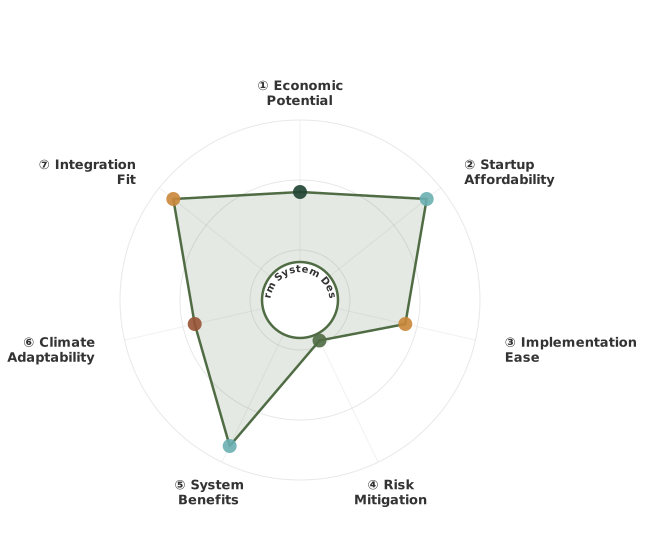
How These Traits Are Calculated
Trait dimensions are ordered clockwise starting from the top of the chart (12 o'clock position):
1. Economic Potential
Financial returns, annual value, and break-even timeline
WHAT: Evaluates financial viability by combining net annual value ($/ha from savings, income, and amortized harvests) with break-even timeline showing when practices pay for themselves.
WHY: Farmers need clear ROI understanding before committing resources. Fast payback (≤3 years) with strong returns (≥$300/ha) enables confident adoption, while long timelines (>10 years) restrict adoption to well-funded operations willing to wait for returns.
HOW: Calculated from net annual value in $/ha and break-even years. Exceptional (≥2.6): fast ROI ≤3 years + high value ≥$300/ha. Typical (1.8-2.5): moderate returns or longer timelines. Limited (<1.8): marginal economics or very long payback >10 years.
2. Startup Affordability
Initial investment costs and financial barrier to entry
WHAT: Measures financial barrier to entry through startup costs for equipment, infrastructure, consulting, and materials. Inverted scoring: lower costs = higher scores = more accessible adoption.
WHY: Affordability determines who can adopt. Low-cost practices (<$250/ha) enable widespread adoption across diverse scales, while high costs (>$2,500/ha) limit adoption to well-capitalized operations, creating barriers that slow regenerative transition.
HOW: Calculated from initial investment parsed from practice content. Inverted scoring: Exceptional (≥2.6): minimal investment <$250/ha. Typical (1.8-2.5): moderate costs $250-2,500/ha. Limited (<1.8): high barrier >$2,500/ha.
3. Implementation Ease
Learning curve and specialized knowledge required
WHAT: Measures how much learning, planning, and specialized knowledge a practice requires. Simpler practices with fewer steps score higher, while complex practices requiring extensive training or specialized resources score lower.
WHY: Complex practices create adoption barriers even when economically viable. Straightforward practices enable faster adoption and broader participation, while those requiring extensive training, timing precision, or specialized equipment limit who can succeed.
HOW: Evaluated by measuring documentation length and identifying complexity markers like location-specific requirements, seasonal timing windows, specialized skills, and dedicated equipment needs. Exceptional (≥2.6): straightforward practices with minimal prerequisites. Typical (1.8-2.5): moderate learning curve with some specialized needs. Limited (<1.8): steep learning curve requiring significant training or resources.
4. Risk Mitigation
Identified financial and ecological risk assessment
WHAT: Evaluates documented risks across financial (investment loss, market volatility) and ecological (crop failure, pest outbreaks) domains. Inverted scoring: fewer risks = higher scores.
WHY: Understanding risk exposure helps farmers make informed decisions. Low-risk practices allow confident implementation, while high-risk practices require careful planning and contingency resources. Risk transparency prevents costly failures.
HOW: Calculated from identified risks in practice content. Inverted scoring: Exceptional (≥2.6): ≤2 risks with manageable severity. Typical (1.8-2.5): 3-5 moderate risks. Limited (<1.8): 6+ risks or severe exposure.
5. System Benefits
How many ways the practice improves your land simultaneously
WHAT: Measures how many aspects of land health improve at once—carbon storage, soil quality, erosion control, water absorption, and biodiversity. Practices that improve multiple areas simultaneously create compounding benefits where each improvement reinforces the others.
WHY: The best practices solve multiple problems at once. For example, addressing erosion simultaneously builds carbon and improves water infiltration, creating a resilient system with positive feedback loops. Single-benefit approaches miss these compound transformation opportunities.
HOW: Evaluated across five key outcomes: carbon sequestration, soil organic matter increase, erosion reduction, water infiltration improvement, and biodiversity enhancement. Exceptional (≥2.6): high carbon storage (>8 t/ha/yr), improvements across 4-5 areas, transformative outcomes. Typical (1.8-2.5): moderate carbon (3-8 t/ha/yr), improvements across 2-3 areas. Limited (<1.8): modest impact (<3 t/ha/yr), single-area focus only.
6. Climate Adaptability
Geographic applicability across Köppen climate zones
WHAT: Evaluates geographic applicability by assessing how many Köppen climate zones successfully support a practice and what adaptation requirements are needed. Measures breadth of climates where farmers can implement with minimal to moderate modifications.
WHY: Universal practices working across diverse climates enable more farmers to adopt regenerative approaches. Practices limited to single climate types (only Mediterranean, only tropical) restrict adoption and slow global transition. Adaptability determines whether a practice serves niche regions or offers broad transformation.
HOW: LLM evaluation of regional success stories, Köppen zone coverage, and adaptation needs. Exceptional (≥2.6): 5+ zones or 4+ climate types, 3+ continents, minimal adaptation. Typical (1.8-2.5): 3-4 zones or 2-3 types, 2 continents, moderate adaptation. Limited (<1.8): 1-2 zones, single region, significant adaptation or highly specialized.
7. Integration Fit
How well this practice combines with others you're doing
WHAT: Measures how well a practice combines with other regenerative practices you might be doing. Some practices work as building blocks that make many other practices easier or more effective, while others work best on their own.
WHY: Practices that combine well with many others create more value on your farm. For example, cover cropping enables no-till, improves grazing, supports crop diversity, and helps water management—making all of them work better together. This helps you build a coherent system rather than juggling disconnected practices.
HOW: Evaluated by identifying which practices combine well and how strong those combinations are. 'Ideally Suited' means strong combinations where practices reinforce each other (practice A makes B easier, while B makes A more effective). 'Adequate' means complementary benefits that work well together. Exceptional (≥2.6): combines well with 6+ practices, serves as a building block. Typical (1.8-2.5): combines with 3-5 practices. Limited (<1.8): 1-2 practices or works best alone.
Going Deeper
1
WHY - The Benefits
Farm system design is the blueprint for creating a truly regenerative enterprise. It moves beyond implementing isolated regenerative practices to weaving them into a harmonized whole that optimizes ecological health and economic resilience. This approach is rooted in...
Farm system design is the blueprint for creating a truly regenerative enterprise. It moves beyond implementing isolated regenerative practices to weaving them into a harmonized whole that optimizes ecological health and economic resilience. This approach is rooted in understanding the farm as a complex ecosystem, where the interconnectedness of all components yields benefits far greater than the sum of their individual parts.
WHY - The Benefits
Farm system design is the blueprint for creating a truly regenerative enterprise. It moves beyond implementing isolated regenerative practices to weaving them into a harmonized whole that optimizes ecological health and economic resilience. This approach is rooted in...
Farm system design is the blueprint for creating a truly regenerative enterprise. It moves beyond implementing isolated regenerative practices to weaving them into a harmonized whole that optimizes ecological health and economic resilience. This approach is rooted in understanding the farm as a complex ecosystem, where the interconnectedness of all components yields benefits far greater than the sum of their individual parts.
Soil Health Benefits
A regenerative farm system design prioritizes building soil health as the foundation for all other benefits. By integrating practices that keep soil covered year-round with living plants or mulch, minimize disturbance through reduced tillage, maintain living roots, and cycle nutrients efficiently (often with livestock), soil organic matter (SOM) can increase by 0.5-2% annually. This leads to dramatic improvements in soil structure, water infiltration (often increasing by 50-100% or more), aeration, and nutrient availability. The increased SOM acts as a sponge, making land more drought-resilient and less prone to erosion.
Improved soil health directly translates to better crop and forage production. Roots can penetrate deeper, accessing more water and nutrients, leading to increased yields and nutritional quality. Diverse soil biology, supported by continuous root exudates and organic matter, improves nutrient cycling, making synthesized fertilizers largely redundant over time. The soil becomes a self-nourishing system, less dependent on costly external inputs and more capable of buffering environmental stresses.
Economic Benefits
The economic advantages of well-designed regenerative farm systems are substantial and accumulate over time. By reducing reliance on synthetic fertilizers, pesticides, and herbicides, input costs can decrease by 30-70%. Diversified income streams from multiple crops, livestock enterprises, and potentially ecosystem services (like carbon sequestration or clean water provision) create resilience against market volatility for single commodities.
Furthermore, regenerative systems build natural capital. Enhanced soil health leads to improved land productivity and marketability. Over a decade, farms transitioning to regenerative systems often see land values increase by 2-5 times compared to conventional counterparts due to improved fertility, resilience, and ecological function. The goal is to move from a cost-minimization strategy to a value-maximization strategy, where ecological health becomes a primary driver of profitability.
Water Cycle Benefits
Farm system design is crucial for optimizing water use efficiency and protecting water quality. Practices like cover cropping, no-till, and integrating perennial vegetation (trees, shrubs, pasture) significantly increase soil infiltration rates. This means more rainwater soaks into the ground, replenishing aquifers and reducing surface runoff that can carry away topsoil and pollutants.
In arid and semi-arid regions, increased water retention in the soil is critical for crop and forage survival during dry periods, potentially reducing or eliminating the need for irrigation. In wetter climates, improved infiltration prevents waterlogging and reduces flooding. By minimizing runoff and nutrient leaching, regenerative systems also protect downstream water bodies from eutrophication and contamination, a critical economic and ecological benefit.
Carbon Sequestration & Climate Resilience
Regenerative farm system design is a powerful tool for mitigating climate change and building climate resilience. The focus on perennial plants, cover crops, and increasing soil organic matter directly sequesters atmospheric carbon dioxide into the soil through photosynthesis. Over time, well-managed systems can sequester 5-15 tonnes of CO2 equivalent per hectare per year, making agriculture a climate solution rather than a contributor.
This increased soil carbon also enhances resilience to climate extremes. Well-structured, carbon-rich soils hold more water, buffering against drought. Improved infiltration reduces the impact of heavy rainfall events, mitigating flood damage. The greater biodiversity supported by these systems also fosters resilience to pests and diseases, reducing the need for chemical interventions and stabilizing production in the face of changing weather patterns.
Biodiversity Enhancement
A key outcome of thoughtful farm system design is the significant increase in biodiversity, both above and below ground. Diverse cropping rotations, inclusion of hedgerows, tree lines, and perennial pastures provide habitat, food sources, and nesting sites for a wide array of beneficial insects (pollinators, predators), birds, and other wildlife.
Below ground, the increase in soil organic matter and reduction in tillage fosters a thriving soil food web, from bacteria and fungi to earthworms and arthropods. This complex biological community is essential for nutrient cycling, disease suppression, and overall soil structure maintenance. A farm designed regeneratively becomes a net contributor to regional biodiversity, creating a more functional and self-regulating landscape.
Regenerative Systems Fit
Farm system design is the overarching strategy that ensures other regenerative practices are implemented in a coherent, complementary, and site-specific manner. It champions all five regenerative principles by providing the strategic planning framework:
- Minimize Soil Disturbance: System design inherently seeks to reduce or eliminate tillage by incorporating perennial crops, cover crops, and livestock integration into rotations, and planning infrastructure to minimize soil compaction.
- Maximize Crop Diversity: The design explicitly plans for diverse cropping sequences, intercropping, polycultures, and integration of trees and forages alongside cash crops to build resilience and support biology.
- Keep Soil Covered: System design ensures that land is never left bare, integrating cover cropping, mulching, and perennial vegetation to maintain living cover year-round.
- Maintain Living Roots: The plan prioritizes perennial species and continuous cropping/grazing cycles to ensure living roots are in the soil for as much of the year as possible, feeding soil biology and maintaining structure.
- Integrate Livestock: System design strategically incorporates animals not just for production, but for their role in nutrient cycling, stimulating plant growth, and managing vegetation.
For farms transitioning from conventional agriculture, farm system design provides the roadmap. It acknowledges that a complete overnight shift may be impractical or risky. Instead, it plans a phased approach: gradually reducing synthetic inputs as soil biology improves, increasing crop diversity over time, introducing livestock strategically, and phasing out disruptive practices. This ensures the system builds capacity and resilience at each step, making the transition smoother and more economically viable. The design is dynamic, intended to evolve as the farm ecosystem regenerates.
Sources behind this view
Videos & Podcasts
-
Regenerative agriculture provides solutions for climate change, human health, and soil degradation, contrasting with industrial agriculture's harmful impacts, including glyphosate use. Practices like
-
Adopts regenerative agriculture principles: minimize disturbance, keep living roots, use soil armor, integrate animals (livestock grazing, multi-species), and increase biodiversity. These practices bu
-
Provides actionable steps for regenerative agronomy: balanced N:C inputs (molasses, humates), microbial teas, yeast metabolites, calcium, and effective seed treatments. Emphasizes scalability, systems
-
Key regenerative agriculture principles include: keeping soil covered, limiting disturbance (no-plow), building diversity (microbes, plants, animals), maintaining a living root in the soil, and integr
 Community
-
Advocates for Soil Foodweb principles and Holistic Management, emphasizing land leasing and custom grazing/growing over labor-intensive methods. Focuses on soil restructuring for water availability an
Read more (opens in new window) permies.com -
Build healthy pasture soils by minimizing tillage, maintaining living roots and species diversity, and implementing proper grazing management. Livestock are essential for nutrient cycling and stimulat
Read more (opens in new window) smallfarms.cornell.edu -
Jon from Wild Roots Farm in Vermont advocates for regenerative practices like limited tillage, crop rotations, and rotational grazing to build resilience in food systems. He explains how these methods
Read more (opens in new window) smallfarms.cornell.edu -
Explains regenerative agriculture principles: no-till gardening to support soil microbiome and sequester carbon; using compost to reduce erosion and compaction; and planting diverse cover crops (grass
Read more (opens in new window) ucanr.edu
Research
-
Regenerative Agriculture: Restoring Ecosystems¢ Resilience and Productivity: A Review (opens in new window)
This study found: Regenerative agriculture builds soil health and ecosystem services through practices like no-till, cover crops, and diverse rotations. It increases soil organic matter, improves water infiltration, bo
-
Systematic review of regenerative farming: Addressing agricultural sustainability challenges (opens in new window)
This study found: Systematic review of 31 studies shows regenerative farming improves soil health, biodiversity, and carbon capture, aiding sustainability. Technology is key for adoption, but policy, farmer understandi
-
The Indigenous Roots of Regenerative Agriculture (opens in new window)
This study found: Modern regenerative agriculture practices are rooted in millennia of Indigenous land stewardship, offering profound knowledge and a crucial value system of respect and reciprocity for true transformat
-
Regenerative Agriculture: Insights and Challenges in Farmer Adoption (opens in new window)
This study found: Review of 7 regenerative agriculture practices (no-till, crop rotation, cover crops, etc.) highlights benefits and key adoption challenges like cost, farm size, and institutional barriers for scalable
From the Web
-
Regenerative agriculture regenerates topsoil, increases biodiversity, and improves carbon/water cycles through methods like minimal tillage, soil cover, diversity, and animal integration, boosting pro
-
Key regenerative agriculture methods include no-till farming, cover cropping, agroforestry, perennial crops, planned rotational grazing (Holistic Management), and compost application, all aimed at imp
-
Five steps to regenerative agriculture: Holistic Planned Grazing, no-till farming, planting diverse cover crops/interseeding, using compost/inoculants (with caution), and incorporating silvopasture/wo
-
Regenerative agriculture, guided by Health, Ecology, Fairness, and Care principles, aims to improve systems by increasing soil organic matter through practices like cover crops and longer rotations. T
2
WHERE - Regional Considerations
Farm system design is inherently site-specific, meaning its principles are universal but their application varies dramatically by region. Climate, soil type, water availability, local ecology, and socio-economic factors all dictate the most effective design of a...
Farm system design is inherently site-specific, meaning its principles are universal but their application varies dramatically by region. Climate, soil type, water availability, local ecology, and socio-economic factors all dictate the most effective design of a regenerative system.
WHERE - Regional Considerations
Farm system design is inherently site-specific, meaning its principles are universal but their application varies dramatically by region. Climate, soil type, water availability, local ecology, and socio-economic factors all dictate the most effective design of a...
Farm system design is inherently site-specific, meaning its principles are universal but their application varies dramatically by region. Climate, soil type, water availability, local ecology, and socio-economic factors all dictate the most effective design of a regenerative system.
Click Here to Look up your Region if you don't already know it
Humid Temperate Regions
Representative Locations: Southeastern United States, northern Europe (UK, Germany, Poland), eastern China, Japan, New Zealand
Climate Context: Warm to hot summers and cool to cold winters with moderate to high annual precipitation (75-150 cm or 30-60 inches) distributed relatively evenly. USDA Zones 6-8, Köppen Cfb/Cfa.
In these regions, farm system design often focuses on building soil organic matter to improve water infiltration and reduce runoff from frequent rainfall events. Systems may incorporate diverse crop rotations with a strong emphasis on cover crops, perennial forages for livestock, and agroforestry elements like alley cropping or silvopasture. Preventing soil compaction from heavy farm equipment during wet periods is a key challenge, addressed through controlled traffic farming, reduced tillage, and strong soil structure from living roots and organic matter. Livestock integration, particularly adaptive grazing, can effectively cycle nutrients and manage vegetation within these systems, while robust biodiversity can be fostered through diverse planting and habitat creation. Examples include mixed crop-livestock farms in France using agroforestry, or diversified organic vegetable farms in the US Midwest incorporating cover crops and pasture.
Mediterranean Regions
Representative Locations: California, Mediterranean basin (Spain, Italy, Greece), central Chile, southwestern Australia, Western Cape South Africa
Climate Context: Hot, dry summers and mild, wet winters. Annual precipitation 40-90 cm (15-35 inches), highly seasonal. USDA Zones 8-10, Köppen Csa/Csb.
Farm system design in Mediterranean climates must address acute seasonal drought and high fire risk. The priority is maximizing water infiltration and retention in the soil, often through deep-rooted perennial crops, fruit trees, nut trees, and drought-tolerant forages. Livestock, such as sheep or goats managed adaptively, can be vital for managing vegetation during the dry season, consuming fire-prone dry grasses and cycling nutrients. Designing systems that build soil organic matter is critical for extending the effective growing season and increasing water-holding capacity. Agroforestry systems, integrating olives, almonds, or figs with pasture or annual crops, are highly successful. The challenge is selecting species that thrive in both wet winters and hot, dry summers. Examples include dehesa systems in Spain (oak woodlands with livestock grazing) and olive groves integrated with sheep farming in Greece.
Arid/Semi-Arid Regions
Representative Locations: Western USA, North Africa, Central Asia, Interior Australia
Climate Context: Low annual precipitation (<40 cm or 15 inches), high temperatures, short and often unpredictable growing season. USDA Zones 7-9, Köppen BSh/BSk.
In arid and semi-arid regions, water is the primary limiting factor. Farm system design must prioritize water harvesting and conservation, alongside building soil’s capacity to store every drop of rainfall. This often involves techniques like contour plowing, keyline design, water catchment systems, and maximizing surface cover with living plants or mulch to prevent evaporation. Livestock, particularly well-managed grazing animals, play a crucial role in nutrient cycling and managing sparse vegetation to promote resilience. Integrating drought-tolerant trees and shrubs that can survive on minimal water, often in silvopastural or alley cropping systems, is key to long-term productivity. The focus is on creating systems that thrive with minimal water input, often drawing from insights of traditional land management practices. Examples include pastoral systems in East Africa optimized for drought resilience, or water-efficient grape and olive production in the Middle East and North Africa.
Cold Continental Regions
Representative Locations: Northern USA and Canada, Northern Europe, Northern Asia
Climate Context: Very short growing seasons, extreme summer heat, severe winter cold. USDA Zones 3-5, Köppen Dfa/Dfb.
Farm system design in cold continental regions must contend with short growing windows, rapid spring thaws, and potentially long winters requiring significant soil protection. Building soil health quickly within the short growing season is paramount. This involves selecting fast-growing cover crops, incorporating livestock for timely manure application, and potentially utilizing short-season cash crops or perennial varieties adapted to extreme cold. Protecting soil from winter erosion and maintaining biological activity under snow cover are important considerations. The integration of cold-hardy trees or shrubs in agroforestry systems can provide additional revenue streams and habitat. Examples include diversified grain and livestock farms in Canada employing extended cover cropping, or mixed farms in Northern Europe integrating fruit trees with crop rotations.
Subtropical Regions
Representative Locations: Southeastern USA, Southern China, Southern Brazil, Eastern Australia
Climate Context: Hot, humid summers and mild winters with generally ample rainfall. USDA Zones 9-11, Köppen Cfa/Cwa.
In subtropical regions, the challenges often revolve around managing high humidity, intense summer heat, and the risk of soil degradation from heavy rainfall. Farm system design here emphasizes building soil structure to maximize infiltration and aeration, while selecting plant species that tolerate heat and humidity. Cover cropping with disease-resistant varieties is crucial for preventing soilborne diseases and protecting against erosion. Livestock integration can help manage vegetation and cycle nutrients, but requires careful attention to shade and water provision during intense heat. Agroforestry, with fast-growing trees and diverse understory plantings, can provide shade, habitat, and additional products. Examples include integrated rice-livestock systems in Southeast Asia or diversified fruit and livestock farms in Southern Brazil.
Tropical Regions
Representative Locations: Central America, Southeast Asia, East Africa, Northern Australia, Northern South America
Climate Context: High temperatures year-round, with distinct wet and dry seasons or consistent high rainfall. Köppen Af/Am/Aw.
Tropical farm system design confronts rapid nutrient cycling, intense rainfall, and unique pest/disease pressures. Building and maintaining soil organic matter is essential to counteract rapid decomposition and provide a slow-release nutrient source. Mimicking forest ecosystems through agroforestry, silvopasture, and perennial cropping systems is highly effective. Livestock can play a significant role in nutrient cycling but must be managed to avoid overgrazing and compaction, especially during wet seasons. Integrated pest management, relying on biodiversity to suppress pest populations, is key. The focus is on creating stable, multi-layered systems that mimic the high productivity and resilience of tropical rainforests. Examples include traditional agroforestry systems (e.g., coffee-banana-shade tree polycultures) in Latin America, or integrated crop-livestock systems in Southeast Asia.
3
HOW - Implementation Process
Farm system design is a process of intentional planning and iterative adaptation. It’s not about applying a one-size-fits-all formula but about understanding fundamental principles and applying them thoughtfully to a specific context.
Farm system design is a process of intentional planning and iterative adaptation. It’s not about applying a one-size-fits-all formula but about understanding fundamental principles and applying them thoughtfully to a specific context.
HOW - Implementation Process
Farm system design is a process of intentional planning and iterative adaptation. It’s not about applying a one-size-fits-all formula but about understanding fundamental principles and applying them thoughtfully to a specific context.
Farm system design is a process of intentional planning and iterative adaptation. It’s not about applying a one-size-fits-all formula but about understanding fundamental principles and applying them thoughtfully to a specific context.
Prerequisites
- Site Assessment: Thoroughly understand your land's unique characteristics: soil types (mapping, texture, depth, pH), topography (slopes, drainage patterns), existing vegetation, water sources and availability, climate data (historical rainfall, temperature, frost dates), and any history of land use (e.g., prior compaction, chemical contamination).
- Resource Inventory: Assess available resources: current livestock, machinery, labor (skills, availability), financial capital, and access to infrastructure (buildings, fencing, water systems).
- Goal Definition: Clearly articulate your personal and business goals. What do you want to achieve in 5, 10, 20 years? (e.g., reduced input costs, increased net income, improved soil health, specific products, legacy for children).
- Learning & Observation: Dedicate time to observing your current system and learning about regenerative principles and practices relevant to your region. This involves walking the land, monitoring soil, observing plant and animal behavior, and studying successful examples.
Phase 1: Visioning and Conceptual Design (Months 3-9)
- Define Your Core Enterprise(s): What are your primary production goals? (e.g., Grains, livestock, horticulture, trees, mixed). This will shape the system. While this process is often based on ecological and economic analysis, some design philosophies, such as Biodynamics, also incorporate spiritual or cosmic considerations into the visioning process.
- Map Existing & Desired Land Use: Sketch or map your farm, dividing it into zones based on current use and potential future function. Consider where livestock might graze, which areas are best suited for annual crops, where perennials (trees, pasture) could be integrated, and where infrastructure needs to be located.
- Integrate Key Regenerative Elements:
- Soil Health Focus: Plan for year-round soil cover (cover crops, perennial pasture, mulching) and deliberate minimization of disturbance (no-till, reduced tillage).
- Diversity Layers: Identify opportunities to add crop diversity (e.g., diverse cover crop mixes, intercropping, polycultures) and vertical diversity (e.g., silvopasture, alley cropping, hedgerows).
- Livestock Integration: Determine how livestock can best cycle nutrients, manage vegetation, and provide income. This could involve planned rotational grazing, integrating poultry with crop production, or silvopastoral systems.
- Water Management: Plan for water harvesting, infiltration, and conservation based on regional rainfall patterns. This might involve contour farming, swales, earth dams, or improved irrigation efficiency if necessary (using water judiciously).
- Initial Infrastructure Planning: Consider where new fencing, water lines, access roads, or planting locations for trees would best serve the integrated system. Think about flow of livestock, crop movement, and operational efficiency.
Phase 2: Detailed Planning and Phased Implementation (Years 1-3)
- Develop Crop/Forage Plans: Design specific rotations that maximize diversity, nutrient cycling, and soil health. Identify cover crop mixes suitable for your climate and goals. For livestock, plan grazing strategies (e.g., planned rotational grazing, mob grazing) that align with soil recovery and vegetation management.
- Select Species for Integration: If incorporating trees or shrubs, choose species that are adapted to your climate, suited for dual-purpose (e.g., timber/fruit/nut production alongside ecological benefits), and compatible with livestock integration (i.e., not highly toxic or attractive to browse).
- Infrastructure Design & Phased Installation: Prioritize infrastructure that supports the core regenerative elements. For example, installing new fencing and water points to enable effective rotational grazing, or preparing land (e.g., minimal tillage) for tree planting. A phased approach prevents overwhelming upfront investment.
- Economic Modeling: Develop a rough economic plan projecting changes in income, expenses, and capital investment over 5-10 years. This helps secure financing and manage expectations.
Phase 3: Integration and Optimization (Years 3-7)
- Implement Key Practices: Begin planting diverse cover crops, establish perennial forages, start tree plantings, and implement planned grazing rotations.
- Monitor and Adapt: Continuously observe the system's response. Are cover crops establishing well? Is soil structure improving? Are livestock performing as expected? Are water infiltration rates increasing? Track key indicators like soil organic matter, earthworm counts, biodiversity surveys, and yield data.
- Refine Rotations and Grazing Plans: Adjust crop sequences, cover crop mixes, and grazing timings based on observations to further enhance soil health, nutrient cycling, and productivity. Introduce new species or diversify management strategies.
- Scale Up Successful Elements: As certain practices prove effective, plan to expand them across more of the farm. For instance, if alley cropping shows promise, expand it to more fields.
Transition Timeline & Phase-Out Strategy (If Applicable)
For farms transitioning from conventional practices, system design must include a clear phase-out strategy for non-regenerative inputs and management:
- Year 1-2: Reduce & Replace: Gradually reduce synthetic fertilizer and pesticide applications by 20-30% each year. Introduce diverse cover crops to build soil biology and suppress weeds. Begin planting key perennial species or establishing well-managed rotational grazing.
- Year 3-5: Transition & Build: Further reduce synthetic inputs by another 40-60%. Rely increasingly on livestock manure, cover crop nitrogen fixation, and nutrient cycling. Increase biodiversity through intercropping and habitat creation. If introducing livestock, start with smaller numbers or target mobs with a clear rotational management plan.
- Year 5-7+: Optimize & Stabilize: Aim for near-elimination of synthetic inputs. Focus on fine-tuning the integrated system for maximum resilience and productivity. Continuously monitor soil health and biodiversity indicators. Ensure financial returns are stable and growing, demonstrating the economic viability of the regenerative system.
The success of this transition relies on building soil biology as the buffer against yield dips. A gradual approach is often more economically sound and less risky than an abrupt "cold turkey" switch, allowing the system time to adapt and build the biological capacity to sustain production. However, the timeline must be aggressive enough to show meaningful progress within 5-7 years.
Sources behind this view
Videos & Podcasts
-
Regenerative agriculture provides solutions for climate change, human health, and soil degradation, contrasting with industrial agriculture's harmful impacts, including glyphosate use. Practices like
-
Provides actionable steps for regenerative agronomy: balanced N:C inputs (molasses, humates), microbial teas, yeast metabolites, calcium, and effective seed treatments. Emphasizes scalability, systems
-
Transitioning to regenerative agriculture is a human/psychological process requiring trials to reduce risk and build trust. Increased consumer awareness of ecology and health would drive demand for re

-
Transitioning to regenerative agriculture requires a whole-systems mindset, focusing on soil health principles: reduce tillage/compaction, increase diversity (plants, animals), eliminate bio-cides/fer
Community
-
Build healthy pasture soils by minimizing tillage, maintaining living roots and species diversity, and implementing proper grazing management. Livestock are essential for nutrient cycling and stimulat
Read more (opens in new window) smallfarms.cornell.edu -
Advocates for converting conventional land to permaculture, recommending a gradual transition with cover crops and farmer collaboration, aiming to reduce chemical inputs over 3 years as soil heals.
Read more (opens in new window) permies.com -
Discusses challenges in transitioning large-scale commodity crop farms to regenerative practices, focusing on reducing synthetic inputs and exploring alternative methods. Identifies difficulties in co
Read more (opens in new window) permies.com
Research
-
Regenerative Agriculture: Restoring Ecosystems¢ Resilience and Productivity: A Review (opens in new window)
This study found: Regenerative agriculture builds soil health and ecosystem services through practices like no-till, cover crops, and diverse rotations. It increases soil organic matter, improves water infiltration, bo
-
The Indigenous Roots of Regenerative Agriculture (opens in new window)
This study found: Modern regenerative agriculture practices are rooted in millennia of Indigenous land stewardship, offering profound knowledge and a crucial value system of respect and reciprocity for true transformat
-
Systematic review of regenerative farming: Addressing agricultural sustainability challenges (opens in new window)
This study found: Systematic review of 31 studies shows regenerative farming improves soil health, biodiversity, and carbon capture, aiding sustainability. Technology is key for adoption, but policy, farmer understandi
-
Transition to Regenerative Farming (opens in new window)
This study found: A 5-year case study shows a farm successfully transitioned to regenerative practices, reducing soil erosion and increasing wildlife by using cover crops, diversified rotations, and reduced tillage. Pr
From the Web
-
Five steps to regenerative agriculture: Holistic Planned Grazing, no-till farming, planting diverse cover crops/interseeding, using compost/inoculants (with caution), and incorporating silvopasture/wo
-
Regenerative agriculture is driven by principles like building soil health, promoting biodiversity, and enhancing climate resilience, adapted to local ecosystems, rather than a checklist of practices.
4
Know the Debate
Farm system design optimizes outcomes based on your location, scale, and resources. In humid temperate regions, focus on water infiltration and cov...
Know the Debate
Farm system design optimizes outcomes based on your location, scale, and resources. In humid temperate regions, focus on water infiltration and cov...
Farm system design optimizes outcomes based on your location, scale, and resources. In humid temperate regions, focus on water infiltration and cover crops, while Mediterranean climates demand drought tolerance and fire prevention. Arid lands prioritize water harvesting and hardy perennials, and cold regions must maximize short growing seasons with rapid soil-building. The labor investment ranges from daily animal care to weekly monitoring, and capital needs vary from $1,000 for design guidance to over $40,000 for large-scale infrastructure planning and implementation.
How long until full regenerative farm system benefits appear?
Benefits realized in 3-5 years
Academic and institute sources suggest significant benefits and system integration achievable within 3-5 years with deliberate planning. These timelines often assume favorable starting conditions and effective implementation of core regenerative practices like cover cropping, reduced tillage, and adaptive grazing.
Sources behind this view
Sources behind this view
Research
-
Regenerative Agriculture: Restoring Ecosystems¢ Resilience and Productivity: A Review (opens in new window)
This study found: Regenerative agriculture is a farming approach that views farms as living ecosystems, moving away from the 'take-make-dispose' model of conventional farming. Instead of relying heavily on outside inputs, it focuses on building up the farm's natural resources and services. Key practices include disturbing the soil as little as possible (like no-till or reduced tillage), planting cover crops, rotating different crops, integrating livestock in a managed way, using compost, reducing synthetic fertilizers and pesticides, and incorporating trees. The approach is tailored to each farm's specific conditions. Farmers monitor soil health indicators like organic matter, how well soil holds water, and the amount of life in the soil. Studies show that regenerative practices can significantly increase soil organic matter (by 0.5-2% in 3-5 years), improve water infiltration (2-10 times better), boost soil microbial life (30-50% more), and increase beneficial insects (60-80% more). Farms can also capture 0.5 to 3 tons of carbon per hectare annually. Economically, these farms often have 20-40% lower input costs and can be more profitable in the long run, becoming more productive and stable over time.
-
Regenerative Agriculture: Integrating Soil Health, Carbon Management and Socio-ecological Outcomes (opens in new window)
This study found: Regenerative agriculture is a farming approach that focuses on improving soil health, storing carbon, and building stronger communities. It uses practices like planting cover crops, reducing plowing, and growing a variety of crops. These methods help build better soil structure, boost beneficial soil microbes, and improve nutrient flow. By storing carbon in the soil, regenerative agriculture also helps stabilize the climate. Beyond environmental benefits, it aims to create more resilient rural communities by supporting farmers and fair resource use. This approach offers a sustainable path for food production that benefits both the environment and people.
-
Regenerative Agriculture: Insights and Challenges in Farmer Adoption (opens in new window)
This study found: This paper reviews seven key practices of regenerative agriculture: no-till farming, rotating crops, using cover crops, green manures (crops grown to be tilled back into the soil), planting multiple crops together (intercropping), using permanent ground cover, and integrating crops with livestock. Regenerative agriculture focuses on improving soil health, biodiversity, and fairness for people. It's designed to work on large farms, unlike some other ecological farming methods. While it emphasizes natural principles, its certification can be flexible, sometimes allowing certain manufactured inputs if regenerative practices are followed. The review highlights the benefits of these practices but also points out major hurdles for farmers, such as initial costs, farm size limitations, and systemic issues. Overcoming these challenges is crucial for more farmers to adopt regenerative approaches.
From the Web
-
Regenerative farming rebuilds soil health through practices like cover cropping, no-till, rotational grazing, and composting, focusing on long-term life and resilience over short-term yields.
Benefits take 7-10+ years
Field practitioners often report that realizing full synergistic benefits and self-regulation takes 7-10+ years, especially when starting with degraded land. This longer timeline accounts for the complex ecological recovery process and the learning curve for adaptive management.
Sources behind this view
Sources behind this view
Videos & Podcasts
-
Transitioning to regenerative agriculture requires a whole-systems mindset, focusing on soil health principles: reduce tillage/compaction, increase diversity (plants, animals), eliminate bio-cides/fertilizers. Plan transitions gradually, involve employees, monitor changes, and understand that soil regeneration is a long-term process.
-
Adopting regenerative practices should start small and incrementally, focusing on soil health over short-term yields. Collaboration, strategic nutrient sourcing, and leveraging resources like Continuum Ag are key to successful implementation.
-
Key regenerative principles include minimal disturbance, permanent cover, biodiversity (including livestock), reduced agrochemicals, and context-specific design. A major challenge is finding professional, reliable farmers to execute these plans.
-
Enhancing soil biology is key to profitable regenerative farming by reducing chemical inputs. Farmers must consider social, environmental, and financial contexts, analyze enterprise numbers, and fully adopt regenerative principles for exponential returns.

Making Sense of the Differences
The timeline for regenerative system benefits varies primarily with initial soil health and management intensity. Degraded soils necessitate longer periods for ecological recovery (7-10+ years), while better-managed lands may see noticeable shifts within 3-5 years. Farmers should plan for the longer timeline, monitor their soil closely, and adapt approaches based on observed ecosystem responses rather than solely on calendar expectations.
What are the essential prerequisites for successful farm system design?
Ecological knowledge and site assessment
Academic and institute sources emphasize deep understanding of ecological principles, site-specific analysis, and comprehensive planning as foundational prerequisites. This includes detailed soil and water assessments, multi-year design concepts, and integration of diverse biological components.
Sources behind this view
Sources behind this view
Research
-
Regenerative Agriculture: Restoring Ecosystems¢ Resilience and Productivity: A Review (opens in new window)
This study found: Regenerative agriculture is a farming approach that views farms as living ecosystems, moving away from the 'take-make-dispose' model of conventional farming. Instead of relying heavily on outside inputs, it focuses on building up the farm's natural resources and services. Key practices include disturbing the soil as little as possible (like no-till or reduced tillage), planting cover crops, rotating different crops, integrating livestock in a managed way, using compost, reducing synthetic fertilizers and pesticides, and incorporating trees. The approach is tailored to each farm's specific conditions. Farmers monitor soil health indicators like organic matter, how well soil holds water, and the amount of life in the soil. Studies show that regenerative practices can significantly increase soil organic matter (by 0.5-2% in 3-5 years), improve water infiltration (2-10 times better), boost soil microbial life (30-50% more), and increase beneficial insects (60-80% more). Farms can also capture 0.5 to 3 tons of carbon per hectare annually. Economically, these farms often have 20-40% lower input costs and can be more profitable in the long run, becoming more productive and stable over time.
-
Developing Sustainable Food Systems through Regenerative Agriculture (opens in new window)
This study found: This study reviewed different farming approaches like organic farming, conservation tillage (reducing plows), agroforestry (trees on farms), integrated pest management, permaculture, and regenerative agriculture. The goal was to find the best ways to build sustainable food systems that are good for the environment and ensure we have enough food long-term. After comparing their effects on soil health and crop harvests, the researchers concluded that regenerative agriculture stands out. It's considered the best overall for improving soil organic matter, preventing soil erosion, and making ecosystems more resilient, leading to better crop yields and environmental sustainability.
-
Regenerative Agriculture: Integrating Soil Health, Carbon Management and Socio-ecological Outcomes (opens in new window)
This study found: Regenerative agriculture is a farming approach that focuses on improving soil health, storing carbon, and building stronger communities. It uses practices like planting cover crops, reducing plowing, and growing a variety of crops. These methods help build better soil structure, boost beneficial soil microbes, and improve nutrient flow. By storing carbon in the soil, regenerative agriculture also helps stabilize the climate. Beyond environmental benefits, it aims to create more resilient rural communities by supporting farmers and fair resource use. This approach offers a sustainable path for food production that benefits both the environment and people.
From the Web
-
Regenerative Agriculture rebuilds soil health and biodiversity through four principles: no tillage, continuous soil cover, increased plant diversity, and livestock integration. This approach aims for profitable, resilient farms and thriving rural communities, contrasting with historical farming methods.
-
Regenerative farming rebuilds soil health through practices like cover cropping, no-till, rotational grazing, and composting, focusing on long-term life and resilience over short-term yields.
Capital, experience, and community support
Field practitioners stress the necessity of tangible resources like adequate capital for infrastructure, prior hands-on experience with regenerative practices, and access to community support networks or mentorship to overcome practical implementation challenges.
Sources behind this view
Sources behind this view
Videos & Podcasts
-
Transitioning to regenerative agriculture requires a whole-systems mindset, focusing on soil health principles: reduce tillage/compaction, increase diversity (plants, animals), eliminate bio-cides/fertilizers. Plan transitions gradually, involve employees, monitor changes, and understand that soil regeneration is a long-term process.
-
Enhancing soil biology is key to profitable regenerative farming by reducing chemical inputs. Farmers must consider social, environmental, and financial contexts, analyze enterprise numbers, and fully adopt regenerative principles for exponential returns.
-
Adopting regenerative practices should start small and incrementally, focusing on soil health over short-term yields. Collaboration, strategic nutrient sourcing, and leveraging resources like Continuum Ag are key to successful implementation.
-
Key regenerative principles include minimal disturbance, permanent cover, biodiversity (including livestock), reduced agrochemicals, and context-specific design. A major challenge is finding professional, reliable farmers to execute these plans.
Making Sense of the Differences
Successful farm system design requires both ecological foresight and practical resources. While academic and professional sources emphasize ecological planning and site assessments, farmer experience highlights the crucial need for capital for infrastructure, hands-on experience, and community mentorship. A holistic approach integrates ecological knowledge with practical resource management for effective implementation and long-term success.
What underlies farm system resilience and self-regulation?
Resilience through planned integration
Academic and institute sources attribute system resilience to the deliberate integration of diverse components and practices, guided by ecological principles. This approach focuses on intentional design to create interlocking positive feedback loops that mimic natural ecosystems.
Sources behind this view
Sources behind this view
Research
-
Regenerative Agriculture: Restoring Ecosystems¢ Resilience and Productivity: A Review (opens in new window)
This study found: Regenerative agriculture is a farming approach that views farms as living ecosystems, moving away from the 'take-make-dispose' model of conventional farming. Instead of relying heavily on outside inputs, it focuses on building up the farm's natural resources and services. Key practices include disturbing the soil as little as possible (like no-till or reduced tillage), planting cover crops, rotating different crops, integrating livestock in a managed way, using compost, reducing synthetic fertilizers and pesticides, and incorporating trees. The approach is tailored to each farm's specific conditions. Farmers monitor soil health indicators like organic matter, how well soil holds water, and the amount of life in the soil. Studies show that regenerative practices can significantly increase soil organic matter (by 0.5-2% in 3-5 years), improve water infiltration (2-10 times better), boost soil microbial life (30-50% more), and increase beneficial insects (60-80% more). Farms can also capture 0.5 to 3 tons of carbon per hectare annually. Economically, these farms often have 20-40% lower input costs and can be more profitable in the long run, becoming more productive and stable over time.
-
Regenerative Agriculture: Integrating Soil Health, Carbon Management and Socio-ecological Outcomes (opens in new window)
This study found: Regenerative agriculture is a farming approach that focuses on improving soil health, storing carbon, and building stronger communities. It uses practices like planting cover crops, reducing plowing, and growing a variety of crops. These methods help build better soil structure, boost beneficial soil microbes, and improve nutrient flow. By storing carbon in the soil, regenerative agriculture also helps stabilize the climate. Beyond environmental benefits, it aims to create more resilient rural communities by supporting farmers and fair resource use. This approach offers a sustainable path for food production that benefits both the environment and people.
-
REGENERATIVE AGRICULTURE AND ITS ROLE IN IMPROVING SOIL HEALTH AND ECOSYSTEM RESILIENCE: A REVIEW (opens in new window)
This study found: This article reviews regenerative agriculture, a farming method that works with nature to fix problems like soil damage and lower crop yields. It focuses on rebuilding soil health, making farms more resilient to climate change, and strengthening entire ecosystems. The core ideas of regenerative farming are: understanding your local environment, disturbing the soil as little as possible (like reducing plowing), keeping the soil covered, having plants growing with roots in the ground all year, encouraging a wide variety of life on the farm, and bringing livestock back into the farming system. The review covers the advantages of this approach but also points out difficulties in getting farmers to adopt it, how to scale it up, and the importance of more long-term studies. It suggests regenerative agriculture offers a practical way for farms to be both productive and able to handle climate challenges.
From the Web
-
Regenerative Agriculture rebuilds soil health and biodiversity through four principles: no tillage, continuous soil cover, increased plant diversity, and livestock integration. This approach aims for profitable, resilient farms and thriving rural communities, contrasting with historical farming methods.
-
Regenerative farming rebuilds soil health through practices like cover cropping, no-till, rotational grazing, and composting, focusing on long-term life and resilience over short-term yields.
Resilience through emergent self-organization
Field practitioners often highlight that resilience emerges from the inherent adaptive capacity of complex biological systems when given space and time to self-organize, emphasizing observation and responding to land signals over prescriptive design.
Sources behind this view
Sources behind this view
Videos & Podcasts
-
Transitioning to regenerative agriculture requires a whole-systems mindset, focusing on soil health principles: reduce tillage/compaction, increase diversity (plants, animals), eliminate bio-cides/fertilizers. Plan transitions gradually, involve employees, monitor changes, and understand that soil regeneration is a long-term process.
-
Details regenerative agriculture principles: Feed the system, Keep soil covered, Minimize disturbance, Integrate animals, Increase diversity. Also covers broader principles: Enhance ecosystem function, Positive community impact, Commit to learning. Focuses on practical methods and their underlying rationale.
-
Enhancing soil biology is key to profitable regenerative farming by reducing chemical inputs. Farmers must consider social, environmental, and financial contexts, analyze enterprise numbers, and fully adopt regenerative principles for exponential returns.
-
Introduces whole farm planning, emphasizing a holistic approach to manage resources for healthy soil, profits, and people. Key steps include defining a holistic goal, identifying management teams and assets, understanding ecosystem processes, and aiming for healthy soil.
Making Sense of the Differences
Farm system resilience is viewed differently: academic sources emphasize built-in robustness from integrated regenerative practices, while field experience highlights emergent self-regulation from allowing natural biological systems to adapt and self-organize. Both perspectives likely contribute; intentional design can initiate ecological processes, but true, long-term resilience stems from the land's inherent capacity to adapt when managed holistically, requiring ongoing observation and adaptive management.
5
HOW MUCH - Costs & Investment
Note: All costs are estimates in USD equivalent and vary significantly by region based on local labor rates, material availability, and accessibility. Currency conversion and local market research are essential.
Note: All costs are estimates in USD equivalent and vary significantly by region based on local labor rates, material availability, and accessibility. Currency conversion and local market research are essential.
HOW MUCH - Costs & Investment
Note: All costs are estimates in USD equivalent and vary significantly by region based on local labor rates, material availability, and accessibility. Currency conversion and local market research are essential.
Note: All costs are estimates in USD equivalent and vary significantly by region based on local labor rates, material availability, and accessibility. Currency conversion and local market research are essential.
Note: All costs are based on recent US economic data (2024–2026) and may vary substantially by region based on local labor rates, material costs, and regulatory requirements.
Initial Planning and Professional Consultation
Designing a robust farm system requires technical expertise in land-use architecture. Small-scale operations (under 50 acres (20 ha)) typically budget $250 to $600 per acre ($618–$1,483/ha) for conceptual site planning, soil mapping, and enterprise zoning. Mid-size operations (50–500 acres (20–202 ha)) face higher costs due to hydrological surveying and advanced GIS modeling, ranging from $601 to $1,400 per acre ($1,485–$3,459/ha). Large-scale operations (500+ acres) engage in enterprise-grade infrastructure phasing and carbon baseline auditing, necessitating an allocation of $1,401 to $2,200 per acre ($3,462–$5,436/ha) to professional consultants.
Infrastructure and Physical Deployment
The "bones" of a regenerative system—high-tensile fencing, water delivery, and access lanes—represent the primary capital outlay. Small-scale producers generally spend $900 to $1,300 per acre ($2,224–$3,212/ha) to establish modular grazing infrastructure. Mid-size farms, integrating automated water distribution and sub-mainlines to support multi-paddock rotations, experience costs between $1,301 and $2,100 per acre ($3,215–$5,189/ha). Large-scale operations, requiring sophisticated remote-monitoring systems, solar-pumping infrastructure, and extensive perimeter security, invest $2,101 to $3,100 per acre ($5,192–$7,660/ha) to ensure a 15–20 year operational lifespan.
Soil Health and Biological Transition Expenditure
Investing in the biological system involves diagnostic assays, variable-rate nutrient plans, and specialized cover crop seed mixes. Small-scale operators typically commit $479 to $750 per acre ($1,184–$1,853/ha) to initiate these restorative cycles. Mid-size operations utilizing precision grid sampling (every 2.5 acres (1.0 ha)) and high-diversity seed mixes budget $751 to $1,100 per acre ($1,856–$2,718/ha). Large-scale producers, managing complex topography and diverse nutrient needs, allocate $1,101 to $1,215 per acre ($2,721–$3,002/ha) to ensure the transition away from synthetic inputs is economically viable and biologically stable.
Most Spend: Most agricultural operations fall within the cumulative investment range of $2,700 to $5,400 per acre ($6,672–$13,344/ha). This middle 60% of the cost spectrum reflects producers balancing professional design expertise with essential physical infrastructure, avoiding both the inefficiency of "DIY-only" layouts and the excessive overhead of over-engineered, proprietary technology systems.
Why the Range?: The range is primarily driven by land topography and the existing state of soil degradation; sites requiring intensive water management or significant drainage remediation force costs toward the $6,515 per acre ($16,099/ha) ceiling. Conversely, farms starting with baseline functional soils or utilizing existing infrastructure assets can realize comprehensive designs at the $1,629 per acre ($4,025/ha) entry point by repurposing legacy equipment through clever spatial planning.
Sources behind this view
Videos & Podcasts
-
Transitioning to regenerative agriculture and biodynamics shifts costs from synthetic inputs to compost and labor, requiring a long-term view but ultimately improving soil health, carbon sequestration
-
Transitioning to regenerative farming costs $75k-$140k over two years but saves money compared to conventional nitrogen expenses ($195k/year). Start small (50-100 acres) with cover crops (hairy vetch,
-
Soil Capital's strategy for regenerative transition: 1) Optimize agrochemical/pesticide use for 10-40% savings. 2) Invest savings in multi-species cover crops and crop rotation diversification (oats,
-
Regenerative farming, using no-till, cover crops, and diverse rotations, rapidly rebuilds soil organic matter and soil life. Examples from Ohio and Ghana show these practices increase profitability by

Research
-
Regenerative Agriculture: Restoring Ecosystems¢ Resilience and Productivity: A Review (opens in new window)
This study found: Regenerative agriculture builds soil health and ecosystem services through practices like no-till, cover crops, and diverse rotations. It increases soil organic matter, improves water infiltration, bo
-
Transition to Regenerative Farming (opens in new window)
This study found: A 5-year case study shows a farm successfully transitioned to regenerative practices, reducing soil erosion and increasing wildlife by using cover crops, diversified rotations, and reduced tillage. Pr
-
Regenerative Agriculture: Insights and Challenges in Farmer Adoption (opens in new window)
This study found: Review of 7 regenerative agriculture practices (no-till, crop rotation, cover crops, etc.) highlights benefits and key adoption challenges like cost, farm size, and institutional barriers for scalable
-
The Economic Viability of Regenerative Agriculture: A Systematic Review from a Cost-Benefit Analysis Perspective (opens in new window)
This study found: Regenerative agriculture is economically viable long-term, improving farmer well-being and soil health despite initial costs. Supportive policies and advanced tech like AI are key for wider adoption.
6
REWARDS AND RISKS - Economics & Risk Factors
Designing a regenerative farm system is a strategic investment aimed at long-term profitability and resilience. It shifts the economic model from input-driven to biology-driven, which has its own set of rewards and risks.
Designing a regenerative farm system is a strategic investment aimed at long-term profitability and resilience. It shifts the economic model from input-driven to biology-driven, which has its own set of rewards and risks.
REWARDS AND RISKS - Economics & Risk Factors
Designing a regenerative farm system is a strategic investment aimed at long-term profitability and resilience. It shifts the economic model from input-driven to biology-driven, which has its own set of rewards and risks.
Designing a regenerative farm system is a strategic investment aimed at long-term profitability and resilience. It shifts the economic model from input-driven to biology-driven, which has its own set of rewards and risks.
Economic Scenarios In a "Best Case" scenario, efficient farm system design reduces external input reliance by 50–60% within 6 years, driving a net farm income increase of $163–$326 per acre ($403–$806/ha). The "Typical Case" occurs when annual input costs settle at 25–35% below conventional baselines, allowing the operation to reach a full breakeven on infrastructure capital within 3–6 years. The "Worst Case" scenario results from design failure—such as improper hydraulic calculations for livestock water or poor forage selection—which can leave $10,000–$40,000 in infrastructure capital stranded, forcing a reversion to chemical farming and stalling potential ROI.
Market Factors and Profitability Profitability is explicitly linked to market synchronization. Farmers who align their production cycles with high-demand regional niches can capture price premiums 20–50% above standard commodity pricing. However, success requires investment in cold storage and distribution logistics; without these, a farm cannot capture the added value generated by the regenerative system. Farms that fail to secure these direct-to-consumer outlets often trap their profit in the distribution chain, undermining the $1,629–$6,515 per acre ($4,025–$16,099/ha) initial investment.
Transition Period Risks and Mitigation Biological transition involves a "valuation dip" in years 1–3, with yield volatility typically ranging from 5–15% as the soil microbiome rebalances. To mitigate this, practitioners should implement a phased conversion, shifting only 20–30% of their acreage annually to safeguard cash flow. A contingency budget of $50–$150 per acre ($124–$371/ha) should be allocated for biological boosters, such as compost extracts or organic-approved stimulants, to maintain production levels while the soil ecosystem matures. Diversifying across three distinct revenue streams can reduce overall farm sensitivity to single-crop failure by approximately 30%, providing essential financial bridge stability throughout the transition years.
Sources behind this view
Videos & Podcasts
-
Regenerative agriculture provides solutions for climate change, human health, and soil degradation, contrasting with industrial agriculture's harmful impacts, including glyphosate use. Practices like
-
Transitioning to regenerative agriculture is a human/psychological process requiring trials to reduce risk and build trust. Increased consumer awareness of ecology and health would drive demand for re
-
Case studies of farmers like Duane Beck, Kofi Boa, David Brandt, and Gabe Brown demonstrate that regenerative agriculture (no-till, cover crops, diverse rotations) significantly increases soil health,

-
Adopting regenerative agriculture requires convincing farmers through risk mitigation, mindset change, and demonstrating results via trials and monitoring. Benefits include reduced costs, improved soi
Community
-
Build healthy pasture soils by minimizing tillage, maintaining living roots and species diversity, and implementing proper grazing management. Livestock are essential for nutrient cycling and stimulat
Read more (opens in new window) smallfarms.cornell.edu -
Key takeaways for scaling regenerative agriculture include consistent certification standards, secure data sharing, long-term investment and financing, supply chain transparency, and collaborative eff
Read more (opens in new window) ucanr.edu -
Advocates for converting conventional land to permaculture, recommending a gradual transition with cover crops and farmer collaboration, aiming to reduce chemical inputs over 3 years as soil heals.
Read more (opens in new window) permies.com
Research
-
Regenerative Livestock Farming as a Socioeconomic Model for Sustainable Agribusiness in Latin America (opens in new window)
This study found: Regenerative livestock farming in Latin America improved soil carbon, biodiversity, and water quality, while boosting farmer income and quality of life. Government support is key for wider adoption.
-
Regenerative Agriculture: Restoring Ecosystems¢ Resilience and Productivity: A Review (opens in new window)
This study found: Regenerative agriculture builds soil health and ecosystem services through practices like no-till, cover crops, and diverse rotations. It increases soil organic matter, improves water infiltration, bo
-
Systematic review of regenerative farming: Addressing agricultural sustainability challenges (opens in new window)
This study found: Systematic review of 31 studies shows regenerative farming improves soil health, biodiversity, and carbon capture, aiding sustainability. Technology is key for adoption, but policy, farmer understandi
-
Transition to Regenerative Farming (opens in new window)
This study found: A 5-year case study shows a farm successfully transitioned to regenerative practices, reducing soil erosion and increasing wildlife by using cover crops, diversified rotations, and reduced tillage. Pr
From the Web
-
Five steps to regenerative agriculture: Holistic Planned Grazing, no-till farming, planting diverse cover crops/interseeding, using compost/inoculants (with caution), and incorporating silvopasture/wo
-
Regenerative Agriculture rebuilds soil health and biodiversity through four principles: no tillage, continuous soil cover, increased plant diversity, and livestock integration. This approach aims for
-
Regenerative agriculture shifts focus from yield to net profit, reducing input costs by leveraging nature's free resources. This requires new financial and observational skills, potentially culling li
-
Regenerative agriculture restores degraded soils by working with nature, enhancing soil health and profitability. Key practices reduce input costs, improve resilience, and benefit the environment thro
7
COMPATIBLE PRACTICES - Integration Opportunities
Farm system design is the umbrella under which many other regenerative practices are integrated. Successful integration amplifies their individual benefits and creates a robust, self-reinforcing system.
Farm system design is the umbrella under which many other regenerative practices are integrated. Successful integration amplifies their individual benefits and creates a robust, self-reinforcing system.
COMPATIBLE PRACTICES - Integration Opportunities
Farm system design is the umbrella under which many other regenerative practices are integrated. Successful integration amplifies their individual benefits and creates a robust, self-reinforcing system.
Farm system design is the umbrella under which many other regenerative practices are integrated. Successful integration amplifies their individual benefits and creates a robust, self-reinforcing system.
Adaptive Grazing (Rotational/Mob Grazing)
- Integration: The primary tool for managing grasslands and integrating livestock nutrient cycling. Proper timing and rest periods are key.
- Synergy: Distributes manure, stimulates plant growth, builds soil structure through hoof action (when managed correctly), manages cover crop termination, and provides economic returns while soil is being rebuilt. Requires careful design to align pasture paddocks with crop rotations and tree plantings.
Agroforestry (Silvopasture, Alley Cropping, Fruit/Nut Orchards)
- Integration: Adds vertical diversity, hedges, windbreaks, shade, long-term high-value products (timber, nuts, fruit), and habitat.
- Synergy: Combines the benefits of trees with forage production and livestock. Trees improve soil by pumping nutrients, stabilizing soil, and providing organic matter. Livestock manage understory vegetation and provide fertility, while also generating income during tree establishment.
No-Till or Minimum Till Farming
- Integration: Minimizes soil disturbance, preserving soil structure created by biological activity and cover crops.
- Synergy: Inherently linked to cover cropping and living roots to maintain soil health. Works incredibly well in conjunction with livestock integration to manage crop residues and build fertility. Expensive equipment may need to be considered within the overall system design.
Water Harvesting & Management (Keyline, Swales, Contour Farming)
- Integration: Critical for optimizing water use in drier regions or managing excess water in wetter regions.
- Synergy: Enhances the effectiveness of cover crops and perennial plantings by ensuring adequate moisture availability and preventing erosion, thereby supporting successful establishment and long-term function of the entire farm system.
Biodiversity Enhancement (Hedgerows, Habitat Strips, Pollinator Patches)
- Integration: Provides habitat and resources for beneficial insects, birds, and wildlife, contributing to pest management and ecosystem balance.
- Synergy: Integrates ecological services into the farm landscape, which can provide pest control, pollination services, and habitat for livestock predators (e.g., raptors for rodents). Supports the overall resilience of the farm system.
The most successful farm designs recognize that these practices do not operate in isolation. They are interdependencies, and the effectiveness of one often relies on the successful implementation of others. A farm system design process ensures these interdependencies are understood and leveraged for maximum regenerative outcome.
Sources behind this view
Videos & Podcasts
-
Regenerative agriculture provides solutions for climate change, human health, and soil degradation, contrasting with industrial agriculture's harmful impacts, including glyphosate use. Practices like
-
Utilize multi-species cover crops based on specific 'resource concerns' to improve soil health, nitrogen fixation, and water retention. Integrate livestock for grazing, calving, and overwintering, enh

-
Adopts regenerative agriculture principles: minimize disturbance, keep living roots, use soil armor, integrate animals (livestock grazing, multi-species), and increase biodiversity. These practices bu
Community
-
Jon from Wild Roots Farm in Vermont advocates for regenerative practices like limited tillage, crop rotations, and rotational grazing to build resilience in food systems. He explains how these methods
Read more (opens in new window) smallfarms.cornell.edu
Research
-
The Indigenous Roots of Regenerative Agriculture (opens in new window)
This study found: Modern regenerative agriculture practices are rooted in millennia of Indigenous land stewardship, offering profound knowledge and a crucial value system of respect and reciprocity for true transformat
-
Regenerative Agriculture: Restoring Ecosystems¢ Resilience and Productivity: A Review (opens in new window)
This study found: Regenerative agriculture builds soil health and ecosystem services through practices like no-till, cover crops, and diverse rotations. It increases soil organic matter, improves water infiltration, bo
-
Integration of organic dairy cattle into a whole farm context (opens in new window)
This study found: Integrating organic dairy cattle with other farm enterprises can create synergistic systems, improving resource use, animal welfare, and nutrient recycling through cooperation and circular economy pri
-
Systematic review of regenerative farming: Addressing agricultural sustainability challenges (opens in new window)
This study found: Systematic review of 31 studies shows regenerative farming improves soil health, biodiversity, and carbon capture, aiding sustainability. Technology is key for adoption, but policy, farmer understandi
From the Web
-
Five steps to regenerative agriculture: Holistic Planned Grazing, no-till farming, planting diverse cover crops/interseeding, using compost/inoculants (with caution), and incorporating silvopasture/wo
-
Integrate livestock for weed/pest control and soil fertility, employing regenerative grazing methods while strictly avoiding overgrazing and prohibited practices like synthetic inputs, GMOs, CAFOs, an