
Fertilizer Management
Fertilizer management in regenerative agriculture shifts from solely feeding plants with synthetic inputs to feeding the soil's biological ecosystem with diverse, organic sources. The goal is to build long-term soil health, improve inherent nutrient cycling, and reduce reliance on external, often mined or manufactured, nutrient amendments. It prioritizes practices that enhance soil biology, structure, and water-holding capacity, creating a resilient system that naturally provides nutrients.
Read More: Complete Description
Fertilizer management in regenerative agriculture represents a fundamental paradigm shift from conventional approaches. Instead of viewing fertilizer as a commodity to be applied directly to a crop to meet its immediate nutritional needs, regenerative fertilizer management focuses on building and nurturing the soil ecosystem as the primary provider of nutrients. This approach is underpinned by the principle of feeding the soil, which in turn feeds the plant.
The core of regenerative fertilizer management is enhancing the soil's natural nutrient cycling processes. Soil organic matter—composed of decomposed plant and animal residues, microbial biomass, and humic substances—acts as a slow-release reservoir of nutrients. As this organic matter decomposes, microbes make essential nutrients like nitrogen, phosphorus, and sulfur available to plants in a form they can utilize. The greater the soil's organic matter content and the more diverse and active its microbial community, the more effectively it can cycle and supply nutrients, reducing or eliminating the need for synthetic inputs over time.
This practice directly supports three key regenerative principles:
- Minimize Soil Disturbance: Tillage, a common practice in conventional agriculture, disrupts soil structure, breaks up fungal networks (like mycorrhizae), and exposes organic matter to rapid decomposition, releasing nutrients quickly but depleting the soil's long-term nutrient reservoir. Regenerative practices like reduced tillage or no-till preserve soil structure and microbial communities, allowing for slower, more controlled nutrient release from organic matter.
- Maximize Crop Diversity: Diverse plant communities, including cash crops, cover crops, and perennial forages, have varied root structures and nutrient needs. Deeper-rooted plants can access nutrients from lower soil profiles and bring them to the surface through decomposition. Legumes in diverse mixes fix atmospheric nitrogen, naturally fertilizing the soil for subsequent crops. This diversity creates a complex food web for soil microbes, enhancing nutrient cycling.
- Maintain Living Roots: Keeping living roots in the soil year-round, through cover crops or perennial systems, continuously feeds the soil microbiome. Root exudates—sugars, amino acids, and organic acids—provide food for bacteria and fungi, which in turn release nutrients from organic matter and minerals. This sustained biological activity ensures a steady, slow supply of nutrients, preventing the flush-and-depletion cycle often associated with synthetic fertilizers.
The transition from conventional fertilizer management to a regenerative system is crucial and cannot always be immediate. Many farms and ranches operate with a legacy of depleted soils and disrupted biology. Abruptly ceasing synthetic fertilizer inputs without building sufficient soil health can lead to significant yield drops, jeopardizing farm viability. Therefore, a phased approach is often necessary.
This transition typically involves a gradual reduction in synthetic fertilizer application rates over 3-7 years, while actively implementing regenerative practices that build soil biology and organic matter. For example, a farmer might reduce nitrogen fertilizer by 25% in year one, coupled with planting a diverse cover crop mix. In year two, they might reduce by another 25% and incorporate manure or compost. By year three or four, as soil health indicators improve (e.g., increased organic matter, better water infiltration, higher earthworm populations), synthetic inputs can be further reduced, often to zero for many nutrients, with the soil's natural capacity taking over.
The risks of an abrupt "cold turkey" approach are significant. Yield crashes can lead to severe financial strain, potentially forcing a farmer back to conventional practices out of necessity. It can also lead to soil degradation if not buffered by robust soil health. By contrast, a planned transition allows the soil biology to adapt and build the capacity to meet plant needs, ensuring long-term productivity and resilience without external, energy-intensive inputs.
Regenerative fertilizer management also involves understanding nutrient cycles from livestock integration (Principle 5). Proper manure management, including composting and strategic application, recycles valuable nutrients, reduces waste, and adds organic matter to the soil. Livestock grazing rotationally can help manage cover crop biomass, incorporating nutrients into the soil through their manure and urine, and stimulating plant growth that fuels further nutrient cycling.
In essence, regenerative fertilizer management is not about 'what fertilizer to use,' but 'how to build a soil system that generates its own fertility.' It's an investment in the long-term health and productivity of the land, creating a resilient and self-sustaining agricultural system that benefits both the farmer and the environment. The focus shifts from input-output ratios of conventional analysis to building soil biology, organic matter, and natural nutrient availability over time.
Sources behind this view
Sources behind this view
 Videos & Podcasts
-
Transitioning to regenerative farming costs $75k-$140k over two years but saves money compared to conventional nitrogen expenses ($195k/year). Start small (50-100 acres) with cover crops (hairy vetch,
-
Regenerative farming reduces synthetic fertilizer and pesticide costs (30-50% and up to 75% respectively, per USDA) by building soil organic matter, improving soil chemistry, and enhancing microbial d
-
Transitioning to regenerative agriculture and biodynamics shifts costs from synthetic inputs to compost and labor, requiring a long-term view but ultimately improving soil health, carbon sequestration

-
Transitioning to regenerative agriculture involves a 3-year nitrogen management plan, reducing upfront N, timing applications for peak crop needs, and incorporating biological seed treatments. This st

 Research
-
Regenerative Agriculture: Restoring Ecosystems¢ Resilience and Productivity: A Review (opens in new window)
This study found: Regenerative agriculture builds soil health and ecosystem services through practices like no-till, cover crops, and diverse rotations. It increases soil organic matter, improves water infiltration, bo
-
Regenerative agriculture improves soil functioning and the complexity of soil food webs after a short transition period (opens in new window)
This study found: Five years of regenerative farming in horticultural systems boosted soil moisture, organic matter, and beneficial soil enzymes. Soil animal life shifted from mites/worms to larger invertebrates, indic
Key Points
What It Is
- Feed soil biology, not just plants
- Build soil organic matter and life
- Utilize diverse organic nutrient sources
- Focus on long-term soil fertility
Why Do It
- Reduce reliance on costly synthetic inputs
- Enhance long-term soil health and structure
- Improve water infiltration and retention
- Increase system resilience to stress
Know the Debate
- Transition away from synthetics takes 3-7 years, with early yield dips possible.
- Ammonium nitrogen generally preferred over nitrate for soil health.
- Synthetic fertilizers can harm beneficial soil microbes like mycorrhizae.
Benefits - Financial
- Reduced synthetic fertilizer expenditure by 70-100% within 5-7 years
- Net profit increase of $80-300 per acre ($198–$741 per hectare) annually post-transition
- Potential for $15-50 per acre ($37–$124 per hectare) revenue via ecosystem service and carbon credits
Benefits - System
- Increases soil organic matter 0.5-2% per year
- Improves water infiltration 40-70%
- Enhances microbial diversity and function
- Supports living roots and soil cover (Principles 3,4)
Risks - Financial
- Potential yield reduction of 15-40% during years 1-3
- Initial establishment investment of $60-350 per acre ($148–$865 per hectare)
- Delayed payback period requiring 3-5 years of sustained management
Risks - System
- Abrupt cessation of synthetics causes yield crash
- Improper organic sources can harm soil biology
- Requires patience and consistent regenerative practices
- Violates no-disturbance principle temporarily if tillage is used
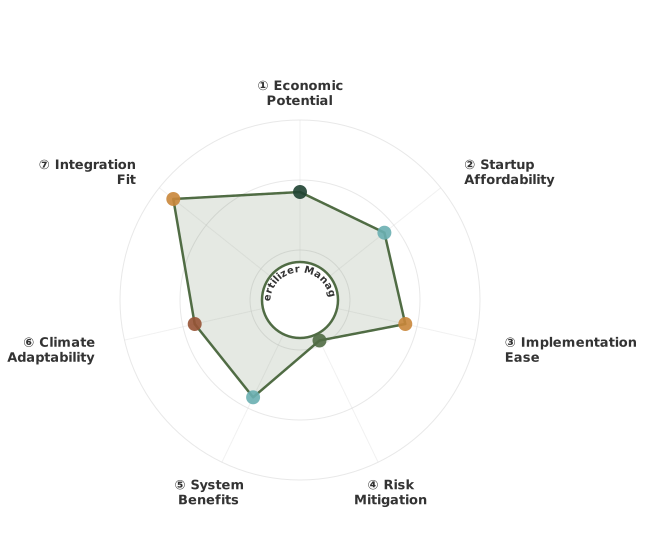
How These Traits Are Calculated
Trait dimensions are ordered clockwise starting from the top of the chart (12 o'clock position):
1. Economic Potential
Financial returns, annual value, and break-even timeline
WHAT: Evaluates financial viability by combining net annual value ($/ha from savings, income, and amortized harvests) with break-even timeline showing when practices pay for themselves.
WHY: Farmers need clear ROI understanding before committing resources. Fast payback (≤3 years) with strong returns (≥$300/ha) enables confident adoption, while long timelines (>10 years) restrict adoption to well-funded operations willing to wait for returns.
HOW: Calculated from net annual value in $/ha and break-even years. Exceptional (≥2.6): fast ROI ≤3 years + high value ≥$300/ha. Typical (1.8-2.5): moderate returns or longer timelines. Limited (<1.8): marginal economics or very long payback >10 years.
2. Startup Affordability
Initial investment costs and financial barrier to entry
WHAT: Measures financial barrier to entry through startup costs for equipment, infrastructure, consulting, and materials. Inverted scoring: lower costs = higher scores = more accessible adoption.
WHY: Affordability determines who can adopt. Low-cost practices (<$250/ha) enable widespread adoption across diverse scales, while high costs (>$2,500/ha) limit adoption to well-capitalized operations, creating barriers that slow regenerative transition.
HOW: Calculated from initial investment parsed from practice content. Inverted scoring: Exceptional (≥2.6): minimal investment <$250/ha. Typical (1.8-2.5): moderate costs $250-2,500/ha. Limited (<1.8): high barrier >$2,500/ha.
3. Implementation Ease
Learning curve and specialized knowledge required
WHAT: Measures how much learning, planning, and specialized knowledge a practice requires. Simpler practices with fewer steps score higher, while complex practices requiring extensive training or specialized resources score lower.
WHY: Complex practices create adoption barriers even when economically viable. Straightforward practices enable faster adoption and broader participation, while those requiring extensive training, timing precision, or specialized equipment limit who can succeed.
HOW: Evaluated by measuring documentation length and identifying complexity markers like location-specific requirements, seasonal timing windows, specialized skills, and dedicated equipment needs. Exceptional (≥2.6): straightforward practices with minimal prerequisites. Typical (1.8-2.5): moderate learning curve with some specialized needs. Limited (<1.8): steep learning curve requiring significant training or resources.
4. Risk Mitigation
Identified financial and ecological risk assessment
WHAT: Evaluates documented risks across financial (investment loss, market volatility) and ecological (crop failure, pest outbreaks) domains. Inverted scoring: fewer risks = higher scores.
WHY: Understanding risk exposure helps farmers make informed decisions. Low-risk practices allow confident implementation, while high-risk practices require careful planning and contingency resources. Risk transparency prevents costly failures.
HOW: Calculated from identified risks in practice content. Inverted scoring: Exceptional (≥2.6): ≤2 risks with manageable severity. Typical (1.8-2.5): 3-5 moderate risks. Limited (<1.8): 6+ risks or severe exposure.
5. System Benefits
How many ways the practice improves your land simultaneously
WHAT: Measures how many aspects of land health improve at once—carbon storage, soil quality, erosion control, water absorption, and biodiversity. Practices that improve multiple areas simultaneously create compounding benefits where each improvement reinforces the others.
WHY: The best practices solve multiple problems at once. For example, addressing erosion simultaneously builds carbon and improves water infiltration, creating a resilient system with positive feedback loops. Single-benefit approaches miss these compound transformation opportunities.
HOW: Evaluated across five key outcomes: carbon sequestration, soil organic matter increase, erosion reduction, water infiltration improvement, and biodiversity enhancement. Exceptional (≥2.6): high carbon storage (>8 t/ha/yr), improvements across 4-5 areas, transformative outcomes. Typical (1.8-2.5): moderate carbon (3-8 t/ha/yr), improvements across 2-3 areas. Limited (<1.8): modest impact (<3 t/ha/yr), single-area focus only.
6. Climate Adaptability
Geographic applicability across Köppen climate zones
WHAT: Evaluates geographic applicability by assessing how many Köppen climate zones successfully support a practice and what adaptation requirements are needed. Measures breadth of climates where farmers can implement with minimal to moderate modifications.
WHY: Universal practices working across diverse climates enable more farmers to adopt regenerative approaches. Practices limited to single climate types (only Mediterranean, only tropical) restrict adoption and slow global transition. Adaptability determines whether a practice serves niche regions or offers broad transformation.
HOW: LLM evaluation of regional success stories, Köppen zone coverage, and adaptation needs. Exceptional (≥2.6): 5+ zones or 4+ climate types, 3+ continents, minimal adaptation. Typical (1.8-2.5): 3-4 zones or 2-3 types, 2 continents, moderate adaptation. Limited (<1.8): 1-2 zones, single region, significant adaptation or highly specialized.
7. Integration Fit
How well this practice combines with others you're doing
WHAT: Measures how well a practice combines with other regenerative practices you might be doing. Some practices work as building blocks that make many other practices easier or more effective, while others work best on their own.
WHY: Practices that combine well with many others create more value on your farm. For example, cover cropping enables no-till, improves grazing, supports crop diversity, and helps water management—making all of them work better together. This helps you build a coherent system rather than juggling disconnected practices.
HOW: Evaluated by identifying which practices combine well and how strong those combinations are. 'Ideally Suited' means strong combinations where practices reinforce each other (practice A makes B easier, while B makes A more effective). 'Adequate' means complementary benefits that work well together. Exceptional (≥2.6): combines well with 6+ practices, serves as a building block. Typical (1.8-2.5): combines with 3-5 practices. Limited (<1.8): 1-2 practices or works best alone.
Going Deeper
1
WHY - The Benefits
The value proposition of regenerative fertilizer management extends far beyond simply replacing synthetic inputs. It's about transforming the entire agricultural system to be more self-sufficient, resilient, and profitable in the long term by harnessing natural processes.
The value proposition of regenerative fertilizer management extends far beyond simply replacing synthetic inputs. It's about transforming the entire agricultural system to be more self-sufficient, resilient, and profitable in the long term by harnessing natural processes.
WHY - The Benefits
The value proposition of regenerative fertilizer management extends far beyond simply replacing synthetic inputs. It's about transforming the entire agricultural system to be more self-sufficient, resilient, and profitable in the long term by harnessing natural processes.
The value proposition of regenerative fertilizer management extends far beyond simply replacing synthetic inputs. It's about transforming the entire agricultural system to be more self-sufficient, resilient, and profitable in the long term by harnessing natural processes.
Soil Health Benefits
Regenerative fertilizer management is intrinsically linked to building soil health. By focusing on organic matter and biology, it leads to significant improvements in:
- Soil Organic Matter (SOM): Increasing SOM, often at a rate of 0.1-0.5% per year, is a key outcome of regenerative practices that feed the soil. This improvement is directly linked to better soil structure, water-holding capacity, and nutrient availability.
- Water Infiltration and Retention: Improved soil structure and increased SOM create a sponge-like effect, increasing water infiltration by 40-70% and enhancing drought resilience. This reduces irrigation needs and minimizes runoff and erosion.
- Soil Structure and Aeration: A healthy soil biology promotes the formation of stable aggregates, improving pore space. This allows for better air circulation (aeration) and root penetration, essential for plant health. Deep-rooted plants then further enhance soil structure, creating a positive feedback loop.
- Biodiversity: A thriving soil ecosystem supports a vast array of beneficial microbes, fungi, earthworms, and other invertebrates. This diverse biological community is responsible for nutrient cycling, disease suppression, and overall soil function.
- Nutrient Cycling Efficiency: Regenerative systems aim to keep nutrients in the biological cycle, minimizing losses through leaching or volatilization. This means nutrients are available to plants when they need them, rather than being released in massive, potentially harmful, amounts.
Economic Benefits
Transitioning to regenerative fertilizer management offers substantial long-term economic advantages:
- Reduced Input Costs: A primary driver is the significant reduction or elimination of synthetic fertilizer expenses, which can constitute a large portion of operational costs. Savings can reach 50-100% of fertilizer budgets over 5-10 years.
- Yield Stabilization and Increase: While initial yield dips are possible during transition, well-managed regenerative systems tend to stabilize yields and often show increases over time as soil health improves. This stability makes farms more resilent to market fluctuations and environmental stress.
- Improved Water Use Efficiency: Enhanced infiltration reduces irrigation costs or reliance on rainfall during dry periods, particularly beneficial in water-scarce regions.
- Reduced Need for Pesticides/Herbicides: Healthier plants growing from healthier soil are more resistant to pests and diseases, potentially reducing the need for costly chemical treatments.
- Carbon Sequestration and Ecosystem Services: Regenerative practices can lead to carbon sequestration in the soil, which may open opportunities for earning revenue through carbon markets or ecosystem service payments, creating new income streams.
- Enhanced Farm Value: Farms with high soil organic matter and robust soil health are generally more attractive and valuable assets.
Regenerative Systems Fit
Regenerative fertilizer management is not a standalone practice but a foundational element that underpins and is supported by all five regenerative agriculture principles:
- Principle 1 (Minimize Soil Disturbance): Regenerative fertilizer management naturally aligns with minimizing soil disturbance. Practices like cover cropping and adding compost or manure are done with minimal soil mixing. By building healthy soil structure and biology, the need for tillage for nutrient management or seedbed preparation is reduced or eliminated. This preservation of soil structure is key to keeping nutrients locked in the soil and cycling them effectively.
- Principle 2 (Maximize Crop Diversity): Diverse cropping systems inherently enhance nutrient cycling. Legumes fix nitrogen, deep-rooted plants access immobile nutrients (like phosphorus or potassium) from deeper soil layers and return them to the surface via litter, and different plants create varied root exudates that feed diverse microbial communities. This complexity naturally buffers nutrient availability and reduces reliance on external inputs.
- Principle 3 (Keep Soil Covered): Maintaining continuous soil cover, whether with living plants or mulch, is critical for nutrient retention and cycling. Cover crops prevent nutrient leaching during fallow periods, and their residue provides organic matter that fuels soil biology. Mulch also conserves moisture, which is essential for microbial activity and nutrient uptake.
- Principle 4 (Maintain Living Roots): Living roots are central to regenerative fertilizer management. They continuously feed soil microbes with exudates, stimulating them to make nutrients available from organic matter and soil minerals. This living root system acts as a natural nutrient scavenger, preventing nutrients from being lost from the system and ensuring a steady supply to the crop.
- Principle 5 (Integrate Livestock): Livestock play a vital role in nutrient cycling in regenerative systems. Manure and urine are rich sources of nutrients and organic matter. When managed through rotational grazing or as composted inputs, they are recycled back into the soil, enriching it and reducing the need for purchased fertilizers. Livestock can also help manage cover crops, incorporating biomass into the soil.
The transition to regenerative fertilizer management is a journey, not an overnight switch. It requires a commitment to building soil biology and organic matter, which takes time. While initial steps might involve reducing synthetic inputs by 25-50% and increasing use of organic amendments, the long-term goal is a self-sustaining system where the soil provides the vast majority of plant nutrition. This transition period (often 3-7 years) is crucial. Cutting off synthetics too abruptly without sufficient biological capacity in the soil can lead to yield instability and financial hardship. A gradual, planned reduction, coupled with aggressive implementation of soil-building practices, is key to a successful and profitable transition.
Sources behind this view
Videos & Podcasts
-
Provides actionable steps for regenerative agronomy: balanced N:C inputs (molasses, humates), microbial teas, yeast metabolites, calcium, and effective seed treatments. Emphasizes scalability, systems
-
Adopting regenerative practices should start small and incrementally, focusing on soil health over short-term yields. Collaboration, strategic nutrient sourcing, and leveraging resources like Continuu
-
Transitioning to regenerative agriculture requires a whole-systems mindset, focusing on soil health principles: reduce tillage/compaction, increase diversity (plants, animals), eliminate bio-cides/fer

-
Regenerative agriculture emphasizes adaptive grazing with daily moves and high stock density to improve soil health, reduce synthetic inputs, and build soil carbon. Diversity, manure management, and c

 Community
-
Build healthy pasture soils by minimizing tillage, maintaining living roots and species diversity, and implementing proper grazing management. Livestock are essential for nutrient cycling and stimulat
Read more (opens in new window) smallfarms.cornell.edu -
Advocates for converting conventional land to permaculture, recommending a gradual transition with cover crops and farmer collaboration, aiming to reduce chemical inputs over 3 years as soil heals.
Read more (opens in new window) permies.com -
Strategic use of one-time tillage on dense cover crops can accelerate soil regeneration to achieve 12 inches of rich soil in two years or less, enhancing microbial activity and organic matter, and can
Read more (opens in new window) permies.com -
Regenerative gardening principles include minimizing soil disruption (avoiding excessive tilling), keeping soil covered with plants or organic matter, promoting plant diversity through crop rotation a
Read more (opens in new window) ucanr.edu
Research
-
Regenerative Agriculture: Restoring Ecosystems¢ Resilience and Productivity: A Review (opens in new window)
This study found: Regenerative agriculture builds soil health and ecosystem services through practices like no-till, cover crops, and diverse rotations. It increases soil organic matter, improves water infiltration, bo
-
Regenerative agriculture improves soil functioning and the complexity of soil food webs after a short transition period (opens in new window)
This study found: Five years of regenerative farming in horticultural systems boosted soil moisture, organic matter, and beneficial soil enzymes. Soil animal life shifted from mites/worms to larger invertebrates, indic
-
Building Soil Health and Fertility through Organic Amendments and Practices: A Review (opens in new window)
This study found: Using organic amendments (manures, composts, cover crops) and regenerative practices (no-till, crop diversity) restores soil health by increasing organic matter and beneficial microbes, leading to mor
-
Building Soil Health and Fertility through Organic Amendments and Practices: A Review (opens in new window)
This study found: Review of organic amendments (manures, compost, cover crops) and regenerative practices (no-till, crop diversity, agroecology) shows they restore soil health by increasing organic matter and beneficia
 From the Web
-
Healthy soil is foundational; organic inputs like compost, manure, and cover crops improve soil structure, water retention, and microbial activity. Legumes are key for nitrogen fixation through cover
-
Regenerative practices like no-till, cover crops, crop rotations, compost, and well-managed grazing build soil fertility and biodiversity, enhance carbon sequestration, and improve ecosystem health, c
-
Regenerative agriculture improves soil health, forage, and resilience, but adoption faces practical, political, and personal barriers, requiring education, adaptation, and a mindset shift.
2
WHERE - Regional Considerations
The principles of regenerative fertilizer management are universally applicable, but the specific methods for achieving them vary significantly based on regional climate, soil types, available resources, and established farming systems. Successful implementation requires...
The principles of regenerative fertilizer management are universally applicable, but the specific methods for achieving them vary significantly based on regional climate, soil types, available resources, and established farming systems. Successful implementation requires...
WHERE - Regional Considerations
The principles of regenerative fertilizer management are universally applicable, but the specific methods for achieving them vary significantly based on regional climate, soil types, available resources, and established farming systems. Successful implementation requires...
The principles of regenerative fertilizer management are universally applicable, but the specific methods for achieving them vary significantly based on regional climate, soil types, available resources, and established farming systems. Successful implementation requires...
Click Here to Look up your Region if you don't already know it
Humid Temperate Regions
Representative Locations: Southeastern United States, northern Europe (UK, Germany, Poland), eastern China, Japan, New Zealand
Climate Context: Warm to hot summers and cool to cold winters with moderate to high annual precipitation (75-150 cm or 30-60 inches) distributed relatively evenly. USDA Zones 6-8, Köppen Cfb/Cfa.
Considerations: High rainfall can lead to nutrient leaching if soil is not well-covered. Continuous living cover and diverse cover cropping are critical to capture and retain nutrients. Organic matter decomposition is generally vigorous, encouraging rapid nutrient release when soil is active. Availability of diverse livestock manure can be high. Focus on building soil structure to buffer against both heavy rainfall events and potential dry spells. Long growing seasons in parts of these regions allow for multiple cover crop successions.
Mediterranean Regions
Representative Locations: California, Mediterranean basin (Spain, Italy, Greece), central Chile, southwestern Australia, Western Cape South Africa
Climate Context: Hot, dry summers and mild, wet winters. Annual precipitation 40-90 cm (15-35 inches), highly seasonal. USDA Zones 8-10, Köppen Csa/Csb.
Considerations: The distinct dry summer is the primary challenge. Maintaining soil cover with dry-tolerant perennial forages or mulch is crucial to prevent erosion and conserve moisture. Nutrient cycling can slow dramatically during dry periods. Focus on drought-tolerant species for cover crops and cash crops, and practices that maximize water infiltration and retention (e.g., keyline design, contour farming). Compost and manure applications are highly effective, providing slow-release nutrients which mitigate the risk of leaching during intense winter rains.
Arid/Semi-Arid Regions
Representative Locations: Western USA, North Africa, Central Asia, Interior Australia
Climate Context: Low annual precipitation (<40 cm or 15 inches), high temperatures, short and often unpredictable growing season. USDA Zones 7-9, Köppen BSh/BSk.
Considerations: Water scarcity is the defining limiting factor. Every drop of water counts. Nutrient management must prioritize water-use efficiency. Organic matter additions are paramount as they dramatically increase soil water-holding capacity. Focusing on drought-tolerant cover crops and cash crops, and employing practices that minimize evaporation (no-till, mulching) are key. Nutrient release from organic matter needs careful balancing – too rapid release can lead to nutrient loss if water is insufficient to move them into plant-available forms. Grazing livestock can play a crucial role in nutrient cycling and biomass management, but requires sophisticated rotational systems to avoid overgrazing and soil degradation.
Cold Continental Regions
Representative Locations: Northern USA and Canada, Northern Europe, Northern Asia
Climate Context: Very short growing seasons, extreme summer heat, severe winter cold. USDA Zones 3-5, Köppen Dfa/Dfb.
Considerations: The short growing season limits the time for biological activity and nutrient cycling. Winter kill of cover crops is common, potentially leaving soil bare. Cover crop selection must focus on rapid establishment and cold tolerance if a winter-hardy mix is desired. Maximizing nutrient availability during the short growth period is key, often through well-managed compost and manure applications. Overwintering cover crops or significant winter residue is vital to keep soil covered and begin spring nutrient cycling quickly. Soil organic matter accumulation can be slower due to cooler temperatures inhibiting decomposition, requiring patience and consistent organic matter additions.
Subtropical Regions
Representative Locations: Southeastern USA, Southern China, Southern Brazil, Eastern Australia
Climate Context: Hot, humid summers and mild winters with generally ample rainfall. USDA Zones 9-11, Köppen Cfa/Cwa.
Considerations: Abundant rainfall and high temperatures can accelerate nutrient decomposition and leaching. Building robust soil structure and soil organic matter is critical to retain nutrients and prevent erosion. Continuous cover cropping is essential to scavenge nutrients and protect the soil surface. The long growing season allows for multiple cover crops and intensive grazing rotations, providing ample opportunities for nutrient cycling. Focus on species that thrive in heat and humidity, and manage organic matter to ensure timely nutrient release without excessive losses.
Tropical Regions
Representative Locations: Central America, Southeast Asia, East Africa, Northern Australia, Northern South America
Climate Context: High temperatures year-round, with distinct wet and dry seasons or consistent high rainfall. Köppen Af/Am/Aw.
Considerations: Rapid decomposition rates due to high heat and humidity can lead to quick nutrient release but also rapid loss if not captured. Building high soil organic matter is vital to create a nutrient reservoir. Managing soil moisture, especially during dry seasons, is key. Cover cropping, intercropping, and agroforestry systems are highly effective for nutrient retention and cycling. Livestock integration can be very effective due to year-round forage potential, but requires careful grazing management to prevent overstocking and soil degradation. Nutrient management in these regions often involves optimizing the timing of organic matter decomposition and plant uptake to coincide with high rainfall periods.
3
HOW - Implementation Process
Transitioning to regenerative fertilizer management is a multi-year process that involves a gradual shift in thinking and practices. The core idea is to build soil biological activity and organic matter to create a fertile, self-sustaining system.
Transitioning to regenerative fertilizer management is a multi-year process that involves a gradual shift in thinking and practices. The core idea is to build soil biological activity and organic matter to create a fertile, self-sustaining system.
HOW - Implementation Process
Transitioning to regenerative fertilizer management is a multi-year process that involves a gradual shift in thinking and practices. The core idea is to build soil biological activity and organic matter to create a fertile, self-sustaining system.
Transitioning to regenerative fertilizer management is a multi-year process that involves a gradual shift in thinking and practices. The core idea is to build soil biological activity and organic matter to create a fertile, self-sustaining system.
Prerequisites
Before starting the transition, assess your current situation:
- Understand Your Soil: Get soil tests done (chemical, physical, and ideally biological) to establish a baseline. Identify existing nutrient levels, soil organic matter percentage, pH, soil structure, and water infiltration rates.
- Identify Nutrient Gaps: Based on soil tests and crop needs, determine which nutrients are chronically deficient or at risk of loss.
- Assess Current Practices: Document your current fertilizer application methods (types, rates, timing, equipment), tillage practices, cover cropping history, and livestock integration.
- Commitment to Observation: Regenerative agriculture is adaptive. You must be willing to observe your soil and crops closely, learn from on-farm trials, and adjust your approach.
- Understand Your Goals: Are you aiming for complete elimination of synthetics, significant reduction, or improved efficiency? This will shape your transition strategy.
Phase 1: Building the Foundation (Years 1-2)
The initial focus is on establishing practices that lay the groundwork for improved soil biology and organic matter.
Action: 1. Reduce Synthetic Inputs: Begin by reducing application rates of synthetic fertilizers by 25-50%. Target areas where soil tests indicate sufficient existing levels or where nutrient loss is a known issue (e.g., excessive nitrogen in sandy soils). 2. Maximize Cover Cropping: Implement diverse cover crop mixes (10+ species) on all available acreage, including between cash crop rows or between grazing paddocks. Focus on species that: * Provide biomass for organic matter (e.g., oats, sorghum-sudangrass). * Fix atmospheric nitrogen (e.g., vetch, clover, peas). * Access deep nutrients (e.g., daikon radish, forage turnips). * Ensure continuous living roots where possible. 3. Minimize Soil Disturbance: Reduce tillage frequency and intensity. If conventional tillage is practiced, explore transition to zone tillage or reduced tillage. Transition to no-till as soon as feasible for establishing cover crops and cash crops. 4. Organic Matter Amending: Begin incorporating compost, well-aged manure, or other approved organic amendments. Apply these strategically based on soil test deficiencies and crop needs. Aim for initial applications of 5-10 tonnes/ha (2-4 tons/acre). 5. Livestock Integration (If Applicable): If livestock are part of your system, implement rotational grazing. This reduces compaction, distributes manure, and stimulates plant growth, all vital for nutrient cycling.
Equipment/Labor:
- Cover crop seed drill or broadcast seeder.
- Reduced tillage equipment (e.g., strip-till units, no-till planters).
- Compost/manure spreader (if applicable).
- Increased labor for observation and management adjustments.
Phase 2: Enhancing Biological Activity (Years 3-4)
With initial soil health improvements underway, focus shifts to amplifying biological processes and further reducing reliance on external inputs.
Action: 1. Further Reduce Synthetic Inputs: Aim for another 25-50% reduction in synthetic fertilizer rates. Monitor plant health and soil test results closely to ensure crops are not nutrient-stressed. 2. Increase Cover Crop Diversity & Biomass: Experiment with more species in cover crop mixes. Focus on maximizing biomass production to fuel soil biology and nutrient release. Consider overwintering mixes in colder climates. 3. Advanced Organic Amendments: Explore more targeted nutrient sources like rock phosphate, greensand, or fish emulsion if specific deficiencies persist and cannot be met by soil biology alone. Utilize biochar for long-term carbon sequestration and nutrient retention. 4. Livestock Synchronization: Fine-tune grazing rotations to optimize manure deposition and vegetative management of cover crops and pastures. 5. Soil Biology Enhancement: Consider targeted applications of microbial inoculants (e.g., mycorrhizal fungi, beneficial bacteria) if needed, though healthy organic matter and diverse plant life are the primary drivers.
Equipment/Labor:
- Equipment for terminating cover crops (roller-crimper, flail mower).
- Access to specialized organic amendments might require new suppliers.
- Increased need for soil testing and data analysis.
Phase 3: Towards Self-Sufficiency (Years 5-7+)
In this phase, the goal is to have the soil biology and organic matter providing the majority of nutrient needs.
Action: 1. Eliminate or Minimize Synthetic Inputs: Aim for complete elimination of synthetic fertilizers for macro-nutrients (N, P, K). Focus on micronutrient needs which might require soil-specific analyses and targeted organic sources. 2. Optimize Organic Matter Cycling: Fine-tune cover cropping and residue management to ensure steady nutrient release. Livestock integration is key to efficiently cycling nutrients from forage and manure. 3. Monitor and Adapt: Continue rigorous soil testing and plant monitoring. The system should become increasingly self-regulating. Any perceived nutrient deficiencies are likely signals of biological imbalance rather than outright lack, requiring management of the soil ecosystem. 4. Refine Systems: Evaluate yields, profitability, and soil health indicators. Make further adjustments to crop rotations, cover crop selections, and livestock management for optimal long-term productivity.
Equipment/Labor:
- Continuous monitoring equipment (soil probes, basic weather stations).
- Skills in reading soil biology indicators and adaptive management.
Transition Timeline & Phase-Out Strategy
The timeline for phasing out synthetic fertilizers is typically 3-7 years, depending on the starting point (soil health, farming history) and the intensity of regenerative practices implemented.
- Years 1-2: Reduce rates by 25-50%. Focus on building cover crop biomass and starting organic matter additions.
- Years 3-4: Aim for another 25-50% reduction. Monitor crop health closely. If yield suffers unexpectedly, hold synthetic application rate constant for another year while focusing more intensely on soil biology.
- Years 5-7: Eliminate most synthetic fertilizers. Focus on micronutrient needs and trace elements, which may still require targeted organic applications. For nitrogen, rely on legumes and symbiotic relationships.
Indicators you are ready to graduate:
- Soil organic matter consistently above 4-5%.
- Water infiltration rates at 2+ inches/hour (5+ cm/hour).
- Visible soil structure (aggregates, earthworm channels) and increased earthworm populations.
- Cash crop yields are stable or increasing compared to baseline synthetic years.
- Plants show good color and vigor without synthetic N applications during early growth stages.
- A diverse cover crop mix consistently thrives and provides significant biomass.
Cold Turkey Risks: Abruptly stopping synthetic fertilizers on depleted soils can lead to 10-40% yield drops in the first 1-2 years. This financial shock can be devastating. It can also leave soil vulnerable if cover cropping isn't robust enough to compensate for the immediate lack of available nutrients, leading to bare soil and erosion.
Sources behind this view
Videos & Podcasts
-
A North Dakota farmer achieved significant economic success through regenerative agriculture, reducing fertilizer (40-60%), eliminating seed treatments, fungicides, and crop burndown, and cutting herb

-
Soil Capital's strategy for regenerative transition: 1) Optimize agrochemical/pesticide use for 10-40% savings. 2) Invest savings in multi-species cover crops and crop rotation diversification (oats,
-
Transitioning away from synthetic fertilizers requires a gradual approach to avoid soil collapse. Using a small amount of fertility initially or lower C:N cover crops can help build biomass and suppor

-
Regenerative agriculture emphasizes adaptive grazing with daily moves and high stock density to improve soil health, reduce synthetic inputs, and build soil carbon. Diversity, manure management, and c
Research
-
Regenerative agriculture improves soil functioning and the complexity of soil food webs after a short transition period (opens in new window)
This study found: Five years of regenerative farming in horticultural systems boosted soil moisture, organic matter, and beneficial soil enzymes. Soil animal life shifted from mites/worms to larger invertebrates, indic
-
Transition to Regenerative Farming (opens in new window)
This study found: A 5-year case study shows a farm successfully transitioned to regenerative practices, reducing soil erosion and increasing wildlife by using cover crops, diversified rotations, and reduced tillage. Pr
-
Regenerative Agriculture: Restoring Ecosystems¢ Resilience and Productivity: A Review (opens in new window)
This study found: Regenerative agriculture builds soil health and ecosystem services through practices like no-till, cover crops, and diverse rotations. It increases soil organic matter, improves water infiltration, bo
-
Building Soil Health and Fertility through Organic Amendments and Practices: A Review (opens in new window)
This study found: Review of organic amendments (manures, compost, cover crops) and regenerative practices (no-till, crop diversity, agroecology) shows they restore soil health by increasing organic matter and beneficia
From the Web
-
Transitioning off synthetic fertilizers in pasture systems involves building soil aggregation and relying on nitrogen from mineralization and legumes, with a recommended gradual reduction strategy (e.
4
Know the Debate
Regenerative fertilizer management shifts focus from solely feeding plants to nurturing soil biology for long-term fertility. This transition varie...
Know the Debate
Regenerative fertilizer management shifts focus from solely feeding plants to nurturing soil biology for long-term fertility. This transition varie...
Regenerative fertilizer management shifts focus from solely feeding plants to nurturing soil biology for long-term fertility. This transition varies significantly based on location and farming system. In humid regions with ample rainfall, nutrient cycling is rapid, but cover crops are essential to prevent losses. Arid regions require intense focus on water retention and slow-release nutrients from organic matter. Cold climates face shorter growing seasons, demanding efficient nutrient use, while tropical regions must manage rapid decomposition. The pace of transitioning away from synthetic inputs also varies, typically taking 3-7 years with potential yield dips in the early stages, depending on soil health and management intensity. Labor commitment shifts towards observation and adaptive management, while equipment needs may include specialized cover crop and organic amendment tools.
How long does it take to transition away from synthetic fertilizers?
Gradual transition over 3-7 years
Academic literature suggests a phased reduction of synthetic inputs over 3-7 years, allowing soil biology to adapt and meet crop needs, supported by robust soil-building practices.
Sources behind this view
Sources behind this view
Videos & Podcasts
-
Achieving a fertilizer-free system requires building soil organic matter to 4% for efficient nutrient cycling. A strategy involves mitigating synthetic nitrogen's negative impacts and leveraging worm castings to make nutrients biologically available and prevent leaching.

Research
-
Nitrogen in cereal systems: Opportunities for sustainable agricultural growth (opens in new window)
This study found: Managing nitrogen is vital for feeding the world and protecting the environment. The goal is to balance the nitrogen going into and out of our farms. Soil organic matter is a key sign of healthy soil and a source of nitrogen for plants. Farmers can improve yields and use nitrogen more efficiently by adopting smart farming methods. These include planting at higher densities, using soil tests to guide fertilizer amounts, applying fertilizer in stages, using irrigation for fertilizer delivery (fertigation), and tailoring nitrogen use to specific field areas. New fertilizer types, like those that release nutrients slowly or use tiny particles (nano-fertilizers), can also help. It's important to reduce the misuse of nitrogen fertilizers and promote policies that build soil health for long-term farm success.
-
Building Soil Health and Fertility through Organic Amendments and Practices: A Review (opens in new window)
This study found: This review highlights how using natural organic materials and farming methods that build soil can restore soil health and fertility, which is crucial for sustainable farming and feeding the world. Intensive farming has damaged soils, but practices like adding animal manures, compost, cover crops, and crop residues, along with techniques such as no-till farming, diverse crop rotations, and integrating trees and livestock, can reverse this damage. These methods provide nutrients slowly, increase soil organic matter, and boost beneficial soil microbes. While it takes time to see the full benefits of rebuilding soil, these integrated approaches that reduce soil disturbance and keep the ground covered with living plants can significantly improve how well our agricultural systems function, leading to more resilient and productive farms.
From the Web
-
Organic farming relies on healthy soil built with cover crops, crop rotations, compost, and manure. These practices enhance soil structure, water infiltration, and nutrient availability. Nitrogen management is key, with C:N ratios influencing nutrient release. Building soil organic matter and using soil tests are crucial for success.
5-10 years with potential early yield dips
Field practitioners often observe that a full transition can take 5-10 years, with initial yield dips of 10-40% in the first 1-3 years if not carefully managed, emphasizing a gradual approach due to residual soil issues.
Sources behind this view
Sources behind this view
Videos & Podcasts
-
Build healthy soil and fertility using crop rotations and returning animal manures (composted or raw). Avoid chemical fertilizers and pesticides. Cover slurry stores to reduce emissions and avoid nitrogen fertilizer.

-
Achieving a fertilizer-free system requires building soil organic matter to 4% for efficient nutrient cycling. A strategy involves mitigating synthetic nitrogen's negative impacts and leveraging worm castings to make nutrients biologically available and prevent leaching.
-
To determine when to eliminate commercial fertilizers, use Haney and PLFA soil tests, and conduct on-farm trials with zero-input and half-rate strips to assess economic gain.
Making Sense of the Differences
The timeline for transitioning away from synthetic fertilizers varies significantly based on starting soil health, the intensity of regenerative practices employed, and the farmer's risk tolerance. Regions with already-degraded soils may require longer periods for biology to recover, while farms with active soil health programs may transition faster. A gradual, adaptive approach over 3-10 years, focusing on building soil biology alongside reducing inputs, is generally safer than an abrupt shift to minimize yield risk and financial strain.
Should nitrogen be applied as nitrate or ammonium in regenerative systems?
Ammonium preferred for soil health
Advocates for ammonium-based nitrogen because it is less mobile, less prone to leaching, and beneficial for soil microbes, aligning with regenerative goals.
Sources behind this view
Sources behind this view
Videos & Podcasts
-
Effective soil management involves remediating pesticide residues with microbial inoculants, rethinking phosphorus applications (avoiding soluble forms at planting), prioritizing ammonium/amino acid nitrogen over nitrate, and managing carbon/CO2 supply and calcium timing for optimal yields.

Research
-
Nitrogen in cereal systems: Opportunities for sustainable agricultural growth (opens in new window)
This study found: Managing nitrogen is vital for feeding the world and protecting the environment. The goal is to balance the nitrogen going into and out of our farms. Soil organic matter is a key sign of healthy soil and a source of nitrogen for plants. Farmers can improve yields and use nitrogen more efficiently by adopting smart farming methods. These include planting at higher densities, using soil tests to guide fertilizer amounts, applying fertilizer in stages, using irrigation for fertilizer delivery (fertigation), and tailoring nitrogen use to specific field areas. New fertilizer types, like those that release nutrients slowly or use tiny particles (nano-fertilizers), can also help. It's important to reduce the misuse of nitrogen fertilizers and promote policies that build soil health for long-term farm success.
Nitrate a concern due to mobility
Nitrate forms of nitrogen are highly mobile, prone to leaching, and can negatively impact beneficial soil microbes, making ammonium a preferred choice for minimizing environmental losses and supporting soil biology.
Sources behind this view
Sources behind this view
Videos & Podcasts
-
Effective soil management involves remediating pesticide residues with microbial inoculants, rethinking phosphorus applications (avoiding soluble forms at planting), prioritizing ammonium/amino acid nitrogen over nitrate, and managing carbon/CO2 supply and calcium timing for optimal yields.
Research
-
Nitrogen in cereal systems: Opportunities for sustainable agricultural growth (opens in new window)
This study found: Managing nitrogen is vital for feeding the world and protecting the environment. The goal is to balance the nitrogen going into and out of our farms. Soil organic matter is a key sign of healthy soil and a source of nitrogen for plants. Farmers can improve yields and use nitrogen more efficiently by adopting smart farming methods. These include planting at higher densities, using soil tests to guide fertilizer amounts, applying fertilizer in stages, using irrigation for fertilizer delivery (fertigation), and tailoring nitrogen use to specific field areas. New fertilizer types, like those that release nutrients slowly or use tiny particles (nano-fertilizers), can also help. It's important to reduce the misuse of nitrogen fertilizers and promote policies that build soil health for long-term farm success.
Making Sense of the Differences
Ammonium forms of nitrogen are generally preferred in regenerative systems over nitrate. Ammonium binds to soil colloids, reducing leaching potential, and is favored by many soil microbes. Nitrate, being highly mobile, can be easily lost through leaching or denitrification, and its presence can reduce plant reliance on symbiotic soil biology. This mechanistic difference makes ammonium a more aligned choice for regenerative fertility strategies aimed at efficient nutrient cycling and minimizing environmental losses.
Do synthetic fertilizers harm beneficial soil microbes like mycorrhizae?
Synthetics suppress beneficial microbes
Research and farmer observations indicate that synthetic nitrogen fertilizers can suppress beneficial soil microbes, including mycorrhizal fungi, due to reduced plant reliance on these symbiotic relationships.
Sources behind this view
Sources behind this view
Videos & Podcasts
-
Focuses on managing soil carbon via root exudates, minimizing disturbance to protect soil aggregates formed by mycorrhizal fungi, and remineralizing soils. Discusses nitrogen fixation by bacteria requiring trace minerals (Mo, Fe, Ni) and the inefficiency of synthetic fertilizers.
-
Diversity increases soil carbon and reduces fertilizer needs, unlike conventional research in sterile environments that shows plant response to synthetic fertilizers due to absent soil microbiomes. Organic practices and compost support mycorrhizal fungi.

Research
-
Building Soil Health and Fertility through Organic Amendments and Practices: A Review (opens in new window)
This study found: This review highlights how using natural organic materials and farming methods that build soil can restore soil health and fertility, which is crucial for sustainable farming and feeding the world. Intensive farming has damaged soils, but practices like adding animal manures, compost, cover crops, and crop residues, along with techniques such as no-till farming, diverse crop rotations, and integrating trees and livestock, can reverse this damage. These methods provide nutrients slowly, increase soil organic matter, and boost beneficial soil microbes. While it takes time to see the full benefits of rebuilding soil, these integrated approaches that reduce soil disturbance and keep the ground covered with living plants can significantly improve how well our agricultural systems function, leading to more resilient and productive farms.
-
Perspective Chapter: Conservation and Enhancement of Soil Health for Sustainable Agriculture (opens in new window)
This study found: This chapter explains that using too many synthetic fertilizers in farming can harm soil health and reduce crop yields. It argues that we urgently need to improve our soil and environment. The authors suggest that using natural fertilizers like compost, manure, green manure, and crop residues are sustainable ways to feed the soil and protect the environment. The chapter will cover why healthy soil is important, how farming practices can affect it, and ways to make soil healthier for better and more sustainable crop production.
Synthetics can reduce reliance and function of mycorrhizae
Studies show synthetic nitrogen can decrease mycorrhizal colonization and alter microbial communities. Regenerative systems prioritize feeding soil organic matter to maintain vigorous microbial populations.
Sources behind this view
Sources behind this view
Videos & Podcasts
-
Focuses on managing soil carbon via root exudates, minimizing disturbance to protect soil aggregates formed by mycorrhizal fungi, and remineralizing soils. Discusses nitrogen fixation by bacteria requiring trace minerals (Mo, Fe, Ni) and the inefficiency of synthetic fertilizers.
-
Diversity increases soil carbon and reduces fertilizer needs, unlike conventional research in sterile environments that shows plant response to synthetic fertilizers due to absent soil microbiomes. Organic practices and compost support mycorrhizal fungi.
Research
-
Building Soil Health and Fertility through Organic Amendments and Practices: A Review (opens in new window)
This study found: This review highlights how using natural organic materials and farming methods that build soil can restore soil health and fertility, which is crucial for sustainable farming and feeding the world. Intensive farming has damaged soils, but practices like adding animal manures, compost, cover crops, and crop residues, along with techniques such as no-till farming, diverse crop rotations, and integrating trees and livestock, can reverse this damage. These methods provide nutrients slowly, increase soil organic matter, and boost beneficial soil microbes. While it takes time to see the full benefits of rebuilding soil, these integrated approaches that reduce soil disturbance and keep the ground covered with living plants can significantly improve how well our agricultural systems function, leading to more resilient and productive farms.
-
Perspective Chapter: Conservation and Enhancement of Soil Health for Sustainable Agriculture (opens in new window)
This study found: This chapter explains that using too many synthetic fertilizers in farming can harm soil health and reduce crop yields. It argues that we urgently need to improve our soil and environment. The authors suggest that using natural fertilizers like compost, manure, green manure, and crop residues are sustainable ways to feed the soil and protect the environment. The chapter will cover why healthy soil is important, how farming practices can affect it, and ways to make soil healthier for better and more sustainable crop production.
Making Sense of the Differences
Numerous academic studies and farmer observations suggest that synthetic nitrogen fertilizers can negatively impact beneficial soil microbes, particularly mycorrhizal fungi. When plants have easy access to synthetic nitrogen, they may reduce their reliance on symbiotic fungi, leading to lower colonization rates and diminished function. Regenerative systems aim to rebuild these natural partnerships by nurturing the soil ecosystem with organic matter, which provides a consistent food source for microbes and allows them to effectively support plant nutrition.
5
HOW MUCH - Costs & Investment
Note: Costs shown in USD; multiply by local labor and material cost indices for your region. Labor costs vary significantly internationally. This section details costs associated with transitioning fertilizer management.
Note: Costs shown in USD; multiply by local labor and material cost indices for your region. Labor costs vary significantly internationally. This section details costs associated with transitioning fertilizer management.
HOW MUCH - Costs & Investment
Note: Costs shown in USD; multiply by local labor and material cost indices for your region. Labor costs vary significantly internationally. This section details costs associated with transitioning fertilizer management.
Note: Costs shown in USD; multiply by local labor and material cost indices for your region. Labor costs vary significantly internationally. This section details costs associated with transitioning fertilizer management.
Note: All costs are based on recent US economic data (2024-2026) and may vary substantially by region based on local labor rates, material costs, and regional transport logistics for organic amendments.
Initial Establishment & Soil Foundation
Transitioning to biological nutrient management requires an initial "biological startup" phase. This includes base soil testing, potential application of high-quality compost to jumpstart the soil microbiome, and the establishment of high-biomass cover crop cocktails.
- Small Scale (Under 50 acres (20 ha)): Expect to spend $150–$350 per acre ($371–$865/ha). Small operations often rely on high-priced boutique compost blends and smaller seed volumes where bulk discounts are unavailable. Soil testing and consulting fees often represent 15% of this initial cost.
- Mid-Size (50–500 acres (20–202 ha)): Costs typically range from $100–$220 per acre ($247–$544/ha). Farmers can negotiate bulk pricing on seed and often source manure from local animal systems, though transportation logistics begin to impact the bottom line.
- Large Scale (500+ acres): Capital expenditure ranges from $60–$160 per acre ($148–$395/ha). Scale allows for direct sourcing of seed and utilizing on-farm machinery for large-scale, cost-effective compost tea or solid manure application. Costs here are driven more by equipment calibration and logistical efficiency than by input purchase price.
Annual Maintenance & Operational Costs
Once the biological cycle is established, costs shift to the maintenance of soil health through cover cropping, potential trace mineral supplementation, and biological inoculants.
- Small Scale: Operational costs range from $80–$180 per acre ($198–$445/ha) annually. Labor is a significant factor here; manual or semi-automated application of liquid organic nutrients is time-intensive.
- Mid-Size: Operational costs typically fall between $50–$130 per acre ($124–$321/ha). Investments are centered on specialized planting equipment (no-till drills) and maintaining consistent cover crop biomass to suppress weeds and cycle nitrogen.
- Large Scale: Costs range from $30–$90 per acre ($74–$222/ha). At this scale, the primary expense is the fuel and time for cover crop planting and managing large, integrated biological systems. Fertilizer synthetic reduction savings are most pronounced here, often offsetting the maintenance costs by year 4.
Most Spend: The middle 60% of operations typically invest $120–$280 per acre ($297–$692/ha) for initial setup and $60–$110 per acre ($148–$272/ha) for ongoing annual maintenance. This expenditure covers professional soil analysis, high-quality diverse seed mixes, and annual organic amendments.
Why the Range?: Cost variation is driven primarily by the farm's current soil biological baseline and the availability of local waste streams (e.g., dairy manure or municipal compost). Farmers who have existing equipment for no-till or manure spreading see costs at the lower end of the range, while those needing to lease specialized equipment or purchase high-cost biological inoculants for poor/degraded soils will see costs at the upper end.
Sources behind this view
Videos & Podcasts
-
Transitioning to regenerative farming costs $75k-$140k over two years but saves money compared to conventional nitrogen expenses ($195k/year). Start small (50-100 acres) with cover crops (hairy vetch,
-
Soil Capital's strategy for regenerative transition: 1) Optimize agrochemical/pesticide use for 10-40% savings. 2) Invest savings in multi-species cover crops and crop rotation diversification (oats,
-
Transitioning to regenerative agriculture can avoid the 'J curve' by first optimizing agrochemical use and reducing tillage intensity to generate savings. These freed-up funds are then reinvested grad
-
Transitioning to regenerative agriculture and biodynamics shifts costs from synthetic inputs to compost and labor, requiring a long-term view but ultimately improving soil health, carbon sequestration
6
REWARDS AND RISKS - Economics & Risk Factors
REWARDS AND RISKS - Economics & Risk Factors
The transition to a biological fertilizer management system is an investment in capital-to-biology substitution.
Economic Scenarios
- Best Case Scenario: By year 4, synthetic fertilizer expenditures are slashed by 90–100%. With soil organic matter increasing by 0.5–1% annually, wheat or corn yields return to baseline or increase by 5–10% due to higher nutrient uptake efficiency. The net profit margin increases by $150–$300 per acre ($371–$741/ha) annually once system status shifts to self-sustaining cycling.
- Typical Case Scenario: Synthetic costs drop by 70–80% over 6 years. Productivity stabilizes after a 2-year lag. Farmers see a "break-even" phase between years 4 and 5, where the money saved on $200–$400 per acre ($494–$988/ha) of synthetic fertilizer matches the cost of organic amendments and cover crop seeds. Beyond year 5, the farm achieves a consistent net gain of $80–$150 per acre ($198–$371/ha) in lower inputs.
- Worst Case Scenario: Rapid "cold turkey" cessation of synthetic inputs on low-biology soils results in a 20–40% yield collapse in years 1–3. Total financial exposure can exceed $400 per acre ($988/ha) in lost revenue without producing sufficient savings to compensate. Recovery to stable yields takes 7+ years, requiring a re-insertion of partial synthetic fertilizers to maintain cash flow.
Market Factors Profitability is heavily influenced by the "commodity trap"—where conventional yields dictate floor prices. Farms that transition to biological systems often qualify for "soil-health-verified" supply chains, which can add a $0.25–$0.75 per bushel premium, partially hedging against transition-year yield volatility. Conversely, volatility in the cost of organic dry matter (manure/compost) can spike operational costs by 20% in drought years when forage and litter supplies tighten regionally.
Risk Mitigation
- Staged Transition: Instead of zero-synthetic conversion, reduce synthetic rates by 20% annually while scaling up organic amendments. Cost: Pro-rated reduction strategy keeps revenue stable, requiring minimal upfront "emergency" capital.
- Comprehensive Soil Auditing: Spend $5–$15 per acre ($12–$37/ha) on advanced biological soil testing (e.g., PLFA or Haney tests) before the transition. This prevents the "guesswork" that leads to over-application of unnecessary amendments, saving $40–$100 per acre ($99–$247/ha) in wasted input costs.
- Equipment Leasing: Utilize custom hire for no-till planting or manure spreading in the first 3 years to avoid locking $50,000–$150,000 in capital before the biological system confirms its viability.
Transition Period Risks
- Yield Depression: The risk of a 10–40% yield drop is highest in the first 36 months. Mitigation involves maintaining 60% of baseline nitrogen levels for the first 24 months to bridge the gap while soil microbial populations expand.
- Input Timing: Inadequate biomass production in the first two years often leads to nutrient leaching. Ensuring cover crops are established before the main crop is harvested is essential; ineffective establishment can cost $50–$100 per acre ($124–$247/ha) in wasted seed and lost biological opportunity.
Sources behind this view
Videos & Podcasts
-
Soil Capital's strategy for regenerative transition: 1) Optimize agrochemical/pesticide use for 10-40% savings. 2) Invest savings in multi-species cover crops and crop rotation diversification (oats,
-
A North Dakota farmer achieved significant economic success through regenerative agriculture, reducing fertilizer (40-60%), eliminating seed treatments, fungicides, and crop burndown, and cutting herb
-
Transitioning to regenerative farming costs $75k-$140k over two years but saves money compared to conventional nitrogen expenses ($195k/year). Start small (50-100 acres) with cover crops (hairy vetch,
-
Regenerative agriculture emphasizes adaptive grazing with daily moves and high stock density to improve soil health, reduce synthetic inputs, and build soil carbon. Diversity, manure management, and c
Research
-
Transition to Regenerative Farming (opens in new window)
This study found: A 5-year case study shows a farm successfully transitioned to regenerative practices, reducing soil erosion and increasing wildlife by using cover crops, diversified rotations, and reduced tillage. Pr
-
Regenerative Agriculture: Restoring Ecosystems¢ Resilience and Productivity: A Review (opens in new window)
This study found: Regenerative agriculture builds soil health and ecosystem services through practices like no-till, cover crops, and diverse rotations. It increases soil organic matter, improves water infiltration, bo
-
Building Soil Health and Fertility through Organic Amendments and Practices: A Review (opens in new window)
This study found: Review of organic amendments (manures, compost, cover crops) and regenerative practices (no-till, crop diversity, agroecology) shows they restore soil health by increasing organic matter and beneficia
-
Building Soil Health and Fertility through Organic Amendments and Practices: A Review (opens in new window)
This study found: Using organic amendments (manures, composts, cover crops) and regenerative practices (no-till, crop diversity) restores soil health by increasing organic matter and beneficial microbes, leading to mor
7
WHO - Labor & Expertise
Transitioning fertilizer management in regenerative agriculture requires a shift in skill sets and a greater emphasis on observation and understanding of soil biology. Skill Requirements:
Transitioning fertilizer management in regenerative agriculture requires a shift in skill sets and a greater emphasis on observation and understanding of soil biology. Skill Requirements:
WHO - Labor & Expertise
Transitioning fertilizer management in regenerative agriculture requires a shift in skill sets and a greater emphasis on observation and understanding of soil biology. Skill Requirements:
Transitioning fertilizer management in regenerative agriculture requires a shift in skill sets and a greater emphasis on observation and understanding of soil biology. Skill Requirements:
Skill Requirements:
- Soil Biology Acumen: Understanding the roles of bacteria, fungi, protozoa, and nematodes in nutrient cycling, soil structure formation, and plant health.
- Cover Crop Management: Knowledge of diverse cover crop species, their growth habits, nutrient needs, termination methods, and synergistic effects in mixes.
- Organic Amendment Expertise: Understanding the nutrient content, decomposition rates, and potential impacts of various organic materials (compost, manure, biochar, etc.) on soil biology and nutrient availability.
- Adaptive Management: The ability to observe soil and crop indicators (color, vigor, root depth, earthworm activity) and adjust management practices accordingly, rather than following rigid synthetic application schedules.
- Nutrient Budgeting (Biological): Learning to estimate nutrient release from organic matter and cover crops rather than strictly accounting for purchased inputs.
- Integrated Pest & Disease Management: Recognizing that healthy soil biology contributes to plant resilience, reducing reliance on chemical controls.
Labor Considerations:
- Increased Observation Time: Regenerative systems require more frequent and detailed observation of fields, crops, and soil. This is not necessarily "more labor" but "different, more strategic labor."
- Cover Crop Establishment/Termination: Planting and timely termination of cover crops can require significant labor, especially with complex mixes or when using specific equipment like roller-crimpers.
- Organic Amendment Application: If sourcing or applying compost or manure, this can be labor-intensive or require specialized equipment.
- Data Collection: Recording soil test results, weather data, cover crop performance, and crop yields is crucial for adaptive management.
Expertise Acquisition:
- Farmer-to-Farmer Networks: Engaging with experienced regenerative farmers through workshops, field days, and online forums is invaluable.
- Consultants: Hiring regenerative agriculture consultants can provide tailored guidance, especially during the initial transition phases.
- Extension Services: Local agricultural extension offices may offer resources on soil health and cover cropping.
- Research Institutions: Organizations like the Rodale Institute, Savory Institute, and various universities conduct and disseminate research on regenerative practices.
- Online Courses & Webinars: Numerous platforms offer educational content on soil health and regenerative nutrient management.
International Labor Cost Variations: In regions with lower labor costs, the implementation of more labor-intensive practices (e.g., detailed cover crop management, manual application of amendments) may be more economically viable compared to regions with high labor costs where efficiency through machinery is paramount. This highlights the need to tailor the pace and methods of transition to local economic realities.
Sources behind this view
Videos & Podcasts
-
Transitioning to regenerative agriculture requires a whole-systems mindset, focusing on soil health principles: reduce tillage/compaction, increase diversity (plants, animals), eliminate bio-cides/fer
-
Advocates for a gradual transition to regenerative practices, emphasizing soil health, diverse crop rotations, livestock integration, and smart nutrient management. Stresses the need for farmers to 'e

-
Regenerative agriculture emphasizes adaptive grazing with daily moves and high stock density to improve soil health, reduce synthetic inputs, and build soil carbon. Diversity, manure management, and c
-
Adopting regenerative practices should start small and incrementally, focusing on soil health over short-term yields. Collaboration, strategic nutrient sourcing, and leveraging resources like Continuu
Research
-
Regenerative Agriculture: Restoring Ecosystems¢ Resilience and Productivity: A Review (opens in new window)
This study found: Regenerative agriculture builds soil health and ecosystem services through practices like no-till, cover crops, and diverse rotations. It increases soil organic matter, improves water infiltration, bo
-
Building Soil Health and Fertility through Organic Amendments and Practices: A Review (opens in new window)
This study found: Review of organic amendments (manures, compost, cover crops) and regenerative practices (no-till, crop diversity, agroecology) shows they restore soil health by increasing organic matter and beneficia
-
Building Soil Health and Fertility through Organic Amendments and Practices: A Review (opens in new window)
This study found: Using organic amendments (manures, composts, cover crops) and regenerative practices (no-till, crop diversity) restores soil health by increasing organic matter and beneficial microbes, leading to mor
-
Challenges, strategies and research priorities in legume-based nitrogen management for organic small grain producers in the Northeastern US (opens in new window)
This study found: Northeastern organic grain farmers face challenges with nitrogen management costs, access, and predicting nutrient release from cover crops. Lack of livestock integration and diverse markets hinder ef
8
EQUIPMENT - Tools & Infrastructure
Transitioning to regenerative fertilizer management often involves adapting existing equipment or investing in new tools that support soil health and organic matter cycling. Key Equipment & Infrastructure:
Transitioning to regenerative fertilizer management often involves adapting existing equipment or investing in new tools that support soil health and organic matter cycling. Key Equipment & Infrastructure:
EQUIPMENT - Tools & Infrastructure
Transitioning to regenerative fertilizer management often involves adapting existing equipment or investing in new tools that support soil health and organic matter cycling. Key Equipment & Infrastructure:
Transitioning to regenerative fertilizer management often involves adapting existing equipment or investing in new tools that support soil health and organic matter cycling. Key Equipment & Infrastructure:
Key Equipment & Infrastructure:
-
Cover Crop Seeding Equipment:
- No-Till Seed Drill: Essential for precise seeding of cover crops into standing cash crops or residue without prior tillage. Different types exist (e.g., with single disc openers, double disc openers) suited for various conditions.
- Broadcast Seeder (with integration): Can be used for some cover crop mixes, but often requires a subsequent light incorporation pass or reliance on rainfall for seed-to-soil contact. Often paired with a cultipacker for better results.
- Aerial Application: For very large acreage or difficult terrain, aircraft can be used for cover crop seeding, though precision can be lower.
-
Cover Crop Termination Equipment:
- Roller-Crimper: The preferred tool for terminating cover crops in a no-till system to create a mulch mat that suppresses weeds and conserves moisture. Requires proper timing and mechanical adjustment.
- Flail Mower: Can be used to chop cover crops, but may leave larger residue that can interfere with planting unless adjusted carefully.
- Herbicides: While regenerative systems aim to eliminate herbicides, they may be used strategically as a one-time transition tool for termination if other methods fail.
-
Organic Amendment Application Equipment:
- Compost/Manure Spreaders: Standard farm equipment, but precision spreaders are valuable for uniform application and accurate nutrient budgeting.
- Loader Wagons/Skid Steers: For loading amendments onto spreaders.
- Air Spreaders: For lighter, finer organic materials or micronutrients.
-
Reduced Tillage/No-Till Planters & Drills:
- Critical for establishing cash crops into cover crop residue without disturbing the soil. Regenerative systems prioritize equipment that minimizes soil disruption and preserves soil structure.
-
Soil Health Monitoring Tools:
- Soil Penetrometer: Measures soil compaction at different depths, helping identify hardpans.
- Infiltration Rings: Measure the rate at which water enters the soil, a key indicator of soil structure.
- Soil Test Kits: For basic on-farm N, P, K levels, and pH, though lab analysis remains crucial for comprehensive nutrient profiling.
- Earthworm Counting Tools: A spade for digging soil cores to count earthworms per unit area.
-
Livestock Management Equipment (if applicable):
- Electric Fencing: For rotational grazing, creating paddocks, and managing livestock impact.
- Water Systems: Reliable water access is essential for livestock, especially when managing grazing rotations.
Infrastructure:
- Composting Facilities: On-farm composting setups can convert crop residues, animal manure, and food waste into valuable soil amendments.
- Storage for Organic Amendments: Space to store compost, manure, or purchased amendments.
- Grain Storage & Handling: If diversifying crop rotations to include cover crops harvested for seed or as cash crops, appropriate storage and handling are needed.
International Sourcing & Cost Considerations:
- Equipment availability varies by region. Some specialized no-till equipment may be more common in North America and Australia, requiring import or local adaptation in other regions.
- The cost of equipment can be a significant barrier in developing economies. Grants, cost-share programs, and farmer cooperatives can help mitigate these costs.
- DIY modifications or adaptations of existing equipment are common in regions with lower capital availability.
- Consider the availability of skilled technicians for repairing specialized equipment.
Sources behind this view
Videos & Podcasts
-
Implementing no-till and cover crops is achievable with adapted equipment, focusing on planter modifications, seed firmers, and sprayers for management. The speaker shares personal experiences demonst

-
Regenerative agriculture emphasizes adaptive grazing with daily moves and high stock density to improve soil health, reduce synthetic inputs, and build soil carbon. Diversity, manure management, and c
-
Transitioning to regenerative agriculture requires a whole-systems mindset, focusing on soil health principles: reduce tillage/compaction, increase diversity (plants, animals), eliminate bio-cides/fer
-
Century is integrating soil disturbance reduction (saving £30-£100+/hectare), cover crops, and input reduction (improving nitrogen use efficiency to 92%) across its farms, utilizing grants and explori

Research
-
Building Soil Health and Fertility through Organic Amendments and Practices: A Review (opens in new window)
This study found: Review of organic amendments (manures, compost, cover crops) and regenerative practices (no-till, crop diversity, agroecology) shows they restore soil health by increasing organic matter and beneficia
-
Building Soil Health and Fertility through Organic Amendments and Practices: A Review (opens in new window)
This study found: Using organic amendments (manures, composts, cover crops) and regenerative practices (no-till, crop diversity) restores soil health by increasing organic matter and beneficial microbes, leading to mor
9
COMPATIBLE PRACTICES - Integration Opportunities
Regenerative fertilizer management is most effective when integrated with other regenerative practices that build soil health, increase nutrient cycling, and reduce reliance on external inputs.
Regenerative fertilizer management is most effective when integrated with other regenerative practices that build soil health, increase nutrient cycling, and reduce reliance on external inputs.
COMPATIBLE PRACTICES - Integration Opportunities
Regenerative fertilizer management is most effective when integrated with other regenerative practices that build soil health, increase nutrient cycling, and reduce reliance on external inputs.
Regenerative fertilizer management is most effective when integrated with other regenerative practices that build soil health, increase nutrient cycling, and reduce reliance on external inputs.
Diverse Cover Cropping
- Integration: This is the cornerstone of regenerative nutrient management. Cover crops provide biomass for organic matter, fix nitrogen, scavenge nutrients, and feed soil biology.
- Synergy Benefit: Maximizing cover crop biomass directly fuels soil organic matter to release nutrients naturally. Diverse mixes provide a wider range of root exudates, supporting a more robust nutrient cycling engine.
Minimizing Soil Disturbance (No-Till/Reduced Tillage)
- Integration: Tillage disrupts soil structure, leaches nutrients, kills microbes, and reduces organic matter—all counterproductive to regenerative nutrient management.
- Synergy Benefit: Preserves soil structure, protects soil biology, retains organic matter that slowly releases nutrients, and prevents nutrient losses through erosion and leaching.
Crop Rotation
- Integration: Rotating crops, especially including legumes and deep-rooted species, enhances nutrient availability and crop health.
- Synergy Benefit: Legumes provide nitrogen for subsequent crops. Different root depths access nutrients from various soil layers. Varied crop residues contribute different nutrient profiles and feed diverse soil microbes.
Livestock Integration
- Integration: Strategic grazing, managed manure, and composting are powerful tools for nutrient cycling.
- Synergy Benefit: Livestock recycle nutrients efficiently through manure and urine. Grazing helps manage cover crop residue, incorporating it into the soil. Long rest periods in rotational grazing allow soil to recover and biology to thrive, enhancing nutrient availability.
Agroforestry & Silvopasture
- Integration: Trees and shrubs contribute to nutrient cycling through deep root systems and leaf litter, while also providing shade and habitat.
- Synergy Benefit: Allelopathic effects from trees can suppress weeds. Nutrient cycling from leaf litter adds organic matter. Reduced heat stress on soil and plants can improve nutrient uptake and retention.
Composting & Biochar Application
- Integration: These practices directly add stable organic matter and nutrients to the soil.
- Synergy Benefit: Compost provides a balanced mix of nutrients and microbial inoculants. Biochar improves soil structure, water retention, and provides a habitat for microbes, while also binding and retaining nutrients.
Keyline Design & Water Management
- Integration: Practices that improve water infiltration and distribution help ensure nutrients are not lost through runoff and are available to plants.
- Synergy Benefit: Enhanced water infiltration means more water is available for microbial activity and nutrient uptake, reducing drought stress and maximizing the efficiency of released nutrients.
The most powerful approach combines several of these practices. For example, a rotation including a diverse cover crop mix terminated with a roller-crimper, followed by a no-till cash crop, with livestock grazing pastures and cover crops in a rotational system, creates a highly efficient nutrient cycle that minimizes external inputs and builds long-term soil fertility. The synergistic effects amplify the benefits of each individual practice.
Sources behind this view
Videos & Podcasts
-
Provides actionable steps for regenerative agronomy: balanced N:C inputs (molasses, humates), microbial teas, yeast metabolites, calcium, and effective seed treatments. Emphasizes scalability, systems
-
Implementing the six soil health principles (living root, cover crops, diversity, minimize disturbance) over 3-5 years can dramatically improve soil function, aggregation, and water cycles, reducing t

-
Regenerative agriculture increases diversity and reduces disturbance through practices like no-till, cover crops, and integrated animals. This fosters biodiversity, which replaces costly agrochemicals

Community
-
Actively build soil fertility using keyline plowing for water infiltration, seeding nitrogen-fixing cover crops (clovers) and tillage radishes, occasional mowing, and rock dust application for mineral
Read more (opens in new window) permies.com -
Regenerative gardening principles include minimizing soil disruption (avoiding excessive tilling), keeping soil covered with plants or organic matter, promoting plant diversity through crop rotation a
Read more (opens in new window) ucanr.edu -
Explains the benefits of no-till/strip-till, cover crops, and nutrient management for reducing soil erosion, improving soil health, increasing water infiltration, and mitigating nutrient loss and gree
Read more (opens in new window) sustainableagriculture.net
Research
-
Building Soil Health and Fertility through Organic Amendments and Practices: A Review (opens in new window)
This study found: Review of organic amendments (manures, compost, cover crops) and regenerative practices (no-till, crop diversity, agroecology) shows they restore soil health by increasing organic matter and beneficia
-
Managing soil fertility in organic farming systems (opens in new window)
This study found: Organic farming integrates soil fertility through crop rotation, legumes for nitrogen, and manure/residue recycling. Managing soil organic matter via leys is key for soil health and productivity, requ
-
Regenerative Agriculture: Restoring Ecosystems¢ Resilience and Productivity: A Review (opens in new window)
This study found: Regenerative agriculture builds soil health and ecosystem services through practices like no-till, cover crops, and diverse rotations. It increases soil organic matter, improves water infiltration, bo
-
Building Soil Health and Fertility through Organic Amendments and Practices: A Review (opens in new window)
This study found: Using organic amendments (manures, composts, cover crops) and regenerative practices (no-till, crop diversity) restores soil health by increasing organic matter and beneficial microbes, leading to mor
From the Web
-
Regenerative practices like no-till, cover crops, crop rotations, compost, and well-managed grazing build soil fertility and biodiversity, enhance carbon sequestration, and improve ecosystem health, c