
Food Forest
A food forest is a designed, perennial polyculture that mimics natural forest ecosystems to produce food with minimal ongoing management. It is rooted in Permaculture design principles, emphasizing ecological self-sufficiency, and is distinct from silvopasture through its focus on diverse food production rather than livestock integration, and from forest farming by its design of a new ecosystem rather than cultivation within an existing one.
Read More: Complete Description
A food forest is a deliberately designed, multi-layered planting of edible perennial plants that aims to replicate the structure and functions of a natural forest ecosystem. It integrates trees, shrubs, vines, herbaceous perennial vegetables, groundcovers, fungi, and root crops, creating a dynamic, self-sustaining system that provides a continuous harvest of diverse food products with significantly reduced external inputs and labor compared to conventional agriculture. The core philosophy is to create an ecosystem that largely manages itself, building soil fertility, managing water, and controlling pests and diseases through the synergistic relationships between its diverse components. Canonical voices in food forest design, such as Dave Jacke, Eric Toensmeier, and Martin Crawford, emphasize building ecological resilience and productivity through mimicry of natural forest patterns.
This practice is fundamentally regenerative because it aligns with the core principles of regenerative agriculture. It minimizes soil disturbance by establishing a permanent perennial system, eliminating the need for annual tillage. It maximizes crop diversity by incorporating numerous species and varieties across multiple vertical layers, fostering complex soil microbial communities and resilient above-ground ecosystems. Food forests inherently keep soil covered year-round with living plants and mulch, preventing erosion and conserving moisture. They maintain living roots continuously photosynthesizing, which fuels soil biology and sequesters carbon. While not always explicitly designed to integrate livestock, they can be managed to do so, for example, by allowing chickens to forage for insects and weeds in established lower layers, or through strategic rotational grazing in larger food forest systems integrated with pastures.
A key distinction of food forests from similar land-use practices is their design intent and starting conditions. Unlike silvopasture, which integrates livestock production within a managed tree canopy, food forests are primarily designed as complex edible ecosystems, though livestock can be incorporated secondarily. Commercial livestock operations in silvopasture often view food forests as hobbyist language, while permaculturists may see production-focused silvopasture as extractive. Similarly, food forests differ from forest farming, which cultivates specific non-timber forest products (like mushrooms, ginseng, or ornamental plants) under existing forest canopies. Food forests, however, are designed ecosystems created from a cleared or established space, building their multi-layered canopy and structure from the ground up, often starting with pioneer species and progressing through succession stages.
The design process for a food forest is intensive. It begins with a thorough site analysis, considering climate (e.g., USDA zones, Köppen classifications like humid subtropical or Mediterranean), topography, water availability, soil type, and existing microclimates. Based on this analysis, a multi-layered planting plan is developed, often categorized into seven layers: the canopy layer (large nut or fruit trees), understory layer (smaller fruit trees), shrub layer (berries, nitrogen-fixers), herbaceous layer (vegetables, medicinal plants, dynamic accumulators), groundcover layer (low-growing edibles, mulching plants), root layer (tubers, root vegetables), and the vertical layer (climbing vines). Companion planting, guilds, and polycultures are core strategies to create stable, productive, and resilient systems that reduce pest and disease pressure through natural biological control and enhance nutrient cycling.
While the ultimate goal is a low-input, self-sustaining system, establishing a food forest requires significant upfront labor and planning. The initial years involve planting, mulch application, potentially temporary irrigation, and protection of young plants. However, as the system matures and succession progresses—moving from faster-growing pioneer plants to slower-growing climax species—management needs decrease dramatically. This transition occurs over years and even decades, but the ecological benefits—improved soil health, enhanced biodiversity, water conservation, and diversified food production—accrue throughout the process, creating a highly resilient and productive landscape that meets long-term regenerative goals.
Sources behind this view
Sources behind this view
 Videos & Podcasts
-
Food forests, as a site-specific permaculture design, are not universal but excel in certain settings for sustainable food production. They increase resilience, food security, and soil fertility while
-
Food forest design requires understanding local conditions and plant complementarity. Key species include nitrogen-fixers for fertility and deep-rooters for soil structure. Early yields come from frui
-
Explains how to create a 'tactical food forest' in underutilized spaces by layering plants, establishing a defensive perimeter with thorny species, and using nitrogen-fixing plants for soil health. Em

-
A food forest is a perennial agricultural system mimicking natural forests with eight layers (canopy, sub-canopy, shrub, herbaceous, root, ground cover, vine, fungal), prioritizing biodiversity and pl
 Community
-
Geoff Lawton's food forest establishment method involves tiered nitrogen-fixing support species (ground cover, short/medium/long-term trees) planted with productive trees. Techniques like chop-and-dro
Read more (opens in new window) permies.com -
Steps to start a food forest: 1. Observe site (sun, wind, microclimates, wildlife, water flow). 2. Design zones, water bodies, and plant placement. 3. Prepare soil, using sheet mulching. 4. Create pla
Read more (opens in new window) permies.com -
Community food forests are urban agroforestry projects mimicking forest ecosystems to grow diverse perennial and annual foods for free public harvesting, serving as educational resources and testing g
Read more (opens in new window) smallfarms.cornell.edu -
Forest gardens mimic woodland ecosystems with seven plant layers (canopy, vines, shrubs, herbaceous, ground cover, roots) to produce food with minimal inputs and labor, enhancing biodiversity and pest
Read more (opens in new window) www.permaculture.org.uk
 Research
-
Food forests: Their services and sustainability (opens in new window)
This study found: Global study of food forests shows strong social and environmental benefits (biodiversity, soil health) but highlights a need to improve economic viability for wider adoption and impact.
-
Regenerative Food Forest: A Case Study of Vanya Organic Farm (opens in new window)
This study found: Vanya Organic Farm case study shows a food forest model using native plants and Vetiver Grass for carbon capture and waste-to-fuel/fertilizer production, suggesting a link between these farms and CBG
-
Agroforestry: The North American Perspective (opens in new window)
This study found: Agroforestry integrates trees with crops/livestock, offering environmental benefits like climate adaptation and mitigation. Key North American practices include alley cropping, silvopasture, and ripar
 From the Web
-
Forest gardens are multi-strata perennial polycultures mimicking forest edges for diverse yields. Planning involves defining goals, assessing social/environmental context (climate, soil, topography),
-
Forest gardens/food forests mimic natural forests with multiple vertical layers of edible plants, maximizing carbon storage in biomass and organic matter, sequestering an estimated 18.2 tonnes CO2e/ac
-
Explains how to build a food forest by reviving soil with cover crops and implementing water harvesting techniques for drought resistance, creating a lush, productive ecosystem.
-
Introduces food forests as integrated perennial crop systems for habitat and food. Highlights the significant resources and character traits needed for establishment, referencing Rhizosphere Farm's 1.
Key Points
What It Is
- Mimics natural forest ecosystems for food production
- Multi-layered perennial polyculture
- Designed for self-sufficiency and low management
- Rooted in Permaculture design principles
How This Differs
- Designed multi-layered perennial polyculture
- Mimics natural forest ecosystems for food production
- Rooted in Permaculture design principles
- Prioritizes ecological self-sufficiency over production
Why Do It
- High crop diversity, continuous harvest
- Builds soil health and fertility naturally
- Enhances biodiversity and ecological resilience
- Establishes a self-sustaining food system
Know the Debate
- Establishment takes 7-15 years for full yields.
- Initial soil health impacts upfront investment.
- Climate dictates species choice and design.
- Diverse harvests offer long-term economic resilience.
- Requires significant upfront labor and planning.
- Intensive management decreases as system matures.
Benefits - Financial
- Long-term input cost reduction to under $50 per acre ($124 per hectare) annually
- Potential for diversified, high-margin revenue streams starting by year 5
- Long-term land value appreciation via permanent soil and biomass capital
- High net yields from small footprints versus conventional commodity crops
Benefits - System
- Maximizes crop diversity (Principle 2)
- Minimizes soil disturbance (Principle 1)
- Keeps soil covered year-round (Principle 3)
- Maintains living roots continuously (Principle 4)
Risks - Financial
- Significant initial labor investment of $500–2,000+ per acre for setup
- Extended establishment timeline of 5–10 years before reaching peak yield
- Risk of 20–40% material loss during initial 3-year establishment phase
Risks - System
- Design complexity requires significant planning
- Establishment success depends on climate/site match
- Requires patience; not an instant solution
- Potential for invasive species if poorly chosen
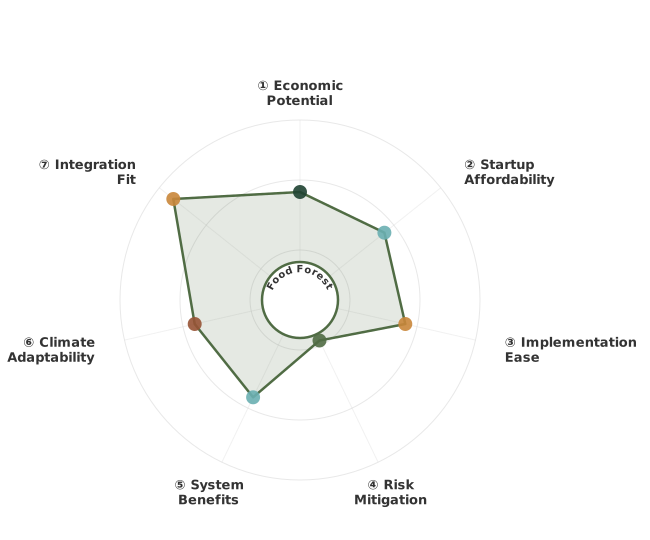
How These Traits Are Calculated
Trait dimensions are ordered clockwise starting from the top of the chart (12 o'clock position):
1. Economic Potential
Financial returns, annual value, and break-even timeline
WHAT: Evaluates financial viability by combining net annual value ($/ha from savings, income, and amortized harvests) with break-even timeline showing when practices pay for themselves.
WHY: Farmers need clear ROI understanding before committing resources. Fast payback (≤3 years) with strong returns (≥$300/ha) enables confident adoption, while long timelines (>10 years) restrict adoption to well-funded operations willing to wait for returns.
HOW: Calculated from net annual value in $/ha and break-even years. Exceptional (≥2.6): fast ROI ≤3 years + high value ≥$300/ha. Typical (1.8-2.5): moderate returns or longer timelines. Limited (<1.8): marginal economics or very long payback >10 years.
2. Startup Affordability
Initial investment costs and financial barrier to entry
WHAT: Measures financial barrier to entry through startup costs for equipment, infrastructure, consulting, and materials. Inverted scoring: lower costs = higher scores = more accessible adoption.
WHY: Affordability determines who can adopt. Low-cost practices (<$250/ha) enable widespread adoption across diverse scales, while high costs (>$2,500/ha) limit adoption to well-capitalized operations, creating barriers that slow regenerative transition.
HOW: Calculated from initial investment parsed from practice content. Inverted scoring: Exceptional (≥2.6): minimal investment <$250/ha. Typical (1.8-2.5): moderate costs $250-2,500/ha. Limited (<1.8): high barrier >$2,500/ha.
3. Implementation Ease
Learning curve and specialized knowledge required
WHAT: Measures how much learning, planning, and specialized knowledge a practice requires. Simpler practices with fewer steps score higher, while complex practices requiring extensive training or specialized resources score lower.
WHY: Complex practices create adoption barriers even when economically viable. Straightforward practices enable faster adoption and broader participation, while those requiring extensive training, timing precision, or specialized equipment limit who can succeed.
HOW: Evaluated by measuring documentation length and identifying complexity markers like location-specific requirements, seasonal timing windows, specialized skills, and dedicated equipment needs. Exceptional (≥2.6): straightforward practices with minimal prerequisites. Typical (1.8-2.5): moderate learning curve with some specialized needs. Limited (<1.8): steep learning curve requiring significant training or resources.
4. Risk Mitigation
Identified financial and ecological risk assessment
WHAT: Evaluates documented risks across financial (investment loss, market volatility) and ecological (crop failure, pest outbreaks) domains. Inverted scoring: fewer risks = higher scores.
WHY: Understanding risk exposure helps farmers make informed decisions. Low-risk practices allow confident implementation, while high-risk practices require careful planning and contingency resources. Risk transparency prevents costly failures.
HOW: Calculated from identified risks in practice content. Inverted scoring: Exceptional (≥2.6): ≤2 risks with manageable severity. Typical (1.8-2.5): 3-5 moderate risks. Limited (<1.8): 6+ risks or severe exposure.
5. System Benefits
How many ways the practice improves your land simultaneously
WHAT: Measures how many aspects of land health improve at once—carbon storage, soil quality, erosion control, water absorption, and biodiversity. Practices that improve multiple areas simultaneously create compounding benefits where each improvement reinforces the others.
WHY: The best practices solve multiple problems at once. For example, addressing erosion simultaneously builds carbon and improves water infiltration, creating a resilient system with positive feedback loops. Single-benefit approaches miss these compound transformation opportunities.
HOW: Evaluated across five key outcomes: carbon sequestration, soil organic matter increase, erosion reduction, water infiltration improvement, and biodiversity enhancement. Exceptional (≥2.6): high carbon storage (>8 t/ha/yr), improvements across 4-5 areas, transformative outcomes. Typical (1.8-2.5): moderate carbon (3-8 t/ha/yr), improvements across 2-3 areas. Limited (<1.8): modest impact (<3 t/ha/yr), single-area focus only.
6. Climate Adaptability
Geographic applicability across Köppen climate zones
WHAT: Evaluates geographic applicability by assessing how many Köppen climate zones successfully support a practice and what adaptation requirements are needed. Measures breadth of climates where farmers can implement with minimal to moderate modifications.
WHY: Universal practices working across diverse climates enable more farmers to adopt regenerative approaches. Practices limited to single climate types (only Mediterranean, only tropical) restrict adoption and slow global transition. Adaptability determines whether a practice serves niche regions or offers broad transformation.
HOW: LLM evaluation of regional success stories, Köppen zone coverage, and adaptation needs. Exceptional (≥2.6): 5+ zones or 4+ climate types, 3+ continents, minimal adaptation. Typical (1.8-2.5): 3-4 zones or 2-3 types, 2 continents, moderate adaptation. Limited (<1.8): 1-2 zones, single region, significant adaptation or highly specialized.
7. Integration Fit
How well this practice combines with others you're doing
WHAT: Measures how well a practice combines with other regenerative practices you might be doing. Some practices work as building blocks that make many other practices easier or more effective, while others work best on their own.
WHY: Practices that combine well with many others create more value on your farm. For example, cover cropping enables no-till, improves grazing, supports crop diversity, and helps water management—making all of them work better together. This helps you build a coherent system rather than juggling disconnected practices.
HOW: Evaluated by identifying which practices combine well and how strong those combinations are. 'Ideally Suited' means strong combinations where practices reinforce each other (practice A makes B easier, while B makes A more effective). 'Adequate' means complementary benefits that work well together. Exceptional (≥2.6): combines well with 6+ practices, serves as a building block. Typical (1.8-2.5): combines with 3-5 practices. Limited (<1.8): 1-2 practices or works best alone.
Going Deeper
1
WHY - The Benefits
Food forests offer profound biological, ecological, and economic advantages, transforming land use from extractive to regenerative. They are designed to create abundance by working with nature's principles rather than against them.
Food forests offer profound biological, ecological, and economic advantages, transforming land use from extractive to regenerative. They are designed to create abundance by working with nature's principles rather than against them.
WHY - The Benefits
Food forests offer profound biological, ecological, and economic advantages, transforming land use from extractive to regenerative. They are designed to create abundance by working with nature's principles rather than against them.
Food forests offer profound biological, ecological, and economic advantages, transforming land use from extractive to regenerative. They are designed to create abundance by working with nature's principles rather than against them.
Soil Health Benefits
Food forests are powerful engines of soil regeneration. By eliminating tillage and establishing a dense cover of perennial plants, they minimize soil disturbance (Principle 1), allowing soil structure to rebuild naturally. The constant presence of living roots (Principle 4) from diverse species feeds soil microbes with a steady supply of exudates, stimulating microbial communities and enhancing the creation of soil aggregates. This leads to significant improvements in soil organic matter (SOM), often increasing by 0.5-2% annually in the initial years compared to monocultures.
The multi-layered canopy and dense ground cover ensure the soil surface is kept covered year-round (Principle 3), preventing erosion from wind and rain. Leaf litter from trees and other plants decomposes, forming a rich mulch that conserves soil moisture, suppresses weeds, and provides a continuous food source for earthworms and beneficial soil organisms. These processes lead to increased water infiltration rates—often as much as 30-50% higher than degraded land—reducing runoff and improving drought resilience. The diverse root systems, from deep taproots of trees to fibrous networks of herbaceous plants, create a complex pore structure that enhances aeration and drainage, making soil more resilient to compaction.
Soil biology thrives in a food forest environment. The variety of root exudates, dead plant material, and microhabitats supports a vast array of fungi, bacteria, protozoa, nematodes, insects, and earthworms. This biodiversity underpins nutrient cycling, pest suppression, and disease resistance. Elements like nitrogen-fixing plants and dynamic accumulators (plants bringing up trace minerals from deeper soil layers) create a closed-loop nutrient system, reducing or eliminating the need for external synthetic fertilizers over time.
Economic Benefits
While food forests demand significant upfront investment in planning and labor, their economic benefits accrue progressively and sustainably over years, offering long-term financial security and diversification. The primary economic advantage is the reduction in ongoing input costs. Once established, the need for synthetic fertilizers, pesticides, herbicides, and annual seed purchases diminishes significantly, often to near zero. The labor saved from not tilling, weeding annual crops, or managing synthetic inputs translates directly into cost savings.
The diversified nature of a food forest provides multiple revenue streams from a single plot of land. This includes direct sales of diverse fruits, nuts, berries, edible leaves, roots, herbs, and medicinal plants. Yields from perennial systems can be remarkably high per unit area, especially compared to monocultures. For example, a well-designed food forest might produce 2-5 times the pounds of edible biomass per acre compared to a traditional vegetable garden or an orchard. Revenue can begin in years 3-5 with early-producing shrubs and herbaceous plants, gradually increasing as trees mature and begin bearing in years 5-15, depending on species.
Beyond direct food sales, food forests can generate income through value-added products (jams, preserves, dried herbs, teas, tinctures), agro-tourism (farm tours, workshops), or by providing ecosystem services like pollination support for nearby farms. Their inherent resilience to climate fluctuations and disease outbreaks reduces the risk of catastrophic crop failure common in monocultures. Furthermore, the long lifespan of perennial systems and their continuous improvement in soil health and productivity contribute to increased land value over time. The total investment for establishment can range from $500 to $2,000+ per acre ($1,200-5,000+ per hectare) depending on scale, species chosen, and labor sources, but this investment is repaid through reduced future costs and diversified, consistent income.
Regenerative Systems Fit
Food forests are inherently regenerative, aligning with and reinforcing all five core principles of regenerative agriculture:
Principle 1 (Minimize Soil Disturbance): Food forests are perennial systems by definition. Once planted, they eliminate the need for annual tillage. The extensive root networks stabilize soil, preventing erosion and compaction. Any disturbance is minimized to occasional pruning or harvesting, or strategic introduction of beneficial soil organisms, rather than destructive soil manipulation.
Principle 2 (Maximize Crop Diversity): This is a foundational element of food forest design. By integrating numerous species across multiple vertical layers—canopy trees, understory trees, shrubs, herbaceous plants, groundcovers, root crops, and vines—food forests create a complex ecosystem. This botanical diversity mirrors natural forests and fosters a resilient web of life above and below ground, enhancing pest and disease resistance and maximizing resource utilization.
Principle 3 (Keep Soil Covered): Food forests are designed for constant soil coverage. Living plants form multiple layers of canopy and ground cover, while fallen leaves and other plant debris create a natural mulch layer. This continuous coverage protects soil from erosion, conserves moisture through reduced evaporation, moderates soil temperature, and provides ongoing habitat and food for soil organisms.
Principle 4 (Maintain Living Roots): The perennial nature of food forests ensures that living roots are present in the soil year-round (or throughout the growing season in colder climates). These roots continuously feed soil biology, maintain pore structure, cycle nutrients, and sequester carbon. The diverse root depths and architectures found in food forests create a highly functional and resilient soil profile.
Principle 5 (Integrate Livestock): While not always the primary focus, food forests can effectively integrate livestock. Chickens can forage for insects and weeds in lower layers, improving pest control and fertility. Larger animals can be rotationally grazed in established systems, managed to avoid damaging young trees, contributing to nutrient cycling and weed management. The polyculture design itself can create diverse foraging opportunities for beneficial insects and pollinators, supporting ecological balance.
Food forests are not a transition practice but a foundational regenerative approach. They embody the ideal state of a regenerative agricultural system—highly diverse, ecologically self-sufficient, and economically resilient. They set the stage for other regenerative practices by building a robust soil biome and a stable ecosystem that can support a variety of integrated enterprises. Transitioning to a food forest involves developing the foresight and design skills to create such a complex system, rather than phasing out specific conventional inputs. The "transition" is in the design and planting process, moving from linear to cyclical thinking, and from annuals to perennials.
Sources behind this view
Videos & Podcasts
-
Explains how to create a 'tactical food forest' in underutilized spaces by layering plants, establishing a defensive perimeter with thorny species, and using nitrogen-fixing plants for soil health. Em
-
Food forests, as a site-specific permaculture design, are not universal but excel in certain settings for sustainable food production. They increase resilience, food security, and soil fertility while
-
Agroforestry expert Martin Crawford explains forest gardens as sustainable, perennial-based systems mimicking natural ecosystems, designed to maximize plant interactions, enhance biodiversity, and ada
-
Food forest design requires understanding local conditions and plant complementarity. Key species include nitrogen-fixers for fertility and deep-rooters for soil structure. Early yields come from frui
Community
-
Geoff Lawton's food forest establishment method involves tiered nitrogen-fixing support species (ground cover, short/medium/long-term trees) planted with productive trees. Techniques like chop-and-dro
Read more (opens in new window) permies.com -
Steps to start a food forest: 1. Observe site (sun, wind, microclimates, wildlife, water flow). 2. Design zones, water bodies, and plant placement. 3. Prepare soil, using sheet mulching. 4. Create pla
Read more (opens in new window) permies.com -
Community food forests are urban agroforestry projects mimicking forest ecosystems to grow diverse perennial and annual foods for free public harvesting, serving as educational resources and testing g
Read more (opens in new window) smallfarms.cornell.edu -
Forest gardens mimic woodland ecosystems with seven plant layers (canopy, vines, shrubs, herbaceous, ground cover, roots) to produce food with minimal inputs and labor, enhancing biodiversity and pest
Read more (opens in new window) www.permaculture.org.uk
Research
-
Food forests: Their services and sustainability (opens in new window)
This study found: Global study of food forests shows strong social and environmental benefits (biodiversity, soil health) but highlights a need to improve economic viability for wider adoption and impact.
-
Agroforestry: The North American Perspective (opens in new window)
This study found: Agroforestry integrates trees with crops/livestock, offering environmental benefits like climate adaptation and mitigation. Key North American practices include alley cropping, silvopasture, and ripar
-
Regenerative Food Forest: A Case Study of Vanya Organic Farm (opens in new window)
This study found: Vanya Organic Farm case study shows a food forest model using native plants and Vetiver Grass for carbon capture and waste-to-fuel/fertilizer production, suggesting a link between these farms and CBG
-
Agroforestry Practices and Their Impact on Soil Health and Fertility: A Review (opens in new window)
This study found: Agroforestry (trees with crops/livestock) significantly improves soil health, fertility, and carbon storage globally. Challenges include cost and knowledge gaps, but benefits like increased yields are
From the Web
-
Forest gardens are multi-strata perennial polycultures mimicking forest edges for diverse yields. Planning involves defining goals, assessing social/environmental context (climate, soil, topography),
2
WHERE - Regional Considerations
The success and design of a food forest are highly dependent on regional climate, soils, and local conditions. While the principles of mimicry and layered planting remain universal, specific species choices, water management strategies, and establishment approaches must...
The success and design of a food forest are highly dependent on regional climate, soils, and local conditions. While the principles of mimicry and layered planting remain universal, specific species choices, water management strategies, and establishment approaches must be adapted to diverse environments for optimal regeneration and productivity.
WHERE - Regional Considerations
The success and design of a food forest are highly dependent on regional climate, soils, and local conditions. While the principles of mimicry and layered planting remain universal, specific species choices, water management strategies, and establishment approaches must...
The success and design of a food forest are highly dependent on regional climate, soils, and local conditions. While the principles of mimicry and layered planting remain universal, specific species choices, water management strategies, and establishment approaches must be adapted to diverse environments for optimal regeneration and productivity.
Click Here to Look up your Region if you don't already know it
Humid Temperate Regions
Representative Locations: Southeastern United States, northern Europe (UK, Germany, Poland), eastern China, Japan, New Zealand
Climate Context: Warm to hot summers and cool to cold winters with moderate to high annual precipitation (75-150 cm or 30-60 inches) distributed relatively evenly. USDA Zones 6-8, Köppen Cfb/Cfa.
In these regions, food forests can be exceptionally productive due to ample rainfall and long growing seasons. Species selection can lean towards a wide variety of temperate fruits (apples, pears, plums, cherries), berries (raspberries, blueberries, currants), nuts (walnuts, hazelnuts, pecans), and a vast array of perennial vegetables and herbs. Water management is generally less critical, focusing more on drainage in poorly drained areas and mulching to conserve moisture during occasional dry spells. The challenge is often managing abundant growth and ensuring adequate light penetration to all layers, preventing excessive shading of lower strata. The potential for disease pressure can be higher due to humidity, making disease-resistant varieties and strategic companion planting crucial.
Mediterranean Regions
Representative Locations: California, Mediterranean basin (Spain, Italy, Greece), central Chile, southwestern Australia, Western Cape South Africa
Climate Context: Hot, dry summers and mild, wet winters. Annual precipitation 40-90 cm (15-35 inches), highly seasonal. USDA Zones 8-10, Köppen Csa/Csb.
Food forests in Mediterranean climates require careful water management and species selection for drought tolerance. Drought-deciduous species that drop leaves during dry summers, along with very deep-rooted plants, are ideal. Evergreen drought-tolerant species that can survive dry spells are also valuable. Water harvesting techniques such as swales, rainwater catchment, and mulching are essential. Native Mediterranean species that have adapted to these conditions (e.g., olives, figs, carob, certain nut trees like almonds and pistachios, drought-tolerant herbs like rosemary and lavender) often form the backbone of successful systems. Competition for water during the dry season is a primary consideration, stressing the importance of mulch and efficient irrigation systems if used.
Arid/Semi-Arid Regions
Representative Locations: Western USA, North Africa, Central Asia, Interior Australia
Climate Context: Low annual precipitation (<40 cm or 15 inches), high temperatures, short and often unpredictable growing season. USDA Zones 7-9, Köppen BSh/BSk.
Establishing food forests in arid and semi-arid regions presents the greatest challenges, primarily due to extreme water scarcity. Success hinges on selecting highly drought-tolerant species, particularly those native to desert or semi-desert environments, and implementing rigorous water harvesting and conservation techniques. Water harvesting structures like swales, keyline design, contour planting, and extensive mulching are non-negotiable. Species adapted to these climates include drought-hardy fruit trees (certain varieties of jujube, pomegranate, prickly pear cactus, hardy figs), nitrogen-fixing drought-tolerant shrubs, and resilient perennial vegetables and herbs. The “water-for-food” concept becomes paramount, with an emphasis on plants that are highly water-use efficient and can survive on minimal rainfall or intermittent irrigation. Soil building through biochar and compost is also critical to improve water retention.
Cold Continental Regions
Representative Locations: Northern USA and Canada, Northern Europe, Northern Asia
Climate Context: Very short growing seasons, extreme summer heat, severe winter cold. USDA Zones 3-5, Köppen Dfa/Dfb.
In cold continental climates, the primary challenge is the short growing season and extreme winter temperatures, which can freeze out less hardy perennials. Species selection must prioritize cold-hardy varieties of fruit trees (e.g., certain apple, pear, plum, cherry, plumcot varieties), hardy berries (e.g., haskap, elderberry, current, gooseberry), and cold-tolerant nut trees (e.g., hazelnut, certain walnuts). Utilizing microclimates, such as planting on south-facing slopes to capture more solar radiation, or using buildings and fences for windbreaks and heat sinks, can extend the productive season. Mulching is vital for protecting roots from extreme cold and conserving soil moisture. The use of high tunnels or cold frames might be considered for extending the season for certain perennial vegetables and herbs. Succession planting from hardier pioneer species to more productive, but potentially less hardy, species over time is a common strategy in these climates.
Subtropical Regions
Representative Locations: Southeastern USA, Southern China, Southern Brazil, Eastern Australia
Climate Context: Hot, humid summers and mild winters with generally ample rainfall. USDA Zones 9-11, Köppen Cfa/Cwa.
Subtropical climates offer a long growing season and abundant rainfall, enabling lush growth. Food forests here can be incredibly diverse, incorporating a vast array of tropical and subtropical fruits (citrus, guava, papaya, mango, avocado), bananas, passion fruits, and a wide range of perennial vegetables and herbs. The main challenges are managing high humidity which can increase disease pressure, and intense summer heat. Shade trees are crucial for moderating temperatures for sensitive species. Careful selection of disease-resistant varieties and incorporating plants that attract beneficial predatory insects are important for pest and disease management. Good drainage is often essential due to high rainfall, and the potential for invasive species means careful monitoring and selection of non-invasive plants are paramount.
Tropical Regions
Representative Locations: Central America, Southeast Asia, East Africa, Northern Australia, Northern South America
Climate Context: High temperatures year-round, with distinct wet and dry seasons or consistent high rainfall. Köppen Af/Am/Aw.
Tropical food forests are characterized by year-round growth potential and a vast array of tropical fruit trees (mango, durian, jackfruit, rambutan), bananas, plantains, papayas, breadfruit, açaí, and various edible palms. The complexity of species interaction and the potential for aggressive growth are significant. The key management considerations are managing high annual rainfall and humidity, which can lead to soil erosion and a high incidence of fungal diseases, and managing the intense competition for light among fast-growing species. Techniques like contour planting, swales, and terracing are crucial for managing rainfall and preventing erosion. Species selection must prioritize disease resistance and avoidance of aggressive invasives. The rich biodiversity of tropical forests can be mimicked to create highly productive and resilient food systems, often supporting indigenous food crops.
3
HOW - Implementation Process
Establishing a food forest is a design-intensive process that unfolds in carefully planned stages, moving from site analysis to functional ecosystem.
Establishing a food forest is a design-intensive process that unfolds in carefully planned stages, moving from site analysis to functional ecosystem.
HOW - Implementation Process
Establishing a food forest is a design-intensive process that unfolds in carefully planned stages, moving from site analysis to functional ecosystem.
Establishing a food forest is a design-intensive process that unfolds in carefully planned stages, moving from site analysis to functional ecosystem.
Prerequisites
- Site Assessment: Thorough analysis of climate (USDA Zones, Köppen classification), rainfall patterns, topography, soil type and health, existing vegetation, water sources, sun exposure, wind patterns, and microclimates. This forms the basis of all design decisions.
- Goal Setting: Clearly define objectives: what products are desired (fruits, nuts, herbs, vegetables, medicinal plants), desired scale, target markets, and level of management intended.
- Design Skills: Understanding of Permaculture principles, ecological succession, plant guilds, stacking functions, and appropriate species selection for the specific region.
- Resource Availability: Access to labor for planting, mulching, and initial care; access to materials (plants, mulch, water infrastructure if needed); initial capital for plants and materials.
- Commitment to Long-Term Vision: Food forests are established with a growth mindset that spans years and decades, not seasons.
Phase 1: Site Preparation and Design
Design: Based on site assessment and goals, create a detailed design plan. This involves mapping key features, designating zones based on management intensity (Zone 1 closest to house, Zone 5 wild), and planning the placement of major trees, shrubs, and functional elements to optimize sun exposure, water flow, and wind protection. The "seven layers" (canopy, understory, shrub, herbaceous, groundcover, root, vertical) guide species placement. Plant guilds—groups of mutually beneficial plants—are central to the design.
Soil Preparation (Minimal Disturbance): The goal is to establish perennial plants without destructive tillage.
- Weed Suppression: For areas with persistent weeds or grasses, use methods like sheet mulching (layering cardboard, compost, straw) or solarization (using clear plastic to heat and kill weeds) before planting. This builds soil while clearing space.
- Minimal Cultivation: If soil is extremely compacted, one-time deep ripping or subsoiling might be considered as a prelude (see Transition Practices), but generally, the goal is to plant into existing soil structure.
- Adding Organic Matter: Incorporate compost, aged manure, or biochar into planting areas to boost soil fertility and water retention. This is done mainly in the planting holes or on the surface for sheet mulching.
Water Management Integration: Design and install water harvesting and distribution systems. This might include:
- Swales and Berms: Contour-cut trenches (swales) capture rainwater runoff, allowing it to infiltrate soil, with excavated soil forming berms on the downhill side for planting.
- Rainwater Harvesting: Rooftop collection systems feeding tanks or ponds.
- Efficient Irrigation: Drip irrigation or soaker hoses for young plants during establishment, reducing water waste.
Phase 2: Planting and Mulching
Plant Selection: Choose species appropriate for the climate, soil, and specific function within the design (e.g., nitrogen-fixers, dynamic accumulators, pollinator attractors, edible yielders). Prioritize local and climate-adapted varieties, and disease/pest-resistant cultivars. Include pioneer species for rapid groundcover and soil improvement, alongside longer-term canopy and understory trees.
Planting:
- Trees & Shrubs: Plant at appropriate depth, typically at the same level as they were in their nursery pots. Space according to mature size, considering light needs of lower layers and access for maintenance.
- Herbaceous & Groundcovers: Plant in spaces between larger plants, considering light/shade requirements.
- Root Crops: Plant tubers or seeds in designated root zones, often with lighter soil amendments.
- Vines: Install support structures (trellises, arbors, existing trees) for climbing species.
Mulching: Immediately after planting, apply a thick layer (10-15 cm or 4-6 inches) of organic mulch around all plants. This can include straw, wood chips, compost, shredded leaves, or wood shavings. Mulch conserves moisture, suppresses weeds, regulates soil temperature, and gradually breaks down to feed soil life. Replenish mulch annually or as needed.
Phase 3: Establishment and Early Management (Years 1-5)
Watering (Establishment Phase): Young plants require consistent moisture. Water deeply and less frequently, encouraging roots to grow deeper. Monitor soil moisture, especially during dry periods. Drip irrigation can be valuable here.
Weeding (Initial Years): While mulch suppresses weeds, some will emerge. Hand-pull or carefully "chop and drop" weeds, leaving them in place to decompose and add to the mulch layer, especially in the first 1-3 years. Aim to remove only problematic or highly competitive species.
Pruning: Prune young trees and shrubs to encourage desired structure, form, and branching patterns. Remove any plants that are overly aggressive or not thriving as planned. This is where design intent is refined.
Fertilization (Minimal): Primarily relies on decomposition of mulch, nitrogen-fixing plants in the system, and compost applications incorporated during planting. Dynamic accumulator plants can be harvested and applied as mulch. Supplemental organic fertilizers (e.g., fish emulsion, comfrey tea) may be used for specific nutrient deficiencies or stressed plants during establishment.
Pest and Disease Management: Rely on ecological balance. Diverse plantings attract beneficial insects and predators. Healthy soil biology reduces plant susceptibility. Use companion planting deterrents. Only intervene with organic controls (e.g., insecticidal soap, neem oil) if absolutely necessary and target-specific.
Phase 4: Maturation and Ongoing Care (Year 5+)
Reduced Management: As plants mature and the ecosystem stabilizes, management needs decrease significantly. Weeding becomes minimal as groundcovers and mulch dominate. Watering needs lessen as plants establish deeper root systems and soil water-holding capacity increases.
Harvesting: Implement a systematic harvesting plan for different species as they come into production. This is an ongoing form of management, helping to prune plants and manage yields.
Observation and Adaptation: Regularly observe the system for signs of imbalance, stress, or opportunity. Adapt management based on observations—replace failing species, introduce new beneficial plants, or modify harvesting techniques.
Succession Management: Understand that food forests evolve. Pioneer species may decline as larger trees mature and shade out lower layers. Some understory plants may naturally succeed others. Manage this succession by selectively pruning, making space for new plantings, or harvesting declining species to make way for more shade-tolerant ones.
International Context for Equipment and Materials:
- Planting Tools: Hand trowels, shovels, post-hole diggers, augers are universally available. For larger areas, walk-behind tillers or small tractors with augers can be used for planting holes with minimal disturbance.
- Mulch Materials: Availability varies by region. Straw, wood chips, shredded bark, composted manure, crop residues, and local plant materials are common. Access to bulk deliveries is beneficial for larger scales.
- Watering Systems: Drip irrigation components, tanks, and pumps are widely available. In regions with extreme water scarcity, focus on methods like ollas (buried clay pots) or wicking beds.
- Cost-Share Programs: Research local government agricultural programs, NGOs, or conservation initiatives that might offer grants or subsidies for establishing perennial systems, especially those focused on soil health or habitat creation. These can significantly reduce upfront costs.
Sources behind this view
Videos & Podcasts
-
Explains how to create a 'tactical food forest' in underutilized spaces by layering plants, establishing a defensive perimeter with thorny species, and using nitrogen-fixing plants for soil health. Em
-
Provides 'cheat codes' for accelerating food forest production through smart design, including using early-producing species, fall planting of bare-root trees, enhancing soil with compost/extracts, in

-
To establish a food forest: plant dense cover crops, mulch, then strategically plant fruit trees, nitrogen-fixers, and layered species like chess pieces. Emulate ecosystems, use perennial ground cover

-
Food forest design requires understanding local conditions and plant complementarity. Key species include nitrogen-fixers for fertility and deep-rooters for soil structure. Early yields come from frui
Community
-
Steps to start a food forest: 1. Observe site (sun, wind, microclimates, wildlife, water flow). 2. Design zones, water bodies, and plant placement. 3. Prepare soil, using sheet mulching. 4. Create pla
Read more (opens in new window) permies.com -
Geoff Lawton's food forest establishment method involves tiered nitrogen-fixing support species (ground cover, short/medium/long-term trees) planted with productive trees. Techniques like chop-and-dro
Read more (opens in new window) permies.com -
Community food forests are urban agroforestry projects mimicking forest ecosystems to grow diverse perennial and annual foods for free public harvesting, serving as educational resources and testing g
Read more (opens in new window) smallfarms.cornell.edu -
Forest gardens mimic woodland ecosystems with seven plant layers (canopy, vines, shrubs, herbaceous, ground cover, roots) to produce food with minimal inputs and labor, enhancing biodiversity and pest
Read more (opens in new window) www.permaculture.org.uk
Research
-
Agroforestry: The North American Perspective (opens in new window)
This study found: Agroforestry integrates trees with crops/livestock, offering environmental benefits like climate adaptation and mitigation. Key North American practices include alley cropping, silvopasture, and ripar
From the Web
-
Forest garden planning involves assessing social/environmental factors, inventorying resources, and mapping zones/sectors. Ecological design emphasizes species selection (native, climate-resilient), m
-
Forest gardens are multi-strata perennial polycultures mimicking forest edges for diverse yields. Planning involves defining goals, assessing social/environmental context (climate, soil, topography),
4
Know the Debate
Establishing a food forest involves significant upfront investment in design and labor, with results unfolding over years and decades. The success ...
Know the Debate
Establishing a food forest involves significant upfront investment in design and labor, with results unfolding over years and decades. The success ...
Establishing a food forest involves significant upfront investment in design and labor, with results unfolding over years and decades. The success and specific management of food forests depend heavily on your region's climate, soil conditions, and the scale of your operation. While temperate designs are well-documented, adapting principles to arid, cold, or tropical climates requires careful species selection and water management, often prioritizing native plants. Expect labor demands to be high initially but decrease significantly as the system matures towards self-sufficiency.
How long does a food forest take to become productive?
Productive within 3-5 years
Institute sources suggest that with proper design and establishment, significant yields from fruit trees and shrubs can be realized within 3-5 years, with major harvests by the 5-10 year mark.
Sources behind this view
Sources behind this view
From the Web
-
Forest gardens are multi-strata perennial polycultures mimicking forest edges for diverse yields. Planning involves defining goals, assessing social/environmental context (climate, soil, topography), and inventorying resources. Developed by NCAT and University of Missouri.
-
Forest garden planning involves assessing social/environmental factors, inventorying resources, and mapping zones/sectors. Ecological design emphasizes species selection (native, climate-resilient), mimicking forest layers, and grouping plants into guilds to optimize resource use and minimize competition. Establishment requires proper planting, soil amendment, water management, and weed/pest control.
Substantial yields take 7-15 years
Field practitioners often report that consistent, substantial harvests across all layers, especially from canopy trees, require 7-15 years to fully materialize, particularly in less ideal conditions or with slower-growing species.
Sources behind this view
Sources behind this view
Videos & Podcasts
-
Food forests, a complex and location-dependent regenerative practice, recreate local forest ecosystems using seven layers of perennial and native plants to build ecological resilience and foster relationships with the land.
-
Food forests (forest gardens) mimic natural layers to grow diverse edibles. While labor-intensive due to hand-harvesting, this effort yields multiple benefits including food, biomass, and design insights, addressing criticisms of impracticality.
Making Sense of the Differences
The timeline for a food forest to become significantly productive varies based on species choice, climate, initial soil conditions, and management intensity. Cooler climates, slower-growing species, and less intensive upfront care can extend the establishment phase. Farmers should plan for longer timelines (7+ years) for substantial yields, especially from tree crops, focusing on earlier harvests from shrubs and herbaceous layers in the interim.
Do soils need amending before planting a food forest?
Modest amendments on healthy soils
Institute resources suggest that on already healthy soils, planting with minimal disturbance and incorporating compost and mulch is sufficient for establishment, allowing the food forest system to build fertility over time.
Sources behind this view
Sources behind this view
From the Web
-
Forest gardens are multi-strata perennial polycultures mimicking forest edges for diverse yields. Planning involves defining goals, assessing social/environmental context (climate, soil, topography), and inventorying resources. Developed by NCAT and University of Missouri.
-
Food forests mimic forest structure with up to eight vertical layers of edible, medicinal, and habitat-providing plants. Key practices include selecting diverse species for pest control and soil health, managing plant competition, and considering site-specific conditions.
-
Ecological design for forest gardens involves selecting species for up to eight layers (overstory to fungi), prioritizing native plants adapted to climate (Midwestern U.S. examples). Spacing, guilds, water management (swales, berms), weed control (mulching, occultation), and IPM are detailed.
Significant upfront remediation for degraded soils
Field practitioners emphasize that on severely degraded or compacted soils, significant upfront remediation like biochar, compost, or intensive cover cropping is essential for successful establishment, otherwise, growth is slow and species may fail.
Sources behind this view
Sources behind this view
Videos & Podcasts
-
Food forests, a complex and location-dependent regenerative practice, recreate local forest ecosystems using seven layers of perennial and native plants to build ecological resilience and foster relationships with the land.
-
Food forests mimic natural ecosystems with layers of perennials like fruit trees, berry bushes, and herbs, reducing inputs and enhancing soil health. Experimentation is key to success, leading to rewarding harvests.

Making Sense of the Differences
The need for upfront soil amendment depends on the starting soil condition. While food forests excel at building soil health over time, severely degraded or compacted soils benefit greatly from initial remediation (biochar, compost, intensive cover cropping) before planting. Healthy soils may require less initial amendment. Farmers should assess their soil health and adjust their approach to avoid delays and improve establishment success.
Can food forests thrive in any climate?
Adaptable to most climates
Institute and academic resources highlight the general adaptability of food forest principles across various bioregions, emphasizing species selection and design adjustments for different climates like temperate, subtropical, and even urban areas.
Sources behind this view
Sources behind this view
Research
-
Agroforestry: The North American Perspective (opens in new window)
This study found: Agroforestry, the practice of intentionally combining trees with crops or livestock, has deep historical roots and offers many benefits. In North America, key agroforestry methods include planting rows of trees with crops in between (alley cropping), growing high-value crops in forest shade (forest farming), using trees to protect streams (riparian buffers), integrating trees with grazing animals (silvopasture), planting trees to block wind (windbreaks), and creating community food gardens with edible trees (urban food forests). Agroforestry is recognized for its environmental advantages, particularly in helping us adapt to and reduce the impacts of climate change. Research is also exploring how to encourage more farmers to adopt these practices by understanding their preferences, cultural benefits, and the economic and policy factors involved. Promoting these perennial systems can support local food production and improve community health.
-
The contribution of forests and trees to sustainable diets (opens in new window)
This study found: As the world's population grows, ensuring everyone has access to enough healthy food is a major challenge. This paper explores how forests and trees can play a vital role in creating 'sustainable diets' – diets that are nutritious, good for the environment, and support local communities and cultural heritage. The research shows that foods from forests and trees offer many benefits, including important nutrients, cultural significance, and environmental advantages. However, there are challenges to overcome, such as making sure these foods are harvested sustainably, improving our knowledge of their nutritional value, and better integrating them into farming and national food plans. The paper suggests we need to raise awareness and incorporate information about these nutritious forest foods into nutrition programs.
From the Web
-
Forest gardens are multi-strata perennial polycultures mimicking forest edges for diverse yields. Planning involves defining goals, assessing social/environmental context (climate, soil, topography), and inventorying resources. Developed by NCAT and University of Missouri.
-
Food forests mimic forest structure with up to eight vertical layers of edible, medicinal, and habitat-providing plants. Key practices include selecting diverse species for pest control and soil health, managing plant competition, and considering site-specific conditions.
-
Food forests/forest gardens mimic forest structure with up to eight vertical layers of diverse plants and fungi. Selection focuses on ecological functions, pest control, habitat, soil health, and adaptation to site conditions and USDA Hardiness Zone.
-
Ecological design for forest gardens involves selecting species for up to eight layers (overstory to fungi), prioritizing native plants adapted to climate (Midwestern U.S. examples). Spacing, guilds, water management (swales, berms), weed control (mulching, occultation), and IPM are detailed.
Significant adaptation needed for extreme climates
Field practitioners and some academic sources suggest that while principles apply, food forests in very different climates (arid, cold, tropical monsoon) require significant adaptation, especially regarding water, cold hardiness, and species choice, often needing native or highly resilient varieties.
Sources behind this view
Sources behind this view
Videos & Podcasts
-
Food forests are multi-layered, species-rich agricultural systems using perennial edible plants, mimicking natural forests. Historically used in tropics, they are now adapted for temperate climates, requiring adjustments for lower winter sunlight.
-
A food forest mimics forest ecology by planting edible species in layers (trees, shrubs, climbers). Plant spacing is crucial and depends on latitude; further from the equator, more space is needed for sunlight penetration, creating a cost-effective vertical farm effect.

-
Food forests, as a site-specific permaculture design, are not universal but excel in certain settings for sustainable food production. They increase resilience, food security, and soil fertility while sequestering carbon, contrasting with declining monoculture systems.
Research
-
Regenerative Food Forest: A Case Study of Vanya Organic Farm (opens in new window)
This study found: This case study looks at Vanya Organic Farm, a type of food forest designed to work like a natural forest, meaning no pesticides, herbicides, weeding, or tilling are needed. It combines different plants like native trees, vines, and shrubs with other helpful vegetation to capture a lot of carbon from the atmosphere and produce useful materials. A special plant, Vetiver Grass, is highlighted as a key part of this system, with the idea of combining food forests and Vetiver plantations to create 'Regenerative Food Forests'. These farms produce a lot of organic waste, which can be turned into a green fuel called Compressed Bio Gas (CBG) and a high-quality organic fertilizer. Connecting these farms with CBG plants could create jobs, boost farmer income, and improve air, water, and soil health.
Making Sense of the Differences
Food forest principles are broadly applicable, but successful implementation in extreme climates requires careful adaptation. Temperate and subtropical zones are well-suited for established models, while arid, cold, or highly seasonal tropical climates demand specialized species selection, rigorous water management (e.g., swales in arid areas), and potentially modifications to planting strategies (e.g., cold-hardy varieties in cold zones). Farmers must prioritize local adaptation and native species research over direct replication of temperate designs.
5
HOW MUCH - Costs & Investment
Note: All costs are based on recent US economic data (2023-2025) and may vary substantially in other regions based on local labor rates, material costs, and regulatory requirements. Labor costs vary significantly internationally.
Note: All costs are based on recent US economic data (2023-2025) and may vary substantially in other regions based on local labor rates, material costs, and regulatory requirements. Labor costs vary significantly internationally.
HOW MUCH - Costs & Investment
Note: All costs are based on recent US economic data (2023-2025) and may vary substantially in other regions based on local labor rates, material costs, and regulatory requirements. Labor costs vary significantly internationally.
Note: All costs are based on recent US economic data (2023-2025) and may vary substantially in other regions based on local labor rates, material costs, and regulatory requirements. Labor costs vary significantly internationally.
Note: All costs are based on recent US economic data (2024–2026) and may vary substantially by region based on local labor rates, material costs, and site-specific topography.
Design & Planning
For small operations under 50 acres (20 ha), professional design plans range from $85 to $420 per acre ($210–$1,038/ha). Mid-size projects (50–500 acres (20–202 ha)) benefit from economies of scale, costing between $20 and $100 per acre ($49–$247/ha) for comprehensive permaculture mapping and ecological zoning. Large-scale operations (500+ acres) typically involve phased implementation, costing $5 to $40 per acre ($12–$99/ha) as design costs are amortized over larger footprints.
Site Preparation & Soil Amendments
Establishing the foundational soil health through sheet mulching and compost application remains the largest physical labor cost. Small sites require $130 to $630 per acre ($321–$1,557/ha). Mid-size operations, often requiring heavy equipment rentals for broad-acre prep, range from $400 to $2,100 per acre ($988–$5,189/ha). Large-scale sites utilize minimal intervention or "keyline" subsoiling, costing $300 to $1,500 per acre ($741–$3,707/ha).
Plant Materials
Diverse polyculture planting is the most significant investment for a food forest. Small sites (denser, high-diversity plantings) range from $200 to $1,050 per acre ($494–$2,595/ha). Mid-size sites, which often mix high-density zones with orchard-style row cropping, cost between $600 and $3,150 per acre ($1,483–$7,784/ha). Large-scale installations, utilizing seedling stock and native shrub propagation to manage costs, range from $2,000 to $10,500 per acre ($4,942–$25,946/ha).
Water Infrastructure
Water management ranges from $0 to $420 per acre ($0–$1,038/ha) for rain-fed small sites reliant on manual swales. Mid-size sites implementing automated drip systems or pressurized orchard systems range from $200 to $1,250 per acre ($494–$3,089/ha). Large-scale systems focusing on gravity-fed pond and swale networks range from $800 to $4,200 per acre ($1,977–$10,378/ha), depending on irrigation density.
Labor (Planting & Establishment)
Labor costs for manual planting and mulching on small sites total $210 to $630 per acre ($519–$1,557/ha). Mid-size operations, often requiring commercial planters or seasonal crews, range from $850 to $2,950 per acre ($2,100–$7,290/ha). Large-scale sites, utilizing mechanical transplanters or high-efficiency labor shifts, range from $3,000 to $10,500 per acre ($7,413–$25,946/ha).
Tools & Equipment
Small-scale tool investment (hand tools, maintenance gear) is $0 to $125 per acre ($0–$309/ha). Mid-size operations (small tractors, zero-turn mowers) require an investment of $40 to $340 per acre ($99–$840/ha). Large-scale operations requiring specialized harvesting equipment and integrated machinery range from $120 to $850 per acre ($297–$2,100/ha).
Most Spend: Most operations, regardless of scale, commit between $1,250 and $2,100 per acre ($3,089–$5,189/ha) during the initial three-year establishment phase, focusing heavily on soil-building and high-quality nursery stock to reduce long-term replaceability costs.
Why the Range?: Costs vary primarily due to mechanical versus manual implementation strategies. Sites using heavy machinery and professional contractors for large-scale earthworks sit at the top of the range, while "bootstrap" permaculture approaches that build soil gradually through nitrogen-fixing cover crops and on-site propagation sit at the lower end.
Sources behind this view
Videos & Podcasts
-
Food forest establishment has high initial costs (€10-30k/ha) but yields early produce with good design. Management involves 'succession' and 'conducting' plant growth. Increased pruning can boost tre
Community
-
Permaculture forest gardens require significant upfront design and installation time, with recommendations to start small and focus on perennial plants, soil-building species, and mulching to reduce m
Read more (opens in new window) permies.com
6
REWARDS AND RISKS - Economics & Risk Factors
Economic Scenarios
Economic Scenarios
REWARDS AND RISKS - Economics & Risk Factors
Economic Scenarios
Economic Scenarios
Food forest economics are characterized by high front-end costs and long-term, low-maintenance yield structures.
Best Case Scenario Under optimal management, the system creates a high-margin perennial harvest. By year 3, early harvests (berries, herbs) recoup initial establishment labor. By year 7 to 10, the mid-story produces consistent revenue, generating an annual net profit of $1,500 to $3,500 per acre ($3,707–$8,649/ha) above input costs. Internal Rate of Return (IRR) on capital typically exceeds 12% once canopy layers reach full production parity.
Typical Case Scenario Most projects face "establishment lag." In these cases, the recovery of the initial $2,000–$8,000 per acre ($4,942–$19,768/ha) investment occurs between years 8 and 12. Revenue remains modest in the first 5 years due to slow growth of perennial biomass. Once established, maintenance costs drop to near $50–$150 per acre ($124–$371/ha) annually, creating a sustained, diversified revenue stream with lower year-over-year operational volatility compared to annual row cropping.
Worst Case Scenario Poor design or lack of moisture management often leads to an establishment failure rate of 30% to 50% for woody perennials. If a project fails to stabilize within 5 years, the loss of initial capital—averaging $3,000–$5,500 per acre ($7,413–$13,591/ha) in sunk costs and labor—is nearly total. Abandonment due to excessive weeding demands or high mortality is the primary driver of this economic failure.
Market Factors and Mitigation Profitability is hyper-local. Diversified produce (niche fruits, medicinal herbs) lacks the mature supply chain of commodity crops, making direct-to-consumer (DTC) marketing essential. Investors should set aside $500–$1,000 per acre ($1,236–$2,471/ha) for cold storage or value-added processing equipment to prevent post-harvest loss of perishable yields.
Transition Period Risks The "transition" phase—years 1 through 7—represents the critical financial bottleneck.
- Yield Gaps: Production is insufficient for commercial scale in early years. Mitigation: Intercropping with high-value annuals (e.g., flowers or culinary greens) between tree rows to generate $500–$1,500 in interim annual revenue per acre.
- Timeline to Recovery: Extended establishment periods can delay break-even points by 3–4 years. Mitigation: Utilize federal cost-share programs (e.g., EQIP) to cover 50% to 75% of irrigation and site prep costs to shield working capital.
7
WHO - Labor & Expertise
Establishing and managing a food forest requires a blend of physical labor, ecological understanding, and long-term vision. The labor intensity is high during the establishment phase but decreases significantly as the system matures.
Establishing and managing a food forest requires a blend of physical labor, ecological understanding, and long-term vision. The labor intensity is high during the establishment phase but decreases significantly as the system matures.
WHO - Labor & Expertise
Establishing and managing a food forest requires a blend of physical labor, ecological understanding, and long-term vision. The labor intensity is high during the establishment phase but decreases significantly as the system matures.
Establishing and managing a food forest requires a blend of physical labor, ecological understanding, and long-term vision. The labor intensity is high during the establishment phase but decreases significantly as the system matures.
Expertise Requirements
- Permaculture Design Principles: A strong understanding of how to design self-sustaining ecosystems, including stacking functions, creating guilds, understanding ecological succession, and zone planning.
- Plant Identification and Selection: Knowledge of a wide range of edible perennial plants suited to the specific climate and soil conditions, their mature sizes, light and water needs, and symbiotic relationships. This includes understanding native and traditional varieties.
- Soil Science Fundamentals: Understanding soil biology, nutrient cycling, organic matter decomposition, and water holding capacity is crucial for designing and maintaining soil health.
- Ecosystem Management: Ability to observe the system, identify imbalances (e.g., pest outbreaks, weed encroachment, stressed plants), and implement gentle, regenerative interventions rather than chemical fixes.
- Horticultural Skills: Basic skills in planting, pruning, propagation, and mulching.
- Water Management Strategy: Understanding how to contour land, harvest rainwater, and manage irrigation efficiently, especially in drier climates.
- Patience and Observation: Food forests are long-term projects. The ability to monitor, learn from the system, and adapt the design over years is paramount.
Labor Estimates
- Design & Planning: 50-200 hours, depending on scale and complexity of site analysis and design. This can be spread over weeks or months.
- Site Preparation: 40-120 hours/acre, primarily for sheet mulching, initial compost application, and minor earthworks (swales, berms). This is a significant upfront labor input.
- Planting: 40-100 hours/acre, depending on the density of planting and type of plants (bare-root vs. potted, trees vs. groundcovers). This is intensive labor over a short period.
- Mulching: 20-60 hours/acre, for initial application. Labor is significantly reduced in subsequent years as mulch decomposes and self-mulching species take over.
- Watering (Establishment Phase): Highly variable based on climate and water availability. Can range from 1-5 hours/week/acre for the first 1-3 years during dry spells.
- Pruning & Maintenance (Years 1-5): 20-50 hours/acre/year, for shaping young plants, removing dead material, and managing opportunistic weeds.
- Harvesting & Processing (Year 3+): Highly variable, depends on scale and diversity. Can range from 10-40 hours/acre/year, increasing as production ramps up.
- Ongoing Management (Year 5+): 5-20 hours/acre/year, primarily for observation, harvesting, replenishing mulch, and occasional pruning or replanting.
Labor Sourcing and International Context
- DIY: For small-scale food forests, landowners often perform most of the labor themselves, leveraging personal time and commitment. This minimizes labor costs but requires significant physical effort and time investment.
- Hiring Local Labor: In regions with access to affordable agricultural labor, hiring local workers for planting, mulching, and initial maintenance can be cost-effective. This requires clear communication and training on techniques.
- Volunteer Programs: Some larger food forest projects utilize volunteer work parties or educational workshops, which can significantly reduce labor costs while also serving as outreach and education.
- Professional Designers/Installers: For larger or more complex systems, engaging professional Permaculture designers or landscape installers can ensure a higher probability of success, though at a higher upfront cost.
- International Labor Cost Variation: Labor costs can vary by orders of magnitude globally. In North America or Europe, labor can be the primary cost driver ($20-50+/hour USD equivalent), making DIY or efficient design critical. In parts of Asia, Africa, or Latin America, labor may be significantly cheaper ($5-15/hour USD equivalent), making labor-intensive manual methods more economically viable. When budgeting, research local wage rates thoroughly.
Expertise Development
- Workshops and Courses: Attend Permaculture design courses (PDC), food forest-specific workshops, or horticultural classes.
- Mentorship: Connect with experienced food forest designers or practitioners in your region.
- Reading and Research: Utilize canonical texts (e.g., "Edible Forest Gardens" by Dave Jacke and Eric Toensmeier), online resources, and case studies from reputable regenerative agriculture organizations.
- On-the-ground Practice: The best way to gain expertise is by doing. Start small, observe, learn from mistakes, and gradually expand your knowledge and scale.
Sources behind this view
Community
-
Steps to start a food forest: 1. Observe site (sun, wind, microclimates, wildlife, water flow). 2. Design zones, water bodies, and plant placement. 3. Prepare soil, using sheet mulching. 4. Create pla
Read more (opens in new window) permies.com -
Permaculture forest gardens require significant upfront design and installation time, with recommendations to start small and focus on perennial plants, soil-building species, and mulching to reduce m
Read more (opens in new window) permies.com -
To start a food forest, read extensively, observe land for a year to understand micro-climates, consult neighbors, prioritize earthworks and water harvesting, build soil with compost, draft a flexible
Read more (opens in new window) permies.com
8
EQUIPMENT - Tools & Infrastructure
Establishing and managing a food forest, particularly at larger scales, requires specific tools and infrastructure to facilitate efficient and effective implementation, even within a regenerative, low-input ethos.
Establishing and managing a food forest, particularly at larger scales, requires specific tools and infrastructure to facilitate efficient and effective implementation, even within a regenerative, low-input ethos.
EQUIPMENT - Tools & Infrastructure
Establishing and managing a food forest, particularly at larger scales, requires specific tools and infrastructure to facilitate efficient and effective implementation, even within a regenerative, low-input ethos.
Establishing and managing a food forest, particularly at larger scales, requires specific tools and infrastructure to facilitate efficient and effective implementation, even within a regenerative, low-input ethos.
Essential Tools (Small to Medium Scale)
-
Hand Tools:
- Shovels and Spades: For digging planting holes, moving compost and mulch.
- Garden Forks: For loosening soil, aerating compacted areas, and turning compost.
- Hand Trowels and Cultivators: For planting smaller herbs and seedlings, and weeding.
- Pruning Shears and Loppers: Essential for shaping young trees and shrubs, and for harvesting.
- Hand Saws: For larger branches.
- Rakes and Hoes: For clearing planting areas, managing emergent weeds, and spreading mulch.
- Wheelbarrows: For moving compost, mulch, plants, and harvested produce.
-
Mulching Tools:
- Pitchforks/Manure Forks: For moving straw, hay, or other loose mulch materials.
- Tarp/Cardboard: For weed suppression (sheet mulching).
-
Watering Equipment:
- Hoses and Sprinklers/Nozzles: For manual watering during establishment.
- Watering Cans: For precise watering of small plants.
- Buckets: For carrying water, compost, or harvested items.
-
Safety Gear:
- Work Gloves: Essential for protecting hands.
- Work Boots: For foot protection and support.
- Sun Protection: Hats, long-sleeved shirts.
Specialized Equipment (Medium to Large Scale)
-
Tractor/Power Equipment:
- Small Tractor or Power Tiller: For larger-scale soil preparation (if absolutely necessary for initial compost incorporation or breaking severe compaction), moving bulk materials, and powering certain implements.
- Auger Attachment: For digging planting holes more efficiently for trees and shrubs.
- Rotary Tiller (Use with Extreme Caution): Only if soil is severely compacted and no-till methods are unfeasible for initial planting. Must be followed by intensive mulching and cover cropping to rebuild structure.
- Mower or String Trimmer: For managing vigorous vegetative growth in early stages or managing alleyways in established systems.
-
Water Management Infrastructure:
- Water Tanks/Cisterns: For collecting and storing rainwater. Sizing depends on rainfall and demand.
- Pumps: For transferring water from tanks or wells to irrigation systems. Submersible or surface pumps.
- Drip Irrigation Systems: Hoses, emitters, filters, and timers for efficient watering, especially crucial in drier climates for establishment.
- Swale and Berm Construction Tools: For larger earthmoving if contour shaping is required (e.g., mini-excavator, skid steer loader, or appropriately sized tractor with a front-end loader and box blade).
-
Material Handling:
- Bulk Material Spreaders: For efficiently distributing compost and mulch over larger areas.
- Trailers: For transporting plants, mulch, tools, and harvested produce.
-
Protection Materials:
- Tree Guards/Spikes: To protect young trees from rodents and browsing animals.
- Temporary Fencing: Electric fencing or netting may be needed to protect young plants from livestock or wildlife.
Infrastructure Considerations
- Pathways and Access: Clearly defined pathways for management, harvesting, and transport of materials. These should be permeable and integrated into the design (e.g., wood chips, gravel).
- Water Storage and Distribution Points: Strategic placement of water tanks, spigots, or hose access points to minimize water transport distances.
- Composting Areas: Designated spaces for creating and managing compost.
- Tool Storage: Secure, weather-protected storage for tools and equipment.
- Greenhouse/Propagation Area (Optional): For starting seeds, propagating cuttings, or overwintering sensitive plants, especially useful for increasing plant diversity and reducing plant purchase costs.
International Sourcing and Cost Considerations
- Local Availability: Prioritize sourcing tools, equipment, and materials locally to reduce shipping costs and support local economies. Many basic hand tools are universally available.
- Durability vs. Cost: Invest in durable tools that will last, especially for high-use items. However, for occasional use or on a tight budget, rental or second-hand options can be viable.
- Labor Cost Impact: In regions with high labor costs, investing in more powerful equipment (e.g., tractor attachments for planting or mulching) can be cost-effective over time. In regions with lower labor costs, manual methods may be more economical.
- Second-Hand Market: Explore used equipment markets, farm auctions, and online marketplaces for significant cost savings on tractors, tillers, irrigation components, and tools.
- DIY Construction: Building compost bins, basic trellises, or simple water catchment systems can be done with readily available local materials, significantly reducing infrastructure costs.
9
COMPATIBLE PRACTICES - Integration Opportunities
Food forests are inherently designed as integrated systems, thriving when their components work synergistically. They also integrate exceptionally well with other regenerative agriculture practices, amplifying benefits and accelerating landscape regeneration.
Food forests are inherently designed as integrated systems, thriving when their components work synergistically. They also integrate exceptionally well with other regenerative agriculture practices, amplifying benefits and accelerating landscape regeneration.
COMPATIBLE PRACTICES - Integration Opportunities
Food forests are inherently designed as integrated systems, thriving when their components work synergistically. They also integrate exceptionally well with other regenerative agriculture practices, amplifying benefits and accelerating landscape regeneration.
Food forests are inherently designed as integrated systems, thriving when their components work synergistically. They also integrate exceptionally well with other regenerative agriculture practices, amplifying benefits and accelerating landscape regeneration.
Cover Cropping
- Integration: Often incorporated within the herbaceous or groundcover layers, or in alleyways during early establishment. Annual cover crops can temporarily fill spaces between newly planted trees/shrubs, followed by termination and replacement with perennial species.
- Regenerative Synergy: Cover crops provide immediate soil cover (Principle 3), living roots (Principle 4), boost soil biology (Principle 2), and add organic matter. Specific cover crops can fix nitrogen (Principle 5), reducing reliance on external fertility. They bridge the gap for food forest establishment by improving soil before perennial species fully occupy the space.
No-Till Farming
- Integration: Food forests are a form of permanent no-till agriculture. The entire system is built on maintaining undisturbed soil structure. Any annual cropping within a food forest context would also follow no-till principles.
- Regenerative Synergy: Food forest roots and mulch layers actively build soil structure, enhancing the benefits of no-till. Conversely, no-till practices protect the developing soil life and structure crucial for food forest success.
Composting & Soil Amendments
- Integration: Compost is a primary input for initial soil preparation and ongoing surface feeding. Other amendments like biochar can be incorporated during planting or surface applied.
- Regenerative Synergy: Composting closes nutrient loops by recycling on-farm organic waste. This directly feeds the soil biology that underpins the food forest's self-sustainability and reduces reliance on external inputs.
Integrated Pest Management (IPM)
- Integration: The diverse planting in a food forest inherently supports IPM by attracting beneficial insects and predators that control pest populations. Specific companion plants are often chosen for their repellent or trap-cropping qualities.
- Regenerative Synergy: IPM relies on ecological balance, a hallmark of regenerative systems. Food forests provide the habitat and diversity for IPM to function naturally, bypassing the need for synthetic pesticides.
Water Harvesting Techniques (Swales, Keyline Design)
- Integration: Swales, berms, and other contouring techniques are fundamental design elements of many food forests, especially in sloped or drier regions. They channel and retain water for plant uptake.
- Regenerative Synergy: These techniques improve water infiltration (Principle 3), reduce erosion, and ensure water is available to the perennial root systems (Principle 4), enhancing drought resilience and overall ecosystem function.
Rotational or Adaptive Grazing
- Integration: In larger food forests or integrated farm systems, livestock (poultry, sheep, cattle) can be managed through the system. Poultry can forage for insects and weed seeds, while larger animals can be rotationally grazed in alleyways or between established tree rows.
- Regenerative Synergy: Livestock integrate animals (Principle 5) effectively by distributing manure, controlling certain plants through grazing, and providing a revenue stream. However, careful management is needed to prevent damage to young trees or soil compaction, ensuring the integration supports, rather than detracts from, the food forest's regenerative goals.
Agroforestry (Broader Category)
- Integration: Food forestry is a specific type of agroforestry focusing on multi-story food production. It shares principles with other agroforestry systems like silvopasture or alley cropping.
- Regenerative Synergy: Food forests contribute to the broader goals of agroforestry, which include enhancing biodiversity, improving soil health, sequestering carbon, and providing diversified economic returns, all key regenerative outcomes.
Food forests, by their nature, create a healthier, more resilient foundation. This robust ecological base makes the integration of other regenerative practices more effective and sustainable, establishing a farm or landscape that is productive, ecologically sound, and economically viable for the long term.
Sources behind this view
Videos & Podcasts
-
Explains how to create a 'tactical food forest' in underutilized spaces by layering plants, establishing a defensive perimeter with thorny species, and using nitrogen-fixing plants for soil health. Em
-
Food forests, as a site-specific permaculture design, are not universal but excel in certain settings for sustainable food production. They increase resilience, food security, and soil fertility while
-
Agroforestry expert Martin Crawford explains forest gardens as sustainable, perennial-based systems mimicking natural ecosystems, designed to maximize plant interactions, enhance biodiversity, and ada
-
A food forest is a perennial agricultural system mimicking natural forests with eight layers (canopy, sub-canopy, shrub, herbaceous, root, ground cover, vine, fungal), prioritizing biodiversity and pl
Community
-
Geoff Lawton's food forest establishment method involves tiered nitrogen-fixing support species (ground cover, short/medium/long-term trees) planted with productive trees. Techniques like chop-and-dro
Read more (opens in new window) permies.com -
Food forest guilds are plant groups supporting each other, featuring perennials for ease and carbon sequestration, with examples like nitrogen-fixers, pollinators, and nutrient accumulators. Hugelkult
Read more (opens in new window) permies.com -
Community food forests are urban agroforestry projects mimicking forest ecosystems to grow diverse perennial and annual foods for free public harvesting, serving as educational resources and testing g
Read more (opens in new window) smallfarms.cornell.edu -
Forest gardens mimic woodland ecosystems with seven plant layers (canopy, vines, shrubs, herbaceous, ground cover, roots) to produce food with minimal inputs and labor, enhancing biodiversity and pest
Read more (opens in new window) www.permaculture.org.uk
Research
-
Agroforestry: The North American Perspective (opens in new window)
This study found: Agroforestry integrates trees with crops/livestock, offering environmental benefits like climate adaptation and mitigation. Key North American practices include alley cropping, silvopasture, and ripar
-
Food forests: Their services and sustainability (opens in new window)
This study found: Global study of food forests shows strong social and environmental benefits (biodiversity, soil health) but highlights a need to improve economic viability for wider adoption and impact.
-
Regenerative Food Forest: A Case Study of Vanya Organic Farm (opens in new window)
This study found: Vanya Organic Farm case study shows a food forest model using native plants and Vetiver Grass for carbon capture and waste-to-fuel/fertilizer production, suggesting a link between these farms and CBG
-
Synergizing Agroforestry and Permaculture for Sustainable Organic Farming (opens in new window)
This study found: Agroforestry and permaculture enhance organic farming by integrating trees, crops, and livestock, improving soil health, biodiversity, and resilience. Challenges include funding, knowledge, and policy
From the Web
-
Forest gardens are multi-strata perennial polycultures mimicking forest edges for diverse yields. Planning involves defining goals, assessing social/environmental context (climate, soil, topography),