
Forest Gardens
Forest gardens, also known as food forests, are perennial polycultures designed to mimic natural forest ecosystems. They feature multiple layers of edible trees, shrubs, vines, and herbaceous plants, creating a highly diverse and resilient agroecosystem. Managed regeneratively, they build soil health, enhance biodiversity, and provide a continuous harvest of diverse food and other valuable products.
Read More: Complete Description
Forest gardens are a sophisticated form of perennial agriculture that intentionally stacks multiple layers of edible and beneficial plants to create a system rich in ecological functions and productive potential. Inspired by natural forest ecosystems, they integrate at least three distinct vertical layers: canopy trees (fruit, nut, timber), understory trees and shrubs (berries, smaller fruits, nitrogen fixers), and a ground layer of herbaceous perennials (herbs, vegetables, and medicinal plants), often with additional vines and root crops. This multi-layered approach maximizes the use of sunlight, water, and nutrients, mirroring the complexity and productivity of natural woodlands.
When implemented regeneratively, forest gardens are a powerful tool for ecological restoration and sustainable food production. They strongly support Principle 2: Maximize Crop Diversity, by integrating a vast array of species and varieties above and below ground. This biological diversity promotes soil health by supporting a complex web of soil microbes, fungi, and invertebrates. The dense planting and continuous living cover of forest gardens inherently support Principle 3: Keep Soil Covered, as well as Principle 4: Maintain Living Roots, as perennial plants photosynthesize and draw nutrients year-round or for extended seasons. This continuous biological activity significantly enhances soil organic matter, improves water infiltration, and sequesters carbon.
Minimizing soil disturbance (Principle 1) is achieved through the perennial nature of forest gardens, which eliminates the need for annual tillage. Once established, the system relies on natural processes like leaf litter decomposition, root activity, and minimal weed management rather than mechanical intervention. While not always directly integrating livestock (Principle 5), forest gardens can be designed to coexist with animals through rotational grazing in alleyways or by incorporating poultry, which can help manage insect pests and spread manure. The overall design aims for a self-sustaining system that requires less external input over time, continuously building ecological capital.
The concept of forest gardening has ancient roots, seen in traditional agroforestry systems worldwide, from tropical food forests in Southeast Asia and Africa to temperate systems in Europe and North America. Modern forest gardening builds on these traditions with scientific understanding of plant interactions, soil science, and ecological design principles. The practice is highly adaptable to various climates and scales, ranging from small backyard systems to large commercial operations.
Key to successful forest gardening is understanding ecological relationships: companion planting, guilds (groups of plants that support each other), nutrient cycling, and water management. For example, nitrogen-fixing shrubs can provide fertilizer for fruiting trees, while shallow-rooted groundcovers can capture leached nutrients and prevent erosion. Plants are chosen not just for their yield but also for their functional roles in the ecosystem: soil improvement, pest deterrence, pollination support, and habitat creation for beneficial insects and wildlife.
Transitioning to a forest garden is a long-term investment. Initial establishment can take 3-5 years before significant yields are realized, and full ecological and economic maturity may take 10-20 years. While the upfront investment in species diversity and establishment can be higher than for conventional agriculture, the long-term benefits of reduced input costs, increased resilience, diversified income streams, and significant ecological improvements make it a compelling regenerative practice. The complexity lies in designing a system where all components work in synergy, creating a resilient, productive ecosystem that provides continuous nourishment for both the land and its inhabitants.
Sources behind this view
Sources behind this view
 Videos & Podcasts
-
Agroforestry expert Martin Crawford explains forest gardens as sustainable, perennial-based systems mimicking natural ecosystems, designed to maximize plant interactions, enhance biodiversity, and ada
-
Food forest design requires understanding local conditions and plant complementarity. Key species include nitrogen-fixers for fertility and deep-rooters for soil structure. Early yields come from frui
-
Explains how to create a 'tactical food forest' in underutilized spaces by layering plants, establishing a defensive perimeter with thorny species, and using nitrogen-fixing plants for soil health. Em

-
Design forest gardens by including nitrogen fixers, ground covers, and perennial vegetables. Select low-maintenance, productive species and embrace a process that works with nature, rather than agains
 Community
-
Geoff Lawton's food forest establishment method involves tiered nitrogen-fixing support species (ground cover, short/medium/long-term trees) planted with productive trees. Techniques like chop-and-dro
Read more (opens in new window) permies.com -
Steps to start a food forest: 1. Observe site (sun, wind, microclimates, wildlife, water flow). 2. Design zones, water bodies, and plant placement. 3. Prepare soil, using sheet mulching. 4. Create pla
Read more (opens in new window) permies.com -
Community food forests are urban agroforestry projects mimicking forest ecosystems to grow diverse perennial and annual foods for free public harvesting, serving as educational resources and testing g
Read more (opens in new window) smallfarms.cornell.edu -
Forest gardens mimic woodland ecosystems with seven plant layers (canopy, vines, shrubs, herbaceous, ground cover, roots) to produce food with minimal inputs and labor, enhancing biodiversity and pest
Read more (opens in new window) www.permaculture.org.uk
 Research
-
Food forests: Their services and sustainability (opens in new window)
This study found: Global study of food forests shows strong social and environmental benefits (biodiversity, soil health) but highlights a need to improve economic viability for wider adoption and impact.
-
Regenerative Food Forest: A Case Study of Vanya Organic Farm (opens in new window)
This study found: Vanya Organic Farm case study shows a food forest model using native plants and Vetiver Grass for carbon capture and waste-to-fuel/fertilizer production, suggesting a link between these farms and CBG
-
Agroforestry: The North American Perspective (opens in new window)
This study found: Agroforestry integrates trees with crops/livestock, offering environmental benefits like climate adaptation and mitigation. Key North American practices include alley cropping, silvopasture, and ripar
-
Designing multifunctional urban agroforestry with people in mind (opens in new window)
This study found: Urban agroforestry (UAF) can offer greater benefits than city farming. A design approach integrating ecological principles, human psychology, and landscape architecture can create multifunctional, soc
 From the Web
-
Forest gardens are multi-strata perennial polycultures mimicking forest edges for diverse yields. Planning involves defining goals, assessing social/environmental context (climate, soil, topography),
-
Forest gardens/food forests mimic natural forests with multiple vertical layers of edible plants, maximizing carbon storage in biomass and organic matter, sequestering an estimated 18.2 tonnes CO2e/ac
-
Introduces food forests as integrated perennial crop systems for habitat and food. Highlights the significant resources and character traits needed for establishment, referencing Rhizosphere Farm's 1.
-
Forest garden planning involves assessing social/environmental factors, inventorying resources, and mapping zones/sectors. Ecological design emphasizes species selection (native, climate-resilient), m
Key Points
What It Is
- Perennial polyculture mimicking forest ecosystems
- Multiple layers of edible trees, shrubs, herbs
- Designed for ecological synergy and resilience
- Yields diverse food, fuel, and fiber products
Why Do It
- Enhances soil health and carbon sequestration
- Maximizes crop diversity and biodiversity
- Reduces need for external inputs over time
- Provides resilient, multi-layered food production
Know the Debate
- Yields emerge 2-5 years, mature 10-20 years, varies by climate.
- Can scale from backyard (0.5-1 acre) to commercial
- Soil benefits: organic matter, biodiversity, water infiltration.
- Economic potential includes diverse, niche, premium products.
- Requires ecological design, horticulture, and long-term commitment.
- Integration with agroforestry, silvopasture, permaculture amplifies effects.
Benefits - Financial
- Recurring annual revenue of $2,605–$5,206 per acre ($6,437–$12,864 per hectare) achieved by year 15 maturity.
- Long-term input cost reductions of 40–60% versus conventional annual cropping.
- Asset appreciation increases overall land market valuation by 10–25% within ten years.
Benefits - System
- Supports all five regenerative principles
- Increases soil organic matter 0.5-1.5%
- Boosts biodiversity dramatically (insects, birds, soil life)
- Enhances water infiltration and retention
Risks - Financial
- Initial capital expenditure of $2,605–$7,297 per acre ($6,437–$18,031 per hectare) before first harvest returns.
- Yield gap causes 60–80% revenue reduction during four-year transition period.
- Maintenance labor costs reduce net margins by up to 30% annually.
Risks - System
- Establishment failure without proper species selection
- Competition during early growth phases
- Pest/disease pressure without balanced ecosystem
- Can be challenging to harvest mechanically
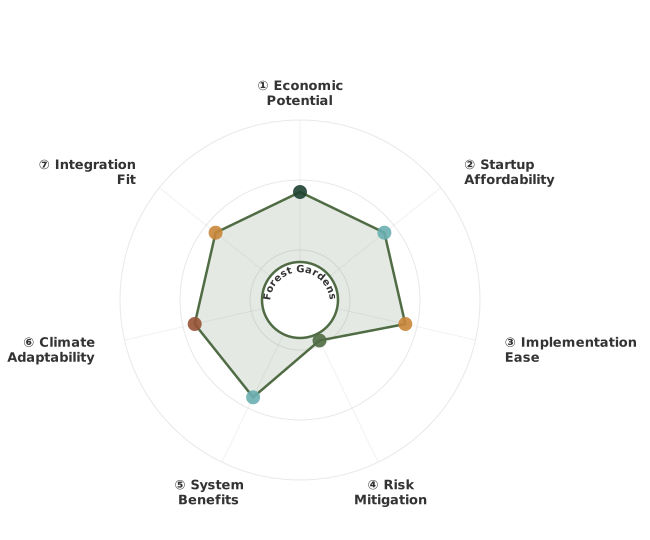
How These Traits Are Calculated
Trait dimensions are ordered clockwise starting from the top of the chart (12 o'clock position):
1. Economic Potential
Financial returns, annual value, and break-even timeline
WHAT: Evaluates financial viability by combining net annual value ($/ha from savings, income, and amortized harvests) with break-even timeline showing when practices pay for themselves.
WHY: Farmers need clear ROI understanding before committing resources. Fast payback (≤3 years) with strong returns (≥$300/ha) enables confident adoption, while long timelines (>10 years) restrict adoption to well-funded operations willing to wait for returns.
HOW: Calculated from net annual value in $/ha and break-even years. Exceptional (≥2.6): fast ROI ≤3 years + high value ≥$300/ha. Typical (1.8-2.5): moderate returns or longer timelines. Limited (<1.8): marginal economics or very long payback >10 years.
2. Startup Affordability
Initial investment costs and financial barrier to entry
WHAT: Measures financial barrier to entry through startup costs for equipment, infrastructure, consulting, and materials. Inverted scoring: lower costs = higher scores = more accessible adoption.
WHY: Affordability determines who can adopt. Low-cost practices (<$250/ha) enable widespread adoption across diverse scales, while high costs (>$2,500/ha) limit adoption to well-capitalized operations, creating barriers that slow regenerative transition.
HOW: Calculated from initial investment parsed from practice content. Inverted scoring: Exceptional (≥2.6): minimal investment <$250/ha. Typical (1.8-2.5): moderate costs $250-2,500/ha. Limited (<1.8): high barrier >$2,500/ha.
3. Implementation Ease
Learning curve and specialized knowledge required
WHAT: Measures how much learning, planning, and specialized knowledge a practice requires. Simpler practices with fewer steps score higher, while complex practices requiring extensive training or specialized resources score lower.
WHY: Complex practices create adoption barriers even when economically viable. Straightforward practices enable faster adoption and broader participation, while those requiring extensive training, timing precision, or specialized equipment limit who can succeed.
HOW: Evaluated by measuring documentation length and identifying complexity markers like location-specific requirements, seasonal timing windows, specialized skills, and dedicated equipment needs. Exceptional (≥2.6): straightforward practices with minimal prerequisites. Typical (1.8-2.5): moderate learning curve with some specialized needs. Limited (<1.8): steep learning curve requiring significant training or resources.
4. Risk Mitigation
Identified financial and ecological risk assessment
WHAT: Evaluates documented risks across financial (investment loss, market volatility) and ecological (crop failure, pest outbreaks) domains. Inverted scoring: fewer risks = higher scores.
WHY: Understanding risk exposure helps farmers make informed decisions. Low-risk practices allow confident implementation, while high-risk practices require careful planning and contingency resources. Risk transparency prevents costly failures.
HOW: Calculated from identified risks in practice content. Inverted scoring: Exceptional (≥2.6): ≤2 risks with manageable severity. Typical (1.8-2.5): 3-5 moderate risks. Limited (<1.8): 6+ risks or severe exposure.
5. System Benefits
How many ways the practice improves your land simultaneously
WHAT: Measures how many aspects of land health improve at once—carbon storage, soil quality, erosion control, water absorption, and biodiversity. Practices that improve multiple areas simultaneously create compounding benefits where each improvement reinforces the others.
WHY: The best practices solve multiple problems at once. For example, addressing erosion simultaneously builds carbon and improves water infiltration, creating a resilient system with positive feedback loops. Single-benefit approaches miss these compound transformation opportunities.
HOW: Evaluated across five key outcomes: carbon sequestration, soil organic matter increase, erosion reduction, water infiltration improvement, and biodiversity enhancement. Exceptional (≥2.6): high carbon storage (>8 t/ha/yr), improvements across 4-5 areas, transformative outcomes. Typical (1.8-2.5): moderate carbon (3-8 t/ha/yr), improvements across 2-3 areas. Limited (<1.8): modest impact (<3 t/ha/yr), single-area focus only.
6. Climate Adaptability
Geographic applicability across Köppen climate zones
WHAT: Evaluates geographic applicability by assessing how many Köppen climate zones successfully support a practice and what adaptation requirements are needed. Measures breadth of climates where farmers can implement with minimal to moderate modifications.
WHY: Universal practices working across diverse climates enable more farmers to adopt regenerative approaches. Practices limited to single climate types (only Mediterranean, only tropical) restrict adoption and slow global transition. Adaptability determines whether a practice serves niche regions or offers broad transformation.
HOW: LLM evaluation of regional success stories, Köppen zone coverage, and adaptation needs. Exceptional (≥2.6): 5+ zones or 4+ climate types, 3+ continents, minimal adaptation. Typical (1.8-2.5): 3-4 zones or 2-3 types, 2 continents, moderate adaptation. Limited (<1.8): 1-2 zones, single region, significant adaptation or highly specialized.
7. Integration Fit
How well this practice combines with others you're doing
WHAT: Measures how well a practice combines with other regenerative practices you might be doing. Some practices work as building blocks that make many other practices easier or more effective, while others work best on their own.
WHY: Practices that combine well with many others create more value on your farm. For example, cover cropping enables no-till, improves grazing, supports crop diversity, and helps water management—making all of them work better together. This helps you build a coherent system rather than juggling disconnected practices.
HOW: Evaluated by identifying which practices combine well and how strong those combinations are. 'Ideally Suited' means strong combinations where practices reinforce each other (practice A makes B easier, while B makes A more effective). 'Adequate' means complementary benefits that work well together. Exceptional (≥2.6): combines well with 6+ practices, serves as a building block. Typical (1.8-2.5): combines with 3-5 practices. Limited (<1.8): 1-2 practices or works best alone.
Going Deeper
1
WHY - The Benefits
Forest gardens represent a holistic approach to land management, integrating food production with ecological regeneration. Their primary benefits span soil health, economic diversification, water cycle enhancement, carbon sequestration, and biodiversity promotion, all...
Forest gardens represent a holistic approach to land management, integrating food production with ecological regeneration. Their primary benefits span soil health, economic diversification, water cycle enhancement, carbon sequestration, and biodiversity promotion, all...
WHY - The Benefits
Forest gardens represent a holistic approach to land management, integrating food production with ecological regeneration. Their primary benefits span soil health, economic diversification, water cycle enhancement, carbon sequestration, and biodiversity promotion, all...
Forest gardens represent a holistic approach to land management, integrating food production with ecological regeneration. Their primary benefits span soil health, economic diversification, water cycle enhancement, carbon sequestration, and biodiversity promotion, all...
Soil Health Benefits
The perennial nature of forest gardens is fundamental to soil health. With continuous living roots year-round (Principle 4), soil is protected from erosion and compaction. The dense canopy cover and leaf litter (Principle 3) further shield soil from harsh weather, reducing moisture loss and maintaining a stable microclimate. Over time, the decomposition of diverse organic matter from multiple plant layers significantly increases soil organic matter content, typically by a long-term average of 0.5-1.5% per decade across the entire soil profile, leading to improved soil structure, water-holding capacity, and nutrient availability.
The diverse root systems of forest gardens—ranging from deep taproots of canopy trees to fibrous roots of grasses and herbaceous plants—create macropores and channels that enhance water infiltration and aeration. This prevents waterlogging and drought stress, with studies showing silvopasture systems (a related practice) improving water infiltration by 40-70%. The increased organic matter acts like a sponge, helping soils retain moisture, making the system more resilient to drought. This also reduces surface runoff, protecting water quality downstream.
The rich diversity of plant species in a forest garden fosters a correspondingly diverse soil food web. Different plant roots exude different compounds, feeding a wide array of bacteria, fungi, protozoa, nematodes, and larger soil fauna like earthworms. This complex microbial community plays crucial roles in nutrient cycling, breaking down organic matter, mineralizing nutrients, and suppressing soil-borne diseases. The absence of tillage (Principle 1) preserves this intricate soil biology, unlike conventional annual cropping systems that disrupt these delicate relationships.
Erosion is dramatically reduced due to continuous ground cover and the stabilizing effect of interwoven root systems. Leaf litter acts as a mulch, dissipating the energy of raindrops, preventing soil crusting, and promoting healthy soil aggregation. This protection is vital for maintaining soil structure and preventing the loss of fertile topsoil, especially on sloped landscapes.
Economic Benefits
Forest gardens offer a unique economic proposition through diversified income streams and reduced input costs over the long term. Unlike annual crops that require replanting each year, forest gardens, once established, produce yields for decades, sometimes centuries. This perennial income stream provides significant economic resilience.
Initial establishment costs are higher due to the purchase of diverse perennial species, site preparation, and the longer time to first harvest. However, these costs are offset by multiple revenue opportunities. Canopy trees can yield valuable timber, nuts (e.g., walnuts, chestnuts, pecans), or fruits. Understory layers provide berries (e.g., blueberries, raspberries), edible leaves, medicinal herbs, firewood, and more. The ground layer offers perennial vegetables (e.g., asparagus, rhubarb), culinary herbs, and pollinator-attracting flowers. This multi-product output diversifies income and mitigates the risk associated with reliance on a single crop's market price.
As the forest garden matures (typically 5-10 years), input costs decrease significantly. Fertilizer needs are met by nutrient cycling from leaf litter and root decomposition. Pest and disease management becomes more balanced due to the diverse ecosystem that supports beneficial insects and natural predators. Water requirements may also decrease as soil organic matter improves water retention. This reduction in annual operating expenses increases net profitability over the lifespan of the system.
Markets for niche-produced, regeneratively grown, and diverse food products (like specialty fruits, nuts, herbs, and dynamic accumulator plants) are growing, allowing producers to command premium prices. Direct-to-consumer sales, farmers' markets, and local food hubs can capture more of the final value. For example, temperate forest gardens can yield a succession of harvests from spring through late autumn, providing continuous product availability.
The long-lived nature of forest gardens also represents an investment in land equity. The system builds soil fertility and ecological function, increasing the land's intrinsic value and productivity capacity for future generations. This contrasts with annual cropping systems that can degrade soil over time, diminishing land value.
Regenerative Systems Fit
Forest gardens are a cornerstone of regenerative agriculture, inherently supporting multiple principles. They embody a holistic integration of ecological and economic goals.
Principle 1 (Minimize Soil Disturbance): The fundamental design of forest gardens relies on perennial plants, eliminating the need for annual tillage. Once established, the soil ecosystem is largely undisturbed, allowing for the natural development of soil structure, nutrient cycles, and microbial communities. Root systems create stable channels and aggregates, contributing to soil health without mechanical intervention.
Principle 2 (Maximize Crop Diversity): Forest gardens are a prime example of polycultures, integrating a wide array of species and varieties in vertical and horizontal layers. This complexity above ground translates to complexity below ground, fostering a rich soil food web. Diversity is key to resilience, buffering against pests, diseases, and environmental stresses, and ensuring varied ecosystem functions.
Principle 3 (Keep Soil Covered): The multi-layered canopy structure of forest gardens ensures the soil surface is continuously covered by living plants, leaf litter, and mulch. This protection prevents erosion, conserves moisture, moderates soil temperature, and provides habitat for beneficial organisms, contributing to a stable and active soil ecosystem.
Principle 4 (Maintain Living Roots): Perennial species in forest gardens ensure that living roots are in the soil for most, if not all, of the year. This sustained biological activity fuels soil microbial communities, drives nutrient cycling, and continuously builds soil structure through root exudates and the decomposition of root biomass.
Principle 5 (Integrate Livestock): While not always direct, forest gardens can be designed to integrate livestock, particularly poultry for pest control and nutrient cycling, or managed grazing systems in the alleyways during specific periods. This integration can further enhance nutrient cycling and land management efficiency.
Forest gardens serve as a bridge for transitioning conventional or degraded land to a fully regenerative state. They offer a pathway that builds ecological capital while generating diverse and resilient income streams. The gradual establishment period allows farmers to adapt management practices and gain experience with perennial systems. Forest gardens are compatible with and enhance other regenerative practices like agroforestry, silvopasture, keyline design, and permaculture principles, creating synergistic benefits within the broader farming landscape. They represent a move from extractive agriculture toward creating closed-loop systems that mimic natural ecosystems.
Sources behind this view
Videos & Podcasts
-
Agroforestry expert Martin Crawford explains forest gardens as sustainable, perennial-based systems mimicking natural ecosystems, designed to maximize plant interactions, enhance biodiversity, and ada
-
Explains how to create a 'tactical food forest' in underutilized spaces by layering plants, establishing a defensive perimeter with thorny species, and using nitrogen-fixing plants for soil health. Em
-
Food forest design requires understanding local conditions and plant complementarity. Key species include nitrogen-fixers for fertility and deep-rooters for soil structure. Early yields come from frui
-
Design forest gardens by including nitrogen fixers, ground covers, and perennial vegetables. Select low-maintenance, productive species and embrace a process that works with nature, rather than agains
Community
-
Geoff Lawton's food forest establishment method involves tiered nitrogen-fixing support species (ground cover, short/medium/long-term trees) planted with productive trees. Techniques like chop-and-dro
Read more (opens in new window) permies.com -
Steps to start a food forest: 1. Observe site (sun, wind, microclimates, wildlife, water flow). 2. Design zones, water bodies, and plant placement. 3. Prepare soil, using sheet mulching. 4. Create pla
Read more (opens in new window) permies.com -
Community food forests are urban agroforestry projects mimicking forest ecosystems to grow diverse perennial and annual foods for free public harvesting, serving as educational resources and testing g
Read more (opens in new window) smallfarms.cornell.edu -
Forest gardens mimic woodland ecosystems using layered perennial plants to produce diverse yields like fruits, vegetables, nuts, herbs, and medicinal plants, while also providing non-edible resources
Read more (opens in new window) www.permaculture.org.uk
Research
-
Regenerative Food Forest: A Case Study of Vanya Organic Farm (opens in new window)
This study found: Vanya Organic Farm case study shows a food forest model using native plants and Vetiver Grass for carbon capture and waste-to-fuel/fertilizer production, suggesting a link between these farms and CBG
-
Food forests: Their services and sustainability (opens in new window)
This study found: Global study of food forests shows strong social and environmental benefits (biodiversity, soil health) but highlights a need to improve economic viability for wider adoption and impact.
-
Agroforestry: The North American Perspective (opens in new window)
This study found: Agroforestry integrates trees with crops/livestock, offering environmental benefits like climate adaptation and mitigation. Key North American practices include alley cropping, silvopasture, and ripar
-
Regenerative Agriculture: Restoring Ecosystems¢ Resilience and Productivity: A Review (opens in new window)
This study found: Regenerative agriculture builds soil health and ecosystem services through practices like no-till, cover crops, and diverse rotations. It increases soil organic matter, improves water infiltration, bo
From the Web
-
Forest gardens are multi-strata perennial polycultures mimicking forest edges for diverse yields. Planning involves defining goals, assessing social/environmental context (climate, soil, topography),
-
Forest garden planning involves assessing social/environmental factors, inventorying resources, and mapping zones/sectors. Ecological design emphasizes species selection (native, climate-resilient), m
-
Forest garden installation and maintenance involve intensive labor, using nurse plants for soil improvement, and amending soil based on tests. Water management via earthworks and weed control through
-
Forest gardens/food forests mimic natural forests with multiple vertical layers of edible plants, maximizing carbon storage in biomass and organic matter, sequestering an estimated 18.2 tonnes CO2e/ac
2
WHERE - Regional Considerations
Forest gardens are adaptable to a wide range of climates, but species selection and design must be tailored to specific regional conditions for success.
Forest gardens are adaptable to a wide range of climates, but species selection and design must be tailored to specific regional conditions for success.
WHERE - Regional Considerations
Forest gardens are adaptable to a wide range of climates, but species selection and design must be tailored to specific regional conditions for success.
Forest gardens are adaptable to a wide range of climates, but species selection and design must be tailored to specific regional conditions for success.
Click Here to Look up your Region if you don't already know it
Temperate Regions (Cool Summers, Cold Winters, Moderate Rainfall)
Representative Locations: Pacific Northwest USA, much of Northern Europe (UK, France, Germany), Eastern China, Hokkaido Japan, Southern Chile, Tasmania Australia. Climate Context: USDA Zones 4-7, Köppen Cfb/Dfb. Distinct seasons with cold winters, warm or cool summers, and moderate annual rainfall (75-150 cm or 30-60 inches), often distributed year-round or with a summer peak. Considerations: Focus on cold-hardy fruit and nut trees (apples, pears, plums, cherries, walnuts, chestnuts, hazelnuts), hardy berries (blueberries, raspberries, currants), and robust perennial vegetables. Winter protection for young trees may be needed. Longer growing seasons at the warmer end of this spectrum allow for more diverse fruiting or nut crops. Shorter growing seasons at the cooler end favor early-ripening varieties and plants that can tolerate frost.
Humid Subtropical Regions (Hot, Humid Summers, Mild Winters)
Representative Locations: Southeastern USA, Southern China, parts of Australia (e.g., Brisbane), Brazil (e.g., southern states), Japan (southern islands). Climate Context: USDA Zones 8-10, Köppen Cfa/Cwa. Characterized by high temperatures and humidity in summer, mild winters with infrequent frost. Ample rainfall, often high in summer. Considerations: Excellent for subtropical fruits (citrus, figs, pomegranates), larger nut trees, and a wide array of berries and perennial vegetables. Humidity can increase fungal disease pressure, necessitating careful species selection for disease resistance and good air circulation. May support year-round production of some crops.
Mediterranean Regions (Hot, Dry Summers; Mild, Wet Winters)
Representative Locations: California, Mediterranean basin (Spain, Italy, Greece), parts of South Africa, Chile, Australia. Climate Context: USDA Zones 8-10, Köppen Csa/Csb. Distinct dry summers and wet winters. Annual rainfall, typically 40-90 cm (15-35 inches), is highly seasonal. Considerations: Ideal for drought-tolerant species such as olives, figs, pomegranates, almonds, pistachios, and many Mediterranean herbs. Water management is critical; focus on species that can tolerate dry spells or design for water harvesting (swales, basins). Consider native plants adapted to local xeriscape conditions.
Arid and Semi-Arid Regions (Low Rainfall, Extreme Temperatures)
Representative Locations: Southwestern USA, North Africa, Central Asia, parts of Australia's interior. Climate Context: Köppen BSh/BSk. Low annual precipitation (<40 cm or 15 inches), high evaporation rates, and significant temperature fluctuations. Growing seasons can be short and unpredictable. Considerations: Requires extreme drought tolerance. Focus on native food-producing plants, xeriscape species, and careful water harvesting techniques (e.g., swales, retention basins, ollas for irrigation). Species like mesquite, jujubes, certain palms, and drought-hardy nut trees can be successful. Shading is crucial for temperature regulation. Often more challenging for diverse forest gardens and may resemble orchards with strategic understory plantings.
Tropical Regions (High Temperatures, High Rainfall or Distinct Wet/Dry Seasons)
Representative Locations: Southeast Asia, Central Africa, Northern South America, Northern Australia, Caribbean. Climate Context: Köppen Af/Am/Aw. Consistently warm to hot temperatures year-round. High rainfall distributed fairly evenly (Af/Am) or with distinct wet and dry seasons (Aw). Considerations: Supports a vast array of subtropical and tropical fruit trees (mango, papaya, avocado, banana, jackfruit, durian), nut trees, and a rich diversity of edible and medicinal plants. Requires careful consideration of humidity, disease pressure, and management during wet/dry cycles. Shade is important for some species, while others thrive in full sun. Succession planting and managing for continuous harvests are key.
3
HOW - Implementation Process
HOW - Implementation Process
- Site Assessment: Evaluate soil type, drainage, slope, microclimates, existing vegetation, water sources, and sunlight patterns. Understand your region's specific climate (rainfall, frost dates, temperature extremes).
- Goals Definition: What do you want to harvest? (Food, timber, herbs, medicine, ecological benefits). What is your scale and budget?
- Species Research: Choose plants adapted to your climate, soil, and sunlight conditions, focusing on multi-functional species that support each other. Prioritize native or well-adapted non-invasive species.
- Design Tools: Sketch a map of your site, noting contours, water flow, and sun/shade patterns. Consider plant guilds and succession planting.
Phase 1: Site Preparation and Design (Months 1-3)
- Layout: Mark out zones for different layers (canopy trees, understory, groundcover, vines). Define pathways for access and harvesting. Consider water harvesting features like swales or keyline plows on slopes.
- Soil Preparation: Gently amend soil if needed with compost or well-rotted organic matter. Avoid deep tillage; focus on surface improvement. If existing vegetation is robust, consider sheet mulching (lasagna gardening) to suppress weeds and build soil. On severely degraded land, this phase may involve initial soil remediation as described in the "One-Time Tillage" context.
- Planting Plan: Determine the order of planting. Often, canopy trees are planted first to establish structure and shade, followed by understory layers, and then groundcovers and vines.
Phase 2: Establishment Planting (Year 1-3)
- Planting Canopy Trees: Plant fruit, nut, and timber trees first. Spacing depends on mature size, but consider 9-15 m (30-50 ft) for large trees, potentially closer for timber plantations with future thinning.
- Understory Layer: Plant berry bushes, nitrogen-fixing shrubs, and smaller fruiting trees in the gaps, considering their light requirements and mature size.
- Groundcover and Herbaceous Layers: Introduce perennial vegetables, culinary and medicinal herbs, dynamic accumulators, and pollinator-attracting plants. These fill in the lower layers and suppress weeds.
- Vines and Climbers: Train vines up trees or trellises where appropriate.
- Mulching: Apply a thick layer of organic mulch (wood chips, straw, compost) around all newly planted material to conserve moisture, suppress weeds, and improve soil.
Phase 3: Growth and Development (Year 3-7)
- Ongoing Watering: Ensure adequate water for young plants, especially during dry periods. Water harvesting features become more effective as they establish.
- Weed Management: Focus on mulching and cover cropping in pathways or understocked areas. Hand-weeding or targeted removal of invasive species as needed.
- Pruning and Thinning: Prune fruit trees for production and structure. Thin timber trees for optimal growth. Manage competing vegetation to ensure desired species thrive.
- First Harvests: Begin harvesting from earlier-producing species like berries, herbs, and some vegetables.
Phase 4: Maturation and Harvesting (Year 7+)
- Full Production: Trees and shrubs reach maturity, providing substantial yields of fruits, nuts, timber, or other products.
- System Self-Regulation: The established ecosystem becomes more self-sufficient. Nutrient cycling improves, pest outbreaks are reduced by biodiversity, and soil health is significantly enhanced.
- Harvesting Diversity: Manage the perennial harvest streams for continuous income and food security throughout the year.
- System Adaptation: Continue to observe, adapt, and reinvest in the system. Replace underperforming species, manage for long-term ecological health, and refine harvesting and processing techniques.
Transition Timeline & Phase-Out Strategy
Forest gardens are inherently regenerative, so there are no non-regenerative inputs to phase out. The transition is about the land and management practices.
- Year 0-1: Site assessment, design, and initial planting. If transitioning from conventional agriculture, this might involve a final season of reduced tillage, cover cropping, and minimal synthetic inputs while preparing for perennial establishment.
- Year 2-5: Focus on establishment. Wean off any temporary synthetic fertilizers or pesticides used to ensure early plant survival; rely on compost, mulch, and natural fertility. Ensure soil is continuously covered.
- Year 5-10: System begins to produce significant yields. Management shifts from establishment to ongoing harvesting, pruning, and ecological maintenance. Focus on building soil organic matter and biodiversity.
- Year 10+: Fully mature forest garden. Minimal external inputs required. Focus on harvesting, system refinement, and long-term ecological balancing.
The transition is complete when the forest garden is a self-regulating ecosystem producing diverse yields with minimal external intervention, and the soil is demonstrably healthier and more alive than before establishment.
Sources behind this view
Videos & Podcasts
-
Agroforestry expert Martin Crawford explains forest gardens as sustainable, perennial-based systems mimicking natural ecosystems, designed to maximize plant interactions, enhance biodiversity, and ada
-
Explains how to create a 'tactical food forest' in underutilized spaces by layering plants, establishing a defensive perimeter with thorny species, and using nitrogen-fixing plants for soil health. Em
-
Provides 'cheat codes' for accelerating food forest production through smart design, including using early-producing species, fall planting of bare-root trees, enhancing soil with compost/extracts, in

-
Food forest design requires understanding local conditions and plant complementarity. Key species include nitrogen-fixers for fertility and deep-rooters for soil structure. Early yields come from frui
Community
-
Steps to start a food forest: 1. Observe site (sun, wind, microclimates, wildlife, water flow). 2. Design zones, water bodies, and plant placement. 3. Prepare soil, using sheet mulching. 4. Create pla
Read more (opens in new window) permies.com -
Geoff Lawton's food forest establishment method involves tiered nitrogen-fixing support species (ground cover, short/medium/long-term trees) planted with productive trees. Techniques like chop-and-dro
Read more (opens in new window) permies.com -
Forest gardens mimic woodland ecosystems with seven plant layers (canopy, vines, shrubs, herbaceous, ground cover, roots) to produce food with minimal inputs and labor, enhancing biodiversity and pest
Read more (opens in new window) www.permaculture.org.uk -
Community food forests are urban agroforestry projects mimicking forest ecosystems to grow diverse perennial and annual foods for free public harvesting, serving as educational resources and testing g
Read more (opens in new window) smallfarms.cornell.edu
Research
-
Regenerative Food Forest: A Case Study of Vanya Organic Farm (opens in new window)
This study found: Vanya Organic Farm case study shows a food forest model using native plants and Vetiver Grass for carbon capture and waste-to-fuel/fertilizer production, suggesting a link between these farms and CBG
-
Food forests: Their services and sustainability (opens in new window)
This study found: Global study of food forests shows strong social and environmental benefits (biodiversity, soil health) but highlights a need to improve economic viability for wider adoption and impact.
-
Agroforestry: The North American Perspective (opens in new window)
This study found: Agroforestry integrates trees with crops/livestock, offering environmental benefits like climate adaptation and mitigation. Key North American practices include alley cropping, silvopasture, and ripar
From the Web
-
Forest garden planning involves assessing social/environmental factors, inventorying resources, and mapping zones/sectors. Ecological design emphasizes species selection (native, climate-resilient), m
-
Forest gardens are multi-strata perennial polycultures mimicking forest edges for diverse yields. Planning involves defining goals, assessing social/environmental context (climate, soil, topography),
4
Know the Debate
Forest gardens offer a regenerative approach to food production, mimicking natural ecosystems for enhanced soil health, biodiversity, and resilient...
Know the Debate
Forest gardens offer a regenerative approach to food production, mimicking natural ecosystems for enhanced soil health, biodiversity, and resilient...
Forest gardens offer a regenerative approach to food production, mimicking natural ecosystems for enhanced soil health, biodiversity, and resilient yields. Their success and productivity vary significantly based on location and scale. In temperate climates with adequate rainfall, early harvests of berries and herbs are possible within 2-3 years, but significant yields take 5-10 years, with full maturity in 10-20. Tropical regions can establish yield faster with a wider species palette. Costs range widely, from $2,000/acre for DIY on small plots to $5,000-$9,000/acre for commercial mid-scale operations, primarily for plant materials and labor, with ongoing costs decreasing over time.
How long until forest gardens produce significant yields?
Yields in 2-3 years (Temperate/Optimized Design)
Field practitioners report significant, albeit specialized, harvests like berries and herbs within 2-3 years by focusing on fast-establishing species and optimized designs in temperate climates. This requires careful species selection and management for early productivity.
Sources behind this view
Sources behind this view
Videos & Podcasts
-
A food forest mimics forest ecology by planting edible species in layers (trees, shrubs, climbers). Plant spacing is crucial and depends on latitude; further from the equator, more space is needed for sunlight penetration, creating a cost-effective vertical farm effect.

-
Implement 'fast food gardens' with 'eat all greens' plants (kale, chard) for quick food. Develop food forests with multiple plant layers and nitrogen fixers for hidden, self-regenerating food storage.

Yields in 3-10 years (Temperate/Mature)
Institute resources suggest initial harvests begin in 3-5 years for temperate forest gardens, with more substantial yields emerging by year 10 as trees mature. Academic research concurs that temperate forest agroforestry systems require this longer timeframe for structural and production maturity.
Sources behind this view
Sources behind this view
Research
-
Food forests: Their services and sustainability (opens in new window)
This study found: This study looked at over 200 food forests (edible forest gardens) around the world, focusing in detail on 14 examples in Europe, North America, and South America. Researchers found that these food forests are generally very good at providing social benefits like community building and education, and environmental benefits like increasing wildlife and improving soil health. However, for food forests to have a bigger impact and be more widely adopted, they need to become more economically successful. The study suggests that better training and specific actions are needed to help food forests improve their financial viability, making them a more robust part of sustainable food systems.
From the Web
-
Forest garden planning involves assessing social/environmental factors, inventorying resources, and mapping zones/sectors. Ecological design emphasizes species selection (native, climate-resilient), mimicking forest layers, and grouping plants into guilds to optimize resource use and minimize competition. Establishment requires proper planting, soil amendment, water management, and weed/pest control.
-
Forest garden installation and maintenance require intensive management, including using nurse plants for soil fertility, proper planting techniques, and resource management. Weed, pest, and disease control methods like occultation, IPM, and organic sprays are detailed. Water management via earthworks and irrigation is crucial.
Yields up to 20 years (Full Maturity/Specific Products)
Full ecological and economic maturity, especially for nut and timber crops, can take 10-20 years. This longer timeframe accounts for tree growth, ecosystem stabilization, and the development of complex nutrient cycles.
Sources behind this view
Sources behind this view
Research
-
Food forests: Their services and sustainability (opens in new window)
This study found: This study looked at over 200 food forests (edible forest gardens) around the world, focusing in detail on 14 examples in Europe, North America, and South America. Researchers found that these food forests are generally very good at providing social benefits like community building and education, and environmental benefits like increasing wildlife and improving soil health. However, for food forests to have a bigger impact and be more widely adopted, they need to become more economically successful. The study suggests that better training and specific actions are needed to help food forests improve their financial viability, making them a more robust part of sustainable food systems.
From the Web
-
Forest gardens are multi-strata perennial polycultures mimicking forest edges for diverse yields. Planning involves defining goals, assessing social/environmental context (climate, soil, topography), and inventorying resources. Developed by NCAT and University of Missouri.
Making Sense of the Differences
The timeline for forest garden yields depends on climate, species, and management. Temperate systems with careful species choice can yield some food in 2-3 years, while significant harvests of fruits and nuts often take 5-10 years, and full maturity yielding timber or complex products may take 10-20 years. Farmers should plan for a staged development, aligning species choice with their desired timeline and region.
What are the land size and design complexity prerequisites for forest gardens?
Scalable from Backyard to Commercial
Forest gardens can be implemented at various scales, from small backyard plots (0.1-0.5 acres) to larger community or commercial operations (1+ acres), with simplified designs focusing on key layers and plants.
Sources behind this view
Sources behind this view
Videos & Podcasts
-
Food forests are multi-layered, species-rich agricultural systems using perennial edible plants, mimicking natural forests. Historically used in tropics, they are now adapted for temperate climates, requiring adjustments for lower winter sunlight.
-
Design food forests as diverse, layered orchards starting with woody perennials, then adding herbaceous plants, herbs, and vegetables. Include convenient kitchen gardens and clear pathways for accessibility and enjoyment.

Optimal for Mid-to-Large Scale and Complex Design
Institute resources often emphasize complex designs with multiple layers and ecological functions, suggesting that larger scales (1+ acres) are necessary to fully realize the benefits and economic potential, especially for commercial operations.
Sources behind this view
Sources behind this view
Research
-
Introducing urban food forestry: a multifunctional approach to increase food security and provide ecosystem services (opens in new window)
This study found: This research introduces 'urban food forestry' (UFF) – a way to combine city farming, urban tree planting, and agroforestry to make cities more sustainable and improve access to food. The study looked at existing city food tree projects and found many weren't fully utilizing their potential, often only focusing on planting or harvesting, not both. City tree management plans also rarely considered food security, prioritizing wildlife habitat instead. In Burlington, Vermont, a case study showed that planting apple trees (Malus domestica) in public spaces could potentially provide more than the city's entire daily fruit needs under ideal conditions. The researchers also created a guide to help choose suitable food trees for temperate city environments, identifying 30 'highly suitable' species that can handle cold, dry weather and produce edible fruit.
From the Web
-
Forest gardens are multi-strata perennial polycultures mimicking forest edges for diverse yields. Planning involves defining goals, assessing social/environmental context (climate, soil, topography), and inventorying resources. Developed by NCAT and University of Missouri.
-
Forest garden planning involves assessing social/environmental factors, inventorying resources, and mapping zones/sectors. Ecological design emphasizes species selection (native, climate-resilient), mimicking forest layers, and grouping plants into guilds to optimize resource use and minimize competition. Establishment requires proper planting, soil amendment, water management, and weed/pest control.
Making Sense of the Differences
Forest gardens are adaptable to various scales, from intensive backyard systems providing household food security to larger commercial operations aiming for diverse market products. Smaller plots can focus on key edible layers and faster-yielding species, while larger scales allow for diverse timber, nut, and fruit production across all seven layers. Complexity can be scaled with management capacity, not strictly limited by land size.
How do forest gardens primarily build soil organic matter?
Passive Biomass Accumulation
Many sources emphasize the role of decomposing leaf litter, woody debris, and root exudates from diverse perennial species in naturally increasing soil organic matter over time, mimicking forest succession.
Sources behind this view
Sources behind this view
Videos & Podcasts
-
Food forests, as a site-specific permaculture design, are not universal but excel in certain settings for sustainable food production. They increase resilience, food security, and soil fertility while sequestering carbon, contrasting with declining monoculture systems.
Research
-
Food forests: Their services and sustainability (opens in new window)
This study found: This study looked at over 200 food forests (edible forest gardens) around the world, focusing in detail on 14 examples in Europe, North America, and South America. Researchers found that these food forests are generally very good at providing social benefits like community building and education, and environmental benefits like increasing wildlife and improving soil health. However, for food forests to have a bigger impact and be more widely adopted, they need to become more economically successful. The study suggests that better training and specific actions are needed to help food forests improve their financial viability, making them a more robust part of sustainable food systems.
From the Web
-
Food forests mimic forest structure with up to eight vertical layers of edible, medicinal, and habitat-providing plants. Key practices include selecting diverse species for pest control and soil health, managing plant competition, and considering site-specific conditions.
Active Biological Interventions
Some practitioners highlight the importance of integrating specific species like nitrogen-fixing plants (legumes, alder) and using mycorrhizal inoculants to actively accelerate soil organic matter buildup and nutrient cycling.
Sources behind this view
Sources behind this view
Videos & Podcasts
-
Food forest design requires understanding local conditions and plant complementarity. Key species include nitrogen-fixers for fertility and deep-rooters for soil structure. Early yields come from fruits/berries, later from nuts like sweet chestnut. Minimal maintenance needed, no pesticides/fertilizers.
-
Explains food forest design mimicking natural ecology with edible and medicinal plants, support species like alfalfa for nitrogen fixation, aiming for a self-managing ecosystem that builds soil and supports biodiversity.

Research
-
Designing multifunctional urban agroforestry with people in mind (opens in new window)
This study found: Combining trees and crops in city spaces, known as urban agroforestry (UAF), can provide more environmental and community benefits than traditional city farming. While more people are interested in building these systems, the science behind them is still developing. Creating successful urban food forests means understanding the unique challenges and opportunities of city environments, such as recycling nutrients from waste back into food production. The authors suggest using a design approach that combines ecological principles with an understanding of how people interact with nature and landscapes. This approach, supported by research in urban farming, environmental psychology, and landscape design, can lead to urban food forests that are not only productive but also socially beneficial and help cities reuse resources more effectively. The paper offers design guidelines and suggests areas for future study.
Making Sense of the Differences
Soil building in forest gardens involves both passive organic matter contribution from diverse perennial biomass and active enhancement through nitrogen-fixing plants and mycorrhizal fungi. While passive accumulation is foundational, strategic integration of specific biological components can accelerate soil development, particularly in less fertile conditions. Acknowledging both facets provides a more complete understanding of forest garden soil health benefits.
5
HOW MUCH - Costs & Investment
Note: All costs are in USD equivalent and will vary significantly by region based on local labor rates, material availability, and land costs. Currency conversion and local pricing should be researched.
Note: All costs are in USD equivalent and will vary significantly by region based on local labor rates, material availability, and land costs. Currency conversion and local pricing should be researched.
HOW MUCH - Costs & Investment
Note: All costs are in USD equivalent and will vary significantly by region based on local labor rates, material availability, and land costs. Currency conversion and local pricing should be researched.
Note: All costs are in USD equivalent and will vary significantly by region based on local labor rates, material availability, and land costs. Currency conversion and local pricing should be researched.
Note: All costs are based on recent US economic data (2024–2026) and may vary substantially by region based on local labor rates, material costs, and regulatory requirements.
Design and Planning
Comprehensive horticultural design provides the roadmap for success and dictates the efficiency of future labor. For a small-scale operation under 50 acres (20 ha), professional design services range from $521 to $2,605, accounting for basic site layout and species selection. Mid-size operations covering 50–500 acres (20–202 ha) typically invest between $1,563 and $6,252 for detailed agroforestry mapping and consultation. Large-scale projects exceeding 500 acres (202 ha) face higher costs, ranging from $4,168 to $15,630+, as these budgets must incorporate specialized drone-assisted topography analysis, complex hydrological engineering, and regulatory compliance coordination for water management structures.
Site Preparation and Soil Amendments
Preparation costs fluctuate based on baseline land conditions and existing cover. Small-scale sites require intensive intervention, typically spending $417 to $1,876 per acre ($1,030–$4,636/ha) for tilling, cover cropping, and heavy organic mulching to suppress weeds. Mid-size farms reduce costs to $313 to $1,250 per acre ($773–$3,089/ha) by shifting toward mechanical mowing and large-scale compost spreading. Large-scale operations realize significant economies of scale, keeping costs between $156 and $625 per acre ($385–$1,544/ha) by utilizing wide-reach machinery and bulk sourcing for required soil amendments, prioritizing rapid coverage over individual plant care.
Plant Materials
Procurement strategies change as scale shifts. Small-scale operators often prefer fast-producing nursery stock to generate short-term revenue, spending $1,250 to $4,168 per acre ($3,089–$10,299/ha). Mid-size farms balance cost and growth by utilizing bareroot saplings, investing $834 to $2,605 per acre ($2,061–$6,437/ha). Large-scale operations prioritize massive density, spending $417 to $1,250 per acre ($1,030–$3,089/ha) by heavily integrating bulk seeds and nursery plugs, which effectively lowers the cost per individual unit planted.
Planting Labor
Small-scale setups rely heavily on manual precision and site-specific layout, costing $834 to $2,605 per acre ($2,061–$6,437/ha). Mid-size operations utilize a hybrid approach of machine-assisted digging and targeted manual labor, budgeting $521 to $1,563 per acre ($1,287–$3,862/ha). Large-scale enterprises minimize the human labor footprint to $208 to $834 per acre ($514–$2,061/ha), relying almost exclusively on high-efficiency, tractor-mounted augers and mechanized planting lines that cover acreage significantly faster.
Irrigation and Water Harvesting
Water infrastructure is tailored to the site's specific ecological needs. Small-scale installations frequently require permanent, high-maintenance drip systems at $521 to $2,084 per acre ($1,287–$5,150/ha). Mid-size farms, often integrated with existing reservoirs, cost $313 to $1,042 per acre ($773–$2,575/ha). Large-scale operations, which leverage topography, focus on "invisible" infrastructure—earthmoving for contour swales, berms, and ponds—at costs of $156 to $625 per acre ($385–$1,544/ha) rather than investing in extensive plastic irrigation tubing.
Protection (Fencing and Guards)
Initial protection against browse is essential for tree establishment. Small sites require individual tree tubes and exclusion fencing, costing $625 to $2,605 per acre ($1,544–$6,437/ha). Mid-size farms target perimeter security, typically spending $313 to $1,042 per acre ($773–$2,575/ha). Large-scale areas manage the landscape via perimeter electric fencing or strategic wildlife deterrents for $104 to $521 per acre ($257–$1,287/ha), as small-scale individual protection is economically prohibitive at high plant volumes.
Most Spend: The middle 60% of most operations falls within a total initial expenditure range of $2,300 to $6,100 per acre ($5,683–$15,073/ha), depending on the intensity of initial earthworks and irrigation design.
Why the Range?: Costs deviate based primarily on the starting land condition—virgin land with dense brush requires significantly more site preparation—and the grower’s choice of planting stock density, which directly impacts labor and nursery material expenditures.
Sources behind this view
Videos & Podcasts
-
Guidance on creating budget sheets for perennial crop establishment, focusing on accurate calculation of plants per acre, establishment costs, and the true cost of labor. It covers pre-production and
-
Food forest establishment has high initial costs (€10-30k/ha) but yields early produce with good design. Management involves 'succession' and 'conducting' plant growth. Increased pruning can boost tre
6
REWARDS AND RISKS - Economics & Risk Factors
REWARDS AND RISKS - Economics & Risk Factors
Economic Scenarios In a Best Case Scenario, a $4,168/acre ($10,299/ha) investment reaches full maturity with intensive management. By Year 6, diversified yields (e.g., berries and medicinal herbs) generate $1,250/acre ($3,089/ha). By Year 12, production peaks, with high-value nut crops and timber thinning yielding $4,689–$7,815/acre ($11,587–$19,311/ha) annually. ROI is achieved by Year 15, with maintenance costs effectively stabilized at approximately 15% of gross annual revenue.
In a Typical Case Scenario, a $3,126/acre ($7,725/ha) investment experiences measured growth. Year 5 yields are roughly $417/acre ($1,030/ha). By Year 10, income reaches $1,876/acre ($4,636/ha), covering most maintenance. By Year 15, annual revenue hits $3,126/acre ($7,725/ha). While cash flow remains modest, annual land value appreciation of 2–5% provides a significant secondary asset benefit.
In a Worst Case Scenario, a $6,252/acre ($15,449/ha) investment suffers from poor initial establishment, such as failed irrigation or heavy herbivore damage. Year 5 returns remain near zero. By Year 10, production limps along at $521/acre ($1,287/ha), failing to cover the $1,042/acre ($2,575/ha) annual maintenance. Total loss mitigation requires an additional 5–10 years of intensive re-investment or strategic conversion back to annual cropping to stabilize the balance sheet.
Market Factors Profitability is hyper-linked to crop selection. High-value perennials like elderberry or gourmet fungi create immediate, positive cash flow, whereas nuts and timber function more like long-term pension funds. Direct-to-consumer sales, such as specialized CSAs, are vital; growers relying on wholesale commodity markets often struggle because forest garden produce is rarely competitive at bulk tonnage prices. Value-added processing—such as turning raw berries into jams or medicinal extracts—can increase the revenue margin by over 100% per unit, representing the most consistent path toward profitability in this sector.
Risk Mitigation Phased establishment is the industry-standard financial hedge. Planting only 25% of the total acreage annually for four years prevents the "all-in" capital risk and allows the manager to refine methods based on earlier failures. Furthermore, diversifying the plant mix to include 5–8 high-yielding, resilient species builds a biological firewall against localized pest outbreaks, reducing the risk of a single species failure collapsing the system's economic output.
Transition Period Risks A primary risk is the "yield gap" during the transition from annual crops to a perennial system. During the first four years, original annual cash flow can drop by 60–80% as space is reallocated to trees. To mitigate this, practitioners should implement "alley cropping" within the forest garden design. By maintaining annual crops in the sunny gaps between tree rows, producers can sustain 40–50% of original annual cash flow during the critical tree establishment phase.
Sources behind this view
Videos & Podcasts
-
Agroforestry expert Martin Crawford explains forest gardens as sustainable, perennial-based systems mimicking natural ecosystems, designed to maximize plant interactions, enhance biodiversity, and ada
-
Explains how to create a 'tactical food forest' in underutilized spaces by layering plants, establishing a defensive perimeter with thorny species, and using nitrogen-fixing plants for soil health. Em
-
Food forest design requires understanding local conditions and plant complementarity. Key species include nitrogen-fixers for fertility and deep-rooters for soil structure. Early yields come from frui
-
Provides 'cheat codes' for accelerating food forest production through smart design, including using early-producing species, fall planting of bare-root trees, enhancing soil with compost/extracts, in
Community
-
Steps to start a food forest: 1. Observe site (sun, wind, microclimates, wildlife, water flow). 2. Design zones, water bodies, and plant placement. 3. Prepare soil, using sheet mulching. 4. Create pla
Read more (opens in new window) permies.com -
Experience with a 3300 sq ft food forest (Zone 10b) featuring diverse fruit, shrub, and herb layers, developed over 9 years. Recommends food forests as tourist/educational attractions and suggests cas
Read more (opens in new window) permies.com -
Community food forests are urban agroforestry projects mimicking forest ecosystems to grow diverse perennial and annual foods for free public harvesting, serving as educational resources and testing g
Read more (opens in new window) smallfarms.cornell.edu -
Forest gardens mimic woodland ecosystems using layered perennial plants to produce diverse yields like fruits, vegetables, nuts, herbs, and medicinal plants, while also providing non-edible resources
Read more (opens in new window) www.permaculture.org.uk
Research
-
Food forests: Their services and sustainability (opens in new window)
This study found: Global study of food forests shows strong social and environmental benefits (biodiversity, soil health) but highlights a need to improve economic viability for wider adoption and impact.
-
Agroforestry: The North American Perspective (opens in new window)
This study found: Agroforestry integrates trees with crops/livestock, offering environmental benefits like climate adaptation and mitigation. Key North American practices include alley cropping, silvopasture, and ripar
-
Regenerative Food Forest: A Case Study of Vanya Organic Farm (opens in new window)
This study found: Vanya Organic Farm case study shows a food forest model using native plants and Vetiver Grass for carbon capture and waste-to-fuel/fertilizer production, suggesting a link between these farms and CBG
-
Agroforestry in temperate-climate commercial agriculture: Feedback from agroforestry practitioners in the Mid-Atlantic United States (opens in new window)
This study found: Mid-Atlantic agroforestry farmers report improved climate resilience, soil health, and reduced inputs, alongside challenges in labor and yield. Farmer networks and flexible government support are key.
From the Web
-
Forest gardens are multi-strata perennial polycultures mimicking forest edges for diverse yields. Planning involves defining goals, assessing social/environmental context (climate, soil, topography),
-
Forest garden planning involves assessing social/environmental factors, inventorying resources, and mapping zones/sectors. Ecological design emphasizes species selection (native, climate-resilient), m
-
Forest garden installation and maintenance involve intensive labor, using nurse plants for soil improvement, and amending soil based on tests. Water management via earthworks and weed control through
-
Forest garden installation and maintenance require intensive management, including using nurse plants for soil fertility, proper planting techniques, and resource management. Weed, pest, and disease c
7
WHO - Labor & Expertise
WHO - Labor & Expertise
- Ecological Design: Understanding how different plants interact (guilds, companion planting), nutrient cycling, water management, and creating layered ecosystems.
- Horticulture: Knowledge of plant propagation, pruning, grafting, soil amendment, and basic plant physiology for a wide range of species.
- Agroforestry/Silviculture: For timber-focused forest gardens, understanding tree thinning, pruning for timber quality, and sustainable forestry practices.
- Permaculture Principles: Understanding how to design systems that mimic natural patterns and function efficiently with minimal external input.
- Patience and Observation: Forest gardens are long-term systems requiring consistent observation, adaptive management, and patience for establishment and maturation.
Labor Needs
- Establishment Phase (Years 1-5): High labor demand for site preparation, planting, mulching, initial watering, weed control, and tree protection. This can be physically demanding.
- Growth Phase (Years 5-15): Moderate labor for pruning, thinning, ground cover management, pest monitoring, and initial harvesting from early-producing species.
- Mature Phase (Year 15+): Reduced but consistent labor for harvesting, processing, managing specific products, and ongoing ecological maintenance. Labor shifts from establishment to optimization and product utilization.
International Labor Cost Considerations
- High Labor Cost Regions: In countries with high labor rates (e.g., Western Europe, North America, Australia), hiring skilled labor for establishment can be expensive. DIY, community work parties, or focusing on highly efficient designs are crucial. Propagation of own plants can save significant costs.
- Moderate/Low Labor Cost Regions: In regions with lower labor costs (e.g., parts of Asia, Africa, Latin America), hiring local labor for planting and maintenance can be more economically viable. Focus on intensive designs that maximize labor productivity and ecological function. However, even in lower-cost regions, the need for specialized knowledge in design and species selection remains vital for long-term success.
- Skill vs. Labor: It's often more cost-effective to hire for specialized design and planting skills than for general labor. Consider investing in training yourself or a key team member for design.
Need for Expertise
- Professional Design: For larger-scale commercial operations or complex sites, hiring an experienced forest garden designer or agroforestry consultant is highly recommended. This mitigates risk and ensures a more effective, productive system.
- Local Knowledge: Consult with local horticulturalists, native plant societies, or experienced gardeners in your region. They can offer invaluable advice on species suitability and potential challenges.
- Educational Resources: Utilize books, online courses, workshops, and mentorship programs focused on forest gardening, permaculture, and agroforestry.
Sources behind this view
Videos & Podcasts
-
Agroforestry expert Martin Crawford explains forest gardens as sustainable, perennial-based systems mimicking natural ecosystems, designed to maximize plant interactions, enhance biodiversity, and ada
-
Design forest gardens by including nitrogen fixers, ground covers, and perennial vegetables. Select low-maintenance, productive species and embrace a process that works with nature, rather than agains
-
Before establishing a food forest, assess motivations beyond aesthetics, legal feasibility, and preparedness for increased shade, altered water/wind flow, and diverse wildlife. Recognize it's a cultiv

Community
-
Steps to start a food forest: 1. Observe site (sun, wind, microclimates, wildlife, water flow). 2. Design zones, water bodies, and plant placement. 3. Prepare soil, using sheet mulching. 4. Create pla
Read more (opens in new window) permies.com -
Permaculture forest gardens require significant upfront design and installation time, with recommendations to start small and focus on perennial plants, soil-building species, and mulching to reduce m
Read more (opens in new window) permies.com -
Provides practical guidance on designing and creating productive, beautiful forest gardens in small spaces using permaculture principles. Includes tips on plant selection, container growing, and a han
Read more (opens in new window) www.permaculture.org.uk -
Details the author's career in permaculture garden design, a new community garden project at Esholt Hall Gardens, and the launch of their book 'The Plant Lover's Backyard Forest Garden'.
Read more (opens in new window) www.permaculture.org.uk
From the Web
-
Forest garden planning involves assessing social/environmental factors, inventorying resources, and mapping zones/sectors. Ecological design emphasizes species selection (native, climate-resilient), m
-
Forest garden installation and maintenance involve intensive labor, using nurse plants for soil improvement, and amending soil based on tests. Water management via earthworks and weed control through
-
Forest garden installation and maintenance require intensive management, including using nurse plants for soil fertility, proper planting techniques, and resource management. Weed, pest, and disease c
8
EQUIPMENT - Tools & Infrastructure
The equipment required for forest gardens varies significantly based on scale and design, but the emphasis is generally on tools for planting, mulching, pruning, harvesting, and minimal intervention.
The equipment required for forest gardens varies significantly based on scale and design, but the emphasis is generally on tools for planting, mulching, pruning, harvesting, and minimal intervention.
EQUIPMENT - Tools & Infrastructure
The equipment required for forest gardens varies significantly based on scale and design, but the emphasis is generally on tools for planting, mulching, pruning, harvesting, and minimal intervention.
The equipment required for forest gardens varies significantly based on scale and design, but the emphasis is generally on tools for planting, mulching, pruning, harvesting, and minimal intervention.
Essential Tools
- Shovels, Spades, Forks: For planting small trees, shrubs, and perennials, and for initial soil amendment.
- Hand Pruners, Loppers, Pruning Saws: Essential for shaping trees, managing branches, harvesting fruits, and removing diseased wood.
- Wheelbarrow or Cart: For transporting mulch, compost, harvested materials, and plants.
- Hose, Watering Can, or Drip Irrigation System: For initial watering during establishment and supplemental irrigation during dry spells, especially in arid/subtropical regions.
- Mulching Tools: Shovels or pitchforks for spreading mulch.
- Harvesting Baskets or Containers: For collecting produce.
Site-Specific Equipment
- Tiller or Broadfork (Use Sparingly): For initial site preparation on severely degraded land or to incorporate amendments, but minimal use is key for Principle 1. Many forest gardens are established using sheet mulching or no-till methods.
- Wood Chipper / Shredder: For generating on-site mulch from prunings and cleared vegetation, reducing off-site transportation costs and making mulch widely available.
- Chainsaw: For managing timber species, felling trees for wood products, or clearing larger brush.
- Tractor with Attachments (for larger scale):
- Rotary Tiller or Plow: Use with extreme caution and only if absolutely necessary for initial site prep on severely compacted land. Ideally, avoid entirely.
- Tree Planter: For efficient planting of saplings, especially at mid to large scales.
- Mower or Brush Cutter: For managing pathways or controlling aggressive groundcover during establishment.
- Gondola or Trailer: For moving larger quantities of mulch, harvested materials, or trees.
- Water Harvesting Infrastructure:
- Excavation Equipment (Mini-Excavator, Skid Steer): For creating swales, ponds, or berms on contour for water retention.
- Pumps and Piping: For moving water from a source to planted areas, if gravity feed is not feasible.
Infrastructure
- Fencing: Necessary to protect young trees and shrubs from browsing livestock (if integrated) or wildlife. Electric fencing can be a cost-effective mobile option.
- Trellising or Supports: For climbing plants (vines, certain fruits).
- On-Site Processing Area: A dedicated space for washing, sorting, packaging, and potentially processing harvested products (e.g., drying herbs, making preserves).
- Cold Storage / Root Cellar: For extending the shelf life of harvested produce.
- Greenhouse or Propagation Area: For starting seeds, propagating cuttings, and growing out young plants, reducing plant material costs.
International Sourcing and Cost Notes
- Tool Availability: Basic hand tools are universally available. Specialized equipment like walk-behind tractors or mini-excavators may be more accessible in some regions than others.
- Material Costs: Mulch materials (wood chips, straw) are often locally sourced and inexpensive or free. Compost may require purchase.
- Irrigation: Drip irrigation components can be cost-effective and reduce water use, particularly in arid regions. Availability and cost vary by country.
- DIY vs. Commercial: Smaller operations may rely heavily on DIY tools and sourced materials. Larger commercial operations will likely invest in mechanization and irrigation infrastructure.
Sources behind this view
Videos & Podcasts
-
Forest gardening simplifies maintenance by dense planting. Key practices include seasonal weeding, mulching, harvesting, and 'editing' plants. Nutrient cycling is supported by nitrogen-fixers and comf

Community
-
Provides detailed steps for establishing a food forest, including plant selection, pest/deer protection (fencing, Nite Guard), soil testing, pond siting, and property mapping, emphasizing climate zone
Read more (opens in new window) permies.com -
Permaculture forest gardens require significant upfront design and installation time, with recommendations to start small and focus on perennial plants, soil-building species, and mulching to reduce m
Read more (opens in new window) permies.com
From the Web
-
Forest garden installation and maintenance involve intensive labor, using nurse plants for soil improvement, and amending soil based on tests. Water management via earthworks and weed control through
-
Forest garden installation and maintenance require intensive management, including using nurse plants for soil fertility, proper planting techniques, and resource management. Weed, pest, and disease c
9
COMPATIBLE PRACTICES - Integration Opportunities
Forest gardens integrate seamlessly with many regenerative practices, amplifying their benefits and creating a more robust, resilient agroecosystem.
Forest gardens integrate seamlessly with many regenerative practices, amplifying their benefits and creating a more robust, resilient agroecosystem.
COMPATIBLE PRACTICES - Integration Opportunities
Forest gardens integrate seamlessly with many regenerative practices, amplifying their benefits and creating a more robust, resilient agroecosystem.
Forest gardens integrate seamlessly with many regenerative practices, amplifying their benefits and creating a more robust, resilient agroecosystem.
Agroforestry
- Forest gardens are a type of agroforestry system, specifically focused on edible products. The core principles of integrating trees with other land uses directly align.
- Integration Benefit: Forest gardens can be one component of a broader agroforestry strategy that also includes windbreaks, timber plantations, or riparian buffers.
Permaculture Design
- Forest gardening is a core permaculture technique. Permaculture ethics and principles (observe and interact, catch and store energy, obtain a yield, etc.) guide the design and management of forest gardens.
- Integration Benefit: Permaculture's holistic design approach ensures all elements of the forest garden work synergistically, maximizing efficiency and resilience.
Pollinator Habitat & Insectary Plantings
- Integrating plants that attract beneficial insects, pollinators, and predatory species is crucial for pest control and facilitating fruit set.
- Integration Benefit: Creates a more balanced ecosystem, reduces reliance on external pest management, and supports the reproductive success of many fruit and nut crops.
Native Plant Integration
- Incorporating native species alongside edible plants provides crucial habitat and food sources for local wildlife and pollinators, increases ecosystem resilience, and often requires less maintenance.
- Integration Benefit: Strengthens the ecological foundation, supports local biodiversity, and often leads to a more water-wise and pest-resilient system.
Silvopasture
- Forest gardens can be integrated into silvopasture systems. Livestock may graze in alleyways between tree rows during specific periods, managing undergrowth and providing fertility.
- Integration Benefit: Livestock manage vegetation, cycle nutrients via manure, and provide direct income, while trees provide shade, forage (acorns, fruits), and long-term timber value. Careful management is needed to protect young trees.
Keyline Design
- On sloped land, keyline plowing or swale construction can be incorporated into the forest garden design to slow, spread, and sink water across the landscape.
- Integration Benefit: Enhances water availability for all plant layers, reduces erosion, and optimizes water use efficiency, crucial for establishment and drought resilience.
Hugelkultur Beds / Raised Beds
- In certain designs, incorporating hugelkultur (wood decomposition mounds) or raised beds can enhance drainage, soil fertility, and microclimates for specific ground layer plants.
- Integration Benefit: Provides specialized micro-habitats for certain edibles and herbs while utilizing woody debris on-site. Best used for specific zones within the garden rather than as the primary structure.
Cover Cropping
- In alleyways or understocked areas, cover crops can be used temporarily to build soil fertility, suppress weeds, and provide forage before being replaced by permanent perennial species.
- Integration Benefit: Speeds up soil improvement, adds organic matter, and enhances biodiversity between established forest garden layers.
Composting / Vermicomposting
- On-site composting and vermicomposting provide a continuous supply of nutrient-rich organic matter to build soil fertility and support plant growth.
- Integration Benefit: Closes nutrient loops by recycling on-farm organic waste, reducing the need for external amendments and enhancing soil biology.
Forest gardens act as a nexus of ecological activity, and their integration with these practices creates highly productive, regenerative landscapes that provide multiple ecological and economic services.
Sources behind this view
Videos & Podcasts
-
Agroforestry expert Martin Crawford explains forest gardens as sustainable, perennial-based systems mimicking natural ecosystems, designed to maximize plant interactions, enhance biodiversity, and ada
-
Food forest design requires understanding local conditions and plant complementarity. Key species include nitrogen-fixers for fertility and deep-rooters for soil structure. Early yields come from frui
-
Explains how to create a 'tactical food forest' in underutilized spaces by layering plants, establishing a defensive perimeter with thorny species, and using nitrogen-fixing plants for soil health. Em
-
Design forest gardens by including nitrogen fixers, ground covers, and perennial vegetables. Select low-maintenance, productive species and embrace a process that works with nature, rather than agains
Community
-
Food forest guilds are plant groups supporting each other, featuring perennials for ease and carbon sequestration, with examples like nitrogen-fixers, pollinators, and nutrient accumulators. Hugelkult
Read more (opens in new window) permies.com -
Steps to start a food forest: 1. Observe site (sun, wind, microclimates, wildlife, water flow). 2. Design zones, water bodies, and plant placement. 3. Prepare soil, using sheet mulching. 4. Create pla
Read more (opens in new window) permies.com -
Forest gardens mimic woodland ecosystems using layered perennial plants to produce diverse yields like fruits, vegetables, nuts, herbs, and medicinal plants, while also providing non-edible resources
Read more (opens in new window) www.permaculture.org.uk -
Forest gardens mimic woodland ecosystems with seven plant layers (canopy, vines, shrubs, herbaceous, ground cover, roots) to produce food with minimal inputs and labor, enhancing biodiversity and pest
Read more (opens in new window) www.permaculture.org.uk
Research
-
Agroforestry: The North American Perspective (opens in new window)
This study found: Agroforestry integrates trees with crops/livestock, offering environmental benefits like climate adaptation and mitigation. Key North American practices include alley cropping, silvopasture, and ripar
-
Food forests: Their services and sustainability (opens in new window)
This study found: Global study of food forests shows strong social and environmental benefits (biodiversity, soil health) but highlights a need to improve economic viability for wider adoption and impact.
-
Regenerative Food Forest: A Case Study of Vanya Organic Farm (opens in new window)
This study found: Vanya Organic Farm case study shows a food forest model using native plants and Vetiver Grass for carbon capture and waste-to-fuel/fertilizer production, suggesting a link between these farms and CBG
-
Synergizing Agroforestry and Permaculture for Sustainable Organic Farming (opens in new window)
This study found: Agroforestry and permaculture enhance organic farming by integrating trees, crops, and livestock, improving soil health, biodiversity, and resilience. Challenges include funding, knowledge, and policy
From the Web
-
Forest gardens are multi-strata perennial polycultures mimicking forest edges for diverse yields. Planning involves defining goals, assessing social/environmental context (climate, soil, topography),
-
Forest gardens/food forests mimic natural forests with multiple vertical layers of edible plants, maximizing carbon storage in biomass and organic matter, sequestering an estimated 18.2 tonnes CO2e/ac
-
Forest garden planning involves assessing social/environmental factors, inventorying resources, and mapping zones/sectors. Ecological design emphasizes species selection (native, climate-resilient), m