
Hedgerows
Hedgerows are rows of trees, shrubs, and other perennial plants planted along field edges or boundaries, creating linear belts of perennial vegetation. They serve multiple ecological and economic functions, including providing habitat for wildlife, acting as windbreaks, stabilizing soil, improving water quality, and offering potential harvestable products like timber, fruit, or fodder. In regenerative agriculture, they are strategically integrated to bolster biodiversity, enhance ecosystem services, and diversify farm income.
Read More: Complete Description
Hedgerows are living boundaries that transform the edges of agricultural fields from unproductive or biologically sterile zones into vibrant, functional ecosystems. Typically established with mixed native species of trees, shrubs, and groundcover, they can range in width from a few meters to over 50 meters (164 feet) depending on design and purpose. Unlike simple fences or sterile grass strips, hedgerows are complex ecological systems that support a rich tapestry of life above and below ground.
The regenerative agricultural value of hedgerows is rooted in their ability to support multiple ecosystem principles simultaneously. They are a powerful tool for maximizing crop diversity (Principle 2) by providing habitat for pollinators, beneficial insects, and wildlife that move between field crops and hedgerow ecosystems. They significantly contribute to keeping soil covered (Principle 3) and maintaining living roots (Principle 4) year-round, protecting field edges from erosion, capturing nutrients that might otherwise leach, and contributing to soil organic matter. When integrated with livestock, hedgerows can provide shade, shelter, browse, and habitat, thus supporting integrating livestock (Principle 5). While they do involve planting and potentially some soil disturbance during establishment, their perennial nature and minimal annual intervention align with the spirit of minimizing soil disturbance (Principle 1) over the long term.
Globally, hedgerows have evolved from necessity to intentional design. In traditional European agricultural landscapes, they were often remnants of ancient woodlands, field boundaries, or planted to provide game habitats and fuel. Modern regenerative applications extend this, viewing hedgerows as critical infrastructure for ecological resilience and farm diversification. In Australia, they are used to combat wind erosion on vast cropping and pastoral lands. In regions like the Sahel in Africa, living barriers and agroforestry systems, akin to hedgerows, are vital for combating desertification and improving soil moisture. On cattle ranches in Brazil, they can serve as windbreaks, riparian buffers, and corridors for wildlife.
The design and species composition of hedgerows are highly context-dependent, influenced by local climate, soil type, and desired outcomes. For example, in cooler temperate climates (e.g., Northern Europe, Canada, USDA Zones 4-6), species like hawthorn, blackthorn, hazel, oak, and maple might be chosen. In warmer, drier regions (e.g., Mediterranean climates, parts of Australia, Southern US), drought-tolerant species such as native acacias, olive trees, or specific shrubs might be preferred. Species selection is key to ensuring the hedgerow’s success and its ability to provide its intended benefits.
Common misconceptions about hedgerows include viewing them as merely an aesthetic feature or a neglected 'edge effect'. In reality, well-designed and managed hedgerows are highly productive ecological assets. They can capture wind energy, reducing soil erosion on adjacent fields; intercept rainfall and improve infiltration; and reduce evaporation from fields by creating microclimates. They also offer a pathway to income diversification, providing timber, firewood, fruits, nuts, medicinal plants, or fodder for livestock, as well as supporting populations of beneficial insects that can enhance pollination and pest control for cash crops.
Establishing and managing hedgerows requires a long-term perspective. While they offer immediate ecological benefits like improved soil cover and some habitat, their full potential—including mature timber, substantial biodiversity, and significant windbreak effects—develops over many years, even decades. However, early establishment benefits contribute to a farm's overall resilience and begin to fulfill regenerative goals from the outset. The investment in time and resources for hedgerows is an investment in the long-term health, productivity, and ecological integrity of the entire farming system.
Sources behind this view
Sources behind this view
 Videos & Podcasts
-
Establish perennial hedgerows to provide habitat for beneficial insects and pollinators, enabling natural pest management and reducing the need for sprays. Hedgerows also act as windbreaks, reduce wat

-
Jude Hobbs defines hedgerows as layered plantings with diverse functions like enhancing biodiversity, improving water quality, and providing income. She discusses their historical significance in Engl

-
Hedgerows stabilize the environment by reducing wind and moderating temperature, trap moisture, and create significant biodiversity through the 'edge effect', making them highly valuable in agroforest
-
Hedgerows planted with native, pollinator-friendly perennials provide crucial habitat for beneficial insects and wildlife, enhancing pest control and pollination. They also benefit soil microbes, redu

 Community
-
Hedgerows provide numerous benefits including wildlife corridors, microclimate creation, nitrogen fixation, erosion control, pollination support, dust reduction, privacy, and windbreaks, with diverse
Read more (opens in new window) permies.com -
A hedgerow is defined by its purpose to support pollinators and wildlife, acting as a windbreak, buffer, and for erosion control. It requires plant diversity, ideally native species, and minimal maint
Read more (opens in new window) ucanr.edu -
Hedgerows are excellent for boundaries, wildlife, and privacy, but keep them ~10ft from vegetable gardens due to root competition. They can fix nitrogen, provide mulch, and support pollinators.
Read more (opens in new window) permies.com -
Establish residential hedgerows with diverse native and some nonnative plants (e.g., California redbud, toyon, rosemary) from late October to March to attract pollinators, beneficial insects, and wild
Read more (opens in new window) ucanr.edu
 Research
-
Hedgerows and Their Role in Agricultural Landscapes (opens in new window)
This study found: Hedgerows (field borders of trees/shrubs) are vital for farm ecosystems, acting as wildlife corridors and connecting habitats. Their composition depends on farming practices and history, and they are
-
Local and regional-scale effects of hedgerows on grassland- and forest-associated bird populations within agroecosystems. (opens in new window)
This study found: Hedgerows in Ontario farmland boosted bird populations by 20% regionally, especially in crop-heavy areas, benefiting forest/shrubland species. Emphasizes habitat variety for conservation.
-
Carbon sequestration in hedgerow biomass and soil in the temperate climate zone (opens in new window)
This study found: Hedgerows in temperate climates significantly increase soil carbon (32% more than cropland) and store substantial biomass carbon, acting as effective carbon sinks and enhancing biodiversity.
-
Soil carbon sequestration potential of planting hedgerows in agricultural landscapes. (opens in new window)
This study found: Hedgerows significantly increase soil carbon storage, with older hedgerows storing ~1.5 tonnes C/acre/year. Increased hedgerow planting is crucial for climate goals, requiring both government and priv
 From the Web
-
Hedgerows provide farm resiliency by attracting beneficial insects for pest management, acting as windbreaks, and offering habitat. Native, drought-tolerant species are recommended, with consideration
Key Points
What It Is
- Linear belts of perennial plants along field edges
- Mixed species: trees, shrubs, grasses, forbs
- Permanent living cover, minimal annual disturbance
- Habitat, windbreaks, soil health infrastructure
Why Do It
- Enhances biodiversity & ecosystem services
- Improves soil structure & water infiltration
- Reduces erosion & nutrient run-off
- Creates diverse income streams
Know the Debate
- Benefits range from immediate to 20+ years for full impact.
- Establishment costs vary by scale, method, and region.
- Feasible across many climates with species adaptation.
- Integrates with most regenerative practices.
- Optimal scale varies from garden plots to commercial farms.
Benefits - Financial
- Annual revenue of $1,560–$3,330 from matured timber, nut, or forage harvests.
- Yield increases of 10–20% in adjacent fields through improved microclimates.
- Lowered annual irrigation overhead by $50–$150 per acre ($124–$371 per hectare) via wind reduction.
Benefits - System
- Supports 5 regenerative principles
- 50-80% reduction in wind erosion
- 30-60% increase in beneficial insect populations
- Captures atmospheric carbon: 1-5 tonnes CO2e per hectare per year
Risks - Financial
- Initial establishment costs of $2,600–$9,900 per linear mile of hedging.
- Potential 0.2-acre (0.1 ha) per mile land opportunity cost during establishment phase.
Risks - System
- Can harbor invasive species if not managed
- Can reduce crop yield in immediate adjacent strip (wind effect)
- Requires long-term commitment for full benefits
- Can harbor problematic wildlife (e.g., rodents) if integrated improperly
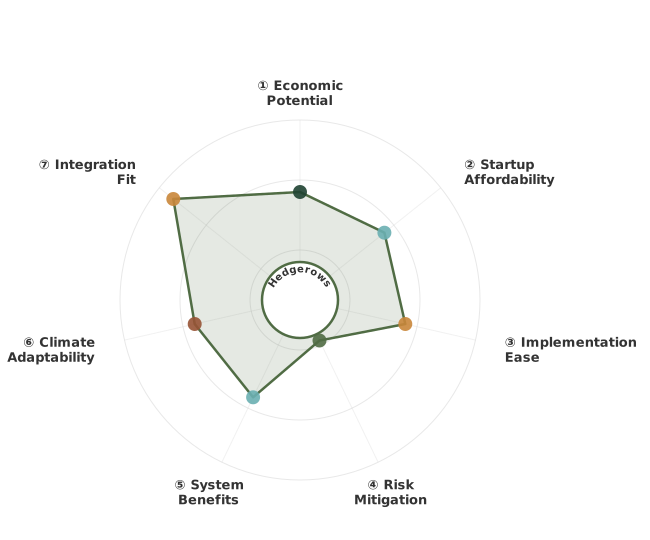
How These Traits Are Calculated
Trait dimensions are ordered clockwise starting from the top of the chart (12 o'clock position):
1. Economic Potential
Financial returns, annual value, and break-even timeline
WHAT: Evaluates financial viability by combining net annual value ($/ha from savings, income, and amortized harvests) with break-even timeline showing when practices pay for themselves.
WHY: Farmers need clear ROI understanding before committing resources. Fast payback (≤3 years) with strong returns (≥$300/ha) enables confident adoption, while long timelines (>10 years) restrict adoption to well-funded operations willing to wait for returns.
HOW: Calculated from net annual value in $/ha and break-even years. Exceptional (≥2.6): fast ROI ≤3 years + high value ≥$300/ha. Typical (1.8-2.5): moderate returns or longer timelines. Limited (<1.8): marginal economics or very long payback >10 years.
2. Startup Affordability
Initial investment costs and financial barrier to entry
WHAT: Measures financial barrier to entry through startup costs for equipment, infrastructure, consulting, and materials. Inverted scoring: lower costs = higher scores = more accessible adoption.
WHY: Affordability determines who can adopt. Low-cost practices (<$250/ha) enable widespread adoption across diverse scales, while high costs (>$2,500/ha) limit adoption to well-capitalized operations, creating barriers that slow regenerative transition.
HOW: Calculated from initial investment parsed from practice content. Inverted scoring: Exceptional (≥2.6): minimal investment <$250/ha. Typical (1.8-2.5): moderate costs $250-2,500/ha. Limited (<1.8): high barrier >$2,500/ha.
3. Implementation Ease
Learning curve and specialized knowledge required
WHAT: Measures how much learning, planning, and specialized knowledge a practice requires. Simpler practices with fewer steps score higher, while complex practices requiring extensive training or specialized resources score lower.
WHY: Complex practices create adoption barriers even when economically viable. Straightforward practices enable faster adoption and broader participation, while those requiring extensive training, timing precision, or specialized equipment limit who can succeed.
HOW: Evaluated by measuring documentation length and identifying complexity markers like location-specific requirements, seasonal timing windows, specialized skills, and dedicated equipment needs. Exceptional (≥2.6): straightforward practices with minimal prerequisites. Typical (1.8-2.5): moderate learning curve with some specialized needs. Limited (<1.8): steep learning curve requiring significant training or resources.
4. Risk Mitigation
Identified financial and ecological risk assessment
WHAT: Evaluates documented risks across financial (investment loss, market volatility) and ecological (crop failure, pest outbreaks) domains. Inverted scoring: fewer risks = higher scores.
WHY: Understanding risk exposure helps farmers make informed decisions. Low-risk practices allow confident implementation, while high-risk practices require careful planning and contingency resources. Risk transparency prevents costly failures.
HOW: Calculated from identified risks in practice content. Inverted scoring: Exceptional (≥2.6): ≤2 risks with manageable severity. Typical (1.8-2.5): 3-5 moderate risks. Limited (<1.8): 6+ risks or severe exposure.
5. System Benefits
How many ways the practice improves your land simultaneously
WHAT: Measures how many aspects of land health improve at once—carbon storage, soil quality, erosion control, water absorption, and biodiversity. Practices that improve multiple areas simultaneously create compounding benefits where each improvement reinforces the others.
WHY: The best practices solve multiple problems at once. For example, addressing erosion simultaneously builds carbon and improves water infiltration, creating a resilient system with positive feedback loops. Single-benefit approaches miss these compound transformation opportunities.
HOW: Evaluated across five key outcomes: carbon sequestration, soil organic matter increase, erosion reduction, water infiltration improvement, and biodiversity enhancement. Exceptional (≥2.6): high carbon storage (>8 t/ha/yr), improvements across 4-5 areas, transformative outcomes. Typical (1.8-2.5): moderate carbon (3-8 t/ha/yr), improvements across 2-3 areas. Limited (<1.8): modest impact (<3 t/ha/yr), single-area focus only.
6. Climate Adaptability
Geographic applicability across Köppen climate zones
WHAT: Evaluates geographic applicability by assessing how many Köppen climate zones successfully support a practice and what adaptation requirements are needed. Measures breadth of climates where farmers can implement with minimal to moderate modifications.
WHY: Universal practices working across diverse climates enable more farmers to adopt regenerative approaches. Practices limited to single climate types (only Mediterranean, only tropical) restrict adoption and slow global transition. Adaptability determines whether a practice serves niche regions or offers broad transformation.
HOW: LLM evaluation of regional success stories, Köppen zone coverage, and adaptation needs. Exceptional (≥2.6): 5+ zones or 4+ climate types, 3+ continents, minimal adaptation. Typical (1.8-2.5): 3-4 zones or 2-3 types, 2 continents, moderate adaptation. Limited (<1.8): 1-2 zones, single region, significant adaptation or highly specialized.
7. Integration Fit
How well this practice combines with others you're doing
WHAT: Measures how well a practice combines with other regenerative practices you might be doing. Some practices work as building blocks that make many other practices easier or more effective, while others work best on their own.
WHY: Practices that combine well with many others create more value on your farm. For example, cover cropping enables no-till, improves grazing, supports crop diversity, and helps water management—making all of them work better together. This helps you build a coherent system rather than juggling disconnected practices.
HOW: Evaluated by identifying which practices combine well and how strong those combinations are. 'Ideally Suited' means strong combinations where practices reinforce each other (practice A makes B easier, while B makes A more effective). 'Adequate' means complementary benefits that work well together. Exceptional (≥2.6): combines well with 6+ practices, serves as a building block. Typical (1.8-2.5): combines with 3-5 practices. Limited (<1.8): 1-2 practices or works best alone.
Going Deeper
1
WHY - The Benefits
Hedgerows are more than just decorative borders; they are productive ecological infrastructure. Their benefits span from the microscopic life in the soil to the macroscopic farm economy, contributing significantly to the resilience and regeneration of agricultural...
Hedgerows are more than just decorative borders; they are productive ecological infrastructure. Their benefits span from the microscopic life in the soil to the macroscopic farm economy, contributing significantly to the resilience and regeneration of agricultural landscapes. The long-term advantages often outweigh the initial investment, creating a farm system that is healthier, more diverse, and economically stable.
WHY - The Benefits
Hedgerows are more than just decorative borders; they are productive ecological infrastructure. Their benefits span from the microscopic life in the soil to the macroscopic farm economy, contributing significantly to the resilience and regeneration of agricultural...
Hedgerows are more than just decorative borders; they are productive ecological infrastructure. Their benefits span from the microscopic life in the soil to the macroscopic farm economy, contributing significantly to the resilience and regeneration of agricultural landscapes. The long-term advantages often outweigh the initial investment, creating a farm system that is healthier, more diverse, and economically stable.
Soil Health Benefits
Hedgerows are unparalleled in their ability to protect and enhance soil at field margins. By establishing perennial vegetation with deep, diverse root systems, they create a buffer against erosion caused by wind and water. Studies have shown reductions in wind erosion of 50-80% and significant decreases in soil loss from water runoff adjacent to hedgerows. The constant living root system and the accumulation of leaf litter contribute to building soil organic matter (SOM) in these marginal areas, fostering a rich soil food web. This increased SOM improves soil structure, water-holding capacity, and nutrient cycling.
Tree and shrub roots in hedgerows penetrate deep into the soil, creating macropores that improve water infiltration and aeration. This not only helps to recharge groundwater but also reduces surface runoff and the associated loss of topsoil and nutrients. The leaf litter intercepted by hedgerows also acts as a mulch, further reducing soil erosion, conserving moisture, and providing habitat and food for decomposers like earthworms and fungi. Over time, hedgerows can improve soil aggregation and stability in adjacent fields, reducing the impact of compaction from farm machinery.
The biodiversity within hedgerows extends to the soil biome. The varied root exudates and decaying organic matter support a vast array of soil microorganisms, including bacteria, fungi, and protozoa, as well as larger organisms like earthworms and arthropods. These organisms play crucial roles in nutrient cycling, disease suppression, and soil structure maintenance. This enhanced soil biology can spill over into adjoining fields, particularly when hedgerows are integrated with practices like no-till farming or cover cropping.
Economic Benefits
While often perceived as an investment with a long payback, hedgerows offer tangible economic returns. Firstly, they can increase the productivity of adjacent agricultural land. Windbreaks established by hedgerows can reduce wind speed by 40-60% for a distance approximately 10-20 times the height of the hedgerow, leading to reduced soil drying, less crop lodging, and improved microclimates that can boost yields by 10-30% in sheltered areas, particularly for sensitive crops or in windy regions.
Secondly, hedgerows offer direct harvestable products. Depending on species selection, they can yield timber for construction, fencing, or firewood; fruits and nuts for direct sale or processing; medicinal herbs; or fodder for livestock. The value of these products accrues over many years, with high-value timber species potentially providing significant returns in 15-30 years, while fruits and nuts can offer earlier income streams within 5-10 years. Even smaller harvests of biomass for bioenergy or craft materials can contribute to farm diversification.
Furthermore, the ecological services provided by hedgerows translate into reduced input costs. The support for beneficial insects, such as pollinators and natural predators of pests, can reduce the need for external pest control measures and enhance crop yields. Improved water infiltration and retention can decrease irrigation requirements in dry climates. The enhanced soil health reduces the reliance on synthetic fertilizers by improving nutrient cycling and availability. These combined savings can amount to $50-150 per hectare per year, depending on the scale and intensity of farming.
Finally, the presence of well-established hedgerows can increase the overall land value by an estimated 5-15%. They are increasingly recognised as a sign of a well-managed, ecologically sound, and bio-diverse farm, which can be attractive to consumers, investors, and land buyers. These aesthetic and ecological enhancements contribute to a farm's long-term asset value and marketability.
Regenerative Systems Fit
Hedgerows are a foundational regenerative practice that actively promotes and integrates all five core regenerative principles:
-
Minimize Soil Disturbance (Principle 1): Hedgerows establish permanent perennial vegetation along field edges, eliminating the need for annual tillage, compaction, or chemical disturbance in these areas. This protects valuable topsoil from erosion, preserves soil structure, and creates a stable habitat for soil organisms. The roots of hedgerow plants contribute to soil aggregation and porosity over time.
-
Maximize Crop Diversity (Principle 2): By planting a diverse range of native tree, shrub, and herbaceous species, hedgerows significantly increase the botanical and structural diversity of the farm ecosystem. This diversity serves as a reservoir for a wide array of beneficial insects, pollinators, birds, and soil microorganisms. These organisms can then move from the hedgerow into cultivated fields, providing essential ecosystem services such as pollination, pest predation, and nutrient cycling. The variety within the hedgerow itself contributes to a more resilient and functional farm landscape.
-
Keep Soil Covered (Principle 3): Hedgerows provide continuous, year-round living cover and a healthy layer of leaf litter. This acts as a protective blanket against wind and water erosion, preventing the loss of valuable topsoil, nutrients, and organic matter from field edges. The canopy also helps to moderate soil temperature and moisture levels, creating a more stable environment for soil life and plant growth.
-
Maintain Living Roots (Principle 4): The perennial nature of hedgerows ensures that living roots are present in the soil continuously. These roots actively engage in nutrient cycling, soil structure development, water uptake, and carbon sequestration throughout the year. This persistent biological activity fuels the soil food web and contributes to the long-term fertility and health of the entire farm system.
-
Integrate Livestock (Principle 5): Hedgerows can be designed and managed to be an integral part of livestock systems. They can provide essential shade and shelter, protecting animals from heat stress and adverse weather, leading to improved animal health and productivity. Certain species offer browse or supplementary feed. Hedgerows can also serve as natural corridors for livestock movement between pastures or act as non-fencing barriers. Carefully managed, they can help distribute animal impact and nutrient deposition across the landscape.
Integrating hedgerows into a regenerative system amplifies the benefits of other practices. For instance, combined with no-till farming, they create a powerful edge effect that enhances soil health and biodiversity across the entire field. In silvopasture systems, they can form integral components of the tree canopy or provide understory diversity. They enhance the functionality of buffer strips and riparian zones, preventing nutrient and sediment runoff into waterways. The long-term, stable nature of hedgerows provides a crucial element of resilience, helping the farm system withstand climate fluctuations and economic uncertainties.
Sources behind this view
Videos & Podcasts
-
Establish perennial hedgerows to provide habitat for beneficial insects and pollinators, enabling natural pest management and reducing the need for sprays. Hedgerows also act as windbreaks, reduce wat
-
Hedgerows planted with native, pollinator-friendly perennials provide crucial habitat for beneficial insects and wildlife, enhancing pest control and pollination. They also benefit soil microbes, redu
-
Hedgerows stabilize the environment by reducing wind and moderating temperature, trap moisture, and create significant biodiversity through the 'edge effect', making them highly valuable in agroforest
-
Jude Hobbs defines hedgerows as layered plantings with diverse functions like enhancing biodiversity, improving water quality, and providing income. She discusses their historical significance in Engl
Community
-
Hedgerows provide numerous benefits including wildlife corridors, microclimate creation, nitrogen fixation, erosion control, pollination support, dust reduction, privacy, and windbreaks, with diverse
Read more (opens in new window) permies.com -
Native plant hedgerows, including blue elderberry, offer significant agricultural benefits: increasing biodiversity, controlling pests, improving pollination, storing carbon, stabilizing soil, and pro
Read more (opens in new window) ucanr.edu -
A hedgerow is defined by its purpose to support pollinators and wildlife, acting as a windbreak, buffer, and for erosion control. It requires plant diversity, ideally native species, and minimal maint
Read more (opens in new window) ucanr.edu -
Establishes hedgerows for livestock containment and deer protection using cuttings of black locust, Osage orange, hazelnuts, apples, and roses. Emphasizes competition control for cuttings and discusse
Read more (opens in new window) permies.com
Research
-
Hedgerows and Their Role in Agricultural Landscapes (opens in new window)
This study found: Hedgerows (field borders of trees/shrubs) are vital for farm ecosystems, acting as wildlife corridors and connecting habitats. Their composition depends on farming practices and history, and they are
-
Local and regional-scale effects of hedgerows on grassland- and forest-associated bird populations within agroecosystems. (opens in new window)
This study found: Hedgerows in Ontario farmland boosted bird populations by 20% regionally, especially in crop-heavy areas, benefiting forest/shrubland species. Emphasizes habitat variety for conservation.
-
Hedgerow restoration promotes pollinator populations and exports native bees to adjacent fields (opens in new window)
This study found: Restoring farm field edges with native plants in California boosted wild bee and hoverfly populations and increased the number of native bees moving into adjacent fields.
-
On-farm habitat restoration counters biotic homogenization in intensively managed agriculture. (opens in new window)
This study found: Native plant hedgerows on California farms increased pollinator diversity by 14% over three years, helping to restore natural variety lost in intensive agriculture.
From the Web
-
Hedgerows provide farm resiliency by attracting beneficial insects for pest management, acting as windbreaks, and offering habitat. Native, drought-tolerant species are recommended, with consideration
2
WHERE - Regional Considerations
Hedgerows are adaptable to a vast array of climates and environments worldwide, but success depends on selecting appropriate species and design for the local context.
Hedgerows are adaptable to a vast array of climates and environments worldwide, but success depends on selecting appropriate species and design for the local context.
WHERE - Regional Considerations
Hedgerows are adaptable to a vast array of climates and environments worldwide, but success depends on selecting appropriate species and design for the local context.
Hedgerows are adaptable to a vast array of climates and environments worldwide, but success depends on selecting appropriate species and design for the local context.
Click Here to Look up your Region if you don't already know it
Humid Temperate Regions
Representative Locations: Southeastern United States, northern Europe (UK, Germany, Poland), eastern China, Japan, New Zealand
Climate Context: Warm to hot summers and cool to cold winters with moderate to high annual precipitation (75-150 cm or 30-60 inches) distributed relatively evenly. USDA Zones 6-8, Köppen Cfb/Cfa. Very adaptable to this climate.
Species: Broadleaf deciduous trees like oak (Quercus spp.), maple (Acer spp.), ash (Fraxinus spp. – where healthy), birch (Betula spp.), and temperate fruit trees (apple, pear) are suitable. Shrubs like hawthorn (Crataegus spp.), hazel (Corylus avellana), blackthorn (Prunus spinosa), elderberry (Sambucus nigra), and dogwood (Cornus spp.) thrive. Native grasses and wildflowers in the understory will also flourish.
Management: Pruning for timber/firewood, fruit harvesting, and maintaining desired habitat structure. Livestock grazing can be managed within wider hedgerows, with species selected to withstand moderate browse pressure or protected by electric fencing. Higher rainfall means abundant leaf litter and robust soil health benefits.
Mediterranean Regions
Representative Locations: California, Mediterranean basin (Spain, Italy, Greece), central Chile, southwestern Australia, parts of South Africa
Climate Context: Hot, dry summers and mild, wet winters. Annual precipitation 40-90 cm (15-35 inches), highly seasonal. USDA Zones 8-10, Köppen Csa/Csb. Drought tolerance is key.
Species: Evergreen and drought-tolerant species are paramount. Native oaks (e.g., Quercus ilex in Europe), carob (Ceratonia siliqua), olive (Olea europaea), almond (Prunus dulcis), pistachios (Pistacia vera), and various drought-hardy acacias and eucalypts (in Australia) are excellent choices. Shrubs like rosemary (Rosmarinus officinalis), lavender (Lavandula spp.), and cistus (Cistus spp.) provide groundcover and habitat.
Management: Water conservation is critical during establishment. Mulching heavily and careful initial establishment are vital. Species selection must prioritize drought resilience. Pruning for fruit, nuts, or essential oils provides economic returns. Livestock integration must be done cautiously during driest periods, focusing on shade provision rather than grazing on young plants.
Arid/Semi-Arid Regions
Representative Locations: Western USA, North Africa, Central Asia, Interior Australia, parts of the Middle East
Climate Context: Low annual precipitation (<40 cm or 15 inches), high temperatures, short and often unpredictable growing season. USDA Zones 7-9, Köppen BSh/BSk. Extremely challenging but highly impactful.
Species: Highly specialized, drought-tolerant, and often thorny species are necessary for survival and protection. Native acacias (e.g., Acacia aneura in Australia), mesquite (Prosopis spp. – can be invasive in some regions, use native varieties cautiously), saltbush (Atriplex spp.), desert olives, and hardy junipers are options. In Central Asia, species like sea buckthorn (Hippophae rhamnoides) are valuable. Windbreaks are a primary function.
Management: Water harvesting techniques (e.g., swales, contour planting) are crucial for establishment. Minimal inputs and highly resilient species are key. Livestock integration must be very carefully managed, primarily for shade and opportunistic browsing on mature, thorny species. Focus is on soil stabilization and wind erosion control.
Cold Continental Regions
Representative Locations: Northern USA and Canada, Northern Europe, Northern Asia (Siberia)
Climate Context: Very short growing seasons, hot summers (sometimes), severe winter cold, often significant snowpack. USDA Zones 3-5, Köppen Dfa/Dfb. Cold hardiness is paramount.
Species: Species must withstand extreme freezing temperatures and short growing seasons. Conifers like pine (Pinus spp.), spruce (Picea spp.), and fir (Abies spp.) are ideal for evergreen windbreaks. Deciduous species like certain maples, birch, and ash (where resistant to dieback) provide seasonal benefits. Hardy shrubs include willow (Salix spp.), dogwood, and specific viburnums. Groundcover with cold-tolerant grasses and forbs.
Management: Establishment can be slow due to short growing seasons. Protection from frost heave and winter desiccation is important. Planting should occur in spring to maximize use of meltwater and growing season. Snow accumulation can bend or break younger trees. Livestock integration may be seasonal, confined to warmer months. Timber and firewood can be primary economic outputs.
Subtropical Regions
Representative Locations: Southeastern USA, Southern China, Southern Brazil, Eastern Australia
Climate Context: Hot, humid summers and mild winters with generally ample rainfall, though sometimes with distinct dry spells. USDA Zones 9-11, Köppen Cfa/Cwa. High growth potential.
Species: A wide range of species thrive. Evergreen oaks, magnolias (Magnolia spp.), laurels, and various subtropical fruit trees (citrus, mango, avocado where microclimate permits). Shrubs like viburnums, hollies (Ilex spp.), and native flowering species. Bamboo species can also be integrated for biomass and screening.
Management: Fast growth rates mean hedgerows can mature relatively quickly. Pruning for specific products or habitat management is beneficial. High humidity and rainfall support robust soil cover and biological activity. Livestock integration is generally straightforward, with shade and browse being readily available. Management of subtropical pests and diseases within the hedgerow is important.
Tropical Regions
Representative Locations: Central America, Southeast Asia, East Africa, Northern Australia, Northern South America
Climate Context: High temperatures year-round, with distinct wet and dry seasons or consistent high rainfall. Köppen Af/Am/Aw. Extremely high growth rates and biodiversity potential.
Species: Extremely diverse options. Robust timber species (teak, mahogany where appropriate), fast-growing fruit trees (papaya, banana, mango), nitrogen-fixing trees (legumes like Erythrina spp., Leucaena spp.), and a vast array of tropical shrubs and vines. Emphasis on species that coppice well or provide multiple products.
Management: Rapid growth necessitates more frequent pruning and management. High rainfall can increase erosion risk during establishment, making prompt groundcover crucial. Species offering fodder, biomass for mulch, or high-value timber are often prioritized. Integrated pest management is key, leveraging the hedgerow's biodiversity to support natural enemy populations. Livestock integration is highly feasible and beneficial, providing shade and browse year-round.
3
HOW - Implementation Process
Establishing effective hedgerows is a phased approach that requires planning, patience, and good biological stewardship.
Establishing effective hedgerows is a phased approach that requires planning, patience, and good biological stewardship.
HOW - Implementation Process
Establishing effective hedgerows is a phased approach that requires planning, patience, and good biological stewardship.
Establishing effective hedgerows is a phased approach that requires planning, patience, and good biological stewardship.
Prerequisites
- Define Objectives: Clearly articulate why you are planting hedgerows: windbreak, soil erosion control, biodiversity enhancement, income diversification (timber, fruit, nuts), livestock shelter, riparian buffer, or a combination. This will guide species selection and design.
- Site Assessment: Analyze soil type, drainage, rainfall patterns, prevailing winds, sunlight exposure, and existing vegetation. Identify any potential invasive species that need managing.
- Species Selection: Choose species native to your region or well-adapted to your climate, soil conditions, and objectives. Prioritize multi-functional species that offer timber/fruit/nuts, support biodiversity, and tolerate local conditions. Consider mature size and growth habit.
- Design & Layout: Determine width, length, and species composition. Wider hedgerows offer more ecological benefits and products but require more land. Consider layout relative to prevailing winds, field operations (e.g., turning radiuses for equipment), and water flow.
- Establishment Method: Choose between planting seedlings/transplants, direct seeding, or using cuttings/stakes where appropriate. Seedlings generally establish faster but are more costly.
Phase 1: Site Preparation and Planting
-
Site Preparation (Months prior to planting):
- Minimize Disturbance: Aim for minimal disturbance. If establishing on existing pasture, consider direct seeding or planting through a killed cover crop. If on degraded land, light initial cultivation might be necessary but avoid creating deep compaction.
- Weed Control: Address aggressive perennial weeds well in advance through mowing, grazing, or targeted ecological methods. Suppress weeds in the planting zone to reduce competition for young plants.
- Soil Amelioration (If needed and appropriate): For severely depleted soils, incorporate compost or well-rotted manure. However, for broad species mixes, native plants adapted to poor soils are often more resilient and require less amendment.
-
Acquire Plant Materials: Source seeds or seedlings from reputable nurseries specializing in native or regionally adapted species. Consider a diverse mix of species (5-15+) to maximize ecological benefits.
- Planting (Seasonally appropriate):
- Timing: Generally, plant in autumn or early spring to take advantage of moisture and cooler temperatures, allowing roots to establish before summer heat or winter cold.
- Spacing: Tree/shrub seedlings are typically planted 1-5 meters (3-16 feet) apart, depending on species and desired mature density, often in staggered rows for wider hedgerows. Lower-growing shrubs and groundcover can fill in gaps.
- Technique: For seedlings, dig holes slightly larger than the root ball. For direct seeding, follow species-specific depth and spacing recommendations. Ensure good soil-to-root contact.
- Initial Mulching: Apply a thick layer of organic mulch (straw, wood chips) around young plants to retain moisture, suppress weeds, and regulate soil temperature.
Phase 2: Establishment Care (Years 1-3)
- Watering: Crucial during the first 1-2 dry seasons. Provide supplementary water as needed, especially in arid or semi-arid regions. Drip irrigation or water-harvesting techniques can be highly effective.
- Weed Management: Continue managing competing weeds within and immediately around the young hedgerow. Avoid overly aggressive mechanical weeding that could damage young roots.
- Protection: Young trees and shrubs are highly vulnerable to browsing by livestock, rabbits, deer, or insects. Use tree guards, individual shelters, or temporary fencing where necessary. This is critical for ensuring survival and proper development.
- Pruning (Minimal): Light formative pruning to encourage good structure and remove damaged or crossing branches may be beneficial. Avoid heavy pruning until plants are well-established.
- Livestock Integration (Cautious): If integrating livestock, manage them carefully to prevent damage. Temporary fencing or exclusion is often required for the first 2-5 years, depending on species and animal pressure.
Phase 3: Maturation and Management (Year 4 onwards)
- Species-Specific Management: Implement pruning, thinning, or harvesting based on your objectives (timber, fruit, nuts, etc.). Follow sustainable forestry or horticultural practices.
- Biodiversity Enhancement: Encourage beneficial insects and wildlife by leaving some deadwood, providing water sources, and allowing natural succession of understory plants.
- Pest and Disease Monitoring: Regularly inspect hedgerows for signs of invasive species, pests, or diseases. Address issues early using integrated pest management (IPM) strategies.
- Periodic Thinning: For timber or firewood production, strategic thinning of trees allows remaining individuals to grow larger and healthier.
- Livestock Integration (Fuller): Once plants are mature and resilient, livestock can be more fully integrated for grazing, shade, or shelter. Rotational grazing is recommended to manage impact and allow for plant recovery.
Transition Timeline & Phase-Out Strategy (Applies if shifting from bare field edges or monoculture strips)
- Year 0-1: Remove invasive species, prepare planting site with minimal disturbance. Plant diverse native species. Establish protection measures.
- Year 1-3: Focus on establishment care: watering, weed control, protection. Gradually reduce synthetic inputs on adjacent fields in preparation for ecological benefits.
- Year 4-7: Begin initial harvest of fast-growing products (e.g., cuttings for fodder, early fruits). Plants are visually establishing as a functional buffer. Adjacent field benefits (reduced wind, improved microclimate) become noticeable.
- Year 8-15: First harvests of valuable timber or nuts may become feasible from faster-growing species. Biodiversity significantly increases.
- Year 15+: Hedgerows reach maturity, providing full ecological and economic benefits. Minimal ongoing management needed beyond harvesting and species-specific interventions.
Graduating to a fully regenerative hedgerow system means accepting its long-term, natural processes and managing it for ecological function and diverse outputs, rather than viewing it through the lens of short-term cash cropping alone.
Sources behind this view
Videos & Podcasts
-
Establish perennial hedgerows to provide habitat for beneficial insects and pollinators, enabling natural pest management and reducing the need for sprays. Hedgerows also act as windbreaks, reduce wat
-
Jude Hobbs defines hedgerows as layered plantings with diverse functions like enhancing biodiversity, improving water quality, and providing income. She discusses their historical significance in Engl
-
Creating pasture hedgerows using bald cypress and black walnut, planted with an auger. Focuses on providing shade, wildlife habitat, and benefits for cattle, using regenerative methods. Addresses deer
-
Details the creation of a dual hedgerow using pruning and weaving techniques with species like European buckthorn and Japanese honeysuckle. The goal is to deflect deer, create habitat, and maintain pr
Community
-
Hedgerows provide numerous benefits including wildlife corridors, microclimate creation, nitrogen fixation, erosion control, pollination support, dust reduction, privacy, and windbreaks, with diverse
Read more (opens in new window) permies.com -
Establishes hedgerows for livestock containment and deer protection using cuttings of black locust, Osage orange, hazelnuts, apples, and roses. Emphasizes competition control for cuttings and discusse
Read more (opens in new window) permies.com -
A hedgerow is defined by its purpose to support pollinators and wildlife, acting as a windbreak, buffer, and for erosion control. It requires plant diversity, ideally native species, and minimal maint
Read more (opens in new window) ucanr.edu -
Establish residential hedgerows with diverse native and some nonnative plants (e.g., California redbud, toyon, rosemary) from late October to March to attract pollinators, beneficial insects, and wild
Read more (opens in new window) ucanr.edu
Research
-
Hedgerows and Their Role in Agricultural Landscapes (opens in new window)
This study found: Hedgerows (field borders of trees/shrubs) are vital for farm ecosystems, acting as wildlife corridors and connecting habitats. Their composition depends on farming practices and history, and they are
-
Local and regional-scale effects of hedgerows on grassland- and forest-associated bird populations within agroecosystems. (opens in new window)
This study found: Hedgerows in Ontario farmland boosted bird populations by 20% regionally, especially in crop-heavy areas, benefiting forest/shrubland species. Emphasizes habitat variety for conservation.
4
Know the Debate
Hedgerow outcomes and feasibility vary significantly based on the local climate, the scale of implementation, and the specific management approach....
Know the Debate
Hedgerow outcomes and feasibility vary significantly based on the local climate, the scale of implementation, and the specific management approach....
Hedgerow outcomes and feasibility vary significantly based on the local climate, the scale of implementation, and the specific management approach. In humid temperate regions with reliable rainfall, hedgerows establish quickly and offer a broad range of ecosystem services within 3-5 years. However, in drier or colder climates, species selection and establishment strategies must be more specialized, potentially extending the timeline for full benefits. Initial investment can range from a few hundred dollars per km for DIY planting to several thousand for intensive systems, with ongoing costs integrated into farm operations. The optimal scale ranges from small garden plots to extensive tree lines on commercial farms, influencing design and species choice.
How long until hedgerows provide significant farm benefits?
Immediate ecological benefits, long-term economic harvest
Within 1-2 years, hedgerows offer immediate ecological benefits like reduced erosion, improved microclimate, and basic habitat. Significant economic returns from timber or fruit typically take 7-20+ years, depending on species and management.
Sources behind this view
Sources behind this view
Videos & Podcasts
-
Discusses six benefits of farm hedgerows: increasing biodiversity, acting as windbreaks, concentrating sunlight, providing direct yield (fruit trees, herbs), improving soil fertility with nitrogen-fixing plants like honey locust, and enhancing aesthetics.
-
JM reports hedgerows at FQT farm are thriving, providing windbreak and habitat. He plans to share implementation guidelines but notes the high cost and potential over-engineering of the initial setup, suggesting simpler methods might suffice.

Research
-
Organic farming and semi‐natural habitats for multifunctional agriculture: A case study in hedgerow landscapes of Brittany (opens in new window)
This study found: A study in Brittany, France, looked at how organic farming and the presence of hedgerows (field boundaries with trees and shrubs) affect the multiple benefits farms can provide. They measured 21 different indicators related to wildlife, soil health, pest control, food production, and economic factors on winter cereal fields. The research found that organic farming generally led to more wildlife, better pest control, and improved socio-economic outcomes compared to conventional farming. However, soil fertility and structure didn't improve, and crop yields were lower in organic fields. While hedgerows alone had less impact than organic farming, they provided extra benefits, especially when combined with organic practices. This suggests that organic farming is key for boosting biodiversity in fields, and preserving hedgerows adds further ecological and economic value to organic systems.
3-7 years for moderate benefits, 10-15 years for substantial returns
Moderate benefits like pollination support, windbreak effect, and early fruit harvests appear within 3-7 years. Substantial economic returns from managed timber thinning or fruit/nut crops typically emerge in 10-15 years, with full maturity later.
Sources behind this view
Sources behind this view
Videos & Podcasts
-
To combat climate change and extreme weather, the farm has planted over a mile of hedgerows, uses block rotation with cover crops, and heavily invests in rebuilding soil organic matter with manure, compost, and wood chips, while also using hoop houses for crop protection.
-
Windbreaks, using trees and shrubs like hybrid poplar and hazelnut, protect soil from erosion, shield crops from wind damage, and can provide additional income. Example shown in northern Illinois.
Research
-
On-farm habitat restoration counters biotic homogenization in intensively managed agriculture. (opens in new window)
This study found: A study in California's Central Valley found that planting native plant hedgerows on farms can significantly boost the variety of pollinator species found in an area. Over three years, farms with these hedgerows had about 14% more different types of pollinators compared to farms without them. This helps bring back the natural variation in insect communities that is often lost in highly managed agricultural areas. These hedgerows are a valuable tool for farmers looking to support biodiversity and the important services pollinators provide, like crop pollination.
From the Web
-
Agroforestry practices like riparian zones and hedgerows enhance biodiversity, provide habitat for pollinators and pest-eating birds, and act as windbreaks. A diverse hedgerow mix of trees and shrubs connects habitats and supports predator movement for pest control.
Decades for full ecosystem & economic maturity
While early benefits exist, the full ecological maturity and significant economic return from timber or complex ecosystems may take 20+ years. This long-term perspective is crucial for maximizing potential.
Sources behind this view
Sources behind this view
Videos & Podcasts
-
Details riparian forest buffers for water quality and habitat, and windbreaks for soil erosion control and microclimate enhancement. Both offer income potential but require careful design and management, with challenges like land competition and invasive species.
Research
-
Hedgerows and Their Role in Agricultural Landscapes (opens in new window)
This study found: Field borders made of trees and shrubs, called hedgerows, are important features in agricultural areas. They are created by people and are closely tied to how farms are run and the communities living in the countryside. The types of plants and animals found in hedgerows depend on the history of the land and current farming methods. These borders can act as pathways for wildlife, like ground beetles, small animals, and plants, to move and spread. However, they can also slow down wind and the tiny particles it carries. In mixed landscapes of fields and wooded areas, hedgerows often help connect different habitats, making it easier for nature to thrive. As more people who are not farmers move into rural areas, hedgerows are increasingly seen as valuable parts of a landscape that serves many purposes, not just for farming.
From the Web
-
Agroforestry with wide hedgerows enhances biodiversity by supporting diverse bird and insect species, providing habitat and benefits for both livestock and wildlife, with native tree species and clustering being key for high impact.
Making Sense of the Differences
The timeline for realizing significant farm benefits from hedgerows is highly dependent on species selection and regional climate. Fast-growing species in humid temperate zones can offer moderate benefits within 3-7 years. However, achieving full ecological maturity and substantial economic returns from timber or complex polycultures often requires 15-30 years. Farmers in drier or colder regions should expect longer establishment periods. Planning for phased benefits, from immediate erosion control to long-term timber harvests, is key for managing expectations and finances.
What is the ideal establishment cost and method for hedgerows?
DIY native planting: $1,100-$2,900 per km
Establishing hedgerows with native species using own labor for planting and protection, and sourcing local material, can keep costs between $1,100-$2,900 per km. This approach maximizes ecological adaptation and minimizes external expenses but requires significant time investment.
Sources behind this view
Sources behind this view
Videos & Podcasts
-
Discusses six benefits of farm hedgerows: increasing biodiversity, acting as windbreaks, concentrating sunlight, providing direct yield (fruit trees, herbs), improving soil fertility with nitrogen-fixing plants like honey locust, and enhancing aesthetics.
-
The speaker advocates a slow, pragmatic approach to establishing hedgerows, starting with annuals and gradually incorporating natives and perennials like elderberry and sassafras. Proper soil preparation and species selection are key for creating pollinator habitat and biodiversity.
-
To establish effective perennial hedgerows, identify goals (windbreak, shade, crop production, pollinator habitat), then consult local native plant nurseries for region-specific species and planting advice. This approach maximizes benefits regardless of location.
Professional setup: $3,000-$5,500+ per km
Using professional services for site prep, planting, and protection, especially for wider hedgerows or in challenging conditions, can cost $3,000-$5,500+ per km. This offers faster establishment and reliability but incurs higher upfront capital.
Sources behind this view
Sources behind this view
Videos & Podcasts
-
JM reports hedgerows at FQT farm are thriving, providing windbreak and habitat. He plans to share implementation guidelines but notes the high cost and potential over-engineering of the initial setup, suggesting simpler methods might suffice.
-
Jude Hobbs details a hedgerow design for a Willamette Valley CSA farm, focusing on beneficial insects, biodiversity, income, and water quality. The project involved site-specific plant selection, managing challenges like wildlife, and securing funding from NRCS and watershed councils.
-
Jude Hobbs outlines soil preparation methods for hedgerows in urban, suburban, and farm settings, including lasagna layering and cover cropping. She advises conventional farmers on transitioning to sustainable practices by emphasizing benefits and cost savings from reduced chemical use.
Integrated systems with subsidies and managed costs
Integrating hedgerows into existing farm operations, utilizing subsidies where available, and managing species for multiple outputs (e.g., fodder, timber) can significantly improve the economics. Expert guidance (e.g., from extension services or agroforestry networks) is key.
Sources behind this view
Sources behind this view
Videos & Podcasts
-
Jude Hobbs details a hedgerow design for a Willamette Valley CSA farm, focusing on beneficial insects, biodiversity, income, and water quality. The project involved site-specific plant selection, managing challenges like wildlife, and securing funding from NRCS and watershed councils.
-
Agroforestry, including windbreaks, promotes diversified agriculture for ecological and economic resilience. Key benefits include nutrient capture, soil health improvement, biodiversity support, and crop protection, potentially increasing yields by up to 25%.
From the Web
-
Guidance on making hedges productive and integrating them into the farm business in Britain.
-
A project in Belgium coaches 25 farmers on managing and planting hedgerows, integrating them into economic activities like bioenergy production, to improve wildlife habitat, CO2 balance, and farm profitability.
Making Sense of the Differences
Establishment costs for hedgerows vary widely with scale, species choice, and management. DIY native plantings can be cost-effective ($1,100-2,900/km), while professional setups or wider hedgerows may reach $3,000-5,500+/km. Utilizing government subsidies, integrating harvesting of products like timber or fruit, and adopting efficient methods like direct seeding or managed grazing for weed control can significantly offset costs and improve the return on investment over the long term.
What is the optimal scale for hedgerow implementation?
Small scale (home gardens, market gardens)
On small plots (0.1-5 acres), hedgerows can be established to provide habitat, windbreaks, and harvestable products with manageable labor and lower capital investment, maximizing ecological benefits for the area.
Sources behind this view
Sources behind this view
Videos & Podcasts
-
Discusses six benefits of farm hedgerows: increasing biodiversity, acting as windbreaks, concentrating sunlight, providing direct yield (fruit trees, herbs), improving soil fertility with nitrogen-fixing plants like honey locust, and enhancing aesthetics.
-
Establish perennial hedgerows to provide habitat for beneficial insects and pollinators, enabling natural pest management and reducing the need for sprays. Hedgerows also act as windbreaks, reduce water loss, and offer frost protection.
-
Agroforestry, including windbreaks, promotes diversified agriculture for ecological and economic resilience. Key benefits include nutrient capture, soil health improvement, biodiversity support, and crop protection, potentially increasing yields by up to 25%.
Medium to Large scale (commercial farms, ranches)
For commercial farms (50+ acres) and ranches, hedgerows can be integrated to create larger-scale windbreaks, improve pasture management, and diversify income streams. Higher capital investment is justified by larger land areas and potential for greater yield returns.
Sources behind this view
Sources behind this view
Videos & Podcasts
-
Utilizes hedgerows and trees (oaks, chestnuts, nut trees) for shelter and to maximize photon capture in a short growing season. Discusses improving poor sandy soil with broiler manure and using pasture rollers.
-
Details riparian forest buffers for water quality and habitat, and windbreaks for soil erosion control and microclimate enhancement. Both offer income potential but require careful design and management, with challenges like land competition and invasive species.
Research
-
Local and regional-scale effects of hedgerows on grassland- and forest-associated bird populations within agroecosystems. (opens in new window)
This study found: A four-year study in Ontario, Canada, found that planting hedgerows and other linear woody features along field edges significantly benefits bird populations in farmland. While the impact varied by species, overall bird numbers increased, especially for forest and shrubland birds. At the farm level, nearly half of the bird species studied had more individuals where hedgerows were present. Across the wider region, hedgerows were predicted to boost bird numbers by about 20% for most species. These benefits were greatest in areas with a lot of field crops, showing hedgerows are vital for birds in heavily managed landscapes. Some birds that prefer large, open grasslands or deep forests were negatively affected, likely due to edge effects. The research emphasizes that having a variety of habitats within farmland is key for bird conservation and suggests concentrating hedgerows in crop-heavy areas while preserving other natural habitats where possible.
From the Web
-
Agroforestry with wide hedgerows enhances biodiversity by supporting diverse bird and insect species, providing habitat and benefits for both livestock and wildlife, with native tree species and clustering being key for high impact.
Context-specific approach regardless of scale
The scale of implementation should match farm goals, local ecosystem conditions, and available resources. Whether small or large, success relies on appropriate species, careful design, and long-term management tailored to the specific site.
Sources behind this view
Sources behind this view
Videos & Podcasts
-
Jude Hobbs details a hedgerow design for a Willamette Valley CSA farm, focusing on beneficial insects, biodiversity, income, and water quality. The project involved site-specific plant selection, managing challenges like wildlife, and securing funding from NRCS and watershed councils.
Research
-
Hedgerows and Their Role in Agricultural Landscapes (opens in new window)
This study found: Field borders made of trees and shrubs, called hedgerows, are important features in agricultural areas. They are created by people and are closely tied to how farms are run and the communities living in the countryside. The types of plants and animals found in hedgerows depend on the history of the land and current farming methods. These borders can act as pathways for wildlife, like ground beetles, small animals, and plants, to move and spread. However, they can also slow down wind and the tiny particles it carries. In mixed landscapes of fields and wooded areas, hedgerows often help connect different habitats, making it easier for nature to thrive. As more people who are not farmers move into rural areas, hedgerows are increasingly seen as valuable parts of a landscape that serves many purposes, not just for farming.
From the Web
-
Guidance on making hedges productive and integrating them into the farm business in Britain.
Making Sense of the Differences
Hedgerows are adaptable from small garden plots to extensive commercial farms. On smaller scales, they provide significant biodiversity and habitat benefits with manageable labor and lower capital costs. For larger operations, they serve as critical infrastructure for windbreaks, erosion control, livestock welfare, and diversified income, justifying higher investments. The key is tailoring the design, species mix, and management strategy to the specific goals, resources, and ecological context of the farm, regardless of its size.
5
HOW MUCH - Costs & Investment
Note: Costs shown in USD; these are estimates and can vary significantly by region due to local labor costs, material availability, currency exchange rates, and shipping expenses. Multiply by local labor and material cost indices for your region. Prices are for material...
Note: Costs shown in USD; these are estimates and can vary significantly by region due to local labor costs, material availability, currency exchange rates, and shipping expenses. Multiply by local labor and material cost indices for your region. Prices are for material and establishment labour, not subsequent maintenance which is often integrated into farm work.
HOW MUCH - Costs & Investment
Note: Costs shown in USD; these are estimates and can vary significantly by region due to local labor costs, material availability, currency exchange rates, and shipping expenses. Multiply by local labor and material cost indices for your region. Prices are for material...
Note: Costs shown in USD; these are estimates and can vary significantly by region due to local labor costs, material availability, currency exchange rates, and shipping expenses. Multiply by local labor and material cost indices for your region. Prices are for material and establishment labour, not subsequent maintenance which is often integrated into farm work.
Note: All costs are based on recent US economic data (2024–2026) and may vary substantially by region based on local labor rates, material costs, and regulatory requirements.
Materials and Protection
Establishing a durable hedgerow requires a significant up-front investment in biological inventory and physical protection zones. For small-scale farms under 50 acres (20 ha), the lack of bulk-pricing for nursery stock typically results in initial material expenditures of $4,700 to $9,900 per linear mile. These operations often purchase retail-packaged saplings and smaller quantities of fencing, which inflates the per-unit price. Mid-size operations, ranging from 50 to 500 acres (20–202 ha), benefit from mid-tier economies of scale by purchasing irrigation supplies and seedlings in bulk, reducing costs to $3,650 to $7,300 per linear mile. For large-scale agricultural operations of 500+ acres, the integration of contract planting crews and wholesale tree plugs brings institutional establishment costs to between $2,600 and $5,700 per linear mile. Across all scales, exclusionary fencing is a major cost driver; high-tensile electrified fencing designed to protect young growth from deer or livestock adds $1,560 to $3,650 per linear mile. In lower-pressure areas where individual protection is prioritized over perimeter fencing, biodegradable shelter tubes cost approximately $210 to $520 per linear mile, depending on the planting density and species spacing intensity.
Labor and Site Preparation
Labor and site preparation typically account for 25% to 40% of the total hedgerow budget. Small-scale farmers often perform this work manually, which, while reducing cash outflow, introduces significant opportunity costs regarding time; the direct "out-of-pocket" expense for tools, fuel, and supplies for DIY labor starts at $830 and climbs to $1,560 per linear mile. Mid-size operations utilizing tractor-mounted tree planters see labor and specialized equipment operational costs between $1,040 and $2,290 per linear mile. Large-scale mechanized operations, which often clear multiple acres of field edges and conduct broad-scale site preparation like deep ripping to alleviate compaction or chemical-free vegetation suppression, incur costs in the $1,560 to $3,650 per linear mile range. This mechanized tier accounts for custom work rates, heavier fuel loads, and the specialized machinery needed to ensure high survival rates in dense, multi-row configurations.
Annual Maintenance and Lifecycle Costs
Years 1 through 3 are the most capital-intensive, requiring consistent irrigation and intensive weed management to ensure plant establishment. Operations across all size brackets must budget $420 to $1,250 per linear mile for annual maintenance inputs. Small farms often spend more capital on labor-intensive hand-weeding and manual irrigation monitoring, with annual costs typically sitting in the $630 to $1,250 range. Large-scale farms managing extensive perimeter corridors effectively bridge these costs by implementing automated drip irrigation systems and precision mowing, maintaining costs between $420 and $830 per linear mile. Once the hedgerow reaches maturity—typically between years 5 and 15—the costs shift toward ongoing stewardship. Annual pruning, thinning, and harvesting operations for timber, nuts, or forage add $210 to $940 per mile, depending on the intensity of product extraction.
Most Spend: Most agricultural operations fall within a total establishment range of $3,350 to $6,450 per linear mile, excluding land opportunity costs. This range assumes a standard 10–15 foot wide hedgerow with moderate plant density, representing the typical investment profile for farms achieving a balance between bulk material purchasing and efficient labor deployment.
Why the Range?: The primary drivers of cost variance are species selection maturity and planting density. Operations selecting 3-year-old saplings for immediate windbreak results pay significantly more than those establishing hedgerows from plugs or direct-seeded native species. Furthermore, site-specific soil compaction levels dictate the cost of heavy machinery needed for site preparation.
Sources behind this view
Videos & Podcasts
-
Establish perennial hedgerows to provide habitat for beneficial insects and pollinators, enabling natural pest management and reducing the need for sprays. Hedgerows also act as windbreaks, reduce wat
-
Jude Hobbs defines hedgerows as layered plantings with diverse functions like enhancing biodiversity, improving water quality, and providing income. She discusses their historical significance in Engl
-
Discusses six benefits of farm hedgerows: increasing biodiversity, acting as windbreaks, concentrating sunlight, providing direct yield (fruit trees, herbs), improving soil fertility with nitrogen-fix
-
The speaker advocates a slow, pragmatic approach to establishing hedgerows, starting with annuals and gradually incorporating natives and perennials like elderberry and sassafras. Proper soil preparat
Community
-
Hedgerows provide numerous benefits including wildlife corridors, microclimate creation, nitrogen fixation, erosion control, pollination support, dust reduction, privacy, and windbreaks, with diverse
Read more (opens in new window) permies.com -
Farm hedgerows cost ~$4,000/1000ft to establish with a 7-15 year ROI for pollination/pest control; USDA EQIP cost-sharing and harvesting elderflowers/berries can offset expenses.
Read more (opens in new window) ucanr.edu -
Establishes hedgerows for livestock containment and deer protection using cuttings of black locust, Osage orange, hazelnuts, apples, and roses. Emphasizes competition control for cuttings and discusse
Read more (opens in new window) permies.com -
A hedgerow is defined by its purpose to support pollinators and wildlife, acting as a windbreak, buffer, and for erosion control. It requires plant diversity, ideally native species, and minimal maint
Read more (opens in new window) ucanr.edu
Research
-
Carbon sequestration in hedgerow biomass and soil in the temperate climate zone (opens in new window)
This study found: Hedgerows in temperate climates significantly increase soil carbon (32% more than cropland) and store substantial biomass carbon, acting as effective carbon sinks and enhancing biodiversity.
-
Hedgerows and Their Role in Agricultural Landscapes (opens in new window)
This study found: Hedgerows (field borders of trees/shrubs) are vital for farm ecosystems, acting as wildlife corridors and connecting habitats. Their composition depends on farming practices and history, and they are
6
REWARDS AND RISKS - Economics & Risk Factors
Rewards: Economic Scenarios
Rewards: Economic Scenarios
REWARDS AND RISKS - Economics & Risk Factors
Rewards: Economic Scenarios
Rewards: Economic Scenarios
An economic analysis of hedgerows demonstrates that profitability is highly dependent on long-term ecological compounding. In a best-case scenario, the hedgerow acts as a multi-functional asset. After 15 years, the harvest of high-value timber, nuts, or edible woody florals provides an annual revenue of $1,560 to $3,330 per linear mile. When bolstered by a 15–20% yield increase in adjacent row crops—derived from improved water-use efficiency through reduced wind-driven evaporation—total economic returns can reach $4,150 to $6,250 annually by year 20. Government cost-share programs, such as the Environmental Quality Incentives Program (EQIP), often offset up to 75% of initial establishment costs, insulating the primary cash flow.
In a typical case, the hedgerow functions as a foundational windbreak and biodiversity corridor. After 10 years, small-scale harvests, such as forage or minor fruits, contribute $210 to $625 per linear mile annually. Combined with a conservative 5–8% crop yield boost, total net economic value—factoring in reduced artificial erosion control—reaches $830 to $1,560 per linear mile annually by year 20.
Conversely, a worst-case scenario involves poor species selection or failure to mitigate local invasive species, leading to mortality rates exceeding 50%. The initial investment of $4,700+ per mile is effectively lost, requiring an additional $520 to $1,040 per mile for clearing and re-planting. To mitigate this risk, operators should diversify the hedgerow to include both commercial-grade species and resilient, site-adapted windbreak varieties. This diversity prevents total crop loss due to disease in any single botanical family. Furthermore, regular soil and plant health audits costing roughly $150 per year act as an essential insurance policy, preventing localized pests from reaching epidemic levels that could threaten the primary crop fields.
Transition Period Risks
Hedgerows pose a moderate "transition risk" during the first 3–5 years as they occupy land formerly dedicated to cash crop production. For a 15-foot (4.6 m) wide hedgerow, this represents approximately 0.2 acres (0.1 ha) of lost production per linear mile. At local land rental rates of $200 per acre ($494/ha), the operator faces an annual $40 opportunity cost per mile. This impact is greatest in the first three years before the plants are tall enough to provide microclimate benefits. Recovery is achieved as the wind-buffeting effect slows surface evaporation and protects crops from lodging; yield improvements typically create a break-even point by year 7. Mitigation strategies involve planting hedgerows in low-productivity field margins or "point rows"—areas where navigating large equipment is physically inefficient and already producing low net returns—thereby neutralizing the opportunity cost through improved operational efficiency of the remaining acreage.
Sources behind this view
Videos & Podcasts
-
Establish perennial hedgerows to provide habitat for beneficial insects and pollinators, enabling natural pest management and reducing the need for sprays. Hedgerows also act as windbreaks, reduce wat
-
Jude Hobbs defines hedgerows as layered plantings with diverse functions like enhancing biodiversity, improving water quality, and providing income. She discusses their historical significance in Engl
-
Hedgerows planted with native, pollinator-friendly perennials provide crucial habitat for beneficial insects and wildlife, enhancing pest control and pollination. They also benefit soil microbes, redu
-
Hedgerows stabilize the environment by reducing wind and moderating temperature, trap moisture, and create significant biodiversity through the 'edge effect', making them highly valuable in agroforest
Community
-
Hedgerows provide numerous benefits including wildlife corridors, microclimate creation, nitrogen fixation, erosion control, pollination support, dust reduction, privacy, and windbreaks, with diverse
Read more (opens in new window) permies.com -
Establishes hedgerows for livestock containment and deer protection using cuttings of black locust, Osage orange, hazelnuts, apples, and roses. Emphasizes competition control for cuttings and discusse
Read more (opens in new window) permies.com -
A hedgerow is defined by its purpose to support pollinators and wildlife, acting as a windbreak, buffer, and for erosion control. It requires plant diversity, ideally native species, and minimal maint
Read more (opens in new window) ucanr.edu -
Establish residential hedgerows with diverse native and some nonnative plants (e.g., California redbud, toyon, rosemary) from late October to March to attract pollinators, beneficial insects, and wild
Read more (opens in new window) ucanr.edu
Research
-
Hedgerows and Their Role in Agricultural Landscapes (opens in new window)
This study found: Hedgerows (field borders of trees/shrubs) are vital for farm ecosystems, acting as wildlife corridors and connecting habitats. Their composition depends on farming practices and history, and they are
-
Local and regional-scale effects of hedgerows on grassland- and forest-associated bird populations within agroecosystems. (opens in new window)
This study found: Hedgerows in Ontario farmland boosted bird populations by 20% regionally, especially in crop-heavy areas, benefiting forest/shrubland species. Emphasizes habitat variety for conservation.
-
Carbon sequestration in hedgerow biomass and soil in the temperate climate zone (opens in new window)
This study found: Hedgerows in temperate climates significantly increase soil carbon (32% more than cropland) and store substantial biomass carbon, acting as effective carbon sinks and enhancing biodiversity.
-
On-farm habitat restoration counters biotic homogenization in intensively managed agriculture. (opens in new window)
This study found: Native plant hedgerows on California farms increased pollinator diversity by 14% over three years, helping to restore natural variety lost in intensive agriculture.
From the Web
-
Hedgerows provide farm resiliency by attracting beneficial insects for pest management, acting as windbreaks, and offering habitat. Native, drought-tolerant species are recommended, with consideration
7
COMPATIBLE PRACTICES - Integration Opportunities
Hedgerows are highly compatible with and complementary to a wide range of regenerative agriculture practices, amplifying their collective benefits.
Hedgerows are highly compatible with and complementary to a wide range of regenerative agriculture practices, amplifying their collective benefits.
COMPATIBLE PRACTICES - Integration Opportunities
Hedgerows are highly compatible with and complementary to a wide range of regenerative agriculture practices, amplifying their collective benefits.
Hedgerows are highly compatible with and complementary to a wide range of regenerative agriculture practices, amplifying their collective benefits.
Agroforestry / Silvopasture
- Integration: Hedgerows can be considered multi-functional agroforestry systems. Wider hedgerows can transition into silvopasture systems where livestock graze amongst trees, with hedgerows forming part of the inter-row structure.
- Synergy: Both practices are inherently multi-layered, diverse, and perennial. They synergize by increasing overall farm biodiversity, productivity, and resilience through integrated tree-crop-livestock components.
Pollinator Habitat Management
- Integration: Hedgerows are natural pollinator habitats. Dedicated planting of flowering species within hedgerows supports a wider range of bees, butterflies, and other pollinators.
- Synergy: Hedgerows provide essential nesting sites, overwintering habitat, and continuous nectar/pollen sources that support pollinator populations, which then benefit adjacent crops and natural ecosystems.
No-Till Farming
- Integration: Hedgerows eliminate the need for tillage at field edges, serving as a natural buffer for no-till systems. They also protect no-till fields from wind erosion.
- Synergy: The stable soil structure and increased organic matter in hedgerows create a supportive microclimate for the soil food web in adjacent no-till fields.
Rotational Grazing / Adaptive Grazing
- Integration: Hedgerows can be designed to contain grazing paddocks, provide shade and shelter, or act as corridors connecting pastures.
- Synergy: Livestock grazing judiciously within broader hedgerows can help manage understory vegetation and distribute manure. Hedgerows provide essential welfare benefits for animals and reduce stress on forage systems.
Riparian Buffers / Water Quality Protection
- Integration: Hedgerows planted along waterways or drainage lines act as natural buffer strips, filtering nutrient and sediment runoff.
- Synergy: The perennial vegetation and root systems effectively intercept pollutants, improve water infiltration, and stabilize streambanks, contributing to cleaner waterways and healthier aquatic ecosystems.
Integrated Pest Management (IPM)
- Integration: Hedgerows provide refuge and habitat for natural enemies of agricultural pests (e.g., ladybugs, lacewings, predatory wasps, birds).
- Synergy: By supporting these beneficial insects, hedgerows contribute to biological pest control, potentially reducing reliance on chemical pesticides and enhancing crop health.
Keyline Design / Water Harvesting
- Integration: Hedgerows can be designed to follow keyline contours or incorporate swales to slow, spread, and sink water into the landscape, especially in dry regions.
- Synergy: This enhances soil moisture availability within the hedgerow and in adjacent fields, supporting plant growth, improving infiltration, and reducing runoff and erosion.
Sources behind this view
Videos & Podcasts
-
Establish perennial hedgerows to provide habitat for beneficial insects and pollinators, enabling natural pest management and reducing the need for sprays. Hedgerows also act as windbreaks, reduce wat
-
Case studies showcase agroforestry: Iowa farm with nursery crops/nuts/fruits; Vermont goat dairy using tree hay; shiitake mushroom cultivation; New York farm integrating livestock with hedgerows/fruit
-
Hedgerows planted with native, pollinator-friendly perennials provide crucial habitat for beneficial insects and wildlife, enhancing pest control and pollination. They also benefit soil microbes, redu
-
Jude Hobbs defines hedgerows as layered plantings with diverse functions like enhancing biodiversity, improving water quality, and providing income. She discusses their historical significance in Engl
Community
-
Hedgerows provide numerous benefits including wildlife corridors, microclimate creation, nitrogen fixation, erosion control, pollination support, dust reduction, privacy, and windbreaks, with diverse
Read more (opens in new window) permies.com -
Hedgerows offer wildlife corridors, nitrogen fixation, and mulch, but require careful placement away from vegetable gardens due to root spread. Deer pressure necessitates temporary fencing. Recommende
Read more (opens in new window) permies.com -
Hedgerows can be designed to yield edible harvests, including perennial greens, fruit trees, and berries, seamlessly integrating with food forests and mimicking natural forest edges.
Read more (opens in new window) permies.com -
Hedgerows provide low-maintenance fencing, support wildlife, create microclimates, and offer edible harvests like perennial greens, fruits, and berries, integrating well into food forests.
Read more (opens in new window) permies.com
Research
-
Agroforestry: The North American Perspective (opens in new window)
This study found: Agroforestry integrates trees with crops/livestock, offering environmental benefits like climate adaptation and mitigation. Key North American practices include alley cropping, silvopasture, and ripar
-
Evidence for the impacts of agroforestry on ecosystem services and human well-being in high-income countries: a systematic map (opens in new window)
This study found: Research in wealthy nations shows agroforestry (integrating trees with farms) improves soil, water, and carbon storage, but evidence on human well-being and policy impacts is limited. More diverse stu
-
Targeting perennial vegetation in agricultural landscapes for enhancing ecosystem services (opens in new window)
This study found: Integrating perennial plants into farms can enhance environmental benefits like cleaner water, pest control, and climate resilience, while improving farming sustainability.
-
Synergizing Agroforestry and Permaculture for Sustainable Organic Farming (opens in new window)
This study found: Agroforestry and permaculture enhance organic farming by integrating trees, crops, and livestock, improving soil health, biodiversity, and resilience. Challenges include funding, knowledge, and policy