
Irrigation
Irrigation is the practice of supplying water to croplands and pastures through engineered systems to supplement natural rainfall, enabling plant growth and production. In regenerative agriculture, irrigation is applied judiciously to support ecological functions, such as extending cover crop growth for soil health, preventing bare ground, and optimizing perennial systems, rather than solely maximizing cash crop yields through intensive water use.
Read More: Complete Description
Irrigation plays a complex role in agricultural systems worldwide, particularly in regions with insufficient or erratic rainfall. At its core, it involves artifically applying water to land through various methods, such as sprinklers, drip systems, or flood irrigation, to ensure crops and forages receive adequate moisture for growth. Globally, irrigation is vital for producing a significant portion of the world's food supply, supporting agriculture in arid, semi-arid, and even humid regions where seasonal droughts can disrupt production. These systems can range from simple gravity-fed channels drawing from rivers to sophisticated pumping stations equipped with advanced monitoring and delivery technologies, often drawing water from surface sources like rivers and lakes, or from groundwater aquifers.
In the conventional agricultural paradigm, irrigation is often employed to maximize crop yields, enable the cultivation of water-intensive crops in unsuitable climates, and ensure predictable harvests irrespective of environmental conditions. This can lead to the establishment of monocultures that would otherwise be unsustainable, intensive pumping that depletes aquifers, and the potential for salinization of soils if water sources are laden with salts or drainage is inadequate. The energy required for pumping and the infrastructure development can also represent significant environmental and economic costs.
From a regenerative agriculture perspective, irrigation is a tool that must be used with profound respect for ecological principles and water stewardship. It is not an input to be applied liberally, but a strategic intervention to enhance the resilience and productivity of a diverse, soil-building system. The primary goal shifts from simply delivering water for yield to supporting the living systems of the soil and farm. This means irrigation may be used to ensure year-round living roots (Principle 4) by extending the growing season of cover crops, or to prevent bare soil (Principle 3) during dry spells that would otherwise lead to erosion and nutrient loss. It can support maximizing crop diversity (Principle 2) by enabling a wider range of perennial species, including those that contribute to soil health and biodiversity, to thrive in drier environments.
The regenerative approach to irrigation acknowledges that water is a finite resource, and its application must consider the long-term health of water catchments, aquifers, and the soil's capacity to absorb and retain moisture. Practices like cover cropping, no-till farming, and adding organic matter to soils increase their water-holding capacity, theoretically reducing the need for external irrigation over time. When irrigation is necessary, regenerative systems prioritize efficiency and minimize drawdowns from vital water sources. This involves transitioning from high-loss methods like flood or overhead sprinkler irrigation to more precise techniques such as drip irrigation or micro-sprinklers that deliver water directly to the root zone, minimizing evaporation and runoff.
The classification of irrigation within regenerative agriculture is Context-Dependent. While efficient irrigation can support regenerative goals under certain circumstances, inefficient or excessive use can be extractive and detrimental. For instance, irrigating large-scale monocultures that would not naturally survive in a given climate, or drawing heavily from non-recharging aquifers, contradicts regenerative principles. Conversely, using efficient irrigation to establish diverse perennial pastures, enable multiple cover crop sequences per year, or support silvopasture systems in semi-arid regions can be highly regenerative. The key lies in the why and how of its application—is it restoring ecological function and building resilience, or is it enabling unsustainable practices?
Transitioning to a regenerative approach may involve a phased reduction in water use, coupled with investments in soil health and water-efficient technologies. For farms currently reliant on irrigation, an abrupt cessation could lead to yield crashes and economic hardship. A pragmatic transition might involve gradually reducing irrigation volumes while simultaneously implementing practices that improve soil’s natural water infiltration and retention. This could include converting to no-till, increasing soil organic matter through cover cropping and compost application, and diversifying crop rotations or pasture species. Over several years, the soil's improved water-holding capacity can significantly reduce the need for supplemental water, eventually allowing for a significant reduction or even elimination of irrigation in some systems.
Prerequisites: Understanding soil type, climate (including rainfall patterns and evaporation rates), water source capacity and recharge rates, local topography, and crop/pasture water requirements is fundamental. For irrigation to be regenerative, robust soil health practices that maximize water infiltration and retention must be in place or actively being developed.
Sources behind this view
Sources behind this view
 Videos & Podcasts
-
Regenerative agriculture revives the water cycle by restoring soils to act as sponges, improving infiltration and reducing runoff to combat drought. Practices like soil cover, water retention, reduced

-
Regenerative agriculture restores the water cycle by transforming soils into sponges that infiltrate and retain water, enhancing resilience through diversification, water retention structures, and red

 Research
-
The Indigenous Roots of Regenerative Agriculture (opens in new window)
This study found: Modern regenerative agriculture practices are rooted in millennia of Indigenous land stewardship, offering profound knowledge and a crucial value system of respect and reciprocity for true transformat
-
How does building healthy soils impact sustainable use of water resources in irrigated agriculture? (opens in new window)
This study found: Improving soil health in irrigated agriculture can increase water availability, enhance plant water use efficiency, and build drought resilience, reducing reliance on irrigation water.
-
Soil and Water Conservation Practices for Enhancing Productivity in Dryland Farming: A Review (opens in new window)
This study found: Dryland farming faces challenges from drought and soil degradation. Soil and water conservation practices like conservation tillage, cover crops, and rainwater harvesting improve soil moisture, health
-
The importance of Ethiopian soils in irrigation and overall watershed management [Abstract only] (opens in new window)
This study found: Ethiopian research shows irrigation can degrade soils; improving water management, using deep tillage, and reducing irrigation by 18-35% can save water without hurting crop yields.
Key Points
What It Is
- Artificially applying water to land
- Supports plant growth beyond natural rainfall
- Can be sprinklers, drip, flood, micro-sprinklers
- Essential for arid/semi-arid agriculture
Why Do It
- Extends growing seasons for cover crops
- Prevents bare soil and erosion during dry spells
- Enables diverse perennial systems in dry areas
- Supports cash crops in water-limited climates
Know the Debate
- Regenerative irrigation supports soil health and resilience, not just yields.
- Efficient systems like drip/micro-sprinklers minimize water use.
- Soil health improvements reduce future water needs significantly.
- Costs vary widely: $8k-$25k/ha for small scale initial investment.
- Full soil benefits can take 3-10+ years to realize.
- Regional climate determines irrigation necessity and strategy.
Benefits - Financial
- Increases land value in arid regions by 10-30% premium per acre.
- Enables high-value crop production, increasing annual gross revenue by 20-40%.
- Reduces annual irrigation-related energy expenditure by 15-30% on average.
Benefits - System
- Maintains living roots year-round (Principle 4)
- Prevents bare soil (Principle 3) when used strategically
- Enables crop diversity in non-native climates (Principle 2)
- Improves soil infiltration via better plant cover
Risks - Financial
- Initial infrastructure costs range from $1,000 to $8,000 per acre ($2,471–$19,768 per hectare).
- Potential 10-20% yield decline during the 2-year transition period.
- Poor management may lead to $150+ per acre in lost revenue via salinization.
Risks - System
- Aquifer depletion or surface water source degradation
- Salinization and waterlogging of soils
- Favors water-intensive monocultures over diversity
- Can mask underlying soil health issues
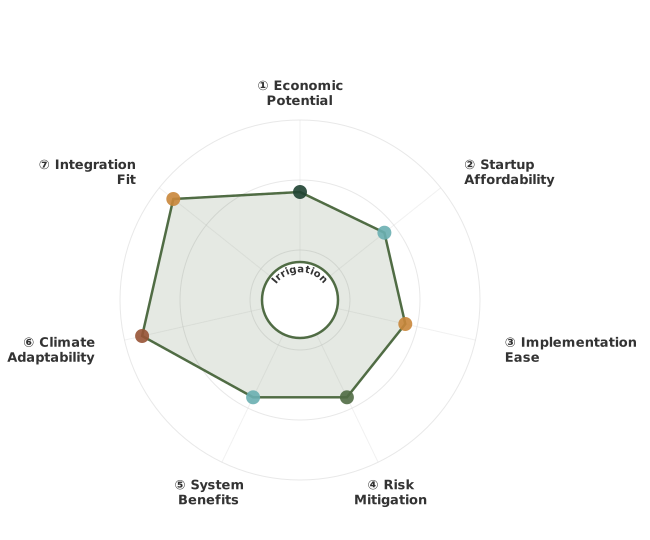
How These Traits Are Calculated
Trait dimensions are ordered clockwise starting from the top of the chart (12 o'clock position):
1. Economic Potential
Financial returns, annual value, and break-even timeline
WHAT: Evaluates financial viability by combining net annual value ($/ha from savings, income, and amortized harvests) with break-even timeline showing when practices pay for themselves.
WHY: Farmers need clear ROI understanding before committing resources. Fast payback (≤3 years) with strong returns (≥$300/ha) enables confident adoption, while long timelines (>10 years) restrict adoption to well-funded operations willing to wait for returns.
HOW: Calculated from net annual value in $/ha and break-even years. Exceptional (≥2.6): fast ROI ≤3 years + high value ≥$300/ha. Typical (1.8-2.5): moderate returns or longer timelines. Limited (<1.8): marginal economics or very long payback >10 years.
2. Startup Affordability
Initial investment costs and financial barrier to entry
WHAT: Measures financial barrier to entry through startup costs for equipment, infrastructure, consulting, and materials. Inverted scoring: lower costs = higher scores = more accessible adoption.
WHY: Affordability determines who can adopt. Low-cost practices (<$250/ha) enable widespread adoption across diverse scales, while high costs (>$2,500/ha) limit adoption to well-capitalized operations, creating barriers that slow regenerative transition.
HOW: Calculated from initial investment parsed from practice content. Inverted scoring: Exceptional (≥2.6): minimal investment <$250/ha. Typical (1.8-2.5): moderate costs $250-2,500/ha. Limited (<1.8): high barrier >$2,500/ha.
3. Implementation Ease
Learning curve and specialized knowledge required
WHAT: Measures how much learning, planning, and specialized knowledge a practice requires. Simpler practices with fewer steps score higher, while complex practices requiring extensive training or specialized resources score lower.
WHY: Complex practices create adoption barriers even when economically viable. Straightforward practices enable faster adoption and broader participation, while those requiring extensive training, timing precision, or specialized equipment limit who can succeed.
HOW: Evaluated by measuring documentation length and identifying complexity markers like location-specific requirements, seasonal timing windows, specialized skills, and dedicated equipment needs. Exceptional (≥2.6): straightforward practices with minimal prerequisites. Typical (1.8-2.5): moderate learning curve with some specialized needs. Limited (<1.8): steep learning curve requiring significant training or resources.
4. Risk Mitigation
Identified financial and ecological risk assessment
WHAT: Evaluates documented risks across financial (investment loss, market volatility) and ecological (crop failure, pest outbreaks) domains. Inverted scoring: fewer risks = higher scores.
WHY: Understanding risk exposure helps farmers make informed decisions. Low-risk practices allow confident implementation, while high-risk practices require careful planning and contingency resources. Risk transparency prevents costly failures.
HOW: Calculated from identified risks in practice content. Inverted scoring: Exceptional (≥2.6): ≤2 risks with manageable severity. Typical (1.8-2.5): 3-5 moderate risks. Limited (<1.8): 6+ risks or severe exposure.
5. System Benefits
How many ways the practice improves your land simultaneously
WHAT: Measures how many aspects of land health improve at once—carbon storage, soil quality, erosion control, water absorption, and biodiversity. Practices that improve multiple areas simultaneously create compounding benefits where each improvement reinforces the others.
WHY: The best practices solve multiple problems at once. For example, addressing erosion simultaneously builds carbon and improves water infiltration, creating a resilient system with positive feedback loops. Single-benefit approaches miss these compound transformation opportunities.
HOW: Evaluated across five key outcomes: carbon sequestration, soil organic matter increase, erosion reduction, water infiltration improvement, and biodiversity enhancement. Exceptional (≥2.6): high carbon storage (>8 t/ha/yr), improvements across 4-5 areas, transformative outcomes. Typical (1.8-2.5): moderate carbon (3-8 t/ha/yr), improvements across 2-3 areas. Limited (<1.8): modest impact (<3 t/ha/yr), single-area focus only.
6. Climate Adaptability
Geographic applicability across Köppen climate zones
WHAT: Evaluates geographic applicability by assessing how many Köppen climate zones successfully support a practice and what adaptation requirements are needed. Measures breadth of climates where farmers can implement with minimal to moderate modifications.
WHY: Universal practices working across diverse climates enable more farmers to adopt regenerative approaches. Practices limited to single climate types (only Mediterranean, only tropical) restrict adoption and slow global transition. Adaptability determines whether a practice serves niche regions or offers broad transformation.
HOW: LLM evaluation of regional success stories, Köppen zone coverage, and adaptation needs. Exceptional (≥2.6): 5+ zones or 4+ climate types, 3+ continents, minimal adaptation. Typical (1.8-2.5): 3-4 zones or 2-3 types, 2 continents, moderate adaptation. Limited (<1.8): 1-2 zones, single region, significant adaptation or highly specialized.
7. Integration Fit
How well this practice combines with others you're doing
WHAT: Measures how well a practice combines with other regenerative practices you might be doing. Some practices work as building blocks that make many other practices easier or more effective, while others work best on their own.
WHY: Practices that combine well with many others create more value on your farm. For example, cover cropping enables no-till, improves grazing, supports crop diversity, and helps water management—making all of them work better together. This helps you build a coherent system rather than juggling disconnected practices.
HOW: Evaluated by identifying which practices combine well and how strong those combinations are. 'Ideally Suited' means strong combinations where practices reinforce each other (practice A makes B easier, while B makes A more effective). 'Adequate' means complementary benefits that work well together. Exceptional (≥2.6): combines well with 6+ practices, serves as a building block. Typical (1.8-2.5): combines with 3-5 practices. Limited (<1.8): 1-2 practices or works best alone.
Going Deeper
1
WHY - The Benefits
Irrigation, when applied regeneratively, offers a suite of benefits that enhance farm resilience, economic stability, and ecological function. The primary value lies in making land more productive and resilient, particularly under increasingly variable climatic conditions.
Irrigation, when applied regeneratively, offers a suite of benefits that enhance farm resilience, economic stability, and ecological function. The primary value lies in making land more productive and resilient, particularly under increasingly variable climatic conditions.
WHY - The Benefits
Irrigation, when applied regeneratively, offers a suite of benefits that enhance farm resilience, economic stability, and ecological function. The primary value lies in making land more productive and resilient, particularly under increasingly variable climatic conditions.
Irrigation, when applied regeneratively, offers a suite of benefits that enhance farm resilience, economic stability, and ecological function. The primary value lies in making land more productive and resilient, particularly under increasingly variable climatic conditions.
Soil Health Benefits
Strategically applying water can dramatically improve soil health by facilitating the growth of living plants. By enabling year-round cover cropping or extending the growing season of perennial pasture species, irrigation supports the maintenance of living roots (Principle 4), which continuously feed soil microbial communities and exude beneficial compounds. This consistent biological activity enhances soil structure, promotes aggregation, and increases organic matter content. For instance, extending a cover crop’s life by an extra 4-6 weeks during a dry spell can boost soil organic matter accumulation by 0.2-0.5%.
Irrigation used to prevent bare soil during dry periods is crucial for keeping soil covered (Principle 3). Bare soil is highly susceptible to erosion by wind and water, leading to loss of topsoil, nutrients, and organic matter. By providing sufficient moisture for ground cover—whether through cash crops, cover crops, or pastures—irrigation indirectly protects the soil surface, preserves organic matter, and prevents the breakdown of soil aggregates. In arid regions, irrigation can be the enabling factor allowing for the establishment of perennials that will, over time, build soil structure.
Furthermore, irrigation can indirectly support maximizing crop diversity (Principle 2) by making it feasible to grow a broader range of species, including those critical for soil health, in regions not naturally suited for them. This might include legumes for nitrogen fixation, deep-rooted species for breaking compaction, or diverse forage mixes for integrated livestock systems. By allowing for multi-species cover cropping or the establishment of perennial systems, irrigation can unlock the ecological potential of the land.
Finally, efficient irrigation can improve water infiltration into the soil. When managed to ensure that water is supplied at a rate that the soil can absorb, and that plant cover is maintained, irrigation can lead to better soil moisture profiles, reducing runoff and encouraging deeper root development. This contrasts with detrimental irrigation practices that lead to waterlogging or surface runoff, which degrade soil structure.
Economic Benefits
The most immediate economic benefit of irrigation is yield stabilization and enhancement. In regions prone to drought, irrigation can transform marginal land into productive agricultural assets, allowing for the cultivation of higher-value crops or the maintenance of consistent livestock feed production. This predictability reduces the financial risk associated with weather-dependent farming. For example, in the dryland wheat belts of Australia or North America, supplemental irrigation can increase yields by 50-200% during dry years.
Irrigation enables the diversification of farm enterprises. It can allow farmers to grow a wider variety of crops, including those with higher market demand or better pest resistance. In semi-arid regions, it can support the establishment of perennial pastures or silvopasture systems, which provide more stable forage for livestock and long-term timber or nut income streams, thus diversifying revenue sources beyond annual cash crops. This diversification is a cornerstone of farm economic resilience.
By ensuring consistent forage production, irrigation can support higher stocking rates or maintain livestock health and performance during dry seasons, reducing the need for costly supplemental feed. Livestock managed on irrigated pastures can experience better weight gains and reproductive success, directly impacting profitability. The cost savings on feed alone can be significant, potentially $100-500 USD equivalent per hectare (or per 2.5 acres) annually, depending on stocking density and feed prices.
The ability to re-establish pasture or cover crops quickly after a cash crop, or to extend the grazing season, can also optimize land use and labor efficiency. Rather than leaving land bare during dry periods, active management with irrigation allows for continuous biological activity and potential grazing, maximizing the economic return from every hectare.
Water Cycle Benefits
When managed regeneratively, irrigation can positively influence the local water cycle, rather than merely drawing down resources unsustainably. Efficient application methods like drip irrigation minimize water loss to evaporation and runoff, ensuring more water infiltrates the soil, replenishing groundwater aquifers and maintaining soil moisture for longer periods. This reduces the overall demand on water sources.
By promoting continuous plant cover, irrigation helps to increase the soil's capacity to absorb and retain water. Plants intercept rainfall, slow down surface flow, and their root systems create channels that enhance infiltration. This improved infiltration reduces erosion, leading to cleaner surface water bodies by minimizing sediment and nutrient runoff. In essence, effective irrigation supports the soil's role as a sponge, buffering against both drought and flood events.
In regions with limited rainfall, irrigation can be instrumental in establishing perennial vegetation that stabilizes landscapes, reduces erosion on slopes, and improves the water-holding capacity of the soil. This can have a cascading positive effect on the entire watershed, leading to more consistent water flow in streams and rivers, and better quality water resources for downstream users.
Carbon Sequestration
Irrigated systems, when managed for soil health, can enhance carbon sequestration. By enabling longer growing seasons for cover crops, pastures, or perennial cash crops, irrigation promotes sustained photosynthesis, which draws atmospheric carbon dioxide into plants. This carbon is then transferred to the soil through root exudates and the decomposition of plant residues.
The continuous living roots facilitated by irrigation in cover crops, perennial pastures, or silvopasture systems are key to building soil organic carbon. These systems create a steady input of organic matter, feeding soil microbes which incorporate carbon into stable soil organic matter (SOM). Increased SOM not only improves soil structure and water-holding capacity but also sequesters carbon long-term. For example, maintaining year-round cover on irrigated land through multi-species cover cropping can increase soil organic carbon by 0.5-1.5% over a decade, equivalent to sequestering 10-30 tonnes of CO2 per hectare.
The enhanced water infiltration and retention provided by well-managed irrigation also create more favorable conditions for soil microbial activity, including the formation of soil aggregates that physically protect carbon from decomposition. By supporting robust plant growth that would otherwise be limited by water availability, irrigation indirectly fuels the biological processes that build soil carbon.
Biodiversity Benefits
Regenerative irrigation practices can support biodiversity by enabling the establishment and maintenance of diverse plant communities. In areas where natural precipitation is insufficient for ecological complexity, irrigation can allow for the cultivation of multi-species cover crops, ecologically valuable forages, or native perennial plants. These diverse plant communities provide habitat, food sources, and ecological niches for a wider array of insects, birds, and soil organisms.
For instance, using irrigation to establish diverse perennial pastures or silvopasture systems can transform simplified agricultural landscapes into more complex ecosystems that support pollinators, beneficial insects (e.g., pest predators), and beneficial soil microorganisms. These diverse systems contribute to overall ecosystem health and on-farm resilience, supporting natural pest control and nutrient cycling. Even when irrigating cash crops, integrating diverse cover crop sequences between cash crop cycles can provide crucial habitat and forage for beneficial organisms, increasing on-farm biodiversity.
A key aspect is ensuring that irrigation supports species diversity rather than monocultures. By enabling the growth of a wide range of plants with different root depths, flowering times, and structures, irrigation can create heterogeneous landscapes that cater to a broader spectrum of biodiversity, from soil microbes to above-ground wildlife.
Regenerative Systems Fit
Irrigation is classified as a Context-Dependent practice in regenerative agriculture. Its regenerative potential is unlocked when used judiciously to support foundational regenerative principles rather than to enable extractive practices.
Principle 1 (Minimize Soil Disturbance): While irrigation itself doesn’t directly disturb soil, the practices it enables can. Irrigating to support continuous cover cropping or perennial systems minimizes the need for annual tillage, thus supporting this principle. Conversely, relying on irrigation to facilitate intensive annual cropping often involves tillage. Regenerative use minimizes tillage by ensuring the soil is never left bare and unprotected.
Principle 2 (Maximize Crop Diversity): Irrigation can enable greater crop diversity, particularly in dry environments where water limitation restricts species. By providing supplemental water, farmers can implement diverse cover crop mixes, grow multiple perennial species in silvopasture, or use more varied crop rotations. This is best achieved when irrigation supports diverse systems rather than solely water-intensive monocultures.
Principle 3 (Keep Soil Covered): This is where irrigation significantly aids regenerative goals. In dry periods, irrigation is indispensable for maintaining living plant cover, preventing erosion, and keeping soil protected from extreme temperatures. This is crucial for soil health and resilience, especially in arid and semi-arid climates.
Principle 4 (Maintain Living Roots): Irrigation is a primary tool for ensuring living roots are present in the soil for as long as possible throughout the year. It allows plants to photosynthesize, feed microbes, and build structure even when rainfall is insufficient, thereby extending the reach of regenerative soil building.
Principle 5 (Integrate Livestock): In many regions, irrigation is fundamental to supporting year-round or extended-season grazing systems. It enables the consistent growth of pastures and forages that can sustain livestock, thereby facilitating managed grazing practices that build soil.
Transition Pathway: For farms transitioning from conventional agriculture where irrigation enables water-intensive monocultures, the path to regenerative irrigation involves a phased approach: 1. Assess and Optimize: Transition to most water-efficient delivery systems (drip, micro-sprinklers) and precise irrigation scheduling based on crop needs and soil moisture monitoring. Quantify current water use and identify areas of inefficiency. 2. Build Soil Health: Concurrently, implement practices that increase soil organic matter and water-holding capacity (cover cropping, no-till, compost/manure application). This reduces the soil’s reliance on external water over time. 3. Diversify Systems: Gradually introduce more diverse plant communities—multi-species cover crops, longer pasture rotations, perennial species, silvopasture—that are more resilient and require less intensive management or specialized inputs compared to monocultures. 4. Reduce Water Use: As soil health improves and systems diversify, systematically reduce irrigation application rates and frequency. The goal is to reach a point where irrigation is used only for critical establishment periods or to manage extreme dry spells, not as a constant input. 5. Water Stewardship: If water sources are strained, prioritize re-charging aquifers and improving water quality. Integrate rainwater harvesting and greywater recycling where feasible and ecologically sound.
The ultimate aim is to leverage irrigation as a tool to build a robust, diverse, and resilient ecosystem that requires less external input over time, rather than perpetuating dependency on intensive water use.
Sources behind this view
Videos & Podcasts
-
Regenerative agriculture revives the water cycle by restoring soils to act as sponges, improving infiltration and reducing runoff to combat drought. Practices like soil cover, water retention, reduced
-
Adopts regenerative agriculture principles: minimize disturbance, keep living roots, use soil armor, integrate animals (livestock grazing, multi-species), and increase biodiversity. These practices bu

-
Regenerative agriculture is crucial for environmental resilience. It focuses on understanding soil microbiology, carbon and water cycles, and building aggregate structure. Healthy soil acts like a spo

-
Building soil carbon is key to managing water issues, increasing infiltration rates from 0.5 to 8 inches/hour. Improving soil porosity via biological activity, especially fungi, enhances resilience to
Research
-
The Indigenous Roots of Regenerative Agriculture (opens in new window)
This study found: Modern regenerative agriculture practices are rooted in millennia of Indigenous land stewardship, offering profound knowledge and a crucial value system of respect and reciprocity for true transformat
-
Regenerative Agriculture: Restoring Ecosystems¢ Resilience and Productivity: A Review (opens in new window)
This study found: Regenerative agriculture builds soil health and ecosystem services through practices like no-till, cover crops, and diverse rotations. It increases soil organic matter, improves water infiltration, bo
-
Systematic review of regenerative farming: Addressing agricultural sustainability challenges (opens in new window)
This study found: Systematic review of 31 studies shows regenerative farming improves soil health, biodiversity, and carbon capture, aiding sustainability. Technology is key for adoption, but policy, farmer understandi
-
Soil and Water Conservation Practices for Enhancing Productivity in Dryland Farming: A Review (opens in new window)
This study found: Dryland farming faces challenges from drought and soil degradation. Soil and water conservation practices like conservation tillage, cover crops, and rainwater harvesting improve soil moisture, health
2
WHERE - Regional Considerations
Irrigation's role and regenerative application vary significantly across different climatic and geographic regions. The necessity, efficiency metrics, and ecological considerations are highly dependent on local rainfall patterns, temperature, soil types, and water...
Irrigation's role and regenerative application vary significantly across different climatic and geographic regions. The necessity, efficiency metrics, and ecological considerations are highly dependent on local rainfall patterns, temperature, soil types, and water...
WHERE - Regional Considerations
Irrigation's role and regenerative application vary significantly across different climatic and geographic regions. The necessity, efficiency metrics, and ecological considerations are highly dependent on local rainfall patterns, temperature, soil types, and water...
Irrigation's role and regenerative application vary significantly across different climatic and geographic regions. The necessity, efficiency metrics, and ecological considerations are highly dependent on local rainfall patterns, temperature, soil types, and water...
Click Here to Look up your Region if you don't already know it
Humid Temperate Regions
Representative Locations: Southeastern United States, northern Europe (UK, Germany, Poland), eastern China, Japan, New Zealand
Climate Context: Warm to hot summers and cool to cold winters with moderate to high annual precipitation (75-150 cm or 30-60 inches) distributed relatively evenly. USDA Zones 6-8, Köppen Cfb/Cfa.
Regenerative Irrigation Role: In these regions, irrigation is less about providing primary water needs and more about ensuring year-round soil cover and living roots, especially during summer dry spells or for intensive cover cropping. Focus is on preventing bare soil and extending the photosynthetic period of perennials. Efficient systems (drip, micro-sprinklers) are used to supplement rainfall for high-value crops or to ensure establishment of cover crops during drier summers, thereby increasing soil organic matter and resilience. The risk of salinization is lower due to higher rainfall, but waterlogging can be a concern if drainage is poor. Focus is on timing irrigation to complement rainfall and boost soil health systems.
Mediterranean Regions
Representative Locations: California, Mediterranean basin (Spain, Italy, Greece), central Chile, southwestern Australia, Western Cape South Africa
Climate Context: Hot, dry summers and mild, wet winters. Annual precipitation 40-90 cm (15-35 inches), highly seasonal. USDA Zones 8-10, Köppen Csa/Csb.
Regenerative Irrigation Role: Irrigation is critical for enabling year-round production and maintaining living systems through long, dry summers. The focus is on highly efficient methods (drip irrigation) to deliver water directly to perennial crops (olives, grapes, almonds), silvopasture systems, or for multi-stage cover cropping sequences. Soil health practices are paramount to maximize water infiltration and retention, reducing reliance on supplemental water. Water source management (aquifer recharge, efficient river use) is a major concern. Regenerative use prioritizes establishing drought-tolerant perennials and cover crops that can survive on minimal supplemental water once established, building soil organic matter for greater resilience.
Arid/Semi-Arid Regions
Representative Locations: Western USA, North Africa, Central Asia, Interior Australia, parts of the Middle East and South America
Climate Context: Low annual precipitation (<40 cm or 15 inches), high temperatures, short and often unpredictable growing season. USDA Zones 7-9, Köppen BSh/BSk.
Regenerative Irrigation Role: Irrigation is often essential for any form of sustained agriculture, but its implementation must be exceptionally water-wise to be regenerative. Priority is given to soil-building perennials and drought-adapted crops that require minimal supplemental water. Technologies like subsurface drip irrigation, precise scheduling, and rainwater harvesting are critical. The focus is on restoring the landscape's water-holding capacity through high organic matter content, deep-rooted cover crops, and minimal disturbance. Large-scale diversion of ancient aquifers is generally considered extractive, while using treated wastewater or conserved surface water for highly efficient, diversified systems may be regenerative if managed in terms of ecological impact. Support for native flora and fauna in adjacent non-irrigated areas is also considered.
Cold Continental Regions
Representative Locations: Northern USA and Canada, Northern Europe, Northern Asia
Climate Context: Very short growing seasons, extreme summer heat, severe winter cold. USDA Zones 3-5, Köppen Dfa/Dfb.
Regenerative Irrigation Role: Irrigation is often less critical due to sufficient summer rainfall and shorter growing seasons. However, it can be used to extend the growing season of fall cover crops, improve establishment of perennial forages, or ensure moisture for early-season cash crops during dry springs. Focus is on critical timing to maximize the short growing window for soil health benefits (e.g., establishing a winter-hardy cover crop mix). Over-application risks waterlogging in poorly drained soils once the freeze-thaw cycle begins. Emphasis is on using irrigation strategically to improve the success of regenerative practices like soil cover and living roots during the crucial summer months.
Subtropical Regions
Representative Locations: Southeastern USA, Southern China, Southern Brazil, Eastern Australia
Climate Context: Hot, humid summers and mild winters with generally ample rainfall. USDA Zones 9-11, Köppen Cfa/Cwa.
Regenerative Irrigation Role: Similar to humid temperate regions, irrigation is often supplemental, used to mitigate short dry spells or to enable intensive cropping systems. Regenerative use focuses on preventing bare soil during periods between cash crops or to ensure the establishment of diverse, multi-species cover crops that build soil health and provide forage. Efficient systems are key to avoid waterlogging and nutrient leaching in high rainfall areas. The goal is to use water to enhance the success of soil-building practices rather than to support water-intensive monocultures that degrade soil and water resources.
Tropical Regions
Representative Locations: Central America, Southeast Asia, East Africa, Northern Australia, Northern South America
Climate Context: High temperatures year-round, with distinct wet and dry seasons or consistent high rainfall. Köppen Af/Am/Aw.
Regenerative Irrigation Role: In regions with distinct wet and dry seasons, irrigation is vital for maintaining year-round production and soil cover. Emphasis is on efficient deficit irrigation management that supplements natural rainfall during dry periods to maintain living roots and ground cover, preventing soil degradation. Drip irrigation and mulching are critical. In areas with consistently high rainfall, irrigation might be less about supply and more about drainage management to prevent waterlogging for certain crops. For regenerative farming, irrigation might be used to establish perennial systems or diversified agroforestry that can provide food and income even during the dry season, while also building soil health and improving water infiltration.
3
HOW - Implementation Process
Implementing irrigation regeneratively requires a fundamental shift in mindset from maximizing yield to optimizing ecological function and water stewardship. This involves precise application, efficient technologies, and integration with soil health practices.
Implementing irrigation regeneratively requires a fundamental shift in mindset from maximizing yield to optimizing ecological function and water stewardship. This involves precise application, efficient technologies, and integration with soil health practices.
HOW - Implementation Process
Implementing irrigation regeneratively requires a fundamental shift in mindset from maximizing yield to optimizing ecological function and water stewardship. This involves precise application, efficient technologies, and integration with soil health practices.
Implementing irrigation regeneratively requires a fundamental shift in mindset from maximizing yield to optimizing ecological function and water stewardship. This involves precise application, efficient technologies, and integration with soil health practices.
Prerequisites
Before establishing or significantly modifying an irrigation system for regenerative agriculture, ensure the following are in place or actively being developed:
- Soil Health Foundation: Active programs to increase soil organic matter, improve soil structure, and enhance water infiltration (e.g., cover cropping, no-till, compost application). This reduces the overall need for irrigation and improves the soil's ability to utilize applied water effectively.
- Water Source Assessment: Thorough understanding of the water source's capacity, recharge rate, quality (salinity, sediment load), and any legal or ecological restrictions on its use. Drawing from non-recharging aquifers or surface waters with critical ecological needs is not regenerative.
- Climate and Crop/Pasture Needs: Detailed knowledge of local rainfall patterns, evapotranspiration rates, plant water requirements at different growth stages, and the water needs of various regenerative systems (e.g., diverse cover crops, perennial forages, silvopasture).
- Topography and Drainage: Understanding of field slopes, soil drainage characteristics, and potential for runoff or waterlogging.
Phase 1: System Design and Technology Selection (Focus on Efficiency)
The first step is selecting an irrigation method that maximizes water use efficiency and minimizes ecological impact.
Drip Irrigation: Delivers water directly to the root zone via a network of pipes and emitters.
- Pros: Highest water use efficiency (>90%), minimizes evaporation and runoff, allows precise nutrient application (fertigation), reduces weed growth between rows, can be used on varied topography.
- Cons: Higher upfront cost, requires filtration to prevent emitter clogging, can be susceptible to damage from machinery or animals.
- Regenerative Application: Ideal for perennial crops, strips of annuals, orchards, vineyards, and vegetables. Can be subsurface for maximum efficiency, or surface drip.
Micro-Sprinklers and Low-Volume Sprinklers: Deliver water within the root zone at low pressure and volume.
- Pros: More efficient than traditional sprinklers, less evaporation than overhead systems, can cover a wider area than drip, suitable for cereals and forage crops.
- Cons: Less efficient than drip, potential for some evaporation and wind drift.
- Regenerative Application: Good for cereals, pastures, and cover crops where entire field coverage is needed but high efficiency is desired.
Flood/Furrow Irrigation (Regenerative Adaptation): While traditional flood irrigation is highly inefficient, adaptations can make it more contextually appropriate.
- Pros: Lower upfront cost, simpler technology.
- Cons: Historically high water loss through evaporation and runoff, potential for salinization and waterlogging in poorly drained soils.
- Regenerative Adaptation: Can be used only on gently sloping land with excellent soil drainage and organic matter content. Requires precise leveling, careful water management (short, frequent applications), and immediate follow-up with cover crops or mulch to prevent bare soil and evaporation. Often combined with techniques like broadbase contour furrows or keyline design to control runoff. Best suited for regions where higher water cost and lower efficiency are acceptable trade-offs for lower infrastructure investment for specific crops or pastures.
Other Technologies:
- Soil Moisture Sensors: Crucial for precise scheduling. Placed at various depths, they provide real-time data on soil water content, preventing over- or under-watering.
- Automated Controllers: Integrate sensor data to manage irrigation schedules remotely, optimizing water application based on plant needs and weather forecasts.
- Rainfall Harvesting: Incorporating systems to capture and store rainwater (ponds, tanks) reduces reliance on other water sources.
- Wastewater Treatment and Reuse: Where permitted and safe, treated greywater or municipal wastewater can supplement irrigation needs, reducing pressure on freshwater sources.
Phase 2: Installation and Infrastructure (International Considerations)
Installation costs and available technologies vary globally.
- Materials: Pipes, emitters, filters, pumps, and controllers. Costs can range from $3,000-20,000+ USD equivalent per hectare ($1,200-8,000+ per acre), depending on the chosen system and scale. In regions with lower labor costs, DIY installation might be more feasible. Local sourcing and availability of parts are critical.
- Pumps: Electric, diesel, or solar-powered pumps. Solar is often the most regenerative choice due to zero emissions and low operational costs, but requires significant upfront investment and consistent sunlight. Diesel pumps are common but have higher running costs and emissions.
- Layout: Design distribution systems to minimize elevation changes and pressure variations. Contour farming, keyline design, and terracing can maximize efficiency and minimize runoff, especially on sloped land.
Phase 3: Irrigation Scheduling and Management (Precision Application)
Regenerative irrigation is about applying the right amount of water at the right time to the right place.
- Scheduling: Base decisions on soil moisture data, evapotranspiration (ET) rates, and plant growth stages. Avoid fixed schedules. Irrigate when soil moisture drops to a critical threshold for the specific crop/pasture and growth stage.
- Application Rate: Match the irrigation system's application rate to the soil's infiltration rate. If application exceeds infiltration, runoff and erosion will occur. This is where soil health becomes vital – high organic matter soils infiltrate water much faster.
- Water Source Integrity: Monitor water sources for depletion or degradation. Implement buffer zones around surface water bodies and avoid over-pumping groundwater. Report any signs of contamination or depletion.
- Drainage Management: Ensure adequate drainage to prevent waterlogging, which harms plant roots and soil biology. This might involve installing tile drains or improving surface drainage contours.
Phase 4: Integration with Soil Health Practices
Irrigation must support and be supported by other regenerative practices.
- Cover Cropping: Use irrigation only as needed to ensure successful establishment and growth of diverse cover crops, especially during dry periods. This extends living roots and keeps soil covered year-round.
- No-Till/Minimum Disturbance: Irrigation systems should be designed to accommodate no-till planting. Drip tape can be laid and left in place between seasons, or overhead irrigation can help establish cover crops that are then roller-crimped. Avoid practices that require extensive field traffic, which can re-compact soil.
- Mulching: Use crop residue or organic mulches to conserve soil moisture, suppress weeds, and reduce the frequency or amount of irrigation needed.
- Livestock Integration: In pasture or silvopasture systems, irrigation helps maintain forage availability during dry periods, supporting managed grazing without over-stressing the ecosystem. However, livestock must be managed to prevent them from damaging irrigation infrastructure or re-compacting soil.
Transition Timeline & Phase-Out Strategy
For farms transitioning from conventional, water-intensive irrigation, a gradual phasing out is often more sustainable and economically viable.
Year 1-2: Optimization and Soil Building
- Focus: Transition to highly efficient irrigation technologies (drip, micro-sprinklers). Implement precise scheduling based on soil moisture sensors and ET data.
- Soil Health: Aggressively build soil organic matter through cover cropping (irrigating to ensure establishment and growth, especially during dry spells), no-till, and organic amendments. Aim to increase soil's water-holding capacity by 1-2% total organic matter.
- Water Use: Track and aim to reduce total water application by 10-20% through efficiency gains and improved soil infiltration.
Year 3-5: Diversification and Reduced Reliance
- Focus: Introduce more diverse cropping or pasture systems. Integrate perennial species, multi-species cover crops, or silvopasture.
- Soil Health: Continue building soil organic matter and structure. Deeper root systems from perennials and diverse cover crops further enhance infiltration and water retention.
- Water Use: Aim for a further 20-30% reduction in irrigation volume as soil health improvements take effect and more drought-resilient systems are established. Irrigation may be shifted to critical establishment phases or dry season support rather than continuous application.
Year 5+: Minimal or Strategic Irrigation
- Focus: Highly resilient, diversified systems should require significantly less irrigation. Irrigation might be used only for:
- Establishing new perennial stands or orchards.
- Critical dry periods in high-value cash crops where yield is essential.
- Supporting livestock during extreme droughts.
- Soil Health: Soil actively manages water, with high infiltration and retention capacity.
- Water Use: Reduced by 50-80% from initial levels, depending on climate and system type. The goal is water-wise farming where irrigation is a strategic tool, not the primary driver of production, building natural resilience into the land.
Indicators of Success for Graduation:
- Reduced frequency and duration of irrigation cycles.
- Increased soil organic matter levels (e.g., >4-5%).
- Improved soil aggregate stability and infiltration rates (e.g., >1-2 inches per hour).
- Ability to maintain healthy crop/pasture growth during drier periods with reduced irrigation.
- Reduced reliance on pumping energy and water fees.
- Diversified income streams that are less dependent on water-intensive crops.
Sources behind this view
Videos & Podcasts
-
Gradual transition to regenerative systems is advised, prioritizing knowledge sharing. Increased soil organic matter (0.1% increase = 16,000 L/ha water holding) builds resilience against drought and w

-
Regenerative agriculture revives the water cycle by restoring soils to act as sponges, improving infiltration and reducing runoff to combat drought. Practices like soil cover, water retention, reduced
-
Adopting regenerative practices should start small and incrementally, focusing on soil health over short-term yields. Collaboration, strategic nutrient sourcing, and leveraging resources like Continuu
-
Regenerative agriculture boosts profitability and sustainability by reducing costs, improving soil health, and enhancing food quality. Key practices include cover cropping, water management, and focus
Research
-
The Indigenous Roots of Regenerative Agriculture (opens in new window)
This study found: Modern regenerative agriculture practices are rooted in millennia of Indigenous land stewardship, offering profound knowledge and a crucial value system of respect and reciprocity for true transformat
-
Regenerative Agriculture: Restoring Ecosystems¢ Resilience and Productivity: A Review (opens in new window)
This study found: Regenerative agriculture builds soil health and ecosystem services through practices like no-till, cover crops, and diverse rotations. It increases soil organic matter, improves water infiltration, bo
-
Systematic review of regenerative farming: Addressing agricultural sustainability challenges (opens in new window)
This study found: Systematic review of 31 studies shows regenerative farming improves soil health, biodiversity, and carbon capture, aiding sustainability. Technology is key for adoption, but policy, farmer understandi
-
How does building healthy soils impact sustainable use of water resources in irrigated agriculture? (opens in new window)
This study found: Improving soil health in irrigated agriculture can increase water availability, enhance plant water use efficiency, and build drought resilience, reducing reliance on irrigation water.
4
Know the Debate
The role and necessity of irrigation in regenerative agriculture depend heavily on the specific farm context, particularly its climate, scale, and ...
Know the Debate
The role and necessity of irrigation in regenerative agriculture depend heavily on the specific farm context, particularly its climate, scale, and ...
The role and necessity of irrigation in regenerative agriculture depend heavily on the specific farm context, particularly its climate, scale, and existing soil health. In humid regions, irrigation is often supplemental to enhance cover crops and prevent bare soil during dry spells. Conversely, in arid and semi-arid climates, it is critical for establishing perennial systems and ensuring year-round living roots, though always with an emphasis on extreme efficiency. The upfront investment for efficient systems ranges from $8,000-$25,000 per hectare for smaller operations, significantly impacting the economic feasibility and transition plans for regenerative irrigation.
How long until regenerative irrigation shows full soil benefits?
3-5 years for significant soil improvements
Academic research suggests that by implementing efficient irrigation alongside soil-building practices like cover cropping and no-till, significant improvements in soil health and water retention can be observed within 3-5 years.
Sources behind this view
Sources behind this view
Research
-
Managing irrigation for soil health in arid and semi-arid regions (opens in new window)
This study found: This chapter discusses how to manage soil health and use water more effectively in dry and semi-dry regions where irrigation is common. These areas are crucial for global food production. Practices like no-till farming and leaving crop residue on the soil surface are highlighted. These methods help water soak into the ground, stay in the soil longer, and reduce water loss from runoff and evaporation, meaning more water is available for crops to use. The chapter also covers the use of cover crops and looks at the financial benefits of these soil-friendly approaches, offering insights into future developments.
-
How does building healthy soils impact sustainable use of water resources in irrigated agriculture? (opens in new window)
This study found: As water becomes scarcer, farms that rely on irrigation face challenges in reducing their water use while still growing enough crops. This review explores how improving soil health can help. Healthy soils can capture more rainwater (green water) and store it, making it available for plants. They can also help plants use water more efficiently, reducing the need for irrigation (blue water). By improving soil health, farms can become more resilient to droughts and reduce their overall water footprint. To fully understand this potential, more research is needed that looks at how soil health, irrigation, and crop choices work together. While the technical benefits are clear, adopting these practices also requires overcoming practical and organizational hurdles.
-
Soil and Water Conservation Practices for Enhancing Productivity in Dryland Farming: A Review (opens in new window)
This study found: Farming in dry areas, which feeds a large part of the world, is struggling with unpredictable rain, frequent droughts, and worsening soil health. This leads to wasted water, soil erosion, and less fertile soil, all limiting how much crops can grow. Soil and water conservation (SWC) methods provide a sustainable way to fix these problems by helping soil hold more water, improving soil health, and making crop yields more reliable. This review looks at different SWC techniques. 'In-situ' methods, like conservation tillage (less plowing), leaving crop residue on the surface, farming along contours, planting cover crops, and specific land shapes (like broad beds and furrows), help reduce water runoff, allow more water to soak into the ground, and decrease water loss from evaporation. 'Ex-situ' methods, such as collecting rainwater in ponds or through watershed projects, can provide extra water for crops when they need it most. The review also emphasizes how managing organic matter in the soil is crucial for improving soil structure, its ability to hold water, and how nutrients are used. Studies show that combining these SWC practices significantly boosts how efficiently water and nutrients are used, makes yields more stable, and reduces land damage. These practices are also vital for climate-smart agriculture, making farms tougher against drought and helping to store carbon in the soil. However, adoption is often slow due to cost, lack of knowledge, and local challenges, highlighting the need for tailored and community-involved approaches to spread these technologies.
 From the Web
-
Accurate irrigation management through soil moisture monitoring and ensuring uniform distribution is vital for water conservation, optimizing crop yields, and mitigating drought/flood impacts. Strategies include using sensors, maintaining systems, and employing water-efficient practices like conservation tillage and mulching.
-
Manage soil moisture by monitoring soil moisture for irrigation scheduling and ensuring irrigation distribution uniformity. Strategies to reduce crop water use include healthy soils, appropriate crops/genetics, conservation tillage, mulching, and efficient irrigation technologies.
5-10+ years for full potential in challenging climates
Field practitioners in drier or more degraded environments often report that it takes 5-10 years, or even longer, to see substantial improvements in soil water-holding capacity and to fully establish drought-resilient perennial systems with regenerative irrigation.
Sources behind this view
Sources behind this view
Videos & Podcasts
-
Regenerative agriculture restores the water cycle by transforming soils into sponges that infiltrate and retain water, enhancing resilience through diversification, water retention structures, and reduced tillage, while also addressing pesticide impacts on rainfall-generating bacteria.
-
Building soil carbon is key to managing water issues, increasing infiltration rates from 0.5 to 8 inches/hour. Improving soil porosity via biological activity, especially fungi, enhances resilience to drought and heavy rain, as demonstrated by Gabe Brown's farm.
-
To build resiliency during drought, prioritize education on regenerative principles, attend soil health academies, and implement cover crops to improve soil structure and water infiltration, as advised by Eric Fusch and David.
Making Sense of the Differences
The timeline for realizing the full benefits of regenerative irrigation is highly context-dependent. While significant soil improvements and reduced water needs can emerge in 3-5 years in favorable climates with proactive soil health management, more challenging environments like arid rangelands or severely degraded soils may require 5-10+ years of consistent practice and patience. Factors like initial soil condition, regional climate, species selected for cover crops and perennials, and the intensity of soil-building efforts all influence the pace of change.
What are the realistic upfront costs for regenerative irrigation?
Costs from $8k-$25k/ha for small/mid-scale basic systems
Field practitioners and institute guides indicate that basic efficient irrigation systems like drip tape, temporary fencing for adaptive management, and rainwater harvesting can cost between $8,000-$25,000 per hectare for smaller operations.
Sources behind this view
Sources behind this view
Videos & Podcasts
-
Implementing regenerative agriculture and high-efficiency irrigation (center pivot, drip, solar) on sugar cane saves water. Initial compost applications faced challenges, but the focus is now on evolving compost types and biologically derived nutrition.
-
Digital agriculture is advancing with drones and aerial imagery for field scouting and water stress detection. Precise irrigation with drip systems, guided by data, conserves water. Consumer demand for transparency is also driving sustainability efforts like drip tape recycling.

-
Avoid overhead irrigation for established tomatoes, peppers, eggplant, and squash in humid climates due to leaf diseases; use drip tape or dry farming. Consult irrigation supply professionals to assess water flow/pressure and design systems tailored to specific crops and farm contexts.
From the Web
-
Effective water management involves recordkeeping, efficient irrigation like drip systems, and scheduling irrigation for early morning/night. Rainwater catchment is a supplementary option, with local policy checks recommended.
-
Urban farms should track water use with meters and install efficient systems like drip irrigation, especially when combined with mulching for heat and water conservation. Rainwater harvesting is an option, but local policies and safety concerns must be addressed.
-
Effective soil and water management, including drip irrigation and cover crops, is key to eco-efficient fruit and vegetable production. Grafting and biochar are also discussed as beneficial practices for improving resilience and soil health.
Costs up to $20k+/ha for advanced and large-scale systems
Academic research and institute guides suggest that advanced and large-scale irrigation systems, including sophisticated drip infrastructure and automation, can incur initial costs exceeding $20,000 per hectare.
Sources behind this view
Sources behind this view
Research
-
Optimized Water Management Strategies in Regenerative Agriculture for Resilience and Efficiency (opens in new window)
This study found: Farmers are facing increasing challenges with water scarcity and the need for more sustainable farming practices. This research looks at different ways to manage water in regenerative agriculture, moving beyond traditional methods that often use a lot of water without being very efficient. The study reviewed techniques like collecting rainwater, using drip irrigation, managing soil moisture, planting water-efficient crops, and contour farming. It found that drip irrigation significantly boosts water efficiency by 40% and crop yields by 35% compared to older methods, by delivering water straight to plant roots. While other methods like rainwater harvesting and soil moisture management are also discussed, drip irrigation is highlighted as the most effective for saving water and increasing harvests, helping to meet long-term goals for nature and food production.
From the Web
-
Offers practical strategies for irrigating with limited water, focusing on understanding soil moisture, crop critical growth stages, and employing techniques like early irrigation, drought-tolerant crops, and reduced application rates.
Making Sense of the Differences
The initial investment for regenerative irrigation varies from $8,000 to over $20,000 per hectare, largely dependent on the scale of operation and the chosen technology. Smaller farms or those prioritizing lower-cost approaches might opt for basic drip tape, rainwater harvesting, and simpler solar pumps, keeping costs at the lower end. Larger operations or those implementing highly advanced, automated systems can expect costs to reach the higher end of the range. Strategic planning, phased implementation, and exploring government cost-share programs are recommended to manage the upfront capital requirements effectively.
5
HOW MUCH - Costs & Investment
Note: Costs shown in USD; multiply by local labor and material cost indices for your region. Labor costs vary significantly internationally.
Note: Costs shown in USD; multiply by local labor and material cost indices for your region. Labor costs vary significantly internationally.
HOW MUCH - Costs & Investment
Note: Costs shown in USD; multiply by local labor and material cost indices for your region. Labor costs vary significantly internationally.
Note: Costs shown in USD; multiply by local labor and material cost indices for your region. Labor costs vary significantly internationally.
Note: All costs are based on recent US economic data (2024–2026) and may vary substantially by region based on local labor rates, utility tariffs, material logistics, and specific soil topography.
Infrastructure & Installation Costs
For small-scale operations (under 50 acres (20 ha)), high-quality drip irrigation systems are labor-intensive, often requiring complex manual zoning and custom plumbing to account for varied block sizes. These systems typically range from $4,000 to $8,000 per acre ($9,884–$19,768/ha). Mid-size operations (50–500 acres (20–202 ha)) benefit from increased equipment standardization and efficient hardware layout, bringing costs to $2,000 to $4,500 per acre ($4,942–$11,120/ha) for integrated sprinkler or drip hardware. Large-scale operations (over 500 acres (202 ha)) leverage significant economies of scale, utilizing bulk procurement of piping and pivot infrastructure to lower entry barriers to $1,000 to $2,500 per acre ($2,471–$6,178/ha). These capital expenditures reflect the base system cost, excluding labor, which generally adds 15–20% in high-wage regions.
Pumping & Water Source Development
Water access remains the most significant fixed hurdle, with costs dictated by existing water law, groundwater depth, and local permitting requirements. Developing a new well can range from $15,000 to $50,000 per site, regardless of acreage, creating a heavy burden for smaller farms. Pumping hardware—including modern variable frequency drive (VFD) motors and solar-integrated stations—adds $1,500 to $5,000 per site for small operations. Mid-size systems necessitate more robust motor configurations, costing $4,000 to $12,000 per installation. Large-scale operations prioritize high-capacity pumping stations and centralized filtration systems, which can require an initial investment of $20,000 to $60,000. However, when spread across thousands of acres, the per-acre impact of this primary infrastructure drops to a negligible $100 to $500 per acre ($247–$1,236/ha), allowing large farms to reinvest savings into precision distribution.
Monitoring & Intelligent Controls
Regenerative practices rely heavily on data-driven water application to protect soil biology and minimize evaporation. Small-scale farms investing in premium sensors, weather-tracking, and smart controllers face a higher relative cost of $300 to $800 per acre ($741–$1,977/ha). Mid-size operations, which often implement integrated sensor arrays across diverse topographies, typically spend $150 to $400 per acre ($371–$988/ha). Large-scale producers utilize automated, satellite-linked sensing networks to manage vast areas, reducing specific sensor density per acre and bringing costs down to $50 to $200 per acre ($124–$494/ha). These investments allow producers to optimize moisture levels continuously, directly supporting deep-rooted perennials and preventing the root rot associated with over-irrigation.
Annual Operating Costs
Routine expenditures are primarily driven by electricity, system maintenance, and labor for drip line flushing or nozzle replacement. Small-scale operations often struggle with energy premiums, facing annual costs of $200 to $500 per acre ($494–$1,236/ha). Mid-size operations typically see stabilized annual costs of $100 to $300 per acre ($247–$741/ha) through better logistical optimization. Large-scale operations, particularly those that integrate solar-assisted pumping, can achieve substantial reductions in their utility overhead, significantly lowering their annualized energy cost per gallon of water application compared to standard electric-grid reliance.
Most Spend: Most agricultural operations in the U.S. fall within the $1,500 to $4,200 per acre ($3,707–$10,378/ha) range for primary installation, reflecting the widespread adoption of standardized lateral move systems and drip lines that balance durability with moderate upfront capital requirements.
Why the Range?: Cost variation is largely driven by hydrogeology—such as the depth to the water table—and the sophistication of the delivery technology chosen to match specific crop water needs. Topographical complexity also dictates price, as undulating land necessitates more sophisticated pressure compensation hardware and additional piping to maintain uniform water distribution.
6
REWARDS AND RISKS - Economics & Risk Factors
REWARDS AND RISKS - Economics & Risk Factors
In the Best Case Scenario, a farm implements high-efficiency drip systems synchronized with robust, high-residue cover cropping, capturing up to $400–$800 per acre ($988–$1,977/ha) in annual energy and water bill savings by year 6. In this model, the soil acts as a moisture "sponge," where enhanced organic matter increases water holding capacity, allowing the farm to weather 30-day dry spells with 50% less mechanical water usage. This efficiency results in a 15–25% increase in net profitability as utility costs plummet.
In the Typical Case, producers experience a 10–15% yield stabilization over a 3–5 year period. Capital recovery for the irrigation system typically spans 7–10 years, supported by a 20% reduction in pumping costs that offsets debt-servicing. Additionally, yield resilience during heat-stress periods provides an indirect economic benefit of $150–$300 per acre ($371–$741/ha) by acting as an insurance policy against total crop loss.
In the Worst Case Scenario, heavy debt servicing paired with poor management, such as failing to implement necessary drainage alongside irrigation, leads to soil salinization. This can strip 10–20% of land value and, if water rights are restricted during drought, can result in annual losses of 5–10% of total revenue. For operations relying solely on water-intensive, low-margin monocultures, operational costs exceeding $400 per acre ($988/ha) can render the irrigation investment an economic liability, especially if regional electricity prices spike by 20% or more.
Market Factors & Risk Mitigation
Profitability is hyper-linked to energy volatility. A 10% increase in electricity rates can drastically reduce margins for high-pumping-demand crops. Farms utilizing solar-assisted pumping can decouple their operating costs from utility volatility, gaining a significant competitive edge. Mitigation strategies include enrolling in the Environmental Quality Incentives Program (EQIP), which can reimburse 50–75% of equipment costs, effectively lowering the breakeven horizon.
Transition Period Risks
During the first 24 months, many producers hit a "gap period" where soil health has not yet reached the maturity required to maximize water-holding capacity. During this phase, yield dips of 10–20% are common as farmers adjust schedules and optimize application rates. To mitigate these risks, producers should phase irrigation upgrades over 3 years, prioritizing high-value, water-sensitive fields first. Utilizing moisture sensors from Day 1 helps shorten the learning curve, allowing for precise data-informed adjustments rather than traditional "calendar-based" irrigation that risks temporary soil saturation.
Sources behind this view
Videos & Podcasts
-
Increasing water productivity requires improving irrigation efficiency (e.g., drip irrigation, low-cost systems, treadle pumps), enhancing land management (intercropping, managed grazing to increase s
 Community
-
Discusses irrigation in arid Peru, focusing on preventing salinization through ground cover, pioneer trees, and no-till methods. Explores traditional channel irrigation vs. sprinklers and the benefits
Read more (opens in new window) permies.com -
Focuses on water conservation for low-irrigation farming, emphasizing humus and mulching to retain soil moisture. Highlights the critical role of location and soil type (e.g., sandy vs. clay in Kansas
Read more (opens in new window) permies.com
Research
-
Impact of Water Deficit and Soil Conditioners Under a Solar Operated Automatic Drip Irrigation System: A Comprehensive Review (opens in new window)
This study found: Combining deficit irrigation, soil conditioners, and solar drip irrigation saves water (up to 50%), improves soil moisture, and can boost yields by 10-25% in dry regions. This integrated approach supp
-
Impact of soil salinity, sodicity, and irrigation water salinity on crop production and coping mechanism in areas of dryland farming (opens in new window)
This study found: Salty soil and water in dryland farming reduce crop yields. Farmers use drip irrigation, gypsum, salt-tolerant plants, and crop rotation to cope. Integrated management and farmer education are vital f
-
Soil and Water Conservation Practices for Enhancing Productivity in Dryland Farming: A Review (opens in new window)
This study found: Dryland farming faces challenges from drought and soil degradation. Soil and water conservation practices like conservation tillage, cover crops, and rainwater harvesting improve soil moisture, health
-
How does building healthy soils impact sustainable use of water resources in irrigated agriculture? (opens in new window)
This study found: Improving soil health in irrigated agriculture can increase water availability, enhance plant water use efficiency, and build drought resilience, reducing reliance on irrigation water.
7
COMPATIBLE PRACTICES - Integration Opportunities
Integrating irrigation with other regenerative practices amplifies benefits and helps mitigate risks, transforming it from a potentially extractive input into a tool for ecological enhancement.
Integrating irrigation with other regenerative practices amplifies benefits and helps mitigate risks, transforming it from a potentially extractive input into a tool for ecological enhancement.
COMPATIBLE PRACTICES - Integration Opportunities
Integrating irrigation with other regenerative practices amplifies benefits and helps mitigate risks, transforming it from a potentially extractive input into a tool for ecological enhancement.
Integrating irrigation with other regenerative practices amplifies benefits and helps mitigate risks, transforming it from a potentially extractive input into a tool for ecological enhancement.
Cover Cropping
- Integration: Use irrigation judiciously for timely cover crop establishment, especially during dry seasons or to extend their growth period. This ensures continuous living roots and soil cover.
- Benefit: Enhances soil organic matter, improves water infiltration and retention, suppresses weeds, and provides forage for livestock. Irrigation makes cover cropping more reliable and effective.
No-Till/Minimum Soil Disturbance
- Integration: Design irrigation systems (e.g., subsurface drip) to allow uninterrupted no-till operations. Use overhead irrigation to establish cover crops for roller-crimping.
- Benefit: Irrigation supports the continuous plant cover necessary to protect soil from erosion and maintain biological activity, which are cornerstones of no-till success. It allows no-till farming to be practiced even in dry climates where it would otherwise be challenging.
Precision Agriculture Technologies (Sensors, Automation)
- Integration: Deploy soil moisture sensors, weather stations, and automated controllers to precisely schedule irrigation based on real-time needs.
- Benefit: Dramatically increases water use efficiency, reduces energy consumption, minimizes water-logging and salinization risk, and optimizes crop health while lowering operating costs.
Soil Organic Matter Enhancement (Compost, Manure)
- Integration: Irrigate land amended with compost or manure to help incorporate amendments and activate soil biology.
- Benefit: High organic matter soils have superior water-holding capacity, reducing irrigation frequency and depth. Irrigation, in turn, helps establish plants that build that organic matter.
Water Harvesting & Storage (Ponds, Swales)
- Integration: Use harvested rainwater for irrigation, reducing reliance on groundwater or surface water diversions. Pump from ponds strategically.
- Benefit: Creates a more resilient water supply, reduces costs, and lessens environmental impact on external water sources.
Rotational/Adaptive Grazing
- Integration: Use irrigation to ensure consistent forage growth during dry periods, supporting longer grazing rotations and adequate pasture recovery.
- Benefit: Stabilizes livestock feed supply, allows for more strategic grazing management that builds soil health, and potentially reduces purchased feed costs significantly.
Silvopasture
- Integration: Irrigating young trees during establishment or providing supplemental water during prolonged droughts can ensure tree survival and growth in silvopasture systems.
- Benefit: Enables the establishment and long-term success of tree-pasture systems in regions where they would otherwise be unfeasible, leading to diversified income, improved biodiversity, and enhanced soil health.
The synergy rating reflects how well the practices enhance each other, with "Essential Synergy" indicating a critical relationship for success. Regenerative irrigation is most effective when it functions as part of a holistic system, building soil health and ecological resilience.
Sources behind this view
Videos & Podcasts
-
Adopts regenerative agriculture principles: minimize disturbance, keep living roots, use soil armor, integrate animals (livestock grazing, multi-species), and increase biodiversity. These practices bu
-
Regenerative agriculture revives the water cycle by restoring soils to act as sponges, improving infiltration and reducing runoff to combat drought. Practices like soil cover, water retention, reduced
-
Regenerative agriculture is crucial for environmental resilience. It focuses on understanding soil microbiology, carbon and water cycles, and building aggregate structure. Healthy soil acts like a spo
-
Adopting regenerative practices should start small and incrementally, focusing on soil health over short-term yields. Collaboration, strategic nutrient sourcing, and leveraging resources like Continuu
Research
-
The Indigenous Roots of Regenerative Agriculture (opens in new window)
This study found: Modern regenerative agriculture practices are rooted in millennia of Indigenous land stewardship, offering profound knowledge and a crucial value system of respect and reciprocity for true transformat
-
Systematic review of regenerative farming: Addressing agricultural sustainability challenges (opens in new window)
This study found: Systematic review of 31 studies shows regenerative farming improves soil health, biodiversity, and carbon capture, aiding sustainability. Technology is key for adoption, but policy, farmer understandi
-
Soil and Water Conservation Practices for Enhancing Productivity in Dryland Farming: A Review (opens in new window)
This study found: Dryland farming faces challenges from drought and soil degradation. Soil and water conservation practices like conservation tillage, cover crops, and rainwater harvesting improve soil moisture, health
-
Estrategias de agricultura regenerativa para mejorar la salud del suelo (opens in new window)
This study found: Review of research shows cover crops, composting, and crop rotation significantly improve soil health, carbon capture, and erosion resistance in regenerative agriculture.