
JADAM Organic Farming
JADAM is an ultra-low-cost, DIY agricultural philosophy aiming to liberate farmers from expensive proprietary inputs. It emphasizes creating nutrient-rich, naturally derived inputs using readily available materials and simple processes, promoting farm independence and self-sufficiency. Unlike complex, proprietary systems, JADAM champions universal accessibility and farmer empowerment through accessible knowledge.
Read More: Complete Description
JADAM, meaning "mountain" in Korean, evolved from the desire to empower farmers with accessible, cost-effective, and natural agricultural inputs. Developed by Youngsang Cho, JADAM Organic Farming (JOF) is less a rigid set of protocols and more a philosophical approach centered on ecological wisdom and farmer independence. Its core ethos is that farmers should be the creators and custodians of their own agricultural resources, rather than being dependent on expensive, commercially produced fertilizers and pesticides. This philosophy stands in direct contrast to practices that rely on complex biological preparations or patented recipes, advocating for universally understandable processes using common materials.
The practice is characterized by its emphasis on ultra-low-cost, self-made inputs. JADAM provides specific, yet simple, recipes for a wide range of inputs, including natural pesticides, fertilizers, soil amendments, and microbial activators. These inputs are typically derived from easily accessible materials such as plant residues, animal manure, common minerals like volcanic rock powder, and simple fermentation processes. The goal is to create potent, biologically active solutions from materials that are often discarded or overlooked, thereby significantly reducing external input costs for farmers globally. For instance, Jadam Micronutrient Fertilizer (JMF) can be made by fermenting edible materials with sulfur and sea salt, creating a broad spectrum of trace elements. Similarly, Jadam Herbicide (JH) is a simple solution of edible plants and vegetable oil, potent enough to control weeds but breaking down rapidly in the soil without residue.
From a regenerative agriculture perspective, JADAM aligns strongly with several core principles, particularly concerning Minimizing Soil Disturbance, Maximizing Crop Diversity, and Keeping Soil Covered. While JADAM itself doesn't prescribe specific tillage practices, the reduction in external input costs often frees up financial resources that can be directed towards practices like cover cropping or reduced tillage. The focus on natural materials and microbial activators directly supports the enhancement of soil biology, which is paramount for building soil structure and fertility—key aspects of regeneration. By providing farmers with the means to create their own fertility inputs, JADAM empowers them to build soil health from within, reducing reliance on synthetic fertilizers that can harm soil ecosystems.
However, JADAM is classified as a Transition Practice within a broader regenerative framework. While its aim is entirely ecological and cost-effective, the creation and application of some JADAM inputs, particularly microbial ferments, may involve processes that temporarily deviate from strict regenerative principles in their development or application details. For example, certain fermentation processes might rely on specific containers or timeframes that could be considered non-ideal compared to more advanced biological methods available in mature regenerative systems. Furthermore, the emphasis is on creating potent inputs, which, if mishandled or over-applied, could potentially disrupt delicate soil microbial communities, a risk present in any input-based system, even natural ones.
The philosophy behind JADAM is independence. Youngsang Cho's work is a testament to the idea that farmers can achieve high yields and healthy crops using resources they can create themselves, often for fractions of the cost of commercial products. This liberates them from price fluctuations, supply chain issues, and the often-proprietary nature of conventional agricultural inputs. JADAM inputs seek to be universally accessible, with recipes adaptable to local materials and conditions found in vastly different climates and regions, from the humid subtropics of Southeast Asia to the arid plains of North America. The practice is intentionally designed to be simple and replicable, fostering a global community of farmers sharing knowledge and success.
The complexity of JADAM lies not in the difficulty of its processes, but in the farmer's ability to understand and adapt the core principles to their specific context and available resources. While recipes are provided, successful implementation requires observation, experimentation, and a willingness to learn from nature. For instance, understanding the microbial ecology of local soils is key to optimizing the fermentation of Jadam Liquid Fertilizer (JLF) or Effective Microorganisms (EM) solutions, ensuring they work synergistically with the existing soil biome. The global reach of JADAM is evident in the diverse adaptations of its techniques by farmers in Europe, Africa, Asia, and the Americas, each tailoring the recipes to local plant species, available minerals, and climatic conditions.
Transitional Context: A farm fully committed to regenerative agriculture seeks to minimize external inputs and rely on internal ecosystem services. JADAM offers a powerful intermediate step. While a mature regenerative system might aim for 100% self-generated fertility through compost, animal manure, and cover crop decomposition, a farm transitioning might use JADAM inputs to supplement fertility, reduce reliance on synthetics, and build soil biology cost-effectively. The timeline for phasing out JADAM inputs (or rather, evolving beyond them) is gradual. As soil health improves, the need for external fertility inputs, even natural ones, diminishes. The goal is to reach a point where the farm's internal nutrient cycling is robust enough to support crop needs, at which point JADAM's purpose shifts from direct input provision to philosophical guidance on fostering ecological processes. An abrupt "cold turkey" approach of eliminating all inputs overnight can lead to yield crashes if soil biology is not yet robust enough to compensate, making JADAM a pragmatic stepping stone.
Sources behind this view
Sources behind this view
 Videos & Podcasts
-
Learn to make on-farm biofertilizers using Korean Natural Farming (KNF) and JADAM principles. Create microbial starters (LAB, EM) and secondary fermentations (FPJ, FAA, OHN) from farm biomass for bios
-
Recommends Lactic Acid Bacteria (LAB) and Fermented Plant Juice (FPJ) as easy-to-make natural farming inputs for plant health and resilience. Highlights Chris Trump and Drake as resources for KNF and

-
Describes methods for creating and applying biological amendments, including using plant biology in rainwater, Korean Natural Farming IMOs from leaf mold, and JADAM techniques. Highlights the role of

-
Discusses Jadam and Korean Natural Farming (KNF) for on-farm nutrient and pest solutions. Highlights Jadam Microorganism Solution (JMS) and simplified KNF methods, emphasizing adaptability and integra

 Community
-
Utilizes JADAM and KNF techniques for regenerative farming, including comfrey-based liquid fertilizer, raw wool pellets as base fertilizer, and leveraging local organic materials like fish, oyster she
Read more (opens in new window) permies.com -
Details KNF inputs like Indigenous Micro Organisms (I-M-O), fermented plant juices (FPJ), and LAB serum, and their use in creating fungal compost and odor-free animal operations. Also reiterates JADAM
Read more (opens in new window) permies.com -
Details Korean Natural Farming (KNF) and JADAM preparations like IMO, FPJ, OHN, FAA, and LAB, explaining their use at different plant growth stages for cost-effective, high-yield farming without synth
Read more (opens in new window) permies.com -
JADAM/KNF uses indigenous microbes and surface aeration (not strictly anaerobic) to boost soil microbial diversity, which is key for nutrient cycling and plant health via bacterial enzyme action.
Read more (opens in new window) permies.com
 Research
-
Making Organic Fertilizer Based on JADAM Natural Farming with Local Adaptation (opens in new window)
This study found: Farmers can make their own organic fertilizers using JADAM natural farming with local waste, leaves, or fruits/vegetables, promoting self-sufficiency and safety.
-
Application of Jeevamrit Improves Soil Properties in Zero Budget Natural Farming Fields (opens in new window)
This study found: India study: Jeevamrit (cow dung/urine liquid) boosted soil organic matter by 46%, P by 439%, K by 142% in ZBNF fields over two years. ZBNF was twice as profitable.
-
Natural farming needs manure augmentation to optimize soil quality and crop productivity (opens in new window)
This study found: Adding farmyard manure to natural farming significantly improved soil health and corn yields in a two-year study. Best results with 10 tons FYM/acre + 10% Jeevamrit every 15 days, boosting soil qualit
-
Natural Farming in India: Evidence, Challenges, and Pathways for Sustainable Agriculture (opens in new window)
This study found: Indian natural farming (ZBNF) uses five key methods to improve soil health and cut costs, showing promise for sustainable agriculture. Challenges include yield variability and nitrogen needs, requirin
Key Points
What It Is
- Ultra-low-cost, DIY agricultural input philosophy
- Simple recipes using local materials
- Promotes farm independence and self-sufficiency
- Primarily a transitional practice for regenerative goals
How This Differs
- Ultra-low-cost, DIY agricultural inputs
- Rejects proprietary and commercialized input systems
- Philosophy of farmer independence and accessibility
- Not a simplified version of Korean Natural Farming — a deliberate alternative
Why Do It
- Drastically cuts external input costs
- Empowers farmers with knowledge and self-reliance
- Enables gradual transition to regenerative systems
- Utilizes readily available natural resources
Know the Debate
- Cost savings 70-90% on inputs
- Empowers farmers with DIY knowledge
- Enhances soil biology and reduce chemical load
- Adaptable to local plants and resources globally
Benefits - Financial
- Reduces annual synthetic input expenditures by 70–90% per acre.
- Increases net farm profitability by $300–$450 per acre ($741–$1,112 per hectare).
- Shields operations from volatile global synthetic fertilizer price hikes.
Benefits - System
- Builds soil biology, supporting regenerative principles
- Reduces chemical load on ecosystem
- Enhances nutrient cycling naturally
- Accessible knowledge sharing globally
Risks - Financial
- Initial infrastructure startup costs range from $65–$325 per farm.
- Potential 5–15% yield dip during initial 18-month biological transition.
- High shadow labor costs of $780–$9,360 annually depending on acreage.
Risks - System
- Transition practice: may violate principles temporarily
- Suboptimal ferments can be less effective
- Requires farmer education and consistent application
- Not a full substitute for robust soil biology in mature systems
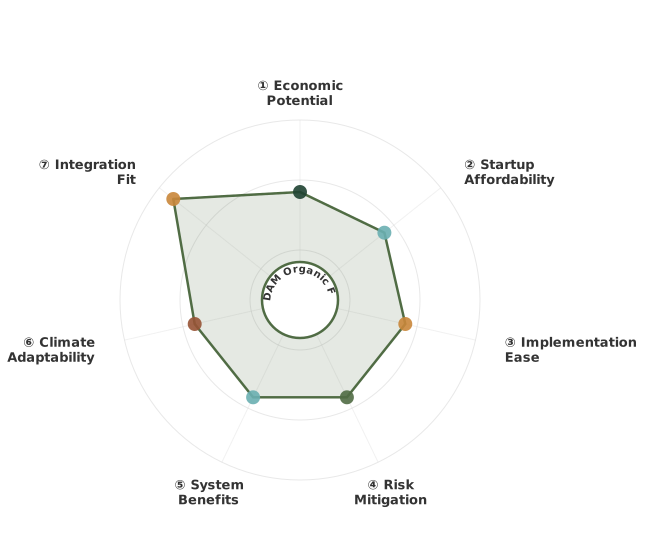
How These Traits Are Calculated
Trait dimensions are ordered clockwise starting from the top of the chart (12 o'clock position):
1. Economic Potential
Financial returns, annual value, and break-even timeline
WHAT: Evaluates financial viability by combining net annual value ($/ha from savings, income, and amortized harvests) with break-even timeline showing when practices pay for themselves.
WHY: Farmers need clear ROI understanding before committing resources. Fast payback (≤3 years) with strong returns (≥$300/ha) enables confident adoption, while long timelines (>10 years) restrict adoption to well-funded operations willing to wait for returns.
HOW: Calculated from net annual value in $/ha and break-even years. Exceptional (≥2.6): fast ROI ≤3 years + high value ≥$300/ha. Typical (1.8-2.5): moderate returns or longer timelines. Limited (<1.8): marginal economics or very long payback >10 years.
2. Startup Affordability
Initial investment costs and financial barrier to entry
WHAT: Measures financial barrier to entry through startup costs for equipment, infrastructure, consulting, and materials. Inverted scoring: lower costs = higher scores = more accessible adoption.
WHY: Affordability determines who can adopt. Low-cost practices (<$250/ha) enable widespread adoption across diverse scales, while high costs (>$2,500/ha) limit adoption to well-capitalized operations, creating barriers that slow regenerative transition.
HOW: Calculated from initial investment parsed from practice content. Inverted scoring: Exceptional (≥2.6): minimal investment <$250/ha. Typical (1.8-2.5): moderate costs $250-2,500/ha. Limited (<1.8): high barrier >$2,500/ha.
3. Implementation Ease
Learning curve and specialized knowledge required
WHAT: Measures how much learning, planning, and specialized knowledge a practice requires. Simpler practices with fewer steps score higher, while complex practices requiring extensive training or specialized resources score lower.
WHY: Complex practices create adoption barriers even when economically viable. Straightforward practices enable faster adoption and broader participation, while those requiring extensive training, timing precision, or specialized equipment limit who can succeed.
HOW: Evaluated by measuring documentation length and identifying complexity markers like location-specific requirements, seasonal timing windows, specialized skills, and dedicated equipment needs. Exceptional (≥2.6): straightforward practices with minimal prerequisites. Typical (1.8-2.5): moderate learning curve with some specialized needs. Limited (<1.8): steep learning curve requiring significant training or resources.
4. Risk Mitigation
Identified financial and ecological risk assessment
WHAT: Evaluates documented risks across financial (investment loss, market volatility) and ecological (crop failure, pest outbreaks) domains. Inverted scoring: fewer risks = higher scores.
WHY: Understanding risk exposure helps farmers make informed decisions. Low-risk practices allow confident implementation, while high-risk practices require careful planning and contingency resources. Risk transparency prevents costly failures.
HOW: Calculated from identified risks in practice content. Inverted scoring: Exceptional (≥2.6): ≤2 risks with manageable severity. Typical (1.8-2.5): 3-5 moderate risks. Limited (<1.8): 6+ risks or severe exposure.
5. System Benefits
How many ways the practice improves your land simultaneously
WHAT: Measures how many aspects of land health improve at once—carbon storage, soil quality, erosion control, water absorption, and biodiversity. Practices that improve multiple areas simultaneously create compounding benefits where each improvement reinforces the others.
WHY: The best practices solve multiple problems at once. For example, addressing erosion simultaneously builds carbon and improves water infiltration, creating a resilient system with positive feedback loops. Single-benefit approaches miss these compound transformation opportunities.
HOW: Evaluated across five key outcomes: carbon sequestration, soil organic matter increase, erosion reduction, water infiltration improvement, and biodiversity enhancement. Exceptional (≥2.6): high carbon storage (>8 t/ha/yr), improvements across 4-5 areas, transformative outcomes. Typical (1.8-2.5): moderate carbon (3-8 t/ha/yr), improvements across 2-3 areas. Limited (<1.8): modest impact (<3 t/ha/yr), single-area focus only.
6. Climate Adaptability
Geographic applicability across Köppen climate zones
WHAT: Evaluates geographic applicability by assessing how many Köppen climate zones successfully support a practice and what adaptation requirements are needed. Measures breadth of climates where farmers can implement with minimal to moderate modifications.
WHY: Universal practices working across diverse climates enable more farmers to adopt regenerative approaches. Practices limited to single climate types (only Mediterranean, only tropical) restrict adoption and slow global transition. Adaptability determines whether a practice serves niche regions or offers broad transformation.
HOW: LLM evaluation of regional success stories, Köppen zone coverage, and adaptation needs. Exceptional (≥2.6): 5+ zones or 4+ climate types, 3+ continents, minimal adaptation. Typical (1.8-2.5): 3-4 zones or 2-3 types, 2 continents, moderate adaptation. Limited (<1.8): 1-2 zones, single region, significant adaptation or highly specialized.
7. Integration Fit
How well this practice combines with others you're doing
WHAT: Measures how well a practice combines with other regenerative practices you might be doing. Some practices work as building blocks that make many other practices easier or more effective, while others work best on their own.
WHY: Practices that combine well with many others create more value on your farm. For example, cover cropping enables no-till, improves grazing, supports crop diversity, and helps water management—making all of them work better together. This helps you build a coherent system rather than juggling disconnected practices.
HOW: Evaluated by identifying which practices combine well and how strong those combinations are. 'Ideally Suited' means strong combinations where practices reinforce each other (practice A makes B easier, while B makes A more effective). 'Adequate' means complementary benefits that work well together. Exceptional (≥2.6): combines well with 6+ practices, serves as a building block. Typical (1.8-2.5): combines with 3-5 practices. Limited (<1.8): 1-2 practices or works best alone.
Going Deeper
1
WHY - The Benefits
Farming today often involves significant expenditure on external inputs like synthetic fertilizers, pesticides, and specialized amendments. These costs can drain farm profitability, create dependency on external supply chains, and negatively impact environmental health....
Farming today often involves significant expenditure on external inputs like synthetic fertilizers, pesticides, and specialized amendments. These costs can drain farm profitability, create dependency on external supply chains, and negatively impact environmental health. JADAM Organic Farming (JOF) offers a radical alternative by providing farmers with the knowledge and recipes to create their own potent, natural inputs from readily available materials. This empowers farmers, reduces costs, and fosters a more sustainable, ecologically sound agricultural system.
WHY - The Benefits
Farming today often involves significant expenditure on external inputs like synthetic fertilizers, pesticides, and specialized amendments. These costs can drain farm profitability, create dependency on external supply chains, and negatively impact environmental health....
Farming today often involves significant expenditure on external inputs like synthetic fertilizers, pesticides, and specialized amendments. These costs can drain farm profitability, create dependency on external supply chains, and negatively impact environmental health. JADAM Organic Farming (JOF) offers a radical alternative by providing farmers with the knowledge and recipes to create their own potent, natural inputs from readily available materials. This empowers farmers, reduces costs, and fosters a more sustainable, ecologically sound agricultural system.
Soil Health Benefits
While JADAM does not prescribe specific tillage regimes, its focus on creating microbial-rich, nutrient-dense inputs significantly contributes to soil health. Jadam Liquid Fertilizer (JLF), made from fermenting plant or animal matter with sulfur and sea salt, inoculates soil with beneficial microbes and provides a broad spectrum of macro and micronutrients in their most bioavailable forms. This biological activity and readily available nutrition feed native soil organisms, accelerating the decomposition of organic matter and the building of soil organic matter over time.
The microbial activators, such as Jadam Microbial Solution (JMS), are simple ferments utilizing readily available ingredients like edible grains or plant residues with common beneficial microbes. When applied to soil, these inoculants enhance the populations of beneficial bacteria and fungi, improving nutrient cycling, soil structure, and plant defense mechanisms. This biological enhancement directly supports regenerative principles by fostering healthy soil ecosystems that require less external intervention.
JADAM inputs also contribute to improved soil structure indirectly. As soil biology flourishes, it produces exopolysaccharides (sticky substances) that bind soil particles into aggregates. This improved aggregation enhances water infiltration, aeration, and reduces soil compaction—all hallmarks of healthy regenerative soil. By reducing reliance on synthetic fertilizers that can harm microbial life and soil structure, JADAM facilitates a transition towards systems where the soil itself becomes the primary engine of fertility and resilience.
Economic Benefits
The most significant economic benefit of JADAM is the drastic reduction in input costs. Farmers can produce potent fertilizers and pesticides for a fraction of the price of commercial products. For example, a complete micronutrient fertilizer that might cost hundreds of dollars per hectare when purchased commercially can be produced using JADAM methods for as little as $5-10 per hectare, primarily for container costs and minor ingredients. This cost saving can range from 70% to over 90%, directly boosting farm profitability.
The initial investment in JADAM is minimal, often just requiring basic containers, access to local materials, and the JADAM textbook or online resources. This accessibility is crucial for farmers in developing nations or those operating on tight margins. The knowledge gained is a valuable asset, allowing farmers to adapt and create solutions as needed, fostering self-reliance rather than dependence on external suppliers. This independence shields farmers from the volatility of global input markets and ensures access to necessary resources regardless of geographical location or economic status.
The economic ripple effect extends to reduced labor costs in the long run. By improving soil health and plant resilience, farms using JADAM often see a decrease in the need for intensive pest and disease management, and in some cases, reduced irrigation needs due to better water retention. While JADAM inputs require time and effort to produce, this is often absorbed into existing farm labor, or by farmer cooperatives sharing the workload, making it a more economically sustainable model than purchasing expensive inputs.
Regenerative Systems Fit
JADAM Organic Farming aligns with and supports several core regenerative agriculture principles, primarily acting as an enabling transition practice.
Principle 1 (Minimize Soil Disturbance): JADAM doesn't directly dictate tillage practices. However, by providing cost-effective, natural fertility inputs, it makes it financially viable for farmers to adopt reduced tillage or no-till systems. When farmers are not burdened by astronomical fertilizer costs, they are more likely to invest in practices that build soil structure and health over time, like cover cropping and reduced tillage. The focus on building biology also supports better soil aggregate stability, which resists compaction and erosion.
Principle 2 (Maximize Crop Diversity): JADAM inputs can support diverse cropping systems. The Jadam micronutrient fertilizers and microbial solutions provide balanced nutrition and biological activity that can benefit a wide range of plant species, making it easier and more cost-effective to maintain varied crop rotations and polycultures. Healthier, more resilient plants in diverse systems are less susceptible to pests and diseases, further reducing the need for external interventions.
Principle 3 (Keep Soil Covered): While not a direct soil cover practice, JADAM's role in enhancing soil health indirectly supports keeping soil covered. Healthier soils with better biology and structure are more resilient and can support robust cover crops and perennial forages more effectively. Reduced soil disturbance, enabled by cost-effective JADAM inputs, is the foundation for effective soil cover strategies.
Principle 4 (Maintain Living Roots): JADAM inputs foster healthier plant growth when applied, leading to more vigorous root systems. Healthier roots mean longer periods of continuous living roots in the soil, feeding soil microbes and maintaining soil structure.
Principle 5 (Integrate Livestock): JADAM inputs are compatible with livestock integration. Natural fertilizers and microbial solutions can be used on pastures to improve forage quality and health, benefitting livestock. Animal manure is also a key ingredient in many JADAM ferments, creating a closed-loop nutrient cycle.
Transitional Pathway: JADAM is particularly valuable as a transition practice. Farms transitioning from conventional agriculture can use JADAM inputs to drastically cut their reliance on synthetic fertilizers (potentially by 50-70% within 1-2 years) while their soil biology builds capacity. As soil organic matter increases and soil microbial communities become more robust, the farm's internal nutrient cycling capacity will grow, reducing the need for external inputs like JADAM. The ultimate goal is for the farm's ecosystem to become so self-sufficient that the need for manufactured natural inputs diminishes, and farmers rely primarily on compost, manure integrated with grazing, and cover crops. JADAM thus serves as a powerful, economical stepping stone, not necessarily an end-state in itself for mature regenerative systems.
Sources behind this view
Videos & Podcasts
-
Learn to make on-farm biofertilizers using Korean Natural Farming (KNF) and JADAM principles. Create microbial starters (LAB, EM) and secondary fermentations (FPJ, FAA, OHN) from farm biomass for bios
-
Recommends Lactic Acid Bacteria (LAB) and Fermented Plant Juice (FPJ) as easy-to-make natural farming inputs for plant health and resilience. Highlights Chris Trump and Drake as resources for KNF and
-
Minimize soil disturbance to preserve soil structure and infrastructure. Use diverse life-promoting inputs like compost, biochar, Jadam Microorganism Solution (JMS), and animals (scaled appropriately)
-
Describes methods for creating and applying biological amendments, including using plant biology in rainwater, Korean Natural Farming IMOs from leaf mold, and JADAM techniques. Highlights the role of
Community
-
Utilizes JADAM and KNF techniques for regenerative farming, including comfrey-based liquid fertilizer, raw wool pellets as base fertilizer, and leveraging local organic materials like fish, oyster she
Read more (opens in new window) permies.com -
Details KNF inputs like Indigenous Micro Organisms (I-M-O), fermented plant juices (FPJ), and LAB serum, and their use in creating fungal compost and odor-free animal operations. Also reiterates JADAM
Read more (opens in new window) permies.com -
Details Korean Natural Farming (KNF) and JADAM preparations like IMO, FPJ, OHN, FAA, and LAB, explaining their use at different plant growth stages for cost-effective, high-yield farming without synth
Read more (opens in new window) permies.com -
Explains Korean Natural Farming (KNF) and Jadam techniques for cultivating Indigenous Microorganisms (IMO) to double crop output, enhance drought resistance, and eliminate the need for fertilizers and
Read more (opens in new window) permies.com
Research
-
Nutrient Management in Natural Farming: Enhancing Soil Fertility through Microbial Activity, Bio-Inputs and Earthworm-Mediated Nutrient Cycling (opens in new window)
This study found: Natural farming with bio-inputs (Jivamrut, Ghan Jivamrut) and earthworms boosts soil microbes by 40-50%, increases nutrient availability, and improves soil structure, leading to 15-20% higher crop yie
-
Making Organic Fertilizer Based on JADAM Natural Farming with Local Adaptation (opens in new window)
This study found: Farmers can make their own organic fertilizers using JADAM natural farming with local waste, leaves, or fruits/vegetables, promoting self-sufficiency and safety.
-
Regenerative Agriculture: Restoring Ecosystems¢ Resilience and Productivity: A Review (opens in new window)
This study found: Regenerative agriculture builds soil health and ecosystem services through practices like no-till, cover crops, and diverse rotations. It increases soil organic matter, improves water infiltration, bo
-
Sustainable Agriculture and Soil Health: A Comprehensive Review of Bio-Inputs (opens in new window)
This study found: Sustainable farming with natural biological inputs (biofertilizers, compost) is key to restoring soil health, reducing chemical use, and increasing soil carbon. These inputs improve nutrient uptake an
2
WHERE - Regional Considerations
Jadam's strength lies in its adaptability to virtually any region, climate, and farming system. The core principle of using locally available resources means recipes can be adapted worldwide.
Jadam's strength lies in its adaptability to virtually any region, climate, and farming system. The core principle of using locally available resources means recipes can be adapted worldwide.
WHERE - Regional Considerations
Jadam's strength lies in its adaptability to virtually any region, climate, and farming system. The core principle of using locally available resources means recipes can be adapted worldwide.
Jadam's strength lies in its adaptability to virtually any region, climate, and farming system. The core principle of using locally available resources means recipes can be adapted worldwide.
Click Here to Look up your Region if you don't already know it
Tropical and Subtropical Regions
Representative Locations: Southeast Asia (e.g., Vietnam, Thailand), Central America (e.g., Costa Rica, Mexico), West Africa (e.g., Ghana, Nigeria), Brazil, Northern Australia
Climate Context: High temperatures and high humidity year-round, with distinct wet and dry seasons or consistent high rainfall. Köppen Af, Am, Aw, As, Cfa, Cwa.
JADAM Application: Abundant plant biomass (leaves, stems, animal manure) readily available for fermentation. Tropical microbes are highly active, speeding up fermentation processes. Jadam Liquid Fertilizer (JLF) and Jadam Herbicide (JH) are particularly effective due to the rapid growth rates of plants and weeds. Jadam Universal Solution (JUS) can be used to enhance compost production from abundant decomposing organic matter. Challenges might include managing pest pressure from diverse tropical insects, where JADAM's natural pesticides become invaluable.
Arid and Semi-Arid Regions
Representative Locations: US Southwest, North Africa (e.g., Morocco, Egypt), Central Asia (e.g., Kazakhstan), Australia (interior), parts of South America (e.g., Argentina).
Climate Context: Low annual precipitation (<40 cm or 15 inches), high temperatures, extreme diurnal temperature variation, short and unpredictable growing seasons. Köppen BSh, BSk, BWh, BWk.
JADAM Application: Material availability might be lower; farmers may need to rely more on hardy local flora, animal manure, mineral sources (like volcanic rock powder), and carefully managed compost. Water availability for fermentation is a key consideration; collected rainwater or dew might be essential. Jadam Fertilizer (JF)-type formulations, focusing on mineral extraction and microbial supplements, can be crucial for nutrient delivery to hardy crops adapted to arid conditions. Jadam Pest Control (JPC) can be adapted to target specific local pests. Emphasis on water-efficient practices coupled with JADAM's nutrient efficiency becomes paramount.
Temperate Regions (Humid and Continental)
Representative Locations: North America (e.g., Midwest USA, Eastern Canada), Europe (e.g., France, Germany, UK, Eastern Europe), Northern Asia (e.g., China, Korea, Japan).
Climate Context: Distinct seasons with warm to hot summers and cool to cold winters. Precipitation varies but is generally moderate to high. Köppen Cfa, Cfb, Cfc, Dfa, Dfb, Dfc, Dfd.
JADAM Application: Excellent availability of diverse plant materials for fermentation (crop residues, cover crops, garden waste). Seasonal variations mean fermentation processes must be timed appropriately—e.g., larger batches in warmer months, careful storage of ferments during winter. Jadam Microbial Solution (JMS) is valuable for inoculating soils before planting cover crops or during soil preparation. Jadam Natural Pesticides (JNP) are effective against common temperate pests and diseases. Recipes can be adapted to utilize temperate zone minerals and animal manures.
Mediterranean Regions
Representative Locations: California (USA), Mediterranean Basin (e.g., Spain, Italy, Greece), Central Chile, Southwestern Australia, Western Cape (South Africa).
Climate Context: Hot, dry summers and mild, wet winters. Low to moderate annual precipitation, highly seasonal. USDA Zones 8-10, Köppen Csa, Csb.
JADAM Application: Summer drought limits plant material availability; farmers may need to store materials during the wet season for fermentation. Hardy local herbs and shrubs can be excellent JADAM ingredients. Focus on drought-resistant crops paired with JADAM inputs that improve soil water retention (via increased organic matter and biology). Jadam Micronutrient Fertilizer (JMF) is important for crops grown in soils that may be deficient in particular minerals due to dry conditions and leaching. Microbial solutions are crucial for helping plants establish in dry, challenging soils.
Cold Continental Regions
Representative Locations: Northern Canada, Siberia, Northern Europe.
Climate Context: Very short growing seasons, extreme winter cold, potentially high summer temperatures. Köppen Dfc, Dfd.
JADAM Application: Limited growing season poses challenges for both fresh material collection and fermentation. Farmers may need to store biomass (dried plant matter, roots) from the short growing season for use during winter months. Fermentation may need to occur in heated environments during winter. Focus shifts to microbial inoculants (JMS) and mineral-based fertilizers (like Jadam Fine Chemical or Jadam Natural Drug). Emphasis is on robust soil preparation during the short growing season and protecting microflora over winter with mulching and resistant cover crops.
3
HOW - Implementation Process
Implementing JADAM Organic Farming involves understanding its core philosophy and learning to create its key inputs. The process is iterative, encouraging experimentation and adaptation to local conditions.
Implementing JADAM Organic Farming involves understanding its core philosophy and learning to create its key inputs. The process is iterative, encouraging experimentation and adaptation to local conditions.
HOW - Implementation Process
Implementing JADAM Organic Farming involves understanding its core philosophy and learning to create its key inputs. The process is iterative, encouraging experimentation and adaptation to local conditions.
Implementing JADAM Organic Farming involves understanding its core philosophy and learning to create its key inputs. The process is iterative, encouraging experimentation and adaptation to local conditions.
Prerequisites
Before starting, ensure you have: 1. Access to Basic Materials: Water (non-chlorinated is best), containers (plastic jars, buckets, tanks), readily available organic matter (plant residues, manure, kitchen scraps), and common minerals if specified (e.g., sulfur powder, sea salt, volcanic rock powder). 2. JADAM Resources: Access to the JADAM textbook ("JADAM Organic Farming"), website, or other reliable JADAM educational materials. Understanding the foundational JADAM principles is crucial. 3. Understanding of Local Ecology: Familiarity with common local plants, microbial life, and readily available minerals will help in adapting recipes. 4. Commitment to Observation & Experimentation: JADAM is not a rigid dogma; it's a framework for practice. Successful implementation requires observing plant and soil responses and adjusting recipes accordingly.
Phase 1: Understanding the Core Inputs and Principles
This phase focuses on learning the most fundamental JADAM preparations and the philosophy behind them.
-
Jadam Microbial Solution (JMS): This is often the starting point. It involves fermenting a small amount of rice or other grains with water and allowing natural microbes to colonize it. The resulting liquid is rich in beneficial bacteria and fungi.
- Process: Mix 1 kg (2.2 lbs) of cooked rice or flour with 10-20 liters (2.5-5 gallons) of non-chlorinated water in an open container. Cover with a light cloth to allow air exchange while keeping debris out. Leave it in a well-ventilated area for 3-7 days, or until a strong, pleasant fermentation smell develops. Harvest the liquid.
- Application: Dilute with water (1:100 to 1:1000) and apply to soil as a drench, foliar spray, or compost inoculant. JMS helps activate dormant microbes in the soil, improving decomposition and nutrient availability.
-
Jadam Liquid Fertilizer (JLF): This provides a broad spectrum of nutrients. There are various formulations, but a common one involves fermenting readily available organic matter (e.g., plant trimmings, food scraps, animal manure) with sulfur powder and sea salt.
- Process: Fill a container loosely with organic matter. Add 1-2% sulfur powder (by weight of the organic matter) and 0.5-1% sea salt. Add enough water to cover. Ferment for 5-14 days, stirring occasionally, until a rich, dark liquid forms with a pleasant, fermented smell. Filter before application.
- Application: Dilute with water (1:100 to 1:500) and apply as a foliar spray or soil drench. Provides macro- and micronutrients.
-
Jadam Natural Pesticides/Herbicides: These are simple preparations using common plants (e.g., garlic, chili, tobacco, certain weeds) steeped or fermented in water, sometimes with vegetable oil or sulfur.
- Process: Chop plant materials, soak in water for 1-7 days, strain. For JH, a simple brine and vegetable oil solution can be used for early-stage weeds.
- Application: Dilute and spray on target pests or weeds. The effectiveness comes from the natural compounds in the plants and their disruptive effect on pest/weed biology.
Phase 2: Expanding Input Creation and Application
Once comfortable with the basics, farmers can explore more specialized inputs and refine their application based on observation.
-
Jadam Micronutrient Fertilizer (JMF): Often involves extracting trace minerals from sources like volcanic rock powder, sea shells, or other mineral-rich materials, then fermenting them to improve bioavailability.
- Process: Blend mineral powders with organic matter (e.g., rice bran), add JMS to inoculate with microbes, and ferment for 7-14 days.
- Application: Dilute and apply as a foliar spray or soil drench to correct specific nutrient deficiencies.
-
Jadam Universal Solution (JUS): A potent microbial solution using a wider range of readily available organic materials and local microorganisms for broad-spectrum soil improvement.
- Process: Involves fermenting a mix of rice, plant residues, and other organic matter with water and JMS.
- Application: Used to inoculate compost piles, enrich soils, and enhance overall soil microbial communities.
-
Understanding Dilution Rates: The effectiveness and safety of JADAM inputs depend heavily on dilution. Start with very dilute solutions (e.g., 1:1000 for JMS, 1:500 for JLF) and gradually increase based on plant response. Over-application can be detrimental.
Phase 3: Adapting and Optimizing for Local Context
This is where the farmer becomes a true practitioner of the JADAM philosophy.
- Local Material Sourcing: Identify and experiment with local wild plants, regional mineral deposits, and abundant organic waste streams. For example, a farmer in a coastal region might use seaweed effectively in JLF, while an inland farmer might use specific mineral-rich clays.
- Microbial Adaptation: Instead of relying solely on starter cultures, learn to harvest and utilize local beneficial microbes from healthy soil, compost, or even specific plant surfaces. This makes the inputs even more synergistic with the farm's ecosystem.
- Observation and Record Keeping: Keep detailed notes on what inputs were made, their ingredients, fermentation times, dilution rates, application dates, and the resulting plant and soil responses. This forms the basis for optimizing future applications.
- Community Sharing: Participate in JADAM forums or local farmer groups to share experiences, troubleshoot problems, and learn from others’ adaptations. This knowledge exchange is a cornerstone of the JADAM philosophy.
Transition Timeline & Phase-Out Strategy
JADAM is inherently a transition practice. The goal is not to perpetuate the creation of external natural inputs indefinitely, but to use them to build the farm's internal soil fertility and biological capacity.
-
Transition Period (Years 1-5):
- Year 1-2: Focus on replacing synthetic inputs. Aim to replace 50-70% of conventional fertilizers and pesticides with JADAM alternatives. Use JADAM to build soil biology and improve nutrient cycling. Observe soil health indicators (earthworms, aggregate structure, water infiltration).
- Year 3-4: As soil biology strengthens and organic matter increases, reduce the reliance on JADAM inputs, especially fertilizers. Focus shifts to maximizing the farm's own nutrient cycling (compost, cover crops, animal manure integration). JADAM microbial solutions might continue to be used as inoculants for compost and soil building.
- Year 5+: The farm should ideally be operating with minimal external inputs, relying on robust soil biology and internal nutrient cycles. JADAM's role may diminish to occasional use of specific microbial solutions for compost enhancement or as a short-term remedy for specific nutrient deficiencies that may arise, or as a philosophical reminder of cost-effective, natural approaches.
-
Graduation and Full Regeneration: A farm has "graduated" from needing JADAM inputs when its soil is healthy enough to support lush plant growth and optimal nutrient cycling without them. This means achieving high soil organic matter, excellent soil structure, thriving microbial communities, and resilient plant health primarily through regenerative management practices (no-till/low-till, diverse cover cropping, animal integration, diverse rotations). The JADAM philosophy of observation, resourcefulness, and empowerment continues, even if the specific input recipes are no longer regularly employed.
Sources behind this view
Videos & Podcasts
-
Learn to make on-farm biofertilizers using Korean Natural Farming (KNF) and JADAM principles. Create microbial starters (LAB, EM) and secondary fermentations (FPJ, FAA, OHN) from farm biomass for bios
-
Recommends Lactic Acid Bacteria (LAB) and Fermented Plant Juice (FPJ) as easy-to-make natural farming inputs for plant health and resilience. Highlights Chris Trump and Drake as resources for KNF and
-
Describes methods for creating and applying biological amendments, including using plant biology in rainwater, Korean Natural Farming IMOs from leaf mold, and JADAM techniques. Highlights the role of
-
Discusses Jadam and Korean Natural Farming (KNF) for on-farm nutrient and pest solutions. Highlights Jadam Microorganism Solution (JMS) and simplified KNF methods, emphasizing adaptability and integra
Community
-
Details KNF inputs like Indigenous Micro Organisms (I-M-O), fermented plant juices (FPJ), and LAB serum, and their use in creating fungal compost and odor-free animal operations. Also reiterates JADAM
Read more (opens in new window) permies.com -
Utilizes JADAM and KNF techniques for regenerative farming, including comfrey-based liquid fertilizer, raw wool pellets as base fertilizer, and leveraging local organic materials like fish, oyster she
Read more (opens in new window) permies.com -
Details Korean Natural Farming (KNF) and JADAM preparations like IMO, FPJ, OHN, FAA, and LAB, explaining their use at different plant growth stages for cost-effective, high-yield farming without synth
Read more (opens in new window) permies.com -
Explains Korean Natural Farming (KNF) and Jadam techniques for cultivating Indigenous Microorganisms (IMO) to double crop output, enhance drought resistance, and eliminate the need for fertilizers and
Read more (opens in new window) permies.com
Research
-
Making Organic Fertilizer Based on JADAM Natural Farming with Local Adaptation (opens in new window)
This study found: Farmers can make their own organic fertilizers using JADAM natural farming with local waste, leaves, or fruits/vegetables, promoting self-sufficiency and safety.
-
Making Organic Fertilizer Based on JADAM Natural Farming with Local Adaptation (opens in new window)
This study found: JADAM Natural Farming allows farmers to make organic fertilizers from local waste, including a safe, drinkable version. This empowers farmers and fosters local expertise.
4
Know the Debate
JADAM's ultra-low-cost, DIY approach spans diverse global contexts, from humid tropics to arid rangelands. Farmers can adapt its simple recipes to ...
Know the Debate
JADAM's ultra-low-cost, DIY approach spans diverse global contexts, from humid tropics to arid rangelands. Farmers can adapt its simple recipes to ...
JADAM's ultra-low-cost, DIY approach spans diverse global contexts, from humid tropics to arid rangelands. Farmers can adapt its simple recipes to their local flora and waste streams, creating potent biofertilizers and pest controls. While the core philosophy of self-sufficiency and ecological empowerment is universal, successful implementation depends on local material availability, microbial synergy, and dedicated observation, particularly in drier climates or regions with unique pest pressures. Entry costs are minimal, but time investment and understanding proper fermentation are key for optimal results.
How effective are JADAM inputs for farm fertility and pest management?
Highly Effective & Cost-Efficient
JADAM inputs are presented as highly effective, cost-efficient solutions for fertility and pest control, significantly reducing reliance on external materials. Farmers report substantial savings and improvements in soil biology and crop health. Some practitioners emphasize JADAM's scientific basis, while others highlight its adaptability and success in diverse conditions.
Sources behind this view
Sources behind this view
Videos & Podcasts
-
Learn to make on-farm biofertilizers using Korean Natural Farming (KNF) and JADAM principles. Create microbial starters (LAB, EM) and secondary fermentations (FPJ, FAA, OHN) from farm biomass for biostimulation, fertility, and pest control.
-
Prefers JADAM Microorganism Solution (JMS) over traditional compost teas for its effectiveness in promoting crop health and pest control, citing positive results with potatoes and a preference for microbial diversity.
Research
-
Agricultural plant jiaosu: valorization of organic wastes for sustainable agriculture (opens in new window)
This study found: Agricultural plant jiaosu (APJ) is a promising, low-cost liquid fertilizer made from organic waste. It acts as a foliar spray, a fertilizer for drip irrigation, a natural pest control, and helps break down organic matter. APJ boosts beneficial microbes in the soil, leading to better plant growth, improved crop quality, healthier soil ecosystems, less pollution, and fewer pest and disease problems. While the technology is simple to use, the complex mix of ingredients in APJ means more research is needed to fully understand its potential and optimize its use.
-
Analyzing the cost of production and farmers' perception of Jeevamrut: An insight into an organic farming solution (opens in new window)
This study found: A study in India looked at how farmers make and use Jeevamrut, an organic liquid fertilizer made from cow dung, cow urine, jaggery, pulse flour, and a bio-agent. It costs about ₹900 (Indian Rupees) to make 200 liters, which covers one acre. Farmers found it cost-effective compared to chemical fertilizers, good for the environment, and that it improved soil health and boosted beneficial microbes. They reported better crop yields and fewer pest problems with regular use. However, farmers also face challenges selling their organic produce, such as low consumer trust, lack of dedicated markets, and not getting fair prices.
Variable Results & Context-Dependent Success
While many farmers find JADAM beneficial, its effectiveness is highly variable, depending on local material quality, microbial populations, and correct preparation. Some sources note that while profitable for some, it may not be more profitable than standard practices, and some JADAM processes may have safety concerns compared to simpler KNF methods.
Sources behind this view
Sources behind this view
Videos & Podcasts
-
Discusses Jadam and Korean Natural Farming (KNF) for on-farm nutrient and pest solutions. Highlights Jadam Microorganism Solution (JMS) and simplified KNF methods, emphasizing adaptability and integration with core soil health practices.
-
The speaker prefers natural farming methods over Jadam due to safety concerns with Jadam's chemical reliance, though finds Jadam's microbial JMS effective. Personal safety and avoiding 'Monsanto-like' practices are key considerations.

-
Discusses the scientific research behind Korean Natural Farming (KNF), JADAM, and biodynamics, noting challenges in studying these individualized, on-farm practices. Biodynamics has the most English research, while KNF and JADAM have less, though generally positive results are observed. These practices are best used as part of a comprehensive conservation agriculture system.

Research
-
Jivamrit as a Sustainable Approach: A Review of Natural Farming and Future Agriculture (opens in new window)
This study found: This review looks at Jivamrit, a natural farming mixture made from cow dung, cow urine, jaggery, flour, and water. It's proposed as a way to reduce reliance on synthetic fertilizers, which can harm soil and health. Jivamrit is rich in nutrients and beneficial microbes that help plants grow, improve soil quality, and boost natural processes like nitrogen capture and making phosphorus available. It can increase crop yields and improve soil conditions. However, the review also cautions that using Jivamrit long-term might unbalance the soil's natural microbial community. The focus is on understanding Jivamrit's composition and its role in making agriculture more sustainable.
-
70(3)2025 Productivity, profitability and nutrient uptake of soybean (Glycine max) under organic, natural and intensification of natural farming practices with foliar application of liquid organic manures (opens in new window)
This study found: A two-year study in Dharwad, India, compared different farming methods for growing soybeans, including organic farming, natural farming, and an intensified version of natural farming, alongside various liquid organic fertilizers applied as sprays. These methods were tested after a three-year transition period to chemical-free agriculture. The study found that while organic farming produced higher yields and absorbed more nutrients, natural farming resulted in better profitability, with higher harvest efficiency, net profits, and a better return on investment. Applying Panchagavya (a mix of five cow products) as a foliar spray generally led to better yields and nutrient absorption. Although natural farming was more profitable than organic farming, it still yielded lower net returns and a lower benefit-cost ratio compared to the standard recommended farming practices.
Making Sense of the Differences
JADAM's effectiveness hinges on adaptation to local resources and skilled application. While hailed for cost savings and soil health benefits, its performance varies based on material quality, regional microbial communities, and the farmer's ability to observe and adjust. Farmers should start with basic inputs, meticulously document results, and experiment with local materials for optimal outcomes.
5
HOW MUCH - Costs & Investment
JADAM's primary value proposition is its ultra-low cost. The investment is primarily in knowledge acquisition and time, not capital outlay.
JADAM's primary value proposition is its ultra-low cost. The investment is primarily in knowledge acquisition and time, not capital outlay.
HOW MUCH - Costs & Investment
JADAM's primary value proposition is its ultra-low cost. The investment is primarily in knowledge acquisition and time, not capital outlay.
JADAM's primary value proposition is its ultra-low cost. The investment is primarily in knowledge acquisition and time, not capital outlay.
Note: All costs are based on recent US economic data (2024–2026) and may vary substantially by region based on local labor rates, material costs, and regulatory requirements.
Infrastructure & Equipment Setup
Initial investment is remarkably low, focusing on repurposing existing resources. For a small operation (under 50 acres (20 ha)), the cost for basic plastic containers, storage drums, and simple stirring tools ranges from $65 to $150. A mid-size operation (50–500 acres (20–202 ha)) requires higher volume capacity, typically spending between $150 and $280 to scale up to larger food-grade or industrial tanks. Large operations (500+ acres) may encounter costs of $280 to $325, as they must invest in centralized mixing stations, permanent piping, or automated agitation systems. These figures reflect the 4.2% inflation adjustment applied to standard baseline hardware costs, ensuring that even large-scale setups remain a fraction of the cost of conventional synthetic application equipment.
Consumable Ingredient Procurement
The beauty of the JADAM system lies in sourcing inputs from the landscape, keeping out-of-pocket expenses minimal. For small-scale farms, annual spending on mineral powders, sea salt, and basic additives like rice for inoculation ranges from $12 to $60. Mid-size farms, benefiting from bulk pricing on mineral components, typically spend between $60 and $180 per year. For large operations (500+ acres), the absolute expenditure climbs to $180 to $325 annually due to the volume of microbes and nutrients required; however, the cost per acre remains extraordinarily low. Because the core ingredients—plant matter and manure—are usually harvested directly from the farm’s own acreage, the variable cost of raw biomass remains effectively $0.
Labor & Time Allocation
While JADAM is "ultra-low-cost" in currency, it is "high-touch" in terms of labor. Small operations usually dedicate 1–3 hours per week to input production, which equates to an annual shadow cost (based on a $15/hour wage) of approximately $780–$2,340 for the producer's time. Mid-size operations, utilizing slightly more complex brewing cycles, see this time investment rise to 3–6 hours weekly, or $2,340–$4,680 per year. Large operations, if they do not automate their output, face a time cost of $4,680–$9,360 annually for constant monitoring and application. Managers must weigh this against the benefit of reduced input expenditure, which currently saves the average mid-size farm $150–$450 per acre ($371–$1,112/ha) in synthetic fertilizer alternatives.
Most Spend: Most operations, regardless of size, fall into an annual out-of-pocket range of $75–$250. This middle 60% represents producers who utilize on-farm materials for 90% of their inputs, occasionally purchasing mineral additives in bulk and utilizing repurposed food-grade barrels to avoid expensive commercial storage solutions.
Why the Range?: The primary driver for cost variance is the farm's access to on-site organic waste and the local prevailing labor rate. Higher costs occur when a farm must purchase specific mineral powders or soil inoculants from third-party suppliers, while lower costs are achieved by farms that maximize the circularity of their own compost and plant biomass.
Sources behind this view
Videos & Podcasts
-
Learn to make on-farm biofertilizers using Korean Natural Farming (KNF) and JADAM principles. Create microbial starters (LAB, EM) and secondary fermentations (FPJ, FAA, OHN) from farm biomass for bios
Community
-
Utilizes JADAM and KNF techniques for regenerative farming, including comfrey-based liquid fertilizer, raw wool pellets as base fertilizer, and leveraging local organic materials like fish, oyster she
Read more (opens in new window) permies.com -
Introduces JADAM Korean organic gardening for making homemade liquid fertilizer (leaf mold, yard trimmings, water, ready in 7 days) and microbes (leaf mold, boiled potato, water, ready in 1-3 days).
Read more (opens in new window) permies.com
Research
-
Analyzing the cost of production and farmers' perception of Jeevamrut: An insight into an organic farming solution (opens in new window)
This study found: Indian farmers find Jeevamrut (organic fertilizer from cow dung, urine, etc.) cost-effective and beneficial for soil health and yields. Production cost is ~₹900/acre. Marketing organic produce remains
-
Application of Jeevamrit Improves Soil Properties in Zero Budget Natural Farming Fields (opens in new window)
This study found: India study: Jeevamrit (cow dung/urine liquid) boosted soil organic matter by 46%, P by 439%, K by 142% in ZBNF fields over two years. ZBNF was twice as profitable.
-
Making Organic Fertilizer Based on JADAM Natural Farming with Local Adaptation (opens in new window)
This study found: Farmers can make their own organic fertilizers using JADAM natural farming with local waste, leaves, or fruits/vegetables, promoting self-sufficiency and safety.
-
Natural farming needs manure augmentation to optimize soil quality and crop productivity (opens in new window)
This study found: Adding farmyard manure to natural farming significantly improved soil health and corn yields in a two-year study. Best results with 10 tons FYM/acre + 10% Jeevamrit every 15 days, boosting soil qualit
6
REWARDS AND RISKS - Economics & Risk Factors
JADAM offers significant rewards, particularly in cost reduction and farmer empowerment, but like any practice, it comes with its own set of risks and considerations.
JADAM offers significant rewards, particularly in cost reduction and farmer empowerment, but like any practice, it comes with its own set of risks and considerations.
REWARDS AND RISKS - Economics & Risk Factors
JADAM offers significant rewards, particularly in cost reduction and farmer empowerment, but like any practice, it comes with its own set of risks and considerations.
JADAM offers significant rewards, particularly in cost reduction and farmer empowerment, but like any practice, it comes with its own set of risks and considerations.
Economic Scenarios
- Best Case: The farm achieves a 95% reduction in synthetic input costs, saving $450/acre ($1,112/ha), while maintaining yields and accessing premium regenerative-certified markets. Net profit increases by $500–$700 per acre ($1,236–$1,730/ha) due to combined lower overhead and higher market margins.
- Typical Case: The farm achieves a 75% reduction in input costs, saving $350/acre ($865/ha). Yields remain stable with minimal fluctuation. Net profit increases by $300–$400/acre ($741–$988/ha), successfully insulating the farm from inflationary pressures on liquid nitrogen and synthetic herbicides.
- Worst Case: Initial implementation is botched due to lack of training, resulting in a 10% yield lag during the first two seasons. The cost of labor to rectify the soil biology exceeds the savings from synthetic inputs, totaling a net loss of $50–$100/acre ($124–$247/ha) in the first year before correction.
Market Factors and Profitability
Profitability is directly correlated with the "closed-loop" efficiency of the JADAM system. Rising wholesale chemical prices drive higher profitability for JADAM practitioners, as they are shielded from global supply chain volatility. However, market access remains a key variable; farms that leverage their regenerative methodology to pursue "beyond-organic" or direct-to-consumer premiums see faster ROI. Without these premiums, the system relies strictly on cost avoidance to drive financial improvements.
Transition Period Risks
Transitioning to JADAM is not an overnight process; soil biology needs 1–3 years to adjust to the introduction of native, farm-made microbes. Farmers often face a yield dip of 5–15% in the first 18 months as the soil ecosystem recalibrates. Mitigation strategies include a phased rollout—transitioning 25% of the acreage at a time—which keeps the financial impact limited to $25–$50/acre ($62–$124/ha) per year during conversion. Proper training and frequent testing are the most effective economic defenses, preventing the waste of labor and materials on ineffective batches.
Risk Mitigation Strategies
To mitigate the risk of batch failure or unintended consequences, producers should implement a "split-plot" testing strategy. Dedicating only 5% of operations to experimental JADAM batches for the first year limits potential revenue loss to less than $10/acre ($25/ha). Additionally, investing in $50 worth of basic quality-check tools, like reliable thermometers and pH strips, drastically reduces the probability of a failed fermentation run, which saves the potential $100–$200 loss of materials and wasted production time per brew.
7
COMPATIBLE PRACTICES - Integration Opportunities
JADAM's strength as a transition practice is its compatibility with a wide array of other regenerative agriculture techniques. It acts as a powerful catalyst, making other regenerative practices more accessible and effective.
JADAM's strength as a transition practice is its compatibility with a wide array of other regenerative agriculture techniques. It acts as a powerful catalyst, making other regenerative practices more accessible and effective.
COMPATIBLE PRACTICES - Integration Opportunities
JADAM's strength as a transition practice is its compatibility with a wide array of other regenerative agriculture techniques. It acts as a powerful catalyst, making other regenerative practices more accessible and effective.
JADAM's strength as a transition practice is its compatibility with a wide array of other regenerative agriculture techniques. It acts as a powerful catalyst, making other regenerative practices more accessible and effective.
Composting JADAM provides excellent microbial inoculants (JMS, JUS) for compost piles. Adding these solutions to compost accelerates decomposition, increases microbial diversity in the compost, and enhances its nutrient and biological content.
- Integration Benefit: Produces higher quality, more biologically active compost, which is a cornerstone of soil regeneration.
Organic Gardening & Smallholder Farming JADAM is perfectly suited for home gardens, market gardens, and smallholder farms. Its low cost and simple application make it ideal for individuals with limited resources.
- Integration Benefit: Empowers small-scale producers with effective, affordable tools to grow healthy food, enhancing food security and farm viability.
Reduced/No-Till Farming By providing cost-effective natural fertility and pest management, JADAM reduces the economic pressure to till or use synthetic inputs for perceived quick fixes. This makes transitioning to reduced or no-till systems more feasible and sustainable.
- Integration Benefit: JADAM inputs support soil biology, which is essential for maintaining structure and preventing compaction in no-till systems. Healthier soil biology makes no-till more successful and less risky.
Integrated Livestock Systems JADAM inputs can be used to improve pasture health and forage quality, benefiting livestock. Manure from livestock is also a primary ingredient for many JADAM ferments, closing the nutrient loop on the farm. Jadam Natural Pest Control can be used to manage pests on farm-grown animal feed or in livestock handling areas.
- Integration Benefit: Enhances forage production and quality, closer nutrient cycling, and reduced reliance on external inputs for pasture management.
Harnessing Local Flora & Minerals JADAM explicitly encourages using locally available plants and minerals. This integrates traditional ecological knowledge with modern farming practices.
- Integration Benefit: Promotes biodiversity, utilizes local resources sustainably, and fosters innovative solutions tailored to specific environments.
JADAM's role is to provide the tools and philosophy that make these other regenerative practices more achievable and economically viable, particularly during the crucial transition phases from conventional agriculture. As a farm matures regeneratively, reliance on JADAM inputs may decrease, but the underlying principles of resourcefulness, ecological understanding, and farmer empowerment remain central.
Sources behind this view
Videos & Podcasts
-
Learn to make on-farm biofertilizers using Korean Natural Farming (KNF) and JADAM principles. Create microbial starters (LAB, EM) and secondary fermentations (FPJ, FAA, OHN) from farm biomass for bios
-
Recommends Lactic Acid Bacteria (LAB) and Fermented Plant Juice (FPJ) as easy-to-make natural farming inputs for plant health and resilience. Highlights Chris Trump and Drake as resources for KNF and
-
Discusses Jadam and Korean Natural Farming (KNF) for on-farm nutrient and pest solutions. Highlights Jadam Microorganism Solution (JMS) and simplified KNF methods, emphasizing adaptability and integra
-
Describes methods for creating and applying biological amendments, including using plant biology in rainwater, Korean Natural Farming IMOs from leaf mold, and JADAM techniques. Highlights the role of
Community
-
Utilizes JADAM and KNF techniques for regenerative farming, including comfrey-based liquid fertilizer, raw wool pellets as base fertilizer, and leveraging local organic materials like fish, oyster she
Read more (opens in new window) permies.com -
Details KNF inputs like Indigenous Micro Organisms (I-M-O), fermented plant juices (FPJ), and LAB serum, and their use in creating fungal compost and odor-free animal operations. Also reiterates JADAM
Read more (opens in new window) permies.com -
Details Korean Natural Farming (KNF) and JADAM preparations like IMO, FPJ, OHN, FAA, and LAB, explaining their use at different plant growth stages for cost-effective, high-yield farming without synth
Read more (opens in new window) permies.com -
Explains Korean Natural Farming (KNF) and Jadam techniques for cultivating Indigenous Microorganisms (IMO) to double crop output, enhance drought resistance, and eliminate the need for fertilizers and
Read more (opens in new window) permies.com
Research
-
Making Organic Fertilizer Based on JADAM Natural Farming with Local Adaptation (opens in new window)
This study found: Farmers can make their own organic fertilizers using JADAM natural farming with local waste, leaves, or fruits/vegetables, promoting self-sufficiency and safety.
-
Making Organic Fertilizer Based on JADAM Natural Farming with Local Adaptation (opens in new window)
This study found: JADAM Natural Farming allows farmers to make organic fertilizers from local waste, including a safe, drinkable version. This empowers farmers and fosters local expertise.