
Johnson Su Bioreactor
The Johnson-Su bioreactor is a passive, self-contained composting system designed to create a nutrient-dense, microbial inoculant for revitalizing soil. It involves building a static pile of diverse organic materials, allowing it to break down over 6-12 months, and then using the finished compost to inoculate existing soil or planting beds at low rates. This practice aims to accelerate soil biology, improve soil structure, and enhance nutrient availability, supporting a transition to more regenerative farming systems.
Read More: Complete Description
The Johnson-Su bioreactor is a specialized composting system developed by Dr. Elaine Ingham and Dr. David Johnson, focusing on creating a highly biologically active compost. Unlike conventional composting methods that prioritize swift decomposition or solely mineral nutrient content, the Johnson-Su method emphasizes the preservation and multiplication of diverse soil microbes—bacteria, fungi, protozoa, and nematodes. The system is designed to be simple and low-tech, requiring minimal active management once constructed, making it accessible to farmers and land managers globally, from large-scale operations to small homesteads.
The core principle behind the bioreactor is to create an environment that encourages a broad spectrum of aerobic microbes to thrive and reproduce. This is achieved through careful layering of various organic materials with specific carbon-to-nitrogen (C:N) ratios and moisture content. The pile is typically built in a compost bin structure, often with a core aeration tube or manifold to ensure sufficient oxygen supply throughout the decomposition process. This passive aeration is crucial, as the goal is not to eliminate microbes but to foster a rich, diverse soil food web that can then be transferred to the land.
The materials used are critical and often include coarse bedding materials like wood chips or straw for structure and aeration, balanced with finer, more nutrient-rich inputs such as manure, food scraps, or crop residues. The layering technique is key; materials are often layered in approximately 1-inch (2.5 cm) thick increments, creating a diverse mosaic within the pile. This heterogeneity within the compost pile encourages different microhabitats, supporting a wider array of microbial communities than a homogenous compost might. The process relies on ambient temperature to drive the decomposition, with insulation provided by the compacted organic matter itself.
The Johnson-Su bioreactor directly supports several regenerative agriculture principles. Principle 2 (Maximize Crop Diversity) is supported by introducing a vast diversity of microbes into the soil, which in turn supports greater plant diversity both above and below ground. By inoculating soil with a rich microbial community, it enhances the soil's ability to support a wider range of plant species and beneficial microbial interactions. Principle 4 (Maintain Living Roots) sees a significant benefit, as the enhanced microbial activity from bioreactor compost promotes stronger root growth, allowing plants to maintain living roots for longer periods and explore more soil volume for nutrients and water.
While Principle 1 (Minimize Soil Disturbance) and Principle 3 (Keep Soil Covered) are not directly addressed by the creation of the bioreactor itself, the application of the finished compost accelerates the benefits of these principles when applied to fields. By improving soil structure and microbial function, the bioreactor compost can reduce the need for tillage and improve the soil's ability to resist erosion and maintain cover. Principle 5 (Integrate Livestock) can be synergistically linked, as manure from livestock is often a primary input for the bioreactor, and the subsequent improvement in soil health can better support livestock through increased forage quality and availability.
This practice is largely considered Foundational within regenerative agriculture. It is a tool that enhances the soil biological bank, making other regenerative practices more effective and resilient. Unlike practices that might involve temporary compromises during transition, the Johnson-Su bioreactor is inherently regenerative, focusing on building biological capital from the outset. It is particularly valuable in regions where soil biology has been depleted due to intensive conventional agricultural practices or harsh environmental conditions.
The bioreactor is designed to be a high-volume, low-intervention system. Once built, it requires only monitoring for moisture and occasional turning if temperatures drop too low (which is rare with the recommended design). The finished "compost tea" or solid compost is then applied at very low rates (e.g., 1-2 cubic meters per hectare or 0.5-1 cubic yard per acre), demonstrating its high concentration of active microbes rather than just bulk organic matter. This low application rate makes it economically viable for large-scale farms, as only a small amount of finished material is needed per unit of land. International applications are widespread, from smallholder farms in East Africa to large grain operations in Australia, showcasing its adaptability.
The bioreactor's effectiveness lies in its ability to inoculate soil with a diverse community of beneficial organisms that are active and ready to colonize the soil ecosystem. These microbes can improve nutrient cycling, suppress soil-borne diseases, enhance soil structure by producing glomalin (a sticky protein that binds soil aggregates), and improve water retention. By building this living soil bank, farmers can reduce their reliance on synthetic fertilizers and pesticides, leading to more resilient and profitable farming systems.
Sources behind this view
Sources behind this view
 Videos & Podcasts
-
Jay Young details the practical use of Johnson-Su compost and biologicals, emphasizing soil health and sustainability. He shares cost savings from reducing synthetic inputs, explains how biologicals u
-
Details the creation of Johnson-Su bioreactor compost extract, a fungally dominant compost, for improved soil health and nutrient availability. Explains bioreactor construction, watering, worm additio
-
Details the Johnson-Su bioreactor method for creating fungal-dominant compost using wood chips, leaves, and red wigglers. The process aims to enhance soil biology with a one-ton-per-acre application r

-
The Johnson-Su Bioreactor compost method requires 70% moisture, aerobic conditions, and no turning, maturing in one year to produce a fungal-dominant compost. It's applied at 2 lbs/acre, often as an e
 Community
-
User 'Su Ba' describes a simple, effective composting method using microbe-rich local soil to inoculate large pallet bins filled with diverse organic materials, producing location-specific compost for
Read more (opens in new window) permies.com -
Highlights the Johnson-Su bioreactor for producing fungal-rich, aerobic compost with no turning. Discusses its use with various manures and materials in cold climates (Zone 4b). Also covers cattle pan
Read more (opens in new window) permies.com
 From the Web
-
Scientist David C. Johnson developed the Johnson-Su Bioreactor for producing fungal-rich compost from materials like dairy manure. His research shows a high fungal to bacterial ratio in compost is cru
-
The Johnson-Su bioreactor method by Dr. David C. Johnson creates biologically enhanced compost to revitalize degraded soils, improving soil health, crop yield, and carbon sequestration with a low-tech
-
The Johnson-Su Bioreactor is a static, 12-month composting method producing fungal-dominant compost that enhances soil health, food nutrient density, carbon sequestration, water purification, and habi
Source: ucanr.edu (opens in new window) -
Details the Johnson-Su Bioreactor, a 12-month static compost system producing fungal-dominant compost that enhances soil health, food nutrition, carbon sequestration, water retention, and habitat.
Source: ucanr.edu (opens in new window)
Key Points
What It Is
- Passive composting system for microbial inoculant
- Creates biologically active, dense compost
- Low-tech, high-volume, low-management
- Recycles organic materials effectively
Why Do It
- Enhances soil microbial diversity and activity
- Accelerates soil health recovery and function
- Reduces reliance on synthetic inputs
- Integrates well with other regenerative practices
Know the Debate
- Enhances soil biology and nutrient cycling.
- Reduces reliance on synthetic inputs.
- Requires diverse materials and careful layering.
- Benefits vary with soil health and application.
Benefits - Financial
- Reduces synthetic fertilizer requirements by 10–20% annually after establishment.
- Increases crop yields by 3–12% via enhanced nutrient cycling.
- Lowers annual fuel and labor costs by 5–15% through reduced tillage.
Benefits - System
- Supports 5 regenerative principles (esp. 2, 4)
- Increases soil organic matter 0.5-2% annually
- Improves soil structure and water infiltration
- Enhances natural disease suppression
Risks - Financial
- Initial startup investments range from $125 up to $26,050 per facility.
- Improper management risks 100% loss of material value per bioreactor unit.
- Biological lag may delay full ROI by 2–4 years during transition.
Risks - System
- Improper C:N ratio may lead to poor compost
- Over-watering can create anaerobic zones
- Application rate too high may not be effective
- Material quality impacts microbial diversity
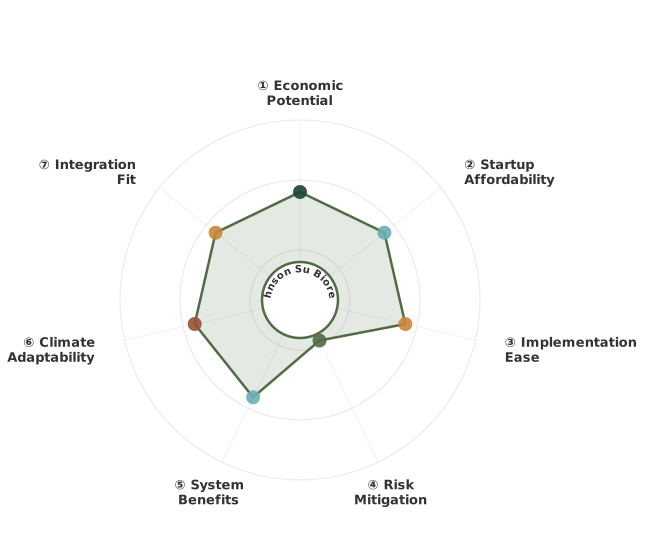
How These Traits Are Calculated
Trait dimensions are ordered clockwise starting from the top of the chart (12 o'clock position):
1. Economic Potential
Financial returns, annual value, and break-even timeline
WHAT: Evaluates financial viability by combining net annual value ($/ha from savings, income, and amortized harvests) with break-even timeline showing when practices pay for themselves.
WHY: Farmers need clear ROI understanding before committing resources. Fast payback (≤3 years) with strong returns (≥$300/ha) enables confident adoption, while long timelines (>10 years) restrict adoption to well-funded operations willing to wait for returns.
HOW: Calculated from net annual value in $/ha and break-even years. Exceptional (≥2.6): fast ROI ≤3 years + high value ≥$300/ha. Typical (1.8-2.5): moderate returns or longer timelines. Limited (<1.8): marginal economics or very long payback >10 years.
2. Startup Affordability
Initial investment costs and financial barrier to entry
WHAT: Measures financial barrier to entry through startup costs for equipment, infrastructure, consulting, and materials. Inverted scoring: lower costs = higher scores = more accessible adoption.
WHY: Affordability determines who can adopt. Low-cost practices (<$250/ha) enable widespread adoption across diverse scales, while high costs (>$2,500/ha) limit adoption to well-capitalized operations, creating barriers that slow regenerative transition.
HOW: Calculated from initial investment parsed from practice content. Inverted scoring: Exceptional (≥2.6): minimal investment <$250/ha. Typical (1.8-2.5): moderate costs $250-2,500/ha. Limited (<1.8): high barrier >$2,500/ha.
3. Implementation Ease
Learning curve and specialized knowledge required
WHAT: Measures how much learning, planning, and specialized knowledge a practice requires. Simpler practices with fewer steps score higher, while complex practices requiring extensive training or specialized resources score lower.
WHY: Complex practices create adoption barriers even when economically viable. Straightforward practices enable faster adoption and broader participation, while those requiring extensive training, timing precision, or specialized equipment limit who can succeed.
HOW: Evaluated by measuring documentation length and identifying complexity markers like location-specific requirements, seasonal timing windows, specialized skills, and dedicated equipment needs. Exceptional (≥2.6): straightforward practices with minimal prerequisites. Typical (1.8-2.5): moderate learning curve with some specialized needs. Limited (<1.8): steep learning curve requiring significant training or resources.
4. Risk Mitigation
Identified financial and ecological risk assessment
WHAT: Evaluates documented risks across financial (investment loss, market volatility) and ecological (crop failure, pest outbreaks) domains. Inverted scoring: fewer risks = higher scores.
WHY: Understanding risk exposure helps farmers make informed decisions. Low-risk practices allow confident implementation, while high-risk practices require careful planning and contingency resources. Risk transparency prevents costly failures.
HOW: Calculated from identified risks in practice content. Inverted scoring: Exceptional (≥2.6): ≤2 risks with manageable severity. Typical (1.8-2.5): 3-5 moderate risks. Limited (<1.8): 6+ risks or severe exposure.
5. System Benefits
How many ways the practice improves your land simultaneously
WHAT: Measures how many aspects of land health improve at once—carbon storage, soil quality, erosion control, water absorption, and biodiversity. Practices that improve multiple areas simultaneously create compounding benefits where each improvement reinforces the others.
WHY: The best practices solve multiple problems at once. For example, addressing erosion simultaneously builds carbon and improves water infiltration, creating a resilient system with positive feedback loops. Single-benefit approaches miss these compound transformation opportunities.
HOW: Evaluated across five key outcomes: carbon sequestration, soil organic matter increase, erosion reduction, water infiltration improvement, and biodiversity enhancement. Exceptional (≥2.6): high carbon storage (>8 t/ha/yr), improvements across 4-5 areas, transformative outcomes. Typical (1.8-2.5): moderate carbon (3-8 t/ha/yr), improvements across 2-3 areas. Limited (<1.8): modest impact (<3 t/ha/yr), single-area focus only.
6. Climate Adaptability
Geographic applicability across Köppen climate zones
WHAT: Evaluates geographic applicability by assessing how many Köppen climate zones successfully support a practice and what adaptation requirements are needed. Measures breadth of climates where farmers can implement with minimal to moderate modifications.
WHY: Universal practices working across diverse climates enable more farmers to adopt regenerative approaches. Practices limited to single climate types (only Mediterranean, only tropical) restrict adoption and slow global transition. Adaptability determines whether a practice serves niche regions or offers broad transformation.
HOW: LLM evaluation of regional success stories, Köppen zone coverage, and adaptation needs. Exceptional (≥2.6): 5+ zones or 4+ climate types, 3+ continents, minimal adaptation. Typical (1.8-2.5): 3-4 zones or 2-3 types, 2 continents, moderate adaptation. Limited (<1.8): 1-2 zones, single region, significant adaptation or highly specialized.
7. Integration Fit
How well this practice combines with others you're doing
WHAT: Measures how well a practice combines with other regenerative practices you might be doing. Some practices work as building blocks that make many other practices easier or more effective, while others work best on their own.
WHY: Practices that combine well with many others create more value on your farm. For example, cover cropping enables no-till, improves grazing, supports crop diversity, and helps water management—making all of them work better together. This helps you build a coherent system rather than juggling disconnected practices.
HOW: Evaluated by identifying which practices combine well and how strong those combinations are. 'Ideally Suited' means strong combinations where practices reinforce each other (practice A makes B easier, while B makes A more effective). 'Adequate' means complementary benefits that work well together. Exceptional (≥2.6): combines well with 6+ practices, serves as a building block. Typical (1.8-2.5): combines with 3-5 practices. Limited (<1.8): 1-2 practices or works best alone.
Going Deeper
1
WHY - The Benefits
The Johnson-Su bioreactor's primary value proposition lies in its ability to generate a potent, living soil inoculant that directly addresses soil degradation and enhances the effectiveness of other regenerative practices. It acts as a biological bank for the farm,...
The Johnson-Su bioreactor's primary value proposition lies in its ability to generate a potent, living soil inoculant that directly addresses soil degradation and enhances the effectiveness of other regenerative practices. It acts as a biological bank for the farm, depositing a diverse community of beneficial microbes that can transform soil health over time.
WHY - The Benefits
The Johnson-Su bioreactor's primary value proposition lies in its ability to generate a potent, living soil inoculant that directly addresses soil degradation and enhances the effectiveness of other regenerative practices. It acts as a biological bank for the farm,...
The Johnson-Su bioreactor's primary value proposition lies in its ability to generate a potent, living soil inoculant that directly addresses soil degradation and enhances the effectiveness of other regenerative practices. It acts as a biological bank for the farm, depositing a diverse community of beneficial microbes that can transform soil health over time.
Soil Health Benefits
The core benefit of the Johnson-Su bioreactor is the massive increase in beneficial soil microbial diversity and abundance. A mature bioreactor compost typically contains billions of bacteria, fungi, protozoa, and nematodes per gram, representing a vast array of functional organisms. These microbes are not just present; they are actively growing and reproducing in a nutrient-rich, biologically favorable environment, making them primed to colonize the soil ecosystem to which they are applied.
These microbes perform numerous functions beneficial to soil health. Bacteria are crucial for nitrogen cycling, breaking down organic matter, and forming small soil aggregates. Fungi, particularly mycorrhizal fungi, form extensive networks that enhance nutrient and water uptake for plants, bind soil particles into stable aggregates (increasing soil structure), and can suppress plant pathogens. Protozoa and nematodes graze on bacteria and fungi, regulating populations and releasing nutrients in a plant-available form—a process known as the microbial loop.
When introduced to agricultural soils, these diverse microbes begin improving soil structure by producing sticky substances like glomalin, which binds soil particles together into stable aggregates. This aggregation increases soil porosity, leading to better water infiltration, aeration, and root penetration. Increased organic matter from the compost itself, combined with enhanced microbial activity stimulating root growth and decomposition, leads to a sustainable increase in soil organic matter levels. When combined with other regenerative practices, this can contribute to an overall SOM increase of 0.5-1.5 percentage points over 5-10 years.
The improved soil structure and microbial activity also contribute to better water management. Healthy soils with good aggregation act like sponges, holding more water and releasing it slowly to plants. This increased water-holding capacity can significantly improve drought resilience and reduce runoff and erosion during heavy rainfall events. Improved aeration due to better soil structure also benefits plant roots, reducing stress and disease susceptibility.
Economic Benefits
The economic benefits of the Johnson-Su bioreactor are multifaceted, stemming from both reduced input costs and improved output quality and resilience. While there is an initial investment of time and materials for construction and build, the ongoing costs are minimal, and the "product"—the compost inoculant—is highly concentrated, requiring very low application rates.
A primary economic driver is the reduction in reliance on synthetic inputs. The microbial communities in the compost enhance natural nutrient cycling (e.g., nitrogen fixation, phosphorus solubilization), making these nutrients more available to plants. This can lead to a significant reduction in the need for synthetic fertilizers, saving farmers direct cash expenditure. Similarly, the enhanced biological suppression of soil-borne diseases and pests reduces the need for chemical treatments, further lowering input costs.
Improved soil health translates directly to improved crop performance. Better root systems access more water and nutrients, leading to increased yields and improved crop quality (e.g., higher nutritional content, better shelf life). Enhanced soil structure and water infiltration make crops more resilient to environmental stressors like drought and heavy rain, reducing yield variability and financial risk.
The long-term economic benefit is through building soil capital. As soil organic matter and biological activity increase, the land becomes more productive and resilient, commanding higher market value and requiring fewer external inputs to achieve desired outcomes. This long-term land improvement is a key aspect of regenerative economics, moving from extraction to regeneration of resources. For smallholder farmers in regions with limited access to synthetic inputs, the bioreactor can be a transformative tool for improving food security and farm profitability.
Regenerative Systems Fit
The Johnson-Su bioreactor is a Foundational Regenerative Practice that directly enhances the effectiveness of other regenerative principles and practices. It acts as a biological accelerator, making the transition to fully regenerative systems smoother and more effective.
Principle 1 (Minimize Soil Disturbance): While the bioreactor itself involves building a compost pile, its application aims to reduce the need for soil disturbance. By improving soil structure, increasing organic matter, and promoting beneficial microbial populations, the inoculant can help farmers transition to no-till or reduced-till systems more successfully. Stronger soil aggregates bind particles together, creating more resilient structures that resist compaction and erosion, even under minimal tillage.
Principle 2 (Maximize Crop Diversity): This principle is fundamentally supported by the bioreactor. The compost inoculates the soil with an explosion of diverse microbial life—bacteria, fungi, protozoa, nematodes—which are the foundation of the soil food web. This microbial diversity creates a more robust and resilient soil ecosystem that can support a wider range of plant species, including more diverse cover crops and cash crops. The enhanced interactions between diverse microbes and diverse plant roots create a more dynamic and productive system.
Principle 3 (Keep Soil Covered): The bioreactor indirectly supports keeping soil covered by improving soil structure to a point where it is more resistant to erosion. Healthier soils with better aggregation can withstand rainfall impacts and surface disturbance more effectively. Furthermore, the enhanced microbial activity it promotes can lead to more vigorous plant growth, meaning living roots and subsequent plant residue are more consistently present to cover the soil surface.
Principle 4 (Maintain Living Roots): This is a cornerstone principle that the bioreactor directly bolsters. The diverse microbial communities introduced by the compost enhance plant nutrient and water uptake, leading to stronger root systems that can penetrate deeper and survive for longer periods. This continuous biological activity in the soil profile supports life throughout the entire growing season and beyond, fueling the soil food web and maintaining soil structure.
Principle 5 (Integrate Livestock): The Johnson-Su bioreactor often complements livestock integration by utilizing manure as a key ingredient for composting. The compost itself can improve pasture health and forage quality, indirectly benefiting livestock through better nutrition and reduced need for supplemental feed. Improved soil health facilitated by the compost can also lead to more resilient pastures that can better withstand grazing pressure.
The bioreactor is not a transition practice that involves violating principles; it is a practice that enhances the success of all other regenerative principles. Its use can accelerate the restoration of soil biology on degraded lands, making it a valuable foundation for farms seeking to move away from conventional practices. Farms using it often report faster improvements in soil structure, water retention, and fertility, which then allow them to more confidently implement other regenerative practices like cover cropping, no-till, and adaptive grazing.
Sources behind this view
Videos & Podcasts
-
Jay Young details the practical use of Johnson-Su compost and biologicals, emphasizing soil health and sustainability. He shares cost savings from reducing synthetic inputs, explains how biologicals u
-
Details the creation of Johnson-Su bioreactor compost extract, a fungally dominant compost, for improved soil health and nutrient availability. Explains bioreactor construction, watering, worm additio
-
Advocates 'roots not iron' for fixing compaction, detailing the construction and adaptation of the Johnson-Su bioreactor for Alberta's climate, emphasizing diverse plant inputs and worm activity for h

-
Details the Johnson-Su bioreactor method for creating fungal-dominant compost using wood chips, leaves, and red wigglers. The process aims to enhance soil biology with a one-ton-per-acre application r
 Research
-
Building Soil Health and Fertility through Organic Amendments and Practices: A Review (opens in new window)
This study found: Review of organic amendments (manures, compost, cover crops) and regenerative practices (no-till, crop diversity, agroecology) shows they restore soil health by increasing organic matter and beneficia
-
Building Soil Health and Fertility through Organic Amendments and Practices: A Review (opens in new window)
This study found: Using organic amendments (manures, composts, cover crops) and regenerative practices (no-till, crop diversity) restores soil health by increasing organic matter and beneficial microbes, leading to mor
-
Microbial Community in the Composting Process and Its Positive Impact on the Soil Biota in Sustainable Agriculture (opens in new window)
This study found: Compost's microbial communities are key to improving soil health and promoting sustainable agriculture by boosting beneficial soil organisms and essential ecosystem functions.
From the Web
-
Scientist David C. Johnson developed the Johnson-Su Bioreactor for producing fungal-rich compost from materials like dairy manure. His research shows a high fungal to bacterial ratio in compost is cru
-
Details the Johnson-Su Bioreactor, a 12-month static compost system producing fungal-dominant compost that enhances soil health, food nutrition, carbon sequestration, water retention, and habitat.
Source: ucanr.edu (opens in new window) -
The Johnson-Su Bioreactor is a static, 12-month composting method producing fungal-dominant compost that enhances soil health, food nutrient density, carbon sequestration, water purification, and habi
Source: ucanr.edu (opens in new window) -
The Johnson-Su bioreactor method by Dr. David C. Johnson creates biologically enhanced compost to revitalize degraded soils, improving soil health, crop yield, and carbon sequestration with a low-tech
2
HOW - Implementation Process
The Johnson-Su bioreactor is designed for passive composting, meaning once built, it requires minimal active management. The focus is on setting it up correctly and allowing nature to do the work.
The Johnson-Su bioreactor is designed for passive composting, meaning once built, it requires minimal active management. The focus is on setting it up correctly and allowing nature to do the work.
HOW - Implementation Process
The Johnson-Su bioreactor is designed for passive composting, meaning once built, it requires minimal active management. The focus is on setting it up correctly and allowing nature to do the work.
The Johnson-Su bioreactor is designed for passive composting, meaning once built, it requires minimal active management. The focus is on setting it up correctly and allowing nature to do the work.
Prerequisites
-
Organic Material Sourcing: A diverse mix of organic materials is essential. Aim for a balance of coarse, carbon-rich materials for aeration and structure, and finer, nitrogen-rich materials for microbes.
- Coarse/Bulky Materials (~60-70% of volume): Wood chips (untreated), straw, hay, coarser plant residues, peanut shells, corn cobs. These provide aeration and structure, preventing the pile from becoming anaerobic.
- Nutrient-Rich Materials (~30-40% of volume): Aged or semi-composted manure (cow, horse, chicken, sheep), food scraps, green plant residues, spent grains, coffee grounds. These supply nitrogen and nutrients for microbial life.
- Avoid: Diseased plant material, weed seeds that have gone to seed (unless composted at sufficiently high temperatures, which is less common in passive bioreactors), synthetic materials, treated wood, or heavily processed food waste that might attract pests.
-
Water Source: Access to water is needed during construction to reach optimal moisture levels.
-
Simple Bin Structure: While a bin is recommended to maintain integrity, it does not need to be elaborate. Materials like untreated wood pallets, cinder blocks, or even tightly packed bales can form retaining walls. The goal is to hold the compost pile together loosely. Some designs incorporate a central aeration pipe (e.g., PVC pipe with holes or a manifold).
Phase 1: Bin Construction and Initial Material Gathering
-
Design Bin Size: A common bioreactor size is approximately 1.2m x 1.2m x 1.2m (4ft x 4ft x 4ft) per cubic meter (or yard), but can be scaled up or down. Larger bins may encourage better internal heating but require more material.
-
Gather Materials: Collect a diverse range of your identified materials. Pre-shredding coarser materials can help, but chunkiness is good for aeration.
-
Source Aeration (Optional but Recommended): If using a central aeration pipe, place it vertically in the center of where the bin will be. This pipe should reach from the base to just above the intended height of the pile, with holes or slots to allow air to be drawn in. Some designs use a manifold of pipes radiating from the bottom.
Phase 2: Building the Bioreactor Pile (Layering)
This is the most critical phase. The goal is to layer diverse materials to achieve an optimal C:N ratio and moisture content.
-
Layering Technique: Build the pile in approximately 2.5 cm (1 inch) thick layers.
- Start with a layer of coarse, bulky material (wood chips, straw) at the base for drainage and aeration.
- Follow with a layer of nutrient-rich material (manure, food scraps).
- Alternate these layers, adding a thin scattering of "activator" materials (worm castings, finished compost, or a handful of rich soil) every few layers to introduce desirable microbes. This is not strictly necessary but can speed up the process.
- You can also add a diversity of other organic materials throughout the layering process—leaf mold, composted grass clippings, etc.
-
Achieve Optimal C:N Ratio: The ideal C:N ratio for the entire pile is estimated to be around 25:1 to 30:1 by weight. This is best achieved by roughly 60-70% carbon-rich materials and 30-40% nitrogen-rich materials by volume. Estimating this is often done visually by experience; if the pile seems too "green" or wet, add more coarse, carbon-rich materials. If it seems too dry and lacks nitrogen, add more manure or green waste.
-
Moisture Management: As you build, moisten each layer. The final compost should feel like a wrung-out sponge—moist enough to hold together when squeezed but not so wet that water drips out. Over-watering leads to anaerobic conditions and inefficient decomposition.
-
Pile Integrity: Once built, the pile should maintain its shape loosely. It's not a tightly compacted hot compost pile; it's designed to allow passive airflow.
Phase 3: Composting and Maturation (6-12 Months)
-
Passive Aeration: The coarse materials and layering allow air to permeate the pile. The central aeration pipe (if used) helps draw air into the pile, facilitating aerobic decomposition.
-
Temperature: Internal temperatures will rise naturally due to microbial activity, likely reaching 50-65°C (120-150°F) in the core during mesophilic and thermophilic phases. This heat helps sanitize the compost, killing pathogens and weed seeds. The pile will then cool down as decomposition progresses.
-
Moisture Monitoring: Check moisture levels periodically (e.g., monthly or quarterly). If the pile appears dry, especially in arid climates or during dry seasons, water gently from the top or sides. If too wet (smelly, anaerobic), add more coarse, carbon-rich material and turn slightly if extremely problematic (though turning is minimized).
-
Aging: The compost is ready when it is dark, crumbly, earthy-smelling, and no longer feels warm. This typically takes 6-12 months, depending on materials, climate, and initial build. The microbes are still alive and active; it's not inert.
Phase 4: Application of Finished Compost
-
Harvesting: Dig into the center of the finished bioreactor pile to harvest the rich, microbial compost.
-
Application Rate: This is crucial. The bioreactor compost is highly concentrated. Typical application rates are very low: 1-2 cubic meters per hectare (0.5-1 cubic yard per acre) or as little as 1-2 liters per 100 sq meters (0.1-0.2 gallons per 1,000 sq ft). It can be spread as a thin top dressing, mixed into planting holes, or used to make compost tea.
-
Compost Tea: For a liquid inoculant, you can steep finished bioreactor compost in aerated water for 24-36 hours. This brews a microbial "tea" that can be sprayed or drenched onto soil or foliage.
Transition Timeline & Phase-Out Strategy
The Johnson-Su bioreactor is not a transition practice in the sense of violating regenerative principles. It is inherently regenerative. Therefore, there is no phase-out strategy for the bioreactor itself. Instead, its use supports the phase-out of non-regenerative practices:
- Reducing Synthetic Fertilizers: As the soil biology improves due to bioreactor inoculant, natural nutrient cycling increases, reducing the need for synthetic N, P, K inputs. This reduction should be gradual, monitoring soil tests and crop performance. Timeline: Begin reducing inputs year 1-2, aim for 30-50% reduction by year 3-5, and near elimination by year 5-10 as soil health is fully restored.
- Reducing Pesticide Use: Enhanced soil biology promotes plant health and natural disease suppression, lowering the need for chemical pesticides and fungicides. Timeline: Gradual reduction over 3-5 years, monitoring pest/disease pressure.
- Transitioning to Reduced Tillage/No-Till: The improved soil structure from bioreactor compost aids in the successful adoption of reduced or no-till systems. Timeline: Begin reducing tillage intensity within 1-3 years of consistent compost application, aiming for full no-till within 5-10 years.
Graduation to fully regenerative approach: Success is measured by observing tangible improvements in soil health and reduced reliance on external, synthetic inputs. This includes better soil structure, increased water infiltration, higher soil organic matter, more diverse soil life, and robust crop growth with fewer purchased inputs.
Sources behind this view
Videos & Podcasts
-
Jay Young details the practical use of Johnson-Su compost and biologicals, emphasizing soil health and sustainability. He shares cost savings from reducing synthetic inputs, explains how biologicals u
-
Details the creation of Johnson-Su bioreactor compost extract, a fungally dominant compost, for improved soil health and nutrient availability. Explains bioreactor construction, watering, worm additio
-
Details the Johnson-Su bioreactor method for creating fungal-dominant compost using wood chips, leaves, and red wigglers. The process aims to enhance soil biology with a one-ton-per-acre application r
-
The Johnson-Su Bioreactor compost method requires 70% moisture, aerobic conditions, and no turning, maturing in one year to produce a fungal-dominant compost. It's applied at 2 lbs/acre, often as an e
Community
-
Highlights the Johnson-Su bioreactor for producing fungal-rich, aerobic compost with no turning. Discusses its use with various manures and materials in cold climates (Zone 4b). Also covers cattle pan
Read more (opens in new window) permies.com
From the Web
-
Scientist David C. Johnson developed the Johnson-Su Bioreactor for producing fungal-rich compost from materials like dairy manure. His research shows a high fungal to bacterial ratio in compost is cru
-
The Johnson-Su Bioreactor is a static, 12-month composting method producing fungal-dominant compost that enhances soil health, food nutrient density, carbon sequestration, water purification, and habi
Source: ucanr.edu (opens in new window) -
Details the Johnson-Su Bioreactor, a 12-month static compost system producing fungal-dominant compost that enhances soil health, food nutrition, carbon sequestration, water retention, and habitat.
Source: ucanr.edu (opens in new window) -
The Johnson-Su bioreactor method by Dr. David C. Johnson creates biologically enhanced compost to revitalize degraded soils, improving soil health, crop yield, and carbon sequestration with a low-tech
3
Know the Debate
The Johnson-Su bioreactor's effectiveness is highly context-dependent, spanning diverse applications and scales from small farms to large operation...
Know the Debate
The Johnson-Su bioreactor's effectiveness is highly context-dependent, spanning diverse applications and scales from small farms to large operation...
The Johnson-Su bioreactor's effectiveness is highly context-dependent, spanning diverse applications and scales from small farms to large operations. Climate strongly influences material decomposition rates and moisture management, with arid regions requiring more attention to hydration. Operation size impacts material sourcing and initial setup costs, ranging from DIY bins to large-scale commercial builds. While its passive design minimizes ongoing labor, initial construction and consistent application are key. Results for soil health improvements typically emerge over one to three years, with significant economic returns often realized within two to five years as input needs decrease.
How effective is the Johnson-Su bioreactor?
Highly Beneficial Soil Inoculant
Well-executed Johnson-Su bioreactors consistently produce a potent microbial inoculant that significantly boosts soil health, nutrient cycling, and crop resilience. Research and widespread field adoption show dramatic improvements in degraded soils, reducing synthetic input needs.
Sources behind this view
Sources behind this view
Videos & Podcasts
-
The Johnson-Su bioreactor simplifies composting by eliminating turning and odors, utilizing a vertical design for space efficiency. It promotes fungal decomposition, with optimal temperatures around 70-80°F. Worms are added after cooling, and landscape fabric helps retain moisture and support worm establishment.
-
Jay Young from Western Kansas details the Johnson-Su bioreactor, a year-long process creating fungally dominant compost from carbon and nitrogen sources. This method is vital for soil health, reducing synthetic fertilizer needs, especially phosphorus, and is supported by research from Dr. Christine Jones and Dr. David Johnson.
Research
-
COMPOUND NATURAL SOURCE OF NUTRIENTS AND HUMUS FOR PLANTS AND SOIL (opens in new window)
This study found: This research is developing a system to improve the composting process, specifically for creating biohumus (a type of organic fertilizer). The goal is to make better use of organic waste by controlling conditions like air, moisture, and material mix during decomposition. This controlled composting aims to produce a high-quality organic fertilizer that provides essential nutrients and improves soil health, especially when synthetic fertilizers are expensive or hard to get. The system is designed to ensure a stable and effective composting process.
From the Web
-
Scientist David C. Johnson developed the Johnson-Su Bioreactor for producing fungal-rich compost from materials like dairy manure. His research shows a high fungal to bacterial ratio in compost is crucial for boosting plant growth and soil health, acting as a biological inoculant rather than just a nutrient source.
Variable Outcomes Based on Context
Effectiveness varies greatly depending on material quality, climate, management adherence, and application context. Suboptimal practices or materials can lead to less dramatic results or even failure, especially when deviating from established protocols.
Sources behind this view
Sources behind this view
Videos & Podcasts
-
Demonstrates an 11-month-old Johnson-Su bioreactor using primarily brown materials (wood chip, leaves, spent plants) with multiple oxygen tubes for enhanced biological activity.
-
Provides instructions for building and using a Johnson-Su bioreactor to create high-fungal-diversity compost. Key elements include specific pipe spacing (30cm), substrate (leaf matter, minimal manure), aeration, moisture control (70%), and a 12-month maturation period, yielding a potent soil amendment.

Research
-
Bokashi as an Amendment and Source of Nitrogen in Sustainable Agricultural Systems: a Review. (opens in new window)
This study found: This review looks at bokashi, a type of fermented organic matter, as a tool for improving soil health and providing nitrogen in sustainable farming. To make bokashi with more nitrogen, it's important to use ingredients that are already high in nitrogen and add more easily digestible carbon sources for the microbes. The review notes that research on how the microbial starter cultures in bokashi speed up the breakdown of organic matter has produced mixed results, suggesting we need to better understand how these microbes work with the soil's natural microbes. More research is also needed to connect how much nitrogen bokashi provides to actual crop yields and how it works best when used alongside other farming methods.
From the Web
-
Farm visits documented diverse composting systems: vermicomposting and bokashi at Southfield Farm (Northumbria), and large-scale Johnson-Su bioreactors at G's (Cambridgeshire). Preliminary findings from a review highlight biodynamic methods, fungal:bacterial ratios, and liquid compost products for soil health, with a workshop delivered at Groundswell 2024.
Making Sense of the Differences
The Johnson-Su bioreactor's effectiveness hinges on precise adherence to its method and the quality of materials used, particularly the balance of carbon and nitrogen and consistent moisture levels. While documented successes in improving soil biology and reducing synthetic inputs are substantial, variations in local climate, material availability, and precise execution can lead to less pronounced outcomes. For optimal results, users must ensure consistent moisture (around 70%), proper aeration, quality inputs, and adhere to the recommended slow, passive decomposition process, especially in arid climates where moisture management is critical. Successful application rates are also key; over-application does not equate to greater benefit.
3
HOW MUCH - Costs & Investment
Note: Costs shown in USD; multiply by local labor and material cost indices for your region. Labor costs vary significantly internationally.
Note: Costs shown in USD; multiply by local labor and material cost indices for your region. Labor costs vary significantly internationally.
HOW MUCH - Costs & Investment
Note: Costs shown in USD; multiply by local labor and material cost indices for your region. Labor costs vary significantly internationally.
Note: Costs shown in USD; multiply by local labor and material cost indices for your region. Labor costs vary significantly internationally.
Note: All costs are based on recent US economic data (2024–2026) and may vary substantially by region based on local labor rates, material costs, and regulatory requirements.
Bin Infrastructure & Hardware
Construction costs are dictated by the durability and scale of the bioreactor units. For small-scale operations (under 50 acres (20 ha)), building a basic bioreactor using repurposed wood pallets and heavy-duty chicken wire requires an investment of $125–$365 per unit. Mid-size operations (50–500 acres (20–202 ha)) typically require 5–10 units to maintain consistent inoculation volume, with costs scaling to $1,876–$4,689 using PVC piping, industrial-grade geotextiles, and specialized aeration conduits for superior stability. Large-scale operations (500+ acres) constructing permanent infrastructure, such as concrete pads or reinforced structural steel housing, face capital expenditures of $8,336–$26,050. While higher-end builds require significant upfront capital, they prioritize long-term durability, reducing maintenance and repair overhead by approximately 20% compared to temporary wood-pallet structures that often require replacement every 24 months.
Organic Input Materials
The primary variable cost centers on the carbon-to-nitrogen source material, which varies based on on-farm availability versus retail procurement. Small-scale farmers often minimize expenditures by sourcing free municipal wood chips or local livestock manure, keeping material costs at $52–$156 per unit. Mid-size farms frequently scale operations by purchasing bulk deliveries of specialized straw, high-nitrogen dairy manure, or off-site compost teas to ensure consistent microbial diversity; this results in costs ranging from $313–$938 per unit. Large-scale operations utilize economies of scale and vertical integration. By recycling on-farm stalks, straw, and manure, these operations can reduce material costs to $156–$417 per unit through efficient internal resource loops. If inputs must be purchased at retail or transported over long distances, operators should budget an additional 15–25% premium for logistics and handling efficiency.
Labor & Professional Oversight
Labor represents the highest variance in total expenditure. For small-scale setups, a DIY approach involves 20–40 hours of manual labor for site preparation, material filling, and periodic wetting per unit. Assessing labor at $26 per hour, this adds roughly $521–$1,042 to the total cost. Mid-size operations often hire part-time support for staging materials and managing aeration, adding $1,250–$3,647 annually to the operational budget. Large-scale farms effectively control expenditure through mechanized bucket loaders and automated moisture monitoring systems, which reduce direct human labor hours by 60–80% per cubic yard of output. Additionally, professional consulting or laboratory soil testing for microbial activity during the 6–12 month maturation phase adds $208–$625 annually, which is considered a critical investment to verify the viability of the fungal-heavy inoculant before field application.
Most Spend: The middle 60% of operations spend approximately $260–$573 per unit, covering typical material sourcing and semi-mechanized assembly.
Why the Range?: Costs vary primarily due to the degree of mechanical automation and the availability of on-site inputs. Operations that must purchase inputs and haul them long distances fall at the high end of the scale, while those with existing infrastructure or waste streams sit at the lower end.
Sources behind this view
Videos & Podcasts
-
Details the Johnson-Su bioreactor method for creating fungal-dominant compost using wood chips, leaves, and red wigglers. The process aims to enhance soil biology with a one-ton-per-acre application r
-
Jay Young details the practical use of Johnson-Su compost and biologicals, emphasizing soil health and sustainability. He shares cost savings from reducing synthetic inputs, explains how biologicals u
-
Chris Teachout details building a modified Johnson-Su bioreactor to create a fungal-dominated compost inoculant using diverse inputs like wood chips, kelp, fish powder, and native biology, achieving a
-
The Johnson-Su compost bioreactor produces a fungal-dominant vermicompost extract that, when injected with seed at 2 lbs/acre, significantly reduces input costs (fertilizer, water, pesticides) and inc

Community
-
Highlights the Johnson-Su bioreactor for producing fungal-rich, aerobic compost with no turning. Discusses its use with various manures and materials in cold climates (Zone 4b). Also covers cattle pan
Read more (opens in new window) permies.com
Research
-
Low-Cost and Labour-Efficient Innovations in Household Recycling of Organic Wastes for Soil Improvement (opens in new window)
This study found: Review of low-cost innovations for household organic waste recycling to improve soil health in low-income countries, focusing on composting, anaerobic digestion, and pyrolysis for stabilized organic m
-
A Case Study on Role of Microbial Consortia Assisted Decomposition of Agro-waste for Improvement of Soil Organic Carbon – A Step Towards Sustainable Development (opens in new window)
This study found: A microbial mix and cow manure sped up farm waste composting to 30-45 days, boosting soil organic matter by 13-25% in two seasons on 15 farms. Developed for sustainable farming.
From the Web
-
Scientist David C. Johnson developed the Johnson-Su Bioreactor for producing fungal-rich compost from materials like dairy manure. His research shows a high fungal to bacterial ratio in compost is cru
-
The Johnson-Su bioreactor method by Dr. David C. Johnson creates biologically enhanced compost to revitalize degraded soils, improving soil health, crop yield, and carbon sequestration with a low-tech
-
Describes the Johnson-Su Bioreactor, a 12-month static aerobic composting method producing fungal-dominant compost that enhances soil health, food nutrient density, carbon sequestration, and water pur
Source: ucanr.edu (opens in new window) -
The Johnson-Su Bioreactor is a static, 12-month composting method producing fungal-dominant compost that enhances soil health, food nutrient density, carbon sequestration, water purification, and habi
Source: ucanr.edu (opens in new window)
5
REWARDS AND RISKS - Economics & Risk Factors
Economic Scenarios
Economic Scenarios
REWARDS AND RISKS - Economics & Risk Factors
Economic Scenarios
Economic Scenarios
The Best Case Scenario involves a producer sourcing inputs at near-marginal cost and utilizing on-farm mechanical equipment. A $2,084 investment in ten bioreactors produces high-quality, biologically diverse compost. Applied as an inoculant at 1.5 cubic yards per acre over 100 acres (40 ha), this reduces synthetic phosphorus and potash dependency by 20%, resulting in savings of $37–$63 per acre ($91–$156/ha) annually. Combined with a 7–12% yield boost due to improved soil structure and water retention, the operation nets an additional $156–$292 per acre ($385–$722/ha), providing a full return on investment by the second year.
The Typical Case Scenario assumes moderate reliance on purchased inputs and some hired labor. An investment of $5,210 produces sufficient inoculum for 150 acres (61 ha). Synthetic fertilizer reduction remains consistent at 10–15%, yielding a $26–$42 per acre ($64–$104/ha) benefit, alongside a 3–6% increase in crop yield. In this scenario, the breakeven point is reached in 3–4 years. Over a decade, the compounding soil structure improvements—monitored via water infiltration tests—reduce the requirement for tillage passes by 1–2 per season, saving $16–$26 on fuel and maintenance per acre.
The Worst Case Scenario features high capital expenditure on infrastructure ($12,500+) coupled with poor compost management, leading to anaerobic pockets or low fungal count. If the inoculant provides no measurable yield benefit and the producer must double-down on synthetic inputs, the operation may lose $4,168–$7,294 in upfront costs. Recovery may take 6+ years unless management adjusts for moisture control and input balancing.
Market volatility in synthetic fertilizer prices acts as a primary profitability driver. When nitrogen prices spike 20–40% above the three-year average, the relative value of the Johnson-Su bioreactor increases significantly, as the practice decouples crop yield from external, price-sensitive inputs.
Transitioning to this system presents a risk of "Biological Lag." For 1–2 years, the soil food web may be in a state of flux as it shifts from bacteria-dominated, synthetic-fed levels to a healthier, fungal-dominated state. Farmers might perceive this as a lack of progress. To mitigate, use a "hybrid phase" by maintaining 80% of current fertilizer regimes while applying the inoculant, tapering off synthetic usage by 10% each season based on microbial reports. Budgeting $156–$313 per sample for biennial soil biology testing is the most effective way to quantify progress and justify the practice during this transition.
Sources behind this view
Videos & Podcasts
-
Jay Young details the practical use of Johnson-Su compost and biologicals, emphasizing soil health and sustainability. He shares cost savings from reducing synthetic inputs, explains how biologicals u
-
Details the Johnson-Su bioreactor method for creating fungal-dominant compost using wood chips, leaves, and red wigglers. The process aims to enhance soil biology with a one-ton-per-acre application r
-
Details the creation of Johnson-Su bioreactor compost extract, a fungally dominant compost, for improved soil health and nutrient availability. Explains bioreactor construction, watering, worm additio
-
The Johnson-Su compost bioreactor produces a fungal-dominant vermicompost extract that, when injected with seed at 2 lbs/acre, significantly reduces input costs (fertilizer, water, pesticides) and inc
Community
-
User 'Su Ba' describes a simple, effective composting method using microbe-rich local soil to inoculate large pallet bins filled with diverse organic materials, producing location-specific compost for
Read more (opens in new window) permies.com -
Highlights the Johnson-Su bioreactor for producing fungal-rich, aerobic compost with no turning. Discusses its use with various manures and materials in cold climates (Zone 4b). Also covers cattle pan
Read more (opens in new window) permies.com
Research
-
Low-Cost and Labour-Efficient Innovations in Household Recycling of Organic Wastes for Soil Improvement (opens in new window)
This study found: Review of low-cost innovations for household organic waste recycling to improve soil health in low-income countries, focusing on composting, anaerobic digestion, and pyrolysis for stabilized organic m
-
Recycling of nutrients from organic waste by advanced compost technology- A case study. (opens in new window)
This study found: Advanced IB+CDT composting in China processed organic waste 40% faster, safely, and profitably. The compost boosted soil organic matter by 17% and available nitrogen by 11%.
-
A Case Study on Role of Microbial Consortia Assisted Decomposition of Agro-waste for Improvement of Soil Organic Carbon – A Step Towards Sustainable Development (opens in new window)
This study found: A microbial mix and cow manure sped up farm waste composting to 30-45 days, boosting soil organic matter by 13-25% in two seasons on 15 farms. Developed for sustainable farming.
-
Interaction impact of biocompost on nutrient dynamics and relations with soil biota, carbon fractions index, societal value of CO equivalent and ecosystem services in the wheat-rice farming. (opens in new window)
This study found: Combining high fertilizer rates with recycled industrial compost significantly boosted wheat-rice yields, soil carbon, microbial activity, and farm profits in India, demonstrating a synergistic approa
From the Web
-
Scientist David C. Johnson developed the Johnson-Su Bioreactor for producing fungal-rich compost from materials like dairy manure. His research shows a high fungal to bacterial ratio in compost is cru
-
The Johnson-Su bioreactor method by Dr. David C. Johnson creates biologically enhanced compost to revitalize degraded soils, improving soil health, crop yield, and carbon sequestration with a low-tech
-
The Johnson-Su Bioreactor is a static, 12-month composting method producing fungal-dominant compost that enhances soil health, food nutrient density, carbon sequestration, water purification, and habi
Source: ucanr.edu (opens in new window) -
Details the Johnson-Su Bioreactor, a 12-month static compost system producing fungal-dominant compost that enhances soil health, food nutrition, carbon sequestration, water retention, and habitat.
Source: ucanr.edu (opens in new window)
6
COMPATIBLE PRACTICES - Integration Opportunities
The Johnson-Su bioreactor is a foundational practice that synergizes exceptionally well with nearly all regenerative agriculture practices. It's designed to enhance existing systems rather than replace them wholesale.
The Johnson-Su bioreactor is a foundational practice that synergizes exceptionally well with nearly all regenerative agriculture practices. It's designed to enhance existing systems rather than replace them wholesale.
COMPATIBLE PRACTICES - Integration Opportunities
The Johnson-Su bioreactor is a foundational practice that synergizes exceptionally well with nearly all regenerative agriculture practices. It's designed to enhance existing systems rather than replace them wholesale.
The Johnson-Su bioreactor is a foundational practice that synergizes exceptionally well with nearly all regenerative agriculture practices. It's designed to enhance existing systems rather than replace them wholesale.
Diverse Cover Cropping
- Integration: Use finished bioreactor compost as a soil amendment before planting cover crops or as a side-dressing. Brew compost tea and apply as a foliar spray or soil drench.
- Synergy: Bioreactor inoculates soil with microbes that boost cover crop establishment, root growth, nitrogen fixation, and nutrient cycling, accelerating soil improvement beyond what cover crops alone can achieve in degraded soils.
No-Till or Reduced Tillage
- Integration: Apply bioreactor compost as a top dressing before planting conventional cash crops or cover crops in a no-till system.
- Synergy: The enhanced microbial activity from the compost improves soil structure, making it more resilient to compaction and more conducive to root penetration in undisturbed soil. This reduces reliance on tillage for seedbed preparation and soil aeration.
Compost Tea Applications
- Integration: Brew compost tea from finished bioreactor compost for foliar sprays or soil drenches.
- Synergy: Provides a concentrated, liquid form of beneficial microbes and soluble nutrients that can quickly inoculate soil and support plant health and nutrient uptake.
Rotational/Adaptive Grazing
- Integration: Utilize manure from livestock as a primary carbon/nitrogen source for the bioreactor. Apply finished compost to pastures.
- Synergy: Bioreactor inoculant improves pasture health and forage quality, leading to better livestock performance and better manure production. Reduced manure compaction from improved soil structure means better nutrient capture.
Holistic Management/Keyline Design
- Integration: Apply bioreactor compost to areas identified as needing soil improvement within a holistic plan or keyline design.
- Synergy: Enhances the soil's ability to absorb and retain water (especially after keyline earthworks), and improves the biological functions that support landscape management goals.
Other Composting Methods (e.g., vermicast, thermal composting)
- Integration: Use bioreactor compost as an activator or feedstock for other composting processes, or blend finished products.
- Synergy: Bioreactor compost, with its high microbial diversity, can inoculate other compost piles, potentially accelerating decomposition and enhancing the final product quality.
The overarching benefit of integrating the Johnson-Su bioreactor is the acceleration of soil biological function. This makes all other regenerative practices more effective, reducing their reliance on expensive external inputs and building a more resilient, productive farm ecosystem.
Sources behind this view
Videos & Podcasts
-
Jay Young details the practical use of Johnson-Su compost and biologicals, emphasizing soil health and sustainability. He shares cost savings from reducing synthetic inputs, explains how biologicals u
-
Details the creation of Johnson-Su bioreactor compost extract, a fungally dominant compost, for improved soil health and nutrient availability. Explains bioreactor construction, watering, worm additio
-
Details the Johnson-Su bioreactor method for creating fungal-dominant compost using wood chips, leaves, and red wigglers. The process aims to enhance soil biology with a one-ton-per-acre application r
-
The Johnson-Su compost bioreactor produces a fungal-dominant vermicompost extract that, when injected with seed at 2 lbs/acre, significantly reduces input costs (fertilizer, water, pesticides) and inc
From the Web
-
Scientist David C. Johnson developed the Johnson-Su Bioreactor for producing fungal-rich compost from materials like dairy manure. His research shows a high fungal to bacterial ratio in compost is cru
-
The Johnson-Su Bioreactor is a static, 12-month composting method producing fungal-dominant compost that enhances soil health, food nutrient density, carbon sequestration, water purification, and habi
Source: ucanr.edu (opens in new window) -
The Johnson-Su bioreactor method by Dr. David C. Johnson creates biologically enhanced compost to revitalize degraded soils, improving soil health, crop yield, and carbon sequestration with a low-tech
-
Details the Johnson-Su Bioreactor, a 12-month static compost system producing fungal-dominant compost that enhances soil health, food nutrition, carbon sequestration, water retention, and habitat.
Source: ucanr.edu (opens in new window)