
Ladder Agriculture
Ladder agriculture is a regenerative practice that integrates trees, shrubs, or perennial woody species into annual cropping or pasture systems in a staggered, tiered "laddered" pattern. This strategic placement optimizes sunlight, water, and nutrient utilization by creating diverse microclimates. It enhances soil health, increases biodiversity, and provides multiple income streams over time, combining the benefits of trees and herbaceous systems.
Read More: Complete Description
Ladder agriculture, also known as tiered agriculture or alley cropping, is a sophisticated agroforestry practice that strategically integrates trees and shrubs into conventionally managed annual cropping or pasture land. The core principle is to arrange woody species in rows or zones at staggered intervals, creating "alleys" for annual crops or livestock grazing. This tiered system mimics natural ecosystems like forest edges or savanna woodlands, which are renowned for their high productivity and biodiversity. Instead of a monoculture, ladder agriculture creates a mosaic of plant communities occupying different vertical and horizontal spaces, each contributing to the overall system's health and resilience.
The placement of trees and shrubs is deliberate; they are typically spaced 8-30 meters (25-100 feet) apart, allowing sufficient sunlight to reach the understory for productive forage or crop growth. This spacing varies based on species, climate, and the chosen management system (e.g., timber production, fruit/nut harvesting, or shade for livestock). The trees' deep root systems access soil moisture and nutrients unavailable to shallower-rooted crops or forages, transferring them to the surface through leaf litter and biological processes. This nutrient cycling enhances soil fertility and structure, while the tree canopy provides shade, windbreak effects, and habitat for beneficial insects and wildlife.
From a regenerative agriculture standpoint, ladder agriculture is a foundational practice that powerfully supports multiple core principles. It directly enhances crop diversity (Principle 2) by introducing perennial woody species alongside annual crops or forages, creating a more complex and resilient ecosystem above and below ground. The maintenance of living roots (Principle 4) is continuous, with perennial trees and shrubs contributing to soil structure and biological activity year-round, even when annual crops are not present. By incorporating trees and understory vegetation, the system ensures that the soil is kept covered (Principle 3) for a much larger portion of the year, reducing erosion and improving water infiltration. When managed with livestock, ladder agriculture also excels at integrating animals (Principle 5), using their grazing to manage understory vegetation, cycle nutrients, and provide immediate economic returns while longer-lived trees mature. If established with minimal soil disturbance, it also adheres to Principle 1.
The benefits of ladder agriculture extend beyond ecological improvements to encompass significant economic diversification. While annual crops or livestock provide immediate income, the trees and shrubs offer long-term revenue streams from timber, nuts, fruits, or even carbon sequestration credits. This diversification makes farms more resilient to market volatility and climate fluctuations. The practice has become increasingly relevant in temperate regions like Europe and North America, as well as in subtropical and tropical zones across Africa and South America, adapting to local conditions and economic goals. For example, timber-alley cropping systems in the US Midwest might pair corn and soybeans with black walnut trees for high-value lumber, while in parts of Brazil, it's used to integrate coffee or cacao with shade trees, improving quality and resilience. In East Africa, it can combine staple crops with nutrient-fixing trees to enhance food security and soil fertility.
The implementation of ladder agriculture requires careful planning. Key considerations include selecting appropriate tree species that are compatible with the local climate and chosen crops/livestock, determining optimal spacing for light penetration and machinery access, and managing for competition between trees and understory components. Initial establishment might involve temporary protection for young trees from grazing animals and managing for weed control in the alleyways. Over time, the management shifts to optimizing the synergy between the woody perennials and the annual or herbaceous components, often through strategic grazing, pruning, or harvesting cycles.
While ladder agriculture is a highly regenerative practice, its implementation needs to be mindful of potential short-term compromises if transitioning from highly simplified systems. However, unlike practices that might require a "one-time tillage to break compaction," ladder agriculture is by nature a long-term, principle-aligned strategy. Its "transition" lies in the intentional, gradual integration of diversity and perenniality into existing land use, building on existing agricultural practices rather than requiring a radical, disruptive break. The complexities involved in planning and establishment, particularly species selection, spacing, and initial protection, require careful consideration and often a longer planning horizon than annual cropping alone.
Ultimately, ladder agriculture embodies a holistic approach to land management, weaving together ecological health and economic prosperity. It moves beyond viewing land as a series of separate enterprises (cropping, grazing, forestry) to recognizing their interconnected potential. By creating a more structured, diverse, and resilient landscape, it fosters a more productive and environmentally sound agricultural system.
Sources behind this view
Sources behind this view
 Research
-
Frontiers in alley cropping: Transformative solutions for temperate agriculture. (opens in new window)
This study found: Alley cropping (trees with crops) offers climate benefits by reducing emissions and improving land use. Expanding to diverse tree mixes and tree crops can further enhance these benefits and farm resil
-
Synergizing Agroforestry and Permaculture for Sustainable Organic Farming (opens in new window)
This study found: Agroforestry and permaculture enhance organic farming by integrating trees, crops, and livestock, improving soil health, biodiversity, and resilience. Challenges include funding, knowledge, and policy
Key Points
What It Is
- Trees integrated with crops or pasture
- Staggered spacing creates productive alleys
- Mimics natural forest-edge ecosystems
- Perennial woody species layered with annuals/forage
Why Do It
- Diversifies income streams (short & long term)
- Enhances soil health and biodiversity
- Improves water cycle and microclimate moderation
- Supports multiple regenerative principles simultaneously
Know the Debate
- Economic returns vary by species, market, and management intensity.
- Productivity timelines range from 1-3 for forage to 15-30 for timber.
- Tree establishment methods differ: protection vs. early integration.
- Requires long-term planning and commitment for full benefits.
Benefits - Financial
- Net annual revenue increases by 20–45% after year 10.
- Reduced synthetic inputs save 10–25% on annual operating costs.
- Diversified perennials yield $500–$3,000 per acre ($1,236–$7,413 per hectare) annually after year 7.
Benefits - System
- Carbon sequestration: 2-8 tonnes CO2 per hectare per year (Principles 3,4,5)
- Soil organic matter increase: 0.3-1.0% over decade
- Erosion reduction: 50-80% decrease on treated land
- Enhanced beneficial insect habitat
Risks - Financial
- Initial establishment costs range from $2,500–$20,000 per acre ($6,178–$49,421 per hectare).
- Short-term alley crop yield drag of 5–15% through year 5.
- Capital lock-up timelines for timber span 15–30 year horizons.
Risks - System
- Competition for light/water between trees and crops/forage
- Requires careful species selection for climate/goals
- Tree protection needed during establishment (browsing)
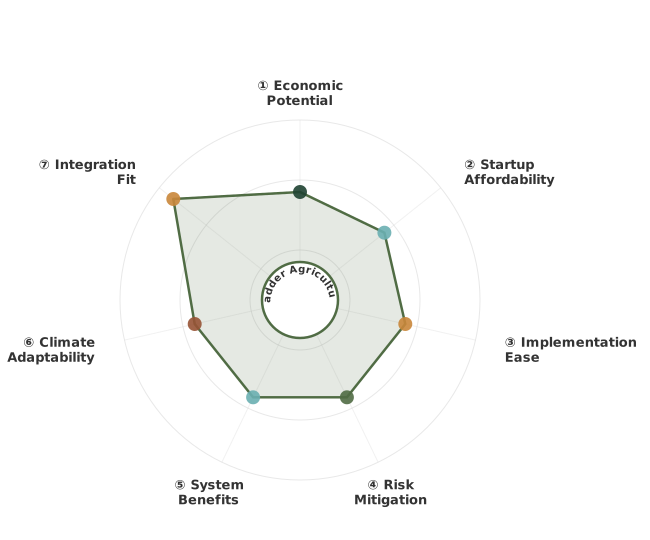
How These Traits Are Calculated
Trait dimensions are ordered clockwise starting from the top of the chart (12 o'clock position):
1. Economic Potential
Financial returns, annual value, and break-even timeline
WHAT: Evaluates financial viability by combining net annual value ($/ha from savings, income, and amortized harvests) with break-even timeline showing when practices pay for themselves.
WHY: Farmers need clear ROI understanding before committing resources. Fast payback (≤3 years) with strong returns (≥$300/ha) enables confident adoption, while long timelines (>10 years) restrict adoption to well-funded operations willing to wait for returns.
HOW: Calculated from net annual value in $/ha and break-even years. Exceptional (≥2.6): fast ROI ≤3 years + high value ≥$300/ha. Typical (1.8-2.5): moderate returns or longer timelines. Limited (<1.8): marginal economics or very long payback >10 years.
2. Startup Affordability
Initial investment costs and financial barrier to entry
WHAT: Measures financial barrier to entry through startup costs for equipment, infrastructure, consulting, and materials. Inverted scoring: lower costs = higher scores = more accessible adoption.
WHY: Affordability determines who can adopt. Low-cost practices (<$250/ha) enable widespread adoption across diverse scales, while high costs (>$2,500/ha) limit adoption to well-capitalized operations, creating barriers that slow regenerative transition.
HOW: Calculated from initial investment parsed from practice content. Inverted scoring: Exceptional (≥2.6): minimal investment <$250/ha. Typical (1.8-2.5): moderate costs $250-2,500/ha. Limited (<1.8): high barrier >$2,500/ha.
3. Implementation Ease
Learning curve and specialized knowledge required
WHAT: Measures how much learning, planning, and specialized knowledge a practice requires. Simpler practices with fewer steps score higher, while complex practices requiring extensive training or specialized resources score lower.
WHY: Complex practices create adoption barriers even when economically viable. Straightforward practices enable faster adoption and broader participation, while those requiring extensive training, timing precision, or specialized equipment limit who can succeed.
HOW: Evaluated by measuring documentation length and identifying complexity markers like location-specific requirements, seasonal timing windows, specialized skills, and dedicated equipment needs. Exceptional (≥2.6): straightforward practices with minimal prerequisites. Typical (1.8-2.5): moderate learning curve with some specialized needs. Limited (<1.8): steep learning curve requiring significant training or resources.
4. Risk Mitigation
Identified financial and ecological risk assessment
WHAT: Evaluates documented risks across financial (investment loss, market volatility) and ecological (crop failure, pest outbreaks) domains. Inverted scoring: fewer risks = higher scores.
WHY: Understanding risk exposure helps farmers make informed decisions. Low-risk practices allow confident implementation, while high-risk practices require careful planning and contingency resources. Risk transparency prevents costly failures.
HOW: Calculated from identified risks in practice content. Inverted scoring: Exceptional (≥2.6): ≤2 risks with manageable severity. Typical (1.8-2.5): 3-5 moderate risks. Limited (<1.8): 6+ risks or severe exposure.
5. System Benefits
How many ways the practice improves your land simultaneously
WHAT: Measures how many aspects of land health improve at once—carbon storage, soil quality, erosion control, water absorption, and biodiversity. Practices that improve multiple areas simultaneously create compounding benefits where each improvement reinforces the others.
WHY: The best practices solve multiple problems at once. For example, addressing erosion simultaneously builds carbon and improves water infiltration, creating a resilient system with positive feedback loops. Single-benefit approaches miss these compound transformation opportunities.
HOW: Evaluated across five key outcomes: carbon sequestration, soil organic matter increase, erosion reduction, water infiltration improvement, and biodiversity enhancement. Exceptional (≥2.6): high carbon storage (>8 t/ha/yr), improvements across 4-5 areas, transformative outcomes. Typical (1.8-2.5): moderate carbon (3-8 t/ha/yr), improvements across 2-3 areas. Limited (<1.8): modest impact (<3 t/ha/yr), single-area focus only.
6. Climate Adaptability
Geographic applicability across Köppen climate zones
WHAT: Evaluates geographic applicability by assessing how many Köppen climate zones successfully support a practice and what adaptation requirements are needed. Measures breadth of climates where farmers can implement with minimal to moderate modifications.
WHY: Universal practices working across diverse climates enable more farmers to adopt regenerative approaches. Practices limited to single climate types (only Mediterranean, only tropical) restrict adoption and slow global transition. Adaptability determines whether a practice serves niche regions or offers broad transformation.
HOW: LLM evaluation of regional success stories, Köppen zone coverage, and adaptation needs. Exceptional (≥2.6): 5+ zones or 4+ climate types, 3+ continents, minimal adaptation. Typical (1.8-2.5): 3-4 zones or 2-3 types, 2 continents, moderate adaptation. Limited (<1.8): 1-2 zones, single region, significant adaptation or highly specialized.
7. Integration Fit
How well this practice combines with others you're doing
WHAT: Measures how well a practice combines with other regenerative practices you might be doing. Some practices work as building blocks that make many other practices easier or more effective, while others work best on their own.
WHY: Practices that combine well with many others create more value on your farm. For example, cover cropping enables no-till, improves grazing, supports crop diversity, and helps water management—making all of them work better together. This helps you build a coherent system rather than juggling disconnected practices.
HOW: Evaluated by identifying which practices combine well and how strong those combinations are. 'Ideally Suited' means strong combinations where practices reinforce each other (practice A makes B easier, while B makes A more effective). 'Adequate' means complementary benefits that work well together. Exceptional (≥2.6): combines well with 6+ practices, serves as a building block. Typical (1.8-2.5): combines with 3-5 practices. Limited (<1.8): 1-2 practices or works best alone.
Going Deeper
1
WHY - The Benefits
Ladder agriculture offers a compelling suite of ecological and economic benefits, transforming traditional farming landscapes into more productive, resilient, and diversified systems. Its integration of perennial woody species with herbaceous components creates a...
Ladder agriculture offers a compelling suite of ecological and economic benefits, transforming traditional farming landscapes into more productive, resilient, and diversified systems. Its integration of perennial woody species with herbaceous components creates a...
WHY - The Benefits
Ladder agriculture offers a compelling suite of ecological and economic benefits, transforming traditional farming landscapes into more productive, resilient, and diversified systems. Its integration of perennial woody species with herbaceous components creates a...
Ladder agriculture offers a compelling suite of ecological and economic benefits, transforming traditional farming landscapes into more productive, resilient, and diversified systems. Its integration of perennial woody species with herbaceous components creates a...
Soil Health Benefits
The introduction of trees and shrubs into agricultural fields significantly boosts soil health by increasing organic matter content. Leaf litter and prunings from trees decompose, contributing 2.5-7.5 tonnes per hectare (1-3 tons per acre) of organic matter annually once the canopy develops. This continuous input feeds soil microbes, improving soil structure, water-holding capacity, and nutrient cycling. Studies in various climates show an average increase in soil organic matter (SOM) of 0.3-1.0 percentage points over a decade compared to treeless systems.
Tree root systems penetrate deeper than most annual crops, accessing nutrients and water from lower soil profiles and bringing them to the surface via decomposition. This natural nutrient cycling reduces the need for synthetic fertilizers, saving costs and minimizing environmental impact. Tree roots also create macropores that improve soil aeration and water infiltration, counteracting compaction and reducing runoff. In regions prone to erosion, the combination of tree canopy, understory vegetation, and litter cover effectively reduces soil loss by 50-80%.
The increased structural complexity of ladder agriculture fosters greater soil biodiversity. The diverse root exudates and organic matter inputs support a wider array of soil microorganisms, including beneficial fungi and bacteria. These microbes enhance nutrient availability, suppress plant diseases, and contribute to soil aggregation. Studies have shown that silvopastoral systems (a form of ladder agriculture for livestock) can host 2-3 times more microbial functional groups than treeless pastures.
Economic Benefits
Ladder agriculture provides a powerful strategy for diversifying farm income and enhancing long-term financial resilience. It combines the immediate returns from annual crops or livestock with the long-term appreciation of woody perennials.
Diversified Income Streams: In the short to medium term (years 1-7), farmers benefit from inter-planted crops or livestock grazing alongside developing trees. As trees mature, they provide additional revenue from timber, nuts, fruits, or other forest products. This dual income stream reduces reliance on single commodity markets, buffering against price volatility. For example, alley-cropping with timber species can yield significant returns from lumber harvests every 15-30 years, while systems with nut or fruit trees can provide annual income starting from year 7-10.
Increased Net Revenue and Land Value: By increasing productivity per unit of land and adding high-value perennial products, ladder agriculture systems can achieve net revenues 15-40% higher than conventional systems by year 10, with potential for much greater returns from timber or specialty crops in the long term. The integration of trees also increases the overall land value, as it offers multiple productive uses and ecological services.
Reduced Input Costs: Enhanced soil fertility through improved nutrient cycling and organic matter decomposition reduces the need for synthetic fertilizers. Better water infiltration and retention can lessen irrigation requirements in drier climates. The presence of trees can also create microclimates that reduce heat stress on crops and livestock, potentially decreasing the need for cooling or supplementary feeding. Overall, input cost reductions can range from 10-25% for fertility and water management.
Break-even and Payback: The initial investment in trees and establishment can be significant (see HOW MUCH section), but the combination of continued annual income and the gradual appreciation of perennial products allows for a break-even period typically between 5-8 years for the entire system to become profitable. The payback period for long-term investments like timber can extend to 15-30 years, but the annual income from crops/livestock and intermediate products offsets this.
Regenerative Systems Fit
Ladder agriculture is a comprehensive practice that aligns with and actively promotes all five regenerative agriculture principles:
Principle 1: Minimize Soil Disturbance: When established using no-till methods (e.g., planting trees into existing sod or using augers/planters that disturb minimal soil volume), ladder agriculture significantly minimizes soil disturbance. The perennial nature of trees and the continuous cover provided by understory vegetation prevent annual tillage, preserving soil structure and biology.
Principle 2: Maximize Crop Diversity: This principle is at the heart of ladder agriculture. It layers diverse plant communities vertically (deep-rooted trees, medium-rooted forages, shallow-rooted crops) and horizontally (trees, alleys). This multi-species, multi-strata system creates a complex and resilient agroecosystem far exceeding the diversity of monocultures. This biodiversity extends to soil microbial communities, enhancing ecosystem function.
Principle 3: Keep Soil Covered: Ladder agriculture ensures the soil surface is protected year-round. The tree canopy intercepts rainfall and reduces direct sunlight, while living understory vegetation (crops or forages) and decomposing leaf litter continuously cover the soil. This prevents erosion, conserves moisture, moderates soil temperature, and feeds soil biology.
Principle 4: Maintain Living Roots: The perennial nature of trees and shrubs guarantees the presence of living roots in the soil for extended periods, often year-round in milder climates. This continuous root activity feeds soil microbes, facilitates nutrient cycling, and maintains soil structure through physical channels and exudates. Their presence extends photosynthetic activity beyond the cash crop season.
Principle 5: Integrate Livestock: Ladder agriculture is highly compatible with livestock integration. Animals can graze the understory during periods when crops are not present or when tree foliage is out of reach. Strategic grazing helps manage understory vegetation, recycles nutrients through manure, and can stimulate the growth of desirable forage species. The shade and shelter provided by trees improve livestock welfare and performance, especially in hot climates. Livestock integration also plays a role in managing competition and preventing establishment issues for young trees.
By integrating these principles, ladder agriculture builds a self-reinforcing system that is ecologically sound and economically viable. It transforms land from a simple production unit into a complex, multifunctional ecosystem capable of producing food, fiber, and additional valuable products while enhancing environmental health and farm resilience.
Sources behind this view
 Videos & Podcasts
-
Alley cropping integrates trees/shrubs with annual crops on challenging land to rebuild soil, control erosion, improve water quality, and sequester carbon. It requires careful spacing (2-3x mature tre

-
Discusses agroforestry integration of livestock, climate change adaptation through diverse perennial crops, and scalability from small to large farms. Highlights organic challenges, carbon sequestrati
-
Alley cropping integrates crops/forages between rows of trees/shrubs to diversify income, improve soil/water quality, and enhance habitat. It requires intensive management and market development, serv
-
Integrating crop, tree, and livestock landraces into agroforestry systems like alley cropping enhances system resilience and biodiversity. Examples include using mixed willow hedges for fuel and inter

Research
-
Frontiers in alley cropping: Transformative solutions for temperate agriculture. (opens in new window)
This study found: Alley cropping (trees with crops) offers climate benefits by reducing emissions and improving land use. Expanding to diverse tree mixes and tree crops can further enhance these benefits and farm resil
-
Synergizing Agroforestry and Permaculture for Sustainable Organic Farming (opens in new window)
This study found: Agroforestry and permaculture enhance organic farming by integrating trees, crops, and livestock, improving soil health, biodiversity, and resilience. Challenges include funding, knowledge, and policy
-
Agroforestry: The North American Perspective (opens in new window)
This study found: Agroforestry integrates trees with crops/livestock, offering environmental benefits like climate adaptation and mitigation. Key North American practices include alley cropping, silvopasture, and ripar
-
Agroforestry Practices and Their Impact on Soil Health and Fertility: A Review (opens in new window)
This study found: Agroforestry (trees with crops/livestock) significantly improves soil health, fertility, and carbon storage globally. Challenges include cost and knowledge gaps, but benefits like increased yields are
2
WHERE - Regional Considerations
Successful implementation of ladder agriculture hinges on aligning tree and crop/forage choices with specific environmental conditions. Climate, soil type, rainfall patterns, and growing season length are critical determinant factors influencing species selection and...
Successful implementation of ladder agriculture hinges on aligning tree and crop/forage choices with specific environmental conditions. Climate, soil type, rainfall patterns, and growing season length are critical determinant factors influencing species selection and...
WHERE - Regional Considerations
Successful implementation of ladder agriculture hinges on aligning tree and crop/forage choices with specific environmental conditions. Climate, soil type, rainfall patterns, and growing season length are critical determinant factors influencing species selection and...
Successful implementation of ladder agriculture hinges on aligning tree and crop/forage choices with specific environmental conditions. Climate, soil type, rainfall patterns, and growing season length are critical determinant factors influencing species selection and...
Click Here to Look up your Region if you don't already know it
Temperate - Humid Regions
Representative Locations: Northern Europe (UK, Germany, France), Eastern United States (USDA Zones 5-7), Eastern China, Japan, New Zealand
Climate Context: Warm to hot summers, cool to cold winters, moderate to high annual rainfall (75-150 cm or 30-60 inches) distributed relatively evenly. Köppen Cfb/Cfa.
Suitability: Excellent for a wide range of timber species (oak, maple, ash, pine), fruit and nut trees (apple, pear, hazelnut, walnut), and many intercropping systems. Sufficient rainfall supports robust tree and crop growth without extensive irrigation. Management focuses on balancing light penetration for crops/forage with tree development. Livestock integration is highly viable for much of the year. Challenges include frost damage to young trees in colder zones and potential for high humidity-related diseases in crops.
Temperate - Dry/Continental Regions
Representative Locations: Interior plains of North America (USDA Zones 4-7), parts of Eastern Europe (Ukraine, Russia), Central Asia.
Climate Context: Hot summers, cold winters, distinct seasonal rainfall often concentrated in spring/summer, with lower annual precipitation (35-75 cm or 15-30 inches). Köppen Dfa/Dfa/BSk.
Suitability: Requires drought-tolerant tree species like black locust, certain oaks, pine, and hardy nut trees (hackberry, butternut if adapted). Careful species selection and water management are critical. Alleyways may benefit from drought-tolerant forage and crops. Livestock integration can be highly beneficial to manage vegetation and benefit from available shade, but requires careful pasture management during dry periods. Irrigation may be necessary for high-value crops.
Mediterranean Regions
Representative Locations: California (USA), Mediterranean Basin (Spain, Italy, Greece), Central Chile, Southwestern Australia.
Climate Context: Hot, dry summers and mild, wet winters. Highly seasonal rainfall (40-90 cm or 15-35 inches). USDA Zones 8-10, Köppen Csa/Csb.
Suitability: Ideal for drought-tolerant, Mediterranean-adapted species such as olive, carob, figs, almonds, pistachios, and certain pines and oaks. Intercropping with Mediterranean crops like grapes, wheat, or legumes is feasible. Livestock integration, particularly sheep and goats, can be effective for vegetation management, but requires careful planning to avoid overgrazing during dry seasons and protect young trees. Water conservation is paramount.
Subtropical Regions
Representative Locations: Southeastern United States (USDA Zones 9-11), Southern China, Southern Brazil, Eastern Australia.
Climate Context: Hot, humid summers and mild winters, generally ample rainfall year-round or with distinct wet/dry seasons. Köppen Cfa/Cwa.
Suitability: Highly suitable for a vast array of fruit and nut trees (citrus, mango, pecan), timber species (eucalyptus, pine, teak), and nitrogen-fixing trees. Intercropping with tropical and subtropical crops like bananas, coffee, vanilla, or staple grains is common. Livestock integration is excellent for most of the year, with trees providing critical shade from intense summer heat. Challenges include managing fungal diseases and pest pressures common in humid warm climates.
Tropical Regions
Representative Locations: Central America, Southeast Asia, East Africa, Northern South America, Northern Australia.
Climate Context: High temperatures year-round, with significant rainfall either consistent or with distinct wet/dry seasons. Köppen Af/Am/Aw.
Suitability: Exceptional for shade-tolerant tropical crops (coffee, cacao, vanilla, black pepper) integrated with diverse fruit and timber species. Nitrogen-fixing trees are vital for soil fertility. Ladder agriculture in this zone often focuses on polyculture systems that mimic rainforest structure. Livestock integration is possible but requires management to avoid soil degradation during intense rainy seasons and to manage heat stress during dry periods. Careful attention to biodiversity is key to system resilience.
Cold Continental Regions
Representative Locations: Northern United States, Canada, Northern Europe, Siberia.
Climate Context: Very short growing seasons, extreme summer heat, and severe winter cold. USDA Zones 3-5, Köppen Dfa/Dfb.
Suitability: Requires extremely cold-hardy tree species such as certain pines, spruces, larches, maples, and hardy nut trees like black walnut or hardy hybrid hazelnuts. Shorter growing seasons can limit intercropping options, often favoring cold-hardy grains like barley, oats, or rye. Livestock integration may be limited to warmer months, requiring robust shelter for winter. Emphasis on windbreaks and frost protection for young trees is crucial.
3
HOW - Implementation Process
Implementing ladder agriculture requires careful planning and staggered implementation. The process generally involves site assessment, species selection, establishment, and ongoing management, with distinct phases for crop-based and livestock-based systems.
Implementing ladder agriculture requires careful planning and staggered implementation. The process generally involves site assessment, species selection, establishment, and ongoing management, with distinct phases for crop-based and livestock-based systems.
HOW - Implementation Process
Implementing ladder agriculture requires careful planning and staggered implementation. The process generally involves site assessment, species selection, establishment, and ongoing management, with distinct phases for crop-based and livestock-based systems.
Implementing ladder agriculture requires careful planning and staggered implementation. The process generally involves site assessment, species selection, establishment, and ongoing management, with distinct phases for crop-based and livestock-based systems.
Prerequisites
Before starting, consider these factors:
- Land Suitability: Gentle slopes or flat terrain are ideal. Steep slopes may require contour planting and erosion control measures. Well-drained soil is generally preferred, though species choice can mitigate some drainage issues.
- Market Access: Identify markets for both your annual products and your tree products (timber, nuts, fruits, etc.). Value-added processing can significantly enhance profitability.
- Water Availability: For systems relying on supplemental irrigation for crops or during dry spells for trees, ensure a reliable water source and efficient irrigation infrastructure.
- Capital & Labor: Ladder agriculture requires upfront investment in trees, fencing, and potentially new equipment. Long-term management also demands consistent labor.
- Vision & Patience: This is a long-term investment. Success requires a vision that extends beyond a single growing season.
Phase 1: Planning & Design (Month 1-6)
This is the most critical phase. Over-investing time here saves significant resources later.
- Site Assessment: Analyze topography, soil types, existing vegetation, rainfall patterns, sunlight exposure, and prevailing winds. Map out potential alleyways and tree rows.
- Goal Setting: What do you want to achieve? Timber production, nut harvesting, fruit, livestock shade, carbon sequestration, windbreaks, biodiversity enhancement? Your goals will dictate species choice and system design.
- Species Selection:
- Trees: Choose species adapted to your climate and soil, compatible with your chosen crops/forages, and suited to your production goals (e.g., fast-growing timber, high-value nuts, nitrogen-fixers). Consider species that can tolerate partial shade and potential browse damage. Examples: Black walnut, oak, maple, pecan, chestnut, hazelnut, pine, poplar, eucalyptus, acacia.
- Alley Crops: Select annual crops or forages that can tolerate partial shade from trees, have diverse root structures, and are suited to your specific climate. Examples: Corn, soy, wheat, barley, oats, rye, beans, vetch, clover, ryegrass, fescue.
- Livestock Management: If integrating livestock, select forages that thrive in partial shade and are palatable to your animals. Consider species like fescue, ryegrass, clover, and certain types of sedge.
- Layout Design:
- Tree Spacing: Typically 8-30 meters (25-100 feet) between rows. Wider spacing allows more light for crops/forage and easier machinery access. Narrower spacing maximizes shade benefits for livestock or conserves space. Consider equipment width for planting, harvesting, and maintenance.
- Row Orientation: Often aligned north-south to maximize even light distribution throughout the day, especially in temperate regions. In some tropical or arid areas, orientation may be adjusted for shade or windbreak benefits.
- Paddock Design (for Livestock): If integrating livestock, design tree rows to facilitate logical paddock layouts for rotational grazing.
Phase 2: Establishment (Year 1-3)
This phase focuses on planting trees and preparing the alleyways.
- Site Preparation: Minimize soil disturbance. If necessary, use no-till methods like auger planting, scalping, or scalping and planting into sod. If using herbicide for initial weed control, apply narrowly around planting spots. Avoid full field tillage.
- Tree Planting: Plant seedlings or saplings according to your chosen species and spacing. Use tree guards or fencing to protect young trees from browsing by livestock or wildlife until they are well-established (typically 2-5 years).
- Alleyway Management:
- Crops: Prepare alleyways for annual crops using appropriate planting methods (no-till preferred). Manage for competition – ensure crops are not overly shaded in early years.
- Forages: Plant diverse cover crop mixes or permanent forage stands. Ensure species are shade-tolerant once tree canopy develops. Consider nitrogen-fixing legumes to benefit both forage and trees.
- Weed Control: Implement mechanical or manual weed control around young trees. In alleyways, manage weeds through mowing, grazing, or cover cropping.
Phase 3: Early Management & Integration (Year 2-7)
This period is about growth, integration, and fine-tuning.
- Tree Maintenance: Continue to protect young trees from damage. Prune for form and future timber quality, or for fruit production, if applicable. Monitor for pests and diseases.
- Alleyway Management:
- Crops: Continue cropping as planned. Monitor yield impacts from tree shading and adjust input strategies as trees mature.
- Forages: Manage grazing to prevent over-pasturing of young trees. Implement rotational grazing to give forages adequate rest and distribute animal impact.
- Livestock Integration: If integrating livestock, introduce them strategically. Ensure sufficient shade and water are available. Rotate them through paddocks to manage vegetation and manure distribution, but supervise closely to prevent damage to young trees.
- Fertility Management: Utilize manure from livestock, compost, and inter-planted green manures to build soil fertility. Leguminous trees and cover crops will contribute nitrogen.
Phase 4: Maturity & Optimization (Year 7+)
As trees mature, the system becomes more integrated and productive.
- Harvesting: Begin harvesting timber, nuts, fruits, or other tree products as they mature. This is the point where the long-term economic benefits become substantial.
- Optimized Grazing: With mature trees, livestock receive significant shade benefits, improving performance and extending the grazing season. Grazing can be managed to coincide with reduced crop activity or to help manage understory vegetation.
- Ongoing Monitoring: Continuously monitor soil health, tree growth, crop/forage yields, and livestock performance. Adapt management practices based on observations and changing conditions.
- System Refinement: Fine-tune spacing, prune trees strategically for light and production, adjust grazing rotations, and experiment with new intercropping options as the system evolves.
Sources behind this view
Videos & Podcasts
-
Alley cropping integrates trees/shrubs with annual crops on challenging land to rebuild soil, control erosion, improve water quality, and sequester carbon. It requires careful spacing (2-3x mature tre
-
Discusses agroforestry integration of livestock, climate change adaptation through diverse perennial crops, and scalability from small to large farms. Highlights organic challenges, carbon sequestrati
-
Stephen Briggs shares practical insights on implementing a 24m alley cropping system with fruit trees, including advance planning, establishment challenges, pest management, economic returns (5-8 year

-
Alley cropping integrates crops/forages between rows of trees/shrubs to diversify income, improve soil/water quality, and enhance habitat. It requires intensive management and market development, serv
 Community
-
Mark Shepard's agroforestry model integrates tree crops in rows with row crops in alleys, managed by rotational livestock grazing. This system enhances diversity, efficiency, and soil health through c
Read more (opens in new window) permies.com -
Alley cropping design integrates earthworks like keyline design for water distribution and parallel tree rows, often emulating oak savannahs. Tree spacing maximizes sunlight in alleys, supporting crop
Read more (opens in new window) permies.com -
Designs an alley cropping food forest with 60ft row spacing for integrated harvest and animal fodder. Includes multiple plant layers from trees to annuals, emphasizing wildlife and natural fertilizati
Read more (opens in new window) permies.com -
Designs a 2-acre alley cropping/food forest on a steep, clay-soil property with high rainfall, focusing on staggered harvest timing for human food, animal forage, and wildlife. Incorporates swales, in
Read more (opens in new window) permies.com
Research
-
Frontiers in alley cropping: Transformative solutions for temperate agriculture. (opens in new window)
This study found: Alley cropping (trees with crops) offers climate benefits by reducing emissions and improving land use. Expanding to diverse tree mixes and tree crops can further enhance these benefits and farm resil
-
Agroforestry: The North American Perspective (opens in new window)
This study found: Agroforestry integrates trees with crops/livestock, offering environmental benefits like climate adaptation and mitigation. Key North American practices include alley cropping, silvopasture, and ripar
-
Tree nut alley cropping in Missouri: opportunities across production scales (opens in new window)
This study found: Alley cropping with tree nuts (like hazelnuts) offers Missouri farmers opportunities to improve land efficiency, reduce erosion, and diversify income. New terms 'silvocropping' and 'silvohorticulture'
-
Comparing the economic performance of poplar-based alley cropping systems with arable farming in Brandenburg under varying site conditions and policy scenarios (opens in new window)
This study found: Alley cropping with poplar trees in Brandenburg, Germany, can be financially competitive with traditional farming, especially with short rotations and high woodchip prices. Government subsidies are cr
 From the Web
-
Alley cropping integrates crops between tree rows, with alley width based on equipment. It combats erosion, improves water/nutrient retention, and buffers against drought, with benefits often outweigh
-
Alley cropping integrates trees/shrubs with crops in rows, offering ecological benefits like improved soil health, biodiversity, and reduced erosion. Key practices include selecting complementary spec
-
Agroforestry, particularly alley cropping, integrates trees with crops for income diversification, improved microclimates, and habitat. Management of light interception and long-term commitment are ke
-
Alley cropping integrates trees/shrubs with horticultural crops, offering ecological benefits like improved soil health, biodiversity, and carbon sequestration, alongside economic advantages through d
4
Know the Debate
Ladder agriculture offers significant ecological and economic benefits, but its success hinges on context. In humid temperate regions with reliable...
Know the Debate
Ladder agriculture offers significant ecological and economic benefits, but its success hinges on context. In humid temperate regions with reliable...
Ladder agriculture offers significant ecological and economic benefits, but its success hinges on context. In humid temperate regions with reliable rainfall and moderate labor costs, robust yields and faster returns are achievable. Arid or colder climates require careful species selection and may extend timelines for productivity. Entry costs vary from $1,000/ha for DIY to $10,000+/ha for professional setups. Labor needs are highest during establishment (200+ hours/year) but decrease significantly once trees mature, shifting towards harvesting and specialized maintenance.
How profitable is ladder agriculture and when does it break even?
Faster returns (5-8 years) via integrated livestock/nuts
Systems integrating livestock or high-value nuts/fruits with annual crops can achieve faster profitability within 5-8 years. This is due to combined immediate income streams and potentially higher yields from managed understory.
Sources behind this view
Sources behind this view
Videos & Podcasts
-
Agroforestry techniques like alley cropping and silvopasture help monocrop farmers transition by integrating trees and livestock. This diversified approach can improve profitability and allows for long-term land stewardship and legacy building.

-
Alley cropping integrates crops/forages between rows of trees/shrubs to diversify income, improve soil/water quality, and enhance habitat. It requires intensive management and market development, serving as a transitional practice while trees mature.
-
Stephen Briggs shares practical insights on implementing a 24m alley cropping system with fruit trees, including advance planning, establishment challenges, pest management, economic returns (5-8 years), soil improvements (fungal dominance), and increased crop yields near trees. He highlights resilience benefits and the importance of innovation.
Slower returns (10-30 years) with timber focus
Timber-focused ladder agriculture requires patience, with returns from timber harvests emerging 15-30 years later. Annual crop income and soil benefits offset this, but the main financial payoff is a long-term asset.
Sources behind this view
Sources behind this view
Videos & Podcasts
-
Alley cropping cultivates crops between widely spaced trees/shrubs, enhancing nutrient capture, reducing wind stress, and regenerating soil. Example in central Illinois with corn/soybeans and timber species. Requires long-term commitment.
From the Web
-
Alley cropping plants trees (walnut, oak, ash, pecan) and row crops (hay, wheat, soybeans, corn) in strips, providing annual income while trees mature and offering benefits like erosion control and habitat for beneficial insects.
-
Alley cropping intercrops crops with trees, storing carbon in biomass and soil, preventing erosion, and sequestering an estimated 1.37 tonnes CO2e/acre/year, requiring careful species selection and management.
Making Sense of the Differences
Economic returns vary by species and management, with integrated livestock or nut/fruit trees offering faster returns within 5-8 years. Timber-focused systems require 15-30+ years for primary harvest, but combine with annual income. Access to markets for tree products and efficient management are key factors.
How long until ladder agriculture shows significant results?
Early benefits (1-3 years) in soil & forage
Initial soil health improvements, increased forage production, and reduced erosion emerge within 1-3 years. These are observable ecological benefits that precede significant tree product income.
Sources behind this view
Sources behind this view
Videos & Podcasts
-
Alley cropping integrates crops/forages between rows of trees/shrubs to diversify income, improve soil/water quality, and enhance habitat. It requires intensive management and market development, serving as a transitional practice while trees mature.
-
Transitioning to perennial systems involves agroforestry practices like alley cropping and silvopasture. These methods integrate livestock and woody crops, using animals for management (weed control, fertilization) and gradually introducing trees, ultimately building soil and providing diverse harvests.

Research
-
Agroforestry Practices and Their Impact on Soil Health and Fertility: A Review (opens in new window)
This study found: Agroforestry, which means mixing trees with crops and sometimes livestock, is a powerful way to improve soil health and fertility. By planting trees alongside crops, farmers can enhance soil structure, reduce erosion, and help soil hold more water. These systems also boost soil nutrients and organic matter, leading to better crop growth and increased carbon storage in the soil. Studies from different parts of the world, like Africa, the US, and India, show that these tree-based farming methods can significantly increase crop yields. However, adopting agroforestry can be challenging due to high initial costs, land ownership concerns, and a lack of farmer training. Future research is looking at how to make these systems even more effective and sustainable, especially in the face of climate change.
-
Assessing the benefits of temperate cropland agroforestry for promoting soil biological health (opens in new window)
This study found: Planting trees on farms, like in alley cropping (trees with crops in between) or shelterbelts (rows of trees), greatly improves the life in our soils. Studies show that these farm-tree systems lead to more numerous and active soil microbes and a greater variety of soil animals compared to fields without trees. The authors argue that these benefits for soil health are often better than what other sustainable farming methods can achieve. Integrating good farming practices within these tree systems can offer even more advantages. Agroforestry is highlighted as a key strategy for rebuilding and keeping our soils healthy and moving agriculture towards more ecological approaches.
From the Web
-
Alley cropping integrates trees/shrubs with horticultural crops, offering ecological benefits like improved soil health, biodiversity, and carbon sequestration, alongside economic advantages through diverse income streams. Key practices include selecting suitable nitrogen-fixing species, diverse crop integration, strategic spatial arrangement, and adaptive management.
-
Alley cropping integrates crops between tree rows to improve soil health, control erosion, and sequester carbon. Key practices include selecting adapted species, managing competition for water and nutrients, and planning for light penetration and crop succession.
Medium-term productivity (7-15 years) for crops/nuts
Profitable crops or nuts become available around year 7-10, while timber and fruit species often require 15+ years for significant harvests and full system maturity.
Sources behind this view
Sources behind this view
Videos & Podcasts
-
Stephen Briggs shares practical insights on implementing a 24m alley cropping system with fruit trees, including advance planning, establishment challenges, pest management, economic returns (5-8 years), soil improvements (fungal dominance), and increased crop yields near trees. He highlights resilience benefits and the importance of innovation.
-
Stephen Briggs shares practical insights on implementing a 24m alley cropping system with fruit trees, including advance planning, establishment challenges, pest management, economic returns (5-8 years), soil improvements (fungal dominance), and increased crop yields near trees. He highlights resilience benefits and the importance of innovation.
-
Alley cropping integrates trees/shrubs with annual crops on challenging land to rebuild soil, control erosion, improve water quality, and sequester carbon. It requires careful spacing (2-3x mature tree height for long-term crops) and can transition to shade-tolerant crops or hay as trees mature, providing income and risk management.
From the Web
-
Alley cropping integrates understory crops between tree rows. Key considerations include selecting adapted species, managing light and soil fertility, and planning for crop succession. Tree row orientation and spacing are important for sunlight distribution and equipment access.
Making Sense of the Differences
Early soil and forage benefits appear within 1-3 years due to increased plant cover and biological activity. Significant income from nuts or fruit typically starts around year 7-10, while timber revenue requires 15-30+ years. Management intensity and species choice influence these timelines.
What are the best methods for establishing young trees in ladder agriculture?
Protect trees until established (2-5 years)
Conventional guidance recommends protecting young trees with guards or fencing for 2-5 years to ensure survival and prevent browsing damage, especially in pasture or livestock settings.
Sources behind this view
Sources behind this view
Videos & Podcasts
-
Alley cropping requires intensive management, considering cash flow impacts, complex herbicide application, market research for specialty crops, seasonal labor, light/water competition, allelopathy, and equipment-compatible alley widths.
From the Web
-
Alley cropping integrates trees/shrubs with horticultural crops, offering ecological benefits like improved soil health, biodiversity, and carbon sequestration, alongside economic advantages through diverse income streams. Key practices include selecting suitable nitrogen-fixing species, diverse crop integration, strategic spatial arrangement, and adaptive management.
-
Alley cropping integrates crops between tree rows to improve soil health, control erosion, and sequester carbon. Key practices include selecting adapted species, managing competition for water and nutrients, and planning for light penetration and crop succession.
-
Alley cropping integrates understory crops between tree rows. Key considerations include selecting adapted species, managing light and soil fertility, and planning for crop succession. Tree row orientation and spacing are important for sunlight distribution and equipment access.
Early integration without protection (higher risk)
Some experienced practitioners integrate trees from day one, using larger transplants, managed grazing, and species selection to minimize damage, though this carries higher risk.
Sources behind this view
Sources behind this view
Videos & Podcasts
-
Alley cropping integrates trees/shrubs with annual crops on challenging land to rebuild soil, control erosion, improve water quality, and sequester carbon. It requires careful spacing (2-3x mature tree height for long-term crops) and can transition to shade-tolerant crops or hay as trees mature, providing income and risk management.
-
Alley cropping is presented as a key agroforestry technique, integrating annual crops (like triticale and clover for soil building) with perennial trees (chestnuts, hazelnuts) and shrubs. This allows for diversified income streams and a gradual transition towards a fully perennial system.
-
Alley cropping allows inter-row annual cropping during tree establishment, benefiting crops with windbreaks and microclimates. Nitrogen-fixing shrubs can be used as mulch. Holistic methods like lasagna gardening can be integrated, contrasting with detrimental traditional plowing.
-
Transitioning to perennial systems involves agroforestry practices like alley cropping and silvopasture. These methods integrate livestock and woody crops, using animals for management (weed control, fertilization) and gradually introducing trees, ultimately building soil and providing diverse harvests.
Making Sense of the Differences
Tree establishment methods often involve protecting young trees with guards or fencing for 2-5 years, a more reliable strategy for survival. Some practitioners integrate trees from day one, relying on careful livestock management, larger transplants, and species selection, but this approach carries higher risk of damage and requires significant expertise.
5
HOW MUCH - Costs & Investment
Ladder agriculture requires an upfront investment, but offers long-term returns from diversified income streams. Costs vary significantly based on region, species chosen, scale, and available labor or equipment. Note: Costs are presented in USD equivalent and should be...
Ladder agriculture requires an upfront investment, but offers long-term returns from diversified income streams. Costs vary significantly based on region, species chosen, scale, and available labor or equipment. Note: Costs are presented in USD equivalent and should be...
HOW MUCH - Costs & Investment
Ladder agriculture requires an upfront investment, but offers long-term returns from diversified income streams. Costs vary significantly based on region, species chosen, scale, and available labor or equipment. Note: Costs are presented in USD equivalent and should be...
Ladder agriculture requires an upfront investment, but offers long-term returns from diversified income streams. Costs vary significantly based on region, species chosen, scale, and available labor or equipment. Note: Costs are presented in USD equivalent and should be...
Note: All costs are based on recent US economic data (2024–2026) and may vary substantially by region based on local labor rates, material costs, and regulatory requirements. All figures are in imperial units based on per-acre measurements.
Site Preparation and Planning
For operations under 50 acres (20 ha), planning and land prep involves significant hands-on labor, costing between $250 and $600 per acre ($618–$1,483/ha). This includes soil testing, manual invasive species removal, and basic bed layout. Mid-size operations, ranging from 50 to 500 acres (20–202 ha), often leverage mechanized forestry mulchers and custom GPS-guided designs, which increases costs to between $400 and $900 per acre ($988–$2,224/ha). For large-scale operations exceeding 500 acres (202 ha), economies of scale allow for professional consulting and bulk mechanical staging, driving costs down to a range of $300 to $700 per acre ($741–$1,730/ha). Professional design fees are a baseline requirement for all scales, typically costing between $1,000 and $5,000 as a flat fee regardless of total acreage.
Planting Materials and Establishment
Establishing the "ladder" component relies on saplings and tree shelters. Small operations purchasing retail-level seedlings and locally sourced forage seeds spend between $600 and $1,500 per acre ($1,483–$3,707/ha). Mid-size operations, often sourcing 1,000 or more trees, face costs of $1,200 to $2,800 per acre ($2,965–$6,919/ha) due to higher diversity in species selection and premium-grade tree guards designed for longevity. Large operations utilize bulk industrial nursery pricing, resulting in costs of $1,000 to $2,200 per acre ($2,471–$5,436/ha). These figures account for the high cost of tree shelters at $5 to $15 per unit, as well as the specialized seed mixes required for alleyways.
Labor and Installation
Labor costs are the differentiator in implementation. Small operations, using primarily self-labor or family help, impute a cost of $400 to $1,000 per acre ($988–$2,471/ha). Mid-size operations, which typically hire manual labor crews at rates of $20 to $35 per hour, incur costs of $700 to $1,800 per acre ($1,730–$4,448/ha) due to the time-intensive nature of precise tree spacing and protection installation. Large operations optimize labor through mechanical tree-planting equipment and high-output crews, costing $500 to $1,400 per acre ($1,236–$3,459/ha). Across all models, installing tree protection hardware accounts for approximately 40% of the total labor budget in year one.
Infrastructure: Fencing and Irrigation
Silvopasture integration requires significant capital in livestock management infrastructure. Small operations requiring only perimeter fencing spend $1,500 to $4,000 per acre ($3,707–$9,884/ha). Mid-size operations that incorporate intensive rotational grazing infrastructure spend between $2,000 and $5,000 per acre ($4,942–$12,355/ha). Large operations focusing on efficiency via high-tensile wire and solar-powered energizers spend $1,200 to $3,500 per acre ($2,965–$8,649/ha). Irrigation installation for young trees is an essential capital cost during the first three years of establishment, adding between $300 and $1,500 per acre ($741–$3,707/ha), depending on whether the system is a simple drip line or a complex solar-powered pumping station from a borehole.
Annual Management Costs
Ongoing maintenance ensures long-term viability. Small, low-management systems cost $150 to $400 per acre ($371–$988/ha) annually for pruning, weeding, and basic fertility monitoring. Mid-size operations with higher mechanization needs cost $300 to $600 per acre ($741–$1,483/ha) for annual maintenance. Large scale operations, despite economies of scale, maintain costs of $250 to $500 per acre ($618–$1,236/ha), largely due to the oversight of integrated tree-crop health and annual equipment servicing.
Most Spend: The majority of farm operations fall within an establishment range of $3,500–$8,500 per acre ($8,649–$21,004/ha), excluding major irrigation infrastructure, which accounts for middle-tier equipment needs and standard professional nursery stock.
Why the Range?: The primary drivers for cost variance include the initial topography and ecological health of the land—clearing heavily wooded or degraded land costs significantly more than working on fallow pasture—and the degree of automation chosen for planting. High-end tree guards and automated drip irrigation sensors can shift a project from the lower end of the range to the upper end, while internal labor versus contract labor shifts the "out-of-pocket" expense significantly.
Sources behind this view
Videos & Podcasts
-
Guidance on creating budget sheets for perennial crop establishment, focusing on accurate calculation of plants per acre, establishment costs, and the true cost of labor. It covers pre-production and
6
REWARDS AND RISKS - Economics & Risk Factors
Ladder agriculture offers significant long-term rewards but also presents financial and systemic risks, especially during the establishment phase. Understanding these is crucial for successful implementation.
Ladder agriculture offers significant long-term rewards but also presents financial and systemic risks, especially during the establishment phase. Understanding these is crucial for successful implementation.
REWARDS AND RISKS - Economics & Risk Factors
Ladder agriculture offers significant long-term rewards but also presents financial and systemic risks, especially during the establishment phase. Understanding these is crucial for successful implementation.
Ladder agriculture offers significant long-term rewards but also presents financial and systemic risks, especially during the establishment phase. Understanding these is crucial for successful implementation.
Economic Scenarios In a Best Case scenario, high-value yields for both alley crops and timber products (such as walnut or chestnut) result in success. Net profitability often surpasses conventional monoculture by 45% by year 12, with annual returns on capital reaching 8–12% once trees reach maturity. In the Typical Case, the project reaches a cumulative break-even point between years 7 and 10. By year 10, net revenue increases by 20–30% compared to baseline systems due to the combination of diversified income streams and reduced fertilizer inputs. Total annual revenue typically ranges between $400 and $1,200 per acre ($988–$2,965/ha) after the establishment phase. In a Worst Case scenario, early-stage tree mortality due to drought or pest outbreaks may require a 20% replanting effort. When coupled with low commodity prices, the break-even timeline extends to year 15, transforming the enterprise into a long-term land-asset appreciation play rather than an operating profit center for the first decade.
Market Factors Profitability is strictly dictated by the market for secondary products. Access to local nut crackers, timber mills, or direct-to-consumer fruit markets can generate 2–3x the revenue compared to standard wholesale prices. Timber price volatility remains a significant factor; farmers who plan for premium, value-added milled timber rather than simple stumpage sales generally find higher long-term ceilings for profitability.
Risk Mitigation 1. USDA Cost-Share: Leveraging NRCS EQIP or CRP payments can offset 50–75% of establishment costs for tree planting and fencing, dramatically lowering the "first-year shock" barrier. 2. Staggered Planting: Spreading tree row establishment over 3 years instead of all at once stabilizes annual cash flow and prevents massive, single-season spikes in labor costs. 3. Livestock Integration: Maintaining forage in alleyways acts as a short-term cash flow generator during years 1–7, providing consistent revenue while the tree component remains in the growth phase, thus reducing reliance on high-interest credit lines.
Transition Period Risks Years 1–5 represent the "Vulnerability Window," where young trees compete with crops for resources. Farmers often experience a 5–15% yield drag in the alleys during this time. Additionally, the space allocated to tree rows effectively removes that land from immediate, high-intensity cropping. Mitigation involves selecting shade-tolerant crop varieties and using precision fertigation directed solely at the tree root zone to minimize nutrient competition. Farmers are advised to plan for reduced household income for the first 3 years and maintain a cash reserve equivalent to 2 years of operating expenses to cover potential dips in crop output while the system establishes its microclimate benefits.
Sources behind this view
Videos & Podcasts
-
Alley cropping integrates trees/shrubs with annual crops on challenging land to rebuild soil, control erosion, improve water quality, and sequester carbon. It requires careful spacing (2-3x mature tre
-
Stephen Briggs shares practical insights on implementing a 24m alley cropping system with fruit trees, including advance planning, establishment challenges, pest management, economic returns (5-8 year
-
Discusses agroforestry integration of livestock, climate change adaptation through diverse perennial crops, and scalability from small to large farms. Highlights organic challenges, carbon sequestrati
-
Alley cropping integrates crops/forages between rows of trees/shrubs to diversify income, improve soil/water quality, and enhance habitat. It requires intensive management and market development, serv
Community
-
Alley cropping design integrates earthworks like keyline design for water distribution and parallel tree rows, often emulating oak savannahs. Tree spacing maximizes sunlight in alleys, supporting crop
Read more (opens in new window) permies.com -
Offers practical strategies for alley cropping food forests, including synchronizing harvests into two-week windows across ten rows. Recommends plant diversity (20% each of nitrogen fixers, rose famil
Read more (opens in new window) permies.com
Research
-
Frontiers in alley cropping: Transformative solutions for temperate agriculture. (opens in new window)
This study found: Alley cropping (trees with crops) offers climate benefits by reducing emissions and improving land use. Expanding to diverse tree mixes and tree crops can further enhance these benefits and farm resil
-
Comparing the economic performance of poplar-based alley cropping systems with arable farming in Brandenburg under varying site conditions and policy scenarios (opens in new window)
This study found: Alley cropping with poplar trees in Brandenburg, Germany, can be financially competitive with traditional farming, especially with short rotations and high woodchip prices. Government subsidies are cr
-
Alley Cropping Agroforestry Systems: Using Monte-Carlo Simulation for a Risk Analysis in Comparison with Arable Farming Systems (opens in new window)
This study found: Alley cropping agroforestry in Germany showed higher profitability and often lower financial risk than traditional farming, according to Monte-Carlo simulations on two experimental farms.
-
Soil Organic Carbon in Alley Cropping Systems: A Meta-Analysis (opens in new window)
This study found: Alley cropping can increase soil carbon over time, especially in low-carbon and tropical areas. Tree species and row spacing are key design factors.
From the Web
-
Alley cropping integrates trees/shrubs with crops in rows, offering ecological benefits like improved soil health, biodiversity, and reduced erosion. Key practices include selecting complementary spec
-
Alley cropping plants trees (walnut, oak, ash, pecan) and row crops (hay, wheat, soybeans, corn) in strips, providing annual income while trees mature and offering benefits like erosion control and ha
-
Alley cropping integrates trees/shrubs with horticultural crops, offering ecological benefits like improved soil health, biodiversity, and carbon sequestration, alongside economic advantages through d
7
WHO - Labor & Expertise
Implementing ladder agriculture requires a diverse skillset and can be labor-intensive, especially during establishment. Understanding the labor and expertise needs, along with international context, is crucial for planning.
Implementing ladder agriculture requires a diverse skillset and can be labor-intensive, especially during establishment. Understanding the labor and expertise needs, along with international context, is crucial for planning.
WHO - Labor & Expertise
Implementing ladder agriculture requires a diverse skillset and can be labor-intensive, especially during establishment. Understanding the labor and expertise needs, along with international context, is crucial for planning.
Implementing ladder agriculture requires a diverse skillset and can be labor-intensive, especially during establishment. Understanding the labor and expertise needs, along with international context, is crucial for planning.
Specialized Skills & Expertise
- Agroforestry Design: Understanding how to select compatible tree species, determine optimal spacing, and design layouts that balance tree growth with crop/forage production and machinery access. This requires knowledge of local ecology, tree physiology, and agricultural systems.
- Silviculture/Horticulture: Expertise in tree planting, pruning, protection from pests and browsing, and eventual harvesting of timber, nuts, or fruits. This depends on the specific tree products being pursued.
- Crop/Forage Management: Knowledge of annual cropping or pasture management, including selecting shade-tolerant varieties, managing for competition, and optimizing alleyway yields.
- Livestock Management (for Silvopasture): Skills in rotational grazing, animal health, and managing livestock to prevent damage to young trees while utilizing forage effectively.
- Soil Science & Ecology: A foundational understanding of soil health, nutrient cycling, water infiltration, and the interactions between plants, microbes, and animals is essential for optimizing the system's regenerative potential.
- Machinery Operation: Familiarity with operating tractors, planters, mowers, and potentially specialized equipment for tree planting or pruning.
Labor Requirements
- Establishment Phase (Years 1-7): This phase is the most labor-intensive.
- Site Preparation & Planting: Can involve significant manual labor for planting seedlings, installing tree guards, and initial site preparation. Hiring specialized planting services is an option.
- Weed Control: Manual or mechanical weeding around young trees is critical for their survival.
- Tree Protection: Ensuring tree guards remain intact and fencing is functional requires regular checks.
- Alleyway Management: Regular crop planting/harvesting or mowing/grazing of forage.
- Watering/Irrigation: If needed, especially in dry climates, this can be time-consuming.
- Maturity Phase (Year 7+): Labor needs decrease significantly as the system matures.
- Harvesting: Periodic harvesting of timber, nuts, or fruits.
- Pruning: Strategic pruning for timber quality or fruit production.
- Ongoing Grazing/Forage Management: Standard livestock or pasture management.
- Monitoring: Regular checks on tree health, soil conditions, and productivity.
International Labor Cost Variations
Labor costs for planting, tree protection, and ongoing maintenance can vary dramatically across continents.
- North America & Europe: Labor costs are generally higher, making mechanization and efficient use of hired services more critical. Owner-operator or family labor is common, but specialized tree planting services may be costly.
- South America & Africa: Labor can be more readily available and less expensive, potentially allowing for more labor-intensive manual establishment and maintenance, making smaller-scale operations more economically feasible. However, access to skilled labor for complex design or specialized harvesting may still be a challenge.
- Asia: Varies widely from highly mechanized systems in some regions to very labor-intensive operations in others. The "laddered" pattern can be well-suited to smaller, diversified farms common in parts of Asia.
- Oceania: Costs can be high, similar to North America, with an emphasis on efficient, large-scale operations where possible, or leveraging off-season labor from other agricultural sectors.
Expert Access & Support
- Local Extension Services: Many countries have agricultural extension services that offer advice on tree species selection, planting, and management.
- Forestry Agencies: National or regional forestry departments can provide guidance on timber species and sustainable forestry practices.
- Agroforestry Organizations: Organizations like the World Agroforestry Centre (ICRAF), regional agroforestry networks, and non-profits often offer research, training, and technical support.
- Experienced Farmers: Networking with farmers who have successfully implemented ladder agriculture systems in your region can provide invaluable practical insights.
- Consultants: For larger projects or specific goals (e.g., high-value timber, carbon projects), agroforestry consultants can be hired.
Recruitment Strategy: For larger operations, consider hiring individuals with forestry or horticulture backgrounds. For more labor-intensive phases, employing local seasonal workers or engaging community labor can be effective, especially in regions with lower labor costs, ensuring fair wages and safe working conditions.
Sources behind this view
Videos & Podcasts
-
Plan for harvest, labor, processing, and marketing from the start in agroforestry. Consider crop-specific labor needs, machine harvesting feasibility (cooperatives can help), processing requirements (
Community
-
Planning for forest farming involves assessing labor, markets, and machinery, and carefully selecting sites based on topography, soil, and aspect. Tree selection focuses on timber vs. crop production,
Read more (pp. 2-7) (opens PDF, pp. 2-7) efotg.sc.egov.usda.gov
8
EQUIPMENT - Tools & Infrastructure
Implementing ladder agriculture involves managing trees and alleyway components, necessitating a range of equipment and infrastructure, though the specific needs vary greatly based on scale and system type.
Implementing ladder agriculture involves managing trees and alleyway components, necessitating a range of equipment and infrastructure, though the specific needs vary greatly based on scale and system type.
EQUIPMENT - Tools & Infrastructure
Implementing ladder agriculture involves managing trees and alleyway components, necessitating a range of equipment and infrastructure, though the specific needs vary greatly based on scale and system type.
Implementing ladder agriculture involves managing trees and alleyway components, necessitating a range of equipment and infrastructure, though the specific needs vary greatly based on scale and system type.
Tree Establishment Equipment
- Planting:
- Augers/Drills: For planting seedlings with minimal soil disturbance, especially on existing pasture. Can be tractor-mounted or handheld.
- Tree Planters: Specialized machinery that can dig a furrow, place a seedling, and firm soil around it, often designed for no-till conditions.
- Shovels/Spades: For manual planting or in areas inaccessible to machinery.
- Protection:
- Tree Guards/Tubes: Plastic or mesh tubes to protect young stems from browsing animals and mechanical damage.
- Fencing Materials: Electric fencing (portable or permanent) is often used to exclude livestock from young trees during establishment. Permanent wire fencing may be needed for perimeter protection.
- Maintenance:
- Pruning Saws/Loppers: For maintaining tree shape, removing competing branches, and harvesting timber/nuts. Pole saws and chainsaws are used for larger trees.
- Sprayers: For targeted application of organic or conventional pest control, or to apply mulch/fertilizer around young trees.
- Weed Control Tools: Cultivators, mowers, or specialized weed wipers for managing vegetation in alleyways and around trees.
Alleyway Management Equipment
- Tractors: Essential for most operations, powering various implements. In smaller systems, smaller compact tractors may suffice.
- Planting Equipment:
- No-Till Drills/Planters: Crucial for planting crops or cover crops directly into sod or alley floor residue without prior tillage, preserving soil structure.
- Broadcast Seeders: For distributing cover crop seed, often followed by a cultipacker.
- Harvesting Equipment:
- Crop Harvesters: Standard combines, mowers, or specialized harvesters depending on the alley crop.
- Balers: For forage, if used for hay production.
- Tillage Equipment (Minimized): While no-till is preferred, a light disc or chisel plow might be used for initial alleyway preparation, though its use is discouraged for regenerative goals.
Livestock Integration Infrastructure (Silvopasture)
- Fencing:
- Permanent Fencing: Used for main boundaries and established paddocks.
- Electric Fencing: Portable reels and posts are ideal for creating temporary paddocks and moving livestock efficiently between tree rows or grazing areas.
- Water Systems:
- Troughs/Waterers: Strategically placed to provide access to clean water for animals, considering tree proximity.
- Piping/Pumps: If a central water source requires distribution to various paddocks.
- Handling Facilities: Gates, holding pens, and potentially specialized infrastructure for livestock management (e.g., scales, sorting chutes) if a significant livestock enterprise is involved.
- Shade Structures/Natural Shade: While trees provide natural shade, supplementary shade structures in open areas or early on may be needed.
General Infrastructure
- Storage: For tools, equipment, harvested products, and tree guards.
- Access Roads/Paths: Designing farm tracks that allow machinery access to alleyways without causing significant soil compaction, especially around tree rows. This can involve using controlled traffic farming principles.
International Sourcing & Costs
- Tree Seedlings: Availability and cost of specific tree species vary greatly by region. Local nurseries are often the best source for adapted varieties. Bulk orders can reduce per-unit cost.
- Machinery: While many implements are standard, specialized agroforestry planters or no-till drills can be expensive. Used equipment can be a viable option. For large-scale operations, consider renting specialized machinery. In regions with lower labor costs, machinery intensive efforts might be substituted with manual labor.
- Fencing & Irrigation: Costs vary regionally based on material availability, labor rates, and local standards. Water infrastructure costs can be particularly high if new water sources or extensive distribution systems are required.
Cost-Saving Strategies:
- DIY Establishment: Performing planting, protection, and initial maintenance manually can save significant labor costs.
- Phased Investment: Invest in infrastructure (fencing, water) gradually as the system matures and generates income.
- Cooperative Purchasing: Pool resources with neighbors to purchase seedlings or equipment in bulk.
- Utilize Existing Infrastructure: Adapt existing fencing and water systems where possible.
- Government Programs: Many programs offer cost-share for fencing, water development, and tree planting.
Sources behind this view
Videos & Podcasts
-
Alley cropping is surprisingly profitable and beneficial for soil health in temperate zones, with historical examples in China and current growth in France. Adoption is hindered by herbicides in the U
-
Stephen Briggs shares practical insights on implementing a 24m alley cropping system with fruit trees, including advance planning, establishment challenges, pest management, economic returns (5-8 year
-
Alley cropping integrates crops/forages between rows of trees/shrubs to diversify income, improve soil/water quality, and enhance habitat. It requires intensive management and market development, serv
-
Discusses agroforestry integration of livestock, climate change adaptation through diverse perennial crops, and scalability from small to large farms. Highlights organic challenges, carbon sequestrati
Community
-
Alley cropping design integrates earthworks like keyline design for water distribution and parallel tree rows, often emulating oak savannahs. Tree spacing maximizes sunlight in alleys, supporting crop
Read more (opens in new window) permies.com -
Seeking advice on using 34ft wide alleyways in a Zone 5a Chinese Chestnut alleycropping system for soil health and local provisions. Explores barley, oats, rye, wheat, corn, soybeans, hairy vetch, pen
Read more (opens in new window) permies.com -
Offers practical strategies for alley cropping food forests, including synchronizing harvests into two-week windows across ten rows. Recommends plant diversity (20% each of nitrogen fixers, rose famil
Read more (opens in new window) permies.com
Research
-
Frontiers in alley cropping: Transformative solutions for temperate agriculture. (opens in new window)
This study found: Alley cropping (trees with crops) offers climate benefits by reducing emissions and improving land use. Expanding to diverse tree mixes and tree crops can further enhance these benefits and farm resil
-
Comparing the economic performance of poplar-based alley cropping systems with arable farming in Brandenburg under varying site conditions and policy scenarios (opens in new window)
This study found: Alley cropping with poplar trees in Brandenburg, Germany, can be financially competitive with traditional farming, especially with short rotations and high woodchip prices. Government subsidies are cr
-
Agroforestry: The North American Perspective (opens in new window)
This study found: Agroforestry integrates trees with crops/livestock, offering environmental benefits like climate adaptation and mitigation. Key North American practices include alley cropping, silvopasture, and ripar
-
Tree nut alley cropping in Missouri: opportunities across production scales (opens in new window)
This study found: Alley cropping with tree nuts (like hazelnuts) offers Missouri farmers opportunities to improve land efficiency, reduce erosion, and diversify income. New terms 'silvocropping' and 'silvohorticulture'
From the Web
-
Alley cropping integrates crops between tree rows, with alley width based on equipment. It combats erosion, improves water/nutrient retention, and buffers against drought, with benefits often outweigh
-
Alley cropping integrates trees/shrubs with crops in rows, offering ecological benefits like improved soil health, biodiversity, and reduced erosion. Key practices include selecting complementary spec
-
Alley cropping integrates trees/shrubs with horticultural crops, offering ecological benefits like improved soil health, biodiversity, and carbon sequestration, alongside economic advantages through d
-
Agroforestry, particularly alley cropping, integrates trees with crops for income diversification, improved microclimates, and habitat. Management of light interception and long-term commitment are ke
9
COMPATIBLE PRACTICES - Integration Opportunities
Ladder agriculture is highly synergistic with a range of other regenerative and sustainable land management practices. Integrating these components maximizes the overall system's benefits.
Ladder agriculture is highly synergistic with a range of other regenerative and sustainable land management practices. Integrating these components maximizes the overall system's benefits.
COMPATIBLE PRACTICES - Integration Opportunities
Ladder agriculture is highly synergistic with a range of other regenerative and sustainable land management practices. Integrating these components maximizes the overall system's benefits.
Ladder agriculture is highly synergistic with a range of other regenerative and sustainable land management practices. Integrating these components maximizes the overall system's benefits.
Rotational Grazing
- Description: Moving livestock frequently between paddocks to allow pasture rest and recovery.
- Integration: Crucial for managing livestock in silvopasture systems. It prevents overgrazing of young trees, distributes manure, stimulates forage growth, and avoids soil compaction. Paddock design can be optimized around tree rows.
- Synergy: Enhances livestock performance through shade and diverse forage, improves manure distribution for tree fertility, and helps manage vegetation competition in alleyways.
No-Till Farming
- Description: Establishing crops without plowing or tilling the soil.
- Integration: Tree rows are established using no-till methods. Alleyways are then farmed using no-till techniques, preserving soil structure built by tree roots and cover crops.
- Synergy: Minimizes soil disturbance, builds soil organic matter and structure. Tree roots help maintain no-till soil structure, and no-till prevents new compaction that could harm tree roots.
Cover Cropping
- Description: Planting crops primarily for soil health benefits rather than immediate harvest.
- Integration: Cover crops are sown in alleyways between tree rows, especially during fallow periods or as part of a crop rotation.
- Synergy: Enhances soil fertility (especially nitrogen-fixing species), suppresses weeds, improves soil structure, prevents erosion, and feeds soil biology, complementing the benefits provided by tree litter.
Agroforestry for Carbon Sequestration
- Description: Designing agroforestry systems with the explicit goal of maximizing carbon capture.
- Integration: Ladder agriculture, with its high tree density and perenniality, is inherently a carbon sequestration practice. Systems can be optimized for maximum biomass accumulation.
- Synergy: Leverages the inherent carbon-capture capabilities of trees and perennial vegetation to build soil organic matter and store carbon in woody biomass, contributing to climate change mitigation.
Water Management (e.g., Keyline Design, Swales)
- Description: Techniques to slow, spread, and sink rainwater into the landscape.
- Integration: Contour planting of trees and management of alleyways can be designed to work with keyline principles. Swales or berms can be incorporated along tree lines.
- Synergy: Maximizes water infiltration and storage, reducing runoff and erosion, which is crucial for both tree establishment and alley crop/forage production, especially in drier climates.
Pollinator Habitat Enhancement
- Description: Integrating flowering plants that support pollinator populations.
- Integration: Selecting flowering tree species (e.g., fruit trees, certain hardwoods) and understory forages or cover crops that provide nectar and pollen.
- Synergy: Increases populations of beneficial insects, which can improve pollination for inter-planted crops and control pests in the overall system.
Nitrogen-Fixing Species Integration
- Description: Including legumes as trees (e.g., acacia, black locust) or cover crops/forages (e.g., vetch, clover).
- Integration: Planting nitrogen-fixing trees in specific rows or inter-seeding legumes in alleyways.
- Synergy: Significantly enhances soil fertility by fixing atmospheric nitrogen, reducing the need for synthetic nitrogen inputs and benefiting both trees and alleyway crops/forages.
Sources behind this view
Videos & Podcasts
-
Discusses agroforestry integration of livestock, climate change adaptation through diverse perennial crops, and scalability from small to large farms. Highlights organic challenges, carbon sequestrati
-
Agroforestry systems integrate trees, livestock, and crops, driven by economics and landscape patterns. Key practices include alley cropping, silvopasture, windbreaks, riparian buffers, hedgerows, and
-
Alley cropping integrates crops/forages between rows of trees/shrubs to diversify income, improve soil/water quality, and enhance habitat. It requires intensive management and market development, serv
-
Defines agroforestry as integrating trees with agriculture for environmental and profitable outcomes. Outlines five USDA-recognized practices: alley cropping, silvopasture, riparian buffers, windbreak
Research
-
Synergizing Agroforestry and Permaculture for Sustainable Organic Farming (opens in new window)
This study found: Agroforestry and permaculture enhance organic farming by integrating trees, crops, and livestock, improving soil health, biodiversity, and resilience. Challenges include funding, knowledge, and policy
-
Agroforestry: The North American Perspective (opens in new window)
This study found: Agroforestry integrates trees with crops/livestock, offering environmental benefits like climate adaptation and mitigation. Key North American practices include alley cropping, silvopasture, and ripar
-
Frontiers in alley cropping: Transformative solutions for temperate agriculture. (opens in new window)
This study found: Alley cropping (trees with crops) offers climate benefits by reducing emissions and improving land use. Expanding to diverse tree mixes and tree crops can further enhance these benefits and farm resil
-
Agroforestry Practices and Their Impact on Soil Health and Fertility: A Review (opens in new window)
This study found: Agroforestry (trees with crops/livestock) significantly improves soil health, fertility, and carbon storage globally. Challenges include cost and knowledge gaps, but benefits like increased yields are
10
COMPATIBLE PRACTICES - Integration Opportunities
Ladder agriculture is a cornerstone of many regenerative systems, and its effectiveness is amplified when integrated with other practices that enhance ecological function and economic viability.
Ladder agriculture is a cornerstone of many regenerative systems, and its effectiveness is amplified when integrated with other practices that enhance ecological function and economic viability.
COMPATIBLE PRACTICES - Integration Opportunities
Ladder agriculture is a cornerstone of many regenerative systems, and its effectiveness is amplified when integrated with other practices that enhance ecological function and economic viability.
Ladder agriculture is a cornerstone of many regenerative systems, and its effectiveness is amplified when integrated with other practices that enhance ecological function and economic viability.
Silvopasture (⭐⭐⭐⭐⭐ Foundational for Livestock Systems):
- Description: The intentional integration of trees and livestock on the same land.
- Integration: Ladder agriculture is a primary design framework for silvopasture. Tree rows provide shade and shelter for rotated livestock, while animals manage understory vegetation and fertilize trees.
- Synergy: Combines the benefits of tree products (timber/nuts) with livestock production, improves animal welfare, enhances soil health through grazing and manure, and diversifies farm income.
Alley Cropping (⭐⭐⭐⭐⭐ Foundational for Cropping Systems):
- Description: Growing annual crops in alleys between rows of higher-value tree crops.
- Integration: A specific application of ladder agriculture focusing on combining annual cash crops with longer-term trees.
- Synergy: Provides immediate income from annual crops, offsets establishment costs of trees, and integrates soil-building cover crops or inter-crops.
Keyline Design (⭐⭐⭐⭐ High Synergy):
- Description: A contouring system of earthworks (swales, berms) designed to manage water flow across the landscape, maximizing infiltration.
- Integration: Tree rows can be planted along keyline contours, and alleyways managed to enhance water harvesting.
- Synergy: Significantly improves water availability for both trees and alley crops/forages, reduces erosion, and enhances overall system resilience, especially in drier climates.
Cover Cropping (⭐⭐⭐⭐⭐ Essential):
- Description: Planting non-cash crops primarily for soil health benefits.
- Integration: Cover crops are sown in alleyways between tree rows, especially during fallow periods, before tree canopy is dense, or as part of a forage mix.
- Synergy: Accelerates soil organic matter accumulation, improves soil structure, suppresses weeds, enhances nutrient cycling, and reduces erosion, directly supporting tree growth and alleyway productivity.
No-Till Farming (⭐⭐⭐⭐⭐ Essential):
- Description: Establishing crops and forages without plowing or tilling the soil.
- Integration: Trees are planted into existing sod or with minimal disturbance. Alleyways are managed using no-till planters to maintain soil structure.
- Synergy: Preserves soil structure, promotes microbial activity, and reduces erosion – all critical for the long-term success of ladder agriculture. Tree roots further enhance the benefits of no-till ground cover.
Agroforestry for Carbon Sequestration (⭐⭐⭐⭐⭐ Foundational):
- Description: Designing land use systems to maximize carbon capture and storage.
- Integration: Ladder agriculture inherently sequesters carbon in both tree biomass and soil organic matter, making it a primary practice for carbon farming.
- Synergy: Creates a valuable environmental service, potentially generating income from carbon credits while building a more resilient and productive farm ecosystem.
Integrated Pest Management (IPM) (⭐⭐⭐ Moderate Synergy):
- Description: Biological and ecological approaches to managing pests, reducing reliance on synthetic pesticides.
- Integration: The diverse plant community in ladder agriculture attracts natural predators of pests. Selecting tree species that deter common crop pests can also be beneficial.
- Synergy: The increased biodiversity within ladder agriculture systems naturally creates a more balanced pest ecosystem, reducing the need for chemical interventions and contributing to overall system health.
Windbreaks (⭐⭐⭐⭐ High Synergy):
- Description: Rows of trees planted to protect fields from wind.
- Integration: Ladder agriculture systems, particularly when trees are planted perpendicular to prevailing winds, naturally function as windbreaks.
- Synergy: Protects alley crops from wind damage, reduces soil erosion from wind, and can create more favorable microclimates for crops and livestock.
These integrated practices create a synergistic effect, where the combined benefits far exceed the sum of individual components, leading to a highly regenerative, productive, and resilient agricultural system.
Sources behind this view
Videos & Podcasts
-
Discusses agroforestry integration of livestock, climate change adaptation through diverse perennial crops, and scalability from small to large farms. Highlights organic challenges, carbon sequestrati
-
Agroforestry systems integrate trees, livestock, and crops, driven by economics and landscape patterns. Key practices include alley cropping, silvopasture, windbreaks, riparian buffers, hedgerows, and
-
Alley cropping integrates crops/forages between rows of trees/shrubs to diversify income, improve soil/water quality, and enhance habitat. It requires intensive management and market development, serv
-
Defines agroforestry as integrating trees with agriculture for environmental and profitable outcomes. Outlines five USDA-recognized practices: alley cropping, silvopasture, riparian buffers, windbreak
Research
-
Synergizing Agroforestry and Permaculture for Sustainable Organic Farming (opens in new window)
This study found: Agroforestry and permaculture enhance organic farming by integrating trees, crops, and livestock, improving soil health, biodiversity, and resilience. Challenges include funding, knowledge, and policy
-
Agroforestry: The North American Perspective (opens in new window)
This study found: Agroforestry integrates trees with crops/livestock, offering environmental benefits like climate adaptation and mitigation. Key North American practices include alley cropping, silvopasture, and ripar
-
Frontiers in alley cropping: Transformative solutions for temperate agriculture. (opens in new window)
This study found: Alley cropping (trees with crops) offers climate benefits by reducing emissions and improving land use. Expanding to diverse tree mixes and tree crops can further enhance these benefits and farm resil
-
Agroforestry Practices and Their Impact on Soil Health and Fertility: A Review (opens in new window)
This study found: Agroforestry (trees with crops/livestock) significantly improves soil health, fertility, and carbon storage globally. Challenges include cost and knowledge gaps, but benefits like increased yields are