
Landrace Gardening
Landrace gardening is a patient, ecological approach to crop development where you select and save seeds from plants that perform best in your specific environment, encouraging natural adaptation over generations. Instead of relying on commercially bred varieties, you cultivate existing local populations and allow them to evolve by choosing the traits you value—like drought tolerance, pest resistance, or unique flavors—while promoting genetic diversity. This method leverages natural selection to create resilient, place-based food crops that require fewer external inputs.
Read More: Complete Description
Landrace gardening is a philosophy and practice that views crops not as static entities to be controlled, but as living populations that can adapt to their local environment through natural selection, guided by human observation and choice. It’s a step-by-step process of developing plant varieties that are intrinsically suited to a farm’s unique soil, climate, and ecological context, requiring minimal external inputs like synthetic fertilizers or pesticides, and often exhibiting superior resilience. This practice directly supports regenerative agriculture principles by fostering biodiversity, minimizing disturbance, and building a self-perpetuating system.
At its core, landrace gardening involves working with nature, not against it. Instead of planting uniform, commercially bred seeds that are optimized for generalized conditions, you might start with a diverse population of an existing crop—perhaps a local heirloom variety or even a mix of seeds. Over successive growing seasons, you observe which plants within that population exhibit desirable traits: showing resilience to local pests and diseases, thriving in dry spells, tolerating specific soil conditions, or producing superior flavor or yield in your particular microclimate. You then save seeds predominantly from these best-performing plants.
This selection process, repeated over many generations, allows populations of plants to gradually adapt to their specific environment. This creates a "landrace"—a variety that is genetically unique to a particular region or farm and is well-adapted to local conditions. This process is the antithesis of modern industrial agriculture, which often relies on genetically uniform, widely-adapted varieties bred for predictable bulk production and uniformity, often at the expense of local adaptation and resilience. Landrace gardening champions the opposite: diversity in place, resilience through adaptation, and autonomy from external seed markets.
Landrace gardening aligns powerfully with regenerative agriculture principles. Foremost, it inherently maximizes crop diversity (Principle 2) by promoting genetic variability within a population rather than relying on monocultures of single varieties. This genetic diversity is crucial for resilience against pests, diseases, and climate fluctuations. It also encourages a diverse root system in the soil, supporting a more robust soil ecosystem. While not directly focused on soil disturbance, the practice typically occurs in systems that minimize soil disturbance (Principle 1), as the farmer is not engaging in intensive breeding programs that require extensive land preparation. By focusing on living plants and their continuous adaptation, it implicitly supports maintaining living roots (Principle 4) and by extension, supports keeping soil covered (Principle 3) through sustained plant growth. While integrating livestock (Principle 5) is not intrinsically tied to landrace gardening, the resilience and reduced input needs of landrace varieties can make them more suitable for integration into mixed farming systems where livestock might graze or cycle nutrients.
The practice is not about creating entirely new species, but about nurturing and guiding the evolution of existing ones. A farmer might begin with a population of corn that has been grown in the region for decades, but through thoughtful seed saving, can develop a landrace corn that is perfectly suited to their specific rainfall patterns, soil type, and insect pressures. This is not a quick process; it requires patience, observation, and a commitment to working with the inherent variability of nature. Over time, these landraces can become incredibly robust, requiring less water, fertilizer, and pest control because their genetic makeup is already attuned to their environment.
Historically, before the advent of modern plant breeding and globalized seed markets, most agriculture worldwide relied on landrace varieties. Farmers were their own plant breeders, carefully selecting seeds based on observable performance and traditional knowledge. These landraces were the backbone of food security, offering resilience against environmental challenges and ensuring a continuous food supply. The re-emergence of interest in landrace gardening is a recognition of the limitations of industrial agriculture’s uniform approach and a desire to reclaim agricultural autonomy and ecological resilience.
Implementing landrace gardening does not necessarily require starting from scratch. Any existing variety, whether a commercially available open-pollinated type or an heirloom, can be treated as the beginning of a landrace. The key is to shift from simply planting what's available to actively selecting and saving seeds from the plants that demonstrate superior performance and adaptation within your specific growing environment. This involves developing a keen eye for plant success in the field and making informed choices about which seeds carry forward the traits needed for future seasons. It’s a journey of co-evolution between crop and environment, facilitated by the observant farmer.
There are significant misconceptions about landrace gardening. It is often confused with simple seed saving for maintaining an existing variety. While seed saving is part of the process, landrace gardening is more active; it involves selection based on performance in specific conditions, actively guiding adaptation rather than just preserving a status quo. It is sometimes seen as backward or unscientific, but it is, in fact, a profound application of ecological understanding and evolutionary principles. It’s about harnessing the power of natural selection and genetic diversity to build more sustainable and resilient food systems, one farm, one garden, one evolving variety at a time.
Sources behind this view
Sources behind this view
 Videos & Podcasts
-
Landraces are diverse, locally adapted crop populations from traditional systems (e.g., Nanticoke squash, Turkish wheat). Crop wild relatives offer valuable genes (e.g., salinity tolerance) for breedi
-
A land race is a genetically diverse population of cultivated plants grown by traditional farmers, crucial for plant breeders seeking a wide range of traits, as seen in examples of okra, squash, wheat
 Community
-
Explores 'landrace gardening' and seed saving, focusing on local adaptation and genetic diversity. Advocates for intentional selection in poor conditions, promiscuous pollination, and breeding for tra
Read more (opens in new window) permies.com -
Landrace gardening focuses on creating locally adapted crops through genetic diversity and promiscuous pollination, differing from heirloom and hybrid seeds. It involves practical seed saving, pest re
Read more (opens in new window) permies.com -
Home gardeners can grow landrace seeds by planting diverse varieties together for cross-pollination, as demonstrated with Nanticoke squash in Vacaville, CA, noting ease of growth and superior flavor d
Read more (opens in new window) ucanr.edu -
Landrace cultivars are genetically diverse and adapted to specific local conditions, offering greater resilience and adaptability than stabilized heirlooms or uniform hybrids, according to geneticist
Read more (opens in new window) ucanr.edu
 Research
-
Sustainable Stewardship of the Landrace Diversity (opens in new window)
This study found: A theoretical method for growing traditional crop seeds suggests selecting low-competition plants, initially grown far apart, then multiplied densely, to improve yields and crop uniformity.
Key Points
What It Is
- Developing locally adapted plant varieties
- Selection based on performance in your environment
- Encourages genetic diversity within populations
- A patient, multi-generational process
Why Do It
- Creates resilient, low-input crops
- Enhances farm autonomy and seed sovereignty
- Supports Biodiversity Principle (2)
- Adapts crops to specific climate challenges
Know the Debate
- Adaptation timeline varies: 2-10 years for significant trait development
- Yields stable with inputs reduced; premium markets possible
- Seed saving diversity key to resilience and autonomy
- Results depend on local climate, soil, and selection criteria
Benefits - Financial
- Net income increases of $417–$834 per acre ($1,030–$2,061 per hectare) via market premiums by year 7.
- Input cost reductions of 30–50%, totaling $63–$261 per acre ($156–$645 per hectare) in annual savings.
- Yield stability provides $156–$313 per acre ($385–$773 per hectare) annually in drought-related risk mitigation.
Benefits - System
- Maximizes crop diversity (Principle 2)
- Enhances ecological resilience to pests/climate
- Supports local biodiversity above and below ground
- Maintains living roots year-round (Principle 4)
Risks - Financial
- Initial capital expenditure of $1,876–$6,773 per year for tools and seeds.
- Temporary yield reduction of 15–25% during the 3–5 year transition.
- Potential opportunity cost of $313–$625 per acre ($773–$1,544 per hectare) during failed genetic selection.
Risks - System
- Requires meticulous record-keeping and observation
- Risk of genetic drift or outcrossing if not managed
- Vulnerable to extreme events before adaptation occurs
- Transition practice: May not fully support Principle 1 initially
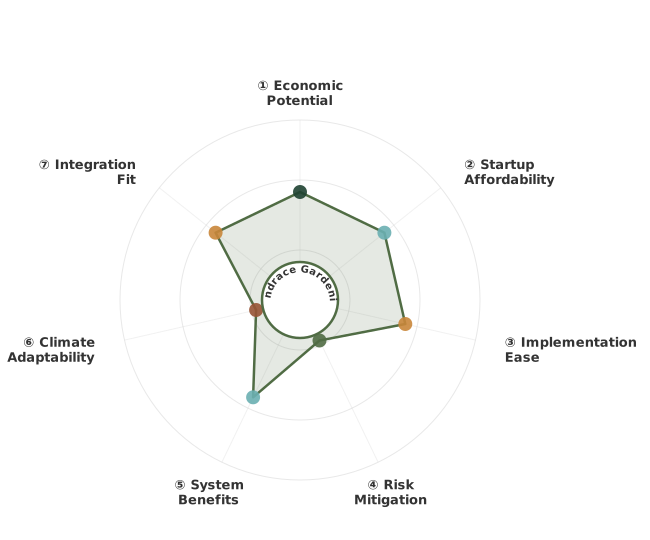
How These Traits Are Calculated
Trait dimensions are ordered clockwise starting from the top of the chart (12 o'clock position):
1. Economic Potential
Financial returns, annual value, and break-even timeline
WHAT: Evaluates financial viability by combining net annual value ($/ha from savings, income, and amortized harvests) with break-even timeline showing when practices pay for themselves.
WHY: Farmers need clear ROI understanding before committing resources. Fast payback (≤3 years) with strong returns (≥$300/ha) enables confident adoption, while long timelines (>10 years) restrict adoption to well-funded operations willing to wait for returns.
HOW: Calculated from net annual value in $/ha and break-even years. Exceptional (≥2.6): fast ROI ≤3 years + high value ≥$300/ha. Typical (1.8-2.5): moderate returns or longer timelines. Limited (<1.8): marginal economics or very long payback >10 years.
2. Startup Affordability
Initial investment costs and financial barrier to entry
WHAT: Measures financial barrier to entry through startup costs for equipment, infrastructure, consulting, and materials. Inverted scoring: lower costs = higher scores = more accessible adoption.
WHY: Affordability determines who can adopt. Low-cost practices (<$250/ha) enable widespread adoption across diverse scales, while high costs (>$2,500/ha) limit adoption to well-capitalized operations, creating barriers that slow regenerative transition.
HOW: Calculated from initial investment parsed from practice content. Inverted scoring: Exceptional (≥2.6): minimal investment <$250/ha. Typical (1.8-2.5): moderate costs $250-2,500/ha. Limited (<1.8): high barrier >$2,500/ha.
3. Implementation Ease
Learning curve and specialized knowledge required
WHAT: Measures how much learning, planning, and specialized knowledge a practice requires. Simpler practices with fewer steps score higher, while complex practices requiring extensive training or specialized resources score lower.
WHY: Complex practices create adoption barriers even when economically viable. Straightforward practices enable faster adoption and broader participation, while those requiring extensive training, timing precision, or specialized equipment limit who can succeed.
HOW: Evaluated by measuring documentation length and identifying complexity markers like location-specific requirements, seasonal timing windows, specialized skills, and dedicated equipment needs. Exceptional (≥2.6): straightforward practices with minimal prerequisites. Typical (1.8-2.5): moderate learning curve with some specialized needs. Limited (<1.8): steep learning curve requiring significant training or resources.
4. Risk Mitigation
Identified financial and ecological risk assessment
WHAT: Evaluates documented risks across financial (investment loss, market volatility) and ecological (crop failure, pest outbreaks) domains. Inverted scoring: fewer risks = higher scores.
WHY: Understanding risk exposure helps farmers make informed decisions. Low-risk practices allow confident implementation, while high-risk practices require careful planning and contingency resources. Risk transparency prevents costly failures.
HOW: Calculated from identified risks in practice content. Inverted scoring: Exceptional (≥2.6): ≤2 risks with manageable severity. Typical (1.8-2.5): 3-5 moderate risks. Limited (<1.8): 6+ risks or severe exposure.
5. System Benefits
How many ways the practice improves your land simultaneously
WHAT: Measures how many aspects of land health improve at once—carbon storage, soil quality, erosion control, water absorption, and biodiversity. Practices that improve multiple areas simultaneously create compounding benefits where each improvement reinforces the others.
WHY: The best practices solve multiple problems at once. For example, addressing erosion simultaneously builds carbon and improves water infiltration, creating a resilient system with positive feedback loops. Single-benefit approaches miss these compound transformation opportunities.
HOW: Evaluated across five key outcomes: carbon sequestration, soil organic matter increase, erosion reduction, water infiltration improvement, and biodiversity enhancement. Exceptional (≥2.6): high carbon storage (>8 t/ha/yr), improvements across 4-5 areas, transformative outcomes. Typical (1.8-2.5): moderate carbon (3-8 t/ha/yr), improvements across 2-3 areas. Limited (<1.8): modest impact (<3 t/ha/yr), single-area focus only.
6. Climate Adaptability
Geographic applicability across Köppen climate zones
WHAT: Evaluates geographic applicability by assessing how many Köppen climate zones successfully support a practice and what adaptation requirements are needed. Measures breadth of climates where farmers can implement with minimal to moderate modifications.
WHY: Universal practices working across diverse climates enable more farmers to adopt regenerative approaches. Practices limited to single climate types (only Mediterranean, only tropical) restrict adoption and slow global transition. Adaptability determines whether a practice serves niche regions or offers broad transformation.
HOW: LLM evaluation of regional success stories, Köppen zone coverage, and adaptation needs. Exceptional (≥2.6): 5+ zones or 4+ climate types, 3+ continents, minimal adaptation. Typical (1.8-2.5): 3-4 zones or 2-3 types, 2 continents, moderate adaptation. Limited (<1.8): 1-2 zones, single region, significant adaptation or highly specialized.
7. Integration Fit
How well this practice combines with others you're doing
WHAT: Measures how well a practice combines with other regenerative practices you might be doing. Some practices work as building blocks that make many other practices easier or more effective, while others work best on their own.
WHY: Practices that combine well with many others create more value on your farm. For example, cover cropping enables no-till, improves grazing, supports crop diversity, and helps water management—making all of them work better together. This helps you build a coherent system rather than juggling disconnected practices.
HOW: Evaluated by identifying which practices combine well and how strong those combinations are. 'Ideally Suited' means strong combinations where practices reinforce each other (practice A makes B easier, while B makes A more effective). 'Adequate' means complementary benefits that work well together. Exceptional (≥2.6): combines well with 6+ practices, serves as a building block. Typical (1.8-2.5): combines with 3-5 practices. Limited (<1.8): 1-2 practices or works best alone.
Going Deeper
1
WHY - The Benefits
Landrace gardening cultivates a deeper connection between crops and their growing environment, resulting in systems that are more resilient, require fewer external inputs, and contribute more robustly to overall farm health and economic stability. The benefits extend...
Landrace gardening cultivates a deeper connection between crops and their growing environment, resulting in systems that are more resilient, require fewer external inputs, and contribute more robustly to overall farm health and economic stability. The benefits extend...
WHY - The Benefits
Landrace gardening cultivates a deeper connection between crops and their growing environment, resulting in systems that are more resilient, require fewer external inputs, and contribute more robustly to overall farm health and economic stability. The benefits extend...
Landrace gardening cultivates a deeper connection between crops and their growing environment, resulting in systems that are more resilient, require fewer external inputs, and contribute more robustly to overall farm health and economic stability. The benefits extend...
Soil Health Benefits
While not a direct soil management practice, landrace gardening contributes to soil health through its emphasis on diversity and resilience. Varieties that are well-adapted to local conditions often have more robust root systems that penetrate deeper into the soil. This continuous biological activity throughout the soil profile improves aeration, water infiltration, and nutrient cycling. Plants that thrive in place are less likely to suffer from drought stress or disease, meaning they can maintain living roots for longer periods (Principle 4), providing a more consistent source of organic matter to feed soil microbes.
The reduced reliance on synthetic inputs often associated with landrace varieties also benefits soil biology. Synthetic fertilizers can suppress beneficial soil microbes, and pesticides can harm a wide range of organisms, including beneficial insects and soil fauna. By developing varieties that perform well with minimal chemical intervention, landrace gardening indirectly promotes a more vibrant and diverse soil ecosystem, enhancing the soil's natural capacity to build fertility and structure.
Furthermore, the genetic diversity inherent in landraces means that populations are less susceptible to catastrophic failures from a single pest or disease. This reduces the need to resort to chemical controls that can harm soil life. A healthy, diverse soil microbial community is essential for nutrient availability, disease suppression, and aggregate formation, all of which contribute to long-term soil health.
Economic Benefits
The primary economic benefit of landrace gardening is the reduction in input costs. As varieties become better adapted to local rainfall, soil types, and pest pressures, the need for supplemental irrigation, synthetic fertilizers, and pesticides diminishes naturally. This can lead to significant cost savings for farmers, particularly in regions with high input prices or arid climates where water is scarce and costly.
Moreover, adapted varieties tend to be more stable in their yields, especially under suboptimal conditions. While a highly hybridized variety might achieve peak production under ideal circumstances, it can crash significantly during a drought or pest outbreak. A landrace variety, having evolved to cope with typical local challenges, may produce a more consistent, albeit potentially lower, yield. This yield stability reduces economic risk for farmers. Over time, many landraces develop unique qualities—flavors, colors, textures, or shelf-life—that can command premium prices in niche markets, agritourism, or direct-to-consumer sales, creating new revenue streams and increasing overall profitability.
The practice also fosters seed sovereignty, reducing a farm's reliance on external seed companies for expensive, proprietary seeds. While there's an initial investment in acquiring diverse seed stocks and dedicated time for selection, the long-term outcome is a self-sustaining seed system that is free from licensing fees and market fluctuations in seed availability. This autonomy is a significant economic advantage, insulating the farm from external market pressures and supply chain disruptions.
Regenerative Systems Fit
Landrace gardening is fundamentally aligned with regenerative agriculture’s core principles, acting as a powerful method for enhancing on-farm resilience and autonomy.
Principle 1: Minimize Soil Disturbance: Landrace gardening doesn't inherently dictate tillage practices, but its goal of creating self-sufficient crops often leads to reduced need for intensive soil preparation. Varieties adapted to local conditions may thrive in reduced-tillage or no-till systems because their root structures and growth habits are suited to the existing soil ecology. The reliance on biological adaptation rather than mechanical intervention contributes to maintaining soil structure.
Principle 2: Maximize Crop Diversity: This is arguably the most direct contribution. Landrace gardening champions genetic diversity within species and populations, promoting a rich tapestry of traits that enhance overall system resilience. Instead of planting a single, uniform variety, a farmer might cultivate a population of landrace corn that includes plants with varying drought tolerances, pest resistances, and maturity dates. This diversity acts as an insurance policy against unforeseen environmental challenges.
Principle 3: Keep Soil Covered: By developing varieties that are well-adapted to the local growing season and climate, landrace gardening indirectly supports keeping soil covered. Crops are more likely to establish well, grow vigorously, and fill the season, occupying the soil through their living roots and canopy. This reduces the likelihood of bare soil periods, thereby mitigating erosion and supporting soil biology.
Principle 4: Maintain Living Roots: The goal of developing locally adapted varieties is to create plants that can thrive throughout the natural growing season of their environment. This means these plants are often selected for their ability to maintain active growth and establish deep, extensive root systems for longer durations, effectively extending the period of living roots in the soil. This continuous biological activity is vital for nutrient cycling, soil structure development, and feeding soil microbes.
Principle 5: Integrate Livestock: While not a direct component, landraces can be highly compatible with livestock integration. Varieties adapted to low-input systems and specific environments may be more amenable to grazing or intercropping with forage species. Their resilience means they can survive grazing pressure better in some cases, and their reduced need for chemical inputs makes them safer for mixed-species farm ecosystems.
As a transition practice, landrace gardening offers a pathway to greater agricultural independence. Starting with open-pollinated varieties or heirlooms and selecting for local adaptation gradually moves a farm away from reliance on expensive, less resilient commercial seeds. The timeline for tangible adaptation can be 5-10 years, during which a farmer sees increasing improvement in their selected populations. The ultimate regenerative goal is a farm with a suite of customized landraces that perform reliably with minimal external support, fully embodying the principles of autonomy, resilience, and ecological integration.
Sources behind this view
Videos & Podcasts
-
Landraces are diverse, locally adapted crop populations from traditional systems (e.g., Nanticoke squash, Turkish wheat). Crop wild relatives offer valuable genes (e.g., salinity tolerance) for breedi
-
A land race is a genetically diverse population of cultivated plants grown by traditional farmers, crucial for plant breeders seeking a wide range of traits, as seen in examples of okra, squash, wheat
Community
-
Explores 'landrace gardening' and seed saving, focusing on local adaptation and genetic diversity. Advocates for intentional selection in poor conditions, promiscuous pollination, and breeding for tra
Read more (opens in new window) permies.com -
Landrace gardening involves understanding crop types (inbreeders vs. outcrossers), utilizing techniques like sibling group planting and extensive culling, and developing locally adapted varieties for
Read more (opens in new window) permies.com -
Home gardeners can grow landrace seeds by planting diverse varieties together for cross-pollination, as demonstrated with Nanticoke squash in Vacaville, CA, noting ease of growth and superior flavor d
Read more (opens in new window) ucanr.edu -
Landrace cultivars are genetically diverse and adapted to specific local conditions, offering greater resilience and adaptability than stabilized heirlooms or uniform hybrids, according to geneticist
Read more (opens in new window) ucanr.edu
Research
-
Sustainable Stewardship of the Landrace Diversity (opens in new window)
This study found: A theoretical method for growing traditional crop seeds suggests selecting low-competition plants, initially grown far apart, then multiplied densely, to improve yields and crop uniformity.
-
Population Structure and Functional Diversity of Rice Landraces: A Review (opens in new window)
This study found: Review of traditional rice varieties (landraces) shows structured genetic diversity and useful traits, vital for food security, economic value, and preserving rice genetic resources.
2
WHERE - Regional Considerations
Successfully implementing landrace gardening hinges on recognizing that "optimal" traits are highly site-specific, influenced by local climate, soil, and pest pressures. What excels in one region may not in another, even within the same country or biome.
Successfully implementing landrace gardening hinges on recognizing that "optimal" traits are highly site-specific, influenced by local climate, soil, and pest pressures. What excels in one region may not in another, even within the same country or biome.
WHERE - Regional Considerations
Successfully implementing landrace gardening hinges on recognizing that "optimal" traits are highly site-specific, influenced by local climate, soil, and pest pressures. What excels in one region may not in another, even within the same country or biome.
Successfully implementing landrace gardening hinges on recognizing that "optimal" traits are highly site-specific, influenced by local climate, soil, and pest pressures. What excels in one region may not in another, even within the same country or biome.
Click Here to Look up your Region if you don't already know it
Humid Temperate Regions
Representative Locations: Southeastern United States, much of Northern Europe (e.g., UK, Germany, Poland), Eastern China, Japan, New Zealand
Climate Context: Warm to hot summers and cool to cold winters, with moderate to high annual precipitation (75-150 cm or 30-60 inches) distributed relatively evenly throughout the year. USDA Zones 6-8, Köppen Cfb/Cfa.
Regional Considerations: These regions offer long growing seasons and ample moisture, promoting vigorous growth. Landrace development can focus on maximizing yield potential, nutrient density, or unique flavor profiles for crops like corn, beans, tomatoes, and temperate fruits. Disease resistance remains crucial due to high humidity and temperature favouring fungal pathogens. Farmers might select for earlier maturing varieties to avoid late-season disease pressure or for specific resistances to common local blights and mildews. Pest resistance to common insects like potato beetles or cabbage worms is also a key selection criterion.
Mediterranean Regions
Representative Locations: California (USA), Mediterranean basin (Spain, Italy, Greece), Central Chile, Southwestern Australia, Western Cape (South Africa)
Climate Context: Hot, dry summers and mild, wet winters. Annual precipitation is highly seasonal (40-90 cm or 15-35 inches). USDA Zones 8-10, Köppen Csa/Csb.
Regional Considerations: Drought tolerance is paramount in Mediterranean climates. Landrace gardening here focuses on selecting for varieties that can survive and produce with minimal supplemental watering. Traits like deep root systems, water-efficient physiology, early maturity to escape summer drought, or drought-induced dormancy are highly valued. Crops suitable for these regions include wheat, olives, grapes, drought-tolerant legumes, and heat-loving vegetables like peppers and eggplants that can set fruit under high temperatures. Selecting for heat tolerance and reduced water requirements will significantly improve crop performance and lower irrigation costs.
Arid and Semi-Arid Regions
Representative Locations: Western USA (e.g., parts of Colorado, New Mexico, Arizona), North Africa, Central Asia, Interior Australia
Climate Context: Low annual precipitation (<40 cm or 15 inches), high temperatures, erratic rainfall patterns, and short, often unpredictable growing seasons. USDA Zones 7-9, Köppen BSh/BSk.
Regional Considerations: Water scarcity is the defining challenge. Landrace development must prioritize extreme drought tolerance, efficient water use, rapid life cycles to complete before water runs out, and resilience to high solar radiation and temperature extremes. Selection criteria would include traits like small leaf size to reduce transpiration, waxy leaf coatings, deep root systems adapted to accessing scarce groundwater, and rapid germination and maturity. Crops like millets, sorghums, hardy legumes (e.g., chickpeas), and specific drought-adapted root vegetables or grains are prime candidates. Focusing on varieties that can utilize dew or infrequent rainfall is key.
Cold Continental Regions
Representative Locations: Northern USA and Canada, Northern Europe (e.g., Scandinavia, Russia), Northern Asia
Climate Context: Very short growing seasons, extreme summer heat and severe winter cold. USDA Zones 3-5, Köppen Dfa/Dfb.
Regional Considerations: The primary selection factor is cold hardiness and the ability to mature within a short, frost-free window. Traits like rapid germination, quick vegetative growth, early flowering and seed set, and frost tolerance at both seedling and mature stages are crucial. Selecting for varieties that can tolerate temperature fluctuations, including early or late frosts, will improve reliability. Crops like cold-hardy grains (e.g., certain wheats, barleys, rye), root vegetables that store well over winter, and fast-maturing brassicas or legumes are suitable. Breeding for cold tolerance and short season maturity is the focus.
Subtropical Regions
Representative Locations: Southeastern USA, Southern China, Southern Brazil, Eastern Australia
Climate Context: Hot, humid summers and mild winters, with generally ample rainfall distributed throughout the year, though some regions may have distinct wet and dry seasons. USDA Zones 9-11, Köppen Cfa/Cwa.
Regional Considerations: High humidity and heat can promote fungal diseases and pest proliferation. Landrace selection should focus on resistance to common tropical diseases (e.g., blights, mildews, fungal rots) and tolerance to insect pests prevalent in warm, moist conditions. Heat tolerance and efficient water use during potentially dry spells within the monsoon season are also important. Crops like rice, maize, sweet potatoes, tropical fruits, diverse legumes, and heat-tolerant vegetables are candidates for landrace development, emphasizing disease resistance and heat tolerance.
Tropical Regions
Representative Locations: Central America, Southeast Asia, East Africa, Northern Australia, Northern South America
Climate Context: High temperatures year-round, with distinct wet and dry seasons or consistent, high rainfall. Köppen Af/Am/Aw.
Regional Considerations: These regions face challenges from intense heat, high humidity, rapid disease cycles, and specific tropical pests. Landraces should be selected for extreme heat tolerance, disease resistance (especially to fusions and blights that thrive in consistent warmth and moisture), and ability to grow rapidly under high-light conditions. Pest resistance to prevalent tropical insects is also a priority. Crops like rice, cassava, bananas, various tropical legumes, taro, and diverse heirlooms of heat-loving vegetables are ideal for developing landraces. Focus on varieties adapted to tropical soil types (which can vary greatly) and specific pest pressures.
3
HOW - Implementation Process
Landrace gardening is a continuous loop of observation, selection, saving, and planting, rather than a discrete set of phases. It requires a foundational understanding of plant biology and a commitment to long-term observation.
Landrace gardening is a continuous loop of observation, selection, saving, and planting, rather than a discrete set of phases. It requires a foundational understanding of plant biology and a commitment to long-term observation.
HOW - Implementation Process
Landrace gardening is a continuous loop of observation, selection, saving, and planting, rather than a discrete set of phases. It requires a foundational understanding of plant biology and a commitment to long-term observation.
Landrace gardening is a continuous loop of observation, selection, saving, and planting, rather than a discrete set of phases. It requires a foundational understanding of plant biology and a commitment to long-term observation.
Prerequisites
- Diverse Seed Source: Start with a population of seeds that offers genetic variability. This could be an existing open-pollinated (OP) variety, an heirloom, or even a mix of seeds from different sources that you believe have potential in your area. The key is not uniformity, but diversity.
- Understanding of Local Climate and Soil: You must know your growing season length, typical rainfall patterns, temperature extremes, common soil types, and prevalent pests and diseases. This knowledge guides your selection criteria.
- Commitment to Observation: Dedicate time each growing season to walk your fields and gardens, noting which plants thrive, which struggle, and why.
- Basic Seed Saving Knowledge: Understand how to collect, clean, and store seeds accurately for different types of plants (e.g., self-pollinating vs. cross-pollinating).
Phase 1: Planting and Initial Observation (Year 1)
- Plant Diversity: Sow your chosen diverse population of seeds in the area(s) where you intend to develop a landrace. Use your typical planting methods for that crop, but be mindful of not creating overly uniform conditions if possible.
- Record Keeping: Begin detailed notes from the first day of planting. Record planting dates, weather conditions, fertility applications (if any), and any observations about germination, early growth, and plant vigor.
- Mid-Season Assessment: As plants grow, make regular observations. Note differences in:
- Vigor and Growth Rate: Which plants are visibly "happier" and growing faster?
- Pest and Disease Pressure: Which plants are being attacked by insects or showing signs of disease? Which seem unaffected or are recovering quickly?
- Stress Tolerance: How are plants handling heat, drought, or waterlogged conditions? Are some wilting less during dry spells?
- Flowering/Maturity Time: Note differences in when plants flower and approach maturity. This is crucial for seed saving if you want to influence season length.
- Architectural Traits: In crops like corn or beans, note differences in stalk strength, lodging resistance, or plant structure.
Phase 2: Seed Selection and Saving (End of Season, Year 1)
- Identify Elite Individuals: Based on your observations, identify the plants that performed best according to your criteria. Your criteria should reflect the challenges and opportunities of your local environment. For example, in a dry region, prioritize plants that yielded well with minimal water; in a region prone to a specific pest, prioritize plants that remained healthy.
- Advanced vs. Basic Criteria:
- Basic: Is it alive and producing edible/usable parts? Did it mature?
- Intermediate: Did it yield well relative to its peers? Did it resist common local pests/diseases? Did it show better drought/heat tolerance?
- Advanced: Is it unusually flavorful? Does it have a desirable texture? Does it mature at a useful time (e.g., early for a short season, late for overwintering)?
- Strategic Seed Saving:
- For Self-Pollinating Crops (e.g., beans, peas, tomatoes): Save seed from multiple of your best individuals to maintain genetic diversity. Aim for 50-100+ plants' worth of seed to start.
- For Cross-Pollinating Crops (e.g., corn, squash, sunflowers): You must isolate your selected plants to prevent unwanted cross-pollination with less desirable individuals from the same batch or from other varieties. This might involve bagging tassels (for corn), isolating plants by distance (the "isolation block" method), or caging plants and hand-pollinating. The goal is to save seed from a population of your best plants that are only pollinated by other selected plants. This is crucial for truly guiding the population’s evolution.
- Clean and Store Seeds: Properly clean and dry your saved seeds. Store them in cool, dry, dark conditions. Label them clearly with the crop, year, your farm name, and key selection traits (e.g., "Corn - Smith Farm - 2024 - Drought Tolerant").
Phase 3: Next Generation Planting and Continued Selection (Year 2 onwards)
- Plant the Saved Seeds: Use the seeds you saved from your best performers to plant the next generation. This forms your new, slightly more adapted population.
- Repeat Observation and Selection: This is where the iterative process begins. Walk the fields again, observe the new population, and identify the individuals that are performing even better in your conditions. Your selection criteria might evolve as you gain more understanding or as environmental conditions change.
- Refine Isolation Methods: For cross-pollinating crops, continue to refine your isolation techniques to ensure you are only saving seed from your selected lineages. This is critical for directing the genetic flow.
- Document Results: Continue meticulous record-keeping. How did the selection traits manifest this year? Did the "drought-tolerant" plants truly perform better in a dry spell? Did the disease-resistant plants hold up against the common blight? This feedback loop informs your selections for the following year.
Ongoing Refinement and Adaptation
- Embrace Variability: Do not strive for absolute uniformity. The goal of landrace gardening is a genetically diverse population that can withstand varied conditions. Some variation is good; it is the raw material for adaptation.
- Adapt Selection Criteria: As your local climate changes (e.g., increasing drought, new pests), adapt your selection criteria to favor traits that cope with these new challenges. Landraces are living systems that can evolve with you.
- Share and Exchange (Optional): If you have a strong landrace, consider sharing seeds with other local growers. This can introduce new genetic material and foster regional adaptation.
- Scale Up: As you build confidence and success, you can apply landrace gardening principles to multiple crops or expand the area devoted to your developing landraces.
Sources behind this view
Videos & Podcasts
-
Landraces are diverse, locally adapted crop populations from traditional systems (e.g., Nanticoke squash, Turkish wheat). Crop wild relatives offer valuable genes (e.g., salinity tolerance) for breedi
-
Encourages seed saving and developing 'land races' by growing diverse varieties together to create resilient plant populations adapted to local conditions, using examples of kale-mustard crosses and s
Community
-
Explores 'landrace gardening' and seed saving, focusing on local adaptation and genetic diversity. Advocates for intentional selection in poor conditions, promiscuous pollination, and breeding for tra
Read more (opens in new window) permies.com -
Landrace gardening involves understanding crop types (inbreeders vs. outcrossers), utilizing techniques like sibling group planting and extensive culling, and developing locally adapted varieties for
Read more (opens in new window) permies.com -
Home gardeners can grow landrace seeds by planting diverse varieties together for cross-pollination, as demonstrated with Nanticoke squash in Vacaville, CA, noting ease of growth and superior flavor d
Read more (opens in new window) ucanr.edu -
Landrace cultivars are genetically diverse and adapted to specific local conditions, offering greater resilience and adaptability than stabilized heirlooms or uniform hybrids, according to geneticist
Read more (opens in new window) ucanr.edu
Research
-
Sustainable Stewardship of the Landrace Diversity (opens in new window)
This study found: A theoretical method for growing traditional crop seeds suggests selecting low-competition plants, initially grown far apart, then multiplied densely, to improve yields and crop uniformity.
4
Know the Debate
Landrace gardening is a patient, long-term approach to crop development where farmers select and save seeds from plants that perform best in their ...
Know the Debate
Landrace gardening is a patient, long-term approach to crop development where farmers select and save seeds from plants that perform best in their ...
Landrace gardening is a patient, long-term approach to crop development where farmers select and save seeds from plants that perform best in their specific environment, encouraging natural adaptation over generations. While the practice is broadly applicable, the speed of adaptation, final yield potential, and economic viability are heavily influenced by where you are. In humid regions with ample rainfall, you might see adaptation and yield stability faster, while arid climates demand a strong focus on drought tolerance and longer timelines. Entry costs are generally low but require significant time investment in observation and selection, with potential for high returns through reduced inputs and niche market access.
How long until landraces adapt and stabilize?
Rapid adaptation (2-4 years)
In favorable conditions with strong selection pressure for key traits and consistent environmental stressors, noticeable beneficial adaptations can emerge within 2-4 generations. This is more likely in systems where selection is focused on highly visible traits like rapid maturity or specific pest resistance under consistent pressure.
Sources behind this view
Sources behind this view
Videos & Podcasts
-
Encourages seed saving and developing 'land races' by growing diverse varieties together to create resilient plant populations adapted to local conditions, using examples of kale-mustard crosses and squash varieties.
-
Saving seed on-farm allows for adaptation and improvement of plant varieties to local conditions through selection, enhancing traits like earliness and yield over generations.

Moderate adaptation (5-7 years)
Significant, reliable improvements in yield stability, input reduction, and specific trait expression typically require 5-7 years of consistent observation and selection. This allows for the population to stabilize around selected traits and for some level of regional advantage to become apparent.
Sources behind this view
Sources behind this view
Videos & Podcasts
-
Regenerative farming requires eliminating synthetics, intensive management, and strategic marketing to triple gross margins. A diversified planting strategy (perennials like alfalfa, teff grass, hairy vetch; annuals like radishes, oats, barley, triticale, peas, clover; forage sugar beets) enhances nutrient density and soil health, creating products for CPG brands.
Research
-
Sustainable Stewardship of the Landrace Diversity (opens in new window)
This study found: This paper suggests a new way to grow seeds from traditional crop varieties (landraces) to make them more productive and use resources better. The idea is to select plants that don't compete as much with their neighbors. By planting seeds far apart initially, farmers can remove weaker plants and those that don't perform well. Then, these selected seeds are grown more densely. This method aims to create more uniform crops where each plant gets equal resources, leading to better yields and potentially healthier seeds, even without formal certification.
-
The increased use of diversity in cereal cropping requires more descriptive precision (opens in new window)
This study found: For centuries, farmers grew grains as diverse mixes of varieties. Over the last hundred years, farming shifted to planting just one type of grain (monoculture) in each field. Now, there's a renewed interest in bringing back diversity through various approaches. These include reintroducing older, traditional varieties (like landraces or heirloom types) and planting mixtures of different grain varieties together. Some farmers plant mixes that are the same each year (static mixtures), while others replant seeds from their harvested mix, allowing the crop to adapt and evolve over time (dynamic mixtures). This evolution leads to more resilient 'populations' of plants. Newer breeding methods also create these diverse populations by crossing different modern varieties and letting them adapt. These diverse crop systems are more resilient to changing weather and climate conditions.
Full adaptation (7-10+ years)
Achieving profound adaptation to complex environmental factors like drought, specific diseases, or nuanced soil interactions often takes 7-10 years or more. This timeframe allows for significant genetic shifts and stabilization against a wider range of unpredictable environmental fluctuations.
Sources behind this view
Sources behind this view
Videos & Podcasts
-
Heirlooms are vital for resilience due to their genetic diversity, contrasting with vulnerable GMO monocultures (e.g., Irish Potato Famine). Saving and breeding heirlooms locally creates regionally strong varieties, protecting against crop failure and ensuring ecological stability.

Research
-
Revitalizing Soil Health through Regenerative Agriculture: History, Principles, Practices and Challenges (opens in new window)
This study found: This article explains Regenerative Agriculture (RA), a farming method focused on rebuilding soil health and making farms more resilient. It contrasts RA with industrial farming, which has damaged soils, caused erosion, and reduced beneficial microbes. RA uses practices like disturbing the soil as little as possible, planting cover crops, growing a variety of crops, using compost, rotating grazing animals, and cutting back on synthetic fertilizers and pesticides. These methods help capture carbon, save water, and improve soil fertility. While adopting RA can be challenging due to costs, learning curves, and policy issues, it has been shown to increase soil organic matter, make farms more resistant to drought, and boost profits in the long run. The authors suggest more research funding, government support, and farmer training are needed to help more farms switch to RA.
-
Organic Seed Production and Saving (opens in new window)
This study found: Growing seeds organically means using natural inputs and avoiding synthetic chemicals and GMOs. This approach focuses on keeping seeds healthy, pure, and well-suited to your farm's specific climate and soil. Practices like choosing the right spot, preparing the land naturally, using organic fertilizers, and managing soil pH help build healthy soil, boost beneficial microbes, and increase biodiversity. While organic seed growing can face challenges like disease and market access, it's crucial for environmental health, food security, and giving farmers more control over their seeds. Saving your own seeds after harvest is also a key part of this system, contributing to sustainable farming and resilient ecosystems.
Making Sense of the Differences
The timeline for landrace adaptation varies greatly by climate, intensity of selection, and the complexity of traits being selected. Humid regions with consistent pressure for disease resistance may show faster adaptation than arid regions, where drought tolerance takes longer to stabilize. The process relies on consistent observation and is inherently generational, meaning farmers must plan for 5-10 years to see significant lineage-specific benefits.
How significantly do landraces reduce input needs and increase stability?
Significant input reduction and yield stability
Well-adapted landraces can reduce reliance on external inputs (water, fertilizer, pesticides) by 30-50% and offer more consistent yields, especially under environmental stress. This leads to substantial cost savings and risk mitigation over time.
Sources behind this view
Sources behind this view
Videos & Podcasts
-
Emphasizes seed diversity for resilience, recommending variety trials and sourcing from breeders like Frank Morton (Wild Garden Seeds) who offer non-uniform material. Growers should inquire about seed origins and consider growing their own seed due to market unpredictability.
-
The core of regenerative stewardship is managing for life, not death, by promoting biodiversity and utilizing plants like hemlock and Russian knapweed. This approach requires embracing diversity at all scales, supporting new farmers, and recognizing interdependence.
Research
-
The Indigenous Roots of Regenerative Agriculture (opens in new window)
This study found: This article argues that what we call 'regenerative agriculture' today has deep historical roots in the farming and land stewardship practices of Indigenous peoples around the world, who have been improving soil and land for thousands of years. Practices like planting cover crops, disturbing the soil as little as possible, growing a variety of crops, and integrating animals are not new; they were mastered by Indigenous civilizations long ago. These ancient methods, refined over millennia, offer valuable knowledge and efficiency that can deepen current regenerative approaches. The article emphasizes that the true power of Indigenous practices lies not just in the techniques themselves, but in the underlying values of respect, reciprocity, and responsibility towards the land. Adopting these values alongside the practices is key to achieving real transformation in our food systems.
Moderate to marginal input savings possible
The extent of input reduction and yield stability varies greatly. While some landraces offer notable savings, many still require supplemental inputs, and yield gains may be marginal compared to optimized hybrid varieties under ideal conditions.
Sources behind this view
Sources behind this view
Research
-
Organic Seed Production and Saving (opens in new window)
This study found: Growing seeds organically means using natural inputs and avoiding synthetic chemicals and GMOs. This approach focuses on keeping seeds healthy, pure, and well-suited to your farm's specific climate and soil. Practices like choosing the right spot, preparing the land naturally, using organic fertilizers, and managing soil pH help build healthy soil, boost beneficial microbes, and increase biodiversity. While organic seed growing can face challenges like disease and market access, it's crucial for environmental health, food security, and giving farmers more control over their seeds. Saving your own seeds after harvest is also a key part of this system, contributing to sustainable farming and resilient ecosystems.
 From the Web
-
Argues for the importance of on-farm landrace conservation, using Mexican maize landraces as a case study, and emphasizes the continued role of farmers in crop evolution.
Making Sense of the Differences
The potential for input reduction and yield stability in landraces is strongly tied to the success of the selection process and the environmental conditions. In challenging climates or where specific pest/disease pressures exist, well-adapted landraces can lead to substantial savings and consistent harvests. However, in regions with optimal growing conditions and strong input availability, the difference may be less dramatic, with benefits more seen in resilience during outlier years and greater farmer autonomy.
5
HOW MUCH - Costs & Investment
Note: All costs are estimates based on typical US small to mid-scale operations (2023-2025) and will vary significantly by country and region based on local labor, material, and seed prices. Currency is USD equivalent.
Note: All costs are estimates based on typical US small to mid-scale operations (2023-2025) and will vary significantly by country and region based on local labor, material, and seed prices. Currency is USD equivalent.
HOW MUCH - Costs & Investment
Note: All costs are estimates based on typical US small to mid-scale operations (2023-2025) and will vary significantly by country and region based on local labor, material, and seed prices. Currency is USD equivalent.
Note: All costs are estimates based on typical US small to mid-scale operations (2023-2025) and will vary significantly by country and region based on local labor, material, and seed prices. Currency is USD equivalent.
Note: All costs are based on recent US economic data (2024–2026) and may vary substantially by region based on local labor rates, material costs, and regulatory requirements.
Seed Acquisition
Establishing a diverse genetic baseline involves sourcing high-quality heirlooms or landrace populations. Small operations (under 50 acres (20 ha)) typically budget $156–$625 annually for heirloom seed packets to diversify their starting population. Mid-size operations (50–500 acres (20–202 ha)) require $625–$2,605 annually, focusing on bulk open-pollinated varieties and regional seed bank accessions. Large operations (500+ acres) invest $2,605–$8,336 per year to acquire niche grain or commodity-scale landrace stocks that meet stringent genetic diversity standards.
Record Keeping & Data Analysis
Landrace gardening requires meticulous tracking of phenotypic traits and performance metrics to ensure effective selection. Small operations should anticipate a one-time setup cost of $52–$313 for field journals and basic software, with $52–$156 in annual maintenance. Mid-size operations typically scale to $313–$1,250 for integrated digital inventory systems and recurring soil testing protocols. Large-scale producers invest $1,250–$5,210 for specialized software platforms and professional external analysis to manage data across hundreds of acres.
Seed Saving & Processing Equipment
Post-harvest infrastructure is the most capital-intensive component of this practice. Small operations utilize $208–$1,042 for manual sifters, basic drying racks, and long-term storage supplies. Mid-size operations allocate $1,042–$7,815 for mechanized cleaning stations and batch drying fans to handle increased volume. Large operations require $7,815–$26,050 for industrial pneumatic seed cleaners and climate-controlled bulk silos to maintain purity at scale.
Isolation Infrastructure
Protecting the genetic integrity of landraces requires physical or temporal barriers. Small operations rely on row covers and basic stakes, costing $0–$521. Mid-size operations invest $521–$4,168 in dedicated fencing or drift-reduction equipment to minimize cross-contamination. Large operations, operating on vast footprints, utilize $4,168–$15,630 for complex staggered planting schedules or specialized geographic isolation consulting.
Most Spend: The middle 60% of operations typically invest $1,876–$6,773 annually. This figure captures the core costs of diverse seed acquisition, essential manual cleaning tools, and basic digital record-keeping, excluding large-scale industrial processing machinery.
Why the Range?: Costs vary primarily based on the crop type and the level of mechanization implemented. Higher-end costs are driven by the acquisition of specialized precision-cleaning equipment and professional data-analysis services for large-acreage breeding, while low-end costs reflect labor-intensive manual methods and smaller, self-managed seed pools.
6
REWARDS AND RISKS - Economics & Risk Factors
REWARDS AND RISKS - Economics & Risk Factors
Economic Scenarios In the best-case scenario, by year 7, the landrace variety achieves 90% of commercial yields with 50% fewer synthetic inputs. This yields a cost reduction of $125–$261 per acre ($309–$645/ha). Combined with a 30% price premium for distinct regional quality, a 50-acre (20 ha) grower realizes $417–$834 per acre ($1,030–$2,061/ha) in net revenue, totaling $542–$1,095 in annual net gain per acre. The typical case results in yields at 75–80% of commercial hybrids by year 6; while volume is lower, reduced input dependence saves $63–$104 per acre ($156–$257/ha), and drought-stability benefits mitigate $156–$313 per acre ($385–$773/ha) in potential catastrophic loss. In the worst-case scenario, genomic drift or poor isolation leads to a 30–40% yield drop compared to benchmarks, causing an annual opportunity cost of $313–$625 per acre ($773–$1,544/ha) as the operator reverts to expensive commercial hybrids.
Market Factors Profitability is contingent upon securing premium market channels. Landraces often perform poorly in bulk commodity auctions where uniformity is mandatory. Success depends on "niche branding"—leveraging the story of regional adaptation to secure 20–40% premiums at direct-to-consumer markets, high-end farm-to-table restaurants, and specialty food distributors. The ability to market unique heirloom traits acts as a buffer against commodity volatility, but requires investment in marketing and localized distribution logistics to move out of the price-taking cycle.
Risk Mitigation To prevent total genetic loss, operators must maintain "backup collections," storing 25–50% of the seed pool in off-site or secure cool-dry conditions at an annual cost of $104–$521. Additionally, cross-referencing field data with regional university extension labs to validate selection efficiency—costing $208–$625 per season—prevents the commitment of years to negative trait lines.
Transition Period Risks The primary risk is "Adaptation Lag," where yields may fluctuate or dip by 15–25% for 3–5 years as the population stabilizes in the local micro-climate. To manage this liquidity risk, growers should limit new landrace plantings to no more than 10–20% of total acreage during the first three years of the transition, allowing for incremental adoption as the variety proves its performance.
Sources behind this view
Community
-
Landrace gardening involves understanding crop types (inbreeders vs. outcrossers), utilizing techniques like sibling group planting and extensive culling, and developing locally adapted varieties for
Read more (opens in new window) permies.com -
Explores 'landrace gardening' and seed saving, focusing on local adaptation and genetic diversity. Advocates for intentional selection in poor conditions, promiscuous pollination, and breeding for tra
Read more (opens in new window) permies.com -
Landrace cultivars are genetically diverse and adapted to specific local conditions, offering greater resilience and adaptability than stabilized heirlooms or uniform hybrids, according to geneticist
Read more (opens in new window) ucanr.edu -
Landrace gardening focuses on creating locally adapted crops through genetic diversity and promiscuous pollination, differing from heirloom and hybrid seeds. It involves practical seed saving, pest re
Read more (opens in new window) permies.com
Research
-
Towards a practical threat assessment methodology for crop landraces (opens in new window)
This study found: New method proposed to assess risk for traditional crop varieties (landraces), based on IUCN Red List principles. Aims to prioritize conservation efforts against genetic erosion from modern crops, lac
-
Sustainable Stewardship of the Landrace Diversity (opens in new window)
This study found: A theoretical method for growing traditional crop seeds suggests selecting low-competition plants, initially grown far apart, then multiplied densely, to improve yields and crop uniformity.
7
COMPATIBLE PRACTICES - Integration Opportunities
Landrace gardening thrives when integrated with other regenerative and ecological farming practices, creating synergetic benefits that enhance farm resilience and sustainability.
Landrace gardening thrives when integrated with other regenerative and ecological farming practices, creating synergetic benefits that enhance farm resilience and sustainability.
COMPATIBLE PRACTICES - Integration Opportunities
Landrace gardening thrives when integrated with other regenerative and ecological farming practices, creating synergetic benefits that enhance farm resilience and sustainability.
Landrace gardening thrives when integrated with other regenerative and ecological farming practices, creating synergetic benefits that enhance farm resilience and sustainability.
Open Pollinated (OP) and Heirloom Seed Sourcing
- Description: Actively seeking out and acquiring diverse OP varieties and traditional heirlooms from reputable sources, seed banks, or other local farmers.
- Integration Benefit: Provides the genetic starting material with sufficient variability to begin the landrace development process. Essential for introducing traits that may have been lost in commercial breeding.
Holistic Record Keeping
- Description: Meticulous documentation of planting dates, weather patterns, soil conditions, pest/disease occurrences, observed plant performance, selection rationale, seed saving methods, and yield data.
- Integration Benefit: Essential for tracking adaptation, identifying successful traits, understanding challenges, and making informed selection decisions across generations. Provides a knowledge base for future farming decisions.
Regional Seed Banks and Exchanges
- Description: Participating in or establishing local or regional seed saving networks and exchanges.
- Integration Benefit: Facilitates access to diverse genetic material, allows for sharing successful landraces, and contributes to regional agricultural resilience. It also provides a system for preserving genetic diversity against catastrophic events.
Intercropping and Companion Planting
- Description: Growing multiple crop species together in the same field, or planting specific species next to each other to achieve mutual benefits.
- Integration Benefit: Increases overall biodiversity, can deter pests, improve nutrient utilization, and enhance soil health. Landraces developed within diverse cropping systems may exhibit enhanced resilience due to the varied ecological pressures and benefits from companion plants.
Cover Cropping and Green Manures
- Description: Planting non-cash crops primarily to improve soil health, suppress weeds, prevent erosion, and enhance fertility.
- Integration Benefit: Maintains living roots and soil cover year-round (Principles 3 & 4), improving soil structure and feeding biology. Landraces developed in such systems may show better performance due to the improved soil conditions and reduced competition from weeds.
Crop Rotation
- Description: Sequentially planting different crops on the same land over time.
- Integration Benefit: Helps break pest and disease cycles, improves soil nutrient balance, and diversifies root structures in the soil. Landraces can be selected within rotation schemes, potentially enhancing their adaptability to different phases of the rotation.
Direct-to-Consumer (DTC) Marketing and Niche Markets
- Description: Selling produce directly to consumers through farmers' markets, CSAs, or to specialty restaurants.
- Integration Benefit: Provides a viable outlet for unique landrace varieties that may have special flavors, colors, or textures, allowing farmers to capture a premium price for their adapted crops and recoup the investment in their development.
The synergy comes from building a farm ecosystem where plants are adapted to their environment, and the environment is supported by the plants. Landrace gardening is a long-term strategy that invests in the inherent biological capacity of a farm, making it more self-sufficient and resilient over time.
Sources behind this view
Community
-
Explores 'landrace gardening' and seed saving, focusing on local adaptation and genetic diversity. Advocates for intentional selection in poor conditions, promiscuous pollination, and breeding for tra
Read more (opens in new window) permies.com -
Landrace gardening focuses on creating locally adapted crops through genetic diversity and promiscuous pollination, differing from heirloom and hybrid seeds. It involves practical seed saving, pest re
Read more (opens in new window) permies.com -
Landrace gardening involves understanding crop types (inbreeders vs. outcrossers), utilizing techniques like sibling group planting and extensive culling, and developing locally adapted varieties for
Read more (opens in new window) permies.com -
Explains landrace gardening for local adaptation, focusing on developing robust, low-input plant populations. The author plans to create F1 tomato crosses from diverse heirlooms and hybrids for outdoo
Read more (opens in new window) permies.com
Research
-
The Indigenous Roots of Regenerative Agriculture (opens in new window)
This study found: Modern regenerative agriculture practices are rooted in millennia of Indigenous land stewardship, offering profound knowledge and a crucial value system of respect and reciprocity for true transformat
-
Regenerative Agriculture: Restoring Ecosystems¢ Resilience and Productivity: A Review (opens in new window)
This study found: Regenerative agriculture builds soil health and ecosystem services through practices like no-till, cover crops, and diverse rotations. It increases soil organic matter, improves water infiltration, bo
-
Regenerative Agriculture: Insights and Challenges in Farmer Adoption (opens in new window)
This study found: Review of 7 regenerative agriculture practices (no-till, crop rotation, cover crops, etc.) highlights benefits and key adoption challenges like cost, farm size, and institutional barriers for scalable
-
Regenerative agriculture for sustainable crop productivity: A comprehensive review (opens in new window)
This study found: Regenerative Agriculture revitalizes soil by minimizing disturbance, maximizing living roots, fostering diversity, and reducing synthetic inputs. It improves soil health, carbon sequestration, and cro