
Lane System
Lane systems involve planting permanent, vegetated strips called "lanes" within larger fields or pastures. These lanes, often featuring trees, shrubs, or perennial grasses, act as biodiversity corridors and provide ecosystem services. They are integrated into agricultural landscapes to manage water, reduce erosion, provide habitat, and enhance overall farm resilience, forming a key component of diversified regenerative systems.
Read More: Complete Description
Lane systems are a strategically designed approach to integrating permanent vegetative buffer zones within cultivated fields or grazed pastures. These "lanes" consist of perennial plants—ranging from trees and shrubs to dense grasses or wildflowers—and are established in fixed locations, often following contours, waterways, or creating buffer zones around sensitive areas. Their primary purpose is to enhance ecosystem services across the agricultural landscape, moving beyond the limitations of conventional monocultural practices by weaving natural functions directly into the agricultural fabric.
From a regenerative agriculture perspective, lane systems are foundational for enhancing landscape function and farm resilience. They directly support Principle 3: Keep Soil Covered, as the perennial vegetation in lanes provides year-round ground cover, preventing erosion and building soil organic matter. This perpetual living cover also contributes significantly to Principle 4: Maintain Living Roots, ensuring continuous biological activity and nutrient cycling throughout the entire year, even when cash crops or pastures are dormant.
The establishment of diverse perennial plant communities within lanes also champions Principle 2: Maximize Crop Diversity. These lanes can be sown with mixes of native grasses, forbs, legumes, shrubs, and trees, creating complex habitats and food sources for a wide array of beneficial insects, pollinators, birds, and soil microorganisms. This biodiversity extends beyond the lane itself, supporting beneficial populations that can move into adjacent fields, contributing to natural pest control and nutrient cycling throughout the farm.
While lane systems are inherently regenerative, their implementation can sometimes involve temporary disturbances or modifications to facilitate establishment. For instance, initial construction might involve minor earthmoving for water management, or temporary exclusion fencing to protect young plants from livestock. However, the long-term goal is always to establish a stable, self-sustaining perennial system that minimizes future disturbance. They are considered a foundational practice because their benefits accrue over time and contribute to the stability and productivity of the entire agricultural system.
The design and purpose of lane systems are highly adaptable to diverse climates and agricultural operations. In humid regions with high rainfall, they are crucial for managing surface runoff, capturing nutrients, and reducing erosion on slopes. In arid or semi-arid environments, lanes can act as windbreaks, reduce soil drying, and enhance localized biodiversity that supports resilience during dry periods. They can be integrated into grain farms, livestock operations, and even fruit orchards, serving different functions depending on the surrounding agricultural context.
Economic benefits of lane systems manifest in several ways. While they dedicate land area to non-cash crops, this "sacrifice" of land is offset by improved productivity in surrounding areas due to enhanced water infiltration, reduced erosion, and better pest control. Furthermore, lanes can provide direct economic outputs such as timber, fuelwood, fodder, or even marketable produce from fruit or nut-bearing trees and shrubs, diversifying farm income streams. They also reduce the need for costly inputs like synthetic fertilizers and pesticides by fostering natural ecological processes.
The strategic placement of lanes is critical for maximizing their impact. They are often established along contour lines to slow water flow and trap sediment, around headlands to prevent machinery-induced erosion, alongside waterways and ditches to filter runoff, or as windbreaks to protect crops and reduce soil moisture loss. In silvopasture or agroforestry systems, lanes can be designed to incorporate trees that provide shade and browse for livestock, seamlessly integrating production with ecological functions.
Successful implementation requires careful planning, including site assessment, appropriate species selection suited to local conditions and desired outcomes, and understanding the long-term management needs of perennial systems. The initial investment in establishment—which can include seeding, planting trees, and potential earthworks—is typically offset by significant long-term gains in ecological stability, resource efficiency, and diversified income, making lane systems a powerful tool for building truly regenerative and resilient agricultural landscapes.
Sources behind this view
Key Points
What It Is
- Permanent vegetated corridors within fields/pastures
- Can include trees, shrubs, grasses, wildflowers
- Follows contours, waterways, or field borders
- Designed for biodiversity and ecosystem services
Why Do It
- Protects soil from erosion and degradation (Principle 3)
- Enhances landscape biodiversity and habitat (Principle 2)
- Improves water infiltration and quality
- Extends living roots year-round (Principle 4)
Know the Debate
- Yield gains: moderate 5-15% to significant, context-dependent.
- Cost varies $400-3,000+/acre based on scale, complexity.
- Benefits include soil health, water management, biodiversity.
- Integration with other regenerative practices is synergistic.
Benefits - Financial
- Increases adjacent crop yields by 5–15% through microclimate regulation
- Reduces annual synthetic fertilizer expenditures by $31.26–$72.94 per acre ($77–$180 per hectare)
- Provides soil erosion protection valued at $52.10–$208.40 per acre ($129–$515 per hectare) annually
Benefits - System
- Carbon sequestration: 1-5 tonnes per hectare per year in lanes
- Enhances soil organic matter in lanes
- Increases pollinator and beneficial insect populations
- Improves water retention and availability
Risks - Financial
- Initial establishment costs total $750.24–$1,667.20 per acre ($1,854–$4,120 per hectare) for most farms
- Yield reduction of 10–20% in transition zone during years 1–3
Risks - System
- Invasive species potential if poorly chosen
- Management intensive during establishment phase
- Can create habitat for undesirable wildlife if poorly designed
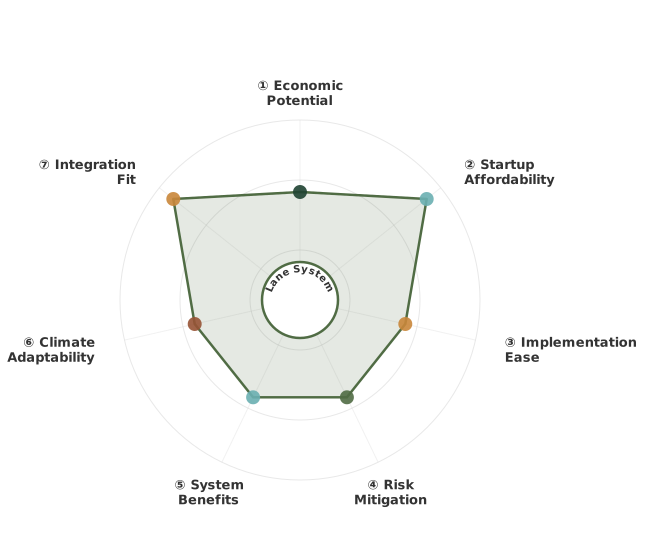
How These Traits Are Calculated
Trait dimensions are ordered clockwise starting from the top of the chart (12 o'clock position):
1. Economic Potential
Financial returns, annual value, and break-even timeline
WHAT: Evaluates financial viability by combining net annual value ($/ha from savings, income, and amortized harvests) with break-even timeline showing when practices pay for themselves.
WHY: Farmers need clear ROI understanding before committing resources. Fast payback (≤3 years) with strong returns (≥$300/ha) enables confident adoption, while long timelines (>10 years) restrict adoption to well-funded operations willing to wait for returns.
HOW: Calculated from net annual value in $/ha and break-even years. Exceptional (≥2.6): fast ROI ≤3 years + high value ≥$300/ha. Typical (1.8-2.5): moderate returns or longer timelines. Limited (<1.8): marginal economics or very long payback >10 years.
2. Startup Affordability
Initial investment costs and financial barrier to entry
WHAT: Measures financial barrier to entry through startup costs for equipment, infrastructure, consulting, and materials. Inverted scoring: lower costs = higher scores = more accessible adoption.
WHY: Affordability determines who can adopt. Low-cost practices (<$250/ha) enable widespread adoption across diverse scales, while high costs (>$2,500/ha) limit adoption to well-capitalized operations, creating barriers that slow regenerative transition.
HOW: Calculated from initial investment parsed from practice content. Inverted scoring: Exceptional (≥2.6): minimal investment <$250/ha. Typical (1.8-2.5): moderate costs $250-2,500/ha. Limited (<1.8): high barrier >$2,500/ha.
3. Implementation Ease
Learning curve and specialized knowledge required
WHAT: Measures how much learning, planning, and specialized knowledge a practice requires. Simpler practices with fewer steps score higher, while complex practices requiring extensive training or specialized resources score lower.
WHY: Complex practices create adoption barriers even when economically viable. Straightforward practices enable faster adoption and broader participation, while those requiring extensive training, timing precision, or specialized equipment limit who can succeed.
HOW: Evaluated by measuring documentation length and identifying complexity markers like location-specific requirements, seasonal timing windows, specialized skills, and dedicated equipment needs. Exceptional (≥2.6): straightforward practices with minimal prerequisites. Typical (1.8-2.5): moderate learning curve with some specialized needs. Limited (<1.8): steep learning curve requiring significant training or resources.
4. Risk Mitigation
Identified financial and ecological risk assessment
WHAT: Evaluates documented risks across financial (investment loss, market volatility) and ecological (crop failure, pest outbreaks) domains. Inverted scoring: fewer risks = higher scores.
WHY: Understanding risk exposure helps farmers make informed decisions. Low-risk practices allow confident implementation, while high-risk practices require careful planning and contingency resources. Risk transparency prevents costly failures.
HOW: Calculated from identified risks in practice content. Inverted scoring: Exceptional (≥2.6): ≤2 risks with manageable severity. Typical (1.8-2.5): 3-5 moderate risks. Limited (<1.8): 6+ risks or severe exposure.
5. System Benefits
How many ways the practice improves your land simultaneously
WHAT: Measures how many aspects of land health improve at once—carbon storage, soil quality, erosion control, water absorption, and biodiversity. Practices that improve multiple areas simultaneously create compounding benefits where each improvement reinforces the others.
WHY: The best practices solve multiple problems at once. For example, addressing erosion simultaneously builds carbon and improves water infiltration, creating a resilient system with positive feedback loops. Single-benefit approaches miss these compound transformation opportunities.
HOW: Evaluated across five key outcomes: carbon sequestration, soil organic matter increase, erosion reduction, water infiltration improvement, and biodiversity enhancement. Exceptional (≥2.6): high carbon storage (>8 t/ha/yr), improvements across 4-5 areas, transformative outcomes. Typical (1.8-2.5): moderate carbon (3-8 t/ha/yr), improvements across 2-3 areas. Limited (<1.8): modest impact (<3 t/ha/yr), single-area focus only.
6. Climate Adaptability
Geographic applicability across Köppen climate zones
WHAT: Evaluates geographic applicability by assessing how many Köppen climate zones successfully support a practice and what adaptation requirements are needed. Measures breadth of climates where farmers can implement with minimal to moderate modifications.
WHY: Universal practices working across diverse climates enable more farmers to adopt regenerative approaches. Practices limited to single climate types (only Mediterranean, only tropical) restrict adoption and slow global transition. Adaptability determines whether a practice serves niche regions or offers broad transformation.
HOW: LLM evaluation of regional success stories, Köppen zone coverage, and adaptation needs. Exceptional (≥2.6): 5+ zones or 4+ climate types, 3+ continents, minimal adaptation. Typical (1.8-2.5): 3-4 zones or 2-3 types, 2 continents, moderate adaptation. Limited (<1.8): 1-2 zones, single region, significant adaptation or highly specialized.
7. Integration Fit
How well this practice combines with others you're doing
WHAT: Measures how well a practice combines with other regenerative practices you might be doing. Some practices work as building blocks that make many other practices easier or more effective, while others work best on their own.
WHY: Practices that combine well with many others create more value on your farm. For example, cover cropping enables no-till, improves grazing, supports crop diversity, and helps water management—making all of them work better together. This helps you build a coherent system rather than juggling disconnected practices.
HOW: Evaluated by identifying which practices combine well and how strong those combinations are. 'Ideally Suited' means strong combinations where practices reinforce each other (practice A makes B easier, while B makes A more effective). 'Adequate' means complementary benefits that work well together. Exceptional (≥2.6): combines well with 6+ practices, serves as a building block. Typical (1.8-2.5): combines with 3-5 practices. Limited (<1.8): 1-2 practices or works best alone.
Going Deeper
1
WHY - The Benefits
Lane systems offer a powerful mechanism for enhancing the ecological and economic sustainability of agricultural landscapes. By strategically integrating permanent vegetative strips, farmers can harness natural processes to mitigate common challenges like erosion, water...
Lane systems offer a powerful mechanism for enhancing the ecological and economic sustainability of agricultural landscapes. By strategically integrating permanent vegetative strips, farmers can harness natural processes to mitigate common challenges like erosion, water scarcity, loss of biodiversity, and reliance on costly external inputs. These benefits are not theoretical; they are observable outcomes supported by ecological research and farmer experience globally.
WHY - The Benefits
Lane systems offer a powerful mechanism for enhancing the ecological and economic sustainability of agricultural landscapes. By strategically integrating permanent vegetative strips, farmers can harness natural processes to mitigate common challenges like erosion, water...
Lane systems offer a powerful mechanism for enhancing the ecological and economic sustainability of agricultural landscapes. By strategically integrating permanent vegetative strips, farmers can harness natural processes to mitigate common challenges like erosion, water scarcity, loss of biodiversity, and reliance on costly external inputs. These benefits are not theoretical; they are observable outcomes supported by ecological research and farmer experience globally.
Soil Health Benefits
The most immediate and significant benefit of lane systems is the protection and enhancement of soil health. The dense perennial vegetation provides continuous ground cover, directly addressing Principle 3: Keep Soil Covered. This cover intercepts rainfall, dissipates its energy, and slows surface runoff, dramatically reducing soil erosion. Studies show that vegetated buffer strips can reduce sediment load in runoff by 70-90%, preventing the loss of valuable topsoil.
The perennial roots of lane vegetation are crucial for Principle 4: Maintain Living Roots. These roots penetrate deep into the soil, creating stable macropores that improve water infiltration and aeration. This is particularly critical in areas prone to compaction or heavy rainfall. The continuous biological activity of these roots also contributes to the build-up of soil organic matter (SOM) over time, typically increasing SOM levels within the lanes by 1-3% relative to adjacent cultivated areas over a decade. This enhanced SOM improves soil structure, water-holding capacity, and nutrient availability.
Earthworm populations and microbial diversity tend to be significantly higher in the protected environment of lane systems compared to managed fields. The diverse plant community within the lanes, supporting Principle 2: Maximize Crop Diversity, provides a continuous and varied food source for soil organisms. This leads to improved soil structure, better nutrient cycling, and increased resilience to soil-borne diseases, creating a healthier foundation for the entire farm ecosystem.
Economic Benefits
While dedicating land to perennial buffers might seem like a sacrifice, lane systems generate substantial economic returns through multiple pathways. The reduction in soil erosion prevents the loss of fertile topsoil, which is a critical production asset. Preventing erosion also saves farmers from costly soil remediation and nutrient replacement. Estimates suggest that erosion can cost agricultural systems $50-200 per hectare per year in lost productivity and nutrient replacement.
Improved water management is another key economic driver. Enhanced infiltration means more rainfall is stored in the soil profile, making crops and forages more resilient to drought. This can reduce irrigation costs in water-scarce regions or maintain yields during dry spells, stabilizing farmer income. Furthermore, the improved water quality downstream—less sediment and fewer dissolved nutrients entering waterways—can lead to better riparian health and potentially reduce costs associated with water treatment or regulatory compliance.
Lane systems can also provide direct income streams. If planted with timber species, they represent a long-term investment yielding harvestable wood products. Nut-bearing trees (e.g., walnuts, chestnuts, pecans) or fruit shrubs can provide earlier, recurring income. Perennial fodder crops or high-value biomass species can be harvested for animal feed or biofuels. Even if lanes are solely composed of native grasses and wildflowers, they can support pollinator populations that may improve yields in adjacent crops (e.g., fruit trees, oilseed crops) through enhanced pollination.
Reduced input costs are a significant economic advantage. The increased biodiversity in and around lanes typically leads to better natural pest control, reducing the need for insecticides. Enhanced nutrient cycling from organic matter accumulation and nitrogen-fixing plants can decrease reliance on synthetic fertilizers. The improved soil health and water retention capabilities of the soil also contribute to greater crop resilience, reducing losses from stresses and improving overall farm profitability.
Regenerative Systems Fit
Lane systems are a cornerstone practice in regenerative agriculture, strongly supporting four of the five key principles, and enabling the fifth:
Principle 3 (Keep Soil Covered): This is perhaps the most direct contribution. By establishing permanent vegetative cover in fixed corridors, lane systems ensure that a significant portion of the land surface is protected year-round, preventing erosion and supporting soil biology.
Principle 4 (Maintain Living Roots): The perennial nature of lane vegetation guarantees continuous root activity, feeding soil microbes, maintaining soil structure, and cycling nutrients outside of crop production cycles. This constant biological presence is vital for soil health and resilience.
Principle 2 (Maximize Crop Diversity): Lane systems introduce significant structural and species diversity into the agricultural landscape. This diversity supports a wider range of beneficial organisms, mimics natural ecosystems, and creates resilience against pests and diseases that thrive in monocultures. This complexity benefits the entire farm ecosystem.
Principle 1 (Minimize Soil Disturbance): Once established, lane systems require minimal soil disturbance. The perennial vegetation anchors the soil, and established lanes generally do not require annual tillage. This stability is crucial for building soil organic matter and long-term soil health.
Principle 5 (Integrate Livestock): While not directly integrating livestock in the same way as silvopasture, lanes can be designed to provide valuable resources for grazing animals. They can offer shade, browse (from shrubs/trees), clean water access (if adjacent to riparian zones), and habitat for beneficial insects that might help control livestock pests. Livestock grazing can sometimes be managed within lanes during specific periods, provided it does not damage the perennial vegetation or compromise soil health.
Lane systems are foundational because they create an ecological infrastructure that supports other regenerative practices. They enhance the effectiveness of cover cropping by providing diverse seed sources and habitat for beneficial insects that may then move into fields. They improve the outcomes of rotational grazing by providing shade and riparian buffer zones. By building soil health and biodiversity, they reduce the need for external inputs and improve the overall resilience of the farming operation, making other regenerative transitions more feasible and successful.
2
WHERE - Regional Considerations
Lane systems are adaptable across a vast array of climates and agricultural systems, with specific plant choices and design considerations varying based on regional environmental factors. Understanding these nuances is key to maximizing their effectiveness.
Lane systems are adaptable across a vast array of climates and agricultural systems, with specific plant choices and design considerations varying based on regional environmental factors. Understanding these nuances is key to maximizing their effectiveness.
WHERE - Regional Considerations
Lane systems are adaptable across a vast array of climates and agricultural systems, with specific plant choices and design considerations varying based on regional environmental factors. Understanding these nuances is key to maximizing their effectiveness.
Lane systems are adaptable across a vast array of climates and agricultural systems, with specific plant choices and design considerations varying based on regional environmental factors. Understanding these nuances is key to maximizing their effectiveness.
Click Here to Look up your Region if you don't already know it
Humid Temperate Regions
Representative Locations: Southeastern United States, northern Europe (UK, Germany, Poland), eastern China, Japan, New Zealand
Climate Context: Warm to hot summers and cool to cold winters with moderate to high annual precipitation (75-150 cm or 30-60 inches) distributed relatively evenly. USDA Zones 6-8, Köppen Cfb/Cfa.
In these regions, lane systems are vital for managing high rainfall and preventing erosion on permeable soils. Species selection often focuses on nitrogen-fixing legumes and grasses, deep-rooted perennials, or riparian buffer species that can tolerate wetter conditions. Trees common in temperate zones, such as oak, maple, and walnut, can be incorporated for timber or nut production, while shrubs like dogwood and serviceberry offer habitat and biomass. The main challenges include managing lush growth and preventing nutrient runoff into waterways, making strategic placement along contours and watercourses paramount.
Mediterranean Regions
Representative Locations: California, Mediterranean basin (Spain, Italy, Greece), central Chile, southwestern Australia, Western Cape South Africa
Climate Context: Hot, dry summers and mild, wet winters. Annual precipitation 40-90 cm (15-35 inches), highly seasonal. USDA Zones 8-10, Köppen Csa/Csb.
Lane systems in Mediterranean climates are crucial for water conservation and erosion control during intense winter rains. Deep-rooted, drought-tolerant species are essential. Plants that can survive dry summers and provide ground cover during wet winters are ideal. Drought-tolerant shrubs like rosemary, lavender, and native bunchgrasses are often used. Trees such as olive, cypress, or certain oaks can be integrated where water resources permit. The primary design focus is on maximizing water infiltration and retention, using contour planting and swales within the lanes to capture and hold precious rainfall.
Arid/Semi-Arid Regions
Representative Locations: Western USA, North Africa, Central Asia, Interior Australia
Climate Context: Low annual precipitation (<40 cm or 15 inches), high temperatures, short and often unpredictable growing season. USDA Zones 7-9, Köppen BSh/BSk.
In arid and semi-arid zones, lane systems function primarily as windbreaks, erosion control barriers, and biodiversity havens that support drought-tolerant wildlife. Species selection must prioritize extreme drought tolerance and resilience to high temperatures and wind. Native grasses, saltbushes, and hardy shrubs adapted to local conditions are ideal. Where water is available, drought-tolerant trees like mesquite, acacia, or certain pines can be integrated. Lanes can also be designed to capture and channel scarce rainfall for the benefit of the perennial vegetation and adjacent areas, utilizing techniques like keyline design.
Cold Continental Regions
Representative Locations: Northern USA and Canada, Northern Europe, Northern Asia
Climate Context: Very short growing seasons, extreme summer heat, severe winter cold. USDA Zones 3-5, Köppen Dfa/Dfb.
Lane systems in cold continental climates benefit from species that can withstand extreme temperature fluctuations and short growing seasons. Perennial grasses, hardy legumes, and cold-hardy shrubs (e.g., Siberian pea shrub, willow) are good choices. Coniferous trees or cold-hardy deciduous trees like birch and aspen can provide windbreaks and habitat. The lanes primarily serve to buffer wind, trap snow for water retention in spring, and provide wildlife corridors during harsh winters. Minimizing soil disturbance is critical as recovery times are longer in cooler climates.
Subtropical Regions
Representative Locations: Southeastern USA, Southern China, Southern Brazil, Eastern Australia
Climate Context: Hot, humid summers and mild winters with generally ample rainfall. USDA Zones 9-11, Köppen Cfa/Cwa.
In subtropical zones, lane systems help manage high humidity, heavy rainfall, and pest pressure. They can be planted with species that provide shade, improve aeration, and harbor beneficial insects. Fast-growing trees and shrubs that can tolerate warm, wet conditions are suitable. Integrating nitrogen-fixing plants can replenish soil fertility. Emphasis is placed on designing lanes to improve drainage and reduce the incidence of fungal diseases in adjacent crops, while also providing habitat for a broad range of beneficial fauna.
Tropical Regions
Representative Locations: Central America, Southeast Asia, East Africa, Northern Australia, Northern South America
Climate Context: High temperatures year-round, with distinct wet and dry seasons or consistent high rainfall. Köppen Af/Am/Aw.
Lane systems in tropical regions are crucial for managing heavy rainfall, high temperatures, and nutrient leaching. They can incorporate species that provide shade, contribute to soil fertility (e.g., nitrogen-fixing trees like Leucaena or Gliricidia), and offer valuable products like fuelwood or fruit. The emphasis is on maintaining continuous living cover to prevent soil degradation in high-intensity rainfall areas and to provide habitats that support biological pest control. Selecting species that are adapted to local soils and rainfall patterns, and that do not become invasive, is paramount.
3
HOW - Implementation Process
Implementing a successful lane system requires careful planning and execution, balancing the immediate needs of establishment with the long-term ecological and economic goals.
Implementing a successful lane system requires careful planning and execution, balancing the immediate needs of establishment with the long-term ecological and economic goals.
HOW - Implementation Process
Implementing a successful lane system requires careful planning and execution, balancing the immediate needs of establishment with the long-term ecological and economic goals.
Implementing a successful lane system requires careful planning and execution, balancing the immediate needs of establishment with the long-term ecological and economic goals.
Prerequisites
- Site Assessment: Evaluate your land's topography, soil types, water flow patterns, existing vegetation, and microclimates. Identify areas most vulnerable to erosion, nutrient runoff, wind damage, or lacking biodiversity.
- Goal Definition: Determine the primary purpose of your lanes: erosion control, water management, biodiversity enhancement, windbreak, livestock shade/browse, timber/fuelwood production, or a combination.
- Site Preparation Strategy: Plan how you will establish lanes. This may involve minimal tillage, interseeding into existing sod, planting into bare strips, or more involved earthworks for water management.
- Species Selection: Choose perennial plants (trees, shrubs, grasses, forbs) that are adapted to your climate, soil, specific site conditions, and align with your goals. Prioritize native species for biodiversity benefits and resilience.
- Permits and Regulations: Check for any local, regional, or national regulations regarding buffer zones, waterways, or establishing permanent vegetation.
Phase 1: Planning and Design
-
Layout and Spacing:
- Contour Lanes: Plant along contour lines to slow water flow, trap sediment, and improve infiltration. Spacing depends on slope steepness; closer on steeper slopes.
- Riparian Buffers: Establish along streams, rivers, and ditches. Width depends on waterway size and regulatory requirements (often 3-15 meters or 9-50 feet).
- Windbreaks: Plant perpendicular to prevailing winds, often in double or triple rows for maximum effectiveness. Spacing between rows can facilitate access.
- Field Border Lanes: Along headlands, property boundaries, or field edges to prevent erosion from machinery and provide habitat.
- Biodiversity Corridors: Connect existing natural areas or create habitat links within the farm, integrating a mix of plant types.
-
Species Mix: Develop a diverse mix of species tailored to your region and goals. Consider:
- Grasses/Forbs: For rapid ground cover and soil stabilization (e.g., native prairie grasses, clovers).
- Shrubs: For biomass, habitat, and inter-row management of moisture (e.g., willows, dogwoods, berry bushes).
- Trees: For timber, nuts, fuelwood, shade, and long-term ecological benefits (e.g., oaks, maples, pines, fruit trees). Select species suited to your climate and soil.
-
Water Management Integration: If designing for water capture, incorporate features like swales, terraces, or infiltration basins within or adjacent to lanes.
Phase 2: Establishment
-
Site Preparation:
- Minimal Disturbance: For seeded lanes, a light disking or tilling of a narrow strip is often sufficient. For established pastures, overseeding or interseeding may work.
- Bare Ground Strips: Clear a narrow strip (e.g., 1-3 meters or 3-9 feet wide) for planting tree or shrub seedlings, followed by mulching.
- Earthworks: If designing swales or terraces, this phase may involve light grading/excavation.
-
Planting:
- Seeding: Use a no-till drill for grasses and forbs to ensure good seed-to-soil contact and minimize disturbance. Broadcast seeding with a cultipacker can also be effective. Seeding is typically done in spring or fall when moisture is favorable.
- Planting Trees/Shrubs: Plant seedlings or whips using appropriate techniques for your region and species. Ensure proper spacing to allow for mature growth and future access.
-
Protection:
- Livestock Exclusion: Use temporary or permanent fencing to keep livestock out of newly established lanes for at least 2-3 years to allow plants to establish and prevent browsing damage.
- Weed Control: Manage competing weeds through mechanical means (hand-pulling, light cultivation in small areas) or, as a last resort during transition, targeted herbicide application. Mulching around trees and shrubs also helps suppress weeds.
-
Initial Watering/Fertilizing: Provide supplemental watering during establishment if drought conditions are severe. Minimal or no synthetic fertilizer is typically needed if diverse species, including legumes, are used.
Phase 3: Management and Maintenance (Years 1-3+)
- Weed Management: Continue to monitor and manage competing weeds, especially in the first 1-2 years. As lane vegetation matures and outcompetes weeds, less intervention will be needed.
- Livestock Integration (When Appropriate): Once perennial plants are well-established (typically 2-5 years), controlled grazing can be introduced. Use rotational grazing to manage plant growth, prevent overgrazing, and integrate livestock benefits without damaging the lane system. Strategic grazing can mimic natural processes.
- Water Management Maintenance: If swales or contour features were incorporated, maintain them by clearing debris or sediment as needed.
- Harvesting/Pruning: If lanes include timber, nut, or fuelwood species, begin basic pruning for form and health. First harvests may occur after 5-15 years depending on species.
Transition Timeline & Phase-Out Strategy (If applicable)
While lane systems are intended as permanent features, elements of their establishment might be considered transitional:
- Initial Site Prep: Any temporary tillage for seedbed preparation should be phased out as vegetation establishes and soil health improves; by year 2-3, rely on no-till seeding or interseeding.
- Temporary Fencing: Remove temporary exclusion fencing once plants are robust enough to withstand controlled grazing or their growth is no longer significantly impacted by minor browse.
- Herbicide Use: If herbicides were used for initial weed control, aim to phase them out by year 2-3 as vegetation becomes dense enough to suppress weeds naturally.
Success in this transitional phase looks like plants thriving, soil health improving within the lanes, and the system becoming largely self-sustaining with minimal intervention beyond integrated grazing or targeted harvesting.
4
Know the Debate
Lane systems' benefits and costs vary significantly by region, scale, and management intensity. In humid climates, they are crucial for water manag...
Know the Debate
Lane systems' benefits and costs vary significantly by region, scale, and management intensity. In humid climates, they are crucial for water manag...
Lane systems' benefits and costs vary significantly by region, scale, and management intensity. In humid climates, they are crucial for water management, while arid regions focus on drought resilience and windbreaks. Establishment costs range from under $1,000 to over $3,000 per acre, depending on complexity and labor. Ongoing labor for maintenance and potential harvesting also varies, but integrated systems often see long-term input reductions and income diversification.
How much do lane systems improve adjacent yields?
Moderate, consistent gains (5-15%)
Academic research generally supports moderate yield increases in adjacent areas due to reduced erosion and improved water use efficiency. These benefits are observed across diverse climates and soil types with well-designed systems.
Sources behind this view
Sources behind this view
 Research
-
Farming with forages can reconnect crop and livestock operations to enhance circularity and foster ecosystem services (opens in new window)
This study found: This review suggests that bringing crop and livestock farming back together, using a variety of forage plants (like grasses and legumes), can create more sustainable and environmentally friendly farms. Currently, specialized farms often lead to problems like reduced wildlife, water pollution, poor soil, and greenhouse gas emissions. By integrating crops and animals, farms can recycle nutrients naturally, manage pests and weeds without chemicals, and share resources. The authors propose using cover crops as nutritious feed for livestock or incorporating longer-term forage crops into crop rotations. These practices have a history of improving soil health, conserving nutrients, and increasing biodiversity. Rethinking farm design to include these mixed uses can significantly reduce soil erosion, clean up water, and build healthier soils, making agriculture more sustainable overall.
-
Integrated Crop–Livestock Systems in the Southeastern USA (opens in new window)
This study found: Combining crops and livestock farming in the southeastern US could offer significant benefits for both farm production and the environment, thanks to the region's mild climate. Researchers are exploring key practices like rotating crops with pastures (sod-based rotations), planting cover crops, intercropping, and using conservation tillage. Rotating crops with pasture is proven to help break pest cycles and rebuild soil organic matter, which is vital for healthy soil and plants. While cover crops have many advantages, farmers often hesitate due to upfront costs. However, allowing livestock to graze these cover crops could provide an immediate income stream. This approach, combined with conservation tillage, can help protect soil and water quality. Ongoing research in areas like the Coastal Plain and Piedmont regions suggests that better integration of crops and livestock can lead to higher yields, better profits, and less harm to natural resources.
Significant (up to 50%) or niche gains possible
Farmer experience indicates that strategic lane placement, especially with integrated livestock, trees, or water harvesting, can lead to substantial yield improvements and farm value increases. These outcomes are highly context-dependent.
Sources behind this view
Sources behind this view
 Videos & Podcasts
-
Keyline design, featuring agroforestry and water retention patterns, is a strategy for fragmented watersheds. Examples in Switzerland, Vermont, and Wisconsin demonstrate integrating trees and water harvesting infrastructure to build soil and increase land value.
-
Case studies showcase agroforestry: Iowa farm with nursery crops/nuts/fruits; Vermont goat dairy using tree hay; shiitake mushroom cultivation; New York farm integrating livestock with hedgerows/fruits/syrup/mushrooms; black locust for fence posts; riparian buffers with diverse species. Keyline vs. swales clarified: Keyline uses symmetrical rows for water dispersal, contour is level. Spacing for nut trees: 20-30 ft within rows, wider between rows based on use. Context is crucial for all designs.

-
Maximize living roots in arable systems (strip cropping) to build soil health and sequester carbon. While animal integration on perennials is ideal, focus on increasing photosynthesis and diversity. Adapt practices to farm context for continuous improvement and regeneration.

Making Sense of the Differences
Yield impacts from lane systems vary depending on placement, management, and specific climate and soil context. Academic research indicates moderate, consistent gains from erosion control and water efficiency. Farmer experience suggests significant benefits are possible, especially when lanes provide direct resources or are integrated with income-generating elements. Consider local rainfall, soil type, lane function, and livestock integration to anticipate yield responses.
How much does establishing lane systems cost?
Moderate upfront cost ($1,000-2,500/acre)
Academic consensus suggests moderate upfront investment, driven by species and fencing, which is outweighed by long-term benefits. Cost-share programs can significantly reduce financial burden.
Sources behind this view
Sources behind this view
Videos & Podcasts
-
Conservation planning solutions require balancing economics, agronomy, and environment. Key practices include no-till, cover crops, grass waterways, contour buffers, terraces, and buffers, each with benefits and potential downsides. Long-term landowner adoption, economic viability, and agronomic soundness are crucial for success. Core practices include crop rotation, conservation tillage, pest management, and buffers.

-
Living larders encompass cultivated flora (food forests, aquatic plants) and fauna (livestock, fish, even prairie dogs) that self-manage and provide food. Historically, large herbivore populations like bison were crucial for soil health and carbon sequestration, offering lessons for sustainable land management.
Highly variable upfront cost ($400-3,000+/acre)
Farmer experience shows costs greatly depend on farm scale, design complexity (water features, trees), and labor source (DIY vs. contract). Small DIY projects are cheaper; large, complex designs require more capital.
Sources behind this view
Sources behind this view
Videos & Podcasts
-
Uses animal grazing as the primary tool to build soil fertility and organic matter, supported by a flexible pasture layout of long, narrow strips with central water access for sustainable revenue generation.

-
Case studies showcase agroforestry: Iowa farm with nursery crops/nuts/fruits; Vermont goat dairy using tree hay; shiitake mushroom cultivation; New York farm integrating livestock with hedgerows/fruits/syrup/mushrooms; black locust for fence posts; riparian buffers with diverse species. Keyline vs. swales clarified: Keyline uses symmetrical rows for water dispersal, contour is level. Spacing for nut trees: 20-30 ft within rows, wider between rows based on use. Context is crucial for all designs.
-
Ridgedale uses digital mapping and keyline design for water management and tree planting. They employ a leader-follower grazing system, a gravity-fed ram pump for water, and a geosynthetic clay-lined pond for irrigation. Silvopasture systems include fruit and nut trees, with windbreaks established using Salix and alder. Regenerating forest is managed with pigs, and protected from predators by electric fencing.
Making Sense of the Differences
Establishing lane systems involves a significant financial investment that varies widely based on farm scale and design complexity. Smaller operations using DIY labor and basic designs may spend $400-1,000 per acre, while larger or more complex systems with permanent infrastructure can cost $1,000-3,000+ per acre. Utilizing cost-share programs and implementing lanes in phases can mitigate upfront financial risks.
5
HOW MUCH - Costs & Investment
Note: Costs shown in USD; multiply by local labor and material cost indices for your region. Labor costs vary significantly internationally.
Note: Costs shown in USD; multiply by local labor and material cost indices for your region. Labor costs vary significantly internationally.
HOW MUCH - Costs & Investment
Note: Costs shown in USD; multiply by local labor and material cost indices for your region. Labor costs vary significantly internationally.
Note: Costs shown in USD; multiply by local labor and material cost indices for your region. Labor costs vary significantly internationally.
Note: All costs are based on recent US economic data (2024–2026) and may vary substantially by region based on local labor rates, material costs, and regulatory requirements.
Site Preparation and Grading
Establishing a productive lane system begins with site preparation, which varies based on existing field conditions and drainage requirements. For small operations (under 50 acres (20 ha)), site preparation ranges from $20.84 to $83.36 per acre ($51–$206/ha) using small-scale tillage or manual clearing. Mid-size operations (50–500 acres (20–202 ha)) typically incur costs of $12.50 to $62.52 per acre ($31–$154/ha) by utilizing larger tractor-pulled implements for wider passes. Large operations (500+ acres) can achieve economies of scale, lowering costs to $8.34 to $41.68 per acre ($21–$103/ha) by leveraging existing heavy equipment and GPS-guided precision clearing. If extensive earthworks, such as swales or terrace grates for water harvesting, are required, additional costs range from $83.36 to $416.80 per acre ($206–$1,030/ha) depending on topographical complexity and equipment rental rates.
Seed Mixes and Vegetation Establishment
Selecting the correct vegetation—ranging from diverse native grasses to pollinator-friendly forbs—is a foundational investment. Establishing herbaceous lanes costs approximately $41.68 to $125.04 per acre ($103–$309/ha) for seed and sowing labor on small sites, provided materials are sourced in smaller, retail-priced quantities. Mid-size operations, typically purchasing seed in bulk, see costs range from $31.26 to $104.20 per acre ($77–$257/ha). Large-scale operations benefit from wholesale agricultural pricing, bringing costs down to $26.05 to $83.36 per acre ($64–$206/ha). Factors such as seed coating, species diversity, and native status influence the exact price point within these ranges.
Tree and Shrub Seedlings
The primary investment for resilient, permanent lane systems is woody biomass. For a standard planting density of 100–200 stems per acre of lane, small operations budget $208.40 to $1,042.00 per acre ($515–$2,575/ha) due to higher unit costs for nursery-grade seedlings. Mid-size operations, often sourcing 1,000+ seedlings at a time, see costs of $166.72 to $833.60 per acre ($412–$2,060/ha). Large operations procuring in bulk quantities realize rates of $125.04 to $625.20 per acre ($309–$1,545/ha). Costs fluctuate based on tree species maturity at planting—bareroot seedlings are significantly cheaper than container-grown or balled-and-burlap stock.
Fencing and Exclusion
Protecting young plantings from livestock is critical for survival in agroforestry systems. Permanent woven-wire fencing costs $208.40 to $833.60 per acre ($515–$2,060/ha) for small operations due to shorter total run lengths and increased relative post frequency. Mid-size operations typically see $166.72 to $625.20 per acre ($412–$1,545/ha), while large operations with geometric field efficiencies can drop costs to $125.04 to $416.80 per acre ($309–$1,030/ha). While high-tensile electric fencing may offer lower initial installation costs, maintenance requirements often increase the total cost of ownership over a 10-year horizon.
Most Spend: The majority of farm operations fall within the middle 60% of these ranges, typically investing between $850 and $1,350 per acre ($2,100–$3,336/ha) when accounting for a standard mix of site prep, base vegetation, and moderate tree density.
Why the Range?: Cost variation is driven primarily by current local labor availability, the necessity for specialized heavy equipment for earthwork, and the degree of material sourcing—specifically whether producers access wholesale nursery bulk discounts versus retail nursery pricing.
6
REWARDS AND RISKS - Economics & Risk Factors
Economic Rewards
Economic Rewards
REWARDS AND RISKS - Economics & Risk Factors
Economic Rewards
Economic Rewards
Lane systems represent a multi-layered economic model where initial capital expenditure transitions into long-term compounding benefits. In a best-case scenario, incorporating high-value timber species or perennial nut crops alongside forage grasses generates a return on investment beginning at year 8, with total net gains reaching $416.80 to $625.20 per acre ($1,030–$1,545/ha) annually by year 15. In a typical scenario, farmers see a breakeven point at year 7 to 9, driven by reduced input costs for fertilizer and pesticides, alongside stable annual productivity gains.
In the worst-case scenario—characterized by poor species selection, lack of irrigation during critical establishment phases, or high seedling mortality—the system may face a total loss of an initial $1,250.40 per acre ($3,090/ha) investment, necessitating replanting costs at 60–80% of original expenditures. Profitability is heavily influenced by market volatility; for instance, fluctuations in the price of synthetic nitrogen fertilizers directly impact the value of legume-heavy lane systems, which can save farmers $31.26 to $72.94 per acre ($77–$180/ha) annually. Furthermore, emerging carbon market credits and ecosystem service payment schemes offer approximately $15.63 to $52.10 in annual offsets, though this requires consistent monitoring and administrative management.
Risk mitigation is essential for financial durability: 1. Phased Establishment: Rather than completing all lanes simultaneously, planting smaller segments over 3–5 years mitigates cash flow strain and allows for "learning-by-doing," potentially saving 15–20% in capital through optimization. 2. Diversified Income: Selecting multi-purpose species ensures that if timber markets soften, the system retains utility as a forage or biomass resource, cushioning against market swings. 3. Infrastructure Longevity: Designing lanes to double as farm access tracks or windbreaks allows the system to pay for itself; properly designed lanes reduce wind speed by 30–50%, potentially preventing $156.30 to $312.60 per acre ($386–$772/ha) in drought-related crop losses.
Transition Period Risks: During the first 3 years, "Establishment Lag" remains the primary financial hurdle. Yields in the 10-foot (3.0 m) buffer strip adjacent to the lanes may decline by 10–20% as young trees compete for soil moisture and nutrients. Farmers can mitigate this by utilizing wider spacing or root-pruning techniques. The transition to "Net-Positive" status typically arrives after 4–6 years, once the microclimate benefits and soil moisture regulation begin to physically outpace the initial establishment costs.
7
COMPATIBLE PRACTICES - Integration Opportunities
Lane systems are highly synergistic with other regenerative practices, amplifying their benefits and contributing to a more resilient and productive whole-farm system.
Lane systems are highly synergistic with other regenerative practices, amplifying their benefits and contributing to a more resilient and productive whole-farm system.
COMPATIBLE PRACTICES - Integration Opportunities
Lane systems are highly synergistic with other regenerative practices, amplifying their benefits and contributing to a more resilient and productive whole-farm system.
Lane systems are highly synergistic with other regenerative practices, amplifying their benefits and contributing to a more resilient and productive whole-farm system.
Rotational Grazing:
- Synergy: ⭐⭐⭐⭐⭐ Essential
- Integration: Lane systems can be designed to incorporate or be adjacent to grazing paddocks. Livestock can be rotated through lanes during specific seasons for shade, browse, or supplemental forage, provided vegetation is robust and protected from overgrazing. Proper rest periods for lane vegetation are crucial.
- Benefit: Livestock provide nutrient cycling, manage vegetation growth, and generate income while lanes provide critical resources.
Cover Cropping:
- Synergy: ⭐⭐⭐⭐⭐ Essential
- Integration: Lane seeds can spread into adjacent fields, and vice-versa. The diversity of species in lanes can provide a seed bank for beneficial insects and soil microbes that can then colonize cover-cropped fields, and improved soil health in lanes supports stronger cover crop growth.
- Benefit: Enhanced biodiversity, natural pest control moving from lanes to fields, and improved soil health across the farm.
Agroforestry / Silvopasture:
- Synergy: ⭐⭐⭐⭐⭐ Foundational
- Integration: Lane systems are a component of broader agroforestry designs. They can be specific buffer zones or corridors within a larger silvopasture or timber-agroforestry system, connecting different management areas.
- Benefit: Creates a structured, multi-layered landscape that optimizes resource use, diversifies income, and enhances ecosystem services across the entire farm.
No-Till Farming:
- Synergy: ⭐⭐⭐⭐ High Synergy
- Integration: Lanes act as permanent no-till zones that buffer erosion and improve soil health. They help maintain soil structure and organic matter at field edges, which can spill over into adjacent no-till cropping systems.
- Benefit: Reduced soil disturbance, better water infiltration, and increased resilience for surrounding agricultural fields.
Water Harvesting & Management (e.g. Keyline):
- Synergy: ⭐⭐⭐⭐ High Synergy
- Integration: Lane systems can be designed to incorporate earthworks like swales or terracing that capture and spread rainfall, working in conjunction with keyline principles to manage water across the landscape.
- Benefit: Maximizes water infiltration, reduces runoff and erosion, improves soil moisture availability for both lane vegetation and adjacent crops/pastures.
Native Habitat Restoration:
- Synergy: ⭐⭐⭐⭐⭐ Foundational
- Integration: Lane systems inherently create and connect habitat for native wildlife, pollinators, and beneficial insects.
- Benefit: Increases farm biodiversity, supports pollination services, contributes to ecological connectivity and resilience.
By integrating lane systems with these practices, farmers build a robust, self-reinforcing ecological system that enhances productivity, economic stability, and environmental stewardship.