
Leader-Follower Grazing
Leader-follower grazing is a grazing strategy where one group of animals (the "leaders," typically more selective, like lactating cows) grazes a paddock first, consuming the most palatable forage. A second group (the "followers," less selective, like steers or dry cows) follows behind, consuming the remaining less-palatable forage, trampled vegetation, and insect larvae. This method allows for more efficient forage utilization and nutrient distribution, improving pasture health and animal performance.
Read More: Complete Description
Leader-follower grazing is a tactical grazing management technique that strategically uses two or more animal groups with differing grazing habits or nutritional needs to sequentially graze a single pasture or paddock. The "leaders" are typically the more selective animals: lactating cows, pregnant cows nearing calving, or finishing livestock. They are turned into a paddock first and focus on consuming the most nutritious and palatable parts of the plant – the leaves and young growth. Their selective grazing leaves behind less palatable stems, mature growth, and trampled vegetation.
Following the leaders, a second group of animals, the "followers," are then introduced into the same paddock. These are often less selective animals, such as steers gaining weight, dry cows, heifers, or young calves. The followers consume the residual forage left by the leaders, including the less desirable parts of the plants and any trampled material. This second pass also helps to scavenge any insect larvae or pupae that are exposed by the initial grazing or trampling. This sequential grazing ensures that more of the available plant material is consumed and nutrients are more evenly distributed across the pasture.
While often categorized by the type of animal, it's the difference in selectivity and nutritional demand that truly defines "leaders" and "followers." For instance, a mob of high-producing dairy cows would be leaders, while a group of beef steers would be followers. Alternatively, on farms with mixed livestock, a group of horses could be leaders, followed by sheep who graze much shorter and more selectively than horses. The key is the differential consumption and utilization of forage resources.
From a regenerative agriculture perspective, leader-follower grazing aligns well with the principle of Integrate Livestock (Principle 5) by using animals strategically to build soil and cycle nutrients. By having a second group of animals follow, more plant material is consumed and trampled, leading to increased organic matter deposition on the soil surface. The increased trampling can help break up surface crusts and incorporate seeds and organic matter into the soil surface. This higher utilization rate of forage and more uniform distribution of manure and urine can stimulate a more robust soil biological community. However, it is important to note that while beneficial for nutrient cycling and forage utilization, leader-follower grazing, like all grazing practices, must be carefully managed to avoid overgrazing, which would violate the principle of Keep Soil Covered (Principle 3) and Maintain Living Roots (Principle 4). It is not a foundational practice in itself but a sophisticated method to enhance rotational grazing systems.
The practice's effectiveness is amplified when used within a well-designed rotational grazing system. A paddock might be grazed by leaders for a short period (1-3 days), followed by followers for another 1-3 days, before the paddock is rested for an extended period (30-60 days or more, depending on climate and season). This extended rest is crucial for plant regrowth, deeper root development (Principle 4), and allowing soil biology to recover and thrive. By utilizing forage more completely and distributing nutrients more evenly, leader-follower grazing can lead to improved pasture health, increased carrying capacity over time, and enhanced soil organic matter.
Common misconceptions include believing that the followers must be a different species from the leaders. While species diversity can enhance the practice, it's the difference in grazing behavior or nutritional requirements that matters. For example, lactating cows and dry cows of the same species can act as leaders and followers based on their differing nutritional demands and grazing selectivity. Another misconception is that this practice reduces the rest period required for paddocks; in reality, it can optimize utilization within an adequate rest period. When implemented correctly, it supports the regenerative goal of building soil health and maximizing ecosystem function by efficiently cycling nutrients and maximizing plant growth, as long as the rest periods are sufficient.
Sources behind this view
Sources behind this view
 Videos & Podcasts
-
Seven grazing principles are detailed: maintain stocking below capacity, leave ample forage, allow full plant recovery, rest pastures, top graze, increase pasture numbers (30+), and use high stock den
-
Holistic grazing, with high-density short grazing (2-3 days) and long rest periods (3-4 months), dramatically increases pasture diversity, eliminates pests like grasshoppers, and boosts livestock prod
-
Transitioned from continuous to management-intensive grazing (MIG) to improve profitability and soil health. MIG involves frequent rotation of higher-density animal groups, focusing on plant recovery

-
Increase grazing frequency (e.g., twice daily) for better pasture utilization and animal performance. Invest heavily in water infrastructure and use temporary fencing in long, narrow paddocks to maxim
 Community
-
Manage rotational grazing by setting recovery (15-40+ days, adapting to region/season) and grazing periods (2-3 days). Aim to 'take half, leave half' for livestock and soil microbes. High stocking den
Read more (opens in new window) smallfarms.cornell.edu -
Adopts a holistic grazing management approach emphasizing diverse perennial pastures, higher residuals (4"), and longer rest periods (avg. 45 days) to build soil health, increase organic matter (3.4%
Read more (opens in new window) smallfarms.cornell.edu -
Advocates for numerous small paddocks (12+ minimum) for longer pasture rest, crucial for plant recovery, parasite control, and soil health. Recommends sequential grazing (ruminants -> pigs -> chickens
Read more (opens in new window) permies.com -
Effective rotational grazing increases forage production and soil health. Management intensity varies by operation, with recommendations for cow-calf, feedlot, and dairy cows. Key metrics include rest
Read more (pp. 1-2) (opens PDF, pp. 1-2) efotg.sc.egov.usda.gov
 Research
-
Impacts of holistic planned grazing with bison compared to continuous grazing with cattle in South Dakota shortgrass prairie (opens in new window)
This study found: Managed grazing with bison in South Dakota's shortgrass prairie significantly improved soil health, water infiltration, forage, and plant composition compared to continuous cattle grazing over a decad
-
Multi-paddock grazing on rangelands: why the perceptual dichotomy between research results and rancher experience? (opens in new window)
This study found: Ranchers often see benefits from multi-paddock grazing that scientific studies don't always confirm. This review explores the gap, highlighting rancher-led adaptive management principles and suggestin
-
Impacts of grazing management on hill country pastures: principles and practices (opens in new window)
This study found: Smart grazing on hilly pastures balances animal needs with grass availability. Managing livestock numbers and types, and grazing at the right time, improves pasture quality and quantity for better far
-
FORAGES AND PASTURES SYMPOSIUM: Improving soil health and productivity on grasslands using managed grazing of livestock. (opens in new window)
This study found: Managed grazing on grasslands can boost plant diversity, soil organic matter, and water infiltration. While results vary, integrating livestock and ecological goals is key for optimal grassland manage
Key Points
What It Is
- Two animal groups graze same paddock sequentially
- Leaders: Selective, high-need animals
- Followers: Less selective, lower-need animals
- Efficient forage utilization strategy
Why Do It
- Maximizes forage consumption & nutrient cycling
- Stimulates pasture growth & health
- Improves animal performance and health
- Supports soil biological activity
Know the Debate
- Gains in animal performance range from moderate to significant.
- Infrastructure costs vary widely based on scale and intensity.
- Requires active management of animal groups and pasture rest.
- Enhanced forage utilization and nutrient cycling are key benefits.
Benefits - Financial
- Increases annual carrying capacity by 10–30% after 3–5 years.
- Reduces supplemental feed expenditures by 5–15% annually through utilization.
- Improves animal weight gains, adding $52–$156 profit per head.
Benefits - System
- Increased soil organic matter: 0.2-0.8% over 5 years
- Enhanced soil biology stimulation from trampling/manure
- Improved pasture resilience to drought
- Supports Principles 4 (Living Roots) & 5 (Livestock)
Risks - Financial
- Initial infrastructure development requires $2,600–$9,350 startup capital.
- Mismanagement leads to soil compaction and 5–10% carrying capacity losses.
- Transition periods may cause 5–10% yield dips during first two years.
Risks - System
- Overgrazing if rest periods are insufficient
- Requires careful planning and monitoring
- Risk of disease transmission between groups if not managed
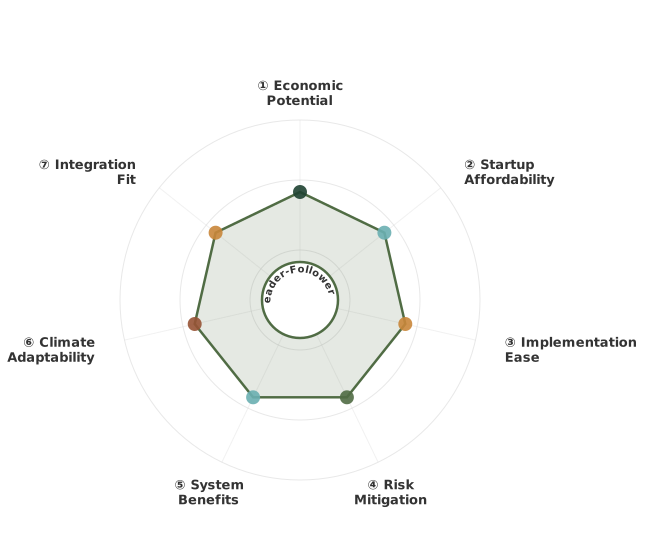
How These Traits Are Calculated
Trait dimensions are ordered clockwise starting from the top of the chart (12 o'clock position):
1. Economic Potential
Financial returns, annual value, and break-even timeline
WHAT: Evaluates financial viability by combining net annual value ($/ha from savings, income, and amortized harvests) with break-even timeline showing when practices pay for themselves.
WHY: Farmers need clear ROI understanding before committing resources. Fast payback (≤3 years) with strong returns (≥$300/ha) enables confident adoption, while long timelines (>10 years) restrict adoption to well-funded operations willing to wait for returns.
HOW: Calculated from net annual value in $/ha and break-even years. Exceptional (≥2.6): fast ROI ≤3 years + high value ≥$300/ha. Typical (1.8-2.5): moderate returns or longer timelines. Limited (<1.8): marginal economics or very long payback >10 years.
2. Startup Affordability
Initial investment costs and financial barrier to entry
WHAT: Measures financial barrier to entry through startup costs for equipment, infrastructure, consulting, and materials. Inverted scoring: lower costs = higher scores = more accessible adoption.
WHY: Affordability determines who can adopt. Low-cost practices (<$250/ha) enable widespread adoption across diverse scales, while high costs (>$2,500/ha) limit adoption to well-capitalized operations, creating barriers that slow regenerative transition.
HOW: Calculated from initial investment parsed from practice content. Inverted scoring: Exceptional (≥2.6): minimal investment <$250/ha. Typical (1.8-2.5): moderate costs $250-2,500/ha. Limited (<1.8): high barrier >$2,500/ha.
3. Implementation Ease
Learning curve and specialized knowledge required
WHAT: Measures how much learning, planning, and specialized knowledge a practice requires. Simpler practices with fewer steps score higher, while complex practices requiring extensive training or specialized resources score lower.
WHY: Complex practices create adoption barriers even when economically viable. Straightforward practices enable faster adoption and broader participation, while those requiring extensive training, timing precision, or specialized equipment limit who can succeed.
HOW: Evaluated by measuring documentation length and identifying complexity markers like location-specific requirements, seasonal timing windows, specialized skills, and dedicated equipment needs. Exceptional (≥2.6): straightforward practices with minimal prerequisites. Typical (1.8-2.5): moderate learning curve with some specialized needs. Limited (<1.8): steep learning curve requiring significant training or resources.
4. Risk Mitigation
Identified financial and ecological risk assessment
WHAT: Evaluates documented risks across financial (investment loss, market volatility) and ecological (crop failure, pest outbreaks) domains. Inverted scoring: fewer risks = higher scores.
WHY: Understanding risk exposure helps farmers make informed decisions. Low-risk practices allow confident implementation, while high-risk practices require careful planning and contingency resources. Risk transparency prevents costly failures.
HOW: Calculated from identified risks in practice content. Inverted scoring: Exceptional (≥2.6): ≤2 risks with manageable severity. Typical (1.8-2.5): 3-5 moderate risks. Limited (<1.8): 6+ risks or severe exposure.
5. System Benefits
How many ways the practice improves your land simultaneously
WHAT: Measures how many aspects of land health improve at once—carbon storage, soil quality, erosion control, water absorption, and biodiversity. Practices that improve multiple areas simultaneously create compounding benefits where each improvement reinforces the others.
WHY: The best practices solve multiple problems at once. For example, addressing erosion simultaneously builds carbon and improves water infiltration, creating a resilient system with positive feedback loops. Single-benefit approaches miss these compound transformation opportunities.
HOW: Evaluated across five key outcomes: carbon sequestration, soil organic matter increase, erosion reduction, water infiltration improvement, and biodiversity enhancement. Exceptional (≥2.6): high carbon storage (>8 t/ha/yr), improvements across 4-5 areas, transformative outcomes. Typical (1.8-2.5): moderate carbon (3-8 t/ha/yr), improvements across 2-3 areas. Limited (<1.8): modest impact (<3 t/ha/yr), single-area focus only.
6. Climate Adaptability
Geographic applicability across Köppen climate zones
WHAT: Evaluates geographic applicability by assessing how many Köppen climate zones successfully support a practice and what adaptation requirements are needed. Measures breadth of climates where farmers can implement with minimal to moderate modifications.
WHY: Universal practices working across diverse climates enable more farmers to adopt regenerative approaches. Practices limited to single climate types (only Mediterranean, only tropical) restrict adoption and slow global transition. Adaptability determines whether a practice serves niche regions or offers broad transformation.
HOW: LLM evaluation of regional success stories, Köppen zone coverage, and adaptation needs. Exceptional (≥2.6): 5+ zones or 4+ climate types, 3+ continents, minimal adaptation. Typical (1.8-2.5): 3-4 zones or 2-3 types, 2 continents, moderate adaptation. Limited (<1.8): 1-2 zones, single region, significant adaptation or highly specialized.
7. Integration Fit
How well this practice combines with others you're doing
WHAT: Measures how well a practice combines with other regenerative practices you might be doing. Some practices work as building blocks that make many other practices easier or more effective, while others work best on their own.
WHY: Practices that combine well with many others create more value on your farm. For example, cover cropping enables no-till, improves grazing, supports crop diversity, and helps water management—making all of them work better together. This helps you build a coherent system rather than juggling disconnected practices.
HOW: Evaluated by identifying which practices combine well and how strong those combinations are. 'Ideally Suited' means strong combinations where practices reinforce each other (practice A makes B easier, while B makes A more effective). 'Adequate' means complementary benefits that work well together. Exceptional (≥2.6): combines well with 6+ practices, serves as a building block. Typical (1.8-2.5): combines with 3-5 practices. Limited (<1.8): 1-2 practices or works best alone.
Going Deeper
1
WHY - The Benefits
Leader-follower grazing is a tool that enhances the efficiency and productivity of pasture-based livestock systems. By strategically managing animal groups, producers can achieve significant improvements in forage utilization, animal performance, and soil health,...
Leader-follower grazing is a tool that enhances the efficiency and productivity of pasture-based livestock systems. By strategically managing animal groups, producers can achieve significant improvements in forage utilization, animal performance, and soil health,...
WHY - The Benefits
Leader-follower grazing is a tool that enhances the efficiency and productivity of pasture-based livestock systems. By strategically managing animal groups, producers can achieve significant improvements in forage utilization, animal performance, and soil health,...
Leader-follower grazing is a tool that enhances the efficiency and productivity of pasture-based livestock systems. By strategically managing animal groups, producers can achieve significant improvements in forage utilization, animal performance, and soil health,...
Soil Health Benefits
The sequential grazing of leader-follower systems can lead to lead to an incremental increase in soil organic matter (SOM) of 0.1-0.3 percentage points annually in the topsoil compared to single-herd rotational grazing. This is primarily due to more efficient consumption of plant material, leading to a higher proportion being returned to the soil as manure, urine, and trampled residue. The increased trampling from the second herd can help break down surface organic matter and incorporate it into the top few centimeters of soil, initiating the decomposition process and feeding soil microbes.
Furthermore, this practice can stimulate soil biological activity. The increased deposition of manure and urine across the paddock, rather than concentrated in limited areas, provides a more consistent nutrient source for soil organisms like bacteria, fungi, and earthworms. Higher densities of microbial communities can lead to improved soil structure, greater nutrient cycling, and enhanced disease suppression. Earthworm populations tend to increase as a result of improved soil organic matter and a more favorable environment.
The practice also contributes to healthier plant communities. By removing more plant biomass and distributing it more evenly, it can prevent the accumulation of unpalatable, mature forage that can shade out new growth. This can lead to a more diverse and productive pasture sward, which in turn supports a more robust root system (Principle 4) and keeps the soil covered (Principle 3) for longer periods throughout the year.
Economic Benefits
Leader-follower grazing can offer substantial economic advantages. By ensuring more complete forage utilization, producers can often increase their stocking density by 10-30% over time compared to a single-herd rotational system, as pasture productivity improves. This higher carrying capacity directly translates to more animals or greater growth per animal on the same land base.
The efficient use of forage, coupled with a more uniform distribution of nutrients, can reduce the need for supplemental feeding. This can lead to savings of 5-15% on feed costs, especially during periods when high-quality pasture is abundant. Animal performance can also see a boost; by reducing forage competition and ensuring all animals have access to more palatable, nutritious regrowth, overall herd weight gains or milk production can improve by 5-10%, as the high-performance 'leader' group receives optimal nutrition while the 'follower' group maintains condition on residual forage.
Over several years, these efficiencies can result in a higher net profit per animal unit, estimated at $50-150/animal unit/year USD equivalent, depending on the enterprise type, initial pasture condition, and management skill. While initial investments in fencing or water might be necessary for optimal paddock division, the long-term economic returns often justify the expenditure.
Regenerative Systems Fit
Leader-follower grazing is a strategic enhancement to rotational grazing, directly supporting the regenerative principle of Integrate Livestock (Principle 5). By using animals to efficiently harvest and recycle plant production, it leverages their role in nutrient cycling and stimulating plant growth while building soil health.
The practice indirectly supports Keep Soil Covered (Principle 3) and Maintain Living Roots (Principle 4) by promoting healthier, more vigorous pasture growth which, in turn, ensures continuous cover and living root systems. The more complete consumption of forage and subsequent hoof action can open up the soil surface, facilitating water infiltration and seed-to-soil contact for new growth, which are foundational for these principles.
It's important to note that leader-follower grazing is most effective within a system that includes adequate rest periods. If paddocks are not rested sufficiently following sequential grazing, it can lead to overgrazing and damage to both soil cover and root systems, moving away from regenerative goals. When implemented as part of a well-planned rotational grazing plan with sufficient rest, it becomes a powerful tool for building soil fertility and long-term pasture health. It is not a standalone practice but a sophisticated method to optimize resource utilization within a regenerative framework.
Sources behind this view
Videos & Podcasts
-
Seven grazing principles are detailed: maintain stocking below capacity, leave ample forage, allow full plant recovery, rest pastures, top graze, increase pasture numbers (30+), and use high stock den
-
Non-selective grazing with high stock density maximizes leaf-to-stem ratio, boosting photosynthesis and pumping liquid carbon sugars into soil to build humus and fertility. This approach rapidly impro
-
Holistic grazing, with high-density short grazing (2-3 days) and long rest periods (3-4 months), dramatically increases pasture diversity, eliminates pests like grasshoppers, and boosts livestock prod
-
This cluster details ultra-high stock density grazing (UHSDG) and 'total grazing' for cattle, emphasizing intensive management, long pasture recovery, and increased stocking rates. The speaker advocat
Community
-
Adopts a holistic grazing management approach emphasizing diverse perennial pastures, higher residuals (4"), and longer rest periods (avg. 45 days) to build soil health, increase organic matter (3.4%
Read more (opens in new window) smallfarms.cornell.edu -
Manage rotational grazing by setting recovery (15-40+ days, adapting to region/season) and grazing periods (2-3 days). Aim to 'take half, leave half' for livestock and soil microbes. High stocking den
Read more (opens in new window) smallfarms.cornell.edu -
Advocates for numerous small paddocks (12+ minimum) for longer pasture rest, crucial for plant recovery, parasite control, and soil health. Recommends sequential grazing (ruminants -> pigs -> chickens
Read more (opens in new window) permies.com -
Intensive rotational grazing of grass-fed beef cows on small acreage, using daily paddock moves and electric fencing, improves pasture health, fertility, and reduces feed costs through regenerative ag
Read more (opens in new window) permies.com
Research
-
Managing Grazing to Restore Soil Health, Ecosystem Function, and Ecosystem Services (opens in new window)
This study found: Properly managed grazing animals can reverse environmental damage. Regenerative practices, like Adaptive Multi-Paddock (AMP) grazing, boost soil health, increase soil carbon, reduce erosion, and enhan
-
FORAGES AND PASTURES SYMPOSIUM: COVER CROPS IN LIVESTOCK PRODUCTION: WHOLE-SYSTEM APPROACH: Managing grazing to restore soil health and farm livelihoods1 (opens in new window)
This study found: Regenerative grazing management is key to sustainable, climate-resilient farms. It restores soil health, enhances ecosystem services like carbon capture and water infiltration, and improves farm profi
-
FORAGES AND PASTURES SYMPOSIUM: Improving soil health and productivity on grasslands using managed grazing of livestock. (opens in new window)
This study found: Managed grazing on grasslands can boost plant diversity, soil organic matter, and water infiltration. While results vary, integrating livestock and ecological goals is key for optimal grassland manage
-
Regenerative agriculture improves productivity and profitability while reducing greenhouse gas emissions on Australian sheep farms. (opens in new window)
This study found: Australian sheep farms show regenerative practices like AMP grazing and diverse pastures improve soil carbon and reduce emissions, but trade-offs exist between profitability and environmental benefits
 From the Web
-
Adaptive grazing, emphasizing longer paddock rest periods, promotes pasture diversity and soil health. This leads to improved livestock nutrition, milk/meat quality, and extended grazing seasons, as d
-
Key principles for managing soil and forage include minimizing tillage, maintaining living roots, promoting species diversity, and practicing adaptive grazing. Specific grazing height recommendations
-
Provides practical guidance on regenerative soil management through minimizing tillage, maintaining living roots, diverse species, and strategic grazing. Emphasizes cover crops, perennial pastures, an
2
WHERE - Regional Considerations
Leader-follower grazing is highly adaptable across diverse climates and regions. Its success hinges more on pasture management and animal selection than specific environmental conditions, making it applicable globally from temperate to tropical zones.
Leader-follower grazing is highly adaptable across diverse climates and regions. Its success hinges more on pasture management and animal selection than specific environmental conditions, making it applicable globally from temperate to tropical zones.
WHERE - Regional Considerations
Leader-follower grazing is highly adaptable across diverse climates and regions. Its success hinges more on pasture management and animal selection than specific environmental conditions, making it applicable globally from temperate to tropical zones.
Leader-follower grazing is highly adaptable across diverse climates and regions. Its success hinges more on pasture management and animal selection than specific environmental conditions, making it applicable globally from temperate to tropical zones.
Click Here to Look up your Region if you don't already know it
Temperate Regions
Representative Locations: Northern Europe, Canada, Northern United States, parts of Australia and New Zealand, Ukraine, Russia.
Climate Context: Marked seasons with distinct warm and cold periods. Moderate to high precipitation. USDA Zones 3-7, Köppen Cfb/Cfa/Dfb.
Considerations: In these regions, the practice can extend the grazing season by maximizing forage use before winter or during summer growth spurts. Different nutritional needs between groups (e.g., lactating cows vs. calves) are pronounced during periods of lush spring growth or when forage quality declines later in the season. Managing frost-killed vegetation and ensuring adequate rest for regrowth after winter is critical.
Mediterranean Regions
Representative Locations: California (USA), Mediterranean Basin, Chile, South Africa, Southwestern Australia.
Climate Context: Hot, dry summers and mild, wet winters. Rainfall is seasonal. USDA Zones 8-10, Köppen Csa/Csb.
Considerations: Drought is a major challenge. Leader-follower grazing can be adapted by selecting drought-tolerant forage species and managing grazing intensity carefully during dry spells to avoid denuding pasture. The practice can be particularly useful in spring when forage quality is high and animals have diverse needs, and during the wetter autumn/winter when good forage management is needed to recover pasture for the next year.
Arid and Semi-Arid Regions
Representative Locations: Western USA, North Africa, Central Asia, Outback Australia.
Climate Context: Low and unpredictable rainfall, high temperatures, short growing seasons. USDA Zones 7-9, Köppen BSh/BSk.
Considerations: Here, forage is scarce and recovery is slow. Leader-follower grazing must be extremely conservative to avoid overgrazing. The emphasis shifts to maximizing every available plant. Followers might be used to clean up grazed areas carefully, or the system might involve moving animals very frequently to mimic natural herd movements that conserve patchy vegetation. Overgrazing is a severe risk; rest periods are paramount. Water availability is the primary limiting factor.
Humid Subtropical Regions
Representative Locations: Southeastern USA, Southern China, parts of Brazil and Argentina, Eastern Australia.
Climate Context: Hot, humid summers and mild winters. Ample rainfall. USDA Zones 9-11, Köppen Cfa/Cwa.
Considerations: Lush, rapid forage growth characterizes these regions, making them ideal for split-grazing. Animal nutritional needs can vary significantly from calving/lactation in spring to finishing/maintenance later. The practice helps manage high biomass production, ensuring it's utilized effectively without becoming too mature and unpalatable. Maintaining adequate rest to prevent overgrazing of rapidly growing, but potentially shallow-rooted, summer forages is key.
Tropical Regions
Representative Locations: Southeast Asia, Central Africa, Northern Australia, Northern South America.
Climate Context: High temperatures and humidity year-round, with distinct wet and dry seasons (or consistent high rainfall). Köppen Af/Am/Aw.
Considerations: Forage quality and quantity can fluctuate dramatically between wet and dry seasons. Leader-follower grazing can be highly effective in maximizing forage use during the wet season when growth is abundant. During the dry season, it can help conserve sparser vegetation by ensuring efficient grazing. Managing animal health, particularly parasites in humid tropical environments, becomes crucial. The choice of leaders and followers may also be dictated by peak nutritional demands, such as during wet season calving.
3
HOW - Implementation Process
Successful implementation of leader-follower grazing involves careful planning, understanding animal needs, and intelligent paddock management. It's an adaptive strategy that offers flexibility.
Successful implementation of leader-follower grazing involves careful planning, understanding animal needs, and intelligent paddock management. It's an adaptive strategy that offers flexibility.
HOW - Implementation Process
Successful implementation of leader-follower grazing involves careful planning, understanding animal needs, and intelligent paddock management. It's an adaptive strategy that offers flexibility.
Successful implementation of leader-follower grazing involves careful planning, understanding animal needs, and intelligent paddock management. It's an adaptive strategy that offers flexibility.
Prerequisites
- Paddock Design: Paddocks should be sized appropriately for the number and type of animals in each group, allowing for controlled grazing periods. A system of subdivision (permanent or temporary fencing) is essential.
- Water Access: Each paddock or grazing zone must have reliable access to clean water for both leader and follower groups.
- Animal Groups: Clearly defined "leader" and "follower" animal groups based on their nutritional requirements, selectivity, or grazing behavior. This could be by age, production stage (lactating vs. dry), species, or breed.
- Forage Assessment: Understanding your pasture's growth patterns, species composition, and nutritional quality throughout the year.
Phase 1: Paddock Setup and Animal Allocation
- Paddock Division: Divide larger pastures into smaller, manageable paddocks. The optimal size depends on stocking density, pasture growth rate, and desired grazing duration. For example, a large herd might be divided, with leaders entering a paddock while followers are held in an adjacent one.
- Watering Points: Ensure adequate water distribution. Sometimes new water points or tank systems are needed to facilitate smaller paddocks or strategic grazing.
- Animal Grouping:
- Leaders: Select animals with the highest nutritional requirements or greatest selectivity. Examples:
- Lactating cows (highest energy/protein demand)
- Finishing steers/lambs (need high-quality forage for rapid growth)
- Animals recovering from illness or calving.
- Followers: Select animals with lower or maintenance nutritional needs. Examples:
- Dry cows, heifers
- Young calves, dry ewes
- Steers for moderate growth.
- Alternative: On farms with mixed species, use different species sequentially—e.g., horses followed by sheep, or cattle followed by goats.
- Leaders: Select animals with the highest nutritional requirements or greatest selectivity. Examples:
Phase 2: Sequential Grazing of Paddocks
- Initial Grazing (Leaders): Introduce the leader group into the first paddock. Allow them to graze for a designated period (e.g., 1-3 days). Observe their grazing behavior; they will selectively consume the most palatable and nutritious parts of the plants. The goal is to remove the easily accessible, high-quality forage.
- Follower Introduction: Once the leaders have consumed the preferred vegetation, move them to the next paddock. Immediately introduce the follower group into the previously grazed paddock. They will consume the remaining, less palatable forage, trampled vegetation, and may also find insect larvae.
- Grazing Duration (Followers): Allow followers to graze for a similar period (e.g., 1-3 days) to clean up the paddock. Their less selective grazing helps ensure more uniform removal of biomass and more even distribution of nutrients.
- Paddock Rest: After followers have finished grazing, remove them from the paddock and move them to the next fresh paddock in the rotation. The grazed paddock then enters a necessary rest period. The length of rest depends on species, climate, season, and desired regrowth (typically 30-60 days or longer).
Phase 3: Rotational Management and Monitoring
- Stocking Rate Management: Continually monitor pasture growth and animal intake. Adjust stocking densities or grazing durations as needed to prevent overgrazing. If forage growth is very high, leaders might graze for a shorter period or followers might graze more intensively, but always with sufficient rest afterward.
- Nutrient Distribution: Observe manure and urine distribution. The sequential grazing tends to distribute these inputs more evenly than if a single large mob grazed a paddock.
- Pasture Health Monitoring: Regularly assess forage availability, plant species composition, weed pressure, and signs of overgrazing (e.g., bare soil, very short stubble).
- Adaptation: Be prepared to adapt the strategy based on forage availability, weather conditions, and animal performance. For instance, during drought, shorter grazing periods and longer rests are critical. During peak growth, longer grazing periods might be feasible.
Transition Timeline & Phase-Out Strategy
Leader-follower grazing is not a transition practice in itself; it's a method of enhancing rotational grazing. Therefore, there is no phase-out strategy. The goal is to integrate it fully into your rotational grazing system. If you are currently using a single-herd system and wish to transition, you would introduce the concept gradually:
- Step 1: Divide your existing herd into two groups with differing needs (e.g., lactating cows and dry cows).
- Step 2: Implement leader-follower grazing on a few paddocks to test the concept.
- Step 3: Gradually expand the practice across your grazing areas as you gain confidence and observe positive results.
- Step 4: Integrate it with other regenerative practices like cover cropping, diverse pasture mixes, and adaptive management for maximum benefit.
Sources behind this view
Videos & Podcasts
-
Implement adaptive multi-paddock (AMP) grazing with short (1-3 day) grazing periods and long recovery (90-120+ days) to prevent overgrazing. Focus on plant recovery, soil health, and consistent livest

-
Transitioned from continuous to management-intensive grazing (MIG) to improve profitability and soil health. MIG involves frequent rotation of higher-density animal groups, focusing on plant recovery
-
Effective grazing management emphasizes short grazing periods and long rest periods. Running species like sheep and cattle back-to-back in leader-follower systems maximizes rest and benefits native pl
Community
-
Recommends mob grazing and holistic management for pasture health, using electric fences to manage livestock movement, distribute manure, and encourage native grasses. Provides links to expert videos
Read more (opens in new window) permies.com
4
Know the Debate
Leader-follower grazing is a strategy that leverages different animal needs to maximize forage utilization and soil health. While effective across ...
Know the Debate
Leader-follower grazing is a strategy that leverages different animal needs to maximize forage utilization and soil health. While effective across ...
Leader-follower grazing is a strategy that leverages different animal needs to maximize forage utilization and soil health. While effective across various climates, actual outcomes in animal performance and infrastructure investment differ significantly based on local conditions and management intensity. In humid temperate regions or tropical climates with rapid forage growth, substantial gains in carrying capacity and animal performance are achievable with diligent management. In semi-arid rangelands, the focus shifts to conservative management to prevent overgrazing, with gains being more about resilience and sustained productivity. Infrastructure costs can range from minimal with temporary fencing on small farms to significant investments for extensive water systems on larger operations, impacting the economic feasibility and payback period.
How much do animal gains improve with leader-follower grazing?
Modest gains (5-10% performance boost)
Academic research suggests incremental benefits in animal performance and carrying capacity, typically between 5-10%, when leader-follower grazing is well-implemented alongside other regenerative practices. These gains are often observed after initial system stabilization.
Sources behind this view
Sources behind this view
Research
-
Stocking Strategies as Related to Animal and Pasture Productivity of Endophyte‐Free Tall Fescue (opens in new window)
This study found: A three-year study compared three different ways of grazing steers on well-fertilized tall fescue pastures that did not contain the toxic endophyte fungus. The grazing methods included continuous grazing, giving animals a daily portion, or rotating them every 7-12 days. The study found that all three grazing methods resulted in similar weight gains for the steers, similar amounts of grass available, and similar overall productivity per acre. While the total amount of grass and its digestibility were alike, the protein content of the grass varied slightly between the methods. Specifically, continuously grazed pastures had slightly less protein than rotated pastures, and the daily allowance method had less protein than the lax rotation method. Overall, the research suggests that well-managed, endophyte-free tall fescue pastures can support efficient steer production regardless of the specific stocking strategy used.
-
FORAGES AND PASTURES SYMPOSIUM: Improving soil health and productivity on grasslands using managed grazing of livestock. (opens in new window)
This study found: Managing livestock grazing on grasslands can offer multiple benefits beyond just producing meat or milk. By carefully planning grazing, farmers can encourage a wider variety of plants to grow. This diversity helps plants use sunlight, water, and nutrients more effectively, making the pasture more resilient to weather changes and less prone to weeds. Managed grazing also helps build soil organic matter, which means more carbon and nutrients are stored in the soil, and the soil can hold more water. While grazing can create soil compaction, the roots from diverse pasture plants can help reduce this. More research is needed on how different grazing and rest periods affect soil compaction. Keeping enough plants on the ground is key to helping water soak into the soil, even in wet areas. Diverse plant communities can also create better habitats for wildlife and pollinators. It's important to remember that how grasslands respond to grazing depends a lot on local climate, soil, and plant types. A single grazing plan might not be best for both animal production and all the ecological benefits, so farmers need to balance their goals.
Significant gains (15-30% performance boost)
Experienced ranchers report substantial performance improvements, often exceeding 15-30%, through intensive leader-follower systems. These results are attributed to maximizing forage utilization, providing optimal nutrition, and building healthier pastures over time.
Sources behind this view
Sources behind this view
Videos & Podcasts
-
Effective grazing management involves providing adequate pasture rest/recovery periods, good water, and mineral supply, which leads to content animals that move themselves and reduces overall farm problems.
-
Higher grazing density improves forage utilization and nutrition. Frequent moves help consume lignified material and maintain a consistent plane of nutrition. Balancing animal performance and soil health is key. High open rates can be linked to forage quality issues, necessitating stockpiling or supplementation.
-
Transitioned from continuous to management-intensive grazing (MIG) to improve profitability and soil health. MIG involves frequent rotation of higher-density animal groups, focusing on plant recovery and trampling forage to build soil, contrasting with continuous grazing's negative impacts.
Making Sense of the Differences
Reported gains in animal performance reflect a spectrum from moderate to significant, largely driven by management intensity, starting pasture condition, and the successful integration of animal groups. High-end results are often achieved by ranchers with deep experience, meticulous planning, and adaptive management in regions with robust forage production. Typical gains offer substantial economic benefits, making it crucial for farmers to assess their context, start with clear goals, and implement incrementally to achieve the best outcomes for their operation.
What is the real cost of infrastructure for leader-follower grazing?
Moderate Investment ($1,000-$2,800/acre)
Transitioning to leader-follower grazing often requires moderate infrastructure investment, ranging from $1,000 to $2,800 per acre for permanent fencing and water systems, with costs generally decreasing per unit on larger scales.
Sources behind this view
Sources behind this view
From the Web
-
Practical advice for regenerative grazing from Noble Ranches, including winter calf grazing, water management, using digital maps, plant ID, electric fencing, and strategic planning.
-
A 10-step plan for regenerative grazing emphasizes adaptive management, goal setting, mapping, infrastructure assessment, and proper stocking rates. It advises starting small to gain experience before scaling up, aiming to improve soil health, plant diversity, and livestock production.
Minimal Investment (<$200/acre)
Many ranchers successfully implement leader-follower grazing with minimal upfront costs, often below $200 per acre, by utilizing existing infrastructure, temporary electric fencing, and focusing on efficient animal movement and water access.
Sources behind this view
Sources behind this view
Videos & Podcasts
-
Heavy rotational grazing is key for economic and environmental goals, requiring precise matching of forage demand to cattle consumption in paddocks. Removing cattle by late July aids winter stockpile preparation and promotes carbon sequestration.
-
Implements rotational grazing with larger paddocks for cattle to achieve 2-3 lbs/day gain, managing pasture growth and improving soil fertility. Utilizes specific fencing posts and techniques to control broomsedge.
-
The farm implements rotational grazing from May to November for grass-fed beef (200+ head), laying hens (400-500), pigs, and sheep, using electric netting and a leader-follower system for cattle.

Making Sense of the Differences
The infrastructure cost for leader-follower grazing varies significantly based on farm scale and existing resources. Smaller farms or those with existing fencing and water sources can often implement the practice with minimal upfront investment using temporary electric fencing. Larger or more intensive operations may find it necessary to invest in permanent interior fencing and extended water systems to achieve optimal results. Farmers should assess their specific needs, labor availability, and long-term goals to determine the most economical and effective infrastructure strategy.
5
HOW MUCH - Costs & Investment
Note: All costs are based on recent US economic data (2023-2025) and may vary substantially in other regions based on local labor rates, material costs, and regulatory requirements. Currency conversion should be done using current exchange rates, but be mindful of local...
Note: All costs are based on recent US economic data (2023-2025) and may vary substantially in other regions based on local labor rates, material costs, and regulatory requirements. Currency conversion should be done using current exchange rates, but be mindful of local...
HOW MUCH - Costs & Investment
Note: All costs are based on recent US economic data (2023-2025) and may vary substantially in other regions based on local labor rates, material costs, and regulatory requirements. Currency conversion should be done using current exchange rates, but be mindful of local...
Note: All costs are based on recent US economic data (2023-2025) and may vary substantially in other regions based on local labor rates, material costs, and regulatory requirements. Currency conversion should be done using current exchange rates, but be mindful of local...
Note: All costs are based on recent US economic data (2024–2026) and may vary substantially by region based on local labor rates, material costs, and regulatory requirements.
Infrastructure Investment
Initial capital expenditure for leader-follower grazing setup is highly variable based on farm size and existing infrastructure. For small operations under 50 acres (20 ha), the investment range for mobile electric fencing components is $1,250–$4,690. Mid-size operations managing 50–500 acres (20–202 ha) typically range from $4,170–$18,760, as these systems often require more robust perimeter enhancements or semi-permanent sub-dividers to manage higher herd volumes. Large operations exceeding 500 acres (202 ha) face investments between $15,630–$57,310, driven significantly by the necessity of expansive water pipeline networks and centralizing infrastructure for rotational efficiency. Professional installation, which is most frequent in large-scale operations, can add an additional 30–50% to these baseline material costs.
Water System Development
Water infrastructure is the most critical hurdle for effective leader-follower management, as frequent animal moves require reliable access in every subdivision. Small operations usually rely on portable poly-tanks and 500 feet (152.4 m) of high-density polyethylene pipe, costing $625–$1,565. Mid-size farms requiring more permanent troughs or header tanks to support increased density typically spend $2,085–$8,340. Large-scale producers designing modular water networks that serve dozens of paddocks often see costs climb to $10,420–$31,260, depending on the complexity of pump systems, well depth, and terrain contouring.
Fencing and Subdivision Costs
Flexible division is the hallmark of this practice. Small operations utilizing temporary poly-wire and portable reels typically budget $420–$1,250 for their initial fencing suite. Mid-size producers often integrate permanent spine-fencing with temporary cross-fencing, leading to expenditures of $2,085–$9,380. Large-scale operations spanning over 500 acres (202 ha) often commit $8,340–$26,050 toward high-capacity solar energizers and durable high-tensile interior fencing to reduce daily maintenance labor. Individual high-tensile wire costs currently range from $0.16–$0.37 per foot, while quality solar energizers cost between $417–$1,250. Annual maintenance for all systems is estimated at 3–5% of the initial capital investment, equating to $100–$2,800 depending on the scale of the system.
Most Spend: The middle 60% of the cost range for most profitable operations falls between $2,100 and $3,500 for small holdings, $7,000 and $14,000 for mid-size operations, and $22,000 and $45,000 for large-scale setups. Operations falling within these windows generally balance high-quality, durable materials with efficient, DIY-compatible designs that minimize professional labor costs.
Why the Range?: Costs vary significantly based on the existing density of water points and topography. Farms with natural irrigation sources require fewer pipeline materials, while operations on rugged terrain require higher pump capacity and more robust fencing materials to withstand animal pressure and environmental exposure.
Sources behind this view
Videos & Podcasts
-
Increase grazing frequency (e.g., twice daily) for better pasture utilization and animal performance. Invest heavily in water infrastructure and use temporary fencing in long, narrow paddocks to maxim
-
Discusses advanced grazing management, emphasizing paddock layout, skipping paddocks for fly control, and the critical role of fencing and water. Highlights how subdivision and shorter grazing periods
-
Improved grazing management boosts ranch economics through higher stocking rates, better cows-per-man ratios, extended grazing seasons, and reduced feeding costs. Strategic fencing and water developme
-
Details the practical implementation of intensive rotational grazing, including infrastructure (fencing, water points) and management strategies for large Australian properties. This approach signific
Community
-
Details an integrated system of Managed Intensive Rotational Grazing and rotational cropping using holistic management. It emphasizes increasing forage availability, integrating livestock (cattle, chi
Read more (opens in new window) permies.com -
Recommends permanent rotational pastures using high tensile fencing and cattle panels for goats and sheep, with advice on water lines, pallet-built shelters, and cost-effective handling systems.
Read more (opens in new window) permies.com -
Manage rotational grazing by setting recovery (15-40+ days, adapting to region/season) and grazing periods (2-3 days). Aim to 'take half, leave half' for livestock and soil microbes. High stocking den
Read more (opens in new window) smallfarms.cornell.edu -
Investigates financial benefits of rotational grazing, including extended grazing season and cattle weight gains, while detailing the use of portable electric fences and HDPE water hoses due to infras
Read more (opens in new window) ucanr.edu
Research
-
Increasing Intensity of Pasture Use with Dairy Cattle: An Economic Analysis (opens in new window)
This study found: Intensive grazing on Pennsylvania dairy farms was more profitable than hay/corn silage, returning $129/acre. High debt and poor cash flow motivated increased grazing intensity, which lowered feed cost
-
A 100-Year Review: A century of change in temperate grazing dairy systems. (opens in new window)
This study found: Dairy grazing systems evolved over 100 years from random grazing to intensive, high-output systems driven by research, technology, and breeding. Managed grazing, better genetics, and supplementary fee
-
Optimising intensive grazing: a comprehensive review of rotational grassland management, innovative grazing strategies and infrastructural requirements (opens in new window)
This study found: Intensive grazing requires good infrastructure. 24-36 hour pasture allocations reduce cow competition. Farm roadway quality and location are key for efficient movement, cow health, and labor efficienc
-
456 Allocating distribution of pasture utilization across the grazing landscape in grazing steers equipped with virtual fencing collars (opens in new window)
This study found: GPS collars on steers showed cattle graze less far from water, with rotational grazing concentrating use near water. Technology can help manage pasture distribution.
From the Web
-
Minimize capital for grass-fed beef by using temporary electric fences, avoiding barns (cattle thrive outdoors), and questioning the need for tractors/haymaking equipment. Focus on extending grazing s
-
Analyzes ROI for high stock density grazing, detailing infrastructure costs ($3,250 with grant), labor ($3600 estimate), and a 257% carrying capacity increase. Discusses scaling challenges and lists k
6
REWARDS AND RISKS - Economics & Risk Factors
REWARDS AND RISKS - Economics & Risk Factors
In a best-case scenario, effective leader-follower grazing increases pasture productivity by 25–30% within 3 years. This results in $120–$193 in annual profit per animal unit, driven by reduced supplemental feed costs ($16–$42 savings per head) and improved weight gains ($83–$125 extra value per animal). In this outcome, the infrastructure investment is typically recovered within 3–4 years. In a typical scenario, productivity gains reach 12–15%, with a 5–8% reduction in feed expenses. Net profit per animal unit increases by $52–$94 annually, with a 6–8 year return on investment. In a worst-case scenario, mismanagement—such as keeping followers in paddocks too long, causing soil compaction—can decrease carrying capacity by 5–10%. If labor costs exceed $25/hour and productivity gains remain stagnant, the operation could see losses of $21–$52 per head relative to baseline systems, extending the ROI beyond 10 years.
Profitability is tightly bound to supplemental feed markets. If hay prices rise by 20%, the system acts as a financial buffer by maximizing forage utilization. Conversely, if livestock prices drop by 15%, the higher daily labor requirement of leader-follower grazing can compress margins. Risk mitigation is best achieved through phased implementation; producers should trial the system with a $500–$650 temporary fencing kit on 10 acres (4.0 ha) before expanding. Aiming for a residual dry matter of 1,500–2,000 lbs (680–907 kg) per acre protects against over-grazing. Additionally, leveraging NRCS EQIP funding can reduce upfront out-of-pocket infrastructure costs by 50–75%.
Transition Period Risks: Producers often face a "transition dip" during the first 18–24 months as soil microbes and plant roots adjust to intensive management. During this phase, stocking density must be managed conservatively, as yields may drop by 5–10% in the first year. To mitigate these risks, maintain a surplus of emergency hay or silage (15–20% above normal requirements) to buffer animal performance while the pasture recovery cycle stabilizes. Expect at least two full growing seasons before infrastructure-related productivity gains manifest in the balance sheet.
Sources behind this view
Videos & Podcasts
-
This cluster details ultra-high stock density grazing (UHSDG) and 'total grazing' for cattle, emphasizing intensive management, long pasture recovery, and increased stocking rates. The speaker advocat
-
Increase grazing frequency (e.g., twice daily) for better pasture utilization and animal performance. Invest heavily in water infrastructure and use temporary fencing in long, narrow paddocks to maxim
-
Holistic grazing, with high-density short grazing (2-3 days) and long rest periods (3-4 months), dramatically increases pasture diversity, eliminates pests like grasshoppers, and boosts livestock prod
-
Seven grazing principles are detailed: maintain stocking below capacity, leave ample forage, allow full plant recovery, rest pastures, top graze, increase pasture numbers (30+), and use high stock den
Community
-
Adopts a holistic grazing management approach emphasizing diverse perennial pastures, higher residuals (4"), and longer rest periods (avg. 45 days) to build soil health, increase organic matter (3.4%
Read more (opens in new window) smallfarms.cornell.edu -
Manage rotational grazing by setting recovery (15-40+ days, adapting to region/season) and grazing periods (2-3 days). Aim to 'take half, leave half' for livestock and soil microbes. High stocking den
Read more (opens in new window) smallfarms.cornell.edu -
Practical rotational grazing advice for small acreage with goats, sheep, and chickens, emphasizing frequent moves, sacrificial paddocks, and specific forage types (fescue, rye, Bermuda) for Zone 8b. M
Read more (opens in new window) permies.com -
Explains core grazing management principles: timing, intensity, duration, and frequency, with specific recommendations for rest periods, stubble heights, utilization, and management of diverse vegetat
Read more (pp. 17-32) (opens PDF, pp. 17-32) efotg.sc.egov.usda.gov
Research
-
A 100-Year Review: A century of change in temperate grazing dairy systems. (opens in new window)
This study found: Dairy grazing systems evolved over 100 years from random grazing to intensive, high-output systems driven by research, technology, and breeding. Managed grazing, better genetics, and supplementary fee
-
Transitioning from conventional continuous grazing to planned rest-rotation grazing: A beef cattle case study from central Texas (opens in new window)
This study found: A 5-year Texas case study found planned rest-rotation grazing showed potential for more forage and better soil health on cultivated paddocks compared to continuous grazing, with similar overall profit
-
Impacts of holistic planned grazing with bison compared to continuous grazing with cattle in South Dakota shortgrass prairie (opens in new window)
This study found: Managed grazing with bison in South Dakota's shortgrass prairie significantly improved soil health, water infiltration, forage, and plant composition compared to continuous cattle grazing over a decad
-
Managing Grazing to Restore Soil Health, Ecosystem Function, and Ecosystem Services (opens in new window)
This study found: Properly managed grazing animals can reverse environmental damage. Regenerative practices, like Adaptive Multi-Paddock (AMP) grazing, boost soil health, increase soil carbon, reduce erosion, and enhan
From the Web
-
Daily grazing management involves pasture moves based on animal needs and behavior, adapting to ranch conditions. Observations of animal restlessness signal moves, while diverse forages and cover crop
-
Dr. Allen Williams offers 10 tips for successful grazing: avoid early spring grazing, prepare for worst-case conditions, prevent overgrazing by managing plant exposure, utilize livestock for weed cont
-
This section details paddock setup, fencing, and water systems for rotational grazing. It provides seasonal adjustment guidelines for cool-season and warm-season grasses, emphasizing plant recovery pe
-
Guidance on pasture renovation and establishment covers seedbed preparation, planting methods, and plant selection. Detailed calculations for adaptive grazing include determining paddock size and numb
7
WHO - Labor & Expertise
Leader-follower grazing requires a moderate level of expertise and a commitment to more frequent animal movement and monitoring.
Leader-follower grazing requires a moderate level of expertise and a commitment to more frequent animal movement and monitoring.
WHO - Labor & Expertise
Leader-follower grazing requires a moderate level of expertise and a commitment to more frequent animal movement and monitoring.
Leader-follower grazing requires a moderate level of expertise and a commitment to more frequent animal movement and monitoring.
Skill Requirements
- Grazing Management Acumen: Understanding how pasture grows, how much forage is available, and how different animal groups utilize it. This includes assessing plant maturity, palatability, and regrowth rates.
- Animal Husbandry: Ability to manage two or more distinct animal groups, understand their nutritional needs, and monitor their health and performance separately.
- Infrastructure Maintenance: Basic skills in fencing repair, water system upkeep, and general farm maintenance.
- Observation and Adaptability: Crucially, the ability to observe pasture and animal responses and adapt the plan quickly based on real-time conditions.
- Record Keeping: Tracking animal movements, grazing durations, rest periods, pasture condition, and animal performance is vital for refining the system over time.
Labor Considerations
- Increased Movement Frequency: Moving animals between paddocks typically occurs every 1-3 days for leaders, and another 1-3 days for followers. This is more frequent than single-herd grazing. For small farms with owner-operators, this can be managed.
- Labor Intensity: For larger operations, or where labor is expensive, this increased frequency can be a significant factor. It often requires dedicated staff or a very efficient operation. However, in regions with lower labor costs (e.g., East Africa, parts of Asia or South America), the increased labor is less of a deterrent and can even provide employment.
- Farm Size and Scale: On very large ranches, leader-follower grazing might be implemented by dividing a large herd into two groups that graze distinct large paddocks sequentially, reducing the frequency of movement compared to small, intensely managed paddocks.
Expertise Development
- Hands-on Experience: The best way to develop expertise is through practice. Start with a few paddocks and gradually expand.
- Mentorship and Peer Learning: Connect with experienced regenerative graziers who use leader-follower systems. Farmer-to-farmer knowledge exchange is invaluable.
- Education: Attend workshops, webinars, and field days focused on rotational and adaptive grazing.
- Resources: Utilize extension services, agricultural colleges, and reputable regenerative agriculture organizations for research and guidance.
Sources behind this view
Videos & Podcasts
-
Increase grazing frequency (e.g., twice daily) for better pasture utilization and animal performance. Invest heavily in water infrastructure and use temporary fencing in long, narrow paddocks to maxim
-
This cluster details ultra-high stock density grazing (UHSDG) and 'total grazing' for cattle, emphasizing intensive management, long pasture recovery, and increased stocking rates. The speaker advocat
-
Brian Walberg details the practice of holistic planned grazing, involving intense animal bunching and frequent moves (10-30 min intervals) to maximize animal impact. This method significantly reduced
Community
-
Recommends mob grazing and holistic management for pasture health, using electric fences to manage livestock movement, distribute manure, and encourage native grasses. Provides links to expert videos
Read more (opens in new window) permies.com
8
COMPATIBLE PRACTICES - Integration Opportunities
Leader-follower grazing is most potent when integrated with a suite of complementary regenerative practices. These synergies amplify benefits, build resilience, and accelerate progress toward a healthy ecosystem.
Leader-follower grazing is most potent when integrated with a suite of complementary regenerative practices. These synergies amplify benefits, build resilience, and accelerate progress toward a healthy ecosystem.
COMPATIBLE PRACTICES - Integration Opportunities
Leader-follower grazing is most potent when integrated with a suite of complementary regenerative practices. These synergies amplify benefits, build resilience, and accelerate progress toward a healthy ecosystem.
Leader-follower grazing is most potent when integrated with a suite of complementary regenerative practices. These synergies amplify benefits, build resilience, and accelerate progress toward a healthy ecosystem.
Rotational Grazing
- Integration: Leader-follower grazing is a method within rotational grazing. The core principle of moving animals to allow pasture rest is paramount.
- Synergy: Provides the framework of paddock divisions and rest periods that makes leader-follower grazing work. Enhanced forage utilization within the rotation leads to better pasture recovery during rest.
Holistic Planned Grazing (HPG)
- Integration: HPG is a decision-making framework that would incorporate leader-follower grazing as a tactical tool.
- Synergy: HPG emphasizes using livestock to mimic natural herd distribution and grazing patterns to improve soil health. Leader-follower grazing is a highly effective way to mimic dense herd grazing and efficient utilization, which are core HPG tenets. It enhances the ability to manage land for specific ecological outcomes.
Diverse Pasture Mixes
- Integration: Planting a wide variety of grasses, legumes, and forbs that have different growth habits, root depths, and palatability.
- Synergy: Leaders can selectively graze the most palatable species, leaving less desirable ones for followers. This increases overall pasture utilization and provides a broader range of nutrients for both animals and soil microbes, supporting Principle 2 (Maximize Diversity).
Cover Cropping
- Integration: Used in cropping rotations or alleys between trees (in silvopasture).
- Synergy: Following livestock grazing, cover crops can be sown to further improve soil health, add organic matter, and provide additional grazing opportunities with appropriate animal integration. The benefits of cover cropping (soil cover, living roots) complement the improved soil conditions from grazing.
Silvopasture
- Integration: Integrating trees with pasture for livestock grazing.
- Synergy: Animals in a silvopasture system can be managed using leader-follower principles to maximize forage utilization under trees or in open areas. Shade from trees can improve animal comfort, potentially influencing grazing patterns and allowing for longer grazing periods without heat stress, thus refining leader-follower dynamics.
Nutrient Management Plans
- Integration: Understanding where nutrients are being deposited from manure and urine.
- Synergy: Sequential grazing helps distribute nutrients more evenly across paddocks compared to single-herd grazing, reducing the need for supplemental fertilizer and improving soil fertility over time. This directly supports Principle 5 (Integrate Livestock) and indirectly Principle 1 (Minimize Disturbance) by reducing reliance on synthetic inputs.
Keyline Design / Water Harvesting
- Integration: Using landscape contouring to manage water flow.
- Synergy: By distributing water more effectively, Keyline design can improve pasture growth, making leader-follower grazing more productive. Evenly distributed nutrients from grazing can also work synergistically with water infiltration improvements from Keyline systems to boost plant vigor.
The success of leader-follower grazing is amplified when these practices are combined, creating a more integrated and regenerative ecosystem that supports robust plant and animal health, while actively building soil fertility and function.
Sources behind this view
Videos & Podcasts
-
This cluster details ultra-high stock density grazing (UHSDG) and 'total grazing' for cattle, emphasizing intensive management, long pasture recovery, and increased stocking rates. The speaker advocat
-
Holistic grazing, with high-density short grazing (2-3 days) and long rest periods (3-4 months), dramatically increases pasture diversity, eliminates pests like grasshoppers, and boosts livestock prod
-
Seven grazing principles are detailed: maintain stocking below capacity, leave ample forage, allow full plant recovery, rest pastures, top graze, increase pasture numbers (30+), and use high stock den
-
Non-selective grazing with high stock density maximizes leaf-to-stem ratio, boosting photosynthesis and pumping liquid carbon sugars into soil to build humus and fertility. This approach rapidly impro
Community
-
Adopts a holistic grazing management approach emphasizing diverse perennial pastures, higher residuals (4"), and longer rest periods (avg. 45 days) to build soil health, increase organic matter (3.4%
Read more (opens in new window) smallfarms.cornell.edu -
Manage rotational grazing by setting recovery (15-40+ days, adapting to region/season) and grazing periods (2-3 days). Aim to 'take half, leave half' for livestock and soil microbes. High stocking den
Read more (opens in new window) smallfarms.cornell.edu -
Recommends mob grazing and holistic management for pasture health, using electric fences to manage livestock movement, distribute manure, and encourage native grasses. Provides links to expert videos
Read more (opens in new window) permies.com -
Build healthy pasture soils by minimizing tillage, maintaining living roots and species diversity, and implementing proper grazing management. Livestock are essential for nutrient cycling and stimulat
Read more (opens in new window) smallfarms.cornell.edu
Research
-
Managing Grazing to Restore Soil Health, Ecosystem Function, and Ecosystem Services (opens in new window)
This study found: Properly managed grazing animals can reverse environmental damage. Regenerative practices, like Adaptive Multi-Paddock (AMP) grazing, boost soil health, increase soil carbon, reduce erosion, and enhan
-
Impacts of holistic planned grazing with bison compared to continuous grazing with cattle in South Dakota shortgrass prairie (opens in new window)
This study found: Managed grazing with bison in South Dakota's shortgrass prairie significantly improved soil health, water infiltration, forage, and plant composition compared to continuous cattle grazing over a decad
-
Multi-paddock grazing on rangelands: why the perceptual dichotomy between research results and rancher experience? (opens in new window)
This study found: Ranchers often see benefits from multi-paddock grazing that scientific studies don't always confirm. This review explores the gap, highlighting rancher-led adaptive management principles and suggestin
-
Principle, technique and application of grassland improvement. (opens in new window)
This study found: Grassland improvement strategies, combining techniques like managed grazing and overseeding, significantly boost plant growth (17-38%) and diversity (2-24%) in pastures, enhancing ecosystem services.
From the Web
-
Adaptive grazing, emphasizing longer paddock rest periods, promotes pasture diversity and soil health. This leads to improved livestock nutrition, milk/meat quality, and extended grazing seasons, as d
-
Key principles for managing soil and forage include minimizing tillage, maintaining living roots, promoting species diversity, and practicing adaptive grazing. Specific grazing height recommendations