
Liquid Carbon Pathway
The Liquid Carbon Pathway is a regenerative agriculture approach that focuses on maximizing carbon input into the soil through enhanced photosynthesis and strategic decomposition of plant material. It leverages practices that keep living roots in the soil for longer periods and promote diverse microbial communities, effectively creating a "liquid" flow of carbon from the atmosphere into stable soil organic matter, improving soil health and climate resilience.
Read More: Complete Description
The Liquid Carbon Pathway is a holistic strategy centered on the principle that healthy soil is the foundation of a resilient agricultural system, and that soil health is directly correlated with its carbon content and biological activity. It's not a single practice but a framework that integrates and optimizes several regenerative techniques, all aimed at maximizing the capture and sequestration of atmospheric carbon into the soil through biological processes. The core idea is to feed the soil ecosystem by keeping plants actively photosynthesizing for as long as possible throughout the year and by ensuring that the carbon they draw from the atmosphere is efficiently transferred to the soil in forms that enhance its structure, fertility, and water-holding capacity.
This pathway directly supports all five regenerative agriculture principles. Minimizing soil disturbance is crucial because tillage oxidizes soil organic matter, releasing stored carbon back into the atmosphere and disrupting the delicate soil food web. By reducing or eliminating tillage, we protect existing soil carbon and create an environment where new carbon can be incorporated. Maximizing crop diversity is paramount; a monoculture offers limited photosynthetic periods and a less robust root system, leading to less overall carbon input and a simplified soil microbial community. Diverse systems, including cash crops, cover crops, and perennial systems, extend the growing season, tap into different soil depths with varied root structures, and feed a broader spectrum of beneficial soil organisms.
Keeping soil covered is essential to prevent carbon loss through erosion and to maintain a stable environment for soil biology. Living plants offer constant cover and carbon input. When living plants are not present, a thick layer of mulch or residue protects the soil surface, moderates temperature and moisture, and provides food for decomposers that gradually incorporate this organic matter into the soil. Maintaining living roots is perhaps the most direct mechanism of the Liquid Carbon Pathway. Photosynthesis is the engine that pulls carbon dioxide from the atmosphere. The longer roots are active, the more carbon is transferred below ground as root exudates and sloughed-off root cells, feeding the soil food web and contributing to stable soil organic matter. Finally, integrating livestock can strategically enhance the Liquid Carbon Pathway. Well-managed grazing can stimulate plant growth (increasing photosynthesis), redistribute organic matter through manure, and add microbial diversity to the soil ecosystem.
The "liquid" aspect refers to the dynamic, continuous transfer of carbon. It's not just about adding organic matter, but about fostering living systems that continuously build and stabilize soil carbon. This involves creating a vibrant soil microbiome that can efficiently break down plant residues and root exudates, incorporating them into humic substances—a stable, long-lasting form of soil organic matter. These humic substances improve soil structure, enhance water infiltration and retention, and buffer soils against extreme weather events, making agricultural systems more resilient to climate change.
The Liquid Carbon Pathway offers a tangible way for farmers and land managers to contribute to climate change mitigation while simultaneously enhancing farm productivity and profitability. By focusing on maximizing the soil's biological engine, we can transform agricultural lands from carbon sources into carbon sinks. This shift requires a deep understanding of soil biology, a willingness to embrace diverse cropping and grazing strategies, and a commitment to long-term ecological health over short-term extractive gains. It's a pathway that regenerates not only the soil but also the farm's economic and environmental future.
Sources behind this view
Sources behind this view
 Videos & Podcasts
-
Regenerative agriculture provides solutions for climate change, human health, and soil degradation, contrasting with industrial agriculture's harmful impacts, including glyphosate use. Practices like
-
Provides actionable steps for regenerative agronomy: balanced N:C inputs (molasses, humates), microbial teas, yeast metabolites, calcium, and effective seed treatments. Emphasizes scalability, systems
-
Case studies of farmers like Duane Beck, Kofi Boa, David Brandt, and Gabe Brown demonstrate that regenerative agriculture (no-till, cover crops, diverse rotations) significantly increases soil health,

-
Adopts regenerative agriculture principles: minimize disturbance, keep living roots, use soil armor, integrate animals (livestock grazing, multi-species), and increase biodiversity. These practices bu

 Community
-
Regenerative agriculture rebuilds soil organic matter and biodiversity through practices like cover cropping, reduced tillage, minimal artificial fertilizers, and regenerative grazing, ultimately impr
Read more (pp. 8-9) (opens PDF, pp. 8-9) permies.com -
Regenerative agriculture reverses soil harm by sequestering carbon through cover crops, no-till, compost, and crop rotation, improving soil health and resilience for both farms and home gardens.
Read more (opens in new window) ucanr.edu
 Research
-
Regenerative Agriculture: Restoring Ecosystems¢ Resilience and Productivity: A Review (opens in new window)
This study found: Regenerative agriculture builds soil health and ecosystem services through practices like no-till, cover crops, and diverse rotations. It increases soil organic matter, improves water infiltration, bo
-
Systematic review of regenerative farming: Addressing agricultural sustainability challenges (opens in new window)
This study found: Systematic review of 31 studies shows regenerative farming improves soil health, biodiversity, and carbon capture, aiding sustainability. Technology is key for adoption, but policy, farmer understandi
-
Assessing the Role of Regenerative Practices in Enhancing Soil Carbon Sequestration in Farmlands: A Review (opens in new window)
This study found: Regenerative farming practices like cover crops, reduced tillage, and agroforestry effectively store soil carbon (0.2-2.5 Mg C ha⁻¹ yr⁻¹), improving soil health and reducing emissions, especially in t
-
A Review of Soil Organic Carbon Dynamics under Regenerative Agricultural Practices (opens in new window)
This study found: Regenerative agriculture practices like cover crops and reduced tillage significantly increase soil organic carbon (0.2-1.5 Mg C ha⁻¹ yr⁻¹), improving soil health and resilience. Challenges include co
 From the Web
-
Key regenerative agriculture methods include no-till farming, cover cropping, agroforestry, perennial crops, planned rotational grazing (Holistic Management), and compost application, all aimed at imp
-
Five steps to regenerative agriculture: Holistic Planned Grazing, no-till farming, planting diverse cover crops/interseeding, using compost/inoculants (with caution), and incorporating silvopasture/wo
-
Regenerative agriculture utilizes methods like no-till, agroforestry, perennial crops, planned rotational grazing (Holistic Management), compost application, and pasture cropping to improve soil healt
-
Soil Capital's regenerative approach optimizes agro-chemicals for cost savings, reinvesting in trials for composting, cover crops, and no-till. Key principles include minimal disturbance, soil cover,
Key Points
What It Is
- Maximize carbon transfer to soil
- Enhance photosynthesis and root exudation
- Foster diverse, active soil biology
- Continuous soil carbon sequestration
Why Do It
- Builds resilient, fertile soils
- Enhances water regulation and retention
- Increases farm productivity long-term
- Contributes to climate change mitigation
Know the Debate
- Soil carbon sequestration varies greatly by region and management.
- Annual carbon input rates range from [low estimate] to [high estimate] CO2e/ha.
- Soil organic matter increases 0.5-2% annually with best practices.
- Input costs may decrease $100-250/ha annually long-term.
- Yields can increase 10-25% after 5-7 years of transition.
- Water infiltration improves 50-80% with healthy soil structure.
Benefits - Financial
- Net annual input cost reductions of $83–$187 per acre ($205–$462 per hectare) post-transition.
- Yield stabilization increases by 10–25% during high-heat or drought year events.
- Potential secondary revenue of $16–$62 per acre ($40–$153 per hectare) via carbon markets.
Benefits - System
- Soil organic matter increase: 0.5-2% per year
- Carbon sequestration: 5-15 tonnes CO2e per hectare per year
- Water infiltration: 50-80% improvement
- Supports all five regenerative principles
Risks - Financial
- Initial capital equipment investments range from $15,630 to $260,500.
- Transition-year yield volatility may result in 5–12% gross revenue dips.
- Seed and soil management increase costs by $21–$68 per acre ($52–$168 per hectare) annually.
Risks - System
- Incomplete plant cover leads to carbon loss
- Over-compaction disrupts carbon transfer pathways
- Lack of microbial diversity limits carbon stabilization
- Intensive tillage oxidizes soil carbon rapidly
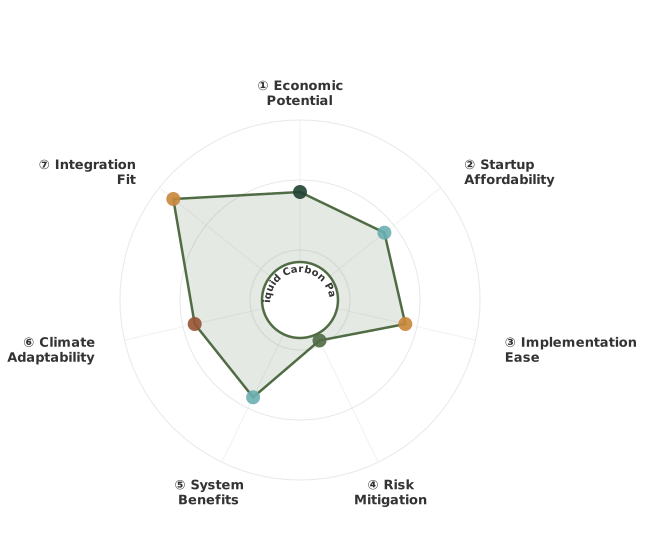
How These Traits Are Calculated
Trait dimensions are ordered clockwise starting from the top of the chart (12 o'clock position):
1. Economic Potential
Financial returns, annual value, and break-even timeline
WHAT: Evaluates financial viability by combining net annual value ($/ha from savings, income, and amortized harvests) with break-even timeline showing when practices pay for themselves.
WHY: Farmers need clear ROI understanding before committing resources. Fast payback (≤3 years) with strong returns (≥$300/ha) enables confident adoption, while long timelines (>10 years) restrict adoption to well-funded operations willing to wait for returns.
HOW: Calculated from net annual value in $/ha and break-even years. Exceptional (≥2.6): fast ROI ≤3 years + high value ≥$300/ha. Typical (1.8-2.5): moderate returns or longer timelines. Limited (<1.8): marginal economics or very long payback >10 years.
2. Startup Affordability
Initial investment costs and financial barrier to entry
WHAT: Measures financial barrier to entry through startup costs for equipment, infrastructure, consulting, and materials. Inverted scoring: lower costs = higher scores = more accessible adoption.
WHY: Affordability determines who can adopt. Low-cost practices (<$250/ha) enable widespread adoption across diverse scales, while high costs (>$2,500/ha) limit adoption to well-capitalized operations, creating barriers that slow regenerative transition.
HOW: Calculated from initial investment parsed from practice content. Inverted scoring: Exceptional (≥2.6): minimal investment <$250/ha. Typical (1.8-2.5): moderate costs $250-2,500/ha. Limited (<1.8): high barrier >$2,500/ha.
3. Implementation Ease
Learning curve and specialized knowledge required
WHAT: Measures how much learning, planning, and specialized knowledge a practice requires. Simpler practices with fewer steps score higher, while complex practices requiring extensive training or specialized resources score lower.
WHY: Complex practices create adoption barriers even when economically viable. Straightforward practices enable faster adoption and broader participation, while those requiring extensive training, timing precision, or specialized equipment limit who can succeed.
HOW: Evaluated by measuring documentation length and identifying complexity markers like location-specific requirements, seasonal timing windows, specialized skills, and dedicated equipment needs. Exceptional (≥2.6): straightforward practices with minimal prerequisites. Typical (1.8-2.5): moderate learning curve with some specialized needs. Limited (<1.8): steep learning curve requiring significant training or resources.
4. Risk Mitigation
Identified financial and ecological risk assessment
WHAT: Evaluates documented risks across financial (investment loss, market volatility) and ecological (crop failure, pest outbreaks) domains. Inverted scoring: fewer risks = higher scores.
WHY: Understanding risk exposure helps farmers make informed decisions. Low-risk practices allow confident implementation, while high-risk practices require careful planning and contingency resources. Risk transparency prevents costly failures.
HOW: Calculated from identified risks in practice content. Inverted scoring: Exceptional (≥2.6): ≤2 risks with manageable severity. Typical (1.8-2.5): 3-5 moderate risks. Limited (<1.8): 6+ risks or severe exposure.
5. System Benefits
How many ways the practice improves your land simultaneously
WHAT: Measures how many aspects of land health improve at once—carbon storage, soil quality, erosion control, water absorption, and biodiversity. Practices that improve multiple areas simultaneously create compounding benefits where each improvement reinforces the others.
WHY: The best practices solve multiple problems at once. For example, addressing erosion simultaneously builds carbon and improves water infiltration, creating a resilient system with positive feedback loops. Single-benefit approaches miss these compound transformation opportunities.
HOW: Evaluated across five key outcomes: carbon sequestration, soil organic matter increase, erosion reduction, water infiltration improvement, and biodiversity enhancement. Exceptional (≥2.6): high carbon storage (>8 t/ha/yr), improvements across 4-5 areas, transformative outcomes. Typical (1.8-2.5): moderate carbon (3-8 t/ha/yr), improvements across 2-3 areas. Limited (<1.8): modest impact (<3 t/ha/yr), single-area focus only.
6. Climate Adaptability
Geographic applicability across Köppen climate zones
WHAT: Evaluates geographic applicability by assessing how many Köppen climate zones successfully support a practice and what adaptation requirements are needed. Measures breadth of climates where farmers can implement with minimal to moderate modifications.
WHY: Universal practices working across diverse climates enable more farmers to adopt regenerative approaches. Practices limited to single climate types (only Mediterranean, only tropical) restrict adoption and slow global transition. Adaptability determines whether a practice serves niche regions or offers broad transformation.
HOW: LLM evaluation of regional success stories, Köppen zone coverage, and adaptation needs. Exceptional (≥2.6): 5+ zones or 4+ climate types, 3+ continents, minimal adaptation. Typical (1.8-2.5): 3-4 zones or 2-3 types, 2 continents, moderate adaptation. Limited (<1.8): 1-2 zones, single region, significant adaptation or highly specialized.
7. Integration Fit
How well this practice combines with others you're doing
WHAT: Measures how well a practice combines with other regenerative practices you might be doing. Some practices work as building blocks that make many other practices easier or more effective, while others work best on their own.
WHY: Practices that combine well with many others create more value on your farm. For example, cover cropping enables no-till, improves grazing, supports crop diversity, and helps water management—making all of them work better together. This helps you build a coherent system rather than juggling disconnected practices.
HOW: Evaluated by identifying which practices combine well and how strong those combinations are. 'Ideally Suited' means strong combinations where practices reinforce each other (practice A makes B easier, while B makes A more effective). 'Adequate' means complementary benefits that work well together. Exceptional (≥2.6): combines well with 6+ practices, serves as a building block. Typical (1.8-2.5): combines with 3-5 practices. Limited (<1.8): 1-2 practices or works best alone.
Going Deeper
1
WHY - The Benefits
The Liquid Carbon Pathway offers a powerful suite of benefits that enhance both the ecological health and economic viability of agricultural systems, aligning directly with the principles of regenerative agriculture. At its heart, this pathway seeks to leverage nature's...
The Liquid Carbon Pathway offers a powerful suite of benefits that enhance both the ecological health and economic viability of agricultural systems, aligning directly with the principles of regenerative agriculture. At its heart, this pathway seeks to leverage nature's own processes to build more resilient, productive, and environmentally sound land management practices.
WHY - The Benefits
The Liquid Carbon Pathway offers a powerful suite of benefits that enhance both the ecological health and economic viability of agricultural systems, aligning directly with the principles of regenerative agriculture. At its heart, this pathway seeks to leverage nature's...
The Liquid Carbon Pathway offers a powerful suite of benefits that enhance both the ecological health and economic viability of agricultural systems, aligning directly with the principles of regenerative agriculture. At its heart, this pathway seeks to leverage nature's own processes to build more resilient, productive, and environmentally sound land management practices.
Soil Health Benefits
The primary benefit of the Liquid Carbon Pathway is the dramatic improvement in soil health. By maximizing carbon inputs, you foster a thriving soil food web. This leads to an increase in soil organic matter (SOM), typically ranging from 0.5% to 2% annually in well-managed systems, with significant increases in stable humic substances over time. Improved SOM content enhances soil aggregation, creating a porous structure that dramatically improves water infiltration (with rates in well-managed systems increasing by 50-80%) and water-holding capacity. This means farms become more resilient to both drought and heavy rainfall, reducing erosion and nutrient runoff.
The biological activity stimulated by continuous carbon input supports a diverse range of soil organisms, from earthworms and beneficial fungi to bacteria and protozoa. These organisms are critical for nutrient cycling, making essential nutrients available to plants in plant-available forms. This increased biological fertility reduces the reliance on synthetic fertilizers, which are costly and can harm soil biology. Furthermore, healthy soil with good structure and biology is less prone to compaction, further promoting root growth and soil aeration.
Economic Benefits
Economically, the Liquid Carbon Pathway focuses on building long-term profitability by reducing input costs and enhancing resilience. As soil health improves and biological fertility increases, the need for synthetic fertilizers, pesticides, and even irrigation often diminishes. Savings on these inputs can be substantial, often amounting to $100-250 per hectare ($40-100 per acre) annually over several years.
Yield stability and increases are also key economic outcomes. While transition periods might see temporary fluctuations, well-established systems typically achieve 10-25% yield improvements over conventional baselines within 5-10 years, particularly for crops that benefit from deep root penetration and consistent moisture. Increased resilience to extreme weather events significantly reduces the risk of catastrophic crop losses, providing a crucial buffer against volatile climate conditions and stabilizing farm income. The enhanced soil's capacity to sequester carbon also opens up potential revenue streams through carbon markets, though farmers should carefully evaluate program costs, long-term contract liabilities, and verification requirements before enrolling.
Regenerative Systems Fit
The Liquid Carbon Pathway is intrinsically regenerative, serving as an overarching framework that integrates and amplifies the effects of core regenerative practices.
Principle 1 (Minimize Soil Disturbance): This pathway mandates minimal soil disturbance. Tillage destroys soil structure, bakes carbon into the atmosphere, and disrupts the complex microbial communities that are essential for transferring carbon into stable soil organic matter. Practices like no-till or reduced tillage are foundational, ensuring that newly fixed carbon isn't immediately lost and that existing carbon reserves are protected.
Principle 2 (Maximize Crop Diversity): Diversity is key to extending photosynthetic periods and feeding a wide array of soil organisms. Mixed cover crops, perennial forage mixes, intercropping, and crop rotations with diverse species ensure living roots are in the soil for a greater portion of the year. This increases the variety of root exudates and organic residues, feeding a more complex and resilient soil food web. Practices such as alley cropping, agroforestry, and integrated crop-livestock systems further enhance this diversity.
Principle 3 (Keep Soil Covered): Continuous living cover or a substantial mulch layer is vital. Beyond preventing erosion and moisture loss, living plants and organic residues provide a constant food source for soil microbes. Canopy cover from trees or dense cover crops creates a stable microclimate in the soil, protecting it from temperature extremes and desiccation, which are detrimental to biological activity and carbon sequestration.
Principle 4 (Maintain Living Roots): This is the direct mechanism of carbon transfer. The longer plants are actively photosynthesizing, the more carbon is exuded into the soil through roots, fueling microbial communities and building soil organic matter. This principle emphasizes extending the growing season with cover crops, utilizing perennial systems, and intensifying pasture management to maintain root activity year-round wherever possible.
Principle 5 (Integrate Livestock): Livestock, when managed strategically, can significantly enhance the carbon pathway. Rotational grazing, particularly high-density, short-duration grazing, can stimulate plant growth and root exudation. Manure deposition acts as a natural fertilizer, providing organic matter and microbial diversity to the soil. By moving livestock frequently, they help distribute nutrients and organic matter without causing excessive compaction, thereby supporting, rather than hindering, soil biological activity and carbon transfer.
The Liquid Carbon Pathway is not tied to a specific climate or region; its principles are universally applicable. In humid temperate climates (USDA Zones 6-8, Köppen Cfa/Cfb), the focus might be on overwintering cover crops and diverse pasture mixes. In Mediterranean climates (USDA Zones 8-10, Köppen Csa/Csb), extending the wet season growth with drought-tolerant cover crops is key. Arid regions may focus on deep-rooted perennials and hardy drought-tolerant cover crops to maximize root activity during limited moisture windows.
Transitioning to this pathway generally involves a gradual shift. Full elimination of synthetic inputs might occur over 3-5 years as soil biology takes over nutrient cycling. Tillage reduction is typically phased in, moving towards full no-till over 1-3 years. The "cold turkey" approach of abruptly stopping all conventional inputs and practices can lead to significant yield crashes and economic hardship, making a planned, phased transition more sustainable and successful. The timeline for seeing significant results in soil health and carbon sequestration typically spans 3-7 years, with cumulative benefits continuing to grow thereafter.
Sources behind this view
Videos & Podcasts
-
Provides actionable steps for regenerative agronomy: balanced N:C inputs (molasses, humates), microbial teas, yeast metabolites, calcium, and effective seed treatments. Emphasizes scalability, systems
-
Multispecies pastures with high biodiversity build significant deep soil carbon, improve animal health, and qualify for carbon credits, outperforming monocultures like ryegrass. Short-rotation forestr

-
Explains a 'carbon economy' focused on building soil organic matter through perennial systems and animal integration (moving, mobbing, mowing) to enhance water retention, mineral availability, and mic

-
Regenerating the soil carbon sponge is crucial for climate cooling and food security. It involves maximizing photosynthesis and converting biomass to stable soil carbon, which improves soil health, hy

Community
-
Build healthy pasture soils by minimizing tillage, maintaining living roots and species diversity, and implementing proper grazing management. Livestock are essential for nutrient cycling and stimulat
Read more (opens in new window) smallfarms.cornell.edu -
Reducing tillage, crop rotation, and perennial livestock systems enhance soil organic matter, water holding capacity, and carbon sequestration while reducing nitrous oxide and methane emissions.
Read more (opens in new window) sustainableagriculture.net -
Regenerative agriculture principles, including pasture-based systems, cover cropping, and livestock integration, are discussed for improving soil health and water infiltration in arid African climates
Read more (opens in new window) permies.com -
The book details carbon farming practices across annual cropping, livestock integration, and perennial cropping systems, emphasizing agroforestry and function stacking for soil carbon sequestration an
Read more (opens in new window) permies.com
Research
-
Carbon Sequestration Potential of Agronomic Practices in Agricultural Soil: A Review (opens in new window)
This study found: Farming practices like cover crops, reduced tillage, and organic amendments can significantly increase soil carbon storage (0.2-1.0 Mg C ha⁻¹ yr⁻¹). These methods improve soil health but face adoption
-
Assessing the Role of Regenerative Practices in Enhancing Soil Carbon Sequestration in Farmlands: A Review (opens in new window)
This study found: Regenerative farming practices like cover crops, reduced tillage, and agroforestry effectively store soil carbon (0.2-2.5 Mg C ha⁻¹ yr⁻¹), improving soil health and reducing emissions, especially in t
-
Regenerative Agriculture: Restoring Ecosystems¢ Resilience and Productivity: A Review (opens in new window)
This study found: Regenerative agriculture builds soil health and ecosystem services through practices like no-till, cover crops, and diverse rotations. It increases soil organic matter, improves water infiltration, bo
-
Agricultural soils as a sink to mitigate CO <sub>2</sub> emissions (opens in new window)
This study found: Farms can store significant atmospheric CO2 in soils by increasing organic matter input and reducing decomposition. Key practices include no-till, cover crops, perennial forages, and agroforestry, whi
From the Web
-
Key regenerative agriculture methods include no-till farming, cover cropping, agroforestry, perennial crops, planned rotational grazing (Holistic Management), and compost application, all aimed at imp
-
Transitioning to sustainable pasture fertility involves perennial pasture, cover crops, and grazing management to build soil carbon via the liquid carbon pathway. Key principles include year-round cov
-
Regenerative agriculture utilizes methods like no-till, agroforestry, perennial crops, planned rotational grazing (Holistic Management), compost application, and pasture cropping to improve soil healt
-
Guides the transition to sustainable pasture fertility by managing the soil carbon liquid pathway through year-round cover, reduced fertilizers, plant diversity, and high-density grazing. Emphasizes p
2
WHERE - Regional Considerations
The Liquid Carbon Pathway is adaptable to diverse climates, with specific practice adaptations ensuring its effectiveness across varied environmental conditions. The core tenet of maximizing plant photosynthesis and root function remains constant, but species selection,...
The Liquid Carbon Pathway is adaptable to diverse climates, with specific practice adaptations ensuring its effectiveness across varied environmental conditions. The core tenet of maximizing plant photosynthesis and root function remains constant, but species selection, timing, and management strategies are tailored to regional realities.
WHERE - Regional Considerations
The Liquid Carbon Pathway is adaptable to diverse climates, with specific practice adaptations ensuring its effectiveness across varied environmental conditions. The core tenet of maximizing plant photosynthesis and root function remains constant, but species selection,...
The Liquid Carbon Pathway is adaptable to diverse climates, with specific practice adaptations ensuring its effectiveness across varied environmental conditions. The core tenet of maximizing plant photosynthesis and root function remains constant, but species selection, timing, and management strategies are tailored to regional realities.
Click Here to Look up your Region if you don't already know it
Humid Temperate Regions
Representative Locations: Northeastern United States, northern Europe (UK, Germany), eastern China, Japan, New Zealand; USDA Zones 6-8, Köppen Cfa/Cfb. Climate Context: Characterized by warm to hot summers and cool to cold winters with moderate to high precipitation (75-150 cm or 30-60 inches) distributed relatively evenly throughout the year. Extended growing seasons in many areas. Pathway Application: These regions offer excellent potential for continuous living cover and robust root development. Emphasis is on diverse cool-season and warm-season cover crop mixes, extending the growing season into fall and early spring. Integrating perennial forages with livestock that are managed adaptively is highly effective. Challenges can include managing excess moisture, preventing soil compaction, and selecting cover crops that thrive in variable summer conditions. Focus on species that overwinter well or can be planted early and terminated late to maximize root activity.
Mediterranean Regions
Representative Locations: California (USA), Mediterranean basin (Spain, Italy, Greece), central Chile, southwestern Australia, Western Cape South Africa; USDA Zones 8-10, Köppen Csa/Csb. Climate Context: Hot, dry summers and mild, wet winters. Precipitation is highly seasonal, concentrated in the cooler months (40-90 cm or 15-35 inches annually). Pathway Application: The challenge here is maximizing plant activity during the limited wet season and utilizing drought-tolerant species to extend cover into warmer periods. Winter cover cropping with species that tolerate cool, wet conditions and can bolt/grow during warmer spells is crucial. Summer cover crops or perennial forages must be adapted to drought, often with deep root systems and slow growth rates. Integrating drought-hardy trees for shade and carbon sequestration can also be highly beneficial. Water management, including soil structure to maximize infiltration and retention, is paramount.
Arid and Semi-Arid Regions
Representative Locations: Western USA, North Africa, Central Asia, Interior Australia; USDA Zones 6-9, Köppen BSh/BSk. Climate Context: Characterized by low and unpredictable precipitation (<40 cm or 15 inches annually), high temperatures, and short, variable growing seasons. Evaporation rates are high. Pathway Application: This pathway requires a strong focus on water-use efficiency and maximizing carbon input during brief favorable periods. Deep-rooted perennial species (native grasses, adapted trees, shrubs) are essential for continuous soil cover and root activity. Cover crops must be drought-tolerant and ideally have rapid establishment and deep-rooting capabilities. Water harvesting techniques (e.g., keyline design, contour farming) are critical to capture limited rainfall and maximize infiltration. Integrating livestock managed in adaptive multi-paddock grazing systems can stimulate plant growth and nutrient cycling while maintaining soil cover. The emphasis is on robust plants that can survive and photosynthesize even under water stress.
Cold Continental Regions
Representative Locations: Northern USA and Canada, Northern Europe, Northern Asia; USDA Zones 3-5, Köppen Dfa/Dfb. Climate Context: Very short growing seasons, extreme summer heat, and severe winter cold. Pathway Application: Maximizing photosynthesis within the short growing window is key. This involves selecting fast-growing, cold-tolerant cover crops and cash crops. Overwintering cover crops (e.g., cereals, hairy vetch) are crucial for maintaining soil cover and root activity through the early spring and late fall. Perennial forages and well-managed pastures can contribute significantly when the ground is not frozen. Agroforestry systems with cold-hardy tree species can provide long-term carbon sequestration, though benefits will be realized over longer timescales. Managing snow cover for insulation and moisture retention is also important.
Subtropical Regions
Representative Locations: Southeastern USA, Southern China, Southern Brazil, Eastern Australia; USDA Zones 9-11, Köppen Cfa/Cwa. Climate Context: Hot, humid summers and mild winters with generally ample rainfall, though some regions have distinct wet and dry seasons. Pathway Application: These regions offer the potential for nearly year-round green cover. The emphasis is on managing diverse warm-season and cool-season cover crops and cash crops to provide continuous photosynthetic activity. Managing for disease and pest pressure, which can be high due to humidity, is important. Integrated pest management and biological control become key. Livestock integration is highly effective here, with animals able to graze for extended periods, provided they are managed to avoid overgrazing and soil compaction.
Tropical Regions
Representative Locations: Central America, Southeast Asia, East Africa, Northern Australia, Northern South America; Köppen Af/Am/Aw. Climate Context: High temperatures year-round, with either consistently high rainfall or distinct wet and dry seasons. Pathway Application: Year-round production is feasible, requiring careful species selection to match the wet and dry season profiles. High rainfall regions necessitate intensive focus on soil cover and structure to prevent erosion and nutrient leaching. In regions with distinct dry seasons, drought-tolerant species and water harvesting become paramount. Agroforestry and silvopasture are particularly powerful in tropical regions, providing shade, enhancing biodiversity, and offering diversified income streams. Managing for high biological activity year-round is the goal, ensuring a constant flow of carbon into the soil.
3
HOW - Implementation Process
The implementation of the Liquid Carbon Pathway is a dynamic process that integrates multiple regenerative practices. It requires a shift in mindset from monoculture and synthetic inputs to diversity and biological management, focusing on feeding the soil for long-term...
The implementation of the Liquid Carbon Pathway is a dynamic process that integrates multiple regenerative practices. It requires a shift in mindset from monoculture and synthetic inputs to diversity and biological management, focusing on feeding the soil for long-term vitality and carbon sequestration.
HOW - Implementation Process
The implementation of the Liquid Carbon Pathway is a dynamic process that integrates multiple regenerative practices. It requires a shift in mindset from monoculture and synthetic inputs to diversity and biological management, focusing on feeding the soil for long-term...
The implementation of the Liquid Carbon Pathway is a dynamic process that integrates multiple regenerative practices. It requires a shift in mindset from monoculture and synthetic inputs to diversity and biological management, focusing on feeding the soil for long-term vitality and carbon sequestration.
Prerequisites
Before embarking on the Liquid Carbon Pathway:
- Commitment to observation: Develop a deep understanding of your local environment, soil types, microclimates, and plant/animal responses.
- Yield monitoring: Establish baseline yield data and understand input/output economics for your current system.
- Soil testing: Understand your baseline soil organic matter, nutrient levels, pH, and physical structure (including compaction).
- Financial planning: Recognize that transition may involve initial investment and a phased approach to input reduction.
Phase 1: Foundation Building (Year 1-2)
Objective: Introduce key components and begin shifting management. Practices: 1. Tillage Reduction: Begin reducing tillage operations. If currently tilling annually, move to reduced tillage passes, followed by a transition to permanent no-till over 1-3 years. This protects existing soil carbon and allows soil structure to stabilize. 2. Cover Crop Introduction: Start with simple, resilient cover crops sown after cash crop harvest. Focus on species that are easy to establish and provide good biomass and root penetration, such as annual ryegrass, cereal rye, forage radish, or vetch. Aim for a mix of grasses (fibrous roots, biomass) and legumes (nitrogen fixation). 3. Crop Rotation Enhancement: Begin diversifying your crop rotation by introducing new species or varieties, including non-grain crops, to increase biological diversity and soil health. 4. Livestock Integration (If Applicable): If livestock are part of your operation, begin implementing rotational grazing principles. Ensure adequate rest periods for pastures to allow for root recovery and plant regrowth. Avoid continuous grazing.
Internationally: For grain farmers in the North American Prairies or European Plains, extending cover crops into fall and overwintering them is key. In Southeast Asia, using rice paddies for cover crop growth during fallow periods is vital. In East Africa, integrating drought-tolerant cover crops with staple crops like maize can be revolutionary. Equipment needs include no-till drills or planters capable of working with residue, and basic fencing for livestock if integrating animals.
Phase 2: Diversification and Optimization (Year 3-5)
Objective: Increase complexity and resilience of the ecosystem. Practices: 1. Advanced Cover Cropping: Implement more complex cover crop mixes (8-15+ species) including deep-rooted plants, diverse functional groups (grasses, legumes, brassicas, forbs), and species with different growing seasons to maximize year-round root activity. Experiment with intercropping cash crops with cover crop species. 2. Perennial Integration: Introduce perennial forage crops, fruit trees (orchards), nut trees (agroforestry), or native grasslands into your rotation or pasture systems. These provide long-term living roots and significant carbon sequestration. 3. Livestock Management Intensification: Fine-tune adaptive grazing. Focus on maximizing animal impact and nutrient cycling while ensuring adequate rest and recovery for forage. Consider integrating multiple livestock species if feasible. 4. Reduce Synthetic Inputs: Begin phasing out synthetic nitrogen, phosphorus, and pesticides based on soil test results and observed plant health. Use biological stimulants, compost, and natural nutrient sources as needed. 5. Water Management: Implement practices like contour farming, keyline design, or use of vegetative barriers to enhance water infiltration and retention, reducing runoff and erosion.
Internationally: In arid regions like Australia or the US Southwest, focus on selecting drought-tolerant perennials and cover crops that can survive long dry spells. In humid regions like Brazil or India, manage for continuous cover to prevent nutrient leaching and erosion. Equipment may include specialized planters for diverse seed mixes, roller-criminels for cover crop termination, and improved fencing for rotational grazing.
Phase 3: Ecosystem Maturity and Maintenance (Year 5+)
Objective: Maintain a highly functional, self-regulating ecosystem. Practices: 1. Continuous Living Systems: Ensure that living roots are in the soil for the maximum possible duration, with minimal bare soil periods (<30 days per year on average). 2. Biodiversity Enhancement: Actively encourage biodiversity by planting hedgerows, insectary strips, and maintaining diverse plant communities. 3. Soil Carbon Monitoring: Regularly monitor soil organic matter and carbon levels to track progress and adjust management. 4. Input Independence: Aim for minimal reliance on external synthetic inputs. Soil biology should be providing most necessary nutrients and pest/disease resistance. 5. Strategic Livestock Integration: Continue using livestock as a tool for nutrient cycling, pasture management, and weed control, always prioritizing soil health and plant recovery.
Internationally: In Europe, this might mean transitioning entire farms to a system of perennial forages, grain legumes, and intercropped trees. In Africa, it could involve integrating trees with staple crops to build resilience against erratic rainfall. In North America, it could mean developing complex crop rotations with multiple cover crops and incorporating livestock back into grain-growing regions. Maintenance involves constant learning and adaptation based on soil health indicators.
Transition Timeline & Phase-Out Strategy (If Applicable to Specific Inputs)
This pathway is inherently a transition towards a fully regenerative system. The goal is to phase out reliance on practices that deplete soil carbon and harm soil biology.
- Tillage: Transition from annual tillage to reduced tillage (Year 1-2), then to permanent no-till (Year 2-3).
- Synthetic Fertilizers: Reduce synthetic N inputs by 25-30% annually while monitoring soil biological activity and nutrient cycling through cover crops and manure. Aim for near-zero synthetic N by Year 4-5.
- Synthetic Pesticides/Herbicides: Reduce application frequency and rates by 20-25% annually, relying more on diverse cropping systems and beneficial insects for pest control. Aim for minimal or no synthetic chemical use by Year 4-6.
- Bare Soil Periods: Reduce bare soil periods from months to weeks, aiming for less than 30 days of bare soil per year on average by Year 3-5.
Indicators of Success for Graduation:
- Measurable increase in soil organic matter (e.g., +0.5% or more over 2-3 years on previously degraded land).
- Significant improvement in water infiltration rates.
- Visible increase in earthworm populations and root channels.
- Reduced need for starter fertilizers and fungicides/insecticides.
- Stable or increasing yields with reduced input costs.
- Improved farm profitability and reduced risk tolerance.
Sources behind this view
Videos & Podcasts
-
Soil Capital's strategy for regenerative transition: 1) Optimize agrochemical/pesticide use for 10-40% savings. 2) Invest savings in multi-species cover crops and crop rotation diversification (oats,

-
Transitioning to regenerative agriculture is a human/psychological process requiring trials to reduce risk and build trust. Increased consumer awareness of ecology and health would drive demand for re

-
Provides actionable steps for regenerative agronomy: balanced N:C inputs (molasses, humates), microbial teas, yeast metabolites, calcium, and effective seed treatments. Emphasizes scalability, systems
-
Transitioning to regenerative agriculture requires a whole-systems mindset, focusing on soil health principles: reduce tillage/compaction, increase diversity (plants, animals), eliminate bio-cides/fer

Community
-
Build healthy pasture soils by minimizing tillage, maintaining living roots and species diversity, and implementing proper grazing management. Livestock are essential for nutrient cycling and stimulat
Read more (opens in new window) smallfarms.cornell.edu -
Advocates for converting conventional land to permaculture, recommending a gradual transition with cover crops and farmer collaboration, aiming to reduce chemical inputs over 3 years as soil heals.
Read more (opens in new window) permies.com
Research
-
Regenerative Agriculture: Restoring Ecosystems¢ Resilience and Productivity: A Review (opens in new window)
This study found: Regenerative agriculture builds soil health and ecosystem services through practices like no-till, cover crops, and diverse rotations. It increases soil organic matter, improves water infiltration, bo
-
Transition to Regenerative Farming (opens in new window)
This study found: A 5-year case study shows a farm successfully transitioned to regenerative practices, reducing soil erosion and increasing wildlife by using cover crops, diversified rotations, and reduced tillage. Pr
-
Building Soil Health and Fertility through Organic Amendments and Practices: A Review (opens in new window)
This study found: Review of organic amendments (manures, compost, cover crops) and regenerative practices (no-till, crop diversity, agroecology) shows they restore soil health by increasing organic matter and beneficia
-
Systematic review of regenerative farming: Addressing agricultural sustainability challenges (opens in new window)
This study found: Systematic review of 31 studies shows regenerative farming improves soil health, biodiversity, and carbon capture, aiding sustainability. Technology is key for adoption, but policy, farmer understandi
From the Web
-
Five steps to regenerative agriculture: Holistic Planned Grazing, no-till farming, planting diverse cover crops/interseeding, using compost/inoculants (with caution), and incorporating silvopasture/wo
-
Key regenerative agriculture methods include no-till farming, cover cropping, agroforestry, perennial crops, planned rotational grazing (Holistic Management), and compost application, all aimed at imp
-
Transitioning to sustainable pasture fertility involves perennial pasture, cover crops, and grazing management to build soil carbon via the liquid carbon pathway. Key principles include year-round cov
-
Guides the transition to sustainable pasture fertility by managing the soil carbon liquid pathway through year-round cover, reduced fertilizers, plant diversity, and high-density grazing. Emphasizes p
4
Know the Debate
The Liquid Carbon Pathway's effectiveness and timeline for results vary significantly across different regions and farming scales. In humid tempera...
Know the Debate
The Liquid Carbon Pathway's effectiveness and timeline for results vary significantly across different regions and farming scales. In humid tempera...
The Liquid Carbon Pathway's effectiveness and timeline for results vary significantly across different regions and farming scales. In humid temperate zones with reliable rainfall, rapid improvements in soil biology and carbon sequestration can be observed within 2-5 years. Conversely, arid or semi-arid regions and those with short growing seasons require longer timelines (5-10 years) and a strong focus on drought-tolerant species and water harvesting. Initial investments for equipment like no-till drills and fencing can range from $100-$1,000 per hectare, depending on farm size and existing infrastructure. Ongoing labor shifts from physical tillage to increased observation, planning, and adaptive management.
How much soil carbon can be sequestered annually?
Modest gains (0.2-1.0 Mg C/ha/yr)
Academic research, often using controlled trials and standard soil sampling, indicates moderate annual carbon sequestration rates achievable through practices like cover cropping and no-till. These gains are steady but gradual.
Sources behind this view
Sources behind this view
Research
-
Carbon Sequestration Potential of Agronomic Practices in Agricultural Soil: A Review (opens in new window)
This study found: This review looks at how different farming methods can help agricultural soils capture carbon from the atmosphere, which is key for fighting climate change and improving farm health. Practices like reduced tillage, managing crop residues, rotating crops, planting cover crops, using compost and manure, and integrating trees into farms all help soil store carbon. These methods work through natural processes involving soil life, soil structure, and nutrient cycles. Studies show that good farming practices can add between 0.2 to 1.0 tons of carbon per acre each year, depending on the soil, climate, and crops. The review also discusses what affects how much carbon is stored, such as soil type and weather. It covers ways to measure soil carbon, like field tests and computer models, and points out challenges in accurately tracking it. The benefits of conservation and organic farming for long-term carbon storage and improving soil structure, water holding, and microbial activity are highlighted. However, the review also identifies hurdles to wider adoption, including cost, farmer challenges, measurement difficulties, and policy issues. It suggests that policies, carbon markets, and payments for environmental services could encourage farmers to use these carbon-enhancing practices. Future research should focus on long-term studies and using new technologies.
-
Research on methods, techniques and technologies of carbon sequestration in soil (opens in new window)
This study found: This research looks at ways farmers can help store carbon in the soil, which is a natural part of Earth's cycles and holds a huge amount of carbon. With more carbon going into the atmosphere, scientists are searching for solutions. This paper focuses on simple farming methods, particularly those that avoid disturbing or turning over the soil, to keep the carbon that plants capture locked away underground. This helps reduce greenhouse gases.
Significant gains (5-15 tonnes CO2e/ha/year)
Field practitioners and proponents of the 'liquid carbon pathway' claim much higher sequestration rates, emphasizing biological processes like root exudates and maximizing photosynthesizing plant cover. These higher estimates often reflect maximal potential achieved through integrated regenerative systems.
Sources behind this view
Sources behind this view
Videos & Podcasts
-
The liquid carbon pathway, driven by plant root exudates, is the primary soil-building mechanism. Historically high soil carbon in Australia has declined, impacting fertility and profit. Increasing soil carbon is key to farm regeneration.

-
Carbon enters soil primarily via photosynthesis (liquid carbon pathway), where plants convert CO2 into sugars feeding soil microbes. This process forms soil structure. Policy initiatives in California, Oklahoma, and Utah support soil carbon sequestration.
-
The liquid carbon pathway, driven by photosynthesis and root exudates, builds stable soil humus, unlike the decomposition pathway which releases CO2. Living plants and their root inputs are crucial for building soil carbon much faster than surface organic matter.

Making Sense of the Differences
The wide range in claimed soil carbon sequestration rates—from 0.2-1.0 Mg C/ha/yr in academic studies to 5-15 tonnes CO2e/ha/year in field observations—highlights the influence of methodology, context, and time horizon. Academic research often uses traditional sampling methods and may not capture the full long-term stabilization of carbon or the impact of deep root exudates. Field observations, while reflecting potential, can be less rigorously controlled and may not account for all emissions. Regional climate, baseline soil conditions, the diversity of plant life, and the intensity of management practices all significantly impact actual sequestration rates. Practitioners see higher potential due to a focus on biological processes and longer-term ecosystem building.
5
HOW MUCH - Costs & Investment
Note: All costs are based on recent US economic data (2023-2025) and may vary substantially in other regions based on local labor rates, material costs, and regulatory requirements. Costs shown in USD; multiply by local labor and material cost indices for your region....
Note: All costs are based on recent US economic data (2023-2025) and may vary substantially in other regions based on local labor rates, material costs, and regulatory requirements. Costs shown in USD; multiply by local labor and material cost indices for your region. Labor costs vary significantly internationally.
HOW MUCH - Costs & Investment
Note: All costs are based on recent US economic data (2023-2025) and may vary substantially in other regions based on local labor rates, material costs, and regulatory requirements. Costs shown in USD; multiply by local labor and material cost indices for your region....
Note: All costs are based on recent US economic data (2023-2025) and may vary substantially in other regions based on local labor rates, material costs, and regulatory requirements. Costs shown in USD; multiply by local labor and material cost indices for your region. Labor costs vary significantly internationally.
Note: All costs are based on recent US economic data (2024–2026) and may vary substantially by region based on local labor rates, material costs, and regulatory requirements.
Cover Crop Seed & Establishment
The foundation of the Liquid Carbon Pathway requires consistent living roots, typically achieved through multispecies cover cropping. Small operations (under 50 acres (20 ha)) face higher per-acre costs due to smaller seed volume purchases and retail bundling, costing between $26–$68 per acre ($64–$168/ha). Mid-size operations (50–500 acres (20–202 ha)) benefit from bulk pricing and more efficient seeding logistics, averaging $21–$52 per acre ($52–$128/ha). Large-scale operations (500+ acres) leverage wholesale economies of scale, often achieving costs between $16–$42 per acre ($40–$104/ha). These figures assume a diversity-focused mix designed to maximize root exudate production, which is higher in cost than simple cereal grain monocultures.
Specialized Equipment (No-Till Drills & Planters)
Transitioning requires low-disturbance seeding technology to protect the soil structure while establishing new roots. Small operations often mitigate capital exposure by leasing or renting specialized equipment, spending $1,563–$6,252 per year, or purchasing older, used equipment for $15,630–$41,680. Mid-size operations frequently invest in dedicated, owned no-till drills or high-quality retrofits for existing planters, with capital requirements ranging from $41,680–$125,040. Large-scale operations necessitate heavy-duty, high-capacity machinery designed to maintain uniform depth across vast, variable topography, with investment levels reaching $156,300–$416,800+. Costs fluctuate drastically based on the inclusion of premium features like hydraulic down-pressure and precision row-cleaners.
Soil Testing & Expert Consultation
Monitoring the biological health of the system requires more than basic nitrogen-phosphorus-potassium (NPK) testing. Comprehensive biological assessments, such as PLFA or Haney tests, provide the data needed to track carbon flux. Small farms typically spend $104–$417 annually on these biological assessments to refine their management. Mid-size farms invest $521–$2,084 in broader spatial soil analysis and professional agronomic consulting to adjust synthetic input strategies based on biological capacity. Large operations scale this significantly, allocating $2,605–$8,336 for high-resolution systematic mapping to manage nutrient cycling and soil carbon stocks across diverse farm soil types.
Livestock Integration & Infrastructure
If the management strategy incorporates adaptive multi-paddock (AMP) grazing to further stimulate the Liquid Carbon Pathway, fencing and water infrastructure become major line items. Small farms typically utilize mobile, low-cost fencing systems and basic water hauling, totaling $834–$3,647. Mid-size operations invest in more permanent, centralized water systems and solar-powered electric fencing grids, ranging from $5,210–$26,050. Large operations with significant acreage require extensive, professional-grade water lines and permanent perimeter fencing to manage intensive mob grazing cycles, with investments between $41,680–$156,300.
Most Spend: Most agricultural operations fall within a total annual investment range of $125–$365 per acre ($309–$902/ha) during the first three years. This mid-range accounts for producers who balance equipment rental, moderate cover crop seeding rates, and incremental infrastructure improvements rather than aggressive, top-tier capital purchases.
Why the Range?: Costs vary primarily based on the producer's current technology baseline, the intensity of the multispecies seed mix, and the decision to own versus lease equipment. Producers managing degraded soils often see "higher-end" costs due to the need for more frequent testing and more complex seed mixes to restart the biological cycle, whereas established operations in high-organic soils may operate on the lower end of the range.
Sources behind this view
Videos & Podcasts
-
Soil Capital's strategy for regenerative transition: 1) Optimize agrochemical/pesticide use for 10-40% savings. 2) Invest savings in multi-species cover crops and crop rotation diversification (oats,
-
Transitioning to regenerative farming costs $75k-$140k over two years but saves money compared to conventional nitrogen expenses ($195k/year). Start small (50-100 acres) with cover crops (hairy vetch,
-
Transitioning Dutch agriculture requires €150 billion, unlocked by offtake agreements and focusing on entrepreneurial farmers. Key elements are finance, market access, and support networks. Restoring

-
Transitioning to regenerative agriculture is a human/psychological process requiring trials to reduce risk and build trust. Increased consumer awareness of ecology and health would drive demand for re
Community
-
A commercial farm trial on 250 acres of soybeans and wheat showed regenerative methods (cover crops, compost tea, no-till) increased yields by 5-25 bu/acre and saved $9,000 in the first year compared
Read more (opens in new window) permies.com -
Advocates for converting conventional land to permaculture, recommending a gradual transition with cover crops and farmer collaboration, aiming to reduce chemical inputs over 3 years as soil heals.
Read more (opens in new window) permies.com
Research
-
Regenerative Agriculture: Restoring Ecosystems¢ Resilience and Productivity: A Review (opens in new window)
This study found: Regenerative agriculture builds soil health and ecosystem services through practices like no-till, cover crops, and diverse rotations. It increases soil organic matter, improves water infiltration, bo
-
Transition to Regenerative Farming (opens in new window)
This study found: A 5-year case study shows a farm successfully transitioned to regenerative practices, reducing soil erosion and increasing wildlife by using cover crops, diversified rotations, and reduced tillage. Pr
-
Regenerative Livestock Farming as a Socioeconomic Model for Sustainable Agribusiness in Latin America (opens in new window)
This study found: Regenerative livestock farming in Latin America improved soil carbon, biodiversity, and water quality, while boosting farmer income and quality of life. Government support is key for wider adoption.
-
Regenerative farming and conservation tillage: economic benefits and ecological impacts in contemporary agriculture (opens in new window)
This study found: Regenerative farming with conservation tillage (no-till, strip-till) improves soil health, reduces emissions, and boosts farm profits by cutting costs and stabilizing yields. Requires farmer training
6
REWARDS AND RISKS - Economics & Risk Factors
Economic Scenarios
Economic Scenarios
REWARDS AND RISKS - Economics & Risk Factors
Economic Scenarios
Economic Scenarios
Managed effectively, this practice shifts the farm's financial profile from a high-input, high-cost model toward a high-efficiency, biologically-driven model.
Economic Scenarios
In a Best-Case Scenario, the producer effectively triggers an early biological "kick-start," realizing a 30% reduction in synthetic fertilizer dependency by year 4. By year 7, annual net farm profitability improves by $156–$313 per acre ($385–$773/ha), driven by both realized cost savings and superior climate-resilient yield performance.
The Typical Scenario reflects a more gradual biological transition. Many producers experience a slower ramp-up in microbial function, with modest yield gains of 10–12% appearing by year 7. In this scenario, net profitability increases by an estimated $83–$167 per acre ($205–$413/ha), providing a stable, compounding return on the initial investment.
In a Worst-Case Scenario, producers struggle to overcome internal management challenges or significant weather-related setbacks during the transition phase. Profitability improves by a meager $21–$52 per acre ($52–$128/ha), and the producer may remain tethered to expensive synthetic inputs or face persistent weed-suppression costs that eat away at marginal efficiency gains.
Market Factors & Risk Mitigation
Profitability is bolstered by regional conservation support. Programs like NRCS EQIP or CSP provide cost-share payments that can offset 40–60% of seed and equipment-related capital risk. Furthermore, commodity market volatility—a perennial threat—is mitigated by structural cost reductions; producers typically save $42–$104 per acre ($104–$257/ha) on nitrogen and herbicide applications once the nutrient cycle is biologically powered. Secondary revenue streams offer a pathway for additional stability: verified carbon credits currently pay $16–$31 per ton, and premium organic-transition status can add $21–$104 per acre ($52–$257/ha) to gross revenue for operations that meet strict certification milestones.
Transition Period Risks
The primary risk is a "Yield Dip" occurring in years 1–2, where crop yields may drop by 5–12% as the soil microbiome shifts away from mineral-reliant nutrient uptake. To mitigate this, successful producers avoid "cold turkey" input removal. Instead, they use "buffer" applications, reducing synthetic inputs by 10–20% annually. This allows the newly forming soil biology to take over gradually. Additionally, producers mitigate the "Learning Curve" by piloting the practice on 10–20% of their acreage, limiting their financial exposure during the early, uncertain stages of implementation to a risk band of $52–$156 per acre ($128–$385/ha). Leasing equipment during these initial three years further de-risks the operation by 50–70%, preventing burdensome debt service until the biological system has proven its productivity.
Sources behind this view
Videos & Podcasts
-
Transitioning to regenerative agriculture is a human/psychological process requiring trials to reduce risk and build trust. Increased consumer awareness of ecology and health would drive demand for re
-
Regenerative agriculture provides solutions for climate change, human health, and soil degradation, contrasting with industrial agriculture's harmful impacts, including glyphosate use. Practices like
-
Soil Capital's strategy for regenerative transition: 1) Optimize agrochemical/pesticide use for 10-40% savings. 2) Invest savings in multi-species cover crops and crop rotation diversification (oats,
-
Case studies of farmers like Duane Beck, Kofi Boa, David Brandt, and Gabe Brown demonstrate that regenerative agriculture (no-till, cover crops, diverse rotations) significantly increases soil health,
Community
-
A commercial farm trial on 250 acres of soybeans and wheat showed regenerative methods (cover crops, compost tea, no-till) increased yields by 5-25 bu/acre and saved $9,000 in the first year compared
Read more (opens in new window) permies.com -
Advocates for converting conventional land to permaculture, recommending a gradual transition with cover crops and farmer collaboration, aiming to reduce chemical inputs over 3 years as soil heals.
Read more (opens in new window) permies.com -
Key takeaways for scaling regenerative agriculture include consistent certification standards, secure data sharing, long-term investment and financing, supply chain transparency, and collaborative eff
Read more (opens in new window) ucanr.edu -
Adopting no-till farming and non-GMO seeds improves soil health, reduces input costs (fuel, fertilizer, herbicides), and increases yields and profitability, leading to farmer adoption within 4-5 years
Read more (opens in new window) permies.com
Research
-
Regenerative Agriculture: Restoring Ecosystems¢ Resilience and Productivity: A Review (opens in new window)
This study found: Regenerative agriculture builds soil health and ecosystem services through practices like no-till, cover crops, and diverse rotations. It increases soil organic matter, improves water infiltration, bo
-
Systematic review of regenerative farming: Addressing agricultural sustainability challenges (opens in new window)
This study found: Systematic review of 31 studies shows regenerative farming improves soil health, biodiversity, and carbon capture, aiding sustainability. Technology is key for adoption, but policy, farmer understandi
-
Transition to Regenerative Farming (opens in new window)
This study found: A 5-year case study shows a farm successfully transitioned to regenerative practices, reducing soil erosion and increasing wildlife by using cover crops, diversified rotations, and reduced tillage. Pr
-
Regenerative Livestock Farming as a Socioeconomic Model for Sustainable Agribusiness in Latin America (opens in new window)
This study found: Regenerative livestock farming in Latin America improved soil carbon, biodiversity, and water quality, while boosting farmer income and quality of life. Government support is key for wider adoption.
From the Web
-
Five steps to regenerative agriculture: Holistic Planned Grazing, no-till farming, planting diverse cover crops/interseeding, using compost/inoculants (with caution), and incorporating silvopasture/wo
-
Regenerative agriculture aligns environmental and financial goals by improving soil health, leading to cost savings and better plant nutrition. This approach demonstrates economic viability, encouragi
-
Regenerative agriculture restores degraded soils by working with nature, enhancing soil health and profitability. Key practices reduce input costs, improve resilience, and benefit the environment thro
-
Regenerative agriculture aims to reverse climate change by sequestering carbon and improving soil health, but high upfront costs and inadequate market incentives hinder adoption, necessitating policy
7
WHO - Labor & Expertise
Successfully implementing the Liquid Carbon Pathway requires a significant commitment to learning and adaptation, involving changes in daily management routines and long-term strategic planning. The specific labor and expertise needs will vary depending on the scale of...
Successfully implementing the Liquid Carbon Pathway requires a significant commitment to learning and adaptation, involving changes in daily management routines and long-term strategic planning. The specific labor and expertise needs will vary depending on the scale of operation and the existing system's complexity.
WHO - Labor & Expertise
Successfully implementing the Liquid Carbon Pathway requires a significant commitment to learning and adaptation, involving changes in daily management routines and long-term strategic planning. The specific labor and expertise needs will vary depending on the scale of...
Successfully implementing the Liquid Carbon Pathway requires a significant commitment to learning and adaptation, involving changes in daily management routines and long-term strategic planning. The specific labor and expertise needs will vary depending on the scale of operation and the existing system's complexity.
Skill Requirements & Expertise
- Soil Biology Understanding: A foundational knowledge of soil food webs, the role of microbial communities, nutrient cycling, and the carbon cycle is essential. This understanding informs decisions about cover crop selection, tillage, and input use.
- Plant Science & Agronomy: Expertise in crop physiology, cover crop varieties, their growth cycles, nutrient needs, and interactions with the environment is critical. This includes understanding how different plant species contribute to biomass, root depth, and soil health.
- Livestock Management (If Applicable): For operations integrating livestock, understanding adaptive grazing principles, animal nutrition on diverse forages, and managing animal impact on soil health is crucial. This involves precise timing of moves and understanding animal behavior.
- Observation & Adaptation Skills: The ability to keenly observe subtle changes in soil, plant, and animal health, and then adapt management strategies accordingly, is paramount. Regenerative agriculture is less about following rigid recipes and more about responding to ecological cues.
- Equipment Operation & Maintenance: Familiarity with operating and maintaining diverse equipment, particularly no-till drills, roller-criminels, and potentially specialized implements for cover crops or perennial establishment.
- Financial Planning & Risk Management: Understanding the economics of transition, including upfront investments, potential yield fluctuations, and long-term cost savings, is vital for farm sustainability.
Labor Needs
- Increased Observation & Planning: While the physical labor of tillage may decrease, the mental labor of observation, planning, and problem-solving increases initially. This involves more frequent field checks, record-keeping, and strategic decision-making.
- Cover Crop Management: Sowing, managing, and terminating cover crops require dedicated labor and equipment, especially for more diverse mixes.
- Livestock Handling: Rotational grazing requires more frequent movement of livestock and fence management compared to continuous grazing.
- Data Collection: Monitoring soil health indicators (organic matter, infiltration, earthworm counts) and yield data requires consistent effort.
- Learning & Networking: Attending workshops, field days, and engaging with peers contributes to knowledge acquisition and requires dedicated time.
International Labor Cost Context
Labor costs vary dramatically worldwide. In regions with high labor costs (e.g., much of Western Europe, North America, Australia), investing in equipment that reduces manual labor or allows for more efficient management (e.g., advanced planters, automated irrigation for perennials) is economically justified. In regions with lower labor costs (e.g., parts of Asia, Africa, Latin America), a more labor-intensive approach focusing on diverse hand-planting of cover crops, manual weed control in young trees, or more frequent manual livestock movements might be feasible and economically viable. The key is to leverage available resources—whether technological or human capital—to implement the core principles of the Liquid Carbon Pathway. Consulting with local agricultural extension services or organizations like IFOAM (International Federation of Organic Agriculture Movements) can provide region-specific insights into labor and expertise resources.
Sources behind this view
Videos & Podcasts
-
Advocates for a gradual transition to regenerative practices, emphasizing soil health, diverse crop rotations, livestock integration, and smart nutrient management. Stresses the need for farmers to 'e

-
Regenerative agriculture is a cost-effective climate mitigation strategy, offering multiple benefits beyond carbon sequestration. A phased transition starting with cover crops, then reducing land prep
-
Adopting regenerative practices should start small and incrementally, focusing on soil health over short-term yields. Collaboration, strategic nutrient sourcing, and leveraging resources like Continuu
-
Transitioning to regenerative agriculture requires a whole-systems mindset, focusing on soil health principles: reduce tillage/compaction, increase diversity (plants, animals), eliminate bio-cides/fer
Research
-
Carbon Sequestration Potential of Agronomic Practices in Agricultural Soil: A Review (opens in new window)
This study found: Farming practices like cover crops, reduced tillage, and organic amendments can significantly increase soil carbon storage (0.2-1.0 Mg C ha⁻¹ yr⁻¹). These methods improve soil health but face adoption
-
Advances in soil carbon monitoring and management: tools and strategies for climate-smart and sustainable agriculture. (opens in new window)
This study found: Review of advanced tools and practices for managing soil carbon to boost farm health and fight climate change. Highlights cover crops, conservation tillage, organic matter, and new monitoring tech, ad
-
Assessing the Role of Regenerative Practices in Enhancing Soil Carbon Sequestration in Farmlands: A Review (opens in new window)
This study found: Regenerative farming practices like cover crops, reduced tillage, and agroforestry effectively store soil carbon (0.2-2.5 Mg C ha⁻¹ yr⁻¹), improving soil health and reducing emissions, especially in t
-
Regenerative Agriculture: Restoring Ecosystems¢ Resilience and Productivity: A Review (opens in new window)
This study found: Regenerative agriculture builds soil health and ecosystem services through practices like no-till, cover crops, and diverse rotations. It increases soil organic matter, improves water infiltration, bo
8
EQUIPMENT - Tools & Infrastructure
Implementing the Liquid Carbon Pathway often necessitates investing in or adapting equipment to support practices that keep soil covered, maintain living roots, and increase biological diversity. The specific tools and infrastructure will depend on the scale of the...
Implementing the Liquid Carbon Pathway often necessitates investing in or adapting equipment to support practices that keep soil covered, maintain living roots, and increase biological diversity. The specific tools and infrastructure will depend on the scale of the operation and the chosen combination of practices.
EQUIPMENT - Tools & Infrastructure
Implementing the Liquid Carbon Pathway often necessitates investing in or adapting equipment to support practices that keep soil covered, maintain living roots, and increase biological diversity. The specific tools and infrastructure will depend on the scale of the...
Implementing the Liquid Carbon Pathway often necessitates investing in or adapting equipment to support practices that keep soil covered, maintain living roots, and increase biological diversity. The specific tools and infrastructure will depend on the scale of the operation and the chosen combination of practices.
Essential for Carbon Pathway
-
No-Till or Minimum Tillage Drill/Planter: Crucial for establishing cash crops and cover crops with minimal soil disturbance. This equipment cuts through surface residue, places seed at the correct depth, and in some cases, can simultaneously apply starter fertilizer or beneficial microbes.
- International Sourcing: Available from major manufacturers globally (e.g., John Deere, Case IH, AGCO, Kverneland) and specialized companies (e.g., Great Plains, Precision Planting). Indigenous or locally adapted planters may also exist in various regions.
- Cost Scale: Small drills can range from $10,000-50,000 USD, while large, integrated planters for commercial row crops can exceed $150,000-250,000 USD. Leased or cooperative ownership can reduce upfront costs.
-
Cover Crop Roller-Crimper: Used in no-till systems to terminate cover crops by folding them over to create a dense mulch mat, suppressing weeds and conserving moisture.
- International Sourcing: Widely available from agricultural equipment suppliers.
- Cost Scale: $3,000-15,000 USD depending on size and features.
-
Broadcasting Equipment: For aerial seeding of cover crops into standing cash crops, or for spreading compost or manure. This can include aerial application services, seed spreaders mounted on ATVs, or specialized tractor-drawn spreaders.
- International Sourcing: Common farm equipment.
- Cost Scale: $500-5,000 USD for mounted spreaders.
-
Livestock Fencing (If Applicable): Portable electric fencing is essential for implementing rotational grazing and adaptive management, allowing frequent paddock divisions. Permanent fencing may be needed for perennial areas.
- International Sourcing: Available globally. Insulated wire, poly tapes, and energizers are standard.
- Cost Scale: $1,000-5,000 USD+ for initial setups, depending on area and number of paddocks.
Beneficial Additions
-
Compost Turners & Spreaders: For farms producing their own compost or purchasing large quantities, specialized equipment facilitates even application and soil improvement.
- International Sourcing: Available from various manufacturers.
- Cost Scale: $5,000-50,000+ USD.
-
Soil Testing Equipment: Simple tools like soil penetrometers, infiltration rings, and basic soil probes help farmers monitor soil health directly on their land, reducing reliance on external lab tests for immediate feedback.
- International Sourcing: Specialty agricultural suppliers.
- Cost Scale: $100-500 USD.
-
Agroforestry/Perennial Planting Equipment: Specialized planters or augers for establishing trees, shrubs, or perennial forages, especially on difficult terrain or in established pastures.
- International Sourcing: Varies by region; may require specialized agricultural suppliers or custom fabrication.
- Cost Scale: $1,000-10,000+ USD.
-
Water Harvesting Structures: In arid or semi-arid regions, infrastructure like swales, berms, contour banks, or terracing may be needed to capture and infiltrate rainfall.
- International Sourcing: May involve civil engineering and earthmoving services.
- Cost Scale: Highly variable, from DIY earthmoving to substantial civil works for larger-scale projects.
Infrastructure Considerations
- Storage for Residue/Mulch: If implementing significant cover cropping, adequate space might be needed for temporary residue management before planting.
- Water Sources for Livestock: Reliable and accessible water points are crucial for effective rotational grazing management.
- On-Farm Workshop/Repair: The ability to maintain and repair specialized equipment is important, especially in remote international locations.
The investment in these tools and infrastructure should be viewed as a long-term investment in ecosystem health and farm resilience, rather than just an expense. Often, a phased approach to acquiring equipment, or utilizing custom hire services, can make the transition financially manageable across diverse international contexts.
Sources behind this view
Videos & Podcasts
-
Century is integrating soil disturbance reduction (saving £30-£100+/hectare), cover crops, and input reduction (improving nitrogen use efficiency to 92%) across its farms, utilizing grants and explori

-
Practical, cost-effective regenerative farming techniques are detailed, including DIY drills, liquid fertilizer applicators, and microtubing for compost extracts. Overwinter cover crops offer signific

9
COMPATIBLE PRACTICES - Integration Opportunities
The Liquid Carbon Pathway is designed to be a unifying framework, amplifying the benefits of various regenerative practices by focusing on their collective impact on soil carbon dynamics and ecosystem health. Integrating compatible practices creates a synergistic effect,...
The Liquid Carbon Pathway is designed to be a unifying framework, amplifying the benefits of various regenerative practices by focusing on their collective impact on soil carbon dynamics and ecosystem health. Integrating compatible practices creates a synergistic effect, accelerating soil regeneration and farm resilience.
COMPATIBLE PRACTICES - Integration Opportunities
The Liquid Carbon Pathway is designed to be a unifying framework, amplifying the benefits of various regenerative practices by focusing on their collective impact on soil carbon dynamics and ecosystem health. Integrating compatible practices creates a synergistic effect,...
The Liquid Carbon Pathway is designed to be a unifying framework, amplifying the benefits of various regenerative practices by focusing on their collective impact on soil carbon dynamics and ecosystem health. Integrating compatible practices creates a synergistic effect, accelerating soil regeneration and farm resilience.
No-Till or Reduced Tillage
- Integration: Directly supports carbon sequestration by protecting soil aggregates and preventing carbon oxidation. Enables continuous living cover and root systems to thrive without disturbance.
- Synergy: No-till is foundational for the Liquid Carbon Pathway; it's the primary method of minimizing soil disturbance.
Diverse Cover Crop Mixes
- Integration: Provides continuous living roots and a varied carbon source for soil biology. Different species target different soil depths and nutrient cycles, enhancing overall soil function.
- Synergy: Maximizes photosynthesis and root exudation, directly feeding the soil carbon cycle.
Rotational or Adaptive Grazing
- Integration: Stimulates plant regrowth (increasing photosynthesis), distributes nutrients (manure), and can improve soil structure through hoof action (if managed correctly).
- Synergy: Enhances plant vigor, potentially increasing carbon input from roots. Livestock manure adds microbial diversity and organic matter. Must be balanced with adequate rest periods for plant recovery to avoid compaction.
Agroforestry and Silvopasture
- Integration: Introduces long-lived perennial woody plants that sequester significant amounts of carbon above and below ground over decades. Provides shade and microclimate benefits that can extend grazing seasons or improve crop resilience.
- Synergy: Maximizes living root activity and canopy cover year-round, creating a highly diverse and carbon-rich soil environment. Combines timber/nut income with livestock/crop production for diversified revenue.
Intercropping and Polycultures
- Integration: Grow two or more crops together in the same field. Increases the plant diversity above and below ground, extends the period of photosynthesis, and can improve nutrient use efficiency.
- Synergy: Leverages complementary root depths and nutrient needs to maximize carbon capture and biological activity across different soil zones.
Composting and Organic Amendments
- Integration: Adds stable organic matter to the soil, boosting carbon levels and improving soil structure. Can introduce beneficial microbes and nutrients.
- Synergy: While beneficial, the Liquid Carbon Pathway emphasizes building carbon in situ through living plants. Compost is a valuable supplement but not a replacement for continuous biological activity.
Water Harvesting and Conservation Techniques (e.g., Contour Farming, Keyline Design)
- Integration: Ensures that rainfall is captured and infiltrated into the soil, providing the moisture necessary for plant growth and root activity, especially in drier climates.
- Synergy: Maximizes the availability of water for photosynthesis and root exudation, enabling a more continuous carbon transfer process.
Reduced Synthetic Input Use
- Integration: As soil biology improves and nutrient cycling becomes more efficient, reliance on synthetic fertilizers and pesticides decreases.
- Synergy: Reduced synthetic inputs prevent harm to soil microbes and fungi, which are essential for stabilizing carbon in the soil. Lower input costs contribute to economic sustainability.
The Liquid Carbon Pathway acts as the unifying philosophy, guiding the selection and management of these integrated practices to create a resilient, carbon-sequestering, and profitable agricultural system.
Sources behind this view
Videos & Podcasts
-
Provides actionable steps for regenerative agronomy: balanced N:C inputs (molasses, humates), microbial teas, yeast metabolites, calcium, and effective seed treatments. Emphasizes scalability, systems
-
Regenerative agriculture provides solutions for climate change, human health, and soil degradation, contrasting with industrial agriculture's harmful impacts, including glyphosate use. Practices like
-
Adopts regenerative agriculture principles: minimize disturbance, keep living roots, use soil armor, integrate animals (livestock grazing, multi-species), and increase biodiversity. These practices bu
-
Regenerative agriculture is crucial for environmental resilience. It focuses on understanding soil microbiology, carbon and water cycles, and building aggregate structure. Healthy soil acts like a spo

Community
-
Regenerative agriculture reverses soil harm by sequestering carbon through cover crops, no-till, compost, and crop rotation, improving soil health and resilience for both farms and home gardens.
Read more (opens in new window) ucanr.edu
Research
-
Restoring particulate and mineral-associated organic carbon through regenerative agriculture (opens in new window)
This study found: Global review shows no-till and diverse crop rotations significantly increase soil carbon, especially when combined with livestock integration, improving soil health and long-term carbon stability.
-
Regenerative Agriculture: Restoring Ecosystems¢ Resilience and Productivity: A Review (opens in new window)
This study found: Regenerative agriculture builds soil health and ecosystem services through practices like no-till, cover crops, and diverse rotations. It increases soil organic matter, improves water infiltration, bo
-
Restoring particulate and mineral-associated organic carbon through regenerative agriculture (opens in new window)
This study found: Global review shows no-till and diverse cropping significantly increase topsoil carbon. Combining these with livestock integration further boosts stable and labile soil carbon, aiding soil health and
-
A Review of Soil Organic Carbon Dynamics under Regenerative Agricultural Practices (opens in new window)
This study found: Regenerative agriculture practices like cover crops and reduced tillage significantly increase soil organic carbon (0.2-1.5 Mg C ha⁻¹ yr⁻¹), improving soil health and resilience. Challenges include co
From the Web
-
Key regenerative agriculture methods include no-till farming, cover cropping, agroforestry, perennial crops, planned rotational grazing (Holistic Management), and compost application, all aimed at imp
-
Regenerative agriculture utilizes methods like no-till, agroforestry, perennial crops, planned rotational grazing (Holistic Management), compost application, and pasture cropping to improve soil healt
-
Regenerative agriculture principles focus on enhancing soil health and carbon sequestration through biodiversity above and below ground. Key practices include diverse crop rotations, cover cropping, i