
Installing Living Fences
Living fences are rows of trees, shrubs, or woody perennials planted along property lines or field boundaries, acting as natural barriers. They provide ecological services like habitat, windbreaks, and erosion control, while also offering potential economic benefits through timber, fuelwood, or fruit production over time, all while enhancing soil health and biodiversity integrated into farming systems.
Read More: Complete Description
Living fences are linear planting systems composed of trees, shrubs, or other woody perennial plants established along the edges of agricultural fields, pastures, or property boundaries. Functioning primarily as natural barriers, they offer a biologically diverse and ecologically functional alternative to conventional fencing materials like wire or wood. Beyond their barrier function, living fences provide a multitude of ecosystem services, including windbreaks that protect crops and soil, habitat and corridors for beneficial insects and wildlife, and natural erosion control along slopes and waterways.
In a regenerative agriculture context, living fences are particularly valuable for their ability to integrate multiple principles. They directly support the principle of keeping soil covered (Principle 3) by establishing perennial vegetation that is present year-round. This reduces bare soil exposure, minimizes wind and water erosion, and acts as a living mulching system. The diverse plant species in a well-designed living fence contribute to maximizing crop diversity (Principle 2), both above and below ground. Tree roots explore different soil depths than annual crops or pasture grasses, bringing up nutrients and enhancing soil structure, while the canopy structures provide varied microhabitats.
Furthermore, living fences embody the principle of maintaining living roots (Principle 4) throughout the year. This continuous biological activity fuels soil microbial communities, improves water infiltration, and sequesters carbon. When livestock are managed strategically, living fences can also be integrated with livestock integration (Principle 5). For example, specific grazing management can allow animals to browse on certain shrubs or trees during specific periods, or shelter among them during hot or cold weather. The reduced need for mechanical disturbance, once established, aligns with minimizing soil disturbance (Principle 1) by eliminating the need for annual fencing maintenance that requires soil disruption.
Living fences are adaptable to a wide range of climates and farming systems. In temperate regions, they might consist of species like hawthorn, hazelnut, or deciduous trees such as oak or maple. In warmer climates, drought-tolerant shrubs like oleander on degraded soils, or fruit-bearing trees like citrus or mango, can be incorporated. On livestock farms, they can be designed to provide browse for animals, shade, and protection from elements, contributing to animal welfare and performance. For cropping systems, their windbreak function can reduce crop damage and soil erosion, while species choice can offer additional products like nuts, fruits, or timber.
Common misconceptions about living fences include viewing them solely as an aesthetic choice or a costly, labor-intensive undertaking. While initial establishment requires planning and effort, their long-term benefits often outweigh the costs of conventional fencing, especially when considering their ecological contributions and potential for productive biomass. Poorly managed living fences can become weed-infested or overly competitive with adjacent crops, but these issues are typically overcome with species selection aligned to the local environment and appropriate pruning or management techniques.
Transitioning to living fences can occur gradually. Farmers might start with shorter sections or less dense plantings, focusing on species that require minimal maintenance or offer immediate benefits like fuelwood. As experience is gained and the benefits become apparent, the scale and complexity of living fence systems can be expanded. The long-term nature of living fences—often lasting for decades—requires initial careful planning, but it results in a resilient, self-sustaining infrastructure that supports the broader regenerative goals of the farm or ranch.
Sources behind this view
Sources behind this view
 Videos & Podcasts
-
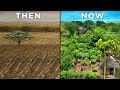
Farmers establish a living fence as the first step in a food forest system for protection, which is actively managed to provide continuous yields like animal fodder, firewood, medicine, and fruit.
-
Living fences can be created using trees and vegetation through a hedge-laying process, especially effective in cold climates by cutting during the dormant season to promote growth and reduce the need
-
Living fences require significant labor and maintenance. A 10 ft buffer is recommended between fences and crops, considering hedge growth and access. While effective for animal exclusion, they are tim
 Community
-
Hedgerows and living fences offer historical benefits like soil fertility and wildlife habitat, but require 3-4 years to establish. Diverse species, including osage orange and willow, can provide mult
Read more (opens in new window) permies.com -
Updates on living fence projects using osage orange and mixed species (willow, elderberry, alder, maple) in Washington. Emphasizes dormant season planting, using biodegradable mulch, and mixed species
Read more (opens in new window) permies.com
 From the Web
-
Explains the use and establishment of living fences (cercas vivas) as an alternative to traditional fencing, detailing their ecological benefits (reduced deforestation, GHG emissions) and economic adv
-
Details the benefits and establishment of living fences for livestock farms, highlighting their ecological advantages, timber potential, and multiple functions beyond simple boundary demarcation.
Key Points
What It Is
- Biodiverse, linear woody plantings
- Acts as natural barrier and ecosystem service
- Species vary by climate and farm goal
- Long-term infrastructure solution
Why Do It
- Enhances biodiversity and wildlife habitat
- Improves soil health and reduces erosion
- Provides windbreak and microclimate benefits
- Potential for additional product income
Know the Debate
- Establishment takes 5-10 years for barrier, 10-30 for income.
- Costs range from $5-35/meter; DIY saves significantly.
- Labor and expertise needs vary from moderate to high.
- Costs and timelines differ by climate, species, and scale.
Benefits - Financial
- Offsets conventional fence maintenance costs by $0.52–$1.30 per linear foot.
- Enhances adjacent crop yields by 5–12% via wind speed reduction.
- Secondary revenue stream of $208–$625 per year per 100 feet (30.5 m).
Benefits - System
- Integrates 4 of 5 regenerative principles
- Creates habitat corridors for beneficials
- Improves water infiltration and cycle
- Enhances farm resilience to climate extremes
Risks - Financial
- Initial establishment cost range of $3.65–$12.50 per linear foot.
- Land opportunity cost of 5–10% during the 3–5 year transition.
Risks - System
- Establishment failure in harsh conditions
- Can harbor pests if not managed
- Species selection critical for local adaptation
- Requires active management during establishment
How These Traits Are Calculated
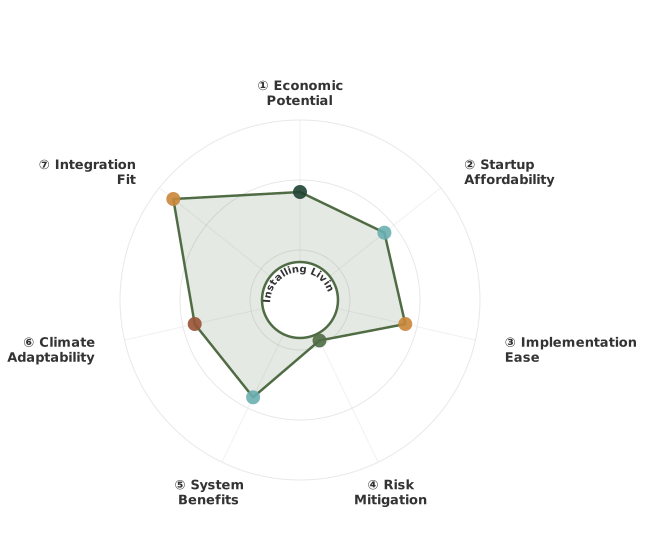
Trait dimensions are ordered clockwise starting from the top of the chart (12 o'clock position):
1. Economic Potential
Financial returns, annual value, and break-even timeline
WHAT: Evaluates financial viability by combining net annual value ($/ha from savings, income, and amortized harvests) with break-even timeline showing when practices pay for themselves.
WHY: Farmers need clear ROI understanding before committing resources. Fast payback (≤3 years) with strong returns (≥$300/ha) enables confident adoption, while long timelines (>10 years) restrict adoption to well-funded operations willing to wait for returns.
HOW: Calculated from net annual value in $/ha and break-even years. Exceptional (≥2.6): fast ROI ≤3 years + high value ≥$300/ha. Typical (1.8-2.5): moderate returns or longer timelines. Limited (<1.8): marginal economics or very long payback >10 years.
2. Startup Affordability
Initial investment costs and financial barrier to entry
WHAT: Measures financial barrier to entry through startup costs for equipment, infrastructure, consulting, and materials. Inverted scoring: lower costs = higher scores = more accessible adoption.
WHY: Affordability determines who can adopt. Low-cost practices (<$250/ha) enable widespread adoption across diverse scales, while high costs (>$2,500/ha) limit adoption to well-capitalized operations, creating barriers that slow regenerative transition.
HOW: Calculated from initial investment parsed from practice content. Inverted scoring: Exceptional (≥2.6): minimal investment <$250/ha. Typical (1.8-2.5): moderate costs $250-2,500/ha. Limited (<1.8): high barrier >$2,500/ha.
3. Implementation Ease
Learning curve and specialized knowledge required
WHAT: Measures how much learning, planning, and specialized knowledge a practice requires. Simpler practices with fewer steps score higher, while complex practices requiring extensive training or specialized resources score lower.
WHY: Complex practices create adoption barriers even when economically viable. Straightforward practices enable faster adoption and broader participation, while those requiring extensive training, timing precision, or specialized equipment limit who can succeed.
HOW: Evaluated by measuring documentation length and identifying complexity markers like location-specific requirements, seasonal timing windows, specialized skills, and dedicated equipment needs. Exceptional (≥2.6): straightforward practices with minimal prerequisites. Typical (1.8-2.5): moderate learning curve with some specialized needs. Limited (<1.8): steep learning curve requiring significant training or resources.
4. Risk Mitigation
Identified financial and ecological risk assessment
WHAT: Evaluates documented risks across financial (investment loss, market volatility) and ecological (crop failure, pest outbreaks) domains. Inverted scoring: fewer risks = higher scores.
WHY: Understanding risk exposure helps farmers make informed decisions. Low-risk practices allow confident implementation, while high-risk practices require careful planning and contingency resources. Risk transparency prevents costly failures.
HOW: Calculated from identified risks in practice content. Inverted scoring: Exceptional (≥2.6): ≤2 risks with manageable severity. Typical (1.8-2.5): 3-5 moderate risks. Limited (<1.8): 6+ risks or severe exposure.
5. System Benefits
How many ways the practice improves your land simultaneously
WHAT: Measures how many aspects of land health improve at once—carbon storage, soil quality, erosion control, water absorption, and biodiversity. Practices that improve multiple areas simultaneously create compounding benefits where each improvement reinforces the others.
WHY: The best practices solve multiple problems at once. For example, addressing erosion simultaneously builds carbon and improves water infiltration, creating a resilient system with positive feedback loops. Single-benefit approaches miss these compound transformation opportunities.
HOW: Evaluated across five key outcomes: carbon sequestration, soil organic matter increase, erosion reduction, water infiltration improvement, and biodiversity enhancement. Exceptional (≥2.6): high carbon storage (>8 t/ha/yr), improvements across 4-5 areas, transformative outcomes. Typical (1.8-2.5): moderate carbon (3-8 t/ha/yr), improvements across 2-3 areas. Limited (<1.8): modest impact (<3 t/ha/yr), single-area focus only.
6. Climate Adaptability
Geographic applicability across Köppen climate zones
WHAT: Evaluates geographic applicability by assessing how many Köppen climate zones successfully support a practice and what adaptation requirements are needed. Measures breadth of climates where farmers can implement with minimal to moderate modifications.
WHY: Universal practices working across diverse climates enable more farmers to adopt regenerative approaches. Practices limited to single climate types (only Mediterranean, only tropical) restrict adoption and slow global transition. Adaptability determines whether a practice serves niche regions or offers broad transformation.
HOW: LLM evaluation of regional success stories, Köppen zone coverage, and adaptation needs. Exceptional (≥2.6): 5+ zones or 4+ climate types, 3+ continents, minimal adaptation. Typical (1.8-2.5): 3-4 zones or 2-3 types, 2 continents, moderate adaptation. Limited (<1.8): 1-2 zones, single region, significant adaptation or highly specialized.
7. Integration Fit
How well this practice combines with others you're doing
WHAT: Measures how well a practice combines with other regenerative practices you might be doing. Some practices work as building blocks that make many other practices easier or more effective, while others work best on their own.
WHY: Practices that combine well with many others create more value on your farm. For example, cover cropping enables no-till, improves grazing, supports crop diversity, and helps water management—making all of them work better together. This helps you build a coherent system rather than juggling disconnected practices.
HOW: Evaluated by identifying which practices combine well and how strong those combinations are. 'Ideally Suited' means strong combinations where practices reinforce each other (practice A makes B easier, while B makes A more effective). 'Adequate' means complementary benefits that work well together. Exceptional (≥2.6): combines well with 6+ practices, serves as a building block. Typical (1.8-2.5): combines with 3-5 practices. Limited (<1.8): 1-2 practices or works best alone.
Going Deeper
1
WHY - The Benefits
Living fences are more than just barriers; they are integrated components of a regenerative farming landscape that deliver substantial benefits across soil health, economics, water cycles, and biodiversity. Their long lifespan and multi-functional nature make them a...
Living fences are more than just barriers; they are integrated components of a regenerative farming landscape that deliver substantial benefits across soil health, economics, water cycles, and biodiversity. Their long lifespan and multi-functional nature make them a...
WHY - The Benefits
Living fences are more than just barriers; they are integrated components of a regenerative farming landscape that deliver substantial benefits across soil health, economics, water cycles, and biodiversity. Their long lifespan and multi-functional nature make them a...
Living fences are more than just barriers; they are integrated components of a regenerative farming landscape that deliver substantial benefits across soil health, economics, water cycles, and biodiversity. Their long lifespan and multi-functional nature make them a...
Soil Health Benefits
The roots of trees and shrubs in a living fence penetrate much deeper than those of annual crops or pasture grasses, activating deeper soil layers. This exploration builds a complex root network that enhances soil structure by creating macropores, improving water infiltration, and increasing aeration. Over time, this leads to a significant increase in soil organic matter as roots exude carbon-rich compounds and shed organic material. The presence of perennial deep-rooted plants helps prevent the breakdown of soil aggregates—the tiny clumps that hold soil together—which is crucial for resisting erosion.
Living fences also contribute to nutrient cycling. Certain species, like legumes, fix atmospheric nitrogen, making it available to surrounding plants and soil microbes. Deciduous species shed leaves seasonally, contributing organic matter and nutrients directly to the soil surface, acting as a natural mulch that protects soil from temperature extremes and reduces evaporation. This continuous biological activity in the soil profile, fueled by living roots year-round (Principle 4), maintains a thriving soil ecosystem, supporting beneficial fungi such as mycorrhizae and a diverse community of soil invertebrates.
Economic Benefits
While conventional fencing is an recurring expense, living fences, once established, offer a range of economic returns. The primary economic benefit is the drastic reduction, or even elimination, of recurring costs associated with repairing or replacing woven wire or wooden fences. Over a 20-30 year lifespan of conventional fencing, living fences can save farmers $50-500+ per kilometer (or $80-800+ per mile) of fencing material cost.
Beyond cost savings, many species used in living fences are productive. Nut trees (hazelnuts, walnuts, chestnuts), fruit trees (apples, pears, berries), and timber species (oak, maple, pine, poplar, acacia) can provide valuable harvests in addition to their barrier and ecological functions. These products can diversify farm income, offering new revenue streams that may mature at different times than traditional crops or livestock, thus smoothing out cash flow. Fuelwood can also be harvested periodically from coppiced species.
The microclimate created by living fences also has economic implications. Windbreaks can reduce wind speed by 30-60% in adjacent fields, decreasing soil erosion, protecting delicate crops from physical damage, and reducing desiccation. This can lead to increased crop yields and quality. For livestock operations, shade provided by trees significantly reduces heat stress on animals, leading to improved weight gains, milk production, and reproductive efficiency. This extended grazing season or improved animal performance can translate directly into increased profitability of up to 10-20% during hot periods.
Regenerative Systems Fit
Living fences are highly synergistic with regenerative agriculture principles, acting as a foundational or enhancing practice for overall farm health and resilience.
Principle 1 (Minimize Soil Disturbance): Once established, living fences require minimal to no soil disturbance. Their perennial nature means the soil within and immediately around the planting is protected year-round. Unlike annual fencing maintenance that might involve digging post holes or disturbing root zones, living fences integrate seamlessly with minimal disruption.
Principle 2 (Maximize Crop Diversity): Living fences introduce significant above-ground and below-ground diversity. A mix of tree and shrub species creates varied habitats, supporting a greater diversity of insects (including pollinators and natural predators), birds, and soil organisms. The diverse root systems access different soil strata, drawing on a wider range of nutrients and enhancing soil physical structure. This diversity increases system resilience.
Principle 3 (Keep Soil Covered): Living fences ensure continuous ground cover. The canopy intercepts rainfall and sunlight, while leaf litter acts as a natural mulch. The roots bind the soil, preventing erosion along boundaries. This constant cover protects soil from degradation, conserves moisture, and provides a stable habitat for soil microbes.
Principle 4 (Maintain Living Roots): The perennial nature of living fences means living roots are present year-round, continuously contributing to soil biology and structure. This ongoing root activity fuels soil food webs, sequesters carbon, and maintains soil pore networks vital for water and air movement, even during periods when cash crops or pasture might be dormant.
Principle 5 (Integrate Livestock): Living fences can be designed to integrate livestock. Species can be chosen for browse value, or the fences can provide shelter and shade for animals. Strategic management, such as rotational grazing around living fences or pruning for browse, can yield additional benefits for both the animals and the fence itself, turning a barrier into a productive, managed asset.
Living fences also complement other regenerative practices like silvopasture, cover cropping, and hedgerow management. They act as buffers, reducing the impact of wind and intense rain on adjacent fields, thereby supporting the success of these other practices. For farms transitioning to regenerative systems, establishing living fences can be a pragmatic first step, offering immediate ecological benefits and building towards diversified income streams without necessarily requiring a complete overhaul of existing crop or livestock management.
Sources behind this view
Videos & Podcasts
-
Farmers establish a living fence as the first step in a food forest system for protection, which is actively managed to provide continuous yields like animal fodder, firewood, medicine, and fruit.
-
Living fences require significant labor and maintenance. A 10 ft buffer is recommended between fences and crops, considering hedge growth and access. While effective for animal exclusion, they are tim
Community
-
Hedgerows and living fences offer historical benefits like soil fertility and wildlife habitat, but require 3-4 years to establish. Diverse species, including osage orange and willow, can provide mult
Read more (opens in new window) permies.com -
Updates on living fence projects using osage orange and mixed species (willow, elderberry, alder, maple) in Washington. Emphasizes dormant season planting, using biodegradable mulch, and mixed species
Read more (opens in new window) permies.com
 Research
-
Live fences – a hidden resource of soil fertility in West Kenya (opens in new window)
This study found: Living fences in Western Kenya are soil fertility hotspots, with higher carbon, nitrogen, and potassium than cropped fields. Tithonia diversifolia was particularly effective. Managing these fences cou
From the Web
-
Explains the use and establishment of living fences (cercas vivas) as an alternative to traditional fencing, detailing their ecological benefits (reduced deforestation, GHG emissions) and economic adv
-
Details the benefits and establishment of living fences for livestock farms, highlighting their ecological advantages, timber potential, and multiple functions beyond simple boundary demarcation.
2
WHERE - Regional Considerations
Living fences are adaptable globally, but successful implementation requires careful species selection and design tailored to local environmental conditions, farm goals, and management capacity.
Living fences are adaptable globally, but successful implementation requires careful species selection and design tailored to local environmental conditions, farm goals, and management capacity.
WHERE - Regional Considerations
Living fences are adaptable globally, but successful implementation requires careful species selection and design tailored to local environmental conditions, farm goals, and management capacity.
Living fences are adaptable globally, but successful implementation requires careful species selection and design tailored to local environmental conditions, farm goals, and management capacity.
Click Here to Look up your Region if you don't already know it
Humid Temperate Regions
Representative Locations: Northeastern United States, Canada (Southern Ontario, Quebec), Northern Europe (UK, Germany, Scandinavia), Eastern China, Japan, South Korea, New Zealand.
Climate Context: Moderate temperatures with distinct seasons, ample precipitation distributed throughout the year (75-150 cm or 30-60 inches annually), typically USDA Zones 5-8, Köppen Cfb/Cfa.
Suitability: High. These regions support a wide array of native and introduced woody species. Deciduous trees such as oak (Quercus spp.), maple (Acer spp.), ash (Fraxinus spp.), or broad-leaf shrubs like hazel (Corylus spp.), hawthorn (Crataegus spp.), and elderberry (Sambucus spp.) thrive. Conifers like pine (Pinus spp.) or spruce (Picea spp.) can be used for evergreen windbreaks. Species selection should consider timber value (oak, maple), nut production (hazel, walnut), fuelwood (poplar, willow), or fruit/berry production (apple, pear, elderberry). Management often involves periodic pruning for form, harvest, or to prevent overgrowth into fields.
Arid and Semi-Arid Regions
Representative Locations: Western United States (Great Plains, Intermountain West), North Africa, Middle East, Central Asia, parts of Australia, South Africa.
Climate Context: Low to moderate precipitation (typically <60 cm or 24 inches annually), large temperature fluctuations, dry summers, potential for drought. USDA Zones 6-9 (variable), Köppen BSh/BSk.
Suitability: Moderate to High, with careful selection. Species must be drought-tolerant and adapted to lower rainfall. Native shrubs and trees that are adapted to local conditions are ideal. Examples include native shrubs like sagebrush (Artemisia spp.) in North America, certain Acacia species in Africa and Australia, or saltbush (Atriplex spp.). Drought-hardy trees like mesquite (Prosopis spp.), some junipers (Juniperus spp.), or fast-growing poplars/willows along watercourses are also options. Water harvesting techniques (swales, berms) may be necessary for establishment. Focus on species that provide habitat and wind protection with minimal water demand.
Mediterranean Regions
Representative Locations: California (USA), Mediterranean Basin (Spain, Italy, Greece, Morocco), Central Chile, Southwestern Australia, Western Cape (South Africa).
Climate Context: Hot, dry summers and mild, wet winters. Precipitation is seasonal (40-90 cm or 15-35 inches annually). USDA Zones 8-10, Köppen Csa/Csb.
Suitability: High. These regions benefit greatly from drought-tolerant, evergreen, or drought-deciduous species. Native shrubs like rosemary (Rosmarinus officinalis), lavender (Lavandula spp.), or cork oak (Quercus suber) are excellent choices. Introduced species like olive (Olea europaea), fig (Ficus carica), carob (Ceratonia siliqua), or various citrus species can also be integrated for production. Species adapted to coastal conditions or erosion control are beneficial. Management should focus on water conservation during establishment and pruning for shape and health.
Tropical and Subtropical Regions
Representative Locations: Southeast Asia, East Africa, Central America, Northern South America, Southern United States, Eastern Australia, Southern China.
Climate Context: High temperatures year-round, with generally ample rainfall and distinct wet/dry seasons or consistently high humidity. Köppen Af/Am/Aw/Cfa.
Suitability: Very High. These regions support rapid growth and high biomass production. Species selection is vast, including fruit trees (mango, papaya, citrus, banana), nitrogen-fixing trees (Acacia, Leucaena, Gliricidia), fast-growing timber species (teak, eucalyptus), and various palms. Living fences can be designed to provide substantial shade, fuelwood, browse for animals, and diverse food products. Careful species selection is needed to avoid invasive species and manage potential competition with adjacent crops. Management often involves high pruning and coppicing to maintain fence height and prevent encroachment.
Cold Continental Regions
Representative Locations: Northern United States, Canada, Northern Europe, Siberia.
Climate Context: Short growing seasons, extreme summer heat, and very cold winters. USDA Zones 3-5, Köppen Dfa/Dfb.
Suitability: Moderate, with species adapted to short growing seasons and extreme cold. Fast-growing, cold-hardy species are key. Deciduous shrubs like Siberian pea shrub (Caragana arborescens), lilac (Syringa spp.), or native berry bushes (e.g., Cornus spp., Viburnum spp.) are suitable. Cold-hardy trees such as poplar (Populus spp.), willow (Salix spp.), or native birch (Betula spp.) can also be used, though growth may be slower. Windbreaks are particularly valuable in these regions to protect against winter winds and conserve snow cover. Management will involve pruning strategies to ensure winter survival and timely spring growth.
3
HOW - Implementation Process
HOW - Implementation Process
- Clear Objectives: Define the primary purpose of the living fence (e.g., barrier, windbreak, habitat, income, erosion control). This guides species selection and design.
- Site Assessment: Evaluate soil type, drainage, rainfall, temperature extremes, prevailing winds, and existing vegetation. Identify potential competition from adjacent crops or livestock.
- Species Selection: Choose native or well-adapted, non-invasive species suited to the site conditions and farm goals. Consider growth habit, mature size, tolerance to local climate, and potential for producing valuable by-products.
- Space Allocation: Determine the width and length of the planting. A wider buffer zone between the fence and adjacent fields can reduce competition.
- Local Regulations: Check for any local bylaws or agricultural extension advice regarding planting on boundaries, especially in relation to neighbor land.
Phase 1: Planning and Design (Months 1-3)
- Species Mix: Plan to incorporate a diversity of species. Mix slow-growing, durable trees with faster-growing shrubs or productive species. Consider the mature width of each species to inform spacing. Aim for a density that provides a barrier and benefits but doesn't create excessive shade or competition. A common density is 2-4 rows of plants.
- Spacing:
- Within rows: Spacing varies by species, from 0.5-1 meter (1.5-3 ft) for shrubs to 3-6 meters (10-20 ft) for trees. Closer spacing means a quicker, denser barrier.
- Between rows: For multi-row fences, spacing between rows can be 1-2 meters (3-6 ft) for shrubs and 3-5 meters (10-15 ft) for trees. Wider spacing allows for easier access and light penetration.
- Layout: Consider contour lines on slopes for erosion control. Orient windbreaks perpendicular to prevailing winds. Design for equipment access if harvesting or management is planned.
- Planting Material: Decide between seedlings, saplings, cuttings, or seeds. Larger stock establishes faster but costs more. Cuttings are cost-effective for species like willow or poplar.
- Procurement: Source plants from reputable local nurseries or suppliers to ensure species accuracy and health. Consider government cost-share programs for tree planting.
Phase 2: Site Preparation and Planting (Months 4-6)
- Site Clearing: Remove competing vegetation (weeds, grass) from the planting zone. This can be done mechanically (light tillage, if necessary, but ideally reduced tillage), mulching, or with cover crops. On degraded soils, a single pass with a subsoiler might be considered as a last resort to break initial compaction, immediately followed by cover cropping.
- Soil Improvement: If soils are poor or heavily compacted, add compost or organic matter to the planting trench. This is a key opportunity to support Principle 1 (Minimize Soil Disturbance) by focusing amendments on the planting zone rather than broad tillage.
- Planting:
- Dig planting holes or trenches large enough to accommodate root systems without bending.
- For seedlings/saplings: Plant at the same depth they were in the nursery. Ensure good soil-to-root contact.
- For cuttings: Plant firmly into moist soil, usually 15-30 cm (6-12 inches) deep.
- Mulch generously (5-10 cm or 2-4 inches) around the base of each plant to retain moisture and suppress weeds. Use organic mulch like straw, wood chips, or compost.
- Initial Watering: Water thoroughly after planting, especially in dry conditions.
Phase 3: Establishment and Early Management (Years 1-3)
- Watering: Provide supplemental water during the first 1-2 dry seasons, especially for trees in arid or semi-arid climates. Use water-harvesting techniques where possible.
- Weed Control: Keep the area around young plants free from competing weeds for the first 2-3 years. This can be done manually, with mulching, or carefully managed grazing (see below).
- Livestock Management: If livestock will eventually utilize the fence or adjacent areas, protect young plants from browsing damage. Use temporary fencing, tree guards, or thorny species. Grazing can be introduced strategically after plants are well-established (2-5 years), using rotational grazing to manage impact.
- Pruning: Begin light pruning for form and to encourage branching or desired growth habit. For timber, prune lower branches to promote straight growth. For productive species, prune to enhance fruit/nut set or harvestability.
Phase 4: Mature Management and Harvesting (Year 4+)
- Ongoing Pruning: Regular pruning is key for managing shape, controlling size, preventing overgrowth into fields, harvesting products, and maintaining plant health. Coppicing (cutting trees back to near ground level every few years) is an option for fuelwood or specific browse species.
- Harvesting: Plan harvesting schedules for timber, nuts, fruits, or fuelwood. This might involve selective thinning of trees or periodic coppicing.
- Integrated Grazing: If used for livestock, manage grazing periods carefully to prevent overbrowsing of young growth or damage to bark. Integrate with rotational grazing patterns.
- Monitoring: Periodically assess plant health, disease presence, and impact on adjacent land. Address any issues promptly through appropriate, low-impact methods.
Transition Timeline & Phase-Out Strategy (If Applicable)
For those transitioning from conventional fences, the "phase-out" involves allowing the living fence to mature and take over the barrier function. This takes several years.
Years 1-3: Conventional fencing remains functional. Focus on establishing the living fence, protecting young plants, and managing weeds. Livestock may be restricted from direct contact with young plants.
Years 4-7: Living fence is establishing its structure and density. Some species may start to provide functional height and width. Conventional fencing may be starting to show wear. Reduced livestock access can be trialed as plants become more resilient.
Years 8-15: Living fence is largely established as a functional barrier. Mature trees may be nearing harvest size. Conventional fencing may be removed section by section as the living fence proves its capacity. This is when income-generating products may begin to be harvested.
Year 15+: Living fence is mature, self-sustaining, and providing its full range of benefits. Conventional fencing is no longer required, saving ongoing maintenance and replacement costs. The system is now a permanent, regenerative asset.
Sources behind this view
Videos & Podcasts
-
Farmers establish a living fence as the first step in a food forest system for protection, which is actively managed to provide continuous yields like animal fodder, firewood, medicine, and fruit.
Community
-
Updates on living fence projects using osage orange and mixed species (willow, elderberry, alder, maple) in Washington. Emphasizes dormant season planting, using biodegradable mulch, and mixed species
Read more (opens in new window) permies.com -
Hedgerows and living fences offer historical benefits like soil fertility and wildlife habitat, but require 3-4 years to establish. Diverse species, including osage orange and willow, can provide mult
Read more (opens in new window) permies.com
4
Know the Debate
Living fence outcomes, in terms of timeline, cost, labor, and effectiveness, vary considerably based on location and design. In humid temperate reg...
Know the Debate
Living fence outcomes, in terms of timeline, cost, labor, and effectiveness, vary considerably based on location and design. In humid temperate reg...
Living fence outcomes, in terms of timeline, cost, labor, and effectiveness, vary considerably based on location and design. In humid temperate regions with fertile soils, faster establishment and richer harvests are possible. In arid or cold continental climates, species selection is key for survival, and slower growth impacts establishment timelines. Entry costs range from minimal for cuttings and DIY labor to $15-35/meter for saplings and external help. Labor requirements are highest during the first 2-5 years for establishment, requiring diligence in weeding and protection, before becoming periodic maintenance for harvesting.
How long for living fence establishment and profitable income?
Faster establishment & returns (temperate climates)
In humid temperate climates using fast-growing species like poplars or productive fruit/nut trees adapted to USDA Zones 5-8, functional barriers are established in 5-7 years, with notable income possible within 10-15 years.
Sources behind this view
Sources behind this view
Videos & Podcasts
-
Farmers establish a living fence as the first step in a food forest system for protection, which is actively managed to provide continuous yields like animal fodder, firewood, medicine, and fruit.
Research
-
Live fences – a hidden resource of soil fertility in West Kenya (opens in new window)
This study found: In Western Kenya, where farms are often nutrient-depleted due to intensive use and limited fertilizer, a study found that the living fences (hedgerows) surrounding fields are surprisingly fertile areas. These untended borders, made up of various plant species, contain significantly more soil organic matter, nitrogen, and potassium compared to the cropped fields. In sandy soils, the fertility in these hedgerows was more than double that of the fields, similar to nearby forest soils. This enhanced fertility also translated to better growth and nutrient uptake in corn grown in soil taken from the hedgerows. The study highlights that species like Tithonia diversifolia (Mexican sunflower) were particularly effective at boosting soil fertility. Researchers suggest that farmers could potentially increase overall farm productivity by strategically managing these living fences, perhaps by replacing less productive species with more beneficial perennial crops.
-
The role of portable electric fencing in biodiversity-friendly pasture management (opens in new window)
This study found: As the world's population grows, we need farming methods that produce more food while also protecting nature. Grasslands are vital for healthy soil, storing carbon, and cycling nutrients, but farming can destroy these habitats. While modern farming is sometimes blamed for environmental problems, new technologies can help. Easier and cheaper portable electric fences (made of plastic netting and steel) are making practices like rotational grazing and diverse pasture systems more accessible for farmers. There's ongoing debate about whether rotational grazing is better than continuous grazing, and more research is needed to understand its full benefits for wildlife on farms. These new portable fences could be a useful tool for conducting that research.
From the Web
-
Details silvopastoral systems using living fences, ranked seventh for Orinoquía CSCR. Focuses on tree species like melina and yopo for shade and forage. High economic viability and ease of implementation, but lower mitigation/adaptation benefits. Includes establishment costs and protocols.
Slower establishment & delayed returns (challenging climates/species)
In arid, cold continental, or challenging soil conditions, or when using slow-growing timber species, establishment can take 7-10 years for a functional barrier, with substantial timber income delayed to 20-30 years.
Sources behind this view
Sources behind this view
Videos & Podcasts
-
Living fences require significant labor and maintenance. A 10 ft buffer is recommended between fences and crops, considering hedge growth and access. While effective for animal exclusion, they are time-intensive; simpler fences with hedgerows may be more practical.
-
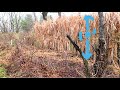
Constructed a low-cost privacy barrier/windbreak using bartered orchard fencing and woven miscanthus, serving as a temporary solution while a permanent hedgerow of diverse perennial species is established. This method utilizes waste streams and biodegrades to nourish future plantings.
Research
-
Is long-term protection useful for the regeneration of disturbed plant communities in dry areas? (opens in new window)
This study found: A 21-year study in a national park in southern Tunisia looked at how long-term fencing affected plant communities in dry areas. While the fencing initially helped vegetation recover, this recovery slowed down and even declined in later years. The study found that without animals, the soil surface became hard, making it difficult for new plants to grow. This suggests that keeping areas fenced off for too long isn't good for plant diversity in dry regions. The researchers recommend a management approach that alternates periods of fencing with controlled grazing by wild animals to ensure the land continues to regenerate.
From the Web
-
Durable untreated wood species for fence posts include Osage orange, black locust, and eastern red cedar. Other alternatives include plastic, steel, concrete, and fiberglass posts, with selection based on specific needs.
Making Sense of the Differences
The timeframe for living fence establishment and profit generation is heavily influenced by local climate, species choice, and management. Humid temperate zones with fast-growing, productive species typically see functional barriers in 5-7 years and income within 10-15 years. In contrast, arid, cold, or difficult soil conditions, or a focus on slow-growing timber, can extend establishment to 7-10 years and substantial income realization to 20-30 years. Factors like supplemental watering, weed control, and protection from browsing are critical for accelerating establishment regardless of climate.
What are the labor and expertise needs for living fences?
Moderate labor, basic expertise (establishment phase)
Establishing living fences requires moderate labor for site prep and planting, high labor for weed control (2-3 yrs), and basic horticultural skills. Protection from animals is critical.
Sources behind this view
Sources behind this view
Videos & Podcasts
-
Living fences require significant labor and maintenance. A 10 ft buffer is recommended between fences and crops, considering hedge growth and access. While effective for animal exclusion, they are time-intensive; simpler fences with hedgerows may be more practical.
Research
-
Live fences – a hidden resource of soil fertility in West Kenya (opens in new window)
This study found: In Western Kenya, where farms are often nutrient-depleted due to intensive use and limited fertilizer, a study found that the living fences (hedgerows) surrounding fields are surprisingly fertile areas. These untended borders, made up of various plant species, contain significantly more soil organic matter, nitrogen, and potassium compared to the cropped fields. In sandy soils, the fertility in these hedgerows was more than double that of the fields, similar to nearby forest soils. This enhanced fertility also translated to better growth and nutrient uptake in corn grown in soil taken from the hedgerows. The study highlights that species like Tithonia diversifolia (Mexican sunflower) were particularly effective at boosting soil fertility. Researchers suggest that farmers could potentially increase overall farm productivity by strategically managing these living fences, perhaps by replacing less productive species with more beneficial perennial crops.
From the Web
-
Detailed guide on electric fencing types (barbed wire, high-tensile, permanent, semi-permanent, portable) with construction, cost, and design considerations for livestock management in crop fields, emphasizing proper grounding and energizer selection.
Periodic labor, specialized expertise (mature phase & income)
Mature fences need moderate pruning/harvesting labor. Maximizing economic returns requires specialized knowledge in timber management or horticultural pruning, especially for high-value products.
Sources behind this view
Sources behind this view
Videos & Podcasts
-
Farmers establish a living fence as the first step in a food forest system for protection, which is actively managed to provide continuous yields like animal fodder, firewood, medicine, and fruit.
Research
-
Live fences – a hidden resource of soil fertility in West Kenya (opens in new window)
This study found: In Western Kenya, where farms are often nutrient-depleted due to intensive use and limited fertilizer, a study found that the living fences (hedgerows) surrounding fields are surprisingly fertile areas. These untended borders, made up of various plant species, contain significantly more soil organic matter, nitrogen, and potassium compared to the cropped fields. In sandy soils, the fertility in these hedgerows was more than double that of the fields, similar to nearby forest soils. This enhanced fertility also translated to better growth and nutrient uptake in corn grown in soil taken from the hedgerows. The study highlights that species like Tithonia diversifolia (Mexican sunflower) were particularly effective at boosting soil fertility. Researchers suggest that farmers could potentially increase overall farm productivity by strategically managing these living fences, perhaps by replacing less productive species with more beneficial perennial crops.
From the Web
-
Details silvopastoral systems using living fences, ranked seventh for Orinoquía CSCR. Focuses on tree species like melina and yopo for shade and forage. High economic viability and ease of implementation, but lower mitigation/adaptation benefits. Includes establishment costs and protocols.
Making Sense of the Differences
Labor and expertise needs for living fences peak during the 2-5 year establishment phase, requiring consistent effort for planting, weeding, and protection. Basic horticultural skills are sufficient for establishment, but maximizing economic returns from timber or fruit requires specialized knowledge and periodic labor for pruning and harvesting. Farms with lower labor availability may opt for low-maintenance species or focus on barrier function over intensive income generation.
What are the upfront costs for living fences?
Low cost ($5-15/meter) for cuttings & DIY
Utilizing cuttings, recycled materials, and DIY labor can minimize upfront costs to $5-15/meter ($1.50-4.50/ft), especially for dense plantings or temporary protection.
Sources behind this view
Sources behind this view
Videos & Podcasts
-
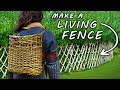
Willow can be used to create living fences planted in the dormant season (Jan-Feb). These fences provide basket materials, habitat, and sequester carbon. Annual pruning strengthens the fence and encourages regrowth.
-
Construct a multi-functional perimeter fence by combining brush stacking (deadwood, juniper) with planting living fence species like acacia catclaw and legume trees (locust) for wildlife defense and future vegetation support, emphasizing flexibility in planning and execution.
-
Farmers establish a living fence as the first step in a food forest system for protection, which is actively managed to provide continuous yields like animal fodder, firewood, medicine, and fruit.
Moderate cost ($15-25/meter) for saplings & protection
Using saplings, adding mulch and protection like tree guards, and hiring some labor can bring costs to $15-20/meter ($4.50-6/ft).
Sources behind this view
Sources behind this view
Videos & Podcasts
-
Living fences require significant labor and maintenance. A 10 ft buffer is recommended between fences and crops, considering hedge growth and access. While effective for animal exclusion, they are time-intensive; simpler fences with hedgerows may be more practical.
From the Web
-
Explains the use and establishment of living fences (cercas vivas) as an alternative to traditional fencing, detailing their ecological benefits (reduced deforestation, GHG emissions) and economic advantages (timber, fodder), and their role in dividing pastures and providing windbreaks.
-
Detailed guide on electric fencing types (barbed wire, high-tensile, permanent, semi-permanent, portable) with construction, cost, and design considerations for livestock management in crop fields, emphasizing proper grounding and energizer selection.
-
Provides practical guidance on water gap fencing, recommending materials like polywire, high-tensile wire, barn tin, galvanized pipes, and treated wood, considering water flow, debris, and soil stability for effective livestock containment.
Higher cost ($25-35+/meter) for large scale or timber
Large-scale projects, using expensive timber saplings, extensive protection, or professional installation, can push costs to $25-35+/meter ($7.50-10.70+/ft).
Sources behind this view
Sources behind this view
Videos & Podcasts
-
Greg Judy advises using high-quality, non-conductive posts (like Timeless posts) and proper insulators for electric fences, avoiding cheap steel posts and makeshift solutions. He stresses that reliable fencing is essential for livestock containment and preventing neighbor disputes, sharing practical tips on fence replacement and property line management.
-
Bod Wilmont in Australia details his fencing strategies, including using timber posts, field fence/goat wire, and innovative Davos fencing clips. He emphasizes how improved fencing increases property value and containment, while also sharing a cautionary tale about electric fences.

From the Web
-
Detailed guide on electric fencing for multi-paddock grazing, covering chargers, grounding, posts, high-tensile wire, polywire, tensioners, insulators, and reels. Emphasizes flexibility, ease of use, and proper component selection for effective livestock containment.
Making Sense of the Differences
Upfront costs for living fences range significantly from $5 to over $35 per linear meter. Low costs ($5-15/m) are achievable using cuttings, recycled materials, DIY labor, and focusing on minimal protection. Moderate costs ($15-20/m) involve using saplings, mulching, and some hired labor. Higher costs ($25-35+/m) arise from large scale, expensive timber species, extensive protection measures like temporary fencing, or professional installation. Planning for costs associated with weed control and watering during the first 2-5 years is also crucial.
5
HOW MUCH - Costs & Investment
Note: All costs are estimations based on recent US dollar (USD) equivalents (2023-2025) and may vary substantially in other regions based on local labor rates, material availability, supplier pricing, and regulatory requirements. Costs are per linear meter or linear foot...
Note: All costs are estimations based on recent US dollar (USD) equivalents (2023-2025) and may vary substantially in other regions based on local labor rates, material availability, supplier pricing, and regulatory requirements. Costs are per linear meter or linear foot...
HOW MUCH - Costs & Investment
Note: All costs are estimations based on recent US dollar (USD) equivalents (2023-2025) and may vary substantially in other regions based on local labor rates, material availability, supplier pricing, and regulatory requirements. Costs are per linear meter or linear foot...
Note: All costs are estimations based on recent US dollar (USD) equivalents (2023-2025) and may vary substantially in other regions based on local labor rates, material availability, supplier pricing, and regulatory requirements. Costs are per linear meter or linear foot...
Note: All costs are based on recent US economic data (2024–2026) and may vary substantially by region based on local labor rates, material costs, and regulatory requirements.
Plant Materials and Sourcing
The establishment of a living fence relies heavily on the quality and density of nursery stock. Small-scale operations (fewer than 50 acres (20 ha)) frequently source containerized saplings from retail nurseries, where per-unit costs range from $5.21 to $20.84 per plant. By planting at a functional barrier density of 2 to 5 feet (1.5 m) apart, these small operators experience material costs ranging from $1.56 to $6.25 per linear foot.
Mid-size operations (50 to 500 acres (20–202 ha)) typically leverage economies of scale by purchasing bare-root bundles of 50 to 100 seedlings, reducing individual unit prices to $4.17–$15.65. With standard spacing densities, this translates to $0.83–$4.17 per linear foot. Large-scale producers (500+ acres) maximize cost-efficiency through wholesale nursery contracts or on-site propagation of cuttings like willow, poplar, and dogwood. These operations successfully drive material costs down to $0.52 to $3.13 per plant, keeping established density costs between $0.21 and $1.56 per linear foot.
Protection and Establishment Infrastructure
Protecting young plantings from deer browse, rodents, and livestock is a mandatory investment for the first 3 to 5 years. Small-plot managers often protect individual plantings with tree guards and wooden stakes, costing $3.13–$7.29 per unit. When implemented across the length of the fence, this protection phase represents a significant capital outlay.
Mid-size operations generally rely on high-tensile or temporary electric exclusion fencing to create a buffer zone, costing $1.56–$4.17 per linear foot. These systems allow for faster, more comprehensive protection than individual tree guards. Large-scale operations significantly reduce these costs by utilizing mechanized post-pounders and shared electric site-fencing, dropping protection expenditures to $0.63–$2.29 per linear foot. Regardless of scale, organic mulch—whether sourced on-farm as wood chips or purchased as straw—is an essential variable for moisture retention, adding an additional $0.31–$1.56 per linear foot to the base investment.
Labor: Installation and Maintenance
Labor remains the most significant variable in the economic profile of a living fence. For small-scale DIY installations, labor is often unquantified, but hiring professional planting crews incurs costs of $2.08–$6.25 per linear foot. Mid-size operations utilizing tractors and mechanical augers increase efficiency, reducing labor intensity to $1.25–$3.65 per linear foot.
Large-scale operations, utilizing tractor-mounted hydraulic transplanters and professional multi-person crews, achieve peak labor efficiency at $0.83–$2.61 per linear foot. Beyond the initial install, farmers must account for post-planting care, including irrigation and weed suppression during the first three years. This intensive maintenance requires approximately 5 to 15 hours of labor per 1,000 feet (304.8 m), which must be factored into the annual operating budget to ensure survival rates remain above the investment threshold.
Most Spend: $3.65–$7.82 per linear foot. This range represents the middle 60% of farming operations, specifically targeting mid-sized farms transitioning from manual to semi-mechanized planting, utilizing mid-grade nursery stock, and installing standard 5-foot (1.5 m) wire tree guards to ensure juvenile survival.
Why the Range?: The primary driver of cost variation is the interaction between species selection strategies and mechanization depth. Drought-hardy, slow-growing timber hardwoods require higher initial nursery investment and longer protection cycles, while rapid-growth species like willow cuttings are cheaper but require more aggressive weed management. Economies of scale are strictly realized through mechanical planting speed and the bulk procurement of raw materials.
Sources behind this view
Community
-
Updates on living fence projects using osage orange and mixed species (willow, elderberry, alder, maple) in Washington. Emphasizes dormant season planting, using biodegradable mulch, and mixed species
Read more (opens in new window) permies.com
6
REWARDS AND RISKS - Economics & Risk Factors
REWARDS AND RISKS - Economics & Risk Factors
Establishing a living fence is a multi-decade capital investment that functions as a structural asset. In a best-case scenario, the integration of high-value species like grafted chestnut or hybridized timber generates a cumulative return of $521 to $1,250 per 100-foot (30.5 m) section over a 20 to 30-year maturity cycle. Typical economic projections indicate an Internal Rate of Return (IRR) of 4% to 7% annually. This is primarily realized by offsetting $2.08 to $4.17 per linear foot in conventional fencing costs, alongside a demonstrable 10% to 15% increase in adjacent crop yields through wind-speed attenuation and improved microclimate regulation.
Worst-case scenarios manifest when site-species matching is poor, leading to mortality rates of 40% to 60% by year three. This "empty border" outcome results in costs of $5.21 to $10.42 per linear foot, providing zero ecosystem service or harvested product, essentially sterilizing the fence row of potential revenue for a full decade. Market factors heavily influence specific returns, including regional demand for niche timber or medicinal products and changing USDA EQIP cost-share rates. Carbon credit markets remain an emerging, though volatile, revenue stream, providing roughly $10.42 to $31.26 per acre ($26–$77/ha) annually depending on management protocols and soil carbon sequestration verification.
Risk mitigation is non-negotiable for long-term viability. Investing $1.04 to $2.08 per linear foot in temporary drip irrigation during the first two years of establishment reduces planting mortality by 50% to 70%, particularly in semi-arid zones. Furthermore, employing electric exclusion fencing during the first five years prevents "browse failure"—the single largest cause of investment loss. By phasing installation—planting 25% of the intended acreage annually—farmers spread the financial risk while learning which species perform best under their specific microclimate conditions.
Transition Period Risks: In the first 1 to 3 years, producers face a "yield dip" where the land occupied by the fence (typically a 5 to 10-foot (3.0 m) footprint) is removed from active, intensive production. This can result in a localized revenue reduction of 2% to 5% of adjacent crop yield. Because full windbreak and pollinator habitat benefits generally do not accrue until year five or beyond, the transition is essentially a "bridge" period for capital. Mitigate these costs by incorporating shade-tolerant or high-value perennials like medicinal herbs or berries that begin providing cash flow within 3 to 5 years, providing interim capital as the primary fence structure matures.
Sources behind this view
Videos & Podcasts
-
Farmers establish a living fence as the first step in a food forest system for protection, which is actively managed to provide continuous yields like animal fodder, firewood, medicine, and fruit.
-
Details a low-cost, multi-layered buffer zone strategy using on-hand materials like bamboo and planted species such as Miscanthus and Sea Berry to create a windbreak, enhance biodiversity, and improve
-
Living fences require significant labor and maintenance. A 10 ft buffer is recommended between fences and crops, considering hedge growth and access. While effective for animal exclusion, they are tim
Community
-
Updates on living fence projects using osage orange and mixed species (willow, elderberry, alder, maple) in Washington. Emphasizes dormant season planting, using biodegradable mulch, and mixed species
Read more (opens in new window) permies.com -
Expands on dead hedge construction with detailed instructions and discusses combining them with living hedges (osage orange, honey locust) for a sustainable, low-cost, and long-term fencing solution,
Read more (opens in new window) permies.com -
Hedgerows and living fences offer historical benefits like soil fertility and wildlife habitat, but require 3-4 years to establish. Diverse species, including osage orange and willow, can provide mult
Read more (opens in new window) permies.com -
Details methods for creating living fences by staking trees/shrubs at angles or using pollarded poles as rooting fence posts, with willow and black locust noted as suitable species, and observed in Co
Read more (opens in new window) permies.com
7
WHO - Labor & Expertise
Installing and managing living fences involves varying levels of labor and expertise depending on the scale, species chosen, and management intensity. Labor Requirements:
Installing and managing living fences involves varying levels of labor and expertise depending on the scale, species chosen, and management intensity. Labor Requirements:
WHO - Labor & Expertise
Installing and managing living fences involves varying levels of labor and expertise depending on the scale, species chosen, and management intensity. Labor Requirements:
Installing and managing living fences involves varying levels of labor and expertise depending on the scale, species chosen, and management intensity. Labor Requirements:
Labor Requirements:
-
Establishment Phase (Years 1-5):
- Site Preparation: Moderate labor, potentially higher if extensive clearing or mechanical weeding is needed. Can be DIY or hired.
- Planting: Moderate to high labor, especially for hand-planting seedlings or cuttings. Efficiency increases with experience and appropriate tools.
- Weed Control: High labor requirement, especially in the first 2-3 years. Can be done manually, with mulching, or via minimal-herbicide applications. Efficient weed management is critical for establishment success.
- Watering: Moderate labor if manual watering is required, especially during establishment in dry climates. Higher if irrigation infrastructure is installed.
- Protection: Installing tree guards or temporary fencing can be labor-intensive initially.
-
Mature Phase (Year 5+):
- Pruning & Harvesting: Moderate labor, periodic (e.g., annually for fruit/nut trees, every few years for timber/coppicing). The intensity depends on the management goal (e.g., fruit production requires more intensive pruning than windbreak species).
- Minor Repairs: Occasional replacement of damaged plants or minor adjustments to the fence line.
Expertise Requirements:
- Species Selection: Moderate expertise required to choose appropriate species for climate, soil, farm goals, and invasiveness potential. Consulting local agricultural extension services, native plant societies, or experienced regenerative farmers is highly recommended.
- Design and Spacing: Moderate expertise is needed to design the fence layout, including row spacing, plant spacing within rows, and orientation relative to wind, sun, and adjacent land use. Understanding mature plant sizes and competition dynamics is important.
- Planting Techniques: Basic horticultural knowledge is needed for proper planting depth, soil-to-root contact, and initial watering.
- Early Management: Critical period requires knowledge of weed control methods, protection strategies against browsing animals, and understanding when supplemental watering is necessary.
- Pruning and Harvesting: Varies by species. Basic pruning skills are needed for shaping and initial growth. Advanced knowledge of forestry pruning for timber or horticultural pruning for fruit/nut production may be beneficial for maximizing economic returns from productive species.
- Integration with Livestock: If integrating with grazing, understanding rotational grazing principles and how to manage animals around woody plants without causing damage is important.
Labor Cost Considerations (International Context):
- High Labor Cost Regions: DIY installation and early management are crucial for cost-effectiveness. Investing in efficient tools and techniques for planting and weeding will reduce long-term expenses. Focusing on species that require less intensive management (e.g., native drought-tolerant shrubs) can also control costs.
- Low Labor Cost Regions: Hiring local labor for planting, weeding, and initial establishment can be more economical than DIY. This allows for faster setup and potentially higher plant survival rates. Focus on species that provide high economic returns (timber, fruit, nuts) to justify the labor investment.
When to Hire Professionals:
- For large-scale projects, especially if unfamiliar with species selection or planting techniques.
- If specialized skills are required, like forestry pruning for high-value timber.
- If site preparation involves heavy equipment or complex terrain.
- For ongoing managed harvests if you lack the time or expertise to maximize product value.
Sources behind this view
Community
-
Updates on living fence projects using osage orange and mixed species (willow, elderberry, alder, maple) in Washington. Emphasizes dormant season planting, using biodegradable mulch, and mixed species
Read more (opens in new window) permies.com -
Discusses species like Osage orange, honey locust, and black locust for living fences, detailing planting, maintenance, and livestock containment strategies, with emphasis on balancing benefits agains
Read more (opens in new window) permies.com
8
EQUIPMENT - Tools & Infrastructure
The equipment needed for establishing and managing living fences varies widely based on scale, species, and management approach. For Establishment:
The equipment needed for establishing and managing living fences varies widely based on scale, species, and management approach. For Establishment:
EQUIPMENT - Tools & Infrastructure
The equipment needed for establishing and managing living fences varies widely based on scale, species, and management approach. For Establishment:
The equipment needed for establishing and managing living fences varies widely based on scale, species, and management approach. For Establishment:
For Establishment:
-
Basic Hand Tools:
- Shovels and spades: For digging planting holes and trenches.
- Hoes or weeders: For manual weed control around young plants.
- Trowels or dibblers: For planting smaller seedlings or cuttings.
- Pruning shears and loppers: For initial shaping and removing damaged growth.
- Watering cans or small hoses: For supplemental watering (if applicable).
- Wheelbarrows: For transporting mulch, compost, or plants.
-
Site Preparation (Optional, depending on conditions):
- Tractor with subsoiler/ripper: For breaking severe compaction. Only used once, as a last resort.
- Tractor with light disk or tiller: For preparing a clean seedbed if no-till is not feasible for immediate establishment (less regenerative).
- Rotary tiller or flail mower: For clearing dense ground cover.
- Wood chipper: For processing cleared brush into mulch.
-
Planting & Protection:
- Planting auger (hand-held or tractor-mounted): For efficient hole digging.
- No-till planter/drill: For planting cover crops or certain seeds into existing sod (if used for site prep).
- Stakes and ties: For supporting young trees and guiding growth.
- Tree guards or tubes: Plastic or wire mesh protectors against browsing animals and harsh weather.
- Temporary fencing materials: Electric fencing (energizer, posts, wire) or wire mesh for protecting larger areas during establishment.
-
Watering Infrastructure (if needed):
- Hoses and sprinklers: For small-scale watering.
- Drip irrigation system: For efficient watering over larger areas, especially in dry climates. Requires a water source (well, tank, pond) and pump.
- Water harvesting structures: Swales, berms, or contour planting designed to capture and retain rainwater.
For Mature Management:
-
Pruning Tools:
- Loppers, pruning saws, pole pruners: For routine pruning and shaping.
- Chainsaw: For felling larger trees (timber harvests) or coppicing.
- Brush cutters or strimmers: For managing vegetation within the fence row or buffer zones.
-
Harvesting Equipment:
- Nut collectors, berry picking tools.
- Axes or specialized harvesters for fuelwood or timber.
- Trailers or carts for transporting harvested products.
-
Livestock Integration Tools:
- Portable electric fencing: To create temporary paddocks or protect specific areas within the fence line.
- Troughs and mineral feeders.
- Browse protectants: If animals are allowed to graze around mature plants.
Infrastructure Considerations:
- Access Roads/Paths: Ensure access for planting, maintenance, and harvesting. This might involve maintaining or creating paths alongside the fence line.
- Water Source and Storage: A reliable water source is critical for establishment in drier regions.
- Storage for Tools and Materials: A shed or designated area for storing pruning tools, guards, stakes, and fencing materials.
- Processing Area: If harvesting timber, nuts, or fruit, a designated area for sorting, drying, or initial processing may be needed.
International Sourcing:
- Most basic tools are universally available.
- Specialized tree guards, irrigation components, or unique pruning saws might require sourcing from agricultural suppliers or garden centers familiar with local conditions.
- For timber harvests, logging equipment can often be hired locally rather than purchased.
- Cost-sharing programs in many countries may provide subsidies for planting materials and protective equipment.
Sources behind this view
Community
-
Updates on living fence projects using osage orange and mixed species (willow, elderberry, alder, maple) in Washington. Emphasizes dormant season planting, using biodegradable mulch, and mixed species
Read more (opens in new window) permies.com -
Detailed management of mixed hedges and willow fences for water interception and material use, with pollarding as a technique. Osage Orange and Black Locust are strong options for livestock containmen
Read more (opens in new window) permies.com -
Expands on dead hedge construction with detailed instructions and discusses combining them with living hedges (osage orange, honey locust) for a sustainable, low-cost, and long-term fencing solution,
Read more (opens in new window) permies.com -
A detailed plan for establishing living fences in a silvopasture system using willow and nitrogen-fixing species like Black Locust, involving live-stake propagation, coppicing, and strategic planting
Read more (opens in new window) permies.com
9
COMPATIBLE PRACTICES - Integration Opportunities
Living fences are highly compatible with many regenerative agriculture practices, enhancing their effectiveness and contributing to a more resilient and diverse farming system.
Living fences are highly compatible with many regenerative agriculture practices, enhancing their effectiveness and contributing to a more resilient and diverse farming system.
COMPATIBLE PRACTICES - Integration Opportunities
Living fences are highly compatible with many regenerative agriculture practices, enhancing their effectiveness and contributing to a more resilient and diverse farming system.
Living fences are highly compatible with many regenerative agriculture practices, enhancing their effectiveness and contributing to a more resilient and diverse farming system.
Silvopasture
- Integration: Living fences can form the outer boundary of silvopastoral systems or be incorporated as internal dividers. They can contain livestock within silvopasture blocks, provide shade and shelter, and contribute browse species if selected accordingly.
- Benefit: Living fences add layers of biodiversity and structural diversity to silvopasture, enhancing habitat complexity and potentially providing a wider range of products.
Windbreaks / Shelterbelts
- Integration: Living fences, especially those planted perpendicular to prevailing winds, serve as natural windbreaks.
- Benefit: Protects crops and soil from wind erosion, reduces desiccation, can improve microclimates for adjacent fields, and supports the overall goal of reducing disturbance and keeping soil covered.
Rotational Grazing / Adaptive Multi-Paddock Grazing
- Integration: Living fences can define paddocks or serve as sacrificial barriers within grazing systems. They can also provide shelter and shade for livestock in paddocks.
- Benefit: Supports efficient livestock management, nutrient cycling, and pasture recovery, while the fence itself benefits from managed grazing (preventing overtopping, spreading manure).
Pollinator Habitat Creation
- Integration: Selecting flowering species within the living fence mix that bloom at different times of the year.
- Benefit: Provides essential nectar and pollen sources for native pollinators and beneficial insects throughout the season, supporting pollination services for crops and natural pest control.
Waterways / Riparian Buffers
- Integration: Planting living fences along watercourses or the edges of drainage areas.
- Benefit: Stabilizes stream banks against erosion, filters runoff, reduces nutrient and sediment pollution of waterways, and provides shade to cool water for aquatic life.
Agroforestry Systems
- Integration: Living fences can be considered a form of linear agroforestry, blurring the lines between border plantings and productive food/timber systems.
- Benefit: Extends the principles of combining trees with agriculture, increasing the overall productivity and ecological function of the land.
Hedgerow Management
- Integration: Living fences are similar to hedgerows, often managed with similar techniques but typically designed for a more defined linear barrier.
- Benefit: Aligns with the goal of creating diverse, permeable ecological infrastructure on the farm landscape.
Reduced Tillage / No-Till Farming
- Integration: Living fences provide a stable edge where reduced tillage or no-till practices can be maintained adjacent to the fence line without disturbance.
- Benefit: The perennial cover of the living fence and its buffer zone helps prevent erosion and maintains soil health at field edges, where conventional practices might otherwise lead to disturbance.
Living fences are not just a physical barrier but a biological corridor and a productive element within a regenerative system. Their integration with other practices amplifies their benefits, creating a more resilient, biodiverse, and economically sound farm landscape.
Sources behind this view
Videos & Podcasts
-
Farmers establish a living fence as the first step in a food forest system for protection, which is actively managed to provide continuous yields like animal fodder, firewood, medicine, and fruit.
-
Living fences require significant labor and maintenance. A 10 ft buffer is recommended between fences and crops, considering hedge growth and access. While effective for animal exclusion, they are tim
Community
-
Hedgerows and living fences offer historical benefits like soil fertility and wildlife habitat, but require 3-4 years to establish. Diverse species, including osage orange and willow, can provide mult
Read more (opens in new window) permies.com