
Mushroom Cultivation
Mushroom cultivation is the practice of growing fungi by providing them with a specific substrate (like compost, wood chips, straw, or manure) under controlled environmental conditions. This can be done on a small scale for personal use or on a larger scale for commercial sale, offering a unique opportunity to generate income and nutrient-dense food products while potentially utilizing agricultural waste streams.
Read More: Complete Description
Mushroom cultivation involves intentionally growing species of fungi for food, medicinal purposes, or biomaterials. Unlike plants, mushrooms are heterotrophic, meaning they cannot photosynthesize and must obtain nutrients by decomposing organic matter. This 'substrate' can be a wide variety of materials, depending on the mushroom species being cultivated. Common substrates include agricultural byproducts like straw (for oyster mushrooms), sawdust (for shiitake), composted manure (for button mushrooms), coffee grounds, and even paper or cardboard.
The process typically involves several stages: substrate preparation, inoculation with mushroom spawn (the fungal "seed"), incubation in a controlled environment where the mycelium (the vegetative part of the fungus) grows throughout the substrate, and finally, fruiting where environmental conditions are manipulated (temperature, humidity, light, and fresh air) to encourage the mushrooms to develop and mature. Harvesting the mushrooms is followed by potentially multiple subsequent flushes of fruit bodies from the same substrate block or bed.
From a regenerative agriculture perspective, mushroom cultivation fits into several key roles, though its classification can be context-dependent. It can be seen as a transition practice or a context-dependent practice. While it doesn't directly uphold all five regenerative principles in its pure form, it possesses significant potential to support them when integrated thoughtfully into a farm system.
Regenerative Principles Fit:
- Minimizing Soil Disturbance: Mushroom cultivation typically does not involve soil disturbance in the traditional agricultural sense. The growing medium is managed in blocks, beds, or containers. However, the sourcing of substrates can involve disturbance if not done conscientiously. The primary regenerative benefit here is the potential to divert waste streams that would otherwise decompose inefficiently, potentially leading to nutrient runoff or methane emissions.
- Maximizing Crop Diversity: Mushrooms are fungi, a biological kingdom distinct from plants. Including a diverse range of mushroom species cultivated on various substrates increases the overall biological diversity of the farm ecosystem. This can include cultivating saprophytic fungi that break down lignocellulose, mycorrhizal fungi that form symbiotic relationships with plants (though culturing these is more complex), or medicinal mushrooms with unique biochemical properties.
- Keeping Soil Covered: While mushrooms are not grown directly in soil, the cultivation process itself and its byproducts can contribute to keeping land covered. Spent mushroom substrate (SMS) is a nutrient-rich material that can be composted and applied to fields as a soil amendment, acting as mulch and improving soil health for living plants. This diverts organic waste, enriching the soil instead of contributing to landfill.
- Maintaining Living Roots: Mushroom cultivation's direct link to living roots is indirect. However, the mycelial network itself is a living biological system that performs crucial functions similar to root systems, like nutrient decomposition and transport. When spent substrate is returned to the land, it fuels the microbial life that supports living roots of crops or forages.
- Integrating Livestock: This is where mushroom cultivation shows significant transition and context-dependent regenerative potential. Spent mushroom substrate is often rich in undigested organic compounds and can be an excellent amendment for compost piles, particularly those managed with livestock manure. This creates a symbiotic relationship: livestock manure provides nitrogen and other nutrients for fungal decomposition, and the resulting spent substrate can enrich soils that livestock will graze or that will support cover crops. Without careful management, the sourcing and disposal of substrates can become extractive. For example, if substrates are sourced from unsustainable forestry or monoculture agriculture without regard for their impact, or if spent substrate is simply discarded.
Transition Pathway:
For farms looking to integrate mushroom cultivation regeneratively, acknowledging its limitations is key. The initial phase might involve sourcing substrates from external, potentially non-regenerative sources, or using synthetic supplements if organic options are limited. The transition would focus on:
- Sourcing Sustainability: Prioritize sourcing substrates from local, sustainable agricultural operations (e.g., straw from organic grain farms in Ukraine, sawdust from sustainably managed forests in Canada). Explore partnerships with local dairies or livestock operations to utilize manure in the composting process.
- Waste Diversion & Reuse: View cultivation as a method to recycle agricultural byproducts. The primary goal should be to divert waste that would otherwise decompose inefficiently, creating valuable compost for farm use.
- Maximizing Biological Diversity: Cultivate multiple mushroom species, including those known for breaking down tough materials or providing specific compounds. This increases the farm's overall biome diversity.
- Spent Substrate Management: Fully compost spent mushroom substrate with livestock manure or plant residues. The resulting compost should be used to build soil organic matter, improving water retention and nutrient availability for cash crops or cover crops, thereby supporting Principles 2, 3, and 4.
Timeline:
- Year 1-2: Establish cultivation on a small scale, focusing on sourcing substrates locally and sustainably. Begin composting spent substrate with farm-generated organic matter (animal manure, crop residues).
- Year 3-5: Scale up cultivation. Develop closed-loop systems where substrates are largely sourced from the farm or local regenerative partners. Full integration of spent substrate into farm's fertility management plan.
- Year 5+: Cultivation is a revenue stream, a waste management solution, and a tool for enhancing farm biological diversity and soil fertility.
Risks of "Cold Turkey": A "cold turkey" approach to sourcing substrates could mean relying on unsustainable or synthetic inputs for the mushroom's growth medium, which has no direct regenerative benefit and could even be extractive. Likewise, simply discarding spent substrate without proper composting or application to land misses the opportunity to build soil.
Mushroom cultivation can be adapted to various climates and scales, from backyard operations in humid temperate zones (USDA 6-8, Köppen Cfa/Cfb, common in Western Europe or parts of the US Northeast) to commercial ventures in more arid regions (like Mediterranean climates of California or Spain, USDA 8-10, Köppen Csa/Csb) using controlled environment technology.
Sources behind this view
Sources behind this view
 Videos & Podcasts
-
Mushroom cultivation, based on transferring mycelium, is becoming easier. Using grain spawn to inoculate waste materials (including invasives) produces mushrooms and a myceliated substrate valuable as
-
Mushroom cultivation using mycelium on diverse waste streams (grains, sawdust, straw, agro-waste) is a key skill for food, medicine, and remediation, with oyster and king oyster mushrooms being partic
 Community
-
Mushroom cultivation is low-tech, flexible, and cost-effective, utilizing waste materials like straw and sawdust. It can be done in small urban or rural spaces, offering high yields and a low carbon f
Read more (opens in new window) smallfarms.cornell.edu -
Advocates for a DIY, stepwise approach to mushroom farming, starting small and utilizing local waste products like wheat bran, sawdust, and coffee grounds for substrate to reduce costs.
Read more (opens in new window) smallfarms.cornell.edu -
Details a sustainable homestead mushroom growing model using plant waste like compost, wood chips, cardboard, paper, and straw for species such as garden giant, shiitake, lion's mane, morels, and oyst
Read more (opens in new window) permies.com -
Master mushroom cultivation basics, including substrate prep and contamination control. Choose less common species like oyster mushrooms, grown on coffee grounds in bags. Focus on local markets and su
Read more (opens in new window) permies.com
 Research
-
Synergies between Carbon Sequestration, Nitrogen Utilization, and Mushroom Quality: A Comprehensive Review of Substrate, Fungi, and Soil Interactions. (opens in new window)
This study found: Mushroom cultivation can capture carbon and use nitrogen efficiently. Review suggests improving growing materials with biochar and diverse fungi to boost yields and soil health, aiming for carbon-neut
-
Synergistic remediation of continuous cropping obstacles in facility agriculture: insights from the Stropharia rugosoannulata-Ornamental Sunflower Rotation System (opens in new window)
This study found: Rotating wine cap mushrooms with sunflowers and adding mushroom compost improved greenhouse soil health, reducing acidity and salt, boosting phosphorus, and shifting microbial communities towards bene
-
Improving Soil Resilience and Crop Productivity Through Recycling of Spent Mushroom Substrate: A Transition Towards Circular Economy in Hill Agriculture (opens in new window)
This study found: Recycling mushroom waste (spent mushroom substrate) significantly boosted French bean yields, improved soil organic matter by 29%, enhanced soil structure, and reduced soil CO2 release by 26.5% in Ind
-
Circular Pathways in Agriculture: Success Factors for Large-Scale Adoption of Mushroom Farming (opens in new window)
This study found: Mushroom farming offers sustainable food production with simple technology, adaptable systems, and useful byproducts (spent substrate), aiding soil conservation and food security.
Key Points
What It Is
- Growing fungi for food, medicine, or biomaterials
- Uses substrates like straw, sawdust, compost
- Requires controlled temperature and humidity
- Diversifies farm income and waste streams
Why Do It
- Utilizes agricultural byproducts effectively
- Enhances farm biological diversity
- Adds nutrient-dense products to farm output
- Supports soil building via spent substrate
Know the Debate
- Spent substrate as soil amendment performance varies.
- Substrate prep rigor is critical for contamination control.
- Indoor vs. outdoor cultivation has significant resource needs.
Benefits - Financial
- Direct sales achieve $15–$35/lb, significantly exceeding field crop revenue indices.
- Spent substrate provides an additional $40–$100/ton revenue stream annually.
- High-density production yields $250+ in revenue per sq ft annually.
Benefits - System
- Increases farm's total biological diversity
- Diverts waste, preventing landfill emissions
- Spent substrate builds soil organic matter: +0.5-2.0%
- Supports microbial communities in soil
Risks - Financial
- Contamination can destroy 3–6 months of revenue per cycle.
- High capital requirements of $98–$260/sq ft for industrial-scale construction.
- Price volatility for fresh products reduces annual margins by 20–40%.
Risks - System
- Primarily a transition/context-dependent practice
- Can be extractive if substrates are unsustainably sourced
- Spent substrate must be composted/applied to land
- Requires precise environmental controls for success
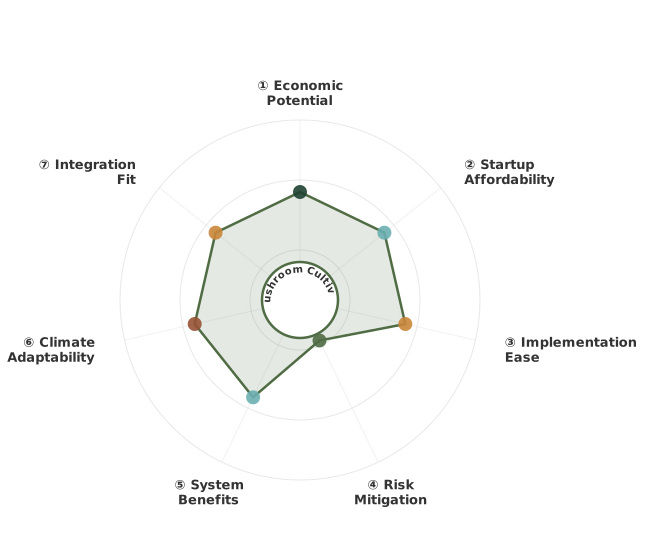
How These Traits Are Calculated
Trait dimensions are ordered clockwise starting from the top of the chart (12 o'clock position):
1. Economic Potential
Financial returns, annual value, and break-even timeline
WHAT: Evaluates financial viability by combining net annual value ($/ha from savings, income, and amortized harvests) with break-even timeline showing when practices pay for themselves.
WHY: Farmers need clear ROI understanding before committing resources. Fast payback (≤3 years) with strong returns (≥$300/ha) enables confident adoption, while long timelines (>10 years) restrict adoption to well-funded operations willing to wait for returns.
HOW: Calculated from net annual value in $/ha and break-even years. Exceptional (≥2.6): fast ROI ≤3 years + high value ≥$300/ha. Typical (1.8-2.5): moderate returns or longer timelines. Limited (<1.8): marginal economics or very long payback >10 years.
2. Startup Affordability
Initial investment costs and financial barrier to entry
WHAT: Measures financial barrier to entry through startup costs for equipment, infrastructure, consulting, and materials. Inverted scoring: lower costs = higher scores = more accessible adoption.
WHY: Affordability determines who can adopt. Low-cost practices (<$250/ha) enable widespread adoption across diverse scales, while high costs (>$2,500/ha) limit adoption to well-capitalized operations, creating barriers that slow regenerative transition.
HOW: Calculated from initial investment parsed from practice content. Inverted scoring: Exceptional (≥2.6): minimal investment <$250/ha. Typical (1.8-2.5): moderate costs $250-2,500/ha. Limited (<1.8): high barrier >$2,500/ha.
3. Implementation Ease
Learning curve and specialized knowledge required
WHAT: Measures how much learning, planning, and specialized knowledge a practice requires. Simpler practices with fewer steps score higher, while complex practices requiring extensive training or specialized resources score lower.
WHY: Complex practices create adoption barriers even when economically viable. Straightforward practices enable faster adoption and broader participation, while those requiring extensive training, timing precision, or specialized equipment limit who can succeed.
HOW: Evaluated by measuring documentation length and identifying complexity markers like location-specific requirements, seasonal timing windows, specialized skills, and dedicated equipment needs. Exceptional (≥2.6): straightforward practices with minimal prerequisites. Typical (1.8-2.5): moderate learning curve with some specialized needs. Limited (<1.8): steep learning curve requiring significant training or resources.
4. Risk Mitigation
Identified financial and ecological risk assessment
WHAT: Evaluates documented risks across financial (investment loss, market volatility) and ecological (crop failure, pest outbreaks) domains. Inverted scoring: fewer risks = higher scores.
WHY: Understanding risk exposure helps farmers make informed decisions. Low-risk practices allow confident implementation, while high-risk practices require careful planning and contingency resources. Risk transparency prevents costly failures.
HOW: Calculated from identified risks in practice content. Inverted scoring: Exceptional (≥2.6): ≤2 risks with manageable severity. Typical (1.8-2.5): 3-5 moderate risks. Limited (<1.8): 6+ risks or severe exposure.
5. System Benefits
How many ways the practice improves your land simultaneously
WHAT: Measures how many aspects of land health improve at once—carbon storage, soil quality, erosion control, water absorption, and biodiversity. Practices that improve multiple areas simultaneously create compounding benefits where each improvement reinforces the others.
WHY: The best practices solve multiple problems at once. For example, addressing erosion simultaneously builds carbon and improves water infiltration, creating a resilient system with positive feedback loops. Single-benefit approaches miss these compound transformation opportunities.
HOW: Evaluated across five key outcomes: carbon sequestration, soil organic matter increase, erosion reduction, water infiltration improvement, and biodiversity enhancement. Exceptional (≥2.6): high carbon storage (>8 t/ha/yr), improvements across 4-5 areas, transformative outcomes. Typical (1.8-2.5): moderate carbon (3-8 t/ha/yr), improvements across 2-3 areas. Limited (<1.8): modest impact (<3 t/ha/yr), single-area focus only.
6. Climate Adaptability
Geographic applicability across Köppen climate zones
WHAT: Evaluates geographic applicability by assessing how many Köppen climate zones successfully support a practice and what adaptation requirements are needed. Measures breadth of climates where farmers can implement with minimal to moderate modifications.
WHY: Universal practices working across diverse climates enable more farmers to adopt regenerative approaches. Practices limited to single climate types (only Mediterranean, only tropical) restrict adoption and slow global transition. Adaptability determines whether a practice serves niche regions or offers broad transformation.
HOW: LLM evaluation of regional success stories, Köppen zone coverage, and adaptation needs. Exceptional (≥2.6): 5+ zones or 4+ climate types, 3+ continents, minimal adaptation. Typical (1.8-2.5): 3-4 zones or 2-3 types, 2 continents, moderate adaptation. Limited (<1.8): 1-2 zones, single region, significant adaptation or highly specialized.
7. Integration Fit
How well this practice combines with others you're doing
WHAT: Measures how well a practice combines with other regenerative practices you might be doing. Some practices work as building blocks that make many other practices easier or more effective, while others work best on their own.
WHY: Practices that combine well with many others create more value on your farm. For example, cover cropping enables no-till, improves grazing, supports crop diversity, and helps water management—making all of them work better together. This helps you build a coherent system rather than juggling disconnected practices.
HOW: Evaluated by identifying which practices combine well and how strong those combinations are. 'Ideally Suited' means strong combinations where practices reinforce each other (practice A makes B easier, while B makes A more effective). 'Adequate' means complementary benefits that work well together. Exceptional (≥2.6): combines well with 6+ practices, serves as a building block. Typical (1.8-2.5): combines with 3-5 practices. Limited (<1.8): 1-2 practices or works best alone.
Going Deeper
1
WHY - The Benefits
Mushroom cultivation offers a unique path for increasing farm income and efficiency, particularly for those seeking to integrate biological circularity into their operations. While not a direct soil-building practice itself, its ability to transform waste streams into...
Mushroom cultivation offers a unique path for increasing farm income and efficiency, particularly for those seeking to integrate biological circularity into their operations. While not a direct soil-building practice itself, its ability to transform waste streams into...
WHY - The Benefits
Mushroom cultivation offers a unique path for increasing farm income and efficiency, particularly for those seeking to integrate biological circularity into their operations. While not a direct soil-building practice itself, its ability to transform waste streams into...
Mushroom cultivation offers a unique path for increasing farm income and efficiency, particularly for those seeking to integrate biological circularity into their operations. While not a direct soil-building practice itself, its ability to transform waste streams into...
Soil Health Benefits
The most direct soil health benefit from mushroom cultivation comes from the spent mushroom substrate (SMS). After the mushroom harvest, SMS is a nutrient-rich material, often containing partially digested organic matter, chitin, and beneficial microbial communities. When composted with livestock manure or plant residues, SMS becomes an excellent soil amendment.
Application of composted SMS can increase soil organic matter content by 0.5-2.0% over several years, depending on application rates and soil type. This boosts soil's water-holding capacity, improves aeration, and enhances nutrient retention. The chitin in SMS can also stimulate beneficial soil fungi and suppress certain plant pathogens. Studies have shown that SMS applications can improve soil structure, increasing aggregate stability and reducing bulk density, which is particularly valuable for mitigating compaction issues arising from other farm enterprises.
The diversion of organic waste is a significant indirect soil health benefit. Agricultural byproducts like straw, sawdust, or coffee grounds, if not composted or utilized, can decompose in landfills, releasing methane—a potent greenhouse gas. By using these materials as substrates for mushroom growth, farms effectively recycle nutrients and carbon. The subsequent composting and application of SMS to fields contribute to enriching the soil carbon pool, a cornerstone of regenerative agriculture.
Economic Benefits
Mushroom cultivation can be a highly profitable enterprise, especially for small-scale and diversified farms. The market for fresh gourmet and medicinal mushrooms is growing globally, driven by consumer interest in healthy, unique, and locally sourced foods.
- Revenue Streams: Fresh mushrooms can fetch retail prices ranging from $20 to $100 or more per kilogram ($9 to $45+ per pound) USD equivalent, depending on species and market. Dried medicinal mushrooms can command even higher prices.
- Low Land Footprint: Cultivation can be done vertically or in small spaces, making it ideal for farms with limited acreage. This allows for efficient use of space, such as utilizing barns, sheds, or even shipping containers.
- Utilizing Waste: Sourcing substrates from on-farm or local agricultural byproducts significantly reduces input costs, turning potential waste into a valuable resource.
- Spent Substrate Value: Spent mushroom substrate itself has economic value as a compost amendment, often priced at $40-100 per tonne (USD equivalent), contributing to farm fertility without external purchase.
- High ROI potential: Small-scale setups can have rapid payback periods, often within 1-2 years, especially if substrates are sourced cheaply and DIY labor is utilized.
Regenerative Systems Fit
Mushroom cultivation's role in regenerative agriculture is primarily as a tool for building a more circular, diverse, and resilient farm ecosystem. It's best understood as a context-dependent or transition practice that supports the broader regenerative goals.
Principle 1 (Minimize Soil Disturbance): Mushroom cultivation itself involves minimal to no soil disturbance. The growing medium is managed in controlled systems. However, the regenerative aspect arises from how substrates are sourced and spent substrate is managed. If substrates are recycled agricultural byproducts and spent substrate is composted with manure or applied to fields as mulch, it supports carbon cycling and reduces the need for external inputs, indirectly minimizing land disturbance associated with resource extraction.
Principle 2 (Maximize Crop Diversity): Cultivating various mushroom species—e.g., oyster mushrooms, shiitake, lion's mane, reishi—increases the overall biological diversity on the farm. Fungi are a distinct kingdom from plants, and their presence contributes to a more robust and resilient farm biome. This diversity extends to the soil food web when spent substrate is applied, as it introduces diverse microbial communities. For farms transitioning from monocultures, adding fungal diversity is a key step.
Principle 3 (Keep Soil Covered): While not directly covering soil, mushroom cultivation diverts organic waste that would otherwise decompose inefficiently. When spent substrate is composted and applied to fields as a top dressing or mulch, it acts as a protective cover, preventing erosion, conserving moisture, and suppressing weeds, thus supporting the "keep soil covered" principle for the main farm crops.
Principle 4 (Maintain Living Roots): The link is indirect. The mycelial network of mushrooms is a living biological system that decomposes organic matter and cycles nutrients. When spent substrate is returned to the soil, it fuels the microbial decomposition processes that support living plant roots. In a broader sense, the mycelium forms a living underground network analogous to root systems, contributing to soil structure and nutrient cycling.
Principle 5 (Integrate Livestock): This is where mushroom cultivation can act as a powerful transition or synergistic practice. Livestock manure is an excellent source of nitrogen and other nutrients that fungi require to break down tough organic materials like straw or sawdust. By integrating mushroom cultivation with livestock operations, farms can: * Create symbiotic nutrient cycles: Use manure to supplement grow media, improve yields, and maximize substrate decomposition. * Recycle waste: Co-compost spent substrate with manure to create high-quality soil amendments. * Diversify income: Add a new revenue stream from mushrooms while potentially reducing reliance on external feed inputs if on-farm forages are improved by SMS application.
Transition Pathway: Mushroom cultivation is particularly valuable during transition when farms may need supplementary income or have significant waste streams to manage. For example, a cattle ranch might use manure to inoculate straw for oyster mushroom cultivation, then use the spent substrate to enrich pastures. This creates a closed-loop system that enhances both livestock productivity (through improved forage) and adds a new market product. The timeline for integrating would involve starting small, focusing on substrate sourcing and spent substrate management for on-farm fertility, and then scaling as market demand and operational expertise grow.
Sources behind this view
Videos & Podcasts
-
Details reusing mushroom cultivation byproducts like spent blocks and contaminated substrate to create wood-based compost. Explores growing primary and secondary decomposer mushrooms on this compost f
-
Paul Stamets' mycoremediation uses fungi, like oyster mushrooms, to clean contaminated land. In a Washington state example, mushroom inoculation of a diesel-soaked soil pile transformed it into a thri

-
Experimenting with mushroom farm waste (wood/soy hulls) as mulch for squash and soil amendment for cabbage to boost yield, comparing results against areas without it, inspired by a previous test yield
-
Fungi Futures recycles coffee grounds into oyster mushrooms through a multi-stage process involving mycelium propagation and sterile cultivation, offering a sustainable waste-to-food solution.
Community
-
Explores Paul Stamets' research on mycoremediation, detailing how fungi can break down pesticides, toxins, and E. coli. Emphasizes the role of organic matter and fungi in soil health and the potential
Read more (opens in new window) permies.com -
Fungi and mushrooms naturally decompose organic matter, support soil and forest health, and can be used for biofiltration and bioremediation. Their application is context-dependent, requiring clear go
Read more (opens in new window) smallfarms.cornell.edu -
Fungi are essential for permaculture, enhancing soil fertility through biology. Wine Cap mushrooms break down wood chips into compost, and their spawn boosts beneficial bacteria and plant associations
Read more (opens in new window) permies.com -
Urban mushroom farms in NYC use restaurant food waste to grow oyster, lion's mane, chestnut, and pioppino mushrooms. Spent substrate blocks are then used in community gardens and parks, creating a clo
Read more (opens in new window) smallfarms.cornell.edu
Research
-
Synergies between Carbon Sequestration, Nitrogen Utilization, and Mushroom Quality: A Comprehensive Review of Substrate, Fungi, and Soil Interactions. (opens in new window)
This study found: Mushroom cultivation can capture carbon and use nitrogen efficiently. Review suggests improving growing materials with biochar and diverse fungi to boost yields and soil health, aiming for carbon-neut
-
Synergistic remediation of continuous cropping obstacles in facility agriculture: insights from the Stropharia rugosoannulata-Ornamental Sunflower Rotation System (opens in new window)
This study found: Rotating wine cap mushrooms with sunflowers and adding mushroom compost improved greenhouse soil health, reducing acidity and salt, boosting phosphorus, and shifting microbial communities towards bene
-
Global Impact of Edible and Medicinal Mushrooms on Human Welfare in the 21st Century: Nongreen Revolution (opens in new window)
This study found: Mushrooms break down waste into food, medicine, and fertilizer, offering zero-emission farming, job creation, and economic growth, a 'nongreen revolution' for human welfare.
-
Improving Soil Resilience and Crop Productivity Through Recycling of Spent Mushroom Substrate: A Transition Towards Circular Economy in Hill Agriculture (opens in new window)
This study found: Recycling mushroom waste (spent mushroom substrate) significantly boosted French bean yields, improved soil organic matter by 29%, enhanced soil structure, and reduced soil CO2 release by 26.5% in Ind
2
WHERE - Regional Considerations
Mushroom cultivation's success is influenced by regional climate, availability of substrates, and access to markets. While controlled environments reduce climate dependency, local conditions still play a role in substrate sourcing, energy costs, and ambient humidity.
Mushroom cultivation's success is influenced by regional climate, availability of substrates, and access to markets. While controlled environments reduce climate dependency, local conditions still play a role in substrate sourcing, energy costs, and ambient humidity.
WHERE - Regional Considerations
Mushroom cultivation's success is influenced by regional climate, availability of substrates, and access to markets. While controlled environments reduce climate dependency, local conditions still play a role in substrate sourcing, energy costs, and ambient humidity.
Mushroom cultivation's success is influenced by regional climate, availability of substrates, and access to markets. While controlled environments reduce climate dependency, local conditions still play a role in substrate sourcing, energy costs, and ambient humidity.
Click Here to Look up your Region if you don't already know it
Temperate Humid Regions
Representative Locations: Northeastern USA, United Kingdom, Northern Europe (Germany, France), Northern China, Japan, New Zealand
Climate Context: Moderate temperatures year-round with distinct seasons; warm to hot summers and cool to cold winters; high to moderate annual precipitation (75-150 cm or 30-60 inches) distributed relatively evenly. USDA Zones 4-8, Köppen Cfb/Cfa/Dfb.
Suitability: Ideal for many outdoor or semi-controlled systems leveraging ambient humidity and temperature fluctuations, especially for species like oyster mushrooms grown on straw or wood lots. Plenty of agricultural byproducts (straw, sawdust) available. Can also utilize passive solar greenhouses. Energy costs for heating/cooling may be moderate and seasonal. Market access robust in populated areas.
Mediterranean Regions
Representative Locations: California (USA), Spain, Italy, Greece, Coastal Chile, Southwestern Australia, South Africa (Western Cape)
Climate Context: Hot, dry summers and mild, wet winters. Precipitation is seasonal (40-90 cm or 15-35 inches annually). USDA Zones 8-10, Köppen Csa/Csb.
Suitability: Requires more reliance on controlled environment growing to manage dry summers and potential for high summer temperatures that can inhibit mushroom growth. Supplemental irrigation for substrate moisture and high humidity environments is often necessary. Waste availability may be moderate, depending on local agriculture (e.g., wine production byproducts). Energy costs for cooling can be significant during summer. Market demand can be strong for specialty products.
Arid / Semi-Arid Regions
Representative Locations: Western USA (inland), North Africa, Central Asia, Interior Australia
Climate Context: Very low annual precipitation (<40 cm or 15 inches), high temperatures, short and often unpredictable growing season. USDA Zones 6-9, Köppen BSh/BSk.
Suitability: Highly dependent on controlled environment technology (greenhouses with air conditioning, evaporative cooling) to maintain necessary humidity and temperature. Substrate availability might be a challenge unless from irrigation-driven agriculture or specialized forestry. High energy costs for climate control are a major consideration. Small-scale setups are more feasible; large-scale operations require significant investment in infrastructure. Water availability for substrate hydration is critical.
Cold Continental Regions
Representative Locations: Northern USA (Midwest/Great Plains), Canada, Northern Europe, Siberia
Climate Context: Very short growing seasons, extreme summer heat, severe winter cold. USDA Zones 3-5, Köppen Dfa/Dfb/Dfc.
Suitability: Primarily limited to indoor, controlled environments. Significant energy inputs required for heating during long winters and cooling during short, hot summers. Substrate availability can be high from forestry or grain farming. Outdoor cultivation is restricted to very short summer windows for specific cold-tolerant species. Higher energy costs are expected for climate control year-round.
Subtropical Regions
Representative Locations: Southeastern USA, Southern China, Southern Brazil, Eastern Australia
Climate Context: Hot, humid summers and mild winters; generally ample rainfall distributed throughout the year. USDA Zones 9-11, Köppen Cfa/Cwa.
Suitability: Excellent potential for both semi-controlled and controlled environments. High ambient humidity can be beneficial. Abundant agricultural byproducts (rice hulls, sugarcane bagasse, straw) often available. Energy costs for cooling may be high but often less than in arid regions due to naturally higher humidity. Market demand for gourmet mushrooms can be strong. Potential for challenging pest and disease control due to continuous warmth and humidity.
Tropical Regions
Representative Locations: Southeast Asia, Central America, East Africa, Northern South America, Northern Australia
Climate Context: High temperatures year-round, with distinct wet and dry seasons or consistent high rainfall. Köppen Af/Am/Aw.
Suitability: Ideal for numerous tropical mushroom species (e.g., certain oyster varieties, reishi) that thrive in warm, humid conditions. Can often utilize simple cultivation methods with minimal technology, especially in areas with high ambient humidity. Abundant agricultural waste like rice hulls, banana leaves, and sugarcane bagasse. Energy costs for HVAC are generally lower, though ventilation and pest/disease control are critical. Markets can be developing for gourmet and medicinal mushrooms.
3
HOW - Implementation Process
Mushroom cultivation ranges from simple backyard setups to highly controlled commercial operations. The following outlines key steps, adaptable to scale and local resources.
Mushroom cultivation ranges from simple backyard setups to highly controlled commercial operations. The following outlines key steps, adaptable to scale and local resources.
HOW - Implementation Process
Mushroom cultivation ranges from simple backyard setups to highly controlled commercial operations. The following outlines key steps, adaptable to scale and local resources.
Mushroom cultivation ranges from simple backyard setups to highly controlled commercial operations. The following outlines key steps, adaptable to scale and local resources.
Prerequisites
- Species Selection: Choose species suited to your climate, available substrates, market demand, and technical expertise. Oyster mushrooms (Pleurotus spp.) are forgiving and grow on many substrates. Shiitake (Lentinula edodes) require wood-based substrates and specific curing. Button mushrooms (Agaricus bisporus) need composted manure.
- Substrate Sourcing: Identify reliable, sustainable sources for your chosen substrate. Local agricultural byproducts are ideal for regenerative integration.
- Growing Space: A dedicated space with controlled temperature, humidity, and airflow is needed. This can be a shed, basement, greenhouse, or even purpose-built bags/containers.
- Spawn Source: Purchase high-quality mushroom spawn from reputable suppliers. Spawn is the fungal vegetative growth on a carrier material (grain, sawdust) used to inoculate the substrate.
Phase 1: Substrate Preparation
- Hydration: Substrate needs to be hydrated to optimal moisture content (typically 60-75%, depending on species). This is often achieved by soaking straw or sawdust in water, or mixing with a nutrient supplement like gypsum or bran.
- Sterilization/Pasteurization: Crucial step to eliminate competing microorganisms.
- Sterilization: For hard substrates like sawdust or grains, autoclaving or using steam under pressure (121°C / 250°F at 15 psi for 90-120 minutes) is common. This is resource-intensive but provides a sterile medium.
- Pasteurization: For softer substrates like straw or manure, methods like hot water bath (60-70°C / 140-158°F for 1-2 hours) or lime-water soaking break down beneficial bacteria while killing off competitors. This can be more accessible for small-scale or decentralized operations.
- Composting (for Agaricus): Button mushroom compost is a complex process involving layered ingredients (manure, straw, gypsum) and multiple stages of aerobic composting to create a specific nutrient profile, followed by pasteurization.
Phase 2: Inoculation
- Cooling: Allow sterilized or pasteurized substrate to cool to room temperature (20-25°C / 68-77°F).
- Mixing: In a clean environment, thoroughly mix the mushroom spawn with the prepared substrate. The spawn rate is typically 1-5% of the substrate dry weight. For small-scale, use clean gloved hands; for commercial scale, mixers are used.
- Packaging: Pack the inoculated substrate into breathable bags (polypropylene), buckets, or trays. Ensure good contact between spawn and substrate.
Phase 3: Incubation (Mycelial Run)
- Environment: Place the inoculated substrate in a dark, temperature-controlled room. Ideal incubation temperatures vary by species but are generally between 20-25°C (68-77°F).
- Mycelial Growth: Over 1-4 weeks (depending on species and substrate), the white, thread-like mycelium will colonize the entire substrate. The material will turn white and fluffy.
- CO2 Buildup: During incubation, mycelium produces CO2. While some fresh air is needed, excessive gas buildup can inhibit growth. Ensure minimal but adequate air exchange.
Phase 4: Fruiting
- Initiation: Once the substrate is fully colonized, environmental conditions are changed to trigger fruiting. This often involves:
- Temperature Drop: A slight reduction in temperature (e.g., 5-10°C / 10-20°F drop).
- Increased Humidity: Raising humidity to 85-95% using humidifiers or misters.
- Fresh Air Exchange (FAE): Introducing more fresh oxygen to trigger pinning (formation of tiny mushrooms).
- Light: Low levels of indirect light may be required for certain species like shiitake.
- Pinning: Small mushroom primordia (pins) will start to form on the surface of the substrate.
- Mushroom Development: Pins mature into harvestable mushrooms over 3-10 days. Proper humidity and fresh air are critical to prevent malformation or drying.
Phase 5: Harvesting and Subsequent Flushes
- Harvesting: Mushrooms are typically harvested just before or as the caps fully flatten, with stems generally remaining attached to the substrate. Twist and pull gently or cut at the base.
- Flushing: After harvesting, the substrate may be rested or rehydrated (e.g., by soaking for 24 hours) to encourage subsequent "flushes" of mushrooms. Yields typically decrease with each flush.
Phase 6: Spent Substrate Management (Regenerative Integration)
- Composting: Once fruiting ceases, the spent substrate is a nutrient-rich material. It should be composted, ideally with livestock manure or other farm organic matter. This process requires aeration and turning to manage temperature and microbial activity.
- Application: The composted material can be applied to fields as a soil amendment, mulch, or incorporated into potting mixes for non-mushroom plant propagation.
Transition Timeline & Phase-Out Strategy (If applicable)
Mushroom cultivation itself is often a transition practice. The "phase-out" relates to the sustainability of sourcing and the integrated use of spent substrate.
- Year 1-2: Focus on learning and sourcing. Use readily available substrates (e.g., local straw, sawdust). Prioritize using any farm manure for composting spent substrate. Assess market potential.
- Year 3-5: Optimize and integrate. Develop strong relationships with local regenerative farms for substrate supply. Scale up compost production to fully utilize spent substrate, aiming to replace purchased soil amendments. Explore cultivating medicinal mushrooms for higher value.
- Year 5+: Closed-loop system. Substrates primarily sourced from on-farm or verified regenerative partners. Spent mushroom substrate is a primary soil builder for fields and nurseries. Mushroom products are consistently contributing to farm income and potentially supporting niche markets (e.g., functional foods).
If transitioning away from synthetic inputs in the mushroom cultivation process itself (e.g., using purely organic supplements or achieving full sterilization/pasteurization without chemical aids), this would also phase out over a similar timeline, focusing on identifying and validating natural alternatives. The goal is to create a system that adds value and closes nutrient loops, rather than relying on external or synthetic inputs.
Sources behind this view
Videos & Podcasts
-
Details reusing mushroom cultivation byproducts like spent blocks and contaminated substrate to create wood-based compost. Explores growing primary and secondary decomposer mushrooms on this compost f
-
Utilizes spent mushroom substrate (SMS) as a soil amendment and bioremediation agent on rail beds, leveraging mycelium's enzymatic properties to break down contaminants like creosote, with oyster mush
-
Experimenting with mushroom farm waste (wood/soy hulls) as mulch for squash and soil amendment for cabbage to boost yield, comparing results against areas without it, inspired by a previous test yield
-
Fungi Futures recycles coffee grounds into oyster mushrooms through a multi-stage process involving mycelium propagation and sterile cultivation, offering a sustainable waste-to-food solution.
Community
-
Advocates for a DIY, stepwise approach to mushroom farming, starting small and utilizing local waste products like wheat bran, sawdust, and coffee grounds for substrate to reduce costs.
Read more (opens in new window) smallfarms.cornell.edu -
Details a multi-stage mushroom cultivation process from spore print to production, emphasizing sterile techniques, strain purification via Petri dishes and grain colonization, and regular strain refre
Read more (opens in new window) permies.com -
Details a sustainable homestead mushroom growing model using plant waste like compost, wood chips, cardboard, paper, and straw for species such as garden giant, shiitake, lion's mane, morels, and oyst
Read more (opens in new window) permies.com -
Urban mushroom farms in NYC use restaurant food waste to grow oyster, lion's mane, chestnut, and pioppino mushrooms. Spent substrate blocks are then used in community gardens and parks, creating a clo
Read more (opens in new window) smallfarms.cornell.edu
Research
-
Synergies between Carbon Sequestration, Nitrogen Utilization, and Mushroom Quality: A Comprehensive Review of Substrate, Fungi, and Soil Interactions. (opens in new window)
This study found: Mushroom cultivation can capture carbon and use nitrogen efficiently. Review suggests improving growing materials with biochar and diverse fungi to boost yields and soil health, aiming for carbon-neut
-
Improving Soil Resilience and Crop Productivity Through Recycling of Spent Mushroom Substrate: A Transition Towards Circular Economy in Hill Agriculture (opens in new window)
This study found: Recycling mushroom waste (spent mushroom substrate) significantly boosted French bean yields, improved soil organic matter by 29%, enhanced soil structure, and reduced soil CO2 release by 26.5% in Ind
-
Synergistic remediation of continuous cropping obstacles in facility agriculture: insights from the Stropharia rugosoannulata-Ornamental Sunflower Rotation System (opens in new window)
This study found: Rotating wine cap mushrooms with sunflowers and adding mushroom compost improved greenhouse soil health, reducing acidity and salt, boosting phosphorus, and shifting microbial communities towards bene
-
ECOLOGICALLY SAFE UTILIZATION OF ORGANIC WASTES AND TECHNOLOGY OF PRODUCTION OF THE FUNGUS PLEUROTUS OSTREATUS (THE OYSTER MUSHROOM) (opens in new window)
This study found: Brewery waste grain and farm byproducts like straw effectively support oyster mushroom growth, accelerating colonization and increasing fruiting, turning waste into a valuable food product.
 From the Web
-
Covers post-harvest handling, value-added products (dried, tinctures), food safety, and marketing. Emphasizes spent mushroom substrate as a soil amendment for nutrient cycling and carbon sequestration
4
Know the Debate
Mushroom cultivation's regenerative impact hinges on its integration into broader farm systems and its regional context. While indoor operations of...
Know the Debate
Mushroom cultivation's regenerative impact hinges on its integration into broader farm systems and its regional context. While indoor operations of...
Mushroom cultivation's regenerative impact hinges on its integration into broader farm systems and its regional context. While indoor operations offer control, they can demand substantial energy. Outdoor, low-tech methods leverage ambient conditions with minimal input, particularly viable in humid temperate climates. The effectiveness of spent mushroom substrate as a soil amendment also varies, depending on initial substrate composition and post-cultivation composting practices. Understanding these factors is key to successful and regenerative integration.
How effective is spent mushroom substrate as a soil amendment?
Superior carbon and soil health benefits
Academic research suggests SMS significantly boosts soil carbon, organic matter (up to 29%), and improves structure, potentially outperforming conventional compost. These benefits are often observed under controlled conditions with well-defined substrates and composting.
Sources behind this view
Sources behind this view
Research
-
Improving Soil Resilience and Crop Productivity Through Recycling of Spent Mushroom Substrate: A Transition Towards Circular Economy in Hill Agriculture (opens in new window)
This study found: Researchers in India explored how to reuse waste from mushroom farming to improve soil health and crop yields. They found that after harvesting mushrooms, the leftover material (spent mushroom substrate) could be composted and used to grow French beans. When this compost was enriched with rock phosphate, it significantly boosted French bean yields to over 11 tons per hectare. This mushroom compost also improved soil by making it less acidic, increasing soil organic matter by 29%, and greatly improving soil structure (clumping). Importantly, soils treated with this compost released 26.5% less carbon dioxide compared to soils treated with regular farmyard manure. The study also noted changes in beneficial soil fungi, with the genus *Mortierella* becoming more dominant. This research highlights how adopting circular economy practices, like recycling mushroom waste, can create more resilient and sustainable farming systems, especially in hilly regions.
-
Synergies between Carbon Sequestration, Nitrogen Utilization, and Mushroom Quality: A Comprehensive Review of Substrate, Fungi, and Soil Interactions. (opens in new window)
This study found: This review explores how growing mushrooms can be a sustainable practice that helps capture carbon, use nitrogen efficiently, and produce nutritious food. It looks at how the materials mushrooms grow on (substrates), the types of fungi used, and the environment all work together. The review points out that we need more research on how used mushroom growing material (SMS) affects soil carbon over time, how to better use different kinds of fungi, and how climate change might impact mushroom growing. To improve things, the authors suggest mixing different types of farm waste, adding biochar to the growing material, and using fungi that are better at breaking down tough plant matter and can handle stress. A balanced approach to carbon and nitrogen, using microbial teamwork, and innovating growing materials are recommended for better yields, less waste, and carbon-neutral mushroom farming.
From the Web
-
Introduces mushroom cultivation for small farms, detailing low-tech outdoor (logs, woodchips) and indoor (buckets, bags) systems. Emphasizes understanding fungal life cycles and environmental controls for species like oyster, shiitake, and lion's mane, while noting benefits for soil health.
Varied results, context-dependent effectiveness
Field reports indicate inconsistent results, with effectiveness depending on substrate type, mushroom species, and post-cultivation composting. Some find it excellent, while others note potential for nitrogen tie-up and no significant advantage over regular compost.
Sources behind this view
Sources behind this view
Videos & Podcasts
-
Spent substrate from oyster mushroom cultivation is composted to create a material that significantly improves soil water-holding capacity. Outdoor cultivation has a longer lifecycle.
-
Experimenting with mushroom farm waste (wood/soy hulls) as mulch for squash and soil amendment for cabbage to boost yield, comparing results against areas without it, inspired by a previous test yielding over 100 squash from two plants.
-
Mushroom cultivation, based on transferring mycelium, is becoming easier. Using grain spawn to inoculate waste materials (including invasives) produces mushrooms and a myceliated substrate valuable as a soil amendment, especially for materials with tannic acids.
Making Sense of the Differences
The performance of spent mushroom substrate (SMS) as a soil amendment depends on its initial composition and management. Academic studies often show significant benefits in controlled settings. Field experience reveals variability tied to substrate source, mushroom species, and thoroughness of post-cultivation composting. Farmers should prioritize well-composted SMS, ideally mingled with manure or plant residues, to maximize nutrient availability and minimize potential nitrogen tie-up. Diversifying substrate sources and ensuring robust composting can optimize soil health outcomes.
What level of rigor is needed for substrate preparation?
Strict sterilization/pasteurization is essential
Academic and institute sources strongly advocate for rigorous sterilization (autoclaving) or pasteurization (hot water) of substrates to eliminate competing microbes and ensure successful, uncontaminated colonization by the desired mushroom mycelium.
Sources behind this view
Sources behind this view
Research
-
TECHNOLOGY OF MUSHROOM CULTIVATION (opens in new window)
This study found: Growing mushrooms can be done in two main ways: using wood logs or using other materials (non-wood logs). The non-wood log methods are split into two types. One type involves natural processes like composting and doesn't need a super clean environment. The other type uses specially prepared, sterilized growing material and requires very careful control of light, temperature, humidity, and CO2 levels.
-
Cultivation of Mushrooms and Their Lignocellulolytic Enzyme Production Through the Utilization of Agro-Industrial Waste (opens in new window)
This study found: This review highlights how farmers and food industries can turn their waste products into valuable resources. Agricultural and food processing waste, which is often burned or dumped, is full of plant material (like cellulose and lignin) that mushrooms can eat. By using a process called solid-state fermentation, mushrooms can grow on this waste and produce enzymes that break down the tough plant fibers. This not only helps reduce waste but also creates valuable products like mushrooms themselves, offering a smart way to manage byproducts and create new resources.
From the Web
-
Details the mushroom cultivation process: substrate prep (pasteurize/sterilize), clean inoculation (2-10% spawn rate), colonization (warm, dark, humid), and fruiting (lower temp, light, 85-95% RH, FAE). Emphasizes hygiene to prevent contamination and timely harvest.
-
Commercial mushroom farming involves six steps: composting, pasteurizing, spawning, casing, pinning, and cropping, using spawn and substrates like straw. A 14-week cycle can yield 8 lbs/sq ft, dependent on pest control, temperature, and humidity.
Methods vary, risk of contamination is high
Field practitioners confirm that while cleanliness is vital, rigorous preparation (like pasteurization or sterilization) is critical, especially for indoor grows or sensitive species. Many practitioners find that using untreated farm waste commonly leads to failure due to contamination, underscoring the prerequisite nature of proper preparation.
Sources behind this view
Sources behind this view
Videos & Podcasts
-
Mushroom cultivation, based on transferring mycelium, is becoming easier. Using grain spawn to inoculate waste materials (including invasives) produces mushrooms and a myceliated substrate valuable as a soil amendment, especially for materials with tannic acids.
-
Details mushroom spawn production: culturing on agar (slants, plates), cloning, making liquid cultures, expanding mycelium in grain jars, and inoculating spawn bags (grain or sawdust). Emphasizes sterilization, contamination control, and preventing mycelial senescence.
-
Provides a step-by-step guide for growing button, chestnut, or cremini mushrooms using well-rotted cow manure or potting mix, mushroom spawn, and a casing layer of coconut fiber and vermiculite. Key steps include substrate preparation, spawn inoculation (2-10%), colonization in dark, airy conditions (60-75°F), casing layer application, and fruiting in cooler temperatures (60-68°F) with frequent misting. Harvest by twisting and pulling when mushrooms are fully formed.
-
Detailed process for cultivating mushroom spawn using sterile techniques, expanding mycelium from test tubes to petri dishes, grain jars, and sawdust bags, then mixing with coffee grounds for colonization and fruiting, yielding ~0.5kg per bag within 8 weeks.

Making Sense of the Differences
The success of mushroom cultivation hinges on rigorous substrate preparation to prevent contamination. Academic and institute sources advocate for precise sterilization or pasteurization methods to ensure desired fungal colonization. Field experience confirms that inadequate preparation, especially when using raw farm waste or for sensitive indoor systems, frequently leads to failure. Therefore, understanding and implementing appropriate pasteurization (for softer substrates) or sterilization (for harder substrates) techniques tailored to the chosen mushroom species and growth environment is a critical prerequisite, not an optional step for reliable yields.
What are the energy and resource costs: indoor vs. outdoor?
High-input indoor systems require significant energy
Academic and institute discussions often focus on controlled indoor environments demanding precise climate control (HVAC), implicitly requiring substantial energy, especially in extreme climates, for consistent yields.
Sources behind this view
Sources behind this view
Research
-
Cultivation of Mushrooms and Their Lignocellulolytic Enzyme Production Through the Utilization of Agro-Industrial Waste (opens in new window)
This study found: This review highlights how farmers and food industries can turn their waste products into valuable resources. Agricultural and food processing waste, which is often burned or dumped, is full of plant material (like cellulose and lignin) that mushrooms can eat. By using a process called solid-state fermentation, mushrooms can grow on this waste and produce enzymes that break down the tough plant fibers. This not only helps reduce waste but also creates valuable products like mushrooms themselves, offering a smart way to manage byproducts and create new resources.
From the Web
-
Commercial mushroom farming involves six steps: composting, pasteurizing, spawning, casing, pinning, and cropping, using spawn and substrates like straw. A 14-week cycle can yield 8 lbs/sq ft, dependent on pest control, temperature, and humidity.
-
Profitable mushroom farming involves controlled environments, quality compost substrate preparation, and careful management through seeding, casing, pinning, and harvesting. Penn State Extension offers workshops on cultivation, pest management, and business planning for white button, oyster, and shiitake mushrooms.
Low-input outdoor methods leverage ambient conditions
Field practitioners highlight low-tech, outdoor methods like log or straw bale cultivation using ambient humidity and temperature, significantly reducing energy input, particularly in suitable temperate climates.
Sources behind this view
Sources behind this view
Videos & Podcasts
-
Spent substrate from oyster mushroom cultivation is composted to create a material that significantly improves soil water-holding capacity. Outdoor cultivation has a longer lifecycle.
-
Mushroom growing, like gardening, involves creating optimal conditions for opportunistic species (wine caps, oysters) and utilizing resources like logs and wood chips, fostering a connection with nature.

-
Wine cap mushrooms are primarily used in farm walkways and mulched areas, requiring consistent moisture. Spawn is easily multiplied for further inoculation. Inoculation in mid-late April can yield mushrooms by summer/fall. These perennial mushrooms require ongoing food and will spread naturally.
-
Provides practical guides for growing oyster mushrooms on paper/cardboard, shiitake on logs, and king stropharia in gardens. Details sterilization, inoculation, and fruiting processes, recommending 'Radical Mycology' for advanced techniques.
![Thumbnail for Chapter 8: Fungi pt 2 | The Permaculture Student 2 by Matt Powers [FULL AUDIOBOOK]](/static/thumbnails/Wk6hBd27qrQ.jpg)
Making Sense of the Differences
The resource demands for mushroom cultivation vary greatly between indoor and outdoor methods. Indoor, controlled environments offer precise climate regulation and consistent yield but require significant, ongoing energy input for HVAC, making them more expensive and potentially less regenerative. Low-tech outdoor methods, such as log or straw bale cultivation, are highly resource-efficient and suitable for humid temperate climates, leveraging ambient conditions with minimal external energy. Farmers in extreme climates will face higher energy demands even for basic control, making the choice between indoor and outdoor methods crucial for both economic viability and regenerative alignment.
5
HOW MUCH - Costs & Investment
Initial setup costs for mushroom cultivation can vary dramatically based on scale, technology employed, and substrate choices. Costs are presented in USD equivalent.
Initial setup costs for mushroom cultivation can vary dramatically based on scale, technology employed, and substrate choices. Costs are presented in USD equivalent.
HOW MUCH - Costs & Investment
Initial setup costs for mushroom cultivation can vary dramatically based on scale, technology employed, and substrate choices. Costs are presented in USD equivalent.
Initial setup costs for mushroom cultivation can vary dramatically based on scale, technology employed, and substrate choices. Costs are presented in USD equivalent.
Note: All costs are based on recent US economic data (2024–2026) and may vary substantially by region based on local labor rates, energy costs, material availability, and regulatory requirements. Production scales below are defined by facility footprint capacity.
Facility & Infrastructure Setup
The initial capital intensity for mushroom cultivation is dictated by the degree of environmental automation required to maintain consistent yield cycles.
- Small Scale (Under 50 sq ft (4.6 m²)): Total setup costs range from $8.34 to $31.26 per sq ft. At this level, producers rely on retrofitted existing structures such as basements, spare rooms, or small garden sheds. Expenditures focus on low-cost climate modifications—repurposed residential humidifiers, circulating fans, and wire shelving from big-box retailers. The primary investment is in simple DIY monitoring equipment to manage basic temperature and humidity fluctuations.
- Mid-Scale (50–500 sq ft (4.6–46 m²)): Total setup costs range from $31.26 to $98.99 per sq ft. This tier necessitates professional-grade climate automation, such as PID-controlled ventilation systems. Operations at this scale require dedicated pasteurization equipment, such as steam-injected water-bath drums, and high-density, stainless-steel shelving. Investment often goes toward modular grow environments or retrofitted shipping containers that provide better insulation and easier sanitization protocols, which are vital for reducing contamination rates.
- Large Scale (500+ sq ft): Total setup costs range from $98.99 to $260.50+ per sq ft. Capital allocation shifts toward heavy industrial infrastructure, including commercial-grade autoclaves or large-scale pasteurization tunnels, high-output air exchange systems with HEPA-grade filtration to ensure near-sterile environments, and integrated industrial plumbing and electrical systems. Automation of substrate handling through mechanized bagging lines and forced-air substrate cooling is standard, allowing for maximized space utilization and consistent harvest timing.
Substrate & Spawn Procurement
Substrate acquisition remains the primary variable cost for mushroom growers. Efficiency is largely gained through volume-based procurement and onsite processing.
- Small Scale: Costs range from $2.08 to $8.34 per sq ft for annual substrate supplies. Growers at this level typically rely on retail-priced, pre-inoculated grow blocks or starter spawn from specialized laboratory suppliers. While this removes the need for complex laboratory equipment, the reliance on small-quantity, convenience-sized supply packs creates a significant per-unit price premium.
- Mid-Scale: Costs range from $1.04 to $4.17 per sq ft. Producers achieve moderate economies of scale by moving away from pre-bagged inputs. They typically source bulk raw materials—such as hardwood sawdust, wood chips, or straw—directly from local agricultural mills or lumber yards. Purchasing spawn in bulk quantities allows for lower per-unit inoculation costs, significantly reducing the financial burden compared to small-scale procurement.
- Large Scale: Costs range from $0.52 to $2.08 per sq ft. At this scale, producers often move to a vertically integrated supply chain, securing long-term contracts with regional timber or cereal producers for raw residues. The direct investment in onsite hammermills, bulk mixers, and automated inoculation lines provides a 60–80% reduction in substrate costs compared to retail-purchased inputs, providing a major competitive advantage in wholesale markets.
Climate Control & Ongoing Overhead
Maintaining climate control represents the highest recurring operational expenditure, particularly regarding electricity and HVAC maintenance.
- Small Scale: Energy costs are highly variable, often ranging from $0.52 to $2.08 per lb of mushrooms produced. Because small-scale setups often operate within non-insulated, residential-type structures, energy efficiency is poor. Humidity and temperature fluctuate rapidly, forcing fans and humidifiers to cycle constantly, increasing the per-lb energy burden significantly.
- Mid-Scale: Energy and utility costs average $0.31 to $1.04 per lb. The integration of centralized building management systems and improved insulation significantly reduces energy waste per unit of mushroom produced. Higher output-to-energy ratios are achieved through improved racking density, which maximizes the return on every dollar spent on climate control.
- Large Scale: Energy and utility costs range from $0.16 to $0.52 per lb. Industrial-scale operators leverage high-performance insulation and energy-efficient heat recovery ventilation systems. These systems allow for managing massive volumes of air exchange without the significant energy spikes seen in smaller, non-optimized buildings, effectively lowering the overhead cost significantly.
Most Spend: The majority of profitable operations (middle 60%) fall within the $45 to $85 per sq ft setup range and $0.40 to $0.85 per lb energy cost range. These producers generally operate mid-to-large scale facilities that prioritize optimized climate control to maximize yield consistency, which is the primary driver of financial health.
Why the Range?: Costs vary significantly due to the level of automation and the quality of climate control hardware. Higher-end automated systems drastically increase upfront capital requirements but lower the labor intensity and energy costs over time, while lower-tech systems are cheaper to initiate but result in higher daily operational labor and increased risk of batch failure due to manual handling errors.
Sources behind this view
Videos & Podcasts
-
Outlines a four-step process for making mushroom spawn: lab setup, culturing on agar, expanding in grain jars, and inoculating spawn bags, highlighting significant cost savings per spawn bag.
Community
-
Mushroom cultivation is low-tech, flexible, and cost-effective, utilizing waste materials like straw and sawdust. It can be done in small urban or rural spaces, offering high yields and a low carbon f
Read more (opens in new window) smallfarms.cornell.edu -
Mushroom cultivation is low-tech, flexible, and profitable, using waste materials like straw and sawdust. Systems can be set up in small spaces (closets, containers) in urban or rural areas, yielding
Read more (opens in new window) smallfarms.cornell.edu -
Block production involves preparing substrates (straw, sawdust, etc.) for mushroom fruiting. Purchasing blocks costs $4.50-$7.50 plus shipping and requires significant cash flow. Fruiting and sales is
Read more (opens in new window) smallfarms.cornell.edu -
Spawn production is highly specialized and prone to contamination, requiring specific infrastructure. For beginners, purchasing spawn from companies like Fungi Ally or Lambert Spawn is recommended. Sp
Read more (opens in new window) smallfarms.cornell.edu
6
REWARDS AND RISKS - Economics & Risk Factors
Mushroom cultivation can offer high profit margins but also carries significant risks, particularly related to environmental control and market fluctuations.
Mushroom cultivation can offer high profit margins but also carries significant risks, particularly related to environmental control and market fluctuations.
REWARDS AND RISKS - Economics & Risk Factors
Mushroom cultivation can offer high profit margins but also carries significant risks, particularly related to environmental control and market fluctuations.
Mushroom cultivation can offer high profit margins but also carries significant risks, particularly related to environmental control and market fluctuations.
Economic Scenarios
- Best Case Scenario: A mid-scale producer leverages local agricultural waste to lower substrate costs by 40% while maintaining a 75% biological efficiency rate. By moving product through high-margin channels like local restaurants and farmers' markets at premium prices ($25–$35/lb), the operator realizes a net profit margin of 50–60%. Under these conditions, full capital recovery is achievable within 8–12 months.
- Typical Case Scenario: The operator adopts a balanced sales model, shifting 60% of volume into wholesale accounts ($8–$12/lb) and 40% into retail venues ($16–$22/lb). Consistent, professional handling allows for moderate debt servicing on climate infrastructure. Profit margins average 20–30%, leading to an 18–24 month break-even timeline as the operation establishes recurring trade relationships and optimizes labor efficiency.
- Worst Case Scenario: A large-scale facility experiences a catastrophic breach or prolonged power outage during a critical growth phase, resulting in a 100% loss cycle. This leads to an immediate loss of $15,630–$52,100 in inventory and substrate waste. If electricity rates spike above $0.19/kWh, operational margins turn negative, forcing the producer to dump product on the commodity market ($4–$6/lb) just to clear floor space. Failure to diversify sales channels during such a crunch frequently pushes these operations toward insolvency within 2–3 years.
Market Factors & Risk Mitigation
Mushrooms are a hyper-perishable commodity with a shelf life of only 5–10 days. This necessitates robust cold-chain logistics, which add $0.50–$1.50 per lb to the final price. Oversaturation in hyper-local markets can suppress wholesale prices by up to 40% within a single season. Diversification into gourmet or rare species, such as Lion’s Mane, provides a protective premium price, though it demands higher technical skill and increased spawn expenditure.
Producers mitigate these risks through Batch Diversification, where inoculation cycles are staggered weekly. While this adds 5–10% to labor costs, it prevents total facility failure from a single contamination event. To protect against infrastructure risk, investments of $5,000–$10,000 in backup battery storage or secondary power generation are standard insurance against grid failure, preventing the loss of $20,000+ worth of vulnerable crops during heat spikes.
Transition Period Risks
Farmers transitioning from traditional crop production to mushroom cultivation face a 6–12 month “learning curve” period. Expected yields are often 40–50% lower than the industry standard while the operator masters the variables of humidity and laminar airflow. Mitigation for this period focuses on “pilot phasing,” where the operation runs a small-scale trial (under 50 sq ft (4.6 m²)) for at least three full cycles before committing full capital to the facility. This phased approach allows the producer to internalize failure costs at a lower magnitude, with losses typically recovered following the stabilization of the climate control workflow.
Sources behind this view
Videos & Podcasts
-
Details reusing mushroom cultivation byproducts like spent blocks and contaminated substrate to create wood-based compost. Explores growing primary and secondary decomposer mushrooms on this compost f
-
Mushroom growing requires cleanliness but is otherwise accessible, with options from full 'a to z' production to simple log inoculation for shiitake. Specialty mushrooms offer income and health benefi

-
Diversified into mushroom cultivation using pre-inoculated blocks and a DIY fruiting chamber to reduce labor and learning curves. While margins are lower than microgreens, high yields and restaurant d
-
Fungi Futures recycles coffee grounds into oyster mushrooms through a multi-stage process involving mycelium propagation and sterile cultivation, offering a sustainable waste-to-food solution.
Community
-
Mushroom cultivation is low-tech, flexible, and cost-effective, utilizing waste materials like straw and sawdust. It can be done in small urban or rural spaces, offering high yields and a low carbon f
Read more (opens in new window) smallfarms.cornell.edu -
Mushroom cultivation is low-tech, flexible, and profitable, using waste materials like straw and sawdust. Systems can be set up in small spaces (closets, containers) in urban or rural areas, yielding
Read more (opens in new window) smallfarms.cornell.edu -
Master mushroom cultivation basics, including substrate prep and contamination control. Choose less common species like oyster mushrooms, grown on coffee grounds in bags. Focus on local markets and su
Read more (opens in new window) permies.com -
David Sewak's 'Mycelial Mayhem' offers practical advice on mushroom marketing, recommending diversification with species like Lion's Mane and various oysters, and developing value-added products like
Read more (opens in new window) permies.com
Research
-
Synergies between Carbon Sequestration, Nitrogen Utilization, and Mushroom Quality: A Comprehensive Review of Substrate, Fungi, and Soil Interactions. (opens in new window)
This study found: Mushroom cultivation can capture carbon and use nitrogen efficiently. Review suggests improving growing materials with biochar and diverse fungi to boost yields and soil health, aiming for carbon-neut
-
Synergistic remediation of continuous cropping obstacles in facility agriculture: insights from the Stropharia rugosoannulata-Ornamental Sunflower Rotation System (opens in new window)
This study found: Rotating wine cap mushrooms with sunflowers and adding mushroom compost improved greenhouse soil health, reducing acidity and salt, boosting phosphorus, and shifting microbial communities towards bene
-
Global Impact of Edible and Medicinal Mushrooms on Human Welfare in the 21st Century: Nongreen Revolution (opens in new window)
This study found: Mushrooms break down waste into food, medicine, and fertilizer, offering zero-emission farming, job creation, and economic growth, a 'nongreen revolution' for human welfare.
-
Circular Pathways in Agriculture: Success Factors for Large-Scale Adoption of Mushroom Farming (opens in new window)
This study found: Mushroom farming offers sustainable food production with simple technology, adaptable systems, and useful byproducts (spent substrate), aiding soil conservation and food security.
From the Web
-
Covers post-harvest handling, value-added products (dried, tinctures), food safety, and marketing. Emphasizes spent mushroom substrate as a soil amendment for nutrient cycling and carbon sequestration
-
Introduces mushroom cultivation for small farms, detailing low-tech outdoor (logs, woodchips) and indoor (buckets, bags) systems. Emphasizes understanding fungal life cycles and environmental controls
7
COMPATIBLE PRACTICES - Integration Opportunities
Mushroom cultivation offers significant synergies when integrated with other regenerative practices, particularly those focused on waste cycling and enhancing farm biodiversity.
Mushroom cultivation offers significant synergies when integrated with other regenerative practices, particularly those focused on waste cycling and enhancing farm biodiversity.
COMPATIBLE PRACTICES - Integration Opportunities
Mushroom cultivation offers significant synergies when integrated with other regenerative practices, particularly those focused on waste cycling and enhancing farm biodiversity.
Mushroom cultivation offers significant synergies when integrated with other regenerative practices, particularly those focused on waste cycling and enhancing farm biodiversity.
Livestock Manure Management
- Integration: Use fresh or composted manure as a nitrogen-rich supplement in mushroom substrates (e.g., for Agaricus, or as a mild supplement for oyster mushroom substrates).
- Synergy: Creates a closed-loop nutrient cycle. Manure waste becomes a valuable input for mushroom production, maximizing substrate decomposition and yield. Spent substrate, when composted with manure, becomes premium fertilizer for pastures or crops.
Composting Systems
- Integration: Spent mushroom substrate (SMS) is a prime ingredient for compost. It can be mixed with crop residues, green waste, or livestock bedding.
- Synergy: SMS diversifies the C:N ratio in compost piles, often adding beneficial microbes. Composted SMS improves soil structure, water retention, and nutrient availability for cash crops or forages, directly supporting soil health and the "keep soil covered" principle.
Cover Cropping
- Integration: Substrates for mushroom cultivation can often be derived from harvested cover crops (e.g., straw from cereal rye or oats).
- Synergy: Using cover crop residues reduces the need for external substrate sources. The soil health benefits gained from cover cropping directly support the farm's overall 'regenerative capital', making it easier to source sustainable materials.
Waste Stream Diversion
- Integration: Source substrates from other agricultural byproducts (e.g., coffee grounds from cafes, spent grains from breweries, fruit pomace from cideries).
- Synergy: Turns potential waste into a farm product, further closing resource loops and reducing landfill burden. This aligns with the regenerative principle of maximizing resource efficiency.
Silvopasture & Agroforestry
- Integration: Grow wood-loving mushrooms (shiitake, reishi) on logs or sawdust in wooded areas of silvopasture systems.
- Synergy: Adds a new income stream from underutilized forest/woodland areas. Creates a more diversified landscape that supports increased biodiversity above and below ground. Manages wood waste in situ.
Direct Marketing & Farmers' Markets
- Integration: Sell fresh mushrooms directly to consumers at farmers' markets, on-farm stands, or through CSA programs.
- Synergy: Provides high-margin sales channels for fresh produce. Builds direct customer relationships, allowing for premium pricing and market feedback. Integrates well with other farm products for a diverse offering.
Medicinal Plant Cultivation
- Integration: Cultivate medicinal mushrooms (e.g., reishi, lion's mane) alongside or in conjunction with medicinal herb farms.
- Synergy: Leverages growing consumer interest in functional foods and natural health products. Can share marketing channels and potentially share expertise in cultivation of biologically active organisms.
No-Till Agriculture / Cover Cropping for Soil Health
- Integration: Spent mushroom substrate (SMS) applied to no-till fields enhances soil organic matter and microbial activity, which supports the goals of no-till and cover cropping.
- Synergy: SMS acts as a mulch to protect soil, improve water infiltration, and feed the soil food web, complementing the benefits of permanent soil cover and living roots promoted by no-till systems.
If mushroom cultivation is used as a transition practice to boost income or manage waste, integrating it with livestock manure management and composting systems will be critical for maximizing its regenerative impact and ensuring a closed-loop system. This integration helps mitigate the risk of substrate sourcing becoming entirely external or unsustainable.
Sources behind this view
Videos & Podcasts
-
Details reusing mushroom cultivation byproducts like spent blocks and contaminated substrate to create wood-based compost. Explores growing primary and secondary decomposer mushrooms on this compost f
-
Utilizes spent mushroom substrate (SMS) as a soil amendment and bioremediation agent on rail beds, leveraging mycelium's enzymatic properties to break down contaminants like creosote, with oyster mush
-
Experimenting with mushroom farm waste (wood/soy hulls) as mulch for squash and soil amendment for cabbage to boost yield, comparing results against areas without it, inspired by a previous test yield
-
Paul Stamets' mycoremediation uses fungi, like oyster mushrooms, to clean contaminated land. In a Washington state example, mushroom inoculation of a diesel-soaked soil pile transformed it into a thri
Community
-
Explores Paul Stamets' research on mycoremediation, detailing how fungi can break down pesticides, toxins, and E. coli. Emphasizes the role of organic matter and fungi in soil health and the potential
Read more (opens in new window) permies.com -
Fungi and mushrooms naturally decompose organic matter, support soil and forest health, and can be used for biofiltration and bioremediation. Their application is context-dependent, requiring clear go
Read more (opens in new window) smallfarms.cornell.edu -
Urban mushroom farms in NYC use restaurant food waste to grow oyster, lion's mane, chestnut, and pioppino mushrooms. Spent substrate blocks are then used in community gardens and parks, creating a clo
Read more (opens in new window) smallfarms.cornell.edu -
Fungi are essential for permaculture, enhancing soil fertility through biology. Wine Cap mushrooms break down wood chips into compost, and their spawn boosts beneficial bacteria and plant associations
Read more (opens in new window) permies.com
Research
-
Synergies between Carbon Sequestration, Nitrogen Utilization, and Mushroom Quality: A Comprehensive Review of Substrate, Fungi, and Soil Interactions. (opens in new window)
This study found: Mushroom cultivation can capture carbon and use nitrogen efficiently. Review suggests improving growing materials with biochar and diverse fungi to boost yields and soil health, aiming for carbon-neut
-
Synergistic remediation of continuous cropping obstacles in facility agriculture: insights from the Stropharia rugosoannulata-Ornamental Sunflower Rotation System (opens in new window)
This study found: Rotating wine cap mushrooms with sunflowers and adding mushroom compost improved greenhouse soil health, reducing acidity and salt, boosting phosphorus, and shifting microbial communities towards bene
-
Improving Soil Resilience and Crop Productivity Through Recycling of Spent Mushroom Substrate: A Transition Towards Circular Economy in Hill Agriculture (opens in new window)
This study found: Recycling mushroom waste (spent mushroom substrate) significantly boosted French bean yields, improved soil organic matter by 29%, enhanced soil structure, and reduced soil CO2 release by 26.5% in Ind
-
Effects of Auricularia heimuer Residue Amendment on Soil Quality, Microbial Communities, and Maize Growth in the Black Soil Region of Northeast China (opens in new window)
This study found: Composting wood ear mushroom waste with chicken manure significantly improved soil nutrients, boosted beneficial microbes, and increased corn growth by over 150% in Northeast China. This offers a sust