
Mycoremediation
Mycoremediation is the use of fungi to clean up pollutants in the environment. It involves introducing specific types of fungi to contaminated soil or water, where their natural enzymes can break down harmful chemicals like pesticides, petroleum products, and industrial waste, or absorb heavy metals and other toxins. This regenerative approach leverages the powerful natural digestive capabilities of fungal mycelium to detoxify contaminated sites, enhancing soil health and ecosystem function.
Read More: Complete Description
Mycoremediation is a bio-inspired cleanup technology that harnesses the metabolic power of fungi to address environmental contamination, particularly in soil and water. Fungi, through their extensive mycelial networks—the intricate, thread-like root systems of mushrooms—possess a remarkable toolkit of extracellular enzymes capable of breaking down complex organic molecules and sequestering inorganic contaminants. This practice offers a natural, low-impact approach to restoring degraded land and water bodies, aligning seamlessly with regenerative agriculture's goal of rebuilding ecological health.
The fundamental principle behind mycoremediation lies in the fungi's digestive process. As fungi grow, they secrete enzymes into their environment to break down organic matter for absorption. Certain fungal species, particularly white-rot fungi (e.g., Trametes versicolor, Pleurotus ostreatus), produce powerful lignin-degrading enzymes (like laccases, peroxidases, and manganese-dependent enzymes) that can non-selectively oxidize a wide range of complex organic pollutants. These pollutants, often recalcitrant to other degradation methods, are broken down into simpler, less toxic compounds or even completely mineralized into carbon dioxide and water.
Beyond organic pollutants, mycoremediation can also address heavy metal contamination. Fungi can accumulate heavy metals within their biomass through biosorption (binding to cell walls) or bioaccumulation (transporting and storing metals internally). Other mechanisms include bioprecipitation (converting soluble metals into insoluble forms) or influencing the soil's chemical environment to reduce metal mobility. This allows for the removal of metals like lead, mercury, cadmium, and arsenic from contaminated sites, making the land safer for agriculture and natural ecosystems.
From a regenerative agriculture perspective, mycoremediation is a context-dependent practice that can offer significant benefits, particularly in restoring degraded or contaminated land that might otherwise be unusable. While not a "foundational" practice like cover cropping or adaptive grazing, it serves as a crucial "transition" or "enabling" practice for farms needing to remediate specific contaminated areas before fully integrating into regenerative systems. Its primary alignment with regenerative principles lies in its ability to minimize further disturbance, maximize biological activity, restore soil function, and reduce the need for potentially harmful synthetic interventions.
The application of mycoremediation is versatile. It can involve introducing fungi directly onto contaminated soil, inoculating agricultural waste materials like straw or sawdust with fungal spawn to create "mycelial filters" for contaminated water run-off, or growing fungi in contained systems to process excavated contaminated soil. For farmers, this could translate to treating areas affected by pesticide spills, fuel leaks from farm equipment, or historical industrial contamination on or adjacent to their land. Restoring these areas enhances the overall ecological health and productivity of the farm landscape.
Mycoremediation directly supports the principle of minimizing soil disturbance by offering an alternative to excavating and disposing of contaminated soil—a disruptive and expensive process. It works with existing soil structures, enhancing microbial communities rather than destroying them. It promotes maximizing crop diversity by restoring the soil's capacity to support a wider range of beneficial plants and soil organisms, which is crucial for healthy crop production. By detoxifying the soil and improving its structure, mycoremediation helps to keep soil covered with living plants and maintain living roots by creating a healthier environment for plant establishment and growth. While it doesn't directly integrate livestock, the restoration of soil health through mycoremediation can indirectly support livestock by improving forage quality on remediated pastures.
Given its complexity and specificity, mycoremediation is best understood as a specialized tool within the larger regenerative toolkit. It requires careful selection of fungal species tailored to the specific contaminants and environmental conditions. Success depends on understanding fungal biology, environmental factors like pH and moisture, and the nature of the pollutants. When applied strategically, it can transform liabilities (contaminated land) into assets (productive, healthy ecosystems).
Sources behind this view
Sources behind this view
 Videos & Podcasts
-
Explores the complex challenges of mycoremediation for petroleum contamination in Ecuador, discussing the limitations of current research, the need for indigenous microbes, containment strategies, fun
-
Paul Stamets' mycoremediation uses fungi, like oyster mushrooms, to clean contaminated land. In a Washington state example, mushroom inoculation of a diesel-soaked soil pile transformed it into a thri

-
Provides comprehensive strategies for soil remediation including bio-remediation with fungi/bacteria, phytoremediation (sunflowers, mustard, comfrey), charged biochar, sheet mulching, balanced compost

-
Mycoremediation utilizes fungi's ability to break down chemical pollutants, similar to lignin degradation. Despite challenges like high testing costs, this field, driven by grassroots efforts, holds s
 Community
-
Explores Paul Stamets' research on mycoremediation, detailing how fungi can break down pesticides, toxins, and E. coli. Emphasizes the role of organic matter and fungi in soil health and the potential
Read more (opens in new window) permies.com -
Mycoremediation uses fungi and their mycorrhizal networks to clean up toxic environmental damage, such as post-wildfire residue, by recycling nutrients and breaking down pollutants.
Read more (opens in new window) ucanr.edu -
Recommends using mycelium for soil remediation of chemical toxins, supported by soil testing and potentially deep-rooted plants or brassicas. Advises consulting Fungi Perfecti and reading permaculture
Read more (opens in new window) permies.com -
Myco-remediation uses mushrooms like Oyster and Red Wine Cap to clean urban contaminants such as pesticides and oil. Heavy metals can also be targeted, but they become toxic. Success requires case-by-
Read more (opens in new window) smallfarms.cornell.edu
 Research
-
Mycoremediation (opens in new window)
This study found: Mycoremediation uses fungi to clean up soil and water pollution. It's a cost-effective, eco-friendly, and efficient method for breaking down a wide range of contaminants.
-
Mycoremediation is a Potential Strategy for Environmental Clean-up of Heavy Metal: A Review (opens in new window)
This study found: Fungi can clean heavy metals from wastewater through mycoremediation. This low-cost, environmentally friendly method relies on fungal absorption, with effectiveness depending on pH, metal concentratio
-
Mycoremediation to Remove Heavy Metal Pollution in Post-Mining Areas for Farmland Utilization (opens in new window)
This study found: Fungi can clean up toxic metal pollution in former mine sites, making them suitable for farming. This 'mycoremediation' is cost-effective and uses fungi to bind or absorb metals.
-
Harnessing AMF-plant-microbe systems for heavy metal remediation. (opens in new window)
This study found: Beneficial soil fungi (AMF), plants, and microbes can clean up heavy metal pollution. AMF help by altering soil, supporting metal-tolerant bacteria, and improving plant uptake. Future efforts aim to u
 From the Web
-
Mycoremediation uses fungi to break down contaminants like herbicides. Fungi initiate degradation, then attract bacteria for further breakdown, a process more effective in the wild than in labs.
-
Three bioremediation types—microbial, phytoremediation (plants), and mycoremediation (fungi)—use natural organisms to clean contaminants in farmlands, wetlands, and oceans, aiding food production.
Key Points
What It Is
- Fungi used to break down pollutants (soil/water)
- Enzymes degrade chemicals, absorb heavy metals
- Leverages natural mycelial network capabilities
- Context-dependent regenerative practice
Why Do It
- Detoxifies contaminated land for productive use
- Restores soil health and ecosystem function
- Avoids disruptive excavation methods
- Enhances environmental resilience
Know the Debate
- Fungi degrade organic pollutants; absorb/stabilize heavy metals.
- Effectiveness varies by contaminant type and fungal species.
- Challenges include testing costs and practical field application.
- Site assessment and fungi selection are critical for success.
Benefits - Financial
- Saves 60-80% compared to conventional excavation and landfill disposal costs.
- Increases post-remediation land market value by $4,000-8,000 per acre ($9,884–$19,768 per hectare).
- Reduces long-term environmental liability exposure by up to 90% annually.
Benefits - System
- Enhances soil biology and structure (Principles 2,3,4)
- Reduces reliance on chemical inputs
- Sequestered contaminants in biomass for removal
- Restores ecosystem function and biodiversity
Risks - Financial
- Upfront assessment and treatment costs reach $6,252+ per acre.
- Potential 12-24 month revenue loss during the biological remediation window.
- 15-30% project failure rate if contaminants exceed initial biological thresholds.
Risks - System
- Ineffective if wrong fungi species used
- Contaminant mobility can increase temporarily
- May not fully degrade persistent organic pollutants
- Fungi can be sensitive to extreme conditions
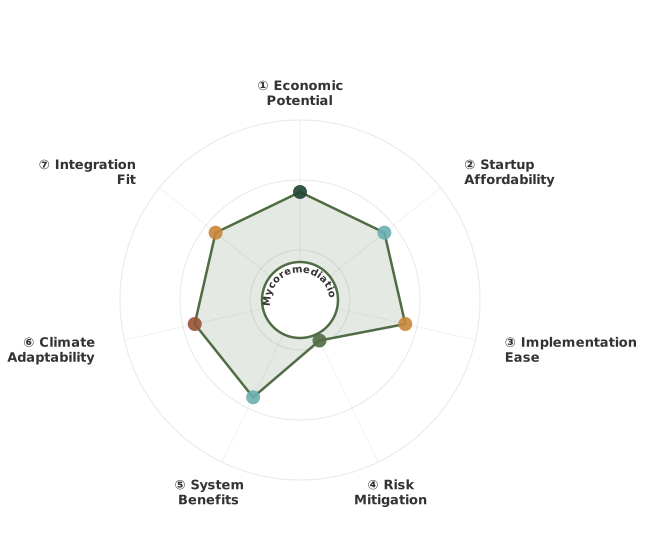
How These Traits Are Calculated
Trait dimensions are ordered clockwise starting from the top of the chart (12 o'clock position):
1. Economic Potential
Financial returns, annual value, and break-even timeline
WHAT: Evaluates financial viability by combining net annual value ($/ha from savings, income, and amortized harvests) with break-even timeline showing when practices pay for themselves.
WHY: Farmers need clear ROI understanding before committing resources. Fast payback (≤3 years) with strong returns (≥$300/ha) enables confident adoption, while long timelines (>10 years) restrict adoption to well-funded operations willing to wait for returns.
HOW: Calculated from net annual value in $/ha and break-even years. Exceptional (≥2.6): fast ROI ≤3 years + high value ≥$300/ha. Typical (1.8-2.5): moderate returns or longer timelines. Limited (<1.8): marginal economics or very long payback >10 years.
2. Startup Affordability
Initial investment costs and financial barrier to entry
WHAT: Measures financial barrier to entry through startup costs for equipment, infrastructure, consulting, and materials. Inverted scoring: lower costs = higher scores = more accessible adoption.
WHY: Affordability determines who can adopt. Low-cost practices (<$250/ha) enable widespread adoption across diverse scales, while high costs (>$2,500/ha) limit adoption to well-capitalized operations, creating barriers that slow regenerative transition.
HOW: Calculated from initial investment parsed from practice content. Inverted scoring: Exceptional (≥2.6): minimal investment <$250/ha. Typical (1.8-2.5): moderate costs $250-2,500/ha. Limited (<1.8): high barrier >$2,500/ha.
3. Implementation Ease
Learning curve and specialized knowledge required
WHAT: Measures how much learning, planning, and specialized knowledge a practice requires. Simpler practices with fewer steps score higher, while complex practices requiring extensive training or specialized resources score lower.
WHY: Complex practices create adoption barriers even when economically viable. Straightforward practices enable faster adoption and broader participation, while those requiring extensive training, timing precision, or specialized equipment limit who can succeed.
HOW: Evaluated by measuring documentation length and identifying complexity markers like location-specific requirements, seasonal timing windows, specialized skills, and dedicated equipment needs. Exceptional (≥2.6): straightforward practices with minimal prerequisites. Typical (1.8-2.5): moderate learning curve with some specialized needs. Limited (<1.8): steep learning curve requiring significant training or resources.
4. Risk Mitigation
Identified financial and ecological risk assessment
WHAT: Evaluates documented risks across financial (investment loss, market volatility) and ecological (crop failure, pest outbreaks) domains. Inverted scoring: fewer risks = higher scores.
WHY: Understanding risk exposure helps farmers make informed decisions. Low-risk practices allow confident implementation, while high-risk practices require careful planning and contingency resources. Risk transparency prevents costly failures.
HOW: Calculated from identified risks in practice content. Inverted scoring: Exceptional (≥2.6): ≤2 risks with manageable severity. Typical (1.8-2.5): 3-5 moderate risks. Limited (<1.8): 6+ risks or severe exposure.
5. System Benefits
How many ways the practice improves your land simultaneously
WHAT: Measures how many aspects of land health improve at once—carbon storage, soil quality, erosion control, water absorption, and biodiversity. Practices that improve multiple areas simultaneously create compounding benefits where each improvement reinforces the others.
WHY: The best practices solve multiple problems at once. For example, addressing erosion simultaneously builds carbon and improves water infiltration, creating a resilient system with positive feedback loops. Single-benefit approaches miss these compound transformation opportunities.
HOW: Evaluated across five key outcomes: carbon sequestration, soil organic matter increase, erosion reduction, water infiltration improvement, and biodiversity enhancement. Exceptional (≥2.6): high carbon storage (>8 t/ha/yr), improvements across 4-5 areas, transformative outcomes. Typical (1.8-2.5): moderate carbon (3-8 t/ha/yr), improvements across 2-3 areas. Limited (<1.8): modest impact (<3 t/ha/yr), single-area focus only.
6. Climate Adaptability
Geographic applicability across Köppen climate zones
WHAT: Evaluates geographic applicability by assessing how many Köppen climate zones successfully support a practice and what adaptation requirements are needed. Measures breadth of climates where farmers can implement with minimal to moderate modifications.
WHY: Universal practices working across diverse climates enable more farmers to adopt regenerative approaches. Practices limited to single climate types (only Mediterranean, only tropical) restrict adoption and slow global transition. Adaptability determines whether a practice serves niche regions or offers broad transformation.
HOW: LLM evaluation of regional success stories, Köppen zone coverage, and adaptation needs. Exceptional (≥2.6): 5+ zones or 4+ climate types, 3+ continents, minimal adaptation. Typical (1.8-2.5): 3-4 zones or 2-3 types, 2 continents, moderate adaptation. Limited (<1.8): 1-2 zones, single region, significant adaptation or highly specialized.
7. Integration Fit
How well this practice combines with others you're doing
WHAT: Measures how well a practice combines with other regenerative practices you might be doing. Some practices work as building blocks that make many other practices easier or more effective, while others work best on their own.
WHY: Practices that combine well with many others create more value on your farm. For example, cover cropping enables no-till, improves grazing, supports crop diversity, and helps water management—making all of them work better together. This helps you build a coherent system rather than juggling disconnected practices.
HOW: Evaluated by identifying which practices combine well and how strong those combinations are. 'Ideally Suited' means strong combinations where practices reinforce each other (practice A makes B easier, while B makes A more effective). 'Adequate' means complementary benefits that work well together. Exceptional (≥2.6): combines well with 6+ practices, serves as a building block. Typical (1.8-2.5): combines with 3-5 practices. Limited (<1.8): 1-2 practices or works best alone.
Going Deeper
1
WHY - The Benefits
Mycoremediation offers a profound ecological benefit by leveraging fungal capabilities to neutralize environmental toxins, thereby restoring degraded lands for more productive and sustainable use. This approach aligns with regenerative principles by focusing on natural...
Mycoremediation offers a profound ecological benefit by leveraging fungal capabilities to neutralize environmental toxins, thereby restoring degraded lands for more productive and sustainable use. This approach aligns with regenerative principles by focusing on natural...
WHY - The Benefits
Mycoremediation offers a profound ecological benefit by leveraging fungal capabilities to neutralize environmental toxins, thereby restoring degraded lands for more productive and sustainable use. This approach aligns with regenerative principles by focusing on natural...
Mycoremediation offers a profound ecological benefit by leveraging fungal capabilities to neutralize environmental toxins, thereby restoring degraded lands for more productive and sustainable use. This approach aligns with regenerative principles by focusing on natural...
Soil Health Benefits
Mycoremediation directly enhances soil health by breaking down organic pollutants that inhibit microbial activity. As fungi digest pesticides, hydrocarbons, and other contaminants, they create a more hospitable environment for beneficial soil bacteria and other microorganisms. The secretion of enzymes to degrade pollutants also stimulates overall microbial community activity, increasing nutrient cycling and availability for plants.
The process improves soil structure by increasing organic matter. As fungi break down complex organic compounds, they release simpler molecules that contribute to soil organic matter formation. Mycelial networks themselves form a physical matrix that binds soil particles together into stable aggregates, improving aeration, water infiltration, and water-holding capacity. This is especially beneficial on soils that have been degraded by pollution, which often have poor physical structure.
Mycoremediation can also help in the remediation of existing heavy metal contamination. Fungi can accumulate or immobilize heavy metals, reducing their bioavailability and toxicity to plants and other organisms. It is important to note that this is a cleanup strategy for legacy pollution and does not condone the introduction of new contaminants into the ecosystem. While this doesn't eliminate the metals from the ecosystem, it sequesters them safely within fungal biomass or converts them to less mobile forms, preventing their uptake by food crops and their further leaching into groundwater.
Finally, by restoring a healthier soil environment, mycoremediation lays the groundwork for increased biodiversity. A detoxified soil can support a richer community of earthworms, beneficial insects, and a more diverse array of soil microorganisms, which are the foundation of a resilient agricultural system.
Economic Benefits
The economic benefits of mycoremediation are significant, primarily through cost savings, increased land value, and reduced long-term liabilities. Traditional methods of cleaning up contaminated land, such as excavation and landfilling, are extremely expensive, often costing hundreds of dollars per cubic meter or cubic yard. Mycoremediation, while requiring upfront investment, is typically a more cost-effective alternative for large-scale pollution cleanup.
By restoring contaminated soil or water, mycoremediation makes land usable again for agriculture, forestry, or conservation. This can dramatically increase land value and unlock its productive potential. Farms can reclaim land previously rendered unusable by chemical spills, creating new opportunities for cropping, grazing, or agroforestry.
Furthermore, by reducing or eliminating persistent pollutants, mycoremediation mitigates long-term environmental liabilities. This can be crucial for farms that are either managing historical contamination or are concerned about future environmental regulations and cleanup responsibilities. Reducing their environmental footprint also enhances their public image and marketability, particularly for products marketed as sustainably or regeneratively produced.
While remediation can take time, the ongoing costs are often lower than conventional methods, as it relies on natural biological processes rather than intensive energy inputs. For farms needing to remediate specific contaminated areas, investing in mycoremediation can prevent future losses and create a more secure, valuable asset.
Regenerative Systems Fit
Mycoremediation is classified as a Context-Dependent practice within regenerative agriculture, meaning its application can be either regenerative or extractive depending on the planning and execution. In its regenerative application, it serves as a powerful tool for restoring ecological function, particularly on degraded or contaminated lands.
When applied to contaminated sites on a farm, mycoremediation actively supports Principle 1: Minimize Soil Disturbance. Instead of excavating and removing soil—a highly disruptive process—mycoremediation utilizes fungi to work in situ, breaking down or sequestering pollutants directly within the soil matrix. This preserves the existing soil structure and biological communities to a much greater extent than mechanical remediation.
It indirectly supports Principle 2: Maximize Crop Diversity. By detoxifying soils, mycoremediation creates an environment where a wider array of plant species can thrive. This enables the establishment of diverse cover crops, forage mixes, or even cash crops that were previously inhibited by the presence of toxic substances. A more diverse plant community naturally leads to a more diverse soil biology.
Mycoremediation also contributes to Principle 3: Keep Soil Covered. By restoring soil health and enabling plant growth, it facilitates the continuous covering of the soil surface with living vegetation, mulch, or fungal mycelium. This protects the soil from erosion and maintains a hospitable environment for soil organisms.
The practice directly aids in Principle 4: Maintain Living Roots. The goal of mycoremediation is to create soil conditions that support robust plant growth, thus ensuring the presence of living roots for as long as possible. Healthy root systems are vital for soil structure, nutrient cycling, and carbon sequestration, all of which are central to regenerative agriculture.
While not directly involving livestock, the remediation of pastures or forage lands through mycoremediation can improve the quality and safety of grazing land, indirectly supporting Principle 5: Integrate Livestock. Remediated land can safely support livestock grazing and nutrient cycling without concern for pollutant uptake.
However, for mycoremediation to be truly regenerative, careful species selection and management are critical. Using non-native or invasive fungal species could create new ecological problems. Ineffective remediation leaves pollutants mobile, potentially spreading them further. The practice is most regenerative when it restores the land's capacity to function ecologically and agriculturally, paving the way for other regenerative practices. It's not a solution for simply 'disposing' of waste, but for truly healing damaged land.
Sources behind this view
Videos & Podcasts
-
Provides comprehensive strategies for soil remediation including bio-remediation with fungi/bacteria, phytoremediation (sunflowers, mustard, comfrey), charged biochar, sheet mulching, balanced compost
-
Paul Stamets' mycoremediation uses fungi, like oyster mushrooms, to clean contaminated land. In a Washington state example, mushroom inoculation of a diesel-soaked soil pile transformed it into a thri
-
Explores soil microbiology, detailing the roles of bacteria and fungi in soil structure, nutrient cycling, and plant health. Discusses how management practices and inputs like synthetic fertilizers an

-
Contaminated soils can often be remediated using fungi, phyto-remediation (e.g., hemp), and microbial methods. Forensic analysis is key to determining feasibility and timeframes, with Soil Food Web pr

Community
-
Explores Paul Stamets' research on mycoremediation, detailing how fungi can break down pesticides, toxins, and E. coli. Emphasizes the role of organic matter and fungi in soil health and the potential
Read more (opens in new window) permies.com -
Mycoremediation uses fungi and their mycorrhizal networks to clean up toxic environmental damage, such as post-wildfire residue, by recycling nutrients and breaking down pollutants.
Read more (opens in new window) ucanr.edu -
Paul Stamets scientifically trains fungi, like oyster mushrooms, to break down pollutants such as herbicides, pesticides, and nerve gasses through a controlled cultivation process, demonstrating effec
Read more (opens in new window) permies.com -
Myco-remediation uses mushrooms like Oyster and Red Wine Cap to clean urban contaminants such as pesticides and oil. Heavy metals can also be targeted, but they become toxic. Success requires case-by-
Read more (opens in new window) smallfarms.cornell.edu
Research
-
Mechanism and Application of Microbial Amendments in Saline–Alkali Soil Restoration: A Review (opens in new window)
This study found: Beneficial microbes offer an eco-friendly solution for salty/alkaline soils, improving soil health and boosting crop yields by 15-42% globally. Combinations with biochar/organic fertilizers enhance re
-
Mycoremediation (opens in new window)
This study found: Mycoremediation uses fungi to clean up soil and water pollution. It's a cost-effective, eco-friendly, and efficient method for breaking down a wide range of contaminants.
-
Synergistic remediation of continuous cropping obstacles in facility agriculture: insights from the Stropharia rugosoannulata-Ornamental Sunflower Rotation System (opens in new window)
This study found: Rotating wine cap mushrooms with sunflowers and adding mushroom compost improved greenhouse soil health, reducing acidity and salt, boosting phosphorus, and shifting microbial communities towards bene
-
Integrating waste valorization and symbiotic microorganisms for sustainable bioremediation of metal(loid)-polluted soils. (opens in new window)
This study found: Processed olive waste combined with beneficial soil fungi effectively cleaned up metal-contaminated soils, improving soil health and reducing toxic metal uptake by wheat.
2
WHERE - Regional Considerations
Mycoremediation's effectiveness is highly dependent on local environmental conditions, particularly temperature, moisture, and the specific contaminants present. Fungal growth and enzymatic activity are sensitive to these factors, necessitating careful consideration of...
Mycoremediation's effectiveness is highly dependent on local environmental conditions, particularly temperature, moisture, and the specific contaminants present. Fungal growth and enzymatic activity are sensitive to these factors, necessitating careful consideration of...
WHERE - Regional Considerations
Mycoremediation's effectiveness is highly dependent on local environmental conditions, particularly temperature, moisture, and the specific contaminants present. Fungal growth and enzymatic activity are sensitive to these factors, necessitating careful consideration of...
Mycoremediation's effectiveness is highly dependent on local environmental conditions, particularly temperature, moisture, and the specific contaminants present. Fungal growth and enzymatic activity are sensitive to these factors, necessitating careful consideration of...
Click Here to Look up your Region if you don't already know it
Temperate Regions (Humid and Dry)
Representative Locations: Much of Europe, North America (e.g., Midwest and Northeast US, Southern Canada), parts of East Asia (e.g., Japan, Eastern China), Australia (e.g., Southern Victoria, Tasmania). Climate Context: Moderate temperatures with distinct seasons; precipitation varies from ample to semi-arid. USDA Zones 4-8, Köppen Cfb, Cfa, Csa, Csb. Mycoremediation Suitability: Generally good, especially for organic pollutants like petroleum products and pesticides. Many effective species (e.g., Pleurotus ostreatus, Trametes versicolor) thrive in these conditions. May require supplemental moisture in drier temperate zones or protection from extreme winter cold.
Arid and Semi-Arid Regions
Representative Locations: Western USA, North Africa, Central Asia, parts of Australia, Southwest Africa. Climate Context: Low rainfall, high evaporation rates, significant diurnal temperature variations. USDA Zones 3-9, Köppen BWh, BSk. Mycoremediation Suitability: Challenging due to water scarcity. Requires careful site management to maintain optimal moisture levels for fungal growth, potentially through irrigation or soil moisture retention amendments. Species adapted to drought conditions or those that can form resilient spores are crucial. Focus may be on soil amendments inoculated with fungi to treat localized spills rather than broad-scale in-situ treatment.
Tropical and Subtropical Regions
Representative Locations: Southeast Asia, Central Africa, South America (e.g., Amazon Basin, Brazil), Southern US (e.g., Florida), coastal Australia. Climate Context: High temperatures year-round, high humidity with distinct wet/dry seasons or consistent high rainfall. Köppen Af, Am, Aw, Cfa. Mycoremediation Suitability: Excellent for fungal growth assuming adequate moisture. High temperatures can accelerate degradation of organic pollutants. However, extreme heat and high humidity can also promote the growth of competing, non-degrading fungi or pathogens. Careful selection of thermotolerant and robust fungal species is vital. Mycelial mats can be vulnerable to extreme UV radiation; soil cover or surface amendments may be needed.
Cold and Boreal Regions
Representative Locations: Northern Canada, Siberia, Scandinavia, Northern Europe. Climate Context: Long, cold winters; short, mild summers. USDA Zones 1-5, Köppen Dfc, Dwd, ET. Mycoremediation Suitability: Limited by short growing seasons and freezing temperatures. Fungal activity largely ceases below 5-10°C (41-50°F). Remediation may be slow or require special techniques like pre-inoculating soil amendments that can be applied seasonally, or using fungi that produce resilient survival structures (e.g., sclerotia, spores) that can reactivate upon warming. Passive bioremediation over multiple years is often necessary.
Coastal and Estuarine Regions
Representative Locations: Coastal zones worldwide, river deltas, mangrove areas. Climate Context: Salinity variations, tidal influences, specific soil types (e.g., salt marshes, alluvial sediments). Mycoremediation Suitability: Requires fungi tolerant to salinity and varying water levels. Some species exhibit halotolerance and can be effective in treating pollutants in brackish or saltwater environments. Phytoremediation (plant-assisted remediation) combined with mycoremediation can be particularly effective, using plants to stabilize soil and fungi to break down contaminants in the root zone.
Urban and Industrial Areas
Representative Locations: Brownfield sites, former industrial zones, highway embankments. Climate Context: Highly variable with artificial substrates, compacted soils, localized pollution hotspots. Mycoremediation Suitability: Highly dependent on specific contamination profile and soil conditions. Often requires careful site assessment and may benefit from inoculation of specialized fungal strains or consortia. Can be used effectively in contained systems (e.g., biofilters for industrial runoff) or for localized soil hotspots.
3
HOW - Implementation Process
HOW - Implementation Process
Successful mycoremediation hinges on a thorough understanding of the contaminated site and the chosen fungal species. Key prerequisites include:
- Site Assessment: Identify and quantify the specific contaminants (e.g., types of pesticides, petroleum products, heavy metals). Understand soil type, pH, moisture content, temperature ranges, and existing microbial community.
- Fungal Species Selection: Choose fungi known to degrade or absorb the target contaminants and that are adapted to the local environmental conditions (temperature, moisture, salinity, pH). Consider native species for reduced ecological risk.
- Contaminant Concentration: Extremely high concentrations of some pollutants can be toxic even to remediation fungi. Pre-treatment or dilution may be necessary.
- Resource Availability: Ensure access to appropriate fungal cultures, substrate materials (e.g., agricultural waste), and potentially equipment for application and monitoring.
- Clear Objectives: Define what constitutes successful remediation (e.g., percentage reduction of contaminant, improvement in soil health indicators).
Phase 1: Site Preparation and Inoculum Preparation
Site Preparation: Prepare the contaminated area to receive fungal inoculum. This may involve:
- Light surface cultivation or aeration to improve oxygen penetration, if soil is severely compacted and anaerobic. This shallow preparation is specific to creating an ideal environment for fungal inoculation and should avoid deep disruption of the soil profile.
- Ensuring adequate moisture. If soil is dry, pre-moistening the area to field capacity is crucial.
- Removing gross contamination like debris or waste materials if feasible without major soil disturbance.
Inoculum Preparation: Cultivate the chosen fungal species. This typically involves:
- Using pure fungal cultures (mycelium) obtained from reputable labs or culture collections.
- Growing the fungi on a sterile, nutrient-rich substrate, commonly agricultural byproducts like sawdust, grain, straw, or wood chips. This "substrate inoculum" can be in the form of spawn (grain-based, fast-spreading) or bulk substrate inoculant (e.g., mycelium-infused sawdust).
- For large-scale applications, inocula may be grown in bulk on sterilized substrates, ensuring a high density of active mycelium. The ratio of inoculum to contaminated material is critical.
Phase 2: Application of Fungal Inoculum
This phase involves distributing the prepared fungal inoculum onto or into the contaminated soil. Methods vary based on scale and type of contaminant:
- Direct Soil Inoculation: Mix the substrate inoculum directly into the top 10-15 cm (4-6 inches) of contaminated soil. This is suitable for dispersed soil contamination. The ratio of inoculum to contaminated soil typically ranges from 1:10 to 1:100, depending on fungal efficacy and contaminant concentration.
- Mycelial Mats/Compost Teas: For surface contamination or water bodies, inocula can be spread as mats of mycelium grown on a substrate (e.g., straw bales), or applied as a liquid spawn (mycelial slurry).
- Burial or Encapsulation: For localized contamination (e.g., spills), contaminated soil can be excavated, mixed with inoculated substrate, and then returned to the site, or placed in permeable bags/piles for fungal colonization.
- Biofilters: For contaminated water, contaminated water can be passed through beds of inoculated substrate material (e.g., wood chips, straw) where fungi trap and degrade pollutants.
Phase 3: Environmental Management for Fungal Growth
Once applied, the fungi require specific environmental conditions to thrive and effectively remediate contaminants. This phase is critical for success:
- Moisture Management: Maintain optimal soil moisture, typically between 40-60% of water holding capacity. This may require irrigation or covering the site to prevent excessive evaporation. Too much water can lead to anaerobic conditions, inhibiting fungal activity.
- Temperature Control: Ensure the site remains within the optimal temperature range for the chosen fungal species. In colder climates, this may involve site selection (sun-exposed areas) or temporal application (spring/summer). In warmer climates, shading might be needed to prevent overheating.
- Oxygen Availability: Most contaminant-degrading fungi are aerobic. Avoid practices that lead to soil anaerobiosis, such as over-compaction or waterlogging. Light surface aeration might be beneficial for severely compacted soils.
- Nutrient Supplementation: In some cases, especially with nutrient-poor contaminated soils, a small amount of supplemental organic matter (e.g., compost, agricultural waste) can provide an energy source for the fungi and support their growth without adding excessive nutrients that could fuel competing organisms.
- Protection: Protect the inoculated area from disturbance (e.g., grazing animals, vehicle traffic) and from invasive species. For surface applications, mulch can help retain moisture and provide initial protection.
Phase 4: Monitoring and Evaluation
Regular monitoring is essential to track the progress of remediation and adjust management as needed.
- Contaminant Level Testing: Periodically collect soil or water samples and analyze for the reduction in target contaminants using established laboratory methods. Frequency depends on the contaminant type and expected degradation rate.
- Fungal Colonization Assessment: Observe for visual signs of fungal growth (mycelial expansion) on the surface or within the substrate.
- Soil Health Indicators: Monitor soil pH, organic matter content, microbial community activity (e.g., respiration tests), earthworm populations, and plant growth in remediated areas.
- Timeline: Remediation timelines vary widely, from weeks for easily degradable compounds in optimal conditions to months or even years for complex pollutants or challenging environments.
Transition Timeline & Phase-Out Strategy (if applicable)
Mycoremediation is typically not a long-term input that needs phasing out in the traditional sense of synthetic chemicals. Instead, the goal is to achieve a level of remediation where the site is safe for beneficial agriculture or ecosystem function. Once target contaminant levels are reached:
- Cease Active Inoculation: Fungal activity will naturally decline as contaminants decrease or competition from native soil organisms increases.
- Establish Permanent Cover: Seed the remediated area with diverse perennial forage, native plants, or cover crops to maintain soil health and prevent future contamination. This implements Principle 3 and 4.
- Integrate Conventional Regenerative Practices: If the area is now safe, reintroduce livestock using adaptive grazing (Principle 5) or plant cash crops with no-till methods (Principle 1, 2).
- Long-Term Monitoring: Periodically test soil and vegetation for contaminant levels, especially if the source of contamination is ongoing or if there's a risk of re-contamination. The goal is to ensure the land remains healthy and productive.
Sources behind this view
Videos & Podcasts
-
Paul Stamets' mycoremediation uses fungi, like oyster mushrooms, to clean contaminated land. In a Washington state example, mushroom inoculation of a diesel-soaked soil pile transformed it into a thri
-
Provides comprehensive strategies for soil remediation including bio-remediation with fungi/bacteria, phytoremediation (sunflowers, mustard, comfrey), charged biochar, sheet mulching, balanced compost
-
The Amazon Myco Renewal Project in Ecuador uses fungi for bioremediation of oil spills and empowers communities through mushroom cultivation training, emphasizing local strains.
-
In dry climates, fungi and soil aggregation are key to moisture retention. Protect soil with cover crops/mulch, avoid bare soil, and use compost/extracts for inoculation. Fungi aid bioremediation in s
![Thumbnail for Fungi and the Soil Food Web | Farming with Fungi Part 1 [Replay]](/static/thumbnails/07wQOHf2Hm8.jpg)
Community
-
Explores Paul Stamets' research on mycoremediation, detailing how fungi can break down pesticides, toxins, and E. coli. Emphasizes the role of organic matter and fungi in soil health and the potential
Read more (opens in new window) permies.com -
Outlines a plan to use local shelf fungi from the Western Ghats to mycoremediate pesticide- and herbicide-contaminated school grounds in Southern India, turning waste into safe compost.
Read more (opens in new window) permies.com -
Mycoremediation uses fungi and their mycorrhizal networks to clean up toxic environmental damage, such as post-wildfire residue, by recycling nutrients and breaking down pollutants.
Read more (opens in new window) ucanr.edu -
Fungi and mushrooms naturally decompose organic matter, support soil and forest health, and can be used for biofiltration and bioremediation. Their application is context-dependent, requiring clear go
Read more (opens in new window) smallfarms.cornell.edu
Research
-
Synergistic remediation of continuous cropping obstacles in facility agriculture: insights from the Stropharia rugosoannulata-Ornamental Sunflower Rotation System (opens in new window)
This study found: Rotating wine cap mushrooms with sunflowers and adding mushroom compost improved greenhouse soil health, reducing acidity and salt, boosting phosphorus, and shifting microbial communities towards bene
-
Restoration of urban agriculture soil by autochthonous fungal biodiversity (opens in new window)
This study found: Native soil fungi can clean up oil-related pollutants (PAHs) in urban farm soils. A mix of fungi, including common types like Trichoderma, reduced contaminants and soil toxicity, showing promise for r
-
Mycoremediation (opens in new window)
This study found: Mycoremediation uses fungi to clean up soil and water pollution. It's a cost-effective, eco-friendly, and efficient method for breaking down a wide range of contaminants.
-
Integrating waste valorization and symbiotic microorganisms for sustainable bioremediation of metal(loid)-polluted soils. (opens in new window)
This study found: Processed olive waste combined with beneficial soil fungi effectively cleaned up metal-contaminated soils, improving soil health and reducing toxic metal uptake by wheat.
From the Web
-
Discusses myco-remediation using mushrooms like Oyster and Red Wine Cap to clean urban contaminants such as pesticides and oil, emphasizing the need for case-by-case planning and lab testing.
4
Know the Debate
Mycoremediation offers a regenerative approach to cleaning contaminated land, but its effectiveness and feasibility depend greatly on specific circ...
Know the Debate
Mycoremediation offers a regenerative approach to cleaning contaminated land, but its effectiveness and feasibility depend greatly on specific circ...
Mycoremediation offers a regenerative approach to cleaning contaminated land, but its effectiveness and feasibility depend greatly on specific circumstances. In humid temperate and tropical regions with adequate moisture, fungi can effectively break down organic pollutants. However, in arid zones or cold climates, remediation is slower and requires careful moisture and temperature management. Costs vary significantly with scale, ranging from $1,000-$6,000 per hectare for small projects to over $20,000 for large-scale remediation, with ongoing monitoring adding to expenses. Successful application relies heavily on tailored species selection, site assessment, and a patient, iterative management approach.
How effective is mycoremediation against different pollutants?
Degrades organics, sequesters metals
Fungi use enzymes to break down organic pollutants like pesticides and petroleum, and absorb or stabilize heavy metals. This allows for safer land use, though metals are not eliminated.
Sources behind this view
Sources behind this view
Videos & Podcasts
-
Mycoremediation uses fungi to break down chemical pollutants and enhance disease suppression in soils. The process involves identifying, culturing, and applying tolerant fungi, though it requires time, cost, and careful management, especially for large areas.
-
Peter McCoy explains fungi's role in micromediation, highlighting their ability to degrade chemical contaminants through oxidation but noting limitations with heavy metals, which they can only move or stabilize, not eliminate.

Research
-
Mycoremediation (opens in new window)
This study found: This chapter explores how fungi can be used to clean up pollution in our soil and water. This process, called mycoremediation, is a promising and natural way to deal with environmental toxins. It's often cheaper, better for the environment, and more effective than older cleanup methods because fungi can break down many different kinds of pollutants. The chapter will look at which fungi work best, how they do their job, where they've been used successfully, and what challenges still need to be overcome to make this cleanup strategy even better.
-
Mycoremediation to Remove Heavy Metal Pollution in Post-Mining Areas for Farmland Utilization (opens in new window)
This study found: As farmland shrinks, former mine sites are being considered for agriculture. However, these sites can be heavily polluted with toxic metals like lead and mercury, posing health risks. This review highlights 'mycoremediation' – using specific types of fungi (like Aspergillus, Penicillium, Fusarium, and even baker's yeast) – as a cost-effective and eco-friendly way to clean up these metal-contaminated soils. The fungi can remove metals through processes like binding them to their structures (biosorption) or taking them inside their cells (bioaccumulation), making the land safer for farming.
From the Web
-
Mycoremediation uses fungi to break down contaminants like herbicides. Fungi initiate degradation, then attract bacteria for further breakdown, a process more effective in the wild than in labs.
Variable effectiveness, metal limitations
While fungi excel at breaking down organic pollutants, their effectiveness against heavy metals is limited to sequestration or stabilization, not elimination. Results can also vary significantly based on environmental factors.
Sources behind this view
Sources behind this view
Videos & Podcasts
-
Peter McCoy explains fungi's role in micromediation, highlighting their ability to degrade chemical contaminants through oxidation but noting limitations with heavy metals, which they can only move or stabilize, not eliminate.
-
Explores the complex challenges of mycoremediation for petroleum contamination in Ecuador, discussing the limitations of current research, the need for indigenous microbes, containment strategies, funding, liability, and the difficulties of field application versus lab results.
Research
-
Occurrence and microbial remediation of polycyclic aromatic hydrocarbons and heavy metals pollution in soils. (opens in new window)
This study found: Soils in industrial areas are often contaminated with both oil-based pollutants (like PAHs) and toxic heavy metals. When these pollutants are together, they can be even more harmful and harder to clean up than when they are separate. This review looks at how microbes (bacteria and fungi) can be used to clean these 'co-polluted' soils. It discusses using specific microbes, adding compost (which can include things like biochar, worm castings, and beneficial root fungi), and even using specially designed microbes. The review explains that these methods work by making the pollutants less available to harm living things, often through chemical attractions and by pollutants sticking to organic matter. While lab results are promising, cleaning up these soils in the real world is challenging due to pollutants being hard to access, safety concerns with engineered microbes, and cost. More research is needed to make these cleanup methods practical for farms and industrial sites.
From the Web
-
Fungi and their mycelial networks are crucial for soil health, carbon sequestration, and erosion control. Agroecological and organic farming methods, including compost and cover crops, support fungal activity, enhancing soil fertility and ecosystem services.
Making Sense of the Differences
Fungal enzymes readily degrade many organic pollutants, while their action on heavy metals is primarily sequestration or immobilization. Specificity of fungal species to contaminant type and environmental conditions (pH, temperature, moisture) dictates success. Long-term effectiveness for heavy metals hinges on preventing re-mobilization and considering site-specific risks.
What are the practical limitations for mycoremediation?
Testing costs and field application challenges
Real-world mycoremediation faces challenges with contaminant accessibility, high testing costs, and difficulties in replicating lab successes in the field. Success depends on careful site-specific planning and management.
Sources behind this view
Sources behind this view
Videos & Podcasts
-
Mycoremediation uses fungi to break down chemical pollutants and enhance disease suppression in soils. The process involves identifying, culturing, and applying tolerant fungi, though it requires time, cost, and careful management, especially for large areas.
-
Explores the complex challenges of mycoremediation for petroleum contamination in Ecuador, discussing the limitations of current research, the need for indigenous microbes, containment strategies, funding, liability, and the difficulties of field application versus lab results.
Research
-
Occurrence and microbial remediation of polycyclic aromatic hydrocarbons and heavy metals pollution in soils. (opens in new window)
This study found: Soils in industrial areas are often contaminated with both oil-based pollutants (like PAHs) and toxic heavy metals. When these pollutants are together, they can be even more harmful and harder to clean up than when they are separate. This review looks at how microbes (bacteria and fungi) can be used to clean these 'co-polluted' soils. It discusses using specific microbes, adding compost (which can include things like biochar, worm castings, and beneficial root fungi), and even using specially designed microbes. The review explains that these methods work by making the pollutants less available to harm living things, often through chemical attractions and by pollutants sticking to organic matter. While lab results are promising, cleaning up these soils in the real world is challenging due to pollutants being hard to access, safety concerns with engineered microbes, and cost. More research is needed to make these cleanup methods practical for farms and industrial sites.
From the Web
-
Discusses myco-remediation using mushrooms like Oyster and Red Wine Cap to clean urban contaminants such as pesticides and oil, emphasizing the need for case-by-case planning and lab testing.
Time, cost, and need for specialized resources
Successful mycoremediation requires substantial time for degradation, investment in specialized fungi and testing, and careful site management to ensure optimal conditions for fungal activity.
Sources behind this view
Sources behind this view
Videos & Podcasts
-
Mycoremediation uses fungi to break down chemical pollutants and enhance disease suppression in soils. The process involves identifying, culturing, and applying tolerant fungi, though it requires time, cost, and careful management, especially for large areas.
-
The Amazon Myco Renewal Project in Ecuador uses fungi for bioremediation of oil spills and empowers communities through mushroom cultivation training, emphasizing local strains.
-
Mycoremediation using oyster mushrooms for petroleum hydrocarbons and King's Tropharia for agricultural runoff is a promising pollutant removal technology. Challenges include substrate breakdown (within 6 months) requiring continuous food sources for mycelium.
Research
-
Mycoremediation (opens in new window)
This study found: This chapter explores how fungi can be used to clean up pollution in our soil and water. This process, called mycoremediation, is a promising and natural way to deal with environmental toxins. It's often cheaper, better for the environment, and more effective than older cleanup methods because fungi can break down many different kinds of pollutants. The chapter will look at which fungi work best, how they do their job, where they've been used successfully, and what challenges still need to be overcome to make this cleanup strategy even better.
Making Sense of the Differences
The practical application of mycoremediation is constrained by the cost of laboratory analysis, the time and labor required for site preparation and inoculation, and the need for ongoing management to maintain optimal fungal activity. High initial costs for specialized cultures and testing, coupled with potentially long remediation timelines, can make it economically challenging for some operations, especially where contaminant removal is not complete or where sites are highly complex.
5
HOW MUCH - Costs & Investment
Note: Costs shown in USD; multiply by local labor and material cost indices for your region. Labor costs vary significantly internationally.
Note: Costs shown in USD; multiply by local labor and material cost indices for your region. Labor costs vary significantly internationally.
HOW MUCH - Costs & Investment
Note: Costs shown in USD; multiply by local labor and material cost indices for your region. Labor costs vary significantly internationally.
Note: Costs shown in USD; multiply by local labor and material cost indices for your region. Labor costs vary significantly internationally.
Note: All costs are based on recent US economic data (2024–2026) and may vary substantially by region based on local labor rates, material costs, and regulatory requirements.
Assessment & Planning
Developing a professional site remediation strategy is the foundational capital expenditure. For small-scale projects (under 50 acres (20 ha)), initial soil testing and site-specific biology design range from $208–$834 per acre ($514–$2,061/ha). Mid-size operations (50–500 acres (20–202 ha)) benefit from economies of scale during the survey process, lowering costs to $156–$625 per acre ($385–$1,544/ha). Large-scale operations (500+ acres) focus specifically on hotspot mapping and localized treatment, pricing out at $104–$417 per acre ($257–$1,030/ha). These costs include professional consultation and diagnostic lab results necessary for determining the fungal species required for specific pollutant types.
Fungal Culture & Spawn
The biological agent costs depend heavily on the source. Small-scale projects, which typically rely on high-quality, pre-colonized, ready-to-use fungal spawn, range from $313–$1,250 per acre ($773–$3,089/ha). Mid-size operations that source spawn in bulk quantities from regional labs see costs ranging from $261–$938 per acre ($645–$2,318/ha). Large-scale operations that invest in an onsite spawn production lab can reduce ongoing biological input costs to $156–$625 per acre ($385–$1,544/ha) by utilizing in-house culture maintenance and inoculation techniques.
Substrate Materials
Remediation requires carbon-rich substrates—such as wood chips, straw, or grain husks—to sustain mycelial expansion. For small operations, purchasing bagged or local premium feedstock ranges from $104–$521 per acre ($257–$1,287/ha). Mid-size projects, which often coordinate with local agricultural residues, spend $83–$417 per acre ($205–$1,030/ha). Large-scale projects, utilizing heavy machinery for bulk application, range from $52–$313 per acre ($128–$773/ha), though this heavily depends on local biomass proximity and the fuel costs associated with transport.
Labor & Application
The physical deployment of mycelium represents a significant operational cost. Small-scale projects are labor-intensive, often requiring manual hand-inoculation, costing $521–$2,084 per acre ($1,287–$5,150/ha). Mid-size operations leverage tractor-mounted manure spreaders or modified tillage equipment for automation, reducing labor to $417–$1,667 per acre ($1,030–$4,119/ha). Large-scale operations utilize mechanized high-volume sprayers or spreaders, bringing labor and maintenance costs to $313–$1,250 per acre ($773–$3,089/ha), though rigorous monitoring remains a fixed labor expense.
Monitoring & Analytical Testing
Professional laboratory testing is legally required to verify contaminant reduction levels. Small-scale, highly targeted sampling cycles range from $313–$1,042 per acre ($773–$2,575/ha). Mid-size projects, requiring broader grid sampling to establish representative data, cost $261–$834 per acre ($645–$2,061/ha). Large-scale operations utilize multi-year, volume-discounted analytical contracts, costing $156–$521 per acre ($385–$1,287/ha) to maintain regulatory compliance files over the lifetime of the project.
Equipment & Logistics
Rental or purchase of specialized gear, such as specialized compost turners, pneumatic injectors, or field monitoring sensors, impacts cash flow. Small-scale projects often spend $208–$625 per acre ($514–$1,544/ha) on essential hand tools and rental units. Mid-size operations, characterized by higher capital expenditure for dedicated tractor-mounted attachments, range from $156–$521 per acre ($385–$1,287/ha).
Most Spend: Most operations fall within the $800–$2,200 per acre ($1,977–$5,436/ha) range. This reflects a hybrid approach where mid-sized farms utilize professional consultants for site design (keeping labor costs moderate) and batch-purchased spawn to maintain a balance between biological efficacy and total upfront financial outlay.
Why the Range?: The primary driver of cost variability is the degree of site saturation; highly toxic sites require 30–50% more substrate and multiple inoculations, rapidly increasing costs. Additionally, the proximity to specialized labs limits shipping fees for live cultures, making geography a key determinant in total financial overhead.
Sources behind this view
Videos & Podcasts
-
Provides comprehensive strategies for soil remediation including bio-remediation with fungi/bacteria, phytoremediation (sunflowers, mustard, comfrey), charged biochar, sheet mulching, balanced compost
-
Paul Stamets' mycoremediation uses fungi, like oyster mushrooms, to clean contaminated land. In a Washington state example, mushroom inoculation of a diesel-soaked soil pile transformed it into a thri
-
Mycoremediation uses fungi to break down chemical pollutants and enhance disease suppression in soils. The process involves identifying, culturing, and applying tolerant fungi, though it requires time
-
Brian Bag and other panelists discuss remediating herbicide-contaminated soil using compost extracts, mulch, fungi, and cover crops, emphasizing the importance of testing sources and combining biologi

Community
-
Explores Paul Stamets' research on mycoremediation, detailing how fungi can break down pesticides, toxins, and E. coli. Emphasizes the role of organic matter and fungi in soil health and the potential
Read more (opens in new window) permies.com -
Recommends using mycelium for soil remediation of chemical toxins, supported by soil testing and potentially deep-rooted plants or brassicas. Advises consulting Fungi Perfecti and reading permaculture
Read more (opens in new window) permies.com -
Mycoremediation uses fungi and their mycorrhizal networks to clean up toxic environmental damage, such as post-wildfire residue, by recycling nutrients and breaking down pollutants.
Read more (opens in new window) ucanr.edu -
Myco-remediation uses mushrooms like Oyster and Red Wine Cap to clean urban contaminants such as pesticides and oil. Heavy metals can also be targeted, but they become toxic. Success requires case-by-
Read more (opens in new window) smallfarms.cornell.edu
Research
-
Mycoremediation (opens in new window)
This study found: Mycoremediation uses fungi to clean up soil and water pollution. It's a cost-effective, eco-friendly, and efficient method for breaking down a wide range of contaminants.
-
Mycoremediation to Remove Heavy Metal Pollution in Post-Mining Areas for Farmland Utilization (opens in new window)
This study found: Fungi can clean up toxic metal pollution in former mine sites, making them suitable for farming. This 'mycoremediation' is cost-effective and uses fungi to bind or absorb metals.
-
Mycoremediation is a Potential Strategy for Environmental Clean-up of Heavy Metal: A Review (opens in new window)
This study found: Fungi can clean heavy metals from wastewater through mycoremediation. This low-cost, environmentally friendly method relies on fungal absorption, with effectiveness depending on pH, metal concentratio
-
Harnessing AMF-plant-microbe systems for heavy metal remediation. (opens in new window)
This study found: Beneficial soil fungi (AMF), plants, and microbes can clean up heavy metal pollution. AMF help by altering soil, supporting metal-tolerant bacteria, and improving plant uptake. Future efforts aim to u
6
REWARDS AND RISKS - Economics & Risk Factors
REWARDS AND RISKS - Economics & Risk Factors
Mycoremediation serves as a high-reward alternative to mechanical excavation. In a Best Case scenario ($729–$1,563 per acre ($1,801–$3,862/ha) investment), a 50-acre (20 ha) pesticide spill treated with high-efficacy fungal strains achieves 90% contaminant reduction. Avoiding standard excavation and disposal fees—which can exceed $6,000 per acre ($14,826/ha)—generates an immediate economic benefit of $4,500+ per acre, returning land to production in under 12 months. In a Typical Case ($1,876–$3,647 per acre ($4,636–$9,012/ha) investment), a 200-acre (81 ha) site with legacy hydrocarbons undergoes multi-phase treatment. A 75% reduction in contaminants within 18 months qualifies the land for grazing, increasing the total land market value by $4,000–$8,000 per acre ($9,884–$19,768/ha). In a Worst Case ($6,252+ per acre investment), a 10-acre (4.0 ha) site with heavy metal saturation fails to show reduction after 24 months, with soil compaction stalling fungal growth entirely. This leads to a total loss of the $62,520 initial investment and forces the landowner to pursue expensive off-site hazardous waste remediation.
Profitability is largely tied to avoiding local landfill tipping fees, which often exceed $100 per ton. Utilizing onsite agricultural waste for substrate can reduce input costs by 20–40%. We recommend a "Pilot-Scale Verification" strategy. By spending $2,084–$5,210 on a small-plot test (1–2 acres (0.4–0.8 ha)) before full-scale deployment, producers can identify biological compatibility issues early, mitigating the risk of total capital loss. Professional mycological consultation, typically $156–$313 per hour, acts as an essential insurance policy to ensure the selected fungi effectively degrade the Target contaminants.
Transition Period Risks: 1. Timeline Variability: Unforeseen climate extremes, such as extended drought, can stall fungal metabolism, delaying land return by 6–12 months. 2. Biological Competition: If aggressive native bacteria outcompete applied mycelium, re-inoculation is required. This "biological reset" increases labor and spawn costs by 30–50%. 3. Yield Lags: Even after successful remediation, soil chemistry may require a "recovery season" of cover cropping before returning to cash crops. Producers must factor a 12-month revenue gap into their 3-year cash flow projections.
Sources behind this view
Videos & Podcasts
-
Paul Stamets' mycoremediation uses fungi, like oyster mushrooms, to clean contaminated land. In a Washington state example, mushroom inoculation of a diesel-soaked soil pile transformed it into a thri
-
Provides comprehensive strategies for soil remediation including bio-remediation with fungi/bacteria, phytoremediation (sunflowers, mustard, comfrey), charged biochar, sheet mulching, balanced compost
-
Compost can neutralize toxins like glyphosate and diesel through bioremediation, with fungi and mushrooms acting as key agents. Sourcing materials responsibly and using long-term composting processes,

-
In dry climates, fungi and soil aggregation are key to moisture retention. Protect soil with cover crops/mulch, avoid bare soil, and use compost/extracts for inoculation. Fungi aid bioremediation in s
Community
-
Explores Paul Stamets' research on mycoremediation, detailing how fungi can break down pesticides, toxins, and E. coli. Emphasizes the role of organic matter and fungi in soil health and the potential
Read more (opens in new window) permies.com -
Outlines a plan to use local shelf fungi from the Western Ghats to mycoremediate pesticide- and herbicide-contaminated school grounds in Southern India, turning waste into safe compost.
Read more (opens in new window) permies.com -
Mycoremediation uses fungi and their mycorrhizal networks to clean up toxic environmental damage, such as post-wildfire residue, by recycling nutrients and breaking down pollutants.
Read more (opens in new window) ucanr.edu -
Fungi and mushrooms naturally decompose organic matter, support soil and forest health, and can be used for biofiltration and bioremediation. Their application is context-dependent, requiring clear go
Read more (opens in new window) smallfarms.cornell.edu
Research
-
Synergistic remediation of continuous cropping obstacles in facility agriculture: insights from the Stropharia rugosoannulata-Ornamental Sunflower Rotation System (opens in new window)
This study found: Rotating wine cap mushrooms with sunflowers and adding mushroom compost improved greenhouse soil health, reducing acidity and salt, boosting phosphorus, and shifting microbial communities towards bene
-
Restoration of urban agriculture soil by autochthonous fungal biodiversity (opens in new window)
This study found: Native soil fungi can clean up oil-related pollutants (PAHs) in urban farm soils. A mix of fungi, including common types like Trichoderma, reduced contaminants and soil toxicity, showing promise for r
-
Mycoremediation (opens in new window)
This study found: Mycoremediation uses fungi to clean up soil and water pollution. It's a cost-effective, eco-friendly, and efficient method for breaking down a wide range of contaminants.
-
Integrating waste valorization and symbiotic microorganisms for sustainable bioremediation of metal(loid)-polluted soils. (opens in new window)
This study found: Processed olive waste combined with beneficial soil fungi effectively cleaned up metal-contaminated soils, improving soil health and reducing toxic metal uptake by wheat.
From the Web
-
Discusses myco-remediation using mushrooms like Oyster and Red Wine Cap to clean urban contaminants such as pesticides and oil, emphasizing the need for case-by-case planning and lab testing.
7
WHO - Labor & Expertise
Mycoremediation, while leveraging natural processes, requires specialized knowledge and careful application, especially for significant contamination.
Mycoremediation, while leveraging natural processes, requires specialized knowledge and careful application, especially for significant contamination.
WHO - Labor & Expertise
Mycoremediation, while leveraging natural processes, requires specialized knowledge and careful application, especially for significant contamination.
Mycoremediation, while leveraging natural processes, requires specialized knowledge and careful application, especially for significant contamination.
- Mycologists/Fungal Specialists: Essential for identifying appropriate fungal species, understanding their metabolic pathways for specific contaminants, and advising on inoculum preparation and cultivation. Expertise in sterile culture techniques is vital.
- Environmental Scientists/Engineers: Needed for thorough site assessment, contaminant identification and quantification, risk assessment, regulatory compliance, and designing remediation strategies. They also oversee monitoring and validation of cleanup success.
- Experienced Land Managers/Farmers: Crucial for site preparation, application of inoculum, ongoing environmental management (moisture, temperature), and integrating remediated land back into agricultural systems. Understanding local soil conditions and climate is a major asset.
- Technicians/Laborers: Required for inoculum preparation (mixing substrate, inoculation), on-site application, site maintenance (watering, monitoring), and sample collection.
International Labor Cost Considerations:
- In regions with high labor costs (e.g., Western Europe, North America, Australia), professional consultation and specialized services will represent a larger portion of the overall budget. DIY approaches may be more cost-effective for small-scale applications but require significant time commitment and learning investment.
- In regions with lower labor costs (e.g., parts of Asia, Africa, Latin America), the cost of manual labor for inoculum preparation and application may be lower, making larger-scale DIY or community-based mycoremediation projects more feasible. However, access to specialized fungal cultures and advanced laboratory testing for site assessment and monitoring may still be a significant cost factor.
- The availability of local agricultural waste materials (sawdust, straw) for substrate can significantly impact costs globally. Sourcing and transportation of these materials should be factored in.
Sources behind this view
Videos & Podcasts
-
Paul Stamets' mycoremediation uses fungi, like oyster mushrooms, to clean contaminated land. In a Washington state example, mushroom inoculation of a diesel-soaked soil pile transformed it into a thri
-
Explores the complex challenges of mycoremediation for petroleum contamination in Ecuador, discussing the limitations of current research, the need for indigenous microbes, containment strategies, fun
-
Provides comprehensive strategies for soil remediation including bio-remediation with fungi/bacteria, phytoremediation (sunflowers, mustard, comfrey), charged biochar, sheet mulching, balanced compost
-
In dry climates, fungi and soil aggregation are key to moisture retention. Protect soil with cover crops/mulch, avoid bare soil, and use compost/extracts for inoculation. Fungi aid bioremediation in s
Community
-
Explores Paul Stamets' research on mycoremediation, detailing how fungi can break down pesticides, toxins, and E. coli. Emphasizes the role of organic matter and fungi in soil health and the potential
Read more (opens in new window) permies.com -
Outlines a plan to use local shelf fungi from the Western Ghats to mycoremediate pesticide- and herbicide-contaminated school grounds in Southern India, turning waste into safe compost.
Read more (opens in new window) permies.com -
Mycoremediation uses fungi and their mycorrhizal networks to clean up toxic environmental damage, such as post-wildfire residue, by recycling nutrients and breaking down pollutants.
Read more (opens in new window) ucanr.edu -
Fungi and mushrooms naturally decompose organic matter, support soil and forest health, and can be used for biofiltration and bioremediation. Their application is context-dependent, requiring clear go
Read more (opens in new window) smallfarms.cornell.edu
Research
-
Mycoremediation (opens in new window)
This study found: Mycoremediation uses fungi to clean up soil and water pollution. It's a cost-effective, eco-friendly, and efficient method for breaking down a wide range of contaminants.
-
Restoration of urban agriculture soil by autochthonous fungal biodiversity (opens in new window)
This study found: Native soil fungi can clean up oil-related pollutants (PAHs) in urban farm soils. A mix of fungi, including common types like Trichoderma, reduced contaminants and soil toxicity, showing promise for r
-
Mechanism and Application of Microbial Amendments in Saline–Alkali Soil Restoration: A Review (opens in new window)
This study found: Beneficial microbes offer an eco-friendly solution for salty/alkaline soils, improving soil health and boosting crop yields by 15-42% globally. Combinations with biochar/organic fertilizers enhance re
-
Integrating waste valorization and symbiotic microorganisms for sustainable bioremediation of metal(loid)-polluted soils. (opens in new window)
This study found: Processed olive waste combined with beneficial soil fungi effectively cleaned up metal-contaminated soils, improving soil health and reducing toxic metal uptake by wheat.
From the Web
-
Discusses myco-remediation using mushrooms like Oyster and Red Wine Cap to clean urban contaminants such as pesticides and oil, emphasizing the need for case-by-case planning and lab testing.
8
EQUIPMENT - Tools & Infrastructure
Mycoremediation project requirements vary significantly with scale and complexity. For small-scale/DIY Projects:
Mycoremediation project requirements vary significantly with scale and complexity. For small-scale/DIY Projects:
EQUIPMENT - Tools & Infrastructure
Mycoremediation project requirements vary significantly with scale and complexity. For small-scale/DIY Projects:
Mycoremediation project requirements vary significantly with scale and complexity. For small-scale/DIY Projects:
For small-scale/DIY Projects:
- Inoculum Cultivation: Sealable containers (e.g., buckets, bags), sterilization equipment (e.g., pressure cooker or autoclave for small batches), substrate materials (sawdust, grain, straw), fungal spawn.
- Site Application: Shovels, rakes, wheelbarrows, potentially modified spreaders, basic watering equipment (hoses, sprinklers), tarps for moisture retention.
- Monitoring: Soil moisture meters, thermometer, basic sampling tools (spade, jars), access to local lab testing services.
For Mid-to-Large Scale Projects:
- Inoculum Cultivation: Industrial mixers, large sterilization reactors, bulk substrate storage, spawn production facilities.
- Site Application: Farm tractors with specialized implements (e.g., chisel plows for light incorporation, seeders/spreaders for large-area distribution), water tankers, irrigation systems, site containment measures (e.g., berms, permeable barriers).
- Monitoring: Professional soil sampling rigs, on-site field testing kits, dedicated laboratory partnerships for frequent and complex analyses (HPLC, GC-MS, ICP-MS).
Specialized Infrastructure (for advanced applications):
- Biofiltration Systems: Constructed wetlands, permeable reactive barriers or treatment beds filled with inoculated substrate for managing contaminated water run-off.
- Containment Systems: Impermeable liners or bunds to isolate contaminated areas and prevent off-site migration during remediation.
- Greenhouses/Controlled Environments: For cultivating specific fungal strains under optimal conditions or for early-stage development before field application.
Sourcing:
- Fungal spawn and cultures can be sourced from specialized biological remediation companies, mycology labs, or research institutions globally.
- Substrate materials are often locally sourced from agricultural or forestry operations.
- Specialized equipment may be rented or purchased from environmental remediation equipment suppliers.
Sources behind this view
Videos & Podcasts
-
Paul Stamets' mycoremediation uses fungi, like oyster mushrooms, to clean contaminated land. In a Washington state example, mushroom inoculation of a diesel-soaked soil pile transformed it into a thri
-
Provides comprehensive strategies for soil remediation including bio-remediation with fungi/bacteria, phytoremediation (sunflowers, mustard, comfrey), charged biochar, sheet mulching, balanced compost
-
Explores the complex challenges of mycoremediation for petroleum contamination in Ecuador, discussing the limitations of current research, the need for indigenous microbes, containment strategies, fun
-
Mycoremediation uses fungi to break down chemical pollutants and enhance disease suppression in soils. The process involves identifying, culturing, and applying tolerant fungi, though it requires time
Community
-
Explores Paul Stamets' research on mycoremediation, detailing how fungi can break down pesticides, toxins, and E. coli. Emphasizes the role of organic matter and fungi in soil health and the potential
Read more (opens in new window) permies.com -
Outlines a plan to use local shelf fungi from the Western Ghats to mycoremediate pesticide- and herbicide-contaminated school grounds in Southern India, turning waste into safe compost.
Read more (opens in new window) permies.com -
Mycoremediation uses fungi and their mycorrhizal networks to clean up toxic environmental damage, such as post-wildfire residue, by recycling nutrients and breaking down pollutants.
Read more (opens in new window) ucanr.edu -
Fungi and mushrooms naturally decompose organic matter, support soil and forest health, and can be used for biofiltration and bioremediation. Their application is context-dependent, requiring clear go
Read more (opens in new window) smallfarms.cornell.edu
Research
-
Restoration of urban agriculture soil by autochthonous fungal biodiversity (opens in new window)
This study found: Native soil fungi can clean up oil-related pollutants (PAHs) in urban farm soils. A mix of fungi, including common types like Trichoderma, reduced contaminants and soil toxicity, showing promise for r
-
Mycoremediation (opens in new window)
This study found: Mycoremediation uses fungi to clean up soil and water pollution. It's a cost-effective, eco-friendly, and efficient method for breaking down a wide range of contaminants.
-
Integrating waste valorization and symbiotic microorganisms for sustainable bioremediation of metal(loid)-polluted soils. (opens in new window)
This study found: Processed olive waste combined with beneficial soil fungi effectively cleaned up metal-contaminated soils, improving soil health and reducing toxic metal uptake by wheat.
-
Synergistic remediation of continuous cropping obstacles in facility agriculture: insights from the Stropharia rugosoannulata-Ornamental Sunflower Rotation System (opens in new window)
This study found: Rotating wine cap mushrooms with sunflowers and adding mushroom compost improved greenhouse soil health, reducing acidity and salt, boosting phosphorus, and shifting microbial communities towards bene
From the Web
-
Discusses myco-remediation using mushrooms like Oyster and Red Wine Cap to clean urban contaminants such as pesticides and oil, emphasizing the need for case-by-case planning and lab testing.
9
COMPATIBLE PRACTICES - Integration Opportunities
Mycoremediation is best viewed as a preparatory or restorative practice that enhances the suitability of land for other regenerative methods.
Mycoremediation is best viewed as a preparatory or restorative practice that enhances the suitability of land for other regenerative methods.
COMPATIBLE PRACTICES - Integration Opportunities
Mycoremediation is best viewed as a preparatory or restorative practice that enhances the suitability of land for other regenerative methods.
Mycoremediation is best viewed as a preparatory or restorative practice that enhances the suitability of land for other regenerative methods.
Diverse Cover Cropping
- Synergy: After initial contamination reduction, planting diverse cover crops immediately establishes soil health, provides habitat for remediation fungi, and begins building organic matter.
- Benefit: Living roots maintain soil structure, protect from erosion, and fuel the soil food web, allowing native microbial communities to re-establish.
Constructed Wetlands/Biofilters for Water Runoff
- Synergy: Fungi-based biofilters can be an integral part of managing water quality on farms, treating nutrient-rich runoff or specific pollutants before water enters larger water bodies.
- Benefit: Reduces nutrient pollution and can detoxify certain agrochemical residues, contributing to cleaner water cycles.
No-Till Farming
- Synergy: Mycoremediation creates conditions where soil structure is improved, allowing for the successful transition to no-till crop production.
- Benefit: Preserves soil structure rebuilt by fungi and cover crops, minimizes disturbance of microbial communities, sequesters carbon.
Contoured Farming & Keyline Design
- Synergy: For sloped sites, ensuring water management practices that distribute water evenly across remediated areas can support fungal activity and vegetation establishment.
- Benefit: Prevents erosion and waterlogging, promoting consistent moisture for fungal growth and plant roots.
Agroforestry/Silvopasture
- Synergy: Once land is detoxified and soil health is restored, integrating trees and livestock becomes viable and highly beneficial.
- Benefit: The established healthy soil ecosystem supports tree growth and robust pasture, while trees/pasture provide organic matter for soil biology, potentially supporting residual or minor fungal activity. Tree root systems further improve soil structure.
Restoration of Native Habitat/Pollinator Strips
- Synergy: Mycoremediation can detoxify degraded land, making it suitable for planting native plants that support pollinators and beneficial insects.
- Benefit: Increases biodiversity, provides habitat for beneficial organisms crucial for integrated pest management and ecosystem resilience.
Mycoremediation is most effective when integrated into a holistic land management plan, addressing both the immediate contamination issue and the broader goal of building a resilient, productive, and ecologically sound farm system.
Sources behind this view
Videos & Podcasts
-
Paul Stamets' mycoremediation uses fungi, like oyster mushrooms, to clean contaminated land. In a Washington state example, mushroom inoculation of a diesel-soaked soil pile transformed it into a thri
-
Provides comprehensive strategies for soil remediation including bio-remediation with fungi/bacteria, phytoremediation (sunflowers, mustard, comfrey), charged biochar, sheet mulching, balanced compost
-
In dry climates, fungi and soil aggregation are key to moisture retention. Protect soil with cover crops/mulch, avoid bare soil, and use compost/extracts for inoculation. Fungi aid bioremediation in s
-
Explores soil microbiology, detailing the roles of bacteria and fungi in soil structure, nutrient cycling, and plant health. Discusses how management practices and inputs like synthetic fertilizers an
Community
-
Explores Paul Stamets' research on mycoremediation, detailing how fungi can break down pesticides, toxins, and E. coli. Emphasizes the role of organic matter and fungi in soil health and the potential
Read more (opens in new window) permies.com -
Mycoremediation uses fungi and their mycorrhizal networks to clean up toxic environmental damage, such as post-wildfire residue, by recycling nutrients and breaking down pollutants.
Read more (opens in new window) ucanr.edu -
Recommends using mycelium for soil remediation of chemical toxins, supported by soil testing and potentially deep-rooted plants or brassicas. Advises consulting Fungi Perfecti and reading permaculture
Read more (opens in new window) permies.com -
Fungi and mushrooms naturally decompose organic matter, support soil and forest health, and can be used for biofiltration and bioremediation. Their application is context-dependent, requiring clear go
Read more (opens in new window) smallfarms.cornell.edu
Research
-
Synergistic remediation of continuous cropping obstacles in facility agriculture: insights from the Stropharia rugosoannulata-Ornamental Sunflower Rotation System (opens in new window)
This study found: Rotating wine cap mushrooms with sunflowers and adding mushroom compost improved greenhouse soil health, reducing acidity and salt, boosting phosphorus, and shifting microbial communities towards bene
-
Arbuscular mycorrhizal networks-A climate-smart blueprint for agriculture. (opens in new window)
This study found: Beneficial soil fungi (AMF) and their networks are crucial for resilient farms. They help plants withstand stress, improve nutrient uptake, and move water. Practices like tilling harm them, but crop d
-
Restoration of urban agriculture soil by autochthonous fungal biodiversity (opens in new window)
This study found: Native soil fungi can clean up oil-related pollutants (PAHs) in urban farm soils. A mix of fungi, including common types like Trichoderma, reduced contaminants and soil toxicity, showing promise for r
-
Mycoremediation (opens in new window)
This study found: Mycoremediation uses fungi to clean up soil and water pollution. It's a cost-effective, eco-friendly, and efficient method for breaking down a wide range of contaminants.