
Nurse Crops
Nurse crops are fast-growing annual plants sown alongside or just before a main crop to provide immediate benefits like soil cover, weed suppression, and protection for sensitive seedlings. They are temporary companions, harvested or terminated before they compete significantly with the primary crop, serving as a stepping stone to more robust regenerative systems.
Read More: Complete Description
Nurse crops are rapidly establishing annual plants, typically grasses or legumes, intentionally sown with a main crop (cash crop or cover crop) to offer immediate, short-term benefits. The goal is to create a protective micro-environment for the main crop during its vulnerable early stages, suppress weeds, improve soil surface conditions, and provide biomass for soil organic matter. Unlike intercropping where multiple crops are intended for simultaneous harvest, nurse crops are designed to be temporary, and their success is measured by how well they protect and enhance the establishment of the principal crop before being outcompeted or terminated.
In regenerative agriculture, nurse crops can be a valuable tool, particularly during transition periods. They directly support four core regenerative principles: keeping soil covered (Principle 3) by providing immediate ground cover, maximizing crop diversity (Principle 2) by introducing additional species temporarily, maintaining living roots (Principle 4) which extends photosynthetic activity and nutrient cycling beyond the main crop's active season, and indirectly supporting minimizing soil disturbance (Principle 1) by reducing the need for aggressive weed control methods that might otherwise require tillage or excessive cultivation. While nurse crops are not a core foundational practice like diverse cover cropping or adaptive grazing, they can act as a strategic stepping stone, enabling the successful establishment of more complex regenerative systems on land that might otherwise be too challenging.
The practice of using nurse crops has historical roots in various agricultural traditions. For instance, small grains like oats or barley have long been used as nurse crops for alfalfa or clovers in temperate climates, providing support during the slow establishment of these perennial legumes. In warmer regions, fast-growing legumes like cowpeas or certain millets might serve a similar role. Modern applications often involve selecting nurse crops that offer complementary benefits, such as nitrogen fixation (if a legume) or vigorous early growth to outcompete weeds. The key to successful nurse cropping lies in careful species selection, appropriate seeding rates, and timely management to ensure the nurse crop provides support without becoming a competitive detriment to the main crop.
Nurse crops can be particularly useful for direct-seeded crops that are slow to germinate and establish, such as many vegetables, herbs, or some forage species. For example, a slow-establishing perennial pasture mix might be underseeded with annual ryegrass or oats to provide immediate forage and soil protection, preventing erosion and weed encroachment on bare soil. Similarly, a crucial regenerative practice like establishing diverse, multi-species cover crops might be made more reliable by using a fast-growing nurse crop if the primary cover crop species are slow to establish or prone to weed competition in the initial weeks.
It’s crucial to distinguish nurse crops from cover crops, although they share some commonalities. Cover crops are typically managed with a primary focus on building soil health, suppressing weeds, and improving nutrient cycles over a longer period—often overwintering or remaining in place for months. Nurse crops, conversely, are designed for short-term benefits, rarely overwintering in a significant form, and their success is often judged by how little they impact the main crop’s yield at harvest. If the nurse crop persists too long or becomes too competitive, it can negate its own benefits and harm the primary crop.
From a regenerative perspective, the nurse crop strategy is most effective when it minimizes competition and maximizes synergistic benefits. This means selecting species that grow and mature at different rates than the main crop, have different rooting depths, or offer complementary nutrient cycling. For example, a shallow-rooted grass nurse crop might protect a deep-rooted legume main crop, and the grass can be managed (e.g., grazed, mowed, or allowed to naturally senesce) before it significantly competes for water and nutrients with the deeper-rooted legume. The temporary influx of organic matter from the decomposing nurse crop also contributes to a continuous soil coverage benefit, aligning with Principle 3.
However, nurse crops can also present challenges during transition. If not managed carefully, a nurse crop can extract significant moisture and nutrients from the soil, negatively impacting the main crop's yield and vigor, especially in dry climates or on low-fertility soils. This is where the "transition" aspect becomes apparent. While the goal of regenerative systems is to foster resilient, self-sustaining ecosystems, sometimes a temporary intervention is needed to bridge a gap. If a farmer is transitioning to a system that relies heavily on slow-establishing perennials, using a nurse crop might be a necessary compromise to ensure those perennials establish successfully, rather than abandoning the transition due to early failures.
The timeline for phasing out nurse crops in a regenerative journey depends on the farmer's objectives and the success of their main crop establishment. As soil health improves, and the main crops or cover crops become more robust and competitive, the need for a nurse crop diminishes. For example, once perennial pastures are well-established and their root systems are dense, they may no longer require a nurse crop for protection. Similarly, as soil biology becomes more active, the natural weed suppression mechanisms through healthy soil and diverse ground cover improve, reducing the reliance on nurse crops for this purpose. The ultimate goal is to reach a point where the primary crop or cover crop system is self-sufficient enough to thrive without the short-term assistance of a nurse crop.
Ultimately, nurse crops are best viewed as a strategic tool, not a universal prescription. Their regenerative value is high when they enable the establishment of more diverse, resilient plant communities that would otherwise fail or be prone to degradation. Their potential extractive nature necessitates careful planning and management, ensuring they provide support without undue competition. For land managers dedicated to regenerative principles, nurse crops can be a judicious intervention to accelerate the transition to more complex and self-sustaining agricultural systems.
Sources behind this view
Sources behind this view
 Research
-
Companion Crops as Catalysts for Sustainable Cover Cropping in Vineyards—A Critical Review and Research Agenda (opens in new window)
This study found: Companion cropping, using fast-growing cereals and legumes as 'nurse crops,' reliably improves cover crop establishment in vineyards by providing early cover, weed control, and buffering. More researc
-
The Role of Cover Crops in North American Cropping Systems (opens in new window)
This study found: Cover crops offer multiple benefits in North American farming, including nitrogen fixation, erosion control, weed/pest management, and improved soil health through organic matter and reduced compactio
-
The Role of Cover Crops in Agriculture and Their Environmental Significance (opens in new window)
This study found: Cover crops keep soil covered, saving nutrients, reducing nitrogen loss, building soil carbon, and controlling weeds. They offer significant environmental benefits and improve agricultural sustainabil
-
Enhancing Sustainable Farming and Climate Resilience: The Role of Cover Crops (opens in new window)
This study found: Cover crops boost soil health, fix nitrogen, suppress weeds, and sequester carbon, enhancing farm profitability and climate resilience. Addressing adoption challenges is key.
Key Points
What It Is
- Fast-growing annual planted with main crop
- Provides temporary soil cover and seedling protection
- Sown at lower seeding rates than main crop
- Usually terminated before significant competition
Why Do It
- Protects vulnerable seedlings from stress
- Suppresses weeds early in main crop life
- Enhances soil cover and reduces erosion
- Enables establishment of difficult main crops
Know the Debate
- Yield impact varies from neutral to 20% reduction based on context
- Termination timing is critical; failure risks crop failure
- Low cost, high benefit when managed correctly
- Useful for transition, phased out as system matures
Benefits - Financial
- Reduced replanting costs save operations $50–$150 per acre ($124–$371 per hectare) annually.
- Integrated grazing provides forage revenue potential of $30–$70 per acre ($74–$173 per hectare).
- Weed control expenditures decrease by $20–$40 per acre ($49–$99 per hectare) annually.
Benefits - System
- Keeps soil covered year-round (Principle 3)
- Increases plant diversity temporarily (Principle 2)
- Maintains living roots early on (Principle 4)
- Can suppress weeds without tillage (supports Principle 1)
Risks - Financial
- Poorly managed competition causes 15–20% primary crop yield loss.
- Total establishment investment requires a cash outlay of $25.01–$58.35 per acre ($62–$144 per hectare).
Risks - System
- Can deplete soil moisture and nutrients
- May become a weed if not managed
- Can suppress main crop if species/rates are wrong
- Violates Principle 1 if excessive tillage is used for planting
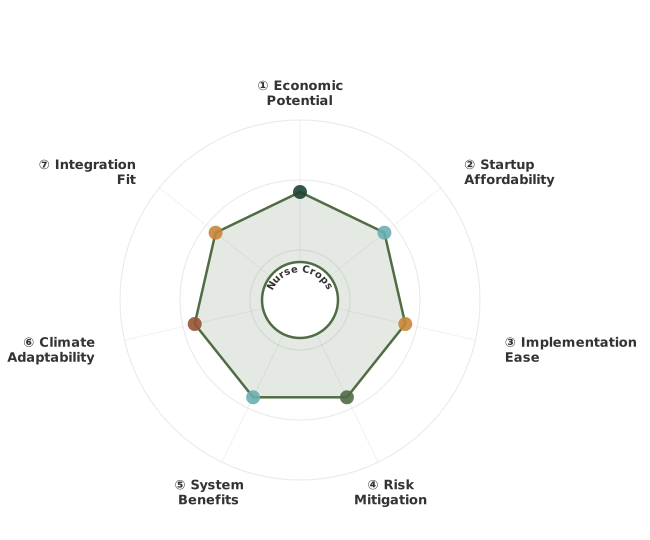
How These Traits Are Calculated
Trait dimensions are ordered clockwise starting from the top of the chart (12 o'clock position):
1. Economic Potential
Financial returns, annual value, and break-even timeline
WHAT: Evaluates financial viability by combining net annual value ($/ha from savings, income, and amortized harvests) with break-even timeline showing when practices pay for themselves.
WHY: Farmers need clear ROI understanding before committing resources. Fast payback (≤3 years) with strong returns (≥$300/ha) enables confident adoption, while long timelines (>10 years) restrict adoption to well-funded operations willing to wait for returns.
HOW: Calculated from net annual value in $/ha and break-even years. Exceptional (≥2.6): fast ROI ≤3 years + high value ≥$300/ha. Typical (1.8-2.5): moderate returns or longer timelines. Limited (<1.8): marginal economics or very long payback >10 years.
2. Startup Affordability
Initial investment costs and financial barrier to entry
WHAT: Measures financial barrier to entry through startup costs for equipment, infrastructure, consulting, and materials. Inverted scoring: lower costs = higher scores = more accessible adoption.
WHY: Affordability determines who can adopt. Low-cost practices (<$250/ha) enable widespread adoption across diverse scales, while high costs (>$2,500/ha) limit adoption to well-capitalized operations, creating barriers that slow regenerative transition.
HOW: Calculated from initial investment parsed from practice content. Inverted scoring: Exceptional (≥2.6): minimal investment <$250/ha. Typical (1.8-2.5): moderate costs $250-2,500/ha. Limited (<1.8): high barrier >$2,500/ha.
3. Implementation Ease
Learning curve and specialized knowledge required
WHAT: Measures how much learning, planning, and specialized knowledge a practice requires. Simpler practices with fewer steps score higher, while complex practices requiring extensive training or specialized resources score lower.
WHY: Complex practices create adoption barriers even when economically viable. Straightforward practices enable faster adoption and broader participation, while those requiring extensive training, timing precision, or specialized equipment limit who can succeed.
HOW: Evaluated by measuring documentation length and identifying complexity markers like location-specific requirements, seasonal timing windows, specialized skills, and dedicated equipment needs. Exceptional (≥2.6): straightforward practices with minimal prerequisites. Typical (1.8-2.5): moderate learning curve with some specialized needs. Limited (<1.8): steep learning curve requiring significant training or resources.
4. Risk Mitigation
Identified financial and ecological risk assessment
WHAT: Evaluates documented risks across financial (investment loss, market volatility) and ecological (crop failure, pest outbreaks) domains. Inverted scoring: fewer risks = higher scores.
WHY: Understanding risk exposure helps farmers make informed decisions. Low-risk practices allow confident implementation, while high-risk practices require careful planning and contingency resources. Risk transparency prevents costly failures.
HOW: Calculated from identified risks in practice content. Inverted scoring: Exceptional (≥2.6): ≤2 risks with manageable severity. Typical (1.8-2.5): 3-5 moderate risks. Limited (<1.8): 6+ risks or severe exposure.
5. System Benefits
How many ways the practice improves your land simultaneously
WHAT: Measures how many aspects of land health improve at once—carbon storage, soil quality, erosion control, water absorption, and biodiversity. Practices that improve multiple areas simultaneously create compounding benefits where each improvement reinforces the others.
WHY: The best practices solve multiple problems at once. For example, addressing erosion simultaneously builds carbon and improves water infiltration, creating a resilient system with positive feedback loops. Single-benefit approaches miss these compound transformation opportunities.
HOW: Evaluated across five key outcomes: carbon sequestration, soil organic matter increase, erosion reduction, water infiltration improvement, and biodiversity enhancement. Exceptional (≥2.6): high carbon storage (>8 t/ha/yr), improvements across 4-5 areas, transformative outcomes. Typical (1.8-2.5): moderate carbon (3-8 t/ha/yr), improvements across 2-3 areas. Limited (<1.8): modest impact (<3 t/ha/yr), single-area focus only.
6. Climate Adaptability
Geographic applicability across Köppen climate zones
WHAT: Evaluates geographic applicability by assessing how many Köppen climate zones successfully support a practice and what adaptation requirements are needed. Measures breadth of climates where farmers can implement with minimal to moderate modifications.
WHY: Universal practices working across diverse climates enable more farmers to adopt regenerative approaches. Practices limited to single climate types (only Mediterranean, only tropical) restrict adoption and slow global transition. Adaptability determines whether a practice serves niche regions or offers broad transformation.
HOW: LLM evaluation of regional success stories, Köppen zone coverage, and adaptation needs. Exceptional (≥2.6): 5+ zones or 4+ climate types, 3+ continents, minimal adaptation. Typical (1.8-2.5): 3-4 zones or 2-3 types, 2 continents, moderate adaptation. Limited (<1.8): 1-2 zones, single region, significant adaptation or highly specialized.
7. Integration Fit
How well this practice combines with others you're doing
WHAT: Measures how well a practice combines with other regenerative practices you might be doing. Some practices work as building blocks that make many other practices easier or more effective, while others work best on their own.
WHY: Practices that combine well with many others create more value on your farm. For example, cover cropping enables no-till, improves grazing, supports crop diversity, and helps water management—making all of them work better together. This helps you build a coherent system rather than juggling disconnected practices.
HOW: Evaluated by identifying which practices combine well and how strong those combinations are. 'Ideally Suited' means strong combinations where practices reinforce each other (practice A makes B easier, while B makes A more effective). 'Adequate' means complementary benefits that work well together. Exceptional (≥2.6): combines well with 6+ practices, serves as a building block. Typical (1.8-2.5): combines with 3-5 practices. Limited (<1.8): 1-2 practices or works best alone.
Going Deeper
1
WHY - The Benefits
Nurse crops serve a critical role in agricultural systems, primarily by providing immediate support for the establishment of a main crop. This support translates into tangible benefits for soil health, farm economics, and the overall resilience of the agricultural...
Nurse crops serve a critical role in agricultural systems, primarily by providing immediate support for the establishment of a main crop. This support translates into tangible benefits for soil health, farm economics, and the overall resilience of the agricultural...
WHY - The Benefits
Nurse crops serve a critical role in agricultural systems, primarily by providing immediate support for the establishment of a main crop. This support translates into tangible benefits for soil health, farm economics, and the overall resilience of the agricultural...
Nurse crops serve a critical role in agricultural systems, primarily by providing immediate support for the establishment of a main crop. This support translates into tangible benefits for soil health, farm economics, and the overall resilience of the agricultural...
Soil Health Benefits
Nurse crops are excellent at immediately covering bare soil after planting. Upon germination, they form a living mulch that suppresses wind and water erosion, thereby protecting valuable topsoil. This coverage is crucial in the early stages of crop growth, when the main crop's canopy is still developing and unable to offer adequate protection. This aligns directly with Principle 3: Keep Soil Covered. The rapid establishment of these plants ensures that soil is not exposed to harsh weather conditions for extended periods.
Beyond immediate cover, the root systems of nurse crops contribute to soil structure. Their vigorous early growth puts down fine, fibrous roots that help to aggregate soil particles. As the nurse crop begins to senesce or is terminated, these roots decompose, adding valuable organic matter to the topsoil. This contributes to the long-term goal of increasing soil organic matter levels, which enhances water infiltration, aeration, and nutrient availability. This supports Principle 4: Maintain Living Roots, as their roots are actively contributing to soil health even if for a short period.
Nurse crops can also play a role in nutrient cycling. If leguminous nurse crops (like certain clovers or vetches) are chosen, they can fix atmospheric nitrogen, making it available to the main crop as they decompose. Even non-leguminous nurse crops can help capture excess nutrients from the soil that might otherwise be leached away, holding them in their biomass and returning them to the soil upon decomposition. This efficient nutrient management contributes to a more closed-loop system, reducing waste and reliance on external inputs.
Weed suppression is another key soil health benefit provided by nurse crops. Their rapid growth can outcompete weeds for light, water, and nutrients during the critical early establishment phase for the main crop. This reduces the need for aggressive weed control measures, such as extensive tillage or intensive cultivation, which can damage soil structure and disrupt soil biology, thus supporting Principle 1: Minimize Soil Disturbance.
Economic Benefits
The primary economic benefit of nurse crops is improved yield stability and reduced replanting costs. By protecting vulnerable seedlings from environmental stressors like wind, frost, intense sun, and weed competition, nurse crops increase the likelihood of successful crop establishment. This reduces the risk of crop failure, which can be financially devastating, particularly for high-value crops or in regions with challenging climates. The cost of replanting can range from $50-150/ha ($20-60/acre) USD equivalent, a cost that can often be avoided by using a nurse crop.
Nurse crops can also lead to reduced input costs. Their weed suppression capabilities decrease the need for expensive herbicides or multiple passes of mechanical cultivation. If a leguminous nurse crop is used, it can reduce the requirement for nitrogen fertilizer for the main crop, especially for crops that have a longer season or high nitrogen demand. These savings directly enhance farm profitability.
In some systems, nurse crops can provide an early harvestable product. For instance, if a main crop is slow to develop, a nurse crop like annual ryegrass might be grazed for a short period, providing valuable forage for livestock and generating revenue while the main crop matures. This opportunistic use can be particularly beneficial for diversified farms that integrate livestock.
The improved establishment and resilience of the main crop can lead to higher overall yields and better quality produce at harvest. This enhanced productivity directly translates to increased revenue. Furthermore, by reducing crop losses and the need for costly interventions, nurse crops contribute to a more predictable and stable farm income year after year.
Regenerative Systems Fit
Nurse crops align strategically with several regenerative agriculture principles, acting as a bridge to more complex sustainable systems. They are particularly useful for accelerating the transition phase on farms moving away from intensive monocultures or degraded land.
Principle 2: Maximize Crop Diversity. While temporary, the introduction of nurse crop species alongside the main crop increases the botanical diversity within the field during a critical growth phase. This creates a more complex habitat for soil organisms, providing varied root exudates and organic matter inputs. This approach is especially valuable when establishing perennial systems, such as pastures or orchards, where initial diversity is key to building robust soil biology and resilience.
Principle 3: Keep Soil Covered. The immediate emergence and ground-cover provided by nurse crops are invaluable for preventing soil erosion and maintaining soil surface microclimates. This continuous cover acts as a mulch, often decomposing in place, further enriching the soil and supporting its biological activity. This is a direct application of covering the soil year-round, or at least for the critical establishment period.
Principle 4: Maintain Living Roots. Nurse crops, by definition, have living roots for a significant portion of their life cycle, often extending photosynthesis and nutrient uptake activity beyond the main crop's early development. This continuous root activity, even if temporary, supports soil microbial communities and nutrient cycling. When nurse crops are chosen to extend the growing season or complement the root architecture of the main crop, their contribution to maintaining living roots is further amplified.
Principle 1: Minimize Soil Disturbance. By actively suppressing weeds, nurse crops reduce the reliance on tillage or aggressive cultivation for weed control during the early crop establishment phase. This allows farmers to avoid disruptive soil disturbance in a period where the land might otherwise be vulnerable to compaction or erosion from mechanical interventions.
Transition Pathway: Nurse crops can be considered a transition practice when they enable the successful establishment of a more fundamentally regenerative system that would otherwise be too risky or difficult to implement. For example, on severely degraded land or in unpredictable climates, a farmer might use a nurse crop to ensure a diverse perennial pasture mix establishes reliably. Once the perennial species are well-established and their root systems are functioning, the need for the nurse crop diminishes, and the farmer can graduate to a more robust, self-sustaining regenerative pasture system without the nurse crop. The timeline for phasing out nurse crops is dictated by the success of the main crop and the increasing resilience and competitiveness of the regenerative system. As soil health improves and the primary plant community strengthens, the support role of the nurse crop becomes less critical.
Water Cycle Benefits
Nurse crops can positively impact the water cycle by reducing evaporation from the soil surface due to their ground cover. This increased soil moisture retention is particularly beneficial during the establishment phase of the main crop, helping young plants survive dry spells. By minimizing runoff, they also help recharge groundwater and reduce erosion-induced sedimentation in waterways.
Carbon Sequestration
While their contribution is temporary, the biomass produced by nurse crops, when incorporated into the soil through decomposition, adds carbon to the soil organic matter. Their role in improving the health and establishment of longer-lived perennial crops or cover crops can lead to significantly higher overall carbon sequestration in the long term. The continuous living roots and organic matter inputs, even from temporary species, contribute to building soil carbon.
Biodiversity Benefits
By increasing the plant diversity in the field during establishment, nurse crops provide a more varied habitat and food source for beneficial insects, pollinators, and soil microorganisms. This temporary boost in biodiversity can help attract beneficial insects that may offer pest control services for the main crop or contribute to pollination. It lays the groundwork for a more biodiverse and resilient ecosystem.
Sources behind this view
 Videos & Podcasts
-
Cover crops attract beneficial insects and pollinators, suppress pests, and improve soil biology. Mimicking nature's integration of animals and plants, alongside practices like no-till and diversity,

-
Five soil health principles are discussed: keeping soil covered (insurance), maximizing diversity (resilience), optimizing disruptions (saving money/carbon), maintaining living roots (feeding microbes

-
Critiques conventional no-till, highlighting benefits of cover crops for maintaining soil biology, moisture, and organic matter through photosynthesis and root exudation. Emphasizes diverse mixes and

-
Cover crops are foundational for regenerative agriculture, enhancing soil health, reducing herbicide use, and aiding weed management through physical suppression and allelopathy. They support key soil

 Community
-
Cover crops offer cost-effective benefits for soil health, including building organic matter, managing nutrients (nitrogen scavenging and fixation), suppressing weeds and pests, and improving soil str
Read more (opens in new window) ucanr.edu -
Explains cover crop functions (green manure, nutrient cycling, erosion control, weed suppression) and categorizes them into six functional groups. Compares single-species vs. multispecies mixes, highl
Read more (pp. 2-5) (opens PDF, pp. 2-5) efotg.sc.egov.usda.gov -
Cover crops offer cost-effective benefits for soil health, including building organic matter, managing nutrients (nitrogen scavenging by grasses/brassicas, fixation by legumes), suppressing weeds, and
Read more (opens in new window) ucanr.edu -
Cover crops enhance soil productivity, protect against erosion, sequester carbon, and improve water/nutrient holding capacity. They can also break pest/disease cycles and reduce weeds, but require car
Read more (opens in new window) www.permaculture.org.uk
Research
-
The Role of Cover Crops in North American Cropping Systems (opens in new window)
This study found: Cover crops offer multiple benefits in North American farming, including nitrogen fixation, erosion control, weed/pest management, and improved soil health through organic matter and reduced compactio
-
Companion Crops as Catalysts for Sustainable Cover Cropping in Vineyards—A Critical Review and Research Agenda (opens in new window)
This study found: Companion cropping, using fast-growing cereals and legumes as 'nurse crops,' reliably improves cover crop establishment in vineyards by providing early cover, weed control, and buffering. More researc
-
Optimizing cover crop practices as a sustainable solution for global agroecosystem services. (opens in new window)
This study found: Optimized cover crop strategies (long-term, no-till, legume/non-legume mix, residue mulch) significantly boost farm ecosystem services, including crop yields, carbon capture, and erosion control, whil
-
A Review of Supporting Evidence, Limitations and Challenges of Using Cover Crops in Agricultural Systems (opens in new window)
This study found: Review of cover crops for sustainability, emphasizing species choice and management to benefit main crops. Highlights importance of local soil/climate and need for more research on nutrient cycling be
2
WHERE - Regional Considerations
Nurse crops are adaptable to a wide range of climates and agricultural systems, but their success is heavily influenced by local conditions, particularly temperature, rainfall patterns, and growing season length. Careful selection of species is paramount to match the...
Nurse crops are adaptable to a wide range of climates and agricultural systems, but their success is heavily influenced by local conditions, particularly temperature, rainfall patterns, and growing season length. Careful selection of species is paramount to match the...
WHERE - Regional Considerations
Nurse crops are adaptable to a wide range of climates and agricultural systems, but their success is heavily influenced by local conditions, particularly temperature, rainfall patterns, and growing season length. Careful selection of species is paramount to match the...
Nurse crops are adaptable to a wide range of climates and agricultural systems, but their success is heavily influenced by local conditions, particularly temperature, rainfall patterns, and growing season length. Careful selection of species is paramount to match the...
Click Here to Look up your Region if you don't already know it
Humid Temperate Regions
Representative Locations: Southeastern United States, northern Europe (UK, Germany, Poland), eastern China, Japan, New Zealand
Climate Context: Warm to hot summers and cool to cold winters with moderate to high annual precipitation (75-150 cm or 30-60 inches) distributed relatively evenly. USDA Zones 6-8, Köppen Cfb/Cfa. These regions generally offer a good balance of moisture and temperature for rapid nurse crop establishment and subsequent termination without extreme stress.
Nurse Crop Suitability: Many common nurse crops perform well here. Oats, barley, annual ryegrass, and cereal rye are excellent for cool-season establishment of main crops like clovers, alfalfa, or slower-growing vegetables. In warmer parts of this zone, fast-growing legumes like field peas, cowpeas, or certain brassicas (e.g., forage turnips) can serve as nurse crops for warm-season crops or cover crops, providing nitrogen fixation and rapid ground cover. The challenge here is often managing the nurse crop to prevent excessive competition as moisture is generally not a limiting factor. Timely termination or grazing is key.
Mediterranean Regions
Representative Locations: California, Mediterranean basin (Spain, Italy, Greece), central Chile, southwestern Australia, Western Cape South Africa
Climate Context: Hot, dry summers and mild, wet winters. Annual precipitation 40-90 cm (15-35 inches), highly seasonal. USDA Zones 8-10, Köppen Csa/Csb. The primary constraint in these regions is summer drought.
Nurse Crop Suitability: In Mediterranean climates, nurse crops that can establish in the autumn rains and provide benefits during the mild wet phase, then naturally senesce or are terminated before summer drought intensifies, are ideal. Cool-season grains like oats and barley are often used for autumn-sown perennial forages or winter cover crops. Their rapid growth in spring can help suppress winter weeds and protect seedlings, but they must be managed to avoid depleting soil moisture needed by the main crop during the critical dry transition into summer. Fast-maturing annual legumes can also be effective if timed correctly. Selection of drought-tolerant main crops or irrigation becomes crucial for the success of nurse crops here.
Arid/Semi-Arid Regions
Representative Locations: Western USA, North Africa, Central Asia, Interior Australia
Climate Context: Low annual precipitation (<40 cm or 15 inches), high temperatures, short and often unpredictable growing season. USDA Zones 7-9, Köppen BSh/BSk. Water scarcity is the dominant factor.
Nurse Crop Suitability: Nurse crops in arid regions must be chosen with extreme caution. Their primary role here is often extreme erosion control and utilizing available moisture very efficiently without detrimentally competing with a slow-start main crop. Drought-tolerant annuals like certain millets, sorghum varieties, or hardy, quick-maturing legumes might be considered, but only at very low seeding rates. Often, the "nurse crop" concept is adapted to using species that offer soil cover and minimal competition but also contribute to soil moisture conservation, like a dormant but living fibrous-rooted grass that provides ground cover without excessive water uptake during dry periods. The risk of nurse crops depleting scarce water resources is high, so their use must be carefully planned, often favoring lower seeding rates and species that naturally die back before the main crop's peak demand.
Cold Continental Regions
Representative Locations: Northern USA and Canada, Northern Europe, Northern Asia
Climate Context: Very short growing seasons, extreme summer heat, severe winter cold. USDA Zones 3-5, Köppen Dfa/Dfb. The primary challenge is the limited window for growth.
Nurse Crop Suitability: In these regions, nurse crops are typically chosen for their very rapid spring growth and ability to tolerate cool conditions early in the season. Oats, barley, and peas are common choices for spring-sown crops, providing quick ground cover and weed suppression during the relatively short growing period. Their ability to mature quickly means they can be terminated before they excessively compete with the main crop or before early frosts. Their decomposition cycle will be short, with most benefits occurring during the spring growth phase. Winter survival of the nurse crop is usually not a goal; their purpose is to aid establishment during the initial rapid growth phase.
Subtropical Regions
Representative Locations: Southeastern USA, Southern China, Southern Brazil, Eastern Australia
Climate Context: Hot, humid summers and mild winters with generally ample rainfall. USDA Zones 9-11, Köppen Cfa/Cwa. High temperatures and humidity can promote rapid plant growth, but also fungal diseases and intense weed pressure.
Nurse Crop Suitability: Nurse crops in subtropical regions need to establish quickly and provide robust cover to suppress aggressive weeds and protect seedlings from intense sun and heavy rainfall events. Fast-growing annuals like pearl millet, sudangrass (carefully managed to avoid allelopathic effects), or quick-maturing cowpeas and soybeans are effective. Leguminous nurse crops are particularly beneficial for nitrogen fixation in these high-demand environments. However, the heat and humidity can also lead to rapid nurse crop growth that becomes overly competitive. Careful selection of species that have a slightly different growth cycle or a lower resource demand than the main crop is crucial. Management must also consider disease pressure, as humid conditions can foster rapid disease spread in dense nurse crop stands.
Tropical Regions
Representative Locations: Central America, Southeast Asia, East Africa, Northern Australia, Northern South America
Climate Context: High temperatures year-round, with distinct wet and dry seasons or consistent high rainfall. Köppen Af/Am/Aw. Incredible plant growth potential but also intense competition from native vegetation and weeds.
Nurse Crop Suitability: In tropical regions, nurse crops are often essential for successful establishment of many crops, especially slow-growing perennials or during particularly challenging periods like early rainy seasons where weed pressure is extreme. Fast-growing, heat-tolerant annuals are key. Legumes such as pigeon peas, certain cowpeas, or dynamic accumulators like sunn hemp are excellent choices as they suppress weeds, provide nitrogen, and break down relatively quickly to minimize long-term competition. Non-legumes like millets or specific sorghum varieties can also be used for rapid biomass production and soil cover. The challenge is managing their growth rate to prevent them from overwhelming the desired main crop during the prime growing season. They are often terminated or grazed much earlier than in temperate zones to allow the main crop to take over.
3
HOW - Implementation Process
Implementing nurse crops effectively requires careful planning, species selection, and timely management to maximize their benefits while minimizing any potential negative impacts on the main crop.
Implementing nurse crops effectively requires careful planning, species selection, and timely management to maximize their benefits while minimizing any potential negative impacts on the main crop.
HOW - Implementation Process
Implementing nurse crops effectively requires careful planning, species selection, and timely management to maximize their benefits while minimizing any potential negative impacts on the main crop.
Implementing nurse crops effectively requires careful planning, species selection, and timely management to maximize their benefits while minimizing any potential negative impacts on the main crop.
Prerequisites
Before planting nurse crops, assess these conditions:
- Main Crop Sensitivity: Understand how sensitive your main crop is to competition for light, water, and nutrients, especially during its early development.
- Climate: Consider temperature, rainfall patterns, and growing season length. Choose nurse crop species adapted to these conditions and that will complement, not outcompete, the main crop.
- Soil Fertility: On very low-fertility soils, nurse crops might deplete limited resources. Consider if a leguminous nurse crop or a slight fertility boost is needed.
- Management Capacity: Ensure you have the means to manage the nurse crop—whether by termination, mowing, or grazing—at the appropriate time.
Phase 1: Nurse Crop and Main Crop Selection
Species Pairing: The most critical step.
- Goal Match: Select nurse crops that provide the specific benefit needed (e.g., weed suppression, seedling protection, erosion control, nitrogen fixation).
- Growth Habit: Choose species with different rooting depths, growth rates, and maturity times than the main crop. A shallow-rooted grass nurse crop can protect a deep-rooted legume main crop. A fast-maturing nurse crop will naturally die back before severely competing.
- Climate Adaptability: Ensure both nurse and main crop are suited to the local climate.
- Legume Nurse Crops: If integrating nitrogen fixation, select clovers, vetches, field peas, cowpeas, or sunn hemp that match the main crop's needs and climate.
- Grass Nurse Crops: Annual ryegrass, oats, barley, millet, or sorghum can provide excellent ground cover and weed suppression.
- Avoid Problem Species: Do not use nurse crops that are closely related to the main crop (e.g., planting oats as a nurse for wheat if wheat is prone to oat diseases or vice-versa), or those that are known to become persistent weeds in your region.
Example Pairings:
- Temperate Pasture Establishment: Perennial legumes (alfalfa, clover) with oats, annual ryegrass, or peas.
- Vegetable Seedling Protection (Cool Season): Brassicas (e.g., broccoli seedlings) with a light seeding of annual ryegrass or oats.
- Cover Crop Establishment: Slow-developing cover crop mixes (e.g., perennials) with a fast-growing annual like tillage radish or annual ryegrass.
Phase 2: Seeding and Establishment
Timing: Generally, sow nurse crop seeds at the same time or just before the main crop. This ensures the nurse crop is established by the time the main crop germinates and begins to grow.
- Simultaneous Seeding: A single pass with a drill can sow both if equipped with multiple hoppers.
- Nurse Crop First: Sow nurse crop, then sow main crop immediately after or within 24 hours.
- Main Crop First: Sow main crop, then follow with nurse crop broadcast or lightly incorporated, or seed the nurse crop into established main crop rows if possible.
Seeding Rates: Use significantly lower seeding rates for the nurse crop than for the main crop to minimize competition. Typically, 10-30% of the main crop's recommended seeding rate. Over-seeding can lead to excessive competition. Research recommended rates for your specific species and context. International recommendations vary by soil type, climate, and available varieties.
- Example: If main crop is wheat at 150 kg/ha (134 lbs/acre), nurse crop like oats might be sown at 20-40 kg/ha (18-36 lbs/acre).
Depth: Ensure both seeds are planted at their appropriate depths, which might require careful calibration of equipment if sown together. Sometimes, broadcasting nurse crop seeds on the surface and lightly harrowing is sufficient.
Phase 3: Management and Termination
Early Monitoring: Regularly check the balance between the nurse crop and the main crop. Look for signs of the nurse crop becoming too competitive (main crop wilting, stunted growth, yellowing).
Mowing: If the nurse crop is growing too vigorously and outcompeting the main crop, it can be mowed. Mow high (leaving 7-10 cm or 3-4 inches of stubble) to avoid damaging the main crop. Mowing can be done multiple times if necessary.
Grazing: If livestock is available, controlled grazing can be an effective way to manage nurse crop height and biomass. Ensure livestock are removed before they damage the main crop or cause soil compaction. Short, high-intensity grazing periods followed by long rest periods are generally best.
Termination: The nurse crop’s life cycle must end before it significantly hinders the main crop's development, especially as the main crop enters its peak demand phase for resources.
- Natural Senescence: Many nurse crops naturally die back after flowering or as conditions become less favorable (e.g., cool-season grasses in summer heat).
- Mowing/Grazing: As mentioned, repeated mowing or grazing can stunt growth and lead to natural termination.
- Cash Crop Harvest: In some systems, the main crop (e.g., a grain) is harvested, and the nurse crop residue is left in situ.
- Mechanical Termination: Light tillage or roller-crimping can be used if necessary, but this contradicts regenerative principles; aim to avoid it.
- Herbicide Termination: If absolutely necessary, use a selective herbicide that targets the nurse crop without harming the main crop. This is a compromise and less regenerative.
- Termination Window: The crucial factor is when. This is typically before the main crop enters its critical flowering or grain-filling stages, or as the nurse crop begins to lodge (fall over) and smother the main crop. For slow-growing main crops, this might be weeks to months after seeding. For faster crops, it might be only a few weeks.
Transition Timeline & Phase-Out Strategy
Nurse crops are often a transition practice. Their use is typically higher during the initial phase of establishing more complex regenerative systems, and it diminishes as the primary system becomes self-sufficient.
Years 1-3 (Establishment & Support):
- High Reliance: Use nurse crops to reliably establish main crops (e.g., perennial pastures, diverse cover crops on challenging land).
- Focus: Ensure successful establishment and protect against initial environmental and weed pressures.
- Management: Careful monitoring and timely termination are crucial.
Years 3-5 (Building Resilience):
- Reduced Reliance: As main crops strengthen and soil health improves, the need for direct nurse crop support lessens.
- Indicator: Main crops can establish with minimal weed competition, showing good vigor even in less-than-ideal conditions. Soil cover from the main crop is more consistent early on.
- Strategy: Experiment with smaller nurse crop seeding rates or omitting them in more favorable conditions.
Years 5+ (Self-Sufficiency):
- Minimal to No Use: In mature regenerative systems, nurse crops are generally phased out. The primary crop or cover crop mix is sufficiently diverse, competitive, and supported by healthy soil biology to establish reliably.
- Goal: The system provides its own weed suppression, resilient root structure, and soil cover.
Phasing Out:
- Gradual Reduction: Lower the seeding rate of the nurse crop incrementally each season while observing the main crop's performance.
- Trial Plots: Designate areas to trial without the nurse crop to compare results and build confidence.
- Focus on Soil Health: Continue improving soil biology and structure; this is the fundamental pathway to eliminating the need for nurse crops. Healthy soil supports stronger main crop establishment.
- Success Indicator: Main crops establish reliably, show good vigor, and outcompete weeds without nurse crop assistance.
4
Know the Debate
Nurse crops offer benefits by protecting seedlings and suppressing weeds, but their success hinges on regional climate and how they are managed. In...
Know the Debate
Nurse crops offer benefits by protecting seedlings and suppressing weeds, but their success hinges on regional climate and how they are managed. In...
Nurse crops offer benefits by protecting seedlings and suppressing weeds, but their success hinges on regional climate and how they are managed. In humid areas, abundant moisture allows for quick establishment and diverse options, while arid regions demand careful, drought-tolerant choices and low seeding rates. Entry costs are typically low ($30-220/ha) but require labor for management and precise termination. Systems evolve from nurse crop reliance to self-sufficiency over 3-5 years as soil health improves.
Nurse crop impact on main crop yield
Neutral to positive yield impact
Academic studies and extension guides generally show that appropriately managed nurse crops have a neutral or positive effect on main crop yields by protecting seedlings, improving soil health, and providing early nutrients.
Sources behind this view
Sources behind this view
Research
-
Evaluating Cover Crops for Benefits, Costs and Performance within Cropping System Niches (opens in new window)
This study found: This review looks at the pros and cons of using cover crops in farming systems, drawing on literature and Michigan farmer experiences. Cover crops can help control pests, improve soil and water, make nutrients cycle better, and boost the yield of your main crops. However, they also come with costs like extra expenses, potentially lower income if they interfere with other crops, slower soil warming, and uncertainty about when nitrogen will become available. The benefits tend to be greater in irrigated fields. The review highlights the best cover crops for different seasons and regions in the US (USDA Zones 5-8). For warm summer growing periods, C4 grasses are top performers, producing a lot of biomass. For winter cover, cereal rye is a strong choice across all zones. Mixtures of legumes (like clover or vetch) with cereal grains (like wheat or rye) can create large amounts of diverse organic matter. Legumes are good at fixing nitrogen from the air and can also support beneficial insects. Plants from the Brassica family (like radishes) can help suppress soil pests and diseases. Legume cover crops are the most dependable way to increase the yield of your main crops compared to leaving fields bare. If soil pests are a big problem, brassicas are a good option. If building soil organic matter quickly is the goal, cereal cover crops are best. Combining different types of cover crops, like legumes with cereals or brassicas with cereals, shows promise for various situations.
 From the Web
-
Cover crops are vital for no-till and organic farming, enhancing soil health, water infiltration, and weed/pest control. They attract beneficial insects and can reduce pesticide use, with specific species like radish showing benefits for potato growers.
-
Cover crops synergize with no-till farming, improving water infiltration and weed control. In organic systems, roller-crimpers kill cover crops for mulch. They also aid pest management by attracting beneficial insects and suppressing weeds and soil pathogens, reducing pesticide needs.
Significant yield reductions common
Field practitioners report that nurse crops can cause substantial yield reductions (10-20% or more) if they compete for water and nutrients, especially in dry climates or when termination is delayed or ineffective.
Sources behind this view
Sources behind this view
Videos & Podcasts
-
Living mulches and nurse crops can be challenging, especially with vining plants, due to competition, harvesting issues, and weed potential. Taller, upright crops like okra and sunflowers fare better. Living pathways are suggested as a more manageable alternative. Small-scale experimentation is advised.

-
Companion planting improves crop yield and health through natural pest control, enhanced nutrient uptake (e.g., nitrogen-fixing beans with corn/squash), and increased pollination. It involves observing conditions, understanding plant relationships, and using categories like support, trap, and repellent plants, with examples like the Three Sisters and carrots with onions/radishes.

Making Sense of the Differences
The difference in reported yield impact hinges on management and context. Academic studies often assume optimal conditions and proper termination. Field experience emphasizes risks in variable climates (arid regions, poor soils) or when termination is imperfect, suggesting a potential yield drag if management isn't precise. Farmers should expect neutral to positive outcomes with diligent management but be prepared for potential reduction if competition is high or termination is delayed.
Criticality of nurse crop termination
Termination is a flexible option
Academic and extension resources describe termination as a management option using mowing, grazing, or herbicides when necessary, implying it's manageable with standard techniques.
Sources behind this view
Sources behind this view
Research
-
Evaluating Cover Crops for Benefits, Costs and Performance within Cropping System Niches (opens in new window)
This study found: This review looks at the pros and cons of using cover crops in farming systems, drawing on literature and Michigan farmer experiences. Cover crops can help control pests, improve soil and water, make nutrients cycle better, and boost the yield of your main crops. However, they also come with costs like extra expenses, potentially lower income if they interfere with other crops, slower soil warming, and uncertainty about when nitrogen will become available. The benefits tend to be greater in irrigated fields. The review highlights the best cover crops for different seasons and regions in the US (USDA Zones 5-8). For warm summer growing periods, C4 grasses are top performers, producing a lot of biomass. For winter cover, cereal rye is a strong choice across all zones. Mixtures of legumes (like clover or vetch) with cereal grains (like wheat or rye) can create large amounts of diverse organic matter. Legumes are good at fixing nitrogen from the air and can also support beneficial insects. Plants from the Brassica family (like radishes) can help suppress soil pests and diseases. Legume cover crops are the most dependable way to increase the yield of your main crops compared to leaving fields bare. If soil pests are a big problem, brassicas are a good option. If building soil organic matter quickly is the goal, cereal cover crops are best. Combining different types of cover crops, like legumes with cereals or brassicas with cereals, shows promise for various situations.
From the Web
-
Cover crops synergize with no-till farming, improving water infiltration and weed control. In organic systems, roller-crimpers kill cover crops for mulch. They also aid pest management by attracting beneficial insects and suppressing weeds and soil pathogens, reducing pesticide needs.
Termination is a critical, often challenging prerequisite
Field practitioners stress that precise and timely termination is crucial. Failure to manage nurse crop growth risks severe crop failure, requiring specialized equipment or careful timing that is often underestimated.
Sources behind this view
Sources behind this view
Videos & Podcasts
-
Living mulches and nurse crops can be challenging, especially with vining plants, due to competition, harvesting issues, and weed potential. Taller, upright crops like okra and sunflowers fare better. Living pathways are suggested as a more manageable alternative. Small-scale experimentation is advised.
-
Companion planting improves crop yield and health through natural pest control, enhanced nutrient uptake (e.g., nitrogen-fixing beans with corn/squash), and increased pollination. It involves observing conditions, understanding plant relationships, and using categories like support, trap, and repellent plants, with examples like the Three Sisters and carrots with onions/radishes.
Making Sense of the Differences
While academic sources outline termination as a management step, field experience underscores its role as a critical prerequisite, especially in challenging climates or when establishing sensitive main crops. Failure to terminate precisely can lead to severe competition, negating benefits and causing crop loss. Farmers must plan for timely intervention, possibly requiring specific equipment or strategies, rather than assuming natural die-off will suffice.
5
HOW MUCH - Costs & Investment
Nurse crops represent a relatively low-cost input compared to many agricultural interventions, but their costs can add up, especially if not managed efficiently. International costs vary based on local seed prices, labor rates, and equipment availability.
Nurse crops represent a relatively low-cost input compared to many agricultural interventions, but their costs can add up, especially if not managed efficiently. International costs vary based on local seed prices, labor rates, and equipment availability.
HOW MUCH - Costs & Investment
Nurse crops represent a relatively low-cost input compared to many agricultural interventions, but their costs can add up, especially if not managed efficiently. International costs vary based on local seed prices, labor rates, and equipment availability.
Nurse crops represent a relatively low-cost input compared to many agricultural interventions, but their costs can add up, especially if not managed efficiently. International costs vary based on local seed prices, labor rates, and equipment availability.
Note: All costs are based on recent US economic data (2024–2026) and may vary substantially by region based on local labor rates, material costs, and regulatory requirements.
Seed Acquisition Costs
Seed costs remain the most significant variable expense in the implementation of nurse crop systems, serving as the biological foundation for the practice. For small-scale operations (under 50 acres (20 ha)), retail-bag pricing dominates procurement, resulting in investment ranges of $12.50 to $41.68 per acre ($31–$103/ha). These operators often lack the leverage to negotiate discounts, leading to higher per-unit costs to gain access to premium, high-germination seed varieties. Mid-size operations (50–500 acres (20–202 ha)) typically shift toward regional agricultural co-ops or bulk distributors, capturing pricing efficiencies that place their costs between $10.42 and $33.34 per acre ($26–$82/ha). Large-scale producers (500+ acres) capitalize on forward-contracting and direct-from-wholesaler procurement, effectively suppressing costs to $8.34 to $25.01 per acre ($21–$62/ha). Crucially, the cost variation across all scales is driven by species selection: simple cereal rye or oats command the lower end of these ranges, while complex, diverse polycultures including clover, brassicas, and vetch move the investment toward the upper limit.
Sowing and Establishment Operations
The logistics of planting a nurse crop alongside or in succession to a primary crop define the operational expenditure. Small-scale farmers, often utilizing multi-purpose conventional drills or broadcast seeders, face costs of $8.34 to $29.18 per acre ($21–$72/ha). These figures account for the wear and tear on smaller, less fuel-efficient tractors and the higher relative labor intensity of smaller fields. Mid-size operations, which benefit from the higher productivity of wide-swath, high-speed equipment, typically see costs ranging from $6.25 to $20.84 per acre ($15–$51/ha). The economy of scale for large-scale operations allows for the amortization of high-efficiency machinery fleets, reducing specific sowing expenses to $4.17 to $16.67 per acre ($10–$41/ha). These figures have seen upward pressure since 2023, as custom hire rates adjust to 4.2% higher labor costs and increased expenditures for hydraulic fluid, tires, and mechanical maintenance required to keep implements in the field for long, high-speed planting windows.
Management and Termination
Managing the nurse crop is the final, though often variable, operational cost. This phase involves terminating the nurse crop to favor primary crop growth or integrating grazing to extract immediate forage value. Small operations frequently rely on utility tractors for mowing or mechanical termination, leading to costs of $4.17 to $20.84 per acre ($10–$51/ha). Mid-size operations often explore rotational grazing, which effectively offsets management expenses; by using livestock to consume the nurse crop, the net cost reduces to $2.08 to $12.50 per acre ($5.1–$31/ha), as the cattle do the work of "termination." Large-scale operations prioritize high-speed chemical or mechanical roller-crimping strategies, maintaining tight cost control between $2.08 and $8.34 per acre ($5.1–$21/ha). In cases where chemical termination is employed, manufacturers' pricing for glufosinate or glyphosate formulations represents 60% of these total management costs, leaving room for efficiency if the chemical mix is calibrated specifically to the growth stage of the nurse crop.
Most Spend: Most growers and farm managers, regardless of the scale of their acreage, focus their financial investment within the $25.01 to $58.35 per acre ($62–$144/ha) range. This middle 60% capture reflects the balance between sourcing certified, high-germination weed-free seed and maintaining a timely operational window for planting and termination to avoid the catastrophic yield losses associated with neglected competition.
Why the Range?: The primary factor driving this range is the complexity of the seed mix; complex polycultures require more inputs and management than simple monocultures. Additionally, the variance is driven by regional labor rates and the choice between self-performance, which requires amortized machinery costs, and custom hiring, which passes the risk and increased labor overhead of the contractor directly to the farmer.
Sources behind this view
Videos & Podcasts
-
Guidance on creating budget sheets for perennial crop establishment, focusing on accurate calculation of plants per acre, establishment costs, and the true cost of labor. It covers pre-production and

Research
-
Farmers employ diverse cover crop management strategies to meet soil health goals (opens in new window)
This study found: Farmers use diverse cover crop methods, with costs around $99/ha. 'Planting green' increased. Varied practices and uncertain profitability make adoption challenging.
-
Farmers employ diverse cover crop management strategies to meet soil health goals (opens in new window)
This study found: Farmers use diverse cover crop strategies, with costs averaging $99/hectare. Experimentation and varied practices make predicting profitability challenging.
6
REWARDS AND RISKS - Economics & Risk Factors
Nurse crops offer a compelling economic proposition when managed correctly, primarily through risk mitigation and yield enhancement. However, their implementation carries inherent risks that, if not addressed, can negate their benefits and even lead to financial losses.
Nurse crops offer a compelling economic proposition when managed correctly, primarily through risk mitigation and yield enhancement. However, their implementation carries inherent risks that, if not addressed, can negate their benefits and even lead to financial losses.
REWARDS AND RISKS - Economics & Risk Factors
Nurse crops offer a compelling economic proposition when managed correctly, primarily through risk mitigation and yield enhancement. However, their implementation carries inherent risks that, if not addressed, can negate their benefits and even lead to financial losses.
Nurse crops offer a compelling economic proposition when managed correctly, primarily through risk mitigation and yield enhancement. However, their implementation carries inherent risks that, if not addressed, can negate their benefits and even lead to financial losses.
The economic impact of nurse cropping is dictated by the interaction between the secondary plant and the cash crop. In a best-case scenario, the nurse crop provides a protective microclimate, boosting primary crop establishment rates by 15–20% and yielding supplemental forage valued at $30 to $70 per acre ($74–$173/ha). Combined with the avoidance of replanting costs—which have risen to $50–$150 per acre ($124–$371/ha) in modern conventional systems—a well-managed nurse crop can yield a net economic gain of $80 to $220 per acre ($198–$544/ha) in the first season alone.
In a typical case, the nurse crop provides essential weed suppression that reduces the reliance on synthetic herbicide inputs, creating cost savings of $20 to $40 per acre ($49–$99/ha). If properly terminated, the primary crop faces no significant competitive stress, allowing the farm to achieve a break-even position regarding immediate cash flow while building long-term soil health dividends that reflect as asset value in soil organic matter (SOM) increases.
Conversely, the worst-case scenario involves the "competitive trap," where an overly aggressive or poorly timed nurse crop reduces primary crop yields by 15–20%. After accounting for the $25.01–$58.35 per acre ($62–$144/ha) establishment cost and the lost revenue from reduced harvest, the net economic loss reaches $100 to $200 per acre ($247–$494/ha). This usually occurs when the nurse crop is allowed to persist into the primary crop’s critical grain-fill stage or when insufficient moisture forces both crops into stunting.
Market factors play a significant role. Profitability is hyper-sensitive to commodity prices; when main-crop prices are high, the opportunity cost of even a marginal yield drag becomes a major liability. However, when fertilizer prices are high, the nitrogen-fixing capacity of leguminous nurse crops provides a buffer, making the practice more financially resilient during periods of input inflation.
Risk mitigation is non-negotiable. Soil testing, costing $15 to $25 per sample, is the most effective economic insurance policy to ensure that basic nutrient levels don't hit a deficit that causes the nurse crop to "starve" the primary crop. Furthermore, integrating grazing as an termination method can turn an expense—termination—into a revenue stream, fundamentally shifting the risk-reward profile of the practice.
Transition Period Risks: The dominant risk during the first 1–2 years is the "Transition Yield Drag," experienced at a 10–20% reduction level. This is often the result of inexperience in termination timing or poor management of nutrient cycling. Mitigation requires treating the first 3 years as an investment in "biological capital"—focusing on building the mycorrhizal network and soil structure rather than immediate annual cash flow. Success requires the farm to treat the transition period as an intentional investment phase, with full yield recovery expected by the third year following a consistent increase in soil organic matter.
Sources behind this view
Videos & Podcasts
-
Transitioning to regenerative farming costs $75k-$140k over two years but saves money compared to conventional nitrogen expenses ($195k/year). Start small (50-100 acres) with cover crops (hairy vetch,
7
COMPATIBLE PRACTICES - Integration Opportunities
Nurse crops are rarely implemented in isolation. Their effectiveness and regenerative value are significantly enhanced when integrated with other agricultural practices. The key is to ensure these integrated practices support the nurse crop's role as a temporary...
Nurse crops are rarely implemented in isolation. Their effectiveness and regenerative value are significantly enhanced when integrated with other agricultural practices. The key is to ensure these integrated practices support the nurse crop's role as a temporary...
COMPATIBLE PRACTICES - Integration Opportunities
Nurse crops are rarely implemented in isolation. Their effectiveness and regenerative value are significantly enhanced when integrated with other agricultural practices. The key is to ensure these integrated practices support the nurse crop's role as a temporary...
Nurse crops are rarely implemented in isolation. Their effectiveness and regenerative value are significantly enhanced when integrated with other agricultural practices. The key is to ensure these integrated practices support the nurse crop's role as a temporary...
Diverse Cover Cropping Systems
- Integration: Nurse crops are often used to establish more complex, multi-species cover crops, especially if the primary cover crop species are slow to establish. For example, planting a dense mix of hairy vetch and cereal rye might be made more reliable by including annual ryegrass as a nurse crop for rapid initial ground cover.
- Synergy: Nurse crops provide immediate protection and weed suppression, allowing the slower-growing, more diverse cover crop species to establish without being outcompeted. This leads to increased biomass, better soil coverage, and a more resilient cover crop stand.
Perennial Pasture Establishment
- Integration: Historically, nurse crops like oats or annual ryegrass have been crucial for establishing perennial forages like alfalfa, clover, or brome grass.
- Synergy: The nurse crop provides ground cover, prevents erosion, suppresses weeds, and can offer early grazing, all while the slower-growing, long-term perennial species establish their root systems. Once the perennials are vigorous, the nurse crop is terminated or outcompeted. This directly supports the Maintain Living Roots and Keep Soil Covered principles for the long term.
No-Till or Reduced Tillage Farming
- Integration: Nurse crops can be sown using no-till drills into existing residue or after minimal tillage. Their primary benefit is enhancing the establishment of main crops or cover crops that will be managed under no-till systems.
- Synergy: By providing early soil cover and weed suppression, nurse crops reduce the need for tillage or cultivation for weed control, directly supporting the Minimize Soil Disturbance principle. This is particularly valuable when transitioning land to permanent no-till.
Reduced Synthetic Input Strategies
- Integration: By suppressing weeds and potentially fixing nitrogen (if leguminous), nurse crops can reduce reliance on synthetic herbicides and fertilizers.
- Synergy: This practice aligns with the goal of regenerative agriculture to minimize reliance on off-farm inputs. When nurse crops effectively provide early weed control, it lessens the need for synthetic herbicides that can harm soil biology. Leguminous nurse crops also contribute to soil fertility, reducing nitrogen fertilizer requirements.
Adaptive Grazing Management
- Integration: If nurse crops are to be grazed for forage, integrating them into an adaptive grazing plan is essential. This involves managing stocking density, paddock size, and rest periods.
- Synergy: Careful grazing can manage nurse crop height and biomass, preventing excessive competition. However, poorly managed grazing (e.g., continuous grazing) can negate the benefits by causing soil compaction, damaging the main crop, or preventing proper termination. Nurse crops are often used for early forage before the main regenerative grazing system focuses on the perennial stand.
Crop Rotation Planning
- Integration: The choice of nurse crop can influence subsequent crop rotations. For example, using a leguminous nurse crop can improve soil nitrogen for a following nitrogen-demanding cash crop.
- Synergy: By contributing to soil health and nutrient availability, nurse crops integrated into a thoughtful crop rotation can set the stage for the success of subsequent crops in the rotation, contributing to overall system productivity and resilience.
Note on Transition: Nurse crops are often most valuable during the transition phase to more complex regenerative systems. As the primary system (e.g., diverse cover crops, established perennial pasture) becomes robust, the need for the temporary support of nurse crops diminishes. The goal is to phase them out once the primary system is self-sufficient, thereby fully embodying the regenerative principles without temporary reliance.
Sources behind this view
Videos & Podcasts
-
Utilize multi-species cover crops based on specific 'resource concerns' to improve soil health, nitrogen fixation, and water retention. Integrate livestock for grazing, calving, and overwintering, enh

-
Plan cover crop use based on specific goals (e.g., nutrient management, weed competition). Mixtures enhance diversity and nutrient cycling. Continuous low-disturbance no-till with diverse rotations an

-
Intercropping offers benefits in rotation, harvest management, weed control (linked to soil health), and varietal diversity (using blends). Livestock integration is beneficial for managing cover crops

-
Cover crop mix selection depends on goals (e.g., nitrogen for corn, forage for cattle) and system maturity. While cover crops use moisture, long-term benefits like soil resilience and moisture retenti

Community
-
Explains cover crop functions (green manure, nutrient cycling, erosion control, weed suppression) and categorizes them into six functional groups. Compares single-species vs. multispecies mixes, highl
Read more (pp. 2-5) (opens PDF, pp. 2-5) efotg.sc.egov.usda.gov
Research
-
Companion Crops as Catalysts for Sustainable Cover Cropping in Vineyards—A Critical Review and Research Agenda (opens in new window)
This study found: Companion cropping, using fast-growing cereals and legumes as 'nurse crops,' reliably improves cover crop establishment in vineyards by providing early cover, weed control, and buffering. More researc
-
The Role of Cover Crops in North American Cropping Systems (opens in new window)
This study found: Cover crops offer multiple benefits in North American farming, including nitrogen fixation, erosion control, weed/pest management, and improved soil health through organic matter and reduced compactio
-
Optimizing cover crop practices as a sustainable solution for global agroecosystem services. (opens in new window)
This study found: Optimized cover crop strategies (long-term, no-till, legume/non-legume mix, residue mulch) significantly boost farm ecosystem services, including crop yields, carbon capture, and erosion control, whil
-
A Review of Supporting Evidence, Limitations and Challenges of Using Cover Crops in Agricultural Systems (opens in new window)
This study found: Review of cover crops for sustainability, emphasizing species choice and management to benefit main crops. Highlights importance of local soil/climate and need for more research on nutrient cycling be