
Nutrient Management
Nutrient management in regenerative agriculture shifts focus from directly fertilizing crops to feeding the soil's living microbial community. It's about building soil health to unlock existing natural nutrient cycles, promoting plant-available nutrients through biological activity and diverse plant-soil interactions, rather than relying on external inputs.
Read More: Complete Description
Nutrient management in regenerative agriculture is a paradigm shift from a "feed the plant" approach to a "feed the soil" philosophy. Instead of applying synthetic fertilizers directly to assume crops will utilize them, the regenerative approach aims to build a robust, biologically active soil ecosystem that can naturally provide nutrients to plants. This involves mimicking natural processes to create a self-sustaining nutrient cycle, where organic matter decomposition, symbiotic microbial relationships, and diverse plant uptake all contribute to a balanced nutrient supply.
The core of regenerative nutrient management lies in fostering soil health. This means minimizing soil disturbance (Principle 1) through reduced tillage, keeping soil covered year-round with living plants or mulch (Principle 3), and maintaining living roots in the soil as long as possible (Principle 4). These practices build soil organic matter, which acts as a slow-release reservoir of essential nutrients. As organic matter decomposes, microbes mineralize nutrients, making them available to plants in a form they can readily absorb. This process is inherently more efficient and environmentally sound than the rapid, often inefficient, release of nutrients from synthetic fertilizers, which can lead to nutrient losses through leaching and volatilization.
Maximizing crop diversity (Principle 2) is also crucial. Different plant species have varying nutrient requirements and root structures, allowing them to access nutrients from different soil depths and engage in unique symbiotic relationships with soil microbes. For example, legumes host nitrogen-fixing bacteria that convert atmospheric nitrogen into plant-available forms, while certain plants release compounds that solubilize phosphorus, making it more accessible. Integrating a diverse range of crops, including deep-rooted species and cover crops, enhances nutrient cycling by drawing nutrients from lower soil horizons and bringing them to the surface through biomass decomposition.
Livestock integration (Principle 5) plays a vital role by cycling nutrients across the landscape. Animal manure and urine concentrate nutrients and deposit them back onto the soil, feeding soil biology and providing fertility for plants. Strategic grazing management, such as rotational or adaptive grazing, can further enhance nutrient distribution and stimulate plant growth, contributing to the overall health and nutrient-supplying capacity of the soil.
For farms transitioning to regenerative systems, this practice is a transition practice. Abruptly eliminating synthetic fertilizers, especially in systems heavily reliant on them, can lead to yield crashes and economic hardship. Therefore, a phased approach is recommended. This typically involves gradually reducing synthetic inputs over 3-5 years while simultaneously investing in practices that build soil biology and organic matter. The goal is to reach a point where synthetic inputs are phased out entirely, with soil biology and natural nutrient cycles sustaining crop production.
The risks of a "cold turkey" approach are significant, including dramatic yield reductions, crop stress, and potential financial ruin. A gradual reduction strategy allows soil biology time to adapt and increase its nutrient-cycling capacity, offsetting the declining synthetic input. Success looks like maintaining or improving crop yields and quality with significantly reduced or eliminated external nutrient inputs, accompanied by measurable improvements in soil health indicators like organic matter content, water infiltration, and biological activity.
A common misconception is that regenerative nutrient management means "no nutrients." This is incorrect. It means achieving adequate nutrient levels through biological processes rather than purely chemical applications. It requires a deeper understanding of soil ecology, plant physiology, and ecological interactions. The benefits extend beyond crop production to include improved water quality, reduced greenhouse gas emissions, enhanced biodiversity, and increased resilience to climate variability, making it a cornerstone for truly sustainable and profitable agriculture.
Sources behind this view
Sources behind this view
 Videos & Podcasts
-
Regenerative agriculture provides solutions for climate change, human health, and soil degradation, contrasting with industrial agriculture's harmful impacts, including glyphosate use. Practices like
-
Provides actionable steps for regenerative agronomy: balanced N:C inputs (molasses, humates), microbial teas, yeast metabolites, calcium, and effective seed treatments. Emphasizes scalability, systems
-
Transitioning to regenerative agriculture is a human/psychological process requiring trials to reduce risk and build trust. Increased consumer awareness of ecology and health would drive demand for re

-
Case studies of farmers like Duane Beck, Kofi Boa, David Brandt, and Gabe Brown demonstrate that regenerative agriculture (no-till, cover crops, diverse rotations) significantly increases soil health,

 Community
-
Build healthy pasture soils by minimizing tillage, maintaining living roots and species diversity, and implementing proper grazing management. Livestock are essential for nutrient cycling and stimulat
Read more (opens in new window) smallfarms.cornell.edu -
Advocates for converting conventional land to permaculture, recommending a gradual transition with cover crops and farmer collaboration, aiming to reduce chemical inputs over 3 years as soil heals.
Read more (opens in new window) permies.com -
Recent improvements in agriculture include widespread use of cover crops (hairy vetch, clovers) and gin trash compost, driven by cost savings on inputs. Practices like nitrogen fixation by legumes and
Read more (opens in new window) permies.com -
Regenerative agriculture reverses soil harm by sequestering carbon through cover crops, no-till, compost, and crop rotation, improving soil health and resilience for both farms and home gardens.
Read more (opens in new window) ucanr.edu
 Research
-
Regenerative Agriculture: Restoring Ecosystems¢ Resilience and Productivity: A Review (opens in new window)
This study found: Regenerative agriculture builds soil health and ecosystem services through practices like no-till, cover crops, and diverse rotations. It increases soil organic matter, improves water infiltration, bo
-
Systematic review of regenerative farming: Addressing agricultural sustainability challenges (opens in new window)
This study found: Systematic review of 31 studies shows regenerative farming improves soil health, biodiversity, and carbon capture, aiding sustainability. Technology is key for adoption, but policy, farmer understandi
-
The Indigenous Roots of Regenerative Agriculture (opens in new window)
This study found: Modern regenerative agriculture practices are rooted in millennia of Indigenous land stewardship, offering profound knowledge and a crucial value system of respect and reciprocity for true transformat
-
Building Soil Health and Fertility through Organic Amendments and Practices: A Review (opens in new window)
This study found: Review of organic amendments (manures, compost, cover crops) and regenerative practices (no-till, crop diversity, agroecology) shows they restore soil health by increasing organic matter and beneficia
 From the Web
-
Key regenerative agriculture methods include no-till farming, cover cropping, agroforestry, perennial crops, planned rotational grazing (Holistic Management), and compost application, all aimed at imp
-
Five steps to regenerative agriculture: Holistic Planned Grazing, no-till farming, planting diverse cover crops/interseeding, using compost/inoculants (with caution), and incorporating silvopasture/wo
-
Regenerative agriculture, using cover crops and no-till farming, is presented as key to farm profitability and soil health. These practices restore soil biology, reduce reliance on chemicals, and meet
-
Soil Capital's regenerative approach optimizes agro-chemicals for cost savings, reinvesting in trials for composting, cover crops, and no-till. Key principles include minimal disturbance, soil cover,
Key Points
What It Is
- Feed the soil, not just the plant
- Build soil biology for nutrient release
- Mimic natural nutrient cycles
- Temporary stepping stone to no synthetic inputs
Why Do It
- Improves long-term soil fertility and health
- Reduces reliance on costly external inputs
- Enhances crop resilience and nutrient density
- Supports five regenerative agriculture principles
Know the Debate
- Synthetic N reduction timeline varies: 3-5 years to 5-7+ years.
- Complete N elimination debated; gradual reduction often more practical.
- Soil health and regional climate drive N-cycling capacity.
Benefits - Financial
- Net annual profit increase of $75–$250 per acre ($185–$618 per hectare) after year 5
- Synthetic fertilizer costs reduced by 50–85% within 3–6 years
- Increased resilience against input price shocks saving $40–$100 per acre ($99–$247 per hectare) annually
Benefits - System
- Soil organic matter increase: 0.5-1.5% per decade
- Enhanced nutrient cycling efficiency (N, P, K)
- Improved water infiltration and retention (40-70%)
- Supports diverse soil microbial communities (Principle 2)
Risks - Financial
- Annualized transition investment range of $140–$350 per acre ($346–$865 per hectare) per year
- Potential 10–30% yield reduction during 1–3 year transition period
Risks - System
- Violates direct nutrient application principle; gradual phase out required
- Abrupt synthetic reduction can cause crop stress
- Requires adaptive management and soil monitoring tools
- Potential deficiency if biological lag is too slow
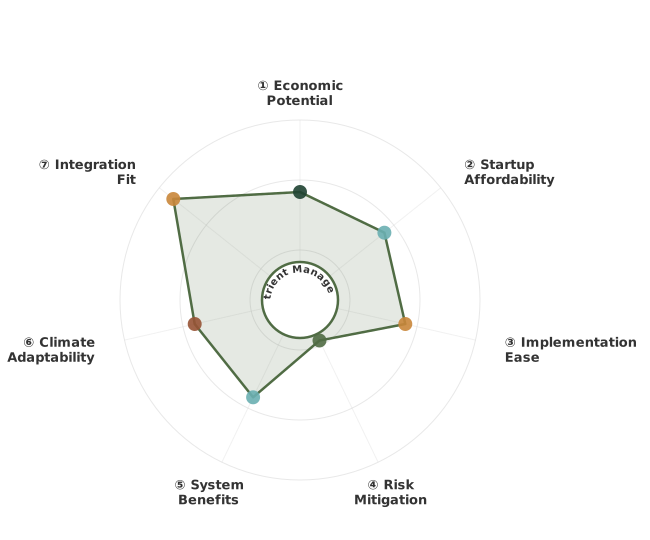
How These Traits Are Calculated
Trait dimensions are ordered clockwise starting from the top of the chart (12 o'clock position):
1. Economic Potential
Financial returns, annual value, and break-even timeline
WHAT: Evaluates financial viability by combining net annual value ($/ha from savings, income, and amortized harvests) with break-even timeline showing when practices pay for themselves.
WHY: Farmers need clear ROI understanding before committing resources. Fast payback (≤3 years) with strong returns (≥$300/ha) enables confident adoption, while long timelines (>10 years) restrict adoption to well-funded operations willing to wait for returns.
HOW: Calculated from net annual value in $/ha and break-even years. Exceptional (≥2.6): fast ROI ≤3 years + high value ≥$300/ha. Typical (1.8-2.5): moderate returns or longer timelines. Limited (<1.8): marginal economics or very long payback >10 years.
2. Startup Affordability
Initial investment costs and financial barrier to entry
WHAT: Measures financial barrier to entry through startup costs for equipment, infrastructure, consulting, and materials. Inverted scoring: lower costs = higher scores = more accessible adoption.
WHY: Affordability determines who can adopt. Low-cost practices (<$250/ha) enable widespread adoption across diverse scales, while high costs (>$2,500/ha) limit adoption to well-capitalized operations, creating barriers that slow regenerative transition.
HOW: Calculated from initial investment parsed from practice content. Inverted scoring: Exceptional (≥2.6): minimal investment <$250/ha. Typical (1.8-2.5): moderate costs $250-2,500/ha. Limited (<1.8): high barrier >$2,500/ha.
3. Implementation Ease
Learning curve and specialized knowledge required
WHAT: Measures how much learning, planning, and specialized knowledge a practice requires. Simpler practices with fewer steps score higher, while complex practices requiring extensive training or specialized resources score lower.
WHY: Complex practices create adoption barriers even when economically viable. Straightforward practices enable faster adoption and broader participation, while those requiring extensive training, timing precision, or specialized equipment limit who can succeed.
HOW: Evaluated by measuring documentation length and identifying complexity markers like location-specific requirements, seasonal timing windows, specialized skills, and dedicated equipment needs. Exceptional (≥2.6): straightforward practices with minimal prerequisites. Typical (1.8-2.5): moderate learning curve with some specialized needs. Limited (<1.8): steep learning curve requiring significant training or resources.
4. Risk Mitigation
Identified financial and ecological risk assessment
WHAT: Evaluates documented risks across financial (investment loss, market volatility) and ecological (crop failure, pest outbreaks) domains. Inverted scoring: fewer risks = higher scores.
WHY: Understanding risk exposure helps farmers make informed decisions. Low-risk practices allow confident implementation, while high-risk practices require careful planning and contingency resources. Risk transparency prevents costly failures.
HOW: Calculated from identified risks in practice content. Inverted scoring: Exceptional (≥2.6): ≤2 risks with manageable severity. Typical (1.8-2.5): 3-5 moderate risks. Limited (<1.8): 6+ risks or severe exposure.
5. System Benefits
How many ways the practice improves your land simultaneously
WHAT: Measures how many aspects of land health improve at once—carbon storage, soil quality, erosion control, water absorption, and biodiversity. Practices that improve multiple areas simultaneously create compounding benefits where each improvement reinforces the others.
WHY: The best practices solve multiple problems at once. For example, addressing erosion simultaneously builds carbon and improves water infiltration, creating a resilient system with positive feedback loops. Single-benefit approaches miss these compound transformation opportunities.
HOW: Evaluated across five key outcomes: carbon sequestration, soil organic matter increase, erosion reduction, water infiltration improvement, and biodiversity enhancement. Exceptional (≥2.6): high carbon storage (>8 t/ha/yr), improvements across 4-5 areas, transformative outcomes. Typical (1.8-2.5): moderate carbon (3-8 t/ha/yr), improvements across 2-3 areas. Limited (<1.8): modest impact (<3 t/ha/yr), single-area focus only.
6. Climate Adaptability
Geographic applicability across Köppen climate zones
WHAT: Evaluates geographic applicability by assessing how many Köppen climate zones successfully support a practice and what adaptation requirements are needed. Measures breadth of climates where farmers can implement with minimal to moderate modifications.
WHY: Universal practices working across diverse climates enable more farmers to adopt regenerative approaches. Practices limited to single climate types (only Mediterranean, only tropical) restrict adoption and slow global transition. Adaptability determines whether a practice serves niche regions or offers broad transformation.
HOW: LLM evaluation of regional success stories, Köppen zone coverage, and adaptation needs. Exceptional (≥2.6): 5+ zones or 4+ climate types, 3+ continents, minimal adaptation. Typical (1.8-2.5): 3-4 zones or 2-3 types, 2 continents, moderate adaptation. Limited (<1.8): 1-2 zones, single region, significant adaptation or highly specialized.
7. Integration Fit
How well this practice combines with others you're doing
WHAT: Measures how well a practice combines with other regenerative practices you might be doing. Some practices work as building blocks that make many other practices easier or more effective, while others work best on their own.
WHY: Practices that combine well with many others create more value on your farm. For example, cover cropping enables no-till, improves grazing, supports crop diversity, and helps water management—making all of them work better together. This helps you build a coherent system rather than juggling disconnected practices.
HOW: Evaluated by identifying which practices combine well and how strong those combinations are. 'Ideally Suited' means strong combinations where practices reinforce each other (practice A makes B easier, while B makes A more effective). 'Adequate' means complementary benefits that work well together. Exceptional (≥2.6): combines well with 6+ practices, serves as a building block. Typical (1.8-2.5): combines with 3-5 practices. Limited (<1.8): 1-2 practices or works best alone.
Going Deeper
1
WHY - The Benefits
Nutrient management in regenerative agriculture is fundamentally about optimizing the soil's ability to provide fertility. It's not about eliminating nutrients but about creating healthy soil ecosystems that can naturally cycle and supply them in the right forms, at the...
Nutrient management in regenerative agriculture is fundamentally about optimizing the soil's ability to provide fertility. It's not about eliminating nutrients but about creating healthy soil ecosystems that can naturally cycle and supply them in the right forms, at the right times, and in the right amounts. This "feed the soil" approach yields significant benefits across soil health, economic resilience, water cycle improvements, carbon sequestration, and biodiversity.
WHY - The Benefits
Nutrient management in regenerative agriculture is fundamentally about optimizing the soil's ability to provide fertility. It's not about eliminating nutrients but about creating healthy soil ecosystems that can naturally cycle and supply them in the right forms, at the...
Nutrient management in regenerative agriculture is fundamentally about optimizing the soil's ability to provide fertility. It's not about eliminating nutrients but about creating healthy soil ecosystems that can naturally cycle and supply them in the right forms, at the right times, and in the right amounts. This "feed the soil" approach yields significant benefits across soil health, economic resilience, water cycle improvements, carbon sequestration, and biodiversity.
Soil Health Benefits
The primary goal of regenerative nutrient management is to foster a thriving soil microbiome. By minimizing soil disturbance (Principle 1), keeping soil covered (Principle 3), and maintaining living roots (Principle 4), we create optimal conditions for beneficial bacteria, fungi, earthworms, and other soil organisms. These organisms are the engine of nutrient cycling. As they break down organic matter – whether from crop residues, cover crops, or animal manures – they mineralize essential nutrients like nitrogen (N), phosphorus (P), potassium (K), and micronutrients, converting them into plant-available forms.
Soil organic matter (SOM) acts as a powerful nutrient reservoir. Regenerative practices can increase SOM, with typical gains in many systems ranging from 0.1-0.3% per year, which translates to significant amounts of stored nutrients. For instance, each 1% of SOM holds approximately 1,000 kg/ha (2,000 lbs/acre) of nitrogen and 100 kg/ha (200 lbs/acre) of phosphorus that can be mineralized over time. This slow-release mechanism reduces the risk of nutrient losses through leaching or volatilization compared to the rapid release from synthetic fertilizers.
Furthermore, regenerative nutrient management enhances nutrient use efficiency (NUE). Diverse plant root systems, including those of cover crops and perennial forages, explore the soil profile more thoroughly, accessing nutrients from greater depths and widths. Mycorrhizal fungi form symbiotic relationships with plant roots, extending their reach and facilitating nutrient uptake, particularly phosphorus. This biological synergy means plants can acquire more nutrients from the soil, reducing their dependence on external applications.
Water infiltration and retention are also greatly improved by healthy soil structure, which is a direct result of good nutrient management leading to higher SOM and biological activity. Better soil structure means more pore space, allowing water to enter the soil rather than running off. This improved water management is critical for drought resilience and for supporting the nutrient cycling processes that rely on moisture.
Economic Benefits
The economic advantages of regenerative nutrient management are substantial and accrue over time. The most immediate benefit is reduced input costs. As soil biology takes over nutrient supply, the need for expensive synthetic fertilizers, which often represent a significant portion of farm operating expenses, diminishes. Over 5-10 years, farms can typically reduce synthetic N inputs by 30-70%, leading to direct savings of $60-200 per hectare ($25-80 per acre) annually, depending on the crop and the region's standard practices.
This reduction in spending directly improves farm profitability. While there might be initial investments in cover crop seed, soil testing, or specialized equipment for nutrient application (if any), these are often quickly offset by savings in fertilizer purchases. Moreover, the improved soil health leads to greater resilience against environmental shocks, such as drought or pest outbreaks. Healthier soils buffer crops from stress, leading to more stable yields and reduced risks of catastrophic crop failure, thus reducing the financial volatility of the farm enterprise.
Farms adopting regenerative nutrient management can also tap into emerging markets for sustainably produced goods. Consumers and food companies are increasingly willing to pay a premium for products grown with minimal environmental impact. This can open up new marketing channels and opportunities for higher profit margins, further enhancing the economic viability of regenerative systems. The long-term economic benefit also includes increased land value due to improved soil fertility and ecological health.
Ultimately, regenerative nutrient management fosters a more circular and resilient economy on the farm. Nutrients are recycled internally, reducing reliance on external, price-volatile commodities. This creates a more stable and predictable financial future, less susceptible to the fluctuations of global fertilizer markets.
Regenerative Systems Fit
Nutrient management in regenerative agriculture is a Foundational Practice that directly supports and is supported by the five core regenerative principles.
Principle 1 (Minimize Soil Disturbance): By reducing tillage, we protect the soil structure and the fungal networks that are crucial for nutrient transport and mineralization. Tillage disrupts these networks, burying organic matter and making it less accessible to surface microbes. No-till or reduced-till systems preserve the soil's natural architecture, allowing for more efficient and biologically driven nutrient cycling.
Principle 2 (Maximize Crop Diversity): Diverse cropping systems, including cover crops and intercropping, are key to regenerative nutrient management. Different plants have different nutrient requirements and root architectures. Legumes fix atmospheric nitrogen, while deep-rooted plants can mine nutrients from lower soil profiles, bringing them to the surface through their biomass. This diversity creates a more complex and efficient nutrient web, reducing the reliance on any single nutrient source and building soil fertility organically.
Principle 3 (Keep Soil Covered): Living plant cover or mulch protects soil from erosion and moisture loss, creating stable conditions for soil microbes to thrive. Cover crops and permanent pastures continuously feed the soil with organic matter, fueling nutrient release. This living cover also reduces nutrient leaching by capturing excess nutrients that might otherwise be lost to groundwater.
Principle 4 (Maintain Living Roots): Roots are the primary source of carbon for soil microbes, feeding the very organisms responsible for nutrient cycling. Maintaining living roots for as much of the year as possible ensures continuous biological activity, providing a steady supply of energy and compounds that drive nutrient mineralization and plant uptake. This is achieved through practices like perennial crops, cover cropping, and crop rotation.
Principle 5 (Integrate Livestock): Livestock play a critical role in nutrient management by cycling nutrients through manure and urine. When managed strategically in regenerative systems, they deposit manure directly onto pastures or fields, providing a natural source of fertility. This integration closes nutrient loops, reducing the need for external inputs and creating a more self-sufficient farm system.
The shift to regenerative nutrient management is a Transition Pathway. Farms that have relied heavily on synthetic inputs will use specific transition practices (e.g., gradual input reduction, initial use of tillage to incorporate amendments) as part of a phased approach. This involves gradually reducing synthetic applications (e.g., by 10-20% per year) while simultaneously increasing soil-building practices (cover cropping, composting, integrating livestock). The timeline for phasing out synthetic inputs can range from 3-7 years, depending on the starting point and the intensity of regenerative practices implemented. Success is defined by maintaining crop yields and quality with significantly reduced or eliminated synthetic inputs, alongside observable improvements in soil health metrics. The "cold turkey" approach is generally not recommended, as it can lead to significant yield drops and economic stress, hindering the transition.
Sources behind this view
Videos & Podcasts
-
Regenerative agriculture provides solutions for climate change, human health, and soil degradation, contrasting with industrial agriculture's harmful impacts, including glyphosate use. Practices like
-
Provides actionable steps for regenerative agronomy: balanced N:C inputs (molasses, humates), microbial teas, yeast metabolites, calcium, and effective seed treatments. Emphasizes scalability, systems
-
Adopting regenerative practices should start small and incrementally, focusing on soil health over short-term yields. Collaboration, strategic nutrient sourcing, and leveraging resources like Continuu
-
Case studies of farmers like Duane Beck, Kofi Boa, David Brandt, and Gabe Brown demonstrate that regenerative agriculture (no-till, cover crops, diverse rotations) significantly increases soil health,
Community
-
Advocates for Soil Foodweb principles and Holistic Management, emphasizing land leasing and custom grazing/growing over labor-intensive methods. Focuses on soil restructuring for water availability an
Read more (opens in new window) permies.com -
Build healthy pasture soils by minimizing tillage, maintaining living roots and species diversity, and implementing proper grazing management. Livestock are essential for nutrient cycling and stimulat
Read more (opens in new window) smallfarms.cornell.edu -
Gabe Brown's regenerative practices emphasize no-till, polyculture (ideally 7-20 species), and minimizing bare soil to build soil health and organic matter. These methods reduce water needs, increase
Read more (opens in new window) permies.com -
Jon from Wild Roots Farm in Vermont advocates for regenerative practices like limited tillage, crop rotations, and rotational grazing to build resilience in food systems. He explains how these methods
Read more (opens in new window) smallfarms.cornell.edu
Research
-
Regenerative Agriculture: Restoring Ecosystems¢ Resilience and Productivity: A Review (opens in new window)
This study found: Regenerative agriculture builds soil health and ecosystem services through practices like no-till, cover crops, and diverse rotations. It increases soil organic matter, improves water infiltration, bo
-
The Indigenous Roots of Regenerative Agriculture (opens in new window)
This study found: Modern regenerative agriculture practices are rooted in millennia of Indigenous land stewardship, offering profound knowledge and a crucial value system of respect and reciprocity for true transformat
-
Systematic review of regenerative farming: Addressing agricultural sustainability challenges (opens in new window)
This study found: Systematic review of 31 studies shows regenerative farming improves soil health, biodiversity, and carbon capture, aiding sustainability. Technology is key for adoption, but policy, farmer understandi
-
Building Soil Health and Fertility through Organic Amendments and Practices: A Review (opens in new window)
This study found: Review of organic amendments (manures, compost, cover crops) and regenerative practices (no-till, crop diversity, agroecology) shows they restore soil health by increasing organic matter and beneficia
From the Web
-
Key regenerative agriculture methods include no-till farming, cover cropping, agroforestry, perennial crops, planned rotational grazing (Holistic Management), and compost application, all aimed at imp
-
Regenerative agriculture regenerates topsoil, increases biodiversity, and improves carbon/water cycles through methods like minimal tillage, soil cover, diversity, and animal integration, boosting pro
-
Regenerative farming combines no-till, cover crops, and complex rotations, often with livestock grazing, to boost profitability by reducing input costs and increasing soil organic matter. Studies show
-
Five steps to regenerative agriculture: Holistic Planned Grazing, no-till farming, planting diverse cover crops/interseeding, using compost/inoculants (with caution), and incorporating silvopasture/wo
2
WHERE - Regional Considerations
Successful regenerative nutrient management is adaptable across diverse agroecological regions. The fundamental principles of feeding the soil remain constant, but regional variations in climate, soil types, typical crops, and existing farming systems necessitate...
Successful regenerative nutrient management is adaptable across diverse agroecological regions. The fundamental principles of feeding the soil remain constant, but regional variations in climate, soil types, typical crops, and existing farming systems necessitate tailored approaches. Understanding these regional nuances is key to effectively implementing nutrient management strategies that build soil health and fertility.
WHERE - Regional Considerations
Successful regenerative nutrient management is adaptable across diverse agroecological regions. The fundamental principles of feeding the soil remain constant, but regional variations in climate, soil types, typical crops, and existing farming systems necessitate...
Successful regenerative nutrient management is adaptable across diverse agroecological regions. The fundamental principles of feeding the soil remain constant, but regional variations in climate, soil types, typical crops, and existing farming systems necessitate tailored approaches. Understanding these regional nuances is key to effectively implementing nutrient management strategies that build soil health and fertility.
Click Here to Look up your Region if you don't already know it
Humid Temperate Regions
Representative Locations: Northeastern United States, Canada, Northern Europe (e.g., Germany, UK, Poland), Eastern China, Japan, New Zealand
Climate Context: Warm to hot summers and cool to cold winters with moderate to high annual precipitation distributed relatively evenly. USDA Zones 4-7, Köppen Cfb/Cfa. Rainfall typically ranges from 75-150 cm (30-60 inches) annually.
Nutrient Management Considerations: These regions often benefit from practices that manage excess moisture and prevent nutrient leaching. Diverse cover crop mixes are highly effective, especially cool-season species that can be planted in fall after cash crop harvest and in spring before planting. Legumes are crucial for nitrogen fixation, and deep-rooted species help scavenge nutrients from lower soil profiles. Integrating livestock through managed grazing can help distribute manure evenly and stimulate plant growth, but careful management is needed to avoid over-application of nutrients or soil compaction during wet periods. Winter cover crops are essential to keep soil covered and roots active, preventing nutrient losses during the dormant season.
Mediterranean Regions
Representative Locations: California (USA), Mediterranean basin (e.g., Spain, Italy, Greece), Central Chile, Southwestern Australia, Western Cape (South Africa)
Climate Context: Hot, dry summers and mild, wet winters. Annual precipitation is highly seasonal and ranges from 40-90 cm (15-35 inches). USDA Zones 8-10, Köppen Csa/Csb.
Nutrient Management Considerations: Water is the primary limiting factor for biological activity. Maximizing water infiltration and retention is paramount. This requires high organic matter in soils, achieved through dense cover cropping and reduced tillage. Deep-rooted cover crops are vital for accessing water and nutrients in drier soil layers. Livestock integration can be challenging due to summer drought and potential overgrazing of desiccated pastures; managed grazing during the wetter fall, winter, and spring periods is essential. Focusing on drought-tolerant perennial forages and trees helps maintain living roots year-round and provides shade, reducing soil moisture loss. Legumes that tolerate drier conditions are key for nitrogen management.
Arid/Semi-Arid Regions
Representative Locations: Western USA (e.g., Great Plains, Intermountain West), North Africa, Central Asia, Interior Australia
Climate Context: Low annual precipitation (<40 cm or 15 inches), high temperatures, short and often unpredictable growing seasons. USDA Zones 7-9, Köppen BSh/BSk.
Nutrient Management Considerations: Water scarcity dictates every aspect of nutrient management. Practices must focus on water conservation and maximizing nutrient uptake from minimal rainfall. Drought-tolerant cover crops, often single species or simple mixes, are used primarily to add organic matter. Composting and the use of slow-release organic fertilizers are highly valued to prevent nutrient losses. Livestock integration is often central, with careful grazing management to avoid overstocking and bare ground. Wind erosion is a significant risk, making maintaining soil cover with permanent pasture, cover crops, or mulches critical for protecting topsoil and any nutrients within it. Precision application of any supplemental nutrients is essential.
Cold Continental Regions
Representative Locations: Northern USA and Canada, Northern Europe (e.g., Scandinavia, Russia), Northern Asia
Climate Context: Very short growing seasons, extreme summer heat, severe winter cold. USDA Zones 3-5, Köppen Dfa/Dfb.
Nutrient Management Considerations: The challenge here is extending the growing season for soil biology and maximizing nutrient capture within a short window. Planting early-maturing, cold-tolerant cover crops is crucial. Utilizing overwintering cover crops (like winter rye or hairy vetch) that can resume growth early in spring is highly beneficial. Integrating livestock during the summer grazing season can help cycle nutrients effectively. Building soil organic matter is key to improving soil thermal properties, allowing for earlier warming in spring and better moisture retention during the growing season. Fall cover cropping is essential to prevent nutrient losses during winter thaw and melt.
Subtropical Regions
Representative Locations: Southeastern USA, Southern China, Southern Brazil, Eastern Australia
Climate Context: Hot, humid summers and mild winters with generally ample rainfall, though some regions experience distinct dry seasons. USDA Zones 9-11, Köppen Cfa/Cwa.
Nutrient Management Considerations: High temperatures and humidity can accelerate organic matter decomposition, making continuous soil cover vital to retain nutrients. Year-round cover cropping is highly achievable. The challenge can be managing nutrient releases to match crop demand, as active soil biology can mineralize nutrients quickly. Integrating livestock can be very effective, but careful rotational grazing is needed to prevent overgrazing and potential nutrient imbalances from concentrated manure deposition. Utilizing crop rotations that include legumes and deep-rooted plants helps balance nutrient availability and soil structure.
Tropical Regions
Representative Locations: Central America, Southeast Asia, East Africa, Northern Australia, Northern South America
Climate Context: High temperatures year-round with either consistent high rainfall or distinct wet and dry seasons. Köppen Af/Am/Aw.
Nutrient Management Considerations: Rapid decomposition in warm, humid conditions can lead to quick nutrient release but also rapid loss if not captured by plants. Year-round living cover is non-negotiable. Diverse cover crops, intercropping, and agroforestry systems (silvopasture) are highly effective. Livestock integration can be very powerful, but careful management is needed to avoid soil degradation from heavy rainfall and high animal density common in wet seasons. Practices that build soil organic matter quickly are paramount. Nitrogen management is often facilitated by abundant legume-fixing bacteria driven by high temperatures. Phosphorus availability can become an issue in highly weathered tropical soils, requiring attention to organic forms and microbial solubilization.
3
HOW - Implementation Process
Implementing regenerative nutrient management involves a shift in focus from direct fertilizer application to nurturing soil health and biological activity. It's a journey that requires patience, observation, and adaptation, moving progressively towards a system where...
Implementing regenerative nutrient management involves a shift in focus from direct fertilizer application to nurturing soil health and biological activity. It's a journey that requires patience, observation, and adaptation, moving progressively towards a system where the soil provides for the crop.
HOW - Implementation Process
Implementing regenerative nutrient management involves a shift in focus from direct fertilizer application to nurturing soil health and biological activity. It's a journey that requires patience, observation, and adaptation, moving progressively towards a system where...
Implementing regenerative nutrient management involves a shift in focus from direct fertilizer application to nurturing soil health and biological activity. It's a journey that requires patience, observation, and adaptation, moving progressively towards a system where the soil provides for the crop.
Prerequisites
- Soil Assessment: Understand your starting point. Conduct comprehensive soil tests that include not only standard N, P, K, and micronutrients, but also soil organic matter percentage, Cation Exchange Capacity (CEC), and ideally, biological indicators like earthworm counts or microbial respiration tests. Repeat testing annually or bi-annually.
- Understanding Your Soil Type: Know your soil's inherent properties – texture (sand, silt, clay), drainage, and potential for compaction. This informs cover crop selection and appropriate management strategies.
- Commitment to Long-Term Soil Health: Recognize that building biological fertility takes time. This is not a quick fix, but a commitment to ongoing soil improvement.
- Observation Skills: Develop the habit of observing your fields. Look at plant vigor, color, disease/pest presence, soil aggregation, and earthworm activity. These visual cues are invaluable.
- Access to Diverse Seeds: For cover cropping and diverse rotations, reliable access to a variety of seeds adapted to your region is essential.
Phase 1: Reducing Synthetic Inputs & Establishing Ground Cover (Years 1-2)
Goal: Begin reducing synthetic fertilizer application while ensuring continuous soil cover and introducing more diversity.
-
Gradual Reduction Strategy:
- Year 1: Reduce synthetic N application by 20-30% across the board, especially on fields with higher organic matter (>3%). Simultaneously, increase application rates of compost or manure if available. Supplement with targeted organic nutrient sources (e.g., bone meal for P, potassium sulfate for K) only where soil tests indicate critical deficiencies.
- Year 2: Reduce synthetic N by another 20-30%. Focus on fields where previous reductions showed minimal negative impact on crop performance. Increase reliance on cover crops for N fixation (use leguminous cover crops).
-
Prioritize Soil Cover:
- Post-Cash Crop: Immediately plant a winter cover crop mix (e.g., oats, peas, hairy vetch in temperate regions; sorghum-sudangrass or cowpeas in warmer climates). Aim for at least 70% ground cover within 6-8 weeks of planting.
- During Cash Crop Season: Explore intercropping with shade-tolerant legumes or companion plants where feasible without compromising cash crop yield. Minimize bare soil periods between crop cycles.
-
Introduce Basic Diversity:
- If monoculture is dominant, begin incorporating at least one different crop species into the rotation.
- Select initial cover crop mixes with 3-5 species, including a grass for biomass, a legume for N, and a broadleaf for diversity (e.g., radishes to break compaction).
-
Economic Consideration: Invest in soil testing and high-quality cover crop seeds. Local agricultural extension services or regenerative farming consultants can provide regional seed recommendations.
Phase 2: Enhancing Biology and Nutrient Cycling (Years 3-5)
Goal: Increase the diversity of cover crops, crop rotations, and potentially integrate livestock to significantly boost soil biological activity and nutrient availability.
-
Advanced Cover Cropping:
- Increase cover crop species diversity in mixes to 8-12+ species. Include deep-rooted plants (e.g., tillage radish, chicory) to scavenge nutrients and improve soil structure, biomass producers, and N-fixers.
- Experiment with multi-species, dynamic cover crop mixes tailored to specific soil conditions and cash crop needs.
-
Diversify Crop Rotations:
- Introduce more functional groups into your cash crop rotation (e.g., legumes, brassicas, root crops). Aim for a 4-5 year rotation if possible.
- Consider annual forages for livestock if integrating animals.
-
Livestock Integration (If Applicable):
- Implement managed grazing of cover crops or pastures. Use rotational grazing to allow adequate rest periods for plants, stimulating growth and nutrient cycling.
- Strategically apply manure or compost to fields, timing applications to benefit cover crops or cash crops, avoiding direct application onto sensitive seedlings.
-
Phased Reduction of Synthetics: Continue reducing synthetic nitrogen by another 20-30% per year. Monitor crop performance closely. If yield or quality suffers, adjust the reduction rate or increase cover crop/organic input efforts. Target complete phase-out of synthetic N by Year 5, or sooner if soil biology is robust.
-
Organic Amendments: Explore utilizing on-farm organic resources like composted plant residues, animal manures, or crop byproducts. Consider a whole-cover crop management approach where residues are left on the surface as mulch.
-
Economic Consideration: Costs for diverse cover crop seed may increase. Invest in livestock if integrating, or in composting equipment if managing own organic inputs. Budget for increased reliance on knowledge and observation.
Phase 3: Achieving Self-Sufficiency and Resilience (Years 6+)
Goal: Transition to a system where the soil's biological processes provide adequate nutrients for crop production, minimizing or eliminating the need for synthetic inputs and external amendments.
- Full Biological Reliance: Rely on cover crops, crop rotation diversity, livestock manure, and on-farm organic matter decomposition for nutrient supply. Soil tests should show robust organic matter levels and favorable biological activity.
- Fine-Tuning Management: Adapt cover crop species and timing based on observed performance and cash crop needs. Monitor soil nutrient levels and crop health, adjusting cover crop mixes or grazing timing as needed.
- Continuous Improvement: Continue to observe and adapt. Focus on building soil structure, water holding capacity, and a resilient soil food web.
- Minimize All External Inputs: Phase out synthetic phosphorus, potassium, and micronutrient fertilizers as soil tests and crop performance confirm soil reserves and biological cycling are sufficient. If micronutrient deficiencies appear, address them with biologically available organic sources (e.g., seaweed extracts, rock dusts, trace mineral amendments) rather than soluble synthetic salts.
Transition Timeline & Phase-Out Strategy:
- Years 1-2: Focus on establishing continuous cover and reducing synthetic nitrogen by 20-30% each year. Introduce basic diversity.
- Years 3-4: Increase cover crop diversity, crop rotation complexity, and potentially integrate livestock. Reduce synthetic nitrogen further by 20-30% yearly.
- Year 5: Aim to eliminate synthetic nitrogen. Continue to reduce other synthetic fertilizers (P, K, micronutrients) based on soil test results and crop performance.
- Years 6+: Achieve near-complete reliance on biological nutrient cycling. Use minimal or no synthetic inputs. Focus on maintaining and enhancing soil health.
Indicators of Success:
- Consistent crop yields comparable to or exceeding previous synthetic-dependent yields.
- Reduced incidence of crop diseases and pest pressure.
- Measurable increases in soil organic matter (e.g., 0.3-0.5% increase per year).
- Improved soil aggregation, water infiltration, and retention.
- High earthworm populations and visible soil biological activity.
- Reduced need for irrigation.
- Improved crop nutrient density (verified through plant tissue analysis).
A "cold turkey" approach is generally not recommended. Abruptly stopping synthetic fertilizers on heavily reliant systems can lead to yield losses of 20-50% in the first year, causing severe economic hardship and potentially discouraging further transition. A gradual, phased approach allows the soil biology time to activate and build its nutrient-supplying capacity, buffering crops from nutrient deficiencies and ensuring sustained profitability. This transition period typically requires 3-7 years.
Sources behind this view
Videos & Podcasts
-
Provides actionable steps for regenerative agronomy: balanced N:C inputs (molasses, humates), microbial teas, yeast metabolites, calcium, and effective seed treatments. Emphasizes scalability, systems
-
A North Dakota farmer achieved significant economic success through regenerative agriculture, reducing fertilizer (40-60%), eliminating seed treatments, fungicides, and crop burndown, and cutting herb

-
Case studies of farmers like Duane Beck, Kofi Boa, David Brandt, and Gabe Brown demonstrate that regenerative agriculture (no-till, cover crops, diverse rotations) significantly increases soil health,
-
Regenerative agriculture provides solutions for climate change, human health, and soil degradation, contrasting with industrial agriculture's harmful impacts, including glyphosate use. Practices like
Community
-
Build healthy pasture soils by minimizing tillage, maintaining living roots and species diversity, and implementing proper grazing management. Livestock are essential for nutrient cycling and stimulat
Read more (opens in new window) smallfarms.cornell.edu -
Advocates for converting conventional land to permaculture, recommending a gradual transition with cover crops and farmer collaboration, aiming to reduce chemical inputs over 3 years as soil heals.
Read more (opens in new window) permies.com -
Strategic use of one-time tillage on dense cover crops can accelerate soil regeneration to achieve 12 inches of rich soil in two years or less, enhancing microbial activity and organic matter, and can
Read more (opens in new window) permies.com
Research
-
Regenerative Agriculture: Restoring Ecosystems¢ Resilience and Productivity: A Review (opens in new window)
This study found: Regenerative agriculture builds soil health and ecosystem services through practices like no-till, cover crops, and diverse rotations. It increases soil organic matter, improves water infiltration, bo
-
Building Soil Health and Fertility through Organic Amendments and Practices: A Review (opens in new window)
This study found: Review of organic amendments (manures, compost, cover crops) and regenerative practices (no-till, crop diversity, agroecology) shows they restore soil health by increasing organic matter and beneficia
-
Transition to Regenerative Farming (opens in new window)
This study found: A 5-year case study shows a farm successfully transitioned to regenerative practices, reducing soil erosion and increasing wildlife by using cover crops, diversified rotations, and reduced tillage. Pr
-
Soil Microbial Dynamics in Regenerative Agriculture Systems: A Data-Driven Synthesis for Soil Health, Pest Suppression, and Yield Sustainability in the Western Canadian Prairies (opens in new window)
This study found: Regenerative farming in Western Canada boosts soil microbes (up to 86%), fungi (up to 60%), and carbon, improving soil health and water retention. This leads to more stable yields and reduced syntheti
From the Web
-
Five steps to regenerative agriculture: Holistic Planned Grazing, no-till farming, planting diverse cover crops/interseeding, using compost/inoculants (with caution), and incorporating silvopasture/wo
4
Know the Debate
Regenerative nutrient management shifts focus from feeding plants to feeding soil microbes. While the core principles of building soil health and c...
Know the Debate
Regenerative nutrient management shifts focus from feeding plants to feeding soil microbes. While the core principles of building soil health and c...
Regenerative nutrient management shifts focus from feeding plants to feeding soil microbes. While the core principles of building soil health and cycling nutrients apply globally, outcomes vary significantly by region. In humid climates with ample rainfall, soil biology responds quickly, potentially allowing for rapid phase-out of synthetic inputs. Conversely, arid regions demand slower, more water-conscious approaches where nutrient release is limited. The scale of operation and capital investment also play a role, with larger farms potentially achieving lower cost-per-hectare inputs but facing labor challenges. Transitioning without synthetic nitrogen also presents a timeline debate, ranging from a rapid 3-5 year phase-out to a more cautious 5-7+ year approach.
How long does it take to phase out synthetic nitrogen?
3-5 years (Ideal conditions)
Academic research and experiences in humid, fertile regions with intensive cover cropping suggest synthetic nitrogen can be phased out within 3-5 years. This relies on robust biological nitrogen fixation and efficient nutrient cycling.
Sources behind this view
Sources behind this view
Videos & Podcasts
-
Exceptional farm success is driven by focusing on soil biology to improve soil health and nutrient cycling, while reducing harmful inputs and strategically adding missing key nutrients.

-
Optimizing the biological nutrient cycle through a healthy soil microbiome (mycorrhizal fungi, bacteria, protozoa) is key to unlocking soil nutrients and improving plant health, reducing reliance on pesticides and fungicides.
Research
-
HARNESSING MICROBIAL DYNAMICS AND SMART C/N RATIO MANAGEMENT: PROGRESSIVE PATHWAYS FOR SUSTAINABLE SOIL FERTILITY (opens in new window)
This study found: This review explains how to build healthy, fertile soil by focusing on the tiny organisms living in it and balancing the soil's carbon and nitrogen levels. Keeping soil pH between 6.0 and 7.5 helps a wide variety of microbes thrive, which are essential for breaking down organic matter and releasing nutrients. Farmers can manage the carbon-to-nitrogen balance by using compost, biochar (a charcoal-like material), and green manures (crops grown to be tilled back into the soil). New technologies like smart composting, sensors to monitor C/N ratios in real-time, and AI tools can help farmers manage soil microbes and nutrients more precisely. Practices like rotating crops with legumes (like beans and clover), not tilling the soil, planting multiple crops together (intercropping), and using a mix of nutrient management strategies all boost beneficial soil life, prevent soil erosion, and improve long-term farm productivity. Combining nature's wisdom with modern technology offers a powerful way to create farming systems that can withstand climate change.
-
Natural Farming: Embracing Regenerative Agriculture for Sustainable Crop Production (opens in new window)
This study found: Natural farming is a way of growing food that works with nature, not against it, to produce safe and high-quality crops. It focuses on building healthy soil life without using any chemicals like synthetic fertilizers, pesticides, or herbicides. The core ideas involve using natural materials like cow dung and urine mixtures, recycling plant waste, planting cover crops (like beans and peas) to protect the soil, and minimizing irrigation. This 'do-nothing' approach, also called no-till farming, significantly reduces the need for manual labor, by up to 80%. By relying less on outside inputs, natural farming improves soil health, is cost-effective, can create jobs, and helps address issues like food shortages, farmer hardship, health problems from chemical residues, and climate change.
5-7+ years (Varied conditions)
Experienced farmers, especially in drier climates or less biologically active soils, report needing 5-7 years or longer for complete nitrogen independence. This accounts for slower biology and potential yield dips.
Sources behind this view
Sources behind this view
Videos & Podcasts
-
Exceptional farm success is driven by focusing on soil biology to improve soil health and nutrient cycling, while reducing harmful inputs and strategically adding missing key nutrients.
-
Managed transitions aim to improve soil health, microbial diversity, and humus formation while maintaining yields. Heavy synthetic N and P fertilization harms soil by reducing carbon rhizodeposition, microbial diversity, and humus, while accelerating decomposition and favoring pathogens. Fungi are vital but sensitive to disturbance and chemicals.
Research
-
Soil Health: Concepts, Principles and Road Maps for Management in Regenerative Agriculture (opens in new window)
This study found: This article discusses how to improve soil health, which is vital for growing food and keeping our land healthy. It explains that after the Green Revolution, using too many chemicals damaged soils, leading to lower crop yields. Regenerative agriculture offers a way to fix this. Soil health means the soil can continuously support plants, animals, and people. Instead of chemical fertilizers and pesticides, the article recommends using natural alternatives like biofertilizers (fertilizers made from microbes), worm castings (vermicompost), animal manure, and green manure (crops grown to be plowed back into the soil). Using these natural methods helps crops grow well, is better for the environment, and helps combat climate change. The focus is on looking at soil's living components, its chemistry, and its structure to guide these improvements.
From the Web
-
Sustainable nutrient management is crucial for plant productivity, farm profitability, and preventing pollution. Key practices include using composts, manures, cover cropping, and biochar to build soil health and provide nutrients effectively.
-
Soil nutrient management follows the 'Four Rs' (amount, source, placement, timing) to optimize crop uptake and minimize environmental loss. Soil testing is key, with a focus on nitrogen, phosphorus, and potassium, and increasing soil organic matter via cover crops, compost, or manure for improved soil health.
Making Sense of the Differences
The timeline for phasing out synthetic nitrogen varies mainly with soil health and climate. Humid regions with active biology may achieve it in 3-5 years. Drier climates or systems starting with depleted soils may need 5-7+ years, as soil biology takes longer to build robust nitrogen-cycling capacity. Farmers should plan for a gradual reduction strategy, monitoring soil activity and crop performance to adapt the pace.
Can synthetic nitrogen be eliminated entirely from regenerative systems?
Eliminate (Ideal conditions)
Academic research advocates for complete elimination, citing harm to soil biology and demonstrating feasibility in 3-5 years with robust biological practices.
Sources behind this view
Sources behind this view
Videos & Podcasts
-
Exceptional farm success is driven by focusing on soil biology to improve soil health and nutrient cycling, while reducing harmful inputs and strategically adding missing key nutrients.
-
Recommends regenerative, biologically focused farming practices, prioritizing feeding soil biology with cycled nutrients and natural remedies over sole reliance on synthetic inputs to address issues like phosphorus tie-up.
Research
-
Nitrogen in cereal systems: Opportunities for sustainable agricultural growth (opens in new window)
This study found: Managing nitrogen is vital for feeding the world and protecting the environment. The goal is to balance the nitrogen going into and out of our farms. Soil organic matter is a key sign of healthy soil and a source of nitrogen for plants. Farmers can improve yields and use nitrogen more efficiently by adopting smart farming methods. These include planting at higher densities, using soil tests to guide fertilizer amounts, applying fertilizer in stages, using irrigation for fertilizer delivery (fertigation), and tailoring nitrogen use to specific field areas. New fertilizer types, like those that release nutrients slowly or use tiny particles (nano-fertilizers), can also help. It's important to reduce the misuse of nitrogen fertilizers and promote policies that build soil health for long-term farm success.
-
Natural Farming: Embracing Regenerative Agriculture for Sustainable Crop Production (opens in new window)
This study found: Natural farming is a way of growing food that works with nature, not against it, to produce safe and high-quality crops. It focuses on building healthy soil life without using any chemicals like synthetic fertilizers, pesticides, or herbicides. The core ideas involve using natural materials like cow dung and urine mixtures, recycling plant waste, planting cover crops (like beans and peas) to protect the soil, and minimizing irrigation. This 'do-nothing' approach, also called no-till farming, significantly reduces the need for manual labor, by up to 80%. By relying less on outside inputs, natural farming improves soil health, is cost-effective, can create jobs, and helps address issues like food shortages, farmer hardship, health problems from chemical residues, and climate change.
Reduce strategically (Practical reality)
Experienced farmers report that complete elimination can take 5-10 years or may not be feasible for all systems, suggesting strategic reductions with organic supplements is often more practical.
Sources behind this view
Sources behind this view
Videos & Podcasts
-
Nutrient management discussion centers on nitrogen, phosphorus, and potassium, with an emphasis on optimizing application timing and methods. The goal is to leverage soil health principles to activate natural nutrient cycles and reduce reliance on synthetic fertilizers.
-
Managed transitions aim to improve soil health, microbial diversity, and humus formation while maintaining yields. Heavy synthetic N and P fertilization harms soil by reducing carbon rhizodeposition, microbial diversity, and humus, while accelerating decomposition and favoring pathogens. Fungi are vital but sensitive to disturbance and chemicals.
Research
-
Soil Health: Concepts, Principles and Road Maps for Management in Regenerative Agriculture (opens in new window)
This study found: This article discusses how to improve soil health, which is vital for growing food and keeping our land healthy. It explains that after the Green Revolution, using too many chemicals damaged soils, leading to lower crop yields. Regenerative agriculture offers a way to fix this. Soil health means the soil can continuously support plants, animals, and people. Instead of chemical fertilizers and pesticides, the article recommends using natural alternatives like biofertilizers (fertilizers made from microbes), worm castings (vermicompost), animal manure, and green manure (crops grown to be plowed back into the soil). Using these natural methods helps crops grow well, is better for the environment, and helps combat climate change. The focus is on looking at soil's living components, its chemistry, and its structure to guide these improvements.
From the Web
-
Sustainable nutrient management focuses on on-site recycling and renewable sources for nitrogen, phosphorus, and potassium, utilizing legumes, manure, compost, and cover crops while minimizing tillage and using local wastes.
-
Optimizing soil fertility requires the 4Rs of nutrient management: right source, rate, time, and place. Nitrogen, carbon, phosphorus, and potassium are vital. The nitrogen cycle is complex, necessitating tools like PSNT and leaf chlorophyll meters for in-season nitrogen management and top-dressing decisions.
Making Sense of the Differences
While academic research strongly supports complete elimination of synthetic nitrogen due to its detrimental effects on soil biology, farmer experience suggests strategic reduction is often more practical and economically viable. Achieving complete independence may take 5-10 years, especially in high-demand cropping systems, as soil biology builds its capacity. Many find success by drastically reducing synthetics while supplementing with organic sources and maximizing biological fixation, rather than striving for absolute elimination if it compromises yield or financial stability.
5
HOW MUCH - Costs & Investment
Note: Costs shown in USD; multiply by local labor and material cost indices for your region. Labor costs vary significantly internationally. These are estimates for transitioning to nutrient management focused on soil health.
Note: Costs shown in USD; multiply by local labor and material cost indices for your region. Labor costs vary significantly internationally. These are estimates for transitioning to nutrient management focused on soil health.
HOW MUCH - Costs & Investment
Note: Costs shown in USD; multiply by local labor and material cost indices for your region. Labor costs vary significantly internationally. These are estimates for transitioning to nutrient management focused on soil health.
Note: Costs shown in USD; multiply by local labor and material cost indices for your region. Labor costs vary significantly internationally. These are estimates for transitioning to nutrient management focused on soil health.
Note: All costs are based on recent US economic data (2024–2026) and may vary substantially by region based on local labor rates, material costs, and regulatory requirements.
Soil Testing & Analytical Analysis
Regenerative nutrient management relies on moving beyond standard N-P-K testing Toward comprehensive biological assessments. Small-scale operations under 50 acres (20 ha) often prioritize high-resolution grid sampling to optimize inputs, requiring an annual investment of $52.10–$156.30 per acre ($129–$386/ha). Mid-size farms (50–500 acres (20–202 ha)) typically leverage bulk soil analysis and long-term laboratory partnerships, which brings per-acre costs to $31.26–$83.36. Large-scale operations exceeding 500 acres (202 ha) utilize variable-rate testing technology integrated with satellite-linked spatial data, maintaining costs between $10.42–$41.68 per acre ($26–$103/ha). These foundational investments are critical, as high-resolution data prevents the over-application of synthetic fertilizers, typically paying for the diagnostic cost through input savings by the third year of transition.
Cover Crop Seed & Establishment
Cover crops function as the primary nutrient cyclers in regenerative systems. On small-scale operations of under 50 acres (20 ha), producers often face higher seed costs per pound due to smaller order volumes, with high-quality, biologically active multi-species mixes ranging from $62.52–$208.40 per acre ($154–$515/ha). Mid-size operations accessing wholesale seed pricing or bulk cooperative purchasing paths can achieve establishment costs of $41.68–$125.04 per acre ($103–$309/ha). For large-scale farms, planting costs are dictated by machinery efficiency and labor speed; these operations typically report costs of $26.05–$83.36 per acre ($64–$206/ha), covering both high-volume seeds and the fuel costs associated with multi-pass planting or precision termination cycles.
Compost, Manure, & Biological Amendments
Replacing synthetic inputs with biological amendments creates the largest budget variance. Small-scale producers relying on bagged, certified organic compost or specialized microbial inoculants report annual expenditures of $156.30–$416.80 per acre ($386–$1,030/ha). Mid-size farms, which often utilize semi-truckload deliveries of compost or localized manure application from regional livestock partners, see costs stabilize at $104.20–$312.60 per acre ($257–$772/ha). Large-scale producers who have successfully integrated on-farm manure management or invested in high-capacity, tractor-mounted compost tea extractors can limit their annual amendment costs to $52.10–$208.40 per acre ($129–$515/ha) through the benefits of large-volume purchasing power and internal nutrient recycling efficiency.
Consulting, Training, & Specialized Labor
Transitioning to a biological nutrient management system requires specialized agronomic knowledge that often exceeds the training of conventional consultants. Small-scale operations frequently hire independent regenerative consultants to develop a 3-year soil transition plan, with fees ranging from $41.68–$156.30 per acre ($103–$386/ha). Mid-size farms often shift to utilizing agronomists on annual retainers or subscription-based integrated diagnostic services, targeting $20.84–$83.36 per acre ($51–$206/ha). Large-scale enterprises often incorporate these costs into their overhead, dedicating 2%–5% of annual operating budgets specifically to regenerative transition training for farm personnel.
Most Spend: The central 60% of the cost range for most diversified operations falls between $185 and $385 per acre ($457–$951/ha). This mid-range accounts for farms that have moved past the initial consulting phase but continue to invest in annual soil biological testing and high-quality, locally sourced compost amendments. Operations in this bracket typically show lower dependence on synthetic inputs and have established stable supply chains for cover crop seeds.
Why the Range?: Cost variation is driven primarily by current soil organic matter levels and the distance from organic material suppliers. Farms with higher initial soil biology require fewer expensive, external amendments, while operations located far from manure sources incur significant freight costs that can drive per-acre expenses toward the higher end of the provided ranges.
Sources behind this view
Videos & Podcasts
-
Soil Capital's strategy for regenerative transition: 1) Optimize agrochemical/pesticide use for 10-40% savings. 2) Invest savings in multi-species cover crops and crop rotation diversification (oats,

-
Transitioning to regenerative farming costs $75k-$140k over two years but saves money compared to conventional nitrogen expenses ($195k/year). Start small (50-100 acres) with cover crops (hairy vetch,
-
A North Dakota farmer achieved significant economic success through regenerative agriculture, reducing fertilizer (40-60%), eliminating seed treatments, fungicides, and crop burndown, and cutting herb
-
Case studies of farmers like Duane Beck, Kofi Boa, David Brandt, and Gabe Brown demonstrate that regenerative agriculture (no-till, cover crops, diverse rotations) significantly increases soil health,
Community
-
A commercial farm trial on 250 acres of soybeans and wheat showed regenerative methods (cover crops, compost tea, no-till) increased yields by 5-25 bu/acre and saved $9,000 in the first year compared
Read more (opens in new window) permies.com -
Advocates for converting conventional land to permaculture, recommending a gradual transition with cover crops and farmer collaboration, aiming to reduce chemical inputs over 3 years as soil heals.
Read more (opens in new window) permies.com
Research
-
Regenerative Agriculture: Restoring Ecosystems¢ Resilience and Productivity: A Review (opens in new window)
This study found: Regenerative agriculture builds soil health and ecosystem services through practices like no-till, cover crops, and diverse rotations. It increases soil organic matter, improves water infiltration, bo
-
Transition to Regenerative Farming (opens in new window)
This study found: A 5-year case study shows a farm successfully transitioned to regenerative practices, reducing soil erosion and increasing wildlife by using cover crops, diversified rotations, and reduced tillage. Pr
-
Systematic review of regenerative farming: Addressing agricultural sustainability challenges (opens in new window)
This study found: Systematic review of 31 studies shows regenerative farming improves soil health, biodiversity, and carbon capture, aiding sustainability. Technology is key for adoption, but policy, farmer understandi
-
Regenerative Almond Production Systems Improve Soil Health, Biodiversity, and Profit (opens in new window)
This study found: Regenerative almond farms in California doubled profits and improved soil health and biodiversity by combining practices like cover crops, compost, and reduced synthetic inputs, with no yield loss.
6
REWARDS AND RISKS - Economics & Risk Factors
Regenerative nutrient management offers substantial long-term economic rewards but presents transition risks that must be carefully managed. The economic landscape shifts from reliance on external, volatile inputs to managing on-farm biological processes.
Regenerative nutrient management offers substantial long-term economic rewards but presents transition risks that must be carefully managed. The economic landscape shifts from reliance on external, volatile inputs to managing on-farm biological processes.
REWARDS AND RISKS - Economics & Risk Factors
Regenerative nutrient management offers substantial long-term economic rewards but presents transition risks that must be carefully managed. The economic landscape shifts from reliance on external, volatile inputs to managing on-farm biological processes.
Regenerative nutrient management offers substantial long-term economic rewards but presents transition risks that must be carefully managed. The economic landscape shifts from reliance on external, volatile inputs to managing on-farm biological processes.
Economic Scenarios In a Best Case Scenario, a farm transitions effectively over 4 years; synthetic nitrogen dependency drops by 85%, and P/K applications decrease by 60%. Enhanced soil water-holding capacity acts as a hedge against drought, resulting in a net profit increase of $150–$250 per acre ($371–$618/ha) annually. In a Typical Scenario, the farm gradually transitions over a 6-year period, reducing synthetic inputs by 50–70% while improving soil organic matter by 0.75%. Net profit increases by $75–$150 per acre ($185–$371/ha) due to significantly lower input costs, even if yields dip 5–15% during the first 2 years. In a Worst Case Scenario, inadequate transition planning leads to a critical nutrient deficiency. In the first 2 years, yields may drop by 20–30% while input costs remain high due to failed or low-germination cover crops, leading to a net loss of $100–$300 per acre ($247–$741/ha).
Market Factors Affecting Profitability Profitability is strongly correlated with the volatility of synthetic fertilizer prices, specifically anhydrous ammonia and urea. Because conventional nitrogen prices are closely tied to natural gas futures, regenerative nutrient management provides a strategic hedge, insulating the farm from 30–50% of annual price spikes. Furthermore, consumer demand for "regenerative-verified" produce currently allows producers to capture premiums of $0.15–$0.40 per bushel, which serves to shorten the break-even timeline for initial transition investments.
Transition Period Risks The primary hurdle is "biological lag," where the soil’s microbial community is not yet sufficiently robust to mineralize nutrients at the rate required by crops, creating a 10–40% risk of yield depression in the first 2 years. This is mitigated by continuing "bridge applications" of organic fertilizer and ensuring synthetic reductions never exceed 20% in a single season. The system generally reaches a "new equilibrium" by year 5. To prevent "hidden hunger," growers must avoid over-relying on nitrogen-fixing cover crops without monitoring potassium and sulfur; comprehensive plant tissue analysis at $20–$50 per sample is essential to prevent qualify-based price dockage at the point of sale.
Risk Mitigation Strategies Farmers mitigate risk by maintaining a "hybrid" model for the first 3 years, splitting acreage into a transition block and a control block to prevent total exposure to yield volatility. Investing in on-site compost production or liquid biological extractors, which cost $2,000–$10,000 dependent on scale, further reduces reliance on external input markets and provides long-term operational cost stability.
Sources behind this view
Videos & Podcasts
-
Case studies of farmers like Duane Beck, Kofi Boa, David Brandt, and Gabe Brown demonstrate that regenerative agriculture (no-till, cover crops, diverse rotations) significantly increases soil health,
-
Transitioning to regenerative agriculture is a human/psychological process requiring trials to reduce risk and build trust. Increased consumer awareness of ecology and health would drive demand for re
-
Soil Capital's strategy for regenerative transition: 1) Optimize agrochemical/pesticide use for 10-40% savings. 2) Invest savings in multi-species cover crops and crop rotation diversification (oats,
-
A North Dakota farmer achieved significant economic success through regenerative agriculture, reducing fertilizer (40-60%), eliminating seed treatments, fungicides, and crop burndown, and cutting herb
Community
-
A commercial farm trial on 250 acres of soybeans and wheat showed regenerative methods (cover crops, compost tea, no-till) increased yields by 5-25 bu/acre and saved $9,000 in the first year compared
Read more (opens in new window) permies.com -
Advocates for converting conventional land to permaculture, recommending a gradual transition with cover crops and farmer collaboration, aiming to reduce chemical inputs over 3 years as soil heals.
Read more (opens in new window) permies.com -
Adopting no-till farming and non-GMO seeds improves soil health, reduces input costs (fuel, fertilizer, herbicides), and increases yields and profitability, leading to farmer adoption within 4-5 years
Read more (opens in new window) permies.com
Research
-
Regenerative Agriculture: Restoring Ecosystems¢ Resilience and Productivity: A Review (opens in new window)
This study found: Regenerative agriculture builds soil health and ecosystem services through practices like no-till, cover crops, and diverse rotations. It increases soil organic matter, improves water infiltration, bo
-
Transition to Regenerative Farming (opens in new window)
This study found: A 5-year case study shows a farm successfully transitioned to regenerative practices, reducing soil erosion and increasing wildlife by using cover crops, diversified rotations, and reduced tillage. Pr
-
Systematic review of regenerative farming: Addressing agricultural sustainability challenges (opens in new window)
This study found: Systematic review of 31 studies shows regenerative farming improves soil health, biodiversity, and carbon capture, aiding sustainability. Technology is key for adoption, but policy, farmer understandi
-
Regenerative Almond Production Systems Improve Soil Health, Biodiversity, and Profit (opens in new window)
This study found: Regenerative almond farms in California doubled profits and improved soil health and biodiversity by combining practices like cover crops, compost, and reduced synthetic inputs, with no yield loss.
From the Web
-
Regenerative farming combines no-till, cover crops, and complex rotations, often with livestock grazing, to boost profitability by reducing input costs and increasing soil organic matter. Studies show
-
Five steps to regenerative agriculture: Holistic Planned Grazing, no-till farming, planting diverse cover crops/interseeding, using compost/inoculants (with caution), and incorporating silvopasture/wo
-
Regenerative agriculture aligns environmental and financial goals by improving soil health, leading to cost savings and better plant nutrition. This approach demonstrates economic viability, encouragi
-
Regenerative agriculture can be profitable despite potential initial yield decreases, driven by reduced input costs and access to premium markets. Research shows comparable yields after transition, im
7
COMPATIBLE PRACTICES - Integration Opportunities
Regenerative nutrient management is not a standalone practice; its success is amplified when integrated with other regenerative and ecosystem-enhancing methods. These integrated approaches create synergistic effects that accelerate soil health improvements and economic returns.
Regenerative nutrient management is not a standalone practice; its success is amplified when integrated with other regenerative and ecosystem-enhancing methods. These integrated approaches create synergistic effects that accelerate soil health improvements and economic returns.
COMPATIBLE PRACTICES - Integration Opportunities
Regenerative nutrient management is not a standalone practice; its success is amplified when integrated with other regenerative and ecosystem-enhancing methods. These integrated approaches create synergistic effects that accelerate soil health improvements and economic returns.
Regenerative nutrient management is not a standalone practice; its success is amplified when integrated with other regenerative and ecosystem-enhancing methods. These integrated approaches create synergistic effects that accelerate soil health improvements and economic returns.
Crop Rotation
- Integration: Rotating crops with different nutrient needs, root structures, and life cycles prevents depletion of specific nutrients and introduces biological diversity.
- Synergy: Including legumes and deep-rooted crops in the rotation further diversifies nutrient cycling. It breaks pest and disease cycles, reducing the need for synthetic inputs which can harm beneficial soil life involved in nutrient cycling.
Minimizing Soil Disturbance (No-Till/Reduced Till)
- Integration: Protecting soil structure through reduced tillage allows existing soil biology to thrive and build on its natural nutrient-supplying capacity.
- Synergy: Tillage disrupts fungal networks (mycorrhizae) essential for nutrient transport and mineralization. No-till preserves these networks and the soil architecture that supports stable organic matter and nutrient availability.
Integrating Livestock
- Integration: Managed grazing of cover crops, pastures, or crop residues cycles nutrients through manure and urine, providing a natural source of fertility.
- Synergy: Livestock can stimulate plant growth through grazing, leading to increased root exudates that feed soil microbes. Their manure adds organic matter and nutrients, reducing the need for external inputs. Strategic grazing can also help manage cover crop termination.
Composting and Organic Amendments
- Integration: Applying compost or other organic matter amendments provides a readily available source of nutrients and stable organic matter to kickstart soil biology.
- Synergy: Compost acts as a "slow-release fertilizer" and a habitat for beneficial microbes, accelerating the transition to biological nutrient cycling. It can also improve soil structure, enhancing nutrient and water uptake.
Water Management (e.g., Keyline Design, Contour Farming)
- Integration: Efficient water management ensures that soil biology has the moisture needed to function and that nutrients are available and utilized, rather than lost to runoff or deep leaching.
- Synergy: Healthy soil structure from regenerative nutrient management improves water infiltration. Practices that manage water flow prevent nutrient loss and keep soil moisture stable for biological activity.
Agroforestry/Silvopasture
- Integration: Trees and shrubs in pastures or cropping systems contribute organic matter through leaf litter and root turnover, and legumes can fix nitrogen.
- Synergy: Trees can access nutrients from deep soil profiles and bring them to the surface via litter fall. Their presence also creates microclimates that can benefit soil biology and moisture retention.
Transition Note: For farms transitioning from conventional systems, the initial focus should be on integrating cover cropping and reducing synthetic inputs. Livestock integration, composting, and agroforestry can be introduced as resources and management capacity allow, building on the foundation of improved soil biology. Each integrated practice reinforces the others, creating a resilient and self-sustaining nutrient cycle.
Sources behind this view
Videos & Podcasts
-
Provides actionable steps for regenerative agronomy: balanced N:C inputs (molasses, humates), microbial teas, yeast metabolites, calcium, and effective seed treatments. Emphasizes scalability, systems
-
Regenerative agriculture provides solutions for climate change, human health, and soil degradation, contrasting with industrial agriculture's harmful impacts, including glyphosate use. Practices like
-
Utilize multi-species cover crops based on specific 'resource concerns' to improve soil health, nitrogen fixation, and water retention. Integrate livestock for grazing, calving, and overwintering, enh
-
Case studies of farmers like Duane Beck, Kofi Boa, David Brandt, and Gabe Brown demonstrate that regenerative agriculture (no-till, cover crops, diverse rotations) significantly increases soil health,
Community
-
Enhance soil health through plant diversity, continuous soil cover (living plants/residues), and livestock integration. Manage carbon-to-nitrogen ratios of residues and adopt no-till practices to impr
Read more (opens in new window) permies.com -
Build healthy pasture soils by minimizing tillage, maintaining living roots and species diversity, and implementing proper grazing management. Livestock are essential for nutrient cycling and stimulat
Read more (opens in new window) smallfarms.cornell.edu -
Advocates for simpler regenerative methods based on Soil Foodweb and Holistic Management, emphasizing soil restructuring for water retention and reducing reliance on inputs like biochar. Promotes holi
Read more (opens in new window) permies.com -
Explains regenerative agriculture principles: no-till gardening to support soil microbiome and sequester carbon; using compost to reduce erosion and compaction; and planting diverse cover crops (grass
Read more (opens in new window) ucanr.edu
Research
-
Building Soil Health and Fertility through Organic Amendments and Practices: A Review (opens in new window)
This study found: Review of organic amendments (manures, compost, cover crops) and regenerative practices (no-till, crop diversity, agroecology) shows they restore soil health by increasing organic matter and beneficia
-
Regenerative Agriculture: Restoring Ecosystems¢ Resilience and Productivity: A Review (opens in new window)
This study found: Regenerative agriculture builds soil health and ecosystem services through practices like no-till, cover crops, and diverse rotations. It increases soil organic matter, improves water infiltration, bo
-
Building Soil Health and Fertility through Organic Amendments and Practices: A Review (opens in new window)
This study found: Using organic amendments (manures, composts, cover crops) and regenerative practices (no-till, crop diversity) restores soil health by increasing organic matter and beneficial microbes, leading to mor
-
Soil Microbial Dynamics in Regenerative Agriculture Systems: A Data-Driven Synthesis for Soil Health, Pest Suppression, and Yield Sustainability in the Western Canadian Prairies (opens in new window)
This study found: Regenerative farming in Western Canada boosts soil microbes (up to 86%), fungi (up to 60%), and carbon, improving soil health and water retention. This leads to more stable yields and reduced syntheti
From the Web
-
Key regenerative agriculture methods include no-till farming, cover cropping, agroforestry, perennial crops, planned rotational grazing (Holistic Management), and compost application, all aimed at imp
-
Soil restoration hinges on year-round green cover for photosynthesis, enhancing soil carbon and nutrient density. Practices like multi-species cover crops, strategic grazing, and promoting microbial d
-
Regenerative practices like no-till, cover crops, crop rotations, compost, and well-managed grazing build soil fertility and biodiversity, enhance carbon sequestration, and improve ecosystem health, c
-
Five steps to regenerative agriculture: Holistic Planned Grazing, no-till farming, planting diverse cover crops/interseeding, using compost/inoculants (with caution), and incorporating silvopasture/wo