
One-Time Tillage
One-time deep tillage (also called subsoiling or deep ripping) involves using a subsoiler or ripper to break up severely compacted soil layers one time only, followed immediately by establishing diverse cover crops and committing to permanent no-till management thereafter. This is not rotational tillage—it's a single intervention used as a last resort when soil compaction has become so severe that water infiltration has dropped below 0.5 inches per hour (1.3 cm/hour) and biological methods have failed to restore function over 2+ years.
Read More: Complete Description
Soil compaction creates anaerobic conditions, prevents root penetration, blocks water infiltration, and disrupts nutrient cycling—essentially destroying soil function. In ideal regenerative systems, biological processes prevent and reverse compaction: earthworm burrows, root channels from diverse perennials, fungal hyphae, and soil aggregate formation maintain porous structure. However, on land with severe historical compaction—often from decades of heavy equipment traffic, continuous grazing, or row-crop farming—biology may be unable to penetrate the compacted layer quickly enough to restore function.
One-time deep tillage acknowledges this reality. When compaction has reduced infiltration to the point where water runs off rather than entering soil, when crop roots cannot penetrate below 15 cm (6 inches), when anaerobic conditions dominate the root zone despite 2-3 years of attempted biological remediation, then mechanical intervention may be the only way to restore basic function. The practice violates regenerative principle 1 (minimize soil disturbance), but enables principles 2-5 by creating conditions where diverse plants can establish, living roots can penetrate deep, soil cover can be maintained year-round, and livestock (if applicable) can be integrated without causing further compaction.
From a regenerative perspective, the key distinctions are: (1) this is explicitly temporary—one time only, not an annual or rotational practice; (2) it's paired immediately with regenerative practices that rebuild what tillage destroyed; (3) it's used only when biological methods have demonstrably failed over multiple years; and (4) success means graduating to permanent no-till within 2-3 years as biology rebuilds structure. It also requires addressing the root cause of compaction (equipment weight, livestock timing, absence of living roots) so conditions don't return.
The practice emerged from observed failures in attempted regenerative transitions. Farmers trying to convert severely degraded, compacted land to no-till systems sometimes face a catch-22: soil is too compacted for cover crops to establish well, but without cover crop root activity, compaction won't improve. One-time deep tillage breaks this deadlock, allowing a reset where biological processes can then rebuild structure properly. Research in severely degraded rangelands and abandoned row-crop fields shows this approach can restore function in 2-5 years, whereas biological methods alone on the same land showed minimal improvement over 5+ years.
Critics correctly point out that tillage destroys soil structure, kills mycorrhizal networks, exposes carbon to oxidation, and disrupts biology. These concerns are valid—which is exactly why this is a last-resort practice to be avoided if possible. The counterargument is pragmatic: on some land, compaction is so severe that biological approaches cannot gain a foothold within any reasonable timeframe. The choice becomes: (1) continue with dysfunctional soil indefinitely, (2) abandon the land to degradation, or (3) accept one episode of major disturbance to enable biological restoration. From a regenerative perspective, option 3 is the least bad choice when options 1 and 2 both result in continued degradation.
Implementation requires discipline. The temptation to till again when challenges arise must be resisted. If compaction returns after one-time tillage, it indicates the underlying cause wasn't addressed—perhaps equipment is still too heavy, or livestock pressure is still excessive, or living root cover is insufficient. The solution is addressing those management issues, not more tillage. Success means viewing this as "strategic retreat" (stepping back from pure no-till temporarily) to enable "sustained advance" (establishing permanent no-till with functional biology).
Sources behind this view
Sources behind this view
 Videos & Podcasts
-
Achieving regenerative agriculture requires addressing soil compaction, which hinders gas exchange and biology. Deep compaction needs mechanical removal, followed by cover crops and biologicals to pre
-
Tillage degrades soil structure, causes compaction, erosion, and carbon release. Engaging soil microbes and adopting no-till practices, while adjusting other cultural methods like fertility programs,
-
Repeated tillage destroys soil aggregates and organic matter, releasing carbon and promoting erosion. Tillage is only recommended initially on heavily compacted soils to incorporate amendments and est
-
Recommends mechanically addressing deep soil compaction (plow layer) once before transitioning to no-till, emphasizing its importance for water infiltration, soil structure, and earlier field access,
 Community
-
No-till crop production avoids damaging soil disturbance, allowing soil organisms to build a healthy ecosystem, resulting in improved soil structure, fertility, water infiltration, and reduced erosion
Read more (opens in new window) permies.com -
Strategic use of one-time tillage on dense cover crops can accelerate soil regeneration to achieve 12 inches of rich soil in two years or less, enhancing microbial activity and organic matter, and can
Read more (opens in new window) permies.com -
Conservation tillage reduces costs and builds soil organic matter, while deep tillage breaks compaction layers to improve root exploration, water, and nutrient access. Economic viability and compactio
Read more (opens in new window) ucanr.edu
 Research
-
Effects of tillage systems on soil biodiversity (opens in new window)
This study found: Tillage systems significantly impact soil biodiversity. Conservation tillage improves soil structure, water management, and carbon storage, but its effects on soil organisms vary by soil type and dept
Key Points
What It Is
- One-time deep soil ripping only
- Breaks hardpan at 30-45 cm depth
- Followed immediately by diverse cover crops
- Temporary stepping stone to permanent no-till
Why Do It
- Breaks severe compaction enabling water infiltration
- Allows root penetration for biological recovery
- Enables transition to regenerative no-till systems
- Used only when biology cannot restore function alone
Know the Debate
- Use only for extreme compaction, after biological failures.
- Tillage breaks hardpan; cover crops rebuild structure.
- Permanent no-till is the essential follow-up practice.
- Benefits gained within 2-5 years with proper management.
- Avoid future tillage; address root causes of compaction.
- Cost $100-350/ha; recover via yields/reduced inputs.
Benefits - Financial
- Irrigation expenditures reduced by $31–$78 per acre ($77–$193 per hectare) annually.
- Yield potential recovers to 110–120% of baseline by year four.
- Annualized crop viability improvement adds $83–$156 per acre ($205–$385 per hectare) insurance.
- Reduced fertilizer leaching saves $21–$42 per acre ($52–$104 per hectare) in nutrients.
Benefits - System
- Enables biological soil building (Principles 2,3,4,5)
- Earthworm populations recover within 2-3 years
- Root penetration increases from <15 cm to 60+ cm
- Sets stage for permanent regenerative management
Risks - Financial
- Initial capital investment ranges from $68–$219 per acre ($168–$541 per hectare).
- Potential transition period income loss of $260–$938 per acre ($642–$2,318 per hectare).
- Total investment loss of $521–$1,250 per acre ($1,287–$3,089 per hectare) if stabilization fails.
Risks - System
- Violates no-disturbance principle; one-time use only
- Destroys existing soil structure temporarily
- Risk of erosion if cover crop fails
- Temptation to till again (must be resisted)
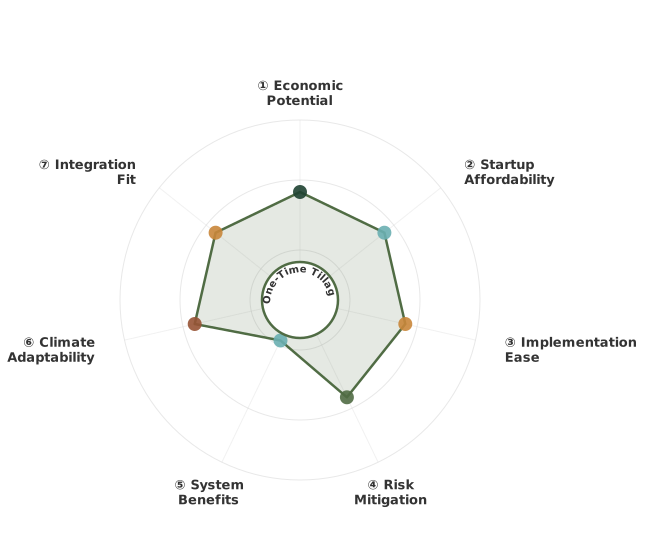
How These Traits Are Calculated
Trait dimensions are ordered clockwise starting from the top of the chart (12 o'clock position):
1. Economic Potential
Financial returns, annual value, and break-even timeline
WHAT: Evaluates financial viability by combining net annual value ($/ha from savings, income, and amortized harvests) with break-even timeline showing when practices pay for themselves.
WHY: Farmers need clear ROI understanding before committing resources. Fast payback (≤3 years) with strong returns (≥$300/ha) enables confident adoption, while long timelines (>10 years) restrict adoption to well-funded operations willing to wait for returns.
HOW: Calculated from net annual value in $/ha and break-even years. Exceptional (≥2.6): fast ROI ≤3 years + high value ≥$300/ha. Typical (1.8-2.5): moderate returns or longer timelines. Limited (<1.8): marginal economics or very long payback >10 years.
2. Startup Affordability
Initial investment costs and financial barrier to entry
WHAT: Measures financial barrier to entry through startup costs for equipment, infrastructure, consulting, and materials. Inverted scoring: lower costs = higher scores = more accessible adoption.
WHY: Affordability determines who can adopt. Low-cost practices (<$250/ha) enable widespread adoption across diverse scales, while high costs (>$2,500/ha) limit adoption to well-capitalized operations, creating barriers that slow regenerative transition.
HOW: Calculated from initial investment parsed from practice content. Inverted scoring: Exceptional (≥2.6): minimal investment <$250/ha. Typical (1.8-2.5): moderate costs $250-2,500/ha. Limited (<1.8): high barrier >$2,500/ha.
3. Implementation Ease
Learning curve and specialized knowledge required
WHAT: Measures how much learning, planning, and specialized knowledge a practice requires. Simpler practices with fewer steps score higher, while complex practices requiring extensive training or specialized resources score lower.
WHY: Complex practices create adoption barriers even when economically viable. Straightforward practices enable faster adoption and broader participation, while those requiring extensive training, timing precision, or specialized equipment limit who can succeed.
HOW: Evaluated by measuring documentation length and identifying complexity markers like location-specific requirements, seasonal timing windows, specialized skills, and dedicated equipment needs. Exceptional (≥2.6): straightforward practices with minimal prerequisites. Typical (1.8-2.5): moderate learning curve with some specialized needs. Limited (<1.8): steep learning curve requiring significant training or resources.
4. Risk Mitigation
Identified financial and ecological risk assessment
WHAT: Evaluates documented risks across financial (investment loss, market volatility) and ecological (crop failure, pest outbreaks) domains. Inverted scoring: fewer risks = higher scores.
WHY: Understanding risk exposure helps farmers make informed decisions. Low-risk practices allow confident implementation, while high-risk practices require careful planning and contingency resources. Risk transparency prevents costly failures.
HOW: Calculated from identified risks in practice content. Inverted scoring: Exceptional (≥2.6): ≤2 risks with manageable severity. Typical (1.8-2.5): 3-5 moderate risks. Limited (<1.8): 6+ risks or severe exposure.
5. System Benefits
How many ways the practice improves your land simultaneously
WHAT: Measures how many aspects of land health improve at once—carbon storage, soil quality, erosion control, water absorption, and biodiversity. Practices that improve multiple areas simultaneously create compounding benefits where each improvement reinforces the others.
WHY: The best practices solve multiple problems at once. For example, addressing erosion simultaneously builds carbon and improves water infiltration, creating a resilient system with positive feedback loops. Single-benefit approaches miss these compound transformation opportunities.
HOW: Evaluated across five key outcomes: carbon sequestration, soil organic matter increase, erosion reduction, water infiltration improvement, and biodiversity enhancement. Exceptional (≥2.6): high carbon storage (>8 t/ha/yr), improvements across 4-5 areas, transformative outcomes. Typical (1.8-2.5): moderate carbon (3-8 t/ha/yr), improvements across 2-3 areas. Limited (<1.8): modest impact (<3 t/ha/yr), single-area focus only.
6. Climate Adaptability
Geographic applicability across Köppen climate zones
WHAT: Evaluates geographic applicability by assessing how many Köppen climate zones successfully support a practice and what adaptation requirements are needed. Measures breadth of climates where farmers can implement with minimal to moderate modifications.
WHY: Universal practices working across diverse climates enable more farmers to adopt regenerative approaches. Practices limited to single climate types (only Mediterranean, only tropical) restrict adoption and slow global transition. Adaptability determines whether a practice serves niche regions or offers broad transformation.
HOW: LLM evaluation of regional success stories, Köppen zone coverage, and adaptation needs. Exceptional (≥2.6): 5+ zones or 4+ climate types, 3+ continents, minimal adaptation. Typical (1.8-2.5): 3-4 zones or 2-3 types, 2 continents, moderate adaptation. Limited (<1.8): 1-2 zones, single region, significant adaptation or highly specialized.
7. Integration Fit
How well this practice combines with others you're doing
WHAT: Measures how well a practice combines with other regenerative practices you might be doing. Some practices work as building blocks that make many other practices easier or more effective, while others work best on their own.
WHY: Practices that combine well with many others create more value on your farm. For example, cover cropping enables no-till, improves grazing, supports crop diversity, and helps water management—making all of them work better together. This helps you build a coherent system rather than juggling disconnected practices.
HOW: Evaluated by identifying which practices combine well and how strong those combinations are. 'Ideally Suited' means strong combinations where practices reinforce each other (practice A makes B easier, while B makes A more effective). 'Adequate' means complementary benefits that work well together. Exceptional (≥2.6): combines well with 6+ practices, serves as a building block. Typical (1.8-2.5): combines with 3-5 practices. Limited (<1.8): 1-2 practices or works best alone.
Going Deeper
1
WHY - The Benefits
One-time deep tillage is a pragmatic exception to regenerative agriculture's no-till principle, used only when severe compaction prevents biological processes from functioning. Understanding when and why this intervention is justified requires distinguishing between...
One-time deep tillage is a pragmatic exception to regenerative agriculture's no-till principle, used only when severe compaction prevents biological processes from functioning. Understanding when and why this intervention is justified requires distinguishing between...
WHY - The Benefits
One-time deep tillage is a pragmatic exception to regenerative agriculture's no-till principle, used only when severe compaction prevents biological processes from functioning. Understanding when and why this intervention is justified requires distinguishing between...
One-time deep tillage is a pragmatic exception to regenerative agriculture's no-till principle, used only when severe compaction prevents biological processes from functioning. Understanding when and why this intervention is justified requires distinguishing between...
When Biological Methods Fail
Ideally, soil biology prevents and reverses compaction. Earthworm burrows create continuous vertical channels. Plant roots—especially deep tap-rooted species in diverse mixes—penetrate and hold open pore spaces. Fungal hyphae secrete glomalin that binds soil particles into stable aggregates. Increased organic matter acts as "glue" holding structure together. When these biological processes are active, soil maintains or improves structure without mechanical intervention.
However, on severely degraded land, biology may be unable to initiate this recovery. Compaction from decades of heavy equipment (combines, tractors on wet soil), continuous grazing that doesn't allow pasture recovery, or intensive row-cropping that leaves soil bare and unprotected creates dense, anaerobic hardpans 15-30 cm (6-12 inches) deep. Water infiltration drops below 0.5 inches per hour (1.3 cm/hour)—meaning most rainfall runs off as erosion rather than entering soil. Root penetration stops at the hardpan. Without roots penetrating deep or water infiltrating to carry oxygen down, anaerobic conditions dominate, making the compacted zone inhospitable to earthworms and most beneficial soil life.
Attempts to establish cover crops on such land often fail or produce weak growth because roots cannot penetrate to access water and nutrients below the hardpan. The few hardy species that establish can't produce enough root biomass to significantly improve structure. Earthworms, if present at all, remain in the surface few inches and cannot create deep channels through the compacted layer. This creates a vicious cycle: biology can't improve the soil because compaction is too severe, but compaction won't improve without biological activity.
Research on severely degraded grazing land in Australia, abandoned row-crop fields in the US Midwest, and compacted sub-Saharan African agricultural land shows similar patterns: after 3-5 years of attempted biological remediation (cover cropping, reduced livestock pressure, adding compost), severely compacted sites showed minimal infiltration improvement (from 0.3 to 0.5 inches/hour), while one-time tillage followed by intensive cover cropping achieved infiltration of 1.5-2.5 inches/hour within 2 years. The difference: mechanical intervention created initial conditions allowing biology to work.
Temporary Disturbance for Long-Term Function
Deep tillage creates instant but temporary improvements. Immediately after subsoiling, infiltration increases dramatically—water can flow into the fractures created by the ripper shanks. Roots can follow these cracks downward, accessing water and nutrients previously unavailable. However, without follow-up biological activity, these improvements disappear. Soil slakes back together within 1-2 years, often returning to conditions as bad as before tillage if living roots don't maintain the cracks and organic matter doesn't stabilize new structure.
This is why immediate cover crop establishment is non-negotiable. Within 48 hours of tillage, diverse cover crops (10+ species including deep tap-rooted plants like daikon radish or forage turnips, fibrous-rooted grasses, and nitrogen-fixing legumes) must be seeded. These plants exploit the improved conditions: roots penetrate deep through the opened channels, depositing exudates and organic matter throughout the disturbed profile. As cover crop roots grow and die, they create permanent channels lined with carbon and colonized by beneficial microbes. Over 1-2 growing seasons, this biological activity begins rebuilding the structure that tillage destroyed, but now with living roots maintaining pathways and organic matter stabilizing aggregates.
Earthworm populations, decimated by tillage (studies show 50-80% mortality from mechanical disturbance), begin recovering within 3-6 months if cover crops provide food and habitat. By year 2-3, earthworm numbers often exceed pre-tillage levels because improved soil conditions (better infiltration, more organic matter, less compaction) create favorable habitat. Mycorrhizal networks, similarly disrupted by tillage, recolonize over 1-2 growing seasons, assisted by the diverse plant community that includes mycorrhizal-dependent species.
The goal is measurable recovery within 2-3 years. Infiltration should reach 2+ inches/hour (5+ cm/hour), indicating functional pore space and biological activity. Soil organic matter should increase 0.3-0.5% from baseline, reflecting ongoing root deposition and microbial activity. Earthworm populations should reach 5-10 per shovelful (200-400/square meter), showing restored habitat. Visual soil structure (using spade tests) should show defined aggregates with visible root channels and earthworm burrows. These indicators confirm that biology has taken over structure-building, allowing permanent transition to no-till management.
Regenerative Systems Fit
One-time tillage occupies an uncomfortable but pragmatic position in regenerative systems. It explicitly violates Principle 1 (minimize soil disturbance), making it unacceptable as an ongoing practice. However, it can enable Principles 2-5 on severely degraded land where they otherwise couldn't function:
Enabling Principle 2 (Maximize Diversity): On severely compacted soil, only a handful of hardy plant species can establish. After tillage allows diverse cover crops to succeed, plant diversity increases from 3-5 species struggling to survive to 10-20+ species thriving. This botanical diversity translates to increased soil biological diversity.
Enabling Principle 3 (Keep Soil Covered): Compacted bare ground that resists plant establishment becomes productive enough to maintain year-round living cover or mulch after one-time tillage breaks the compaction barrier.
Enabling Principle 4 (Maintain Living Roots): Hardpan preventing root penetration below 15 cm (6 inches) limits the season and depth of living root activity. Breaking the hardpan allows roots to penetrate 60+ cm (24+ inches), maintaining biological activity throughout the profile.
Enabling Principle 5 (Integrate Livestock): On compacted land, livestock often cause further degradation because plant recovery is too slow between grazing events. After restoring function, rotational grazing can be implemented without causing recompaction (if managed properly with adequate rest periods).
The key is viewing this as a one-time transition tool, not an ongoing practice. It creates conditions where regenerative management becomes possible, then steps aside. Farms successfully using this approach report transitioning from dysfunctional compacted land to fully regenerative no-till systems within 3-5 years, with the tillage event becoming a historical footnote rather than an ongoing management requirement.
Integration with other practices is critical for success. One-time tillage must be paired with: (1) Diverse cover cropping (absolutely essential for biological recovery), (2) Elimination or dramatic reduction of the compaction-causing practice (lighter equipment, reduced livestock pressure, adequate rest periods), (3) If applicable, transition to controlled traffic farming to prevent future compaction, (4) Commitment to permanent no-till following recovery. Without these complementary practices, tillage provides only temporary relief followed by return to degraded conditions.
For regenerative farmers, the decision to use one-time tillage should trigger serious self-examination: Why did the land reach this state? What management failures led to such severe compaction? How will those be prevented going forward? The practice works only if it's paired with honest assessment and correction of the root causes. Otherwise, it's merely postponing inevitable re-degradation.
Sources behind this view
Videos & Podcasts
-
Achieving regenerative agriculture requires addressing soil compaction, which hinders gas exchange and biology. Deep compaction needs mechanical removal, followed by cover crops and biologicals to pre
-
Preventing bare soil and addressing compaction are critical for healthy soil biology, gas exchange, and water infiltration. Deep ripping followed by biological applications and cover crops is recommen

-
Farmers discuss no-till benefits (soil health, water retention, weed control) and challenges (labor intensity, initial cost). Strategies include tarping, mulching, cover cropping, and careful planning

-
Restoring soil health requires feeding soil biology, minimally disturbing soil (no-till), and using cover crops for soil armor. Transitioning to no-till cover crops rapidly increases microbial biomass
Community
-
Advanced no-till methods for decompacting soil include subsoilers/keyline plows for deep slits, encouraging root colonization and organic matter. Integrating animals (pigs, cattle) and features like s
Read more (opens in new window) permies.com -
Goranson Farm in coastal Maine reduced tillage by adopting strip tillage, using Yeomans plows to break compaction and create seedbeds, preserving soil organic matter and reducing labor by 75%.
Read more (opens in new window) smallfarms.cornell.edu -
Minimizing tillage is crucial for soil health, as it preserves soil structure, protects soil biota, and enhances water infiltration by fostering biological processes like glomalin production by mycorr
Read more (opens in new window) permies.com -
Build healthy pasture soils by minimizing tillage, maintaining living roots and species diversity, and implementing proper grazing management. Livestock are essential for nutrient cycling and stimulat
Read more (opens in new window) smallfarms.cornell.edu
Research
-
Short-term and long-term effects of tillage and crop rotation on soil physical properties, organic C and N in a Black Chernozem in northeastern Saskatchewan (opens in new window)
This study found: Eight-year study in Saskatchewan showed no-till farming significantly improved soil structure and increased active soil carbon compared to conventional tillage, even in soils with high organic matter.
-
Building Soil Health and Fertility through Organic Amendments and Practices: A Review (opens in new window)
This study found: Review of organic amendments (manures, compost, cover crops) and regenerative practices (no-till, crop diversity, agroecology) shows they restore soil health by increasing organic matter and beneficia
-
Effects of Different Tillage Measures on Soil Physical Properties, Organic Carbon Sequestration and Crop Production in Reclaimed Farmland Filled with Foreign Soil (opens in new window)
This study found: On reclaimed farmland, deep tillage and alternating tillage methods improved soil structure, increased soil organic carbon, and boosted winter wheat yields compared to no-till over a 7-year study.
-
Long-term impacts of no-till and organic material applications on soil biological indicators in organic vineyards. (opens in new window)
This study found: Ten-year study in organic vineyards shows no-till and organic amendments (broccoli, Antep radish, olive mill wastewater) significantly improve soil respiration, organic carbon, microbial biomass, and
 From the Web
-
Key regenerative agriculture methods include no-till farming, cover cropping, agroforestry, perennial crops, planned rotational grazing (Holistic Management), and compost application, all aimed at imp
2
WHERE - Regional Considerations
Successfully breaking severe soil compaction with one-time tillage is possible across diverse regions, but requires careful attention to soil moisture and climate during implementation. Success hinges on achieving immediate and vigorous cover crop establishment to...
Successfully breaking severe soil compaction with one-time tillage is possible across diverse regions, but requires careful attention to soil moisture and climate during implementation. Success hinges on achieving immediate and vigorous cover crop establishment to...
WHERE - Regional Considerations
Successfully breaking severe soil compaction with one-time tillage is possible across diverse regions, but requires careful attention to soil moisture and climate during implementation. Success hinges on achieving immediate and vigorous cover crop establishment to...
Successfully breaking severe soil compaction with one-time tillage is possible across diverse regions, but requires careful attention to soil moisture and climate during implementation. Success hinges on achieving immediate and vigorous cover crop establishment to...
Click Here to Look up your Region if you don't already know it
Arid and Semi-Arid Regions
Representative Locations: Western USA (e.g., California, Arizona, Montana), North Africa, Central Asia, Interior Australia Climate Context: Low annual precipitation (<40 cm or 15 inches), high temperatures, short and often unpredictable growing season. USDA Zones 7-9, Köppen BSh/BSk.
In these regions, timing tillage immediately before a reliable rainfall event (like the start of a rainy season) is paramount. Cover crops must be chosen for drought tolerance and rapid establishment. Deep-rooted annual species that can quickly exploit the fractured soil are critical. Irrigation may be an option for cover crop establishment, but reliance on irrigation can introduce its own management challenges and costs. Failure to establish cover crops due to drought will likely lead to rapid recompaction and erosion. Monitoring soil moisture for tillage is also more challenging, as soil can shift from too wet to too dry very quickly.
Mediterranean Regions
Representative Locations: California, Mediterranean basin (Spain, Italy, Greece), central Chile, southwestern Australia, Western Cape South Africa Climate Context: Hot, dry summers and mild, wet winters. Annual precipitation 40-90 cm (15-35 inches), highly seasonal. USDA Zones 8-10, Köppen Csa/Csb.
The primary window for one-time tillage is late summer to early autumn, coinciding with the onset of the rainy season. This allows for rapid cover crop establishment and a full fall growing period. Species selection must include those that can survive dry spells during establishment if rains are delayed. Ensuring deep roots can access moisture below the fractured layer is crucial. Spring tillage is less ideal due to the hot, dry summer that follows, which can exacerbate erosion and prevent adequate cover crop growth, potentially leading to failure.
Humid Temperate Regions
Representative Locations: Northeastern United States, Northern Europe (UK, Germany), eastern China, Japan, New Zealand Climate Context: Warm to hot summers and cool to cold winters with moderate to high annual precipitation (75-150 cm or 30-60 inches) distributed relatively evenly. USDA Zones 6-8, Köppen Cfb/Cfa.
These regions generally offer more flexibility for timing tillage due to more consistent moisture availability. Spring or fall tillage are both viable, though fall offers the benefit of over-wintering cover crops that continue to build soil structure. The key is still to till when soil moisture is optimal—not too wet, not too dry. Diverse, multi-species cover crops are highly recommended to maximize biological activity and nutrient cycling. Risk of erosion exists if heavy rains occur immediately after tillage before cover crops are established, but is generally lower than in drier climates. Livestock integration for grazing cover crops in the following season is also more feasible with abundant forage.
Cold Continental Regions
Representative Locations: Northern USA and Canada, Northern Europe, Northern Asia Climate Context: Very short growing seasons, extreme summer heat, severe winter cold. USDA Zones 3-5, Köppen Dfa/Dfb.
Tillage must be timed to allow maximum possible growth of cover crops before winter dormancy or frost kill. Late spring or early summer tillage is often the only option, followed by a fast-growing annual cover crop mix. The goal is to get enough root biomass established to maintain fractured soil structure through winter. Over-wintering cover crops will be limited to cold-hardy species. The short growing season increases the risk of cover crop failure or insufficient root development to fully stabilize the soil, making vigilant management and appropriate species selection critical.
Tropical and Subtropical Regions
Representative Locations: Southeast Asia, East Africa, Brazil, Australia Climate Context: High temperatures year-round, with distinct wet and dry seasons or consistent high rainfall. Köppen Af/Am/Aw/Cfa/Cwa.
This varies significantly based on rainfall patterns. In regions with distinct wet and dry seasons, tillage should occur just before the onset of the wet season to maximize cover crop growth. If rainfall is consistent, timing is less critical, but avoiding tillage when soil is waterlogged is paramount to prevent recompaction. High temperatures can accelerate decomposition of cover crop residue, so a very diverse mix including perennial or winter-hardy species may be beneficial to maintain organic matter and soil cover. Livestock integration for grazing cover crops is often highly feasible year-round.
3
HOW - Implementation Process
HOW - Implementation Process
Before considering one-time tillage, verify these conditions exist:
- Documented severe compaction: soil penetrometer readings >300 psi (2 MPa) at 15-30 cm (6-12 inch) depth, or water infiltration <0.5 inches/hour (<1.3 cm/hour). This can be measured using a soil penetrometer or simple infiltration tests.
- Evidence of biological remediation attempts: minimum 2 years of cover cropping, reduced livestock pressure, or other biological approaches with documented failure to improve infiltration. This implies using appropriate species and management for those methods.
- Resources for immediate follow-up: cover crop seed ready, equipment for planting within 48 hours, plan for ongoing management. A list of suitable species for your region and seed suppliers should be prepared in advance.
- Commitment documented: written statement (even if only for yourself) that this is one-time only with no future tillage. This reinforces the non-negotiable nature of the practice.
If these conditions aren't met, tillage is not appropriate. Continue with biological approaches—they will eventually work if given enough time and proper management.
Phase 1: Timing and Equipment Selection
Timing: Soil moisture is critical for success. Too wet: smearing and re-compaction as equipment creates new compaction. Too dry: shattering may not occur, or soil may fracture but not separate. Optimal moisture: field capacity (soil holds water but isn't saturated). Test by squeezing soil: should form a ball that breaks apart with light pressure. This moisture stage is often referred to as "workable" or "friable" soil.
Season: Late summer or early fall is ideal in most climates. This allows immediate cover crop establishment with fall rains, giving plants 2-3 months growth before winter. Spring timing is possible but loses the opportunity for a significant fall growing season—cover crops establish but don't reach substantial size before potential summer heat and drought.
Equipment: A subsoiler or ripper with parabolic shanks spaced 30-45 cm (12-18 inches) apart, operating at a depth of 30-45 cm (12-18 inches). A chisel plow can be an alternative but it is generally less effective than a subsoiler at fracturing dense hardpans. Avoid moldboard plows or disks, as these invert or mix soil excessively, causing more biological disruption than necessary. The goal is to fracture the compacted layer with minimal overall disturbance.
Cost: $100-200/ha ($40-80/acre) USD equivalent for custom hire when contracting the operation. If you own the equipment, costs can drop to $50-100/ha ($20-40/acre). International variations in cost will occur based on equipment availability, rental rates, and local labor charges.
Phase 2: Execution (Days 1-2)
Day 1: Run the subsoiler across the field. On slopes, operate along contours to minimize erosion risk. On flat land, run perpendicular to prevailing wind direction, which can sometimes aid in creating beneficial fracture lines. Shanks should penetrate and fracture the compacted layer without causing excessive surface disturbance. You will feel resistance as shanks penetrate the hardpan, followed by a breakthrough as the soil fractures.
Immediately after each pass (within hours): Check fracturing effectiveness by digging an inspection hole. The soil should show obvious fracture patterns extending from the shank lines. If solid blocks remain between the shank passes, the spacing was too wide, the soil was too dry, or the equipment is not penetrating deeply enough—adjustments must be made before completing the field.
Day 2: Seed a diverse cover crop mix immediately—this must happen within 48 hours of tillage. Species selection is critical for success. Aim for a minimum of 10-15 species, with 20+ being ideal. This mix should include:
- Deep tap-rooted species: daikon radish, forage turnips, or other deep-rooted brassicas, which penetrate and maintain the fractured channels.
- Fibrous-rooted grasses: annual ryegrass, oats, or cereal rye, which create a dense surface root mat and improve aggregation in the upper soil layers.
- Nitrogen-fixing legumes: hairy vetch, crimson clover, or field peas, which add fertility while building soil biology.
Seeding method can be via a no-till drill directly into the roughed surface, or broadcasting the seed followed by a light incorporation with a cultipacker or light harrow. Use a high seeding rate (1.5-2 times the normal rate) to ensure establishment despite the disturbance. This phase costs approximately $75-150/ha ($30-60/acre) for a diverse seed mix.
Phase 3: Cover Crop Management (Months 1-12)
Allow cover crops to establish and grow without subsequent disturbance. Avoid grazing, mowing, or any trafficking for the first 3-4 months. Roots need time to penetrate deep into the fractured soil and begin the biological recovery process.
Monitor establishment weekly during the first month. If germination is poor (<50%), identify the cause—this could be insufficient moisture, incorrect seeding depth, or seed predation by birds or rodents. Be prepared to interseed areas where establishment has failed. Weak establishment dooms the entire strategy, as cover crop root activity is the primary mechanism by which soil structure rebuilds.
Observe root development by digging at the edge of the field between months 2-4. Ideally, deep tap-rooted species should reach 30-45 cm (12-18 inches) in depth by 60 days. Grass roots should form a dense mat in the top 15 cm (6 inches). Legumes should show nodulation (indicating nitrogen fixation) by 45-60 days.
Between months 5-12, cover crops will die back in winter (for frost-killed annuals) or go dormant (for winter-hardy perennials). Do NOT remove the residue. Allow it to decompose in place, providing mulch and organic matter. If a winter-hardy mix is used, allow for regrowth in spring before termination.
Termination: In spring of Year 2 (8-12 months after planting), terminate the cover crops. This can be done using a roller-crimper, mowing, or, if necessary, herbicide. Minimize herbicide use, but it can be an acceptable one-time transitional tool if other methods fail. Leave the residue as mulch to protect the soil surface until the cash crop or next cover crop establishes.
Transition Timeline & Phase-Out Strategy
This is a one-time intervention, not an ongoing practice. The goal is to restore soil function so that biological processes can take over and maintain structure independently.
Year 0 (Tillage Year):
- Conduct soil assessment (penetrometer, infiltration test) documenting the severity of compaction.
- Only till if infiltration is consistently below 0.5 inches/hour (<1.3 cm/hour) AND biological methods have failed over 2+ years.
- Immediately seed a diverse cover crop mix (minimum 10 species).
- No additional tillage—this is the final mechanical tillage event.
Year 1-2 (Recovery):
- Maintain continuous living cover; avoid bare soil periods.
- Use diversified cover crop species to ensure root activity year-round.
- Monitor infiltration improvement quarterly. The target is to reach 1-2 inches/hour (2.5-5 cm/hour) by the end of Year 2.
- Monitor earthworm populations. The target is to reach 5+ earthworms per shovelful by the end of Year 2.
Year 3+ (Fully Regenerative):
- Soil structure is demonstrably rebuilt through biological processes.
- Transition to permanent no-till management for all subsequent cropping.
- Success indicators include: infiltration rates of 2+ inches/hour (5+ cm/hour), earthworm populations of 10+ per shovelful, aggregate stability greater than 50%, and visible root channels and earthworm burrows in the soil profile.
If compaction returns after this period, it indicates an underlying management issue was not addressed. Possible causes include: equipment still too heavy (consider controlled traffic farming), livestock timing is incorrect (extend grazing rest periods), or there are insufficient living roots (increase cover crop diversity and duration). Address these root causes—DO NOT till again. If tempted to repeat tillage, you have not learned the lesson that led to the initial compaction.
Graduation from this practice means: (1) You no longer consider tillage as a solution to compaction; (2) You prevent future compaction through proper management (traffic control, livestock timing, continuous living roots); (3) You trust biological processes to maintain soil structure; and (4) You view the one-time tillage event as a historical transition tool, not a current practice.
Sources behind this view
Videos & Podcasts
-
Farmers discuss no-till benefits (soil health, water retention, weed control) and challenges (labor intensity, initial cost). Strategies include tarping, mulching, cover cropping, and careful planning
-
Transitioning from conventional tillage to no-till dramatically improved soil health, increasing organic matter from <1% to 4.5-5% over 20 years. Eliminating tillage is presented as the key to restori
-
Details a 70+ species garden experiment producing high yields without inputs in dry conditions. Advocates for no-till, diverse cropping, cover crops, integrated livestock, and surface residue for weed

-
Demonstrates soil health differences using the slake test, comparing conventional (tilled, fertilized) soils with no-till and cover-cropped soils. Highlights how tillage, over-fertilization, and certa
Community
-
Enhance soil health through plant diversity, continuous soil cover (living plants/residues), and livestock integration. Manage carbon-to-nitrogen ratios of residues and adopt no-till practices to impr
Read more (opens in new window) permies.com -
Goranson Farm in coastal Maine reduced tillage by adopting strip tillage, using Yeomans plows to break compaction and create seedbeds, preserving soil organic matter and reducing labor by 75%.
Read more (opens in new window) smallfarms.cornell.edu -
Advanced no-till methods for decompacting soil include subsoilers/keyline plows for deep slits, encouraging root colonization and organic matter. Integrating animals (pigs, cattle) and features like s
Read more (opens in new window) permies.com -
Explains regenerative agriculture principles: no-till gardening to support soil microbiome and sequester carbon; using compost to reduce erosion and compaction; and planting diverse cover crops (grass
Read more (opens in new window) ucanr.edu
Research
-
Short-term and long-term effects of tillage and crop rotation on soil physical properties, organic C and N in a Black Chernozem in northeastern Saskatchewan (opens in new window)
This study found: Eight-year study in Saskatchewan showed no-till farming significantly improved soil structure and increased active soil carbon compared to conventional tillage, even in soils with high organic matter.
-
No‐Till Legume Cover Crops Enhance Soil Carbon, Mitigate Greenhouse Gas Emissions, and Increase Yield in Dryland Wheat: A Global Meta‐Analysis (opens in new window)
This study found: Global meta-analysis shows no-till + legume cover crops significantly boost dryland wheat soil carbon (+28.5%), yield (+24.1%), and resource efficiency, while cutting GHG emissions. Long-term use yiel
-
Effects of Different Tillage Measures on Soil Physical Properties, Organic Carbon Sequestration and Crop Production in Reclaimed Farmland Filled with Foreign Soil (opens in new window)
This study found: On reclaimed farmland, deep tillage and alternating tillage methods improved soil structure, increased soil organic carbon, and boosted winter wheat yields compared to no-till over a 7-year study.
-
Long-term impacts of no-till and organic material applications on soil biological indicators in organic vineyards. (opens in new window)
This study found: Ten-year study in organic vineyards shows no-till and organic amendments (broccoli, Antep radish, olive mill wastewater) significantly improve soil respiration, organic carbon, microbial biomass, and
From the Web
-
Conservation tillage principles include reducing tillage to minimize soil compaction, using crop rotations with cover crops to maintain soil coverage, and managing equipment for site-specific needs. M
-
Conservation tillage principles include reducing tillage, using crop rotations with cover crops to maintain soil surface biomass (especially cereal rye), and managing equipment. These practices enhanc
4
Know the Debate
One-time deep tillage is a pragmatic intervention for severe soil compaction that biological methods alone cannot overcome. Its success hinges on p...
Know the Debate
One-time deep tillage is a pragmatic intervention for severe soil compaction that biological methods alone cannot overcome. Its success hinges on p...
One-time deep tillage is a pragmatic intervention for severe soil compaction that biological methods alone cannot overcome. Its success hinges on precise execution and immediate follow-up with diverse cover crops, typically within 48 hours. In humid regions, spring or fall implementation is possible, while semi-arid zones require careful timing with rainfall to ensure cover crop establishment and prevent erosion. The upfront investment ranges from $100-350/ha ($40-140/acre), with a projected break-even within 2-4 years through improved yields and reduced inputs, provided a commitment to permanent no-till and addressing the root causes of compaction is maintained.
When should severe soil compaction be addressed with one-time tillage?
Last Resort (2+ years biological failure)
Academic and institute guidance suggests one-time deep tillage is a final strategy, only after 2 or more years of proven failure with biological methods like cover cropping on severely compacted soils (infiltration <0.5 in/hr). This approach prioritizes preserving soil biology as long as possible.
Sources behind this view
Sources behind this view
Videos & Podcasts
-
Repeated tillage destroys soil aggregates and organic matter, releasing carbon and promoting erosion. Tillage is only recommended initially on heavily compacted soils to incorporate amendments and establish a foundation for future no-till practices, protecting the deeper rhizosphere.
Research
-
Effects of tillage systems on soil biodiversity (opens in new window)
This study found: Different ways of disturbing the soil (tillage systems) have a big effect on the tiny living things in the soil, changing their numbers, types, and how active they are. Conservation tillage, which involves less soil disturbance, is used on millions of acres worldwide to prevent soil erosion, reduce compaction, save water, and cut costs. This method can improve soil structure, making it better at draining and holding water, which helps prevent both waterlogged conditions and drought. Better soil structure also means less runoff carrying soil, pesticides, and nutrients into waterways. Using less intensive tillage also uses less energy and releases less carbon dioxide, while building up soil organic matter and storing more carbon. How earthworms and springtails are affected depends on the soil type, while nematodes and microbial communities respond differently based on how deep they are in the soil. Different groups of soil organisms react in unique ways to tillage. The best tillage method depends on the specific conditions of each farm's soil.
From the Web
-
Transitioning to no-till vegetable farming is crucial for soil health, as tillage causes significant damage including soil structure deterioration and loss of soil life. While tillage has temporary benefits, it creates a 'tillage treadmill' effect. A gradual transition, with clear purpose for any tillage, is recommended.
Enabling Intervention (severe compaction baseline)
Field practitioners argue that severe compaction (e.g., >300 psi, minimal infiltration) necessitates one-time tillage even earlier to enable cover crop establishment, as biological methods alone may fail indefinitely on such land. This enables faster functional recovery.
Sources behind this view
Sources behind this view
Videos & Podcasts
-
Achieving regenerative agriculture requires addressing soil compaction, which hinders gas exchange and biology. Deep compaction needs mechanical removal, followed by cover crops and biologicals to prevent reoccurrence. Bare soils and high temperatures also damage soil biology.
-
Preventing bare soil and addressing compaction are critical for healthy soil biology, gas exchange, and water infiltration. Deep ripping followed by biological applications and cover crops is recommended to create disease-suppressive soils.
-
Recommends mechanically addressing deep soil compaction (plow layer) once before transitioning to no-till, emphasizing its importance for water infiltration, soil structure, and earlier field access, especially in dryland conditions.
Making Sense of the Differences
The debate on when to use one-time deep tillage hinges on the definition of 'severe compaction' and the patience for biological remediation. While academic and institute sources lean towards it being a last resort after prolonged biological failure, field practitioners advocate for using it earlier on lands with extreme compaction to jumpstart biological processes that would otherwise stall. Soil type, historical management, and the farmer's risk tolerance influence which approach is favored.
How long do soil health benefits last after one-time deep tillage?
Benefits last 2-5 years with continued regenerative practices
Field farmers report significant improvements in infiltration, root penetration, and earthworm activity within 2-5 years after one-time tillage and intensive cover cropping. These improvements are sustained through permanent no-till and ongoing biological management.
Sources behind this view
Sources behind this view
Videos & Podcasts
-
Achieving regenerative agriculture requires addressing soil compaction, which hinders gas exchange and biology. Deep compaction needs mechanical removal, followed by cover crops and biologicals to prevent reoccurrence. Bare soils and high temperatures also damage soil biology.
-
Rebuilding soil structure under no-till takes 5+ years, driven by accumulating freeze-thaw and wetting-drying cycles. Quitting tillage stops killing soil life, allowing existing biology and practices like cover crops and livestock to accelerate improvements.
-
Investigating controlled tillage as a 'reset' for microbial communities in long-term no-till systems. While tillage has a negative impact, immediate diverse cover cropping can lead to significant regrowth and potential benefits, offering a path for row crop farmers to manage perennial weeds and enhance soil function.

Long-term benefits depend on ongoing management, not just tillage
Academic and institute sources indicate that while deep tillage can improve soil structure, its long-term benefits are not guaranteed and depend heavily on subsequent management. Alternating tillage may maintain soil fertility and organic matter distribution, but continuous tillage can release stored carbon.
Sources behind this view
Sources behind this view
Research
-
Rotational Tillage Practices to Deal with Soil Compaction in Carbon Farming (opens in new window)
This study found: A six-year study in Greece looked at how different ways of tilling soil affect soil compaction and carbon storage. While leaving soil undisturbed (no-till) for long periods built up the most organic matter, it also led to significant soil compaction, making it hard for roots to grow. Farmers' concerns about compaction are valid. When they used plows (conventional or reduced tillage) after periods of no-till, it fixed the compaction but also released some of the stored carbon. Rotating between no-till and plowing showed that while plowing can help distribute organic matter deeper into the soil profile, it also causes a loss of carbon. Practices that combined no-till with some form of plowing (like chisel plowing) offered a balance between managing compaction and building soil organic matter.
-
Effects of Different Tillage Measures on Soil Physical Properties, Organic Carbon Sequestration and Crop Production in Reclaimed Farmland Filled with Foreign Soil (opens in new window)
This study found: A long-term study (2014-2021) on newly reclaimed farmland tested different ways of working the soil to improve it for winter wheat. They compared deep tillage, shallow tillage, alternating deep and shallow tillage, and no-till. Over time, the tilled methods generally made the soil less compacted and more porous than no-till. Early in the study, shallow tillage was best for the topsoil, while deep tillage was better for deeper soil layers. Later on, deep tillage and the alternating method showed the best results for soil density and pore space. All tillage methods helped build soil organic carbon (carbon in the soil), with deep tillage and the alternating method being particularly effective at increasing carbon deeper in the soil over the long term. Shallow tillage was better at building carbon in the topsoil. The tilled fields consistently produced higher grain yields than the no-till fields. The study suggests that for reclaimed land, deep tillage and alternating tillage methods can improve soil structure, increase organic carbon, and maintain good crop yields over time.
From the Web
-
Reduce tillage by addressing soil compaction with in-row subsoiling or deep-rooting cover crops. Implement traffic control and automatic guidance systems to minimize surface disturbance and improve yields.
Making Sense of the Differences
The durability of soil benefits post-one-time tillage is a key point of discussion. Field practitioners emphasize that the 2-5 year recovery period, fueled by intensive cover cropping and permanent no-till, leads to sustained improvements. Academic and institute research, while acknowledging tillage's ability to alleviate compaction, highlights that long-term success requires continuous regenerative practices, not just the single tillage event. The consensus is that tillage is merely an enabler; sustained biological management is what locks in the gains.
5
HOW MUCH - Costs & Investment
Note: Costs shown in USD; multiply by local labor and material cost indices for your region. Labor costs vary significantly internationally.
Note: Costs shown in USD; multiply by local labor and material cost indices for your region. Labor costs vary significantly internationally.
HOW MUCH - Costs & Investment
Note: Costs shown in USD; multiply by local labor and material cost indices for your region. Labor costs vary significantly internationally.
Note: Costs shown in USD; multiply by local labor and material cost indices for your region. Labor costs vary significantly internationally.
Note: All costs are based on recent US economic data (2024–2026) and may vary substantially by region based on local labor rates, material costs, and regulatory requirements.
Tillage Operation Costs
The mechanical intervention of deep subsoiling is the primary cost driver for this practice. The machinery required—typically a heavy-duty subsoiler capable of operating at 12 to 18 inches—is rarely owned by smallholders, making rental or custom hiring the standard expense model. Small operations covering under 50 acres (20 ha) face the highest per-acre burden because contractors must account for equipment mobilization and transport time. Expect costs in the range of $83–$167 per acre ($205–$413/ha) for these custom services. Mid-size operations, those ranging from 50 to 500 acres (20–202 ha), can leverage their scale to negotiate better rates or utilize owned, often used, equipment. For this cohort, costs generally range from $52–$104 per acre ($128–$257/ha). Large-scale operations of 500+ acres achieve significant economies of scale, utilizing high-horsepower tractors paired with high-capacity, multi-shank rippers. These producers typically report costs ranging from $31–$63 per acre ($77–$156/ha), assuming fuel, labor, and depreciation are managed internally.
Cover Crop Seed & Establishment
Immediate establishment of a diverse cover crop cocktail is the mandatory corollary to one-time deep tillage, acting as the biological "glue" to hold the soil structure in place. Failure to plant immediately results in soil slaking and re-compaction. Small operations, which purchase in smaller quantities, typically pay retail pricing for complex, multi-species seed mixes. Costs, including professional drilling services, range from $73–$125 per acre ($180–$309/ha). Mid-size operations accessing wholesale cooperatives or bulk-order discounts see costs ranging from $52–$99 per acre ($128–$245/ha), covering both the seed procurement and the operational costs of planting during a tight weather window. Large operations benefit from economies of scale by sourcing commodity-grade mixes in bulk, with costs ranging from $36–$78 per acre ($89–$193/ha). These figures account for the high-intensity management required to ensure a 90% or higher germination rate across large acreages.
Opportunity Costs During Recovery
Transitioning soil from a state of severe compaction to a biologically functional state carries an inherent risk of yield drag. During the first 12 to 24 months, the soil is structurally unstable as root systems work to replace the mechanical work of the subsoiler. For high-value row crops, producers should budget for conservative revenue losses. Over a 3-year recovery window, total cumulative opportunity costs range from $260–$938 per acre ($642–$2,318/ha). The variance within this range depends on the initial soil biology; fields with higher existing organic matter recover faster, while heavily degraded, depleted fields may experience the full scope of the anticipated revenue decline.
Most Spend: Most agricultural operations fall within the total investment range of $167–$219 per acre ($413–$541/ha) for small holdings, $104–$146 per acre ($257–$361/ha) for mid-size holdings, and $68–$99 per acre ($168–$245/ha) for large holdings. This middle 60% encompasses standard custom-hired mechanical tillage and reliance on high-quality, regionally tested commercial seed mixtures, assuming standard fuel and labor inputs.
Why the Range?: The provided price ranges are driven primarily by three factors: the precision and type of subsoiling equipment employed, the biological diversity and complexity of the post-tillage cover crop seed mix, and the logistical geography of the property. Custom hiring costs fluctuate based on the distance a contractor must travel to reach the site, while seed costs are dictated by regional availability, the percentage of deep-rooted legumes versus grasses in the cocktail, and the timing of the market purchase. Finally, soil moisture at the time of tillage creates a significant range in operational fuel consumption and potential "slaking" risks upon termination.
Sources behind this view
Videos & Podcasts
-
Cover crops are an 'investment crop,' not an expense, offering low-cost fertility and soil health benefits. They are managed with a flail mower, minimal tillage, bed shaping, and tarping for two weeks

-
Data shows cover crops significantly cool soil, improve water retention, increase soybean yields, enhance drought tolerance, and reduce erosion, potentially lowering fertilizer and pesticide needs.

-
Cover crops provide economic benefits through reduced seeding costs (optimizing rates, creative application), grazing (virtual fencing), nitrogen fixation from legumes, weed suppression (especially ce

-
National survey data shows cover crops increase corn and soybean yields by 5-10%, with costs around $37/acre. Additional benefits include nitrogen credits, reduced pest/weed management, profitable gra
Community
-
Seven strategies accelerate cover crop ROI: managing weeds, grazing, addressing compaction, transitioning to no-till, improving soil moisture, managing nutrients (using legumes like Hairy Vetch/Austri
Read more (opens in new window) sustainableagriculture.net -
Details cover crop termination methods, nutrient cycling (N scavenging/fixing, P availability), bio-controls, weed/pest/disease management, and specific mix recommendations. Emphasizes soil testing, r
Read more (pp. 10-20) (opens PDF, pp. 10-20) efotg.sc.egov.usda.gov -
Oregon State University research over six years, funded by SARE, developed a calculator for cover crop N contribution and cost savings, showing vetch can replace feather meal for broccoli, saving $500
Read more (opens in new window) smallfarms.cornell.edu -
A SARE project in north central Kansas quantified financial and environmental benefits of cover crops for grazing and haying. Hay yielded $19.40/acre net earnings, and grazing steers had a lower cost
Read more (opens in new window) sustainableagriculture.net
Research
-
Economic Impacts of Cover Crops for a Missouri Wheat–Corn–Soybean Rotation (opens in new window)
This study found: Missouri study: Cover crops in wheat-corn-soybean rotation initially reduced profits but became positive by year four. Improved soil health and carbon sequestration potential.
-
Economic Impacts of Cover Crops for a Missouri Wheat–Corn–Soybean Rotation (opens in new window)
This study found: Missouri study: Cover crops in wheat-corn-soybean rotation initially reduced profit but became positive by year 4. Break-even achieved with 35% higher cash crop revenue or 26% lower cover crop costs i
-
Cover Crops Enhance Soil Organic Carbon and Soil Quality for Sustainable Crop Yield: A Systematic Review (opens in new window)
This study found: A review of 38 studies shows diverse cover crop mixes, used long-term, boost soil organic matter (5-30%), soil quality (87%), and crop yields (55%), supporting climate-smart agriculture.
-
Optimizing cover crop practices as a sustainable solution for global agroecosystem services. (opens in new window)
This study found: Optimized cover crop strategies (long-term, no-till, legume/non-legume mix, residue mulch) significantly boost farm ecosystem services, including crop yields, carbon capture, and erosion control, whil
From the Web
-
A budget analysis for cover crops with soybeans shows negative net returns in year one but positive returns by year three and five. Faster returns are possible when managing herbicide-resistant weeds,
-
Cover crops can provide first-year returns in drought, grazing, or weed management scenarios. Transitioning to no-till can break even by year two. Break-even is typically achieved within three years,
-
Cover crop economics vary, with potential for profitability through reduced input costs (fertilizer, herbicides) and improved soil health. However, initial costs and management nuances, including till
-
Analyzes the economics and limitations of cover crops, highlighting benefits like reduced input costs (nitrogen, herbicides) and improved soil health, but also noting limitations such as water consump
6
REWARDS AND RISKS - Economics & Risk Factors
REWARDS AND RISKS - Economics & Risk Factors
The economic success of deep tillage relies entirely on transitioning from a mechanical soil management paradigm to a biological one within a single season. In the best-case scenario, the subsoiling intervention succeeds in breaking the plow pan, allowing roots to access deep-subsoil water reserves. Producers often see soil infiltration rates rise from negligible levels to over 2 inches per hour within 24 months. During high-heat, low-rainfall years, these improved infiltration capabilities can yield production benefits of 20–30% over non-tilled control plots. Following a 3-year recovery curve, farmers can expect an annualized net profit increase of $156–$261 per acre ($385–$645/ha), driven by both increased yield and a reduction in long-term irrigation and input energy costs.
In a typical case, infiltration rates settle in the 1.5–2 inches per hour range, which is sufficient to mitigate erosion and ponding. Yields generally recover to historical baselines by the second year, with a modest 5–10% improvement realized by the fourth year. The break-even point for this investment usually occurs in years 3–4, when the cumulative gains—specifically in nutrient cycling and moisture retention—surpass the initial investment budget of roughly $135–$145 per acre ($334–$358/ha), adjusted for the cost of cover crop termination.
Worst-case scenarios, often resulting from working the field when soil moisture is beyond the ideal "friable" state, lead to immediate soil crusting. If a drought prevents the cover crop from establishing in the weeks following the tillage pass, the soil structure collapses back to original densities. This renders the initial $150+ per acre investment a total loss. When factoring in the compounding effect of depressed yields (typically 10% below the pre-tillage baseline) and the cost of remediation, total economic losses can mount to $521–$1,250 per acre ($1,287–$3,089/ha) over a 3-year period.
Transition Period Risks: 1. Biological Stalling: If the cover crop seed fails to germinate due to climate stress, the soil structure will revert to its original, compacted density within 18 months, effectively wiping out the initial capital expenditure. 2. Moisture Penalty: Transitioning during an exceptionally dry year often results in a "fluffy" soil profile that struggles to maintain capillary lift, leading to a temporary 20% decline in yield compared to non-disrupted fields. 3. Mitigation: To safeguard against these risks, producers should implement precision tillage at a 45-degree angle to the primary crop rows to provide structural stability. Additionally, it is standard practice to allocate an extra $21–$42 per acre ($52–$104/ha) for a "re-seeding budget" to ensure a dense, root-heavy cover crop mat is established regardless of initial weather hurdles. Increasing seeding rates by 25% provides a necessary buffer for germination variance in high-compaction environments.
Sources behind this view
Videos & Podcasts
-
Strongly advocates for no-till combined with cover crops, detailing benefits like erosion control, water conservation, improved soil structure, and increased biological activity. Emphasizes uniform re

-
Farmers discuss no-till benefits (soil health, water retention, weed control) and challenges (labor intensity, initial cost). Strategies include tarping, mulching, cover cropping, and careful planning
-
Utilize multi-species cover crops based on specific 'resource concerns' to improve soil health, nitrogen fixation, and water retention. Integrate livestock for grazing, calving, and overwintering, enh
-
A Minnesota farmer details their successful transition to strip-tilling and no-till, highlighting significant improvements in soil health (organic matter, infiltration, earthworms), yield increases, p

Community
-
Enhance soil health through plant diversity, continuous soil cover (living plants/residues), and livestock integration. Manage carbon-to-nitrogen ratios of residues and adopt no-till practices to impr
Read more (opens in new window) permies.com -
Holistic no-till farming with cover crops and rotational grazing improved productivity by 5% in three years on clay soils, with yields up 10% after 18 years.
Read more (opens in new window) permies.com -
Building healthy soil involves minimizing tillage (no-till) and keeping it covered year-round with living plants and cover crops. These practices enhance water retention, nutrient cycling, and soil re
Read more (opens in new window) smallfarms.cornell.edu -
A 20-year study in California found that no-till and cover cropping significantly improved soil health, soil carbon, and water dynamics after an initial eight-year period, demonstrating the long-term
Read more (opens in new window) ucanr.edu
Research
-
No‐Till Legume Cover Crops Enhance Soil Carbon, Mitigate Greenhouse Gas Emissions, and Increase Yield in Dryland Wheat: A Global Meta‐Analysis (opens in new window)
This study found: Global meta-analysis shows no-till + legume cover crops significantly boost dryland wheat soil carbon (+28.5%), yield (+24.1%), and resource efficiency, while cutting GHG emissions. Long-term use yiel
-
Conventional, Minimum/Reduced, and Zero Tillage: Implications for Soil and Water Conservation and Residue Management in Global and Indian Contexts (opens in new window)
This study found: Zero tillage, especially with Happy Seeders, improves soil structure, water retention, and yields by up to 17% while cutting costs and emissions. Success depends on local adaptation and integrated wee
-
Optimizing cover crop practices as a sustainable solution for global agroecosystem services. (opens in new window)
This study found: Optimized cover crop strategies (long-term, no-till, legume/non-legume mix, residue mulch) significantly boost farm ecosystem services, including crop yields, carbon capture, and erosion control, whil
-
Tarping and mulching effects on crop yields, profitability, and soil nutrients in a continuous no-till organic vegetable production system (opens in new window)
This study found: Four-year study in NY found compost mulch boosted organic vegetable yields and soil carbon (+49%), while tarping improved no-till profitability. Rye mulch reduced yields and profits.
From the Web
-
Conservation tillage principles include reducing soil compaction via less tillage and traffic control, using crop rotations with cover crops to maintain soil surface biomass, and managing equipment. M
-
Conservation tillage principles include reducing tillage, using crop rotations with cover crops to avoid bare soil, and maximizing residue coverage on the soil surface. Traffic control and specialized
-
Transitioning to no-till vegetable farming is crucial for soil health, as tillage causes significant damage including soil structure deterioration and loss of soil life. While tillage has temporary be
-
Conservation tillage principles include reducing tillage to minimize soil compaction, using crop rotations with cover crops to maintain soil coverage, and managing equipment for site-specific needs. M
7
COMPATIBLE PRACTICES - Integration Opportunities
One-time tillage must be integrated with complementary practices to ensure its success. It should be viewed not as a standalone solution but as the initial step in a multi-year transition strategy aimed at rebuilding soil health through biological means.
One-time tillage must be integrated with complementary practices to ensure its success. It should be viewed not as a standalone solution but as the initial step in a multi-year transition strategy aimed at rebuilding soil health through biological means.
COMPATIBLE PRACTICES - Integration Opportunities
One-time tillage must be integrated with complementary practices to ensure its success. It should be viewed not as a standalone solution but as the initial step in a multi-year transition strategy aimed at rebuilding soil health through biological means.
One-time tillage must be integrated with complementary practices to ensure its success. It should be viewed not as a standalone solution but as the initial step in a multi-year transition strategy aimed at rebuilding soil health through biological means.
Diverse Cover Cropping
- Must be implemented immediately following tillage (within 48 hours).
- Aim for a mix of at least 10-15 species, including deep tap-rooted brassicas, fibrous-rooted grasses, and nitrogen-fixing legumes.
- This is the single most critical integration; without vigorous cover crop growth, tillage provides only temporary relief.
- Integration Benefit: Cover crop roots rebuild soil structure that tillage temporarily disrupted, maintaining soil channels, adding organic matter, and feeding beneficial soil biology.
Permanent No-Till
- Transition to no-till management begins in Year 1 after cover crop termination.
- All future crop establishment should utilize no-till planters or drills.
- Integration Benefit: This is the ultimate goal; tillage creates initial conditions where no-till becomes viable, and no-till practices then maintain those conditions permanently.
- Success is measured by never needing tillage again for compaction management.
Rotational Grazing
- Can be implemented after 12-18 months of recovery when forage has established.
- Utilize adaptive multi-paddock grazing with high animal density and short occupation times, followed by long rest periods.
- Integration Benefit: Strategic grazing stimulates plant regrowth, efficiently distributes manure and nutrients, and prevents single areas from experiencing sustained compaction pressure.
- Warning: Avoid continuous grazing, which will re-compact the soil. Grazing must be carefully managed to allow plants and soil structure to recover.
Controlled Traffic Farming
- Ideally implemented immediately after the soil recovery period.
- Designate permanent traffic lanes for equipment, ensuring that production zones are never driven on.
- Integration Benefit: This practice prevents future recompaction by confining wheel traffic to less than 20% of the field area.
- Essential if heavy equipment weight was the root cause of the original compaction.
Reduced Synthetic Inputs
- As soil biology rebuilds and improves nutrient cycling, the reliance on synthetic fertilizers and pesticides can decrease.
- Integration Benefit: This leads to lower input costs, improved soil biology (as synthetics can suppress beneficial organisms), and reduced environmental impact.
- The transition away from synthetics should be gradual, beginning in Year 2-3 as biological activity becomes established, spanning 3-5 years for full elimination.
One-time tillage effectively enables these regenerative practices by creating the initial conditions where they can function. Subsequently, these practices maintain and improve soil conditions, making tillage permanently unnecessary.
Sources behind this view
Videos & Podcasts
-
Farmers discuss no-till benefits (soil health, water retention, weed control) and challenges (labor intensity, initial cost). Strategies include tarping, mulching, cover cropping, and careful planning
-
Implementing the six soil health principles (living root, cover crops, diversity, minimize disturbance) over 3-5 years can dramatically improve soil function, aggregation, and water cycles, reducing t

-
Achieving regenerative agriculture requires addressing soil compaction, which hinders gas exchange and biology. Deep compaction needs mechanical removal, followed by cover crops and biologicals to pre
-
Transitioning to 100% no-till farming requires a gradual, multi-year approach (3-5 years) to allow soil healing and structure formation. Benefits include reduced erosion, improved water infiltration b
Community
-
Build healthy pasture soils by minimizing tillage, maintaining living roots and species diversity, and implementing proper grazing management. Livestock are essential for nutrient cycling and stimulat
Read more (opens in new window) smallfarms.cornell.edu -
Strategic use of one-time tillage on dense cover crops can accelerate soil regeneration to achieve 12 inches of rich soil in two years or less, enhancing microbial activity and organic matter, and can
Read more (opens in new window) permies.com -
Adopt no-till/minimum tillage to preserve soil health and prevent carbon loss. Enhance fertility organically with cover crops, crop rotation, compost, and mulching, while avoiding synthetic fertilizer
Read more (opens in new window) ucanr.edu
Research
-
Building Soil Health and Fertility through Organic Amendments and Practices: A Review (opens in new window)
This study found: Review of organic amendments (manures, compost, cover crops) and regenerative practices (no-till, crop diversity, agroecology) shows they restore soil health by increasing organic matter and beneficia
-
Sustainable Soil Management Practices in Modern Agriculture: A Systematic Review (opens in new window)
This study found: A review of Indian agriculture (2015-2024) found combined sustainable practices like reduced tillage, cover crops, and precision farming significantly improve soil health, reduce erosion, and boost ca
-
Regenerative Agriculture: Restoring Ecosystems¢ Resilience and Productivity: A Review (opens in new window)
This study found: Regenerative agriculture builds soil health and ecosystem services through practices like no-till, cover crops, and diverse rotations. It increases soil organic matter, improves water infiltration, bo
-
Building Soil Health and Fertility through Organic Amendments and Practices: A Review (opens in new window)
This study found: Using organic amendments (manures, composts, cover crops) and regenerative practices (no-till, crop diversity) restores soil health by increasing organic matter and beneficial microbes, leading to mor
From the Web
-
Conservation tillage principles include reducing tillage to minimize soil compaction, using crop rotations with cover crops to maintain soil coverage, and managing equipment for site-specific needs. M