
Pasture Walk
A pasture walk is a deliberate, on-foot inspection of your grazing land, focusing on observing and assessing plant health, soil condition, water flow, animal impact, and biodiversity. It’s a foundational tool for understanding the health of your pasture ecosystem and making informed management decisions using your own eyes and observations.
Read More: Complete Description
A pasture walk is a hands-on, systematic assessment of pastures and rangelands, where land managers physically traverse their land to observe and document key indicators of ecosystem health and performance. It’s a deeply observational practice that prioritizes direct engagement with the land over remote data. The process involves walking intentionally, usually in a planned pattern that covers representative areas of the pasture, paying close attention to the interactions between plants, soil, water, and animals.
The core of a pasture walk is asking questions about what you see. How is the forage growing? What species are present? Are they healthy and leafy, or stressed and set-seed? What is the soil like underfoot – is it firm and dusty, or soft and crumbly? How is water infiltrating, or is it running off? Where are the animals spending their time, and what is their impact on vegetation and soil? Are there signs of wildlife, insects, or earthworms? By answering these questions through direct observation, land managers gain a nuanced understanding of their land's current state and its trajectory.
From a regenerative agriculture perspective, the pasture walk is a crucial practice that directly supports Principle 4: Maintain Living Roots and Principle 3: Keep Soil Covered. By observing the continuous presence of living plants and their root systems, managers can assess the effectiveness of their grazing strategies in maintaining photosynthetic activity year-round. Similarly, observing ground cover—whether living plants, residue, or other mulches—highlights the success in protecting the soil surface from erosion and moisture loss. It also indirectly supports Principle 2: Maximize Crop Diversity by helping managers identify and value the variety of plant species present, and provides feedback on the success of Principle 5: Integrate Livestock by evaluating their impact.
Unlike more technical assessments, a pasture walk emphasizes the importance of the manager's "eyes and mind" as the primary diagnostic tools. It encourages a deep connection to the land, fostering intuitive understanding alongside scientific knowledge. While it doesn't replace soil testing or technical equipment, it provides the context and immediate feedback needed to interpret those results effectively. Regular pasture walks allow land managers to identify subtle changes over time, respond proactively to emerging issues like pest infestations or overgrazing, and benchmark progress toward regenerative goals.
The practice can be adapted to any grazing system, from small mixed farms in the humid temperate regions of Europe or North America to vast pastoral leases in the Australian outback or nomadic herding routes in East Africa. The specific indicators observed might differ based on climate, soil type, and the primary livestock species (cattle, sheep, goats, horses, camels), but the underlying principle of diligent, on-the-ground observation remains universal. For example, a rancher in Brazil might focus on how cattle impact savanna grasses and riparian zones, while a farmer in India might observe how buffalo graze intercropped pastures, all using the same observational framework.
Pasture walks are often structured with a series of planned observations. These might include assessing animal impact (dung pats, grazing pressure, trails), soil health indicators (earthworm activity, smell, aggregate stability, presence of compaction), plant health and community composition (species identification, readiness for grazing, evidence of drought stress or disease), terrain and water features (erosion, water infiltration, wetland health), and biodiversity (presence of beneficial insects, birds, small mammals). By systematically checking these elements in different parts of the pasture, managers can build a comprehensive picture of their land's health and productivity.
The frequency of pasture walks can vary, but many regenerative managers conduct them weekly, bi-weekly, or at least monthly. This allows for rapid feedback loops—observing a problem one week and implementing a change, then checking again the next week. This continuous monitoring and adaptation is a hallmark of regenerative management, enabling managers to fine-tune grazing rotations, rest periods, and stocking densities based on real-time ecological responses. It transforms land stewardship from a reactive to a proactive endeavor, guiding decision-making with direct evidence from the land itself.
Sources behind this view
Sources behind this view
 Videos & Podcasts
-
Judy L's 'Grazing Management Principles' course covers grassland ecosystems, plant-soil-animal interactions, and practical methods like monitoring and planned grazing. It emphasizes universal principl
-
Laura Payne details how managed grazing enhances soil health, water quality, and wildlife habitat, citing research on reduced erosion, improved stream health, and support for grassland birds. Key prin
-
Holistic management with cattle is key to improving soil health, water cycles, and carbon sequestration. Maximize animal impact (hooves, dung, urine) for diversity and plant growth, while breeding cat
-
Seven grazing principles are detailed: maintain stocking below capacity, leave ample forage, allow full plant recovery, rest pastures, top graze, increase pasture numbers (30+), and use high stock den
 Community
-
Adopts a holistic grazing management approach emphasizing diverse perennial pastures, higher residuals (4"), and longer rest periods (avg. 45 days) to build soil health, increase organic matter (3.4%
Read more (opens in new window) smallfarms.cornell.edu -
Build healthy pasture soils by minimizing tillage, maintaining living roots and species diversity, and implementing proper grazing management. Livestock are essential for nutrient cycling and stimulat
Read more (opens in new window) smallfarms.cornell.edu -
Explains core grazing management principles: timing, intensity, duration, and frequency, with specific recommendations for rest periods, stubble heights, utilization, and management of diverse vegetat
Read more (pp. 17-32) (opens PDF, pp. 17-32) efotg.sc.egov.usda.gov -
Manage rotational grazing by setting recovery (15-40+ days, adapting to region/season) and grazing periods (2-3 days). Aim to 'take half, leave half' for livestock and soil microbes. High stocking den
Read more (opens in new window) smallfarms.cornell.edu
 Research
-
Managing Grazing to Restore Soil Health, Ecosystem Function, and Ecosystem Services (opens in new window)
This study found: Properly managed grazing animals can reverse environmental damage. Regenerative practices, like Adaptive Multi-Paddock (AMP) grazing, boost soil health, increase soil carbon, reduce erosion, and enhan
-
Regenerative Livestock Farming as a Socioeconomic Model for Sustainable Agribusiness in Latin America (opens in new window)
This study found: Regenerative livestock farming in Latin America improved soil carbon, biodiversity, and water quality, while boosting farmer income and quality of life. Government support is key for wider adoption.
-
Enabling Regenerative Agriculture Using Remote Sensing and Machine Learning (opens in new window)
This study found: High-intensity sheep grazing with short rest periods (3-6 months) increased pasture organic matter and potentially soil carbon in Tasmania, Australia, even during wet weather. Satellite imagery and AI
-
Do regenerative grazing management practices improve vegetation and soil health in grazed rangelands? Preliminary insights from a space-for-time study in the Great Barrier Reef catchments, Australia (opens in new window)
This study found: Regenerative grazing in Queensland, Australia, improved soil nitrogen and carbon over 5-20 years by enhancing plant growth and organic matter. Benefits may take years to become statistically significa
 From the Web
-
Guidance on regenerative grazing includes creating plans, transitioning from conventional methods, ensuring seed success, building community, measuring soil health, managing forage inventory, and util
Key Points
What It Is
- On-foot assessment of grazing lands
- Observational, not technical
- Focuses on soil, plants, water, animals
- Regular, systematic land inspection
Why Do It
- Understand land health directly
- Identify management issues early
- Adapt decisions based on observation
- Supports living roots and soil cover
Know the Debate
- Soil health improvements vary: 1-3 years humid, 5-10+ years arid/degraded
- Tool investment ranges from basic to advanced assessment methods
Benefits - Financial
- Reduces supplemental winter feed costs by $60-120 per head annually.
- Increases forage stocking rate efficiency by 5-10% annually across pasture.
- Prevents $200-400 per acre ($494–$988 per hectare) in mechanical soil remediation and restoration costs.
Benefits - System
- Directly supports Principles 3 & 4
- Builds ecological understanding and intuition
- Enables adaptive management of grazing
- Monitors biodiversity and soil health indicators
Risks - Financial
- Mismanagement leads to $5,000-10,000 in annual forage loss and reseeding.
- Initial transition learning curve may reduce revenues by 10% for baseline.
Risks - System
- Missing subtle but important changes
- Over-focus on a single indicator
- Inaction despite observations
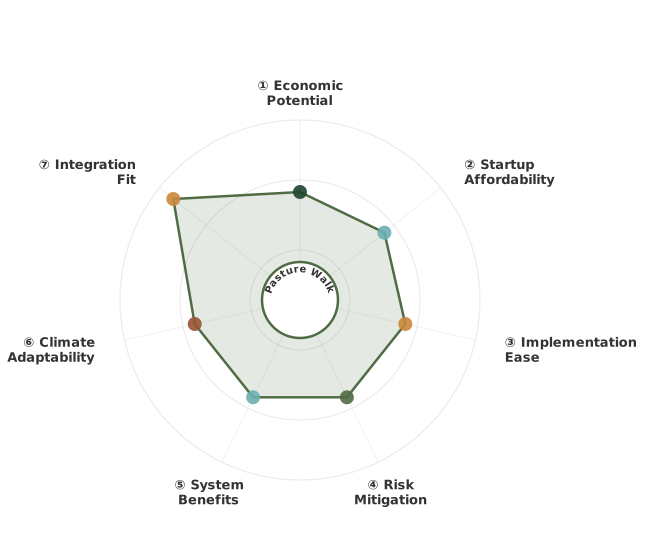
How These Traits Are Calculated
Trait dimensions are ordered clockwise starting from the top of the chart (12 o'clock position):
1. Economic Potential
Financial returns, annual value, and break-even timeline
WHAT: Evaluates financial viability by combining net annual value ($/ha from savings, income, and amortized harvests) with break-even timeline showing when practices pay for themselves.
WHY: Farmers need clear ROI understanding before committing resources. Fast payback (≤3 years) with strong returns (≥$300/ha) enables confident adoption, while long timelines (>10 years) restrict adoption to well-funded operations willing to wait for returns.
HOW: Calculated from net annual value in $/ha and break-even years. Exceptional (≥2.6): fast ROI ≤3 years + high value ≥$300/ha. Typical (1.8-2.5): moderate returns or longer timelines. Limited (<1.8): marginal economics or very long payback >10 years.
2. Startup Affordability
Initial investment costs and financial barrier to entry
WHAT: Measures financial barrier to entry through startup costs for equipment, infrastructure, consulting, and materials. Inverted scoring: lower costs = higher scores = more accessible adoption.
WHY: Affordability determines who can adopt. Low-cost practices (<$250/ha) enable widespread adoption across diverse scales, while high costs (>$2,500/ha) limit adoption to well-capitalized operations, creating barriers that slow regenerative transition.
HOW: Calculated from initial investment parsed from practice content. Inverted scoring: Exceptional (≥2.6): minimal investment <$250/ha. Typical (1.8-2.5): moderate costs $250-2,500/ha. Limited (<1.8): high barrier >$2,500/ha.
3. Implementation Ease
Learning curve and specialized knowledge required
WHAT: Measures how much learning, planning, and specialized knowledge a practice requires. Simpler practices with fewer steps score higher, while complex practices requiring extensive training or specialized resources score lower.
WHY: Complex practices create adoption barriers even when economically viable. Straightforward practices enable faster adoption and broader participation, while those requiring extensive training, timing precision, or specialized equipment limit who can succeed.
HOW: Evaluated by measuring documentation length and identifying complexity markers like location-specific requirements, seasonal timing windows, specialized skills, and dedicated equipment needs. Exceptional (≥2.6): straightforward practices with minimal prerequisites. Typical (1.8-2.5): moderate learning curve with some specialized needs. Limited (<1.8): steep learning curve requiring significant training or resources.
4. Risk Mitigation
Identified financial and ecological risk assessment
WHAT: Evaluates documented risks across financial (investment loss, market volatility) and ecological (crop failure, pest outbreaks) domains. Inverted scoring: fewer risks = higher scores.
WHY: Understanding risk exposure helps farmers make informed decisions. Low-risk practices allow confident implementation, while high-risk practices require careful planning and contingency resources. Risk transparency prevents costly failures.
HOW: Calculated from identified risks in practice content. Inverted scoring: Exceptional (≥2.6): ≤2 risks with manageable severity. Typical (1.8-2.5): 3-5 moderate risks. Limited (<1.8): 6+ risks or severe exposure.
5. System Benefits
How many ways the practice improves your land simultaneously
WHAT: Measures how many aspects of land health improve at once—carbon storage, soil quality, erosion control, water absorption, and biodiversity. Practices that improve multiple areas simultaneously create compounding benefits where each improvement reinforces the others.
WHY: The best practices solve multiple problems at once. For example, addressing erosion simultaneously builds carbon and improves water infiltration, creating a resilient system with positive feedback loops. Single-benefit approaches miss these compound transformation opportunities.
HOW: Evaluated across five key outcomes: carbon sequestration, soil organic matter increase, erosion reduction, water infiltration improvement, and biodiversity enhancement. Exceptional (≥2.6): high carbon storage (>8 t/ha/yr), improvements across 4-5 areas, transformative outcomes. Typical (1.8-2.5): moderate carbon (3-8 t/ha/yr), improvements across 2-3 areas. Limited (<1.8): modest impact (<3 t/ha/yr), single-area focus only.
6. Climate Adaptability
Geographic applicability across Köppen climate zones
WHAT: Evaluates geographic applicability by assessing how many Köppen climate zones successfully support a practice and what adaptation requirements are needed. Measures breadth of climates where farmers can implement with minimal to moderate modifications.
WHY: Universal practices working across diverse climates enable more farmers to adopt regenerative approaches. Practices limited to single climate types (only Mediterranean, only tropical) restrict adoption and slow global transition. Adaptability determines whether a practice serves niche regions or offers broad transformation.
HOW: LLM evaluation of regional success stories, Köppen zone coverage, and adaptation needs. Exceptional (≥2.6): 5+ zones or 4+ climate types, 3+ continents, minimal adaptation. Typical (1.8-2.5): 3-4 zones or 2-3 types, 2 continents, moderate adaptation. Limited (<1.8): 1-2 zones, single region, significant adaptation or highly specialized.
7. Integration Fit
How well this practice combines with others you're doing
WHAT: Measures how well a practice combines with other regenerative practices you might be doing. Some practices work as building blocks that make many other practices easier or more effective, while others work best on their own.
WHY: Practices that combine well with many others create more value on your farm. For example, cover cropping enables no-till, improves grazing, supports crop diversity, and helps water management—making all of them work better together. This helps you build a coherent system rather than juggling disconnected practices.
HOW: Evaluated by identifying which practices combine well and how strong those combinations are. 'Ideally Suited' means strong combinations where practices reinforce each other (practice A makes B easier, while B makes A more effective). 'Adequate' means complementary benefits that work well together. Exceptional (≥2.6): combines well with 6+ practices, serves as a building block. Typical (1.8-2.5): combines with 3-5 practices. Limited (<1.8): 1-2 practices or works best alone.
Going Deeper
1
WHY - The Benefits
A pasture walk is more than just a stroll through the fields; it's a fundamental diagnostic tool that empowers land managers to understand and improve their ecosystem. Its value lies in its ability to provide direct, real-time feedback on complex ecological processes,...
A pasture walk is more than just a stroll through the fields; it's a fundamental diagnostic tool that empowers land managers to understand and improve their ecosystem. Its value lies in its ability to provide direct, real-time feedback on complex ecological processes,...
WHY - The Benefits
A pasture walk is more than just a stroll through the fields; it's a fundamental diagnostic tool that empowers land managers to understand and improve their ecosystem. Its value lies in its ability to provide direct, real-time feedback on complex ecological processes,...
A pasture walk is more than just a stroll through the fields; it's a fundamental diagnostic tool that empowers land managers to understand and improve their ecosystem. Its value lies in its ability to provide direct, real-time feedback on complex ecological processes,...
Soil Health Benefits
Pasture walks allow land managers to directly assess numerous soil health indicators. By observing soil structure—its crumbliness, absence of compaction layers, and the presence of earthworm burrows and macropores—managers gain a qualitative understanding of soil aggregation and aeration. Observing soil smells (a healthy, earthy aroma indicates good microbial activity) and the presence of fungal hyphae further informs soil biological health. The rate at which water infiltrates the soil surface, tested by simple methods like the "hole test" (digging a small hole and observing water entry), is a crucial indicator of structure and porosity. By observing areas of erosion or water pooling, land managers can identify where soil has lost its structure and is no longer effectively managing water.
Regular walks help monitor changes in soil organic matter over time. An increase in the depth of dark topsoil, a greater abundance of earthworms, and improved soil aggregation are all visual cues of increasing organic matter, which is the foundation of fertile, resilient soil. This enhanced soil health leads to better nutrient cycling, reduced reliance on synthetic fertilizers, and improved water-holding capacity, making pastures more drought-resilient.
Economic Benefits
The economic benefits of pasture walks are often indirect but substantial. By identifying potential problems early—such as overgrazing, weed infestations, or nutrient deficiencies—managers can intervene before they escalate into costly issues. For example, noticing that livestock are preferentially grazing certain plants or leaving others uneaten can prompt adjustments to grazing rotations or supplementation strategies, leading to more efficient forage utilization. Early detection of drought stress allows for proactive herd management, such as moving animals to more resilient pastures or reducing stocking rates, thereby saving feed costs and preventing animal health issues.
Improved soil health resulting from management changes guided by pasture walks leads to denser, more nutritious forage. This translates into better animal performance (weight gain, milk production, reproductive rates), reducing the need for expensive supplemental feeds. Furthermore, by maintaining healthy, productive pastures, land managers can potentially extend the grazing season, reducing winter feed requirements and increasing overall profitability. Over the long term, improved land health can lead to higher land values and greater resilience to climate fluctuations.
Water Cycle Benefits
Pasture walks are critical for understanding how water interacts with the land. Observing areas of runoff, gully formation, or ponding highlights poor water infiltration, indicating compacted soil or insufficient ground cover. Conversely, seeing water soak in quickly and observing healthy soil moisture profiles suggests good infiltration and water-holding capacity. Managers can observe the health of riparian zones, noting vegetation cover, bank stability, and water clarity, all indicators of watershed health.
By understanding how water moves across their landscape, managers can implement strategies like contour ripping, keyline design, or improved pasture management to slow down, spread, and sink water into the soil. This improves soil moisture availability for plants, recharges groundwater, and reduces downstream erosion and flooding. Healthy pastures with good ground cover and soil structure act like sponges, absorbing rainfall and releasing it slowly, providing a more consistent water supply throughout dry periods.
Carbon Sequestration Benefits
The principle of keeping soil covered and maintaining living roots, which are key focus areas during pasture walks, directly contribute to carbon sequestration. Healthy, actively growing plants, especially perennial grasses and legumes, draw down atmospheric carbon dioxide through photosynthesis. A significant portion of this carbon is then transferred into the soil through root exudates and decaying plant matter.
By observing the density and vigor of pasture growth, land managers can infer the rate of carbon fixation. A pasture walk that reveals abundant ground cover, healthy plant diversity, and signs of robust soil biological activity (like earthworms and good soil structure) indicates that the land is effectively sequestering carbon. Conversely, bare soil or sparse vegetation points to low carbon sequestration rates and potential carbon loss. Regular walks allow managers to monitor the impact of their practices on this process and make adjustments to enhance carbon capture.
Biodiversity Benefits
Pasture walks provide an opportunity to observe and monitor the biodiversity present on the land. This includes noting the variety of plant species (forage grasses, legumes, forbs), beneficial insects (pollinators, predators of pests), birds, and other wildlife. A rich diversity of plant life typically supports a greater variety of insect and animal life, creating a more balanced and resilient ecosystem.
Observing a healthy population of earthworms, for instance, is a strong indicator of a thriving soil food web. The presence of pollinators like bees and butterflies suggests a healthy flowering plant community. Abundant birdlife can indicate a healthy insect population and suitable habitat. By noting the presence or absence of specific species, land managers can identify areas where biodiversity is declining and implement practices, such as increasing plant diversity or providing habitat, to enhance it.
Regenerative Systems Fit
Pasture walks are intrinsically aligned with the principles of regenerative agriculture, acting as a vital feedback mechanism. The practice directly supports Principle 3 (Keep Soil Covered) and Principle 4 (Maintain Living Roots) by enabling direct observation of ground cover and the presence of live plant roots. Managers can assess how well their grazing or cropping strategies are maintaining continuous cover and living roots throughout the year.
The practice also supports Principle 2 (Maximize Crop Diversity) by encouraging managers to identify and value the variety of plant species in their pastures, recognizing the ecological benefits that diversity brings. It provides critical feedback for Principle 5 (Integrate Livestock) by allowing managers to observe the impact of animal grazing, manure deposition, and trampling, enabling them to optimize livestock management for soil health and pasture regeneration. Furthermore, it helps assess the success of Principle 1 (Minimize Soil Disturbance) by observing the absence of harmful compaction and erosion.
For farmers and ranchers transitioning to regenerative systems, pasture walks are indispensable. They provide the necessary understanding to adapt practices, learn from the land's responses, and build confidence in regenerative approaches. By regularly observing the subtle changes in soil and plant health, managers can make incremental adjustments that gradually move their operation towards a fully regenerative model from the ground up, rather than relying solely on external advice or delayed data.
Sources behind this view
Videos & Podcasts
-
Laura Payne details how managed grazing enhances soil health, water quality, and wildlife habitat, citing research on reduced erosion, improved stream health, and support for grassland birds. Key prin
-
Holistic management with cattle is key to improving soil health, water cycles, and carbon sequestration. Maximize animal impact (hooves, dung, urine) for diversity and plant growth, while breeding cat
-
Outlines five soil health principles: keep soil covered, optimize disturbances (grazing, fire), increase plant diversity (interseeding, native mixes), maintain living roots, and proper livestock integ

-
Holistic planned grazing (HPG), also called adaptive multi-paddock grazing, significantly improves soil carbon (3 tons/ha/yr more than continuous grazing), water infiltration, and ecological function
Community
-
Build healthy pasture soils by minimizing tillage, maintaining living roots and species diversity, and implementing proper grazing management. Livestock are essential for nutrient cycling and stimulat
Read more (opens in new window) smallfarms.cornell.edu -
Adopts a holistic grazing management approach emphasizing diverse perennial pastures, higher residuals (4"), and longer rest periods (avg. 45 days) to build soil health, increase organic matter (3.4%
Read more (opens in new window) smallfarms.cornell.edu -
Manage rotational grazing by setting recovery (15-40+ days, adapting to region/season) and grazing periods (2-3 days). Aim to 'take half, leave half' for livestock and soil microbes. High stocking den
Read more (opens in new window) smallfarms.cornell.edu -
Build healthy pasture soils by minimizing tillage, maintaining living roots and soil cover, increasing species diversity, managing grazing recovery periods, and utilizing animal impact. Key practices
Read more (opens in new window) smallfarms.cornell.edu
Research
-
Long-term in situ moisture conservation in horti-pasture system improves biological health of degraded land. (opens in new window)
This study found: Combining trees, pasture, and on-site water conservation (contour trenches) in India significantly boosted soil organic matter and beneficial microbes on degraded land, improving soil health and yield
-
Key soil health indicators under humid grazing lands (opens in new window)
This study found: Humid grazing lands benefit from balanced farming with forages, improving soil health through increased organic matter, reduced compaction, and enhanced soil life, often boosted by grazing animal manu
-
Managing Grazing to Restore Soil Health, Ecosystem Function, and Ecosystem Services (opens in new window)
This study found: Properly managed grazing animals can reverse environmental damage. Regenerative practices, like Adaptive Multi-Paddock (AMP) grazing, boost soil health, increase soil carbon, reduce erosion, and enhan
-
Soil health under forage and grazing lands in the humid United States (opens in new window)
This study found: Managing pastures in the humid US impacts soil health, affecting organic matter, water retention, and nutrient cycling. Grazing intensity and forage harvesting are key drivers, with good practices enh
From the Web
-
Explains pasture dynamics and soil health mechanisms, detailing how grazing, diverse plants, and microorganisms drive nutrient cycling and build soil structure, emphasizing six principles for healthy
2
WHERE - Regional Considerations
Successfully implementing the principles of a pasture walk is universal, but the specific indicators and priorities may shift based on regional environmental factors like climate, dominant soil types, and common ecological challenges.
Successfully implementing the principles of a pasture walk is universal, but the specific indicators and priorities may shift based on regional environmental factors like climate, dominant soil types, and common ecological challenges.
WHERE - Regional Considerations
Successfully implementing the principles of a pasture walk is universal, but the specific indicators and priorities may shift based on regional environmental factors like climate, dominant soil types, and common ecological challenges.
Successfully implementing the principles of a pasture walk is universal, but the specific indicators and priorities may shift based on regional environmental factors like climate, dominant soil types, and common ecological challenges.
Click Here to Look up your Region if you don't already know it
Humid Temperate Regions
Representative Locations: Southeastern United States, northern Europe (UK, Germany, Poland), eastern China, Japan, New Zealand
Climate Context: Warm to hot summers and cool to cold winters with moderate to high annual precipitation (75-150 cm or 30-60 inches) distributed relatively evenly. USDA Zones 6-8, Köppen Cfb/Cfa.
In these regions, pasture walks often focus heavily on monitoring plant growth cycles, especially the dominance of cool-season grasses and the challenge of managing summer growth or drought stress. Managers will observe the lushness and health of forages, but also watch for signs of heat stress during summer months, which can reduce palatability and nutrient content. Soil health indicators like earthworm activity and aggregate stability are readily assessed due to consistent moisture. Erosion can be a concern on sloped terrain, particularly after heavy rain events, making observation of water runoff and soil cover critical. Monitoring for weed pressure, which can thrive in these conditions, is also a priority.
Mediterranean Regions
Representative Locations: California, Mediterranean basin (Spain, Italy, Greece), central Chile, southwestern Australia, Western Cape South Africa
Climate Context: Hot, dry summers and mild, wet winters. Annual precipitation 40-90 cm (15-35 inches), highly seasonal. USDA Zones 8-10, Köppen Csa/Csb.
Pasture walks in Mediterranean climates are dominated by the challenge of the strong summer dry season. Managers focus on observing how well pastures recover after winter rains, the persistence of perennial grasses and forbs through increasingly dry summers, and the health of drought-tolerant species. Soil cover becomes paramount during the dry summer to prevent wind and water erosion. Observing signs of soil crusting, which can hinder seedling establishment, is important. Animal management often involves moving herds to more resilient areas or relying on stored feed during the dry period. Biodiversity might be observed through the presence of specialized drought-adapted plants and insects.
Arid & Semi-Arid Regions
Representative Locations: Western USA, North Africa, Central Asia, Interior Australia
Climate Context: Low annual precipitation (<40 cm or 15 inches), high temperatures, short and often unpredictable growing season. USDA Zones 7-9, Köppen BSh/BSk.
In arid and semi-arid regions, pasture walks are focused on resource conservation and resilience. Managers observe vegetation response to very limited rainfall, prioritizing plants that can survive and thrive in xeric conditions. Monitoring grazing pressure and animal impact is critical to prevent desertification, as recovery from overgrazing is extremely slow. Signs of wind erosion, dust, and soil crusting are common concerns. Water infiltration is extremely slow, and managers might look for evidence of water harvesting features or areas where ephemeral water sources support plant growth. Biodiversity is often characterized by highly adapted species that can survive extreme conditions.
Cold Continental Regions
Representative Locations: Northern USA and Canada, Northern Europe, Northern Asia
Climate Context: Very short growing seasons, extreme summer heat, severe winter cold. USDA Zones 3-5, Köppen Dfa/Dfb.
Pasture walks in cold continental regions must contend with short growing seasons and extreme winter conditions. Managers focus on maximizing forage production during the brief summer and observing how well perennial plants survive and recover from harsh winters. Soil health observations might include monitoring for soil heaving due to freeze-thaw cycles and assessing soil moisture as snowmelt recedes. Compaction can be an issue if land is worked when wet during spring thaws. Animal management often involves extended winter feeding periods indoors or in sheltered areas. Biodiversity might be observed through the limited range of resilient plant species and hardy fauna.
Subtropical Regions
Representative Locations: Southeastern USA, Southern China, Southern Brazil, Eastern Australia
Climate Context: Hot, humid summers and mild winters with generally ample rainfall. USDA Zones 9-11, Köppen Cfa/Cwa.
In subtropical regions, pasture walks often focus on managing vigorous, year-round growth and dealing with high humidity. Managers observe the health of warm-season grasses and tropical forages, watching for signs of disease or pest pressure exacerbated by warm, wet conditions. Soil health is influenced by high organic matter decomposition rates. Erosion can be a significant issue due to intense rainfall events. Managing grazing to prevent overgrazing during periods of rapid growth and maintaining soil cover are key. Observing the presence of diverse insect life and aquatic species in wetter areas is common.
Tropical Regions
Representative Locations: Central America, Southeast Asia, East Africa, Northern Australia, Northern South America
Climate Context: High temperatures year-round, with distinct wet and dry seasons or consistent high rainfall. Köppen Af/Am/Aw.
Pasture walks in tropical regions are often characterized by observing rapid, vigorous growth during wet seasons and the potential for drought stress during dry periods. Managers focus on managing the abundance of forage, preventing overgrowth, and ensuring adequate rest periods for pastures to recover. Soil health can be challenged by rapid nutrient leaching in high rainfall areas and potential compaction from animals on wet soils. Erosion is a major concern during intense tropical downpours. Biodiversity is typically very high, with a wide array of plant and animal species present, and managers observe the interactions within this complex system.
3
HOW - Implementation Process
HOW - Implementation Process
Before conducting a pasture walk, ensure a basic understanding of what you are looking for. While direct observation is key, some prior knowledge enhances interpretation.
- Familiarity with dominant plant species: Know the names and general palatability of key forage species and common weeds in your region.
- Understanding of grazing principles: Have a concept of how grazing impacts plants and soil (e.g., impact on regrowth, residue, compaction).
- Objective setting: Have a general idea of what you want to achieve with your pastures (e.g., increased forage production, improved soil health, better water infiltration).
Simple tools are beneficial: a notebook and pen, a camera or smartphone for documentation, a small trowel or spade for soil inspection, and potentially a soil penetrometer or infiltration rings for more detailed assessment if available. Gloves and appropriate footwear are recommended.
Phase 1: Planning Your Walk
Frequency: Conduct walks regularly, ideally weekly or bi-weekly, to track changes and respond quickly. For critical periods (e.g., near calving/lambing, during drought, after heavy rain), daily or every-other-day checks might be necessary.
Pattern: Plan a route that covers representative areas of your pasture, including different topographies, soil types, and grazing zones. Don't just visit the areas closest to the barn. Consider walking a transect across a paddock, or visiting areas that are typically grazed harder or rested longer. If you divide your land into paddocks for time-controlled rotational grazing, walk through each paddock periodically.
Timing: Walk at different times of the day and during different seasons. Animal behavior changes throughout the day, impacting where they graze and spend time, and thus their impact. Seasonal changes dramatically affect plant growth, soil moisture, and biodiversity.
Phase 2: Observation and Documentation
As you walk, systematically observe and record the following:
1. Animal Impact:
- Grazing pressure: Are animals eating plants evenly? Are some species being avoided? Are plants being grazed too short (less than 10-15 cm or 4-6 inches residual)?
- Animal distribution: Are animals congregating in certain areas (e.g., near water or shade), potentially overgrazing them? Are other areas being neglected?
- Dung pats: Are they healthy and scattered, or are they large and concentrated (indicating poor nutrient cycling or lack of rest)? Are they breaking down, or are they drying out and becoming weed nurseries?
- Tracks and trails: Are there signs of soil compaction from animal traffic?
2. Plant Health and Community:
- Forage species: Identify key grasses, legumes, and forbs. Are they healthy, leafy, and actively growing? Or are they dry, set-seed, or showing signs of stress?
- Plant diversity: Note the variety of species present. Is there a good mix of grasses, legumes, and forbs? Or is the pasture dominated by a few species or weeds?
- Weeds: Identify any invasive or undesirable plants. Are they spreading? What might be causing their proliferation (e.g., overgrazing, low fertility, lack of competition)?
- Residual biomass: How much plant material is left on the ground after grazing? Aim for at least 10-15 cm (4-6 inches) of residual to protect the soil and fuel soil biology.
- Signs of disease or pests: Look for yellowing leaves, spots, insect damage, or other indicators of stress.
3. Soil Condition:
- Soil smell: A healthy soil smells earthy and alive. Anaerobic conditions might smell sour or like sulfur.
- Soil structure: Use a spade to dig small holes. Observe the soil's aggregation (crumbly vs. cloddy), look for visible root channels and earthworm burrows.
- Compaction: Test for hardpan layers by trying to push a spade or penetrometer into the soil. Note resistance.
- Water infiltration: On slopes, observe where water runs off, ponds, or soaks in. You can do a simple "hole test" by digging a small hole, filling it with water, and observing how quickly it drains. Poor infiltration (<1.3 cm or 0.5 inch per hour) indicates compaction.
- Soil cover: Is the soil surface protected by living plants, mulch, or leaf litter? Or is it bare and exposed to sun and wind?
4. Water and Terrain:
- Waterways and drainage: Are they stable or eroding? Is water flowing clearly or turbid with sediment?
- Riparian areas: Observe the health of vegetation along water bodies. Are banks stable? Is there adequate ground cover?
- Moisture levels: Note areas that are excessively wet, dry, or have good moisture.
5. Biodiversity:
- Insects: Look for pollinators (bees, butterflies), beneficial insects (ladybugs, hoverflies), and signs of pest insects.
- Birds and wildlife: Note the presence of birds, small mammals, or other fauna, which indicate habitat availability.
- Microbial indicators: Fungal hyphae visible on roots or in soil samples are good signs.
Documentation: Record observations systematically. Use a notebook, app, or digital system. Take photos of key findings—both positive and negative examples—to track changes over time. Note the date, location, and specific indicators observed.
Phase 3: Analysis and Action
After the walk, review your notes and photos.
- Identify trends: Are issues improving or worsening compared to previous walks?
- Connect observations: How does soil condition relate to plant health? How does grazing management affect plant distribution?
- Formulate hypotheses: Why are certain plants not growing well? Why is there compaction in this area? Why are animals avoiding this section?
- Develop interventions: Based on your analysis, what management changes are needed? This might involve adjusting grazing rotations (e.g., increasing rest periods, changing stocking density), seeding new plant species, implementing water harvesting techniques, or improving fencing to manage animal distribution.
- Prioritize actions: Focus on one or two key issues that will have the biggest impact.
Transition Timeline & Phase-Out Strategy
Pasture walks are not a transition practice in themselves, but they are the primary tool for managing any transition. The information gathered from walks reveals when conventional inputs are no longer necessary and when regenerative practices are fully established and functional.
-
Monitoring Synthetic Input Reduction: If transitioning from synthetic fertilizers or pesticides, pasture walks will show when soil health improvements (increased organic matter, better nutrient cycling by biology) are making these inputs redundant. For example, if leguminous cover crops are thriving and legumes are well-established in pasture, the need for nitrogen fertilizer diminishes. If beneficial insects are abundant, pest outbreaks may be less common, reducing pesticide needs. Your observations will tell you when you can reduce application rates or eliminate products.
-
Assessing Regenerative Practice Efficacy: Once regenerative practices like rotational grazing, cover cropping, or silvopasture are implemented, pasture walks are essential for determining their success. You observe if soil structure is improving, if plant diversity is increasing, if forage quality is enhancing, and if livestock performance is meeting goals. These observations dictate when a practice is working well enough to be considered fully established and when it might need refinement or replacement with a more regenerative equivalent.
-
Graduating to Fully Regenerative: The ultimate goal is to reach a point where pasture walks reveal consistently healthy ecosystems—robust soil biology, diverse plant communities, excellent water management, and sustainable livestock impacts. This indicates that the system is largely self-regulating and resilient, fulfilling all five regenerative principles. Once this consistent state is achieved and maintained over several years, the "transition" is complete.
4
Know the Debate
Pasture walk outcomes are influenced by regional climate, starting soil conditions, and the manager's chosen assessment tools. Humid regions with g...
Know the Debate
Pasture walk outcomes are influenced by regional climate, starting soil conditions, and the manager's chosen assessment tools. Humid regions with g...
Pasture walk outcomes are influenced by regional climate, starting soil conditions, and the manager's chosen assessment tools. Humid regions with good rainfall and active biology often show faster soil health improvements within 1-3 years. In contrast, semi-arid or degraded lands require patience, often 5-10 years or more, for soil biology to rebuild structure and sequester carbon. The intensity of assessment also varies, from simple sensory observations to detailed analysis using specialized equipment.
How fast do soil health improvements appear?
Faster gains (1-3 years, humid regions)
In humid climates with good rainfall and active soil biology, managed grazing can lead to noticeable improvements in soil organic matter, water infiltration, and aggregation within 1-3 years.
Sources behind this view
Sources behind this view
Videos & Podcasts
-
Starting a grazing operation requires understanding the 'why' and thoroughly assessing the land through walking, soil sampling, and observation. Engaging with mentors and diverse perspectives is crucial for identifying opportunities and planning effectively.
Research
-
Response of Grazing Land Soil Health to Management Strategies: A Summary Review (opens in new window)
This study found: This review looks at how different ways of managing pastures affect soil health, specifically how well water soaks in, how much carbon the soil stores, and how efficiently plants use nitrogen. Generally, good grazing practices like moderate, continuous grazing or planned rotational grazing with fewer animals per acre tend to improve these soil functions. Healthy, complete plant cover helps water penetrate the soil better, as does more soil carbon. Planting diverse, fast-growing forage species can boost carbon storage. However, overgrazing or incorrect fertilizer use can lead to carbon loss. Getting the right balance of manure and fertilizer, along with the correct number of animals, is key for plants to use nitrogen effectively. The best approach involves combining these practices based on the specific farm and climate to improve both soil health and overall farm productivity.
-
Soil health under forage and grazing lands in the humid United States (opens in new window)
This study found: This review looks at how managing pastures and grazing lands affects soil health, specifically in the humid parts of the United States. While some soil traits like texture can't be changed, things like soil organic matter, nutrient levels, and how well soil holds water can be improved through management. How and when you harvest forage (feed for animals) and how intensely you graze (stocking rate) are key. These practices influence how plants put carbon into the soil through their roots. Poor management can lead to soil compaction, nutrient loss, and increased greenhouse gases. However, good management can improve water retention, nutrient recycling, and store carbon and nitrogen in the soil. The review highlights eight essential functions of healthy soil, from growing plants to supporting biodiversity, and points out where more research is needed.
Slower gains (5-10+ years, arid/degraded lands)
In semi-arid rangelands or degraded soils, soil recovery is slower due to limited moisture and biology. Achieving significant soil health improvements requires 5-10 years or more of consistent, patient management.
Sources behind this view
Sources behind this view
Videos & Podcasts
-
Starting a grazing operation requires understanding the 'why' and thoroughly assessing the land through walking, soil sampling, and observation. Engaging with mentors and diverse perspectives is crucial for identifying opportunities and planning effectively.
-
Documents improvements in soil health and native grass species composition over five years using soil tests and transects, showing a tenfold increase in mycorrhizal fungi and a shift away from weed species under ultra-high-density grazing.
Research
-
Pasture management in semi-arid tropical woodlands: regeneration of degraded pastures protected from grazing (opens in new window)
This study found: A three-year experiment in Queensland, Australia, looked at how degraded pastures recovered when grazing was stopped. Researchers measured things like plant types, how much ground was covered by plants, and seeds in the soil before resting the pastures. They found that resting the land, especially during good growing conditions, helped pastures recover. This meant more ground cover and a better mix of desirable plants. While some very degraded areas took longer to recover, the study showed that measuring plant species and ground cover before resting can help predict how well a pasture will bounce back. This information can guide future grazing management decisions.
Making Sense of the Differences
The timeline for observing significant soil health benefits from pasture management varies greatly with climate, starting soil condition, and management intensity. Humid regions with ample rainfall and active biology show faster responses (1-3 years). Degraded lands or arid/semi-arid areas require longer periods (5-10+ years) for soil biology to rebuild structure and carbon, often necessitating more patient management and less immediate feedback.
What tools are essential for pasture assessment?
Basic tools: Sensory & shovel (0-30 min)
A practical, quick assessment can be done using only sight, smell, touch, and simple tools like a shovel and knife, taking about 30 minutes per area for routine monitoring.
Sources behind this view
Sources behind this view
Videos & Podcasts
-
Farmers can assess soil health by walking barefoot to feel for compaction and using simple tools like sticks to measure penetration depth, indicating organic matter levels and the effectiveness of regenerative practices.
From the Web
-
Learn to assess pasture soil health using sight, smell, touch, and simple tools like a shovel and knife in under 30 minutes, to understand soil condition and grazing management impacts.
-
NCAT's Justin Morris provides a free, 30-minute pasture soil health assessment method using sight, smell, touch, a shovel, and a knife to evaluate soil condition and grazing management impact.
Advanced tools: Quantitative analysis (hours/day)
More in-depth assessments utilize specialized tools like penetrometers, infiltration rings, and laboratory analysis to quantify soil health indicators for detailed diagnostics and benchmarking.
Sources behind this view
Sources behind this view
Videos & Podcasts
-
Practical soil assessment methods include using a spade for structure, infiltration tests with aluminum rings, PLFA analysis for biology, and Haney analysis. These tools help farmers understand soil health and guide management decisions.
-
Recommended soil tests for graziers include the root sheath test (soil on roots), slake test (wet aggregate stability), and visual evaluation, offering quick feedback on soil health and biology within 6 months.

Research
-
Tracking Soil Health Changes in a Management-Intensive Grazing Agroecosystem (opens in new window)
This study found: A study in Colorado looked at soil health on irrigated land that was converted from cropland to pasture managed with intensive rotational grazing (MiG) for five to six years. They found that while soil compaction increased due to cattle trampling, other soil health indicators improved. Specifically, beneficial soil microbes and enzymes (like beta-glucosidase) increased, along with the amount of carbon and nitrogen available in the soil. This was linked to less tilling and more organic matter from manure. While nutrient levels stayed mostly the same, the overall soil health was better than in earlier years. The research suggests that while MiG can improve soil biology, managing soil compaction from livestock is important for long-term soil health.
Making Sense of the Differences
The intensity of pasture assessment depends on management goals and available resources. Basic sensory evaluation with simple tools is sufficient for routine monitoring and identifying broad trends, requiring minimal time and investment. Deeper, quantitative analysis using specialized equipment is valuable for detailed diagnostics, benchmarking, and research, but is not required for everyday management decisions.
5
HOW MUCH - Costs & Investment
Note: Costs shown in USD; multiply by local labor and material cost indices for your region. Labor costs vary significantly internationally.
Note: Costs shown in USD; multiply by local labor and material cost indices for your region. Labor costs vary significantly internationally.
HOW MUCH - Costs & Investment
Note: Costs shown in USD; multiply by local labor and material cost indices for your region. Labor costs vary significantly internationally.
Note: Costs shown in USD; multiply by local labor and material cost indices for your region. Labor costs vary significantly internationally.
Note: All costs are based on recent US economic data (2024–2026) and may vary substantially by region based on local labor rates, material costs, and regulatory requirements. All calculations assume a standard labor valuation of $30–$45 per hour, reflecting the opportunity cost of an experienced agricultural manager or specialized labor.
Labor and Management Time Investment
The primary investment for a systematic pasture walk program is the manager’s time, which is essential for capturing data consistency over time. For small operations covering under 50 acres (20 ha), time is often consolidated due to proximity; owners typically spend 8–12 hours per month on walks and data interpretation. At a labor valuation of $30–$45 per hour, this equates to a monthly labor value of $240–$540.
Mid-size operations ranging from 50–500 acres (20–202 ha) face higher complexity, often requiring 15–25 hours per month to cover expanded acreage, paddock division status, and animal performance metrics. This results in a monthly labor value of $450–$1,125. For large operations of 500+ acres, the scale necessitates 30–50 hours per month to manage high-volume paddock rotations and data aggregation. This translates to an investment of $900–$2,250 in monthly labor value.
For large-scale operations, travel time between remote paddocks regularly adds 15–20% to the labor expenditure compared to compact, high-density grazing designs. If the operation utilizes hired labor to conduct walks, training costs must be accounted for to ensure the efficacy of data collection. Investing $200–$600 per employee annually for regenerative grazing training or specialized mentorship ensures that the labor hours invested are not wasted on inaccurate observations.
Equipment and Data Management Tools
Tools for inventorying pasture health range from low-tech manual notebooks to high-precision digital monitoring. For small operations, a basic kit—consisting of a field notebook, smartphone, simple soil spade, and a $50–$150 infiltration kit—is sufficient. Total initial equipment investment for this scale remains between $100 and $300.
Mid-size operations often benefit from subscription-based grazing management software to track complex data points, which costs $150–$400 annually. When paired with hardware like a $200–$400 soil penetrometer to track compaction metrics systematically, the total mid-size investment falls between $500 and $900.
Large operations scale these investments significantly, incorporating GPS-integrated mapping software and advanced soil testing kits, with annual software costs of $500–$1,200. Furthermore, large operations frequently allocate $300–$800 for specialized digital monitoring equipment—such as pole-mounted forage height gauges or drones for vegetative index imaging—to optimize data collection over hundreds of acres. Total initial and annual investment for large-scale operations ranges from $1,200 to $2,500, depending on the technological integration desired.
Most Spend: Most agricultural operations (the middle 60% of the range) spend approximately $600–$1,200 per month in combined labor value and tool depreciation. This group typically utilizes a mix of internal labor and mid-tier digital monitoring tools to balance accuracy with ongoing operational costs.
Why the Range?: The primary variable is the density of data collection and the complexity of the geographic layout. Higher costs are driven by the use of real-time software subscriptions, advanced satellite or drone imagery, and the opportunity cost of labor in highly remote or fragmented land parcels where travel time increases significantly.
6
REWARDS AND RISKS - Economics & Risk Factors
REWARDS AND RISKS - Economics & Risk Factors
In a best-case scenario, a rigorous pasture walk schedule allows for the precise timing of move days, which maximizes forage regrowth through optimal rest periods. By extending the grazing season by 10–15 days, producers can reduce annual hay expenditures by $60–$120 per head. Over a 50-head herd, this equates to an annual gross savings of $3,000–$6,000. Additionally, identifying compaction early allows for the implementation of managed impact grazing, preventing a transition from high-production forage to low-value, weed-heavy pasture. By avoiding this degradation, producers save $200–$400 per acre ($494–$988/ha) in mechanical remediation costs.
In a typical scenario, the producer captures incremental gains in dry matter production. Improved rotational management leads to a 5–10% increase in stocking rate efficiency. For a mid-sized operation with 200 acres (81 ha), this could mean supporting 5–10 additional animal units, generating $1,500–$3,500 in additional annual revenue. Soil health improvements, systematically observed and managed through walks, result in long-term improvement in water infiltration rates, lowering drought vulnerability. This reduces the need for emergency water hauling or supplemental irrigation, which can cost $200–$500 per month during dry spells.
In a worst-case scenario, the producer conducts walks but misinterprets indicators—such as confusing overgrazing stress with simple drought dormancy—and keeps livestock on a paddock too long. This leads to the loss of 20–30% of high-quality forage density and severe, long-term soil degradation. The subsequent need for pasture reseeding and the purchase of extra hay to cover the resulting forage deficit can total $5,000–$10,000 in unexpected annual costs.
Profitability is highly sensitive to the cost of off-farm inputs. As high-protein feed prices fluctuate—often shifting by 15–25% year-over-year—the value of pasture walk-enhanced self-sufficiency becomes a key hedge against margin squeeze. Risk mitigation is essentially an investment in human capital. Producers should dedicate at least 5% of their annual operating budget to continuing education, such as regional grazing workshops costing $300–$700 per person. This reduces the risk of misinterpretation, which is the primary driver of the worst-case financial scenarios.
Transitioning to an active pasture walking and management system often involves a "learning curve tax." During the first 12–24 months, managers may experience a 10% yield dip as they adjust stocking rates and rotation timelines. This temporary cash flow reduction of $50–$150 per acre ($124–$371/ha) is mitigated by staged implementation; by changing only 20% of the farm’s rotation strategy at a time, managers minimize the risk of a widespread yield drop. Most farms return to pre-transition production levels within 36 months, with the added benefit of significantly lower long-term input requirements.
Sources behind this view
Videos & Podcasts
-
Improved grazing management boosts ranch economics through higher stocking rates, better cows-per-man ratios, extended grazing seasons, and reduced feeding costs. Strategic fencing and water developme
-
Main grazing season management involves weekly farm walks to assess grass yield (1400-1600 kg DM/ha), using a 'feed wedge' to manage surpluses/deficits by adjusting rotation length (avg. 20 days) or h
-
Implemented mob grazing by moving cattle daily to fresh pasture, resulting in thousands saved annually, a 30% increase in stocking rate, and improved soil organic matter (up to 9%) by feeding soil mic
-
Effective grazing requires adequate rest periods and observation, not just fixed timelines. Stock stocking rates based on worst-drought capacity, using yearlings/custom grazing for good years. Frequen
Research
-
Increasing Intensity of Pasture Use with Dairy Cattle: An Economic Analysis (opens in new window)
This study found: Intensive grazing on Pennsylvania dairy farms was more profitable than hay/corn silage, returning $129/acre. High debt and poor cash flow motivated increased grazing intensity, which lowered feed cost
-
Economics of increasing the persistence of sown pastures: costs, stocking rate and cash flow (opens in new window)
This study found: A 15-year financial model shows pastures that last longer and support higher stocking rates without replanting are most profitable, linking ecological sustainability to economic viability for grazing
-
Transitioning from conventional continuous grazing to planned rest-rotation grazing: A beef cattle case study from central Texas (opens in new window)
This study found: A 5-year Texas case study found planned rest-rotation grazing showed potential for more forage and better soil health on cultivated paddocks compared to continuous grazing, with similar overall profit
-
Economic benefits of resilient pastures (opens in new window)
This study found: Increasing pasture re-seeding on NZ dairy farms from 8% to 15% annually significantly boosts long-term profitability and regional economy through improved pasture resilience.
7
COMPATIBLE PRACTICES - Integration Opportunities
Pasture walks are not a standalone practice; they are enhancers and informed decision-makers for nearly all other land management activities. Their effectiveness is amplified when integrated with other regenerative principles and practices.
Pasture walks are not a standalone practice; they are enhancers and informed decision-makers for nearly all other land management activities. Their effectiveness is amplified when integrated with other regenerative principles and practices.
COMPATIBLE PRACTICES - Integration Opportunities
Pasture walks are not a standalone practice; they are enhancers and informed decision-makers for nearly all other land management activities. Their effectiveness is amplified when integrated with other regenerative principles and practices.
Pasture walks are not a standalone practice; they are enhancers and informed decision-makers for nearly all other land management activities. Their effectiveness is amplified when integrated with other regenerative principles and practices.
Adaptive Grazing Management
- Pasture walks provide the real-time data needed to make adaptive decisions about stocking density, grazing duration, and rest periods. Observing forage availability, plant health, animal impact, and soil moisture allows for dynamic adjustments to grazing plans.
- Integration benefit: Transforms grazing from a static plan into a responsive ecological process, optimizing forage utilization and regenerative outcomes.
Cover Cropping
- In mixed crop-livestock systems, pasture walks in cover-cropped fields can assess cover crop health, root development, and species diversity. This informs decisions about termination timing and the productivity of the subsequent cash crop.
- Integration benefit: Ensures cover crops are meeting their objectives for soil building and nutrient cycling, revealing their effectiveness in situ.
Silvopasture and Agroforestry
- Pasture walks are critical for monitoring the health and interaction of trees, forage understory, and livestock. Observations can reveal how well animals are utilizing forage between trees, signs of browse damage to young trees, and the impact of shade on pasture species.
- Integration benefit: Provides essential feedback for managing the complex interactions in silvopastoral systems, ensuring all components are thriving.
Keyline Design and Water Harvesting
- By observing where water runs off, ponds, or infiltrates, pasture walks identify key locations for implementing water harvesting structures. Subsequent walks can assess the effectiveness of these structures in improving soil moisture and vegetation growth.
- Integration benefit: Links direct observation of water management issues to specific infrastructure and land shaping solutions, verifying their impact on soil health.
Soil Health Testing
- Pasture walks provide the visual and qualitative context for quantitative soil tests. Observing dry, hard soil during a walk might prompt a soil test for organic matter or compaction, helping to confirm visual assessment and guide remediation.
- Integration benefit: Combines intuitive, observational understanding with precise scientific measurement for a more complete picture of soil health.
Biodiversity Monitoring
- While pasture walks naturally include biodiversity observations, dedicated biodiversity monitoring protocols can be more detailed. Pasture walks help identify areas that might warrant more intensive biodiversity surveys.
- Integration benefit: Connects general ecological observations to targeted biodiversity assessments, enhancing understanding of ecosystem complexity.
The primary benefit of integrating pasture walks with these practices is informed decision-making. By seeing the results of management changes firsthand—whether it's improved forage growth after a longer rest period, better water infiltration after cover cropping, or thriving earthworm populations—land managers can build confidence, refine their strategies, and accelerate their transition to fully regenerative systems.
Sources behind this view
Videos & Podcasts
-
Adaptive Multi-Paddock Grazing (AMPG) involves flexible, short-duration grazing and long rest periods, replacing conventional inputs with animal manure. Research metrics include soil health, water inf

Research
-
Managing Grazing to Restore Soil Health, Ecosystem Function, and Ecosystem Services (opens in new window)
This study found: Properly managed grazing animals can reverse environmental damage. Regenerative practices, like Adaptive Multi-Paddock (AMP) grazing, boost soil health, increase soil carbon, reduce erosion, and enhan
-
FORAGES AND PASTURES SYMPOSIUM: Improving soil health and productivity on grasslands using managed grazing of livestock. (opens in new window)
This study found: Managed grazing on grasslands can boost plant diversity, soil organic matter, and water infiltration. While results vary, integrating livestock and ecological goals is key for optimal grassland manage
-
Diversification and ecosystem services for conservation agriculture: Outcomes from pastures and integrated crop–livestock systems (opens in new window)
This study found: Conservation farming with diverse plants and integrated crop-livestock systems enhances environmental benefits like soil carbon storage and nutrient cycling, while minimizing soil disturbance and maxi
-
Managing grazing lands to improve soils and promote climate change adaptation and mitigation: a global synthesis (opens in new window)
This study found: Global review shows grazing management (longer rest, fewer animals, complex patterns) boosts soil water infiltration by ~59% and often improves soil carbon, with a call for more research.