
Perennial Crops
Perennial crops are plants that live for more than two years, returning year after year without needing to be replanted, unlike annual crops which complete their life cycle in a single growing season. These crops establish deep, extensive root systems and can remain in the ground for many years, contributing significantly to soil health, biodiversity, and ecosystem stability. Examples range from fruit trees and berry bushes to perennial grains, forage grasses, and timber species.
Read More: Complete Description
Perennial crops are plants that complete their life cycle in more than two years, often living for decades or even centuries. Unlike annual crops, which must be replanted each season, perennials establish a permanent presence, developing extensive and deep root systems that persist year-round. This continuous living cover provides a foundation for numerous regenerative agriculture principles, making them a cornerstone practice for building resilient and productive landscapes.
From a regenerative agriculture perspective, perennial crops directly and powerfully support four of the five core principles. Minimize Soil Disturbance is inherently addressed because perennial cropping systems eliminate the need for annual tillage, which is a primary driver of soil degradation, carbon loss, and disruption of soil structure and biology. By keeping the soil undisturbed year after year, perennial systems allow for the natural development of soil aggregates, fungal networks, and earthworm channels, fostering a stable and porous soil profile.
Maximize Crop Diversity is also a significant benefit. While a single-species perennial crop monoculture on a large scale can still be less diverse than a well-designed polyculture, the systemic diversity introduced by perennials is profound. Their extensive root systems branch into different soil depths, creating varied microhabitats below ground. Above ground, the presence of perennial plants provides habitat and food sources for a wider array of beneficial insects, birds, and soil organisms than annual cropping systems typically do. Furthermore, incorporating a mix of different perennial crops (e.g., fruit trees alongside perennial grains and native forages), or integrating them with other perennial species in agroforestry or silvopasture systems, dramatically increases ecosystem diversity.
The principle to Keep Soil Covered is almost universally met by perennial crops, as they maintain living biomass in the soil for their entire lifespan. Even during dormant seasons or between harvest cycles, the perennial plant structure, including its root system and surface residue, protects the soil from erosion caused by wind and rain. This continuous cover prevents the formation of crusts, reduces water runoff, conserves soil moisture, and provides a consistent food source for soil microbes.
Crucially, perennial crops embody the principle to Maintain Living Roots. This continuous presence of living roots throughout the soil profile means ongoing photosynthesis, carbon sequestration, and exudation of sugars and organic compounds that feed the soil food web. This steady supply of energy to soil microbes fosters a robust and active soil ecosystem year-round, promoting nutrient cycling, improving soil structure, and enhancing water infiltration and retention. The deeper root systems of many perennial crops also access subsoil moisture and nutrients, bringing them to the surface through litter decomposition.
The fifth principle, Integrate Livestock, can be synergistically combined with perennial crops. Many perennial systems, such as orchards, vineyards, or pastures planted with perennial forages, are excellent environments for managed grazing. Livestock can help manage weed pressure, cycle nutrients through manure deposition, and maintain plant health through strategic grazing, while benefiting from shade, shelter, and persistent forage provided by the perennial crops. This integration enhances the overall productivity and resilience of the farm system.
While perennial crops are largely a foundational regenerative practice, their implementation can sometimes involve transitional elements, especially when converting from annual cropping. For example, establishing a perennial crop often requires an initial period of land preparation and investment. In some cases, highly degraded land might benefit from a one-time, minimal tillage event to break severe compaction or incorporate organic matter before permanent perennial planting can succeed, acting as a "stepping stone" to full no-till perennial establishment. However, the long-term goal is always to avoid tillage.
The transition to widespread perennial cropping faces economic and logistical hurdles. It requires a shift in perspective from short-term annual cycles to long-term ecosystem building. Initial establishment costs, longer time to first harvest for some crops (e.g., timber, fruit trees), and specialized equipment needs can be barriers. However, the benefits—reduced input costs (fertilizers, pesticides, fuel), improved soil health, enhanced biodiversity, carbon sequestration, and diversified income streams (livestock, timber, nuts, fruits, grains)—offer compelling long-term economic and environmental advantages. Perennial systems can also be more resilient to climate variability, with deeper roots accessing water during droughts and broader root systems anchoring soil against heavy rainfall.
Examples of perennial crops span diverse agricultural systems worldwide. In temperate regions, they include perennial wheat, rye, and barley, as well as oilseeds like sunflower and flax. In warmer climates, perennial crops like cassava, sweet potato, and sugarcane are staples. Fruit trees (apple, citrus, olive), nut trees (walnut, almond, pecan), and berries (strawberry, blueberry, raspberry) are common in many regions. In pastoral systems, perennial grasses and legumes form the backbone of grazing lands. Agroforestry systems integrate timber species (pine, oak, teak) with crops or livestock. The choice of perennial crop depends heavily on local climate, soil type, market demand, and farmer objectives.
Sources behind this view
Sources behind this view
 Videos & Podcasts
-
Midwest study found woody perennial polycultures enhanced plant, insect, and bird diversity, improved soil properties (lower bulk density, higher nitrogen), and supported more beneficial insects compa
-
Transitioning to perennial crops is essential for natural farming's climate resilience and economic viability. Perennials offer earlier harvests, reduced costs, and enhanced biodiversity, with plant b

-
Advocates for perennializing agriculture, especially grain crops like Kernza, to maximize soil carbon sequestration and reduce erosion/pollution. Stresses the need for increased global funding for per
-
Perennial systems are favored for long-term soil health and reduced labor compared to annuals. Techniques include sheet mulching with cardboard and wood chips, compost application, and integrating asp

 Community
-
Perennial grain crops like Kernza™ are proposed as a solution to agricultural degradation caused by annual crops and fossil fuel dependence, offering benefits like reduced soil erosion and water pollu
Read more (opens in new window) permies.com -
Perennial crops maintain living roots in the soil year-round, preventing erosion, feeding soil life, and creating soil. Their deep roots access nutrients and water, and tree crops offer additional env
Read more (opens in new window) permies.com -
Perennial agricultural systems mimic prairie ecosystems to provide clean water, reduce flooding, offer habitat, and protect soil. They build soil organic matter, reduce runoff, and enhance resilience
Read more (opens in new window) sustainableagriculture.net -
Perennial crops in permaculture and agroforestry systems offer reduced cultivation, improved soil health, and better water/nutrient access due to deep roots. Examples include asparagus, rhubarb, kale,
Read more (opens in new window) www.permaculture.org.uk
 Research
-
Woody perennial polycultures in the U.S. Midwest enhance biodiversity and ecosystem functions (opens in new window)
This study found: Diverse perennial crop farms in the U.S. Midwest showed higher biodiversity (soil fungi, insects, birds) and better soil health (less compaction, more organic matter) than conventional corn/soy farms
-
From Depletion to Restoration: Lessons From Long-Term Monitoring of Carbon Gains and Losses in Cropping Systems. (opens in new window)
This study found: Long-term study shows tilled corn/soybean fields release carbon; no-till reduces loss but adds little. Perennial crops like Miscanthus and prairie are much more effective at storing carbon in the soil
-
Regenerative Agriculture: Restoring Ecosystems¢ Resilience and Productivity: A Review (opens in new window)
This study found: Regenerative agriculture builds soil health and ecosystem services through practices like no-till, cover crops, and diverse rotations. It increases soil organic matter, improves water infiltration, bo
-
Targeting perennial vegetation in agricultural landscapes for enhancing ecosystem services (opens in new window)
This study found: Integrating perennial plants into farms can enhance environmental benefits like cleaner water, pest control, and climate resilience, while improving farming sustainability.
Key Points
What It Is
- Plants living >2 years, not replanted annually
- Establish deep, permanent root systems
- Examples: fruit trees, perennial grains, grasses
- Permanent vegetation cover on soil
Why Do It
- Eliminates annual tillage, saving soil
- Builds deep soil organic matter steadily
- Provides year-round living roots and cover
- Enhances biodiversity above and below ground
Know the Debate
- Perennial crop yield timelines vary: forage immediate, trees 5-15+ years.
- Establishment costs range $400-$7,000+/ha, significant financial hurdle.
- Success depends heavily on climate, soil, and species choice.
- Land value increases with mature, long-term perennial systems.
Benefits - Financial
- Increased long-term land value by 20–50% over 15 years.
- Annual input expenditure reduced by $150–$450 per acre ($371–$1,112 per hectare).
- Diversified revenue streams improve net income by 20–100% at maturity.
Benefits - System
- Soil organic matter +0.5-1.5% in 5-10 years
- Erosion reduction: 80-95% decrease vs annuals
- Water infiltration +50-70% after 5 years
- Supports 5 regenerative principles (see detailed guide)
Risks - Financial
- Initial establishment requires $1,500–$5,000 per acre ($3,707–$12,355 per hectare) of upfront capital.
- Transition period yield gaps cause revenue losses of 40–70% annually.
- Market price volatility can delay break-even points by 3–5 years.
Risks - System
- Land unavailable for annual crops historically
- Establishment vulnerable to pests/diseases early on
- Can require specialized management skills
- Potential for weeds in young stands
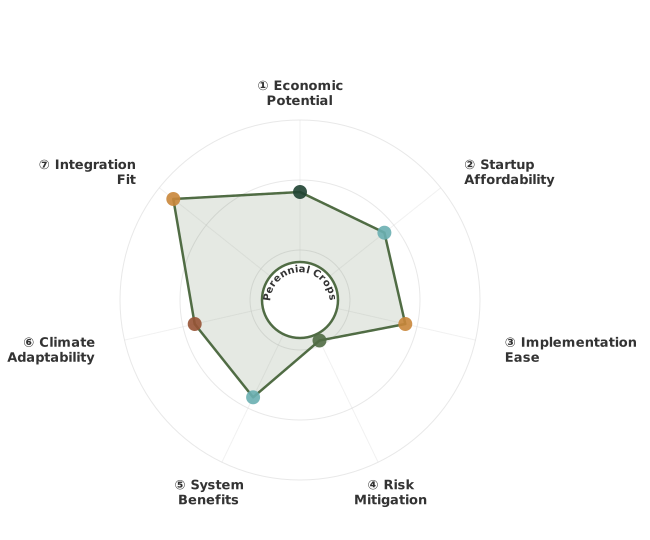
How These Traits Are Calculated
Trait dimensions are ordered clockwise starting from the top of the chart (12 o'clock position):
1. Economic Potential
Financial returns, annual value, and break-even timeline
WHAT: Evaluates financial viability by combining net annual value ($/ha from savings, income, and amortized harvests) with break-even timeline showing when practices pay for themselves.
WHY: Farmers need clear ROI understanding before committing resources. Fast payback (≤3 years) with strong returns (≥$300/ha) enables confident adoption, while long timelines (>10 years) restrict adoption to well-funded operations willing to wait for returns.
HOW: Calculated from net annual value in $/ha and break-even years. Exceptional (≥2.6): fast ROI ≤3 years + high value ≥$300/ha. Typical (1.8-2.5): moderate returns or longer timelines. Limited (<1.8): marginal economics or very long payback >10 years.
2. Startup Affordability
Initial investment costs and financial barrier to entry
WHAT: Measures financial barrier to entry through startup costs for equipment, infrastructure, consulting, and materials. Inverted scoring: lower costs = higher scores = more accessible adoption.
WHY: Affordability determines who can adopt. Low-cost practices (<$250/ha) enable widespread adoption across diverse scales, while high costs (>$2,500/ha) limit adoption to well-capitalized operations, creating barriers that slow regenerative transition.
HOW: Calculated from initial investment parsed from practice content. Inverted scoring: Exceptional (≥2.6): minimal investment <$250/ha. Typical (1.8-2.5): moderate costs $250-2,500/ha. Limited (<1.8): high barrier >$2,500/ha.
3. Implementation Ease
Learning curve and specialized knowledge required
WHAT: Measures how much learning, planning, and specialized knowledge a practice requires. Simpler practices with fewer steps score higher, while complex practices requiring extensive training or specialized resources score lower.
WHY: Complex practices create adoption barriers even when economically viable. Straightforward practices enable faster adoption and broader participation, while those requiring extensive training, timing precision, or specialized equipment limit who can succeed.
HOW: Evaluated by measuring documentation length and identifying complexity markers like location-specific requirements, seasonal timing windows, specialized skills, and dedicated equipment needs. Exceptional (≥2.6): straightforward practices with minimal prerequisites. Typical (1.8-2.5): moderate learning curve with some specialized needs. Limited (<1.8): steep learning curve requiring significant training or resources.
4. Risk Mitigation
Identified financial and ecological risk assessment
WHAT: Evaluates documented risks across financial (investment loss, market volatility) and ecological (crop failure, pest outbreaks) domains. Inverted scoring: fewer risks = higher scores.
WHY: Understanding risk exposure helps farmers make informed decisions. Low-risk practices allow confident implementation, while high-risk practices require careful planning and contingency resources. Risk transparency prevents costly failures.
HOW: Calculated from identified risks in practice content. Inverted scoring: Exceptional (≥2.6): ≤2 risks with manageable severity. Typical (1.8-2.5): 3-5 moderate risks. Limited (<1.8): 6+ risks or severe exposure.
5. System Benefits
How many ways the practice improves your land simultaneously
WHAT: Measures how many aspects of land health improve at once—carbon storage, soil quality, erosion control, water absorption, and biodiversity. Practices that improve multiple areas simultaneously create compounding benefits where each improvement reinforces the others.
WHY: The best practices solve multiple problems at once. For example, addressing erosion simultaneously builds carbon and improves water infiltration, creating a resilient system with positive feedback loops. Single-benefit approaches miss these compound transformation opportunities.
HOW: Evaluated across five key outcomes: carbon sequestration, soil organic matter increase, erosion reduction, water infiltration improvement, and biodiversity enhancement. Exceptional (≥2.6): high carbon storage (>8 t/ha/yr), improvements across 4-5 areas, transformative outcomes. Typical (1.8-2.5): moderate carbon (3-8 t/ha/yr), improvements across 2-3 areas. Limited (<1.8): modest impact (<3 t/ha/yr), single-area focus only.
6. Climate Adaptability
Geographic applicability across Köppen climate zones
WHAT: Evaluates geographic applicability by assessing how many Köppen climate zones successfully support a practice and what adaptation requirements are needed. Measures breadth of climates where farmers can implement with minimal to moderate modifications.
WHY: Universal practices working across diverse climates enable more farmers to adopt regenerative approaches. Practices limited to single climate types (only Mediterranean, only tropical) restrict adoption and slow global transition. Adaptability determines whether a practice serves niche regions or offers broad transformation.
HOW: LLM evaluation of regional success stories, Köppen zone coverage, and adaptation needs. Exceptional (≥2.6): 5+ zones or 4+ climate types, 3+ continents, minimal adaptation. Typical (1.8-2.5): 3-4 zones or 2-3 types, 2 continents, moderate adaptation. Limited (<1.8): 1-2 zones, single region, significant adaptation or highly specialized.
7. Integration Fit
How well this practice combines with others you're doing
WHAT: Measures how well a practice combines with other regenerative practices you might be doing. Some practices work as building blocks that make many other practices easier or more effective, while others work best on their own.
WHY: Practices that combine well with many others create more value on your farm. For example, cover cropping enables no-till, improves grazing, supports crop diversity, and helps water management—making all of them work better together. This helps you build a coherent system rather than juggling disconnected practices.
HOW: Evaluated by identifying which practices combine well and how strong those combinations are. 'Ideally Suited' means strong combinations where practices reinforce each other (practice A makes B easier, while B makes A more effective). 'Adequate' means complementary benefits that work well together. Exceptional (≥2.6): combines well with 6+ practices, serves as a building block. Typical (1.8-2.5): combines with 3-5 practices. Limited (<1.8): 1-2 practices or works best alone.
Going Deeper
1
WHY - The Benefits
Perennial crops are celebrated in regenerative agriculture for their profound positive impacts on soil health, economic resilience, and ecosystem function. Unlike annual cropping systems, which require annual disturbance and reset biological cycles, perennial systems...
Perennial crops are celebrated in regenerative agriculture for their profound positive impacts on soil health, economic resilience, and ecosystem function. Unlike annual cropping systems, which require annual disturbance and reset biological cycles, perennial systems...
WHY - The Benefits
Perennial crops are celebrated in regenerative agriculture for their profound positive impacts on soil health, economic resilience, and ecosystem function. Unlike annual cropping systems, which require annual disturbance and reset biological cycles, perennial systems...
Perennial crops are celebrated in regenerative agriculture for their profound positive impacts on soil health, economic resilience, and ecosystem function. Unlike annual cropping systems, which require annual disturbance and reset biological cycles, perennial systems...
Soil Health Benefits
The most significant benefit of perennial crops is their contribution to soil health. By eliminating annual tillage, they prevent the structural collapse, carbon release, and microbial disruption associated with plowing and cultivating. The continuous presence of living roots year-round feeds soil biology through exudates, and as roots die and decompose, they add organic matter deeper into the soil profile. This builds soil organic matter (SOM). Reported rates of accumulation are genuinely contested and highly dependent on climate, initial soil health, and management intensity. While some practitioners report rapid annual increases of 0.5% or more in ideal conditions, broader academic studies often show more conservative long-term averages in the range of 0.1-0.3% per year (1-3% per decade).
The extensive root systems of perennial plants decompact the soil naturally. These systems vary in depth; while many perennial grasses and forbs reach 1-3 meters (3-10 feet), the roots of larger shrubs and trees can extend much deeper, from 3 to 9 meters (10-30 feet) or more. These root channels improve aeration and water infiltration exponentially. Studies have shown improvements in water infiltration rates of 50-70% or more within 5 years of establishing perennial crops compared to previously tilled land. This enhanced infiltration reduces surface runoff, mitigates erosion, and replenishes groundwater. Erosion rates can drop by 80-95% compared to annual systems, preserving valuable topsoil and preventing sediment pollution downstream.
Perennial systems foster a thriving soil food web. The consistent supply of organic matter and root exudates supports diverse populations of bacteria, fungi (especially mycorrhizae), protozoa, nematodes, and earthworms. Mycorrhizal fungi, which form symbiotic relationships with plant roots, significantly enhance nutrient uptake and improve soil aggregation. Earthworm activity increases, creating burrows that improve aeration and drainage. This biological activity is fundamental to nutrient cycling, disease suppression, and overall soil fertility.
Economic Benefits
While establishment costs for perennial crops can be higher and returns may be delayed for certain types like timber or fruit trees, the long-term economic advantages are substantial. Reduced input costs are a major factor. Eliminating annual tillage saves on fuel, machinery wear and tear, and labor associated with planting and cultivation. Reduced reliance on synthetic fertilizers and pesticides, as soil health improves and plant resilience increases, further cuts expenses. Over 5-10 years, input cost savings can range from $100-300 per hectare ($40-120 per acre) annually.
Income diversification is another key economic benefit. Many perennial systems, such as agroforestry or silvopasture, generate multiple revenue streams simultaneously. For instance, an orchard might produce fruit for direct sale, timber from managed pruning or thinning, and value from livestock grazing beneath the trees. Perennial grains or oilseeds can offer stable, predictable harvests from year to year, reducing the volatility often associated with annual cash crops.
The long-term appreciation of land value is significant. Land planted with healthy, established perennial systems is inherently more productive, resilient, and environmentally sound, making it more valuable. Land appreciation rates for well-managed perennial systems can range from 20-50% over 10-20 years compared to land managed for annual cropping or degraded pasture. This increase in land equity provides a strong financial asset for the farmer.
Furthermore, perennial crops can offer earlier income generation than might be assumed. Perennial forages support livestock grazing from year 1. Berry bushes and some fruit trees can begin yielding harvestable crops within 2-5 years, providing some returns while slower-growing timber or perennial grain varieties mature. This steady income flow, combined with reduced operating costs, creates a more stable and resilient farm economy.
Regenerative Systems Fit
Perennial crops are a cornerstone of regenerative agriculture, intrinsically embodying and enabling key principles:
Principle 1: Minimize Soil Disturbance: Perennial systems eliminate the need for annual tillage. Once established, the land is continuously covered by living plants and their root systems, preventing the physical, chemical, and biological disruptions caused by cultivation. This leads to the gradual restoration of pristine soil structure and biological communities.
Principle 2: Maximize Crop Diversity: While single-species perennial monocultures exist, the potential within perennial systems for diversity is immense. This includes genetic diversity within a species, diversity of species planted together (e.g., intercropping perennial grains with annuals or mixing tree species), and the creation of diverse habitats for soil organisms and aboveground biodiversity. Root systems occupy distinct soil layers, adding vertical diversity.
Principle 3: Keep Soil Covered: Perennial crops inherently keep the soil covered with living plants and their associated litter year-round. This constant protection shields the soil from erosion, suppresses weeds, conserves moisture, moderates soil temperature, and provides a continuous food source for soil life.
Principle 4: Maintain Living Roots: The defining characteristic of perennial crops is their continuous living root system. This sustained biological activity drives carbon sequestration, nutrient cycling, and builds soil structure over time. It provides a baseline of ecosystem function that is disrupted by the annual planting and harvest cycles of annual crops.
Principle 5: Integrate Livestock: Many perennial crop systems are natural fits for livestock integration. Orchards and vineyards can be grazed by sheep or poultry. Silvopasture systems deliberately combine trees with forage for cattle, sheep, or other livestock. Perennial pastures are the foundation of most regenerative grazing systems. Livestock can manage vegetation, recycle nutrients, and contribute to the economic viability of the perennial system.
For farms transitioning to regenerative agriculture, adopting perennial crops offers a pathway to long-term stability and profitability. They transform landscapes from being annual inputs consumers to resilient ecosystems that generate multiple products and services. While initial investment and a shift in management philosophy are required, the long-term rewards in terms of ecological health, economic security, and climate resilience are substantial.
Sources behind this view
Videos & Podcasts
-
Perennials benefit conventional grain systems by reducing weed seed banks, improving soil structure (water infiltration, aeration), and offering profitability comparable to cash crops, especially duri
![Thumbnail for [S5E5] Farmer Panel: Establishing Perennials with Cover Crops](/static/thumbnails/xzmjpiR69JA.jpg)
-
Midwest study found woody perennial polycultures enhanced plant, insect, and bird diversity, improved soil properties (lower bulk density, higher nitrogen), and supported more beneficial insects compa
-
Transitioning to perennial crops is essential for natural farming's climate resilience and economic viability. Perennials offer earlier harvests, reduced costs, and enhanced biodiversity, with plant b
Community
-
Perennial grain crops like Kernza™ are proposed as a solution to agricultural degradation caused by annual crops and fossil fuel dependence, offering benefits like reduced soil erosion and water pollu
Read more (opens in new window) permies.com -
Perennial crops maintain living roots in the soil year-round, preventing erosion, feeding soil life, and creating soil. Their deep roots access nutrients and water, and tree crops offer additional env
Read more (opens in new window) permies.com -
Perennial agricultural systems mimic prairie ecosystems to provide clean water, reduce flooding, offer habitat, and protect soil. They build soil organic matter, reduce runoff, and enhance resilience
Read more (opens in new window) sustainableagriculture.net -
Perennial crops in permaculture and agroforestry systems offer reduced cultivation, improved soil health, and better water/nutrient access due to deep roots. Examples include asparagus, rhubarb, kale,
Read more (opens in new window) www.permaculture.org.uk
Research
-
Regenerative Agriculture: Restoring Ecosystems¢ Resilience and Productivity: A Review (opens in new window)
This study found: Regenerative agriculture builds soil health and ecosystem services through practices like no-till, cover crops, and diverse rotations. It increases soil organic matter, improves water infiltration, bo
-
Woody perennial polycultures in the U.S. Midwest enhance biodiversity and ecosystem functions (opens in new window)
This study found: Diverse perennial crop farms in the U.S. Midwest showed higher biodiversity (soil fungi, insects, birds) and better soil health (less compaction, more organic matter) than conventional corn/soy farms
-
Targeting perennial vegetation in agricultural landscapes for enhancing ecosystem services (opens in new window)
This study found: Integrating perennial plants into farms can enhance environmental benefits like cleaner water, pest control, and climate resilience, while improving farming sustainability.
-
Regenerative Almond Production Systems Improve Soil Health, Biodiversity, and Profit (opens in new window)
This study found: Regenerative almond farms in California doubled profits and improved soil health and biodiversity by combining practices like cover crops, compost, and reduced synthetic inputs, with no yield loss.
 From the Web
-
Perennial vegetables offer low-maintenance, extended harvests, and multiple garden functions. They significantly improve soil health by fostering soil life, increasing organic matter, and sequestering
-
Perennial vegetables offer low-maintenance, nutritious, and ecologically beneficial food production, extending harvest seasons and significantly improving soil health by building organic matter and se
2
WHERE - Regional Considerations
Successfully adopting perennial crops hinges on selecting species well-adapted to your specific climate and soil conditions. The permanence of these systems means a mismatch between crop and environment can lead to long-term failure or significantly reduced productivity....
Successfully adopting perennial crops hinges on selecting species well-adapted to your specific climate and soil conditions. The permanence of these systems means a mismatch between crop and environment can lead to long-term failure or significantly reduced productivity....
WHERE - Regional Considerations
Successfully adopting perennial crops hinges on selecting species well-adapted to your specific climate and soil conditions. The permanence of these systems means a mismatch between crop and environment can lead to long-term failure or significantly reduced productivity....
Successfully adopting perennial crops hinges on selecting species well-adapted to your specific climate and soil conditions. The permanence of these systems means a mismatch between crop and environment can lead to long-term failure or significantly reduced productivity....
Click Here to Look up your Region if you don't already know it
Humid Temperate Regions
Representative Locations: Southeastern United States, Northern Europe (e.g., UK, Germany, Poland), Eastern China, Japan, New Zealand. Climate Context: Warm to hot summers and cool to cold winters, with moderate to high annual precipitation (750-1500 mm or 30-60 inches) distributed relatively evenly. USDA Zones 6-8, Köppen Cfb/Cfa. Considerations: These regions support a vast array of perennial crops, including temperate fruit trees, berries, perennial grains (e.g., triticale, some wheat varieties), and nitrogen-fixing forages. High rainfall can sometimes lead to increased disease pressure for tree crops, requiring vigilant management. Soil management, particularly preventing compaction and ensuring good drainage, is key. Agroforestry systems integrating timber species like oak, ash, or poplar are well-suited. High productivity potential for perennial forages supports robust livestock integration.
Mediterranean Regions
Representative Locations: California (USA), Mediterranean Basin (Spain, Italy, Greece), Central Chile, Southwestern Australia, Cape Province (South Africa). Climate Context: Hot, dry summers and mild, wet winters. Annual precipitation (400-900 mm or 15-35 inches) is highly seasonal. USDA Zones 8-10, Köppen Csa/Csb. Considerations: Drought tolerance and heat resistance are critical for perennial crop selection. Olive trees, almonds, pistachios, grapes, figs, and certain drought-hardy timber species (e.g., cypress, certain pines) are well-suited. Perennial forages that can withstand summer dormancy or utilize winter-spring moisture are important for livestock. Water management, including efficient irrigation techniques and soil moisture conservation through mulching and improved infiltration, is vital. Avoid deep-rooted species that compete heavily with desired perennials for limited subsoil moisture.
Arid/Semi-Arid Regions
Representative Locations: Western USA, North Africa, Central Asia, Interior Australia, parts of the Middle East. Climate Context: Low annual precipitation (<400 mm or 15 inches), high temperatures, short and often unpredictable growing seasons. USDA Zones 7-9, Köppen BSh/BSk. Considerations: Water scarcity is the primary limiting factor. Drought-tolerant and water-efficient species are essential. This may include native perennial grasses and forbs adapted to arid conditions, saltbush, mesquite, certain drought-hardy fruit and nut trees (e.g., jujube, carob), and drought-tolerant perennial grains like sorghum and millet varieties. Agroforestry systems can be designed with water harvesting techniques (e.g., swales, contour planting). Livestock integration is common, but stocking rates must be carefully managed to prevent overgrazing of fragile arid ecosystems. Focus on species that build soil organic matter and improve water retention.
Cold Continental Regions
Representative Locations: Northern USA and Canada, Northern Europe, Northern Asia. Climate Context: Very short growing seasons, extreme summer heat, severe winter cold. USDA Zones 3-5, Köppen Dfa/Dfb. Considerations: Cold hardiness is the paramount selection criterion. Perennial crops must tolerate prolonged periods of sub-zero temperatures and survive frost. Suitable options include cold-hardy perennial grains (e.g., Russian perennial wheat, some rye varieties), cold-adapted berries (e.g., saskatoons, gooseberries, certain raspberry varieties), hardy fruit trees (e.g., certain apple, plum, cherry varieties), and nitrogen-fixing shrubs adapted to cold climates. Timber species like aspen, birch, and pine are native and thrive. Management must account for extremely short growing seasons and potential snow cover.
Subtropical Regions
Representative Locations: Southeastern USA, Southern China, Southern Brazil, Eastern Australia. Climate Context: Hot, humid summers and mild winters with generally ample rainfall. USDA Zones 9-11, Köppen Cfa/Cwa. Considerations: These regions are highly productive for a wide range of perennial crops. Tropical and subtropical fruit trees (e.g., citrus, mango, avocado, banana), perennial grains (e.g., sorghum varieties, certain maize), and tropical forages thrive. Agroforestry systems can integrate valuable timber species and high-value nut crops. Managing for high humidity and pest pressure can be challenging. Soil health practices are crucial to prevent nutrient leaching and soil structure degradation in high rainfall environments.
Tropical Regions
Representative Locations: Central America, Southeast Asia, East Africa, Northern Australia, Northern South America. Climate Context: High temperatures year-round, with distinct wet and dry seasons or consistent high rainfall. Köppen Af/Am/Aw. Considerations: Unparalleled potential for high-biomass perennial crop production. This includes tropical fruits (e.g., cacao, coffee, mango, papaya), plantation crops (e.g., rubber, oil palm, coconut), perennial grains (e.g., rice varieties, maize varieties), and nutrient-dense forage crops for livestock. Agroforestry systems are a natural fit, mimicking forest ecosystems and supporting diverse crops like bananas, breadfruit, and valuable timber species. Management challenges include pest and disease control in humid conditions, rapid nutrient cycling (preventing leaching), and managing invasive species.
3
HOW - Implementation Process
Implementing perennial cropping requires careful planning, species selection, and a long-term management perspective. The process varies significantly based on the type of perennial crop and the existing land use, but common phases and considerations apply.
Implementing perennial cropping requires careful planning, species selection, and a long-term management perspective. The process varies significantly based on the type of perennial crop and the existing land use, but common phases and considerations apply.
HOW - Implementation Process
Implementing perennial cropping requires careful planning, species selection, and a long-term management perspective. The process varies significantly based on the type of perennial crop and the existing land use, but common phases and considerations apply.
Implementing perennial cropping requires careful planning, species selection, and a long-term management perspective. The process varies significantly based on the type of perennial crop and the existing land use, but common phases and considerations apply.
Prerequisites
Before committing to perennial crops:
- Site Assessment: Analyze soil type, drainage, pH, organic matter content, existing fertility, and water availability. Map slope, aspect, and any existing compaction layers.
- Climate Suitability: Confirm the chosen perennial species are well-adapted to your local climate (hardiness zone, frost dates, rainfall patterns, heat units).
- Market Research: Identify reliable markets for your intended perennial products (timber, fruit, nuts, grain, forage). Understand demand, pricing, and any certification needs (e.g., organic).
- Long-Term Vision: Be prepared for a commitment of 5-20+ years depending on the crop. Understand that establishment may require patience and potentially lower early returns.
- Financial Planning: Secure adequate funding for establishment costs, which can be substantial. Explore government cost-share programs or grants.
Phase 1: Site Preparation (If Necessary)
For land previously in annual crops, some preparation may be needed. For land in pasture or wildland, minimal preparation is often best.
For Previously Tilled Land:
- Weed Control: If perennial weeds are severe, consider a 1-2 year cover cropping phase using diverse mixtures to suppress weeds and build soil health before planting the perennial crop. A one-time, shallow disking to incorporate cover crop residue might be considered as a transition measure if severe compaction exists, but the goal is to move towards permanent no-till. This is a rare exception and not standard practice.
- Soil Amendments: Based on soil tests, apply compost, manure, or mineral amendments to improve fertility and structure. This is best done before cover cropping or planting.
- Erosion Control: On slopes, implement contour planting, terracing, or build swales to manage water and prevent erosion during establishment.
For Pasture or Wildland:
- Minimal Disturbance Planting: The ideal scenario is direct seeding or planting into existing sod. Many perennial crops can be established using no-till drills or specialized planters that create a narrow furrow without disturbing the surrounding vegetation.
- Targeted Clearing: If specific trees or dense brush need removal, do so strategically without broad-scale clearing or tillage. Leave removed biomass on the surface as mulch.
Phase 2: Establishment Planting
This is the phase of planting the perennial crop itself. Techniques vary widely by crop type.
Tree and Shrub Crops (Orchards, Agroforestry, Silvopasture):
- Spacing: Determine optimal spacing based on mature size of species, light requirements, equipment access, and integration strategy (e.g., wider spacing for timber, narrower for fruit production with livestock grazing). Typical spacing for timber or nuts: 9-15 meters (30-50 feet) apart. For fruit: 4-6 meters (13-20 feet).
- Planting: Use bare-root seedlings or containerized plants. Dig holes large enough to accommodate the root ball without restriction. Ensure roots are not coiled. Plant at the same depth as they were in the nursery or slightly higher if site drainage is poor.
- Protection: Crucially, protect young trees from browsing by livestock or wildlife using tree guards, temporary fencing, or livestock exclusion during the first 2-5 years (minimum) until they reach a browse line (approx. 1.5-2 meters or 5-7 feet). Livestock can be introduced later with careful management.
- Irrigation: Provide supplemental water for the first 1-3 years during establishment, especially in drier climates or during drought periods. Drip irrigation is most efficient.
Perennial Grains and Forages:
- Seeding: Use no-till drills for direct seeding into existing sod or prepared ground. This maintains soil structure and minimizes disturbance. Ensure proper seed-to-soil contact.
- Seed Mixes: For forages, use diverse mixes of grasses, legumes, and forbs adapted to the region and intended use (e.g., grazing, hay, cover cropping). For perennial grains, seed specific varieties or mixtures of perennial wheat, rye, or other grains.
- Timing: Sow during optimal planting windows for your region (typically fall for winter-hardy grains/forages, spring for others).
Phase 3: Early Management (Years 1-3)
This phase focuses on ensuring the crop survives and thrives, building soil health simultaneously.
Weed Management: Young perennial crops are vulnerable to weed competition. Manage weeds through:
- Mulching: Apply organic mulch (straw, wood chips, cover crop residue) around plants to suppress weeds and conserve moisture.
- Strategic Grazing: Introduce livestock carefully for short periods once plants are established enough to withstand moderate grazing, to control weeds.
- Cover Cropping: Maintain diverse cover crops between rows or in interspaces to outcompete weeds and build soil.
- Flame Weeding/Mechanical Cultivation: Used sparingly for row crops, prioritizing methods that minimize soil disturbance.
Fertility Management: Rely on biological processes.
- Compost/Manure: Apply compost or well-aged manure during planting or as topdressing.
- Nitrogen Fixation: Incorporate legumes into mixes or as cover crops to provide nitrogen.
- Nutrient Cycling: Allow crop residues to decompose in place.
Pest and Disease Management: Focus on building plant health and ecosystem balance.
- Resilient Varieties: Choose disease-resistant and pest-tolerant species and varieties.
- Habitat for Beneficials: Plant flowering species that attract predators and parasitoids of pests.
- Good Drainage and Airflow: Proper spacing and site selection prevent many fungal diseases.
Transition Timeline & Phase-Out Strategy (if applicable)
When converting land from annual row crops to perennials, a transition strategy is often beneficial:
- Year 1-2: Cover Cropping Dominance: Dedicate the land to intensive, diverse cover cropping. This builds soil organic matter, suppresses weeds, breaks compaction, and establishes a healthy soil biological community. Minimal or no-till methods must be used.
- Year 2-3: Intercropping or Nurse Crops: Plant the perennial crop alongside a companion annual crop or cover crop that provides early season shade, weed suppression, or nutrient benefits, and can be harvested. For example, planting an orchard with a grain crop in between rows during establishment.
- Year 3-5: Perennial Crop Takes Over: As the perennial crop becomes established and self-sufficient (e.g., trees reach a harvestable size), gradually phase out the annual companion crops. Transition to a managed perennial system (e.g., grazing cattle in orchards, harvesting perennial grains).
This phased approach allows for some economic return during establishment while preparing the soil ecosystem for long-term perennial productivity. Strict adherence to no-till during this transition is paramount.
Sources behind this view
Videos & Podcasts
-
Transitioning to perennial crops is essential for natural farming's climate resilience and economic viability. Perennials offer earlier harvests, reduced costs, and enhanced biodiversity, with plant b
-
Transitioning from annual crops to perennial food forests involves succession planting, starting with annuals in sunny, depleted areas and gradually introducing shade-tolerant perennials as trees matu
-
Midwest study found woody perennial polycultures enhanced plant, insect, and bird diversity, improved soil properties (lower bulk density, higher nitrogen), and supported more beneficial insects compa
-
Perennial systems are favored for long-term soil health and reduced labor compared to annuals. Techniques include sheet mulching with cardboard and wood chips, compost application, and integrating asp
Community
-
Perennial grain crops like Kernza™ are proposed as a solution to agricultural degradation caused by annual crops and fossil fuel dependence, offering benefits like reduced soil erosion and water pollu
Read more (opens in new window) permies.com -
Focuses on practical farm-scale permaculture transitions, recommending contour perennial strips (hazelnuts, false indigo) and livestock integration, while addressing the need for technical guidance an
Read more (opens in new window) permies.com -
Explores perennial grains and a 'forest prairie' system for food self-sufficiency, focusing on tillering heritage breeds, perennial protein sources (Siberian pea, groundnut), and nutrient-fixing shrub
Read more (opens in new window) permies.com -
Discusses farmer-scale permaculture implementation, emphasizing perennial strips (hazelnuts, false indigo) and integrating livestock. Shares success with fall planting of native heirloom peaches in Ma
Read more (opens in new window) permies.com
Research
-
Woody perennial polycultures in the U.S. Midwest enhance biodiversity and ecosystem functions (opens in new window)
This study found: Diverse perennial crop farms in the U.S. Midwest showed higher biodiversity (soil fungi, insects, birds) and better soil health (less compaction, more organic matter) than conventional corn/soy farms
-
Targeting perennial vegetation in agricultural landscapes for enhancing ecosystem services (opens in new window)
This study found: Integrating perennial plants into farms can enhance environmental benefits like cleaner water, pest control, and climate resilience, while improving farming sustainability.
-
Perennial groundcovers: an emerging technology for soil conservation and the sustainable intensification of agriculture. (opens in new window)
This study found: Perennial groundcovers (living mulches) can improve soil, water, carbon, and nutrient cycles in annual crop systems. Strategic planting and breeding can maximize complementarity, boosting farm resilie
-
Synergizing Agroforestry and Permaculture for Sustainable Organic Farming (opens in new window)
This study found: Agroforestry and permaculture enhance organic farming by integrating trees, crops, and livestock, improving soil health, biodiversity, and resilience. Challenges include funding, knowledge, and policy
From the Web
-
Mark Shepard's perennial polyculture farm transitions annual farms to nature-mimicking systems using agroforestry and keyline water design. Key steps include studying native ecosystems, installing ear
4
Know the Debate
Perennial crops offer substantial benefits by eliminating tillage, enhancing soil health, and increasing biodiversity, but their successful impleme...
Know the Debate
Perennial crops offer substantial benefits by eliminating tillage, enhancing soil health, and increasing biodiversity, but their successful impleme...
Perennial crops offer substantial benefits by eliminating tillage, enhancing soil health, and increasing biodiversity, but their successful implementation is strongly influenced by region and farm economics. Understanding the timelines for productivity, the scale of initial investment, the ongoing labor requirements, and the critical role of climate and soil suitability are essential for farmers considering this transition. This practice offers a powerful pathway to regenerative goals, but requires careful planning and a long-term perspective to navigate the inherent challenges and capitalize on the rewards.
How long until perennial crops reach full productivity?
Early benefits (1-5 years)
Academic and Institute sources often highlight early benefits from perennial systems, such as improved pasture, fruit yields from bushes, or initial soil improvements within 1-5 years. Crop development is seen as a steady progression.
Sources behind this view
Sources behind this view
Videos & Podcasts
-
Perennial crops offer benefits like improved soil health, reduced pesticide and fertilizer use, lower carbon emissions, cost savings, and support for small farms by shifting focus from single-year yield to long-term plant longevity.
From the Web
-
Perennial vegetables offer low-maintenance, extended harvests, and multiple garden functions. They significantly improve soil health by fostering soil life, increasing organic matter, and sequestering carbon, unlike annual crops that require yearly tilling.
-
Perennial vegetables offer advantages over annuals: less tillage, irrigation, disease/pest issues, and earlier harvests. A project in Sweden explored their large-scale cultivation and seedling sales, leading to increased knowledge and a new Nordic-focused initiative.
Longer maturity (5-15+ years)
Field practitioners frequently report that full economic viability for crops like trees, nuts, and perennial grains takes significantly longer, often 5-15+ years, requiring substantial patience and long-term financial planning.
Sources behind this view
Sources behind this view
Videos & Podcasts
-
Perennial systems are favored for long-term soil health and reduced labor compared to annuals. Techniques include sheet mulching with cardboard and wood chips, compost application, and integrating asparagus, fruit trees, and berries into the farm landscape.
-
Advocates for perennial crops over annuals to address soil erosion, nutrient inefficiency, carbon loss, and weed problems. Perennials offer reduced farmer costs and align with ecological principles, with Kernsa (intermediate wheatgrass) as a key example.

From the Web
-
Shifting agriculture to perennial systems, especially trees, is fundamentally more energy-efficient and better for nutrient absorption. Financing and long time horizons (7-9 years for fruit) are key challenges for widespread adoption.
Making Sense of the Differences
The timeline for perennial crop productivity varies significantly based on crop type and climate. Fast-maturing options like perennial forages or berries can yield within 1-3 years. However, slower-growing timber or nut crops require 10-20+ years to reach full economic maturity. Field reports often reflect the longer, more conservative timelines common in diversified systems, while research may highlight earlier, specific crop milestones or ideal conditions driving perceived faster progress.
Is upfront capital for perennial crops a major barrier?
Manageable investment with support ($400-4,500/ha)
Academic and institute sources acknowledge establishment costs, often framing them as manageable with government support, cost-share programs, or through careful planning and phased implementation.
Sources behind this view
Sources behind this view
Research
-
A global, empirical, harmonised dataset of soil organic carbon changes under perennial crops (opens in new window)
This study found: Researchers have created a comprehensive worldwide database that brings together information from over 180 studies on how growing long-lived crops (like fruit trees, vineyards, or perennial grains) affects soil organic matter. This database includes data from nearly 700 sites in 32 countries, covering many different types of perennial crops and various climates. It details soil conditions, weather, and how the land was managed. This collection is the first of its kind and will help scientists better understand how perennial crops impact soil carbon and how this information can be used for global land use planning and climate change research.
From the Web
-
Perennial vegetables offer low-maintenance, nutritious, and ecologically beneficial food production, extending harvest seasons and significantly improving soil health by building organic matter and sequestering carbon.
-
Farming with perennials (crops, grasses, trees) enhances carbon storage by maintaining biomass and soil cover. Substituting annual tilled crops with perennials and using agroforestry are key strategies.
Significant systemic barrier ($2,000-$7,000+/ha)
Field practitioners often describe the upfront capital as a major, often insurmountable, barrier, especially for small-scale operations or those lacking access to significant financial resources or cost-share programs.
Sources behind this view
Sources behind this view
Videos & Podcasts
-
Perennial crops offer benefits like improved soil health, reduced pesticide and fertilizer use, lower carbon emissions, cost savings, and support for small farms by shifting focus from single-year yield to long-term plant longevity.
-
Details research on perennial agriculture, focusing on Kernza, alfalfa, and lupins. Discusses plant breeding for perennial polycultures, the role of mycorrhizal fungi in soil health, and developing a botanical foundation for sustainable farming.

-
Advocates for perennial crops over annuals to address soil erosion, nutrient inefficiency, carbon loss, and weed problems. Perennials offer reduced farmer costs and align with ecological principles, with Kernsa (intermediate wheatgrass) as a key example.
Making Sense of the Differences
The upfront capital investment for perennial crops is a notable factor, ranging widely from $400/ha for simple forage establishment to over $7,000/ha for complex agroforestry. While academic and institute sources often mention this cost, field reports highlight it as a primary barrier, especially for resource-limited operations. This discrepancy arises because research may focus on funding mechanisms or ideal scenarios, whereas farmers face immediate cash flow realities and scaling challenges. Farmers should budget realistically for establishment, explore all cost-share programs, and consider starting small or integrating faster-maturing perennials to buffer initial costs.
Do perennial crops work in all climates and soils?
Broadly applicable with adaptation
Academic and Institute sources emphasize the adaptability and potential of perennial crops across various regions, suggesting that with correct species selection and management, they can be implemented in many climates and soil types.
Sources behind this view
Sources behind this view
Research
-
Targeting perennial vegetation in agricultural landscapes for enhancing ecosystem services (opens in new window)
This study found: This review highlights how strategically planting long-lived perennial plants in farm fields, even in small amounts, can significantly boost the environmental benefits of agricultural landscapes. These benefits include cleaner water, better water management (like reducing floods), improved pollination for crops, natural pest control, and making farms more resilient to climate change. The study focuses on the Midwestern USA but also looks at other regions. It aims to identify the best ways to integrate these permanent plants into farming systems to get the most benefits for both nature and food production, while also improving the sustainability of farming.
-
Crop Conversion from Annual to Perennials: An Effective Strategy to Affect Soil Multifunctionality (opens in new window)
This study found: Switching from annual crops like winter wheat to perennial crops such as grasses (like perennial ryegrass) and legumes (like alfalfa), or a mix of both, can dramatically improve soil health. A study on the Yellow River floodplain found that perennial systems boosted overall soil functions by over 200% compared to winter wheat. This improvement was linked to better water absorption, more soil carbon, increased microbial activity, and higher enzyme activity that helps cycle nutrients. However, the perennial crops produced less harvestable material (biomass) than the annual wheat. This means farmers need to balance the significant soil health gains with potential impacts on food production and consider their specific local conditions when making this transition.
From the Web
-
Farming with perennials (crops, grasses, trees) enhances carbon storage by maintaining biomass and soil cover. Substituting annual tilled crops with perennials and using agroforestry are key strategies.
Highly context-dependent, challenges in marginal areas
Field practitioners often highlight that successful implementation is highly context-dependent, with significant challenges, lower productivity, or failure rates in marginal climates (arid, cold) and challenging soils not typically represented in broader academic discussions.
Sources behind this view
Sources behind this view
Videos & Podcasts
-
Perennial plants improve soil health, reduce erosion, and provide habitat, requiring less water and fertilizer than annuals, thus creating a more sustainable and resilient ecosystem.
-
Midwest study found woody perennial polycultures enhanced plant, insect, and bird diversity, improved soil properties (lower bulk density, higher nitrogen), and supported more beneficial insects compared to conventional corn/soy/hay. Food production was lower calorically but more diverse and increased with farm age.
-
Advocates for perennial crops over annuals to address soil erosion, nutrient inefficiency, carbon loss, and weed problems. Perennials offer reduced farmer costs and align with ecological principles, with Kernsa (intermediate wheatgrass) as a key example.
Making Sense of the Differences
The success of perennial crops is strongly tied to regional climate and soil type. While generally beneficial, their performance and feasibility vary significantly. Humid temperate and subtropical regions offer the highest potential due to consistent moisture and longer growing seasons, supporting a wide range of crops. Mediterranean and arid regions require drought-tolerant species and careful water management, often limiting crop choices. Cold continental climates necessitate extremely hardy varieties to survive winter. Field observations suggest that scaling up perennial systems into less-than-ideal conditions often requires specialized, context-specific species selection and intensive management that may not be widely documented in research.
5
HOW MUCH - Costs & Investment
Note: All costs are in USD equivalent and can vary significantly by country and region based on local labor rates, material availability, government programs, and currency exchange rates. Research local pricing for accurate budgeting.
Note: All costs are in USD equivalent and can vary significantly by country and region based on local labor rates, material availability, government programs, and currency exchange rates. Research local pricing for accurate budgeting.
HOW MUCH - Costs & Investment
Note: All costs are in USD equivalent and can vary significantly by country and region based on local labor rates, material availability, government programs, and currency exchange rates. Research local pricing for accurate budgeting.
Note: All costs are in USD equivalent and can vary significantly by country and region based on local labor rates, material availability, government programs, and currency exchange rates. Research local pricing for accurate budgeting.
Note: All costs are based on recent US economic data (2024–2026) and may vary substantially by region based on local labor rates, material costs, and regulatory requirements.
Site Preparation and Soil Amendments
Establishing a foundation for perennial crops requires significant physical and chemical soil modification. For small-scale operations (under 50 acres (20 ha)), initial site clearing, debris removal, tillage, and liming requirements typically range from $200 to $1,000 per acre ($494–$2,471/ha). Mid-size operations (50–500 acres (20–202 ha)) see moderated costs due to bulk input procurement, typically ranging from $150 to $700 per acre ($371–$1,730/ha). Large-scale producers (500+ acres) leverage precision agricultural mapping and variable-rate technology to minimize waste, resulting in costs of $80 to $500 per acre ($198–$1,236/ha). Regardless of scale, depleted soils requiring intensive phosphorus and potassium balancing incur an additional $100 to $300 per acre ($247–$741/ha) in the first year to establish adequate fertility profiles for long-term production.
Biological Stock and Planting Infrastructure
Seed and stock costs reflect the intensity of the planting design. Forage-based perennial transitions utilize seeds consistently priced at $150 to $600 per acre ($371–$1,483/ha) across all scale levels. High-value orchard, nut, or silvopasture plantings require containerized, grafted stock, which presents the most significant barrier to entry. Small operations often face costs of $1,000 to $5,000 per acre ($2,471–$12,355/ha). Mid-size planters utilize large-volume nursery contracts to achieve costs of $800 to $3,500 per acre ($1,977–$8,649/ha), while operations exceeding 500 acres (202 ha) optimize logistics for $600 to $2,500 per acre ($1,483–$6,178/ha). Planting labor follows a similar scale-based curve: small sites relying on manual hand-planting incur $400 to $1,200 total per acre, whereas large-scale mechanized planting systems operate at a cost of $150 to $400 per acre ($371–$988/ha).
Irrigation and Long-term Management
Perennial survival depends on consistent water and site protection. Tree guards, browse protection, and specialized fencing for livestock integration cost small-scale operations $300 to $1,200 per acre ($741–$2,965/ha). Mid-size farms realize efficiency gains of $200 to $900 per acre ($494–$2,224/ha), while large operations typically focus on perimeter infrastructure, reducing costs to $100 to $600 per acre ($247–$1,483/ha). Irrigation systems represent a major capital variable: basic gravity-fed solutions start near $500 per acre ($1,236/ha), while automated, sensor-driven drip systems in arid zones can reach $3,000 per acre ($7,413/ha) or more. Annual maintenance, including weed and pest management, fluctuates from $80 to $300 per acre ($198–$741/ha) during the critical establishment window (years 1–3), with pruning and nutrient maintenance adding $50 to $250 per acre ($124–$618/ha). Once the canopy closes and the system stabilizes after year 10, weed management expenses drop efficiently to between $20 and $100 per acre ($49–$247/ha).
Most Spend: The majority of operations fall within the $600 to $2,800 per acre ($1,483–$6,919/ha) range for combined establishment materials and initial site labor, excluding advanced irrigation systems. This range represents the "sweet spot" where mid-scale producers optimize equipment usage without the extreme capital outlays required by fully automated large-scale irrigation technology.
Why the Range?: Cost volatility is driven primarily by site-specific soil legacy and the chosen biological intensity. A site with high existing organic matter requires less fertility amendment, whereas a transition from degraded row-crop land into a high-density orchard requires the upper-bound investment of $5,000 per acre ($12,355/ha) for stock and soil remediation.
Sources behind this view
Videos & Podcasts
-
Guidance on creating budget sheets for perennial crop establishment, focusing on accurate calculation of plants per acre, establishment costs, and the true cost of labor. It covers pre-production and
6
REWARDS AND RISKS - Economics & Risk Factors
Implementing perennial crops represents a strategic shift with significant long-term economic rewards and manageable risks. Understanding both sides of this equation is crucial for successful transition.
Implementing perennial crops represents a strategic shift with significant long-term economic rewards and manageable risks. Understanding both sides of this equation is crucial for successful transition.
REWARDS AND RISKS - Economics & Risk Factors
Implementing perennial crops represents a strategic shift with significant long-term economic rewards and manageable risks. Understanding both sides of this equation is crucial for successful transition.
Implementing perennial crops represents a strategic shift with significant long-term economic rewards and manageable risks. Understanding both sides of this equation is crucial for successful transition.
Economic outcomes for perennials are characterized by high upfront investment offset by long-term durability. In a Best-Case Scenario, producers integrating high-value perennials with secondary enterprises (such as managed grazing) achieve break-even between years 4 and 6. Following maturity, these systems yield net income 50–100% higher than conventional monocrops, with annual profits reaching $800–$2,000 per acre ($1,977–$4,942/ha) through reduced input dependency. Conversely, a Typical Case involves a longer timeline, with break-even occurring in years 8–10, followed by a steady 20–40% increase in net income compared to previous baselines. Worst-case scenarios, often stemming from poor site selection or rapid climate event failure, result in an unreclaimed total investment of $3,000–$6,000 per acre ($7,413–$14,826/ha) and the loss of 5–10 years of potential cash-crop revenue.
Market factors significantly influence profitability. Producers utilizing the "5-mile (8.0 km) rule"—accessing direct-to-consumer or regional markets—can add $1.00–$3.00 per unit to final margins. Value-added on-site processing can further increase revenue by 20–50% compared to commodity-level selling.
Risk mitigation is essential for solvency. Federal cost-share programs, such as EQIP or CRP, can offset 50–75% of establishment materials, effectively reducing liquid capital requirement by $800–$2,500 per acre ($1,977–$6,178/ha). Phased conversion, where only 10–25% of land is transitioned annually, serves as a vital safeguard, though it adds a $500–$1,000 per acre ($1,236–$2,471/ha) annual administrative and management buffer.
Transition Period Risks: The conversion window (years 1–5) is marked by a "yield dip," where annual production ceases and perennial crops have yet to reach maturity, triggering a 40–70% drop in revenue on transitioned acres. To survive this, producers should implement "stacked enterprises." Introducing pastured poultry or managed grazing in the rows provides immediate cash flow of $200–$500 per acre ($494–$1,236/ha). Without such stacking, the risk of financial insolvency increases by 30% due to the inability to maintain baseline overhead during that 5-year unproductive window.
Sources behind this view
Videos & Podcasts
-
Perennials benefit conventional grain systems by reducing weed seed banks, improving soil structure (water infiltration, aeration), and offering profitability comparable to cash crops, especially duri
-
Midwest study found woody perennial polycultures enhanced plant, insect, and bird diversity, improved soil properties (lower bulk density, higher nitrogen), and supported more beneficial insects compa
-
Transitioning to perennial crops is essential for natural farming's climate resilience and economic viability. Perennials offer earlier harvests, reduced costs, and enhanced biodiversity, with plant b
-
Advocates for perennializing agriculture, especially grain crops like Kernza, to maximize soil carbon sequestration and reduce erosion/pollution. Stresses the need for increased global funding for per
Community
-
Perennial grain crops like Kernza™ are proposed as a solution to agricultural degradation caused by annual crops and fossil fuel dependence, offering benefits like reduced soil erosion and water pollu
Read more (opens in new window) permies.com -
Perennial grains like Kernza™, championed by Wes Jackson and supported by officials like Kathleen Merrigan, offer a long-term solution to agricultural degradation by reducing soil erosion and pollutio
Read more (opens in new window) permies.com -
University of Wisconsin's Grassland 2.0 project aims to transform North Central US agriculture to perennial grassland-based livestock production, focusing on profitability, nutrient/water efficiency,
Read more (opens in new window) sustainableagriculture.net -
Explores perennial grains and a 'forest prairie' system for food self-sufficiency, focusing on tillering heritage breeds, perennial protein sources (Siberian pea, groundnut), and nutrient-fixing shrub
Read more (opens in new window) permies.com
Research
-
Local knowledge and relational values of Midwestern woody perennial polyculture farmers can inform tree‐crop policies (opens in new window)
This study found: Midwestern farmers in mixed tree-crop systems develop unique adaptive knowledge and are driven by relational values. Economic barriers are key challenges, not biophysical ones. Policy should align wit
-
Targeting perennial vegetation in agricultural landscapes for enhancing ecosystem services (opens in new window)
This study found: Integrating perennial plants into farms can enhance environmental benefits like cleaner water, pest control, and climate resilience, while improving farming sustainability.
-
Woody perennial polycultures in the U.S. Midwest enhance biodiversity and ecosystem functions (opens in new window)
This study found: Diverse perennial crop farms in the U.S. Midwest showed higher biodiversity (soil fungi, insects, birds) and better soil health (less compaction, more organic matter) than conventional corn/soy farms
-
Crop Conversion from Annual to Perennials: An Effective Strategy to Affect Soil Multifunctionality (opens in new window)
This study found: Switching from annual winter wheat to perennial crops significantly boosted soil functions by over 200% on the Yellow River floodplain, linked to better water absorption and microbial activity, though
7
COMPATIBLE PRACTICES - Integration Opportunities
Perennial crops are a foundational element that synergistically integrates with many other regenerative practices, amplifying benefits and creating a robust, resilient farming system.
Perennial crops are a foundational element that synergistically integrates with many other regenerative practices, amplifying benefits and creating a robust, resilient farming system.
COMPATIBLE PRACTICES - Integration Opportunities
Perennial crops are a foundational element that synergistically integrates with many other regenerative practices, amplifying benefits and creating a robust, resilient farming system.
Perennial crops are a foundational element that synergistically integrates with many other regenerative practices, amplifying benefits and creating a robust, resilient farming system.
Managed Grazing (Rotational, Adaptive, Holistic Planned Grazing)
- Integration: Perennial pastures, silvopasture, and agroforestry systems are the ideal environments for managed livestock grazing. Livestock help manage forage growth, cycle nutrients via manure, stimulate plant growth, and control weeds.
- Benefit: Enhances soil health through animal impact and manure, improves forage diversity and quality, contributes to farm economics, and helps manage perennial crop vegetation.
No-Till Farming
- Integration: Perennial crops inherently avoid annual tillage. When converting from annual systems, the establishment phase of perennials should utilize no-till planting methods to preserve and build soil structure from day one.
- Benefit: Preserves soil structure, protects soil biology, conserves moisture, sequesters carbon, and reduces fuel/labor costs throughout the life of the perennial system.
Cover Cropping
- Integration: In the early years of perennial crop establishment (especially trees/shrubs), cover crops can be planted in the inter-rows or between young plants to suppress weeds, prevent erosion, build soil organic matter, and provide forage.
- Benefit: Speeds up soil health improvements, provides ground cover, can add nitrogen (legumes), and utilizes space productively before the main perennial crop fully occupies the area.
Keyline Design / Water Harvesting
- Integration: Particularly valuable in drier regions or on sloped land. Keyline plowing patterns and swales help capture and infiltrate rainfall within perennial crop systems.
- Benefit: Maximizes water availability for plants, reduces erosion and runoff, refills groundwater tables, and enhances drought resilience.
Composting & Organic Amendments
- Integration: Applying compost or aged manure during establishment or as top dressing can boost fertility and soil microbial activity, supporting faster growth and resilience.
- Benefit: Provides slow-release nutrients, enhances soil biology, improves soil structure, and supports the establishment of healthy perennial plants.
Pollinator Habitat Integration
- Integration: Planting flowering perennial species that attract pollinators (bees, butterflies, beneficial insects) within or around perennial crop fields.
- Benefit: Enhances pollination for fruit/nut crops, supports broader biodiversity, and contributes to ecosystem health.
Agroforestry & Silvopasture (These are types of perennial systems):
The integration of perennial crops with these practices creates a virtuous cycle, where each component strengthens the others, leading to more productive, resilient, and ecologically sound agricultural landscapes.
Sources behind this view
Videos & Podcasts
-
Midwest study found woody perennial polycultures enhanced plant, insect, and bird diversity, improved soil properties (lower bulk density, higher nitrogen), and supported more beneficial insects compa
-
Implement farm-scale permaculture and carbon farming using Keyline design and livestock integration (pigs, geese) to reduce labor and fossil fuels. Focus on perennial crops and diverse systems, acknow
-
Perennial systems are favored for long-term soil health and reduced labor compared to annuals. Techniques include sheet mulching with cardboard and wood chips, compost application, and integrating asp
-
Integrating perennials and designing multifunctional landscapes enhances soil health, nutrient retention, and ecosystem services. Strategic placement of perennials, even at 10% cover in a watershed, o

Community
-
Advocates for perennial grains in permaculture to mimic natural systems, reducing annual plowing and saving time/energy. Highlights benefits for soil health, structure, organic matter, and carbon cont
Read more (opens in new window) permies.com -
Perennial crops maintain living roots in the soil year-round, preventing erosion, feeding soil life, and creating soil. Their deep roots access nutrients and water, and tree crops offer additional env
Read more (opens in new window) permies.com -
Focuses on practical farm-scale permaculture transitions, recommending contour perennial strips (hazelnuts, false indigo) and livestock integration, while addressing the need for technical guidance an
Read more (opens in new window) permies.com -
Perennial crops maintain living roots year-round, preventing erosion, reducing compaction, feeding soil life, and accessing deep nutrients/water. Tree crops offer additional environmental benefits.
Read more (opens in new window) permies.com
Research
-
Synergizing Agroforestry and Permaculture for Sustainable Organic Farming (opens in new window)
This study found: Agroforestry and permaculture enhance organic farming by integrating trees, crops, and livestock, improving soil health, biodiversity, and resilience. Challenges include funding, knowledge, and policy
-
Targeting perennial vegetation in agricultural landscapes for enhancing ecosystem services (opens in new window)
This study found: Integrating perennial plants into farms can enhance environmental benefits like cleaner water, pest control, and climate resilience, while improving farming sustainability.
-
Regenerative Agriculture: Restoring Ecosystems¢ Resilience and Productivity: A Review (opens in new window)
This study found: Regenerative agriculture builds soil health and ecosystem services through practices like no-till, cover crops, and diverse rotations. It increases soil organic matter, improves water infiltration, bo
-
Local knowledge and relational values of Midwestern woody perennial polyculture farmers can inform tree‐crop policies (opens in new window)
This study found: Midwestern farmers in mixed tree-crop systems develop unique adaptive knowledge and are driven by relational values. Economic barriers are key challenges, not biophysical ones. Policy should align wit