
Plant Guilds
Plant guilds are intentional, diverse groupings of plants—trees, shrubs, herbaceous plants, and groundcovers—chosen for their beneficial interactions. They recreate natural ecosystem complexity like forest edges or meadows above and below ground, enhancing soil health, resilience, and productivity through synergistic relationships, while minimizing external inputs.
Read More: Complete Description
Plant guilds are intelligently designed communities of diverse plant species—including trees, shrubs, vines, herbaceous plants, and groundcovers—planted together to mimic and enhance natural ecosystem functions. Instead of a single crop or a simple pasture mix, a plant guild comprises multiple species selected for their complementary roles, such as nitrogen fixation, deep root penetration, pest deterrence, pollinator attraction, and groundcover provision. This intentional complexity fosters a rich, mutually beneficial web of life both above and below the soil surface, drawing inspiration from natural plant communities like forest understories, hedgerows, or prairie ecosystems.
The core regenerative philosophy behind plant guilds is that diversity drives resilience and productivity. By integrating species with varying root depths, nutrient requirements, nutrient acquisition strategies, and growth habits, a guild can more effectively utilize available resources, suppress weeds, cycle nutrients, and build soil organic matter than a monoculture. For example, a guild might include a nitrogen-fixing legume shrub, a deep-rooted tree that mines potassium from subsoil, a fibrous-rooted grass that holds soil aggregates, and a dynamic accumulator herb like comfrey that brings up micronutrients from deeper layers. This creates a robust, self-sustaining system that requires minimal external inputs like synthetic fertilizers or pesticides.
Sources behind this view
Sources behind this view
 Videos & Podcasts
-
Explains plant guilds as beneficial polycultures where species complement each other. Demonstrates guild design with examples like apple/red currant/rhubarb and peach/pawpaw, emphasizing strategic pla
-
Permaculture guilds involve planting diverse support species around fruit trees for aesthetic and functional benefits like soil health, water conservation, and attracting beneficial insects. Experimen
-
Describes establishing a multi-layered polyculture guild using an additive, evolutionary approach. Key species include elderberry, Concord grape, European buckthorn, Honey Locust, gooseberries, Bee Ba
-
Explains fruit guilds as companion planting around a central tree, using a plum tree guild with yarrow, hardy geraniums, nigella, calendula, and clover. Benefits include attracting pollinators, improv
 Community
-
Permaculture utilizes plant guilds, like the 'Three Sisters' (corn, squash, beans), for mutually supportive food production that enhances soil health, conserves water, and promotes biodiversity, adapt
Read more (opens in new window) ucanr.edu -
Permaculture guilds are defined as plant groups working in harmony, serving at least three functions each. Key functions include food production, nutrient accumulation (nitrogen fixation, dynamic accu
Read more (opens in new window) permies.com -
Food forest guilds are plant groups supporting each other, featuring perennials for ease and carbon sequestration, with examples like nitrogen-fixers, pollinators, and nutrient accumulators. Hugelkult
Read more (opens in new window) permies.com -
This book offers a comprehensive guide to permaculture plant guilds and polycultures, detailing how to design, construct, and manage these sustainable perennial systems for abundant yields and ecosyst
Read more (opens in new window) www.permaculture.org.uk
Key Points
What It Is
- Diverse plant community for mutual benefit
- Enhances soil health and biodiversity
- Mimics natural ecosystem complexity
- Low-input by design
Why Do It
- Increases resilience and yield stability
- Builds soil organic matter and structure
- Diversifies income streams
- Supports ecological functions
Know the Debate
- Productivity varies greatly: 3-5 years to yield, 5-15 years to maturity.
- Establishment cost from $1k-$30k+/ha, labor intensive initially.
- Species selection critical for climate, soil, and goals.
- Requires patience & observation for long-term ecosystem benefits.
Benefits - Financial
- Input cost reductions of 30–60% post-establishment by year 5
- Real estate value uplift of 10–25% via improved soil organic matter
- Annual returns of $1,563–$3,126 per acre ($3,862–$7,725 per hectare) once mature
Benefits - System
- Soil organic matter +0.5-1.5% per decade
- Soil erosion reduction: ~70-90%
- Biodiversity increase: 3-5x species
- Supports all five regenerative principles
Risks - Financial
- Initial startup investments ranging from $2,605 to $20,842 per acre ($6,437–$51,502 per hectare)
- Transition period revenue dips of 40–70% during years 1–3
- Market development duration of 2–5 years required for non-commodity crops
Risks - System
- Establishment failure in harsh conditions
- Incorrect species selection leads to competition
- Invasive species potential if not managed
- Requires patience and observation
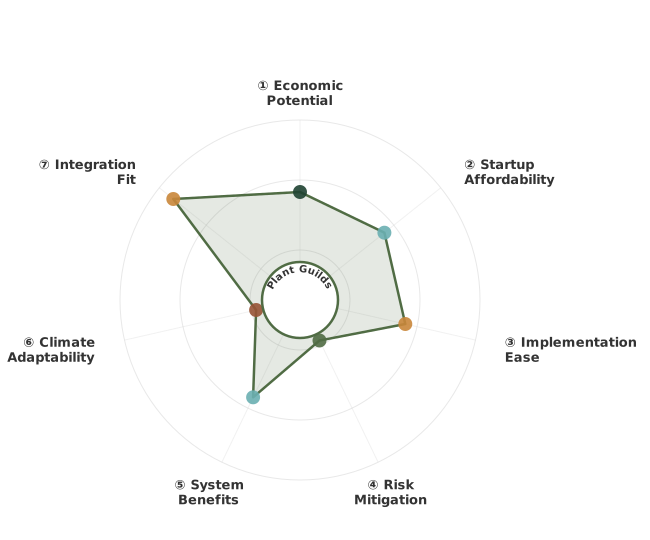
How These Traits Are Calculated
Trait dimensions are ordered clockwise starting from the top of the chart (12 o'clock position):
1. Economic Potential
Financial returns, annual value, and break-even timeline
WHAT: Evaluates financial viability by combining net annual value ($/ha from savings, income, and amortized harvests) with break-even timeline showing when practices pay for themselves.
WHY: Farmers need clear ROI understanding before committing resources. Fast payback (≤3 years) with strong returns (≥$300/ha) enables confident adoption, while long timelines (>10 years) restrict adoption to well-funded operations willing to wait for returns.
HOW: Calculated from net annual value in $/ha and break-even years. Exceptional (≥2.6): fast ROI ≤3 years + high value ≥$300/ha. Typical (1.8-2.5): moderate returns or longer timelines. Limited (<1.8): marginal economics or very long payback >10 years.
2. Startup Affordability
Initial investment costs and financial barrier to entry
WHAT: Measures financial barrier to entry through startup costs for equipment, infrastructure, consulting, and materials. Inverted scoring: lower costs = higher scores = more accessible adoption.
WHY: Affordability determines who can adopt. Low-cost practices (<$250/ha) enable widespread adoption across diverse scales, while high costs (>$2,500/ha) limit adoption to well-capitalized operations, creating barriers that slow regenerative transition.
HOW: Calculated from initial investment parsed from practice content. Inverted scoring: Exceptional (≥2.6): minimal investment <$250/ha. Typical (1.8-2.5): moderate costs $250-2,500/ha. Limited (<1.8): high barrier >$2,500/ha.
3. Implementation Ease
Learning curve and specialized knowledge required
WHAT: Measures how much learning, planning, and specialized knowledge a practice requires. Simpler practices with fewer steps score higher, while complex practices requiring extensive training or specialized resources score lower.
WHY: Complex practices create adoption barriers even when economically viable. Straightforward practices enable faster adoption and broader participation, while those requiring extensive training, timing precision, or specialized equipment limit who can succeed.
HOW: Evaluated by measuring documentation length and identifying complexity markers like location-specific requirements, seasonal timing windows, specialized skills, and dedicated equipment needs. Exceptional (≥2.6): straightforward practices with minimal prerequisites. Typical (1.8-2.5): moderate learning curve with some specialized needs. Limited (<1.8): steep learning curve requiring significant training or resources.
4. Risk Mitigation
Identified financial and ecological risk assessment
WHAT: Evaluates documented risks across financial (investment loss, market volatility) and ecological (crop failure, pest outbreaks) domains. Inverted scoring: fewer risks = higher scores.
WHY: Understanding risk exposure helps farmers make informed decisions. Low-risk practices allow confident implementation, while high-risk practices require careful planning and contingency resources. Risk transparency prevents costly failures.
HOW: Calculated from identified risks in practice content. Inverted scoring: Exceptional (≥2.6): ≤2 risks with manageable severity. Typical (1.8-2.5): 3-5 moderate risks. Limited (<1.8): 6+ risks or severe exposure.
5. System Benefits
How many ways the practice improves your land simultaneously
WHAT: Measures how many aspects of land health improve at once—carbon storage, soil quality, erosion control, water absorption, and biodiversity. Practices that improve multiple areas simultaneously create compounding benefits where each improvement reinforces the others.
WHY: The best practices solve multiple problems at once. For example, addressing erosion simultaneously builds carbon and improves water infiltration, creating a resilient system with positive feedback loops. Single-benefit approaches miss these compound transformation opportunities.
HOW: Evaluated across five key outcomes: carbon sequestration, soil organic matter increase, erosion reduction, water infiltration improvement, and biodiversity enhancement. Exceptional (≥2.6): high carbon storage (>8 t/ha/yr), improvements across 4-5 areas, transformative outcomes. Typical (1.8-2.5): moderate carbon (3-8 t/ha/yr), improvements across 2-3 areas. Limited (<1.8): modest impact (<3 t/ha/yr), single-area focus only.
6. Climate Adaptability
Geographic applicability across Köppen climate zones
WHAT: Evaluates geographic applicability by assessing how many Köppen climate zones successfully support a practice and what adaptation requirements are needed. Measures breadth of climates where farmers can implement with minimal to moderate modifications.
WHY: Universal practices working across diverse climates enable more farmers to adopt regenerative approaches. Practices limited to single climate types (only Mediterranean, only tropical) restrict adoption and slow global transition. Adaptability determines whether a practice serves niche regions or offers broad transformation.
HOW: LLM evaluation of regional success stories, Köppen zone coverage, and adaptation needs. Exceptional (≥2.6): 5+ zones or 4+ climate types, 3+ continents, minimal adaptation. Typical (1.8-2.5): 3-4 zones or 2-3 types, 2 continents, moderate adaptation. Limited (<1.8): 1-2 zones, single region, significant adaptation or highly specialized.
7. Integration Fit
How well this practice combines with others you're doing
WHAT: Measures how well a practice combines with other regenerative practices you might be doing. Some practices work as building blocks that make many other practices easier or more effective, while others work best on their own.
WHY: Practices that combine well with many others create more value on your farm. For example, cover cropping enables no-till, improves grazing, supports crop diversity, and helps water management—making all of them work better together. This helps you build a coherent system rather than juggling disconnected practices.
HOW: Evaluated by identifying which practices combine well and how strong those combinations are. 'Ideally Suited' means strong combinations where practices reinforce each other (practice A makes B easier, while B makes A more effective). 'Adequate' means complementary benefits that work well together. Exceptional (≥2.6): combines well with 6+ practices, serves as a building block. Typical (1.8-2.5): combines with 3-5 practices. Limited (<1.8): 1-2 practices or works best alone.
Going Deeper
1
WHY - The Benefits
Plant guilds offer a powerful pathway toward truly regenerative agricultural systems by creating highly functional, biodiverse ecosystems. Their benefits extend to soil health, economic diversification, water cycle enhancement, carbon sequestration, and on-farm biodiversity.
Plant guilds offer a powerful pathway toward truly regenerative agricultural systems by creating highly functional, biodiverse ecosystems. Their benefits extend to soil health, economic diversification, water cycle enhancement, carbon sequestration, and on-farm biodiversity.
WHY - The Benefits
Plant guilds offer a powerful pathway toward truly regenerative agricultural systems by creating highly functional, biodiverse ecosystems. Their benefits extend to soil health, economic diversification, water cycle enhancement, carbon sequestration, and on-farm biodiversity.
Plant guilds offer a powerful pathway toward truly regenerative agricultural systems by creating highly functional, biodiverse ecosystems. Their benefits extend to soil health, economic diversification, water cycle enhancement, carbon sequestration, and on-farm biodiversity.
Soil Health Benefits
The diverse root systems of species within a plant guild create a complex, porous soil structure, dramatically improving water infiltration and aeration. Deep-rooted plants break up compacted layers, while fibrous roots bind surface aggregates, leading to a 40-70% increase in infiltration rates and a 50-85% reduction in soil erosion on sloped land. The continuous presence of living roots year-round feeds soil microbial communities, leading to a 0.5-1.5% increase in soil organic matter over a decade, creating a more stable, fertile, and water-retentive soil. Rates of SOM accumulation are variable and depend on climate, starting soil condition, management intensity, and measurement depth.
This rich microbial life, supported by diverse root exudates and decaying plant matter from multiple species, enhances nutrient cycling efficiency. Legumes fix atmospheric nitrogen, deep-rooted plants scavenge nutrients from lower soil profiles, and dynamic accumulators bring micronutrients to the surface. This dynamic nutrient exchange reduces or eliminates the need for synthetic fertilizers. The diverse organic matter decomposition also supports robust populations of earthworms and other beneficial soil fauna, which further improve soil structure and fertility.
Economic Benefits
Plant guilds offer a strategy for long-term economic resilience by diversifying farm income. Instead of relying on a single cash crop or livestock enterprise, a guild can yield multiple products over time—such as fruits, nuts, timber, medicinal herbs, culinary herbs, edible flowers, pollinator-attracting forage, or biomass for biochar. This diversification buffers against market volatility for individual commodities.
While initial establishment costs can be higher than for monocultures, the long-term savings on inputs (fertilizers, pesticides, herbicides, fuel for tillage) are substantial, often exceeding 30-60% over time. The increased land productivity and resilience also translate to higher land values. Returns can be phased: short-lived crops or forage provide early income, while perennial trees and shrubs deliver increasing harvests in years 3-10 and beyond. The overall land productivity can increase by 10-25% over 5-10 years compared to less diverse systems. Development of local markets for niche products cultivated in guilds can further enhance profitability.
Water Cycle Benefits
The dense and varied root systems of plant guilds enhance water infiltration and retention by creating macropores and increasing soil organic matter. This reduces reliance on irrigation in many climates and mitigates drought stress, as the soil acts like a sponge. Reduced runoff also means less soil erosion and less nutrient pollution of waterways. The transpiration from diverse plant canopies can contribute to local atmospheric moisture, moderating local microclimates. In regions with rainfall variability, the robust structure of guilds provides a buffer against both drought and flooding.
Carbon Sequestration
Plant guilds are exceptional tools for sequestering atmospheric carbon. The combination of perennial trees, shrubs, and deep-rooted herbaceous plants stores significant amounts of carbon both above and below ground. Trees and shrubs accumulate biomass, while extensive root systems and the continuous addition of organic matter to the soil build soil carbon stocks. Studies indicate that well-designed silvopasture systems, a form of plant guild, can sequester 5-10 tonnes of carbon per hectare per year. This makes them a critical strategy for climate change mitigation and building soil health simultaneously.
Biodiversity Enhancement
By providing diverse habitats, food sources, and nesting sites, plant guilds dramatically increase on-farm biodiversity. They attract and support a wide array of beneficial insects (pollinators, predators, parasitoids), birds, and soil microorganisms. This enhanced biodiversity can lead to improved pest control through natural predation, increased pollination rates for crops, and more robust nutrient cycling. This creates a self-regulating ecosystem that is more resilient to disease and pest outbreaks without the need for synthetic inputs.
Regenerative Systems Fit
Plant guilds are a cornerstone practice in regenerative agriculture, directly supporting all five principles by creating complex, functional ecosystems:
- Minimize Soil Disturbance: Guilds maintain year-round living cover and root activity, preventing erosion and reducing the need for tillage.
- Maximize Crop Diversity: The very definition of a guild is to maximize species diversity above and below ground.
- Keep Soil Covered: A dense matrix of groundcovers, herbaceous plants, shrubs, and organic mulch ensures constant soil protection.
- Maintain Living Roots: Perennial components ensure continuous root activity, soil structure maintenance, and nutrient cycling across seasons.
- Integrate Livestock: Guilds can be designed to strategically incorporate grazing animals, turning them into nutrient cyclers and vegetation managers.
Transitioning to guilds involves moving from simpler, often extractive systems, to complex, synergistic ones. The economic benefits are long-term, driven by reduced inputs, diversified outputs, and increased land value and resilience. International examples range from the agroforestry systems in Costa Rica and Southeast Asia that include fruit trees, nitrogen-fixing plants, and beneficial insect attractors, to European hedgerow systems and North American permaculture designs.
Sources behind this view
Videos & Podcasts
-
Explains plant guilds as beneficial polycultures where species complement each other. Demonstrates guild design with examples like apple/red currant/rhubarb and peach/pawpaw, emphasizing strategic pla
-
Describes establishing a multi-layered polyculture guild using an additive, evolutionary approach. Key species include elderberry, Concord grape, European buckthorn, Honey Locust, gooseberries, Bee Ba
-
Permaculture guilds involve planting diverse support species around fruit trees for aesthetic and functional benefits like soil health, water conservation, and attracting beneficial insects. Experimen
-
Explains permaculture guilds using a Stanley plum tree example in Portland, Oregon (zone 9A). Guilds are flexible companion planting systems with diverse species (yarrow, germander, lavender, flowerin
Community
-
Permaculture utilizes plant guilds, like the 'Three Sisters' (corn, squash, beans), for mutually supportive food production that enhances soil health, conserves water, and promotes biodiversity, adapt
Read more (opens in new window) ucanr.edu -
Food forest guilds are plant groups supporting each other, featuring perennials for ease and carbon sequestration, with examples like nitrogen-fixers, pollinators, and nutrient accumulators. Hugelkult
Read more (opens in new window) permies.com -
Permaculture guilds are defined as plant groups working in harmony, serving at least three functions each. Key functions include food production, nutrient accumulation (nitrogen fixation, dynamic accu
Read more (opens in new window) permies.com -
This book offers a comprehensive guide to permaculture plant guilds and polycultures, detailing how to design, construct, and manage these sustainable perennial systems for abundant yields and ecosyst
Read more (opens in new window) www.permaculture.org.uk
 Research
-
Synergizing Agroforestry and Permaculture for Sustainable Organic Farming (opens in new window)
This study found: Agroforestry and permaculture enhance organic farming by integrating trees, crops, and livestock, improving soil health, biodiversity, and resilience. Challenges include funding, knowledge, and policy
-
Agroforestry: The North American Perspective (opens in new window)
This study found: Agroforestry integrates trees with crops/livestock, offering environmental benefits like climate adaptation and mitigation. Key North American practices include alley cropping, silvopasture, and ripar
2
WHERE - Regional Considerations
Plant guild design must be adapted to regional climate and soil conditions to maximize their synergistic potential and avoid issues like invasive species or establishment failure. Factors such as rainfall patterns, temperature extremes, growing season length, and soil...
Plant guild design must be adapted to regional climate and soil conditions to maximize their synergistic potential and avoid issues like invasive species or establishment failure. Factors such as rainfall patterns, temperature extremes, growing season length, and soil...
WHERE - Regional Considerations
Plant guild design must be adapted to regional climate and soil conditions to maximize their synergistic potential and avoid issues like invasive species or establishment failure. Factors such as rainfall patterns, temperature extremes, growing season length, and soil...
Plant guild design must be adapted to regional climate and soil conditions to maximize their synergistic potential and avoid issues like invasive species or establishment failure. Factors such as rainfall patterns, temperature extremes, growing season length, and soil...
Click Here to Look up your Region if you don't already know it
Humid Temperate Regions
Representative Locations: Southeastern United States, Northern Europe (UK, Germany, Poland), Eastern China, Japan, New Zealand
Climate Context: Warm to hot summers and cool to cold winters with moderate to high annual precipitation (75-150 cm or 30-60 inches) distributed relatively evenly. USDA Zones 6-8, Köppen Cfb/Cfa.
In these regions, a wide variety of temperate fruit trees (apples, pears, plums), nut trees (walnuts, hazelnuts), berry bushes (raspberries, blueberries), nitrogen-fixing shrubs (clover, vetch, alder), and diverse herbaceous perennials can thrive. Emphasis is on managing for adequate drainage, preventing fungal diseases through good airflow, and selecting species that benefit from consistent moisture. Integrating livestock requires careful management of grazing periods to prevent damage to young trees and shrubs, especially during wet periods that can lead to compaction. Productivity is high, but managing competing growth and potential invasive species requires active observation and intervention.
Mediterranean Regions
Representative Locations: California, Mediterranean basin (Spain, Italy, Greece), Central Chile, Southwestern Australia, Western Cape South Africa
Climate Context: Hot, dry summers and mild, wet winters. Annual precipitation 40-90 cm (15-35 inches), highly seasonal. USDA Zones 8-10, Köppen Csa/Csb.
Plant guilds in these regions focus on drought-tolerant species. Key components include drought-hardy fruit and nut trees (olives, figs, almonds, carob), Mediterranean shrubs (rosemary, lavender, thyme, bay laurel), hardy groundcovers (thyme, sedums), and drought-resistant nitrogen-fixers (some Acacia species, caragana). Water management is critical, often involving water harvesting techniques like swales or contour planting to capture winter rains. Species selection emphasizing xerophytic adaptations is paramount to ensure establishment and survival. Livestock integration often occurs during the wetter winter months when forage is available, with animals removed or rotated during dry summers.
Arid/Semi-Arid Regions
Representative Locations: Western USA, North Africa, Central Asia, Interior Australia
Climate Context: Low annual precipitation (<40 cm or 15 inches), high temperatures, short and often unpredictable growing season. USDA Zones 7-9, Köppen BSh/BSk.
Guilds in arid zones must prioritize extreme drought tolerance and efficient water use. Species selection includes hardy, deep-rooted trees (mesquite, black locust, certain acacias), drought-resistant shrubs (sagebrush, saltbush), and low-water groundcovers. Planting often occurs during brief, favorable wet periods, and companion planting with species that improve soil moisture retention is common. Water harvesting earthworks (swales, basins) are essential. Livestock integration may involve careful rotation to manage forage, and animals can play a role in seed dispersal and nutrient cycling, but stocking densities must be very low to prevent overgrazing and soil degradation.
Cold Continental Regions
Representative Locations: Northern USA and Canada, Northern Europe, Northern Asia
Climate Context: Very short growing seasons, extreme summer heat, severe winter cold. USDA Zones 3-5, Köppen Dfa/Dfb.
In cold climates, plant guilds prioritize species that can withstand harsh winters and utilize short, intense growing seasons. Hardy fruit trees (apples, pears), cold-hardy nut trees (hazelnuts, some walnuts), cold-tolerant berry bushes (lingonberries, currants), and hardy nitrogen-fixing shrubs (caragana, Siberian pea shrub) are key. Herbaceous layers often include cold-hardy perennials like rhubarb, asparagus, and selected medicinal herbs. Managing for snow accumulation can be beneficial for insulation and water retention. Livestock integration needs careful timing, grazing when forage is abundant and moving animals before heavy frosts or snow cover.
Subtropical Regions
Representative Locations: Southeastern USA, Southern China, Southern Brazil, Eastern Australia
Climate Context: Hot, humid summers and mild winters with generally ample rainfall. USDA Zones 9-11, Köppen Cfa/Cwa.
Subtropical guilds benefit from a long growing season and ample moisture, allowing for highly diverse and productive systems. This includes a wide range of fruit trees (citrus, mango, papaya), nut trees (pecans, macadamias), fast-growing timber species, nitrogen-fixing trees (leucaena, gliricidia), and a vigorous understory of tropical vegetables, herbs, and groundcovers. Pest and disease pressure can be high, so guilds are designed with companion planting and diverse species to enhance natural biological control. Livestock can be integrated year-round, but heat stress management during summers is crucial.
Tropical Regions
Representative Locations: Central America, Southeast Asia, East Africa, Northern Australia, Northern South America
Climate Context: High temperatures year-round, with distinct wet and dry seasons or consistent high rainfall. Köppen Af/Am/Aw.
Tropical plant guilds are characterized by extreme diversity and rapid growth. They often mimic forest structures, with multiple layers of fruit trees (avocado, durian, jackfruit), timber trees, nitrogen-fixing species (erythrina, calliandra), palms, medicinal plants, culinary herbs, and fast-growing annuals or groundcovers. Management focuses on managing rapid growth, competition, and disease pressure. Livestock integration often involves rotational grazing of animals like goats, sheep, or cattle, or poultry foraging within orchards, contributing to weed control and nutrient cycling. Edible and medicinal plants are abundant year-round.
3
HOW - Implementation Process
HOW - Implementation Process
Successful plant guild establishment requires thoughtful planning and site assessment. Key prerequisites include:
- Site Assessment: Understand your soil type, drainage, existing vegetation, sun exposure, and water availability. Analyze slope and aspect, especially for water harvesting and species placement.
- Clear Goals: Define what you want the guild to achieve (e.g., fruit production, timber, livestock forage, soil building, pest control, a combination). This guides species selection and design.
- Climate Appropriateness: Research and select species proven to thrive in your specific climate zone (consider USDA zones, Köppen classifications, and local microclimates).
- Water Source: Ensure access to water during establishment, especially in drier regions or for species with higher water needs.
- Patience and Observation: Understand that guilds take time to establish and mature. Commit to observing plant interactions and adapting management based on what you see.
Phase 1: Design and Species Selection
This is the most critical phase. A well-designed guild is the foundation of success. 1. Identify Guild Functions: Based on your goals, list necessary functions: - Nitrogen fixation (e.g., legumes, alder) - Deep nutrient mining (e.g., tap-rooted trees, comfrey) - Groundcover & weed suppression (e.g., clovers, creeping thyme) - Pollinator attraction (e.g., borage, bee balm, flowering shrubs) - Pest deterrence (e.g., marigolds, garlic, aromatic herbs) - Fruit/Nut/Timber production (main cash crops) - Shade provision (for livestock, other plants) - Biomass production (for mulch, biochar) 2. Select Species for Each Function: Choose native or well-adapted, non-invasive species. Consider growth habit, mature size, light requirements, soil preferences, and water needs. - Example Guild for Humid Temperate Region (Fruit Production focus): - Canopy Layer (Trees): Apple (fruit), Black Walnut (nut/timber), Black Locust (N-fixer, fence posts) - Understory Layer (Shrubs): Blueberry (fruit), Hazelnut (nut), Elderberry (fruit/wildlife) - Herbaceous Layer: Comfrey (dynamic accumulator, mulch), Yarrow (beneficial insects), Borage (pollinators), Medicinal herbs ( Echinacea, mint) - Groundcover Layer: White Clover (N-fixer, forage), Creeping Thyme (weed suppression) - Vines: Hardy Kiwi or Grapes on trellis/trees 3. Plan Layout: Consider mature size of plants to avoid overwhelming competition. Place less competitive species where they receive adequate light. On slopes, use contour planting and water-harvesting features. Integrate livestock access zones if applicable. 4. Source Plants: Obtain healthy seedlings, cuttings, or seeds from reputable nurseries or seed suppliers. Prioritize bare-root stock for trees/shrubs in temperate regions for cost-effectiveness and reduced transplant shock.
Phase 2: Site Preparation and Planting
- Minimize Disturbance: Aim for minimal soil disturbance. If establishing on pasture, use a no-till planter or dig individual planting holes for trees/shrubs to avoid disrupting existing sod structure. If starting on degraded land, consider sheet mulching (lasagna gardening) with cardboard and compost to suppress weeds and build soil first.
- Planting:
- Trees/Shrubs: Plant according to nursery recommendations, ensuring proper depth and spacing based on mature size. Consider planting companion species (e.g., nitrogen-fixers) near trees. Protect young trees from browsing animals with guards or temporary fencing.
- Herbaceous/Groundcovers: Sow seeds or plant plugs according to species requirements. Broadcast nitrogen-fixing groundcovers like clover early.
- Mulching: Apply a layer of organic mulch (wood chips, straw, compost) around plants to conserve moisture, suppress weeds, and improve soil over time. Keep mulch a few centimeters away from plant stems to prevent rot.
- Watering: Water plants thoroughly after planting, especially during dry periods, until they are established.
Phase 3: Establishment and Management (Years 1-3)
- Weed Management: Initially, manage vigorous weeds that could outcompete young guild members. This might involve hand-weeding, mulching, or spot application of approved herbicides as a temporary measure if absolutely necessary for species survival. The goal is to let the guild species outcompete weeds as they establish.
- Watering: Continue to water young plants during dry spells. As the guild matures, its water-holding capacity will increase, reducing this need.
- Livestock Integration (if applicable): Introduce livestock after critical species are established and protected (typically year 2-3 for trees). Use rotational grazing to manage forage, prevent overgrazing of young plants, and distribute manure. Ensure livestock have access to protected water sources.
- Pruning and Shaping: Prune fruit trees for optimal fruit production and timber species for straight growth. Remove any invasive species that appear immediately.
- Observation: Continuously observe plant interactions. Which species are thriving? Which are struggling? Are there signs of pest or disease problems? Are beneficial insects present? Adapt management based on these observations.
Phase 4: Maturation and Succession
As the guild matures (years 3-10+), management shifts from establishment to maintenance and harvesting.
- Harvesting: Begin harvesting fruits, nuts, herbs, or other products as they mature.
- Pruning: Continue pruning for health, productivity, and to manage competition.
- Thinning: Eventually, mature trees or shrubs may need thinning for optimal growth or to improve light penetration for understory species.
- Reseeding/Replanting: Allow self-seeding species to propagate. Replenish areas where species have failed or declined.
- Livestock Management: Fine-tune grazing rotations to optimize forage, nutrient cycling, and vegetation structure.
Sources behind this view
Videos & Podcasts
-
Describes establishing a multi-layered polyculture guild using an additive, evolutionary approach. Key species include elderberry, Concord grape, European buckthorn, Honey Locust, gooseberries, Bee Ba
-
Explains plant guilds as beneficial polycultures where species complement each other. Demonstrates guild design with examples like apple/red currant/rhubarb and peach/pawpaw, emphasizing strategic pla
-
Details the design of a permaculture guild for a pawpaw tree, incorporating plants like comfrey, cranesbill geranium, bee balm, scabiosa, and yarrow to support pollinators, suppress weeds, conserve wa
-
Design forest gardens by including nitrogen fixers, ground covers, and perennial vegetables. Select low-maintenance, productive species and embrace a process that works with nature, rather than agains

Community
-
Permaculture utilizes plant guilds, like the 'Three Sisters' (corn, squash, beans), for mutually supportive food production that enhances soil health, conserves water, and promotes biodiversity, adapt
Read more (opens in new window) ucanr.edu -
Food forest guilds are plant groups supporting each other, featuring perennials for ease and carbon sequestration, with examples like nitrogen-fixers, pollinators, and nutrient accumulators. Hugelkult
Read more (opens in new window) permies.com -
A permaculture design project in Portland, OR, utilized 'Gaia's Garden' to analyze a backyard's existing plant functions, emphasizing site-specific observation over generic designs to create a more pr
Read more (opens in new window) permies.com -
This book offers a comprehensive guide to permaculture plant guilds and polycultures, detailing how to design, construct, and manage these sustainable perennial systems for abundant yields and ecosyst
Read more (opens in new window) www.permaculture.org.uk
Research
-
Synergizing Agroforestry and Permaculture for Sustainable Organic Farming (opens in new window)
This study found: Agroforestry and permaculture enhance organic farming by integrating trees, crops, and livestock, improving soil health, biodiversity, and resilience. Challenges include funding, knowledge, and policy
-
Agroforestry: The North American Perspective (opens in new window)
This study found: Agroforestry integrates trees with crops/livestock, offering environmental benefits like climate adaptation and mitigation. Key North American practices include alley cropping, silvopasture, and ripar
4
Know the Debate
Plant guild outcomes depend heavily on your location and goals. In humid regions with reliable rainfall, systems establish faster, often showing be...
Know the Debate
Plant guild outcomes depend heavily on your location and goals. In humid regions with reliable rainfall, systems establish faster, often showing be...
Plant guild outcomes depend heavily on your location and goals. In humid regions with reliable rainfall, systems establish faster, often showing benefits within two years. Arid climates require more drought-tolerant species and patience, with full productivity sometimes taking five to fifteen years. Entry costs range from minimal DIY efforts to tens of thousands of dollars per hectare for commercial operations, with labor intensive establishment (200+ hrs/ha) tapering off over time. Understanding these critical factors helps tailor guild design for success.
How long does it take for plant guilds to become productive?
Early benefits, slower maturity (1-5 years)
Academic and institutional sources suggest tangible benefits like soil improvements and early yields (herbs, small fruits) can appear within 1-3 years. Full productivity and mature yields from perennial trees and shrubs often take 7-15 years.
Sources behind this view
Sources behind this view
Videos & Podcasts
-
Fruit tree guilds in permaculture are presented as a teaching tool and aesthetic design element, not a strict scientific method. They involve planting support species in seven layers around a central tree to mimic natural ecosystems, offering functions like nitrogen fixation and attracting beneficial insects. Design is site-specific and flexible, prioritizing connection and enjoyment over rigid rules, with limited scientific data but anecdotal benefits.

Research
-
Regenerative Agriculture: Restoring Ecosystems¢ Resilience and Productivity: A Review (opens in new window)
This study found: Regenerative agriculture is a farming approach that views farms as living ecosystems, moving away from the 'take-make-dispose' model of conventional farming. Instead of relying heavily on outside inputs, it focuses on building up the farm's natural resources and services. Key practices include disturbing the soil as little as possible (like no-till or reduced tillage), planting cover crops, rotating different crops, integrating livestock in a managed way, using compost, reducing synthetic fertilizers and pesticides, and incorporating trees. The approach is tailored to each farm's specific conditions. Farmers monitor soil health indicators like organic matter, how well soil holds water, and the amount of life in the soil. Studies show that regenerative practices can significantly increase soil organic matter (by 0.5-2% in 3-5 years), improve water infiltration (2-10 times better), boost soil microbial life (30-50% more), and increase beneficial insects (60-80% more). Farms can also capture 0.5 to 3 tons of carbon per hectare annually. Economically, these farms often have 20-40% lower input costs and can be more profitable in the long run, becoming more productive and stable over time.
 From the Web
-
Forest garden planning involves assessing social/environmental factors, inventorying resources, and mapping zones/sectors. Ecological design emphasizes species selection (native, climate-resilient), mimicking forest layers, and grouping plants into guilds to optimize resource use and minimize competition. Establishment requires proper planting, soil amendment, water management, and weed/pest control.
-
Forest gardens are multi-strata perennial polycultures mimicking forest edges for diverse yields. Planning involves defining goals, assessing social/environmental context (climate, soil, topography), and inventorying resources. Developed by NCAT and University of Missouri.
Longer maturity for full commercial returns (5-15 years)
Field practitioners emphasize that reaching full commercial productivity and economic break-even for complex, multi-species guilds often requires 5-15 years, as trees and shrubs mature and markets develop.
Sources behind this view
Sources behind this view
Videos & Podcasts
-
Fruit tree guilds in permaculture are presented as a teaching tool and aesthetic design element, not a strict scientific method. They involve planting support species in seven layers around a central tree to mimic natural ecosystems, offering functions like nitrogen fixation and attracting beneficial insects. Design is site-specific and flexible, prioritizing connection and enjoyment over rigid rules, with limited scientific data but anecdotal benefits.
-
Permaculture guilds, like the one around a Stanley plum in Portland, Oregon, integrate diverse species (rose, serviceberry) for abundance and weed suppression, challenging the notion of 'messy' gardens. This intentional design prioritizes function, aesthetics, and adaptability over traditional formal styles.
-
Details a mature pawpaw fruit tree guild in Portland, Oregon (zone 8b), featuring diverse companion plants like Russian comfrey, aronia berry, rhubarb, and culinary herbs. Emphasizes flexible design to support the tree, attract pollinators, and yield useful crops, while also conserving water.
-
Describes establishing a multi-layered polyculture guild using an additive, evolutionary approach. Key species include elderberry, Concord grape, European buckthorn, Honey Locust, gooseberries, Bee Balm, Valerian, and plums, integrated for soil building, deer deflection, water capture, and erosion control through chop-and-drop techniques. Encourages experimentation and starting small.
Making Sense of the Differences
The timeline for guild productivity varies greatly by climate, species, initial soil health, and scale. Humid regions with shorter plant latency and abundant water support faster establishment (1-3 years for initial yields). Arid climates require more drought-tolerant species and water management, extending timelines to 5-15 years for full system maturity. Commercial operations focused on fruit/nut trees often face longer wait times (8-12 years for break-even) compared to herbaceous herbaceous guilds. Patience and observation are key, adapting to local conditions.
What are the initial costs and labor requirements for establishing plant guilds?
Low cash outlay, high DIY labor & time
DIY approaches using native plants, found materials for mulch, and home-grown seeds can minimize cash costs to $1,000-3,000 per hectare, but require significant personal labor for establishment and ongoing management.
Sources behind this view
Sources behind this view
Videos & Podcasts
-
Permaculture guilds involve planting diverse support species around fruit trees for aesthetic and functional benefits like soil health, water conservation, and attracting beneficial insects. Experimentation and personal enjoyment are encouraged over rigid plant lists.
From the Web
-
Common permaculture practices for sustainable land use include companion planting, mulching, rainwater harvesting, vermicomposting, hügelkultur, rotational grazing, swales, contour planting, and no-till gardening to improve soil health and water management.
-
Learn to design, build, and maintain a super-productive, resilient, and regenerative permaculture garden using step-by-step guidance from experts, focusing on local climate and ecosystem integration for sustainable food production.
Moderate to high cash investment, skilled labor
Commercial operations require significant investment ($10,000-$30,000+/ha) in quality nursery stock, species-specific fencing, water systems, and often professional design/installation labor for yields of $2,000-$4,000/ha within 7 years.
Sources behind this view
Sources behind this view
Videos & Podcasts
-
Describes establishing a multi-layered polyculture guild using an additive, evolutionary approach. Key species include elderberry, Concord grape, European buckthorn, Honey Locust, gooseberries, Bee Balm, Valerian, and plums, integrated for soil building, deer deflection, water capture, and erosion control through chop-and-drop techniques. Encourages experimentation and starting small.
From the Web
-
Forest garden planning involves assessing social/environmental factors, inventorying resources, and mapping zones/sectors. Ecological design emphasizes species selection (native, climate-resilient), mimicking forest layers, and grouping plants into guilds to optimize resource use and minimize competition. Establishment requires proper planting, soil amendment, water management, and weed/pest control.
-
Forest garden installation and maintenance require intensive management, including using nurse plants for soil fertility, proper planting techniques, and resource management. Weed, pest, and disease control methods like occultation, IPM, and organic sprays are detailed. Water management via earthworks and irrigation is crucial.
-
Forest garden installation and maintenance involve intensive labor, using nurse plants for soil improvement, and amending soil based on tests. Water management via earthworks and weed control through methods like occultation are key. IPM principles guide pest and disease management, with advice to consult specialists.
Making Sense of the Differences
Initial costs for plant guilds vary from minimal cash outlay for DIY projects using native plants ($1,000-3,000/ha) to substantial investments ($10,000-30,000+/ha) for commercial operations requiring quality stock, fencing, water, and professional design. Labor is intensive during establishment (200+ hrs/ha) for planting, mulching, and initial weed control, tapering down as the system matures. Farmers should plan for higher initial cash costs and upfront labor if aiming for large-scale commercial returns or specific high-value products.
5
HOW MUCH - Costs & Investment
Note: All costs are based on recent US economic data (2023-2025) and may vary substantially in other regions based on local labor rates, material costs, and regulatory requirements. Multiply USD equivalent costs by local indices.
Note: All costs are based on recent US economic data (2023-2025) and may vary substantially in other regions based on local labor rates, material costs, and regulatory requirements. Multiply USD equivalent costs by local indices.
HOW MUCH - Costs & Investment
Note: All costs are based on recent US economic data (2023-2025) and may vary substantially in other regions based on local labor rates, material costs, and regulatory requirements. Multiply USD equivalent costs by local indices.
Note: All costs are based on recent US economic data (2023-2025) and may vary substantially in other regions based on local labor rates, material costs, and regulatory requirements. Multiply USD equivalent costs by local indices.
Note: All costs are based on recent US economic data (2024–2026) and may vary substantially by region based on local labor rates, material costs, and regulatory requirements.
Design & Planning
For small-scale operations under 50 acres (20 ha), design costs range from $313 to $1,250 per acre ($773–$3,089/ha), typically reflecting a DIY-heavy approach with limited external consultancy. Mid-scale operations between 50 and 500 acres (20–202 ha) incur costs of $834 to $3,126 per acre ($2,061–$7,725/ha), often necessitating professional master planning services that account for complex agroforestry, alley cropping, and drainage hydrology. Large-scale operations exceeding 500 acres (202 ha) span $2,605 to $8,336 per acre ($6,437–$20,599/ha), as these projects require rigorous soil forensic testing, comprehensive site surveying, and multi-year succession planning to manage risk across diverse ecological zones.
Site Preparation
Site preparation costs are highly sensitive to baseline land conditions, such as the prevalence of aggressive invasive species or the need for legacy soil remediation. Small-scale plots require $104–$521 per acre ($257–$1,287/ha) for precision tasks like localized sheet mulching or selective brush clearing. Mid-scale operations range from $417 to $1,250 per acre ($1,030–$3,089/ha) to facilitate larger-scale clearing, mechanical aeration, and the installation of complex swales or water-retention earthworks. Large-scale conversion of degraded pastureland to advanced silvopasture layouts costs between $313 and $1,563 per acre ($773–$3,862/ha), focusing on low-disturbance techniques that prioritize native soil micro-fauna over chemical suppression.
Plant Material
High-density guild establishment is capital-intensive due to the requirement for diverse successional planting classes. Small-scale sites allocate $834–$2,605 per acre ($2,061–$6,437/ha) to secure premium nursery stock, often opting for heirloom or grafted varieties that prioritize long-term fruit output. Mid-scale operations capitalize on economies of scale through wholesale acquisition, spending $1,250–$4,689 per acre ($3,089–$11,587/ha) on a high volume of saplings and nitrogen-fixing support species. Large-scale ventures reflect costs of $1,042–$6,252 per acre ($2,575–$15,449/ha); while unit costs diminish with bulk procurement, the total number of trees, shrubs, and perennials required to establish structural resilience across hundreds of acres remains a significant recurring expenditure.
Mulch, Compost, and Soil Amendments
Fertility management shifts from the external input reliance of conventional row crops to internal cycling in well-managed guilds. Small sites spend $208–$834 per acre ($514–$2,061/ha) on wood chips and organic inputs, frequently leveraging local community source-agreements. Mid-scale operations, requiring consistent large-volume soil building, spend $625–$2,084 per acre ($1,544–$5,150/ha) for compost delivery and spreading. Large-scale areas often transition to "chop-and-drop" systems and onsite compost extract brewing, resulting in lower relative costs of $417–$1,876 per acre ($1,030–$4,636/ha) by leveraging existing site biomass to minimize dependence on purchased inputs.
Protective Structures
Shielding biomass from herbivory is a primary failure point in young plant guilds. Small-scale growers spend $313–$1,250 per acre ($773–$3,089/ha) for localized individual plant guards and individual mesh cages. Mid-scale operations invest $834–$2,605 per acre ($2,061–$6,437/ha) in portable electric fencing systems, allowing for integrated livestock management to cycle fertility while protecting tender trees. Large-scale entities invest $625–$3,126 per acre ($1,544–$7,725/ha) in permanent high-tensile fencing, which, while expensive to install, drastically reduces the ongoing maintenance burden by securing large blocks of high-value timber and nut-bearing species against deer and mechanical equipment damage.
Most Spend: Most operations fall within a moderate cost bracket of $1,200 to $4,200 per acre ($2,965–$10,378/ha), as this range represents the balance between manual, DIY-focused small ventures and large-scale, automated, mechanically assisted systems.
Why the Range?: Cost variation is driven primarily by the choice between high-value nursery genetics versus opportunistic propagation, as well as the extent of mechanical intervention required during initial site establishment. Additionally, regional differences in agricultural labor availability and the proximity to reliable, bulk quantities of organic mulch or compost significantly influence total capital outlays.
Sources behind this view
Videos & Podcasts
-
Guidance on creating budget sheets for perennial crop establishment, focusing on accurate calculation of plants per acre, establishment costs, and the true cost of labor. It covers pre-production and
6
REWARDS AND RISKS - Economics & Risk Factors
REWARDS AND RISKS - Economics & Risk Factors
Economic performance for plant guilds follows a distinct J-curve, requiring significant upfront investment before long-term yield maturity. In a best-case scenario, the system achieves maturity by year 5, with specialized outputs like organic chestnuts, medicinal herbs, and high-value fruit generating $3,647–$8,336 in annual gross revenue per acre. Net profit margins expand to 40–60% by year 8 as reliance on external synthetic inputs decreases. In a typical scenario, break-even occurs between years 8 and 12, with stabilized management costs of $417–$1,250 per acre ($1,030–$3,089/ha) providing consistent returns of $1,563–$3,126 per acre ($3,862–$7,725/ha). Conversely, a worst-case scenario—driven by poor site-species matching or uncontrolled weed competition—can lead to total failure, with net losses capped at $2,084–$7,294 per acre ($5,150–$18,024/ha), accounting for lost labor, plant mortality, and sunk material costs.
Market factors significantly define profitability. Producers often face "niche bloat," where high production costs are not immediately met by sufficient local demand for specialty crops. Transitioning from, or selling to, direct-to-consumer outlets like farmers' markets or agritourism can increase revenue by 20–35% over standard wholesale pricing. However, scaling up requires managing the "harvest gap," as many guild crops lack the mechanized harvesting capabilities standard in commodity row cropping.
Risk mitigation is most effective through staged implementation. Establishing pilot guilds on 5–10% of total acreage allows growers to learn mechanical and logistical processes while limiting financial exposure to 15–20% of the total budget. Furthermore, integrating livestock into these guilds can provide high-velocity cash flow through poultry or small ruminant sales, offsetting annual maintenance costs by 30–50% during the plant establishment phase.
Transition Period Risks: Conversion from annual rows to perennial guilds creates a "yield trough" during the 1–3 year establishment phase, where land-use revenue may drop by 40–70%. Recovery mirrors the growth of the canopy, reaching stability by year 5. To mitigate this fiscal dip, growers should utilize intercropping annuals between guild rows. Strategic planting of squash, beans, or cover crops provides $521–$1,250 in gross revenue per acre, effectively buffering the producer against the initial loss of primary crop production.
Sources behind this view
Videos & Podcasts
-
Discusses agroforestry integration of livestock, climate change adaptation through diverse perennial crops, and scalability from small to large farms. Highlights organic challenges, carbon sequestrati
-
A Cambridgeshire tenant farmer implemented organic agroforestry with fruit trees (apples) at 85 trees/hectare, integrating cereals in 24m alleys. This system mitigates wind erosion, boosts biodiversit
-
Recommends enterprise budgeting and financial planning for agroforestry, suggesting short-term income strategies like annual crops, livestock, or nursery stock while perennials mature. Mentions grants

Community
-
Strategies for permaculture market gardens include integrating profitable annuals during establishment, grafting for future productivity, and using 'Index Guilds' to trial and forecast perennial succe
Read more (opens in new window) permies.com
Research
-
Agroforestry in temperate-climate commercial agriculture: Feedback from agroforestry practitioners in the Mid-Atlantic United States (opens in new window)
This study found: Mid-Atlantic agroforestry farmers report improved climate resilience, soil health, and reduced inputs, alongside challenges in labor and yield. Farmer networks and flexible government support are key.
-
Local knowledge and relational values of Midwestern woody perennial polyculture farmers can inform tree‐crop policies (opens in new window)
This study found: Midwestern farmers in mixed tree-crop systems develop unique adaptive knowledge and are driven by relational values. Economic barriers are key challenges, not biophysical ones. Policy should align wit
-
Synergizing Agroforestry and Permaculture for Sustainable Organic Farming (opens in new window)
This study found: Agroforestry and permaculture enhance organic farming by integrating trees, crops, and livestock, improving soil health, biodiversity, and resilience. Challenges include funding, knowledge, and policy
-
Feasibility and sustainability of agroforestry in temperate industrialized agriculture: preliminary insights from California (opens in new window)
This study found: California farmers experimenting with agroforestry reported reduced inputs, better soil health, and pest control, but noted increased labor and management complexity, highlighting a need for more desi
7
COMPATIBLE PRACTICES - Integration Opportunities
Plant guilds are inherently synergistic and integrate well with many other regenerative agriculture practices, amplifying their benefits.
Plant guilds are inherently synergistic and integrate well with many other regenerative agriculture practices, amplifying their benefits.
COMPATIBLE PRACTICES - Integration Opportunities
Plant guilds are inherently synergistic and integrate well with many other regenerative agriculture practices, amplifying their benefits.
Plant guilds are inherently synergistic and integrate well with many other regenerative agriculture practices, amplifying their benefits.
Rotational Grazing
- Integration: Livestock are managed in well-defined paddocks and moved frequently to allow plants ample rest and recovery. In guilds, this prevents overgrazing young trees, concentrates manure where it's beneficial, and manages weed/forage heights.
- Synergy: Rotational grazing helps manage vegetation health within the guild, prevents soil compaction, and cycles nutrients. The guild provides diversified forage and shade for livestock, improving animal well-being and performance.
Agroforestry Systems
- Integration: Plant guilds are a fundamental component of most agroforestry systems, especially silvopasture, alley cropping, and forest farming.
- Synergy: Guilds form the understory or border areas of larger agroforestry designs, providing crucial layers of diversity that enhance overall system function and resource utilization.
Cover Cropping
- Integration: Cover crops can be strategically interplanted within guild spaces during establishment or in areas not yet fully occupied by perennials.
- Synergy: Cover crops improve soil structure, fix nitrogen, and suppress weeds, all of which contribute to the health and resilience of the guild members. They also provide biomass for mulching.
No-Till Farming
- Integration: If a guild is established on former cropland, maintaining no-till practices is crucial. Guilds are often planted into undisturbed soil.
- Synergy: No-till preserves soil structure built by the guild's roots, conserves soil moisture, and supports soil biology, further enhancing the guild's performance.
Keyline Design / Water Harvesting
- Integration: Earthworks like swales and ponds can be incorporated into a landscape designed with plant guilds to capture and distribute water efficiently.
- Synergy: Guilds, with their excellent infiltration capacity, benefit immensely from managed water sources. Water harvesting maximizes the potential of species, especially in drier climates, and ensures guild survival.
Integrated Pest Management (IPM)
- Integration: Guilds naturally attract beneficial insects and predators that can control pests. Selecting plants known for pest-repellent properties further enhances this.
- Synergy: By providing habitat and food for predators and pollinators, guilds create a biologically balanced system that reduces reliance on external pest control measures.
Sources behind this view
Videos & Podcasts
-
The USDA recognizes five agroforestry practices (forest farming, silvopasture, alley cropping, riparian buffers, windbreaks) that integrate trees with crops/livestock. The Land Equivalent Ratio shows
Community
-
Permaculture utilizes plant guilds, like the 'Three Sisters' (corn, squash, beans), for mutually supportive food production that enhances soil health, conserves water, and promotes biodiversity, adapt
Read more (opens in new window) ucanr.edu -
Permaculture guilds are defined as plant groups working in harmony, serving at least three functions each. Key functions include food production, nutrient accumulation (nitrogen fixation, dynamic accu
Read more (opens in new window) permies.com -
This book offers a comprehensive guide to permaculture plant guilds and polycultures, detailing how to design, construct, and manage these sustainable perennial systems for abundant yields and ecosyst
Read more (opens in new window) www.permaculture.org.uk
Research
-
Synergizing Agroforestry and Permaculture for Sustainable Organic Farming (opens in new window)
This study found: Agroforestry and permaculture enhance organic farming by integrating trees, crops, and livestock, improving soil health, biodiversity, and resilience. Challenges include funding, knowledge, and policy
-
Agroforestry: The North American Perspective (opens in new window)
This study found: Agroforestry integrates trees with crops/livestock, offering environmental benefits like climate adaptation and mitigation. Key North American practices include alley cropping, silvopasture, and ripar
-
Agroforestry Systems for Soil Health Improvement and Maintenance (opens in new window)
This study found: Agroforestry integrates trees with crops/livestock to improve soil health, biodiversity, and resource use. It's a climate-smart practice that reduces erosion and enhances resilience, especially in dry
-
Feasibility and sustainability of agroforestry in temperate industrialized agriculture: preliminary insights from California (opens in new window)
This study found: California farmers experimenting with agroforestry reported reduced inputs, better soil health, and pest control, but noted increased labor and management complexity, highlighting a need for more desi