
Installing Pollinator Strips
Pollinator strips are dedicated areas of land planted with a diverse mix of flowering plants that provide essential food and habitat for bees, butterflies, and other beneficial insects. They are strategically placed within or around agricultural fields and managed landscapes to support pollinator populations, which are crucial for crop reproduction and ecosystem health.
Read More: Complete Description
Pollinator strips are specialized plantings designed to offer nutritional resources and refuge for a wide array of pollinator species, including bees (solitary and social, native and managed), butterflies, moths, and beneficial insects like hoverflies and lacewings. These strips are typically established with a carefully selected mix of native and non-native flowering plants that provide continuous blooms throughout the growing season, ensuring a consistent food source from early spring to late autumn. The goal is to create a vibrant and resilient habitat that can support healthy and abundant pollinator populations, thereby enhancing farm productivity and broader ecosystem services.
The practice directly aligns with several regenerative agriculture principles. By introducing and maintaining a diverse array of flowering plants, pollinator strips significantly contribute to Maximizing Crop Diversity (Principle 2). This above-ground diversity mirrors the below-ground biological diversity needed for healthy soil. They also help in Keeping Soil Covered (Principle 3) with living plants, reducing erosion and improving soil health in areas that might otherwise be prone to bare ground. While not directly addressing soil disturbance or living roots in the soil profile itself, a healthy pollinator ecosystem supports the reproductive cycles of many plants, including cover crops and cash crops, thus indirectly reinforcing these principles.
Pollinator strips can be integrated into virtually any agricultural system, from large-scale industrial farms to small family holdings, and even urban gardens or managed natural areas. Their establishment contributes not only to pollinator health but also to farm economics and environmental resilience. Improved pollination can lead to higher yields, better quality produce, and reduced reliance on supplemental pollination services. Furthermore, the presence of beneficial insects can help manage pest populations naturally, reducing the need for synthetic pesticides—a direct step towards minimizing soil disturbance (Principle 1) and chemical disruption.
The design and management of pollinator strips require a thoughtful approach to maximize their ecological and economic value. This involves selecting plants suitable for the local climate and soil conditions, ensuring a sequence of bloom that lasts for an extended period, and minimizing or eliminating the use of pesticides that could harm beneficial insects. The strips can range in size from narrow borders along field edges to larger dedicated plots, and their success is often measured by the diversity and abundance of pollinators observed.
In the context of farming, the benefits extend beyond simple beautification. Pollinators are essential for the reproduction of over 75% of the world's leading food crops. By providing dedicated habitat and forage, farmers are investing in the natural capital that underpins their own production systems. This is a proactive approach to ensuring long-term farm viability and resilience, especially as concerns grow about pollinator decline worldwide due to habitat loss, pesticide use, and climate change. Regenerative agriculture views this practice not as an add-on, but as an integral component of a functioning agroecosystem.
Common misconceptions about pollinator strips include the belief that any flowering plant will suffice or that they require extensive, costly management. In reality, strategic plant selection for local conditions and a commitment to excluding harmful chemicals are more critical than sheer size or complexity. Furthermore, while initial establishment involves planting, ongoing management is often minimal, primarily involving occasional mowing or brush removal to prevent woody encroachment and maintain plant diversity. The practice is a synergistic investment: a small area dedicated to flowering plants yields disproportionately large benefits to the surrounding ecosystem and agricultural productivity.
The integration of pollinator strips aligns with regenerative principles by focusing on building ecosystem services. Instead of seeing insects as pests or external factors, regenerative agriculture views them as vital partners in a healthy, functioning farm system. This practice is best understood as fostering a symbiotic relationship between agriculture and the natural world, creating a more resilient, productive, and ecologically sound landscape for the future.
Sources behind this view
Sources behind this view
 Videos & Podcasts
-
NRCS programs like EQIP (with practices like Conservation Cover 327, Beetle Banks, Wildlife Habitat Planting 420) and CSP offer financial and technical assistance for establishing pollinator habitat o
-
Evan Abramson explains how to establish native pollinator habitat on solar arrays in Massachusetts, detailing the ecological necessity, the role of native bees, and the state's incentive program requi
-
Create pollinator strips to provide habitat and food for bees, avoiding synthetic pesticides. This supports ecosystem health, improves pollination, and contributes to longer-term soil health and nutri
-
Prairie Strips are native prairie plantings strategically placed in crop fields to improve water quality, reduce erosion, and enhance biodiversity. They are particularly effective in historically low-

 Community
-
Farmers, governments, and the public must act for pollinator conservation. Farmers should plant flowers, manage habitats, and provide nesting sites. Governments should implement policies like raising
Read more (opens in new window) ucanr.edu -
NRCS Mississippi guidelines for establishing 1.0+ acre pollinator habitat with a minimum of 9 species (wildflowers, legumes, shrubs) blooming across three periods. Requires specific site preparation,
Read more (pp. 1-2) (opens PDF, pp. 1-2) efotg.sc.egov.usda.gov -
Create a pollinator garden by providing continuous bloom with diverse plants, avoiding pesticides, and offering habitat like water sources and nesting sites. Fall maintenance includes weeding, pruning
Read more (opens in new window) ucanr.edu -
Offers practical methods for attracting pollinators: build insect houses, plant flowering green manures (like phacelia), incorporate diverse native plants, wild plants, and companion flowers (calendul
Read more (opens in new window) permies.com
 Research
-
Crop diversification for pollinator conservation (opens in new window)
This study found: Planting diverse crops can help pollinators by providing more food and varied habitats, especially in intensive farming areas. While promising, not all pollinators benefit equally, and more landscape-
-
Ecological intensification to mitigate impacts of conventional intensive land use on pollinators and pollination. (opens in new window)
This study found: Nature-friendly farming (ecological intensification) using diverse crops, rotations, and fewer chemicals can help reverse pollinator decline and support sustainable food production.
-
Maximizing arthropod‐mediated ecosystem services in agricultural landscapes: the role of native plants (opens in new window)
This study found: Native plants can boost beneficial insects on farms, providing pollination and pest control services worth billions. They offer crucial food sources and habitat, especially in moderately complex lands
-
Wild pollinators and honeybees respond differently to landscape‐scale organic farming and increase sunflower yields (opens in new window)
This study found: Landscape organic farming and natural habitats boost pollinators, while diverse weeds in fields increase native bee populations. Pollination increased sunflower yields by 25%, with marginally higher s
 From the Web
-
Select diverse native plants with overlapping bloom times for pollinators, provide varied nesting habitats (underground, stems, cavities), and manage land cautiously (infrequent burns, reduced mowing)
-
Habitat restoration for pollinators requires diverse native plant selection for food and varied nesting sites (underground, stems, cavities). Cautious management of burning, mowing, and pesticides, al
-
Farmers in urban zones can create pollinator habitat by planting native wildflowers, grasses, trees, and shrubs along field edges or in marginal areas. Diversity is key, and PFI offers support for hab
-
Provides a list of key organizations (USFWS, NCAT, Pollinator Partnership, USDA NRCS, Cooperative Extension) offering free or low-cost guides for creating native pollinator habitats and gardens.
Key Points
What It Is
- Dedicated areas planted with flowering plants
- Provide continuous food and habitat for pollinators
- Enhance crop reproduction and pest control
- Minimal management required after establishment
Why Do It
- Boosts crop yields and quality
- Supports vital pollinator populations
- Enhances biodiversity on the farm
- Aligns with regenerative ecosystem building
Know the Debate
- Yield gains vary 10-25% based on crop type and habitat quality.
- Full effectiveness takes 1-3 years to establish and mature.
- Cost is $300-$1800/ha establishment, $50-250/ha annual.
- Best for crops relying on insect pollination.
- Requires native plants, diverse blooms, pesticide avoidance.
Benefits - Financial
- Yield increases of 10-25% in pollinator-dependent crop acreage annually
- Reduced pesticide expenditures of $104–$208 per acre ($257–$514 per hectare) for beneficial predatory support
- Potential secondary revenue of $104–$521 per acre ($257–$1,287 per hectare) from peripheral habitat products
Benefits - System
- Supports 3 regenerative principles (2, 3 indirectly 4)
- Increases beneficial insect habitat: 50-100%
- Reduces crop pest damage: 15-30%
- Improves soil health via plant cover
Risks - Financial
- Initial establishment costs of $156–$1,250 per acre ($385–$3,089 per hectare) before federal cost-share
- Maintenance costs of $31–$156 per acre ($77–$385 per hectare) to prevent invasive species encroachment
- Potential 5-10% yield lag during years 1-2 of site establishment
Risks - System
- Plant species unsuitable for local climate
- Pesticide drift from adjacent areas
- Inadequate bloom sequence or duration
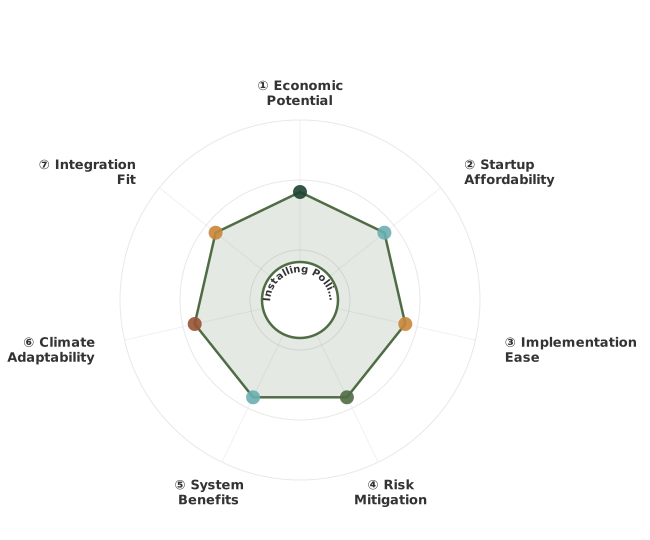
How These Traits Are Calculated
Trait dimensions are ordered clockwise starting from the top of the chart (12 o'clock position):
1. Economic Potential
Financial returns, annual value, and break-even timeline
WHAT: Evaluates financial viability by combining net annual value ($/ha from savings, income, and amortized harvests) with break-even timeline showing when practices pay for themselves.
WHY: Farmers need clear ROI understanding before committing resources. Fast payback (≤3 years) with strong returns (≥$300/ha) enables confident adoption, while long timelines (>10 years) restrict adoption to well-funded operations willing to wait for returns.
HOW: Calculated from net annual value in $/ha and break-even years. Exceptional (≥2.6): fast ROI ≤3 years + high value ≥$300/ha. Typical (1.8-2.5): moderate returns or longer timelines. Limited (<1.8): marginal economics or very long payback >10 years.
2. Startup Affordability
Initial investment costs and financial barrier to entry
WHAT: Measures financial barrier to entry through startup costs for equipment, infrastructure, consulting, and materials. Inverted scoring: lower costs = higher scores = more accessible adoption.
WHY: Affordability determines who can adopt. Low-cost practices (<$250/ha) enable widespread adoption across diverse scales, while high costs (>$2,500/ha) limit adoption to well-capitalized operations, creating barriers that slow regenerative transition.
HOW: Calculated from initial investment parsed from practice content. Inverted scoring: Exceptional (≥2.6): minimal investment <$250/ha. Typical (1.8-2.5): moderate costs $250-2,500/ha. Limited (<1.8): high barrier >$2,500/ha.
3. Implementation Ease
Learning curve and specialized knowledge required
WHAT: Measures how much learning, planning, and specialized knowledge a practice requires. Simpler practices with fewer steps score higher, while complex practices requiring extensive training or specialized resources score lower.
WHY: Complex practices create adoption barriers even when economically viable. Straightforward practices enable faster adoption and broader participation, while those requiring extensive training, timing precision, or specialized equipment limit who can succeed.
HOW: Evaluated by measuring documentation length and identifying complexity markers like location-specific requirements, seasonal timing windows, specialized skills, and dedicated equipment needs. Exceptional (≥2.6): straightforward practices with minimal prerequisites. Typical (1.8-2.5): moderate learning curve with some specialized needs. Limited (<1.8): steep learning curve requiring significant training or resources.
4. Risk Mitigation
Identified financial and ecological risk assessment
WHAT: Evaluates documented risks across financial (investment loss, market volatility) and ecological (crop failure, pest outbreaks) domains. Inverted scoring: fewer risks = higher scores.
WHY: Understanding risk exposure helps farmers make informed decisions. Low-risk practices allow confident implementation, while high-risk practices require careful planning and contingency resources. Risk transparency prevents costly failures.
HOW: Calculated from identified risks in practice content. Inverted scoring: Exceptional (≥2.6): ≤2 risks with manageable severity. Typical (1.8-2.5): 3-5 moderate risks. Limited (<1.8): 6+ risks or severe exposure.
5. System Benefits
How many ways the practice improves your land simultaneously
WHAT: Measures how many aspects of land health improve at once—carbon storage, soil quality, erosion control, water absorption, and biodiversity. Practices that improve multiple areas simultaneously create compounding benefits where each improvement reinforces the others.
WHY: The best practices solve multiple problems at once. For example, addressing erosion simultaneously builds carbon and improves water infiltration, creating a resilient system with positive feedback loops. Single-benefit approaches miss these compound transformation opportunities.
HOW: Evaluated across five key outcomes: carbon sequestration, soil organic matter increase, erosion reduction, water infiltration improvement, and biodiversity enhancement. Exceptional (≥2.6): high carbon storage (>8 t/ha/yr), improvements across 4-5 areas, transformative outcomes. Typical (1.8-2.5): moderate carbon (3-8 t/ha/yr), improvements across 2-3 areas. Limited (<1.8): modest impact (<3 t/ha/yr), single-area focus only.
6. Climate Adaptability
Geographic applicability across Köppen climate zones
WHAT: Evaluates geographic applicability by assessing how many Köppen climate zones successfully support a practice and what adaptation requirements are needed. Measures breadth of climates where farmers can implement with minimal to moderate modifications.
WHY: Universal practices working across diverse climates enable more farmers to adopt regenerative approaches. Practices limited to single climate types (only Mediterranean, only tropical) restrict adoption and slow global transition. Adaptability determines whether a practice serves niche regions or offers broad transformation.
HOW: LLM evaluation of regional success stories, Köppen zone coverage, and adaptation needs. Exceptional (≥2.6): 5+ zones or 4+ climate types, 3+ continents, minimal adaptation. Typical (1.8-2.5): 3-4 zones or 2-3 types, 2 continents, moderate adaptation. Limited (<1.8): 1-2 zones, single region, significant adaptation or highly specialized.
7. Integration Fit
How well this practice combines with others you're doing
WHAT: Measures how well a practice combines with other regenerative practices you might be doing. Some practices work as building blocks that make many other practices easier or more effective, while others work best on their own.
WHY: Practices that combine well with many others create more value on your farm. For example, cover cropping enables no-till, improves grazing, supports crop diversity, and helps water management—making all of them work better together. This helps you build a coherent system rather than juggling disconnected practices.
HOW: Evaluated by identifying which practices combine well and how strong those combinations are. 'Ideally Suited' means strong combinations where practices reinforce each other (practice A makes B easier, while B makes A more effective). 'Adequate' means complementary benefits that work well together. Exceptional (≥2.6): combines well with 6+ practices, serves as a building block. Typical (1.8-2.5): combines with 3-5 practices. Limited (<1.8): 1-2 practices or works best alone.
Going Deeper
1
WHY - The Benefits
Establishing pollinator strips is a powerful regenerative practice that enhances ecological services and brings tangible economic and resilience benefits to farms and land management operations. By dedicating space to flowering plants, a farm invests in the natural...
Establishing pollinator strips is a powerful regenerative practice that enhances ecological services and brings tangible economic and resilience benefits to farms and land management operations. By dedicating space to flowering plants, a farm invests in the natural...
WHY - The Benefits
Establishing pollinator strips is a powerful regenerative practice that enhances ecological services and brings tangible economic and resilience benefits to farms and land management operations. By dedicating space to flowering plants, a farm invests in the natural...
Establishing pollinator strips is a powerful regenerative practice that enhances ecological services and brings tangible economic and resilience benefits to farms and land management operations. By dedicating space to flowering plants, a farm invests in the natural...
Soil Health Benefits
While pollinator strips are primarily focused on above-ground biodiversity, they contribute indirectly to soil health by keeping land covered with living plants. The diverse root systems of flowering plants—ranging from shallow annuals to deeper-rooted perennials—help to stabilize soil, improve its structure, and contribute to soil organic matter over time. Areas dedicated to pollinator strips are typically not tilled or heavily trafficked, thus minimizing disturbance. The ground cover provided by these plants also helps to retain moisture and reduce erosion from wind and rain, protecting the topsoil.
Economic Benefits
The most direct economic benefit of pollinator strips is improved crop yields and quality through enhanced pollination. For crops reliant on insect pollination (e.g., fruits, nuts, oilseeds, some vegetables), higher pollinator activity can lead to increased fruit set, larger fruit size, and improved seed production. Yield increases typically range from 10-25%, with increases up to 30% observed in highly pollinator-dependent crops like almonds and blueberries. This can translate into significant revenue increases, potentially $100-500 per hectare per year depending on the crop and local market prices.
Beyond direct yield boosts, pollinator strips can lead to reduced input costs. A healthier and more diverse population of beneficial insects, including predators and parasitoids supported by pollinator-friendly habitat, can help manage pest populations naturally. This can reduce the reliance on costly chemical pesticides, potentially saving 15-30% on annual pest management expenses. Furthermore, farms adopting pollinator-friendly practices can enhance their marketability through certifications and consumer demand for sustainably produced goods, opening new market channels.
For beekeepers, pollinator strips can provide high-quality forage, improving honey production and quality, and supporting the health of their hives. This can create direct revenue streams from honey sales or pollination services.
Water Cycle Benefits
Pollinator strips, by maintaining living plant cover year-round in many regions, contribute to a healthier water cycle. Plant roots improve water infiltration by creating pore spaces in the soil, reducing surface runoff and increasing groundwater recharge. The organic matter generated by plant residues also enhances the soil's water-holding capacity. This is particularly beneficial in areas prone to drought or heavy rainfall, as it helps to regulate water availability and reduce erosion.
Carbon Sequestration Benefits
The presence of living plants, especially perennials often used in pollinator strips, means ongoing photosynthesis. Carbon dioxide is captured from the atmosphere and converted into plant biomass, with a significant portion of this carbon ultimately entering the soil through root exudates and decomposing organic matter. While not as intensive as practices like cover cropping or silvopasture, well-established pollinator strips contribute to the overall carbon sequestration goals of a regenerative landscape. The reduced need for chemical inputs also indirectly lowers the carbon footprint associated with their manufacturing and application.
Biodiversity Benefits
Pollinator strips are a direct intervention to increase biodiversity, specifically supporting pollinator species which are critical for ecosystem function. They provide much-needed habitat and food sources at a time when natural landscapes are often fragmented and degraded. This influx of pollinators can benefit not only the farm's crops but also surrounding wild plant communities, thereby enhancing overall ecosystem health, resilience, and functionality. The diversity of flowering plants also attracts a wider range of beneficial insects, contributing to a more balanced and robust farm ecosystem.
Regenerative Systems Fit
Pollinator strips directly support Maximizing Crop Diversity (Principle 2) by introducing a wide variety of flowering plant species that are not typically found in monoculture cropping systems. This above-ground diversity can contribute to increased soil microbial diversity. They also inherently support Keeping Soil Covered (Principle 3) with living plants, preventing bare ground and erosion in the areas they occupy. By flowering for extended periods, they maintain living roots, indirectly supporting Maintaining Living Roots (Principle 4) and photosynthesis.
While not directly manipulating soil or integrating livestock, healthy pollinator populations are essential for the reproduction of many crops and cover crops, thus indirectly bolstering the effectiveness of other regenerative practices. They contribute to a more resilient and self-sustaining farm ecosystem, reducing the need for external inputs like synthetic fertilizers and pesticides, which aligns with the broader goal of minimizing soil disturbance and chemical disruption (Principle 1).
For farms transitioning to regenerative agriculture, pollinator strips are a relatively easy-to-implement practice that provides immediate visible benefits and ecological contributions without requiring drastic changes to core cropping or livestock management. They act as a foundational stepping stone to building a more complex, biodiverse, and resilient farming system.
Sources behind this view
Videos & Podcasts
-
NRCS programs like EQIP (with practices like Conservation Cover 327, Beetle Banks, Wildlife Habitat Planting 420) and CSP offer financial and technical assistance for establishing pollinator habitat o
-
Implement farmscaping with 1-5% of land dedicated to beneficial insect attractants like buckwheat, flowers, and plants with extrafloral nectaries. Provide diverse nectar and pollen sources to support

-
Evan Abramson explains how to establish native pollinator habitat on solar arrays in Massachusetts, detailing the ecological necessity, the role of native bees, and the state's incentive program requi
-
Support native pollinators by providing food (diverse blooms from spring to fall, including dandelions and clovers), cover (non-tilled ground, standing stems, undisturbed areas), and water (shallow di
Community
-
Farmers, governments, and the public must act for pollinator conservation. Farmers should plant flowers, manage habitats, and provide nesting sites. Governments should implement policies like raising
Read more (opens in new window) ucanr.edu -
Increase wildlife diversity by planting native plants, medicinal herbs, wildflowers, and specific species like trumpet vines for pollinators. Create varied habitats with bat houses, unmanicured fence
Read more (opens in new window) permies.com -
Offers practical methods for attracting pollinators: build insect houses, plant flowering green manures (like phacelia), incorporate diverse native plants, wild plants, and companion flowers (calendul
Read more (opens in new window) permies.com -
Create a pollinator garden by providing continuous bloom with diverse plants, avoiding pesticides, and offering habitat like water sources and nesting sites. Fall maintenance includes weeding, pruning
Read more (opens in new window) ucanr.edu
Research
-
Crop diversification for pollinator conservation (opens in new window)
This study found: Planting diverse crops can help pollinators by providing more food and varied habitats, especially in intensive farming areas. While promising, not all pollinators benefit equally, and more landscape-
-
Ecological intensification to mitigate impacts of conventional intensive land use on pollinators and pollination. (opens in new window)
This study found: Nature-friendly farming (ecological intensification) using diverse crops, rotations, and fewer chemicals can help reverse pollinator decline and support sustainable food production.
-
Wild pollinators and honeybees respond differently to landscape‐scale organic farming and increase sunflower yields (opens in new window)
This study found: Landscape organic farming and natural habitats boost pollinators, while diverse weeds in fields increase native bee populations. Pollination increased sunflower yields by 25%, with marginally higher s
-
Maximizing arthropod‐mediated ecosystem services in agricultural landscapes: the role of native plants (opens in new window)
This study found: Native plants can boost beneficial insects on farms, providing pollination and pest control services worth billions. They offer crucial food sources and habitat, especially in moderately complex lands
From the Web
-
Promote pollinator biodiversity through organic farming, semi-natural habitats, species-rich flowering strips, diverse crop rotations, and cover crops. Avoid extensive tillage to protect ground-nestin
-
Select diverse native plants with overlapping bloom times for pollinators, provide varied nesting habitats (underground, stems, cavities), and manage land cautiously (infrequent burns, reduced mowing)
-
Habitat restoration for pollinators requires diverse native plant selection for food and varied nesting sites (underground, stems, cavities). Cautious management of burning, mowing, and pesticides, al
-
Pollinators, especially honeybees, are crucial for regenerative agriculture, enhancing ecosystem services and contributing significantly to crop yields. Regenerative practices naturally support bee po
2
WHERE - Regional Considerations
Pollinator strips are highly adaptable and beneficial across a wide range of climates and regions. The key to success lies in selecting plant species native to or well-adapted to the local environment, ensuring a continuous bloom period suited to regional pollinator...
Pollinator strips are highly adaptable and beneficial across a wide range of climates and regions. The key to success lies in selecting plant species native to or well-adapted to the local environment, ensuring a continuous bloom period suited to regional pollinator...
WHERE - Regional Considerations
Pollinator strips are highly adaptable and beneficial across a wide range of climates and regions. The key to success lies in selecting plant species native to or well-adapted to the local environment, ensuring a continuous bloom period suited to regional pollinator...
Pollinator strips are highly adaptable and beneficial across a wide range of climates and regions. The key to success lies in selecting plant species native to or well-adapted to the local environment, ensuring a continuous bloom period suited to regional pollinator...
Click Here to Look up your Region if you don't already know it
Humid Temperate Regions
Representative Locations: Southeastern United States, northern Europe (UK, Germany, Poland), eastern China, Japan, New Zealand
Climate Context: Warm to hot summers and cool to cold winters with moderate to high annual precipitation (75-150 cm or 30-60 inches) distributed relatively evenly. USDA Zones 6-8, Köppen Cfb/Cfa.
Planting Guidance: These regions support a wide variety of flowering plants with long bloom times. Consider mixes including coneflowers (Echinacea spp.), bee balm (Monarda spp.), asters (Symphyotrichum spp.), goldenrod (Solidago spp.), clover (Trifolium spp.), alfalfa (Medicago sativa), and sunflowers (Helianthus annuus). For Europe, options like common knapweed (Centaurea scabiosa), viper's bugloss (Echium vulgare), and various native thistles are excellent. The diversity of native bees and managed honeybees provides ample pollination services for crops and wildflowers. Fall planting of hardy species, or spring planting after the last frost, are ideal.
Mediterranean Regions
Representative Locations: California, Mediterranean basin (Spain, Italy, Greece), central Chile, southwestern Australia, Western Cape South Africa
Climate Context: Hot, dry summers and mild, wet winters. Annual precipitation 40-90 cm (15-35 inches), highly seasonal. USDA Zones 8-10, Köppen Csa/Csb.
Planting Guidance: Drought tolerance is key. Focus on plants adapted to dry summers and wet winters. Excellent choices include lavender (Lavandula spp.), rosemary (Rosmarinus officinalis), thyme (Thymus spp.), sage (Salvia spp.), California poppy (Eschscholzia californica), globe mallow (Sphaeralcea ambigua), and various native wildflowers like lupines and California phacelia. Alfalfa and clover can also perform well, particularly in areas with irrigation during drier periods or in lower rainfall zones with specific soil types. Early to mid-fall planting is typically best to allow plants to establish roots using winter rains before the dry summer.
Arid/Semi-Arid Regions
Representative Locations: Western USA, North Africa, Central Asia, Interior Australia
Climate Context: Low annual precipitation (<40 cm or 15 inches), high temperatures, short and often unpredictable growing season. USDA Zones 7-9, Köppen BSh/BSk.
Planting Guidance: Water conservation is paramount. Select drought-tolerant, long-blooming native species. Examples include various desert sages (Salvia spp.), brittlebush (Encelia farinosa), buckwheat (Eriogonum spp.), penstemon (Penstemon spp.), and various native grasses with attractive seed heads that also support seed-eating birds. In Australia, native wildflowers like everlastings (Xerochrysum spp.) and various saltbushes (Atriplex spp.) are adapted. Alfalfa can be grown with irrigation or in areas with reliable subterranean water. Planting should occur during the brief wet season or with supplemental watering for establishment.
Cold Continental Regions
Representative Locations: Northern USA and Canada, Northern Europe, Northern Asia
Climate Context: Very short growing seasons, extreme summer heat, severe winter cold. USDA Zones 3-5, Köppen Dfa/Dfb.
Planting Guidance: Focus on hardy perennials and annuals that bloom prolifically during the short growing season and can withstand temperature fluctuations. Species like bee balm (Monarda spp.), goldenrod (Solidago spp.), asters (Symphyotrichum spp.), sunflowers (Helianthus annuus), cosmos (Cosmos bipinnatus), zinnias (Zinnia elegans), and clover (Trifolium spp.) are good choices. Native wildflowers such as oxeye daisy (Leucanthemum vulgare) or various native aster species can thrive. Planting in late spring after the last frost is recommended. Hardy perennial mixes will require a longer establishment period but provide sustained benefits.
Subtropical Regions
Representative Locations: Southeastern USA, Southern China, Southern Brazil, Eastern Australia
Climate Context: Hot, humid summers and mild winters with generally ample rainfall. USDA Zones 9-11, Köppen Cfa/Cwa.
Planting Guidance: Many species thrive here year-round or have extended bloom periods. Consider a mix of native wildflowers, herbs, and some well-behaved exotics. Options include milkweed (Asclepias spp.) for monarchs, coreopsis (Coreopsis spp.), salvia (Salvia spp.), lantana (Lantana spp.), cosmos, zinnias, sunflowers, and various mint family plants (Lamiaceae). Alfalfa, clover, and buckwheat can be used as rotational cover crops or components of permanent strips. Double-cropping with different flower mixes can ensure year-round blooms.
Tropical Regions
Representative Locations: Central America, Southeast Asia, East Africa, Northern Australia, Northern South America
Climate Context: High temperatures year-round, with distinct wet and dry seasons or consistent high rainfall. Köppen Af/Am/Aw.
Planting Guidance: Focus on plants that tolerate high heat and humidity, and consider drought tolerance for dry seasons. Attractive options include various species of Salvia, Lantana, Cosmos, sunflowers, and local native wildflowers adapted to tropical ecosystems. Many tropical leguminous plants also produce attractive flowers and fix nitrogen. For areas with pronounced dry seasons, select species that can survive or re-bloom with intermittent rainfall or irrigation. Year-round bloom is achievable with careful species selection and sequential planting.
3
HOW - Implementation Process
HOW - Implementation Process
Phase 1: Site Selection and Preparation
Site Selection:
- Prioritize areas with at least 6–8 hours of direct sunlight and decent drainage.
- Field edges, buffer zones around water bodies, or unused corners are ideal — avoid areas prone to pesticide drift.
- Aim for strips at least 3–5 meters (10–16 feet) wide for meaningful habitat.
Site Preparation:
- Smothering: Cardboard or landscape fabric for 6–12 months kills existing vegetation without tillage.
- Tarping: Black silage tarps solarize and kill vegetation in 6–8 weeks during warm weather.
- Light tillage: A single pass with a light disk can prepare a seedbed if competition is low. Follow immediately with seeding.
- For weedy ground: Remove persistent weeds first. Aim to transition away from herbicide after establishment.
Phase 2: Species Selection and Planting
Species Selection:
- Prioritize native wildflowers adapted to your climate, soil, and rainfall. Consult local extension services or native plant societies.
- Select plants that bloom in succession from early spring to late fall — aim for at least three distinct bloom periods.
- Mix plant types: tall, medium, short; different flower shapes and colors; annuals and perennials. This serves a wider range of pollinators.
- Include species for target pollinators (e.g., milkweed for monarchs, sunflowers for bees). Avoid invasive species.
Planting:
- Seed timing: Fall planting allows natural stratification and stronger spring establishment. Spring planting works once frost danger passes.
- Method: Broadcast seeds evenly (mix with sand for small seeds), lightly rake or roll for seed-to-soil contact. Water gently after seeding.
- Plugs: More costly but faster establishment on difficult sites. Space by mature plant size.
- Drill seeding: Use a native seed drill for larger areas to ensure proper depth.
Phase 3: Establishment and Ongoing Management
Year 1:
- Weed control is the top priority. Learn to identify desirable seedlings. Hand-pull weeds or mow after pollinators finish foraging for the day.
- Provide supplemental water during prolonged dry spells.
- Avoid mowing during bloom season. An early spring or late fall mow manages woody growth without disrupting nesting insects.
Year 2 onwards:
- Once established, most strips need minimal management — a light annual mow outside bloom season to prevent woody takeover.
- Monitor plant and pollinator diversity. Adjust species in subsequent years if needed.
- Overseed key species every 5–10 years to maintain diversity and vigor.
Sources behind this view
Videos & Podcasts
-
NRCS programs like EQIP (with practices like Conservation Cover 327, Beetle Banks, Wildlife Habitat Planting 420) and CSP offer financial and technical assistance for establishing pollinator habitat o
-
Evan Abramson explains how to establish native pollinator habitat on solar arrays in Massachusetts, detailing the ecological necessity, the role of native bees, and the state's incentive program requi
-
Support native pollinators by providing food (diverse blooms from spring to fall, including dandelions and clovers), cover (non-tilled ground, standing stems, undisturbed areas), and water (shallow di
-
Support bees by becoming a beekeeper, buying local honey, and creating pollinator habitat with native plants. Avoid pesticides in backyards and provide native bee houses. Organic varroa mite control o

Community
-
Create a pollinator garden by providing continuous bloom with diverse plants, avoiding pesticides, and offering habitat like water sources and nesting sites. Fall maintenance includes weeding, pruning
Read more (opens in new window) ucanr.edu -
Offers practical methods for attracting pollinators: build insect houses, plant flowering green manures (like phacelia), incorporate diverse native plants, wild plants, and companion flowers (calendul
Read more (opens in new window) permies.com -
Support native bees by planting diverse native flowers year-round, avoiding pesticides (especially neonicotinoids), providing water, leaving bare soil for nesting, and creating habitat. Habitat loss i
Read more (opens in new window) ucanr.edu -
Increase wildlife diversity by planting native plants, medicinal herbs, wildflowers, and specific species like trumpet vines for pollinators. Create varied habitats with bat houses, unmanicured fence
Read more (opens in new window) permies.com
Research
-
Crop diversification for pollinator conservation (opens in new window)
This study found: Planting diverse crops can help pollinators by providing more food and varied habitats, especially in intensive farming areas. While promising, not all pollinators benefit equally, and more landscape-
-
Wild pollinators and honeybees respond differently to landscape‐scale organic farming and increase sunflower yields (opens in new window)
This study found: Landscape organic farming and natural habitats boost pollinators, while diverse weeds in fields increase native bee populations. Pollination increased sunflower yields by 25%, with marginally higher s
-
B.Y.O. Bees: Managing wild bee biodiversity in urban greenspaces. (opens in new window)
This study found: Actively managing urban green spaces by planting wildflowers and creating habitat significantly boosts wild bee numbers and diversity in Appleton, WI, more than just increasing space size.
-
On-farm habitat restoration counters biotic homogenization in intensively managed agriculture. (opens in new window)
This study found: Native plant hedgerows on California farms increased pollinator diversity by 14% over three years, helping to restore natural variety lost in intensive agriculture.
From the Web
-
For pollinator habitat, select diverse native plants with overlapping bloom times, provide varied nesting sites (underground, stems, cavities), manage land carefully (reduce mowing/burning), and use c
-
Select diverse native plants with overlapping bloom times for food and provide varied nesting habitats (underground, hollow stems, cavities). Manage land carefully with infrequent burns and reduced mo
-
Promote pollinator biodiversity through organic farming, semi-natural habitats, species-rich flowering strips, diverse crop rotations, and cover crops. Avoid extensive tillage to protect ground-nestin
-
Farmers can offset pollinator habitat costs by integrating projects with agritourism, CSA involvement, and farm-to-school programs. Key resources for planting native habitats include USFWS, NCAT, Nati
4
Know the Debate
Pollinator strips offer significant benefits across diverse environments, but their effectiveness and timeline for results depend on regional chara...
Know the Debate
Pollinator strips offer significant benefits across diverse environments, but their effectiveness and timeline for results depend on regional chara...
Pollinator strips offer significant benefits across diverse environments, but their effectiveness and timeline for results depend on regional characteristics and management. In humid temperate and subtropical regions with ample rainfall, establishment is often quicker and plant choices are abundant, promising visible ecological impact within a year. Semi-arid and arid regions require drought-tolerant species and careful water management for establishment. Cold continental climates necessitate hardy, short-season bloomers. The scale of implementation, from small garden plots to large farm field borders, dictates initial investment, ranging from minimal to several thousand dollars per hectare, with ongoing maintenance usually low once established.
How much do pollinator strips increase crop yields?
Significant yield gains (10-25%)
Academic research and some farmer reports indicate substantial yield increases, particularly for crops heavily reliant on insect pollination like fruits, nuts, and oilseeds. These gains stem from improved fruit set, seed production, and overall crop quality.
Sources behind this view
Sources behind this view
Videos & Podcasts
-
Sustainable practices like planting wildflowers and preserving natural land boost pollinator numbers, reducing pesticide needs and ensuring future food diversity; dedicating cropland to flowering plants offers economic benefits.
Research
-
Insect pollinators and sustainable agriculture (opens in new window)
This study found: Farming relies heavily on bees and other insects to pollinate crops, which is essential for producing fruits and seeds. This is often more valuable than the honey and wax produced by honeybees. While honeybees are important, they are facing serious threats from mites and aggressive bee types. This means we need to pay more attention to other pollinators like bumblebees, orchard bees, and squash bees, which are not affected by these problems. Wild, native pollinators are also vital but are declining due to pesticide exposure and the loss of their natural homes and food sources. To ensure we have enough pollinators for our farms, we need to better understand their needs, provide them with safe places to live and nest, and make sure they have plenty of flowers to eat from throughout the year. Changes in farming practices and public policies can help protect and increase pollinator populations, ultimately boosting farm yields.
From the Web
-
Select diverse native plants with overlapping bloom times for pollinators, provide varied nesting habitats (underground, stems, cavities), and manage land cautiously (infrequent burns, reduced mowing) for long-term protection via easements.
Variable or marginal gains (0-10%)
Field observations show that actual yield increases vary greatly. Some farmers observe modest improvements, especially for crops already well-pollinated by wind or native solitary bees. Success depends on crop type, prevailing conditions, and the diversity of available native pollinators.
Sources behind this view
Sources behind this view
Videos & Podcasts
-
NRCS programs like EQIP (with practices like Conservation Cover 327, Beetle Banks, Wildlife Habitat Planting 420) and CSP offer financial and technical assistance for establishing pollinator habitat on organic farms. Cover crops, field borders, and tree/shrub plantings are also valuable. Organic site prep methods like solarization and smother cropping are detailed, emphasizing pesticide drift protection and utilizing existing farm features.
-
Create pollinator strips to provide habitat and food for bees, avoiding synthetic pesticides. This supports ecosystem health, improves pollination, and contributes to longer-term soil health and nutrient cycling.
Research
-
Comparative Study of Insect Pollinator Decline: Investigating Pesticide Exposure, Floral Resource Availability, and Biodiversity Loss in Agricultural Versus Natural Landscapes (opens in new window)
This study found: This study compares why insect pollinators like bees and butterflies are disappearing. In farms, the heavy use of synthetic pesticides (like neonicotinoids and organophosphates) kills pollinators and harms their ability to reproduce and find food. Farming practices like planting only one crop (monoculture) also mean less variety and fewer flowers available for pollinators throughout the year, making them work harder and struggle to get enough to eat. Natural areas, on the other hand, have lots of different flowers and are free from these harmful chemicals, allowing pollinators to thrive. The research shows that farms are causing a big loss in pollinator diversity, which is bad for our food supply and ecosystems. Natural areas are vital for protecting pollinators, and we need to adopt farming methods that support them.
Making Sense of the Differences
Yield increases from pollinator strips are not uniform; they depend heavily on the specific crop's reliance on animal pollination. Crops like almonds, apples, and certain vegetables can see 10-25% gains. For wind-pollinated or self-pollinating crops, benefits may be marginal or indirect, primarily from overall ecosystem health. Farmer success hinges on selecting appropriate plant mixes and managing adjacent landscapes to support a diverse and abundant pollinator population.
How long do pollinator strips take to establish and become effective?
Effective within 1-2 years
Practical farmer experience and some institute guides suggest that visible ecological benefits and improved pollinator activity can be observed within the first year of establishment, with full bloom diversity and population levels developing over 1-2 years.
Sources behind this view
Sources behind this view
Videos & Podcasts
-
Create pollinator strips to provide habitat and food for bees, avoiding synthetic pesticides. This supports ecosystem health, improves pollination, and contributes to longer-term soil health and nutrient cycling.
-
Attract bees by planting a succession of single-petal flowers rich in pollen and nectar in sunny, sheltered spots. Provide year-round food, allow wild areas for habitat, and install bee hotels made from natural materials.
From the Web
-
Enhance pollinator habitat by maintaining uncultivated margins with native plants, creating bee pastures, managing in-field wildflowers, and avoiding insecticides, tillage, and herbicides.
2-3+ years for full effectiveness
Academic and a broader range of field/institute guides indicate that achieving peak effectiveness, including supporting a rich diversity of native bees and their nesting requirements, may take 2-3 years or longer for plant communities to fully mature.
Sources behind this view
Sources behind this view
Videos & Podcasts
-
A test garden demonstrated immediate ecological impact from pollinator-friendly plants. Challenges include managing invasive species and avoiding pesticides, with solutions like organic pest control and companion planting.

-
Assessing pollinator habitat involves recognizing diverse farm features (riparian areas, field borders, cover crops) and using tools like the Xerces Pollinator Habitat Assessment Form and Monarch WHEG to identify deficiencies in foraging and nesting resources for strategic improvement.
Research
-
Hedgerow restoration promotes pollinator populations and exports native bees to adjacent fields (opens in new window)
This study found: A study in California's Central Valley found that restoring field edges with native plants created thriving habitats for wild bees and other beneficial insects. These restored areas had more flowers and supported significantly higher numbers and diversity of native bees and hoverflies compared to neglected field edges. Importantly, these native plant borders didn't just attract insects to the edge; they actually sent more native bees out into the surrounding farm fields. This research indicates that creating these natural borders within farms is a key strategy for boosting pollinator populations and improving pollination for crops.
From the Web
-
Select diverse native plants with varied bloom times for food and provide varied nesting habitats (underground, hollow stems, cavities) for pollinators. Manage landscapes cautiously with reduced mowing/burning and restrict spraying.
Making Sense of the Differences
While some pollinator activity can be observed within the first year, achieving full ecological impact and robust native pollinator populations typically requires 1-3 years. This depends on the chosen plant species' establishment rates, regional climate influencing growth, and the success in providing both continuous blooming for food and diverse nesting sites. Practices like early intervention with transplants can accelerate visible results.
5
HOW MUCH - Costs & Investment
Note: Costs shown in USD; multiply by local labor and material cost indices for your region. Labor costs vary significantly internationally.
Note: Costs shown in USD; multiply by local labor and material cost indices for your region. Labor costs vary significantly internationally.
HOW MUCH - Costs & Investment
Note: Costs shown in USD; multiply by local labor and material cost indices for your region. Labor costs vary significantly internationally.
Note: Costs shown in USD; multiply by local labor and material cost indices for your region. Labor costs vary significantly internationally.
Note: All costs are based on recent US economic data (2024–2026) and may vary substantially by region based on local labor rates, material costs, and regulatory requirements.
Site Preparation and Baseline Management
Site preparation is the most critical and potentially costly phase of pollinator strip implementation, accounting for approximately 40–60% of total establishment costs. Small-scale operations (under 50 acres (20 ha)) often rely on manual labor or light-duty equipment for sod clearing and soil incorporation, leading to costs of $208–$625 per acre ($514–$1,544/ha). Mid-size operations (50–500 acres (20–202 ha)) typically utilize mechanical methods, such as primary and secondary tillage or scheduled mowing intervals to suppress weed germination before seeding, costing $104–$365 per acre ($257–$902/ha). Large-scale operations (500+ acres) leverage existing heavy machinery, such as large-scale discing or customized herbicide burn-down rigs, which benefit from economies of scale, trailing at $52–$208 per acre ($128–$514/ha). Farmers must account for the high cost of failure; if early-stage weed pressure is ignored, remedial labor and selective mowing can add $104–$261 per acre ($257–$645/ha) to manage the site during the first two seasons.
Plant Materials: Seed Mixes and Transplants
The selection of plant materials fluctuates based on biodiversity goals and site regionality. Small-scale sites prioritize visual impact and pollination windows, often requiring high-density native plugs alongside custom seed mixes, costing $313–$938 per acre ($773–$2,318/ha). Mid-size operations transition to higher-volume procurement of regionally adapted native bulk seed mixes, costing $156–$521 per acre ($385–$1,287/ha), minimizing reliance on expensive transplant labor. Large-scale operations maximize financial efficiency by using specialized native seed mixes engineered for precision drills, which cost $83–$313 per acre ($205–$773/ha) when ordered in lots exceeding 50 pounds (23 kg). In instances where specific endangered or rare species habitat is mandated for conservation easements, boutique or niche local-ecotype seed mixes can drive costs up by 25–40% above these baseline estimates for all size categories.
Supplemental Watering and Irrigation Infrastructure
For sites in arid regions or during establishment years in semi-arid zones, supplemental irrigation is the primary variable for seedling survival. Small-scale operators typically deploy drip irrigation or manual tanker systems, requiring an initial outlay of $156–$417 per acre ($385–$1,030/ha), inclusive of supply lines, filters, and labor for layout. Mid-size farms often favor temporary, portable sprinkler setups that utilize existing farm well infrastructure, costing $83–$261 per acre ($205–$645/ha). Large-scale operations generally avoid active irrigation infrastructure unless integrated into existing center-pivot strip configurations, where adding secondary drip lines or specialized nozzle heads costs $42–$156 per acre ($104–$385/ha). Many industrial-scale producers choose to bypass irrigation entirely, relying on precise seasonal timing with rainfall, while accepting a 15–20% higher risk of year-one plant mortality that may necessitate re-seeding costs.
Most Spend: The middle 60% of total establishment costs for most agricultural operations falls between $350 and $750 per acre ($865–$1,853/ha). This range generally covers the procurement of standard regional seed mixes and at least one season of mechanical weed maintenance without requiring heavy investment in complex irrigation or imported high-density plant materials.
Why the Range?: The primary drivers for cost variance are the legacy weed seed bank of the site and the choice of seeding methodology. Sites with high pressure from invasive species like Canada thistle or bindweed require significantly higher initial investment in site prep to prevent total crop failure. Conversely, operations with favorable soil conditions and existing mechanical capability exhibit lower per-acre costs through internalized labor and efficient land prep cycles.
Sources behind this view
Videos & Podcasts
-
Utilize annual pollinator mixes for field borders and consider BMR corn or sun hemp to manage deer. Interseeding cover crops into corn (V3-V4 stage) requires proper technique and timing; wide row corn

-
Guidance on creating budget sheets for perennial crop establishment, focusing on accurate calculation of plants per acre, establishment costs, and the true cost of labor. It covers pre-production and
Community
-
Establishes native pollinator habitat via seedings on small farms, highlighting benefits like cost-effectiveness and year-round insect support, but cautioning about a 3-4 year establishment period, cr
Read more (p. 1) (opens PDF, p. 1) efotg.sc.egov.usda.gov
Research
-
Financial Analysis of Converting Rural Lawns to Pollinator Habitat in the Corn Belt (opens in new window)
This study found: Converting rural lawns to pollinator habitat in the Corn Belt saves $54-$167/acre/year compared to lawn maintenance, offering financial and ecological benefits for pollinators.
-
Forbs included in conservation seed mixes exhibit variable blooming detection rates and cost‐effectiveness: implications for pollinator habitat design (opens in new window)
This study found: Study on USDA conservation lands identified 16 cost-effective forbs for pollinator habitat. More diverse seed mixes increased planted wildflower blooming but not bee numbers.
6
REWARDS AND RISKS - Economics & Risk Factors
REWARDS AND RISKS - Economics & Risk Factors
The economics of pollinator strips follow a "J-curve" trajectory, where the high upfront investment is reconciled by delayed but compounding agricultural yields. In a Best Case Scenario, the strips achieve ecosystem maturity by year 3. Agricultural research confirms that pollinator-dependent crops bordering these strips can see yield increases of 20–25%. This represents a revenue lift of $417–$729 per acre ($1,030–$1,801/ha) per year. When paired with a reduction in prophylactic pesticide spraying due to the presence of predatory beneficials (such as lacewings and parasitic wasps), total annual savings reach $104–$208. Following the establishment period, total financial benefits in this scenario range from $521–$938 per acre ($1,287–$2,318/ha) annually.
In the Typical Scenario, farms experience a 10–15% yield boost specifically at the field edges. Financial ROI is slower, typically reaching a break-even point by the end of year 4. Average net financial benefits, once the ecosystem stabilizes, range from $156–$313 per acre ($385–$773/ha) per year. This scenario requires strict management continuity; losing a strip to aggressive weed encroachment in year 2 can negate these gains, potentially shifting the operation into a $208–$521 loss per acre if the site must be ripped and re-planted.
In the Worst Case Scenario, failed establishment caused by subpar site prep or improper herbicide drift causes the total loss of the initial $417–$1,042 per acre ($1,030–$2,575/ha) investment within the first 18 months. This is often exacerbated by "weedy edge" liability, where the strip, instead of providing biodiversity, provides a reservoir for invasive species that spread into the main cash crop, increasing annual weed management overhead by $104–$156 per acre ($257–$385/ha).
Transition Period Risks: Implementing pollinator strips requires navigating a 2–3 year "stabilization gap." During this window, farmers may face a temporary 5–10% yield dip as the strips may host localized pests before apex predatory populations fully colonize the field. To mitigate this $52–$156 per-acre temporary loss, managers should prioritize planting strips in non-critical border zones for the first two years or utilize early-blooming native species that lure predatory insects into the field significantly before the primary crop reaches the flowering stage.
Market Factors and Risk Mitigation: Demand for "pollinator-friendly" verification labels has introduced a 5–10% price premium for harvested grain or produce in niche wholesale and direct-to-consumer markets. To hedge against the initial capital outlay, the majority of successful operations utilize USDA-NRCS cost-share programs, which can offset 50–75% of initial installation costs. By utilizing these federal programs, producers can cap their initial financial downside at approximately $104–$208 per acre ($257–$514/ha), significantly lowering the barrier to entry while allowing the ecological value to accrue.
Sources behind this view
Videos & Podcasts
-
NRCS programs like EQIP (with practices like Conservation Cover 327, Beetle Banks, Wildlife Habitat Planting 420) and CSP offer financial and technical assistance for establishing pollinator habitat o
-
Evan Abramson explains how to establish native pollinator habitat on solar arrays in Massachusetts, detailing the ecological necessity, the role of native bees, and the state's incentive program requi
-
Implement farmscaping with 1-5% of land dedicated to beneficial insect attractants like buckwheat, flowers, and plants with extrafloral nectaries. Provide diverse nectar and pollen sources to support
-
Support native pollinators by providing food (diverse blooms from spring to fall, including dandelions and clovers), cover (non-tilled ground, standing stems, undisturbed areas), and water (shallow di
Community
-
Farmers, governments, and the public must act for pollinator conservation. Farmers should plant flowers, manage habitats, and provide nesting sites. Governments should implement policies like raising
Read more (opens in new window) ucanr.edu -
NRCS Mississippi guidelines for establishing 1.0+ acre pollinator habitat with a minimum of 9 species (wildflowers, legumes, shrubs) blooming across three periods. Requires specific site preparation,
Read more (pp. 1-2) (opens PDF, pp. 1-2) efotg.sc.egov.usda.gov -
Create a pollinator garden by providing continuous bloom with diverse plants, avoiding pesticides, and offering habitat like water sources and nesting sites. Fall maintenance includes weeding, pruning
Read more (opens in new window) ucanr.edu -
Offers practical methods for attracting pollinators: build insect houses, plant flowering green manures (like phacelia), incorporate diverse native plants, wild plants, and companion flowers (calendul
Read more (opens in new window) permies.com
Research
-
Crop diversification for pollinator conservation (opens in new window)
This study found: Planting diverse crops can help pollinators by providing more food and varied habitats, especially in intensive farming areas. While promising, not all pollinators benefit equally, and more landscape-
-
Financial Analysis of Converting Rural Lawns to Pollinator Habitat in the Corn Belt (opens in new window)
This study found: Converting rural lawns to pollinator habitat in the Corn Belt saves $54-$167/acre/year compared to lawn maintenance, offering financial and ecological benefits for pollinators.
-
Wild pollinators and honeybees respond differently to landscape‐scale organic farming and increase sunflower yields (opens in new window)
This study found: Landscape organic farming and natural habitats boost pollinators, while diverse weeds in fields increase native bee populations. Pollination increased sunflower yields by 25%, with marginally higher s
-
Maximizing arthropod‐mediated ecosystem services in agricultural landscapes: the role of native plants (opens in new window)
This study found: Native plants can boost beneficial insects on farms, providing pollination and pest control services worth billions. They offer crucial food sources and habitat, especially in moderately complex lands
From the Web
-
Enhance pollinator habitat by maintaining uncultivated margins with native plants, creating bee pastures, managing in-field wildflowers, and avoiding insecticides, tillage, and herbicides.
-
Select diverse native plants with overlapping bloom times for pollinators, provide varied nesting habitats (underground, stems, cavities), and manage land cautiously (infrequent burns, reduced mowing)
-
Farmers in urban zones can create pollinator habitat by planting native wildflowers, grasses, trees, and shrubs along field edges or in marginal areas. Diversity is key, and PFI offers support for hab
-
Provides a list of key organizations (USFWS, NCAT, Pollinator Partnership, USDA NRCS, Cooperative Extension) offering free or low-cost guides for creating native pollinator habitats and gardens.
7
COMPATIBLE PRACTICES - Integration Opportunities
Pollinator strips are highly synergistic with a range of regenerative and conservation practices, enhancing their effectiveness and contributing to a more robust ecological system.
Pollinator strips are highly synergistic with a range of regenerative and conservation practices, enhancing their effectiveness and contributing to a more robust ecological system.
COMPATIBLE PRACTICES - Integration Opportunities
Pollinator strips are highly synergistic with a range of regenerative and conservation practices, enhancing their effectiveness and contributing to a more robust ecological system.
Pollinator strips are highly synergistic with a range of regenerative and conservation practices, enhancing their effectiveness and contributing to a more robust ecological system.
Cover Cropping
- Integration: Plant pollinator-friendly species within cover crop mixes to provide blooms outside of main crop seasons, or establish permanent pollinator strips adjacent to fields that use cover crops.
- Synergy: Cover crops keep soil covered and maintain living roots, while pollinator strips provide blooms for pollinators that may also be beneficial insects controlling pests in the cover crops.
Reduced / No-Till Farming
- Integration: Pollinator strips are often established on field edges or in permanent buffer zones, areas that are typically not tilled.
- Synergy: No-till farming preserves soil structure and biology, which benefits the surrounding ecosystem including pollinator habitats. Pollinators, in turn, contribute to crop reproduction in adjacent no-till fields.
Integrated Pest Management (IPM)
- Integration: Pollinator strips provide habitat for beneficial insects (predators, parasitoids) that can help control crop pests. They also support pollinators crucial for crop reproduction.
- Synergy: By supporting natural pest control mechanisms and enhancing pollination, pollinator strips reduce the need for synthetic pesticides, a core aspect of IPM and regenerative agriculture.
Agroforestry / Silvopasture
- Integration: Flowering plant species suitable for pollinator strips can be incorporated into silvopasture designs, especially along edges, in understories, or in designated "harvestable" areas.
- Synergy: Trees in silvopasture can offer shade and shelter for pollinators. The diverse plant communities enhance overall biodiversity, benefiting both trees, livestock, and pollinators.
Habitat Restoration / Hedgerows
- Integration: Pollinator strips can be integrated with or serve as a component of larger habitat restoration projects, such as planting native hedgerows or creating meadow-like areas.
- Synergy: These practices work in concert to create larger, more connected corridors of habitat for pollinators and other wildlife, increasing their resilience and effectiveness across the landscape.
Organic Farming
- Integration: Organic farming bans synthetic pesticides, making it naturally conducive to pollinator-friendly practices.
- Synergy: Pollinator strips are a natural fit for organic systems, providing essential ecosystem services that organic farmers rely on to maintain crop health and yield without chemical inputs.
Water Management (e.g., Keyline Design, Buffer Strips)
- Integration: Pollinator strips can be strategically placed along contour lines, keyline swales, or riparian buffers to enhance their ecological function and stability.
- Synergy: These water management features help stabilize soil and retain moisture, which can support the establishment and long-term health of pollinator plantings, while the plants themselves further stabilize soil and filter water.
The successful integration of pollinator strips amplifies the benefits of these other practices, creating a more robust, resilient, and productive farm ecosystem that is in greater harmony with natural processes.
Sources behind this view
Videos & Podcasts
-
NRCS programs like EQIP (with practices like Conservation Cover 327, Beetle Banks, Wildlife Habitat Planting 420) and CSP offer financial and technical assistance for establishing pollinator habitat o
-
Evan Abramson explains how to establish native pollinator habitat on solar arrays in Massachusetts, detailing the ecological necessity, the role of native bees, and the state's incentive program requi
-
Implement farmscaping with 1-5% of land dedicated to beneficial insect attractants like buckwheat, flowers, and plants with extrafloral nectaries. Provide diverse nectar and pollen sources to support
-
Support native pollinators by providing food (diverse blooms from spring to fall, including dandelions and clovers), cover (non-tilled ground, standing stems, undisturbed areas), and water (shallow di
Community
-
Farmers, governments, and the public must act for pollinator conservation. Farmers should plant flowers, manage habitats, and provide nesting sites. Governments should implement policies like raising
Read more (opens in new window) ucanr.edu -
Increase wildlife diversity by planting native plants, medicinal herbs, wildflowers, and specific species like trumpet vines for pollinators. Create varied habitats with bat houses, unmanicured fence
Read more (opens in new window) permies.com -
Offers practical methods for attracting pollinators: build insect houses, plant flowering green manures (like phacelia), incorporate diverse native plants, wild plants, and companion flowers (calendul
Read more (opens in new window) permies.com -
Create a pollinator garden by providing continuous bloom with diverse plants, avoiding pesticides, and offering habitat like water sources and nesting sites. Fall maintenance includes weeding, pruning
Read more (opens in new window) ucanr.edu
Research
-
Crop diversification for pollinator conservation (opens in new window)
This study found: Planting diverse crops can help pollinators by providing more food and varied habitats, especially in intensive farming areas. While promising, not all pollinators benefit equally, and more landscape-
-
Ecological intensification to mitigate impacts of conventional intensive land use on pollinators and pollination. (opens in new window)
This study found: Nature-friendly farming (ecological intensification) using diverse crops, rotations, and fewer chemicals can help reverse pollinator decline and support sustainable food production.
-
Wild pollinators and honeybees respond differently to landscape‐scale organic farming and increase sunflower yields (opens in new window)
This study found: Landscape organic farming and natural habitats boost pollinators, while diverse weeds in fields increase native bee populations. Pollination increased sunflower yields by 25%, with marginally higher s
-
Maximizing arthropod‐mediated ecosystem services in agricultural landscapes: the role of native plants (opens in new window)
This study found: Native plants can boost beneficial insects on farms, providing pollination and pest control services worth billions. They offer crucial food sources and habitat, especially in moderately complex lands
From the Web
-
Effective pollinator habitat requires diverse native plant selection with overlapping bloom times, varied nesting sites (underground, cavities), and careful land management (controlled burns, reduced
-
Promote pollinator biodiversity through organic farming, semi-natural habitats, species-rich flowering strips, diverse crop rotations, and cover crops. Avoid extensive tillage to protect ground-nestin
-
Select diverse native plants with overlapping bloom times for pollinators, provide varied nesting habitats (underground, stems, cavities), and manage land cautiously (infrequent burns, reduced mowing)
-
Farmers in urban zones can create pollinator habitat by planting native wildflowers, grasses, trees, and shrubs along field edges or in marginal areas. Diversity is key, and PFI offers support for hab