
Precision Agriculture
Precision agriculture uses technology to manage variability within fields, allowing you to apply inputs like water, fertilizer, and seeds precisely where and when they are needed. By collecting data from sensors, satellites, and machinery, you can create detailed maps of your fields and use them to make site-specific management decisions, optimizing resource use and improving productivity.
Read More: Complete Description
Precision agriculture, sometimes called 'smart farming' or 'digital agriculture', is an approach that leverages data and technology to observe, measure, and respond to intra-field variability in crops. Instead of applying inputs uniformly across an entire field, precision agriculture allows you to apply them only where and when they are needed, and in the precise amounts required. This is achieved through the use of various technologies, including GPS, sensors (soil, plant, weather), drones, satellite imagery, variable rate application equipment, and farm management software.
The core philosophy is to understand what's happening at a granular level within your fields, and then act on that information. For example, a soil sensor might reveal that one section of a field has lower nitrogen levels than another. Using a variable rate applicator, you can then apply nitrogen fertilizer only to that low-N zone, rather than broadcasting it across the entire field where it might not be needed or could be over-applied. Similarly, satellite imagery can highlight areas of stress, disease, or pest infestation, allowing for targeted scouting and treatment.
Precision agriculture is often seen as a transitional practice in regenerative agriculture. While it doesn't directly incorporate all five regenerative principles in its foundational definition (which often focuses on input efficiency and yield optimization), its tools can be powerful enablers for regenerative goals when guided by those principles. For instance, rather than solely optimizing synthetic fertilizer inputs, the data generated can highlight areas needing biological enhancement or where soil health is compromised. It can also help identify areas underutilizing resources, perhaps indicating a need for increased crop diversity or better soil cover.
When viewed through a regenerative lens, precision agriculture’s value lies in its ability to guide actions that support the core principles. For example, mapping nutrient variability can inform decisions about targeted compost application or the planting of nutrient-fixing cover crops. Yield variability maps can indicate areas of soil compaction or poor drainage, suggesting the need for reduced tillage or the integration of deep-rooted forages. By collecting data on soil moisture, you can optimize irrigation for cover crops, ensuring they remain alive and growing for as long as possible (Principle 4), rather than just for cash crops. The data can also guide the strategic placement of livestock during grazing, ensuring they don't overgraze sensitive areas and contribute to nutrient cycling where it's most needed (Principle 5).
However, precision agriculture can also be extractive or simply conventional if not applied with regenerative goals. Applying higher rates of synthetic inputs to identified "high potential" zones without addressing underlying soil health issues can lead to increased chemical reliance and environmental runoff. Using data solely to maximize short-term yield of monocultures, without considering biodiversity or soil biology, contradicts regenerative principles. The key is to use precision agriculture as a diagnostic and management tool to support regenerative outcomes, rather than as an end in itself focused solely on input efficiency or yield.
The transition to precision agriculture often starts with basic tools like GPS guidance for tractors, which reduces overlap and skips during field operations, saving fuel and seed. This can align with Principle 1 (minimize soil disturbance) by reducing unnecessary passes. More advanced steps involve soil sampling with zone mapping, variable rate seeding, and variable rate application of fertilizers and pesticides. For regenerative farmers, the focus shifts from optimizing synthetic inputs to using this data to guide biological interventions and improve soil health. For example, rather than applying more synthetic nitrogen to a low-yield zone, a regenerative approach might use mapped variation to identify areas that would benefit most from targeted compost, bio-stimulants, or specific cover crop mixes designed to rebuild soil organic matter and biology.
The international context for precision agriculture is rapidly evolving. While the technology’s origins are in North America and Europe, its adoption is spreading globally, adapted to local conditions and farm sizes. In regions with lower labor costs, high upfront technology investments may be less attractive, but mobile apps and simpler sensor solutions are becoming accessible. Government agricultural programs in many countries now support precision agriculture adoption, recognizing its potential for both economic and environmental benefits. As technology becomes more affordable and user-friendly, precision agriculture has the potential to empower farmers worldwide to manage their land more intelligently and sustainably.
Sources behind this view
Sources behind this view
 Videos & Podcasts
-
Farmers are increasingly producing more with less environmental impact, driven by economics and enabled by precision agriculture. Concerns exist about regulatory pressures, but the industry is shiftin
-
Precision agriculture uses technology to optimize fertilizer application, reducing waste and costs. Nutrient cycling practices like crop rotation, intercropping, and agroforestry enhance natural nutri

-
Regenerative agriculture and precision agriculture are incompatible philosophies. Regen focuses on soil health, biome, organic matter, and water cycles, while precision agriculture relies on chemicals
-
Precision agriculture adoption, starting in the 90s with GPS and yield monitoring, has increased significantly. Technologies like guidance, variable rate application, and mapping are driven by the nee
 Community
-
Precision agriculture offers environmental benefits by enabling targeted pest and nutrient applications, reducing chemical use and protecting water quality. Techniques like electrical conductivity map
Read more (pp. 9-10) (opens PDF, pp. 9-10) efotg.sc.egov.usda.gov -
Key precision agriculture technologies include GPS guidance (auto-steer, light bars), DGPS, RTK, grid/directed sampling, remote sensing, variable rate application, and yield monitoring. Essential syst
Read more (pp. 3-6) (opens PDF, pp. 3-6) efotg.sc.egov.usda.gov -
Precision agriculture is a site-specific, data-driven management system that optimizes inputs for economic and environmental benefits, including improved soil and water quality. NRCS can assist farmer
Read more (p. 3) (opens PDF, p. 3) efotg.sc.egov.usda.gov
 Research
-
PRECISION AGRICULTURE FOR ENHANCING ECO EFFICIENCY IN CROPPING SYSTEMS (opens in new window)
This study found: Precision Agriculture (PA) enhances farming's environmental efficiency by using technologies like GPS and sensors for site-specific management, reducing waste, pollution, and soil degradation while im
-
Revolutionizing Agriculture: Innovative Techniques, Applications, and Future Prospects in Precision Farming (opens in new window)
This study found: Precision agriculture uses GPS, drones, sensors, and data analysis to optimize farming, boost yields, and improve sustainability. Challenges exist, but future tech like AI promises even smarter operat
-
Innovations in precision agriculture and smart farming: Emerging technologies driving agricultural transformation (opens in new window)
This study found: Precision agriculture uses GPS, sensors, and AI to optimize farm inputs, boost yields, and improve soil health and environmental sustainability. It offers economic and ecological benefits and is key t
-
Reimagining Agriculture :The Rise of Precision Farming (opens in new window)
This study found: Precision farming uses smart technology and data to apply resources precisely where needed, boosting yields, reducing waste, and protecting the environment by minimizing chemical use and pollution.
 From the Web
-
Precision agriculture uses digital technology like drones and GPS to reduce water and fertilizer use by at least 20% without impacting yields, leading to sustainable intensification and reduced nutrie
-
Precision agriculture uses data from drones and sensors for field management. Farm automation aids orchard operations, while sensor-based irrigation and mobile apps like Crop Cents and Scouting Apps h
-
Precision agriculture leverages technologies like GPS, GIS, VRT, and sensors to manage landscape variability, optimize inputs (water, fertilizer), increase efficiency, and enhance profitability while
-
Precision agriculture leverages technologies like GPS, GIS, and VRT to manage landscape variability, enabling tailored input application for increased efficiency, profitability, and environmental sust
Key Points
What It Is
- Data-driven field management using technology
- Sensors, GPS, drones, satellite imagery
- Variable rate application of inputs
- Site-specific management decisions
Why Do It
- Optimize resource use (water, nutrients, seed)
- Improve soil health through targeted interventions
- Enhance long-term farm profitability
- Support informed regenerative transition
Know the Debate
- Optimizes resource use via site-specific management.
- Supports soil health when guiding regenerative practices.
- Scalability varies; cost challenges for smallholders.
- Empowers data-driven decisions for efficiency.
Benefits - Financial
- Reduced input costs (fertilizer/seed) by 8–18% per acre annually
- Yield increases of 4–12% in variable-productivity zones per harvest
- Increased labor efficiency, reducing field pass time by 10–15%
Benefits - System
- Targeted soil health improvements (Principle 2, 4)
- Optimized water use for cover crops
- Efficient livestock placement for nutrient cycling (Principle 5)
- Reduced chemical use through targeted application
Risks - Financial
- Upfront capital requirements of $5,210–$52,100 per farm unit
- Annual licensing fees of $625–$5,210 impact seasonal operational cash flow
- Yield potential decline of 2–5% if calibration/sensors are improperly handled
Risks - System
- Technology dependency, data interpretation errors
- Data security and ownership concerns
- Over-reliance on synthetic inputs if not guided by regen principles
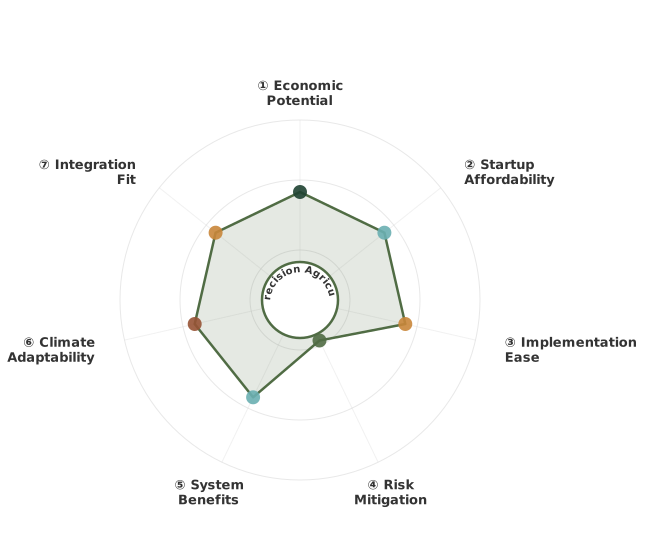
How These Traits Are Calculated
Trait dimensions are ordered clockwise starting from the top of the chart (12 o'clock position):
1. Economic Potential
Financial returns, annual value, and break-even timeline
WHAT: Evaluates financial viability by combining net annual value ($/ha from savings, income, and amortized harvests) with break-even timeline showing when practices pay for themselves.
WHY: Farmers need clear ROI understanding before committing resources. Fast payback (≤3 years) with strong returns (≥$300/ha) enables confident adoption, while long timelines (>10 years) restrict adoption to well-funded operations willing to wait for returns.
HOW: Calculated from net annual value in $/ha and break-even years. Exceptional (≥2.6): fast ROI ≤3 years + high value ≥$300/ha. Typical (1.8-2.5): moderate returns or longer timelines. Limited (<1.8): marginal economics or very long payback >10 years.
2. Startup Affordability
Initial investment costs and financial barrier to entry
WHAT: Measures financial barrier to entry through startup costs for equipment, infrastructure, consulting, and materials. Inverted scoring: lower costs = higher scores = more accessible adoption.
WHY: Affordability determines who can adopt. Low-cost practices (<$250/ha) enable widespread adoption across diverse scales, while high costs (>$2,500/ha) limit adoption to well-capitalized operations, creating barriers that slow regenerative transition.
HOW: Calculated from initial investment parsed from practice content. Inverted scoring: Exceptional (≥2.6): minimal investment <$250/ha. Typical (1.8-2.5): moderate costs $250-2,500/ha. Limited (<1.8): high barrier >$2,500/ha.
3. Implementation Ease
Learning curve and specialized knowledge required
WHAT: Measures how much learning, planning, and specialized knowledge a practice requires. Simpler practices with fewer steps score higher, while complex practices requiring extensive training or specialized resources score lower.
WHY: Complex practices create adoption barriers even when economically viable. Straightforward practices enable faster adoption and broader participation, while those requiring extensive training, timing precision, or specialized equipment limit who can succeed.
HOW: Evaluated by measuring documentation length and identifying complexity markers like location-specific requirements, seasonal timing windows, specialized skills, and dedicated equipment needs. Exceptional (≥2.6): straightforward practices with minimal prerequisites. Typical (1.8-2.5): moderate learning curve with some specialized needs. Limited (<1.8): steep learning curve requiring significant training or resources.
4. Risk Mitigation
Identified financial and ecological risk assessment
WHAT: Evaluates documented risks across financial (investment loss, market volatility) and ecological (crop failure, pest outbreaks) domains. Inverted scoring: fewer risks = higher scores.
WHY: Understanding risk exposure helps farmers make informed decisions. Low-risk practices allow confident implementation, while high-risk practices require careful planning and contingency resources. Risk transparency prevents costly failures.
HOW: Calculated from identified risks in practice content. Inverted scoring: Exceptional (≥2.6): ≤2 risks with manageable severity. Typical (1.8-2.5): 3-5 moderate risks. Limited (<1.8): 6+ risks or severe exposure.
5. System Benefits
How many ways the practice improves your land simultaneously
WHAT: Measures how many aspects of land health improve at once—carbon storage, soil quality, erosion control, water absorption, and biodiversity. Practices that improve multiple areas simultaneously create compounding benefits where each improvement reinforces the others.
WHY: The best practices solve multiple problems at once. For example, addressing erosion simultaneously builds carbon and improves water infiltration, creating a resilient system with positive feedback loops. Single-benefit approaches miss these compound transformation opportunities.
HOW: Evaluated across five key outcomes: carbon sequestration, soil organic matter increase, erosion reduction, water infiltration improvement, and biodiversity enhancement. Exceptional (≥2.6): high carbon storage (>8 t/ha/yr), improvements across 4-5 areas, transformative outcomes. Typical (1.8-2.5): moderate carbon (3-8 t/ha/yr), improvements across 2-3 areas. Limited (<1.8): modest impact (<3 t/ha/yr), single-area focus only.
6. Climate Adaptability
Geographic applicability across Köppen climate zones
WHAT: Evaluates geographic applicability by assessing how many Köppen climate zones successfully support a practice and what adaptation requirements are needed. Measures breadth of climates where farmers can implement with minimal to moderate modifications.
WHY: Universal practices working across diverse climates enable more farmers to adopt regenerative approaches. Practices limited to single climate types (only Mediterranean, only tropical) restrict adoption and slow global transition. Adaptability determines whether a practice serves niche regions or offers broad transformation.
HOW: LLM evaluation of regional success stories, Köppen zone coverage, and adaptation needs. Exceptional (≥2.6): 5+ zones or 4+ climate types, 3+ continents, minimal adaptation. Typical (1.8-2.5): 3-4 zones or 2-3 types, 2 continents, moderate adaptation. Limited (<1.8): 1-2 zones, single region, significant adaptation or highly specialized.
7. Integration Fit
How well this practice combines with others you're doing
WHAT: Measures how well a practice combines with other regenerative practices you might be doing. Some practices work as building blocks that make many other practices easier or more effective, while others work best on their own.
WHY: Practices that combine well with many others create more value on your farm. For example, cover cropping enables no-till, improves grazing, supports crop diversity, and helps water management—making all of them work better together. This helps you build a coherent system rather than juggling disconnected practices.
HOW: Evaluated by identifying which practices combine well and how strong those combinations are. 'Ideally Suited' means strong combinations where practices reinforce each other (practice A makes B easier, while B makes A more effective). 'Adequate' means complementary benefits that work well together. Exceptional (≥2.6): combines well with 6+ practices, serves as a building block. Typical (1.8-2.5): combines with 3-5 practices. Limited (<1.8): 1-2 practices or works best alone.
Going Deeper
1
WHY - The Benefits
Precision agriculture offers a suite of benefits that, when thoughtfully applied, can significantly enhance farm sustainability, profitability, and environmental stewardship. Its core strength lies in moving from broad-stroke management to highly targeted, data-informed...
Precision agriculture offers a suite of benefits that, when thoughtfully applied, can significantly enhance farm sustainability, profitability, and environmental stewardship. Its core strength lies in moving from broad-stroke management to highly targeted, data-informed...
WHY - The Benefits
Precision agriculture offers a suite of benefits that, when thoughtfully applied, can significantly enhance farm sustainability, profitability, and environmental stewardship. Its core strength lies in moving from broad-stroke management to highly targeted, data-informed...
Precision agriculture offers a suite of benefits that, when thoughtfully applied, can significantly enhance farm sustainability, profitability, and environmental stewardship. Its core strength lies in moving from broad-stroke management to highly targeted, data-informed...
Optimize Resource Use and Efficiency
The most immediate benefit of precision agriculture is the optimized allocation of resources. By identifying variability in soil type, nutrient levels, moisture, and crop health across a field, farmers can apply inputs precisely where they are needed. This can lead to significant cost savings. For example, variable rate fertilizer application can reduce nitrogen use by 5-20%, depending on field variability and initial soil fertility. Similarly, variable rate seeding can ensure optimal plant density in different zones, preventing over-seeding in less fertile areas and under-seeding in optimal zones, potentially saving 5-10% on seed costs. Reduced application of pesticides also leads to cost savings and decreased environmental impact. Reduced fuel consumption from more efficient tractor passes (less overlap or skips due to GPS guidance) further contributes to operational savings.
Enhance Soil Health Through Targeted Interventions
While not inherently a regenerative practice, precision agriculture can be a powerful tool for implementing regenerative practices. By mapping soil properties and crop performance, farmers can identify specific areas that require attention. For instance, zones with persistently low yields or visible signs of stress might indicate compaction, low organic matter, or nutrient deficiencies. This data can then guide the targeted application of soil amendments like compost, biochar, or specific cover crop mixes designed to address these issues. Mapping helps you understand where to focus efforts to build soil organic matter, improve aggregation, and foster beneficial microbial communities, directly supporting regenerative principles like maximizing crop diversity and maintaining living roots.
Improve Livestock Management and Nutrient Cycling
For livestock operations, precision agriculture tools can enhance rotational grazing strategies. Data on pasture growth rates, soil nutrient levels, and soil moisture can inform decisions on where and when to move livestock. For example, satellite imagery can identify areas of lush, actively growing forage, guiding rotations to areas of highest nutritional value. Soil maps can highlight areas that benefit most from manure deposition, either for fertility or for breaking up soil structure. By understanding variation, producers can strategically place animals to optimize pasture utilization and nutrient distribution, supporting Principle 5 (integrate livestock) by ensuring animals contribute to soil health rather than solely taxing it.
Increase Farm Profitability and Resilience
The combined effect of reduced input costs, optimized resource use, and potentially increased yields contributes to higher farm profitability. By applying inputs more effectively and reducing waste, farmers can improve their bottom line. Furthermore, precision agriculture can enhance farm resilience. Understanding field variability allows for more strategic water management, for example, by applying water only to areas experiencing drought stress. This informed approach can buffer against climate variability and improve the farm's ability to withstand environmental challenges. The data gathered also provides a historical record, enabling better long-term planning and risk management.
Support Informed Regenerative Transition
For farmers transitioning to regenerative agriculture, precision agriculture acts as an invaluable diagnostic and early warning system. It helps quantify baseline conditions—revealing areas of low soil health or inefficient resource use that need attention. As regenerative practices are implemented, the data collected can track progress and identify areas where further interventions are needed. For example, if cover crop success is variable across a field, precision agriculture tools can help identify specific zones that require different management approaches. By providing precise data on yield, soil properties, and resource uptake, precision agriculture allows farmers to make more confident decisions about phasing out conventional inputs and adopting fully regenerative systems. It transforms the "art" of farming into a more science-driven, responsive process, making the transition to regenerative agriculture more manageable and measurable.
Regenerative Systems Fit
Precision agriculture is best understood as a powerful set of tools that can support regenerative agriculture goals, rather than a foundational regenerative practice in itself. Its alignment with regenerative principles varies depending on its application:
Principle 1 (Minimize Soil Disturbance): Precision agriculture can support this by enabling GPS guidance systems that reduce tractor passes, skips, and overlaps, thereby minimizing compaction and disturbance from machinery. However, the data generated can also be used to optimize tillage operations if a farm is transitioning from conventional methods (e.g., one-time deep tillage). The ultimate goal is to use the data to move towards no-till by identifying areas that truly don't need disturbance.
Principle 2 (Maximize Crop Diversity): Precision agriculture tools can help farmers identify different soil zones within a field, which can then be managed for diverse crops or cover crops adapted to those specific conditions. For example, mapping soil organic matter or pH variations can inform decisions about planting species that thrive in those zones, increasing above- and below-ground diversity.
Principle 3 (Keep Soil Covered): By mapping nutrient deficiencies or areas of low soil health, precision agriculture can guide targeted applications of cover crops or soil amendments that improve soil structure and biological activity, ultimately leading to better, more persistent soil cover.
Principle 4 (Maintain Living Roots): Data from soil moisture sensors or plant health imagery can inform irrigation or cover cropping strategies to ensure living roots are in the soil for the longest possible periods, extending the photosynthetic season and feeding soil biology year-round.
Principle 5 (Integrate Livestock): Precision grazing management can be enhanced by mapping pasture productivity and soil conditions, allowing for more strategic placement of livestock to optimize grazing impact and nutrient cycling.
Transition Pathway: Precision agriculture is often a transition practice. It's not inherently regenerative, but its data-gathering and application capabilities can be used to manage the transition away from conventional, less precise methods. For example, a farmer can use precision application to reduce synthetic nitrogen by 10-20% each year based on soil tests and uptake data, while simultaneously using targeted applications of compost or cover crops in identified problem areas. The timeline for transitioning from using precision agriculture for input optimization to using it for regenerative goals depends on the farmer's commitment to the regenerative principles. Success looks like using variable rate technology to apply compost, bio-stimulants, or specific cover crop mixtures, rather than just more synthetic fertilizer. The goal is to phase out reliance on synthetic inputs over 3-7 years, using precision data to monitor soil health improvements and biological activity.
Sources behind this view
Videos & Podcasts
-
Regenerative agriculture provides solutions for climate change, human health, and soil degradation, contrasting with industrial agriculture's harmful impacts, including glyphosate use. Practices like
-
Advocates for a gradual transition to regenerative practices, emphasizing soil health, diverse crop rotations, livestock integration, and smart nutrient management. Stresses the need for farmers to 'e

-
Adopting regenerative practices should start small and incrementally, focusing on soil health over short-term yields. Collaboration, strategic nutrient sourcing, and leveraging resources like Continuu
-
Adopting regenerative agriculture requires convincing farmers through risk mitigation, mindset change, and demonstrating results via trials and monitoring. Benefits include reduced costs, improved soi

Community
-
Precision agriculture is a site-specific, data-driven management system that optimizes inputs for economic and environmental benefits, including improved soil and water quality. NRCS can assist farmer
Read more (p. 3) (opens PDF, p. 3) efotg.sc.egov.usda.gov
Research
-
Systematic review of regenerative farming: Addressing agricultural sustainability challenges (opens in new window)
This study found: Systematic review of 31 studies shows regenerative farming improves soil health, biodiversity, and carbon capture, aiding sustainability. Technology is key for adoption, but policy, farmer understandi
-
PRECISION AGRICULTURE FOR ENHANCING ECO EFFICIENCY IN CROPPING SYSTEMS (opens in new window)
This study found: Precision Agriculture (PA) enhances farming's environmental efficiency by using technologies like GPS and sensors for site-specific management, reducing waste, pollution, and soil degradation while im
-
The Indigenous Roots of Regenerative Agriculture (opens in new window)
This study found: Modern regenerative agriculture practices are rooted in millennia of Indigenous land stewardship, offering profound knowledge and a crucial value system of respect and reciprocity for true transformat
-
Revolutionizing Agriculture: Innovative Techniques, Applications, and Future Prospects in Precision Farming (opens in new window)
This study found: Precision agriculture uses GPS, drones, sensors, and data analysis to optimize farming, boost yields, and improve sustainability. Challenges exist, but future tech like AI promises even smarter operat
2
WHERE - Regional Considerations
While precision agriculture technologies are globally applicable, their effectiveness and adoption rates are influenced by regional factors such as climate, farm size, economic conditions, and infrastructure.
While precision agriculture technologies are globally applicable, their effectiveness and adoption rates are influenced by regional factors such as climate, farm size, economic conditions, and infrastructure.
WHERE - Regional Considerations
While precision agriculture technologies are globally applicable, their effectiveness and adoption rates are influenced by regional factors such as climate, farm size, economic conditions, and infrastructure.
While precision agriculture technologies are globally applicable, their effectiveness and adoption rates are influenced by regional factors such as climate, farm size, economic conditions, and infrastructure.
Click Here to Look up your Region if you don't already know it
Arid and Semi-Arid Regions
Representative Locations: Western USA, North Africa, Central Asia, Interior Australia, parts of the Middle East
Climate Context: Low annual precipitation (<40 cm or 15 inches), high temperatures, short and often unpredictable growing seasons. Köppen BSh/BSk.
In these regions, precision agriculture's ability to optimize water use is paramount. Soil moisture sensors, weather stations, and satellite-based evapotranspiration monitoring can help farmers apply irrigation precisely when and where it's needed, minimizing water waste and maximizing the use of limited rainfall. Variable rate irrigation systems can adjust water application based on soil type and crop needs across a field. This is crucial for maintaining cover crops and extending the growing season for cash crops, directly supporting Principle 4 (maintain living roots).
Mediterranean Regions
Representative Locations: California, Mediterranean basin (Spain, Italy, Greece), central Chile, southwestern Australia, Western Cape South Africa
Climate Context: Hot, dry summers and mild, wet winters. Annual precipitation 40-90 cm (15-35 inches), highly seasonal. Köppen Csa/Csb.
Precision agriculture can help manage the distinct wet and dry seasons. Targeted irrigation for summer crops or cover crops is vital. Early season soil moisture mapping can guide planting decisions. In regions with steep terrain, GPS guidance and variable rate applicators can improve efficiency and reduce disturbance on slopes. Managing soil potassium and organic matter can be key challenges, and precision techniques can identify areas needing targeted organic amendments to support soil health (Principle 2).
Humid Temperate Regions
Representative Locations: Southeastern United States, Northern Europe (UK, Germany, Poland), Eastern China, Japan
Climate Context: Warm to hot summers and cool to cold winters with moderate to high annual precipitation (75-150 cm or 30-60 inches) distributed relatively evenly. USDA Zones 6-8, Köppen Cfb/Cfa.
These regions often experience abundant rainfall, making soil moisture management less about drought and more about preventing waterlogging and runoff. Precision soil mapping can identify areas prone to poor drainage, guiding decisions on cover crop selection (e.g., deep-rooted species to aid drainage) or targeted aeration. Precision nutrient management is critical to prevent nutrient leaching into waterways. GPS guidance and auto-steer are widely adopted, reducing soil disturbance from over-application of inputs.
Cold Continental Regions
Representative Locations: Northern USA and Canada, Northern Europe, Northern Asia
Climate Context: Very short growing seasons, extreme summer heat, severe winter cold. USDA Zones 3-5, Köppen Dfa/Dfb.
The short growing season in these regions makes every operational window critical. Precision agriculture, particularly GPS guidance and auto-steer, maximizes efficiency during brief planting and harvesting periods, minimizing soil disturbance from repeated passes. Variable rate seeding can ensure optimal plant populations given the limited time for growth. Identifying microclimates within fields can help select crop varieties that best suit the short, intense growing season.
Subtropical Regions
Representative Locations: Southeastern USA, Southern China, Southern Brazil, Eastern Australia
Climate Context: Hot, humid summers and mild winters with generally ample rainfall. USDA Zones 9-11, Köppen Cfa/Cwa.
Precision agriculture can help manage high humidity, which can exacerbate pest and disease pressure. Targeted scouting guided by drone or satellite imagery allows for precise pesticide applications, reducing overall chemical use. Optimizing planting windows to avoid peak disease periods is crucial. Managing soil organic matter is important, as high temperatures can accelerate decomposition. Variable rate application of organic amendments can be highly effective.
Tropical Regions
Representative Locations: Central America, Southeast Asia, East Africa, Northern Australia, Northern South America
Climate Context: High temperatures year-round, with distinct wet and dry seasons or consistent high rainfall. Köppen Af/Am/Aw.
In tropical regions, precision agriculture can address challenges related to high rainfall, rapid nutrient cycling, and intense pest and disease pressure. Soil erosion is a significant concern, and precision mapping can identify high-risk areas for contour farming or targeted cover crop implementation. Managing soil fertility, especially the rapid depletion of nutrients, is critical; precision application of organic inputs or bio-fertilizers can be highly effective. Drone technology is particularly useful for monitoring crop health and identifying disease outbreaks in dense tropical vegetation.
3
HOW - Implementation Process
Implementing precision agriculture involves a phased approach, starting with foundational tools and progressively incorporating more advanced technologies. The focus here is on using these tools to support regenerative goals.
Implementing precision agriculture involves a phased approach, starting with foundational tools and progressively incorporating more advanced technologies. The focus here is on using these tools to support regenerative goals.
HOW - Implementation Process
Implementing precision agriculture involves a phased approach, starting with foundational tools and progressively incorporating more advanced technologies. The focus here is on using these tools to support regenerative goals.
Implementing precision agriculture involves a phased approach, starting with foundational tools and progressively incorporating more advanced technologies. The focus here is on using these tools to support regenerative goals.
Prerequisites
- Farm Size & Scale: While applicable to all farm sizes, smaller farms may start with simpler, lower-cost solutions (e.g., manual grid sampling, mobile apps). Larger operations can leverage more sophisticated and automated systems.
- Farm Management Software: A system to collect, store, analyze, and visualize farm data is essential. This could range from basic spreadsheets to dedicated farm management platforms.
- Internet Connectivity: Access to reliable internet is increasingly important for data transfer, software updates, and cloud-based analysis.
- Basic Understanding of Data Interpretation: Farmers need to be willing to learn how to interpret maps and data, or have access to advisors or agronomists who can assist.
- Commitment to Regenerative Goals: Crucially, a farmer must be committed to using precision data to support regenerative principles, not just optimize conventional inputs.
Phase 1: Foundational Data Collection & Basic Guidance (Years 0-1)
Start with the basics to understand your fields and improve operational efficiency.
-
GPS Guidance & Auto-Steer: Invest in GPS receivers for tractors and implements. Auto-steer systems ensure straight-line fieldwork, eliminating skips and overlaps.
- Regenerative Application: By reducing overlap, you minimize over-application of seeds, fertilizers, and pesticides, thus reducing soil disturbance and input waste. This naturally supports Principle 1.
- Equipment: Basic GPS receiver ($500-$2,000 USD equivalent), upgraded receiver with auto-steer ($2,000-$10,000+ USD equivalent).
- Labor: Primarily operator time, minimal training required for basic guidance.
- Timeline: Can be implemented immediately.
-
Basic Field Mapping: Use GPS data collected during fieldwork (planting, spraying, harvesting) to create basic field boundary maps. Record observations manually.
- Regenerative Application: Begin to identify noticeable variations within fields—areas that consistently perform differently. This is the first step to understanding variability for Principle 2.
- Equipment: GPS receiver, farm management software (can be free or subscription-based).
- Labor: Operator time for data collection, basic data entry.
- Timeline: Ongoing during fieldwork.
Phase 2: Soil and Crop Assessment (Years 1-2)
Move to collecting more specific data about soil properties and crop health.
-
Zone Sampling & Soil Testing: Instead of sampling fields on a grid, divide fields into management zones based on soil type, topography, or historical yield data. Sample each zone separately for detailed soil analysis (nutrients, organic matter, pH, CEC).
- Regenerative Application: Understand the specific soil health needs of different zones. This allows for targeted organic amendments (Principle 2) or cover cropping strategies to improve specific deficiencies.
- Equipment: GPS receiver, soil sampling probe/corer, farm management software. Professional services available ($50-150/ha USD equivalent for sampling and analysis).
- Labor: Farmer time for sampling, or hiring professionals. Data entry and analysis.
- Timeline: Annually or every 2-3 years for key soil health parameters.
-
Remote Sensing (Satellite/Drone Imagery): Utilize satellite imagery (e.g., NDVI, NDRE) or drone imagery to assess crop health, identify stress areas, and monitor growth variations.
- Regenerative Application: Identify areas that may be suffering from nutrient deficiencies, water stress, or compaction. This can guide targeted cover cropping or organic input applications to improve soil biology and root health (Principle 2, 4). It can also highlight areas suitable for more diverse planting or perennial integration.
- Equipment: Subscription to satellite imagery services ($100-1,000/year USD equivalent) or drone ($500-$5,000+ USD equivalent, plus imaging software, $500-$2,000/year). Professional drone services available.
- Labor: Data download, interpretation, and planning scouting missions.
- Timeline: Weekly or bi-weekly during the growing season.
Phase 3: Variable Rate Application & Targeted Management (Years 2-3)
Apply inputs and management actions based on the data collected.
-
Variable Rate Seeding (VRS): Adjust seeding rates based on soil zones or yield potential maps.
- Regenerative Application: Ensure optimal plant populations in each zone, preventing over-seeding in less fertile areas and maximizing genetic potential where conditions are good, contributing to Principle 2.
- Equipment: Seed hopper with VRS capability (requires compatible planter).
- Labor: Operator time to load prescription maps, monitoring equipment.
- Timeline: Implemented during planting season annually.
-
Variable Rate Application (VRA) of Fertilizers/Amendments: Use VRA equipment to apply fertilizers, compost, biochar, or other soil amendments at different rates across the field based on soil test maps or crop health data.
- Regenerative Application: Precisely target organic amendments, compost, or bio-stimulants to areas needing soil health improvement rather than broadcasting synthetics uniformly. This directly supports Principle 2 by building soil biology where it's most needed. If reducing synthetic fertilizers, VRA can precisely apply lower, more efficient rates while scouting for biological alternatives.
- Equipment: Tractor with VRA-capable spreader or sprayer, compatible controller, prescription maps.
- Labor: Operator time, map creation/download.
- Timeline: Implemented during application seasons (planting, top-dressing, amended application).
-
Targeted Pest/Disease Scouting: Use imagery and ground-truthing to focus scouting efforts on problem areas identified by remote sensing.
- Regenerative Application: Reduce pesticide use by applying only where necessary. This supports Principle 1 (minimize chemical disruption) and Principle 2 (maximize biodiversity) by harming fewer beneficial organisms.
- Equipment: Drone, mobile scouting apps, farm management software.
- Labor: Dedicated scouting time.
- Timeline: As needed based on imagery analysis.
Transition Timeline & Phase-Out Strategy (If applicable)
Precision agriculture itself is not a regenerative practice to be phased out, but its application can be transitioned. The goal is to shift from using precision agriculture to optimize synthetic inputs to using it to optimize regenerative inputs and soil health.
- Years 1-3 (Optimization): Focus on using precision tools to reduce synthetic fertilizer and pesticide use by 5-10% annually, guided by soil tests and crop diagnostics. Use VRA to apply lower broadcast rates of synthetics.
- Years 3-5 (Substitution): Begin using VRA to apply organic amendments (compost, manure) or bio-stimulants to identified low-performing zones. Continue reducing synthetic inputs.
- Years 5-7 (Regenerative Focus): Primarily use precision tools to guide applications of cover crops, biological amendments, and strategic livestock grazing. Synthetic input use should be minimal or eliminated, applied only in exceptional circumstances based on precise diagnostics. Success looks like using a VRS to plant diverse cover crop mixes tailored to micro-zones and using VRA to apply compost to areas identified by remote sensing as low in organic matter.
The phase-out is not of precision agriculture technology, but of the mindset that it's solely for optimizing conventional inputs. The technology becomes a tool for diagnosing and addressing biological needs.
Sources behind this view
Videos & Podcasts
-
Advocates for a gradual transition to regenerative practices, emphasizing soil health, diverse crop rotations, livestock integration, and smart nutrient management. Stresses the need for farmers to 'e
-
Adopting regenerative practices should start small and incrementally, focusing on soil health over short-term yields. Collaboration, strategic nutrient sourcing, and leveraging resources like Continuu
-
Adopting regenerative agriculture requires convincing farmers through risk mitigation, mindset change, and demonstrating results via trials and monitoring. Benefits include reduced costs, improved soi
-
To transition to regenerative agriculture, start small, increase diversity, reduce expenses, and focus on profit over yield. Avoid product-based 'regenerative' solutions and be wary of conventional mo
Community
-
Precision agriculture is a site-specific, data-driven management system that optimizes inputs for economic and environmental benefits, including improved soil and water quality. NRCS can assist farmer
Read more (p. 3) (opens PDF, p. 3) efotg.sc.egov.usda.gov
Research
-
PRECISION AGRICULTURE FOR ENHANCING ECO EFFICIENCY IN CROPPING SYSTEMS (opens in new window)
This study found: Precision Agriculture (PA) enhances farming's environmental efficiency by using technologies like GPS and sensors for site-specific management, reducing waste, pollution, and soil degradation while im
-
Systematic review of regenerative farming: Addressing agricultural sustainability challenges (opens in new window)
This study found: Systematic review of 31 studies shows regenerative farming improves soil health, biodiversity, and carbon capture, aiding sustainability. Technology is key for adoption, but policy, farmer understandi
-
Revolutionizing Agriculture: Innovative Techniques, Applications, and Future Prospects in Precision Farming (opens in new window)
This study found: Precision agriculture uses GPS, drones, sensors, and data analysis to optimize farming, boost yields, and improve sustainability. Challenges exist, but future tech like AI promises even smarter operat
-
Integrating Conservation Agriculture with Precision Farming for Improved Yield Stability (opens in new window)
This study found: Combining conservation agriculture with precision farming boosts yield stability and environmental health by improving soil and optimizing resource use, making farms more resilient to climate challeng
4
Know the Debate
Precision agriculture, or 'smart farming,' employs technologies like GPS, sensors, and drones to manage fields at a granular level, optimizing reso...
Know the Debate
Precision agriculture, or 'smart farming,' employs technologies like GPS, sensors, and drones to manage fields at a granular level, optimizing reso...
Precision agriculture, or 'smart farming,' employs technologies like GPS, sensors, and drones to manage fields at a granular level, optimizing resource use and supporting regenerative goals. Its effectiveness and application vary significantly by region, from arid zones where water optimization is key, to humid temperate regions where nutrient runoff is a concern. Costs range from $2,000-$7,000 for foundational tools on mid-scale farms, with higher investments for advanced systems. While it demands technical knowledge, its true regenerative value emerges when data guides biological interventions rather than just optimizing synthetic inputs, with a transition goal of phasing out conventional methods over 3-7 years.
Does precision agriculture work for smallholder farms?
Scalable with lower-cost tech
Basic GPS guidance and mobile apps offer practical benefits for smaller farms, improving operational efficiency. While large-scale systems are expensive, simpler technologies can provide significant cost savings and data for management.
Sources behind this view
Sources behind this view
Videos & Podcasts
-
GPS RTK is highly beneficial on level fields for precision agriculture, reducing operator strain and enabling multitasking. Costs have decreased, making it potentially worthwhile for 500-600 acres, though implement guidance is needed for sloped terrain.
Research
-
Precision Farming at the Nexus of Agricultural Production and the Environment (opens in new window)
This study found: Precision farming uses technology to manage fields based on their specific needs, treating different areas differently. By precisely applying inputs like fertilizers and pesticides only where and when they are needed, farmers can reduce waste, cut costs, and lessen environmental pollution. While large farms in developed countries are currently the main users, the environmental advantages mean that incentives could encourage more farmers, even those with small farms in developing countries, to adopt these practices. New technologies and data analysis are making these tools more connected, accurate, and useful, and better infrastructure and rules can help more people benefit from precision farming.
From the Web
-
The main barrier to precision agriculture is its high cost and complexity, limiting its adoption by resource-poor farmers. Making these technologies accessible globally is crucial for conservation and food system resilience.
Primarily for large operations
High upfront costs and complexity restrict precision agriculture's benefits to larger farms. Smaller, resource-limited farms may find the investment prohibitive or the technology too complex to implement effectively.
Sources behind this view
Sources behind this view
Videos & Podcasts
-
Investors should prioritize funding for technologies addressing soil compaction (machinery, robotics) and improving fertilizer-crop matching, making them accessible to all farming sectors, not just large arable operations.

From the Web
-
The main barrier to precision agriculture is its high cost and complexity, limiting its adoption by resource-poor farmers. Making these technologies accessible globally is crucial for conservation and food system resilience.
Making Sense of the Differences
While precision agriculture offers global potential, its accessibility and economic viability differ by farm scale. Lower-cost solutions like basic GPS guidance and mobile apps can benefit smaller farms, whereas larger operations may adopt more integrated and expensive systems. The debate highlights that 'precision agriculture' encompasses a range of technologies, and careful assessment of local conditions, capital, and desired outcomes is needed for appropriate adoption.
Does precision ag directly build soil health?
Enabler for regenerative practices
Precision agriculture tools diagnose field variability, guiding the targeted application of organic amendments, cover crops, or reduced tillage to improve soil health and biological activity.
Sources behind this view
Sources behind this view
Videos & Podcasts
-
Precision technologies and automation can monitor soil moisture and compaction, indirectly supporting soil health by reducing field passes; direct soil carbon monitoring is an R&D focus.
Research
-
Precision Agriculture for Sustainable Soil and Crop Management (opens in new window)
This study found: Precision agriculture uses tools like GPS, mapping software, and sensors to understand how conditions vary across a field. This allows farmers to make specific decisions for different areas, rather than treating the whole field the same. For example, it can guide variable rate application of fertilizers, water, or pesticides, and even help identify where deep tillage is needed to break up soil compaction. By using resources more efficiently and managing land in an environmentally sound way, precision agriculture helps improve soil health, boost farm profits, and contribute to sustainable farming.
-
Precision nutrient management : A review (opens in new window)
This study found: Precision agriculture, also known as site-specific farming, is a way to manage farms more efficiently by using detailed information about each part of a field. This approach is key to making farming more sustainable in the long run. Instead of applying fertilizers or other inputs at the same rate everywhere, precision farming allows farmers to tailor applications to the specific needs of different areas within a field. This is especially important for nutrients, as uniform application can lead to wasted resources and lower yields because it ignores natural variations in the soil and crop. By managing inputs precisely, farmers can improve how they care for the land, use resources more effectively, and ensure crops get exactly what they need to maximize their harvest. One method, called 'management zones,' has shown that it can significantly reduce nitrogen fertilizer use (by up to 46%) and increase profits by over $39 per hectare compared to applying fertilizer uniformly.
Focus on input efficiency, not inherent soil health
Precision agriculture primarily optimizes input efficiency and yield; its role in soil health is indirect and depends on how data is used to apply regenerative practices, not guaranteed by the technology itself.
Sources behind this view
Sources behind this view
Videos & Podcasts
-
Precision agriculture uses technology to optimize fertilizer application, reducing waste and costs. Nutrient cycling practices like crop rotation, intercropping, and agroforestry enhance natural nutrient use and restore soil health.
Research
-
Precision Agriculture: A Strategic Approach to Resource Efficiency and Sustainable Farming (opens in new window)
This study found: Precision farming is a smart way to manage farms by treating different parts of a field differently, using advanced technology. Tools like GPS, satellite imagery, sensors, and drones help farmers use resources like water, fertilizer, and pesticides more efficiently. This means less waste, lower costs, and better environmental protection. By collecting and analyzing data from the field, farmers can make better decisions to improve crop yields and make their farms more sustainable and resilient. While there are initial costs and a learning curve, ongoing research and supportive policies are helping farmers adopt these technologies to build a more environmentally and economically sound future for agriculture.
-
Precision Agriculture: Shaping the Future of Farming (opens in new window)
This study found: Precision agriculture, also known as site-specific crop management or smart farming, uses modern technology to make farming more efficient and sustainable. It involves using tools like satellite imagery, drones, GPS, and robots to understand the specific needs of different parts of a field. The goal is to apply the right amount of water, fertilizer, and other inputs exactly where and when they are needed. This approach helps farmers increase profits, protect the environment, and reduce waste by ensuring that resources are used precisely and effectively, leading to better crop growth and overall farm productivity.
Making Sense of the Differences
The evidence suggests precision agriculture is not inherently regenerative but can be a powerful tool for achieving regenerative outcomes. While technology can precisely optimize synthetic inputs, its regenerative application lies in using data to guide targeted organic amendments, cover cropping, and reduced tillage. The direct impact on soil health depends on the farmer's intention: using data for input efficiency versus using it to diagnose and address specific soil biological or structural needs.
Does precision ag support extractive or regenerative input strategies?
Supports regenerative substitution
Precision tools enable targeted application of regenerative inputs like compost and cover crops, facilitating a transition away from synthetic fertilizers and pesticides.
Sources behind this view
Sources behind this view
Videos & Podcasts
-
Precision agriculture uses technology to optimize fertilizer application, reducing waste and costs. Nutrient cycling practices like crop rotation, intercropping, and agroforestry enhance natural nutrient use and restore soil health.
Research
-
Precision Agriculture: A Strategic Approach to Resource Efficiency and Sustainable Farming (opens in new window)
This study found: Precision farming is a smart way to manage farms by treating different parts of a field differently, using advanced technology. Tools like GPS, satellite imagery, sensors, and drones help farmers use resources like water, fertilizer, and pesticides more efficiently. This means less waste, lower costs, and better environmental protection. By collecting and analyzing data from the field, farmers can make better decisions to improve crop yields and make their farms more sustainable and resilient. While there are initial costs and a learning curve, ongoing research and supportive policies are helping farmers adopt these technologies to build a more environmentally and economically sound future for agriculture.
Primarily optimizes conventional inputs
Precision agriculture's core function is often optimizing existing synthetic inputs for efficiency and yield, which can still be extractive if not guided by ecological principles.
Sources behind this view
Sources behind this view
Videos & Podcasts
-
Precision technologies and automation can monitor soil moisture and compaction, indirectly supporting soil health by reducing field passes; direct soil carbon monitoring is an R&D focus.
Research
-
Precision Agriculture: Shaping the Future of Farming (opens in new window)
This study found: Precision agriculture, also known as site-specific crop management or smart farming, uses modern technology to make farming more efficient and sustainable. It involves using tools like satellite imagery, drones, GPS, and robots to understand the specific needs of different parts of a field. The goal is to apply the right amount of water, fertilizer, and other inputs exactly where and when they are needed. This approach helps farmers increase profits, protect the environment, and reduce waste by ensuring that resources are used precisely and effectively, leading to better crop growth and overall farm productivity.
-
Precision nutrient management : A review (opens in new window)
This study found: Precision agriculture, also known as site-specific farming, is a way to manage farms more efficiently by using detailed information about each part of a field. This approach is key to making farming more sustainable in the long run. Instead of applying fertilizers or other inputs at the same rate everywhere, precision farming allows farmers to tailor applications to the specific needs of different areas within a field. This is especially important for nutrients, as uniform application can lead to wasted resources and lower yields because it ignores natural variations in the soil and crop. By managing inputs precisely, farmers can improve how they care for the land, use resources more effectively, and ensure crops get exactly what they need to maximize their harvest. One method, called 'management zones,' has shown that it can significantly reduce nitrogen fertilizer use (by up to 46%) and increase profits by over $39 per hectare compared to applying fertilizer uniformly.
Making Sense of the Differences
Precision agriculture's alignment with regenerative goals depends on its application. While it can optimize traditional synthetic inputs, its true potential for regeneration lies in using the same diagnostic capabilities to guide the precise application of organic amendments, cover crops, and reduced tillage. The technology shifts from optimizing conventional resource use to identifying areas where biological interventions are most needed, enabling a transition towards reduced reliance on synthetic inputs over time.
5
HOW MUCH - Costs & Investment
Note: Costs shown in USD; multiply by local labor and material cost indices for your region. Labor costs vary significantly internationally. Precision agriculture investments can range from very low cost for basic guidance to significant capital outlays for integrated...
Note: Costs shown in USD; multiply by local labor and material cost indices for your region. Labor costs vary significantly internationally. Precision agriculture investments can range from very low cost for basic guidance to significant capital outlays for integrated...
HOW MUCH - Costs & Investment
Note: Costs shown in USD; multiply by local labor and material cost indices for your region. Labor costs vary significantly internationally. Precision agriculture investments can range from very low cost for basic guidance to significant capital outlays for integrated...
Note: Costs shown in USD; multiply by local labor and material cost indices for your region. Labor costs vary significantly internationally. Precision agriculture investments can range from very low cost for basic guidance to significant capital outlays for integrated...
Note: All costs are based on recent US economic data (2024–2026) and may vary substantially by region based on local labor rates, material costs, and regulatory requirements.
Foundational GPS & Guidance Hardware
Precision agriculture begins with establishing a repeatable coordinate system across your fields. For small-scale operations managing under 50 acres (20 ha), entry-level lightbar guidance systems or portable, tablet-based receivers cost between $835 and $2,605. These systems offer basic pass-to-pass accuracy, typically within 6 to 12 inches. Mid-size operations managing between 50 and 500 acres (20–202 ha) generally pivot toward mid-tier auto-steer retrofits, which include integrated hydraulic steering valves or steering wheel motors, costing $4,168 to $9,378 per tractor unit. For large-scale operations with 500 or more acres, the technology path shifts to fully integrated, factory-installed displays and high-fidelity GNSS receivers; these systems, often integrated into modern equipment, require an investment of $10,420 to $26,050 per tractor to ensure sub-inch accuracy and seamless data logging for complex field operations.
Data Management & Field Software
Translating raw machine logs into agronomic insights requires subscription-based digital infrastructure. Small operations typically opt for entry-level mobile platforms focused on simple field mapping and record-keeping, costing from $208 to $625 annually. As operations scale from 50 to 500 acres (20–202 ha), farmers frequently move toward cloud-based enterprise platforms that offer automated data reconciliation, variable rate prescription generation, and seamless integration with third-party machinery, requiring an annual investment of $834 to $2,605. Large-scale farming businesses managing cross-regional acreage or multiple fleets often employ professional data-processing services combined with enterprise-grade software licenses, reaching annual costs of $3,126 to $8,336 to maintain regulatory compliance and highly optimized fertility schedules.
Precision Implement Upgrades & Connectivity
Executing precise input applications requires hardware that bridges the communication gap between the tractor’s display and the implement (planter, sprayer, or spreader). Small-scale growers looking to add basic variable-rate application capabilities to legacy planters or spreaders should budget $3,126 to $7,294 for retrofit kits, such as PWM controllers or electronic drive motors. Mid-size farms often prioritize section control upgrades—which eliminate double-seeding and overlap in irregular fields—investing $8,336 to $18,756 for specific implement controllers and shut-off valves. Large-scale adopters deploying advanced autonomous field machinery, high-speed sensory arrays, and real-time RTK correction signal subscriptions (which carry recurring costs of $52 to $156 per month) see total capital outlays reaching $26,050 to $62,520 or more per unit to ensure the entire technology stack functions autonomously.
Soil Analytics & Drone Scouting
Spatial soil management requires high-resolution data inputs to drive prescription algorithms. Annual soil testing, when conducted via grid sampling (using 2.0 to 5.0-acre (2.0 ha) grids), typically ranges from $13 to $26 per acre ($32–$64/ha), meaning small-scale operations spend $521 to $1,563 annually on lab services. Mid-size farms utilizing professional scouting and multi-layered soil analysis services typically spend $1,563 to $5,210 per year to maintain high-quality input maps. Large-scale operations that choose to internalize remote sensing by investing in drone fleets—requiring specialized camera rigs and thermal sensors—see capital outlays of $3,126 to $10,420 for hardware, with an additional $2,084 to $5,210 annually for cloud processing, data storage, and software maintenance of these massive imagery sets.
Most Spend: The middle 60% of US producers typically invest a cumulative total of $5,210–$18,756 for foundational hardware and software integrations. This bucket covers basic automated guidance, entry-level moisture and density monitoring, and essential data software licenses, excluding high-end autonomous robotics or full-field variable-rate implement overhauls.
Why the Range?: Cost variation is dictated primarily by the age and compatibility of the existing machinery fleet; older tractors lacking "plug-and-play" CAN-bus systems require expensive wiring harnesses and custom bracket fabrication to integrate modern precision technology. Additionally, the selection of open-architecture software versus proprietary, brand-locked platforms significantly dictates whether a farmer faces lower recurring license costs or higher, long-term vendor dependency costs.
Sources behind this view
Videos & Podcasts
-
Autonomous farm machinery adoption is slow due to technological limitations in variable field conditions, marketing misalignments, unfavorable economics (labor costs vs. autonomy cost), farmer adoptio

-
Making AI cost-effective in agriculture involves data aggregation, low-cost solutions, and innovative business models like rental services. Collaboration, open data sharing, and government funding are
Community
-
Key precision agriculture technologies include GPS guidance (auto-steer, light bars), DGPS, RTK, grid/directed sampling, remote sensing, variable rate application, and yield monitoring. Essential syst
Read more (pp. 3-6) (opens PDF, pp. 3-6) efotg.sc.egov.usda.gov
Research
-
IMPACTS OF PRECISION FARMING TECHNOLOGIES ON CROP YIELD OPTIMIZATION IN U.S. AGRICULTURE (opens in new window)
This study found: Precision farming tech, especially VRT, boosts U.S. crop yields and profits while cutting inputs. High costs limit adoption, particularly for small farms, highlighting the need for targeted support.
-
Robotics in Agriculture: Automation Solutions for Precision Farming and Sustainability (opens in new window)
This study found: Farm robots boost precision and sustainability, cutting herbicide use by 85% and improving disease detection by 40%. High costs and compatibility issues are barriers, but modular designs and shared ow
-
Towards sustainable cropping: AI-driven precision agriculture for optimal water and pesticide use via drones and soil sensors (opens in new window)
This study found: AI-powered precision agriculture using drones and soil sensors reduced water use by 35% and pesticides by 80% on a simulated farm, while increasing yields and lowering costs, with a 2.3-season payback
-
PRECISION AGRICULTURE FOR ENHANCING ECO EFFICIENCY IN CROPPING SYSTEMS (opens in new window)
This study found: Precision Agriculture (PA) enhances farming's environmental efficiency by using technologies like GPS and sensors for site-specific management, reducing waste, pollution, and soil degradation while im
6
REWARDS AND RISKS - Economics & Risk Factors
REWARDS AND RISKS - Economics & Risk Factors
The economic profile of precision agriculture involves shifting expenditure from broad-spectrum input application to site-specific management. In a best-case scenario, a mid-size 300-acre (121 ha) farm implements variable-rate fertilization and sectional control technology. By reducing fertilizer waste by 12% (yielding $3,647 in direct savings) and reducing seed overlap by 8% ($1,250 saved), while simultaneously achieving a 6% yield boost via uniform seed depth and population spacing across variable soil zones ($3,439 in revenue), the operation achieves full capital recovery for their $15,000 investment in roughly 2.5 years.
In a typical case, the primary economic lever is marginal efficiency. A farm utilizes auto-steer guidance to reduce fuel consumption by 7% across all field passes by minimizing overlap and "misses." With reduced mechanical wear and faster day-to-day turnarounds, operational efficiency improvements account for a net increase of $1,563 to $3,647 in annual cash flow, with payback periods extending to 5 to 7 years. Conversely, the worst-case scenario occurs when a producer makes a $26,050 investment in sophisticated variable-rate hardware but fails to perform the necessary ground-truthing to calibrate the prescription maps. If incorrect seeding depths or over-application in low-yield zones occurs, a 4% yield decline coupled with the amortized cost of the hardware results in a net loss of $5,210 to $15,630 annually until the management practices are corrected.
Profitability is heavily influenced by the volatility of commodity and input prices. When nitrogen or phosphate prices are unstable, the internal rate of return (IRR) for precision hardware accelerates because the value of every "saved" unit of fertilizer becomes substantially higher. However, persistent hardware inflation and rising annual cloud-based subscription costs can quickly erode thin profit margins if yield improvements do not consistently exceed the 3% to 5% mark.
Risk mitigation requires a disciplined, modular approach. Farmers should allocate 5% of their initial hardware budget specifically for third-party agronomic consulting. This investment ensures that prescription maps are based on physical soil characteristics rather than generic software algorithms, preventing site-specific errors that lead to over-application. Modular adoption—starting with basic auto-steer technology before moving to complex VRA hardware—acts as a hedge against technology obsolescence. Standardizing all purchases around ISOBUS and ISOXML compliant hardware is a critical fiscal strategy, as it eliminates the $3,126 to $5,210 cost of proprietary adapters when transitioning or upgrading heavy equipment in the future.
Transitioning to precision management inherently creates a "digital dip." In the first 6 to 18 months, farmers must expect reduced labor efficiency as staff spend time troubleshooting sensor connectivity, data storage errors, and software glitches. A common fiscal risk is "data paralysis," where the sheer volume of metrics obscures decision-making. To mitigate this, growers should remain focused on three key performance indicators: moisture consistency, nutrient uptake density, and input-to-yield ratio. By keeping legacy, non-automated backup equipment functional during this transition phase, farmers avoid the catastrophic productivity loss associated with system-wide software lockouts, ensuring that full economic recovery of the investment typically begins in year two or three.
Sources behind this view
Videos & Podcasts
-
Advocates for a gradual transition to regenerative practices, emphasizing soil health, diverse crop rotations, livestock integration, and smart nutrient management. Stresses the need for farmers to 'e
-
Adopting regenerative agriculture requires convincing farmers through risk mitigation, mindset change, and demonstrating results via trials and monitoring. Benefits include reduced costs, improved soi
-
Emphasizes the economic benefits of regenerative agriculture, making farmers low-cost producers, while acknowledging challenges in scaling, the need for technical advice, and policy reform to support
Community
-
Key precision agriculture technologies include GPS guidance (auto-steer, light bars), DGPS, RTK, grid/directed sampling, remote sensing, variable rate application, and yield monitoring. Essential syst
Read more (pp. 3-6) (opens PDF, pp. 3-6) efotg.sc.egov.usda.gov -
Precision agriculture offers environmental benefits by enabling targeted pest and nutrient applications, reducing chemical use and protecting water quality. Techniques like electrical conductivity map
Read more (pp. 9-10) (opens PDF, pp. 9-10) efotg.sc.egov.usda.gov -
Precision agriculture is a site-specific, data-driven management system that optimizes inputs for economic and environmental benefits, including improved soil and water quality. NRCS can assist farmer
Read more (p. 3) (opens PDF, p. 3) efotg.sc.egov.usda.gov
Research
-
PRECISION AGRICULTURE FOR ENHANCING ECO EFFICIENCY IN CROPPING SYSTEMS (opens in new window)
This study found: Precision Agriculture (PA) enhances farming's environmental efficiency by using technologies like GPS and sensors for site-specific management, reducing waste, pollution, and soil degradation while im
-
Revolutionizing Agriculture: Innovative Techniques, Applications, and Future Prospects in Precision Farming (opens in new window)
This study found: Precision agriculture uses GPS, drones, sensors, and data analysis to optimize farming, boost yields, and improve sustainability. Challenges exist, but future tech like AI promises even smarter operat
-
Systematic review of regenerative farming: Addressing agricultural sustainability challenges (opens in new window)
This study found: Systematic review of 31 studies shows regenerative farming improves soil health, biodiversity, and carbon capture, aiding sustainability. Technology is key for adoption, but policy, farmer understandi
-
IMPACTS OF PRECISION FARMING TECHNOLOGIES ON CROP YIELD OPTIMIZATION IN U.S. AGRICULTURE (opens in new window)
This study found: Precision farming tech, especially VRT, boosts U.S. crop yields and profits while cutting inputs. High costs limit adoption, particularly for small farms, highlighting the need for targeted support.
7
COMPATIBLE PRACTICES - Integration Opportunities
Precision agriculture is a powerful enabler for a wide range of regenerative practices, providing the data needed to implement them effectively and efficiently.
Precision agriculture is a powerful enabler for a wide range of regenerative practices, providing the data needed to implement them effectively and efficiently.
COMPATIBLE PRACTICES - Integration Opportunities
Precision agriculture is a powerful enabler for a wide range of regenerative practices, providing the data needed to implement them effectively and efficiently.
Precision agriculture is a powerful enabler for a wide range of regenerative practices, providing the data needed to implement them effectively and efficiently.
Variable Rate Application of Organic Amendments
- Use soil maps (organic matter, nutrient levels) and imagery to guide precise application of compost, manure, biochar, or other organic soil conditioners.
- Integration Benefit: Builds soil health precisely where it's most needed, accelerating biological recovery and improving soil structure without uniform over-application. Directly supports Principle 2 (maximize crop diversity).
Diverse Cover Cropping with Zone-Specific Mixes
- Map soil types, moisture levels, and nutrient variations to select and plant optimal cover crop mixes for different zones within a field.
- Integration Benefit: Ensures cover crops establish and thrive across the entire field, maximizing Principle 2 (maximize crop diversity), Principle 3 (keep soil covered), and Principle 4 (maintain living roots) by ensuring continuous soil health benefits.
Precision Livestock Grazing Management
- Use pasture growth monitoring (imagery, ground sensors), soil data, and weather forecasts to optimize paddock selection, grazing durations, and rest periods.
- Integration Benefit: Maximizes Principle 5 (integrate livestock) by ensuring animals are moved to areas of optimal forage and that sensitive areas receive adequate rest, improving nutrient cycling and preventing overgrazing.
Optimized Irrigation for Cover Crops
- Employ soil moisture sensors and weather data to apply water only to areas and at times that ensure cover crops remain alive and growing.
- Integration Benefit: Directly supports Principle 4 (maintain living roots) by extending the photosynthetic period and feeding soil biology year-round, particularly crucial in arid/semi-arid climates.
Reduced/Targeted Conventional Input Use
- Use precision tools to precisely map and apply reduced rates of synthetic fertilizers, pesticides, or herbicides only where demonstrably needed.
- Integration Benefit: Supports Principle 1 (minimize soil disturbance) and Principle 2 (maximize biodiversity) by decreasing chemical load on the ecosystem and minimizing non-biological disruption. This is a critical step in the transition phase.
No-Till and Reduced Tillage Systems
- GPS guidance and auto-steer minimize passes, reducing compaction. Data on soil conditions can identify areas truly needing minimal disturbance, guiding crop rotation and cover crop selection to build soil structure over time.
- Integration Benefit: Works in concert with Principle 1 by reducing mechanical disturbance and supporting the establishment of biological structure-building processes.
Controlled Traffic Farming
- Precision guidance systems are essential for establishing and maintaining permanent traffic lanes, ensuring that all heavy machinery operates on the same paths.
- Integration Benefit: Directly supports Principle 1 by preventing compaction in production zones, allowing biological systems to flourish undisturbed.
Precision agriculture's true regenerative value emerges when its data-gathering and application capabilities are employed to diagnose needs and guide interventions that actively build soil health and biological function, rather than simply optimizing conventional inputs.
Sources behind this view
Videos & Podcasts
-
Regenerative agriculture provides solutions for climate change, human health, and soil degradation, contrasting with industrial agriculture's harmful impacts, including glyphosate use. Practices like
-
Advocates for a gradual transition to regenerative practices, emphasizing soil health, diverse crop rotations, livestock integration, and smart nutrient management. Stresses the need for farmers to 'e
-
Adopts regenerative agriculture principles: minimize disturbance, keep living roots, use soil armor, integrate animals (livestock grazing, multi-species), and increase biodiversity. These practices bu

Community
-
Precision agriculture offers environmental benefits by enabling targeted pest and nutrient applications, reducing chemical use and protecting water quality. Techniques like electrical conductivity map
Read more (pp. 9-10) (opens PDF, pp. 9-10) efotg.sc.egov.usda.gov -
Precision agriculture is a site-specific, data-driven management system that optimizes inputs for economic and environmental benefits, including improved soil and water quality. NRCS can assist farmer
Read more (p. 3) (opens PDF, p. 3) efotg.sc.egov.usda.gov
Research
-
Systematic review of regenerative farming: Addressing agricultural sustainability challenges (opens in new window)
This study found: Systematic review of 31 studies shows regenerative farming improves soil health, biodiversity, and carbon capture, aiding sustainability. Technology is key for adoption, but policy, farmer understandi
-
PRECISION AGRICULTURE FOR ENHANCING ECO EFFICIENCY IN CROPPING SYSTEMS (opens in new window)
This study found: Precision Agriculture (PA) enhances farming's environmental efficiency by using technologies like GPS and sensors for site-specific management, reducing waste, pollution, and soil degradation while im
-
Integrating Conservation Agriculture with Precision Farming for Improved Yield Stability (opens in new window)
This study found: Combining conservation agriculture with precision farming boosts yield stability and environmental health by improving soil and optimizing resource use, making farms more resilient to climate challeng
-
The Indigenous Roots of Regenerative Agriculture (opens in new window)
This study found: Modern regenerative agriculture practices are rooted in millennia of Indigenous land stewardship, offering profound knowledge and a crucial value system of respect and reciprocity for true transformat