
Riparian Buffers
Riparian buffers are strips of perennial vegetation—trees, shrubs, and grasses—planted along rivers, streams, and lakes. They act as natural filters, slowing runoff to trap sediment and nutrients, stabilizing streambanks to prevent erosion, and improving water quality. They also provide vital habitat for wildlife and can offer shade for livestock and aesthetic value to the landscape.
Read More: Complete Description
Riparian buffers are intentionally managed zones of permanent vegetation strategically placed along water bodies like rivers, streams, ponds, and lakes. These buffers typically consist of a mix of trees, shrubs, and herbaceous plants, chosen for their ability to thrive in moist conditions and their effectiveness in filtration, stabilization, and habitat provision. The width of a riparian buffer can vary significantly, often ranging from 10-30 meters (33-98 feet) to over 50 meters (164 feet), depending on local regulations, land management goals, and the specific needs of the water body being protected. Wider buffers generally offer greater ecological and hydrological benefits.
The primary function of a riparian buffer is to intercept overland flow and shallow groundwater before they reach surface water. As water moves slowly through the dense vegetation, suspended sediment settles out, and dissolved nutrients like nitrogen and phosphorus are absorbed by plants or transformed by soil microbes. This filtration process is critical for preventing eutrophication of downstream water bodies, which can lead to harmful algal blooms and oxygen depletion. Additionally, the root systems of buffer plants bind soil particles together, stabilizing streambanks and reducing erosion, which is a major source of water pollution and habitat degradation.
From a regenerative agriculture perspective, riparian buffers are considered a foundational practice. They directly support several core regenerative principles, most notably:
- Keep Soil Covered (Principle 3): The perennial vegetation in a riparian buffer ensures the soil is continuously covered year-round, preventing wind and water erosion. This living cover also supports a healthy soil food web.
- Maintain Living Roots (Principle 4): The continuous presence of living plants with extensive root systems throughout the year fuels soil biology, recycles nutrients, and maintains soil structure, even during periods when adjacent agricultural fields might be bare.
- Maximize Crop Diversity (Principle 2): By planting a mix of trees, shrubs, and grasses, riparian buffers create a complex, diverse ecosystem. This diversity above and below ground supports a wider range of beneficial insects, pollinators, and wildlife, contributing to a more resilient farm ecosystem.
- Integrate Livestock (Principle 5): While direct livestock access to the buffer itself may need careful management to prevent overgrazing and bank damage, the buffer's health benefits the entire integrated system. By improving water quality and providing shade, it enhances livestock performance. Strategic exclusion and managed access (e.g., through fencing with controlled water points) can even allow for beneficial nutrient cycling if managed appropriately, though this requires careful planning.
- Minimize Soil Disturbance (Principle 1): Once established, riparian buffers are typically perennial and managed with minimal to no tillage, preserving soil structure, organic matter, and the soil food web.
The benefits extend beyond ecological services. In regions with hot summers, the shade provided by trees can significantly reduce heat stress for livestock grazing nearby, improving their health, weight gain, and reproductive performance. This enhanced animal welfare translates into economic benefits. Furthermore, buffers can provide valuable alternative income streams through the harvesting of timber, fuelwood, nuts, fruits, or medicinal plants, depending on the species planted and system design. They also enhance the aesthetic appeal of the landscape, contributing to property value and farmer well-being.
Common misconceptions about riparian buffers include the idea that they are solely an environmental compliance measure or that they remove productive land from farming without adequate return. However, when viewed through a regenerative lens, buffers are productive ecosystems that enhance the entire farm system, building soil health and resilience while generating economic and ecological co-benefits. They are not "lost" land but an investment in long-term farm sustainability and profitability.
In diverse international contexts, riparian buffer implementation varies. In Southeast Asia, rice paddy systems often have small, meticulously managed buffer zones of grasses and shrubs to prevent soil loss from bunds and filter water before it enters rice fields. In tropical South America, cattle ranches are increasingly establishing wider tree-lined buffers (often called matas ciliares) to comply with regulations and manage water resources in the Cerrado and Amazon regions, recognizing their role in preventing soil erosion and maintaining stream flow. In Australia, farmers on the Murray-Darling Basin have implemented extensive buffer restoration projects to combat salinization and improve water quality, often integrating native grasses and eucalyptus species. In Europe, regulations like the EU's Common Agricultural Policy encourage or mandate buffer strips, with farmers often choosing mixed deciduous species suitable for temperate climates. In Africa, pastoralists may integrate riparian zones within their grazing management to ensure consistent water access and forage availability during dry seasons, provided grazing pressure is carefully controlled.
The success of a riparian buffer hinges on proper species selection adapted to the local climate and hydrology, adequate width to capture diffuse pollution, and management that balances ecological function with economic goals. They are an integral part of a holistic farm plan, working in synergy with other regenerative practices to build a more resilient and productive agricultural landscape.
Sources behind this view
Sources behind this view
 Videos & Podcasts
-
Riparian buffers at field edges are crucial for water quality, acting as filters and slowing runoff. They also offer economic, recreational, and ecological benefits, and can be managed for non-timber

-
Planning harvestable riparian buffers involves considering site, landscape, product, species, management, and program factors. The goal is to balance production with conservation, leveraging programs

-
Agroforestry buffers, especially riparian buffers, significantly reduce dissolved nitrogen (99%) and total nitrogen (84%) in runoff compared to grass-only buffers (92% and 62%), improving water qualit

-
Details riparian forest buffers for water quality and habitat, and windbreaks for soil erosion control and microclimate enhancement. Both offer income potential but require careful design and manageme

 Community
-
Guide for establishing riparian forest buffers in Alabama, focusing on water quality and wildlife habitat. Recommends native hardwoods (especially oaks) and pines, with specific site prep, species sel
Read more (pp. 1-2) (opens PDF, pp. 1-2) efotg.sc.egov.usda.gov
 Research
-
Towards ecologically functional riparian zones: A meta-analysis to develop guidelines for protecting ecosystem functions and biodiversity in agricultural landscapes (opens in new window)
This study found: Meta-analysis shows 3m stream buffers filter nutrients, but 24m needed for plant diversity and 144m for bird diversity. Proposes 'Ecologically Functional Riparian Zones' (ERZ) framework for balancing
-
The effects of riparian forest management on the freshwater environment: a literature review of best management practice (opens in new window)
This study found: Managing forests along streams (riparian buffers) is crucial for protecting water quality, preventing erosion, and supporting stream ecosystems. Recommended widths range from 10-30m, with mixed native
-
Riparian buffer effectiveness as a function of buffer design and input loads (opens in new window)
This study found: Flexible riparian buffer designs with harvesting options had minimal impact (<5%) on nutrient and sediment removal, but buffers with lower removal efficiency removed more total pollution mass under hi
-
Riparian vegetated buffer strips in water‐quality restoration and stream management (opens in new window)
This study found: Vegetated buffer strips along streams significantly reduced nitrogen runoff from corn/soybean fields in Illinois. Wooded buffers were better for nitrogen, grassy for phosphorus, but both released phos
 From the Web
-
Riparian forest buffers use zoned vegetation (grasses/forbs, shrubs, trees) between fields and waterways to filter pollutants, reduce erosion, and provide habitat. Design width varies based on goals,
-
Conservation and riparian buffers offer environmental benefits like improved water quality and streambank stabilization, and economic opportunities through programs like CCRP or specialty crop sales.
-
Healthy riparian areas offer substantial benefits including carbon sequestration, biodiversity support, improved water infiltration, fire buffering, and bank stability. Management involves planting na
-
Guidance on creating three-zone forested riparian buffers: Zone 1 (stream-adjacent, wet-adapted natives), Zone 2 (nutrient uptake, flood control), Zone 3 (grasses/forbs for filtering). Emphasizes site
Key Points
What It Is
- Strips of perennial vegetation along water
- Filters runoff, stabilizes streambanks
- Mix of trees, shrubs, grasses
- Permanent soil cover and living roots
Why Do It
- Improves water quality and protects aquatic life
- Reduces soil erosion significantly
- Enhances farm biodiversity and wildlife habitat
- Supports multiple regenerative principles
Know the Debate
- Establishment time varies: water benefits early, biodiversity takes years.
- Livestock exclusion is typical, but managed access debated.
- Biodiversity gains observed but less quantified than water quality.
- Diverse species support varied outcomes across climates/goals.
Benefits - Financial
- Reduced erosion repair costs saving $100-250 per acre ($247–$618 per hectare) annually
- Boosted livestock weight gain adds $20-40 profit per head
- Property land value appreciation of 5-15% within 10 years
Benefits - System
- Water infiltration: 30-60% increase post-establishment
- Sediment trapping: 70-90% efficiency
- Nutrient interception: 50-80% of N and P load
- Supports 4 of 5 regenerative principles directly
Risks - Financial
- Total establishment investment range of $1,354-3,750 per acre ($3,346–$9,266 per hectare)
- 10-20% grazing capacity reduction during 2-year transition period
Risks - System
- Improper species selection can lead to invasives
- Livestock damage during establishment must be managed
- Reduced effectiveness if buffers are too narrow or eroded through
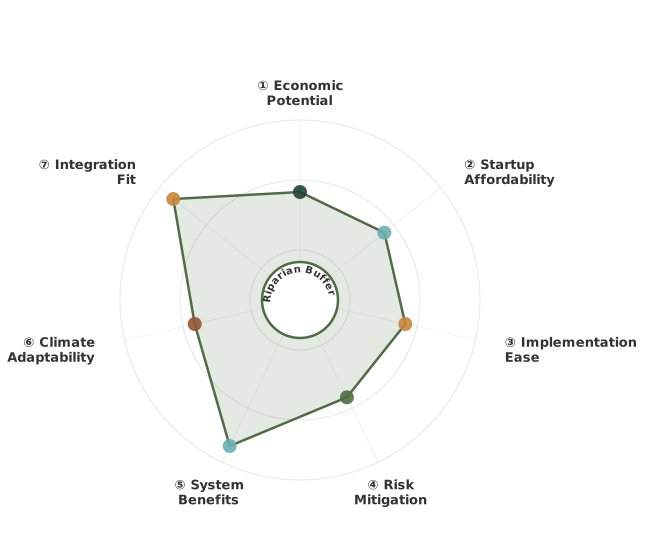
How These Traits Are Calculated
Trait dimensions are ordered clockwise starting from the top of the chart (12 o'clock position):
1. Economic Potential
Financial returns, annual value, and break-even timeline
WHAT: Evaluates financial viability by combining net annual value ($/ha from savings, income, and amortized harvests) with break-even timeline showing when practices pay for themselves.
WHY: Farmers need clear ROI understanding before committing resources. Fast payback (≤3 years) with strong returns (≥$300/ha) enables confident adoption, while long timelines (>10 years) restrict adoption to well-funded operations willing to wait for returns.
HOW: Calculated from net annual value in $/ha and break-even years. Exceptional (≥2.6): fast ROI ≤3 years + high value ≥$300/ha. Typical (1.8-2.5): moderate returns or longer timelines. Limited (<1.8): marginal economics or very long payback >10 years.
2. Startup Affordability
Initial investment costs and financial barrier to entry
WHAT: Measures financial barrier to entry through startup costs for equipment, infrastructure, consulting, and materials. Inverted scoring: lower costs = higher scores = more accessible adoption.
WHY: Affordability determines who can adopt. Low-cost practices (<$250/ha) enable widespread adoption across diverse scales, while high costs (>$2,500/ha) limit adoption to well-capitalized operations, creating barriers that slow regenerative transition.
HOW: Calculated from initial investment parsed from practice content. Inverted scoring: Exceptional (≥2.6): minimal investment <$250/ha. Typical (1.8-2.5): moderate costs $250-2,500/ha. Limited (<1.8): high barrier >$2,500/ha.
3. Implementation Ease
Learning curve and specialized knowledge required
WHAT: Measures how much learning, planning, and specialized knowledge a practice requires. Simpler practices with fewer steps score higher, while complex practices requiring extensive training or specialized resources score lower.
WHY: Complex practices create adoption barriers even when economically viable. Straightforward practices enable faster adoption and broader participation, while those requiring extensive training, timing precision, or specialized equipment limit who can succeed.
HOW: Evaluated by measuring documentation length and identifying complexity markers like location-specific requirements, seasonal timing windows, specialized skills, and dedicated equipment needs. Exceptional (≥2.6): straightforward practices with minimal prerequisites. Typical (1.8-2.5): moderate learning curve with some specialized needs. Limited (<1.8): steep learning curve requiring significant training or resources.
4. Risk Mitigation
Identified financial and ecological risk assessment
WHAT: Evaluates documented risks across financial (investment loss, market volatility) and ecological (crop failure, pest outbreaks) domains. Inverted scoring: fewer risks = higher scores.
WHY: Understanding risk exposure helps farmers make informed decisions. Low-risk practices allow confident implementation, while high-risk practices require careful planning and contingency resources. Risk transparency prevents costly failures.
HOW: Calculated from identified risks in practice content. Inverted scoring: Exceptional (≥2.6): ≤2 risks with manageable severity. Typical (1.8-2.5): 3-5 moderate risks. Limited (<1.8): 6+ risks or severe exposure.
5. System Benefits
How many ways the practice improves your land simultaneously
WHAT: Measures how many aspects of land health improve at once—carbon storage, soil quality, erosion control, water absorption, and biodiversity. Practices that improve multiple areas simultaneously create compounding benefits where each improvement reinforces the others.
WHY: The best practices solve multiple problems at once. For example, addressing erosion simultaneously builds carbon and improves water infiltration, creating a resilient system with positive feedback loops. Single-benefit approaches miss these compound transformation opportunities.
HOW: Evaluated across five key outcomes: carbon sequestration, soil organic matter increase, erosion reduction, water infiltration improvement, and biodiversity enhancement. Exceptional (≥2.6): high carbon storage (>8 t/ha/yr), improvements across 4-5 areas, transformative outcomes. Typical (1.8-2.5): moderate carbon (3-8 t/ha/yr), improvements across 2-3 areas. Limited (<1.8): modest impact (<3 t/ha/yr), single-area focus only.
6. Climate Adaptability
Geographic applicability across Köppen climate zones
WHAT: Evaluates geographic applicability by assessing how many Köppen climate zones successfully support a practice and what adaptation requirements are needed. Measures breadth of climates where farmers can implement with minimal to moderate modifications.
WHY: Universal practices working across diverse climates enable more farmers to adopt regenerative approaches. Practices limited to single climate types (only Mediterranean, only tropical) restrict adoption and slow global transition. Adaptability determines whether a practice serves niche regions or offers broad transformation.
HOW: LLM evaluation of regional success stories, Köppen zone coverage, and adaptation needs. Exceptional (≥2.6): 5+ zones or 4+ climate types, 3+ continents, minimal adaptation. Typical (1.8-2.5): 3-4 zones or 2-3 types, 2 continents, moderate adaptation. Limited (<1.8): 1-2 zones, single region, significant adaptation or highly specialized.
7. Integration Fit
How well this practice combines with others you're doing
WHAT: Measures how well a practice combines with other regenerative practices you might be doing. Some practices work as building blocks that make many other practices easier or more effective, while others work best on their own.
WHY: Practices that combine well with many others create more value on your farm. For example, cover cropping enables no-till, improves grazing, supports crop diversity, and helps water management—making all of them work better together. This helps you build a coherent system rather than juggling disconnected practices.
HOW: Evaluated by identifying which practices combine well and how strong those combinations are. 'Ideally Suited' means strong combinations where practices reinforce each other (practice A makes B easier, while B makes A more effective). 'Adequate' means complementary benefits that work well together. Exceptional (≥2.6): combines well with 6+ practices, serves as a building block. Typical (1.8-2.5): combines with 3-5 practices. Limited (<1.8): 1-2 practices or works best alone.
Going Deeper
1
WHY - The Benefits
Riparian buffers are crucial components of healthy agricultural landscapes, delivering tangible benefits across ecological, economic, and regenerative dimensions. Their impact extends from the immediate vicinity of the water body to the entire watershed, influencing...
Riparian buffers are crucial components of healthy agricultural landscapes, delivering tangible benefits across ecological, economic, and regenerative dimensions. Their impact extends from the immediate vicinity of the water body to the entire watershed, influencing...
WHY - The Benefits
Riparian buffers are crucial components of healthy agricultural landscapes, delivering tangible benefits across ecological, economic, and regenerative dimensions. Their impact extends from the immediate vicinity of the water body to the entire watershed, influencing...
Riparian buffers are crucial components of healthy agricultural landscapes, delivering tangible benefits across ecological, economic, and regenerative dimensions. Their impact extends from the immediate vicinity of the water body to the entire watershed, influencing...
Soil Health Benefits
The most direct impact of riparian buffers on soil health occurs within the buffer zone itself. The dense vegetative cover (trees, shrubs, grasses) ensures the soil surface is perpetually covered. This biomass decomposes over time, contributing significant organic matter to the soil, increasing its ability to hold water and nutrients. Unlike annual cropping systems that leave soil bare for parts of the year, the perennial nature of buffers maintains living root systems year-round. These roots create pore spaces, improve aeration, and enhance water infiltration, combating compaction. Studies in various climates have shown that soil organic matter levels in well-established riparian buffers can be 2-5% higher than in adjacent agricultural fields, with improved granular structure.
The root systems of buffer plants, particularly deep-rooted trees and shrubs, penetrate and stabilize streambanks, binding soil particles and preventing the physical erosion that can degrade adjacent agricultural land and pollute waterways. This stabilization is crucial for maintaining productive land capacity near water bodies. Furthermore, the dense mulch layer formed by fallen leaves and plant debris protects the soil surface from the erosive impact of raindrops, further reducing sediment runoff.
Economic Benefits
While often viewed primarily as environmental infrastructure, riparian buffers offer significant economic advantages. The most direct financial benefit comes from erosion control. Preventing bank erosion saves farmers from the cost of reclaiming lost land and repairing damage caused by sediment deposition downstream. These costs can range from hundreds to thousands of dollars per hectare equivalent over the lifetime of the buffer, particularly in high-erosion zones.
Improved water quality has indirect economic benefits. Cleaner water downstream can reduce water treatment costs for downstream users and support healthier aquatic ecosystems, which might include valuable fisheries. For farmers who rely on riparian areas for livestock water, buffers ensure a consistent supply of cleaner, cooler water. The shade provided by trees in wider buffers can reduce heat stress in livestock, leading to improved feed conversion ratios, faster weight gain, and better reproductive rates in cattle, sheep, and other grazing animals. This can translate to an estimated $20-40 USD per head annual improvement in animal performance in regions with significant summer heat.
Wider riparian buffers, especially those incorporating timber or nut-producing tree species, can generate alternative income streams. Harvesting timber, fuelwood, or nuts can provide revenue from land that might otherwise be considered non-productive. While this revenue often accrues over longer timeframes (10-30+ years for timber), it diversifies farm income and provides a long-term asset.
Finally, riparian buffers can increase property values. Well-managed buffers contribute to a more attractive and ecologically sound landscape, which can be a strong selling point for land. The ecological services provided by buffers also contribute to farm resilience, indirectly protecting against economic losses from extreme weather events or water scarcity.
Regenerative Systems Fit
Riparian buffers are a cornerstone practice for farmers transitioning to or already practicing regenerative agriculture, and they align strongly with the five core principles:
- Minimizing Soil Disturbance (Principle 1): Riparian buffers are planted with perennial vegetation and are typically managed with no-till or minimal-disturbance methods. This preserves soil structure, organic matter, and the intricate soil food web, contrasting sharply with annual tillage practices that degrade soil health.
- Maximizing Crop Diversity (Principle 2): By planting a mix of trees, shrubs, and herbaceous plants, buffers create a highly diverse ecosystem. This structural diversity supports a wide array of beneficial insects, pollinators, birds, and soil microbes. This complexity enhances the overall resilience and functional capacity of the farm ecosystem.
- Keeping Soil Covered (Principle 3): The perennial nature of buffers means the soil is covered year-round. This living cover intercepts rainfall, intercepts runoff, conserves moisture, regulates soil temperature, and prevents erosion. The resulting mulch layer further protects the soil surface.
- Maintaining Living Roots (Principle 4): Continuous living roots from perennial plants ensure ongoing nutrient uptake, water cycling, and support for soil biology throughout the year. This sustained biological activity is fundamental to building soil structure and fertility naturally.
- Integrating Livestock (Principle 5): While direct livestock access often needs careful control to prevent damage, buffers can be integrated into grazing systems. They provide shade and cooler environments for livestock, improving animal health and performance. Strategically managed access can also contribute to nutrient cycling, though primary emphasis is on ecological function first.
When integrated with other regenerative practices like rotational grazing, cover cropping on adjacent lands, and keyline design for water management, riparian buffers amplify benefits. They improve water infiltration into the soil, reducing runoff that can carry nutrients and sediments from other parts of the farm. They provide habitat corridors for beneficial insects and wildlife that can aid in pest control for nearby crops or pastures. For farms seeking to reduce reliance on synthetic inputs, buffers contribute to a healthier overall system where natural processes are enhanced and supported, reducing the need for external fertilizers and pesticides.
For farms transitioning from conventional systems, establishing riparian buffers represents a clear commitment to long-term ecological health and sustainable production. While there may be a short-term cost and land use adjustment, the long-term benefits—in terms of environmental services, economic stability, and regenerative outcomes—far outweigh the initial investment.
Sources behind this view
Videos & Podcasts
-
Riparian buffers at field edges are crucial for water quality, acting as filters and slowing runoff. They also offer economic, recreational, and ecological benefits, and can be managed for non-timber
-
Planning harvestable riparian buffers involves considering site, landscape, product, species, management, and program factors. The goal is to balance production with conservation, leveraging programs
-
Details riparian forest buffers for water quality and habitat, and windbreaks for soil erosion control and microclimate enhancement. Both offer income potential but require careful design and manageme
-
Agroforestry buffers, especially riparian buffers, significantly reduce dissolved nitrogen (99%) and total nitrogen (84%) in runoff compared to grass-only buffers (92% and 62%), improving water qualit
Community
-
Guide for establishing riparian forest buffers in Alabama, focusing on water quality and wildlife habitat. Recommends native hardwoods (especially oaks) and pines, with specific site prep, species sel
Read more (pp. 1-2) (opens PDF, pp. 1-2) efotg.sc.egov.usda.gov -
Agriculturally Productive Buffers (APBs) integrate perennial crops like elderberry, hazelnut, and black locust into riparian zones, offering flood resilience and income while improving water quality.
Read more (opens in new window) smallfarms.cornell.edu -
Agriculturally productive buffers (APBs), like Stan Ward's elderberry plantings in Vermont, integrate conservation with income generation along riverbanks, addressing flood resilience, water quality,
Read more (opens in new window) smallfarms.cornell.edu
Research
-
The effects of riparian forest management on the freshwater environment: a literature review of best management practice (opens in new window)
This study found: Managing forests along streams (riparian buffers) is crucial for protecting water quality, preventing erosion, and supporting stream ecosystems. Recommended widths range from 10-30m, with mixed native
-
Towards ecologically functional riparian zones: A meta-analysis to develop guidelines for protecting ecosystem functions and biodiversity in agricultural landscapes (opens in new window)
This study found: Meta-analysis shows 3m stream buffers filter nutrients, but 24m needed for plant diversity and 144m for bird diversity. Proposes 'Ecologically Functional Riparian Zones' (ERZ) framework for balancing
-
Riparian buffer effectiveness as a function of buffer design and input loads (opens in new window)
This study found: Flexible riparian buffer designs with harvesting options had minimal impact (<5%) on nutrient and sediment removal, but buffers with lower removal efficiency removed more total pollution mass under hi
-
Riparian vegetated buffer strips in water‐quality restoration and stream management (opens in new window)
This study found: Vegetated buffer strips along streams significantly reduced nitrogen runoff from corn/soybean fields in Illinois. Wooded buffers were better for nitrogen, grassy for phosphorus, but both released phos
From the Web
-
Riparian forest buffers use zoned vegetation (grasses/forbs, shrubs, trees) between fields and waterways to filter pollutants, reduce erosion, and provide habitat. Design width varies based on goals,
-
Conservation and riparian buffers offer environmental benefits like improved water quality and streambank stabilization, and economic opportunities through programs like CCRP or specialty crop sales.
-
Provides detailed guidance on selecting riparian buffer designs and plant materials, differentiating between eastern US and Great Plains approaches. It lists specific tree, shrub, and grass species su
-
Healthy riparian areas offer substantial benefits including carbon sequestration, biodiversity support, improved water infiltration, fire buffering, and bank stability. Management involves planting na
2
WHERE - Regional Considerations
Riparian buffers are essential across virtually all climates and regions where agriculture interfaces with water bodies. Their design and species selection must adapt to local conditions to maximize effectiveness and resilience.
Riparian buffers are essential across virtually all climates and regions where agriculture interfaces with water bodies. Their design and species selection must adapt to local conditions to maximize effectiveness and resilience.
WHERE - Regional Considerations
Riparian buffers are essential across virtually all climates and regions where agriculture interfaces with water bodies. Their design and species selection must adapt to local conditions to maximize effectiveness and resilience.
Riparian buffers are essential across virtually all climates and regions where agriculture interfaces with water bodies. Their design and species selection must adapt to local conditions to maximize effectiveness and resilience.
Click Here to Look up your Region if you don't already know it
Temperate Humid Regions
Representative Locations: Northeastern United States, much of Europe (UK, France, Germany), Eastern China, Japan
Climate Context: Moderate temperatures, ample rainfall distributed throughout the year (750-1500 mm or 30-60 inches annually). USDA Zones 4-7, Köppen Cfb/Cfa. Long growing seasons support robust perennial growth.
Considerations: A wide array of deciduous trees (oaks, maples, poplars), shrubs (willows, dogwoods, viburnums), and grasses thrive. Focus on species that tolerate occasional waterlogging and are effective at filtering nutrients and sediment. Wider buffers (20-40 m or 66-131 ft) are beneficial to capture diffuse pollution from agricultural fields. Local native species are paramount for supporting indigenous biodiversity.
Mediterranean Regions
Representative Locations: California (USA), Mediterranean Basin, parts of Australia, Chile, South Africa
Climate Context: Hot, dry summers and mild, wet winters. Rainfall is seasonal (400-900 mm or 16-35 inches annually), with periods of drought stress. USDA Zones 8-10, Köppen Csa/Csb.
Considerations: Drought-tolerant species are key. Native oaks, junipers, and various shrubs like rosemary or sagebrush can be effective. Species selection must account for fire risk and potential for invasive spread during periods of extreme drought. Focus on deep-rooted species to access groundwater and stabilize banks during intense winter rains. Narrower buffers may be sufficient if well-designed and species are drought-adapted, but wider buffers increase resilience.
Arid and Semi-Arid Regions
Representative Locations: Western United States, much of North Africa, Central Asia, parts of Australia
Climate Context: Low annual rainfall (<400 mm or 16 inches), high evaporation rates, extreme temperature fluctuations. USDA Zones 6-9, Köppen BWh/BSk. Water availability is the primary limiting factor.
Considerations: Species must be extremely drought-tolerant and often salt-tolerant if salinity is an issue. Willows, cottonwoods, select acacias, and deep-rooted grasses may be suitable. Buffers are critical for preventing wind erosion and conserving scarce water resources. They can create microclimates supporting more diverse plant and animal life near water sources. Prioritize species that require minimal supplemental watering and have low water-use efficiency. Width is crucial for maximizing filtration and providing wildlife corridors.
Cold Continental Regions
Representative Locations: Northern USA, Canada, Northern Europe, Siberia
Climate Context: Short, cool growing seasons, very cold winters with significant snow cover. Rainfall can be moderate to high during summer months (400-1000 mm or 16-40 inches). USDA Zones 2-5, Köppen Dfa/Dfb/Dwc.
Considerations: Cold-hardy species are essential. Balsam poplar, aspens, willows, and alder are often suitable. Buffers help stabilize soil and prevent erosion during spring melt and heavy summer rains. Protection from extreme cold and ice damage is important. Species that provide early spring green-up are valuable for wildlife. Perennial grasses and sedges can effectively stabilize banks and filter runoff.
Tropical and Subtropical Regions
Representative Locations: Southeast Asia, Central and South America, Africa, Northern Australia, Southern USA
Climate Context: High temperatures year-round, with distinct wet and dry seasons or consistent high rainfall (1000+ mm or 40+ inches annually). Köppen Af/Am/Aw/Cfa/Cwa. High humidity and intense rainfall events are common.
Considerations: Fast-growing species with dense foliage are often used. Tropical hardwoods, bamboos, palms, and diverse evergreen shrubs and grasses work well. Buffers are vital for preventing severe erosion from intense rainfall and managing nutrient runoff from high-input systems. Emphasis on multi-strata planting (trees, shrubs, ground cover) to maximize interception and filtration. Some species may have medicinal or commercial value in these regions. Management of invasive species can be a challenge due to rapid growth.
3
HOW - Implementation Process
Establishing an effective riparian buffer involves careful planning, site assessment, species selection, and ongoing management. The process can be adapted to various farm sizes and goals.
Establishing an effective riparian buffer involves careful planning, site assessment, species selection, and ongoing management. The process can be adapted to various farm sizes and goals.
HOW - Implementation Process
Establishing an effective riparian buffer involves careful planning, site assessment, species selection, and ongoing management. The process can be adapted to various farm sizes and goals.
Establishing an effective riparian buffer involves careful planning, site assessment, species selection, and ongoing management. The process can be adapted to various farm sizes and goals.
Prerequisites
-
Site Assessment:
- Identify water bodies: Map all rivers, streams, ditches, ponds, and drainage ways on your property.
- Determine buffer width: Research local regulations for minimum buffer widths. As a general guide, a narrow buffer of 5-10 meters (16-33 ft) provides basic bank stabilization, while 10-30 meters (33-100 ft) is more effective for nutrient removal and habitat. Buffers wider than 30 meters offer significant wildlife corridor benefits. Consider wider buffers for greater benefit, especially on steeper slopes or for critical water resources.
- Analyze soil type and hydrology: Understand soil drainage patterns, depth to water table, and potential for waterlogging or drought. This informs species selection.
- Assess existing vegetation: Note any beneficial native plants already present that can be incorporated. Identify any invasive species that need removal.
- Evaluate land use: Where will the buffer intersect with existing fields, pastures, or infrastructure like fences and access roads?
-
Define Objectives:
- What are the primary goals? (e.g., water quality improvement, erosion control, livestock shade, wildlife habitat, timber production, pollination support).
- What is the budget and available labor?
-
Check Regulations:
- Consult local agricultural extension services, environmental agencies, or government programs to understand any mandated buffer zones, planting requirements, or cost-share opportunities.
Phase 1: Planning and Design (Months 0-3)
-
Species Selection:
- Prioritize native species adapted to your local climate, soil conditions, and moisture regime. Natives provide the best habitat for local wildlife and are generally more resilient.
- Select a diversity of plant types: Include deep-rooted trees (for bank stabilization and deep nutrient capture), shrubs (for filtering lower runoff and providing habitat), and grasses/sedges (for surface stabilization and filtering shallow flows).
- Consider fast-growing species for initial stabilization and long-lived species for long-term benefits.
- If economic return is a goal, incorporate valuable timber species (e.g., hardwoods like oak, walnut, or specific fruit/nut trees) or fuelwood species.
- Avoid known invasive species that could spread into adjacent agricultural land or natural areas.
-
Buffer Layout:
- Design the buffer to capture diffuse runoff from fields. This often means following contour lines or placing buffers perpendicular to the slope.
- Consider the shape: Wider buffers are more effective, but even narrow strips offer benefits. A mosaic of wider and narrower sections can optimize function and minimize lost land.
- Plan for access: Ensure gates, fencing, and paths (if needed for maintenance or controlled livestock access) do not create erosion pathways through the buffer.
-
Site Preparation:
- Remove invasives: If invasive plants are present, plan for their removal (manual, targeted herbicide application).
- Reduce soil disturbance: Aim for minimal tillage. If some ground preparation is needed, consider methods like shallow disking or mulching rather than deep plowing.
- Control grazing: If livestock are currently accessing the buffer area, fence them out completely during establishment (1-3 years).
Phase 2: Establishment (Months 4-24)
-
Planting Methods:
- Containerized seedlings or bare-root stock: Most common for trees and shrubs. Plant during the dormant season (late fall or early spring) for best results.
- Live stakes: Cuttings from willows or poplars can be directly planted into moist soil and root relatively quickly.
- Seeding: Grasses and herbaceous species can be seeded, often in combination with tree/shrub plantings. Use a mix of species for diverse benefits.
- Spacing: Vary spacing based on species and goals. Closer spacing (e.g., 1-2 meters or 3-6 feet) provides faster cover. Wider spacing (3-6 meters or 10-20 feet for trees) is used if timber production is a goal.
-
Plant Protection:
- Mulching: Apply wood chips, straw, or compost around plantings to suppress weeds, conserve moisture, and regulate soil temperature.
- Tree guards: Use plastic tubes or wire cages to protect young trees and shrubs from browsing animals (deer, rabbits, livestock).
- Weed Control: Manual weeding or targeted spot application of herbicide may be necessary during the first 1-2 years to prevent weeds from outcompeting desired species.
-
Watering and Fertilization (If Necessary):
- In arid or drought-prone regions, supplemental watering may be required during the first year to ensure establishment.
- Avoid synthetic fertilizers, which can leach into waterways. If soil amendments are needed, use compost or slow-release organic fertilizers sparingly, and only if soil tests indicate a deficiency.
Phase 3: Management and Maintenance (Year 2 onwards)
-
Weed and Invasive Management:
- Continue monitoring for and controlling invasive species, especially in the first few years.
- Mow or graze the herbaceous layer of the buffer (if designated for managed access) to maintain grass and forb dominance and prevent woody encroachment from shading out beneficial low-lying species. This should be done strategically and outside of critical breeding seasons for wildlife.
-
Livestock Management (If Applicable):
- If buffers are integrated into grazing systems, ensure controlled access. This often involves fencing the buffer zone and providing alternative water sources (spring boxes, troughs) fed by buffer streams or piped water.
- Managed grazing (short duration, high intensity with long rest periods) can be used in designated areas to manage grass and shrub height without damaging roots or banks. Avoid continuous grazing.
-
Pruning and Harvesting:
- If timber, fuelwood, or nuts are objectives, follow appropriate forestry or horticultural practices for pruning, thinning, and harvesting. This may involve selective removal of mature trees to allow light for younger ones and the understory, or harvesting fruits/nuts at maturity.
- Ensure any harvesting activities do not create significant soil disturbance or erosion.
-
Monitoring:
- Regularly assess buffer health: survival rates of planted species, presence of desired biodiversity (birds, insects), streambank stability, water quality indicators (clarity, presence of aquatic life).
- Address any emerging issues promptly, such as new invasive species, signs of erosion, or animal damage.
Sources behind this view
Videos & Podcasts
-
Planning harvestable riparian buffers involves considering site, landscape, product, species, management, and program factors. The goal is to balance production with conservation, leveraging programs
-
Riparian buffers at field edges are crucial for water quality, acting as filters and slowing runoff. They also offer economic, recreational, and ecological benefits, and can be managed for non-timber
-
Details riparian forest buffers for water quality and habitat, and windbreaks for soil erosion control and microclimate enhancement. Both offer income potential but require careful design and manageme
-
Riparian forest buffers and field tree planting may not need a forest management plan unless adjacent land is forested. Other practices include prescribed burning (requiring a burn plan), conservation
Community
-
Guide for establishing riparian forest buffers in Alabama, focusing on water quality and wildlife habitat. Recommends native hardwoods (especially oaks) and pines, with specific site prep, species sel
Read more (pp. 1-2) (opens PDF, pp. 1-2) efotg.sc.egov.usda.gov -
Emphasizes riparian restoration with native vegetation along stream banks to protect soil and water resources, offering guidance on monitoring planted vegetation and ecological functions, including si
Read more (opens in new window) ucanr.edu
Research
-
The effects of riparian forest management on the freshwater environment: a literature review of best management practice (opens in new window)
This study found: Managing forests along streams (riparian buffers) is crucial for protecting water quality, preventing erosion, and supporting stream ecosystems. Recommended widths range from 10-30m, with mixed native
-
Towards ecologically functional riparian zones: A meta-analysis to develop guidelines for protecting ecosystem functions and biodiversity in agricultural landscapes (opens in new window)
This study found: Meta-analysis shows 3m stream buffers filter nutrients, but 24m needed for plant diversity and 144m for bird diversity. Proposes 'Ecologically Functional Riparian Zones' (ERZ) framework for balancing
-
Riparian buffer effectiveness as a function of buffer design and input loads (opens in new window)
This study found: Flexible riparian buffer designs with harvesting options had minimal impact (<5%) on nutrient and sediment removal, but buffers with lower removal efficiency removed more total pollution mass under hi
-
Riparian vegetated buffer strips in water‐quality restoration and stream management (opens in new window)
This study found: Vegetated buffer strips along streams significantly reduced nitrogen runoff from corn/soybean fields in Illinois. Wooded buffers were better for nitrogen, grassy for phosphorus, but both released phos
From the Web
-
Provides detailed guidance on selecting riparian buffer designs and plant materials, differentiating between eastern US and Great Plains approaches. It lists specific tree, shrub, and grass species su
-
Riparian forest buffers use zoned vegetation (grasses/forbs, shrubs, trees) between fields and waterways to filter pollutants, reduce erosion, and provide habitat. Design width varies based on goals,
-
Guidance on riparian buffer planning, design, and species selection for water quality, wildlife habitat, and streambank stabilization. Details buffer zones, design variations for the Great Plains, and
-
Guidance on creating three-zone forested riparian buffers: Zone 1 (stream-adjacent, wet-adapted natives), Zone 2 (nutrient uptake, flood control), Zone 3 (grasses/forbs for filtering). Emphasizes site
4
Know the Debate
Riparian buffer effectiveness and implementation vary significantly by context. In humid temperate regions with ample rainfall, buffers establish q...
Know the Debate
Riparian buffer effectiveness and implementation vary significantly by context. In humid temperate regions with ample rainfall, buffers establish q...
Riparian buffer effectiveness and implementation vary significantly by context. In humid temperate regions with ample rainfall, buffers establish quickly and provide robust filtration and habitat. Arid zones require drought-tolerant species, and benefits may appear slower due to water limitations. Establishing buffers can have upfront costs ($1,000-$9,000/ha for establishment), with annual maintenance ($75-$800/ha), but significant savings in erosion control and potential income offset investment. While typically managed without livestock, debate exists on strategic integration for weed control and nutrient cycling. Biodiversity gains are observed but take longer to materialize than direct water quality improvements.
How long until riparian buffers show full benefits?
Early benefits (1-3 years)
Academic and institute sources indicate significant water quality improvements (nutrient and sediment reduction) and initial habitat benefits within 1-3 years due to established grass and shrub roots.
Sources behind this view
Sources behind this view
Research
-
Towards ecologically functional riparian zones: A meta-analysis to develop guidelines for protecting ecosystem functions and biodiversity in agricultural landscapes (opens in new window)
This study found: A review of studies since 1984 found that vegetated areas along streams (riparian zones) are crucial for healthy waterways and wildlife, but farming practices often damage them. The research suggests that even a 3-meter wide buffer strip can help filter nutrients from farm runoff. However, to support a wide variety of plants, buffer zones need to be much wider, around 24 meters. To protect bird populations, buffers of up to 144 meters are recommended. The study proposes a practical 'Ecologically Functional Riparian Zone' (ERZ) approach, offering a step-by-step guide for farmers and land managers to balance farming needs with protecting streams and rivers.
-
Riparian vegetated buffer strips in water‐quality restoration and stream management (opens in new window)
This study found: This review looks at how planting vegetation along streams, called vegetated buffer strips (VBS), can help clean up water pollution from farms. Studies in Illinois compared wooded areas and grass strips next to fields growing corn and soybeans. The research found that both wooded and grass buffers significantly reduced the amount of nitrate nitrogen in shallow groundwater, by up to 90%. While wooded areas were better at removing nitrogen overall, grass strips were more effective at keeping phosphorus out of the water. Interestingly, both types of buffers sometimes released stored phosphorus back into the groundwater, especially during winter. Harvesting the plants might help reduce this release. The study also noted that these buffers are less effective when fields have underground drainage pipes (tile drainage). In such cases, creating wetlands next to streams might be a better way to manage farm runoff.
-
Aquatic Condition Response to Riparian Buffer Establishment (opens in new window)
This study found: A study in Northern Virginia between 2000 and 2003 looked at how planting vegetation along streams (riparian buffers) affected water and aquatic life health. Researchers used two assessment tools: one to check the physical condition of streams and another to evaluate fish populations. They compared streams with new buffers to similar streams without them. Results showed that streams with buffers generally improved in physical condition and fish health over the study period, while the unbuffered streams stayed the same or declined slightly. The biggest improvements were seen where streams were in bad shape before the buffer was planted and where the overall watershed area above the stream was small and less disturbed. The study highlights that while buffers are beneficial, they work best when combined with other conservation efforts across the entire watershed.
From the Web
-
Riparian buffers protect water quality by intercepting sediment and pollution from agricultural fields and other sources, also benefiting wildlife.
Long-term function (5-15+ years)
Field practitioners and some long-term studies suggest that robust filtration, bank stabilization, and diverse habitat (especially for birds) may require 5-10 years or more for full development, particularly in drier climates or degraded systems.
Sources behind this view
Sources behind this view
Videos & Podcasts
-
Riparian forest buffers (trees, shrubs, herbs) filter runoff, stabilize soil, protect water quality, and support wildlife. Example in western Wisconsin. Can also provide income from nut/berry shrubs.

-
Assess riparian health by looking for diverse native plants, absence of invasive species, varied age structure in woody vegetation, and minimal bare ground. Ensure streams can access floodplains, as flooding creates fertile ground usable for hay or grazing.
Research
-
Towards ecologically functional riparian zones: A meta-analysis to develop guidelines for protecting ecosystem functions and biodiversity in agricultural landscapes (opens in new window)
This study found: A review of studies since 1984 found that vegetated areas along streams (riparian zones) are crucial for healthy waterways and wildlife, but farming practices often damage them. The research suggests that even a 3-meter wide buffer strip can help filter nutrients from farm runoff. However, to support a wide variety of plants, buffer zones need to be much wider, around 24 meters. To protect bird populations, buffers of up to 144 meters are recommended. The study proposes a practical 'Ecologically Functional Riparian Zone' (ERZ) approach, offering a step-by-step guide for farmers and land managers to balance farming needs with protecting streams and rivers.
Making Sense of the Differences
The timeline for riparian buffer effectiveness varies: immediate planting of grass and shrubs provides initial filtration and stabilization (1-3 years). However, slower-growing woody species for deep bank stabilization, significant biodiversity enhancement (especially bird habitat), and mature timber revenue can take 5-15+ years. Farmers should set realistic expectations based on species chosen, climate, and desired outcome.
Should livestock be managed in riparian buffers?
Strict Exclusion Recommended
Academic and institute resources strongly recommend or mandate complete livestock exclusion to prevent bank damage, soil compaction, and direct pollution of waterways.
Sources behind this view
Sources behind this view
Research
-
Riparian vegetated buffer strips in water‐quality restoration and stream management (opens in new window)
This study found: This review looks at how planting vegetation along streams, called vegetated buffer strips (VBS), can help clean up water pollution from farms. Studies in Illinois compared wooded areas and grass strips next to fields growing corn and soybeans. The research found that both wooded and grass buffers significantly reduced the amount of nitrate nitrogen in shallow groundwater, by up to 90%. While wooded areas were better at removing nitrogen overall, grass strips were more effective at keeping phosphorus out of the water. Interestingly, both types of buffers sometimes released stored phosphorus back into the groundwater, especially during winter. Harvesting the plants might help reduce this release. The study also noted that these buffers are less effective when fields have underground drainage pipes (tile drainage). In such cases, creating wetlands next to streams might be a better way to manage farm runoff.
From the Web
-
Guidance on creating three-zone forested riparian buffers: Zone 1 (stream-adjacent, wet-adapted natives), Zone 2 (nutrient uptake, flood control), Zone 3 (grasses/forbs for filtering). Emphasizes site assessment, invasive removal, and protection of new plantings.
-
Provides detailed guidance on selecting riparian buffer designs and plant materials, differentiating between eastern US and Great Plains approaches. It lists specific tree, shrub, and grass species suitable for Nebraska, discusses planting methods (direct seeding vs. seedlings), and outlines NRCS/CCRP width guidelines based on goals like wildlife habitat and streambank stabilization.
Managed Access Possible
Some field practitioners suggest that carefully managed, short-duration grazing can be beneficial for weed control, nutrient cycling, and integrating buffers into overall farm systems, provided robust infrastructure is used.
Sources behind this view
Sources behind this view
Videos & Podcasts
-
Riparian forest buffers (trees, shrubs, herbs) filter runoff, stabilize soil, protect water quality, and support wildlife. Example in western Wisconsin. Can also provide income from nut/berry shrubs.
-
Assess riparian health by looking for diverse native plants, absence of invasive species, varied age structure in woody vegetation, and minimal bare ground. Ensure streams can access floodplains, as flooding creates fertile ground usable for hay or grazing.
-
Serge Koenig advises protecting stream banks by creating separate rotational grazing blocks and fortifying access points. He also warns against excessive livestock access to ponds due to phosphorus runoff, recommending alternative water sources.

-
Short-duration grazing in riparian zones restores creek beds by preventing erosion with grass sod, building carbon banks, and improving water retention, transforming dried-up areas into water sources.
Making Sense of the Differences
While most academic and extension resources recommend excluding livestock from riparian buffers to protect water quality and soil stability, some field practitioners propose that carefully managed, short-duration grazing can be integrated. The consensus from research points to exclusion as the safest method, but successful managed access in certain contexts might offer benefits for vegetation control and nutrient cycling. Farmer success hinges on robust fencing, alternative water sources, and precise rotational management that prevents overgrazing and bank damage.
How much biodiversity do riparian buffers add?
Quantified Habitat & Water Benefits
Academic sources extensively document significant improvements in water quality (nutrient/sediment reduction) and some increase in fish populations within 1-3 years, with broader habitat benefits developing over longer periods.
Sources behind this view
Sources behind this view
Research
-
Towards ecologically functional riparian zones: A meta-analysis to develop guidelines for protecting ecosystem functions and biodiversity in agricultural landscapes (opens in new window)
This study found: A review of studies since 1984 found that vegetated areas along streams (riparian zones) are crucial for healthy waterways and wildlife, but farming practices often damage them. The research suggests that even a 3-meter wide buffer strip can help filter nutrients from farm runoff. However, to support a wide variety of plants, buffer zones need to be much wider, around 24 meters. To protect bird populations, buffers of up to 144 meters are recommended. The study proposes a practical 'Ecologically Functional Riparian Zone' (ERZ) approach, offering a step-by-step guide for farmers and land managers to balance farming needs with protecting streams and rivers.
-
Mitigating diffuse water pollution from agriculture: riparian buffer strip performance with width. (opens in new window)
This study found: This review of studies suggests that vegetated buffer strips along waterways can effectively reduce farm-related pollution in water. They can remove between 10% and 100% of pollutants like sediment, phosphorus, nitrogen, pesticides, and bacteria from animal waste. However, many studies were done under perfect conditions, so actual results might be lower due to issues like soil compaction or water flowing in concentrated channels. While these buffer strips offer good short-term benefits, their long-term effectiveness is uncertain, with a risk of simply moving pollution elsewhere. The best approach is to tailor buffer strip design and placement to each specific site, which is a complex task.
-
Aquatic Condition Response to Riparian Buffer Establishment (opens in new window)
This study found: A study in Northern Virginia between 2000 and 2003 looked at how planting vegetation along streams (riparian buffers) affected water and aquatic life health. Researchers used two assessment tools: one to check the physical condition of streams and another to evaluate fish populations. They compared streams with new buffers to similar streams without them. Results showed that streams with buffers generally improved in physical condition and fish health over the study period, while the unbuffered streams stayed the same or declined slightly. The biggest improvements were seen where streams were in bad shape before the buffer was planted and where the overall watershed area above the stream was small and less disturbed. The study highlights that while buffers are beneficial, they work best when combined with other conservation efforts across the entire watershed.
-
The Relationship between Erosion and Precipitation and the Effects of Different Riparian Practices on Soil and Total-P Losses via Streambank Erosion in Small Streams in Iowa, USA (opens in new window)
This study found: A seven-year study in Iowa looked at how different ways of managing land along streams affected soil erosion and phosphorus loss. They found that heavy rainfall, especially in spring and summer, was the main cause of stream bank erosion. Practices like planting trees or grass strips along rivers, and using fenced pastures for livestock, kept significantly more soil in place and reduced phosphorus runoff compared to intensive grazing or planting row crops right up to the stream. Row crops had the worst soil loss. The study shows that keeping natural vegetation along waterways is crucial for protecting soil and water quality, but this protection can be challenged by changing weather patterns.
Observed Biodiversity Gains (Longer Term)
Field practitioners and case studies frequently report increased native plant diversity, greater insect activity, and observable increases in bird populations using buffers, though precise, long-term quantitative data on these specific gains is less common than water quality metrics.
Sources behind this view
Sources behind this view
Videos & Podcasts
-
Riparian forest buffers (trees, shrubs, herbs) filter runoff, stabilize soil, protect water quality, and support wildlife. Example in western Wisconsin. Can also provide income from nut/berry shrubs.
-
Details riparian forest buffers for water quality and habitat, and windbreaks for soil erosion control and microclimate enhancement. Both offer income potential but require careful design and management, with challenges like land competition and invasive species.
-
Riparian areas, green zones of water-loving plants near water bodies, filter excess nutrients and sediment, preventing algae blooms and protecting water quality for downstream and livestock use. Diversity of native plants is key to this function.
-
Assess riparian health by looking for diverse native plants, absence of invasive species, varied age structure in woody vegetation, and minimal bare ground. Ensure streams can access floodplains, as flooding creates fertile ground usable for hay or grazing.
Making Sense of the Differences
Riparian buffers consistently demonstrate significant, quantifiable improvements in water quality (nutrient/sediment reduction) and stabilizing soil within 1-3 years. While these ecological services are well-documented, precise, long-term quantitative data on biodiversity (especially bird populations) directly attributable to buffers is less abundant compared to water quality metrics, often relying more on observational evidence of increased plant diversity, insects, and bird presence that develops over 5-10+ years.
5
HOW MUCH - Costs & Investment
Note: Costs are presented in USD equivalent and can vary greatly by country, region, and local labor costs. Research local pricing for materials and labor. Currency conversion is an approximation.
Note: Costs are presented in USD equivalent and can vary greatly by country, region, and local labor costs. Research local pricing for materials and labor. Currency conversion is an approximation.
HOW MUCH - Costs & Investment
Note: Costs are presented in USD equivalent and can vary greatly by country, region, and local labor costs. Research local pricing for materials and labor. Currency conversion is an approximation.
Note: Costs are presented in USD equivalent and can vary greatly by country, region, and local labor costs. Research local pricing for materials and labor. Currency conversion is an approximation.
Note: All costs are based on recent US economic data (2024–2026) and may vary substantially by region based on local labor rates, material costs, and regulatory requirements. Estimates provided should be viewed as broad planning horizons rather than binding line-item budgets.
Site Preparation and Weed Management
Site preparation is the most critical factor in successful buffer establishment, often determining the survival rate of initial plantings. Costs center on clearing invasive species, mechanical grading for erosion control, and setting up multi-year weed suppression zones. For small operations covering under 50 acres (20 ha), reliance on manual labor, hand-held power equipment, and individual plot treatment leads to costs of $350 to $950 per acre ($865–$2,347/ha). Mid-sized operations spanning 50 to 500 acres (20–202 ha) leverage tractor-mounted flail mowers and large-capacity boom sprayers for targeted herbicide applications, which brings the cost structure down to $250 to $700 per acre ($618–$1,730/ha). For large-scale operations exceeding 500 acres (202 ha), economies of scale are achieved through industrial-scale vegetation management contracts, utilizing long-reach brush cutters and precision variable-rate sprayers that reduce cost requirements to $150 to $500 per acre ($371–$1,236/ha). These figures assume that significant debris removal is performed using existing farm power units where available.
Plant Material and Installation
The investment in riparian buffer flora depends heavily on the chosen density of trees, shrubs, and native grasses, as well as the mortality risk associated with the species mix. Small-scale sites often prioritize containerized nursery stock to ensure immediate canopy establishment, resulting in installation expenditures of $800 to $2,500 per acre ($1,977–$6,178/ha). Mid-sized operations typically adopt a hybrid model, utilizing a mix of container plants for high-visibility zones and lower-cost bare-root seedlings for interior buffer areas, which balances project costs at $600 to $1,800 per acre ($1,483–$4,448/ha). Large-scale ecological remediation projects leverage bulk nursery purchasing agreements and high-speed mechanical row-planters, allowing producers to install high stem counts at $400 to $1,200 per acre ($988–$2,965/ha). These investment ranges include the cost of immediate site irrigation during the first growing season for regions with high annual average temperatures.
Fencing and Water Infrastructure
Livestock exclusion is mandatory for achieving regenerative ecological recovery in active grazing systems, as unregulated grazing can lead to 60% mortality rates within the first twenty-four months. Small operations face the highest per-acre entry barrier, requiring high-spec solar pumping stations and 5-strand high-tensile electric fencing, costing $800 to $4,000 per acre ($1,977–$9,884/ha). Mid-sized operations benefit from reduced per-foot costs due to longer stretches of perimeter fencing and centralized, high-volume solar water troughs, enabling costs to range from $500 to $2,500 per acre ($1,236–$6,178/ha). Large-scale installations over 500 acres (202 ha) utilize automated remote monitoring systems and shared solar water hub networks to consolidate infrastructure assets, spanning $300 to $1,500 per acre ($741–$3,707/ha). Each of these brackets assumes a baseline requirement for permanent, exclusionary perimeter barriers to protect the investment from degradation by large ruminants.
Most Spend: The middle 60% of total establishment costs across all operational sizes falls between $1,850 and $2,950 per acre ($4,571–$7,290/ha). This expenditure bracket represents the common convergence of professional site preparation, the selection of moderate-density native flora, and the installation of high-tensile, long-life, exclusionary fencing systems.
Why the Range?: The primary drivers of cost variance are land topography, pre-existing invasive species load, and the intensity of the required livestock exclusion. Higher-end costs are frequently driven by sites that require extensive soil remediation or complex aquatic fencing layouts, while lower-end costs are achieved through bulk material procurement and the strategic implementation of smaller-diameter nursery stock that utilizes natural soil conditions for rapid adaptation.
Sources behind this view
Videos & Podcasts
-
Planning harvestable riparian buffers involves considering site, landscape, product, species, management, and program factors. The goal is to balance production with conservation, leveraging programs
-
Riparian buffers at field edges are crucial for water quality, acting as filters and slowing runoff. They also offer economic, recreational, and ecological benefits, and can be managed for non-timber
Research
-
Towards ecologically functional riparian zones: A meta-analysis to develop guidelines for protecting ecosystem functions and biodiversity in agricultural landscapes (opens in new window)
This study found: Meta-analysis shows 3m stream buffers filter nutrients, but 24m needed for plant diversity and 144m for bird diversity. Proposes 'Ecologically Functional Riparian Zones' (ERZ) framework for balancing
-
The effects of riparian forest management on the freshwater environment: a literature review of best management practice (opens in new window)
This study found: Managing forests along streams (riparian buffers) is crucial for protecting water quality, preventing erosion, and supporting stream ecosystems. Recommended widths range from 10-30m, with mixed native
-
Riparian buffer effectiveness as a function of buffer design and input loads (opens in new window)
This study found: Flexible riparian buffer designs with harvesting options had minimal impact (<5%) on nutrient and sediment removal, but buffers with lower removal efficiency removed more total pollution mass under hi
-
Cost‐effective Targeting of Riparian Buffers (opens in new window)
This study found: A model for targeting riparian buffers in Ontario found that variable buffer widths and strategic placement, not just steep slopes, are most cost-effective for reducing soil erosion and improving wate
6
REWARDS AND RISKS - Economics & Risk Factors
REWARDS AND RISKS - Economics & Risk Factors
The financial landscape for riparian buffers transitions from a front-loaded capital investment into a sustained productive asset as ecological services begin to manifest. With total establishment costs projected at $1,354 to $3,750 per acre ($3,346–$9,266/ha), the long-term net income potential for producers stands at $108 to $272 per acre ($267–$672/ha).
Economic Scenarios
- Best Case Scenario: The buffer is integrated as a commercial bio-industry asset. By the 10th year of operation, the harvest of marketable nut, fruit, or timber species generates the upper bound of $272 per acre ($672/ha) in annual profit, alongside ongoing ecosystem payment incentives. These high-performing systems typically reach a positive Net Present Value within 8 years of initial implementation.
- Typical Case Scenario: The buffer functions as a primary risk management tool and livestock performance optimizer. Producers frequently observe annual soil loss reductions valued at $100 to $250 per acre ($247–$618/ha) in deferred repair expenses for fence lines and stream crossings. Furthermore, improved livestock thermal regulation—provided by the shading services of tree lines—typically drives a 5% increase in seasonal weight gain, resulting in a project payback alignment within the 12 to 15-year range.
- Worst Case Scenario: Failed establishment or poor maintenance leads to plant mortality rates exceeding 60%, necessitating a complete re-planting effort. These catastrophic failures, often driven by inadequate pre-planting weed suppression or aggressive localized herbivory, force re-investment costs that are 30% higher than the initial budget and delay the achievement of break-even status beyond the 15-year mark.
Market Factors & Risk Mitigation Profitability is often restricted by a lack of local, specialized processing infrastructure for woody perennials. To maintain consistent financial performance, producers should conduct rigorous, site-specific soil testing during the design phase, which serves as the primary predictor of early-stage growth and asset survival. To protect the investment from wildlife and livestock damage, the installation of hardened tree tubes—costing $3 to $7 per unit—is considered a standard requirement, as these measures reduce mortality rates from herbivory by up to 80%.
Transition Period Risks 1. Yield Dips (Months 0-24): The mandatory exclusion of water-adjacent forage—which is often the most calorie-dense forage during mid-summer dry periods—can result in a temporary reduction in livestock stocking capacity of 10% to 20%. To mitigate this, practitioners should budget 5% of their total project cost for intensified mineral programs or the deployment of small-scale, high-velocity solar water troughs, which cost $2,000 to $8,000 depending on the number of head served. 2. Timeline to Recovery: Ecological functionality is not instantaneous; native vegetation requires at least 3 full growing seasons to build sufficient root mass to effectively mitigate high-velocity water runoff and stabilize steep streambanks. Producers must treat the first 36 months as a period of active site management, where monitoring for invasive encroachment accounts for 15% of annual maintenance effort.
Sources behind this view
Videos & Podcasts
-
Planning harvestable riparian buffers involves considering site, landscape, product, species, management, and program factors. The goal is to balance production with conservation, leveraging programs
-
Riparian buffers at field edges are crucial for water quality, acting as filters and slowing runoff. They also offer economic, recreational, and ecological benefits, and can be managed for non-timber
-
Details riparian forest buffers for water quality and habitat, and windbreaks for soil erosion control and microclimate enhancement. Both offer income potential but require careful design and manageme
-
Riparian forest buffers (trees, shrubs, herbs) filter runoff, stabilize soil, protect water quality, and support wildlife. Example in western Wisconsin. Can also provide income from nut/berry shrubs.
Community
-
Guide for establishing riparian forest buffers in Alabama, focusing on water quality and wildlife habitat. Recommends native hardwoods (especially oaks) and pines, with specific site prep, species sel
Read more (pp. 1-2) (opens PDF, pp. 1-2) efotg.sc.egov.usda.gov -
Agriculturally Productive Buffers (APBs) integrate perennial crops like elderberry, hazelnut, and black locust into riparian zones, offering flood resilience and income while improving water quality.
Read more (opens in new window) smallfarms.cornell.edu -
Agriculturally productive buffers (APBs), like Stan Ward's elderberry plantings in Vermont, integrate conservation with income generation along riverbanks, addressing flood resilience, water quality,
Read more (opens in new window) smallfarms.cornell.edu
Research
-
The effects of riparian forest management on the freshwater environment: a literature review of best management practice (opens in new window)
This study found: Managing forests along streams (riparian buffers) is crucial for protecting water quality, preventing erosion, and supporting stream ecosystems. Recommended widths range from 10-30m, with mixed native
-
Towards ecologically functional riparian zones: A meta-analysis to develop guidelines for protecting ecosystem functions and biodiversity in agricultural landscapes (opens in new window)
This study found: Meta-analysis shows 3m stream buffers filter nutrients, but 24m needed for plant diversity and 144m for bird diversity. Proposes 'Ecologically Functional Riparian Zones' (ERZ) framework for balancing
-
Riparian buffer effectiveness as a function of buffer design and input loads (opens in new window)
This study found: Flexible riparian buffer designs with harvesting options had minimal impact (<5%) on nutrient and sediment removal, but buffers with lower removal efficiency removed more total pollution mass under hi
-
Riparian vegetated buffer strips in water‐quality restoration and stream management (opens in new window)
This study found: Vegetated buffer strips along streams significantly reduced nitrogen runoff from corn/soybean fields in Illinois. Wooded buffers were better for nitrogen, grassy for phosphorus, but both released phos
From the Web
-
Riparian forest buffers use zoned vegetation (grasses/forbs, shrubs, trees) between fields and waterways to filter pollutants, reduce erosion, and provide habitat. Design width varies based on goals,
-
Provides detailed guidance on selecting riparian buffer designs and plant materials, differentiating between eastern US and Great Plains approaches. It lists specific tree, shrub, and grass species su
-
Conservation and riparian buffers offer environmental benefits like improved water quality and streambank stabilization, and economic opportunities through programs like CCRP or specialty crop sales.
-
Guidance on creating three-zone forested riparian buffers: Zone 1 (stream-adjacent, wet-adapted natives), Zone 2 (nutrient uptake, flood control), Zone 3 (grasses/forbs for filtering). Emphasizes site
7
COMPATIBLE PRACTICES - Integration Opportunities
Riparian buffers are not standalone features but integral components that enhance and are enhanced by other regenerative agriculture practices.
Riparian buffers are not standalone features but integral components that enhance and are enhanced by other regenerative agriculture practices.
COMPATIBLE PRACTICES - Integration Opportunities
Riparian buffers are not standalone features but integral components that enhance and are enhanced by other regenerative agriculture practices.
Riparian buffers are not standalone features but integral components that enhance and are enhanced by other regenerative agriculture practices.
Rotational Grazing
- Buffers provide shade and high-quality drinking water for livestock during grazing periods.
- Controlled access to buffer zones (e.g., through designated watering points) allows for managed nutrient deposition in buffer areas without causing damage.
- Buffer species can provide supplementary forage during dry periods.
- Synergy: Improves livestock health and performance, protects riparian areas from overgrazing, leading to a more resilient integrated system.
Agroforestry (Nut/Fruit Trees)
- Buffers can be designed with fruit and nut-bearing trees that offer direct economic returns.
- These trees provide habitat and filtering benefits similar to timber trees but with earlier revenue generation.
- Synergy: Blends ecological services with income generation, making buffer establishment more financially attractive.
Cover Cropping
- Buffers' filtering action reduces nutrient and sediment runoff from adjacent fields under cover crops.
- The diversity of species in buffers can provide habitat for beneficial insects that may move into adjacent fields.
- Cover crops on adjacent fields improve soil health and reduce the load of contaminants reaching the buffer.
- Synergy: Creates a landscape-level approach to water quality and soil health, minimizing off-site impacts.
No-Till Farming
- Buffers prevent erosion and nutrient runoff that can degrade no-till fields adjacent to waterways.
- The stable soil of the buffer, with its deep root systems, can help maintain water table levels and microclimates influencing adjacent no-till areas.
- Synergy: Protects the gains made in no-till systems by securing the land-water interface.
Silvopasture
- If buffers incorporate valuable timber species, they can be seen as a type of integrated silvopasture.
- Buffers can act as wildlife corridors and habitat connectivity for silvopasture systems.
- Synergy: Offers diversified income potential and enhanced ecological function, though careful species selection is needed to avoid conflicts between timber goals and buffer functions.
Water Management (Keyline, Swales)
- Buffers act as the final filtering stage for water managed by contour swales or keyline design.
- Well-designed buffers can help slow and infiltrate water that has been managed on contour, further reducing erosion and pollutant transport.
- Synergy: Enhances the effectiveness of water harvesting and distribution systems by ensuring cleaner water enters and stays in the landscape.
Integration of riparian buffers into a regenerative farming system creates a synergistic effect where each practice amplifies the benefits of the others, leading to a more resilient, productive, and ecologically sound agricultural landscape.
Sources behind this view
Videos & Podcasts
-
Planning harvestable riparian buffers involves considering site, landscape, product, species, management, and program factors. The goal is to balance production with conservation, leveraging programs
-
Riparian buffers at field edges are crucial for water quality, acting as filters and slowing runoff. They also offer economic, recreational, and ecological benefits, and can be managed for non-timber
-
Details riparian forest buffers for water quality and habitat, and windbreaks for soil erosion control and microclimate enhancement. Both offer income potential but require careful design and manageme
-
Agroforestry buffers, especially riparian buffers, significantly reduce dissolved nitrogen (99%) and total nitrogen (84%) in runoff compared to grass-only buffers (92% and 62%), improving water qualit
Community
-
Agriculturally Productive Buffers (APBs) integrate perennial crops like elderberry, hazelnut, and black locust into riparian zones, offering flood resilience and income while improving water quality.
Read more (opens in new window) smallfarms.cornell.edu -
Agriculturally productive buffers (APBs), like Stan Ward's elderberry plantings in Vermont, integrate conservation with income generation along riverbanks, addressing flood resilience, water quality,
Read more (opens in new window) smallfarms.cornell.edu -
Guide for establishing riparian forest buffers in Alabama, focusing on water quality and wildlife habitat. Recommends native hardwoods (especially oaks) and pines, with specific site prep, species sel
Read more (pp. 1-2) (opens PDF, pp. 1-2) efotg.sc.egov.usda.gov -
Managing outer farm zones for fish and wildlife, inspired by Aldo Leopold, requires providing correct habitat. Riparian buffers are key agroforestry elements that improve water quality and support bio
Read more (opens in new window) permies.com
Research
-
The effects of riparian forest management on the freshwater environment: a literature review of best management practice (opens in new window)
This study found: Managing forests along streams (riparian buffers) is crucial for protecting water quality, preventing erosion, and supporting stream ecosystems. Recommended widths range from 10-30m, with mixed native
-
Towards ecologically functional riparian zones: A meta-analysis to develop guidelines for protecting ecosystem functions and biodiversity in agricultural landscapes (opens in new window)
This study found: Meta-analysis shows 3m stream buffers filter nutrients, but 24m needed for plant diversity and 144m for bird diversity. Proposes 'Ecologically Functional Riparian Zones' (ERZ) framework for balancing
-
Riparian buffer effectiveness as a function of buffer design and input loads (opens in new window)
This study found: Flexible riparian buffer designs with harvesting options had minimal impact (<5%) on nutrient and sediment removal, but buffers with lower removal efficiency removed more total pollution mass under hi
-
Riparian vegetated buffer strips in water‐quality restoration and stream management (opens in new window)
This study found: Vegetated buffer strips along streams significantly reduced nitrogen runoff from corn/soybean fields in Illinois. Wooded buffers were better for nitrogen, grassy for phosphorus, but both released phos
From the Web
-
Conservation and riparian buffers offer environmental benefits like improved water quality and streambank stabilization, and economic opportunities through programs like CCRP or specialty crop sales.
-
Riparian forest buffers use zoned vegetation (grasses/forbs, shrubs, trees) between fields and waterways to filter pollutants, reduce erosion, and provide habitat. Design width varies based on goals,
-
Provides detailed guidance on selecting riparian buffer designs and plant materials, differentiating between eastern US and Great Plains approaches. It lists specific tree, shrub, and grass species su
-
Creating riparian buffers involves site assessment, excluding livestock, and planting native species in three zones. Key steps include removing invasives, preparing the site, and protecting seedlings,